Last Updated on November 12, 2026
A comfortable day on the water starts with a boat that makes everyday tasks easier. You spend less time managing slips, clutter, heat, and cleanup when your boat has thoughtful design features built around how you move and relax.
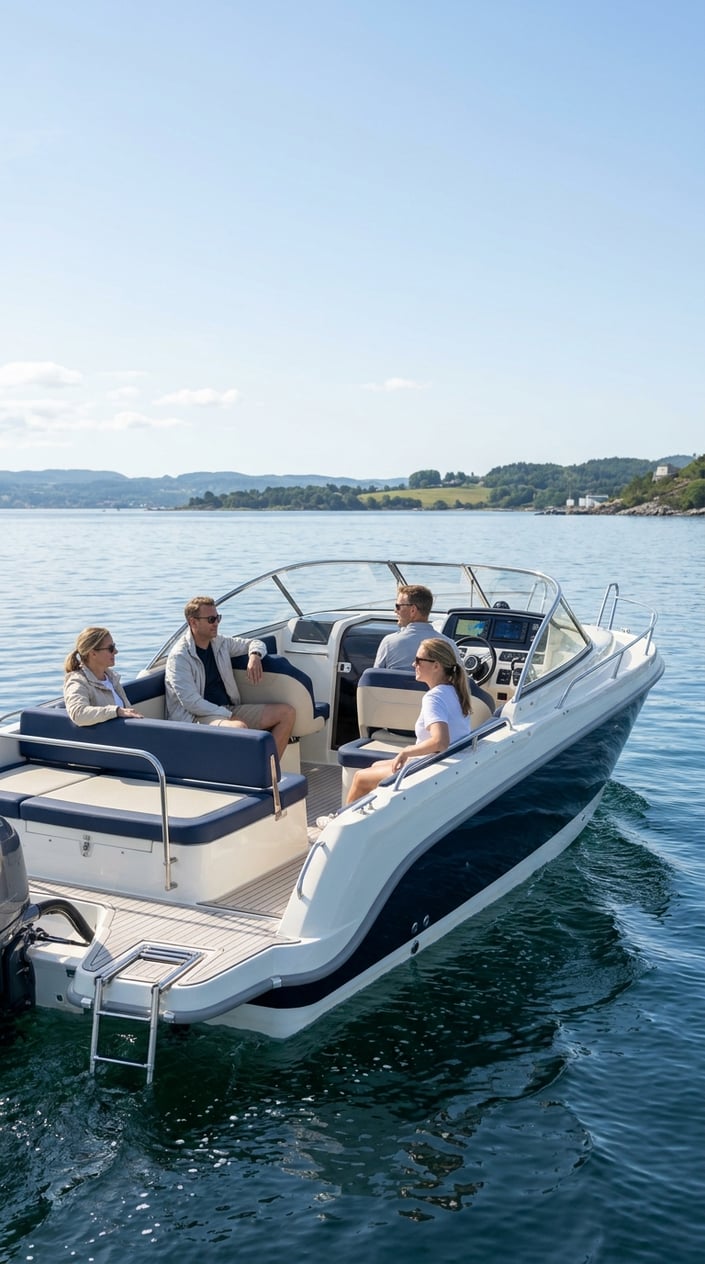
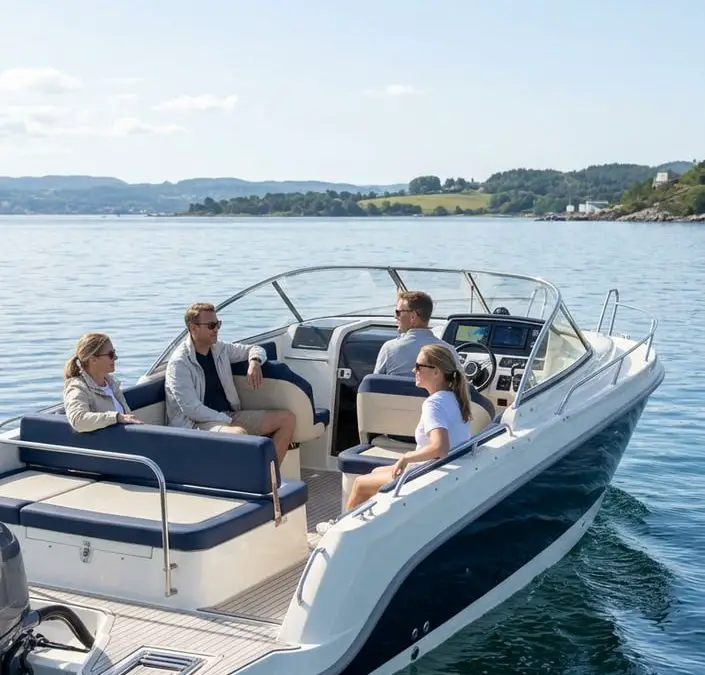
From boarding and docking to keeping snacks cool, small design choices can ease the work of boating. As you compare boats, look beyond the seating and hull shape to the details you’ll use throughout the day.
1) Self-Bailing Cockpit With Scuppers
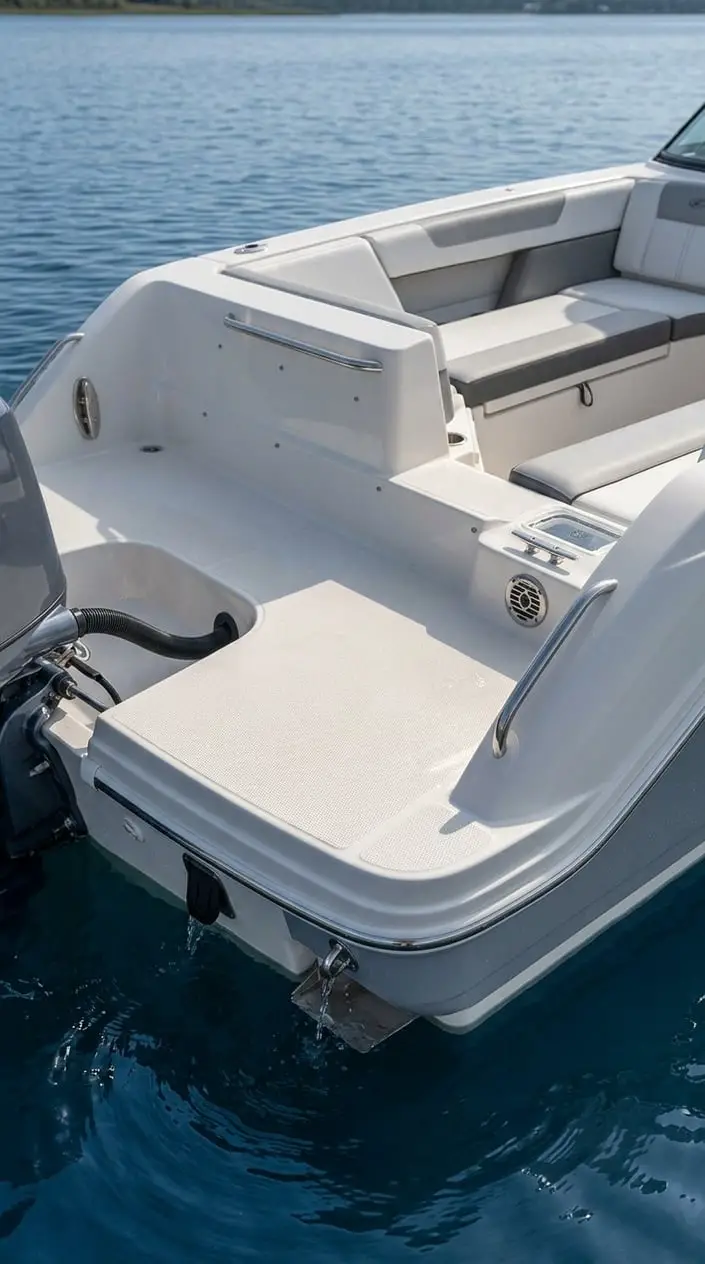
Scuppers help drain rain, spray, and wash water from your cockpit so you spend less time bailing by hand. A self-bailing layout directs water toward drains that carry it overboard, keeping the deck clearer after a wet ride or a quick rinse.
Check where the cockpit floor sits in relation to the waterline, and look for drains that are easy to inspect and clear. A blocked scupper can slow drainage, so you’ll want access for removing leaves, sand, and other debris.
On some boats, drain fittings also need regular inspection for wear or leaks. Ask how the system works at rest and underway, then confirm any maintenance steps in the owner’s manual.
2) Wide Walkaround Decks With Grab Rails
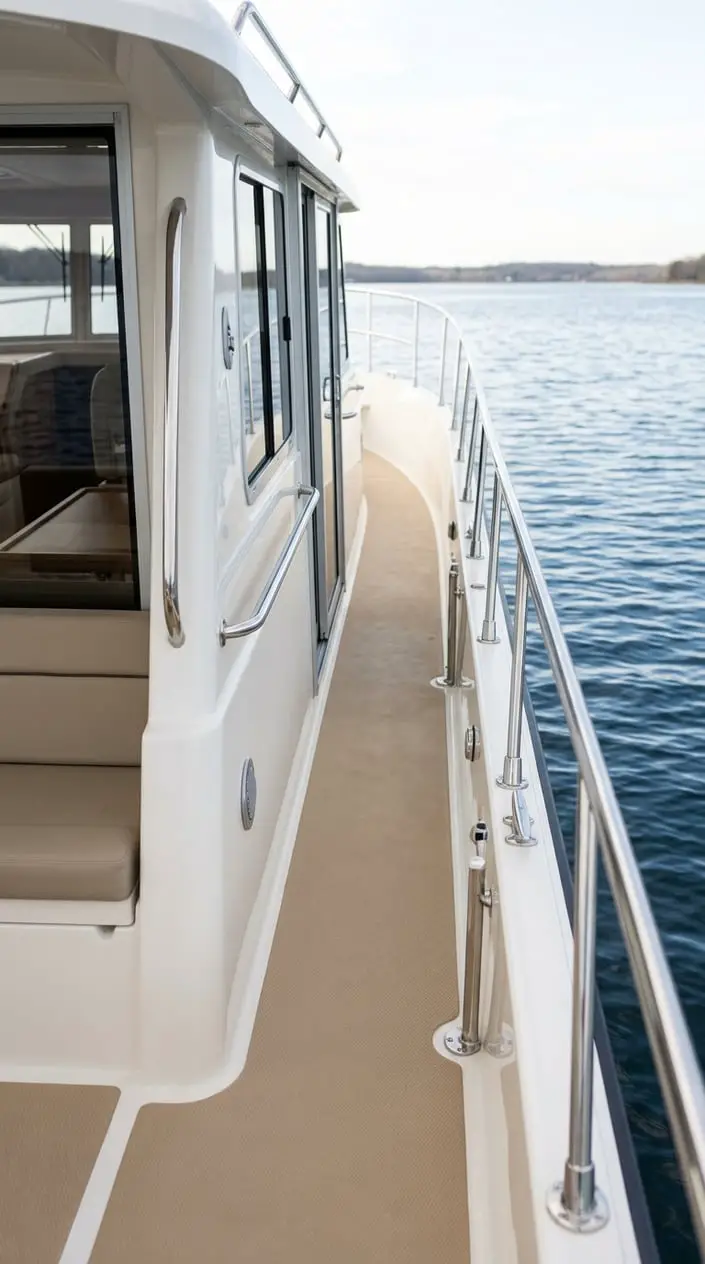
Wide walkaround decks give you a safer, less cramped route between the bow and cockpit. You’ll have more room to pass another passenger, carry gear, or move forward to handle a line, while grab rails offer a steady handhold along the way.
When you inspect a boat, walk the full route in both directions and notice any tight turns near the console or cabin. Check that rails are easy to reach and feel firmly mounted. A wide deck still needs clear footing, so note where cleats, hatches, and other fittings sit underfoot.
If you bring children aboard, consider whether the rails and deck layout give them a secure path with adult supervision.
3) Non-Skid Decking in High-Traffic Areas
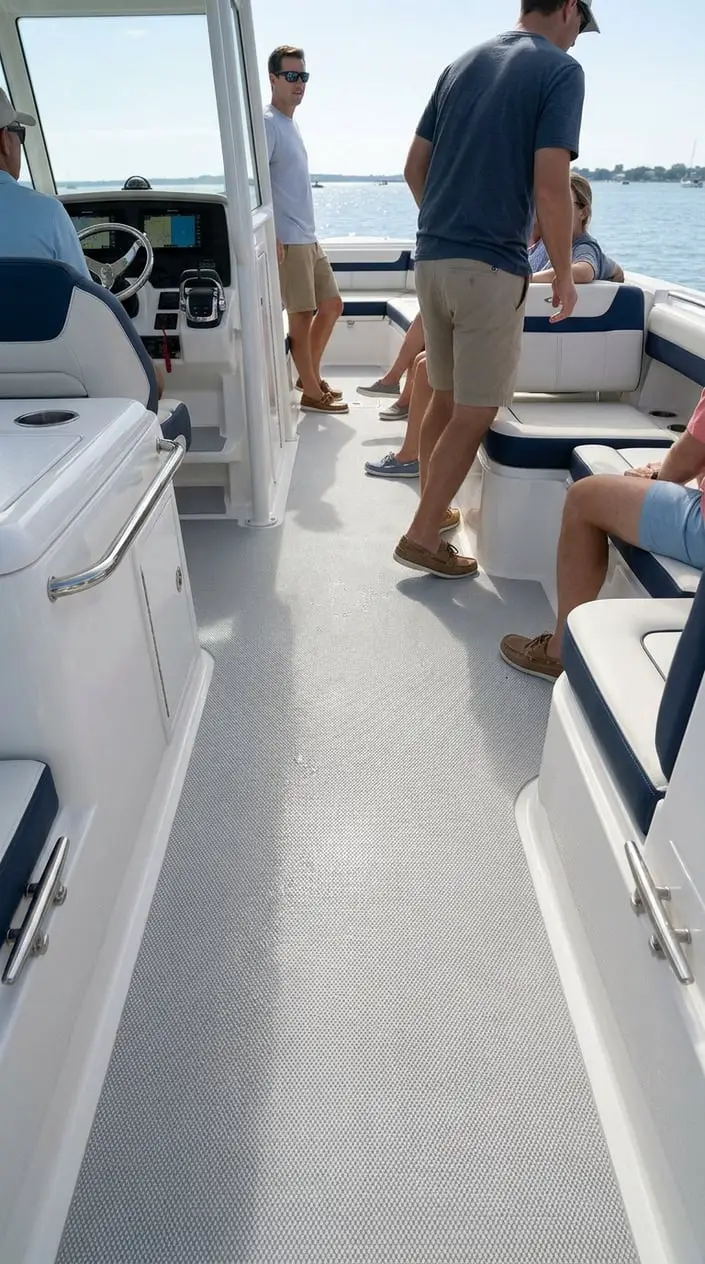
Textured non-skid decking helps you keep your footing when the deck is wet. Look for it where people step most: around the helm, beside seats, on swim platforms, and along paths to the bow. The right surface gives your shoes a better grip while you move around underway or climb aboard.
Run your hand over the finish and check for an even texture without sharp edges. You’ll also want a surface you can wash without trapping grime in deep grooves.
Sand, sunscreen, and fish residue can make any deck slick, so regular rinsing and suitable footwear still matter. Ask the dealer which cleaners the maker recommends, since harsh products can wear down some deck finishes.
4) Integrated Hardtop With Sun Protection
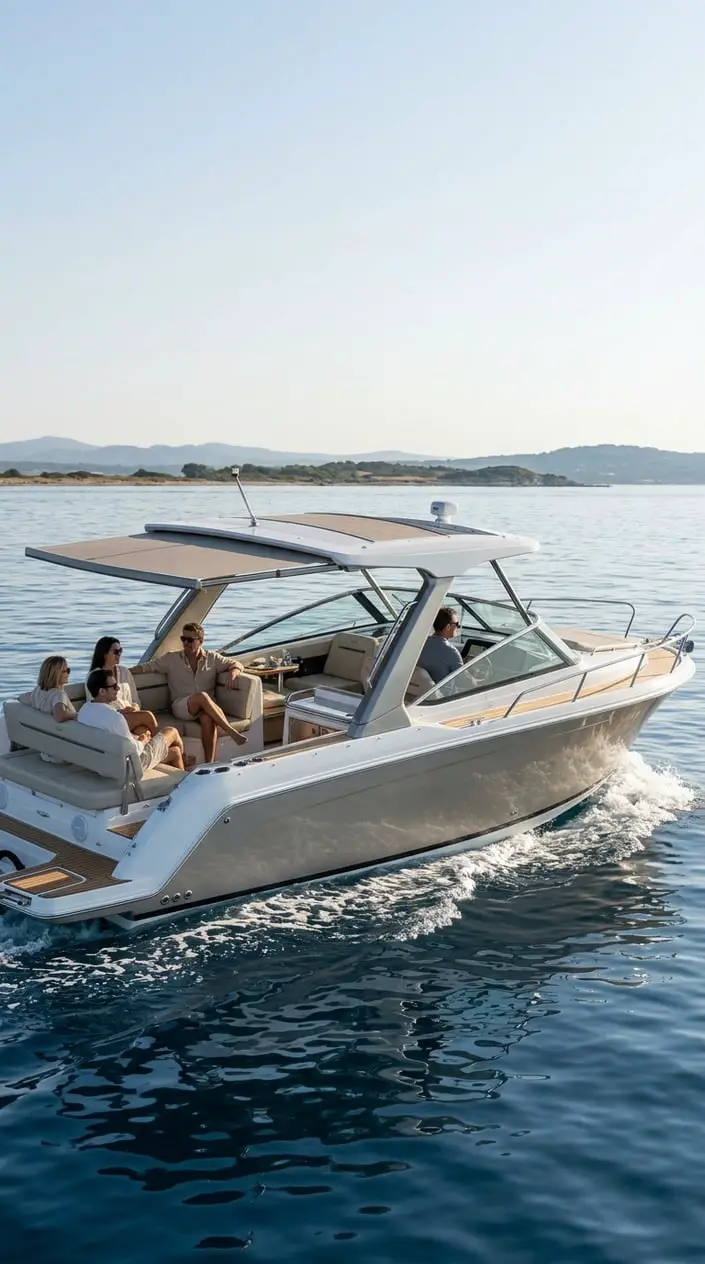
An integrated hardtop gives you lasting shade over the helm and often protects nearby seating from direct sun. That cover can make a long ride more comfortable, especially when glare and heat build during the middle of the day. Built-in lights, speakers, or electronics mounts can also keep equipment organized overhead.
Check how much of the seating area the top shades at different sun angles. You’ll want to consider headroom, visibility, and clearance for bridges or storage as well.
A hardtop adds height and weight, so confirm the boat’s dimensions before planning transport or indoor storage. For extra sun coverage aft, look for a layout that can support an optional shade extension.
5) Easy-Access Swim Platform and Boarding Ladder
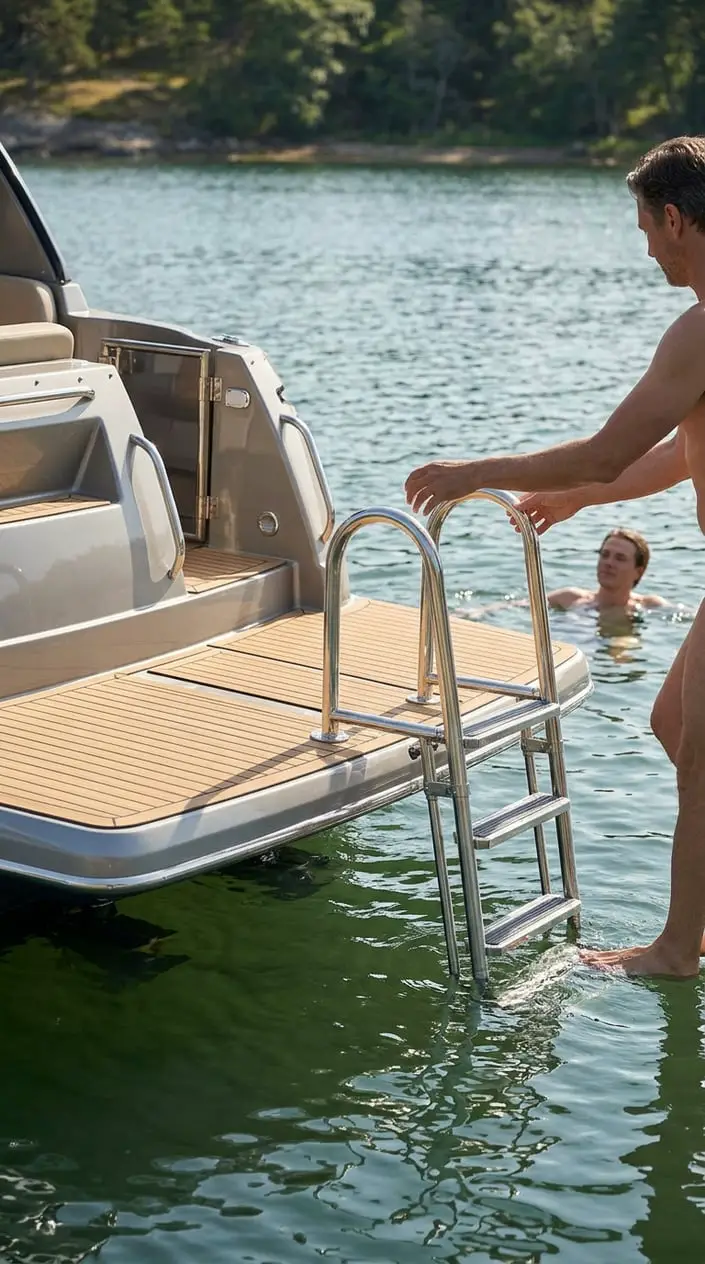
A swim platform and reachable ladder make it easier for you to get back aboard after a swim. A broad platform gives you space to sit, steady yourself, or help another passenger, while a ladder with deep steps offers secure footing as you climb from the water.
Check that the ladder deploys easily and extends far enough below the surface for a comfortable first step. Handholds near the ladder give you extra support, and a ladder that stores neatly helps keep the platform clear.
Look at how passengers reach the platform from the cockpit, too. Keep the engine off and follow safe swimming practices whenever people are in the water near the boat.
6) Ergonomic Helm With Clear Sightlines
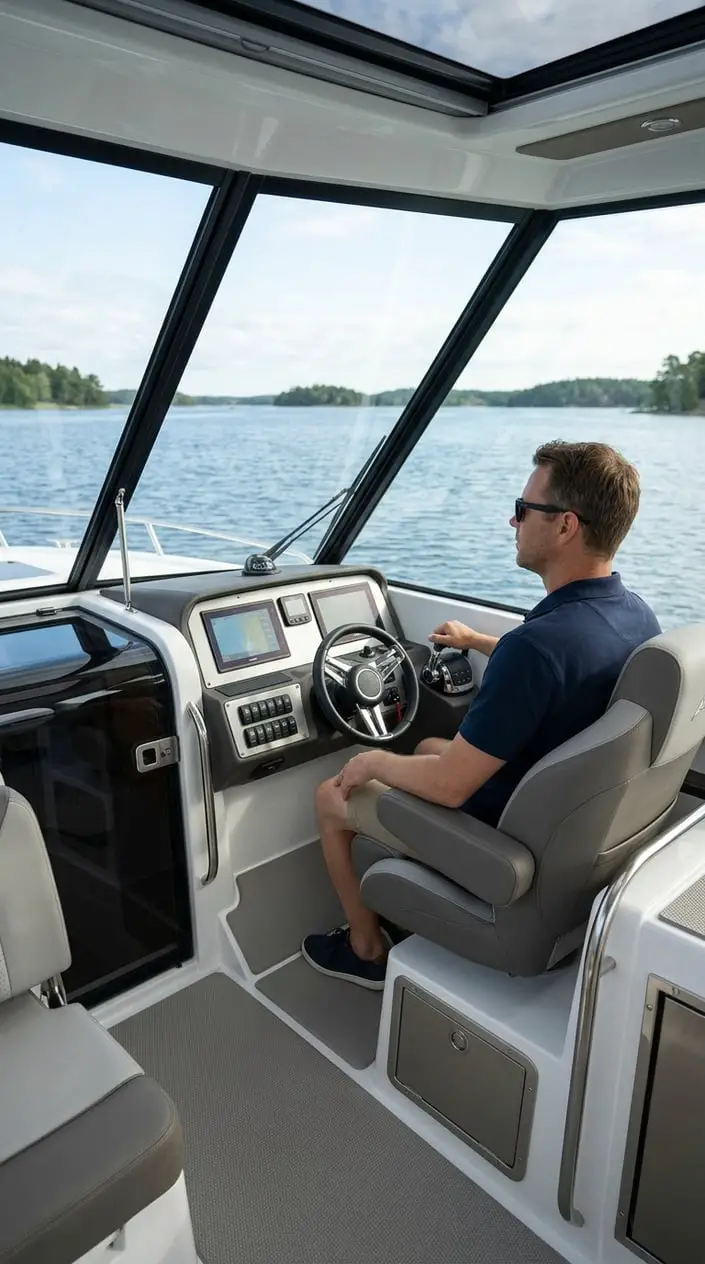
An ergonomic helm helps you steer with less strain and gives you a clear view of nearby water. A comfortable seat, reachable controls, and a wheel positioned for your posture make it easier to stay alert throughout the ride.
Sit at the helm before you decide whether the layout works for you. Check that the seat adjusts to your height and that you can see ahead while seated and standing. The windshield frame, electronics, and passengers should leave you a useful view of the bow and the water around it.
Take note of where throttle, steering, switches, and radio controls fall to hand. A test sit with your usual footwear can reveal whether the footrest and seat height feel right.
7) Large, Readable Multifunction Display
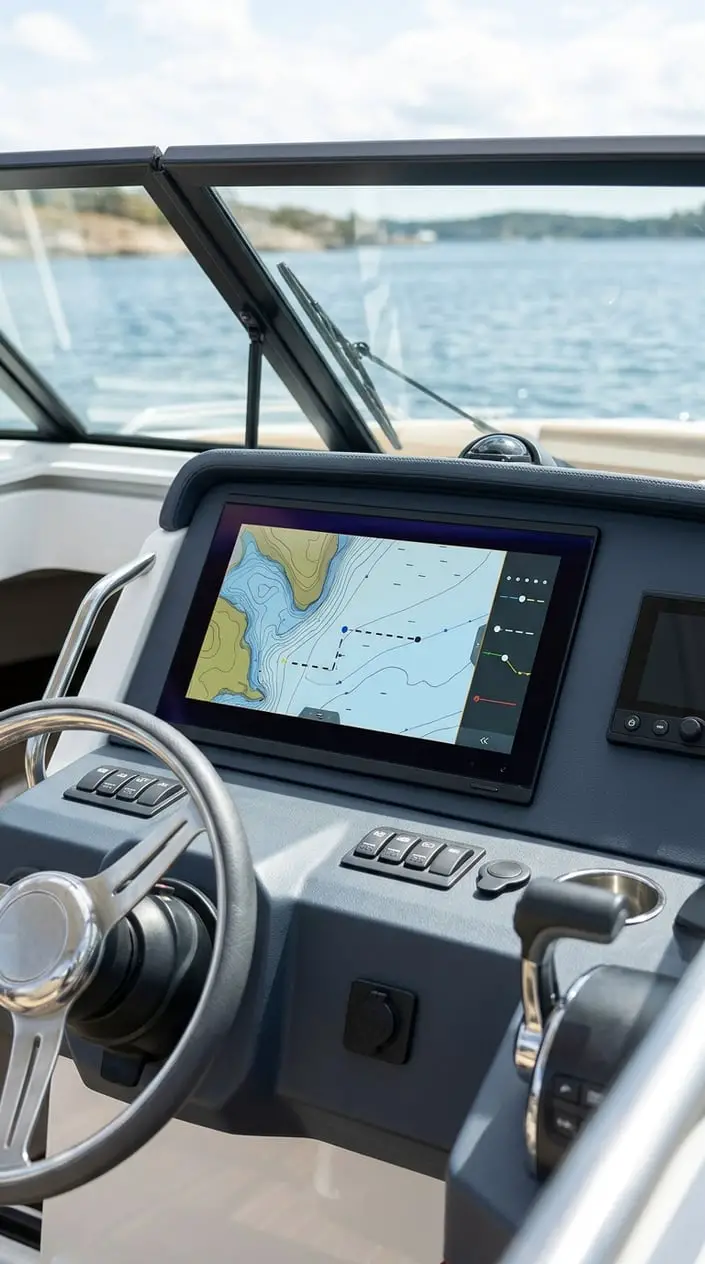
A large multifunction display puts navigation information where you can read it at a glance. Depending on the equipment and setup, one screen can show charts, depth readings, engine data, and other compatible marine electronics, helping you monitor key information from the helm.
Check screen brightness in daylight and make sure the display sits within easy view without blocking your sightline. A clear menu layout can make common tasks simpler while you’re underway. Ask which sensors and accessories are included, since display functions depend on connected equipment and chart coverage.
You’ll also want to learn how to set a safe depth alarm and keep charts current. A screen you can read quickly is more useful than one filled with details you rarely need.
8) Bow Thruster for Tight-Space Docking
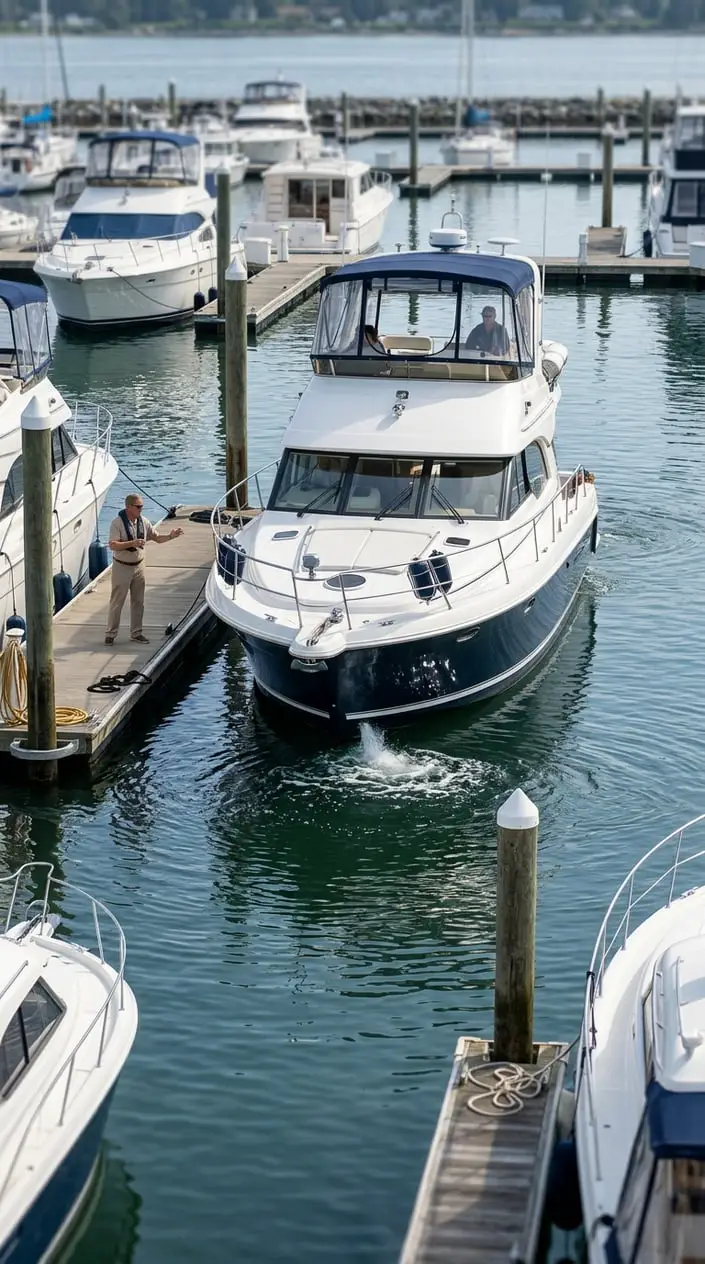
A bow thruster helps you move the bow sideways at low speed, giving you more control in a tight slip or crowded marina. A small joystick or switch activates the unit, which pushes water across the bow to help adjust the boat’s position during docking.
Treat it as an aid to careful boat handling, not a substitute for planning, lines, or attention to wind and current. Ask to see the controls and learn how long the thruster can run before it needs a rest.
Thruster response varies with boat size and conditions, so practice in open water before relying on it near a dock. Check that the control is easy to reach from your normal helm position.
9) Automatic Trim Tabs
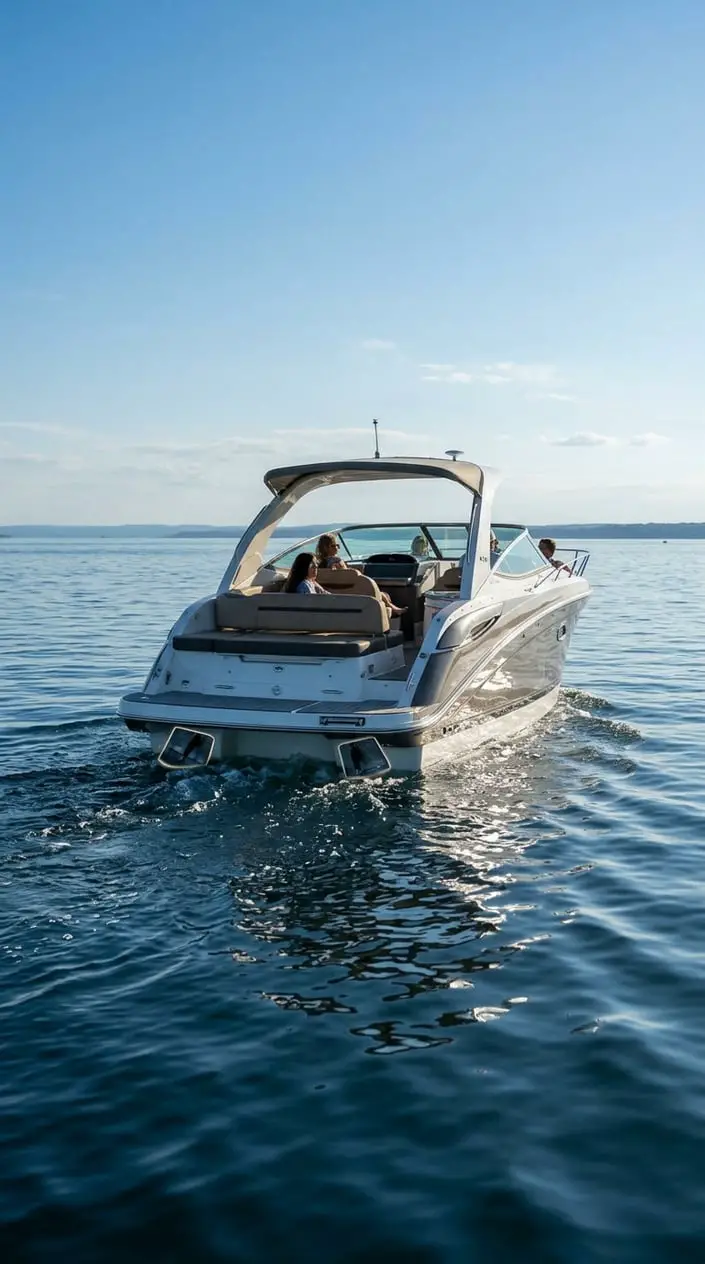
Automatic trim tabs adjust the boat’s running angle as speed and conditions change. By moving plates at the stern, the system can help correct bow rise or side-to-side imbalance, giving you a more level ride and a clearer view ahead.
Ask how the controls work and whether the system adjusts on its own or needs your input. You’ll still need to pay attention to passenger positions, load, and water conditions, since those affect how the boat rides. Learn the manual controls so you can make small corrections when needed.
During a sea trial, notice how the boat responds as you accelerate and turn. Routine inspection of the tabs and their actuators helps keep the system ready to use.
10) Convertible Seating With Built-In Storage
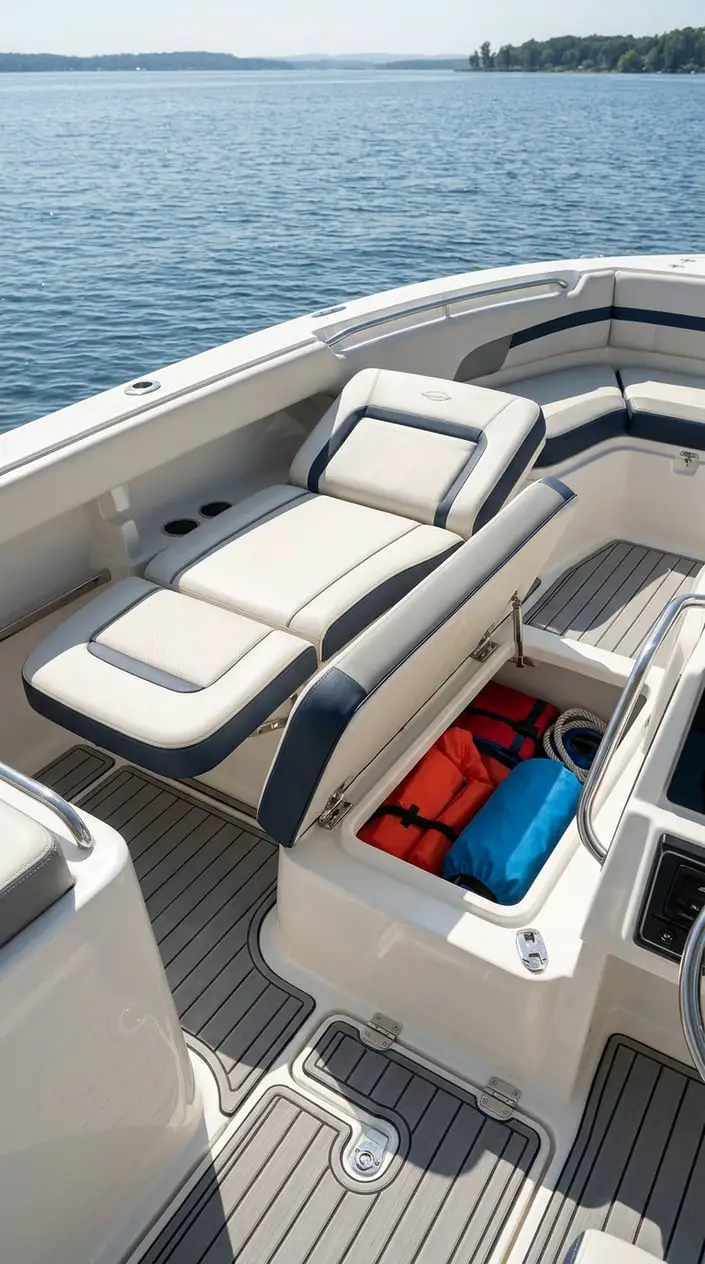
Convertible seating lets you change the cockpit from a place to sit upright into a lounge or social space. Built-in storage beneath the seats gives you a handy place for life jackets, lines, or other gear, keeping the deck easier to move around.
Try each seating position and check how the backrests or cushions move. You’ll want the conversion to feel straightforward, with latches that hold the seat securely in each position. Look inside the storage compartment for usable space, drainage, and a lid that stays open while you retrieve gear.
Confirm that stored items remain accessible when the seating is set up for passengers. A flexible layout helps you make better use of the same cockpit through cruising, swimming, and relaxing.
11) Insulated Fish Box That Doubles as a Cooler
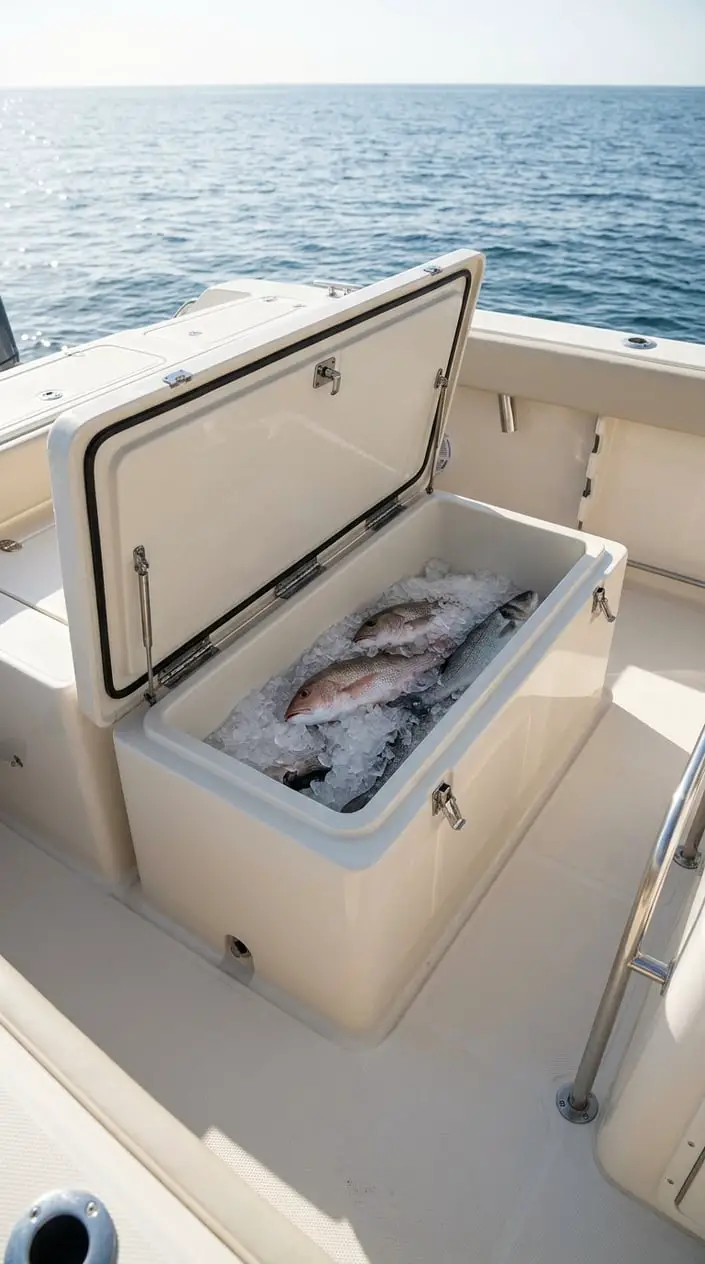
An insulated fish box can keep your catch cold and serve as extra space for drinks or food on a day trip. Insulation slows heat transfer, while a drain makes it easier to empty meltwater and clean the compartment after use.
Check the box’s size, lid seal, and drain location to see whether they suit your plans. A compartment designed for fish needs thorough cleaning before you use it for snacks, and separate sealed containers help keep food sanitary.
Ask whether the drain routes overboard or into a sump, and confirm that you can reach it for cleaning. Pre-chilling the box and adding enough ice helps maintain cold temperatures. Keep the lid closed between uses to limit warm air entering the space.
12) Freshwater Washdown at the Transom
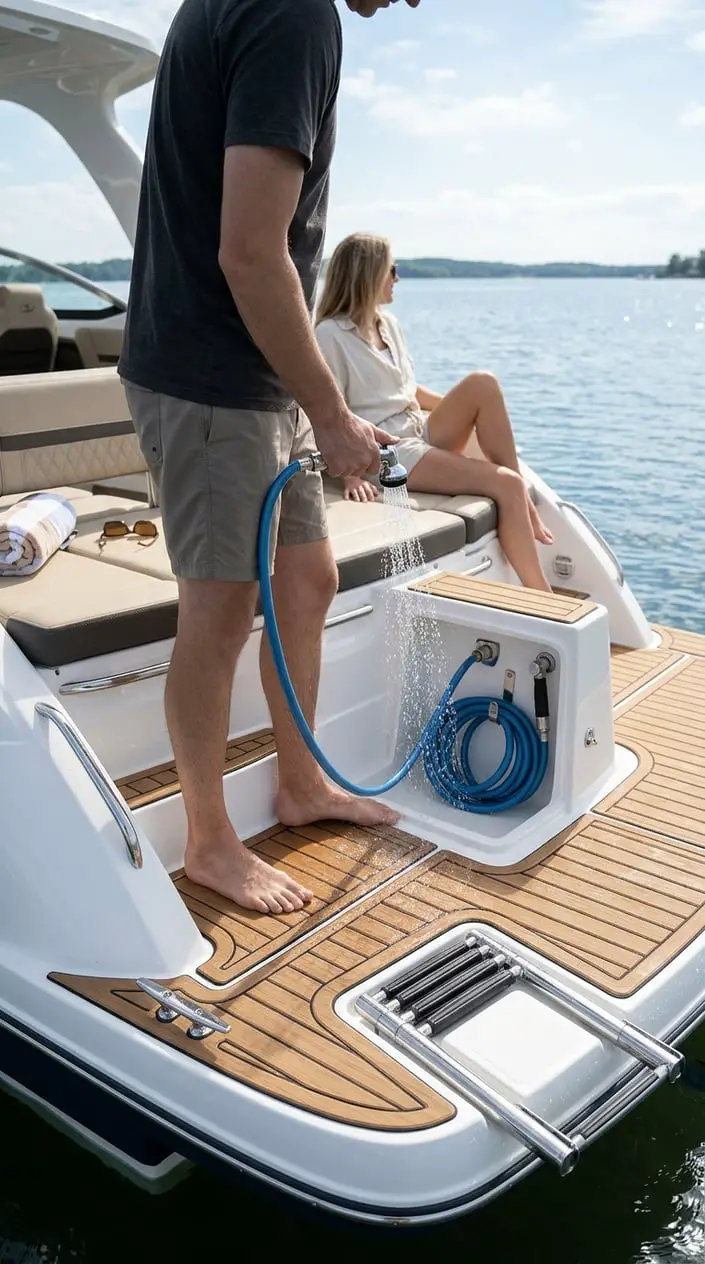
A freshwater washdown at the transom gives you an easy way to rinse off salt, sand, and sunscreen before you head back to the cockpit. It’s useful after swimming and helps you clean the swim platform or nearby deck without carrying water in buckets.
Check whether the system uses a dedicated tank or connects to another freshwater supply, then ask about its capacity and refill process. A hose that reaches the platform and a nozzle with a secure shutoff make rinsing simpler.
Keep freshwater use in mind on longer outings, since the tank also serves other onboard needs. After each trip, rinse the nozzle and stow the hose so it stays clear of walkways and is ready for your next outing.
13) Enclosed Head With Easy-Rinse Surfaces
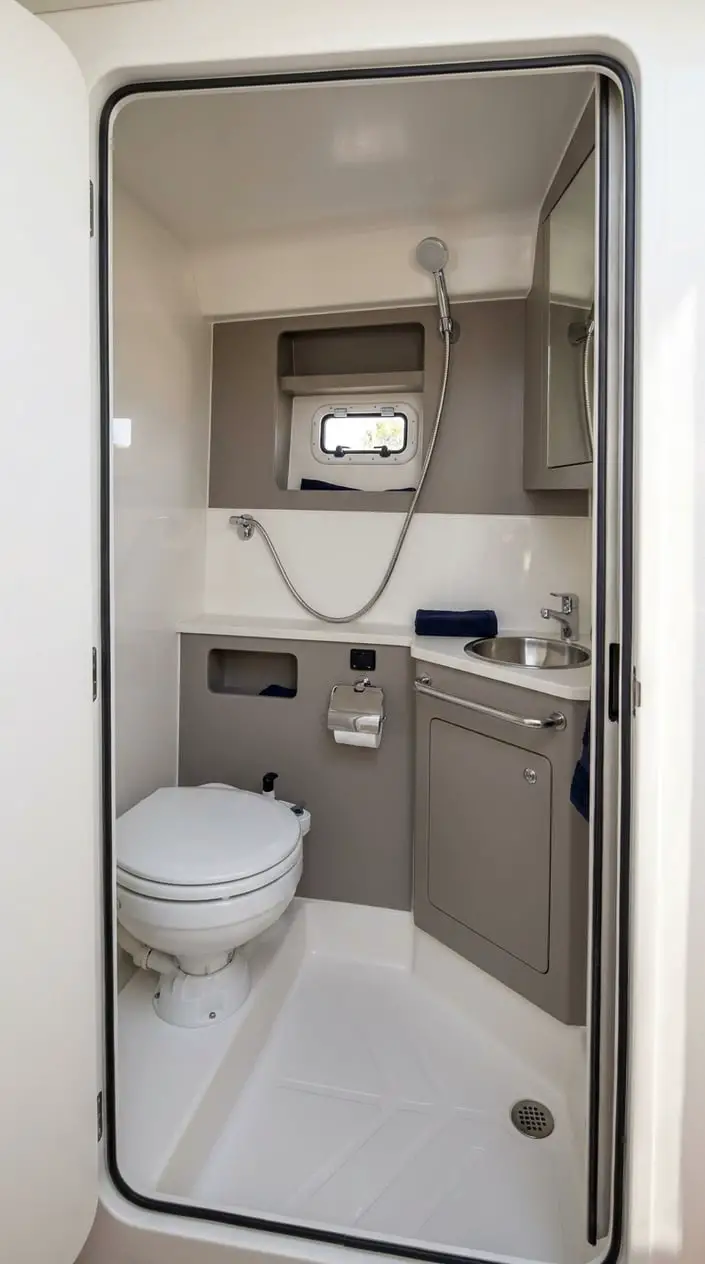
An enclosed head gives you privacy and a convenient place to use the toilet or freshen up during a day on the water. Smooth, easy-rinse surfaces help you clean up splashes and keep the small space fresh after use.
Step inside and check the standing room, door clearance, and ventilation. You’ll want to see how the toilet, sink, and storage fit together, and whether the door stays secure while underway. Ask what type of marine toilet the boat uses and how its waste system is managed.
A handheld sprayer can help with rinsing, while a hook or shelf keeps personal items off the floor. Review the owner’s instructions for cleaning products and waste-system care before your first trip.
14) Lockable, Dry Gear Storage
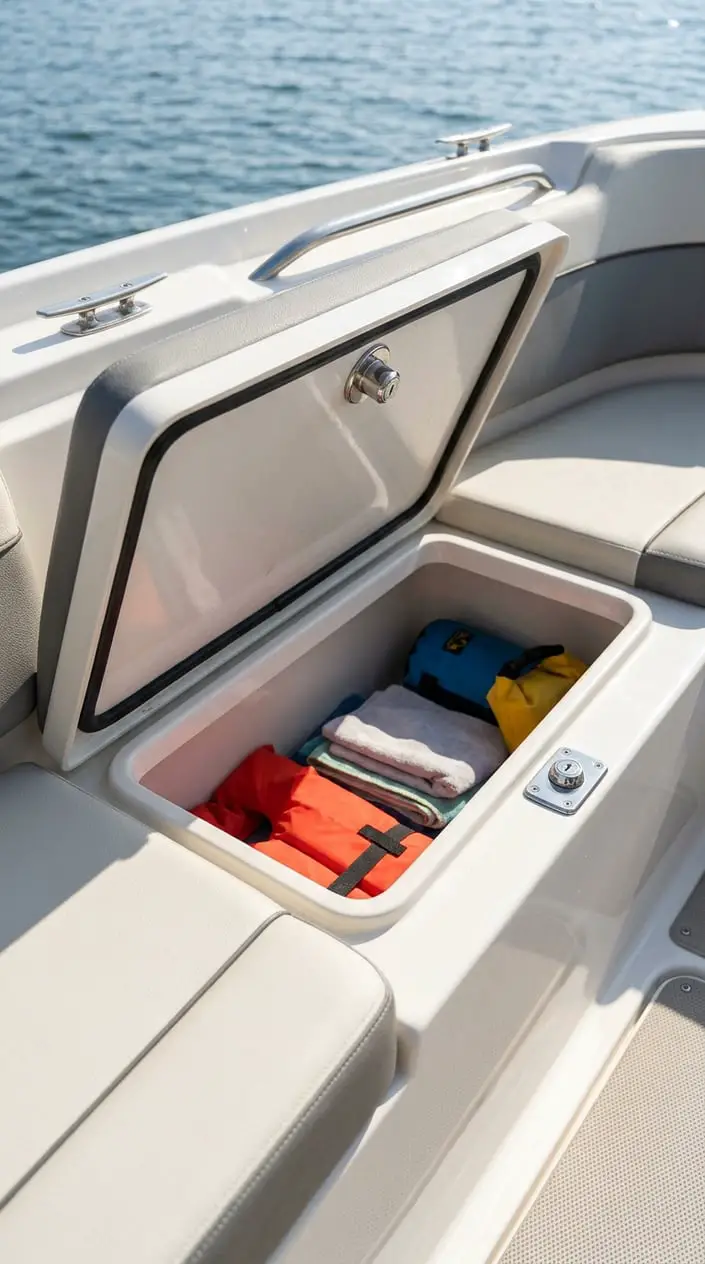
Lockable, dry storage helps protect your valuables and keep spare clothes ready to use. A gasketed compartment with a secure latch helps limit water entry, while a lock gives you a place to stow phones, wallets, and keys when you leave the boat unattended.
Check the compartment’s location and size, then test how the lid closes and latches. Storage beneath a seat may be easy to reach, while a dedicated locker can keep personal gear separate from wet equipment. Ask whether the space is designed to stay dry in ordinary use, and avoid storing items that need protection in an unsealed locker.
A labeled bag or small organizer helps you find what you need without unpacking everything. Keep required safety gear easy to reach.
15) USB-C Charging Ports at the Helm and Seating
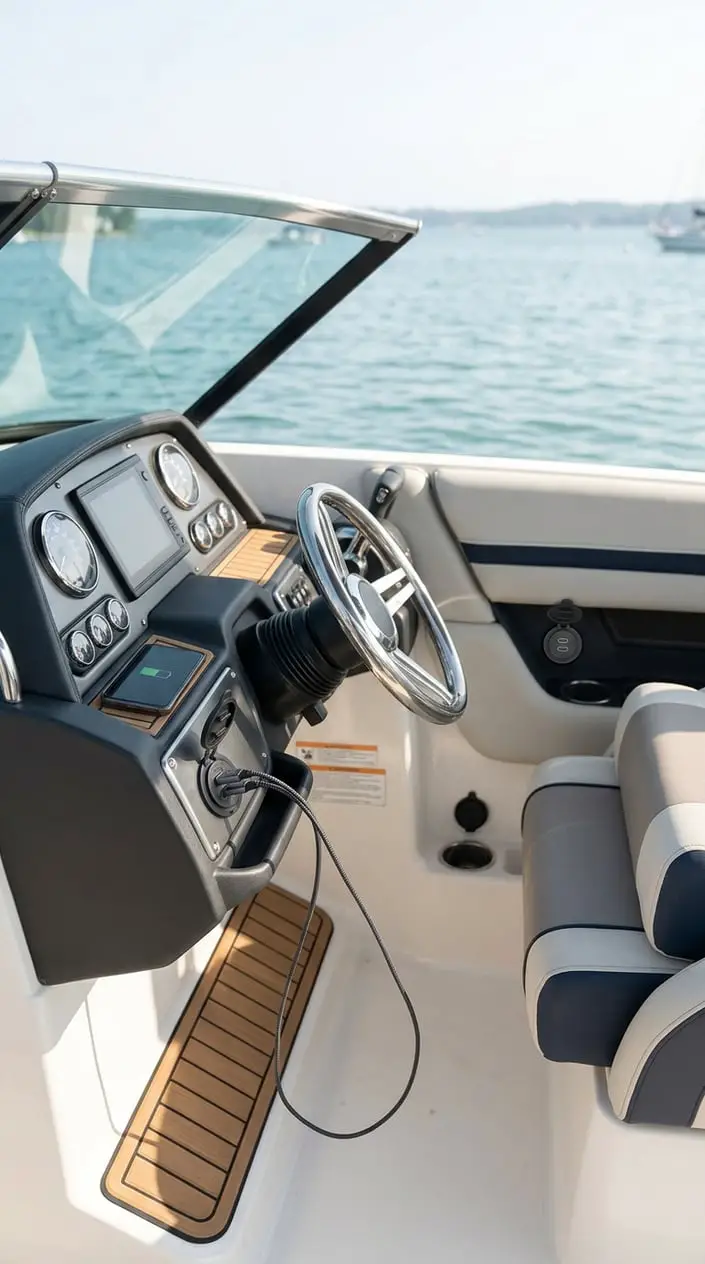
USB-C ports near the helm and passenger seats make it easier to keep phones and compatible devices charged during the day. Placing ports in more than one area lets you charge a navigation device at the helm while passengers keep their phones nearby.
Check the port locations, output ratings, and weather protection before plugging in your gear. A protective cover helps shield unused ports from spray, and a short charging cable keeps cords from crossing walkways or controls.
Ask whether the ports stay powered when the engine is off, since charging draws from the boat’s battery. Bring a suitable cable and keep devices secured while underway. For trips that rely on a phone for backup navigation, start with a full charge and keep a separate power bank available.