Last Updated on November 13, 2026
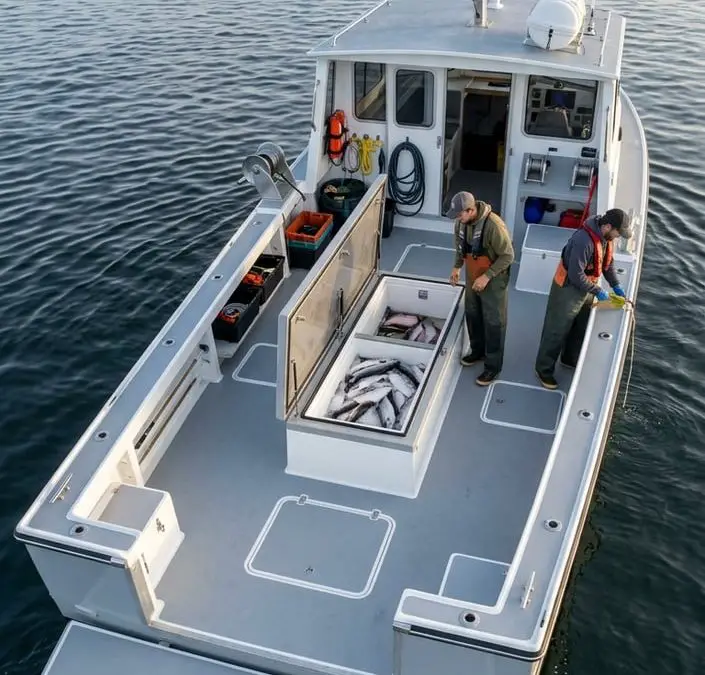
You maximize catch space with a clear fishing lane, purpose-built bait and fish storage, and gear tucked into the boat’s structure. The best layout keeps your tools close while leaving room to move when a fish is on.
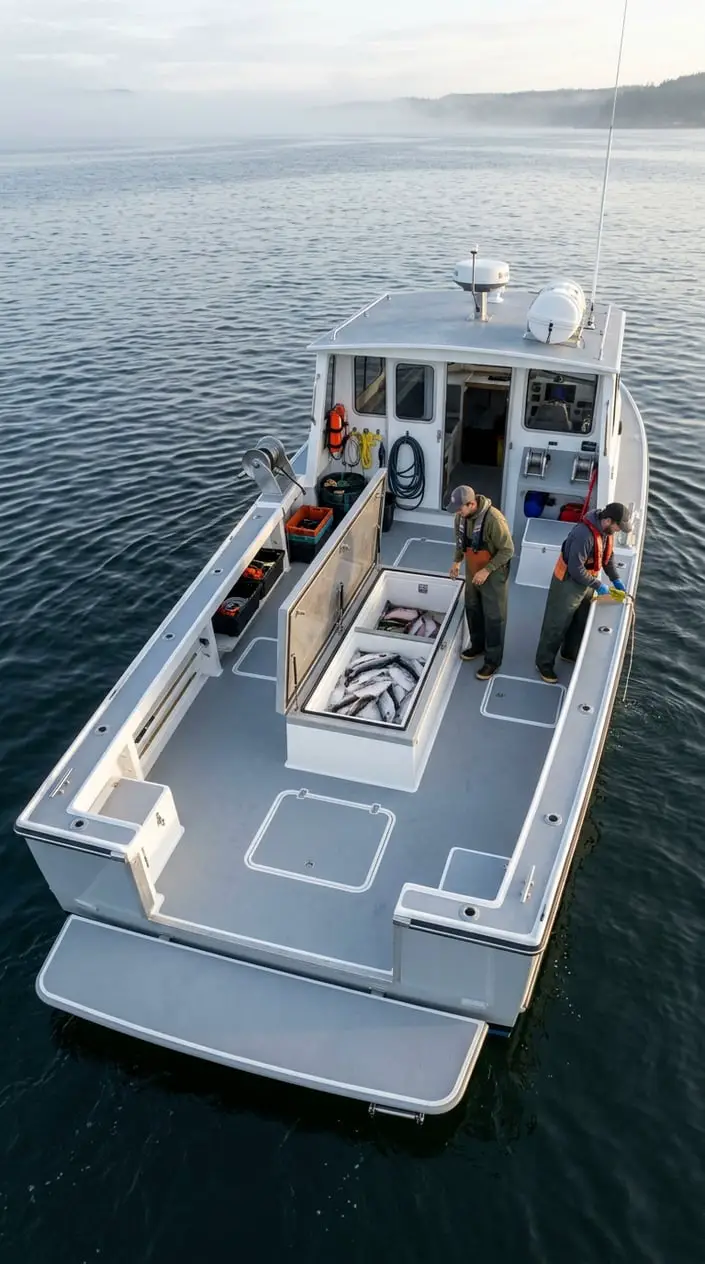
These 15 fishing boat design ideas that maximize your catch space range from a smarter helm to compact aluminum layouts. As you compare them, think about how many people fish with you, what you bring aboard, and how much open deck you need.
1) Contender 39ST’s Wider, Lower Console
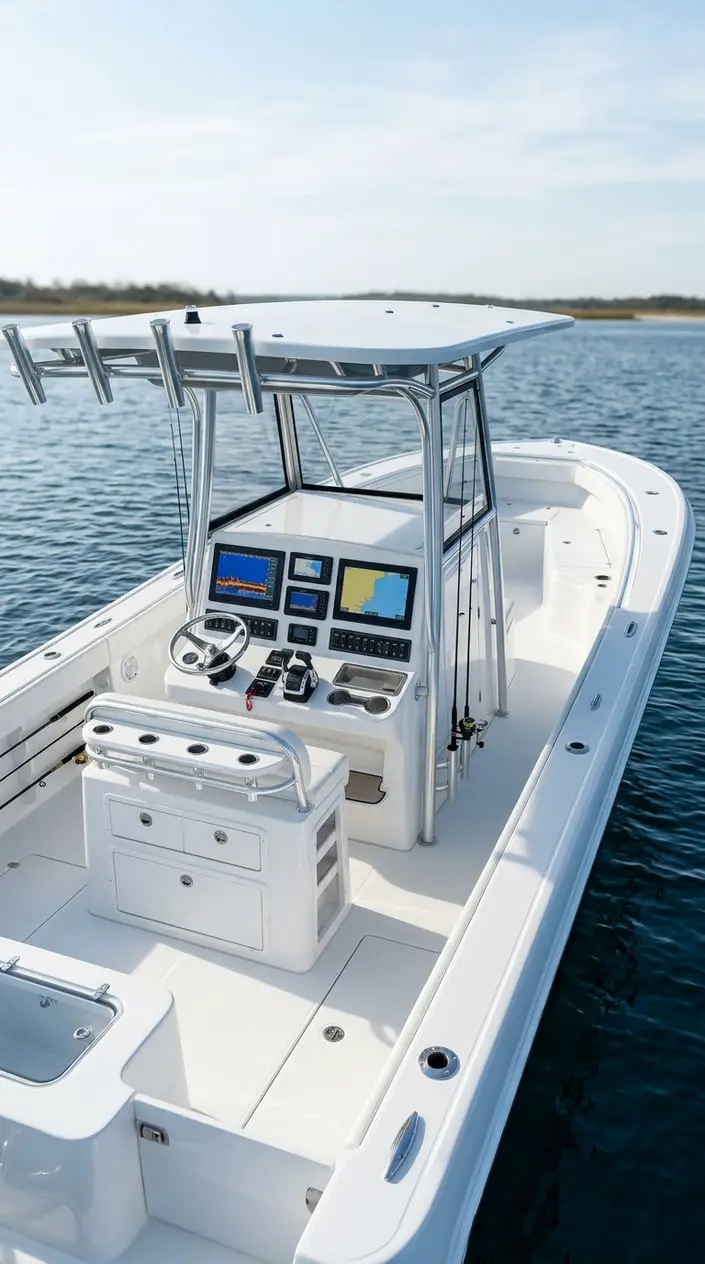
A wider, lower console gives you improved weather protection and sightlines while keeping the cockpit usable. This helm adds 5 inches of width and 2 inches of length, with a height reduction of 1½ inches. That extra room supports large multifunction displays, including two screens up to 22 inches, while the lower profile helps you see across the bow underway.
When you assess a console layout, check how far it extends into your walking path and whether the wheel, throttle, and displays are easy to reach. A clean acrylic electronics cover also helps protect the helm face. Keep frequently used gear in console storage, then reserve the deck for fish handling and movement.
2) Blackfin 272CC’s Bait-Prep Station and Sink
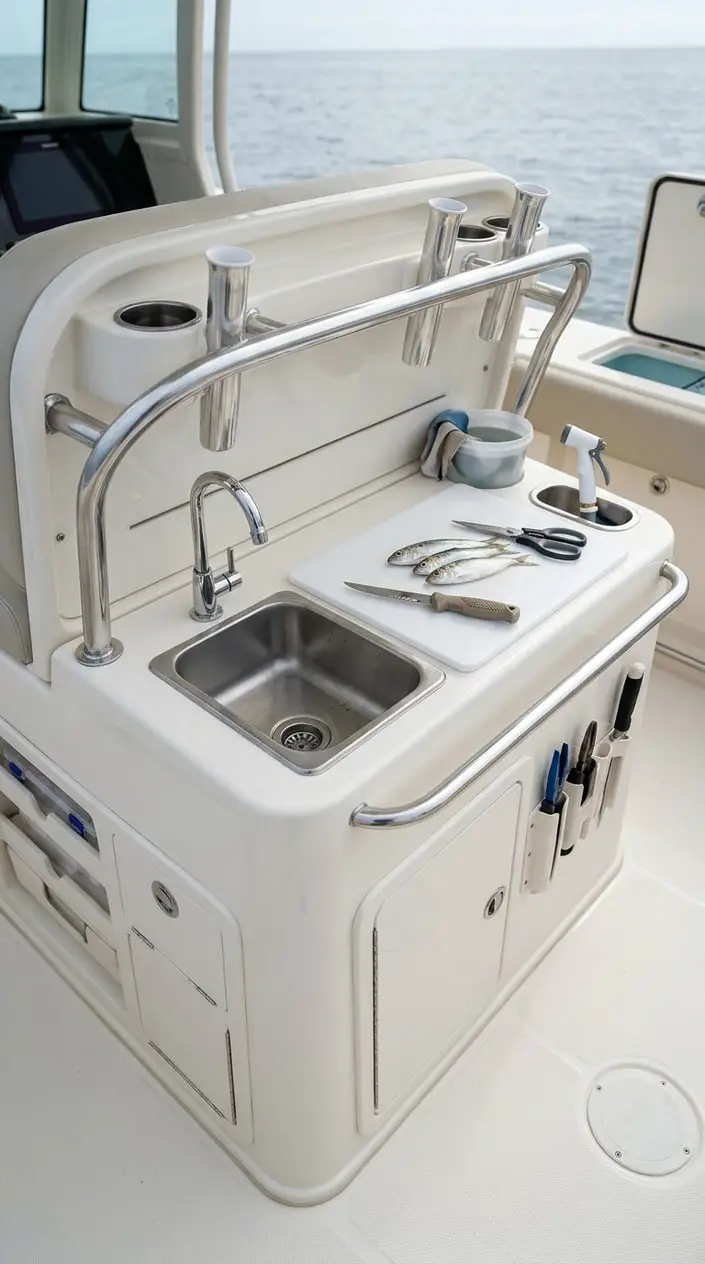
A dedicated bait-prep station with a sink lets you work on bait without spreading tools across the cockpit. The helm-side work area keeps cutting and rinsing close to where you control the boat, so you can leave more deck space open for anglers and active lines. A built-in sink also gives you a place to wash your hands and clear the prep surface.
When you plan your own station, place knives, bait trays, and line tools within easy reach, with storage that stays shut underway. Consider how the sink drains and how you’ll manage rinse water. Keeping the prep zone compact helps preserve a clear route between the helm, cockpit, and stern.
3) Blackfin 272CC’s 30-Gallon Aft Livewell
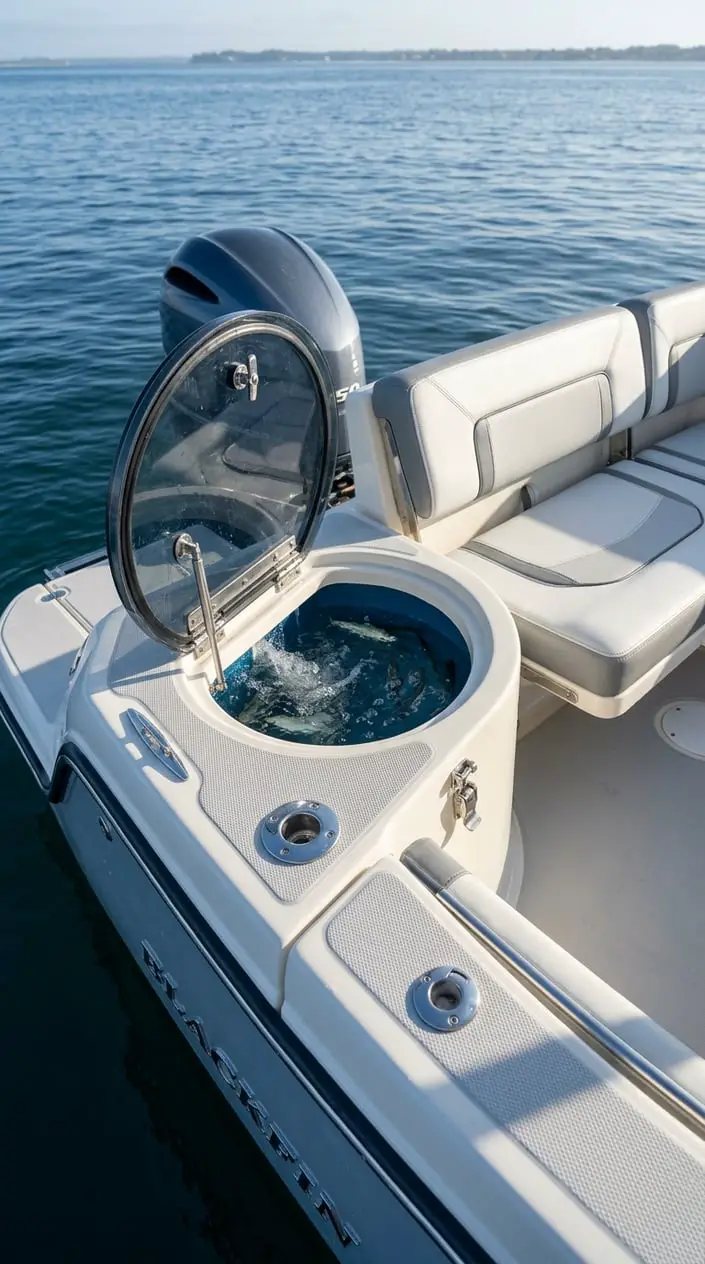
A 30-gallon aft livewell gives you substantial bait capacity in a stern location that keeps the cockpit organized. With an aft tank, you can reach bait near the transom while leaving the central deck open for casting and fish handling. Adjustable drains and valves let you manage water flow for the bait you carry.
Look at the lid, access height, and position relative to the fishing lanes before choosing a layout. The opening should be easy to reach without blocking another angler, and the lid should stay secure when the boat moves. Pair the tank with a nearby bait-prep surface so you can move from live bait to rigging with fewer steps.
4) Contender 39ST’s Ergonomic Leaning Post
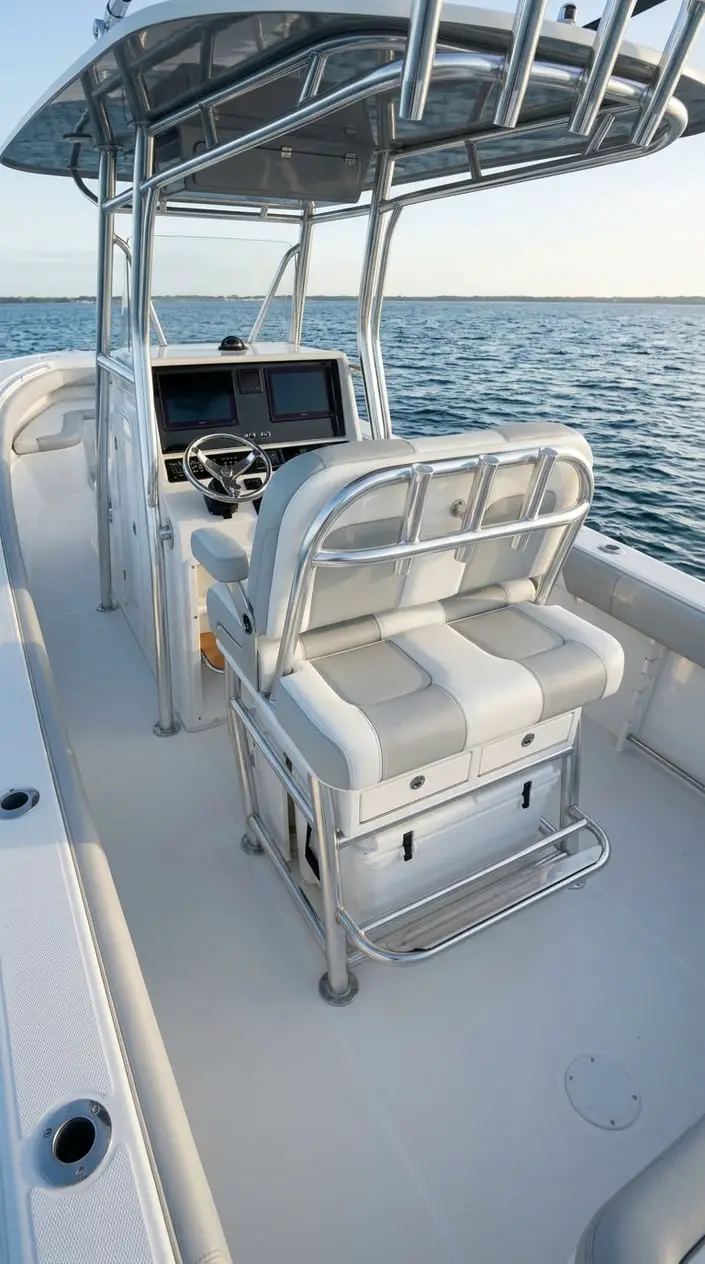
An ergonomic leaning post gives you a supported place to brace at the helm while preserving a working cockpit behind it. A well-shaped cushion and firm handholds help you stay steady when you steer in changing conditions. The post can also make long runs more comfortable for you and another passenger when it includes companion seating.
Check the post’s footprint, height, and clearance around its sides. Rounded edges and a compact base help you move through the deck during active fishing. Built-in tackle storage on the sides or beneath the seat keeps small gear close at hand. Choose a configuration that leaves a clear passage between the helm and stern.
5) A Raised Bow Casting Deck With Storage Below
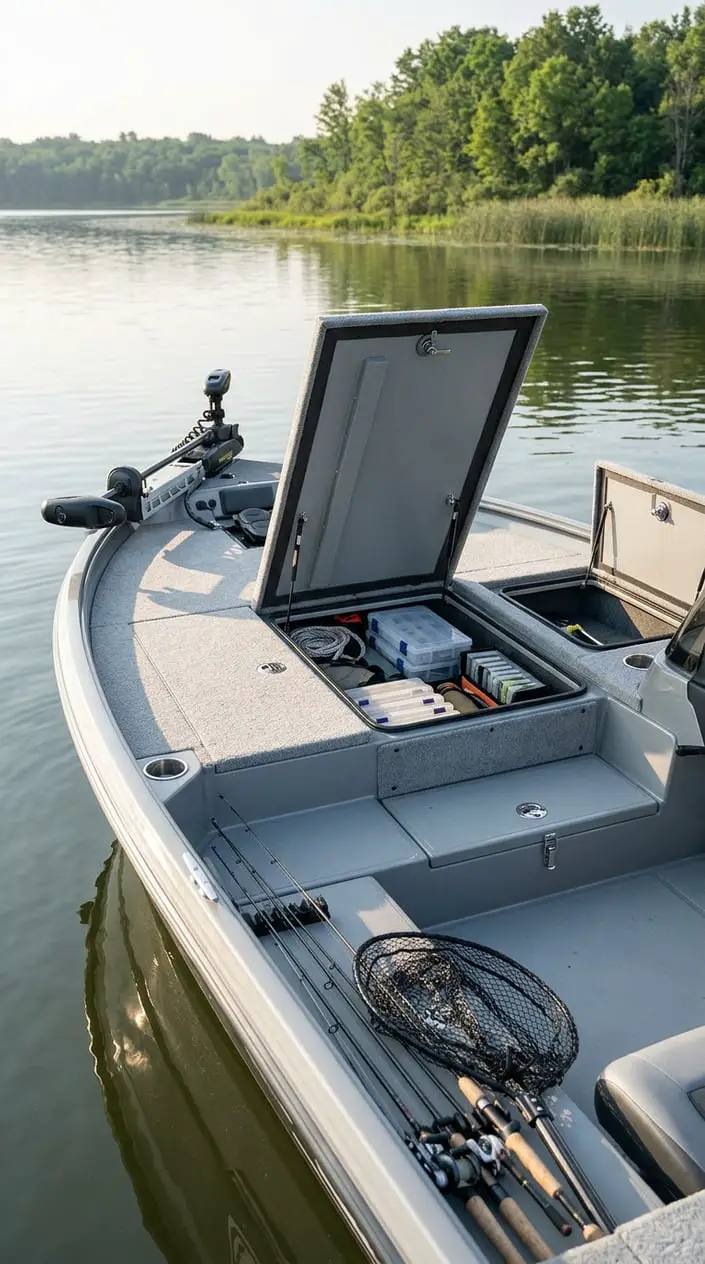
A raised bow casting deck gives you a stable platform up front, while storage below keeps bulky gear off the surface. You gain a clear place to cast and work a lure, plus a convenient spot for tackle boxes, life jackets, or other equipment. Hinged hatches make use of the space beneath your feet without taking up additional deck area.
Plan the hatch locations around your casting stance and the boat’s balance. Lids need secure latches and non-skid surfaces, and the compartments should drain or stay dry as intended. Keep heavy items low and distribute weight across the boat. That setup helps preserve an uncluttered platform and leaves your fishing partner room to move.
6) An Integrated Hardtop Radio Box
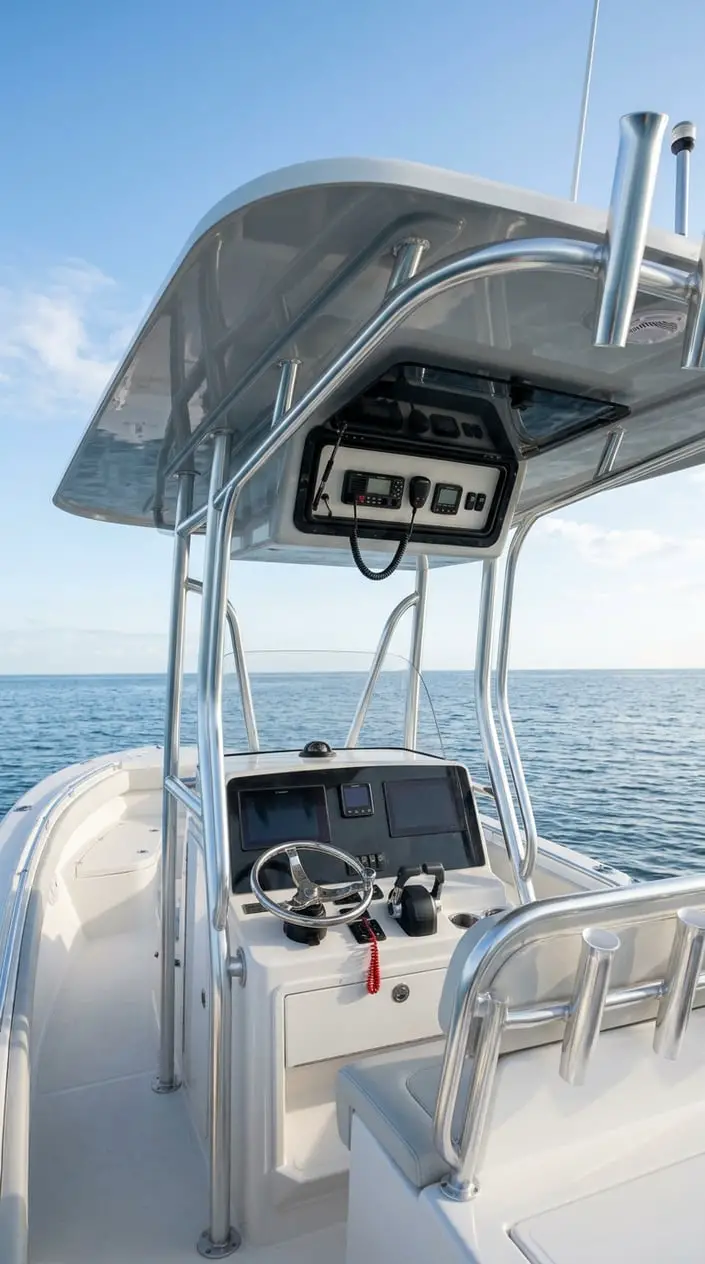
A radio box molded into the hardtop moves communication gear overhead and frees valuable room at the helm. Flush-mounted radios or additional displays sit above the console, where their controls remain accessible without taking up dash space. A built-in enclosure also gives the hardtop a tidy, integrated appearance.
Before selecting this arrangement, check that you can reach the controls from your normal helm position. Plan for cable routing, ventilation, and service access so electronics remain easy to maintain. Keep the radio and any overhead screen positioned to avoid blocking your view or creating a head-strike hazard. This design works especially well when the helm already carries large navigation displays.
7) Flush-Mounted Speakers and Lighting
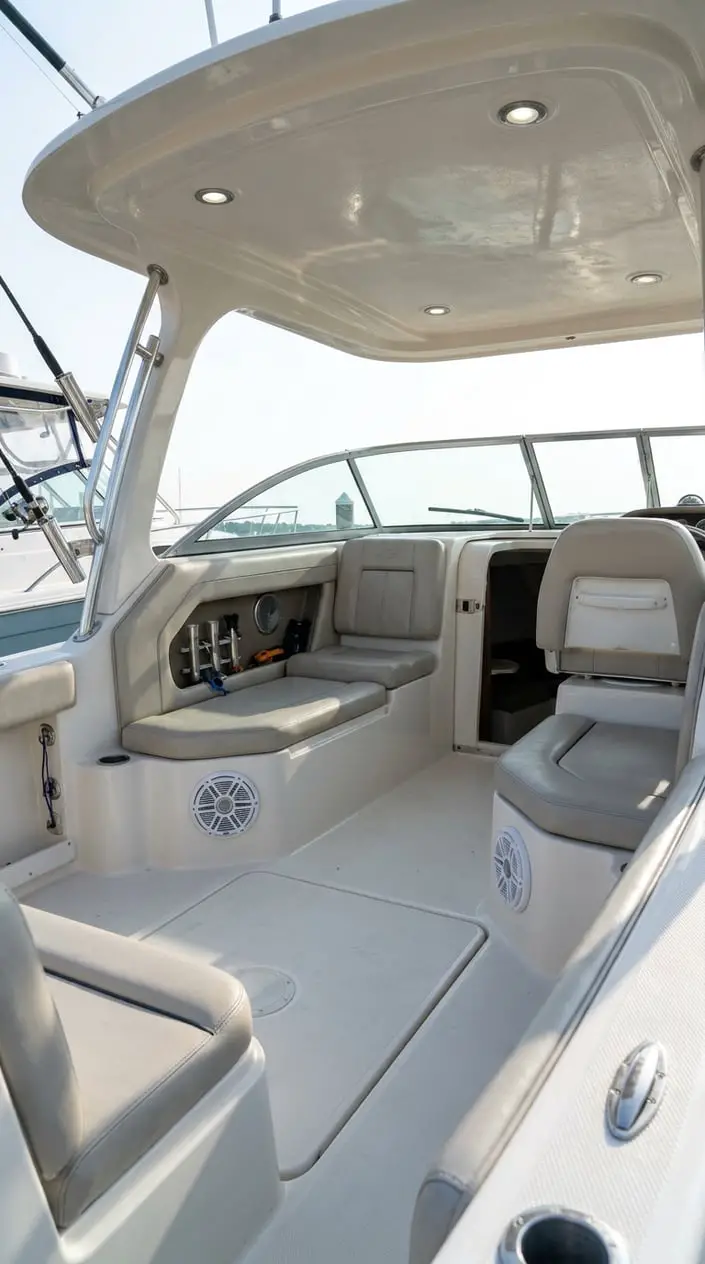
Flush-mounted speakers and recessed lights keep overhead equipment out of your way and leave the hardtop’s surfaces clean. Built-in pockets reduce protruding hardware, which helps you move around the cockpit without catching clothing or fishing line. Recessed lighting also gives you useful illumination after sunset while keeping the fixtures protected.
Position speakers where you can hear them at the helm and in the cockpit without crowding the work area. Use lighting that supports nighttime tasks, such as tying knots or sorting tackle, while preserving your night vision. Ask how fixtures are sealed against spray and how you can reach them for service.
8) An Oversized Lighted Glovebox and Molded Dash Trays
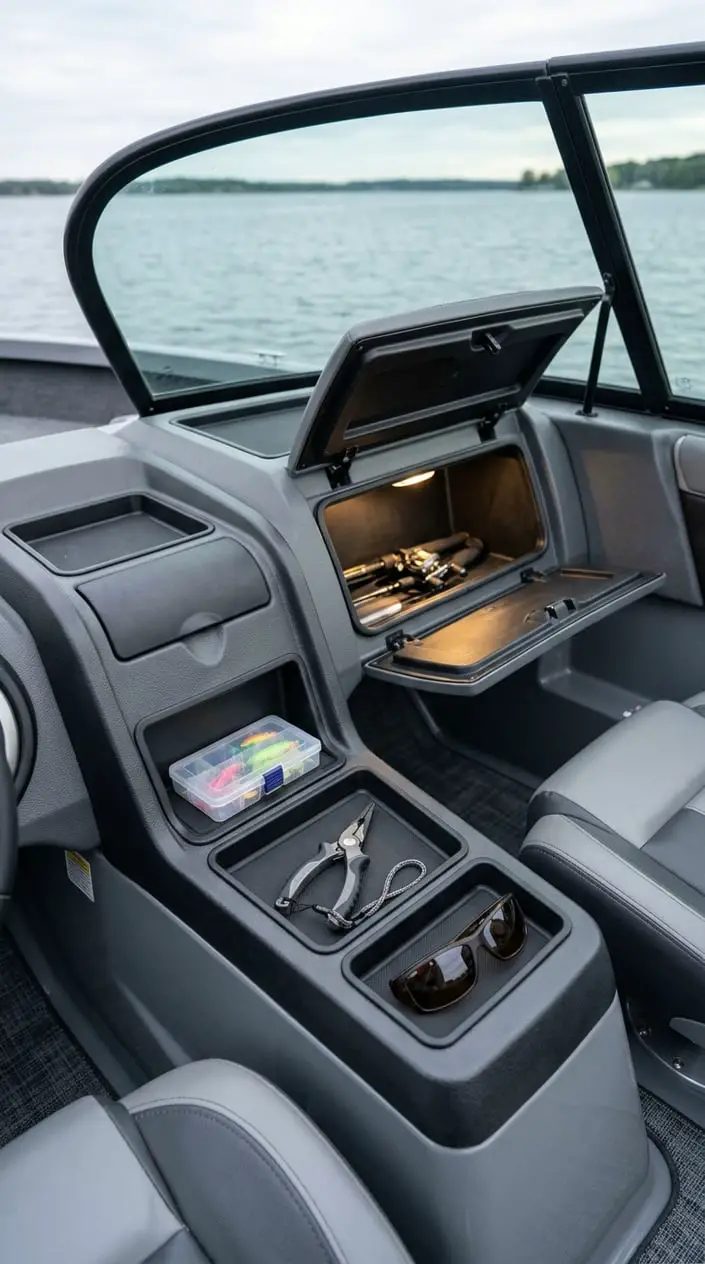
An oversized lighted glovebox and molded dash trays put small essentials within reach without covering the helm with loose gear. You can keep items such as sunglasses, keys, handheld tools, and paperwork inside the box, then use the trays for things you need quickly. Interior lighting makes it easier to find stored items in low light.
Check that the glovebox latch holds securely and that its opening clears nearby controls. Choose trays with edges that help keep objects in place as the boat moves. Sorting gear by use prevents small items from becoming a pile in the helm area. You’ll preserve the dash for navigation and keep the cockpit free of loose accessories.
9) Dedicated Access Compartments for Electronics Wiring
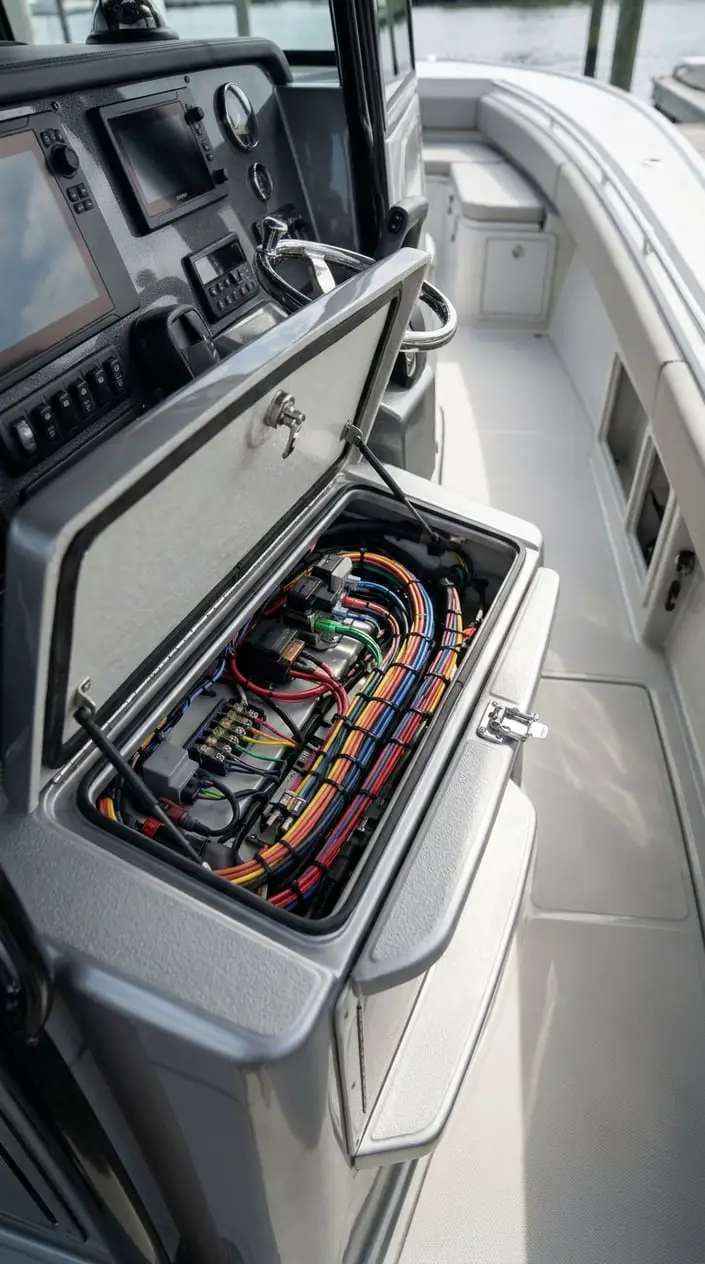
Dedicated wiring access compartments make it easier to inspect and service electronics without taking apart the helm. Separate access points help you reach connections for displays, radios, and other systems, while organized cable runs make maintenance more manageable. Good access also helps keep wiring from taking over storage areas.
When you compare layouts, look for clear labels, protected wire routes, and enough room to reach connectors. Ask where the compartments open and whether you can get to them with the boat fully rigged. Keep spare fuses and a basic wiring diagram in a dry storage spot. Planned access saves time when you add equipment or need to trace a connection.
10) Under-Gunwale Rod Lockers
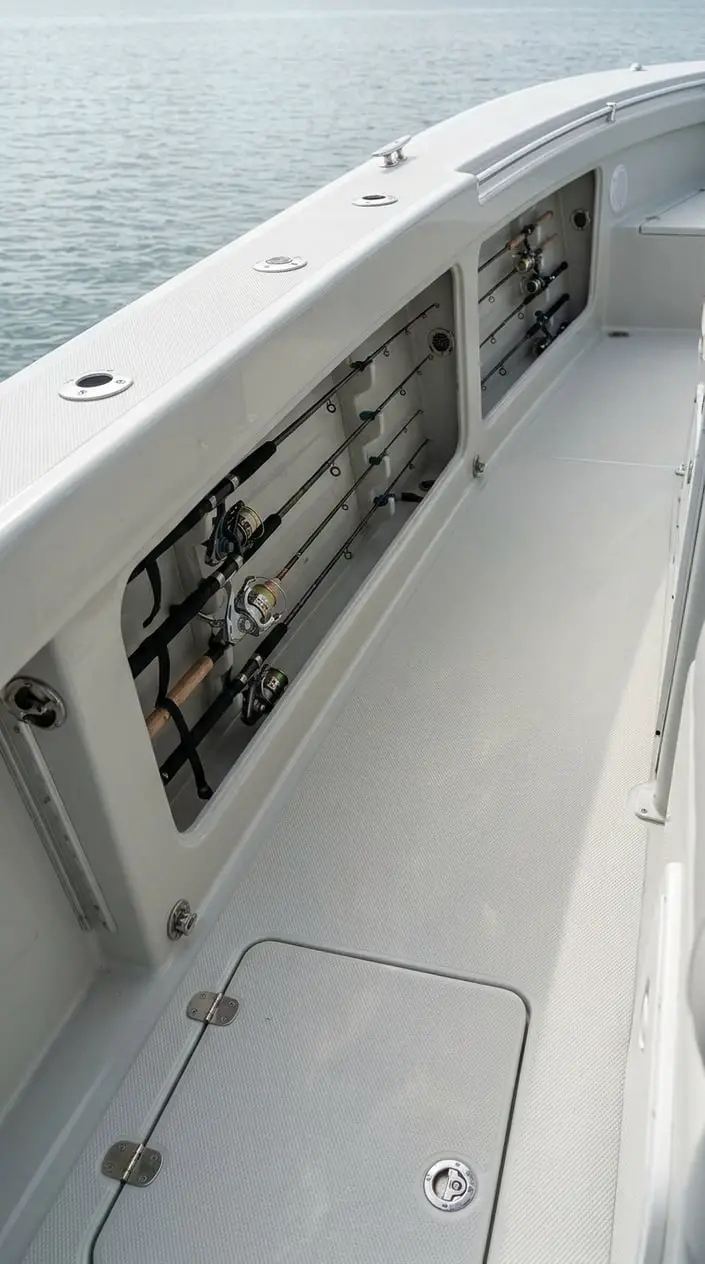
Under-gunwale rod lockers store rods along the boat’s sides and keep the main deck clear for fishing. The lengthwise position makes good use of space that would otherwise be hard to use, while secure storage helps protect rods during travel. Lockers also keep rod tips and line away from feet, seats, and active tackle.
Before settling on a design, measure your longest rods and check the locker’s usable length. Confirm that the entry is wide enough for rod handles and that retainers hold gear in place. Side storage works best when it doesn’t crowd the gunwale or interfere with access to other fishing equipment. Keep rods organized by setup so you can pull the right one quickly.
11) Recessed Rod Holders Along the Cockpit Coamings
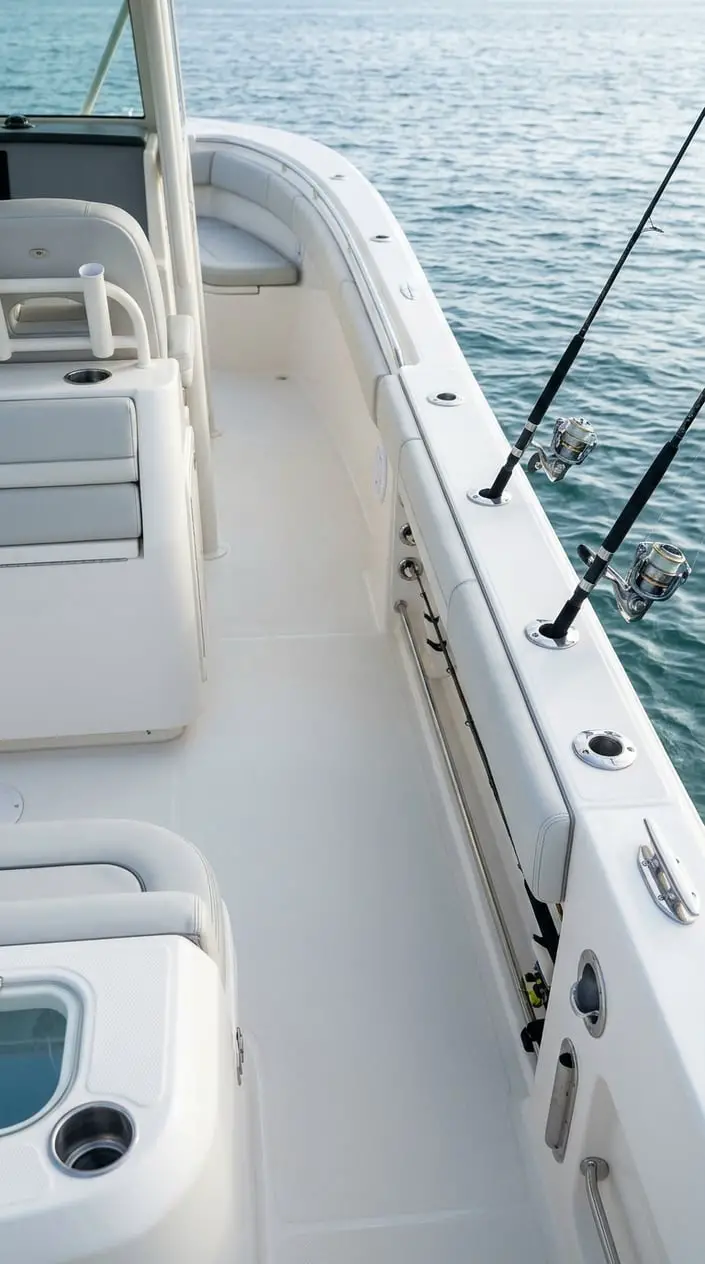
Recessed rod holders along the cockpit coamings keep rods ready while reducing equipment that sticks into the walking space. Their position along the sides leaves the center of the cockpit open for casting and landing fish. Recessed fittings also create a smoother edge that’s easier to pass when you move around the boat.
Review the angle and spacing of each holder with your preferred fishing style in mind. Holders should keep rods secure without placing tips over seats or the helm. Check that you can reach them from the deck and that they drain properly. A mix of holder positions gives you options for trolling, storing spare rods, or staging tackle before a cast.
12) A Wide, Open Jon-Boat Fishing Deck
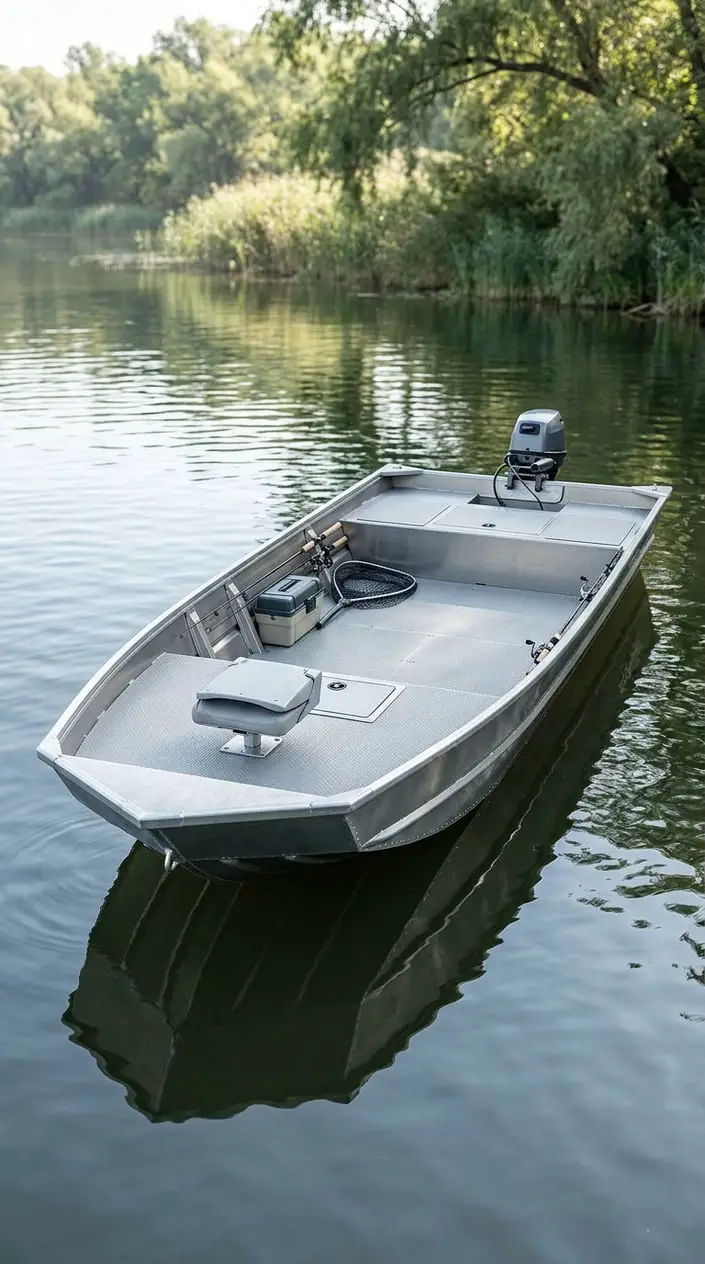
A wide, open jon-boat deck gives you room to cast and move while keeping the layout simple for shallow-water fishing. The flat-bottom hull and straightforward deck suit lakes, rivers, and protected backwaters. With fewer fixed pieces of furniture, you can arrange tackle and seating around the way you fish.
Match the boat’s size and capacity to your crew, gear, and launch needs. A longer, wider hull offers more room, while a compact model is easier to tow and maneuver into tight spots. Check the maximum weight and horsepower ratings, then count people, fuel, batteries, and equipment in your load. Secure loose gear so it stays in place as you travel.
13) A Compact L1032 Layout for Solo Fishing
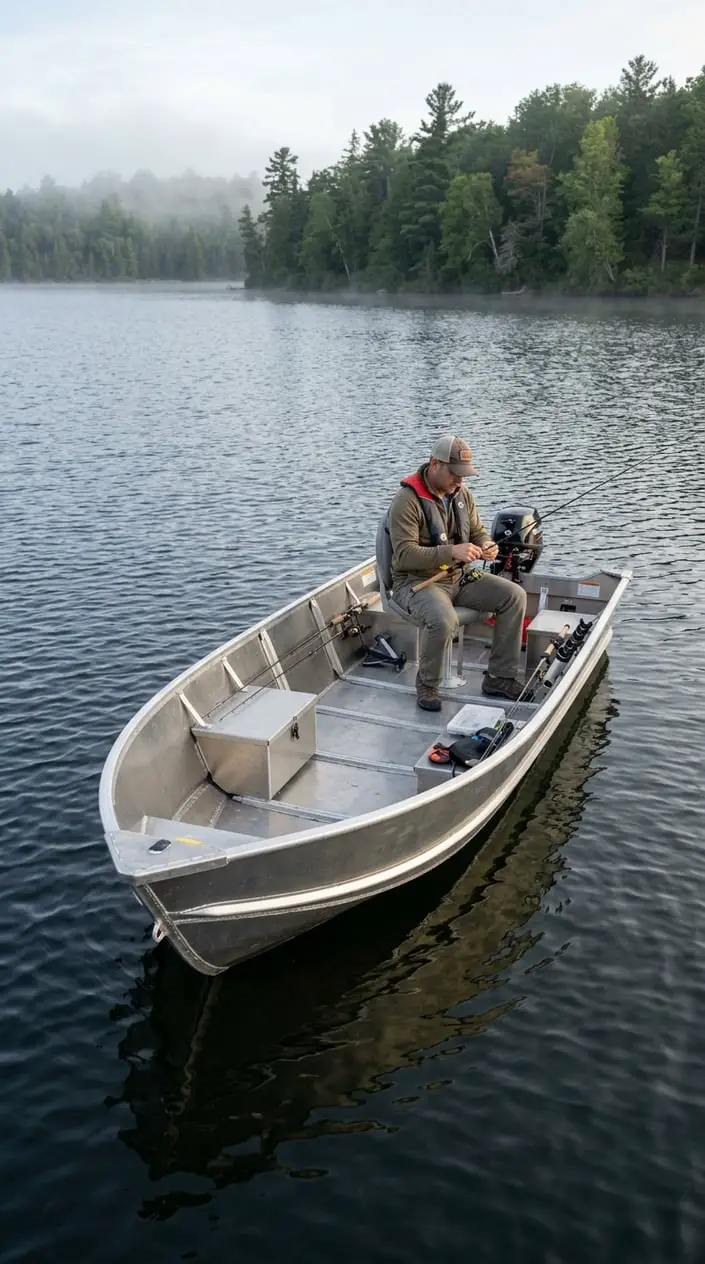
A compact 10-foot, 32-inch-wide aluminum layout suits solo fishing when you want a small boat that’s easy to transport. The narrow footprint helps you reach small waterways and launch from modest access points. With one person aboard, you can keep the deck focused on a rod, tackle, and essential safety gear.
Set up a simple storage plan before adding equipment. Place heavier items low and close to the center, and secure your battery and tackle so they don’t slide. Follow the boat’s capacity and horsepower limits, and keep enough open floor space to change position safely. A compact boat rewards a light, organized load that leaves room to fish.
14) A Grizzly 2072 CC Sportsman Layout for Crew and Gear
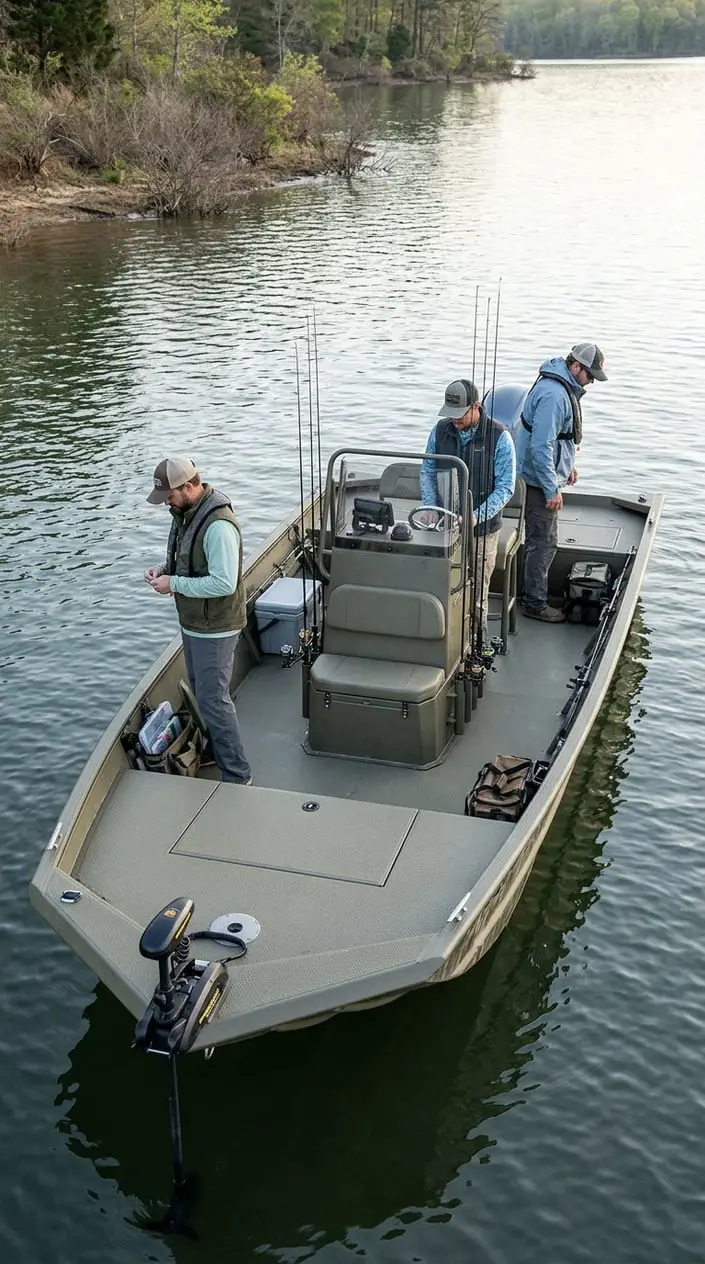
A 20-foot, 72-inch-wide center-console jon-boat layout gives your crew more room for gear and shared fishing space. Its broader deck provides space to move between fishing positions, while the center console keeps steering controls grouped in one area. That arrangement suits trips where you bring more than one angler or carry equipment for different techniques.
Plan storage zones so rods, tackle, and safety equipment each have a secure place. Keep the center walkway open and spread people and heavy gear across the boat. Review the capacity plate before loading passengers, fuel, batteries, and catch. A roomier aluminum layout still needs a balanced load to support predictable handling on the water.
15) Fold-Down Aft Seating to Clear the Cockpit
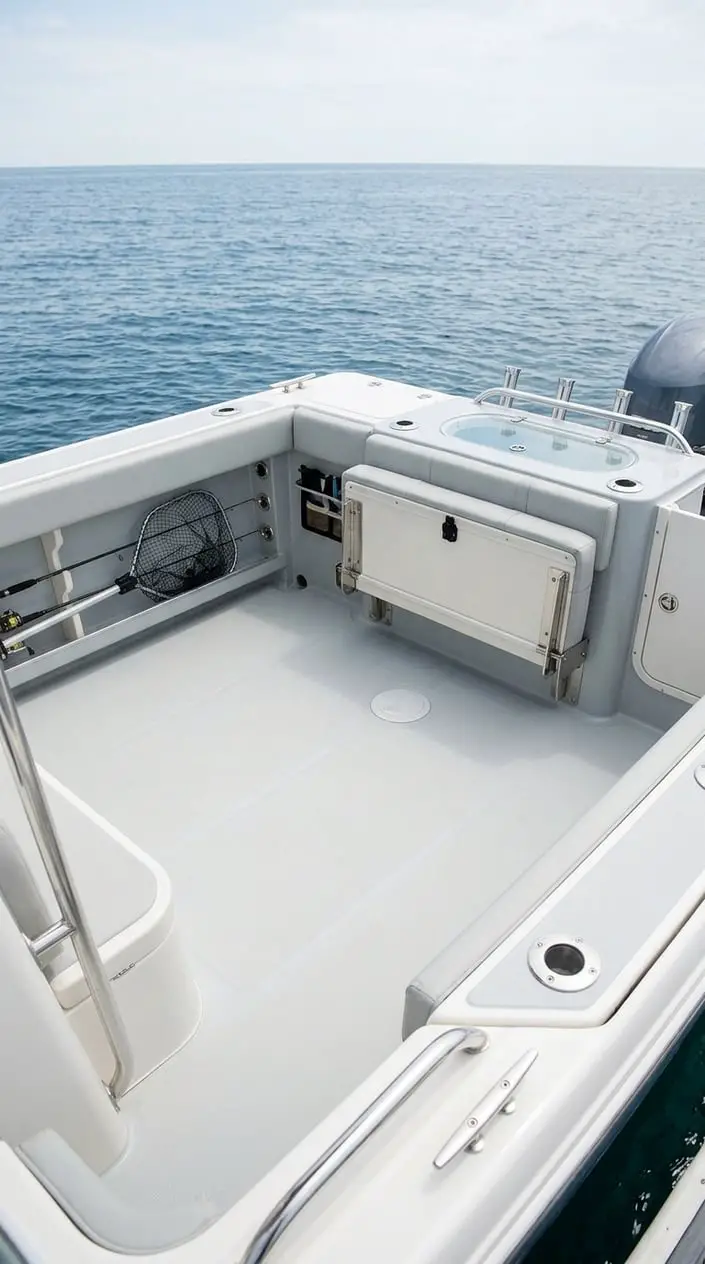
Fold-down aft seating gives you passenger seating when you need it and a clearer cockpit when you’re fishing. When the seat is up, you gain more room along the stern for casting, working lines, or bringing a fish aboard.
Lowering it restores a place for passengers during a cruise or a break between fishing spots. Check how the seat locks in both positions and whether its folded profile stays out of your fishing lane.
Look for hardware that resists corrosion and a seat surface that drains after spray or rain. Before a trip, confirm that the folded seat doesn’t block access to a livewell, fish box, or transom door. That way, the stern can shift between seating and fishing duties.