Last Updated on February 27, 2026
You want your time on the water to feel like a party, a road trip, and a chill lounge all at once. This article shows easy, practical ways to upgrade your boat with speakers, head units, amps, lighting, and control options so your soundtrack matches every mood on board. You’ll learn simple ideas that fit small jon boats up to big yachts and help you pick gear that lasts in wet, salty conditions.
Explore smart choices for Bluetooth stereos, weatherproof speakers, multi-zone setups, and DIY builds that save money while boosting sound. Use these ideas to plan upgrades that match your budget, boat size, and how you like to entertain.
1) Install a Fusion MS-RA770 Marine Stereo for seamless Bluetooth audio
The Fusion MS-RA770 gives you reliable Bluetooth streaming so you can play music from your phone without cords. Pairing is simple and the unit shows as MS-RA770 in your device’s Bluetooth list unless you rename it.
This stereo fits well on boats and supports multiple audio zones, so you can send music to different areas. It has line outs for adding an amp or subwoofer later if you want more bass or power.
Controls are clear and the display works in bright sunlight, making it easy to change tracks while you steer. The unit also connects to boat networks, so you can integrate it with other marine gear.
PRO TIP
Mount the stereo where you can reach it safely and run the wiring away from bilge areas to avoid moisture damage.
2) Add JL Audio M3-650X marine speakers for crisp, weatherproof sound
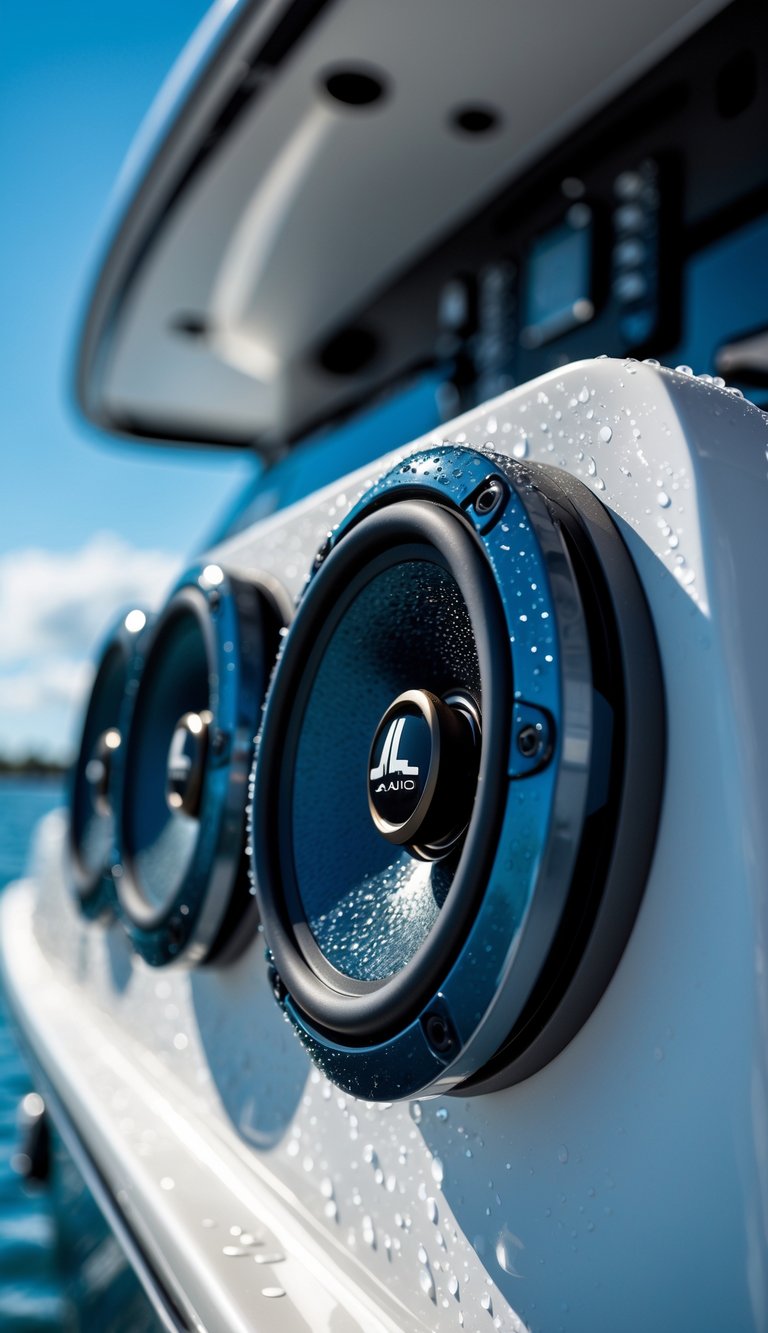
The M3-650X speakers give your boat clear sound that handles wind and engine noise well. They use a 6.5-inch woofer and a silk dome tweeter to reproduce highs and mids with good detail.
These speakers are built for marine use, so they resist UV, salt, and spray. That helps them last longer than indoor speakers when mounted on your deck or tower.
You can run them on a head unit alone, but pairing with a small amp improves clarity at higher volume. Their standard 6.5-inch fit makes replacement or upgrades simple if you want to swap later.
PRO TIP
Mount them where they point toward listeners and seal the wiring connections with marine-grade sealant to prevent corrosion.
3) Use a Garmin Marine Network for integrated audio and navigation
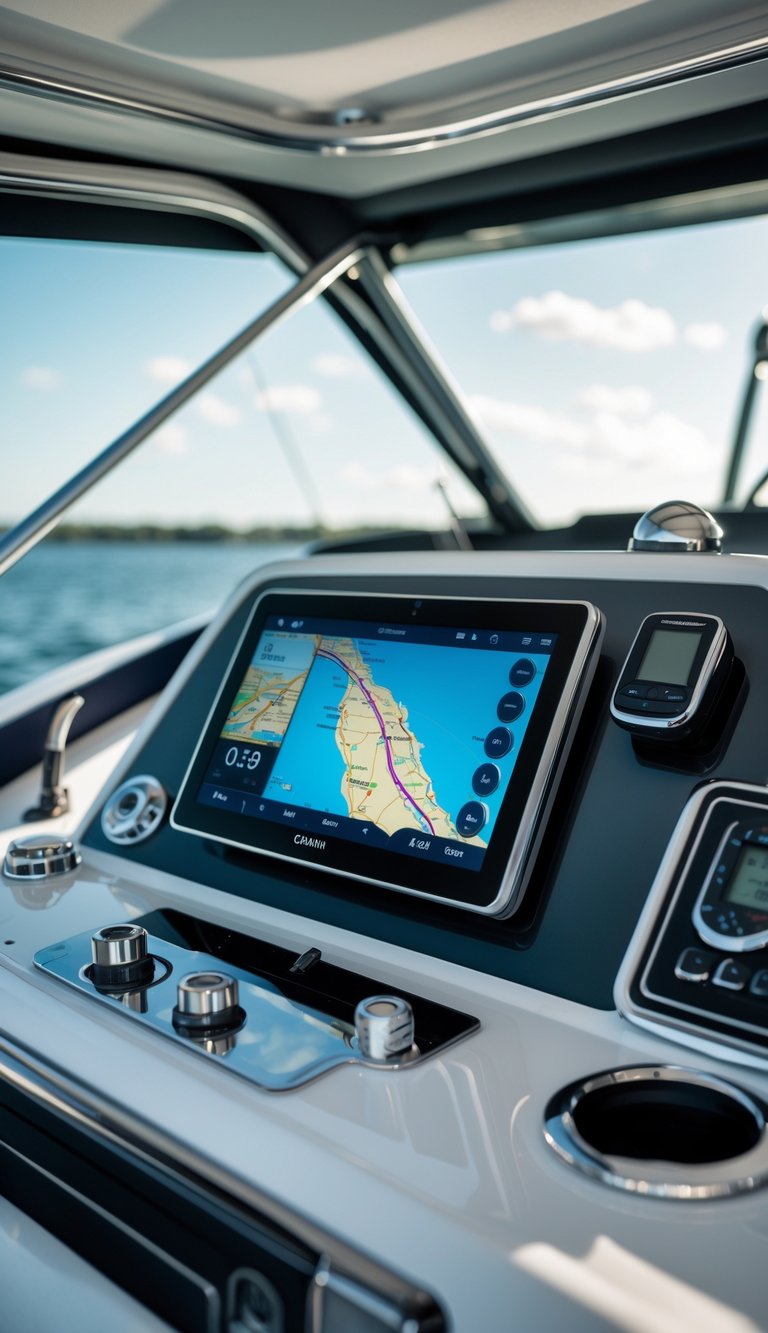
A Garmin Marine Network links your displays, audio, and sensors so you can control more from one screen. You can play Fusion audio, view charts, and monitor engine data without jumping between devices.
This setup cuts down on wires and clutter. It makes your dash cleaner and your systems easier to manage while you focus on steering or fishing.
Many Garmin systems let you control Fusion audio from multifunction displays, phones, or compatible watches. That gives you quick access to playlists, volume, and source selection from wherever you are on the boat.
PRO TIP
Plan your network layout before you buy components. Match chartplotter-sized ports and power needs so everything talks to each other reliably.
4) Mount a Kicker KMC10 marine media center for easy control
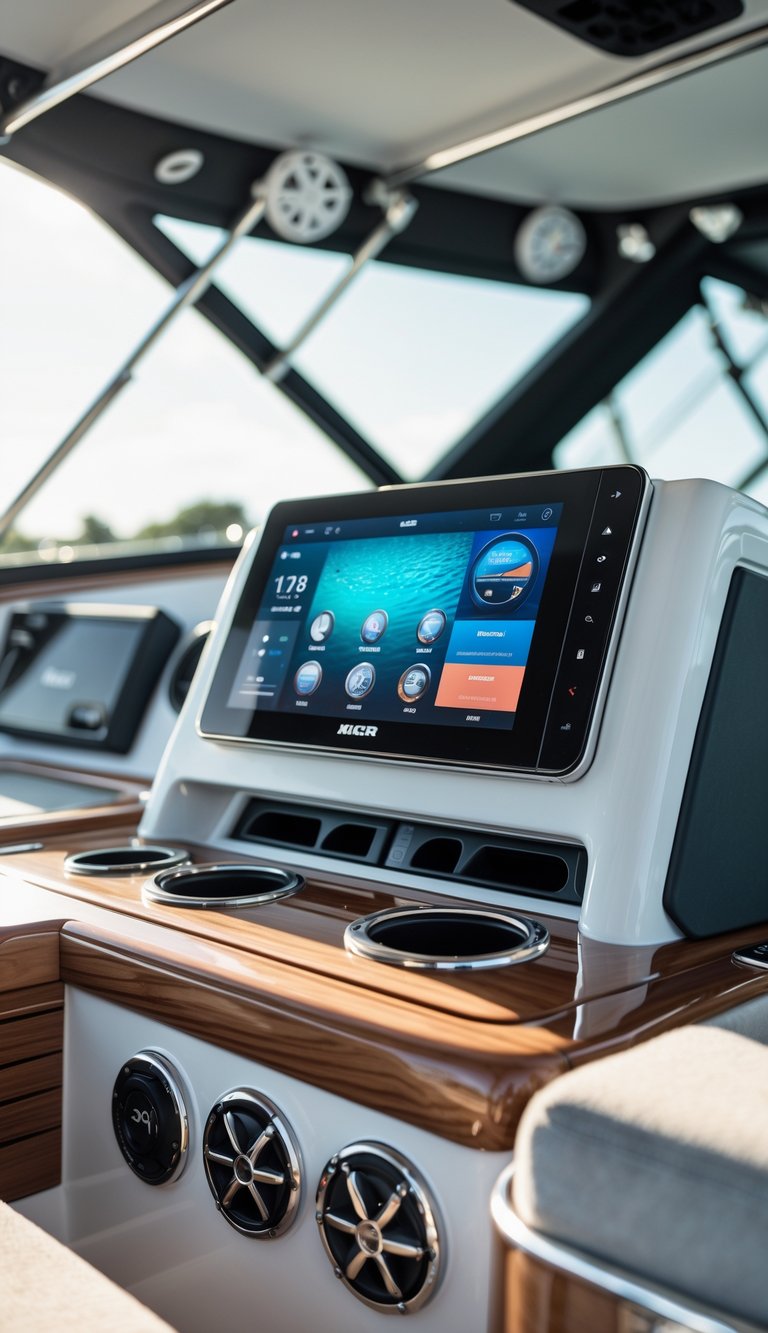
The Kicker KMC10 fits a standard gauge hole and gives you Bluetooth, USB charging, and RCA outputs. You can stream music from your phone and keep controls in one spot, so adjusting volume or tracks is fast and simple.
The unit is marine-rated, so it stands up to wind and water better than a regular radio. Install it near the helm or swim deck so you can reach it from the cockpit or while at the dock.
Pair the KMC10 with a wired remote like the KRC15 to control music from other spots on the boat. This lets you change sources, volume, and tracks without returning to the helm.
PRO TIP
Mount the KMC10 where glare is low and tubing behind it stays dry. That keeps the display readable and helps the unit last longer.
5) Create a DIY jon boat speaker system using waterproof compartments
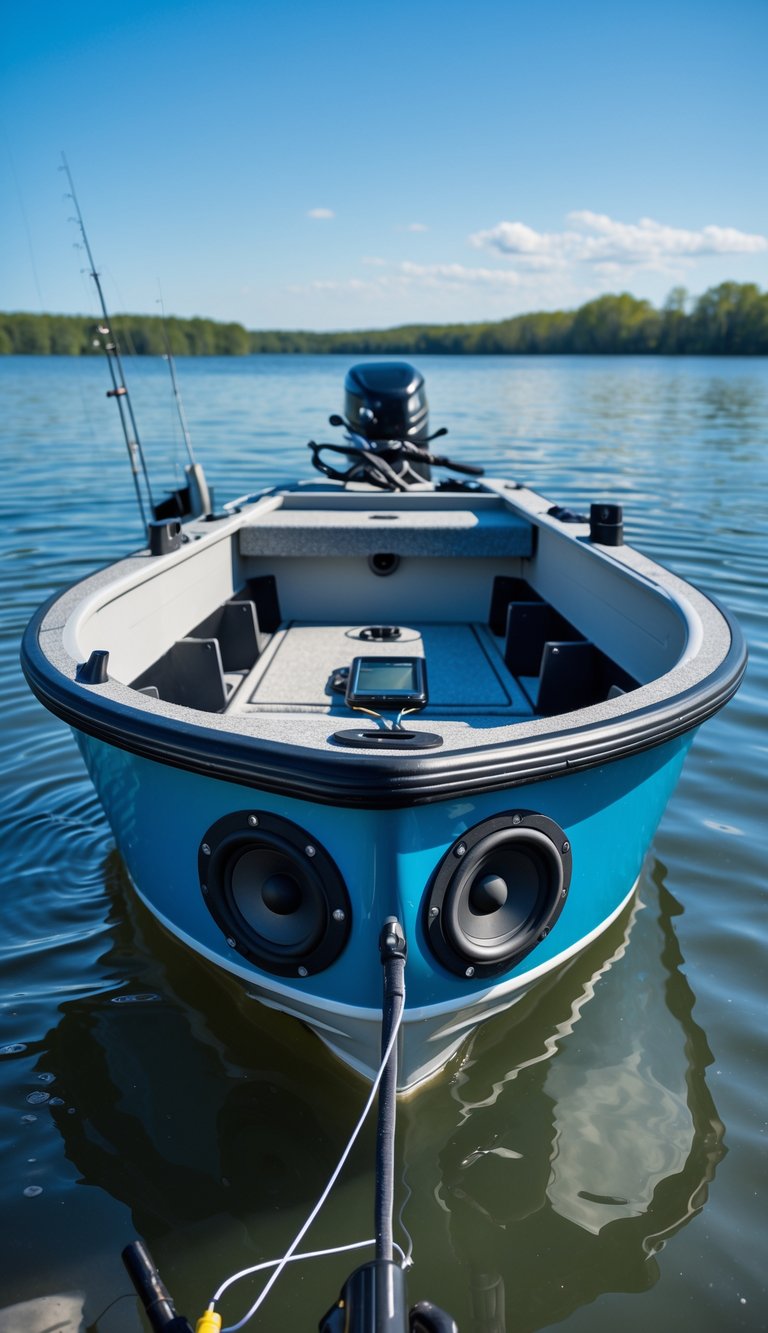
You can mount speakers inside sealed compartments to keep them dry and safe. Use marine-rated drivers or regular speakers inside a well-sealed box to protect against spray and rain.
Place compartments where sound can escape, like under gunwales or in side panels. Cut grills or ports so sound passes through without letting water in.
Run wires through grommets and use silicone sealant around fittings. Keep the amp and source in another dry box or a waterproof marine head unit that fits your boat.
PRO TIP
Test the system at low volume before sealing everything. That helps you fix placement or wiring problems without reopening built compartments.
6) Integrate a Polk Audio DB651 marine speaker set for balanced sound
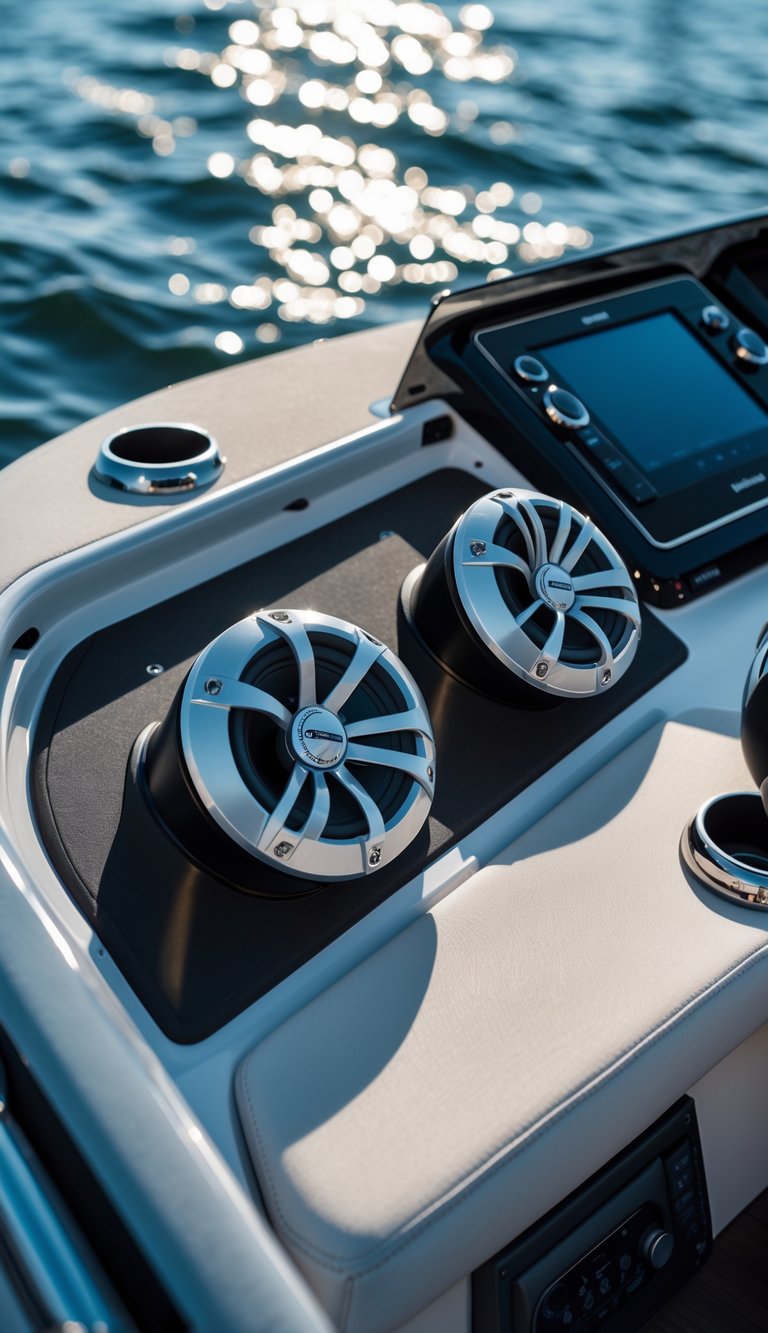
Adding a Polk DB651 marine speaker set gives your boat reliable, full-range sound without a big price tag. These 6.5″ coaxial speakers handle mids and highs well, and their polymer/mica cones resist moisture and sun damage.
You can mount a pair in the bow and another in the cockpit to spread audio evenly. Wiring them correctly keeps bass tight and prevents phase issues that make music sound thin.
The DB651s work with modest amps, so you don’t need a huge power setup. Match RMS power to avoid distortion and protect speaker life.
PRO TIP
Use stainless fasteners and marine-grade wire for the best long-term performance.
7) Upgrade with a Clarion CMS5 marine tower speaker kit
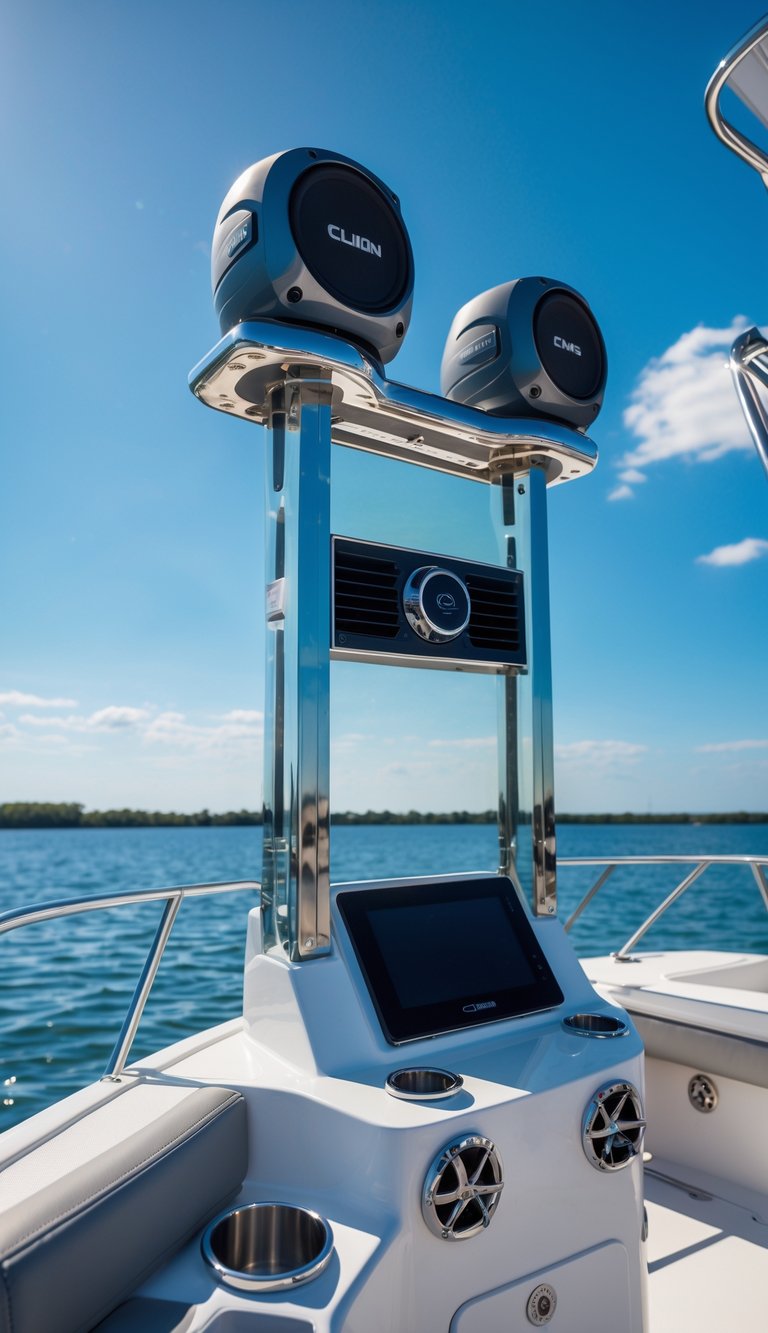
The Clarion CMS5 makes a solid jump from basic audio to a full marine setup. It pairs a hideaway receiver box with a 4.3″ LCD controller, so you keep a clean dash and still control Bluetooth, USB, and aux inputs.
Adding tower speakers gives your boat louder, clearer sound when you’re towing or entertaining. Tower kits often include mounting hardware and weather-resistant speakers built for sun, salt, and spray.
You can expand later with amps or a subwoofer without swapping the whole head unit. That makes the CMS5 a flexible choice if you plan staged upgrades.
PRO TIP
Mount speakers high and aim them toward the cockpit for better coverage.
8) Choose a Bose 251 Marine speaker system for room-filling audio
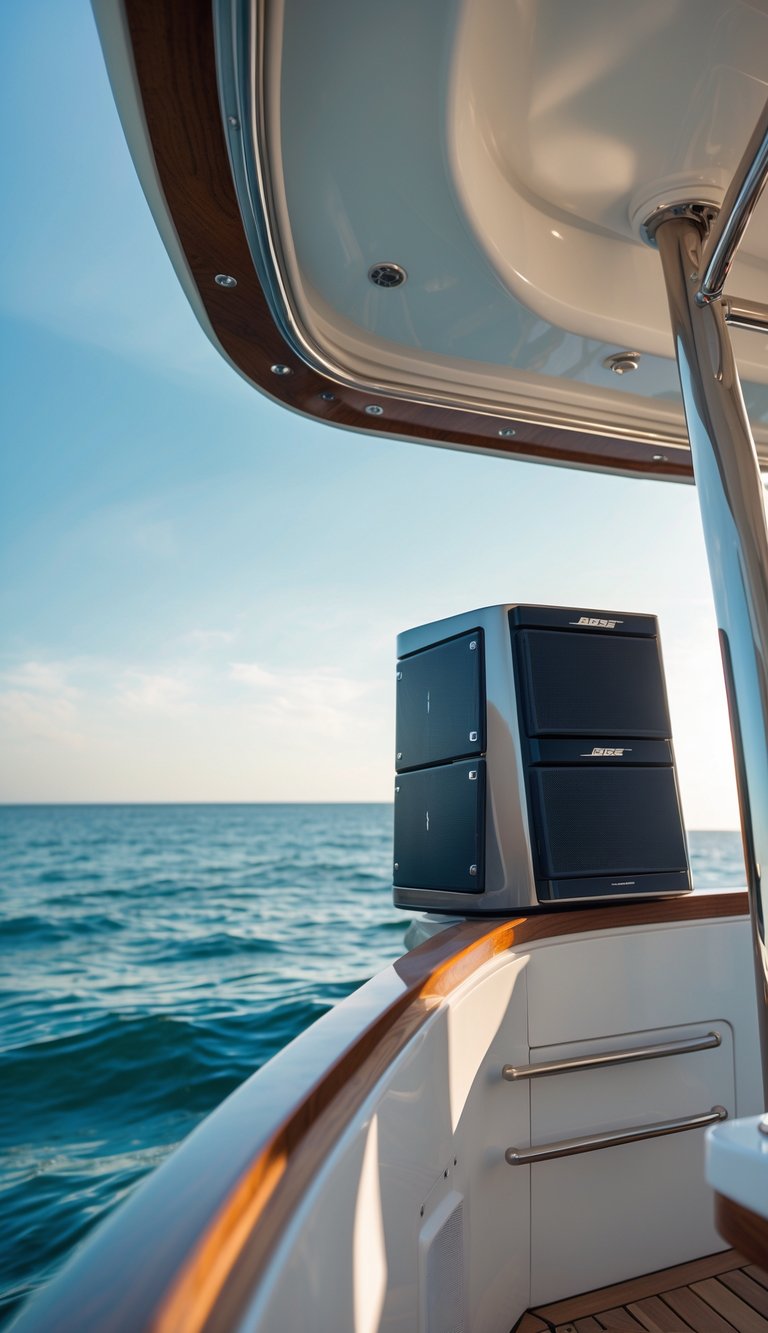
You want clear, wide sound on your boat without bulky gear. Bose 251 speakers offer a broad sound field that covers decks and seating areas well.
These speakers are built to handle outdoor conditions, so they resist temperature swings and salt air better than indoor models. Mount them on hard points and aim them to spread sound where people sit.
Pair the 251s with a marine-rated amplifier for better dynamics and louder volume without distortion. That combo keeps music sounding full while staying weather-resistant and reliable.
PRO TIP
Run speaker wire through conduit and use marine-grade connectors to prevent corrosion and keep sound quality steady over time.
9) Add a JL Audio M500/5 amplifier for powerful, clean tunes
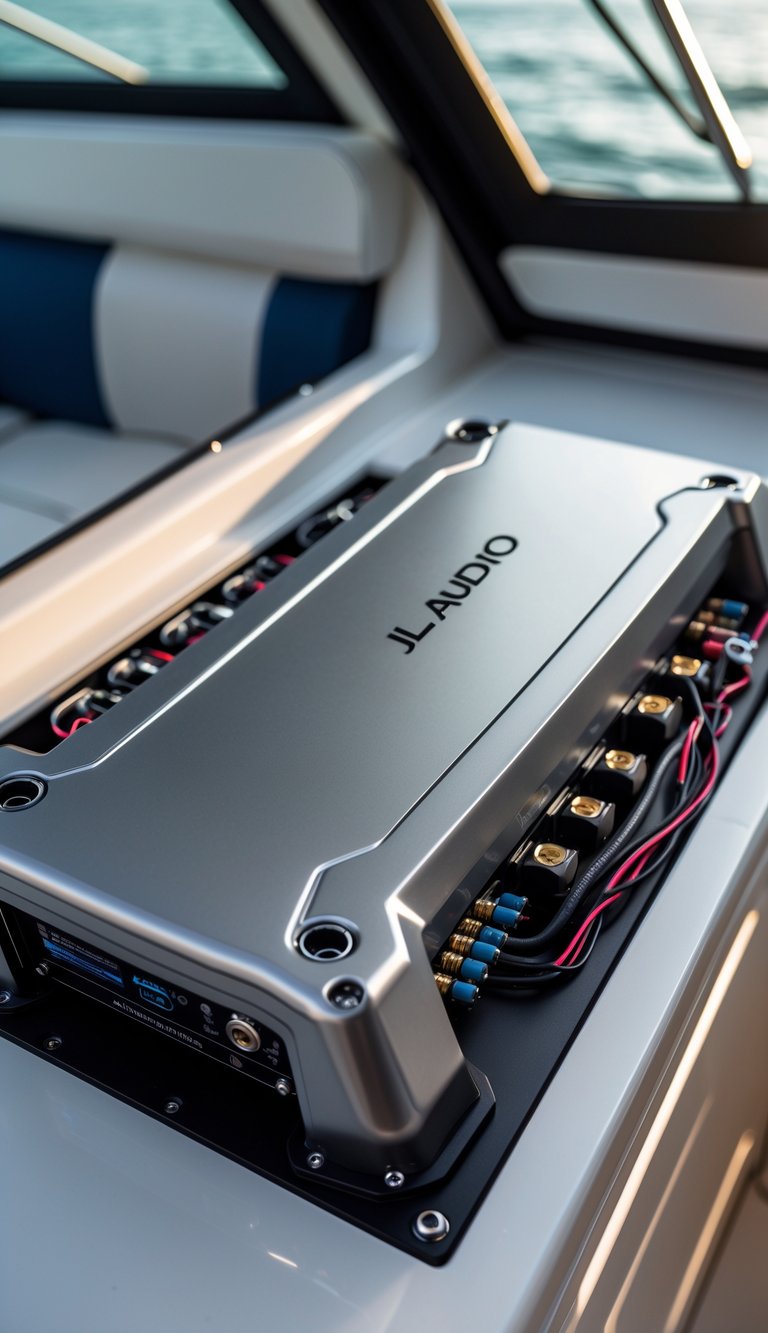
A JL Audio M500/5 gives your boat sound more power without adding noise. You get clear highs, solid mids, and a dedicated mono sub channel for tight bass control.
The amp fits a 5-channel setup so you can run mains, fills, and a subwoofer from one unit. That simplifies wiring and saves space on the dash or in a locker.
Install it with marine-grade wiring and a good fused power run to the battery. Set the gain carefully to avoid clipping; start low and raise until the sound is full but clean.
PRO TIP
Mount the amp where it stays dry and gets ventilation. Use sealed connectors and corrosion-resistant terminals for long life on the water.
10) Use a UClear HBT Bluetooth headset for hands-free calls

A UClear HBT headset keeps your hands free while you steer. You can answer calls without stopping the engine or leaving the helm.
The headset pairs with your phone and GPS so you stay connected to calls, music, and navigation prompts. Audio stays clear even over wind and engine noise, which helps you hear and be heard.
Battery life usually lasts through a day on the water, but charge before longer trips. Place the microphone near your mouth and test volume levels before you head out.
PRO TIP
Pair the headset to both your phone and GPS to hear directions and calls through the same device. Keep the firmware updated for best performance.
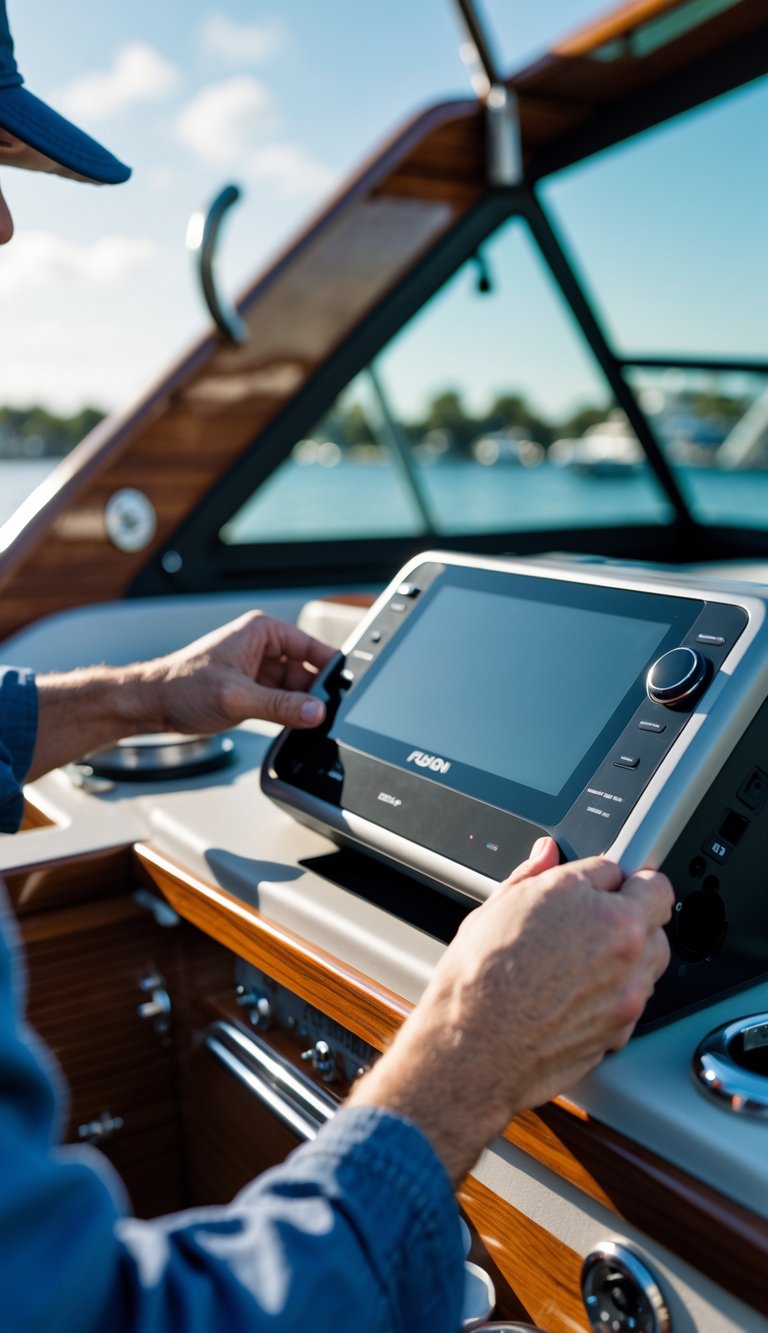
11) Install a Furrion Marine Stereo with Apple CarPlay compatibility
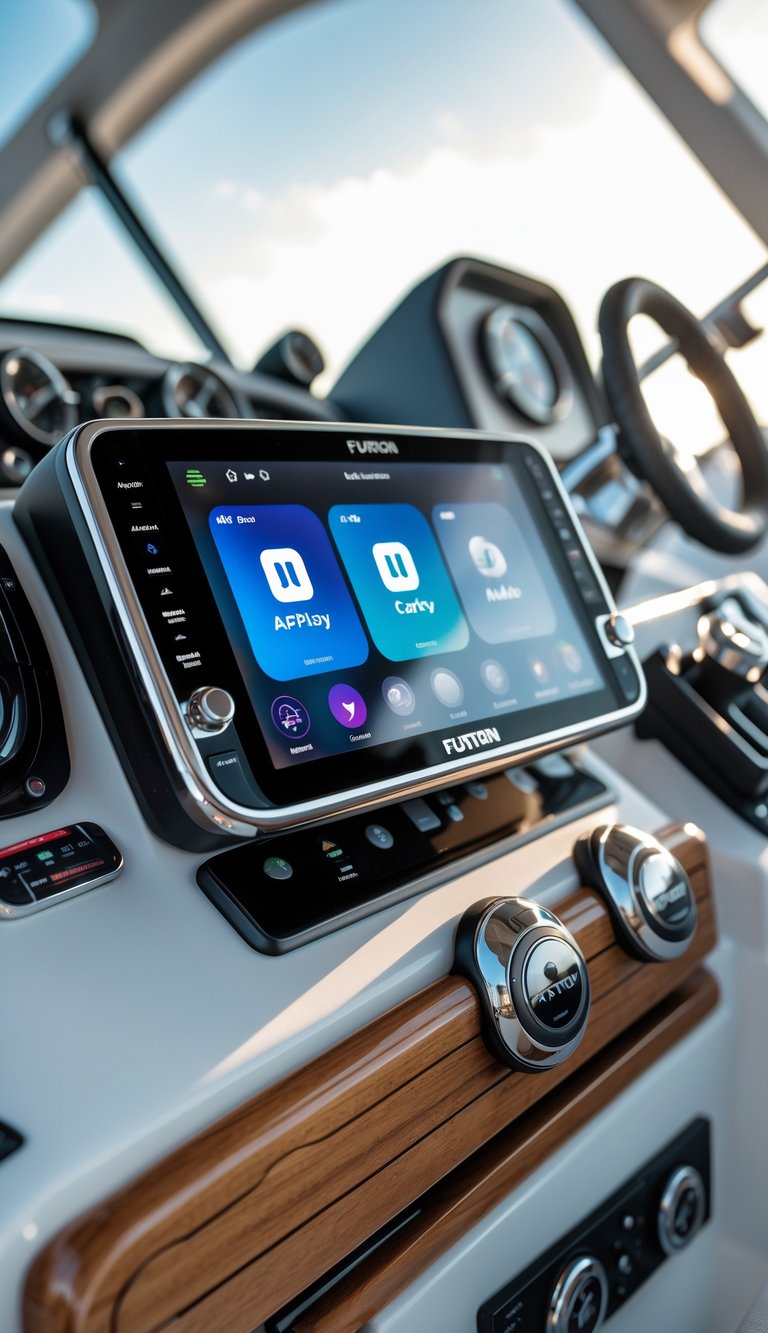
A Furrion marine stereo with Apple CarPlay makes using your iPhone safer and easier while you’re on the water. You can get maps, music, messages, and calls through the stereo screen without handling your phone.
These units are built for marine use, so they resist moisture and salt better than car stereos. Installation usually fits a double-din dash opening and ties into your boat’s speakers and power system.
You’ll want marine-grade wiring and proper grounding to avoid corrosion and noise. If your boat has a rear-view camera, many Furrion units support that too for easier docking.
PRO TIP
Keep the firmware updated and use a quality lightning cable for a stable CarPlay connection.
12) Add LED speaker lights for a fun party vibe on board
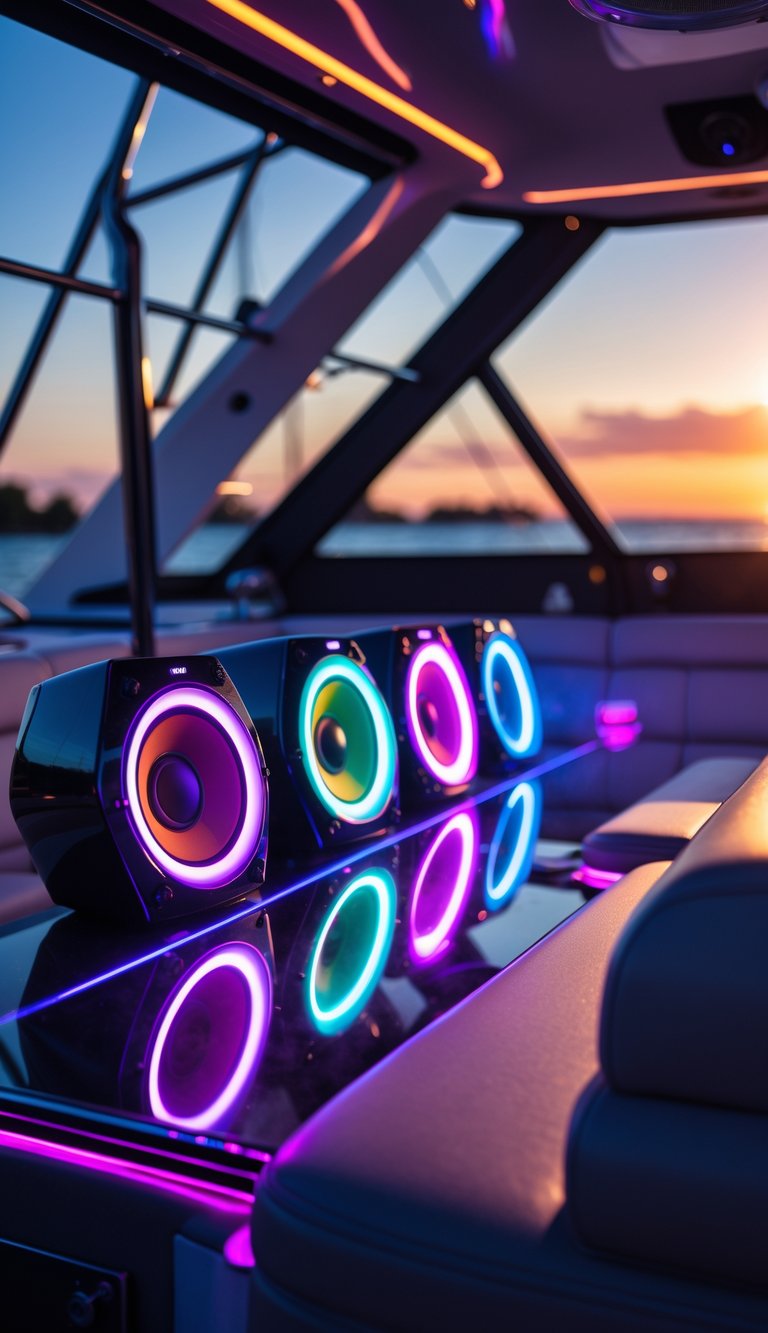
LED speaker lights turn your sound system into a visual show. They attach around or inside marine speakers and pulse with the music, so your boat looks lively without extra setup.
Choose marine-grade, waterproof rings and strips to handle salt and spray. Many kits offer multicolor modes and remote control, letting you match the mood fast.
Wiring is usually simple but follow 12‑volt wiring rules and fuse the circuit. You can link lights to your amplifier’s speaker output or use a separate controller for color effects.
PRO TIP
Mount lights where they won’t hit feet or gear, and aim strips to wash surfaces, not blind passengers. Test at night before guests arrive to ensure brightness and color sync.
13) Use a Fusion Smart Radio app for remote system control
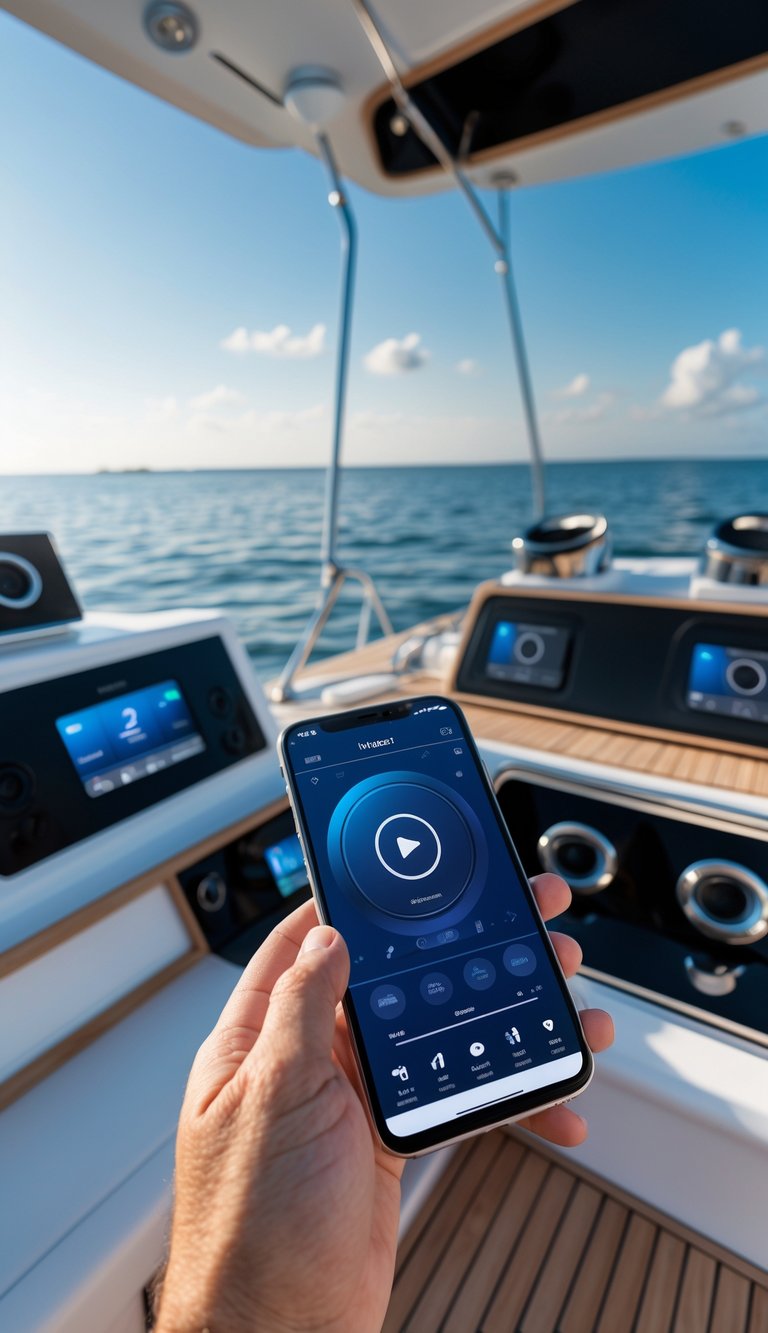
You can control your Fusion marine stereo from your phone or tablet. The app lets you change sources, pick tracks, and adjust volume without walking to the helm.
The wireless app works over Bluetooth when you’re onboard. It puts zone control and basic source navigation right in your hand, which is handy when you’re at the swim platform or fishing the transom.
Some Fusion systems also link into chartplotters and NMEA 2000 networks for on-screen control. That gives you more ways to manage audio if your boat has a multifunction display.
PRO TIP
Keep the app updated and pair devices while docked. That reduces connection hiccups when you head out.
14) Create a multi-zone audio setup to play different music areas
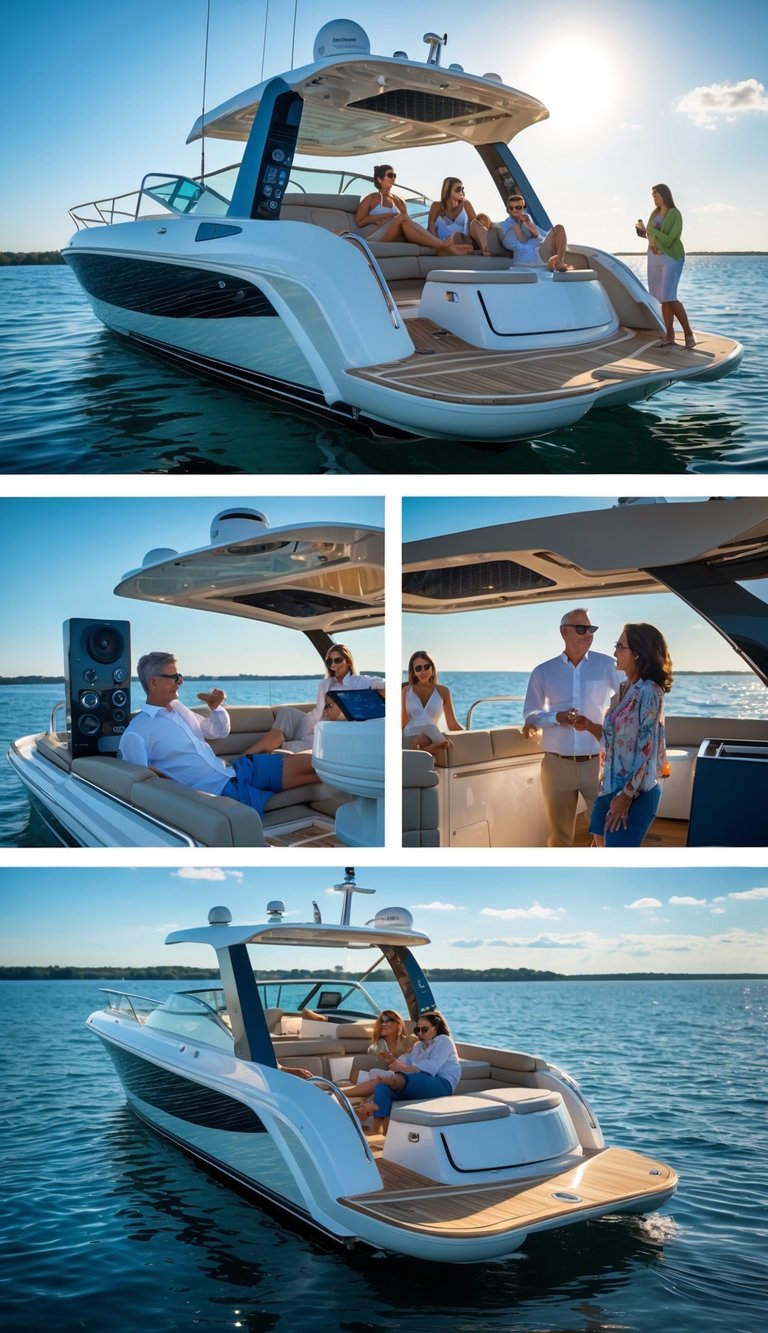
You can set up zones so people in the cabin, cockpit, and deck listen to different music at the same time. Use a multi-zone receiver or amplifier that lets you control each area independently.
Wired speakers give the best reliability on boats, but wireless zones work well for small crafts. Keep marine-grade wiring and waterproof connections to avoid corrosion and dropouts.
Link zones to a central app or controller for easy switching and volume control. That way you can solo a zone, group zones, or send one source to the whole boat when you want everyone to hear the same thing.
PRO TIP
Label each zone clearly in the app and test volume levels at different boat speeds to balance sound without disturbing others.
15) Add a waterproof subwoofer like the Kicker KMTC10 for deep bass
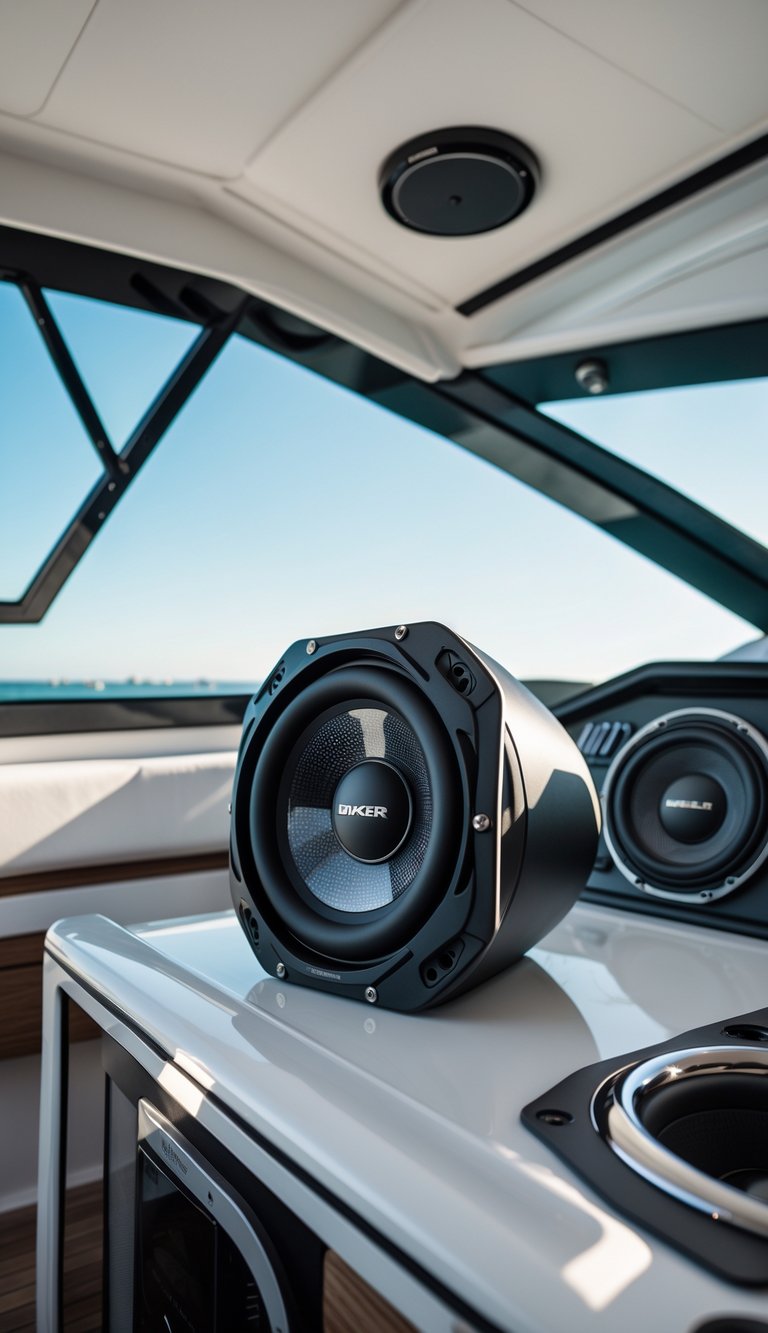
A waterproof subwoofer brings real low-end punch to your boat without worrying about splashes. You’ll feel bass that fills the cockpit and adds energy to music on the water.
Choose a marine-rated sub like the Kicker KMTC10 or similar models built for salt and spray. These units resist corrosion and work in small sealed or ported enclosures, so they fit many boat layouts.
Match the sub’s impedance to your amp and keep power within the sub’s RMS rating. Proper wiring, a compact sealed box, and a good marine amplifier give you tight, clear bass without distortion.
PRO TIP
Mount the sub near solid structure and use vibration-damping brackets. That reduces rattle and keeps bass defined at higher volumes.
16) Install a Samsung Marine Grade Soundbar for sleek entertainment
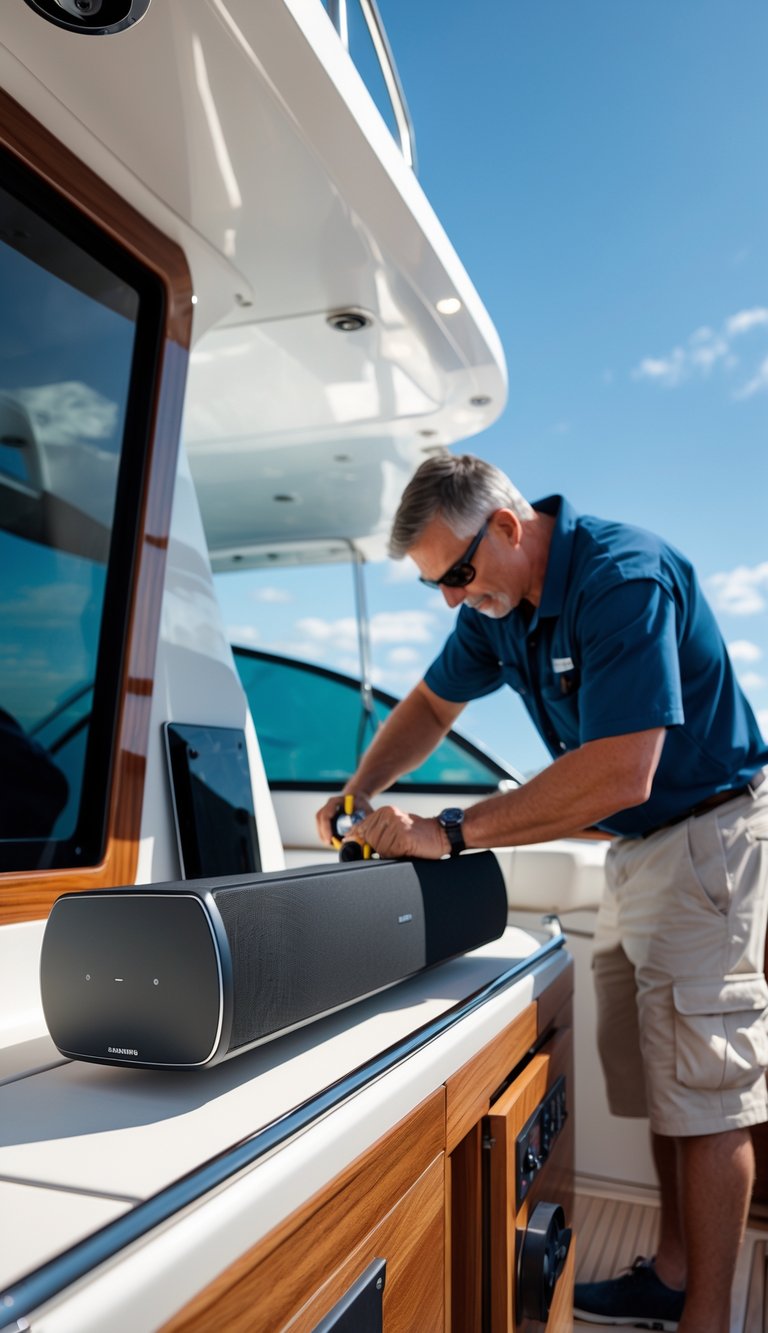
A Samsung marine-grade soundbar gives your boat clear, powerful audio without taking up much space. You get better dialogue and music than built-in speakers, so movies and playlists sound fuller on deck.
These soundbars resist salt, sun, and moisture so they last longer in harsh conditions. They connect easily to your TV, phone, or marine stereo with Bluetooth or HDMI, keeping setup simple.
Place the soundbar under your marine TV or mount it on a bulkhead to save space and aim sound toward seating areas. Pair it with a compact subwoofer if you want more bass while keeping a neat, marine-safe system.
PRO TIP
Run marine-grade wiring and use corrosion-resistant mounts for the best long-term performance.