

Last Updated on February 27, 2026
You spend time in your garage because you work, build, or tinker there. You can make that space much cooler and safer by improving airflow, venting hot air, and using targeted fans and vents. This article walks you through practical ideas that fit small workshops and full garages alike, so you can pick solutions that match your budget and needs.
You’ll find options that use natural airflow, powered fans, and simple upgrades that stop heat buildup and boost comfort. Expect clear, easy-to-apply ideas that let you keep working when summer temps climb.
1) Install a wall-mounted exhaust fan near the garage ceiling
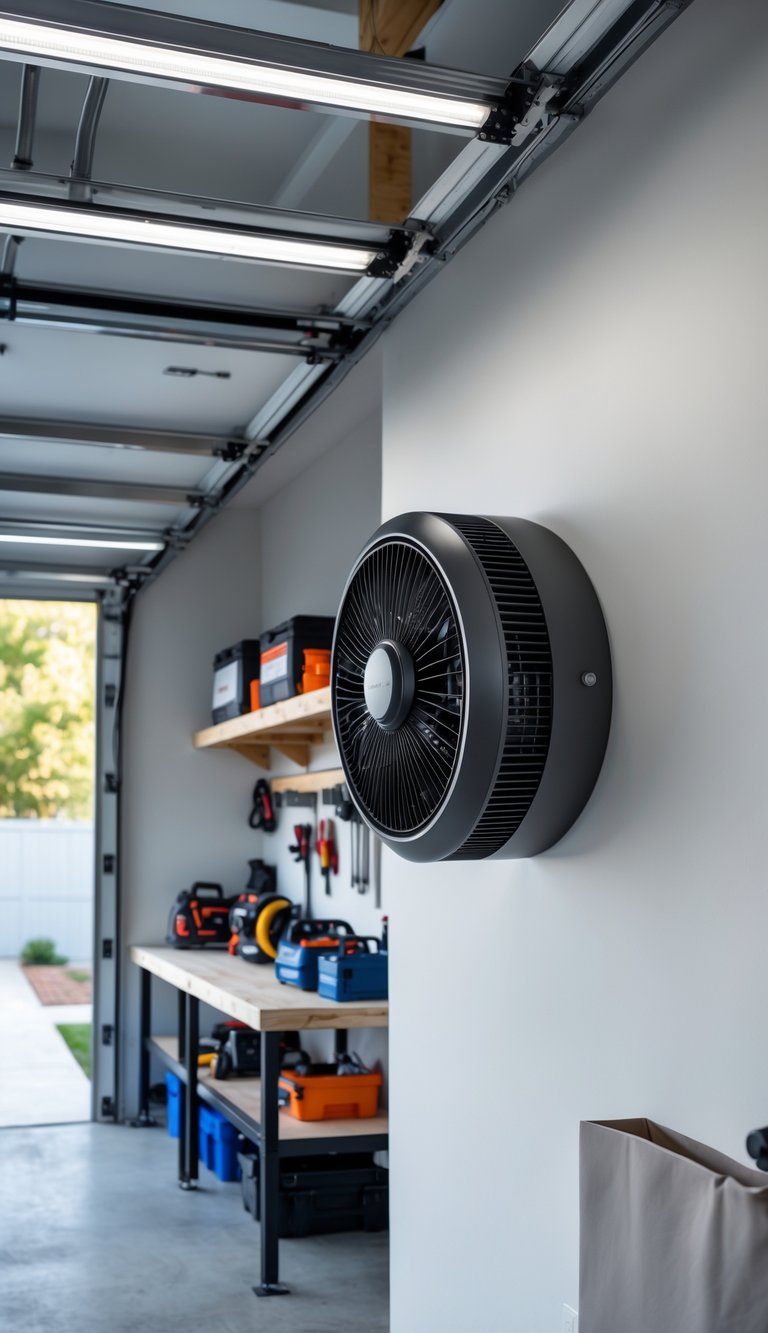
Put the fan high on an exterior wall to pull hot air and fumes out of your garage fast. Hot air rises, so mounting the fan near the ceiling helps clear heat and keeps the workspace cooler.
Choose a fan sized for your garage volume and keep the duct run short and straight to reduce resistance. Weatherproof the wall penetration so rain and pests stay out.
Wire the fan to a switch or timer so you can run it only when needed. A shutter-style exhaust fan closes when off, cutting drafts and noise.
PRO TIP
Aim the fan opposite the garage door or near the main source of fumes to make fresh air flow across your workspace.
2) Add passive gable vents to promote natural airflow

Gable vents sit high on the walls near your garage peak and let hot air escape. They work with lower vents or soffits to pull cooler air in and push warm air out.
You don’t need power to run them. Wind and the stack effect move air, so gable vents help lower temperatures and cut humidity without running fans all day.
Place vents on opposite ends for cross flow when possible. Make sure openings are screened to keep pests out and sized to match your garage volume.
PRO TIP
Choose vents with adjustable louvers so you can fine-tune airflow on calm days.
3) Use a ridge vent along the roof peak
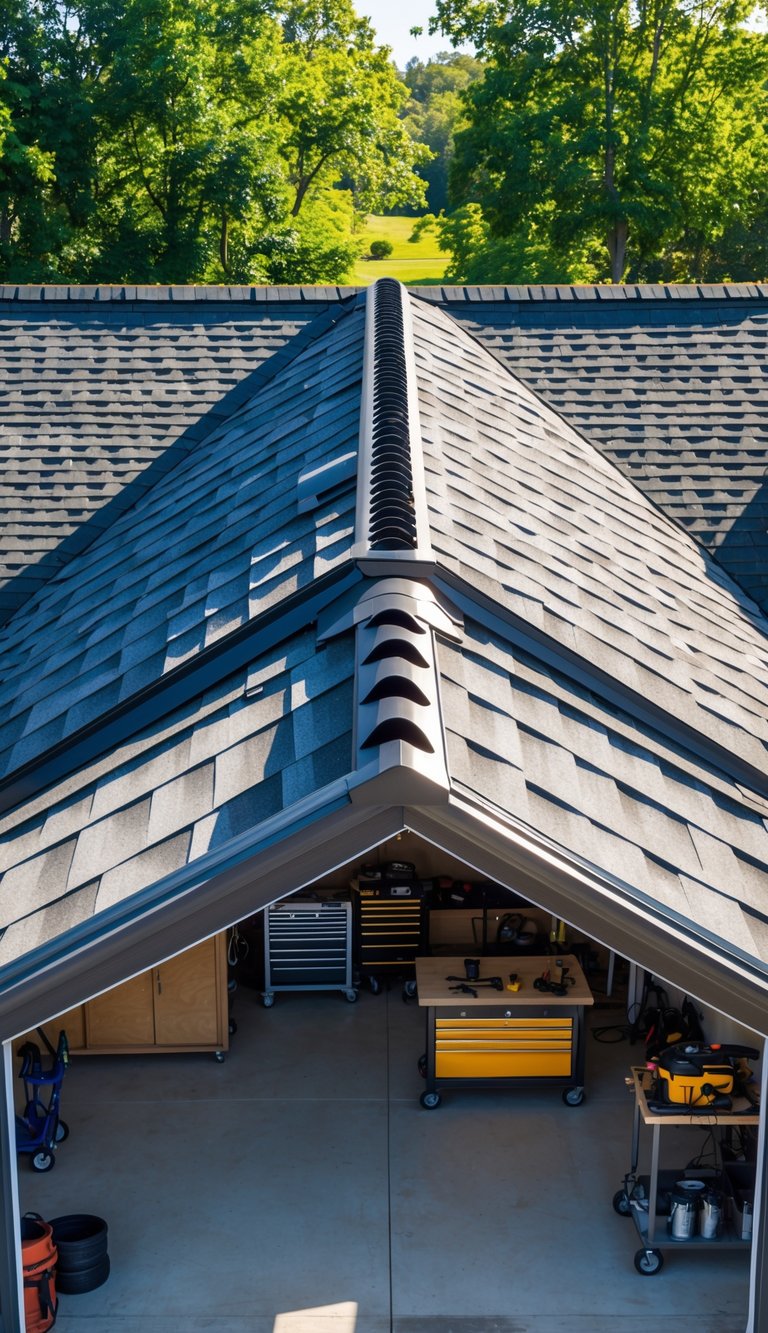
A ridge vent runs the length of your roof peak and lets hot air escape naturally. It works best when paired with soffit or intake vents so cool air can flow in from below.
You won’t see a big change in appearance because ridge vents sit low and blend with your roofline. They reduce attic heat that otherwise makes your garage hotter and stresses tools and finishes.
Installation needs a continuous slot at the ridge and proper sealing under the shingles. Have a pro check your roof structure and vent spacing to avoid leaks or poor airflow.
PRO TIP
Match ridge vent capacity to your soffit intake area. Balanced intake and exhaust gives the smoothest, most effective ventilation.
4) Install louvered vents on garage doors
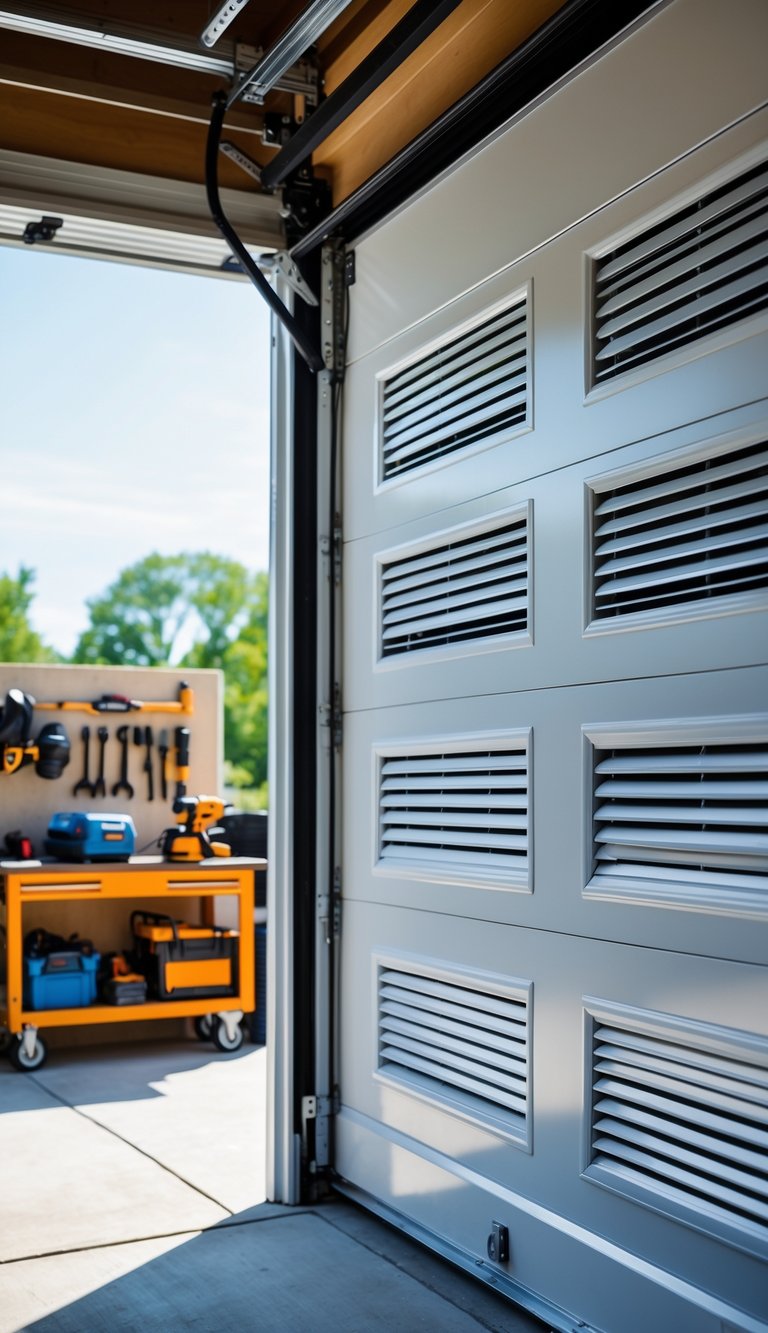
Louvered vents add steady airflow without leaving the door open. They let hot air escape and bring in cooler outside air, which helps lower temperature and reduce stuffy smells.
You can buy pre-made kits or cut openings and fit louvers yourself if you are comfortable with basic tools. Installation usually takes under an hour for a single panel and doesn’t require major door changes.
Place vents low and high on opposite sides for best cross-ventilation. Make sure louvers have insect screens and weather seals to keep pests and rain out.
PRO TIP
Choose corrosion-resistant materials like aluminum if your garage sees moisture or salty air.
5) Place a ceiling-mounted ductless ERV system
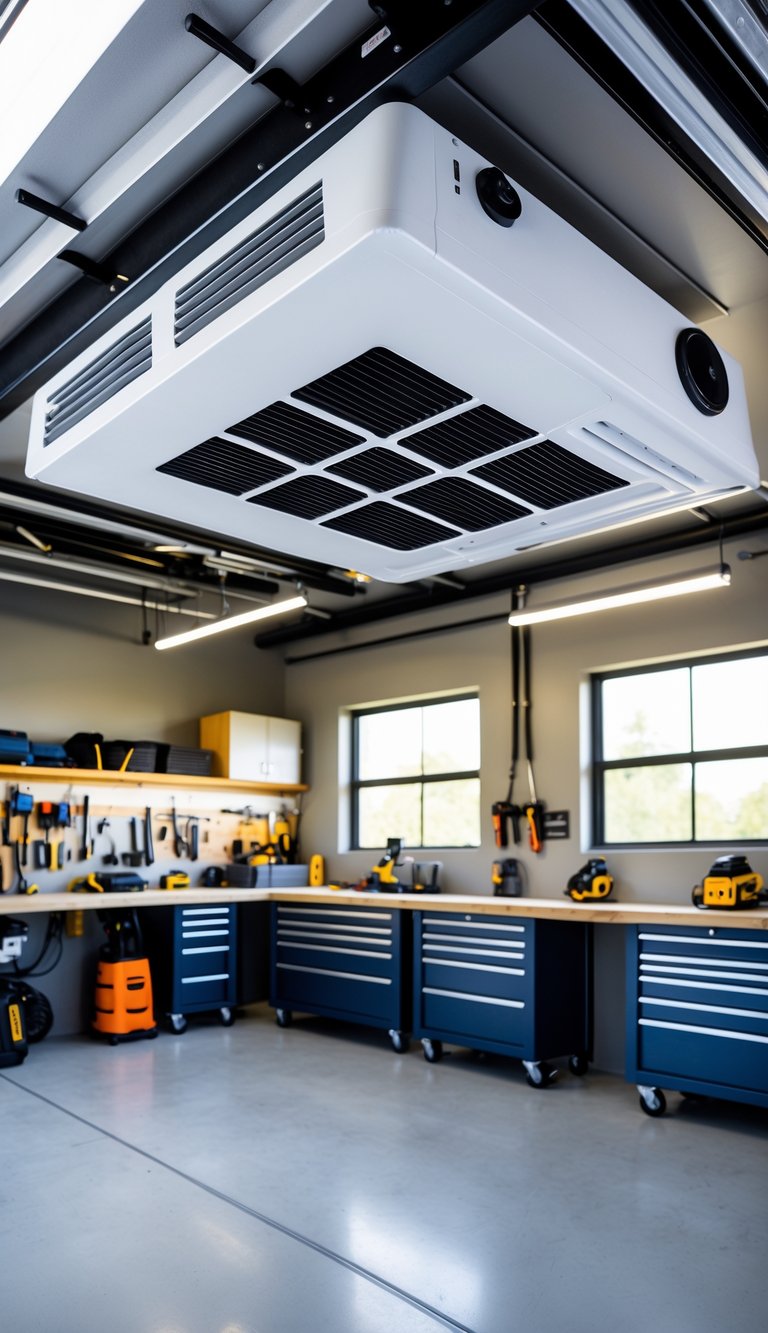
A ceiling-mounted ductless ERV can bring fresh air into your garage without major ductwork. You get continuous ventilation and heat or moisture exchange that helps keep temperatures and humidity steadier.
These units mount to the ceiling and move air through a compact heat-exchange core. They are simpler to install than full ducted systems, so you can add balanced ventilation even in tight or converted spaces.
You’ll still need to size the ERV for your space and consider filter choices. Choose MERV-rated filters for dust control and check that the unit has accessible controls for speed and scheduling.
PRO TIP
Install the unit away from direct tool exhaust and paint fumes, and run it on a low continuous setting for the best balance of comfort and energy use.
6) Mount a high-velocity portable fan for spot cooling
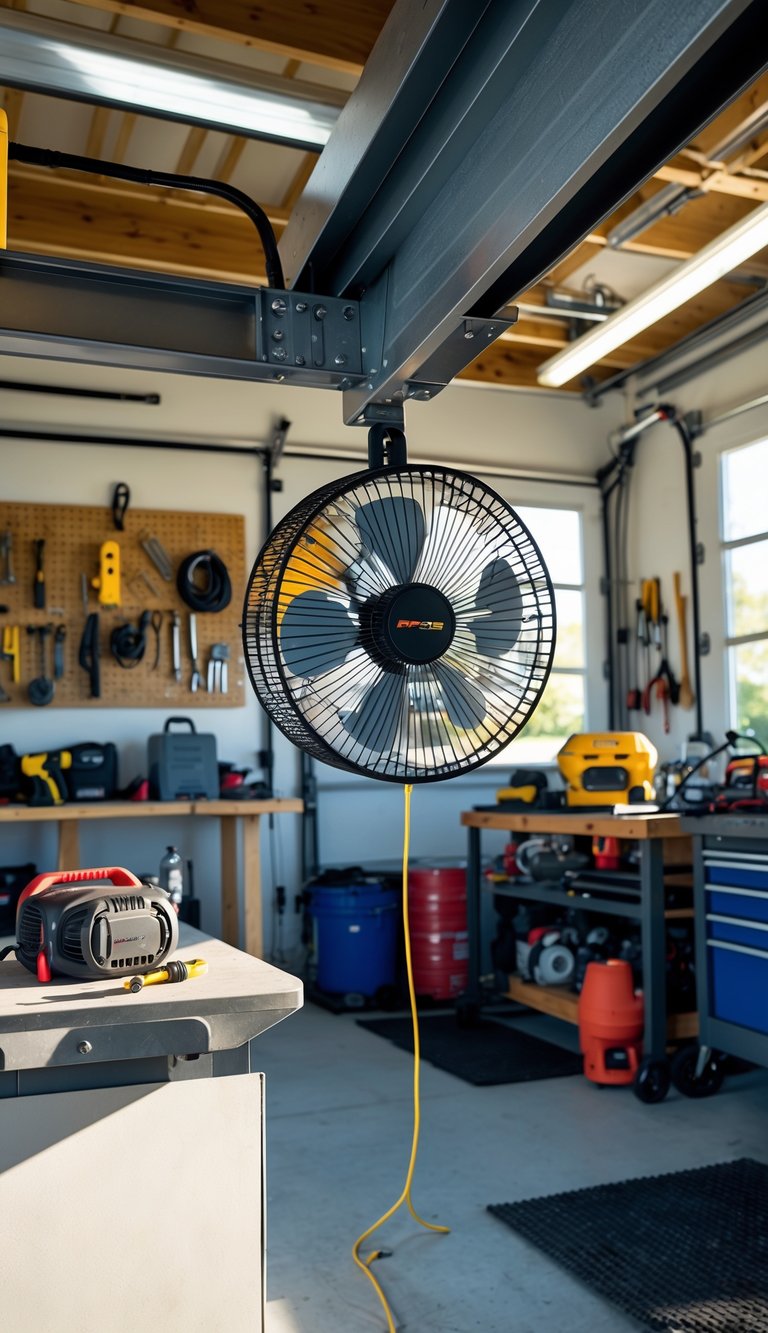
A high-velocity portable fan gives you fast, focused airflow where you need it most. Mount it on a wall, shelf, or bracket to lift it off the floor and aim the blast directly at your workbench or hot gear.
These fans move more air than small box fans, so they cut felt heat and help clear fumes from welding or painting. Pick a model with 3 speeds and a tilt head so you can tweak airflow without moving the whole unit.
Keep the fan secure and away from dust or sparks. Use a metal bracket or hanging kit rated for the fan’s weight, and route cords safely to avoid trips and snags.
PRO TIP
Aim the fan slightly upward to mix cooler air into the breathing zone and reduce direct blast fatigue.
7) Open windows during cooler parts of the day
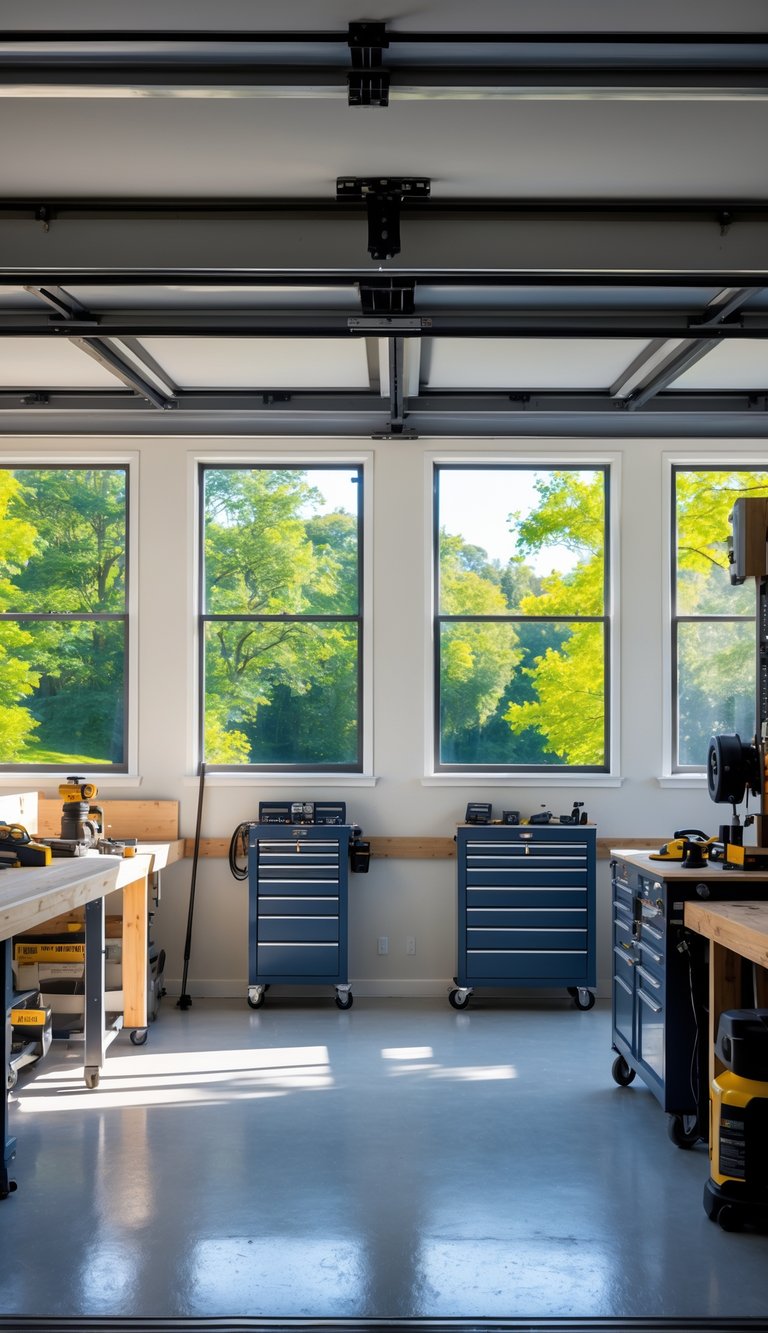
Opening windows in the early morning and late evening brings in cooler air and helps flush out the heat built up during the day. You can do this before you start work and after you finish to lower the overall temperature quickly.
Reverse-window fans work well: set some to pull cool air in and others to push hot air out. Even a few minutes of cross-ventilation can make the space much more comfortable.
If you have high or roof vents, open them too to let hot air escape upward. Close windows, doors, and blinds when the sun rises to trap the cooler air inside.
PRO TIP
Use a simple timer or smart plug to run fans only during those cool windows of time so you don’t forget.
8) Use a solar-powered attic fan
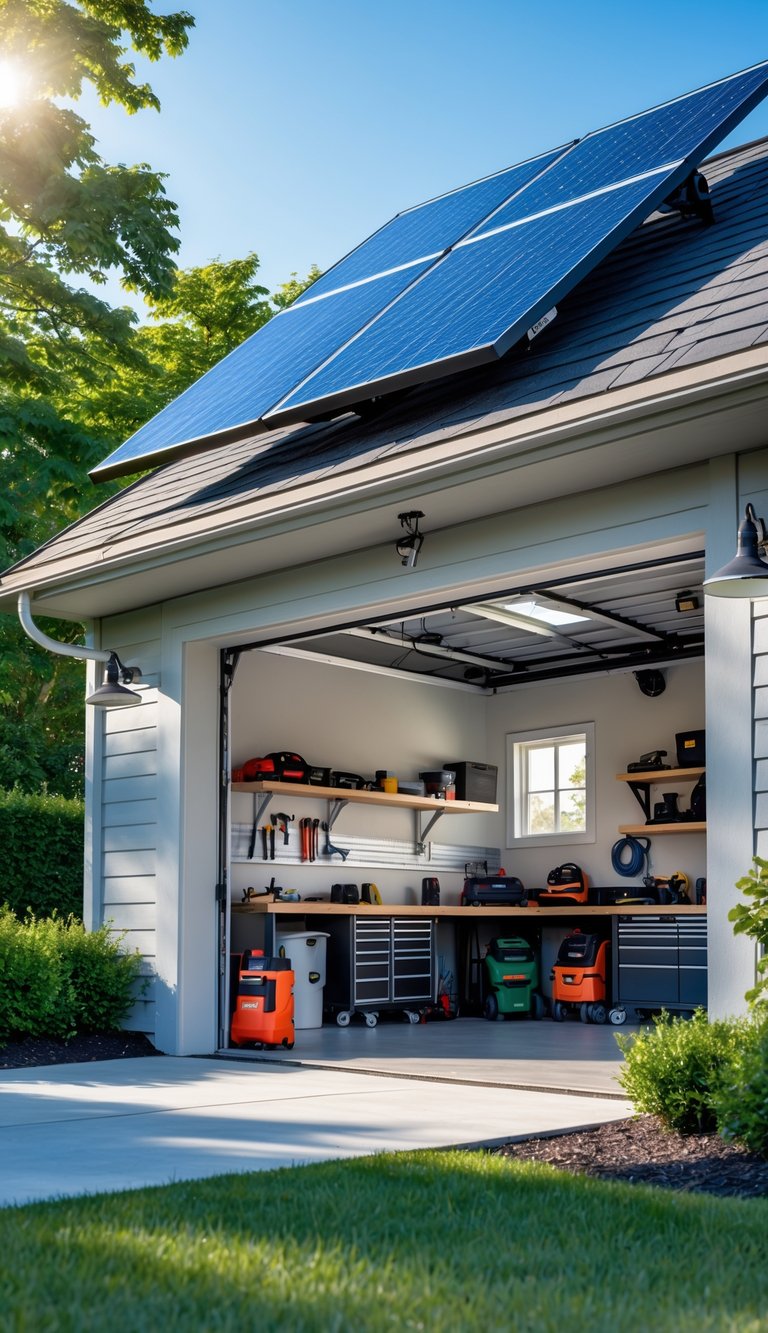
A solar-powered attic fan mounts on your roof and uses sunlight to run. It pulls hot air out of the attic space above your garage, which lowers temperatures inside the workshop without adding to your electric bill.
You can install one without wiring if your roof gets good sun. Models vary by airflow and panel size, so pick a fan rated for your attic square footage and typical heat load.
Solar fans also reduce moisture and relieve stress on your home cooling system. They work best paired with intake vents so fresh air can flow in as hot air moves out.
PRO TIP
Aim the panel where it gets direct sun most of the day, and check CFM and warranty before buying.
9) Add roof vents to allow hot air escape

Roof vents help hot air rise and leave your garage naturally. You’ll cut heat buildup without running power-hungry fans all day.
Choose ridge vents, turbine vents, or static roof vents based on your roof type and budget. Ridge vents work well with soffit intake, while turbines boost flow on windy days.
Install vents near the highest point of the roof so the hottest air can exit. Seal around openings to prevent leaks and insulate if you have an insulated garage to limit heat transfer.
PRO TIP
Pair roof vents with lower intake vents or open eaves to create a steady upward airflow. This simple change makes roof vents much more effective.
10) Keep garage doors open when possible

Opening your garage door lets hot air escape and brings in cooler outside air. This simple move can drop the temperature quickly, especially early morning or late evening.
If you work in the garage, open the door enough to create a steady breeze. Cross-ventilation helps more: open a window or side door to let air flow through.
Be mindful of security and pests when you leave the door open. Use screens or close it when you step away, and keep valuables out of sight.
PRO TIP
Place a box or clamp fan near the opening to push hot air out faster. You’ll feel the difference while you work.
11) Seal gaps to improve airflow direction

Small gaps around doors, windows, and where walls meet the floor let hot air sneak in and cool air escape. Seal those cracks with weatherstripping, door sweeps, and caulk to keep airflow moving where you want it.
Blocking leaks helps ventilation systems work better. When your exhaust fan or vents have a clear path, air moves through the space instead of short-circuiting out of gaps.
Check the garage after sealing by running fans and watching airflow or using a smoke pencil. Make adjustments to seals and vents until air flows from intake points to exhaust points.
PRO TIP
Start with the garage door perimeter and any wall penetrations for cables or pipes. Those spots often cause the biggest air leaks.
12) Use a ceiling fan to circulate air downward

A ceiling fan can push cool air down into your workspace and help move hot air up and out. Set the fan to spin counterclockwise in warm months so it creates a downward breeze that feels cooler on your skin.
Place the fan near the center of the work area for even airflow. If your ceiling is high, use a fan with a longer downrod to bring the airflow closer to you.
Combine the ceiling fan with exhaust or wall fans to make a steady flow through the garage. This helps carry heat and fumes out while bringing in fresher air.
PRO TIP
Run the ceiling fan whenever you work. It uses little power compared to AC and gives immediate, noticeable comfort.
13) Install a window exhaust fan for cross ventilation

A window exhaust fan moves hot, stale air out fast and helps pull cooler air in from an open door or another window. You place the fan in a window opposite an intake to create a steady breeze through your workspace.
Choose a fan sized for your garage volume so it can swap the air several times per hour. Look for models made for garages or workshops; they handle dust and run longer without trouble.
Set the fan to blow out when the garage gets hot and run it with an intake source open. That simple setup reduces heat, fumes, and humidity without major ductwork.
PRO TIP
Tilt a small intake window or crack a door on the shaded side of the building to improve airflow and keep dust out.
14) Use mesh screens on vents to keep pests out

Mesh screens block insects and small rodents from entering vents while still letting air flow. You can fit them over attic, wall, or garage vents to stop bugs, leaves, and debris from getting inside your workshop.
Choose a durable material like stainless steel or polyethylene with a fine mesh size. Small openings keep out gnats and flies; larger, stronger mesh stops mice and rats.
Install screens that are easy to remove for cleaning and inspection. Secure them with screws or clips so wind or animals don’t dislodge them.
PRO TIP
Measure your vent opening before buying mesh. A tight fit and routine checks prevent gaps that let pests back in.
15) Add door vents for extra air intake
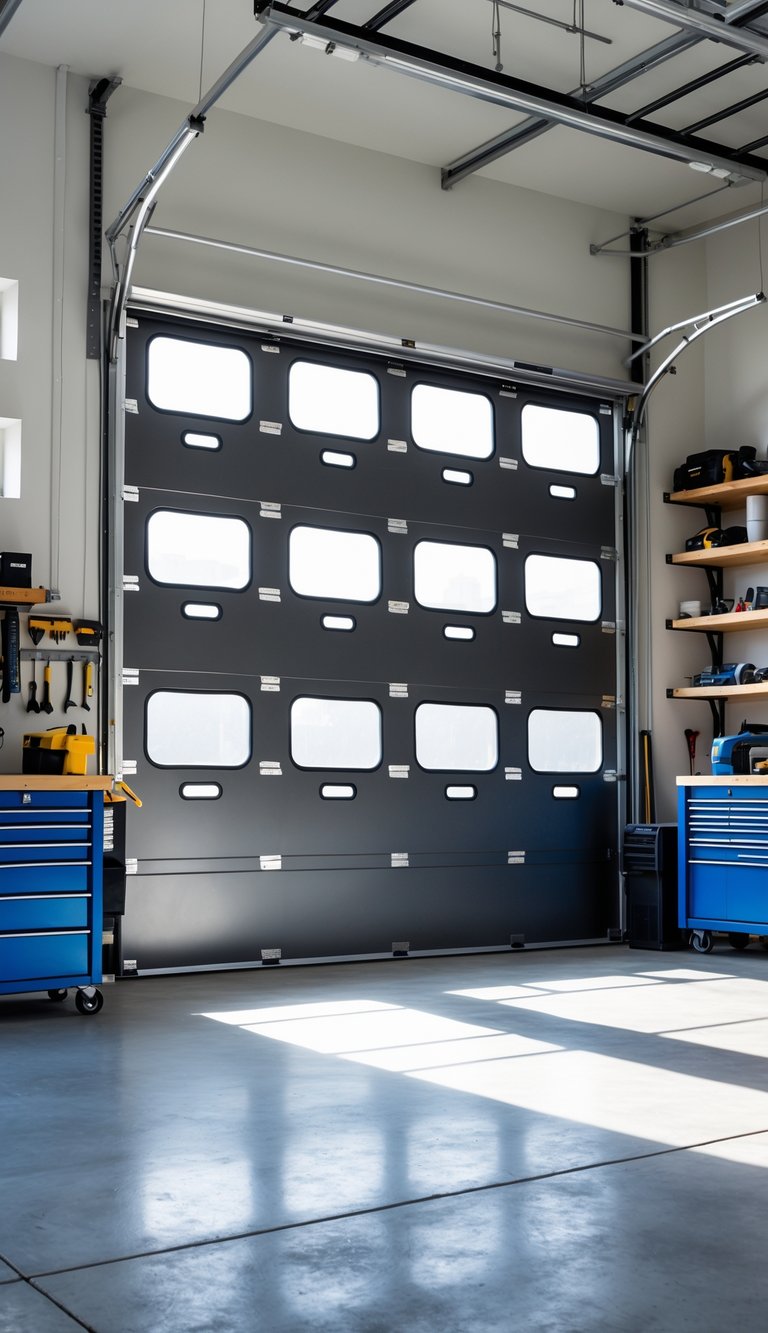
Adding vents to your garage door brings fresh air in without leaving the whole door open. You get steady, controlled airflow that helps lower heat and clear fumes while you work.
Pick vents designed for garage doors so they seal well and won’t let pests or rain inside. Measure door panels and choose locations that won’t weaken the door or hit springs and hardware.
Install vents on the lower panels to pull cooler air in while hot air rises and exits through higher vents or fans. You can combine door vents with an exhaust fan for faster air exchange.
PRO TIP
Choose vents with built-in screens and weather flaps to keep bugs and moisture out.
16) Combine roof and wall vents for balanced airflow

Pairing roof vents with wall vents gives your garage steady, even airflow. Roof vents let hot air escape at the top while wall vents bring in cooler outside air lower down. This push-and-pull keeps temperatures and humidity more stable.
Place intake vents low on an exterior wall and exhaust vents near the roof peak. That layout uses natural convection so fans work less and last longer. You can add a small exhaust fan at the roof and a screened wall intake to boost airflow on very hot days.
PRO TIP
Install screens and baffles to keep pests and rain out, and check vents regularly for clogs. Simple maintenance helps the system work reliably all year.