
Last Updated on February 27, 2026
You want a practical outdoor workspace that fits your projects and your schedule. This article shows 19 easy, weather-safe ideas to help you build a durable, organized, and flexible garage outdoor workspace you can use year-round.
You’ll find options for storage, lighting, shelter, and power so you can work faster and cleaner without wasting space. Use these ideas to plan a setup that matches your tools, budget, and how you like to work.
1) Install weatherproof workbench with built-in storage
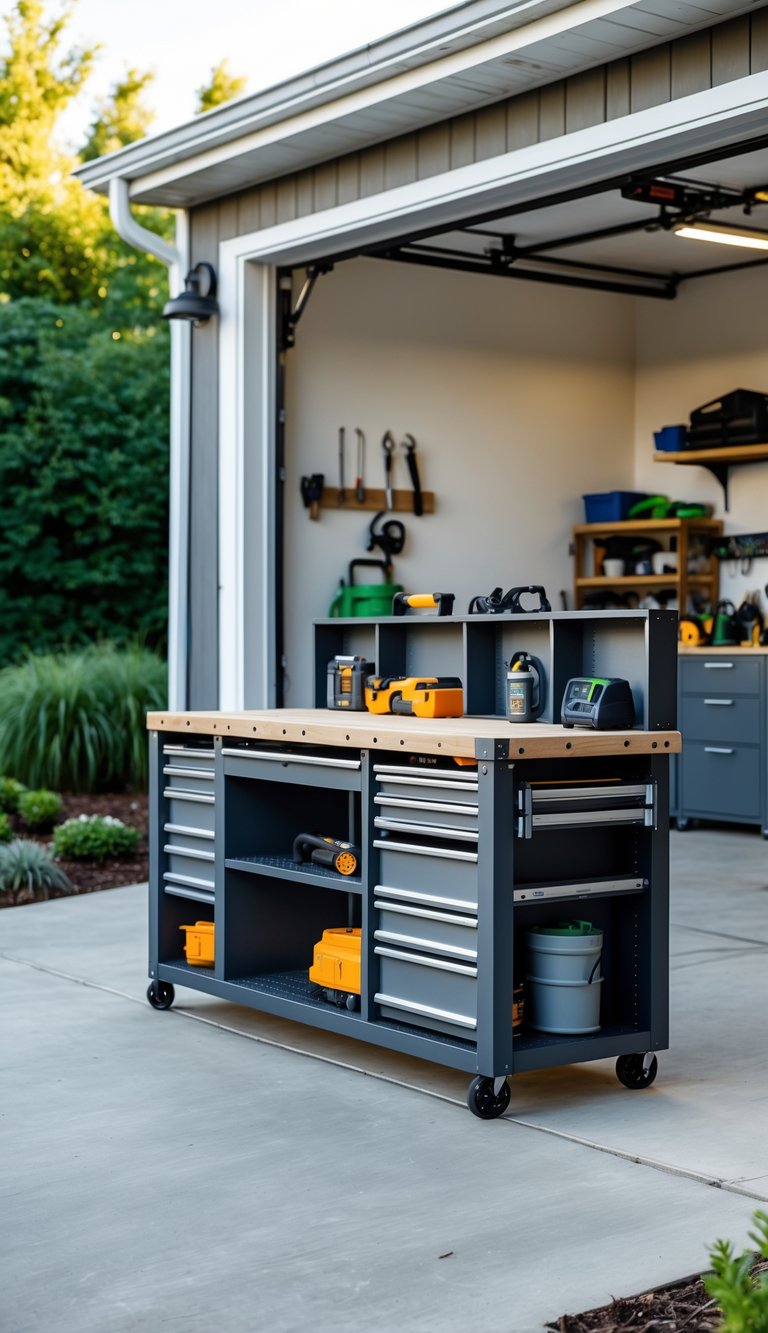
A weatherproof workbench keeps your projects going no matter the weather. Pick materials like treated lumber, marine plywood, or powder-coated steel so the bench resists moisture and warping.
Build in drawers and cabinets under the top to store tools, fasteners, and small parts. This keeps your workspace tidy and saves time when you need a wrench or drill bit.
Place the bench under an overhang or add a simple roof to reduce direct exposure. Seal joints and use stainless or galvanized hardware to avoid rust and extend life.
PRO TIP
Line drawers with foam or non-slip liners to protect tools and cut down on noise. Add lockable doors if you store chemicals or valuable equipment.
2) Use outdoor-rated pegboards for tool organization
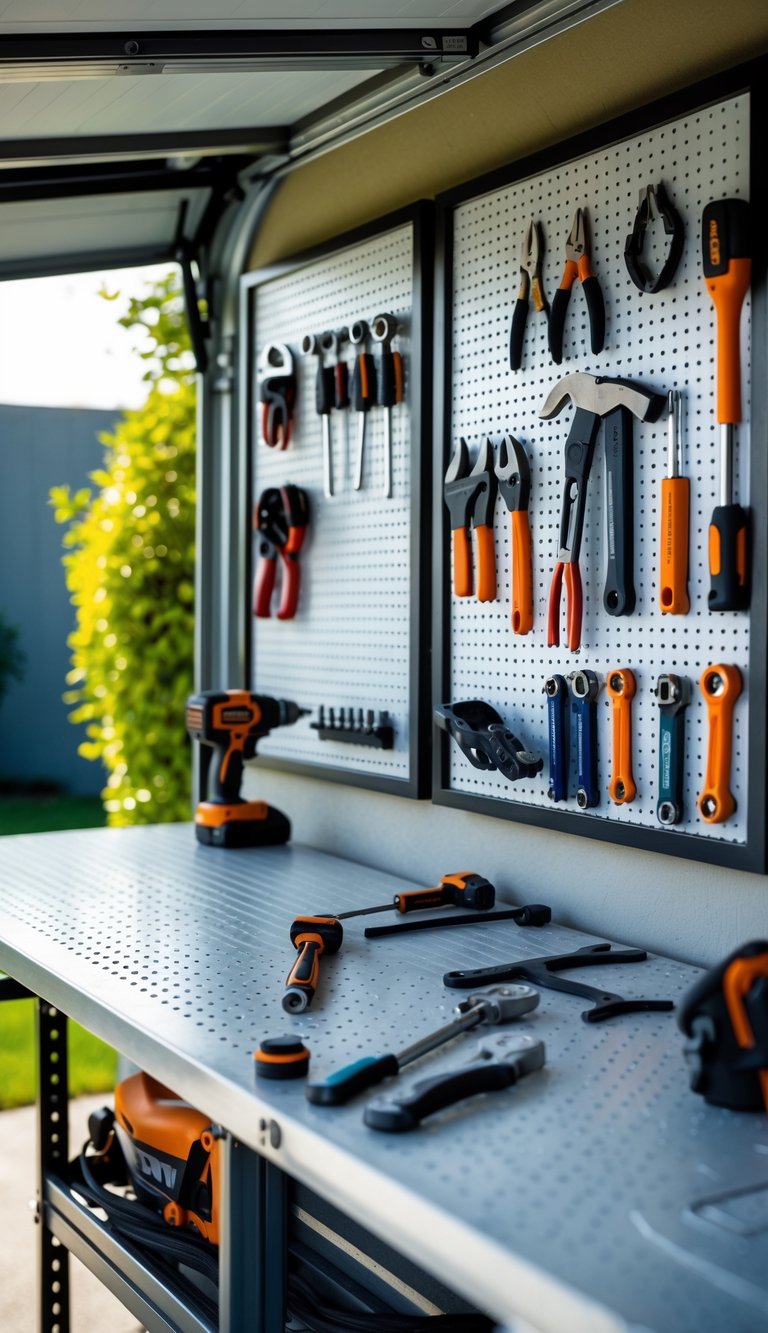
Outdoor-rated pegboards resist rust and moisture so your tools last longer. Mount them on a wall or under a covered overhang to keep items tidy and easy to reach.
Choose materials like powder-coated steel or weather-resistant plastic for better durability. These boards let you move hooks and holders quickly when your projects change.
Group tools by task — gardening, woodworking, or car repair — so you grab the right gear fast. Label zones with simple tags or color-coded tape to avoid hunting for parts.
PRO TIP
Use rubber-backed hooks or small foam spacers behind the board to reduce vibration and keep hooks from loosening.
3) Add retractable awning for sun and rain protection
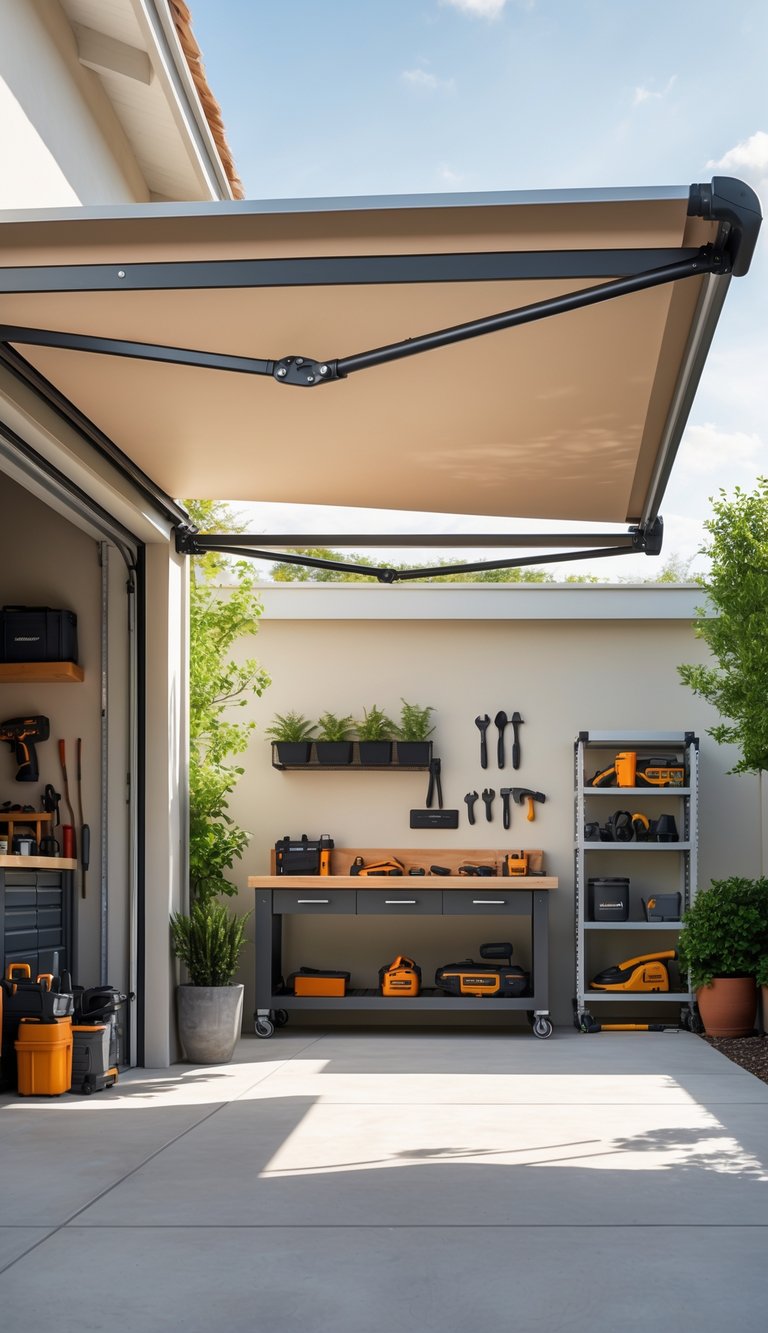
A retractable awning gives your garage workspace quick weather control. You can roll it out for shade on hot days and tuck it away when you don’t need it.
These awnings block sun and light rain, so your tools and projects stay dry and cool. Many models let you adjust the angle to keep glare off work surfaces.
Choose a durable fabric and a strong frame that match your garage wall. Motorized or manual options fit different budgets and needs.
PRO TIP
Mount the awning slightly above the door so it shades more of the workspace. Check wind ratings and fastenings to avoid damage in gusty weather.
4) Incorporate string lights for cozy evening lighting
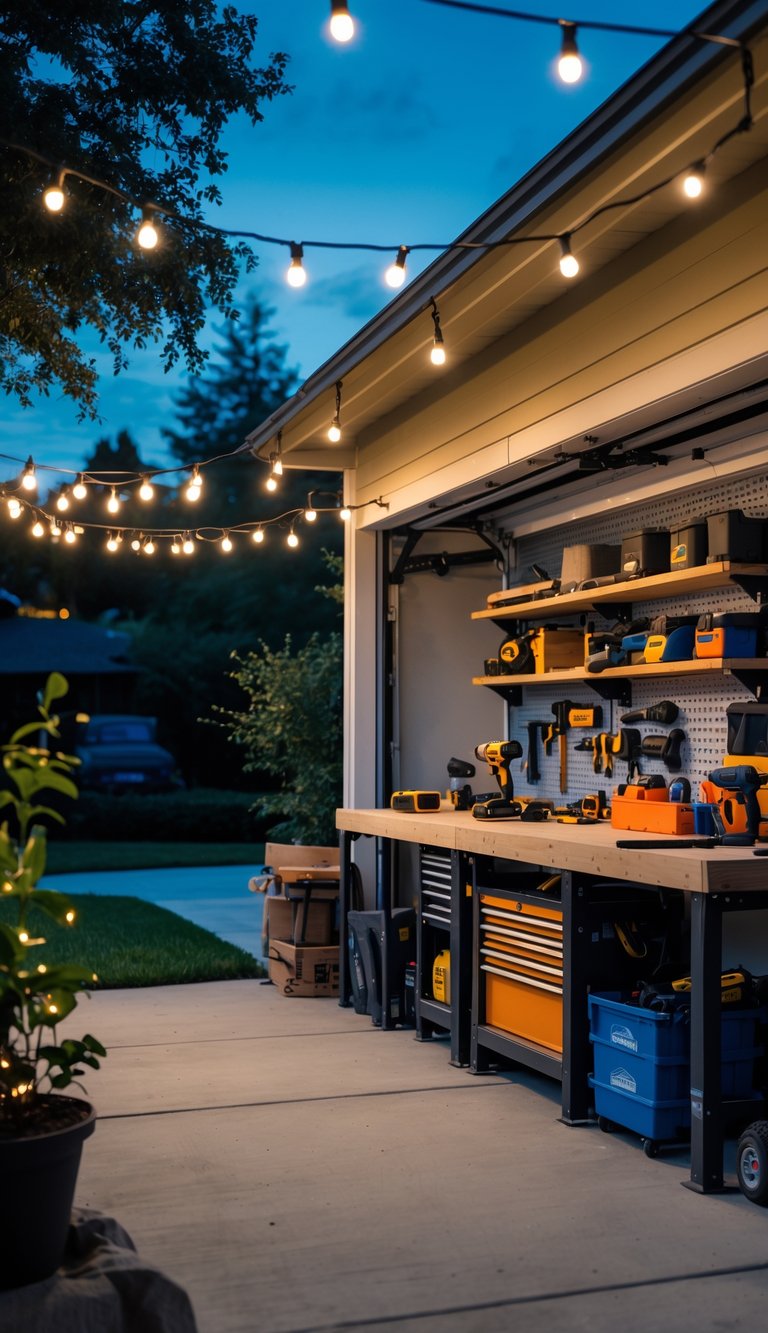
String lights add soft, even light that makes your garage workspace feel warmer and more inviting. You can string them along rafters, around workbenches, or across the ceiling to brighten task areas without harsh glare.
Choose warm-white bulbs and durable, outdoor-rated cords if your garage opens to the yard. They use little power and let you work or relax at night without turning on bright overheads.
Mix string lights with focused task lighting over benches for better visibility where you need it. This keeps the mood cozy while making detailed work easier and safer.
PRO TIP
Use clips or hooks that won’t damage surfaces and plug lights into a switched outlet or smart plug to control them easily.
5) Set up foldable work tables for flexible space
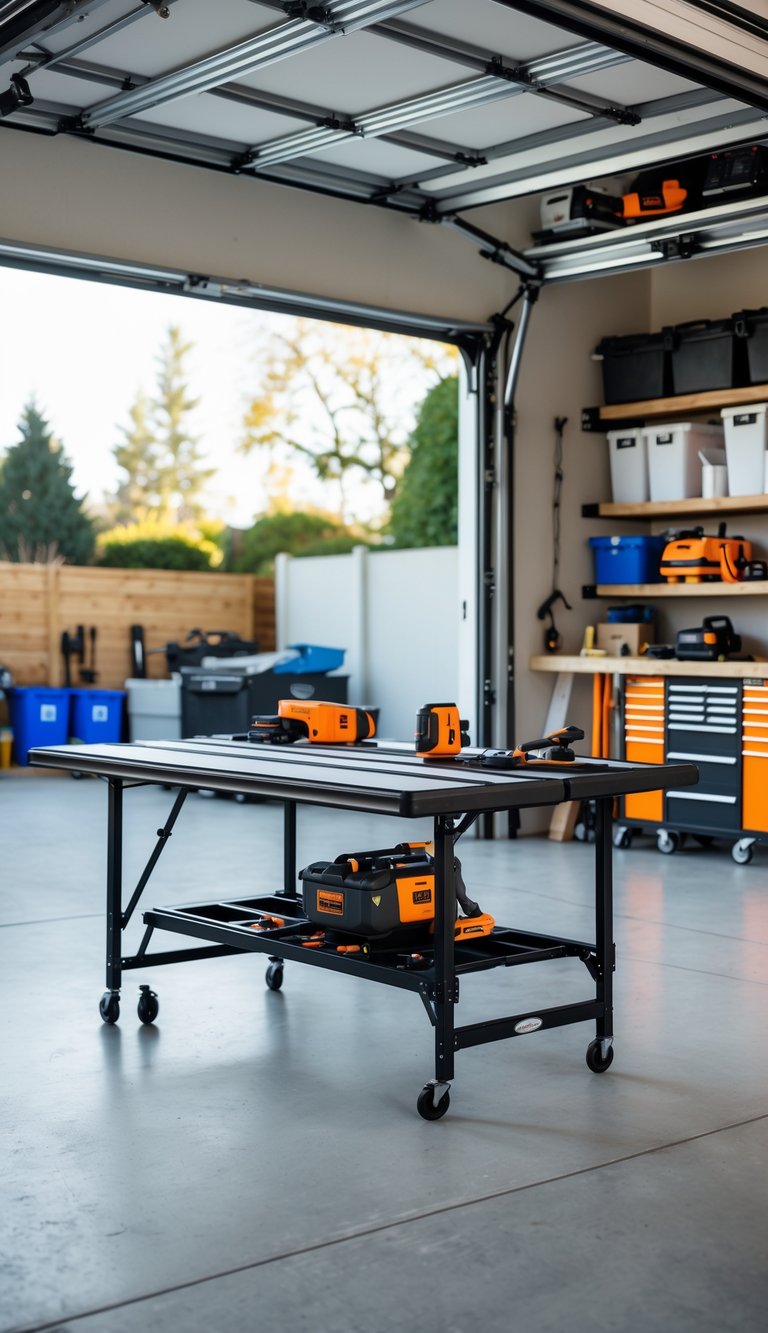
Foldable work tables let you create a work area when you need it and clear it away fast. You can fold them against a wall or roll them into a corner to free up floor space for other tasks.
Choose a sturdy model with a locking hinge and a surface that resists stains and dents. Lightweight tables work well if you move them often; heavier tops give more stability for cutting or clamping.
Use them for painting, small builds, or sorting parts. They also serve as temporary staging for projects or as extra space when you host outdoor tasks.
PRO TIP
Anchor wall-mounted folding tables to studs and add a simple shelf underneath for tools.
6) Create a shaded seating nook with outdoor cushions
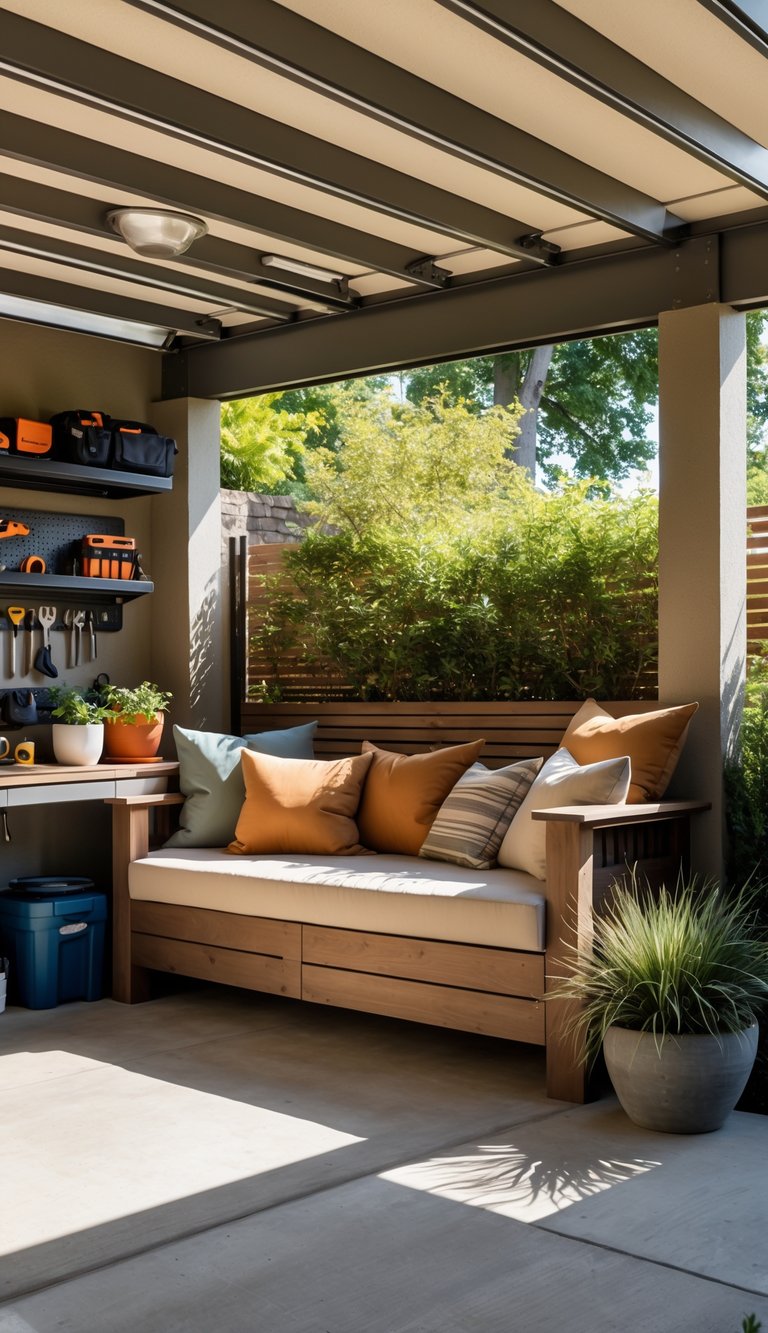
Give your garage-adjacent workspace a quiet spot to rest by arranging a shaded seating nook. Place a small bench, loveseat, or a couple of chairs near the garage door or under an awning so you can sit without tracking dust inside. Add thick, weatherproof cushions to boost comfort and make the space inviting for short breaks.
Layer with throw pillows and a lightweight blanket for cool mornings. Use a side table or crate to hold drinks, tools, or a notepad while you plan projects. Position the nook so it’s close enough to keep an eye on work but far enough to stay clean.
PRO TIP
Choose cushions with removable, washable covers and UV-resistant fabric to keep them fresh longer.
7) Use stackable plastic bins to store supplies
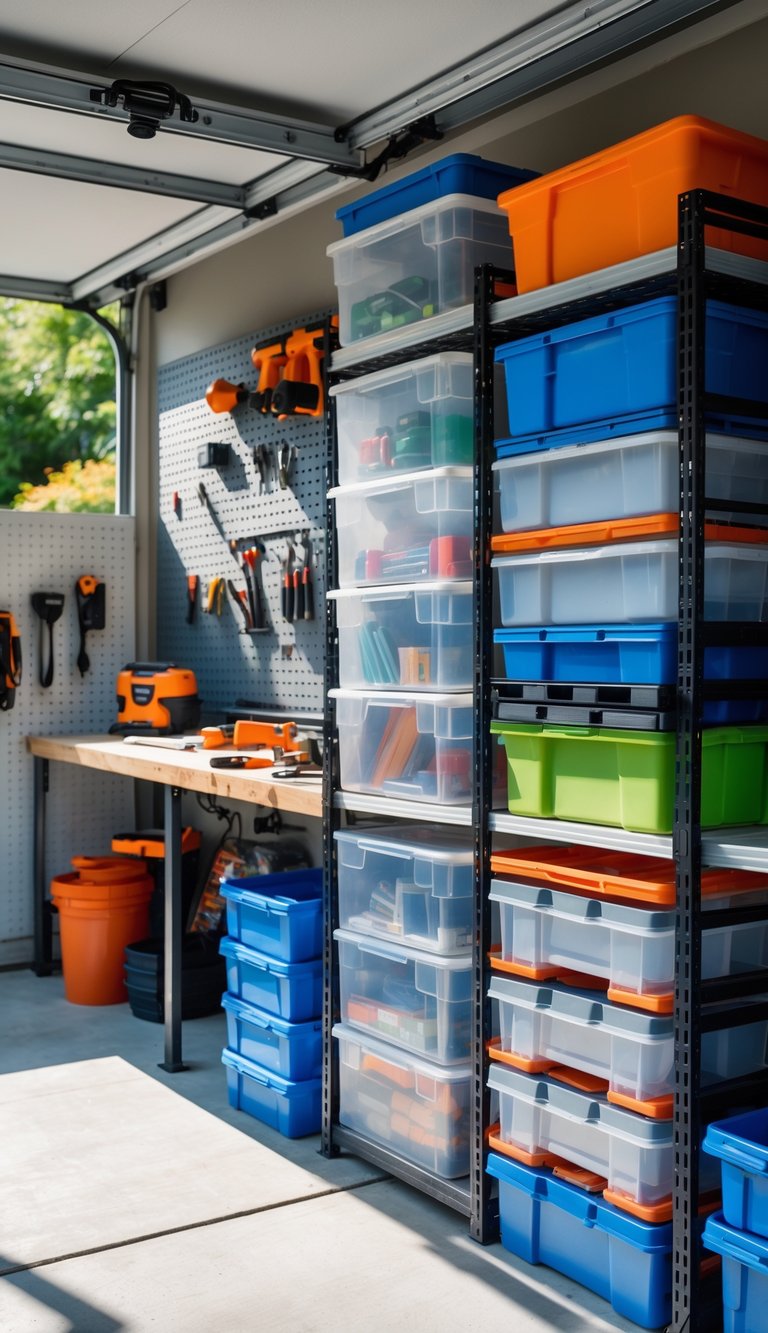
Stackable plastic bins save space and keep your tools and parts tidy. You can group items by project, season, or tool type so you find what you need fast.
Clear bins let you see contents without opening them, which speeds up work. Opaque bins work well for bulky or dirty items and hide clutter.
Label each bin on the front and top for quick access when bins are stacked. Use a consistent system—color, number, or short words—so everyone in your household can follow it.
Place frequently used bins at waist height for easy reach. Put heavy items in lower bins and lighter items higher to keep stacks stable.
PRO TIP
Buy bins with interlocking lids or grooves so stacks won’t slip. If bins sit on shelves, use a small lip or bookend to stop them from sliding.
8) Install a wall-mounted hose reel for easy cleanup
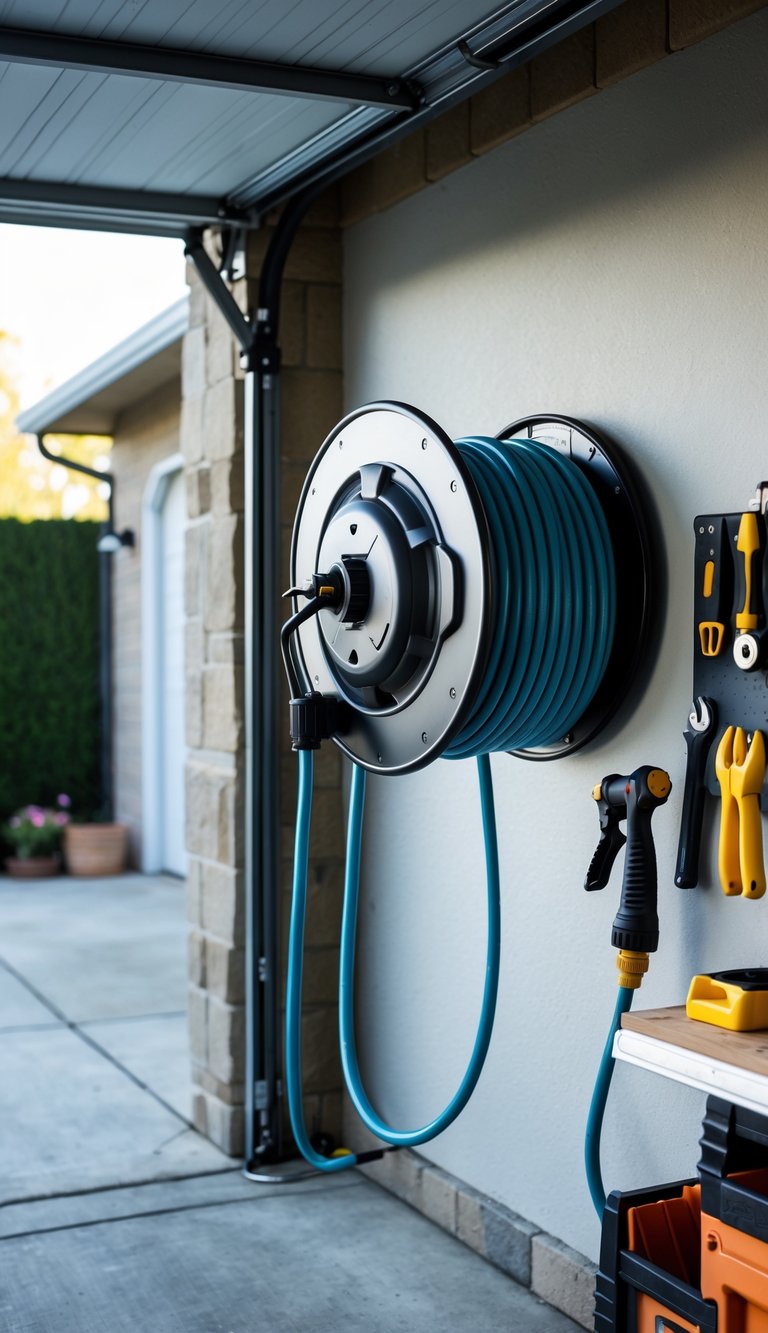
A wall-mounted hose reel keeps your workspace tidy and cuts time when you clean up. You can grab the hose, rinse down surfaces, and roll it back without stepping over coils or tangles.
Mount the reel near a water source and at a height that feels comfortable for you. Many reels lock or retract, so you avoid kinks and extend the hose’s life.
Choose a model rated for outdoor use and match the mount to your wall material. Use anchors for stucco or masonry and heavy-duty screws for studs to keep the reel secure.
PRO TIP
Pick a retractable reel if you want one-handed retraction, or a crank reel for better control with heavy hoses.
9) Add a sturdy outdoor tool chest with wheels
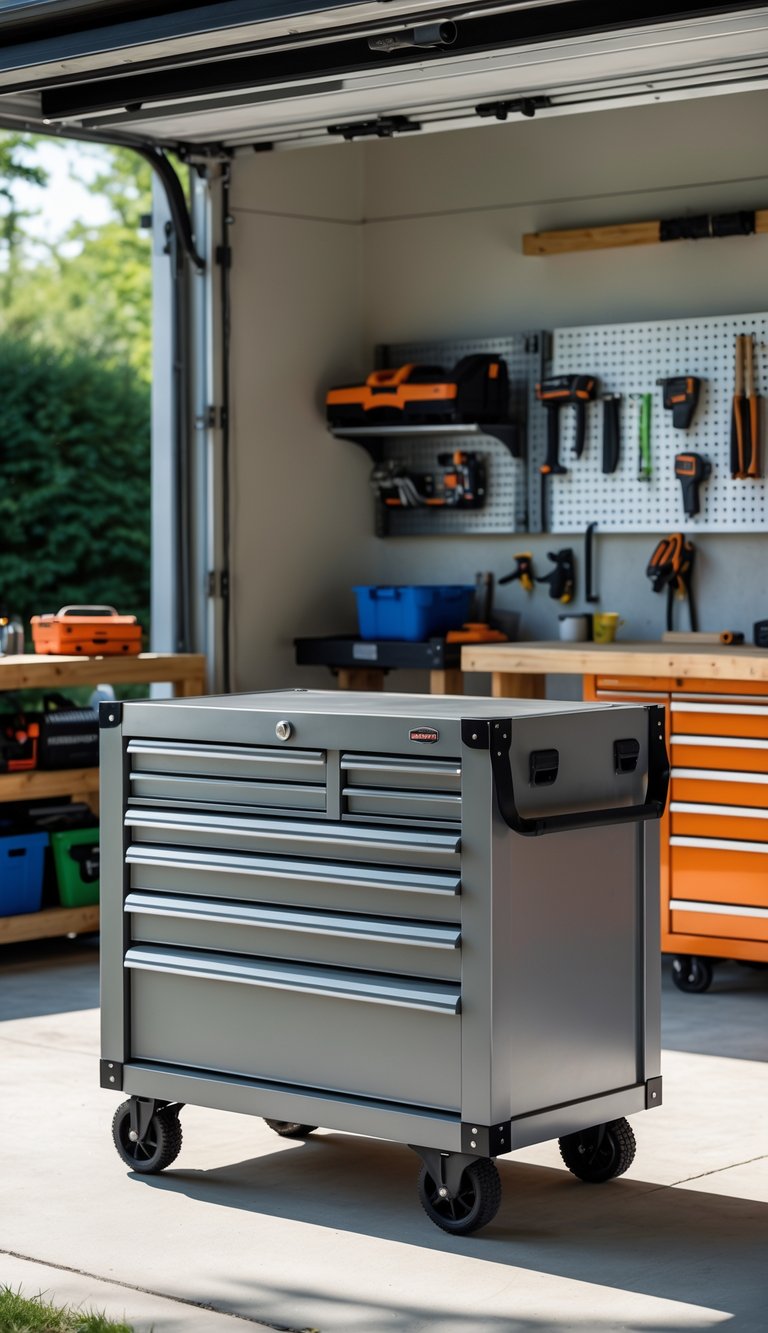
A rolling tool chest keeps your tools close when you work outside. You can wheel it to the car, garden bed, or porch and avoid carrying heavy boxes back and forth.
Pick a chest made from weather-resistant metal or heavy-duty plastic so it stands up to rain and sun. Look for lockable drawers, a tough handle, and smooth casters that roll over gravel or concrete.
Use drawer liners and a simple layout so you find items fast. Label drawers for sockets, screwdrivers, and fasteners to save time on every job.
PRO TIP
Place the chest under a small awning or cover to extend its life. If you move it outdoors often, choose one with sealed seams and rust-resistant hardware.
10) Include a small outdoor heater for cold days
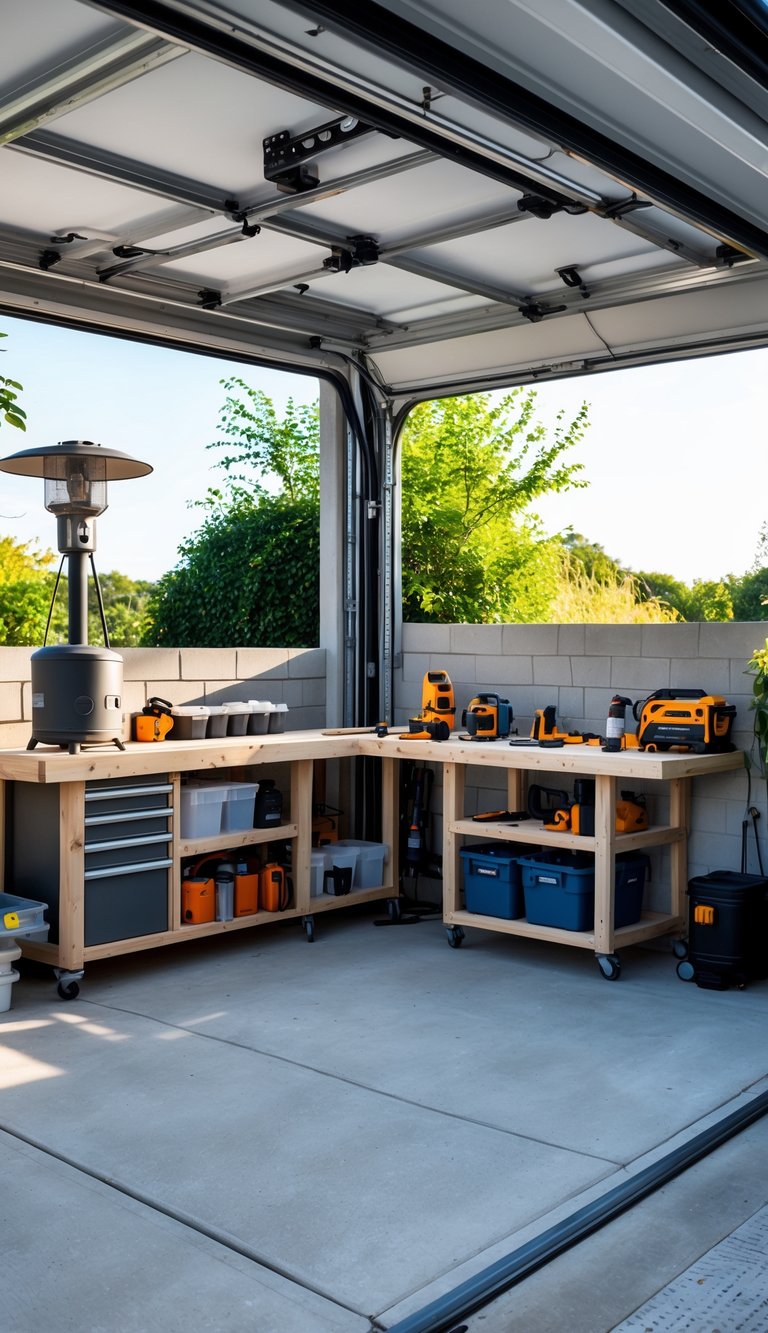
A small outdoor heater keeps your workspace usable when temperatures drop. You can choose a portable infrared heater, electric patio heater, or a compact propane unit depending on power access and safety rules.
Place the heater on a stable surface away from flammable materials and tool benches. Keep it clear of sawdust, rags, and paint cans to lower fire risk.
Keep ventilation in mind if you use propane or any combustion heater. For electric and infrared units, pick a model rated for outdoor or semi-outdoor use to handle moisture and dust.
PRO TIP
Use a thermostat or timer so the heater runs only when you need it. This saves energy and keeps your space comfortable without constant supervision.
11) Build raised garden beds around workspace edges
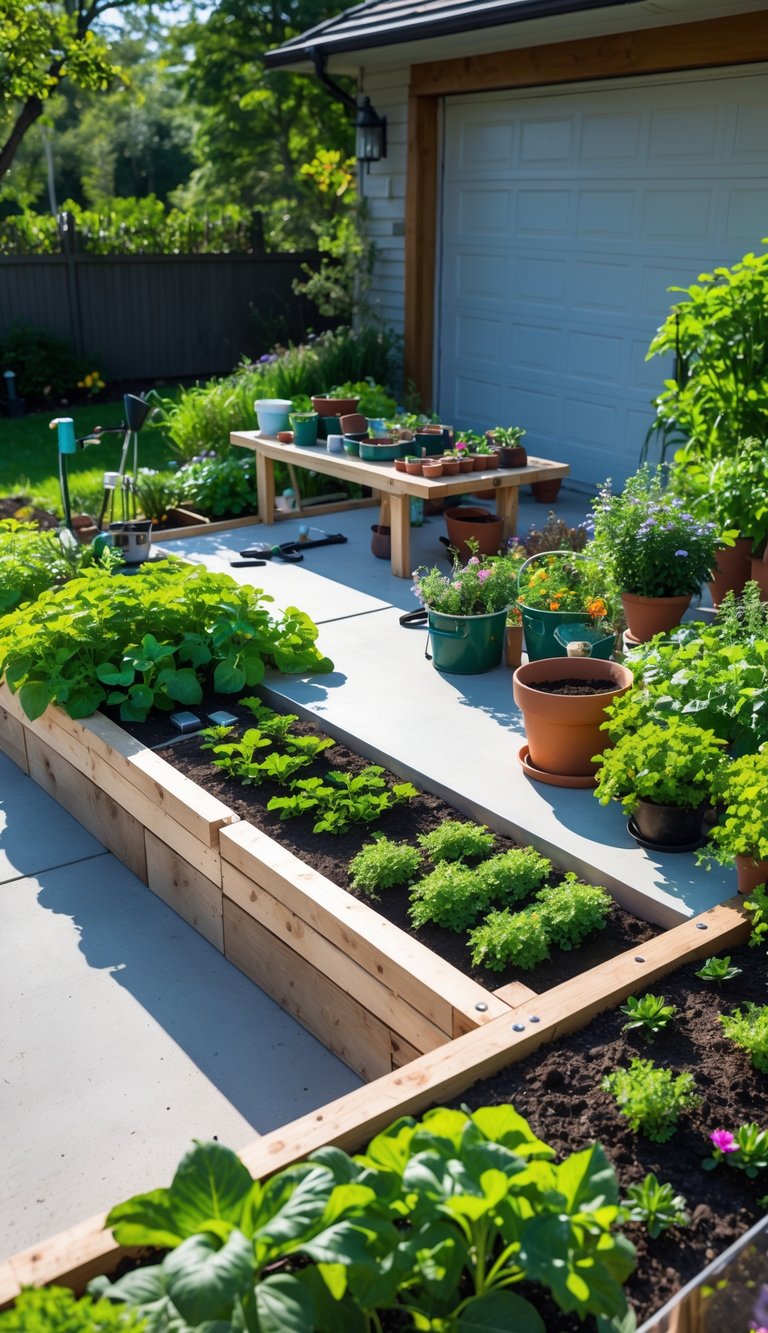
Raised beds frame your workspace and keep tools clean. They create a clear border between work zones and paths while adding greenery that feels calm and inviting.
You can plant herbs, easy vegetables, or low-maintenance flowers. These choices give you quick access to ingredients and pleasant sights without needing much care.
Use simple materials like cedar, recycled wood, or metal for long life. Keep beds low so they don’t block sight lines or tool access.
PRO TIP
Install a narrow gap or pathway between the bed and work area for wheelbarrows and movement. Add a self-watering system or mulch to cut down on daily watering.
12) Hang waterproof shelves for paint and chemicals
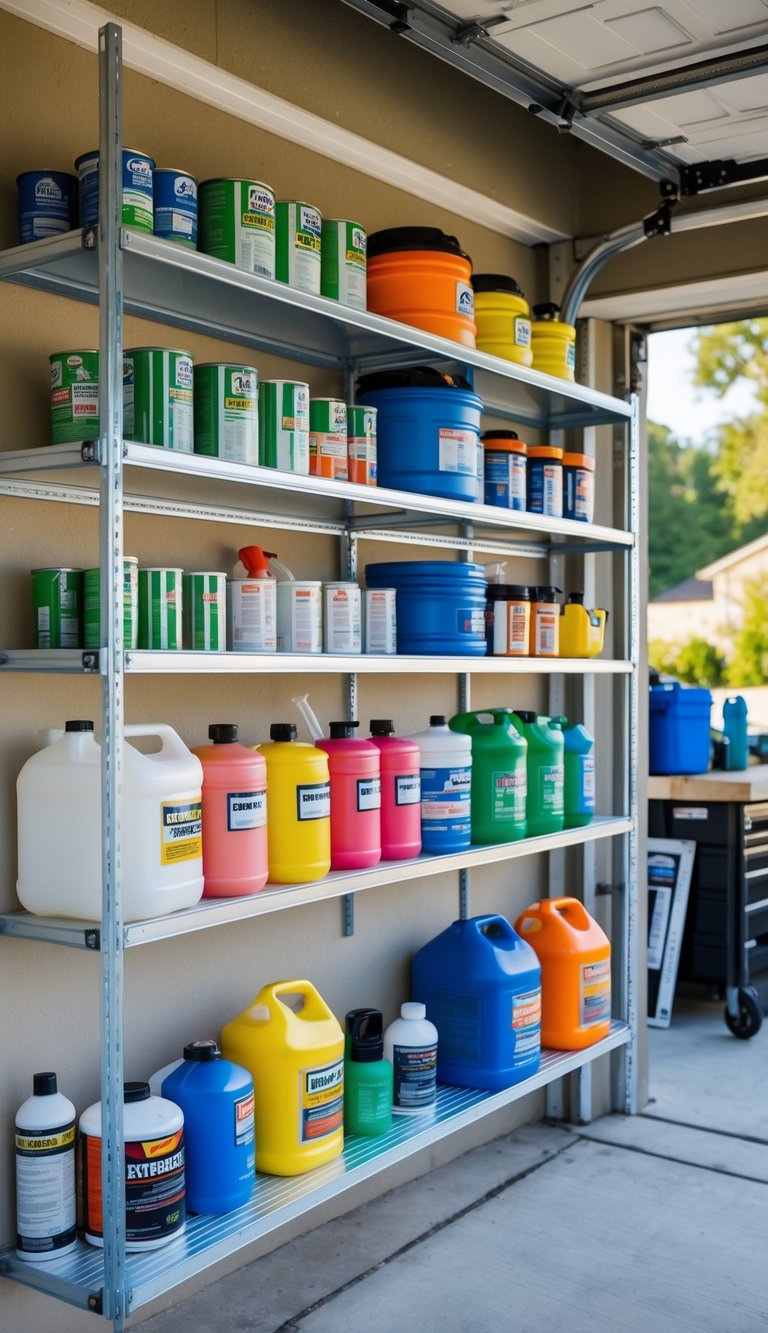
Mount waterproof shelves to keep paint cans, solvents, and cleaners off the floor and away from kids and pets. Metal or plastic shelves resist spills and rust, so they last longer in a garage or outdoor workspace.
Place shelves at eye level for easy access to labels. Keep heavier cans on lower shelves and lighter items higher to prevent tipping.
Label each shelf or container to avoid mixing chemicals. Use spill trays or lips on the shelves to catch drips and make cleanup quick.
PRO TIP
Store flammables in a ventilated metal cabinet if possible, and always follow the product’s safety instructions on the label.
13) Mount a cordless power tool charging station
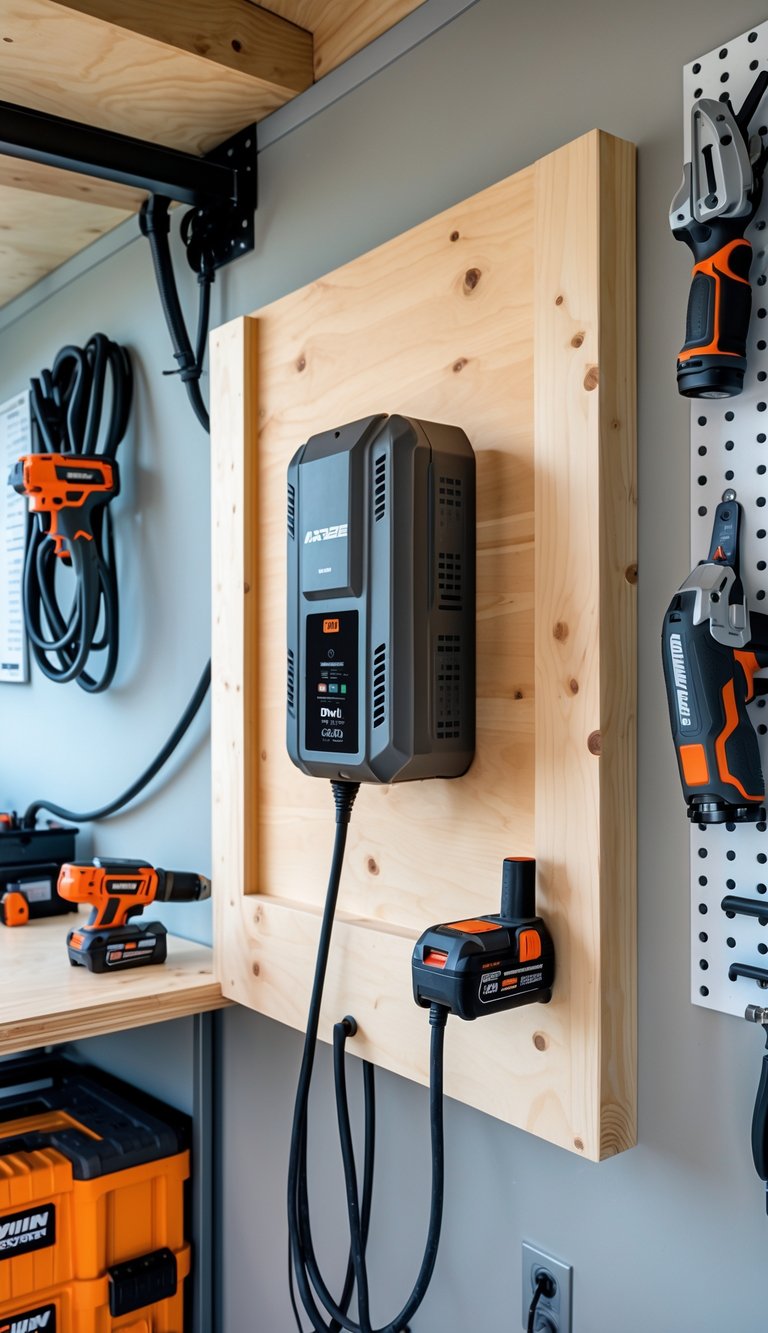
Mount a charging station on a wall or pegboard near your workbench to keep batteries and chargers off the floor. This saves space and makes it fast to grab a charged battery when you need it.
Design the station with shelves or slots sized for your specific batteries and chargers. Label each spot so you know which charger goes with which tool, and keep cords tidy with clips or a small cord channel.
Place the outlet strip inside the station or behind it to hide cords and reduce tripping hazards. Make sure the station sits at a comfortable height so you can change batteries without bending.
PRO TIP
Install a small LED strip above the station so you can see battery indicators clearly, even in low light.
14) Place outdoor rugs to define work zones
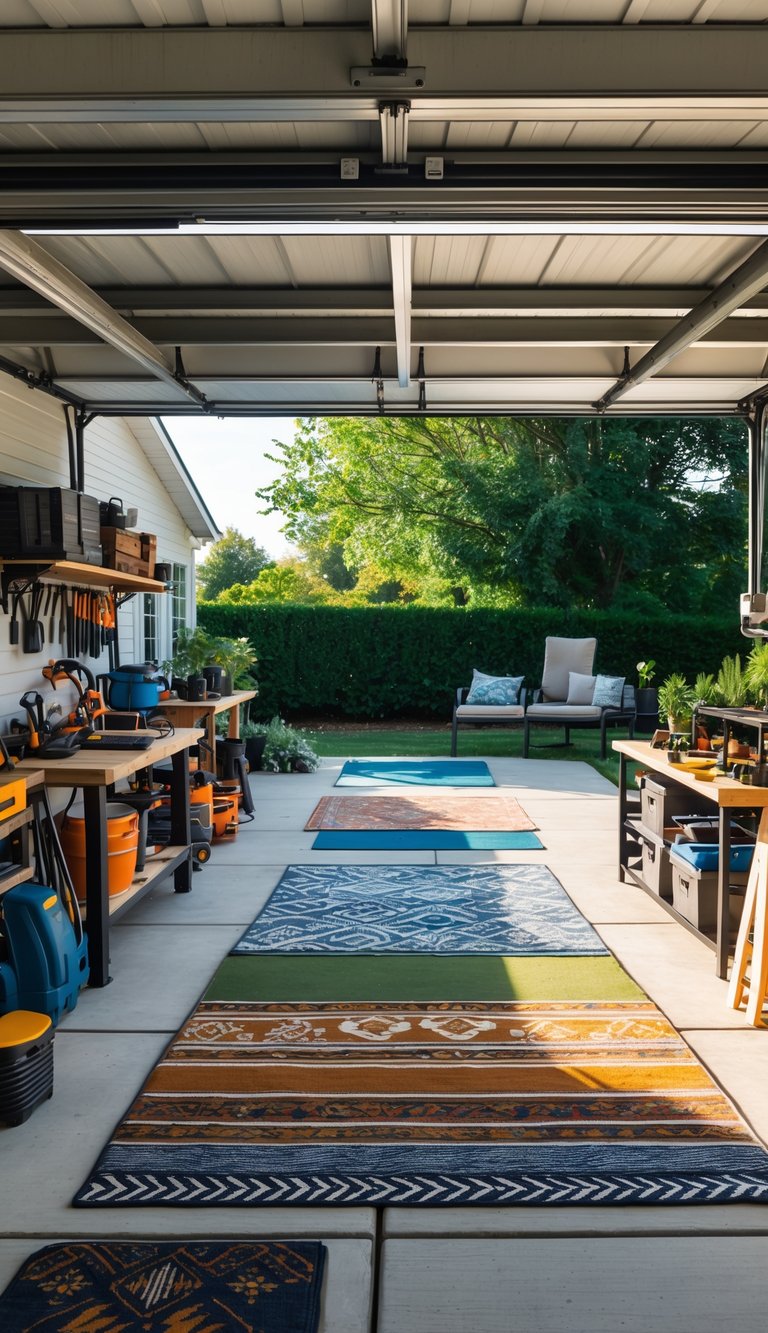
Outdoor rugs help you mark different areas in a garage-turned-workspace without building walls. Use a rug under a workbench to show the tool zone and another under a table for painting or assembly.
Rugs add comfort when you stand for long periods and protect concrete from spills. They also absorb sound and make the area feel warmer and more finished.
Choose durable, weather-resistant rugs that are easy to clean. Pick sizes and colors that match each zone so you can spot the task areas at a glance.
PRO TIP
Anchor rugs with non-slip pads or weights to keep them flat and safe.
15) Set up magnetic strips for quick tool access
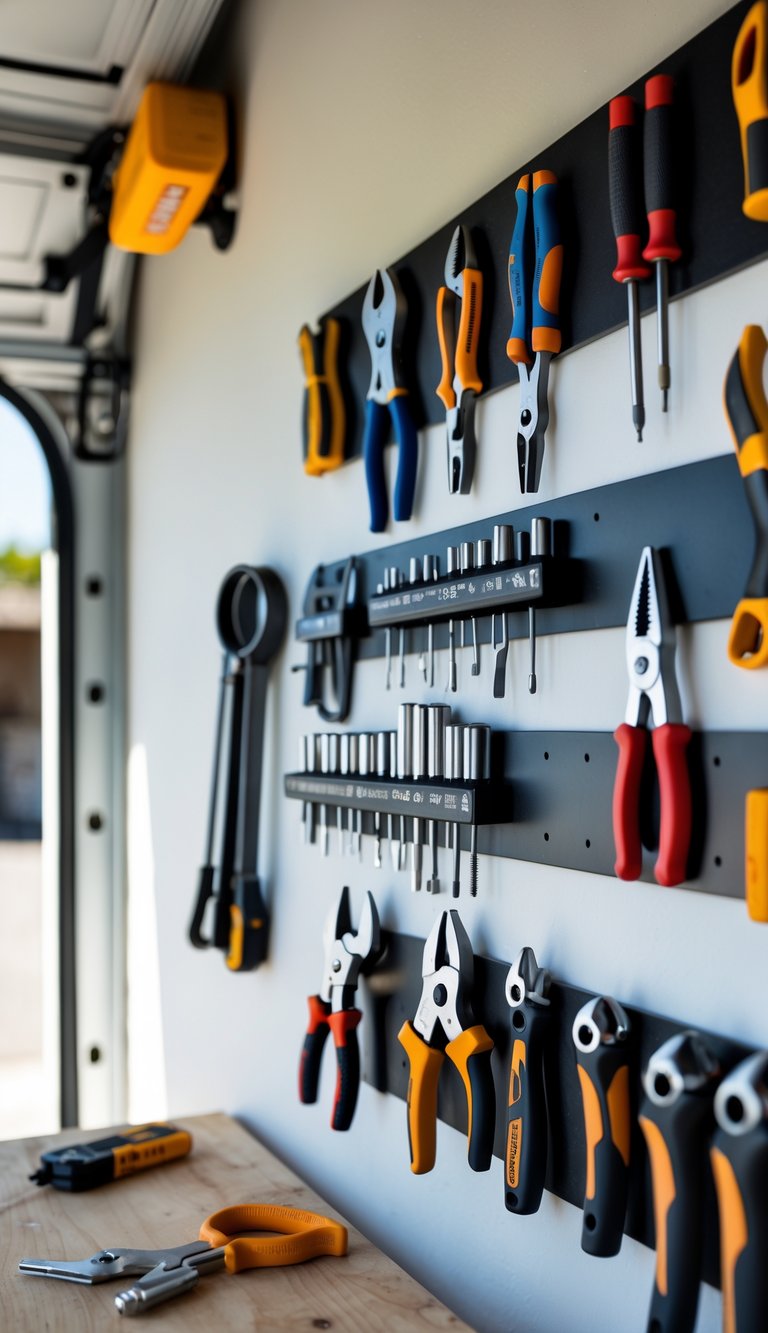
Mount magnetic strips on a wall near your workbench so your most-used tools stay visible and easy to grab. They save drawer space and speed up small jobs like tightening screws or cutting wire.
Place strips at eye level and group tools by type — screwdrivers together, pliers together. This keeps your workflow smooth and helps you spot missing items fast.
Use a few short strips rather than one long one to allow flexible layouts. Metal tape measures or heavy wrenches may need stronger magnets or dedicated hooks.
PRO TIP
Label the space above each strip with a simple outline or tape so each tool has a home. This makes cleanup quicker and helps you notice when a tool is missing.
16) Add a fold-down exterior fan for ventilation
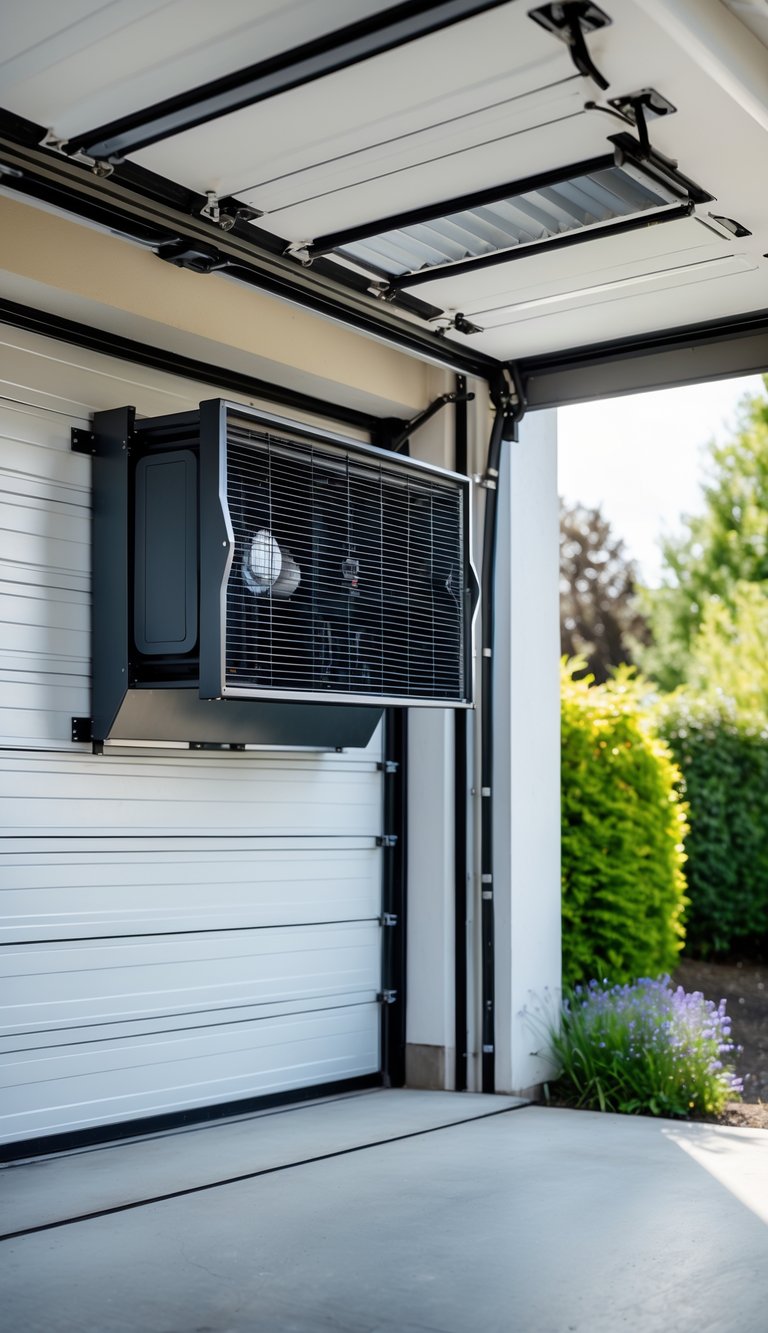
A fold-down exterior fan gives your workspace fresh air when you need it and tucks away when you don’t. You can mount it in a wall or a roll-up door to pull fumes, dust, and heat out of your garage fast.
Choose a fan rated for outdoor use and weatherproof when closed. Look for models with a tight seal and a simple latch so the flap stays shut in bad weather.
Install it where it will create cross-ventilation with a window or vent on the opposite side. Proper placement moves air through your workspace instead of just stirring it.
PRO TIP
Pick a fan with adjustable speed and a built-in thermostat if you work in heat. This gives you control and saves energy while keeping the area comfortable.
17) Use solar-powered floodlights for night work
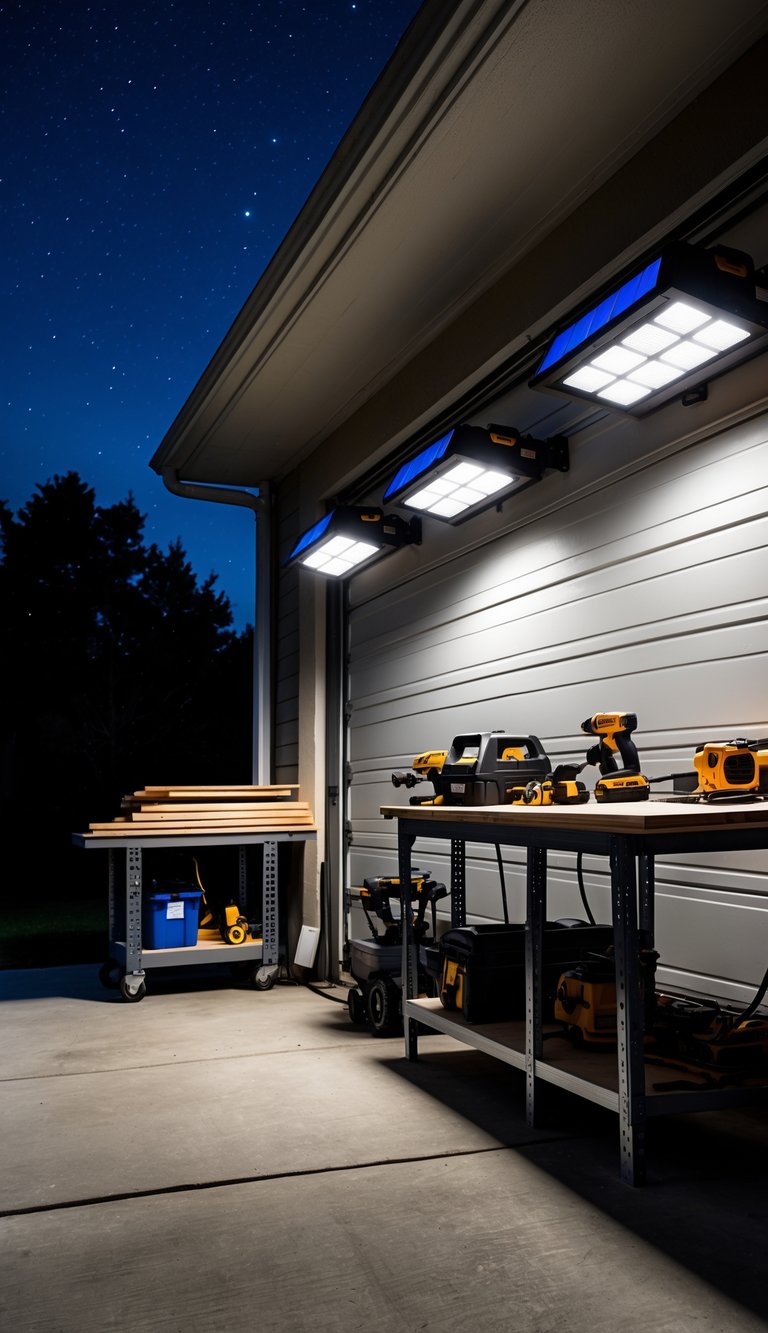
Solar-powered floodlights give your outdoor garage workspace bright light without wiring. They charge by day and turn on at night, so you can keep working after sunset.
Many models include motion sensors and adjustable heads. That helps you aim light where you need it and saves battery by only lighting when you or a vehicle move.
Pick lights with good battery capacity and weatherproof ratings. Look for durable housings and easy mounting so you can place them on walls, posts, or garage edges.
PRO TIP
Position lights to avoid glare on work surfaces. Mount them higher for wider coverage and angle them toward your main work zones.
18) Build a lean-to storage area for large items
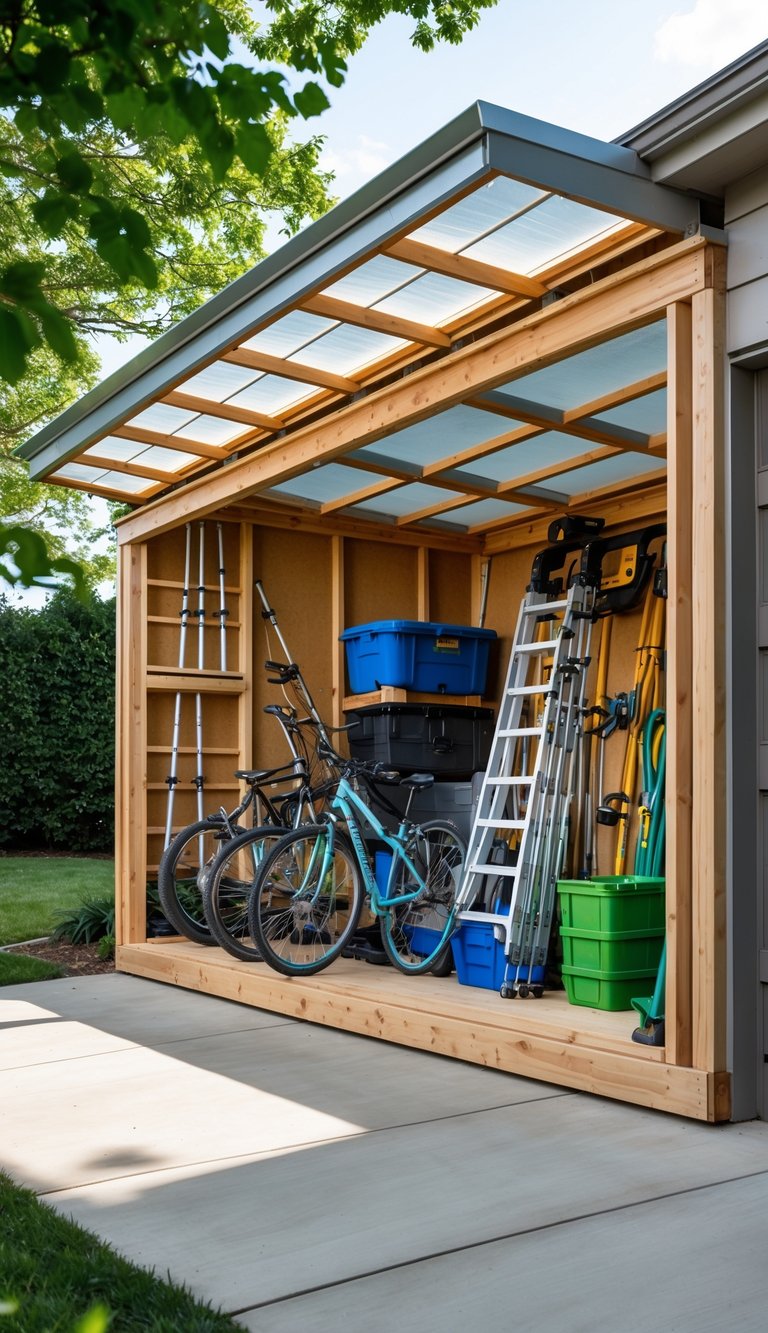
A lean-to gives you quick, covered space for big tools, lumber, bikes, or garden gear. You attach one side to your garage wall and slope the roof away, which keeps rain off and saves yard room.
Keep the frame simple with pressure-treated posts and a few rafters. Use corrugated metal or polycarbonate panels for a lightweight, weatherproof roof that’s easy to install.
Place heavier items near the garage for easier access and balance the load so the posts don’t sag. Add a simple gate or strap system to secure bulky gear from wind or shifting.
PRO TIP
Check local codes and get a permit if needed. A small foundation or concrete piers will keep the lean-to sturdy and long-lasting.
19) Install waterproof electrical outlets with covers
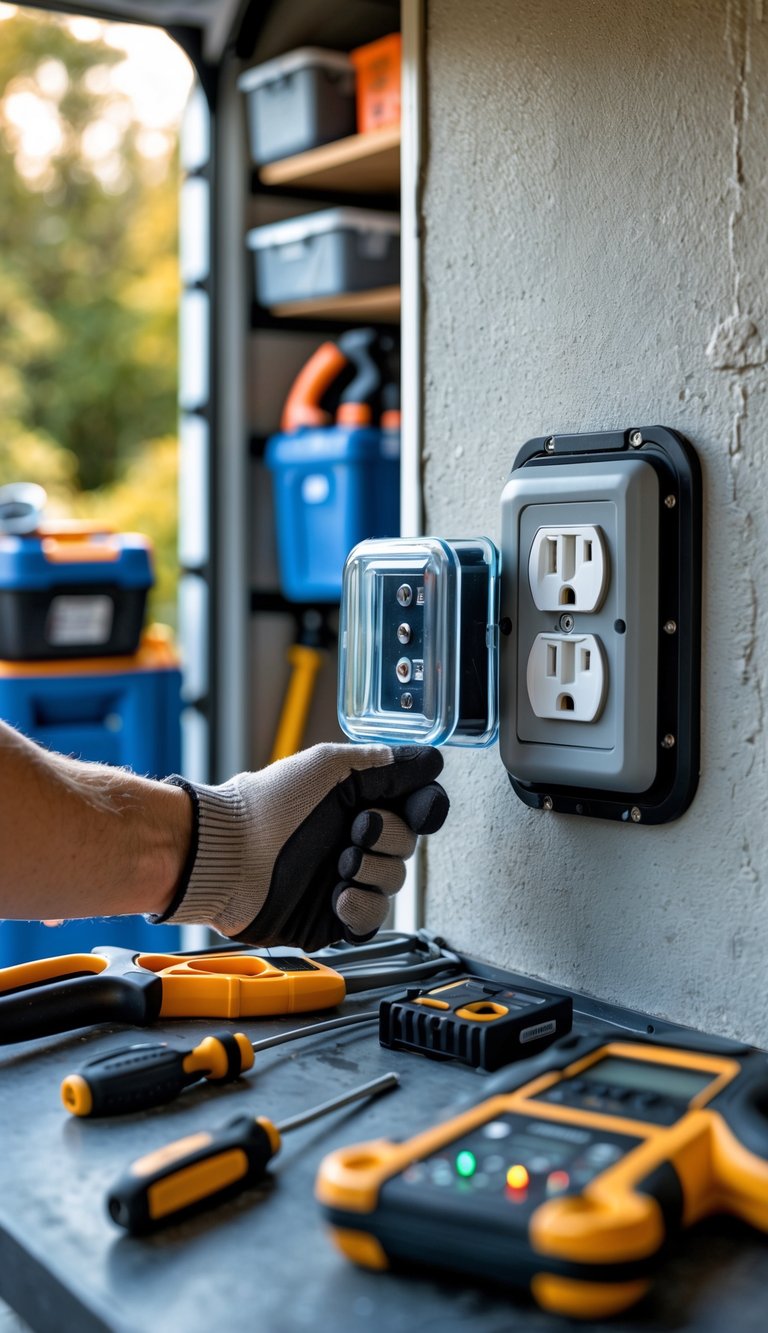
You should fit waterproof outlets to protect tools and keep power flowing safely in wet conditions. Choose GFCI outlets for outdoor use so the circuit trips quickly if it senses a fault.
Mount the outlet in a weatherproof box and use a cover labeled “in use” so cords can stay plugged in while sealed. Run conduit or rated cable and seal all openings to stop moisture from entering.
If you’re not confident working with wiring, hire a licensed electrician to avoid shocks and code problems. Proper installation extends outlet life and keeps your workspace safe and ready for projects.
PRO TIP
Pick covers that close over plugged-in cords and use silicone around the box for extra weather resistance.