Last Updated on August 25, 2026
Winter storage gives you a chance to protect your motorcycle and prepare it for an easier return to the road. Your garage setup, cleaning routine, and storage choices can help limit moisture, corrosion, pests, and tire wear.
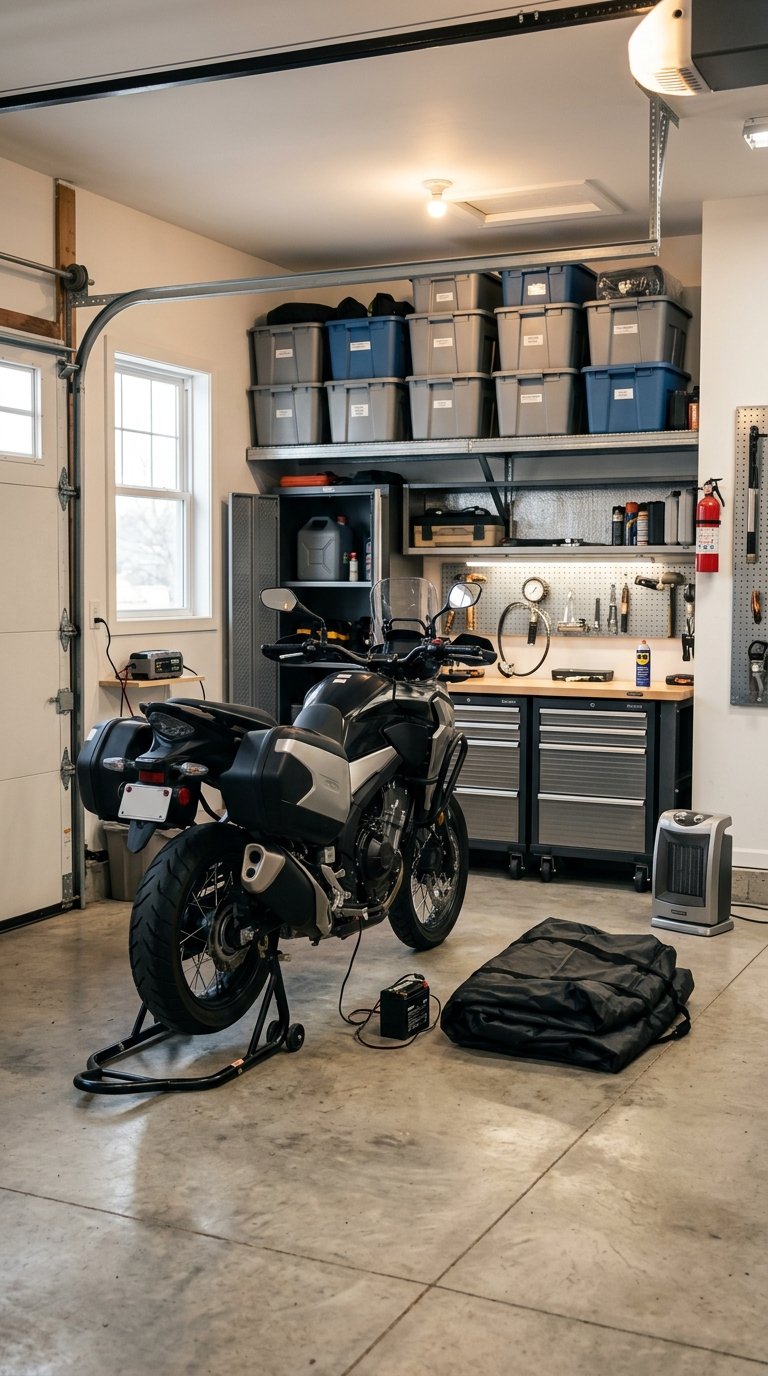
You can keep your motorcycle in better condition by preparing the garage and protecting each major part before winter storage. The steps ahead cover the space, fluids, battery, tires, chain, paint, leather, and other areas that need attention.
Use clean, dry, breathable materials around the motorcycle to help prevent trapped moisture.
1) Clear the garage floor before bringing the motorcycle inside
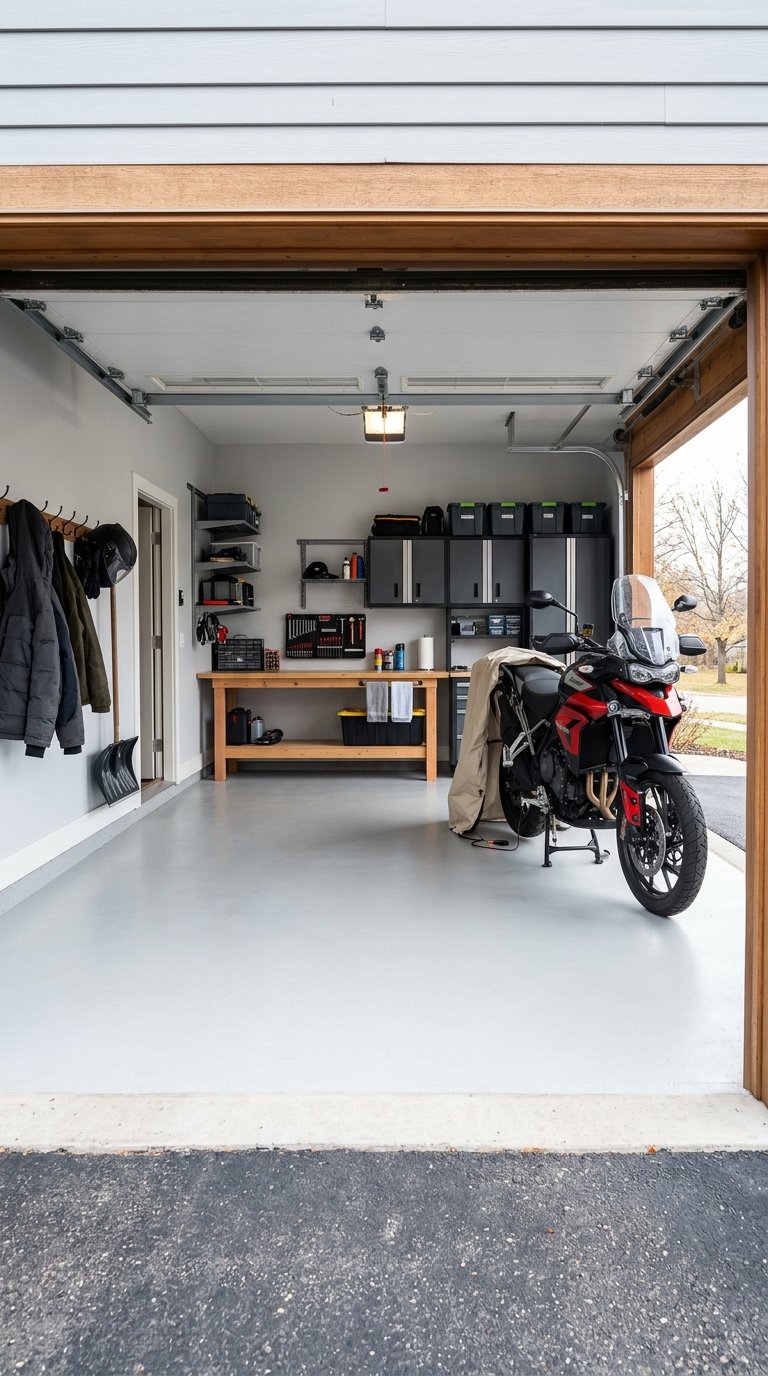
Move boxes, tools, and loose items off the garage floor before you bring your motorcycle inside. Sweep away dirt, leaves, and gravel that could scratch the bike or collect under its tires.
Check the floor for oil, fuel, water, and other spills. Clean each spot with an absorbent material and dispose of the waste properly. A dry, clean surface gives your motorcycle a safer place to rest.
Keep a clear path from the garage door to the storage area. Remove cords and other trip hazards, then leave enough room to walk around both sides of the motorcycle. This space will make winter checks and basic maintenance easier.
PRO TIP
Place a sturdy mat beneath the motorcycle. It can protect the floor from small leaks and help keep moisture away from the tires.
2) Sweep away dust, leaves, and road salt
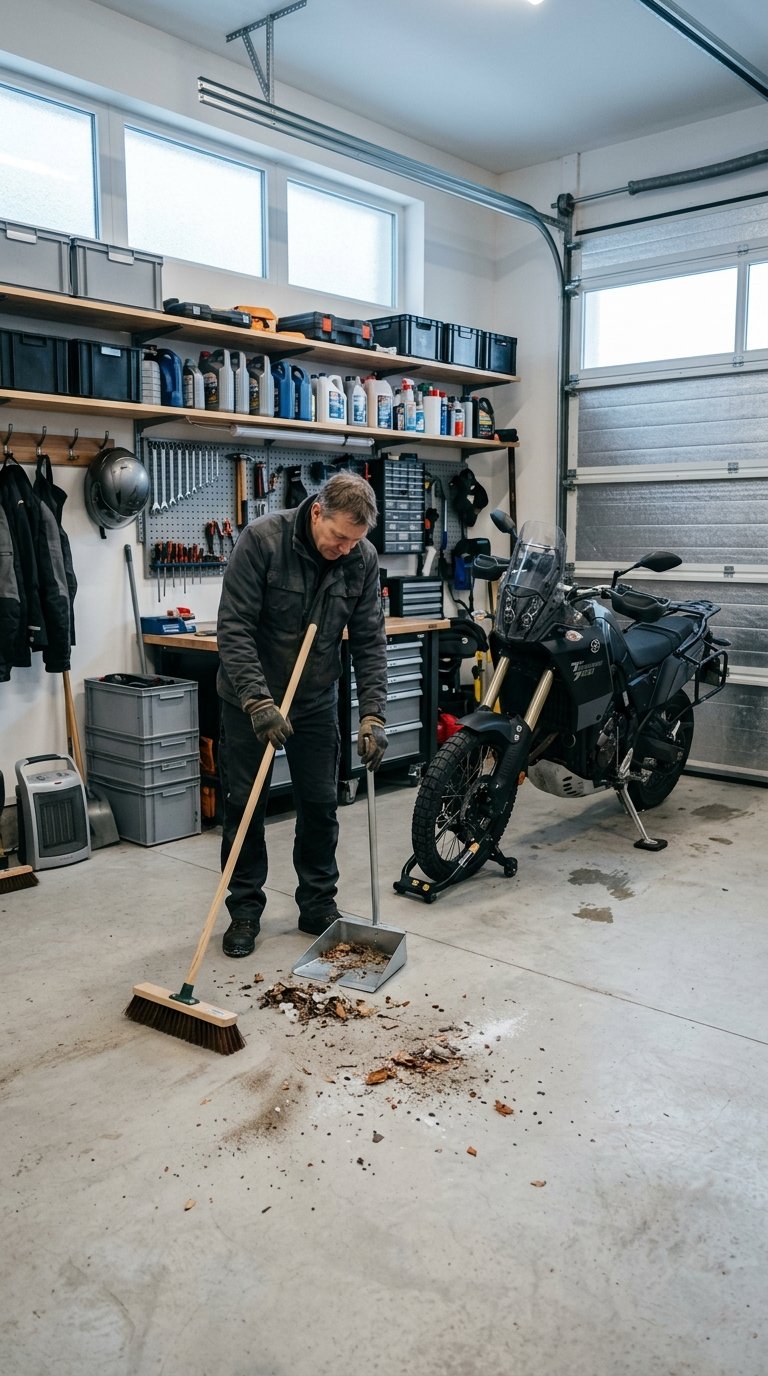
Start by removing your motorcycle and any loose items from the garage floor. Sweep dust, leaves, gravel, and other debris into a pile, then collect it before it spreads back across the space.
Pay close attention to areas near the garage door and under shelves. Road salt can collect in these spots after winter rides. It may also cling to wet boots, tires, and tools, so clean these items before storing them.
Use a damp mop to remove fine dust and salt residue after sweeping. Let the floor dry fully before parking your motorcycle inside. A dry, clean surface helps prevent grime from reaching the bike during storage.
PRO TIP
Place a sturdy mat near the entrance to catch salt, water, and dirt from your boots and tires. Shake it out or clean it often during winter.
3) Wash and fully dry the motorcycle
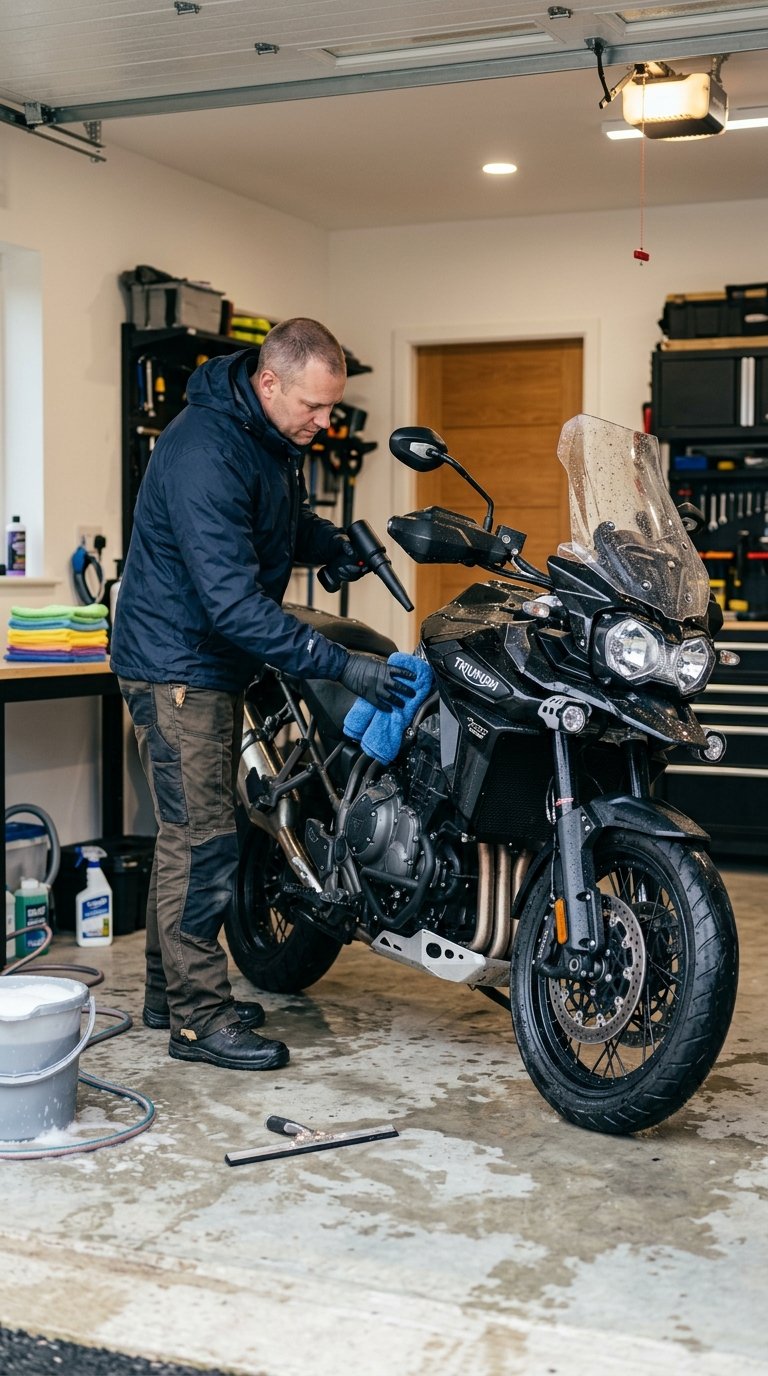
Wash your motorcycle before storing it for winter. Road salt, dirt, and grime can hold moisture against metal parts and cause rust. Use a mild motorcycle-safe cleaner, a soft cloth, and clean water.
Pay close attention to the wheels, chain, frame, and underside of the motorcycle. Avoid spraying high-pressure water at bearings, electrical connections, seals, and other sensitive areas.
Dry the motorcycle completely with clean microfiber towels. Let it air-dry in a warm, well-ventilated space, and move it slightly so water can drain from hidden areas. Start the engine only if the manufacturer allows it and you can run it long enough to remove moisture.
PRO TIP
Check beneath the seat, around the fasteners, and near the exhaust for trapped water. Dry these areas by hand before you cover or store the motorcycle.
4) Change the engine oil and filter
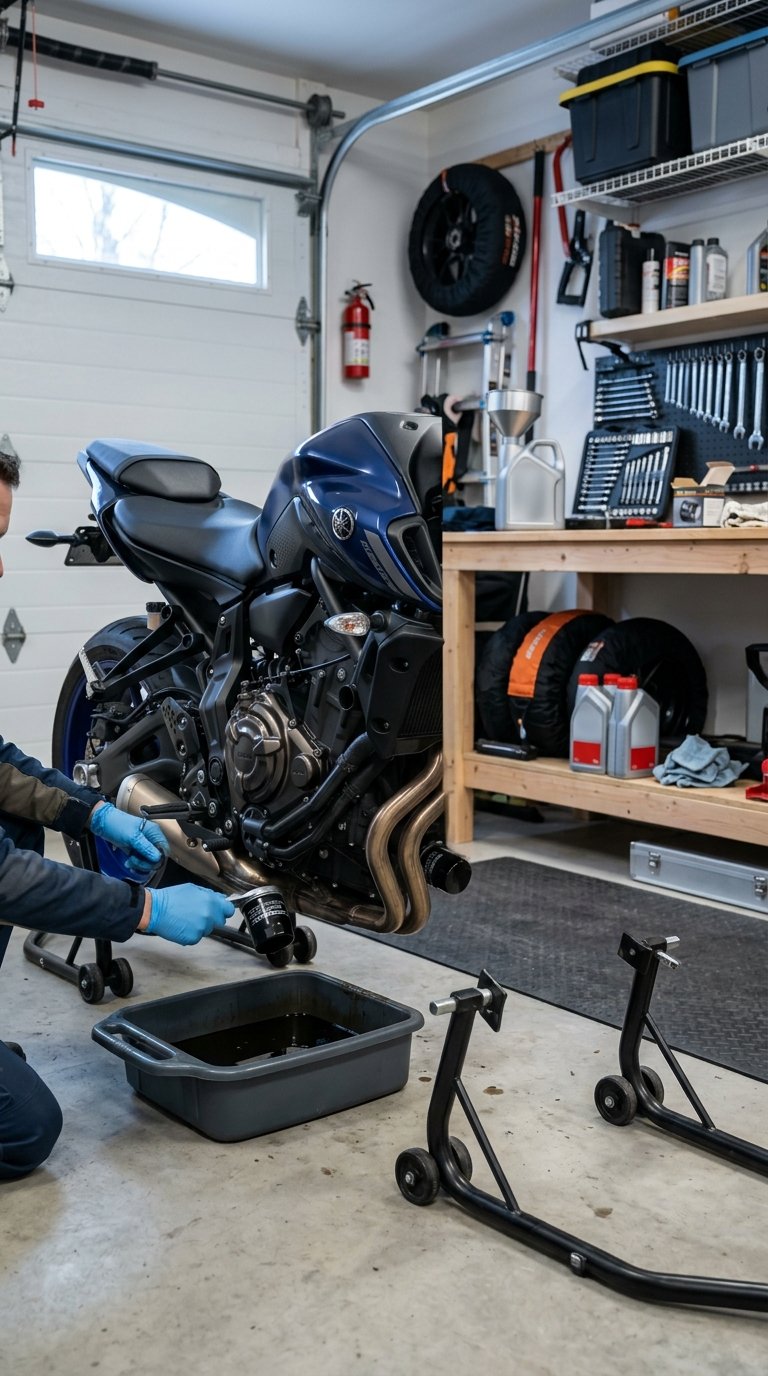
Change your motorcycle’s engine oil before storing it for winter. Used oil contains moisture, fuel residue, and other contaminants that can harm internal parts while the bike sits.
Warm the engine for a few minutes so the oil drains easily, but avoid burns. Turn off the engine, place the motorcycle on a stable stand, and remove the drain plug. Let the old oil flow into a suitable container, then replace the drain plug washer if needed.
Remove the old filter and install a new one. Apply a thin layer of fresh oil to the filter seal before tightening it by hand. Add the correct amount and grade of oil listed in your owner’s manual, then check the level on level ground.
Dispose of the used oil and filter at an approved recycling center. Clean any spills from the garage floor to prevent slips and protect the surface.
5) Fill the fuel tank to reduce condensation
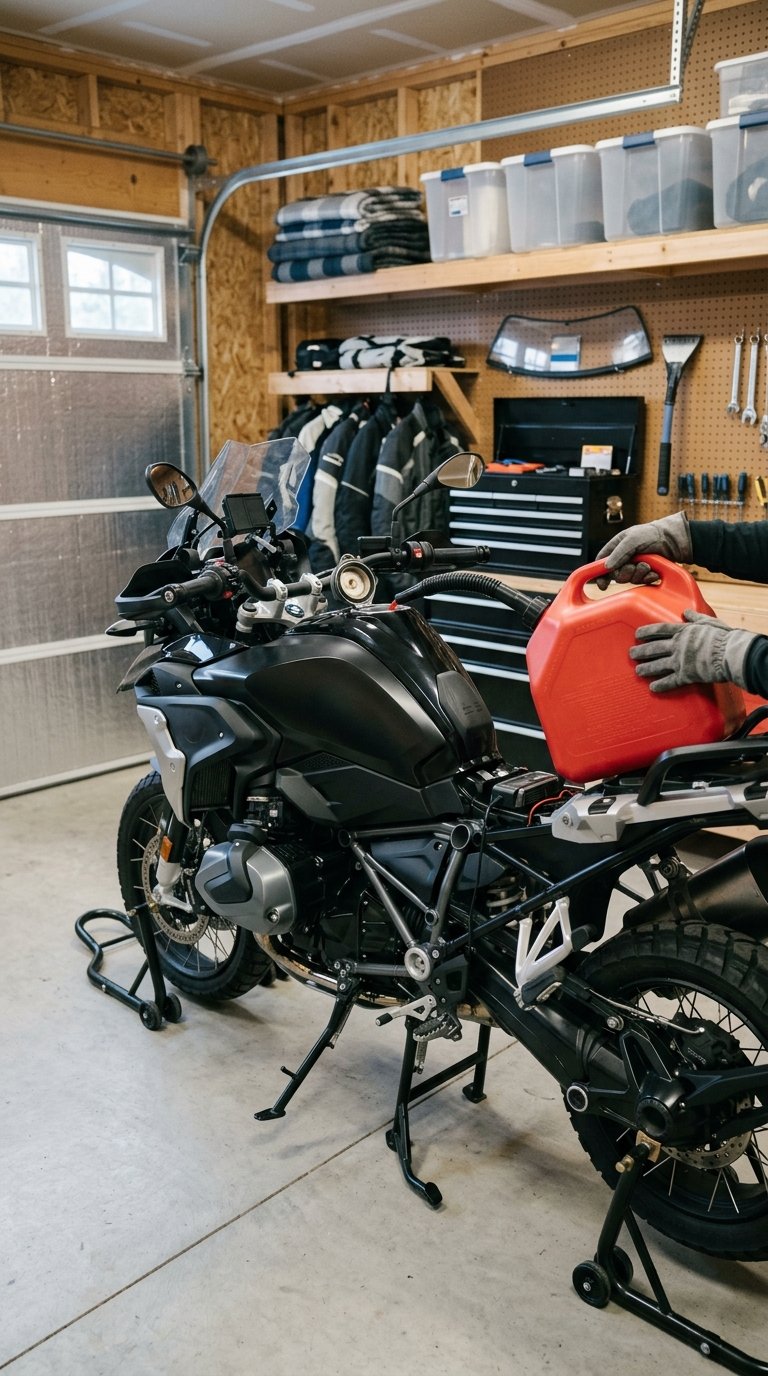
Fill your motorcycle’s fuel tank before storing it for winter. An almost empty tank leaves more air inside, which can allow moisture to form as temperatures change. That moisture may lead to rust inside the tank and fuel system.
Use fresh fuel, and add a fuel stabilizer if the motorcycle will sit for several weeks or longer. Follow the stabilizer’s label directions, then run the engine for a few minutes so the treated fuel moves through the system.
Do not overfill the tank. Leave enough space for fuel to expand, especially if you store the motorcycle in a warm area. Check the tank cap and fuel lines for leaks before you cover the bike.
PRO TIP
Record the date you added the stabilizer. This reminder helps you replace old fuel and prepare the motorcycle before your next riding season.
6) Add motorcycle fuel stabilizer
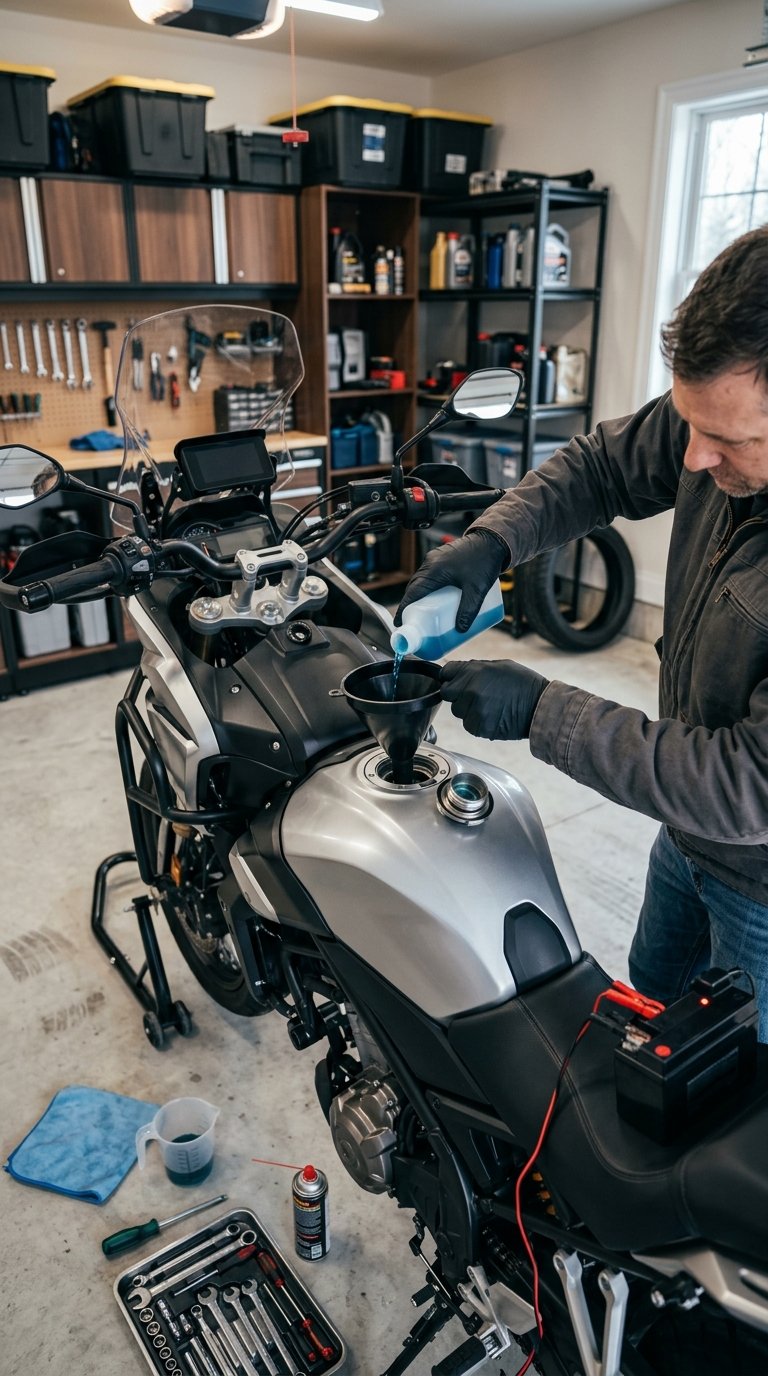
Add fuel stabilizer to your motorcycle’s tank before storing it for winter. Follow the dosage listed on the container, since using too much or too little can reduce its effectiveness.
Fill the tank after adding the stabilizer, then run the engine for several minutes. This helps move the treated fuel through the fuel lines, injectors, or carburetor. Perform this step in a well-ventilated area and keep the motorcycle away from flames or sparks.
If your motorcycle has a carburetor, drain the float bowl after running the engine. Old fuel can leave deposits that cause starting problems in spring. Check your owner’s manual for the correct storage procedure.
PRO TIP
Write the treatment date on a small label and attach it near the fuel tank. This reminder helps you track when you prepared the motorcycle and prevents repeated dosing.
7) Run the engine briefly to circulate treated fuel
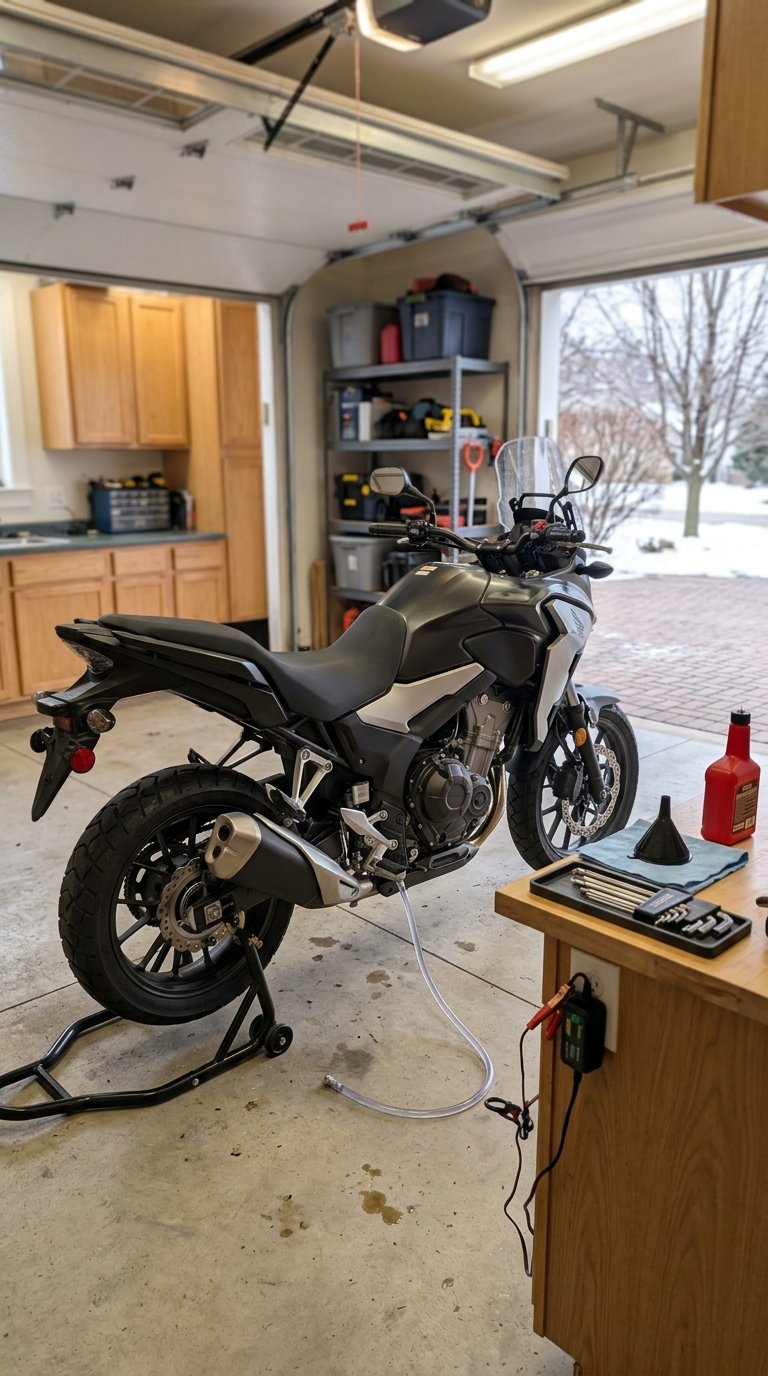
After adding fuel stabilizer to the tank, run the engine briefly so the treated fuel reaches the fuel lines, pump, carburetor, or injectors. Follow your motorcycle manual for the correct amount and type of stabilizer.
Let the engine run for about five to ten minutes, or until it reaches normal operating temperature. Do this outdoors or in a well-ventilated area because exhaust fumes can build up quickly inside a garage.
Avoid long idle periods, and do not rev the engine while the motorcycle sits still. Afterward, turn off the engine and let the exhaust system cool before covering or storing the motorcycle.
PRO TIP
If possible, take a short ride after adding the stabilizer. This helps mix the treated fuel more evenly and warms the engine under normal conditions. Check for fuel leaks before parking the motorcycle for winter.
8) Clean and lubricate the drive chain
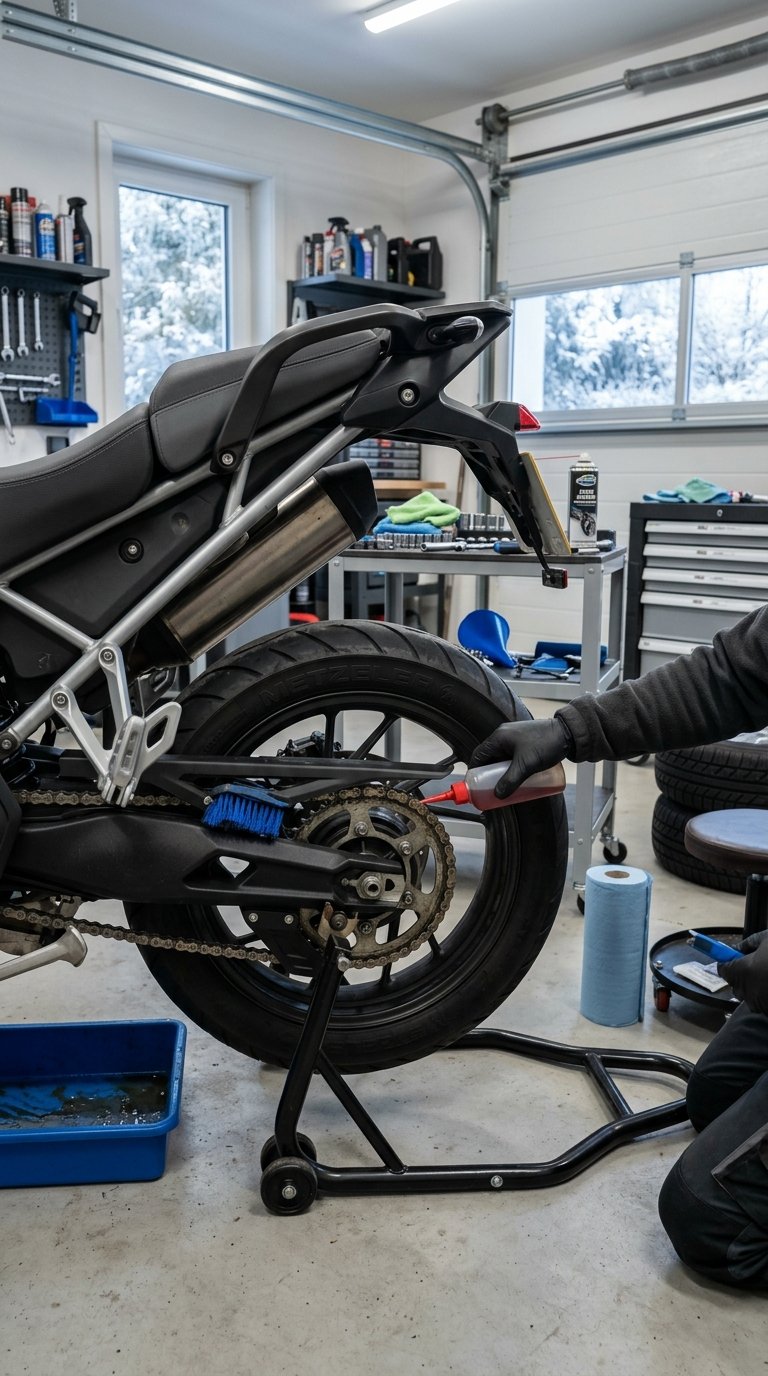
Clean your motorcycle’s drive chain before storing the bike for winter. Place the motorcycle on a stand if possible, then remove dirt and old lubricant with a chain-safe cleaner and a soft brush. Wipe the chain with a clean cloth and let it dry fully.
Apply a light, even coat of chain lubricant to the inside of the chain while you slowly turn the rear wheel. Avoid spraying the tire, brake parts, and floor. Let the lubricant set before riding or covering the motorcycle.
PRO TIP
Check the chain slack after cleaning and lubrication. Use your owner’s manual for the correct measurement, and adjust the chain if needed. A clean, properly adjusted chain helps prevent rust and keeps the motorcycle ready for its next ride.
9) Inspect and inflate both tires
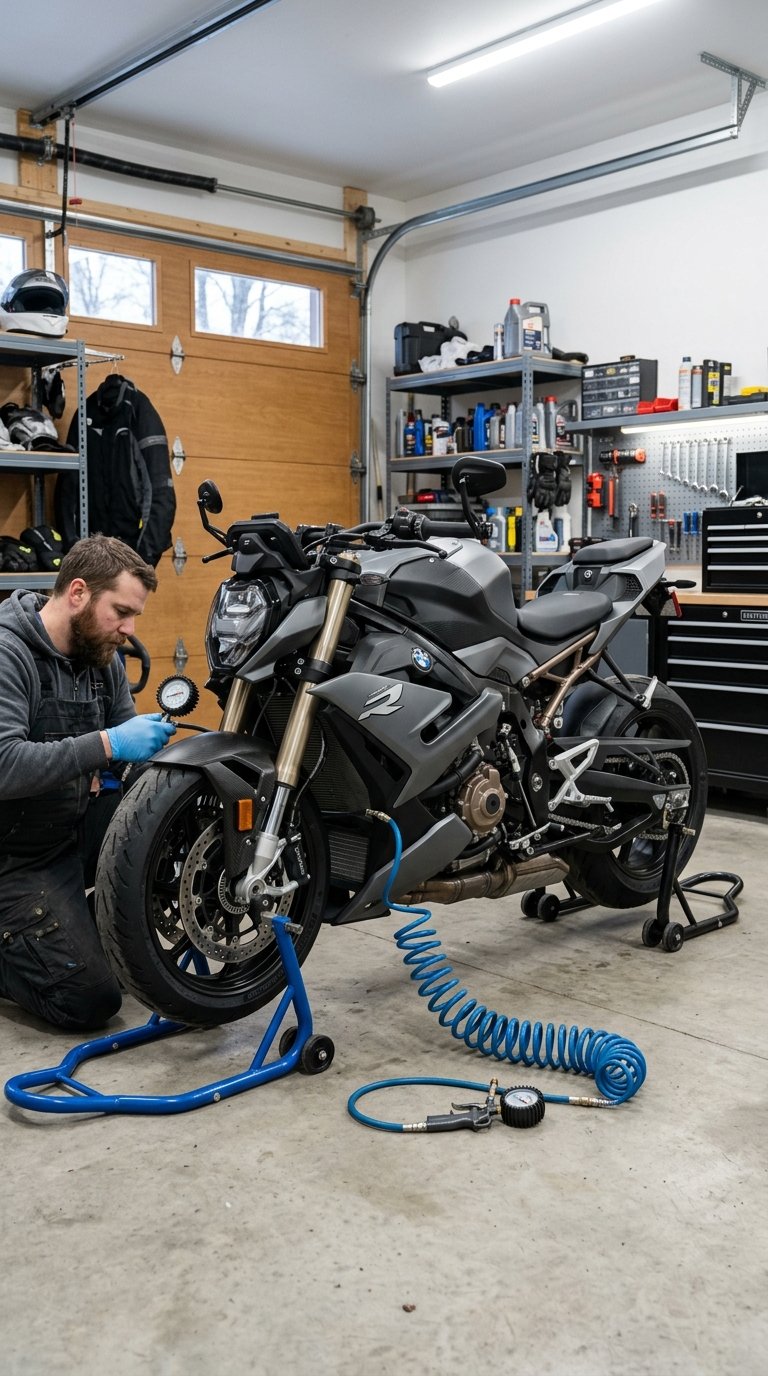
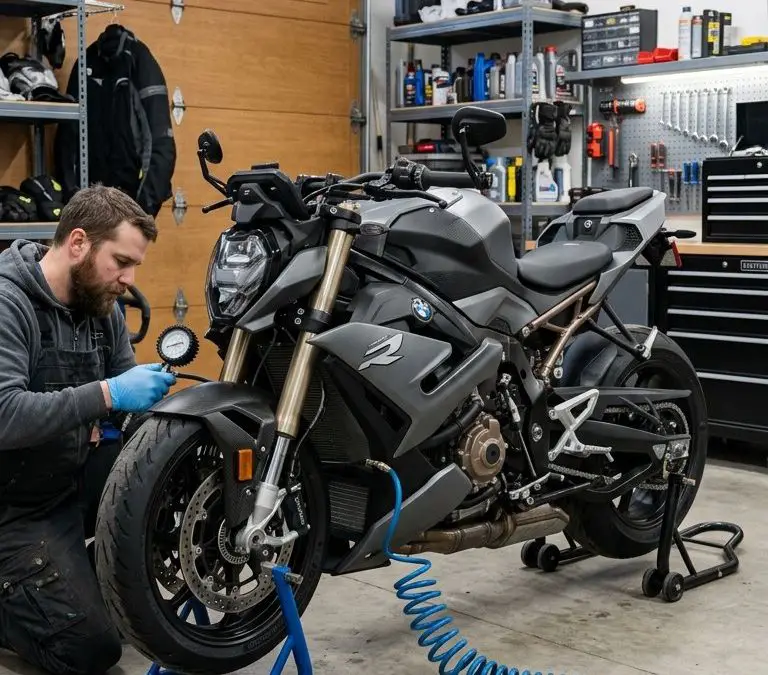
Cold weather can lower tire pressure, so inspect both tires before storing your motorcycle. Look for cracks, cuts, bulges, or nails in the tread and sidewalls. Check the valve stems for damage or leaks.
Use a reliable tire gauge to measure pressure when the tires are cold. Inflate each tire to the pressure listed in your motorcycle’s owner’s manual or on its information label. Do not use the maximum pressure printed on the tire unless the manual recommends it.
PRO TIP
Write down the pressure and inspection date. Check both tires again during long-term storage, especially if your garage has large temperature changes. Keep the motorcycle upright and prevent sharp objects from contacting the tires.
10) Use a motorcycle stand to reduce tire loading
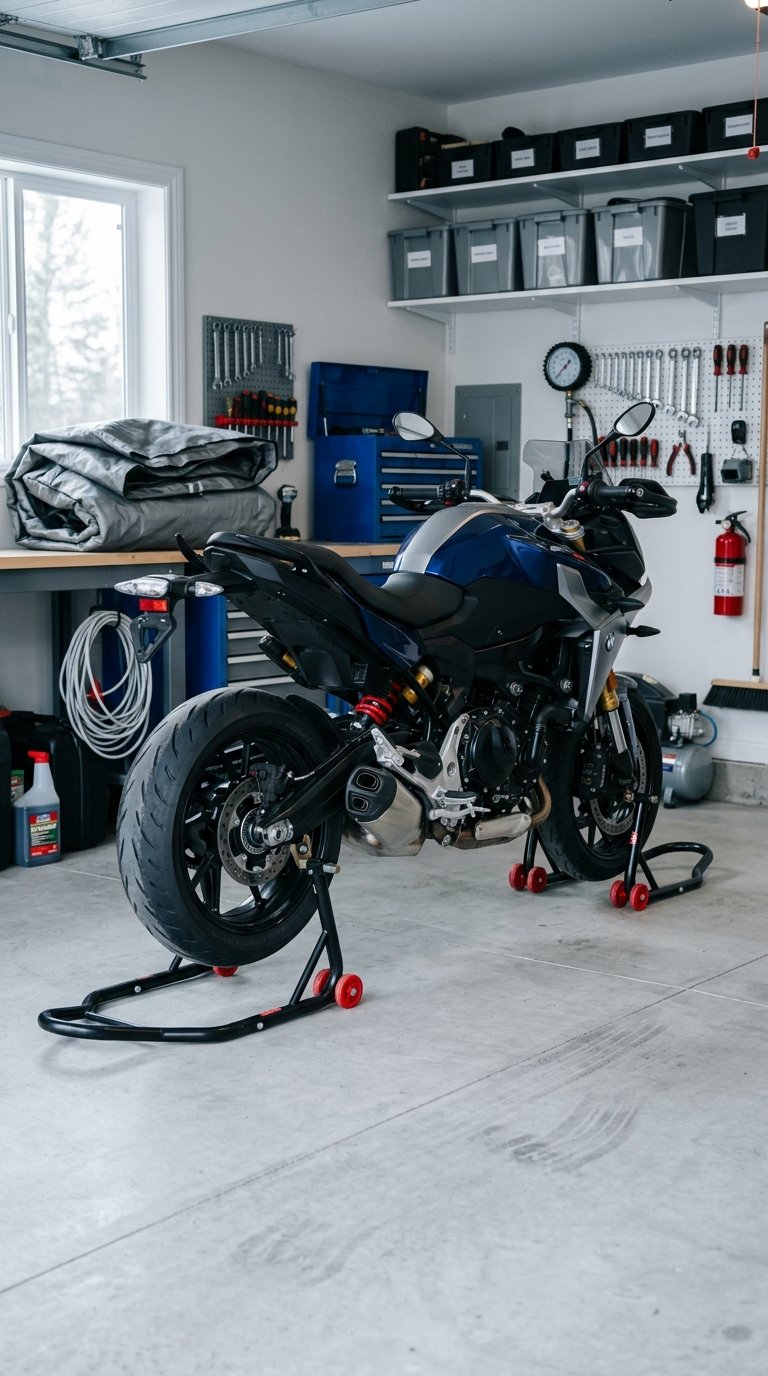
A motorcycle stand can support your bike during winter storage and reduce the weight placed on its tires. Lift the wheels only as directed by your motorcycle’s service manual, and make sure the stand rests on a stable, level surface.
Before using the stand, check that your garage floor can support the combined weight of the bike and stand. Secure the motorcycle so it cannot roll or tip, especially if children, pets, or other vehicles use the space.
PRO TIP
Clean and inspect the stand before storage. Check for bent parts, loose fasteners, or worn rubber pads. Place a small block or mat under the stand if the floor is uneven, but never use unstable materials that could shift under load.
11) Disconnect the battery
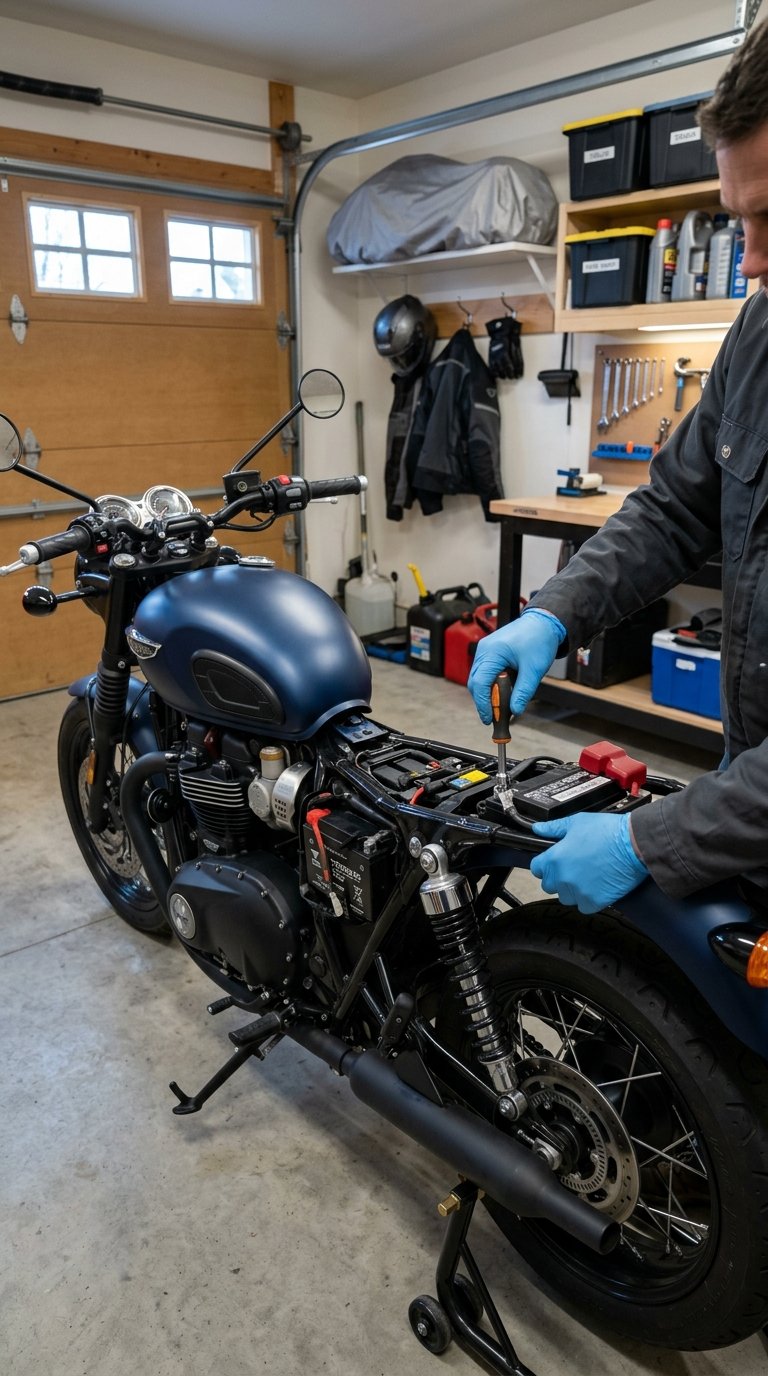
Disconnect your motorcycle battery before storing the bike for winter. Turn off the ignition, remove the negative cable first, and then remove the positive cable if needed. Keep the cables from touching the terminals or metal parts.
Store the battery in a cool, dry place away from direct heat and freezing temperatures. Place it on a stable surface where it will not get knocked over. Check the battery manual for safe storage and charging instructions.
PRO TIP
Use a maintenance charger made for motorcycle batteries if you plan to leave the battery installed. Check the charger and battery regularly, and keep all connections clean and dry. Avoid using a damaged charger or charging a battery with cracks, leaks, or swelling.
12) Store the battery on a Battery Tender Junior
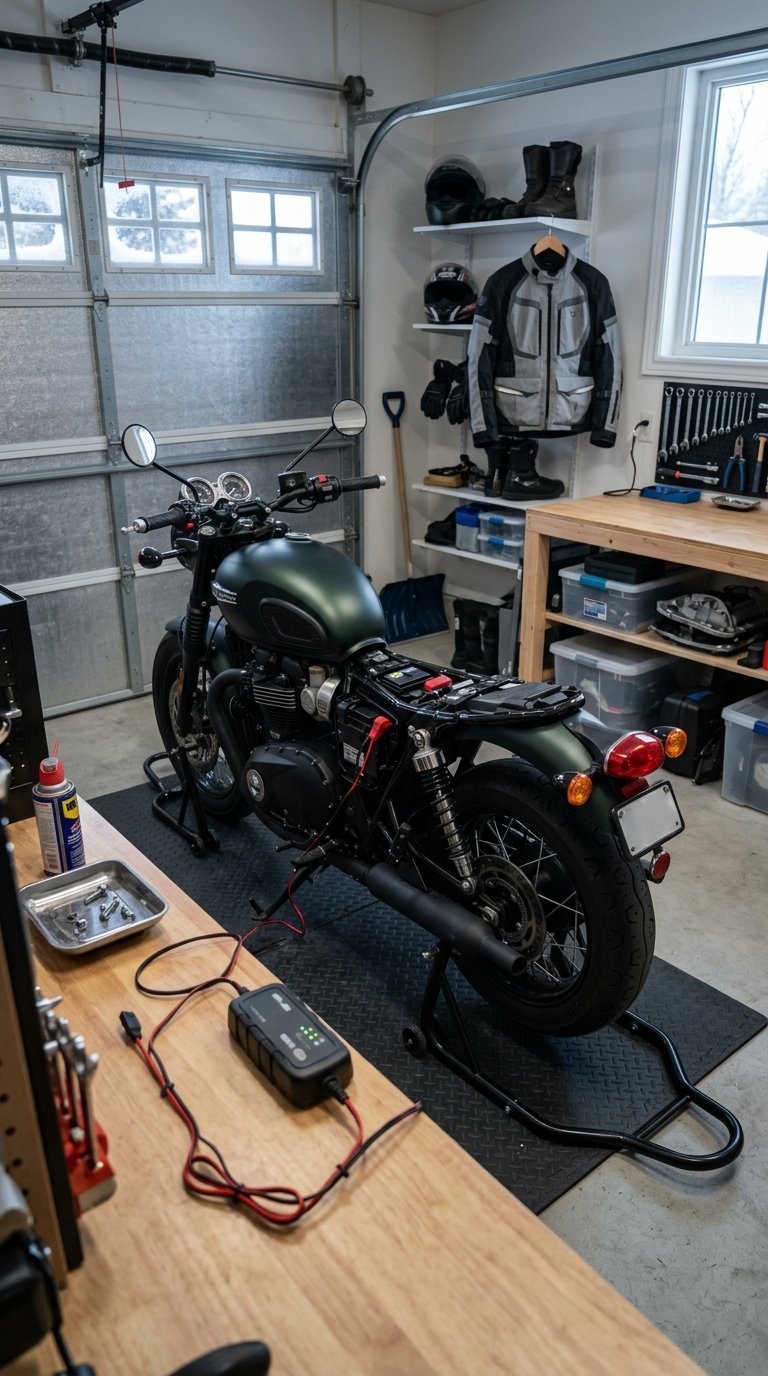
Remove the battery from your motorcycle if you plan to store it for several weeks. Clean the terminals, check the battery case for damage, and place it on a stable, nonmetal surface in a dry area.
Connect the charger’s leads to the correct battery terminals. Attach the positive lead first, then connect the negative lead. Plug the charger into a grounded outlet and confirm that its indicator shows a charging or maintenance mode.
A smart battery maintainer adjusts its output as needed and helps prevent the battery from losing charge. Check the connections every few weeks, and keep the charger and battery away from fuel, moisture, heat sources, and open flames.
PRO TIP
Take a photo of the cable connections before removing them. This gives you a quick reference when you reinstall the battery in spring.
13) Cover the exhaust outlets against pests
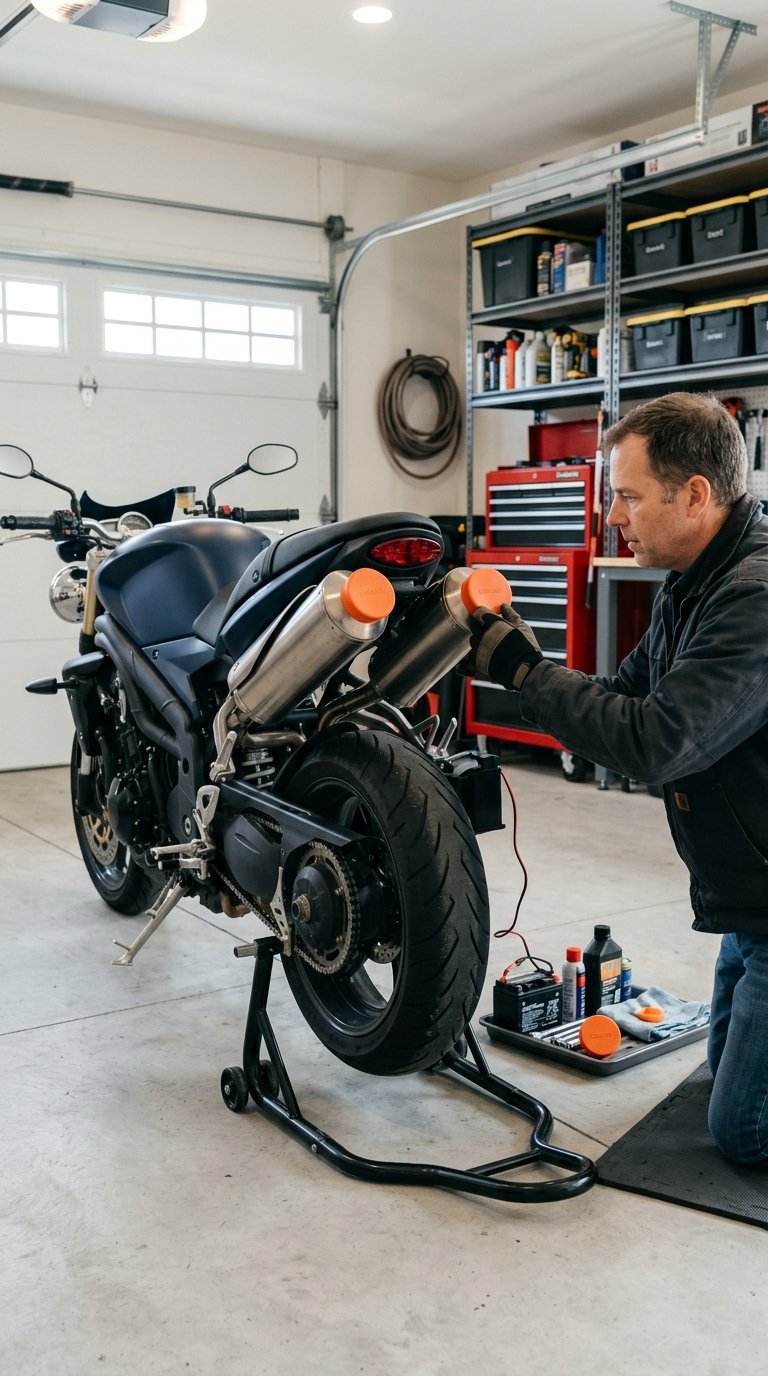
Before storing your motorcycle, protect each exhaust outlet from mice, insects, and other pests. Small animals may enter through the pipes and build nests, which can restrict airflow or cause damage when you start the engine.
Use clean, breathable plugs or tightly secured covers made for motorcycle exhausts. Do not push cloth, paper, or loose materials deep into the pipes. Choose a bright option or attach a reminder tag so you remember to remove the covers before riding.
PRO TIP
Write “Remove exhaust covers” on a note and place it on your handlebars. Check both outlets during your spring inspection, even if you stored the motorcycle for only a short time. Also look for signs of nesting near the airbox, battery, and wiring.
14) Plug vulnerable air intakes with breathable material
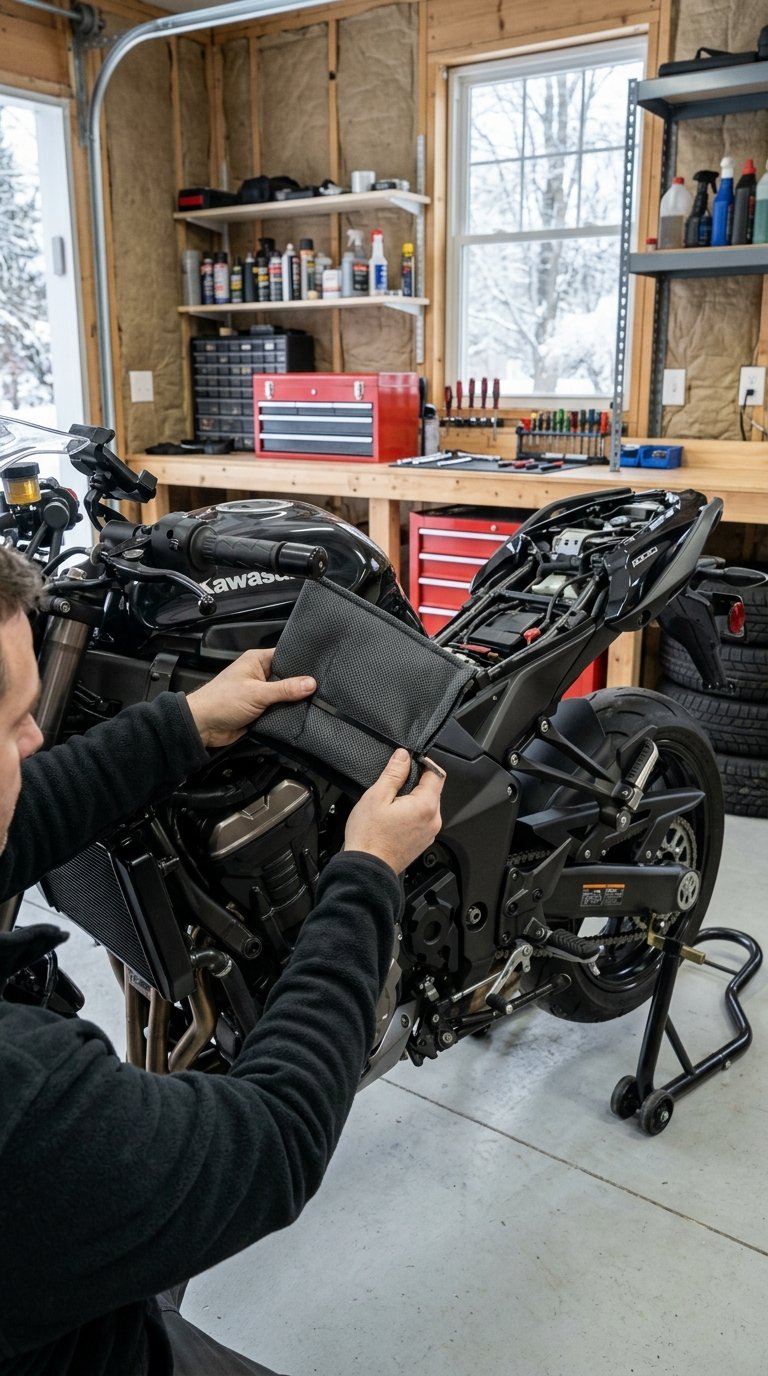
Before storing your motorcycle, inspect the airbox intake, exhaust outlets, and other open passages. Small animals and insects can enter these spaces during winter and build nests that restrict airflow or damage components.
Cover each opening with breathable material, such as clean mesh fabric or a purpose-made storage plug. Secure it firmly with a soft tie or removable tape, but avoid sealing the opening with airtight plastic. Breathable material helps limit moisture buildup while keeping pests out.
Write a reminder on your storage checklist so you remove every cover before starting the engine. Check the intake and exhaust again for debris, loose material, or signs of nesting. Keep the covers in a labeled container after removal so you can find them next season.
15) Apply corrosion inhibitor to exposed metal
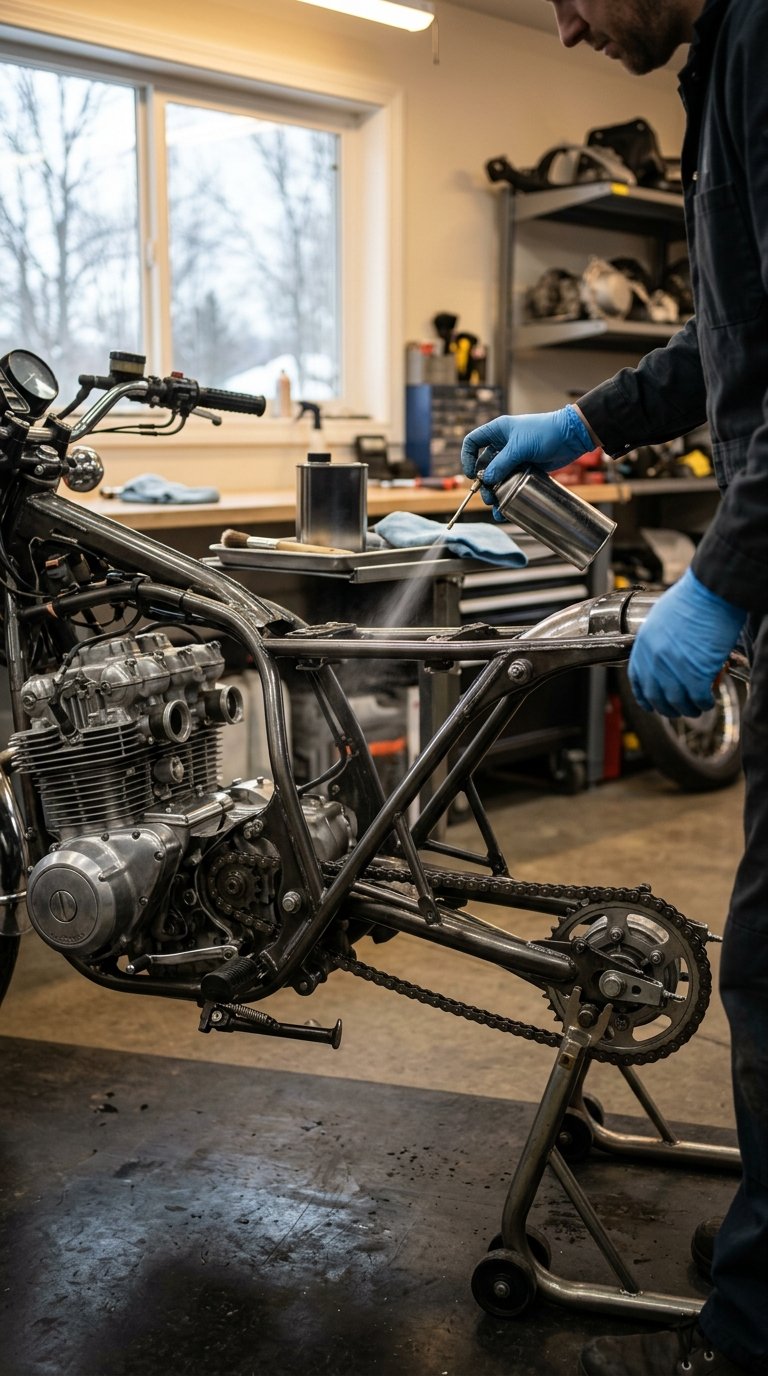
Before applying a corrosion inhibitor, clean and dry exposed metal parts. Remove dirt, salt, and moisture from the frame, fasteners, cables, and other unpainted surfaces. Let each area dry fully to help prevent trapped moisture.
Apply a light, even coating according to the product directions. Use a cloth or small brush for controlled application, and wipe away excess buildup. Keep the coating off brake discs, brake pads, tires, grips, and other parts that need friction or a firm grip.
Inspect the garage during storage, especially after damp weather or temperature changes. If the coating wears away or moisture appears, clean the area and apply another light layer.
PRO TIP
Place a clean cloth under the motorcycle while you work. It catches drips and helps you spot areas that need more attention without leaving residue on the garage floor.
16) Wax painted surfaces before storage
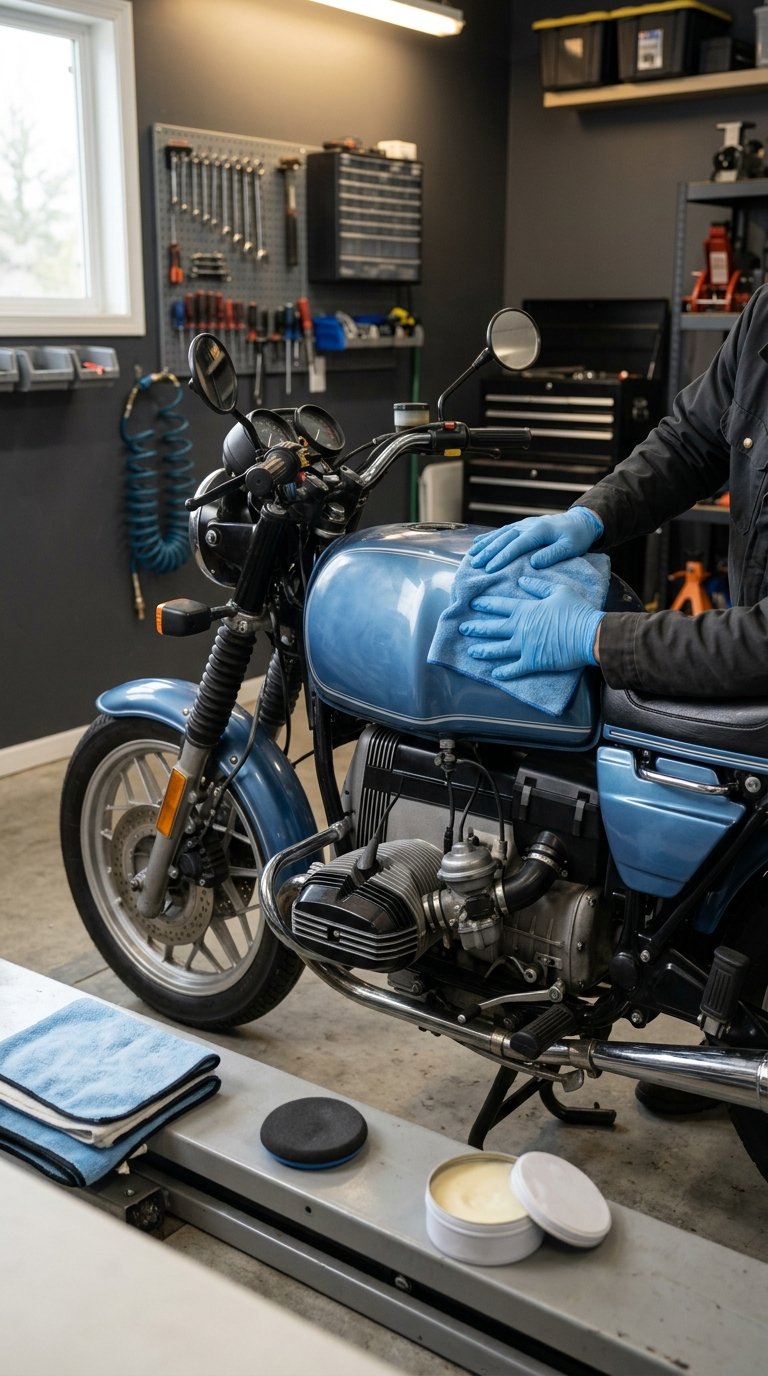
Wash and dry your motorcycle before applying wax. Dirt left on the paint can cause fine scratches when you spread the wax. Check the surface for tar, road salt, and other residue, then remove it with a cleaner made for painted finishes.
Apply a thin, even coat of motorcycle or automotive wax with a clean microfiber cloth. Follow the product directions for drying time, then buff the surface gently with a second clean cloth. Avoid waxing rubber, plastic trim, brakes, tires, and other parts that could become slippery.
Wax helps protect painted panels from dust, moisture, and minor storage grime. Park the motorcycle in a dry space after treatment, and cover it only after the wax has cured according to the label.
PRO TIP
Keep the garage temperature moderate while you wax. Extreme cold can make the wax difficult to spread and remove.
17) Protect leather with a suitable conditioner
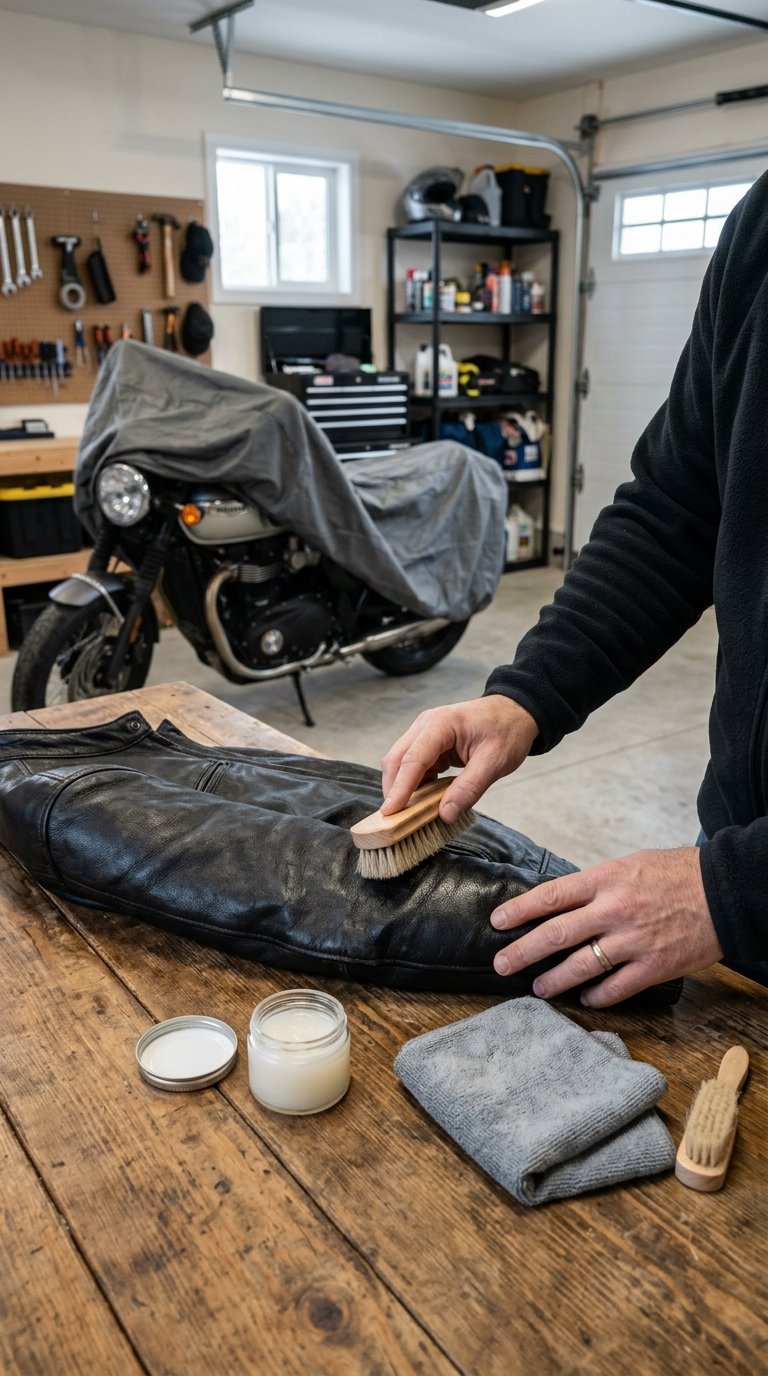
Before storing your motorcycle, clean leather seats, bags, and saddlebags with a soft, damp cloth. Remove dirt and salt, then let each item dry fully away from direct heat. Applying conditioner to dirty or wet leather can trap grime and moisture.
Choose a conditioner made for motorcycle leather. Test it on a hidden area first, because some products can darken the material or change its finish. Apply a small amount with a clean cloth, work it in evenly, and wipe away any excess.
PRO TIP
Give the leather time to absorb the conditioner before covering your motorcycle. Keep leather parts in a cool, dry garage, and avoid plastic covers that can hold moisture against the surface. Inspect the leather during winter and treat it again only if it looks dry or begins to feel stiff.
18) Use a breathable motorcycle cover
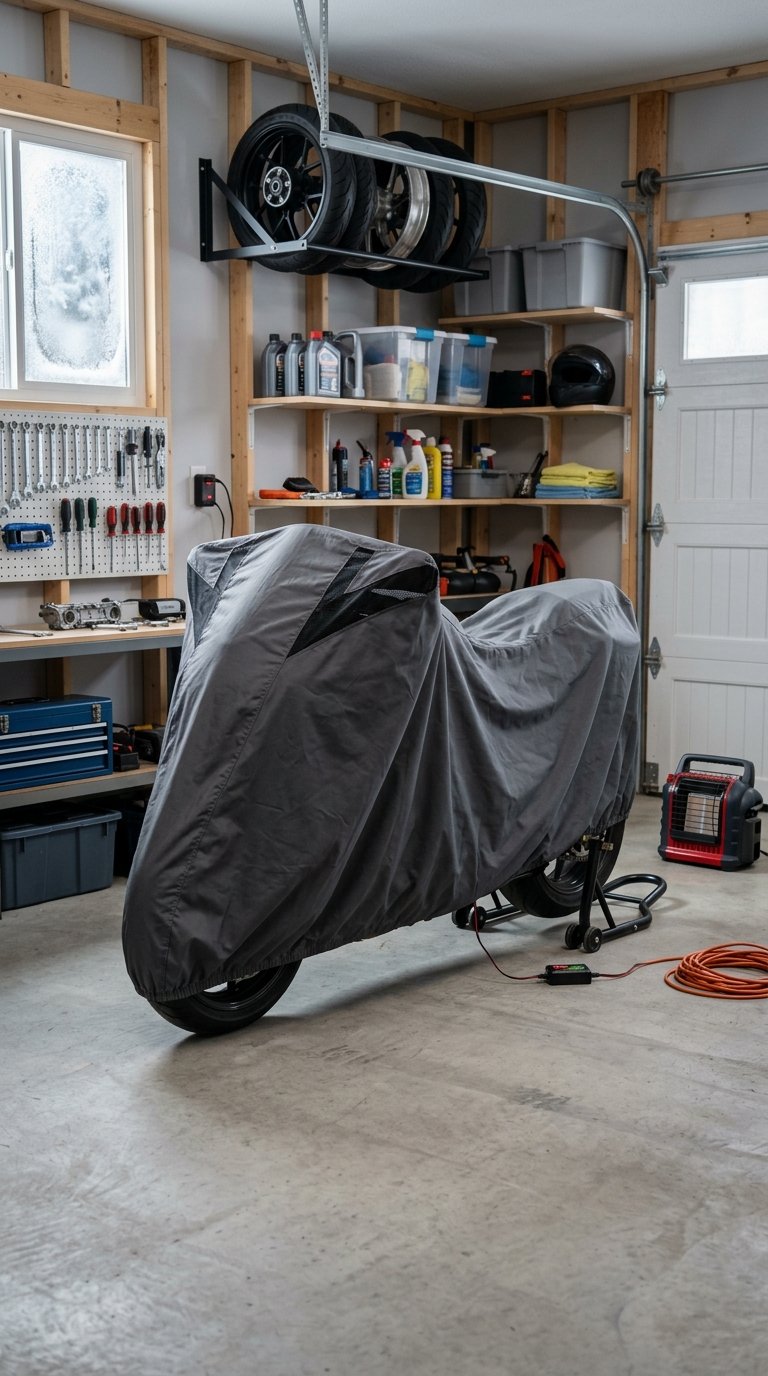
Place a breathable motorcycle cover over your bike before storing it for winter. Choose one that fits your motorcycle closely without pressing hard against mirrors, controls, or sharp parts. A proper fit keeps dust away while allowing trapped moisture to escape.
Avoid plastic sheets and sealed covers. They can hold condensation against the paint, metal, seat, and electrical parts. Moisture buildup may lead to rust, mildew, or unpleasant odors during long storage.
Clean and dry your motorcycle before covering it. Check the cover every few weeks, especially after changes in temperature or humidity. Lift it briefly to inspect for moisture, then let the bike and cover dry before putting it back.
PRO TIP
Place the motorcycle on a clean, dry surface and keep the cover away from the floor. This helps prevent dirt and moisture from collecting underneath the bike.
19) Keep the motorcycle away from garage chemicals
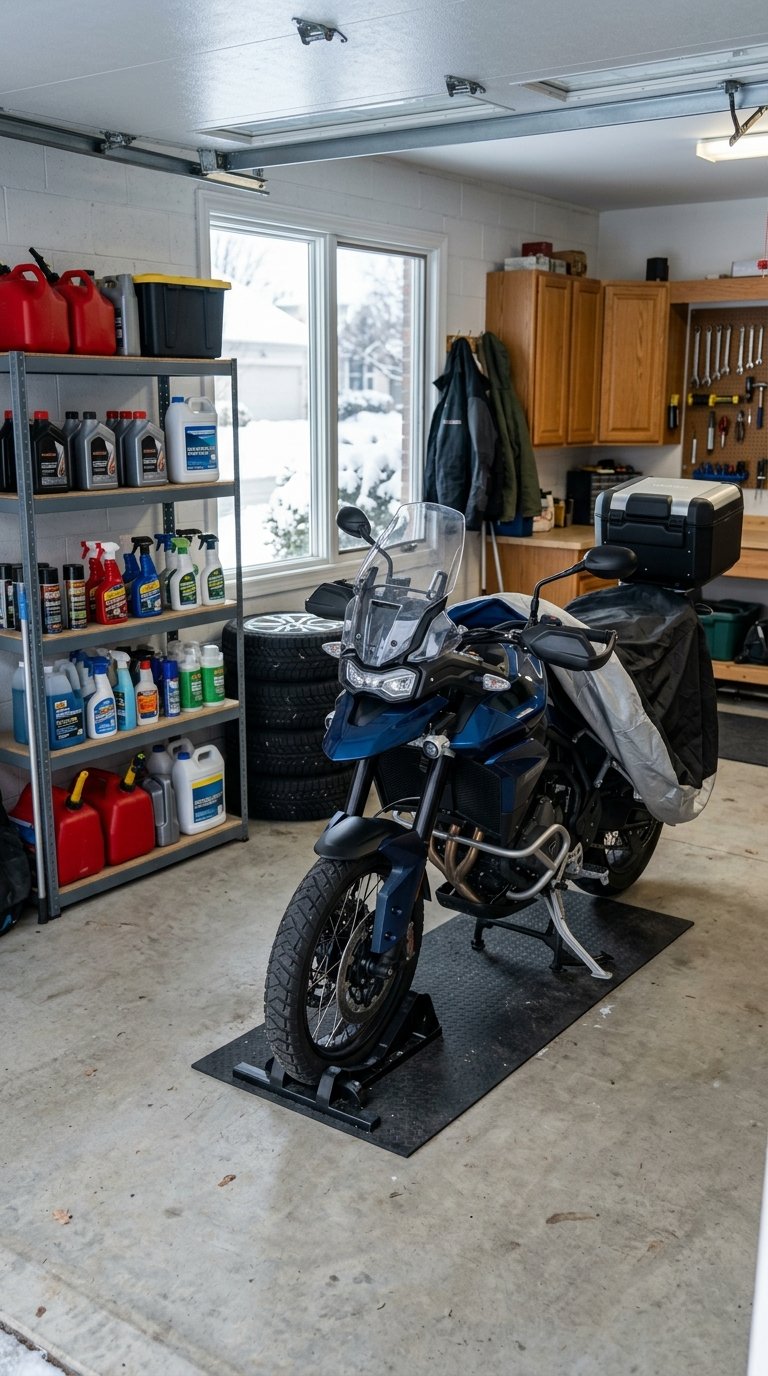
Store fuel, oil, coolant, cleaners, and paint away from your motorcycle. These liquids can leak, spill, or release fumes that may damage plastic, rubber, metal, and painted surfaces. Keep each container sealed and place it on a stable shelf or inside a leak-resistant storage bin.
Leave enough space between chemical containers and your motorcycle. Do not stack containers above the bike, where they could fall onto the seat, tank, or controls. Clean spills at once, and follow each product’s storage and disposal instructions.
PRO TIP
Create a marked chemical storage area near the garage wall. Keep it away from heaters, sparks, open flames, and areas where you perform maintenance. This setup protects your motorcycle and makes winter garage work safer.