Last Updated on September 17, 2026
A used Subaru holding 71 percent of its original value after five years is not a fluke. It is a pattern that has repeated across nearly every Subaru model line for the better part of a decade, and it is reshaping what “affordable” even means for shoppers browsing Subaru used cars in 2026. Reliability, resale value, and the best models under $20,000 are now closely linked topics, because a brand that breaks down less often also tends to hold its price longer on dealer lots and in private-party listings.
That combination is good news if you already own a Subaru. It is more complicated if you are trying to buy one on a tight budget. This guide breaks down exactly where Subaru’s reliability numbers stand in 2026, why resale value is staying stubbornly high, and which specific models and model years still land under the $20,000 mark without asking you to compromise on safety or dependability.
Key Takeaways
- Subaru ranks 2nd of 25 brands in Clutch’s 2026 Certified Reliability Index (9.68/10) and scores 85/100 “Excellent” on VinspectorAI’s NHTSA-based analysis, confirming above-average durability.[1][4]
- The 2026 Crosstrek scores 94/100 (“Excellent”) on AutoReliabilityIndex, while the Outback and Forester land in the low-70s (“Good”), making crossovers the brand’s reliability standouts.[7]
- Strong resale value cuts both ways: the Crosstrek holds about 71 percent of its value after five years, but that also pushes many 2020-plus Subarus above $20,000 in today’s market.[2][8][13]
- Buyers targeting Subaru used cars in 2026 under $20,000 should focus on 2015-2019 Crosstrek, Forester, Outback, and Impreza models with 60,000-120,000 miles and documented maintenance.[5][6][12]
- Average annual repair cost for Subaru sits around $617, with only a 13 percent chance of a severe repair, which is manageable for a vehicle known for all-weather capability.[10]
Subaru Used Cars in 2026: Reliability by the Numbers
Reliability rankings can feel like a moving target from one study to the next, but the 2026 data on Subaru is unusually consistent. Clutch’s 2026 Certified Reliability Index gives Subaru a 9.68 out of 10, placing it second among 25 brands, trailing only Lexus, and citing low warranty-repair rates and reconditioning costs as the main drivers.[1] RepairPal’s 2026 rating is more conservative at 3.5 out of 5, ranking Subaru 14th of 32 brands with average annual repair costs near $617, about 0.3 shop visits per year, and a 13 percent chance of a severe repair in any given year.[10] VinspectorAI’s review of NHTSA complaint data lands closer to Clutch’s optimism, awarding Subaru an 85 out of 100 “Excellent” reliability score based on roughly 1,800 total complaints and 29 recalls, and specifically flagging 2024 through 2026 models as having among the fewest complaints of any recent Subaru lineup.[4]
Model-level detail tells an even more useful story for shoppers hunting Subaru used cars in 2026 on a budget. AutoReliabilityIndex reports an average Subaru score of 73 out of 100 (“Good”) across the lineup, but the 2026 Crosstrek pulls ahead dramatically at 94 out of 100 (“Excellent”), while the Outback and Forester sit in the low-70s, still rated “Good.”[7] Its companion “most reliable Subaru” list highlights the 2025 Crosstrek at 83/100 and the 2025 Outback at 82/100, both “Excellent” with zero recorded recalls, which suggests that even one- to two-year-old examples entering the used market in 2026 carry a clean bill of health.[14]
iSeeCars’ lifespan modeling backs this up from a different angle. The 2026 Outback earns an 8.8 out of 10 reliability score, with a typical service life around 15.5 years or 178,000 miles and roughly a 34 percent chance of reaching 200,000 miles. The 2026 Forester scores slightly lower at 8.5 out of 10, with an expected 13.8 years of service and about a 20 percent chance of hitting 200,000 miles.[11][12] For anyone comparing options across brands, it’s worth cross-referencing this against the broader field of reliable cheap cars under $15,000, where Subaru competes with Toyota and Honda for long-term durability honors.
Not every model year is equal, though. AmpAuto’s 2026 breakdown rates Subaru reliability at 3.6 out of 5, above average overall, but it draws a clear line at roughly 2019: vehicles built after that point show meaningfully fewer issues than older ones, particularly around CVT behavior and electrical faults.[9] That distinction matters enormously when shopping used, because it narrows the “safe zone” for buyers who want modern reliability without paying near-new prices.
Subaru Used Cars in 2026: Resale Value and the Reason Prices Stay High
Here is the paradox at the heart of buying Subaru used cars in 2026: the same reliability that makes these vehicles desirable also keeps them expensive on the resale market. iSeeCars’ September 2026 brand-level data show the Subaru BRZ retaining roughly 76 to 77 percent of its value after five years, with the Crosstrek at about 71 percent and the WRX around 70 percent, placing all three near the top of the entire non-luxury vehicle market for value retention.[2][8]
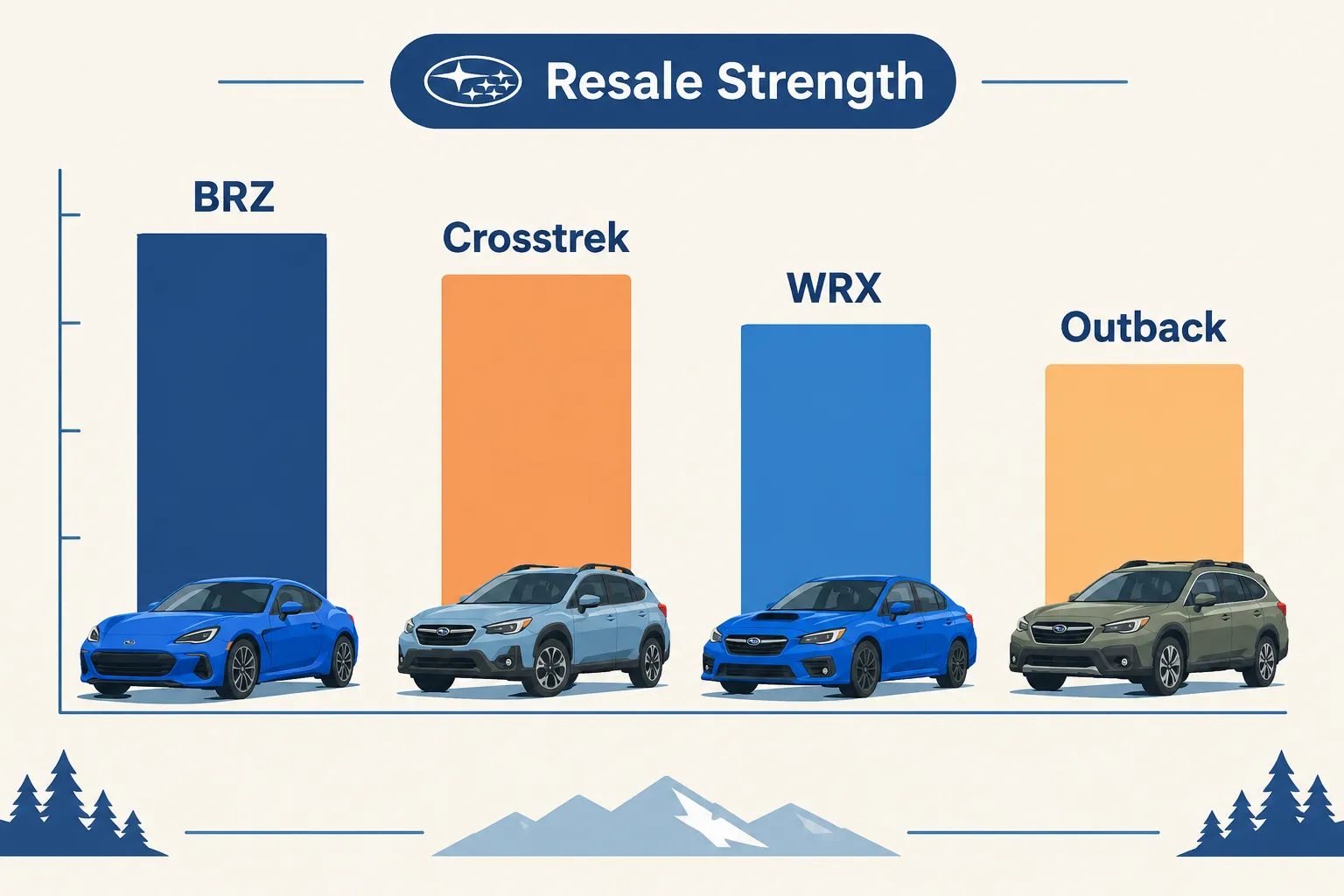
In iSeeCars’ 2026 “Best Resale Value Cars” ranking, the Crosstrek finishes second overall, holding approximately 71 percent of its value after five years, just behind the Toyota C-HR at roughly 75.6 percent.[13] Subaru’s other compact SUVs follow a similar pattern in iSeeCars’ broader SUV resale tables, consistently landing among the better-holding vehicles in their class.[15] For shoppers comparing brands more broadly, it helps to see how these numbers stack up against the wider used-market landscape covered in this complete buyer’s guide by budget and category.
“Strong resale value is a double-edged sword: it rewards owners who sell, but it raises the entry price for buyers who want to purchase used.”
The Forester and Outback provide the clearest real-world benchmark. As of September 9, 2026, a five-year-old Forester retains about 66.6 percent of its value, translating to an average asking price just under $23,000, alongside strong scores for retained value (8.3/10) and reliability (roughly 8.5/10).[6][11] The five-year-old Outback shows about 60 percent residual value, calculated at roughly $21,000, reflecting close to 40 percent depreciation from its original MSRP over five years, based on data last updated September 15, 2026.[12]
Do the math, and the implication is straightforward: well-optioned 2021 Foresters and Outbacks will frequently price above $20,000 in 2026. That pushes budget-focused buyers toward slightly older 2015-2019 examples, or toward higher-mileage units, if they need to stay under that ceiling. Anyone building a shopping strategy around this threshold should also review general tactics in finding affordable options under $20,000, since the pricing dynamics apply well beyond just Subaru.
The Best Subaru Used Cars in 2026: Reliability, Resale Value, and the Best Models Under $20,000
So where does that leave a buyer with a firm $20,000 cap? The realistic answer, based on current pricing and reliability data, is that the sweet spot sits in the 2015-2019 model years for Crosstrek, Forester, Outback, and Impreza, typically with 60,000 to 120,000 miles and a documented maintenance history.[5][6][12] Consumer Reports’ Subaru brand overview, updated through 2026, ranks the brand around 12th for used-car reliability overall but specifically calls out multiple Subaru models with “Very Good” or better reliability that qualify for its “good used cars under $20,000” recommendations, especially select Forester, Outback, Crosstrek, and Impreza model years.[5]
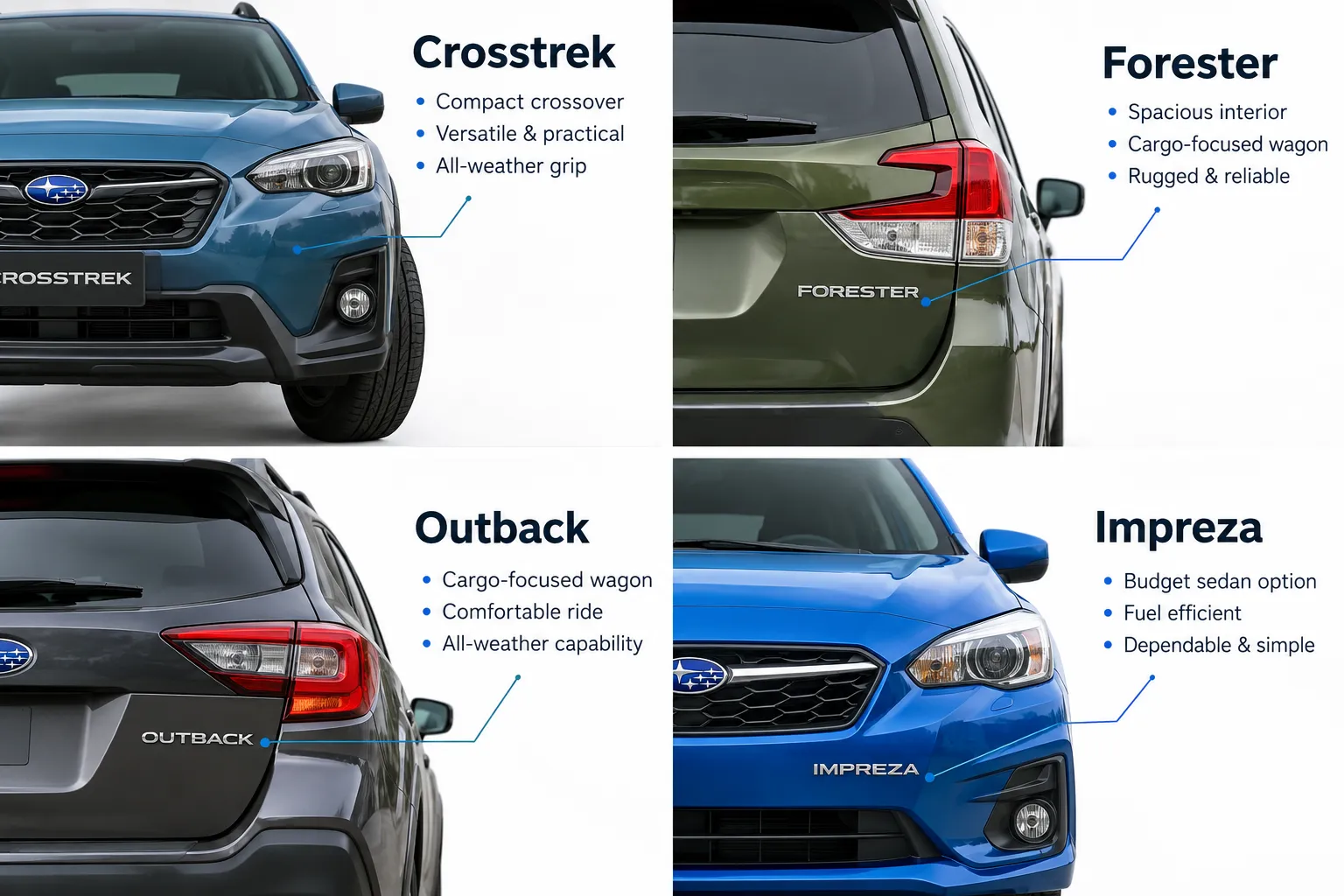
Here is how the four core candidates compare for shoppers focused on Subaru used cars in 2026, reliability, resale value, and the best models under $20,000:
| Model (Target Years) | Reliability Signal | Typical Used-Market Position | Best For |
|---|---|---|---|
| Crosstrek (2015-2019) | “Excellent” ratings in later years; strong owner reports | Often near or under $20,000 with moderate mileage | Buyers wanting the highest resale strength |
| Forester (2015-2019) | “Good” to “Excellent”; 8.5/10 reliability modeling on newer years | Higher-mileage examples needed to stay under $20,000 | Families needing cargo space and AWD |
| Outback (2015-2019) | “Good” ratings; roughly 60% five-year retention on newer models | 2015-2018 wagons more likely under $20,000 | Long-distance drivers, light off-pavement use |
| Impreza (2015-2019) | Solid but less discussed; benefits from base-trim pricing | Frequently the most affordable Subaru option | First-time buyers on the tightest budget |
A few practical notes make this table more useful:
- Crosstrek buyers get the best combination of reliability and resale strength, but that same demand means clean examples move fast and command a premium even at higher mileage.
- Forester shoppers staying under $20,000 will likely need a car past the five-year mark or with mileage above the national average, since even five-year-old units average close to $23,000.[6]
- Outback wagons from 2015-2018 tend to be the most realistic route to staying under budget while still getting Subaru’s signature all-wheel-drive capability.
- Impreza sedans and hatchbacks are consistently the cheapest way into a used Subaru, though they carry slightly less name-brand demand than the crossover lineup.
Ownership Costs Worth Budgeting For
Buying under $20,000 does not mean ownership is free after the purchase. RepairPal’s 2026 figures put average annual repair costs for Subaru at about $617, with just 0.3 shop visits per year and a 13 percent chance that any single repair turns out to be severe.[10] AutoReliabilityIndex breaks this down further at the model level, estimating typical annual repair costs around $492 for the Crosstrek and $607 for the Outback, both landing in the “Good” to “Excellent” range when reliability is weighed against cost.[7] These numbers are manageable for most household budgets, but they should be factored into any total cost-of-ownership comparison, alongside insurance and fuel.
Safety Performance Across Model Years
Safety is one area where slightly older Subarus still punch above their price point. VinspectorAI’s review of official NHTSA records gives Subaru an “Excellent” overall safety rating, citing very low crash-complaint rates relative to fleet size and a long track record of strong crash-test results.[4] iSeeCars’ scoring for the 2026 Forester assigns a 9 out of 10 for safety, reflecting both passive crash protection and modern active-safety systems.[11] Because 2021-2023 Foresters and Outbacks carry comparable safety technology to brand-new units, buyers can often get near-current safety features at a meaningfully lower price by targeting these slightly used model years instead of the newest ones.
What to Check Before You Buy
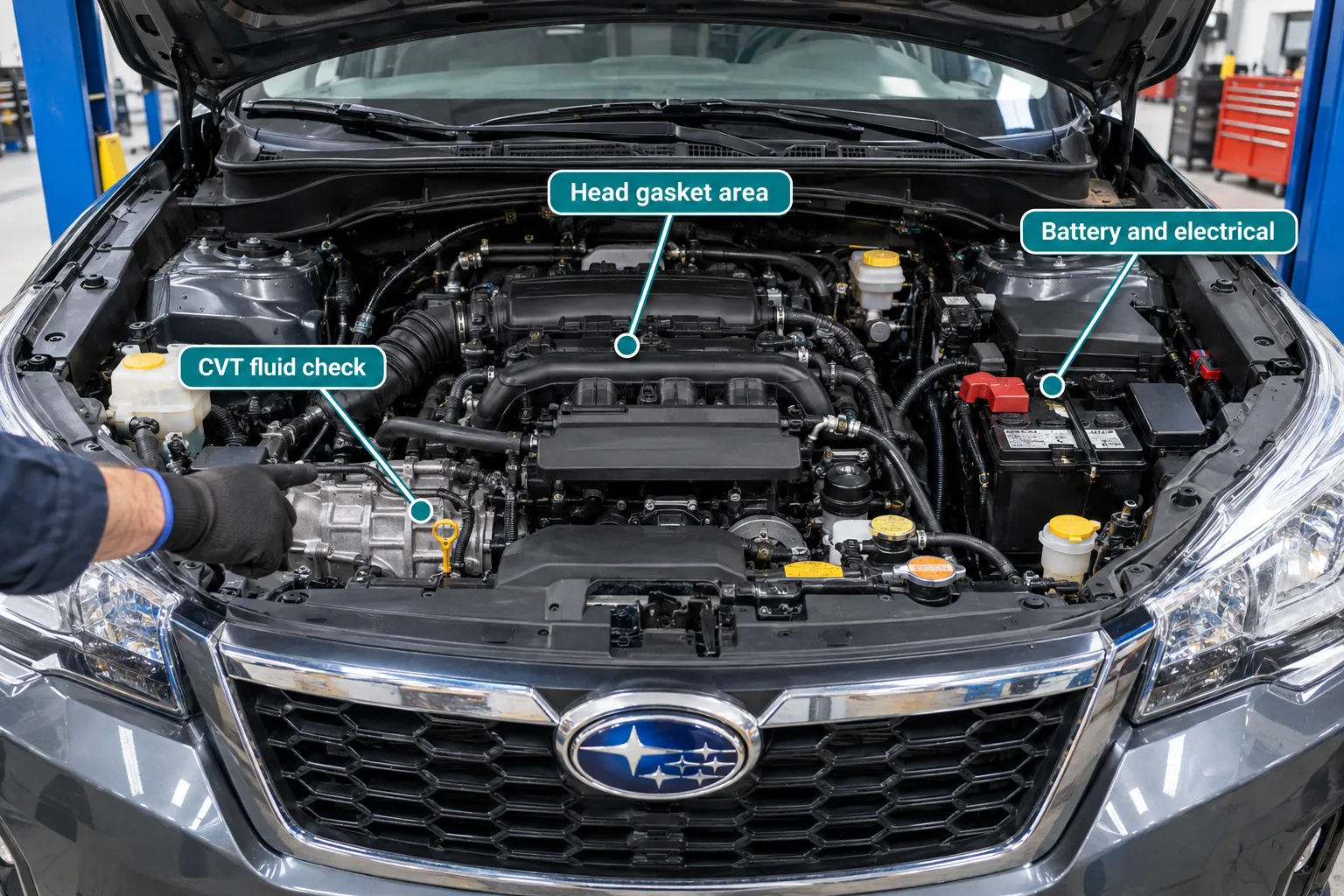
Reliability data is a starting point, not a guarantee for any individual vehicle. VinItel’s complaint database recommends checking each specific model year for known problem patterns, and it flags familiar Subaru concerns such as older head-gasket failures, CVT behavior in earlier transmissions, and assorted electrical faults as worthwhile discussion points during a pre-purchase inspection.[3] It also strongly recommends pulling a full VIN history report before any purchase, to rule out hidden accidents, title problems, or odometer rollbacks.[3]
AmpAuto’s research reinforces the “buy newer if you can” principle: pre-2013 Subarus and some early CVT designs show noticeably higher problem rates, while 2019-plus vehicles show a marked improvement, which aligns with AutoReliabilityIndex’s finding that mid-2010s and newer Subaru crossovers and wagons represent the brand’s reliability leaders.[7][9] Before signing anything, it is worth understanding how dealers value your potential trade-in, covered in this breakdown of what dealers won’t tell you about trade-in value, and reviewing pricing benchmarks through a Blue Book car value guide so you know whether an asking price is fair before you negotiate.
If you are cross-shopping listings on multiple platforms, it also helps to understand how used-car marketplaces present pricing and history data, which is covered in this Autotrader shopping guide, and to review the legal and paperwork side of any transaction through this complete guide to buying and selling cars.
Market Outlook Through Late 2026 and Into 2027
Nothing in the current data suggests Subaru’s resale strength is about to soften. With five-year retention near 70 percent for the Crosstrek and WRX, and 60 to 67 percent for the Outback and Forester, low-mileage 2020-plus Subarus will rarely dip below $20,000 in most regions through the rest of 2026.[6][12][13] If depreciation patterns and reliability scores hold steady, the practical opportunity for value-focused buyers will remain concentrated in 2015-2019 Crosstrek, Forester, and Outback models with 60,000 to 120,000 miles, offering modern safety and all-weather capability without the price premium attached to the newest Subarus.[5][7][9]
Conclusion
Subaru’s reputation for reliability is not marketing talk in 2026; it shows up consistently across Clutch, RepairPal, VinspectorAI, and AutoReliabilityIndex data, and it directly explains why resale values stay high across nearly every model line.[1][4][7][10] For buyers focused specifically on Subaru used cars in 2026, reliability, resale value, and the best models under $20,000, the winning strategy is clear: target 2015-2019 Crosstrek, Forester, Outback, or Impreza models with 60,000 to 120,000 miles, a clean VIN history, and documented maintenance, rather than chasing near-new examples that rarely fit a sub-$20,000 budget.
Before making an offer, pull a full vehicle history report, budget roughly $500 to $650 a year for routine repairs, and confirm that any known CVT or head-gasket issues have already been addressed on your specific model year. Do that homework, and a used Subaru remains one of the smartest all-weather, long-term buys available under $20,000 in today’s market.
References
[1] Clutch Certified Subaru Reliability – https://www.clutch.ca/blog/posts/clutch-certified-subaru-reliability [2] Subaru – https://www.iseecars.com/resale-value-brands/subaru [3] Subaru – https://vinitel.com/stats/nhtsa-complaints/subaru [4] Subaru – https://vinspectorai.com/vehicle-stats/brands/subaru [5] Subaru – https://www.consumerreports.org/cars/subaru/ [6] Subaru Forester Price – https://www.iseecars.com/car/subaru-forester-price [7] Subaru – https://autoreliabilityindex.com/subaru [8] Resale Value Brands – https://www.iseecars.com/resale-value-brands [9] How Reliable Is Subaru – https://www.ampauto.io/symptoms/how-reliable-is-subaru [10] Subaru – https://repairpal.com/reliability/subaru
subaru used cars, used car reliability, resale value, Subaru Crosstrek, Subaru Outback, Subaru Forester, Subaru Impreza, cars under $20000, used SUV buying guide, car ownership costs, CVT reliability, AWD vehicles