Last Updated on November 12, 2026
Hydrofoils, autonomous electric ships, solar-electric propulsion, and rigid wing sails are among the boat design innovations that bring the future onto the water. These 15 boat design innovations that feel like something from the future use new ways to move, work, and explore on the water.
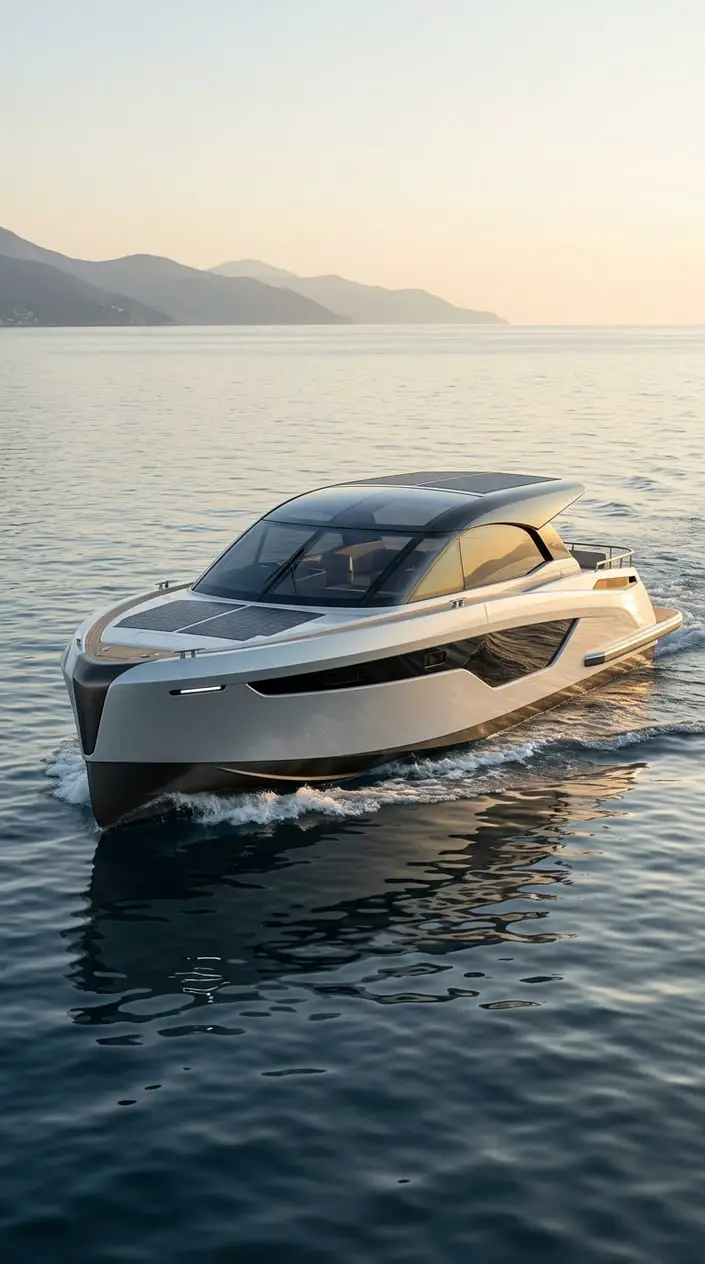
Some are already carrying passengers or gathering ocean data. Others are concepts that point toward lower-emission shipping and new kinds of scientific missions. As you compare them, notice how each design tackles a different challenge, from cutting wake in city waterways to reaching the deep seafloor.
1) Candela P-12 Electric Hydrofoil Ferry
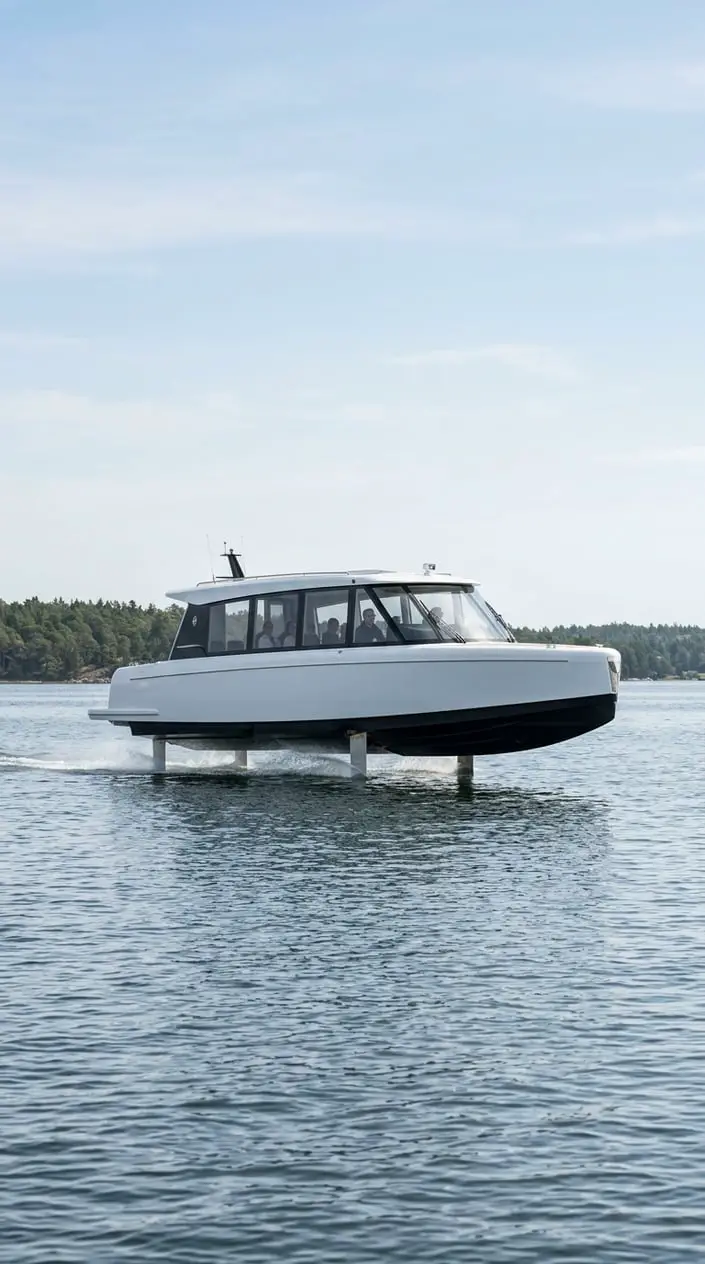
This electric ferry lifts its hull on computer-controlled hydrofoils, reducing drag as it travels. Once the foils raise the boat above the water, you get a smoother ride and a smaller wake than a conventional planing ferry produces. That design is especially useful on busy waterways, where wake can disturb shorelines and other boats.
Battery-powered motors drive the vessel, so you avoid onboard exhaust during operation. The ferry’s hydrofoil system adjusts as conditions change, helping it stay stable while underway. For you as a passenger, the result is a fast, quiet trip that feels different from a standard commuter boat.
The design also highlights a practical challenge for electric transport: reducing water resistance helps batteries deliver more range from each charge.
2) Yara Birkeland Autonomous Electric Container Ship
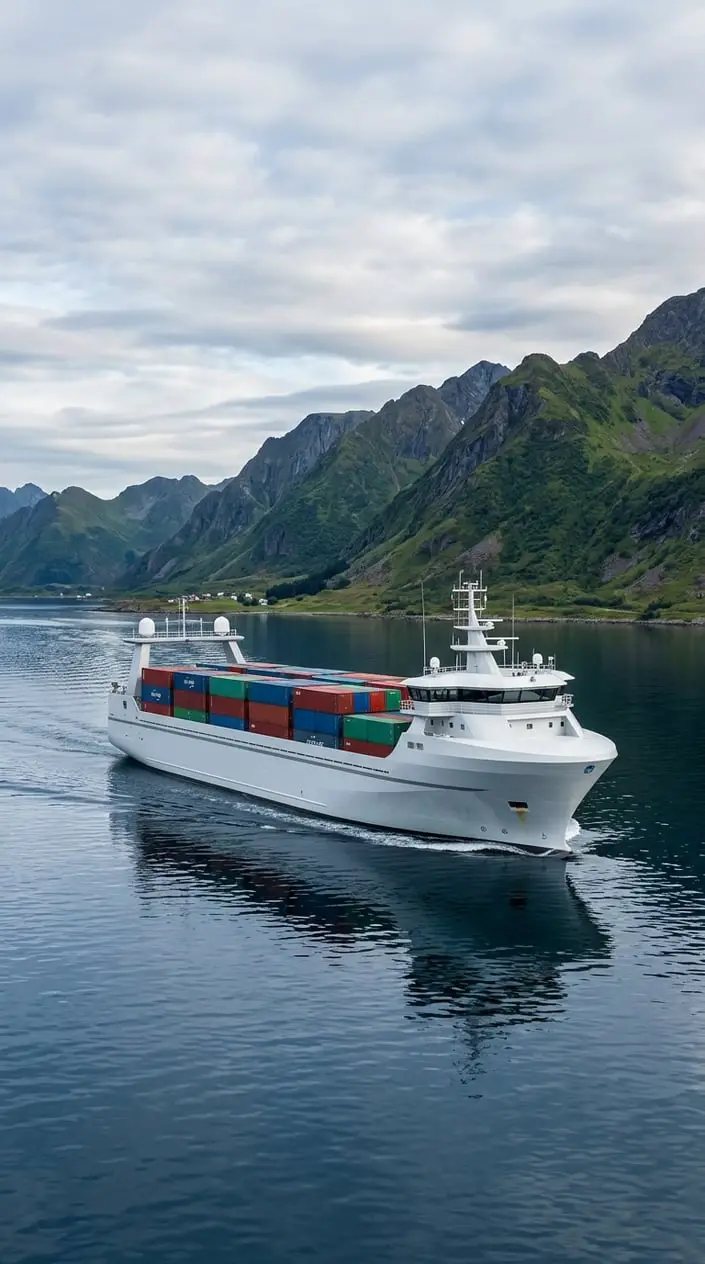
This fully electric container ship shows how short-haul freight can use automated navigation and battery power. Designed to move cargo in Norway, it carries containers on a purpose-built vessel that supports a gradual shift toward remote and autonomous operation. You can think of it as a working test of how shipping systems handle electric propulsion, route planning, and port operations together.
The ship’s electric drive removes exhaust from its operation, while automation can support routine navigation tasks. The vessel has been designed for a staged path toward autonomous service, with people supervising operations as the technology develops.
That measured approach gives you a clear picture of autonomy at sea: sensors and control systems handle defined tasks, while safety procedures guide how the ship operates around other traffic and port infrastructure.
3) Oceanbird Wing-Sail Cargo Vessel
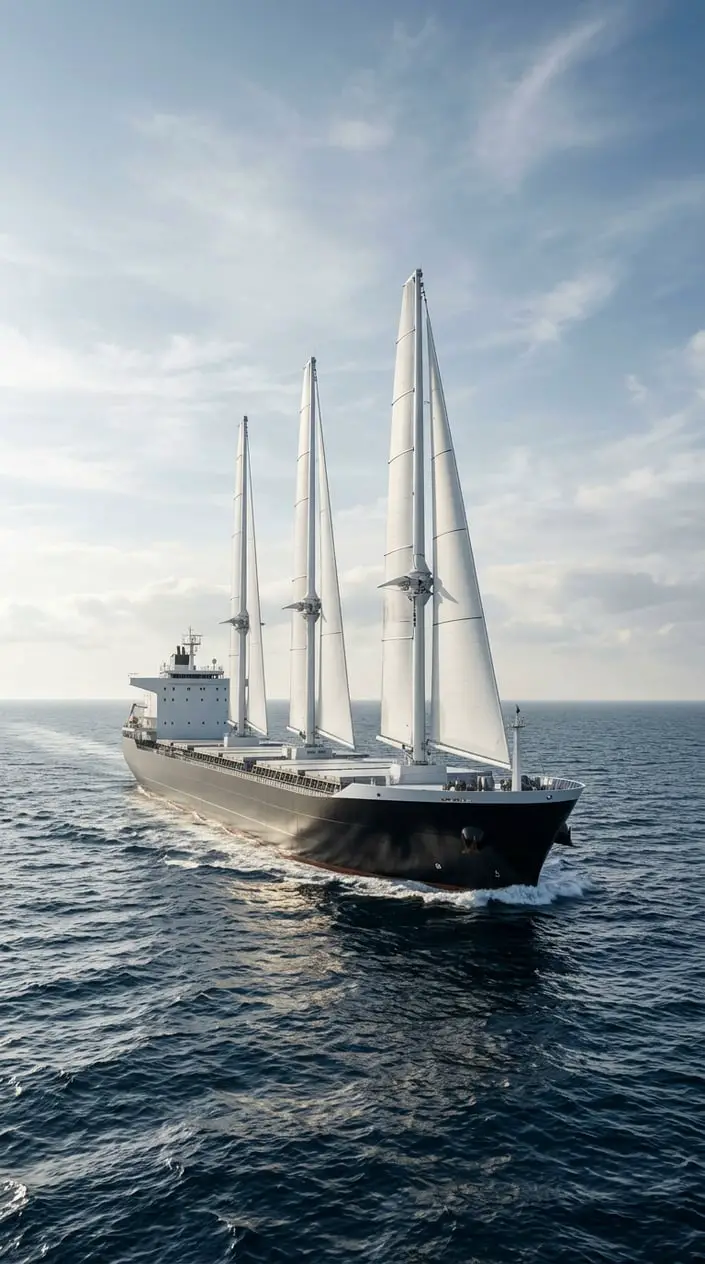
This wind-assisted cargo vessel uses tall, rigid wing sails to reduce the fuel needed for ocean shipping. The upright wings capture wind and help propel the ship, while their telescoping design lets the crew lower them for bridges or rough weather. You get a striking update to sail power, built for the scale and needs of modern commercial transport.
The concept is aimed at carrying vehicles across long routes, with wind providing a major share of the propulsion. The wings can be adjusted to make use of changing wind direction and strength. For you, the key design idea is that a cargo ship can combine traditional wind power with modern materials and control systems.
The vessel still relies on an engine for dependable passage, while the sails help reduce fuel use and emissions when conditions allow.
4) Sunreef 80 Eco Catamaran
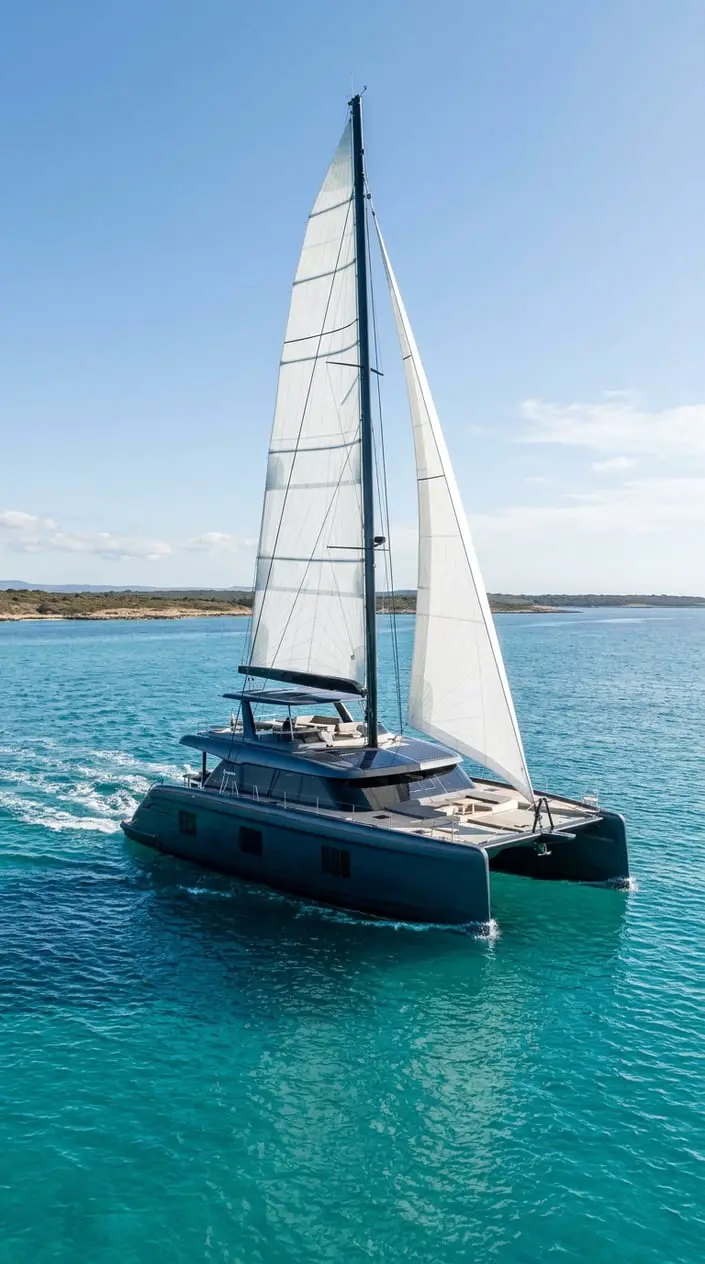
This luxury catamaran builds solar power into its structure to support quieter, lower-emission cruising. Solar panels are integrated into the hull sides, superstructure, and other surfaces, turning more of the boat into a source of renewable energy. You can enjoy the wide, stable layout of a multihull while its electric systems draw on stored power.
The design combines solar generation with electric propulsion and battery storage. Energy use still depends on sunlight, speed, and onboard demand, so the power system is part of a larger mix of sailing and motor use. Inside, the broad beam creates room for living areas and guest cabins.
For you, the innovation is the way clean-energy hardware becomes part of the yacht’s exterior design, instead of appearing as a separate add-on.
5) Silent 60 Solar-Electric Yacht
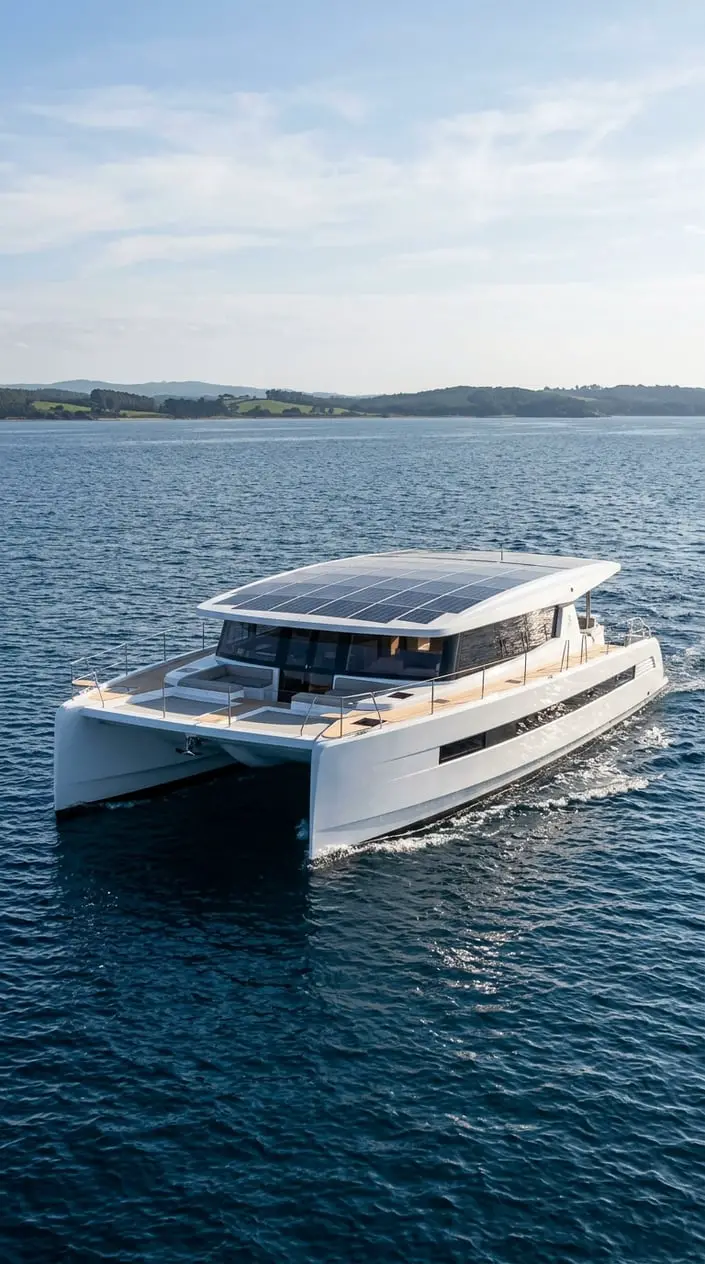
This solar-electric catamaran pairs a large panel area with battery-powered motors for quiet cruising. Its solar cells cover much of the upper deck and roof surfaces, feeding electricity into an onboard battery system. When you travel under electric power, you get a calm ride with no engine exhaust at the boat itself.
The yacht’s twin hulls provide room for a broad interior, while the solar-electric setup supports daily energy needs and propulsion. Sunlight, travel speed, and hotel loads all shape how much power is available, so you’ll still want to plan longer passages around charging and energy use.
The design makes renewable power visible and useful: you can see how roof space, battery capacity, and motor demand fit into one cruising system.
6) Saildrone Surveyor Uncrewed Research Vessel
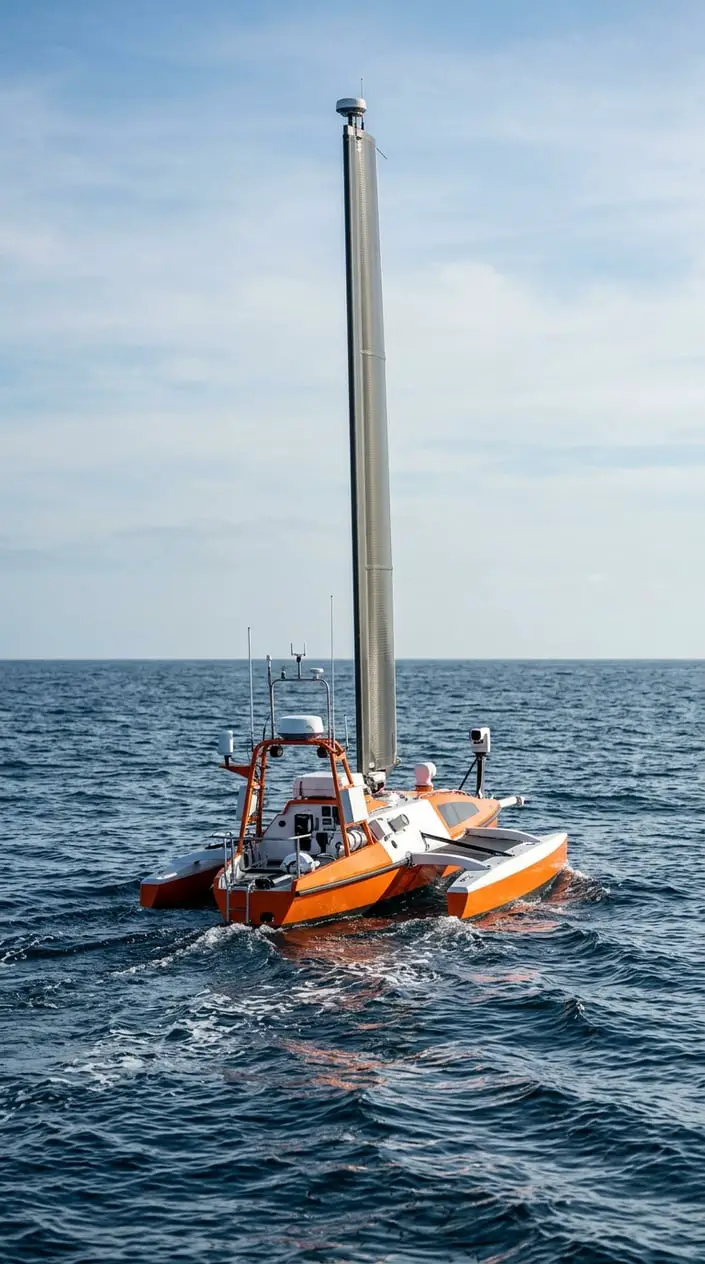
This uncrewed research vessel uses wind and solar energy to collect ocean data over long missions. A tall rigid sail helps move the craft, while solar panels power instruments and onboard systems. You can see the design as a mobile science platform that travels without a crew living aboard.
Sensors can gather information used for ocean mapping and research, including data about water conditions and the seafloor. Remote operators plan missions and monitor the vessel as it travels through open water. Its wind-assisted propulsion supports extended trips, while solar power helps run the equipment needed for measurements.
For you, the striking change is the separation of vessel size from crew comfort: the craft can devote its structure to endurance, sensors, and stability.
7) Windelo 54 Hybrid-Electric Catamaran
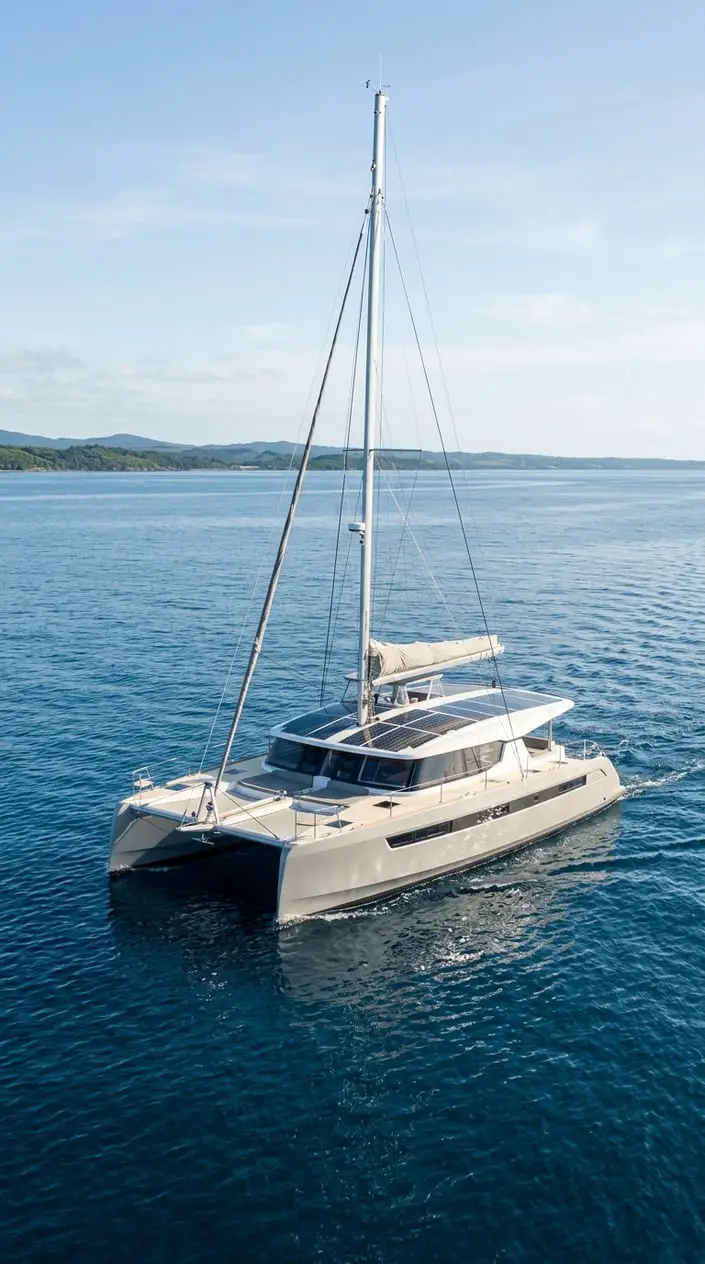
This cruising catamaran combines electric motors, batteries, and sail power in a hybrid system. Under sail, the design can use hydrogeneration to turn movement through the water into electricity. You get a setup that links propulsion and onboard power, helping supply energy for everyday systems while you travel.
The boat’s multihull layout provides generous interior space and stability at anchor. Its construction uses composite materials, including basalt fiber in parts of the structure, as part of an effort to rethink material choices. The hybrid system gives you several ways to manage energy across a passage, with the best approach shaped by wind, speed, and electrical demand.
It’s a useful example of how cruising boats can blend established sailing with newer electric technology.
8) REV Ocean Research Vessel
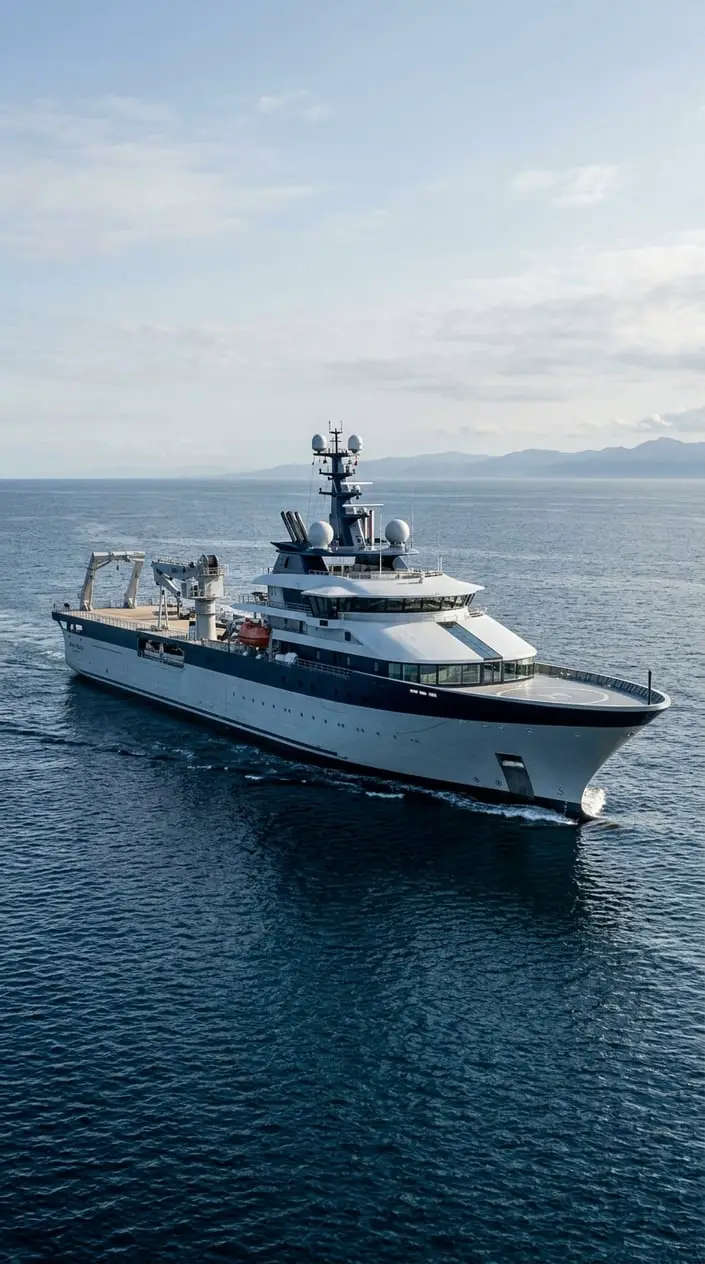
This large research vessel is designed to support ocean science with dedicated laboratories and advanced survey equipment. Its planned facilities include spaces for research teams, scientific instruments, and work at sea. You can think of it as a floating lab built to take on long expeditions and a wide range of marine studies.
The design also includes features intended to support work below the surface, such as a moon pool that gives equipment access to the water through the hull. A vessel of this scale must manage crew needs, research operations, and complex onboard systems at the same time.
Its design points to a future in which ships combine accommodation and data collection with tools for sampling and exploring the ocean. For you, the defining feature is the ship’s role as a platform for many kinds of research.
9) Earth 300 Research Yacht Concept
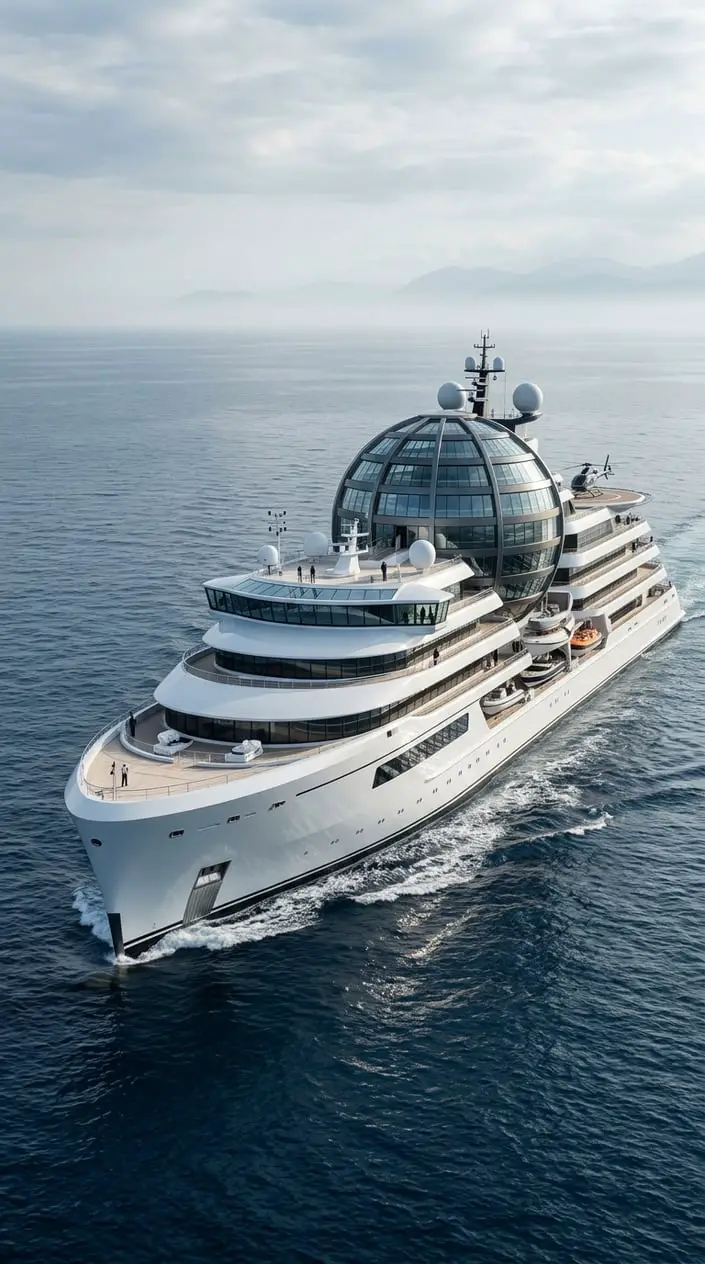
This research yacht concept places a striking glass sphere at the center of a large ocean-science platform. The sphere is designed as a distinctive space for scientists and visitors, giving the project a recognizable profile at sea. You can picture it as a proposal for bringing research, technology, and public attention together on one vessel.
Plans call for scientific laboratories and facilities intended to support work across ocean and climate topics. The ship’s scale would provide room for people, equipment, and expedition operations, while its futuristic form signals an ambitious approach to research vessel design.
As a concept, it shows how architecture can shape a ship’s public identity as well as its working spaces. For you, the key question is how that dramatic design would support practical needs such as research access, energy use, and operations at sea.
10) Black Pearl DynaRig Sailing Yacht
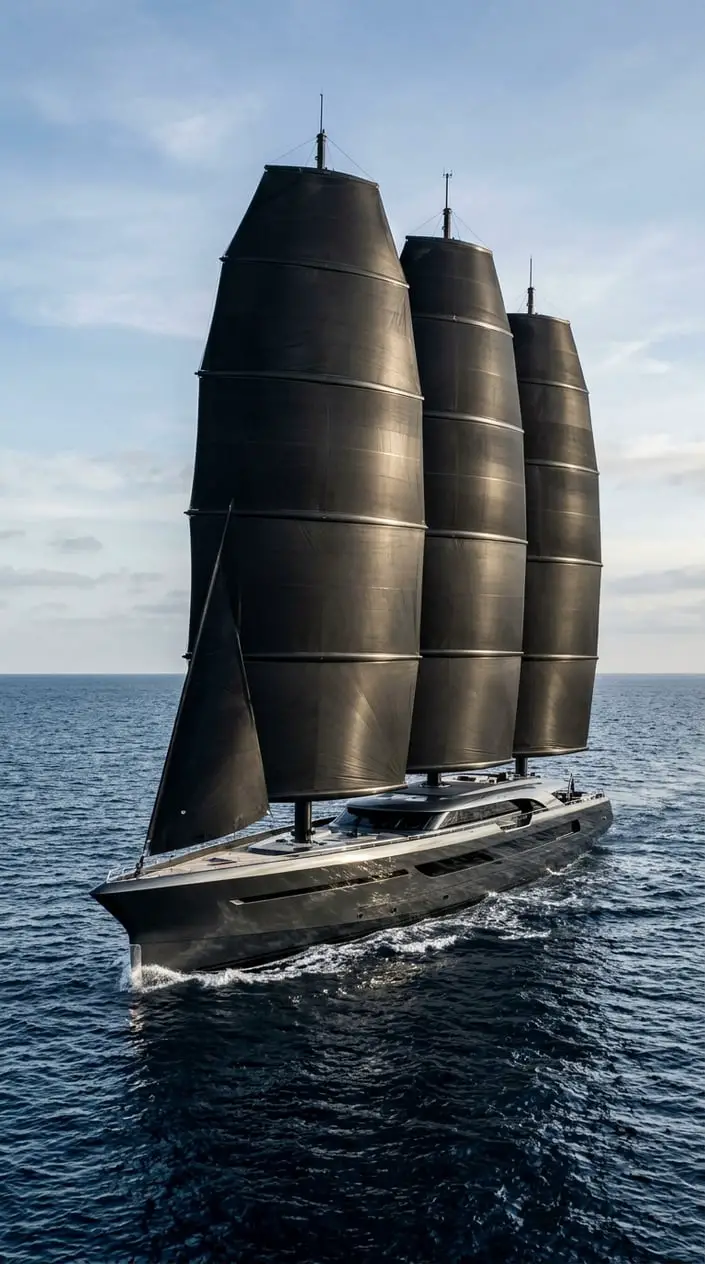
This large sailing yacht uses automated DynaRig masts to set a broad area of sail with coordinated control. Its three freestanding masts carry square sails that rotate to catch the wind. You can see the appeal in the way the system combines a classic sailing profile with modern controls and a sleek, dark hull.
The rig is designed so the sails can be handled from the deck through powered systems, reducing the manual work needed to manage a large sail plan. Wind supplies propulsion, while onboard systems support the yacht’s operation and comfort. Its scale makes the sail-handling technology especially notable: you get the visual drama of a tall sailing ship with equipment built for a contemporary crew.
The design shows how automated rigging can keep wind power practical on a very large private yacht.
11) MAMBO 3D-Printed Boat
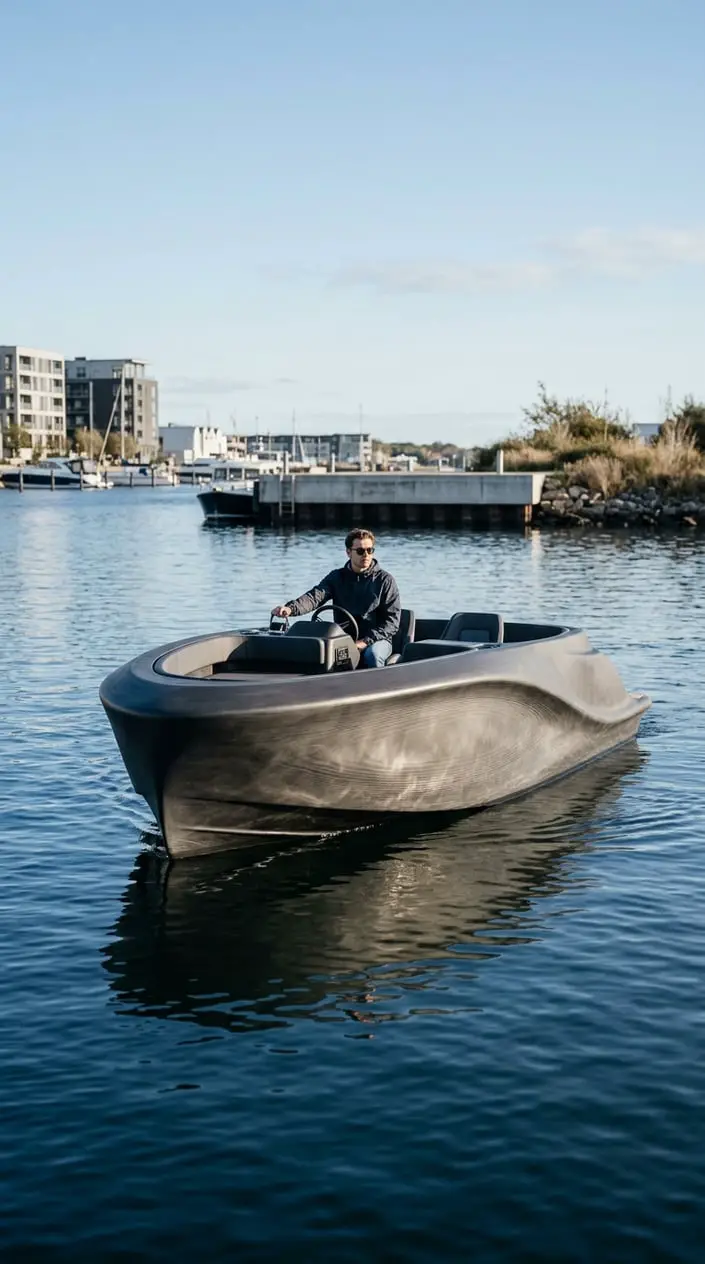
This compact motorboat demonstrates how large-format 3D printing can create a boat hull from composite material. The structure was made with a robotic printing process using thermoplastic reinforced with fiberglass. You get a clear example of additive manufacturing moving beyond small parts and into a complete boat structure.
Printing the hull in large sections can change how designers approach shape, tooling, and production. It also makes it easier to explore forms that would be harder to create with traditional molds. The finished craft is a small motorboat, so the idea has a practical scale you can relate to.
Its design does not mean every boat is ready for printing; materials, finish, and production methods still shape the final result. The project shows how digital manufacturing can open new options for marine construction.
12) Sealegs 7.1m Amphibious Craft
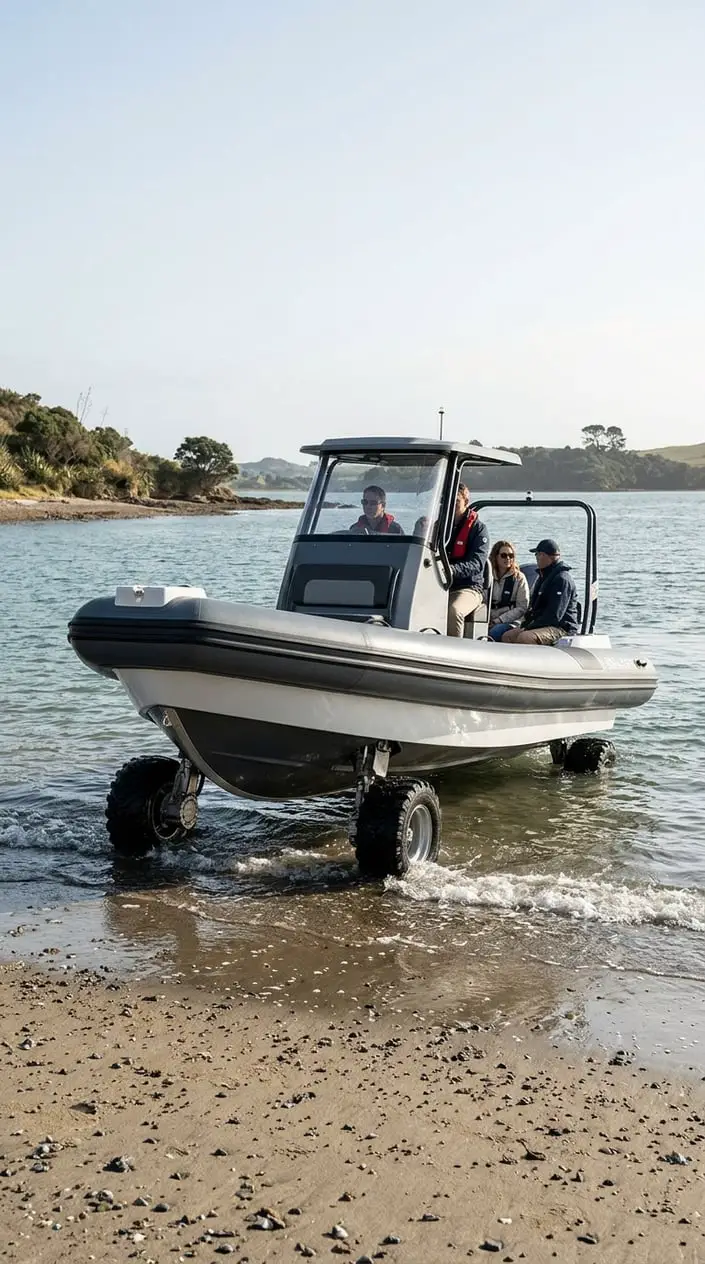
This amphibious powerboat uses retractable wheels to travel between the water and a shore launch point. Hydraulic systems lower the wheels for land movement and raise them for boating. You can drive the craft up a suitable beach or ramp, which makes launching possible without a conventional trailer or fixed dock at the water’s edge.
The 7.1-meter design pairs a familiar powerboat hull with its unusual land gear. When the wheels are deployed, the craft moves slowly over firm ground; once afloat, the hull and marine propulsion take over. The system adds equipment and operating steps, so you’ll want to follow the maker’s guidance for terrain and water conditions.
Its most futuristic feature is also easy to understand: the boat carries its own landing gear, giving you a direct link between shoreline access and time on the water.
13) U-Boat Worx NEMO Submersible
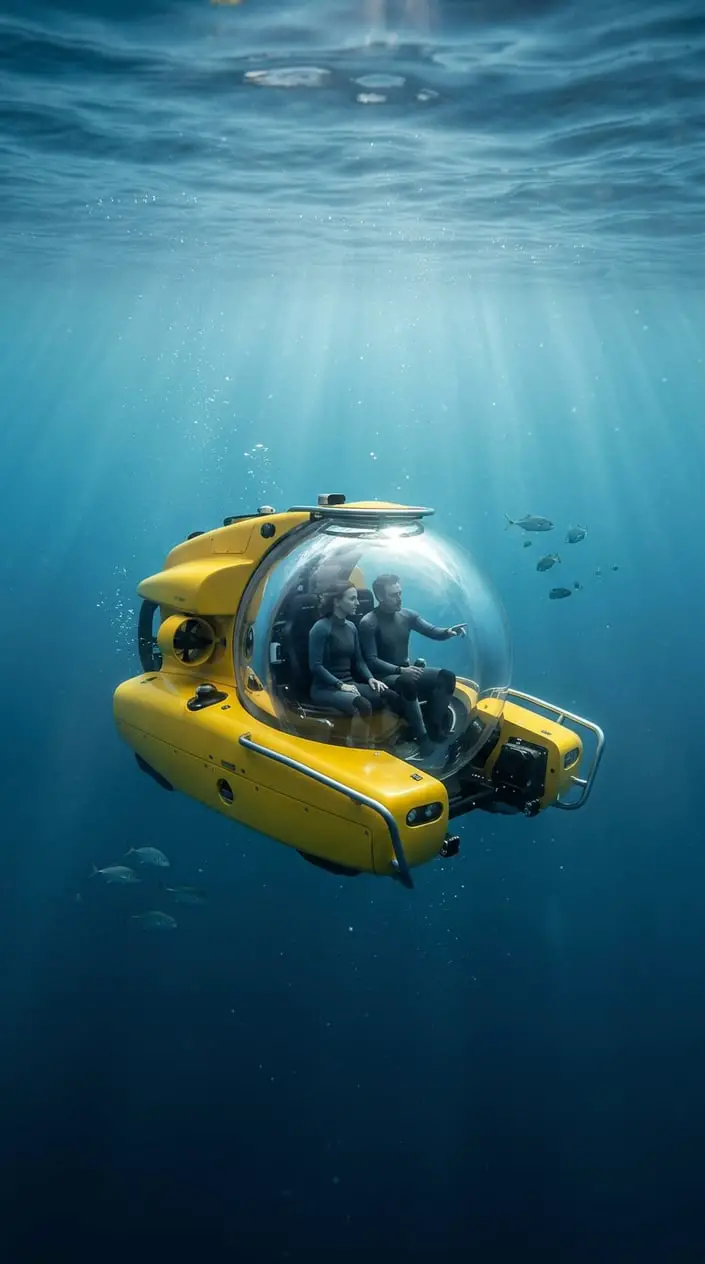
This compact two-person submersible turns a trip below the surface into a controlled, enclosed passenger experience. Its clear pressure-resistant cabin gives you wide views of the underwater world, while electric thrusters move the craft in several directions. The compact design is intended to make deep-sea sightseeing accessible from a yacht or marine operator.
The submersible is built for dives down to 100 meters, with onboard systems supporting the pilot and passenger during a planned outing. You still need trained operators and careful dive procedures, since underwater travel relies on power, communications, and life-support equipment working as intended.
Compared with a surface boat, the craft’s priorities shift to visibility, pressure protection, and precise maneuvering. Its futuristic quality comes from the passenger cabin: you descend underwater while remaining inside a clear, engineered sphere.
14) Triton 3300/6 Submersible
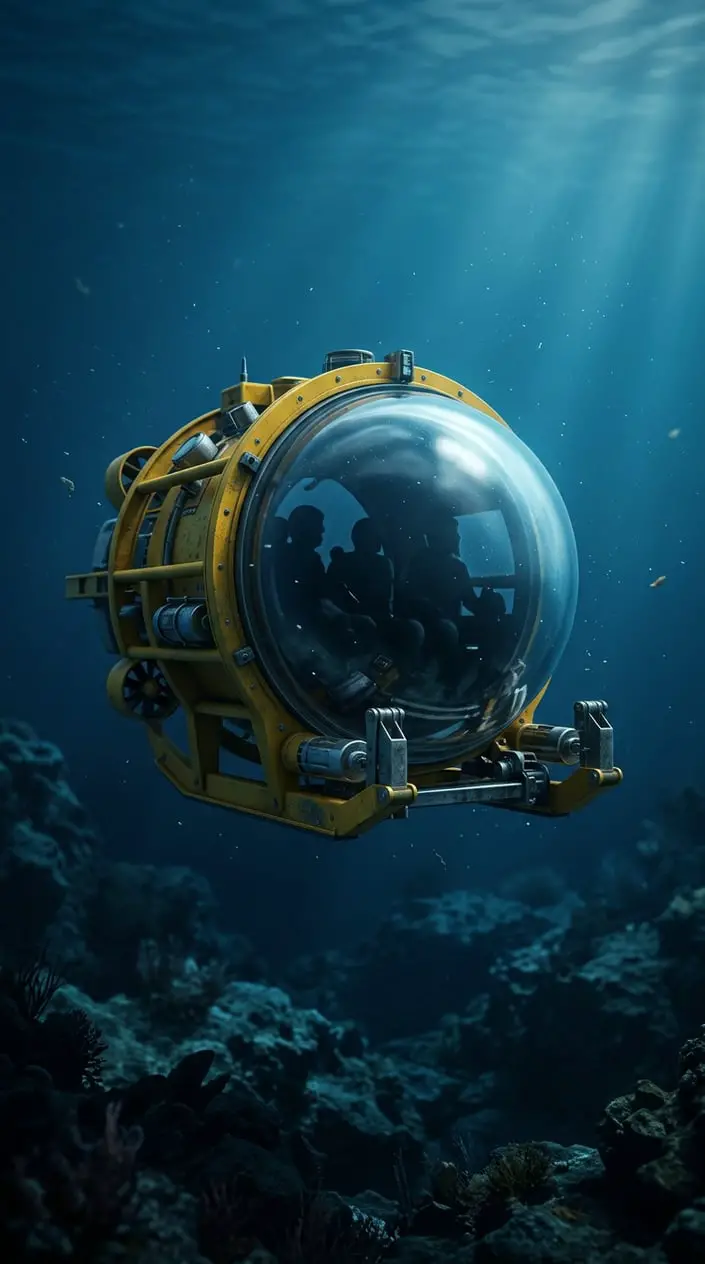
This six-person submersible is designed to carry a pilot and passengers to depths of up to 1,000 meters. Its clear acrylic sphere creates a wide viewing area, letting you look out at the surrounding water from a pressure-protected cabin. Electric thrusters help the craft move carefully through the water during a dive.
The design balances passenger space with the demands of deep-sea operations. Support teams prepare the submersible before each trip, and the dive plan sets limits for depth and time underwater.
You’ll notice that the large viewing sphere is both a defining design feature and a key part of the passenger experience. Its engineering allows a group to visit places far below the reach of ordinary boats, while the controlled descent and return keep the excursion structured around safety procedures.
15) EcoClipper500 Sailing Cargo Ship
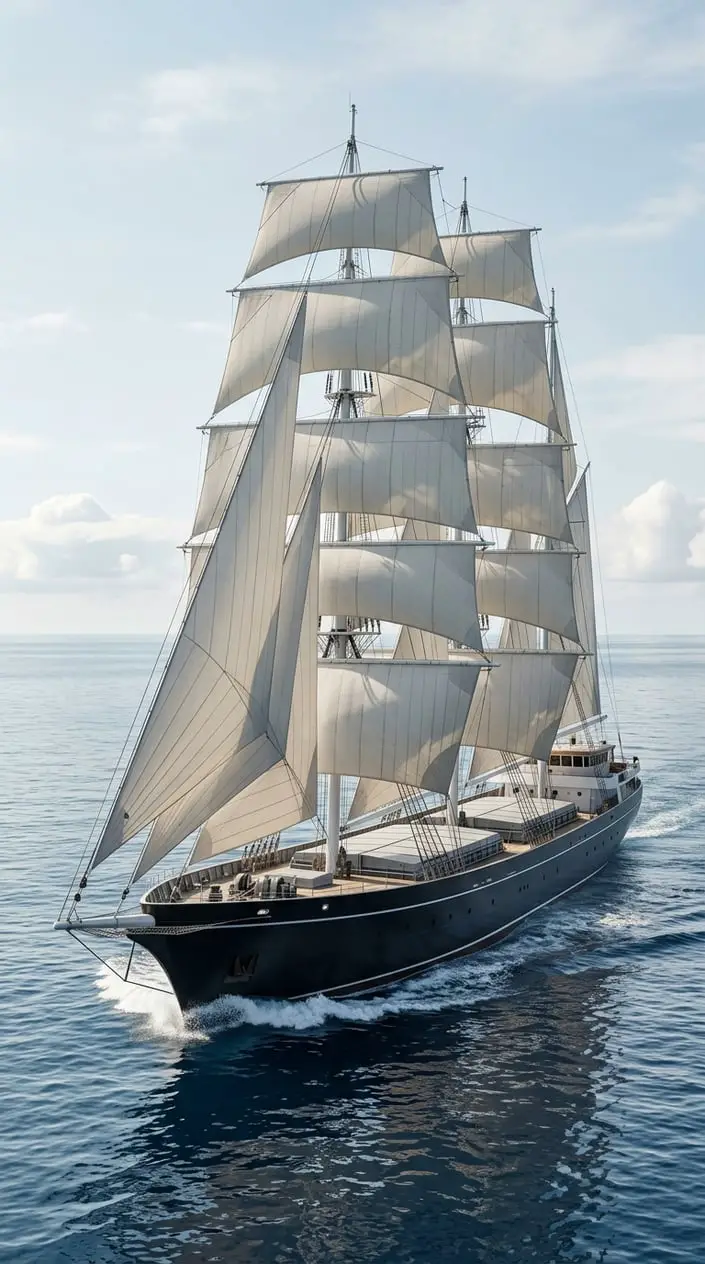
This sailing cargo ship concept applies wind propulsion to commercial freight on a scale larger than a yacht. Its clipper-inspired rig uses multiple masts and sails to move cargo across ocean routes.
You can see how the design draws on historic sailing ships while aiming to serve modern logistics. The planned vessel is built around a cargo capacity of about 500 tonnes, with sailing operations intended to reduce reliance on fuel-powered propulsion.
Route planning would need to account for wind, weather, and delivery schedules, all key parts of running freight by sail. The concept also points to a broader change in shipping: renewable wind can contribute to moving goods when vessels and logistics are designed around it. For you, the important innovation is the combination of cargo operations with a large, purpose-built sailing rig.