Last Updated on November 12, 2026
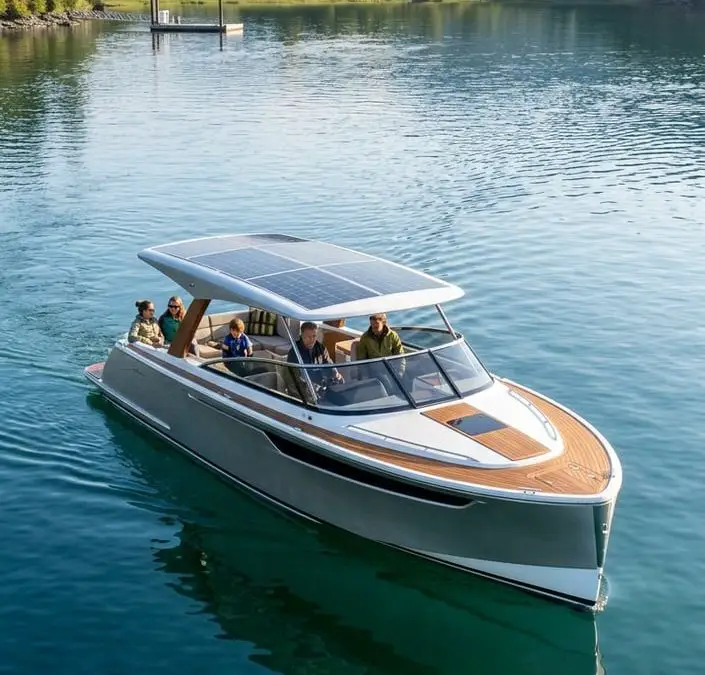
You can cut fuel use, exhaust, and onboard waste by choosing a boat with efficient propulsion, lighter materials, and resource-saving systems. These design trends help you match your boat to your trips while lowering its environmental footprint.
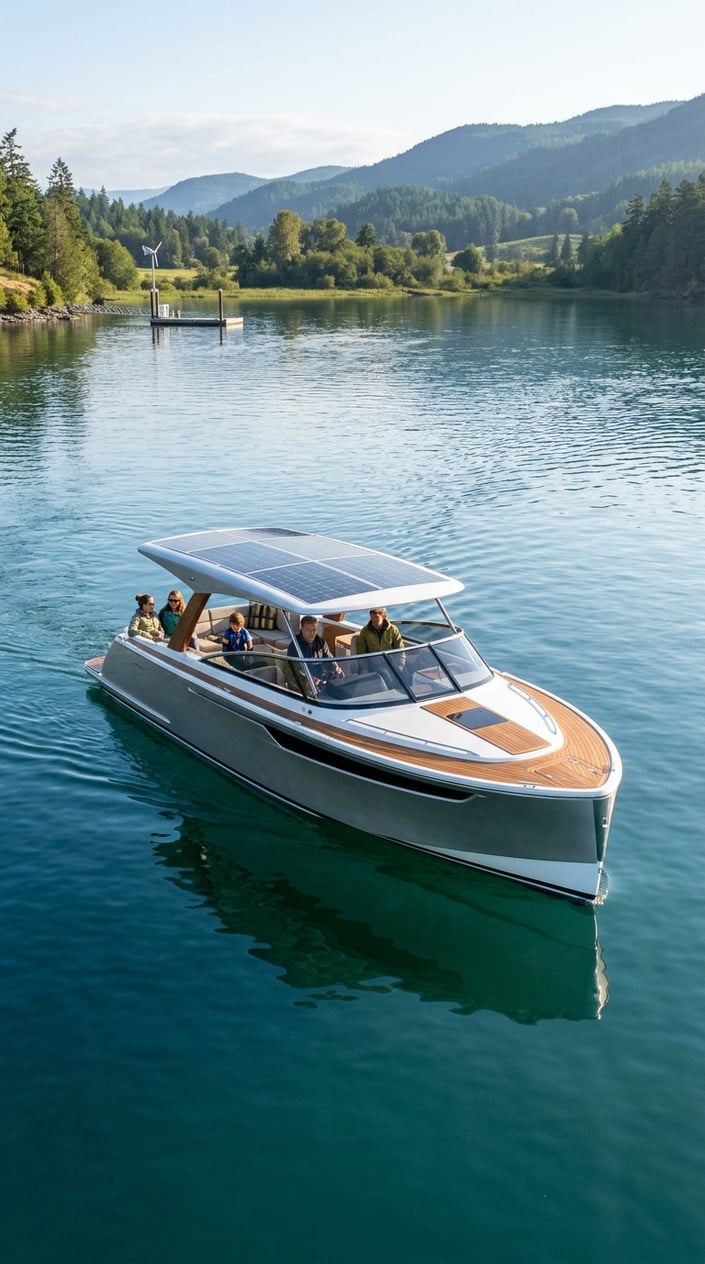
Your route, charging access, and time aboard shape which features will make the biggest difference. Compare each design with your usual boating habits, plus the boat’s range, upkeep needs, and end-of-life options.
Quick picks:
- Best for quiet short trips: battery-electric propulsion with LFP batteries.
- Best for extra onboard power: solar-integrated hardtops and decks.
- Best for fuel savings at speed: hydrofoil-assisted hulls.
1) Battery-Electric Propulsion With Lithium-Iron-Phosphate Batteries
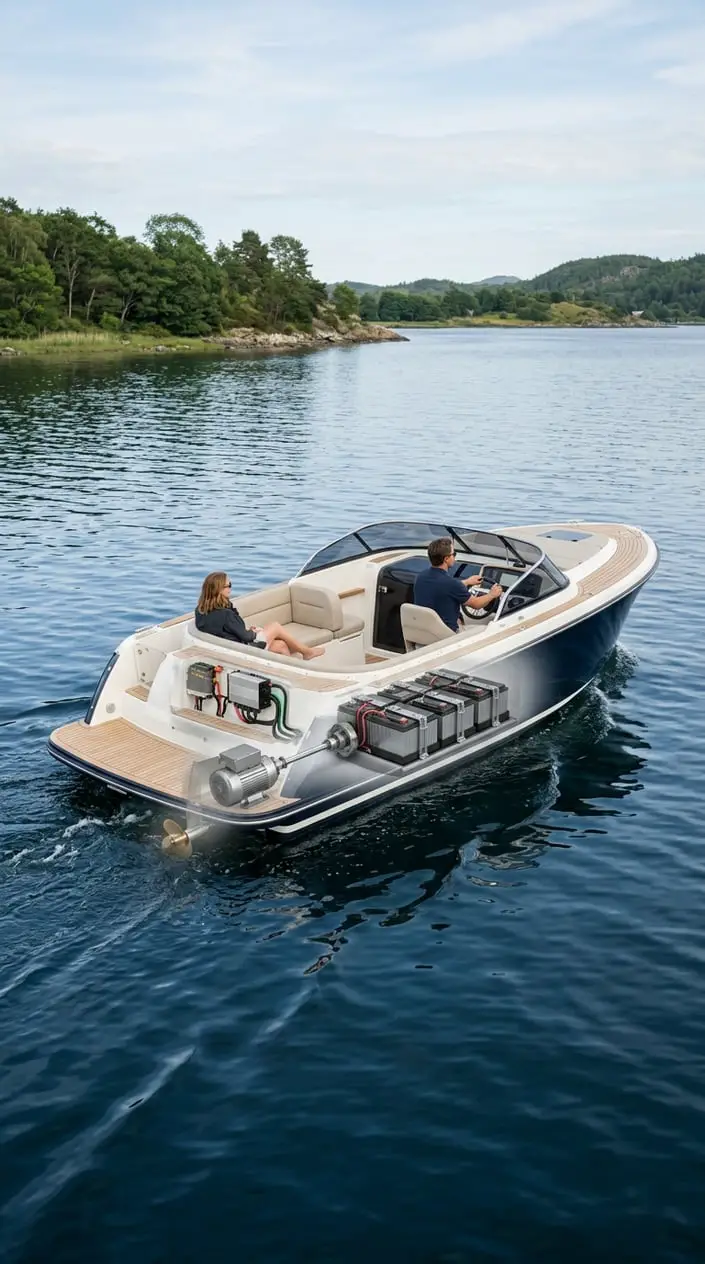
Battery-electric propulsion with lithium-iron-phosphate (LFP) batteries suits you if your trips are short and you have reliable charging access. An electric motor produces no exhaust at the boat, and it runs quietly, which helps preserve a calm ride for you and nearby boaters. LFP batteries offer a long service life and strong thermal stability, though their weight and mineral supply still carry environmental costs.
Check the usable battery capacity, expected range at cruising speed, and charging time before you buy. Wind, current, passenger load, and speed all affect range, so leave a reserve for the trip back. Ask about battery monitoring, warranty terms, and recycling options, then confirm that charging equipment fits your marina or home setup.
2) Solar-Integrated Hardtops and Decks
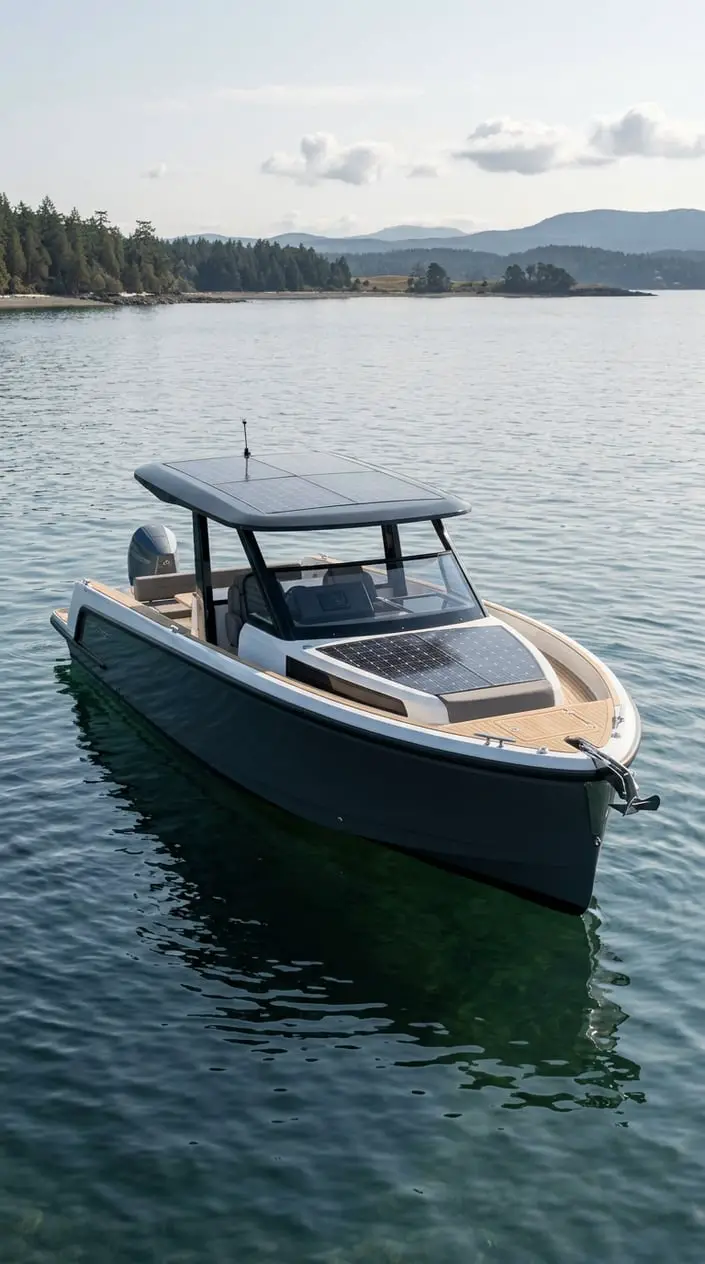
Solar-integrated hardtops and decks give you a renewable source of onboard electricity wherever sunlight reaches the panels. Solar power can support house loads such as lighting, navigation electronics, refrigeration, and battery charging. It can extend time between shore-power connections, though the energy produced depends on panel area, shade, season, and weather.
Ask for the system’s rated output and the expected daily energy yield for your boating region. A well-planned layout keeps panels clear of antennas and other equipment while leaving safe walking space on deck. Check how the panels connect to the battery system, and ask whether the charge controller displays production.
Solar works best as part of an energy plan that includes efficient appliances and a battery sized for your needs.
3) Hydrofoil-Assisted Hulls
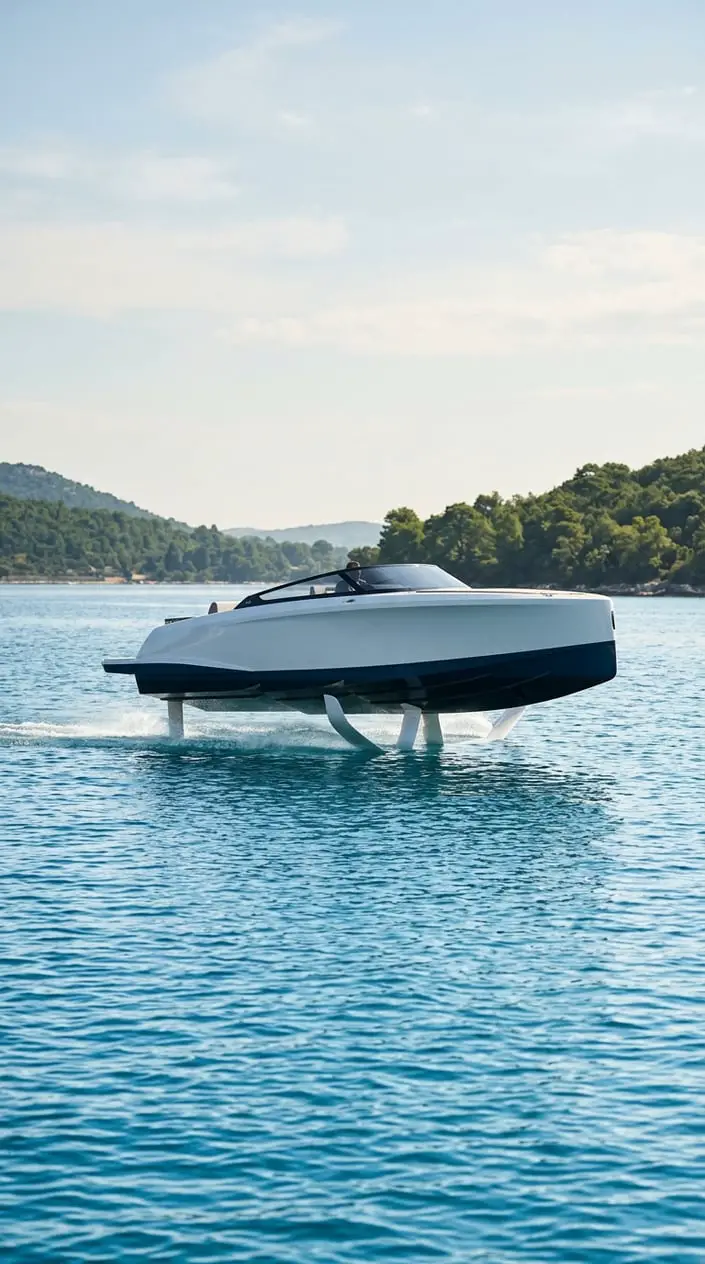
Hydrofoil-assisted hulls reduce water resistance by lifting part of the boat above the surface at cruising speed. With less drag to push through, the propulsion system needs less energy to maintain speed, which can lower fuel use or extend an electric boat’s range. You benefit most on routes where the boat can reach and hold its designed foil-borne speed.
Foils add parts that need inspection, and their performance depends on hull design, loading, and water conditions. Ask how the system handles debris, shallow areas, and low-speed maneuvering. Confirm the rated passenger and gear loads, since extra weight affects lift and efficiency. A sea trial across the speeds you expect to use helps you judge ride comfort, turning, and the transition between hull-borne and foil-borne travel.
4) Recycled-Aluminum Hull Construction
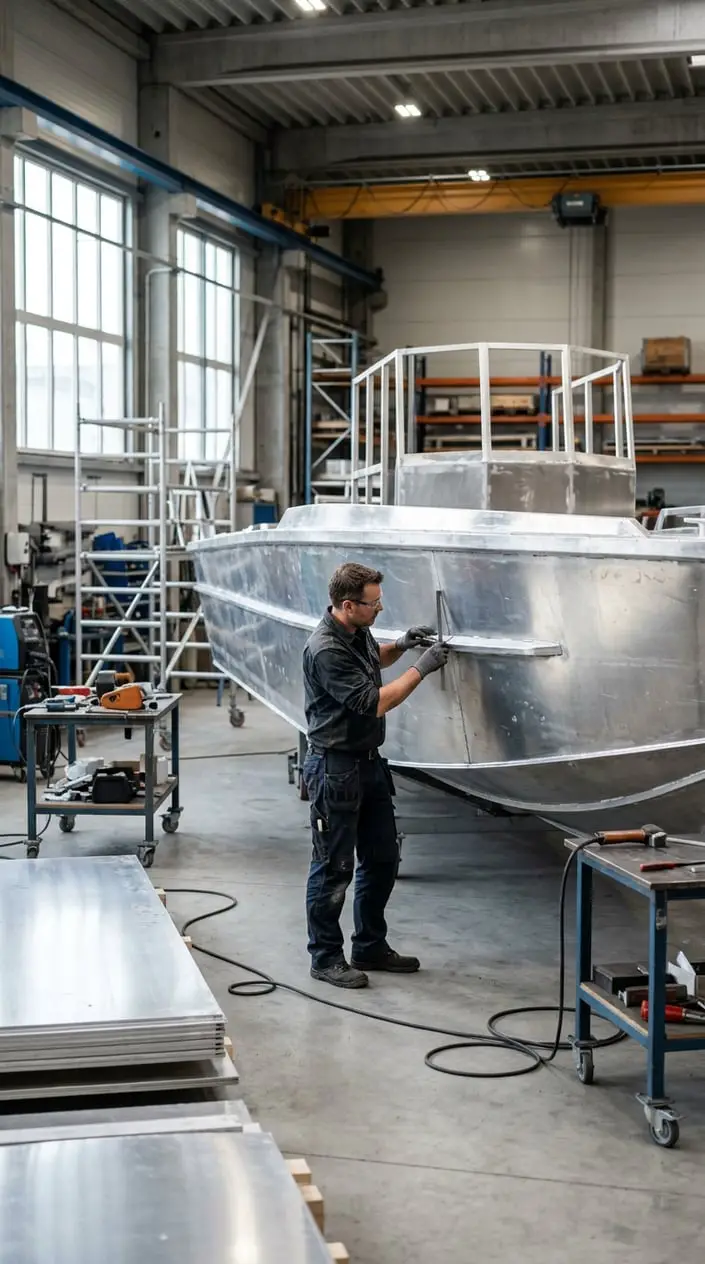
A hull built with recycled aluminum can reduce demand for newly mined material while giving you a durable, repairable structure. Aluminum is widely recyclable, and a well-maintained hull can serve for many years. Ask the builder what share of the metal is recycled, how it is sourced, and whether the finished boat can be recycled through available local channels.
The metal’s weight and hull shape affect how much power you need underway, so review fuel or energy figures alongside material claims. Check weld quality, protective coatings, and the builder’s corrosion guidance, especially if you boat in salt water. Aluminum also needs careful separation from dissimilar metals to limit galvanic corrosion. Before purchase, request the alloy specifications and maintenance schedule so you know how to protect the hull over time.
5) Flax-Fiber Composite Structures
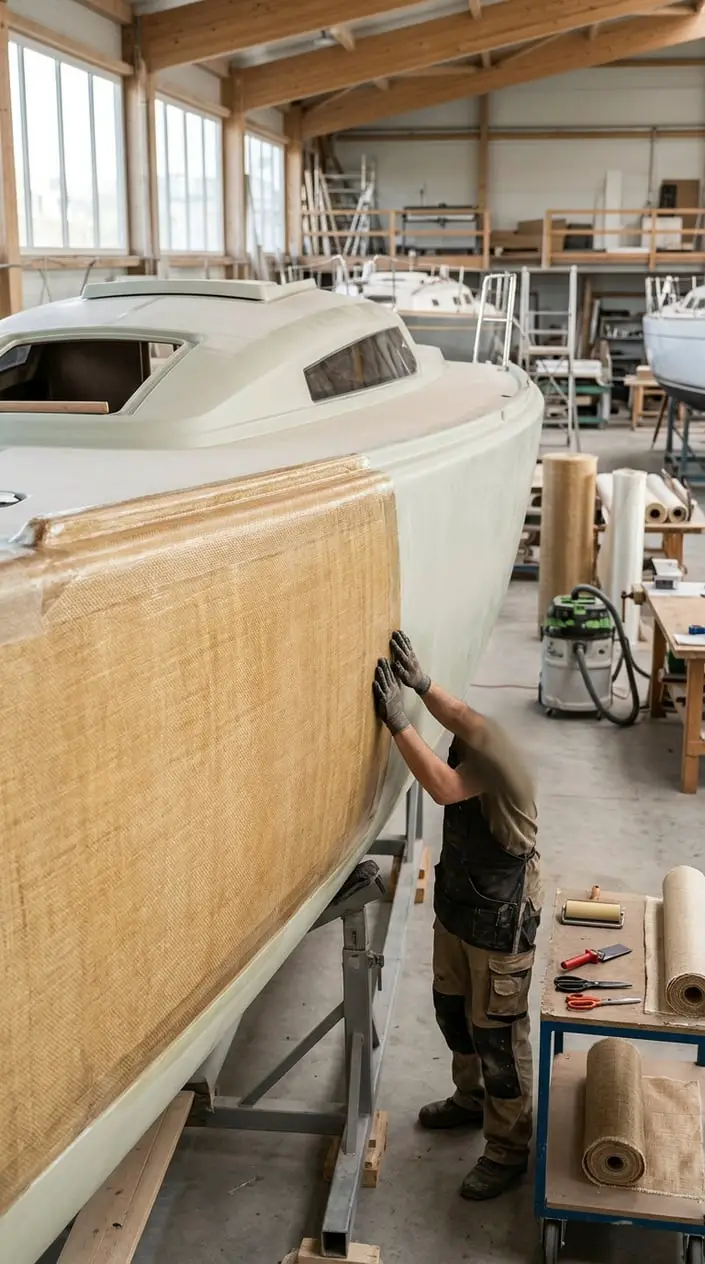
Flax-fiber composite structures replace some glass fibers with plant-based reinforcement, reducing reliance on fossil-based materials in selected boat parts. Flax can provide a light, stiff panel for interior pieces, decks, or other components where the builder has designed for its strength. A lighter structure can also reduce the energy needed to move the boat.
The full environmental effect depends on the resin, manufacturing process, and end-of-life plan. Ask which parts use flax, what resin binds the fibers, and how the builder protects the material from water and UV exposure. You should also check the repair method and whether local yards can source matching materials. Treat a flax composite claim as one part of the boat’s material story, and review the specifications for each structural component before relying on it.
6) Hybrid Diesel-Electric Drive Systems
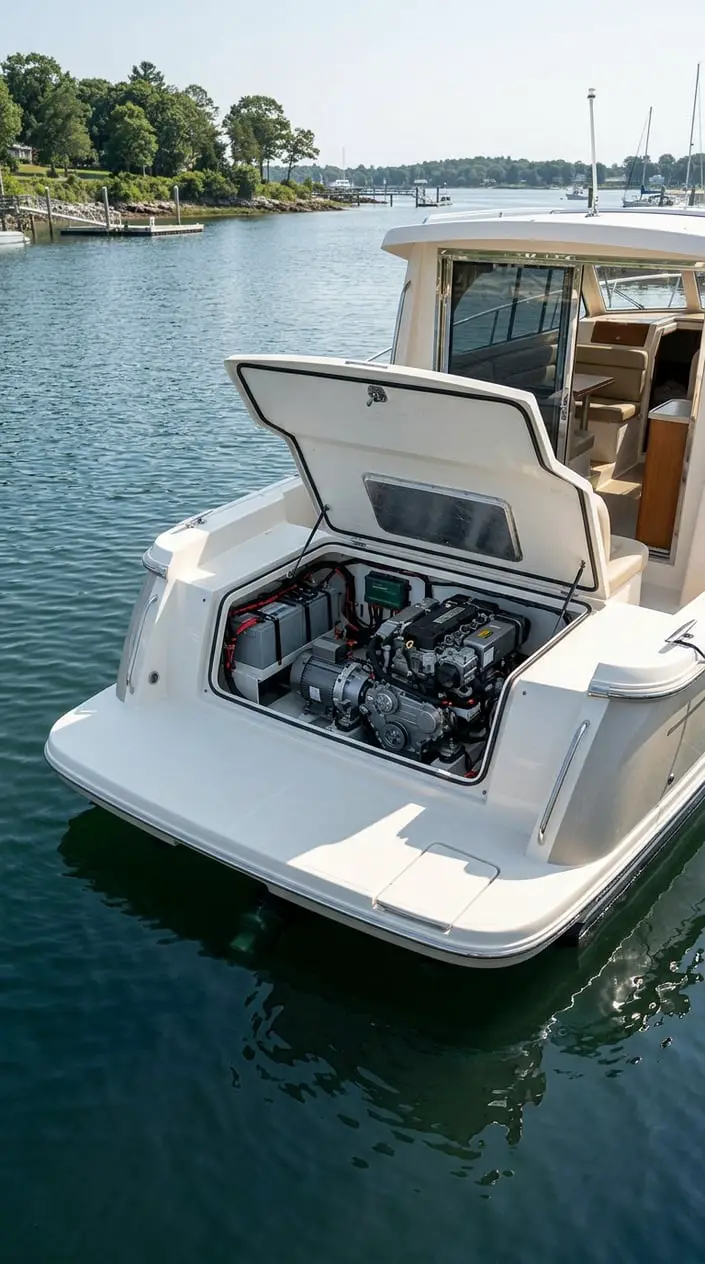
A hybrid diesel-electric drive gives you an electric mode for low-speed use and a diesel engine for longer trips or higher power needs. Electric operation can reduce local exhaust and engine noise around marinas, while the diesel system provides range when charging access is limited. Some systems also recharge batteries while the engine runs, depending on their design.
Ask how much range the boat offers in electric mode and what speeds that mode supports. Review the battery capacity, charging options, engine service needs, and control system as one package. The added equipment can increase purchase price and maintenance complexity, so request a clear service plan. A hybrid setup fits your routine best when you can use electric power in no-wake zones or near shore and rely on diesel for longer stretches.
7) Low-Drag, Lightweight Hull Shapes
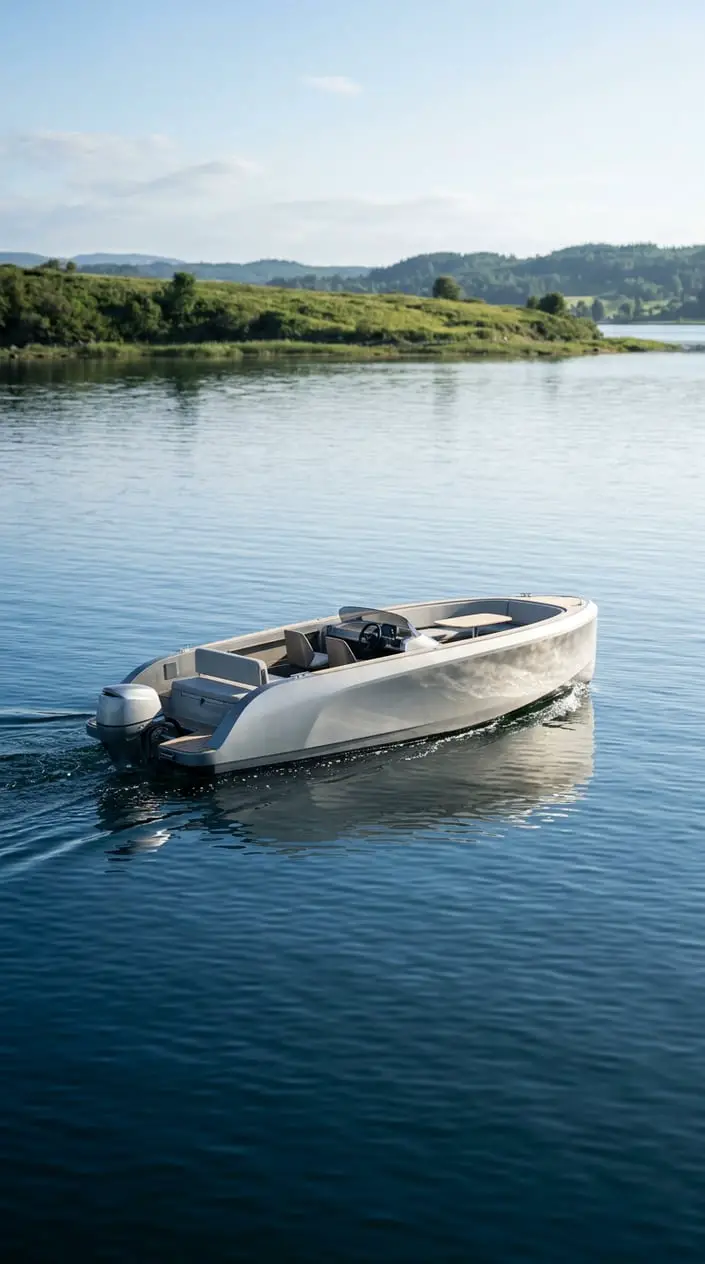
A low-drag, lightweight hull helps you travel with less energy by reducing resistance through the water. Designers use hull shape, careful weight distribution, and lighter construction to improve efficiency at a chosen cruising speed. For you, that can mean lower fuel use or more distance from the same battery charge, depending on the boat’s power system and conditions.
Ask the builder for performance figures at several speeds, since a hull’s efficiency changes as you accelerate. Compare those numbers with your normal passenger load and route conditions. A narrow, streamlined hull may feel different from a wider design when you carry gear or encounter rough water. Check the rated capacity and sea-handling details alongside efficiency claims, then choose a hull that fits both your usual speed and the waters you navigate.
8) Onboard Greywater Treatment and Water-Saving Fixtures
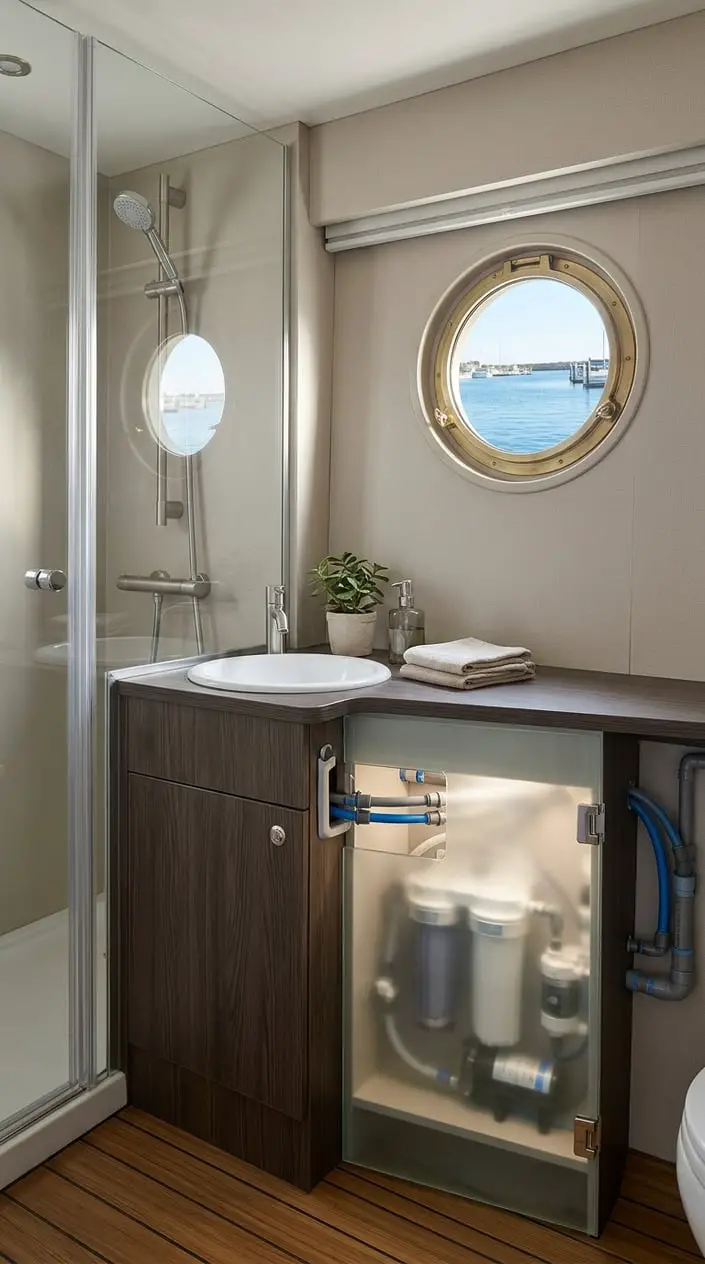
Greywater treatment and water-saving fixtures help you use less fresh water and manage sink or shower wastewater. Low-flow taps and showers reduce tank demand, while a treatment system processes greywater before discharge where local rules allow.
This setup can make longer trips easier to manage and reduce the amount of wastewater sent directly into waterways. Ask what the system treats, how much space it needs, and how often you must clean filters or replace parts.
Greywater systems handle water from sinks and showers; toilet waste is separate and requires an approved sanitation system. Discharge rules vary by location, so check federal, state, and local requirements for your intended waters. Confirm that the tank capacity and treatment rate fit the number of people who will use the boat.