Last Updated on February 7, 2026
You want a calm, roomy cabin without wasting time or space. This article shows simple, practical ways to cut clutter and make every inch of your small boat work harder for you.
You’ll learn easy, high-impact hacks that free up floors, brighten tight corners, and keep essentials within reach.
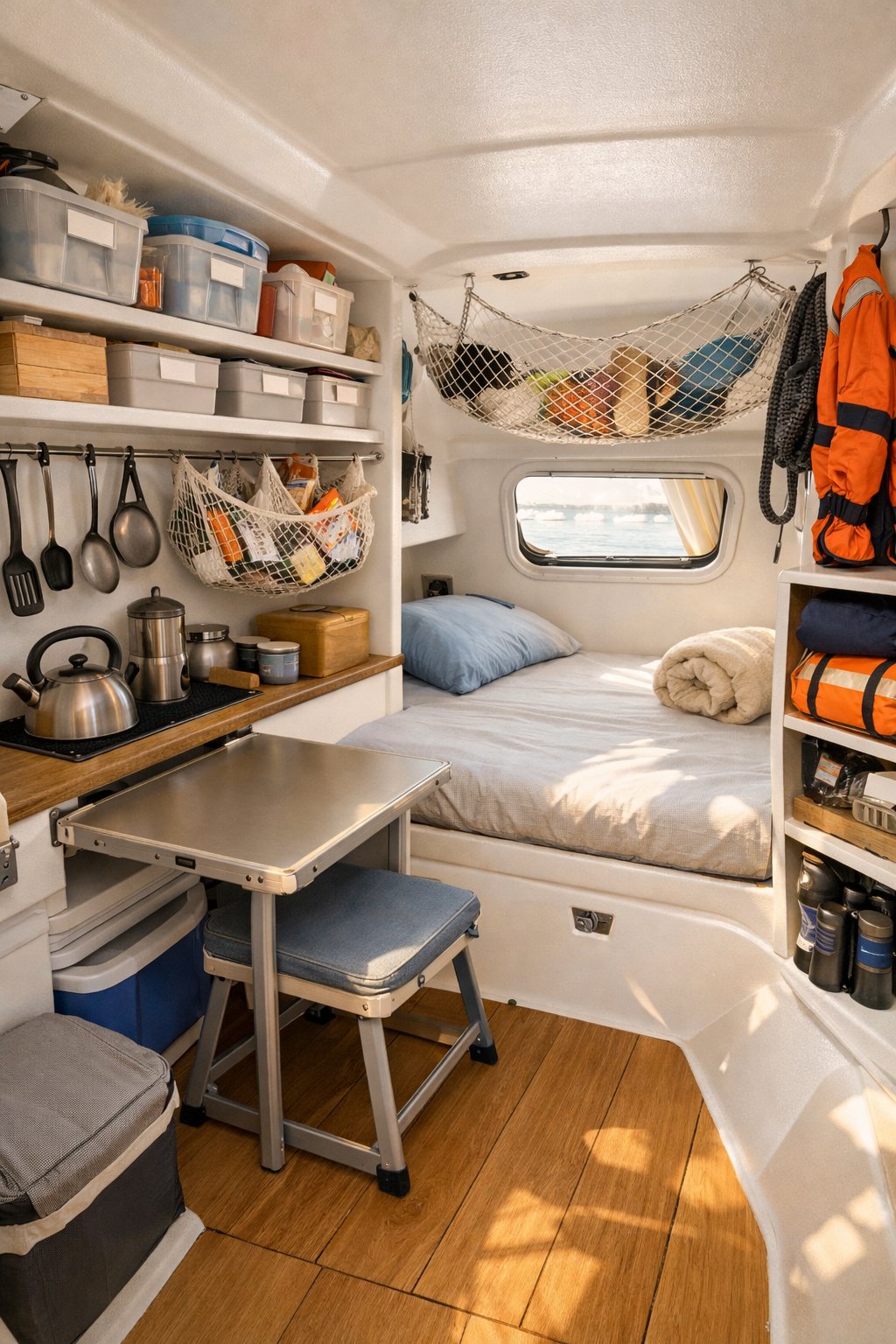
Follow clear ideas for storage, multi-use furniture, hanging organizers, and small-space systems that fit boats of all sizes. Use these tips to turn a cramped cabin into an organized, cozy space you actually enjoy spending time in.
PRO TIP
1) Use overhead storage compartments for gear
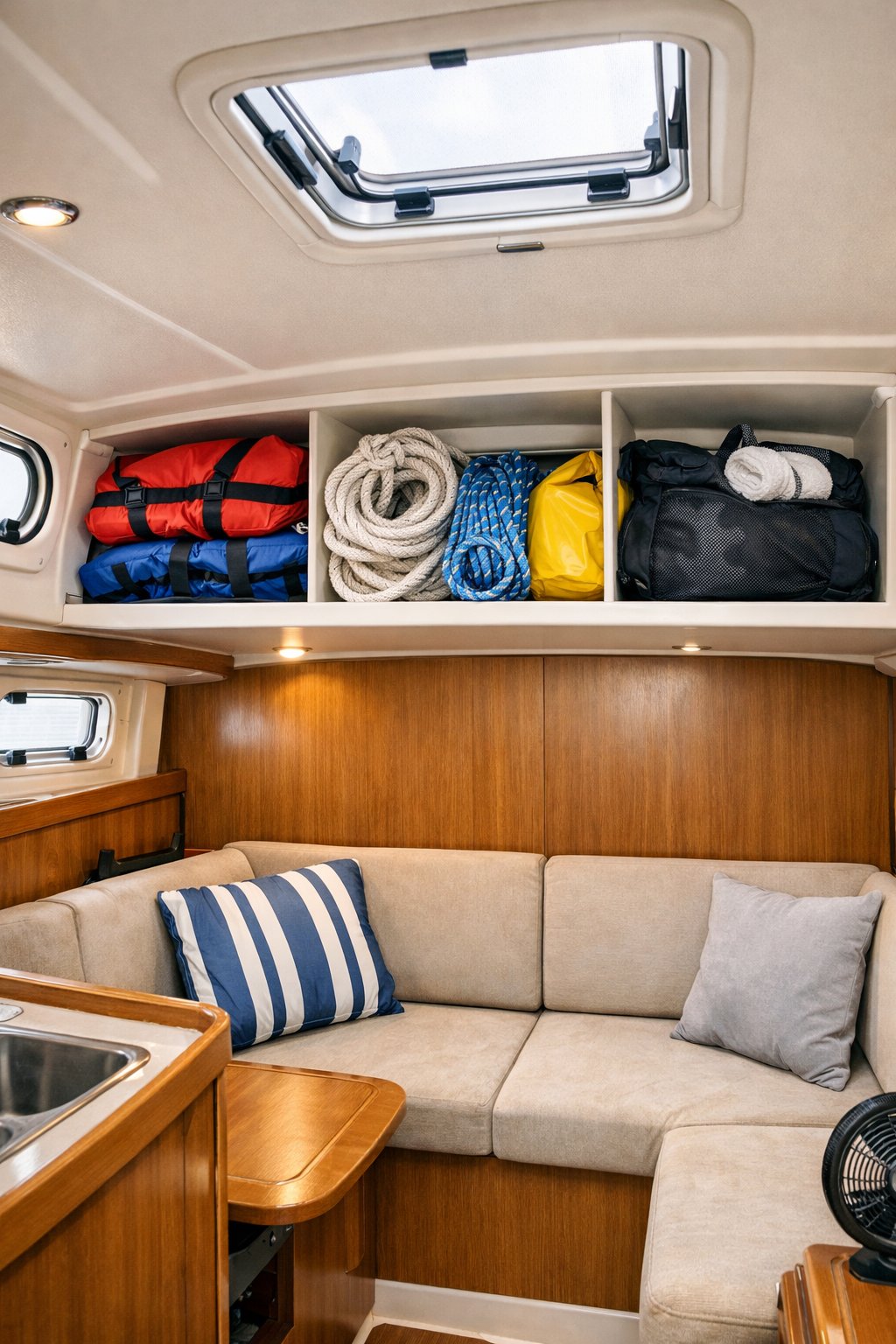
Overhead compartments make good use of space you often ignore. You can store jackets, dry bags, and small gear up high to free up floor and locker space below.
Keep heavier items low and use the overhead areas for lightweight, soft items. This prevents the boat from becoming top-heavy and keeps things from shifting when you move.
Use small bins or mesh bags inside the compartments to keep things tidy and visible. Label each bag so you can grab what you need without digging.
PRO TIP
Install non-slip liners and simple bungee anchors inside the compartments. They hold items in place and cut down on noise while underway.
2) Install multi-functional furniture with hidden storage
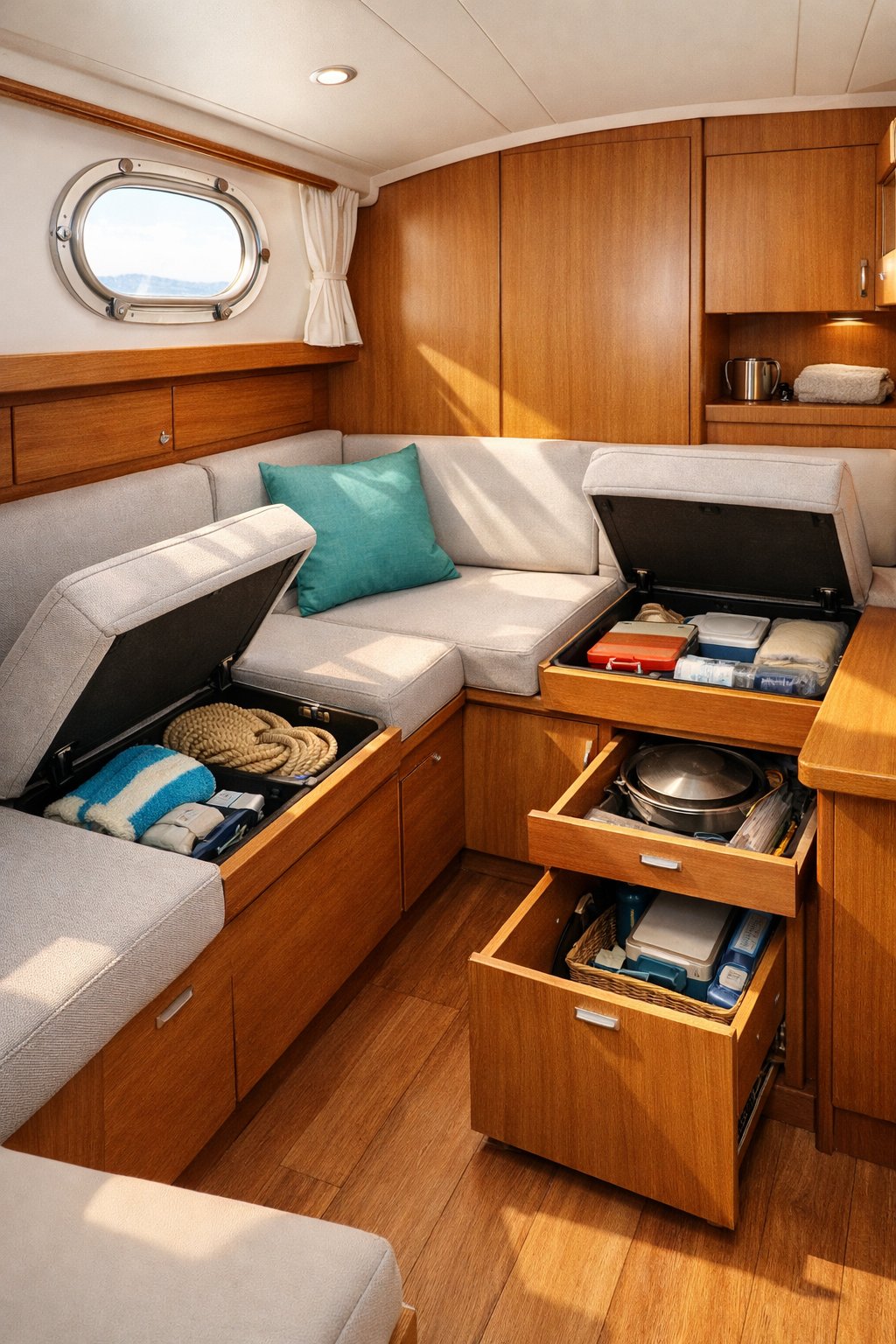
Choose seats, berths, and tables that do more than one job. A bench that lifts for gear, a table that folds into a shelf, or a berth with drawers saves floor space and keeps things out of sight.
Think about weight and balance when adding pieces. Low, built-in units help keep the boat stable and use under-seat volume you already have.
Pick items with secure latches and drainage. Hidden compartments must stay closed in rough water and resist moisture to protect your gear.
Keep frequently used items easy to reach. Store bulky or seasonal gear in deeper hidden spaces to free up daily-use surfaces.
PRO TIP
Measure twice and mock up with boxes before you buy. That helps you avoid bulky pieces that block movement or light.
3) Utilize under-seat storage bins
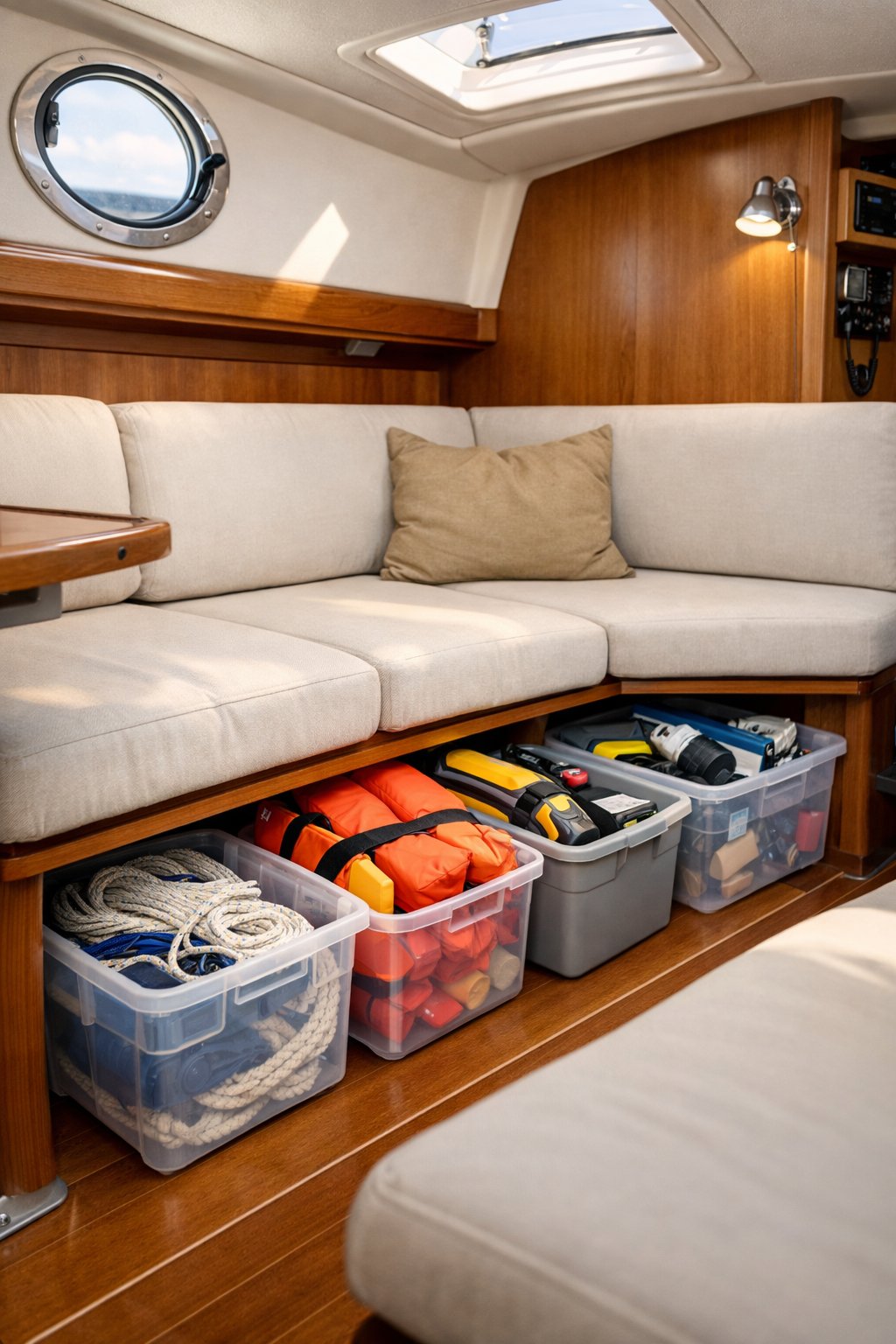
You can free a lot of cabin space by using the area under seats for storage. Measure the cavity first so bins fit without rubbing cushions or hinges.
Pick waterproof or sealed bins for items that can get damp. Clear bins help you see contents quickly, and stackable ones save vertical space.
Use bins with handles or wheels to pull items out easily. Label each bin so you don’t open every one to find something small.
Keep frequently used items in the front bins and seasonal or spare gear in deeper ones. This makes daily access fast and keeps your cabin neat.
PRO TIP
Cut foam or add non-slip mats inside bins to protect fragile items and keep things from shifting while underway.
4) Hang mesh organizers on cabin walls
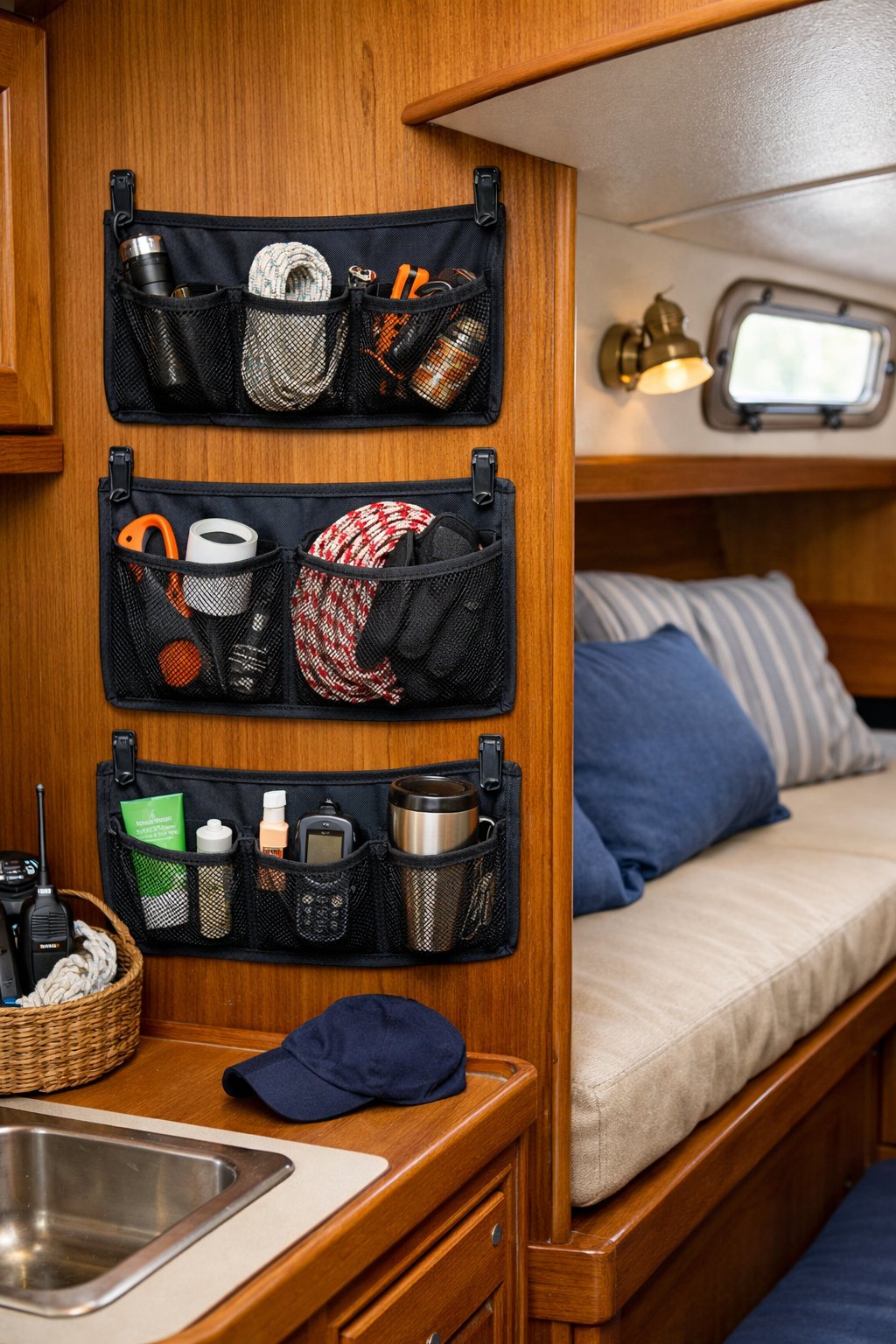
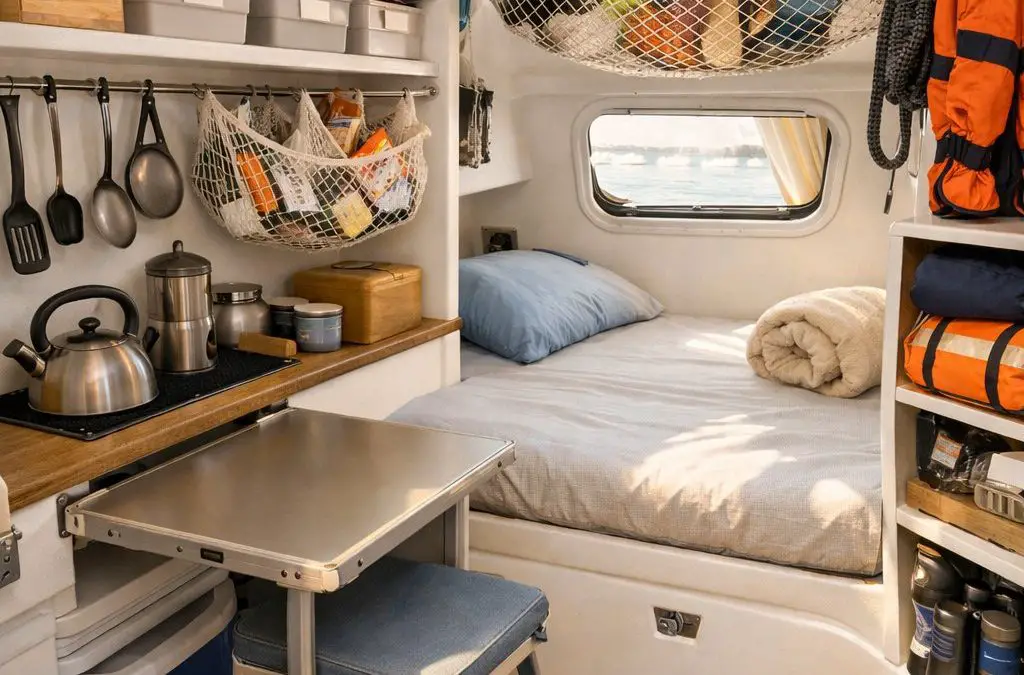
Mesh organizers give you extra pockets without taking floor space. You can hang them on bulkheads, behind doors, or on cupboard doors to store toiletries, snacks, and small gear.
They breathe, so damp items dry faster and odors stay down. The clear or mesh pockets make it easy to see what you need at a glance.
Choose organizers with grommets or velcro for easy hanging and removal. Lightweight items are best—avoid overloading to protect the wall and organizer.
PRO TIP
Use magnetic hooks if your cabin has metal walls for a no-drill option. Rotate items regularly to prevent mildew and keep things tidy.
5) Create magnetic knife and tool strips
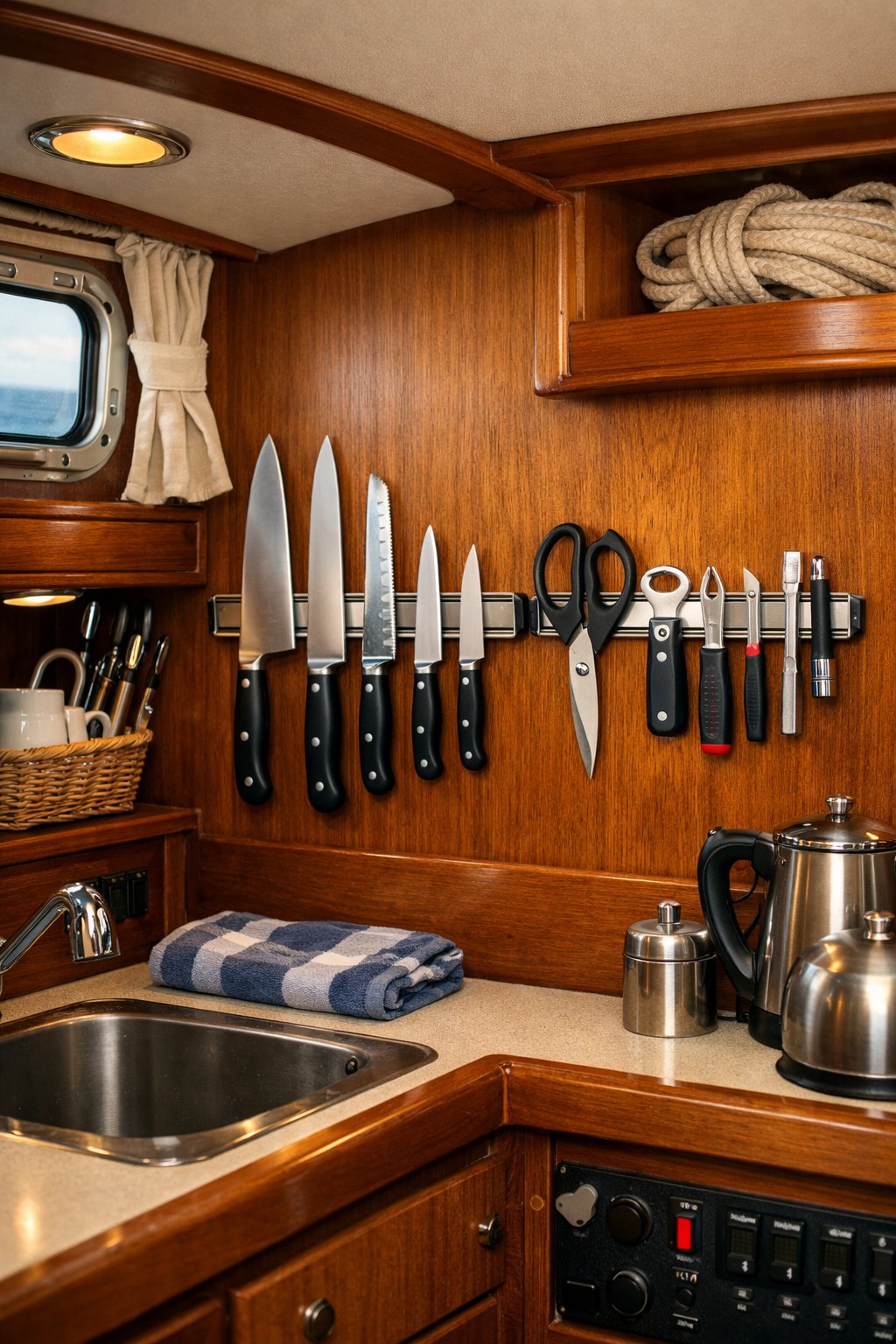
Magnetic strips save space and keep sharp items off counters and bunks. Mount one on a bulkhead to hold knives, scissors, and small tools within easy reach.
Use a wooden or metal strip with strong magnets rated for marine use. Stick to stainless or coated tools to avoid rust and keep magnets away from electronics and compasses.
Place strips where they won’t hit you when the boat rocks. Securely fasten with screws and marine adhesive so they stay put in rough seas.
PRO TIP
Label tool positions with tape or paint so each item has a home. That makes cleanup faster and helps prevent items from shifting below deck.
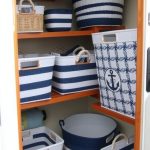
6) Store essentials in clear, labeled bins
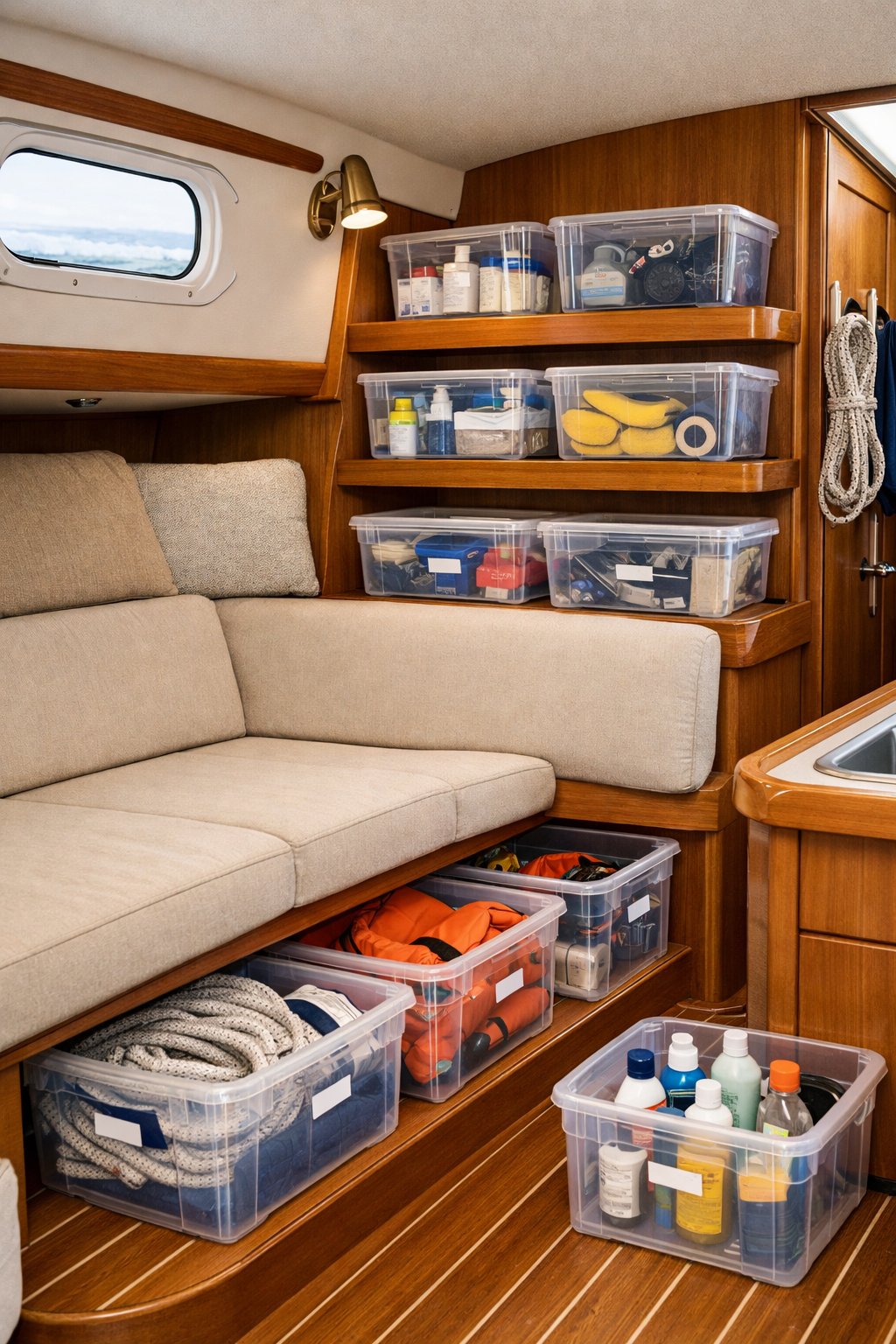
Use clear bins so you can spot what you need fast. Seeing contents means less time digging around in a small cabin.
Label each bin with simple words like “First Aid,” “Ropes,” or “Cooking.” Labels help when the light is low or the sea is rough.
Choose stackable bins that fit under bunks or in lockers. Clear plastic resists moisture better than cardboard and keeps things dry.
Keep daily-use items in front bins and rarely used gear in the back. Rotate seasonal gear so the items you need now stay easy to reach.
PRO TIP
Put an inventory list inside each bin lid. That way you can check contents without opening every box.
7) Mount fold-down tables to save space
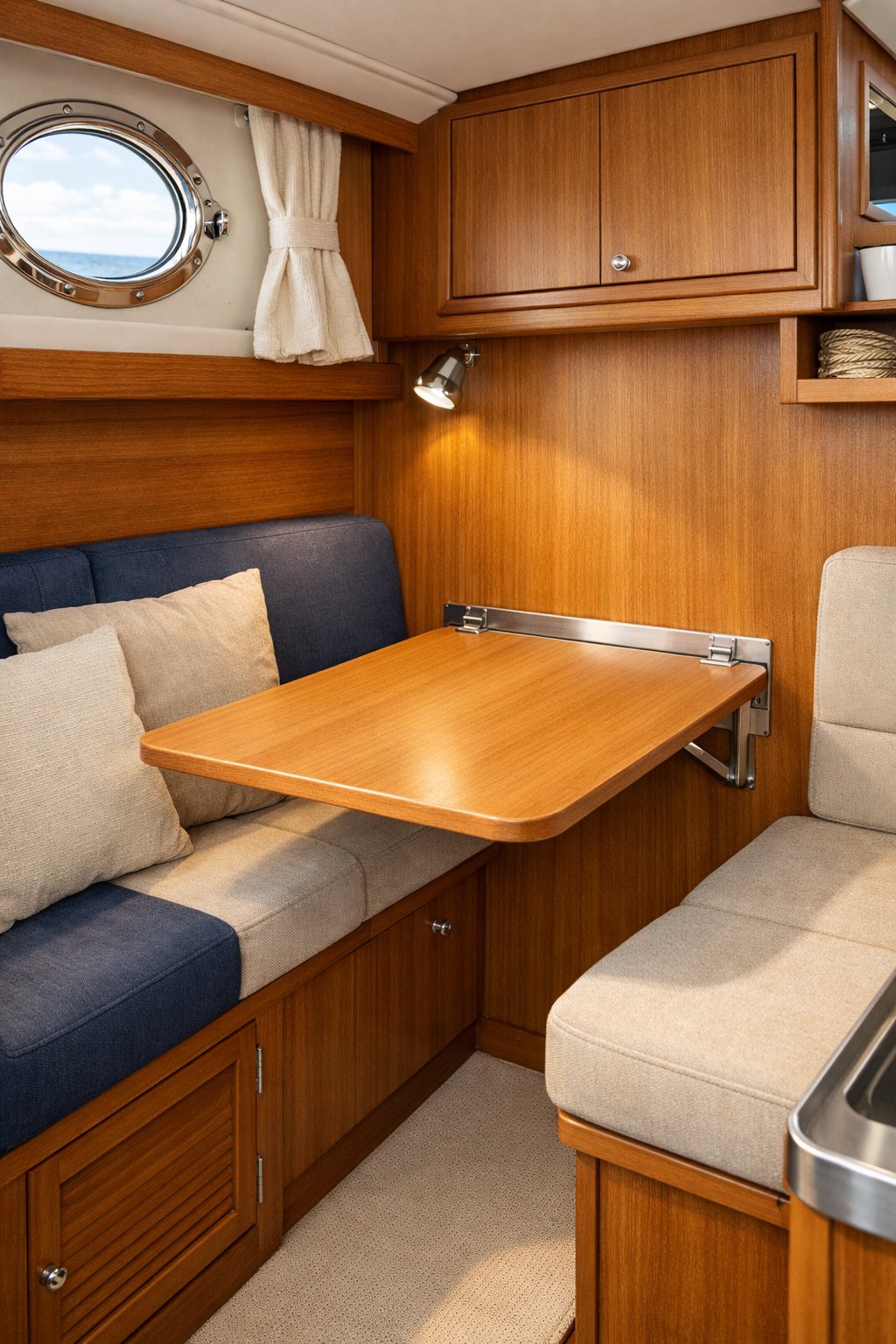
A fold-down table gives you a solid work surface when you need it and tucks away when you don’t. You can mount one to a cabin bulkhead for meal prep, chart work, or as a laptop desk.
Choose a model with sturdy hinges and a simple latch to stop wobble while underway. Pick a size that clears walkways when folded, and use lightweight materials to avoid adding strain to the wall.
Install at a comfortable height for sitting or standing, and reinforce the mounting points into studs or strong backing. Add a small lip or rail to keep items from sliding off in waves.
PRO TIP
Use removable surface mats or a non-slip pad so glasses and tools stay put when the table folds down or the boat rocks.
8) Use collapsible containers for kitchen items
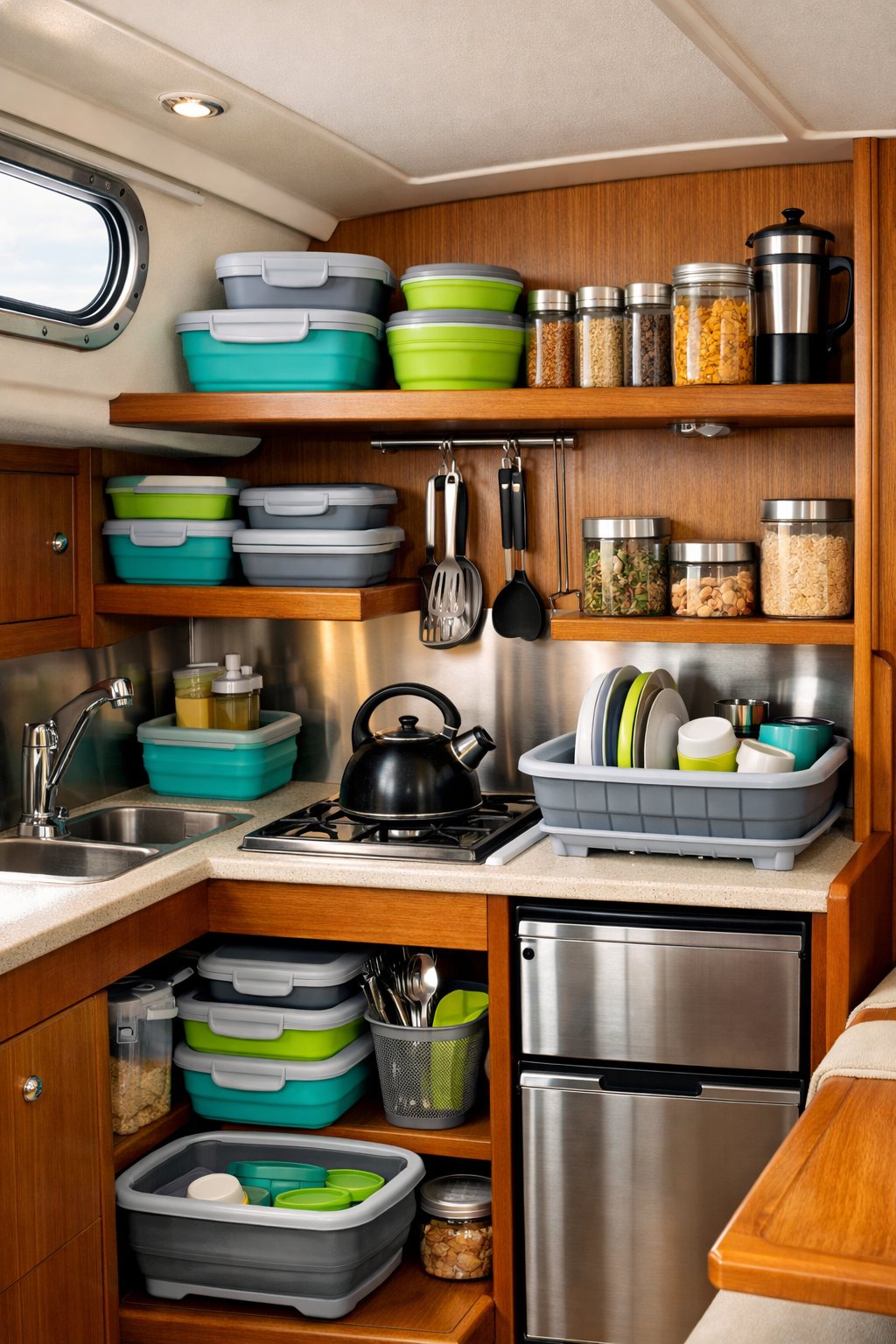
Collapsible containers save space when you need it most. You can stack them when full and flatten them when empty, freeing up locker and counter room.
Use soft-sided collapsible bins for dry goods, snacks, and bulky items like dish soap or sponges. They sit neatly on shelves and won’t rattle as much as hard plastic while underway.
Silicone collapsible bowls and measuring cups work well for food prep and then fold flat for storage. They cut down on clutter and replace multiple rigid pieces.
H3 PRO TIP
Label the folded containers’ lids or sides so you can grab the right one fast. Keep a small set of commonly used sizes within easy reach.
9) Add hooks for hanging jackets and bags
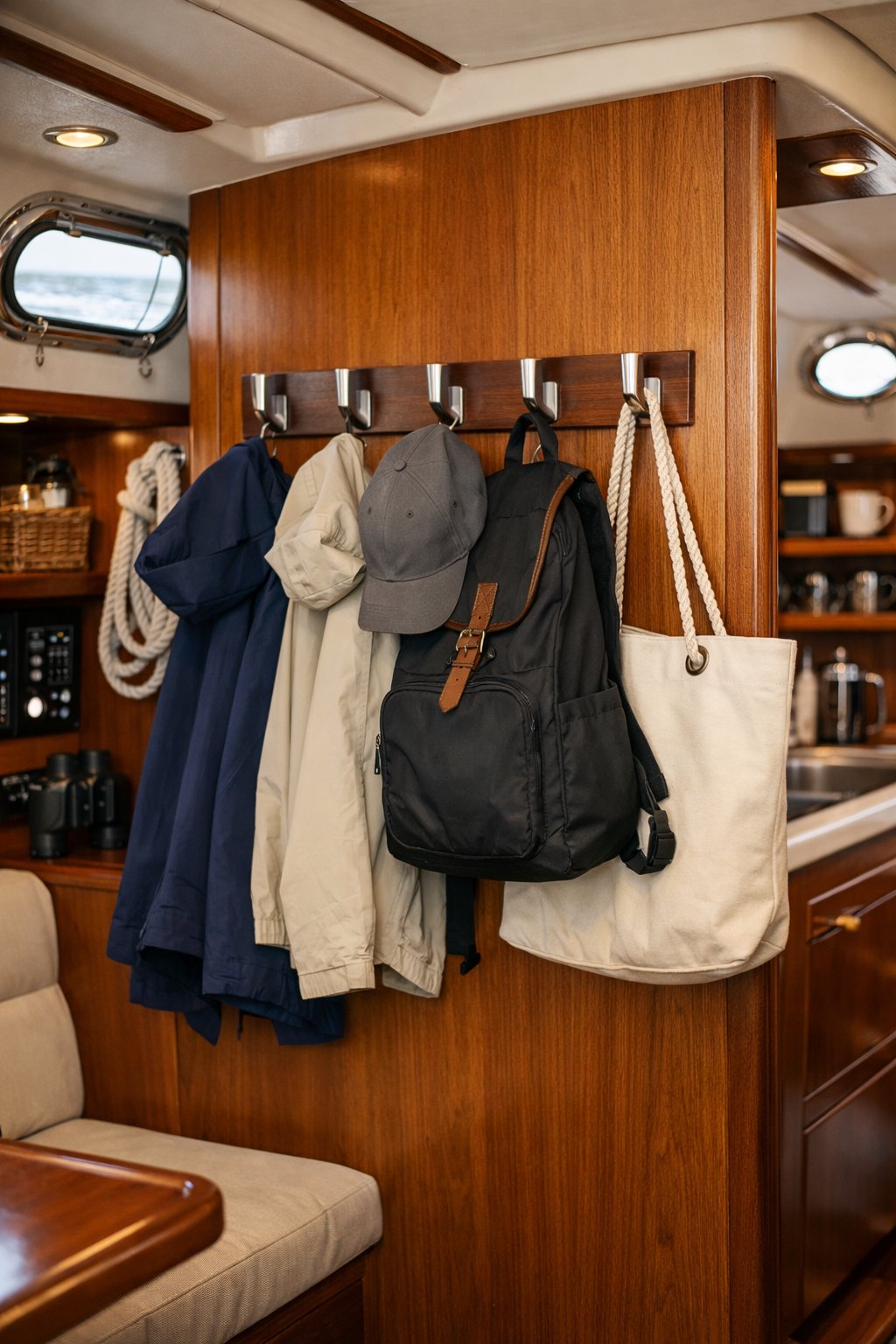
You can free up floor and seat space by mounting simple hooks near the companionway or along the cabin bulkhead. Hooks keep jackets, bags, and hats off cushions so you have room to move and sleep.
Choose low-profile or folding hooks so they don’t snag when the boat heels. Use stainless steel or coated hooks to resist salt and rust in the marine environment.
Place hooks at different heights for kids and adults, and group several together for multiple items. A short rail with S-hooks works well for bags and wet gear that need airflow.
PRO TIP
Mount hooks into a solid backing or a stud fairing to hold weight. Add a small drip tray or vented area under wet items to protect wood and fabric.
10) Use vacuum bags for clothes and bedding
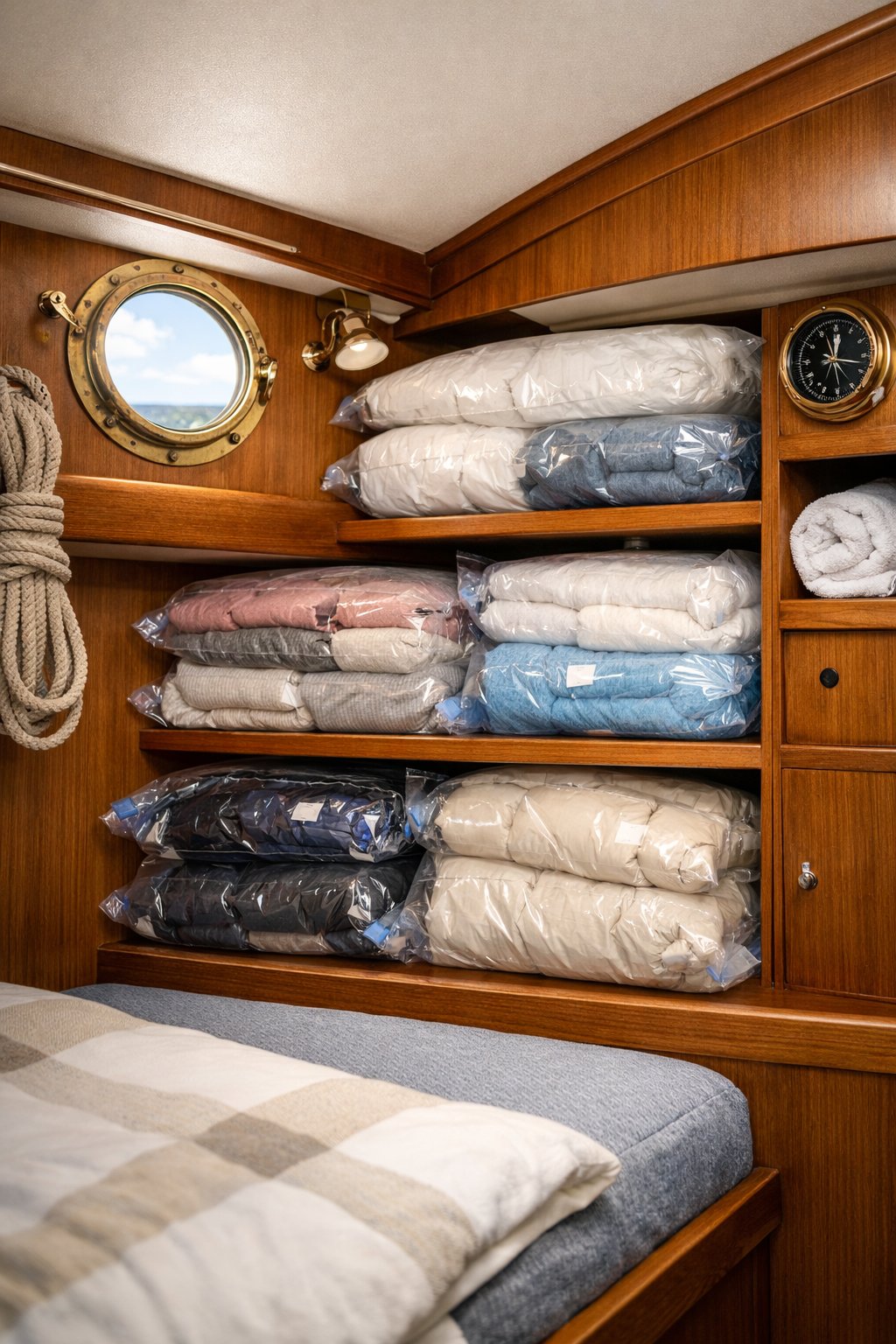
Vacuum bags cut bulky items down so they fit into lockers and under bunks. You can pack seasonal clothes, spare bedding, and soft gear into a few slim bags.
Choose bags without metal parts and avoid sharp items that could poke holes. Seal them on a flat surface, then use a hand pump or your vacuum to remove the air.
Label each bag with a marker so you know what’s inside without opening it. Store frequently used items in easy-to-reach spots and long-term items deeper in the cabin.
PRO TIP
Put a small sachet of moisture absorber or a dryer sheet inside to cut damp smells and keep fabrics fresh.
11) Keep cleaning supplies in stackable caddies
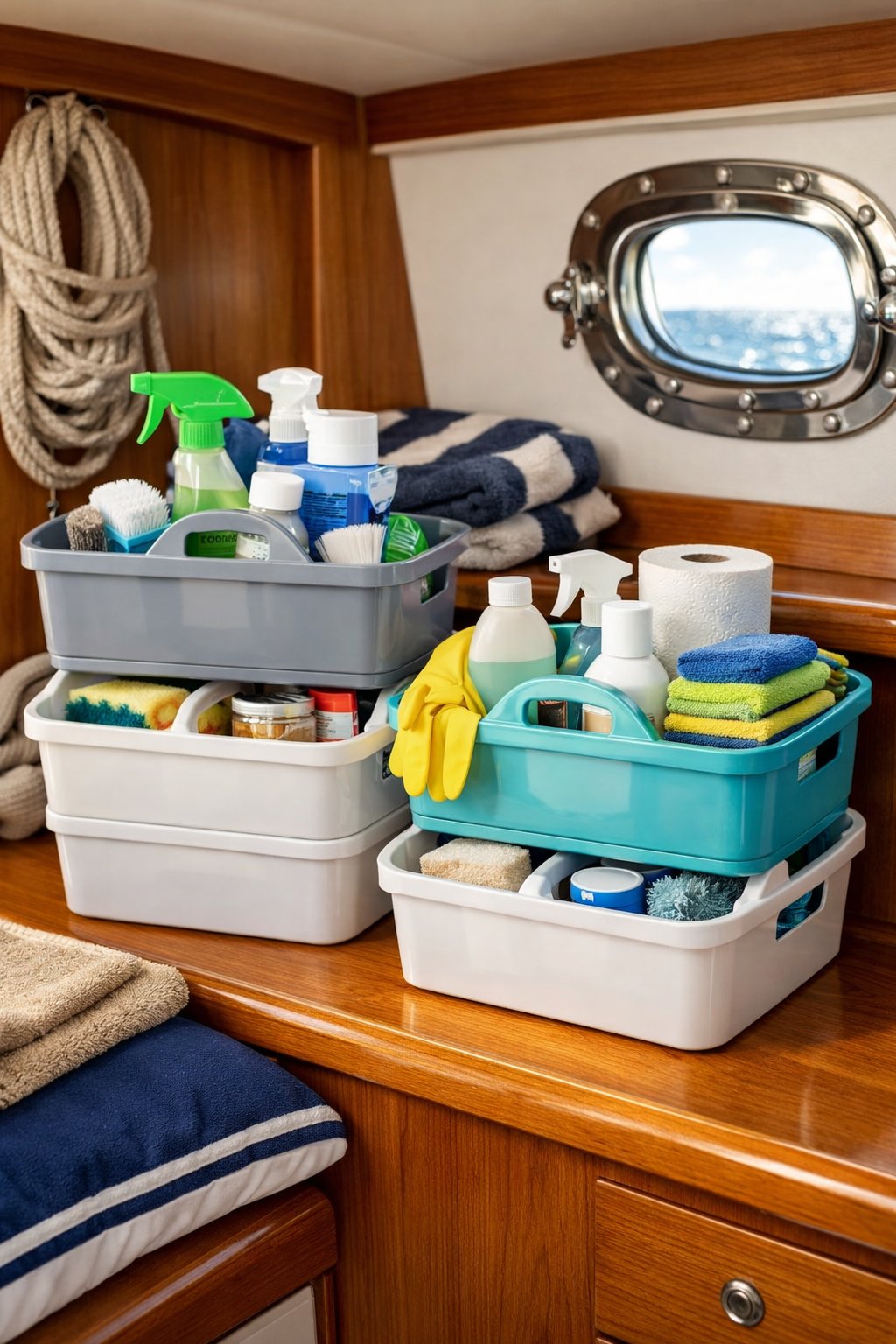
Stackable caddies save space and keep your cabin tidy. You can grab one caddy and clean a whole area without hunting through lockers.
Choose caddies that nest when empty and lock when stacked. Clear or labeled containers help you spot what you need fast.
Put everyday items like spray bottles, cloths, and brushes in the top caddy. Reserve a lower caddy for backups, like extra soap, sponges, and small tools.
PRO TIP
Label each caddy by task or area—galley, head, or deck. That way you always know which caddy to take, and you avoid carrying more than you need.
12) Install LED strip lights for better visibility
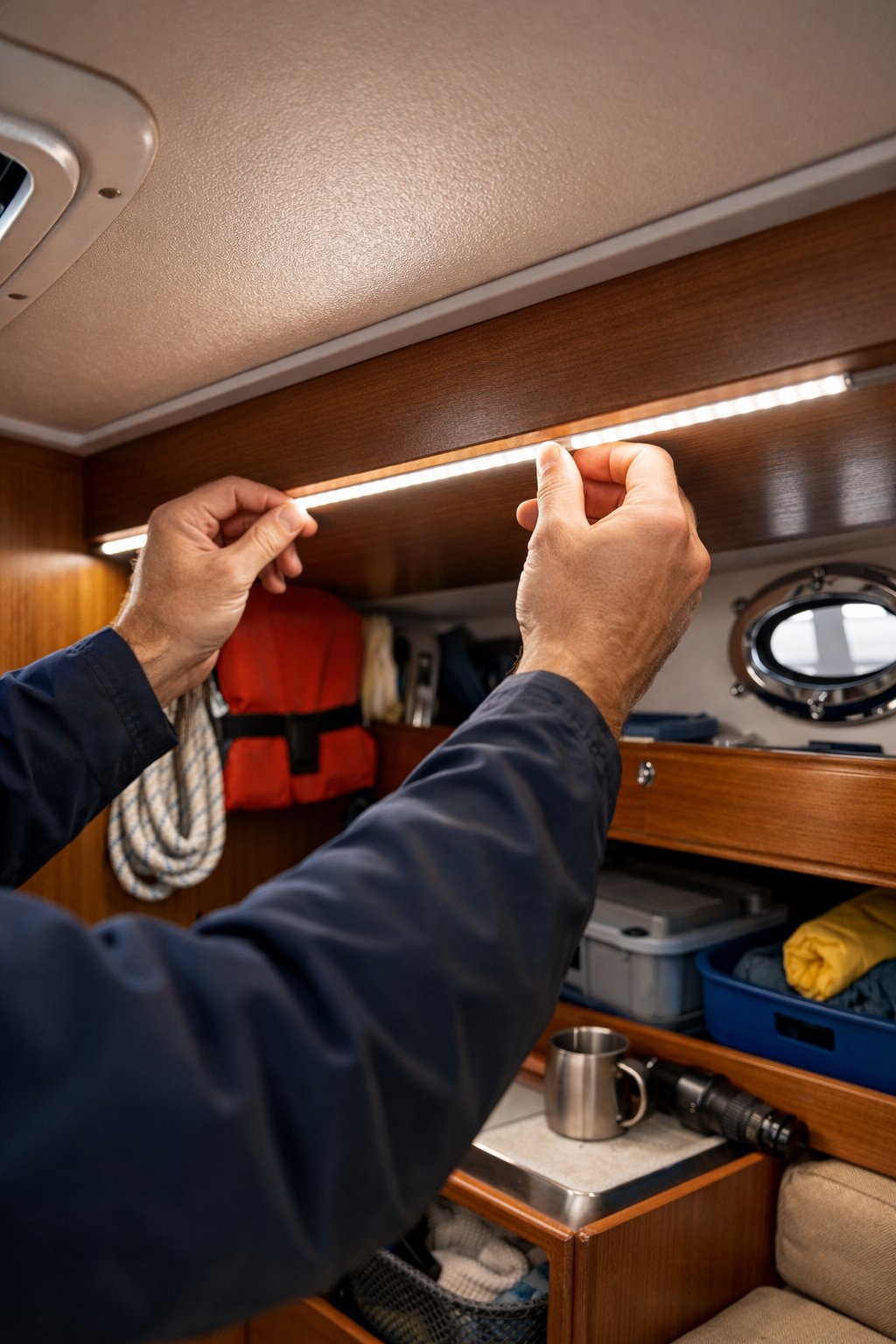
LED strip lights add bright, even light in tight corners without taking up space. You can run them under bunks, along shelves, or inside lockers to find things fast.
Choose warm or cool white to match your cabin’s feel. Low-voltage strips are safe and use little power, which matters on a boat.
Mount strips with adhesives or channels for a neat look. Conceal wires and power packs to keep walkways clear and reduce clutter.
Install dimmers or smart controllers so you control brightness for tasks or sleep. Proper placement makes your cabin feel larger and keeps gear easy to spot.
PRO TIP
Measure twice and plan your power source before cutting strips.
13) Use tension rods for hanging utensils or clothes
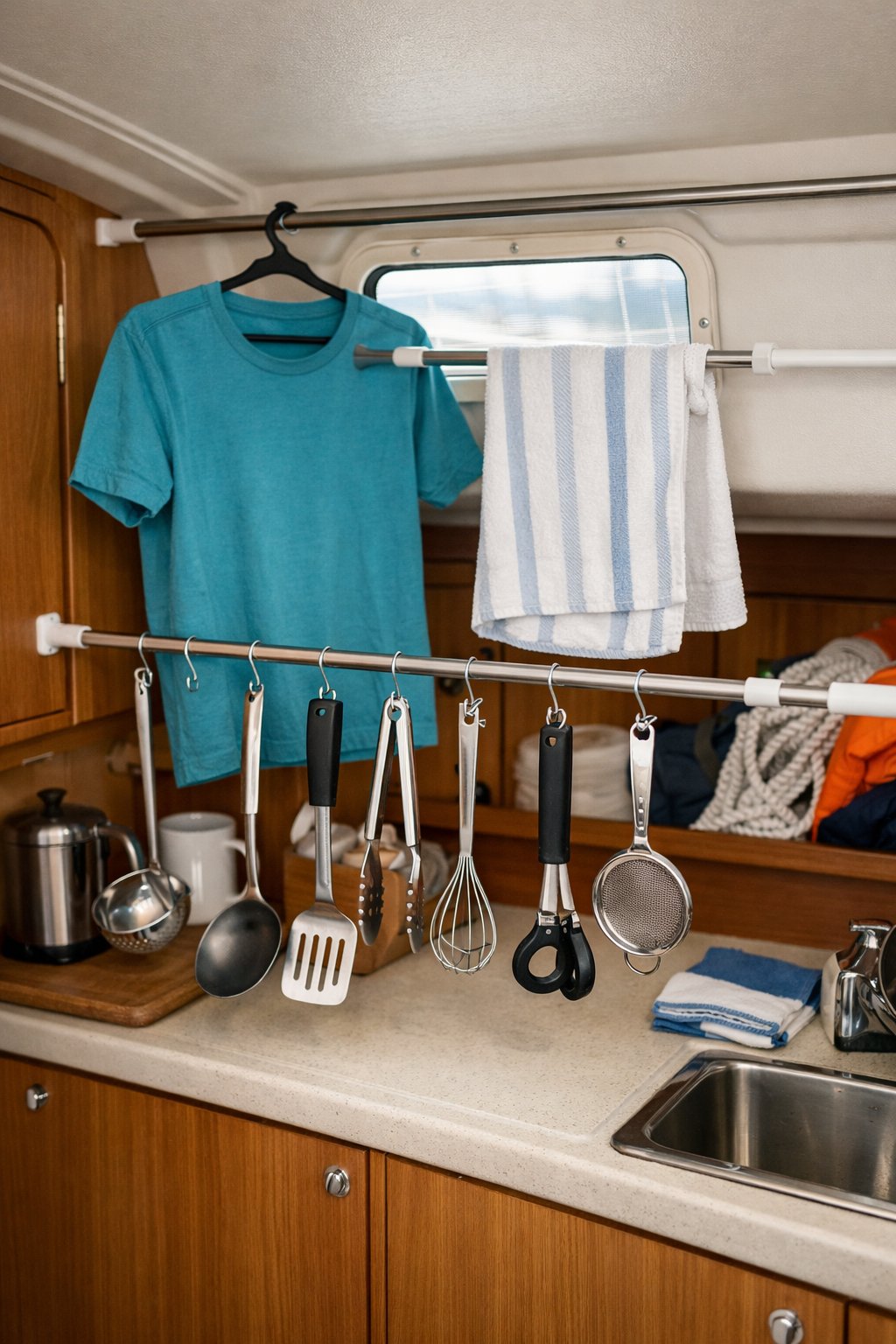
You can fit tension rods almost anywhere in a cabin. Place one under a shelf or between two walls to hang cooking tools, mugs, or dishcloths.
Use S-hooks to hang utensils and small pans. This keeps counters clear and items within reach when you need them most.
In the closet or locker, add a rod to double your hanging space. Use lightweight hangers for shirts, jackets, or wet gear so the rod holds up.
PRO TIP
Choose rust-resistant rods and hooks for salty air. Measure the space first and avoid overloading the rod to prevent sagging.
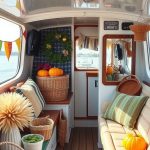
14) Designate a daily essentials basket
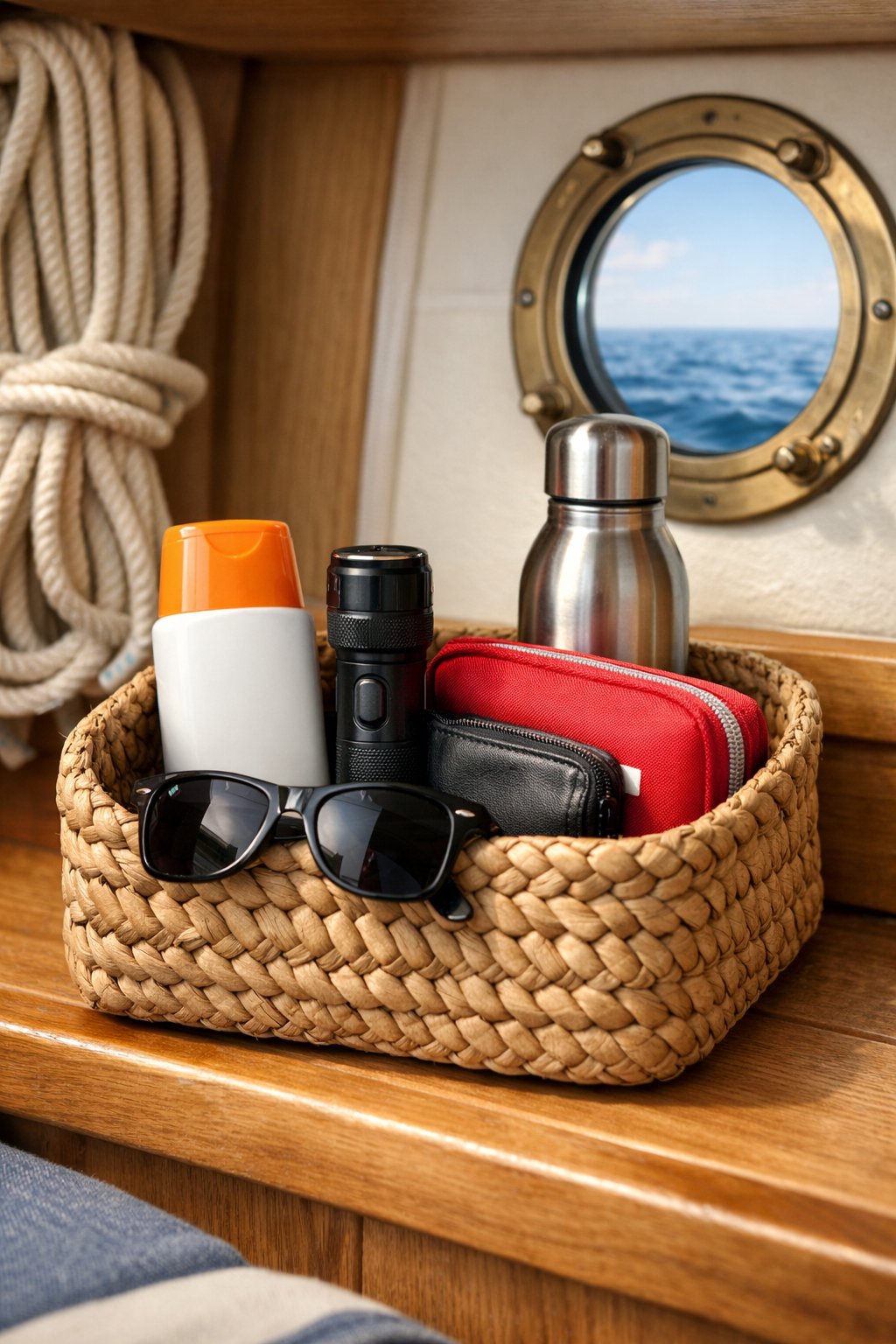
Keep a small basket near the cabin door for the items you use every day. Put keys, sunglasses, your phone charger, a small flashlight, and a lip balm inside so you grab them as you leave.
Make it a habit to empty the basket each evening. Return anything that doesn’t belong and refill items that run low.
Choose a basket that fits your space and resists moisture. A shallow, ventilated basket works well on narrow shelves or by the companionway.
PRO TIP
Label the basket or place it on a consistent spot so everyone on board knows where to look. This saves time and keeps surfaces clear.
15) Store small items in divided drawer organizers
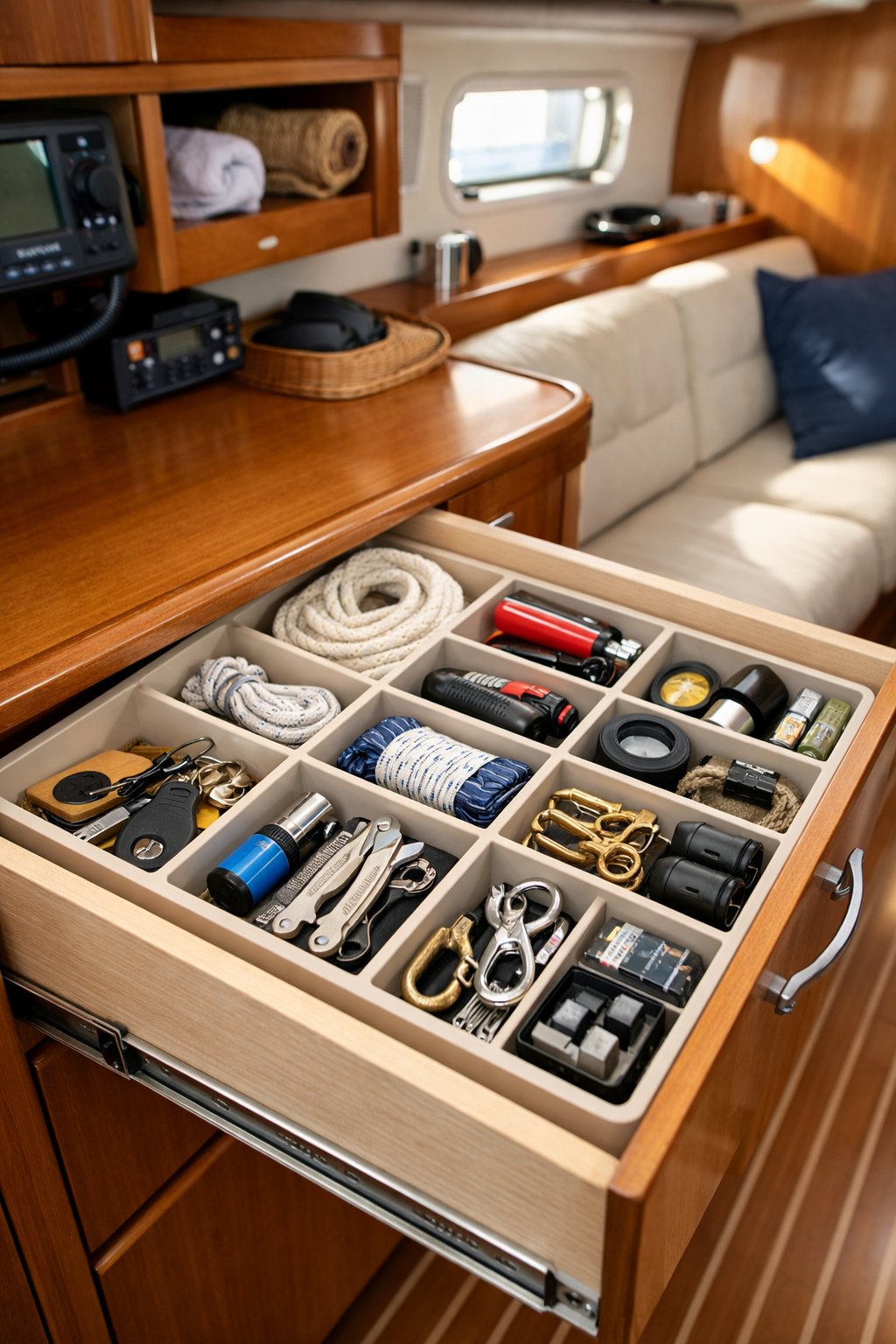
Use shallow divided organizers to keep odds and ends from turning into a mess. They fit in small cabin drawers and make it easy to see parts, tools, and personal items at a glance.
Choose clear or neutral trays so you can spot contents quickly. Stackable or modular pieces let you change layouts as your needs shift.
Label each compartment for fast retrieval when seas get rough. That saves time and prevents loose items from rolling around while underway.
Place frequently used items near the front of the drawer. Store spare parts and less-used gear toward the back to keep daily needs within reach.
PRO TIP
Cut foam inserts to fit unusual shapes like fuses, keys, or specialty tools. Foam holds items steady and reduces noise during travel.
16) Use stackable crates for bulkier gear
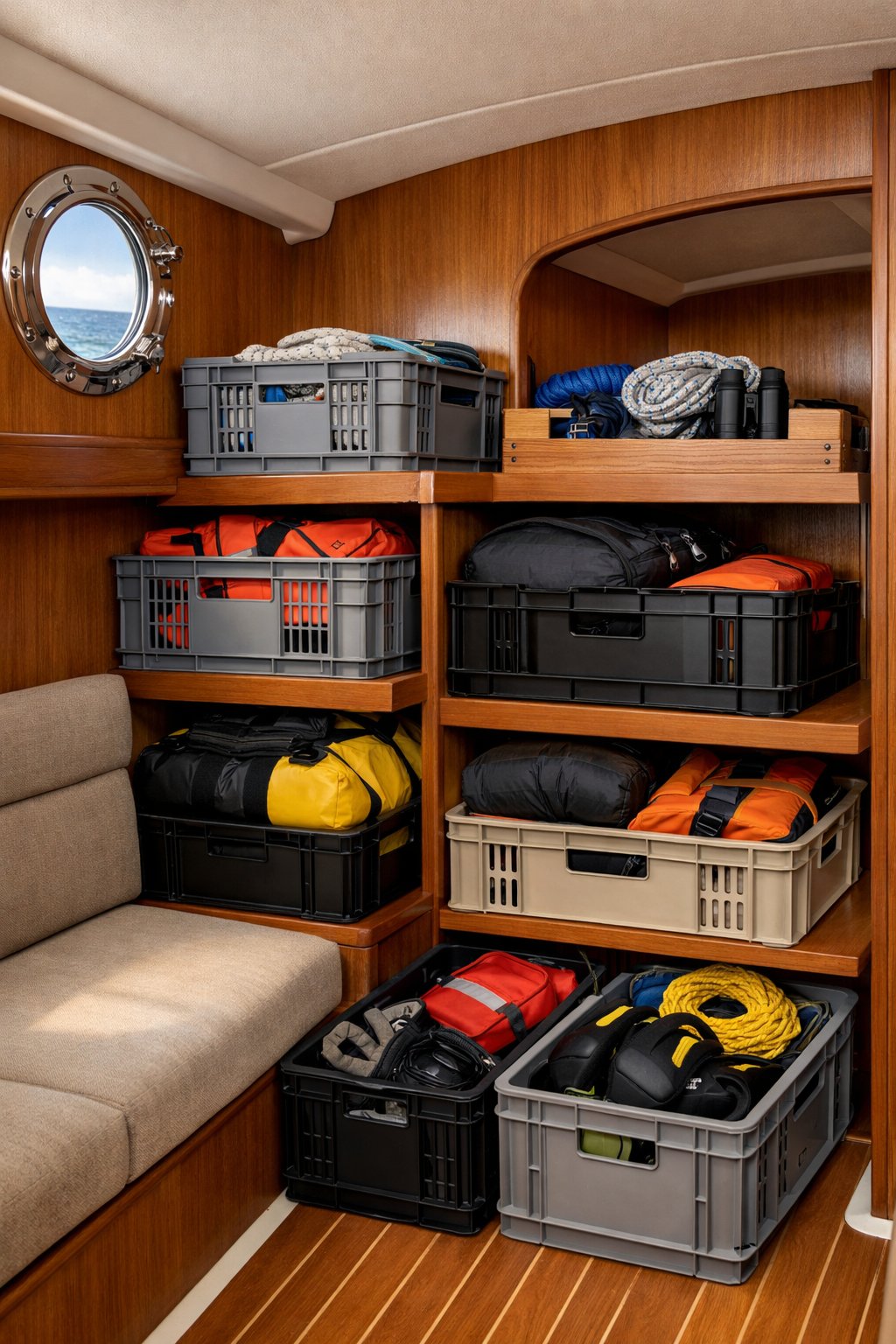
Stackable crates make it easy to store bulky items like fenders, fuel cans, and spare lines. They keep gear contained and stop small items from rolling around when you move.
Choose crates that lock or nest when stacked to save vertical space. Look for ones with handles so you can pull a crate out without shifting everything else.
Label each crate so you can find things fast. Clear or mesh-sided crates help you see contents at a glance.
PRO TIP
Secure stacked crates with bungee cords or straps to prevent shifting in rough seas. Place heavier crates on the bottom for stability.
17) Add removable adhesive shelves
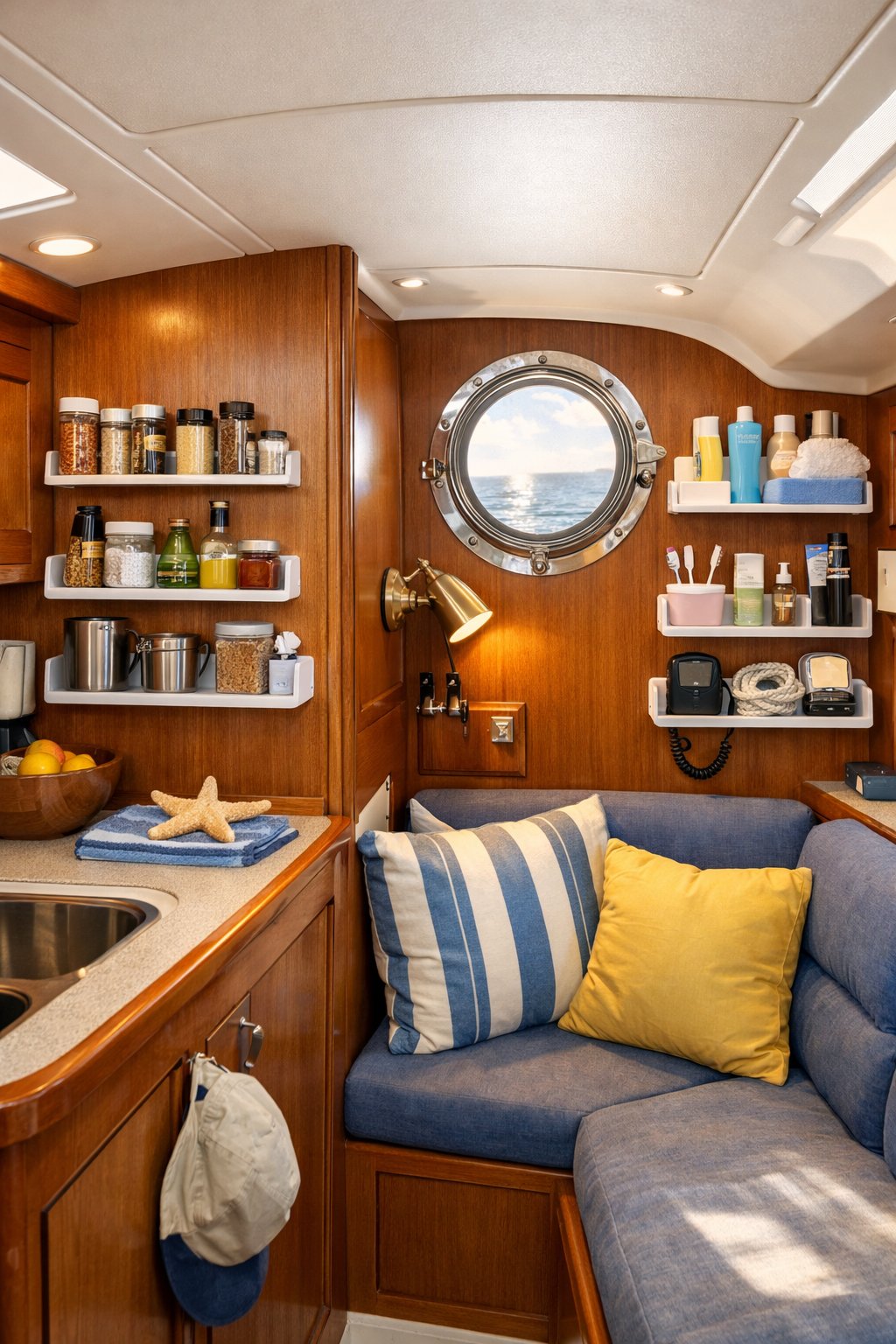
Removable adhesive shelves give you extra storage without drilling holes in your cabin walls. You can stick them to smooth surfaces and move them when you need a different layout.
Choose heavy-duty adhesive strips or mounting tape rated for the weight you plan to put on the shelf. Light items like sunscreen, phones, or books work best; avoid placing heavy pots or glassware on adhesive-mounted shelves.
Clean the wall and shelf surfaces with isopropyl alcohol before you stick them to improve bond strength. Press firmly for the recommended time and wait before loading the shelf to ensure the adhesive sets.
PRO TIP
Test a small shelf with a light load first, then increase weight slowly. If you rent the boat, pick adhesives that peel off cleanly to protect paint and panels.
18) Convert empty bottles into lightweight storage
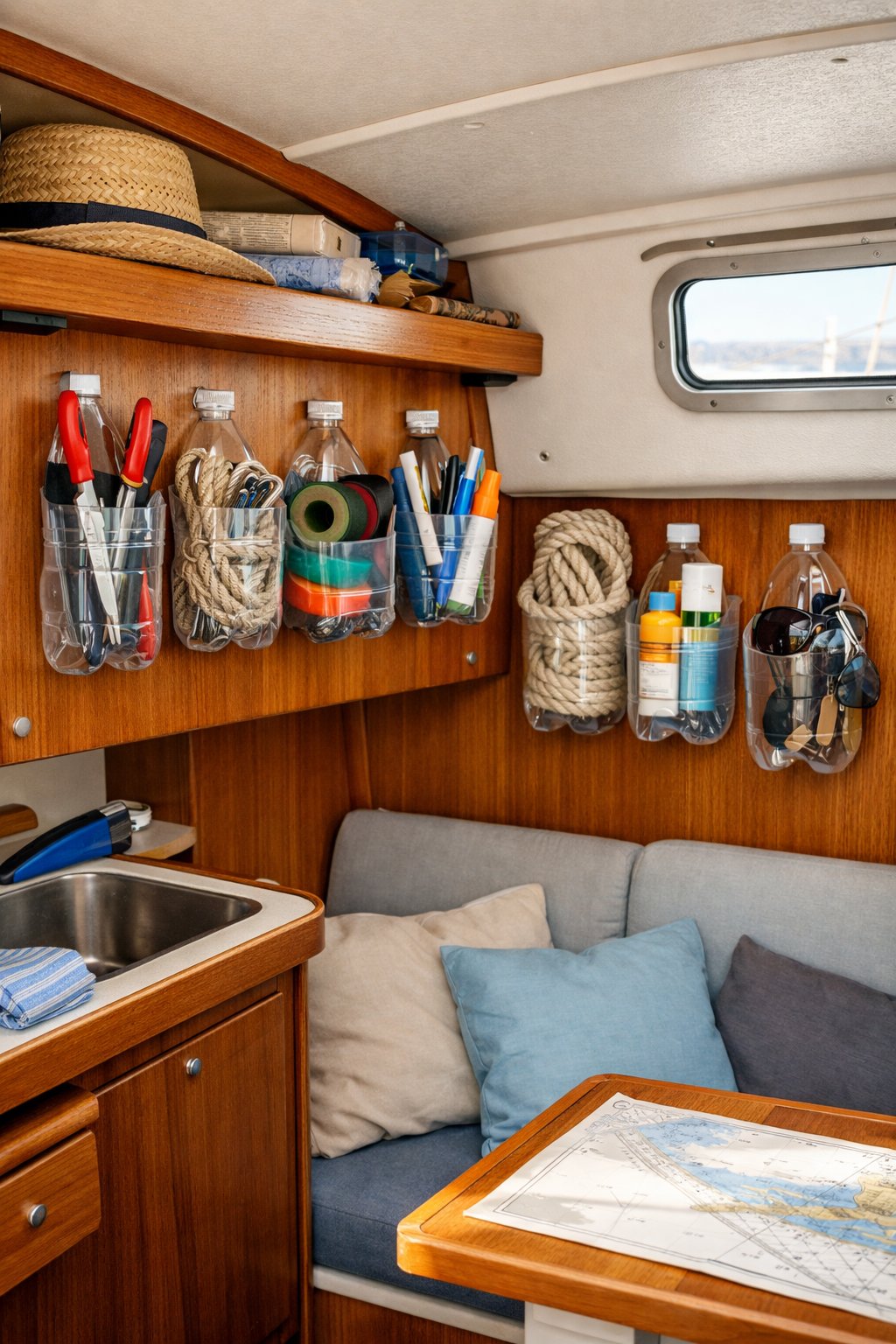
You can turn empty plastic bottles into handy storage for small items. Cut the tops off and use the bottoms for stowing snacks, first-aid items, or spare parts.
Label each bottle so you know what’s inside at a glance. Stack them or hang them from hooks to save floor and shelf space.
Thin bottles work well for ropes, cables, and rolled charts. Clear bottles let you see contents quickly, which helps when space is tight.
Choose food-safe bottles for snacks and clean everything before use. Reuse only sturdy bottles and replace them if they get cracked.
PRO TIP
Use elastic or Velcro straps to secure bottles in place during rough seas.
19) Hang dry bags to save floor space
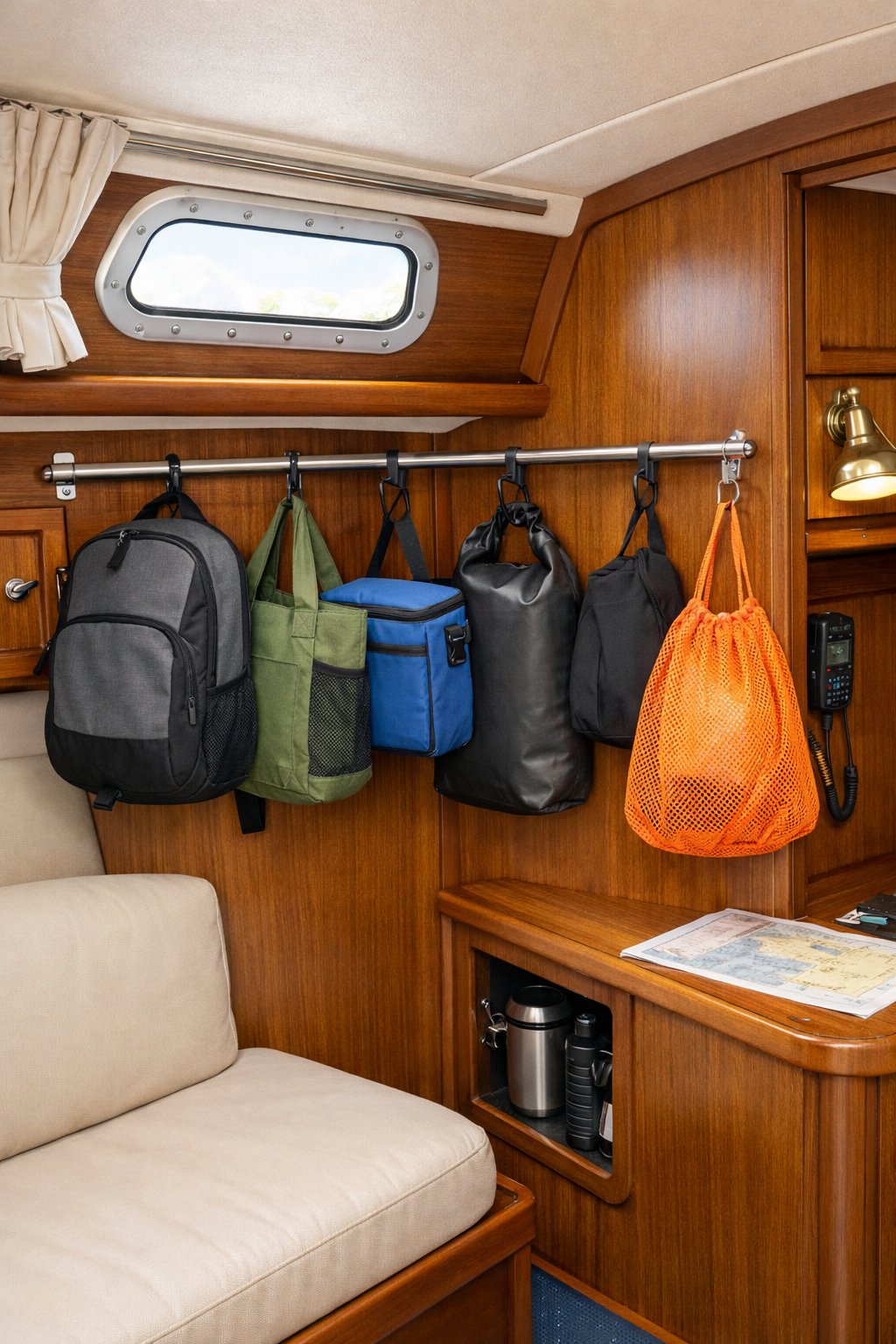
Hanging dry bags keeps gear off the cabin floor and out of the way. You free up walking space and reduce tripping hazards by suspending bags from hooks or rails.
Use strong carabiners and deck hardware to secure the bags. Place them near the hatch or under bunks so items stay dry and are easy to reach.
Group similar items together — ropes in one bag, foul weather gear in another — to make finding things quick. Clear labels help when light is low or waves make movement tricky.
PRO TIP
Line the bag interior with a lightweight dry sack for extra waterproofing. Rotate stored items regularly to prevent mildew and redistribute weight evenly along the boat.
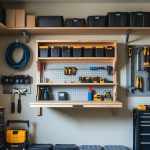
20) Use a pegboard with hooks system
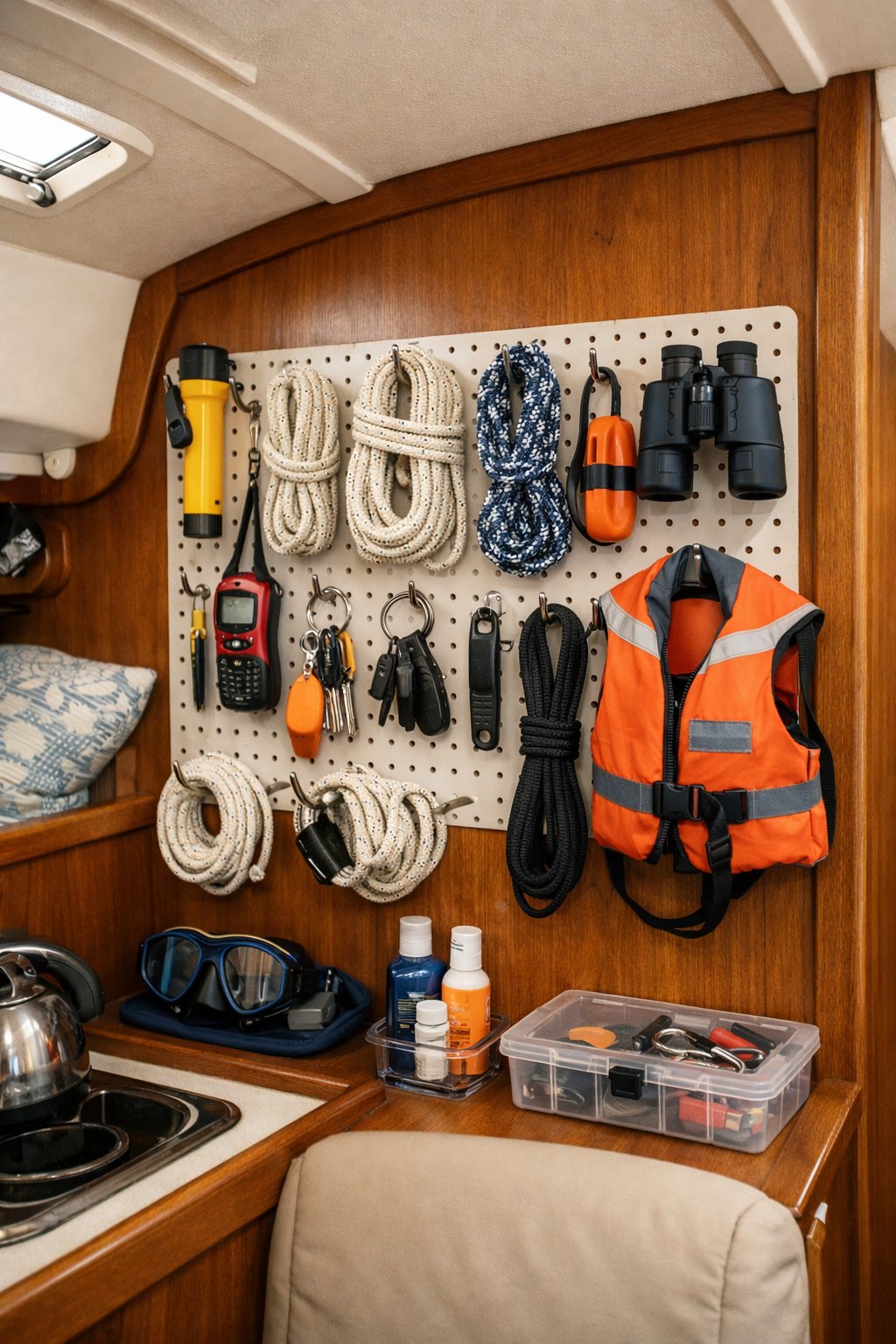
A pegboard mounted on a cabin wall gives you fast, visible storage for small items. You can hang tools, kitchen utensils, flashlights, and chargers so they stay off counters and easy to grab.
Mix hooks, baskets, and small shelves to hold different shapes and sizes. Swap and move pieces as your needs change without drilling many holes or buying new furniture.
Pick a corrosion-resistant pegboard and stainless hooks for the marine environment. If you can, add a thin frame or slats behind the board to allow airflow and keep moisture off stored items.
PRO TIP
Use zip ties or locking hooks to keep heavy items secure when the boat rocks.