Last Updated on September 11, 2026
Nearly half a million households in North America now call a motorhome, travel trailer, or converted van their only home. That number is not a guess. It is the result of a lifestyle shift that has turned “full time RV living” from a fringe idea into a mainstream housing choice. Yet 2026 is shaping up to be a strange year for that community. RV shipments have dropped by double digits compared to last year, campground prices keep climbing, and insurance costs are rising fast.[5][9][10]
This guide breaks down what full time RV living actually looks like right now. It covers the real costs, the rig choices, the paperwork nobody warns you about, and the daily logistics that decide whether this lifestyle sticks or fails. Whether the goal is early retirement, remote work freedom, or simply escaping a mortgage, this article gives a clear, honest picture before any big decision gets made.
Key Takeaways
- Full time RV living in 2026 usually costs between $2,500 and $3,500 per month, but campground fees, fuel, and insurance are pushing costs higher than in past years.[10]
- The RV market is cooling in 2026, with shipments down sharply, which changes negotiating power and pricing for buyers.[2][5][6][9]
- Entry-level RVs are holding their value better than luxury coaches right now, which matters a lot when picking a rig for full-time use.[1][3][8]
- Logistics like mail forwarding, domicile state, insurance, and internet access are just as important as the RV itself.
- Full time RV living works best for people who plan for the boring parts, not just the scenic ones.
What Is Full-Time RV Living in 2026
Full time RV living means someone lives in a recreational vehicle as their only home. There is no house or apartment waiting in the background. The RV is the address, the bedroom, the kitchen, and often the office. This is different from part-time RVing, where people travel for a few weeks or months and then return to a fixed home.
In past years, this lifestyle grew fast. The pandemic pushed remote work into the mainstream, and thousands of people traded rent payments for open roads. That boom is now leveling off. Shipment data from early 2026 shows a sharp drop compared to the same months in the prior year, with declines strong enough that the industry’s own trade group revised its full-year forecast downward.[2][5][6][9]
That does not mean full time RV living is disappearing. It means the market is settling into something more normal after a few years of unusual growth. The RV industry still represents a massive slice of the economy, supporting manufacturing jobs, dealership networks, and campground businesses across the country.[13] Most industry forecasts still expect steady, if slower, growth in unit sales over the next few years, which suggests full time RV living is here to stay as a real housing option, not just a passing trend.[5][7][14]
Who Is Actually Doing This in 2026
Full time RV living is no longer just retirees in Class A motorhomes. The community today includes:
- Remote workers who need a laptop and Wi-Fi more than a fixed address
- Young couples avoiding high rent or mortgage payments
- Retirees on fixed incomes looking to stretch savings
- Families who homeschool while traveling between states
- Solo travelers seeking freedom after a divorce, layoff, or big life change
One well-known example is the story of a couple who sold everything to live full time in an RV, trading a traditional house for a rig and the open road. Their story reflects a pattern seen across the country: people are willing to give up square footage in exchange for flexibility and lower fixed costs.
Why 2026 Feels Different
Three forces are shaping full time RV living this year. First, campground prices are rising, and many parks now use dynamic pricing systems similar to airline tickets, meaning prices change based on demand.[10][15] Second, fuel and insurance costs have climbed, squeezing monthly budgets. Third, the RV market itself is cooling, which changes how buyers should shop.
None of this means the lifestyle has stopped working. It means people entering full time RV living in 2026 need sharper budgeting and smarter shopping than people who started five years ago.
The Real Cost of Full-Time RV Living: Budgets, Rigs, and Market Trends
Money is the single biggest reason people either thrive at full time RV living or quit within the first year. Getting the budget right matters more than picking the “perfect” rig.
Monthly Budget Ranges
Current cost data suggests a typical full-timer spends somewhere between $2,500 and $3,500 per month, though this swings widely based on travel pace, rig size, and camping style.[10] A person who boondocks on public land and moves slowly can spend far less. Someone who books resort-style RV parks every night and travels fast will spend much more.
Here is a simple breakdown of where that money tends to go:
| Expense Category | What It Covers | Why It Varies |
|---|---|---|
| Campground or park fees | Nightly, weekly, or monthly site rent | Location, season, amenities |
| Fuel | Moving the rig and tow vehicle | Travel distance, MPG, rig weight |
| Insurance | Coverage for the RV as a full-time home | Rig value, driving record, coverage type |
| Maintenance | Repairs, tires, appliances, seals | Rig age, DIY skill, climate |
| Food and supplies | Groceries, propane, water | Personal habits, location cost of living |
| Internet and phone | Staying connected for work or family | Data plan, signal boosters, satellite service |
Several experts warn that 2026 could be one of the toughest financial years for full-timers in recent memory, mostly because campground pricing and insurance premiums are climbing faster than wages or savings interest.[10][15] Anyone planning this lifestyle should build a buffer into their budget rather than assuming last year’s numbers will still apply.
How the RV Market Is Shaping Prices
The RV market shift in 2026 actually creates some opportunities for smart buyers. Data from valuation and market analysts show that entry-level RVs are holding their value well, while higher-end luxury coaches are seeing softer pricing.[1][3][8] In plain terms, budget-friendly trailers and starter motorhomes are still in demand and priced firmly, but bigger, pricier rigs are more negotiable than they were a year or two ago.
This matters for two types of buyers. First-time full-timers on a tight budget may find fewer deep discounts on small towables, since demand for that segment stays strong. Meanwhile, buyers wanting to upgrade to a larger diesel pusher or luxury fifth wheel may find better deals than expected, since that segment is softening.[1][3][5]
Shipment numbers reinforce this shift. Reports from early 2026 show manufacturers pulling back production sharply compared to the prior year, a sign that the industry overbuilt during the boom years and is now correcting inventory levels.[2][6][9][11][12] Analysts note that production is becoming better matched to actual buyer demand, which should help stabilize prices and reduce the risk of overpaying for a rig.[3][8]
“Production catching up to real demand is good news for buyers. It means fewer inflated prices and more realistic negotiating room.” This is the general takeaway echoed across recent market reports, especially for anyone comparing similar rigs at different dealerships.[3][8]
For anyone shopping used, comparing multiple pricing sources before signing anything is smart. The complete guide to used car valuation explains how professional pricing guides work, and similar principles apply directly to RV shopping. A deeper look at RV-specific pricing and depreciation is available in the RV buying, ownership, and resale valuation guide, which explains how different rig types lose or hold value over time.
Choosing a Rig for Full-Time RV Living
Picking the right rig is not about finding the fanciest floor plan. It is about matching the RV to daily life. A few key questions help narrow the choice:
- Will one person or a whole family live in it full time?
- Is remote work part of the plan, and does the layout allow for a quiet desk space?
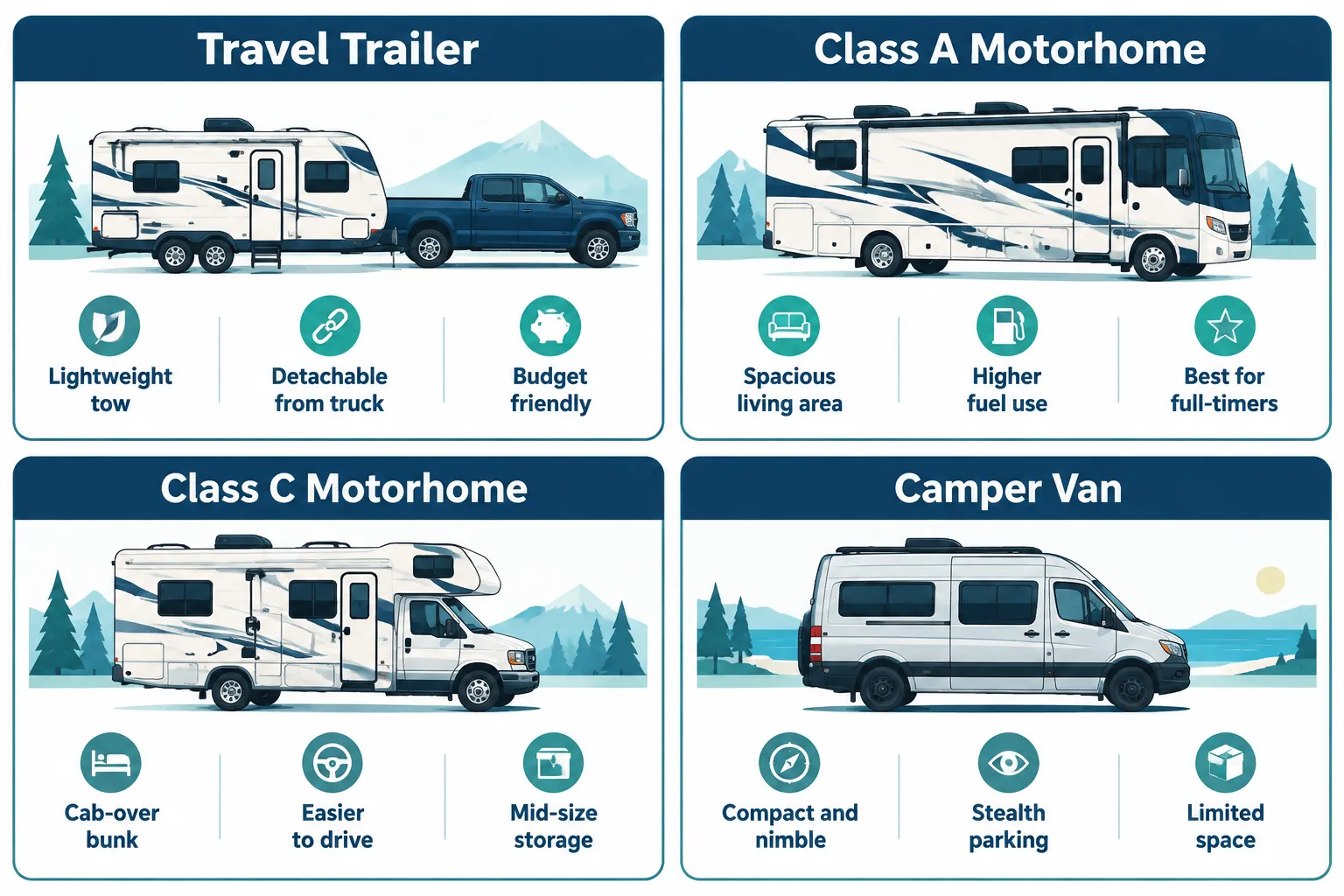
- Will the rig tow, or will it be self-driving like a motorhome?
- What climate will it face most often, hot desert, cold mountains, or humid coastlines?
- How important is fuel efficiency versus interior space?
Budget-friendly options remain popular for first-time full-timers, since starter models keep upfront costs and loan payments lower. A helpful starting point is the list of best budget-friendly RVs for 2026, which breaks down rigs that balance price with livability. Once a rig is chosen, keeping it road-ready becomes its own ongoing job, covered in detail in the complete RV maintenance guide.
Logistics That Make or Break Full-Time RV Living
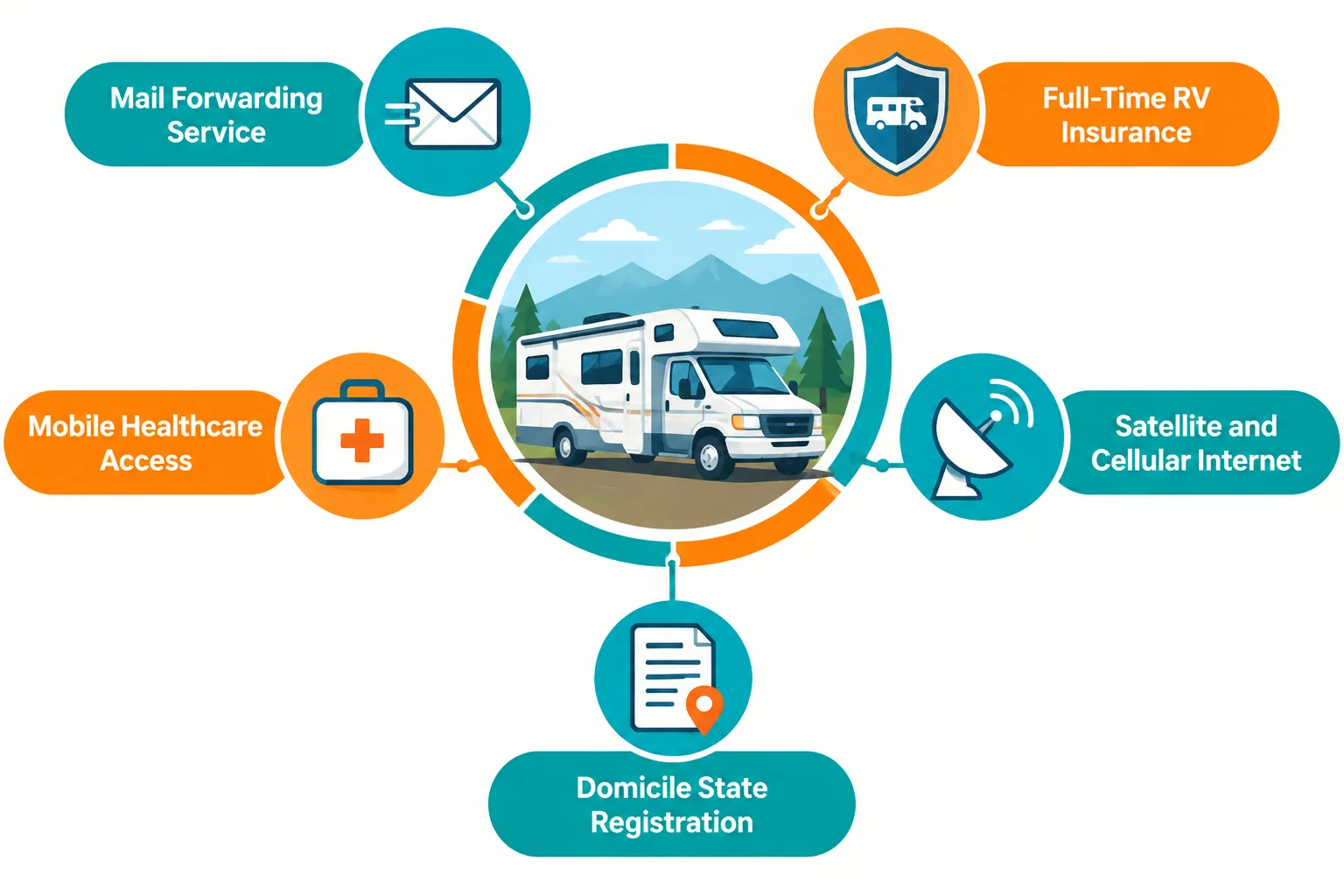
Most people imagining full time RV living picture sunsets and scenic drives. Few picture insurance paperwork, mail forwarding services, or finding a dentist three states away. Yet these logistics decide whether the lifestyle feels smooth or stressful.
Insurance: The Detail Too Many People Get Wrong
Standard recreational RV insurance policies are built for weekend campers, not people living in their rig year-round. Experts strongly recommend securing a specific full-time RV insurance policy instead of a regular recreational policy, since standard coverage often excludes liability protection needed for a primary residence.[15]
Full-time RV insurance typically covers:
- Liability protection similar to homeowners insurance
- Personal belongings inside the rig
- Total loss replacement in case of major accidents
- Emergency expense coverage if the rig becomes unlivable
Skipping this step to save a few dollars a month is one of the fastest ways to turn a small accident into a financial disaster. Given that insurance costs are already rising in 2026, shopping multiple providers and comparing full-time-specific policies is worth the extra effort.[10][15]
Mail, Banking, and a Legal Address
Every full-time RVer needs a legal home base, even without a physical house. This is called a domicile state, and it affects taxes, vehicle registration, and voting. Popular domicile states for full-timers often have no state income tax and simple vehicle registration rules, which is why places like Texas, Florida, and South Dakota show up so often in RV community conversations.
Handling physical mail is another challenge people underestimate. Most full-timers use a mail forwarding service that scans letters and forwards packages to wherever the rig happens to be parked. The process, along with common mistakes people make, is explained in detail in the guide on receiving mail as a full-time RVer.
Staying Connected and Employed
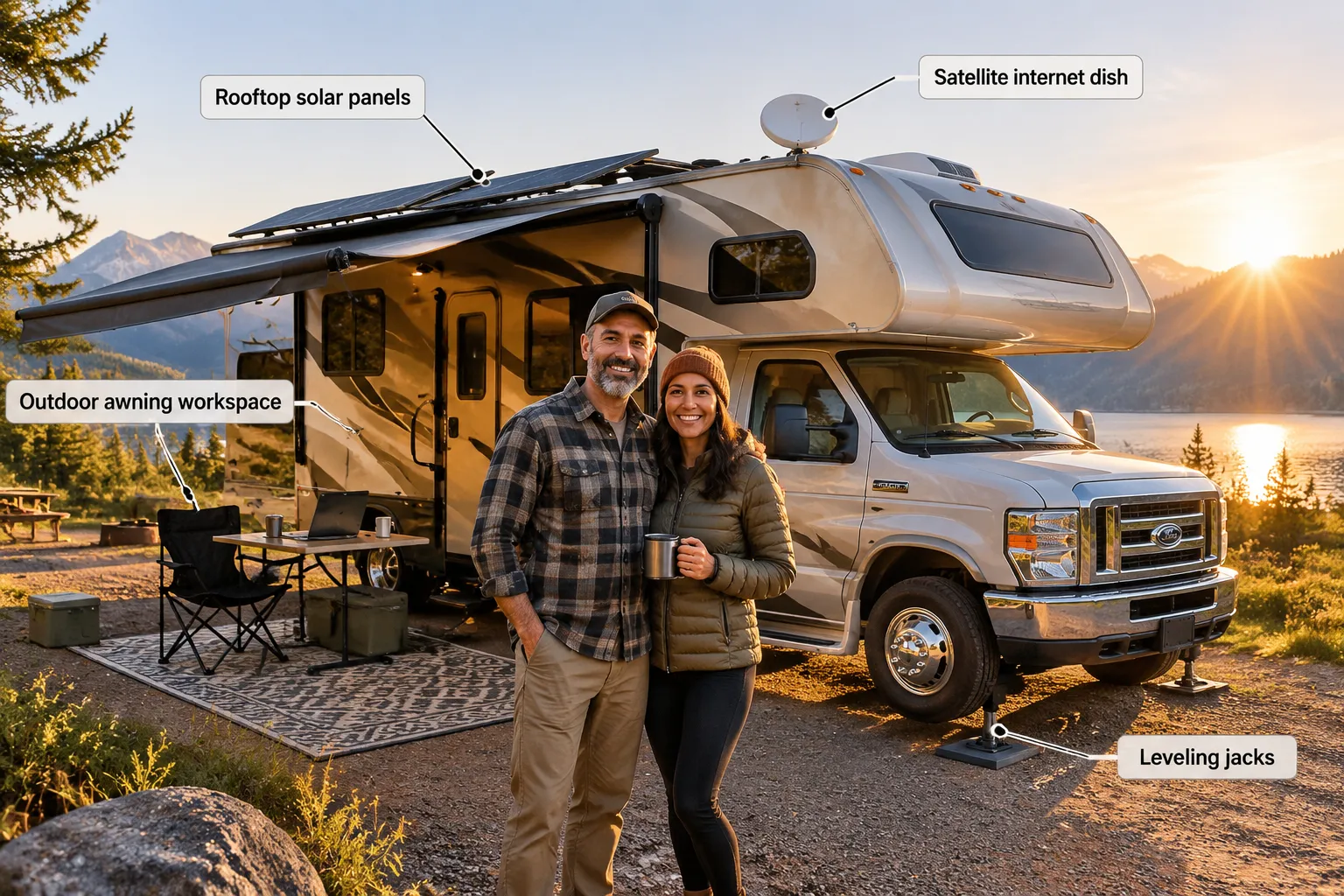
Internet access has become the single most important utility for full time RV living, especially for anyone working remotely. Relying only on campground Wi-Fi is risky, since it is often slow, shared, and unreliable. Most serious full-timers build a layered internet setup:
- A cellular hotspot with a strong data plan
- A signal booster for weak-signal areas
- A satellite internet system for remote locations without cell towers
For people who need steady income on the road, remote work is not the only path. Seasonal campground jobs, workamping positions, and mobile freelance gigs are common ways to fund the lifestyle. A detailed breakdown of income options appears in the guide to jobs for full-time RVers, which covers everything from remote-friendly careers to on-site camp host positions that trade work hours for free camping.
Healthcare on the Move
Healthcare is often the most stressful logistical piece of full time RV living. Insurance plans tied to a specific state can create coverage gaps when traveling across state lines. Many full-timers solve this by choosing nationwide health plans, telehealth memberships, or health-sharing programs designed for travelers. Building a simple system, like keeping digital copies of medical records and knowing which pharmacy chains operate nationwide, prevents small health issues from becoming major headaches far from home.
Keeping the Rig Running
Since the RV is both a vehicle and a home, mechanical problems hit twice as hard. A broken water heater is not just inconvenient, it can mean no hot showers for days. A failed generator can mean no power for remote work. This is why routine maintenance, covered thoroughly in the complete RV maintenance guide, matters just as much as budgeting or insurance. Seasonal prep, like winterizing plumbing systems before freezing weather, prevents some of the most expensive repairs full-timers face.
Building a Life on the Road: Community, Family, and Deciding If It’s Right for You
Full time RV living is not just a housing decision. It reshapes relationships, daily routines, and mental health in ways that surprise even experienced travelers.
Finding Community Without a Fixed Neighborhood
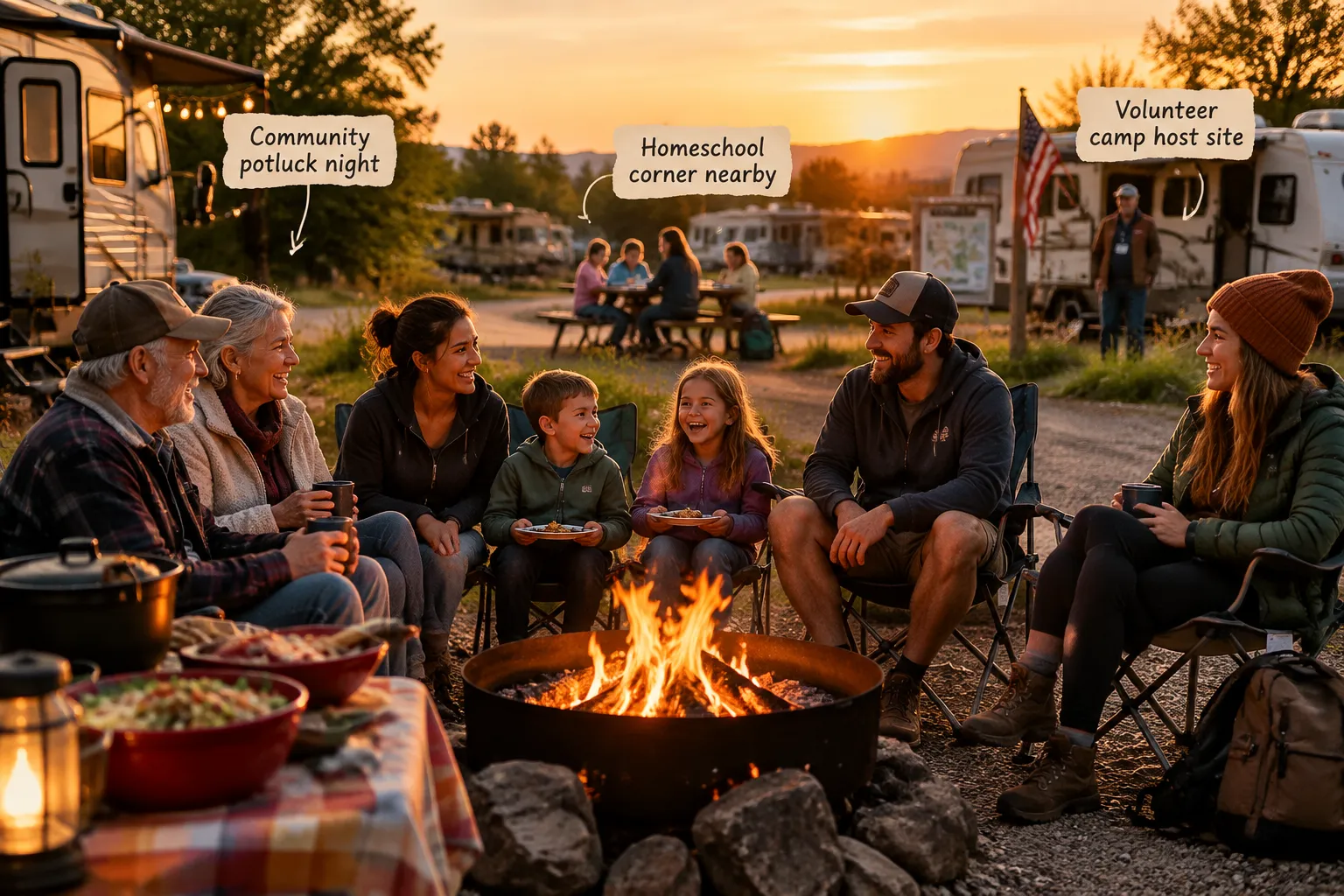
One of the biggest fears people have before starting full time RV living is loneliness. In practice, the RV community is famously tight-knit. Campground potlucks, online groups organized by travel route, and volunteer host programs create fast friendships. Many full-timers say the community feels stronger than the neighborhoods they left behind, since everyone shares a similar lifestyle and understands the same challenges.
Volunteering is one of the most common ways full-timers build connection while also saving money. Trading a few work hours a week for a free campsite is common at state parks, wildlife refuges, and private campgrounds. The benefits of this approach, both financial and social, are explained further in the article on reasons to volunteer when you are full-time RVing.
Families and Full-Time RV Living
Families face a unique version of this lifestyle. Small living spaces, shared bedrooms, and constant togetherness can either strengthen a family or expose cracks that were easier to ignore in a bigger house. Some families thrive, using the road as a hands-on classroom for their kids. Others struggle, and the tight quarters amplify stress rather than reduce it. A candid look at the darker side of this shift is covered in how RV life can ruin a family, which is worth reading before committing with children involved.
Common Struggles Nobody Talks About Early On
Full time RV living has real downsides that rarely make it into glossy social media posts. Common struggles include:
- Constant small repairs that eat into free time and budget
- Difficulty finding reliable internet in remote areas
- Feeling isolated during long stretches without campground neighbors
- Relationship strain from spending nearly all day together in a small space
- Burnout from constantly planning the next stop
Understanding why people leave the lifestyle helps set realistic expectations. The article on reasons full-time RVers quit lays out the most common breaking points, from financial strain to simple exhaustion. A companion piece, things these full-time RVers wish they knew, offers hindsight advice directly from people who have lived it.
Is It Time to Reconsider?
Even people who love full time RV living eventually hit a point where the lifestyle no longer fits. Aging bodies, growing families, health issues, or simple burnout are common reasons people transition back to a fixed home. Recognizing the warning signs early prevents the decision from becoming a financial or emotional crisis. The guide on clues it’s time to give up the RV life walks through the signals worth paying attention to.
A Simple Decision Checklist
Before committing to full time RV living, working through a short checklist can prevent expensive regret:
- Can the monthly budget handle a $2,500,$3,500 range comfortably, with room for price increases?[10]
- Is there a full-time-specific insurance policy lined up, not just a standard recreational one?[15]
- Is there a plan for mail, banking, and a legal domicile address?
- Is income stable, whether through remote work, seasonal jobs, or savings?
- Has the household discussed how small-space living will affect daily routines and relationships?
- Is there a maintenance plan and emergency fund for rig repairs?
Answering these honestly before signing a purchase agreement saves both money and stress. For a broader look at frequently asked questions from people considering this path, the article on most asked questions about full-time RVing covers many practical concerns in one place.
Conclusion
Full time RV living in 2026 is not the same lifestyle it was during the pandemic boom. The market has cooled, campground prices have climbed, and insurance costs are pushing budgets higher than before.[5][9][10][15] Yet none of this makes the lifestyle impossible. It simply means success now depends on sharper planning than it did a few years ago.
The people who thrive at full time RV living treat it like running a small, mobile household rather than an endless vacation. They budget realistically, choose insurance built for full-time use, set up reliable mail and internet systems, and build community instead of isolating themselves on the road. They also stay honest with themselves about when the lifestyle stops working, whether that means adjusting the travel pace or eventually settling down.
Anyone seriously considering this path should start with three concrete steps: build a real monthly budget using current cost ranges, shop for a rig using up-to-date market data rather than outdated price expectations, and research full-time-specific insurance before signing anything. Getting these three pieces right early makes the difference between a lifestyle that lasts for years and one that ends in frustration within months.
References
[1] 2026 Q1 Recreational Vehicle Market Report Rv Values Segment Trends Industry Outlook – https://www.jdpowervalues.com/article/2026-q1-recreational-vehicle-market-report-rv-values-segment-trends-industry-outlook
[2] April Rv Shipments Hit 29000 Motorhomes 13 – https://www.rvia.org/reports-trends/rv-shipment-reports/2026-04/april-rv-shipments-hit-29000-motorhomes-13
[3] Q1 2026 Recreational Vehicles Market Update – https://www.blackbook.com/market-insights/q1-2026-recreational-vehicles-market-update/
[5] The Rv Industry In 2026 Whats Actually Happening By The Numbers – https://rvjournal.org/the-rv-industry-in-2026-whats-actually-happening-by-the-numbers/
[6] Rv Shipments 22900 May – https://www.rvia.org/reports-trends/rv-shipment-reports/2026-05/rv-shipments-22900-may
[7] Market Pulse Dashboard – https://www.rvia.org/market-pulse-dashboard
[8] Q2 2026 Recreational Vehicles Market Update – https://www.blackbook.com/market-insights/q2-2026-recreational-vehicles-market-update/
[9] 2026 Rvia Wholesale Shipment Reports 2 – https://www.rvnews.com/2026-rvia-wholesale-shipment-reports-2/
[10] Is Full Time Rv Living Really Cheaper Than A House In 2026 – https://boondockorbust.com/resources/is-full-time-rv-living-really-cheaper-than-a-house-in-2026/