
Last Updated on September 4, 2026
A single loose lug nut can cost you a wheel at 65 miles per hour. A cracked roof seam the size of a pencil can rot an entire ceiling in one rainy season. These are not scare tactics. They are the kinds of small problems that turn into five-figure repair bills when RV owners skip routine care. This complete RV maintenance guide was built to stop that from happening to you.
Owning a recreational vehicle is not like owning a car that sits in one garage and drives on smooth roads. An RV is a house, a truck, and a small power plant all rolled into one box that gets shaken down the highway. That means it needs its own kind of care. This guide walks through every major system, breaks maintenance down by season, and shows you how to catch small problems before they become big, expensive ones.
Key Takeaways
- A complete rv maintenance guide should cover four seasons: spring de-winterizing, summer heavy-use checks, fall winterizing, and winter storage watch.
- Tires should be judged by age, not just tread. Most experts say replace RV tires every five to seven years no matter how good they look.[10][12]
- Generators need an oil change every 75 to 100 hours of use and a monthly 30-minute run under load, even when not traveling.[4][10][12]
- Roof and seal inspections should happen at least twice a year, ideally spring and fall, to stop leaks before they start.[10][13][14]
- Water systems must be fully flushed and protected with RV antifreeze before the first hard freeze to avoid burst pipes and cracked tanks.[6][10]
Understanding Your RV’s Core Systems: The Foundation of Any RV Maintenance Guide
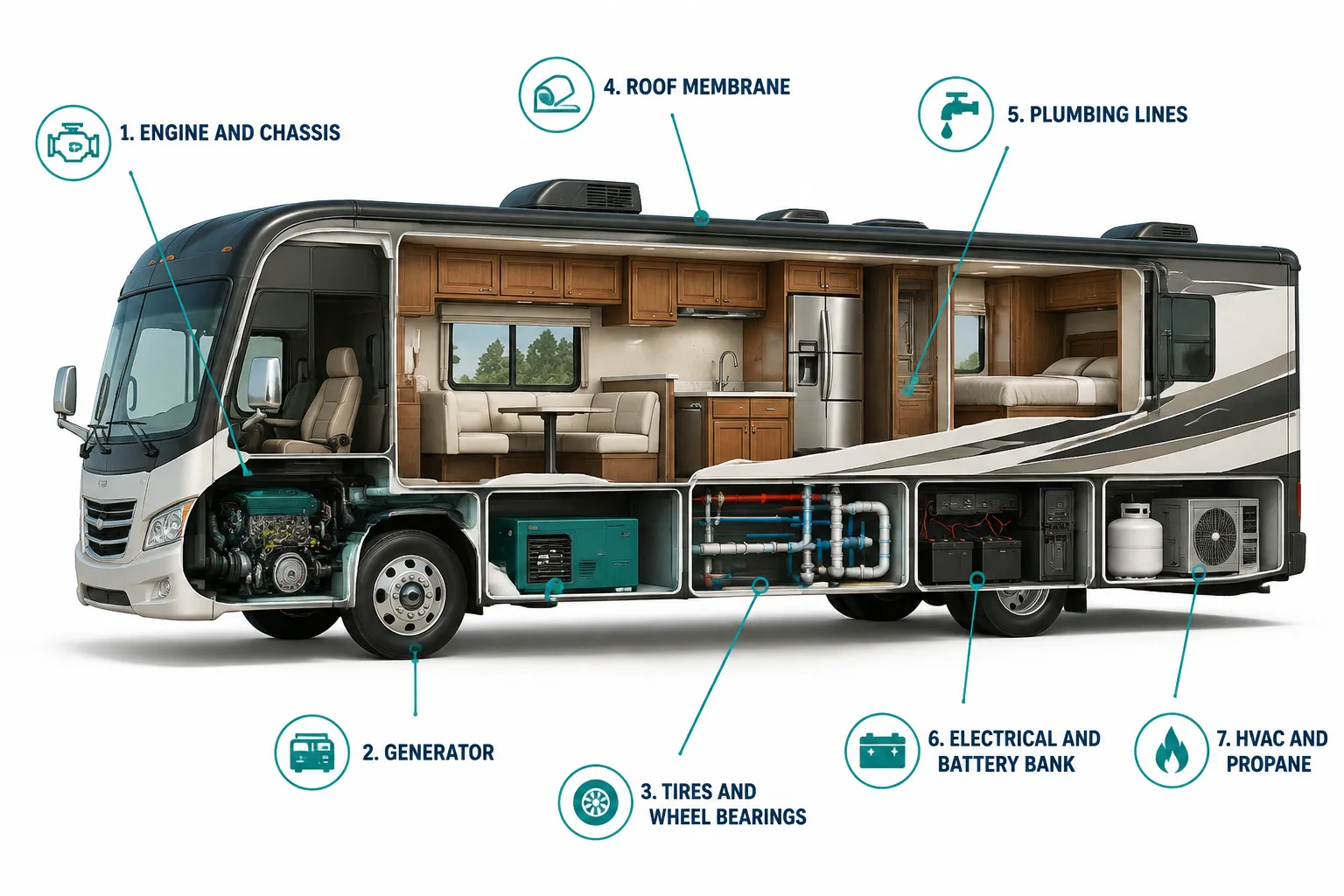
Every RV, whether it is a small travel trailer or a large diesel pusher, is built from the same basic set of systems. Learning what each one does, and what it needs, is the first step in any real rv maintenance guide. Skipping this step is why so many owners get surprised by repair bills they never saw coming.
Engine, Chassis, and Generator
If your RV is a motorhome, the engine and chassis carry the same needs as any large truck. Gas motorhome engines usually need an oil change every 5,000 to 6,000 miles or every six months, whichever comes first. Some broader guides still suggest tighter 3,000 to 4,000-mile intervals if you tow heavy loads or drive in dusty, hot conditions often.[4][12][15]
The generator is easy to forget because it sits quietly in a compartment until you need it. It should get an oil change every 75 to 100 hours of run time. Just as important, run it for about 30 minutes under a real load, like the air conditioner, once a month, even during storage. This keeps fuel from turning into sticky varnish inside the carburetor, which is one of the top reasons generators fail to start.[4][10][12]
Tires and Running Gear
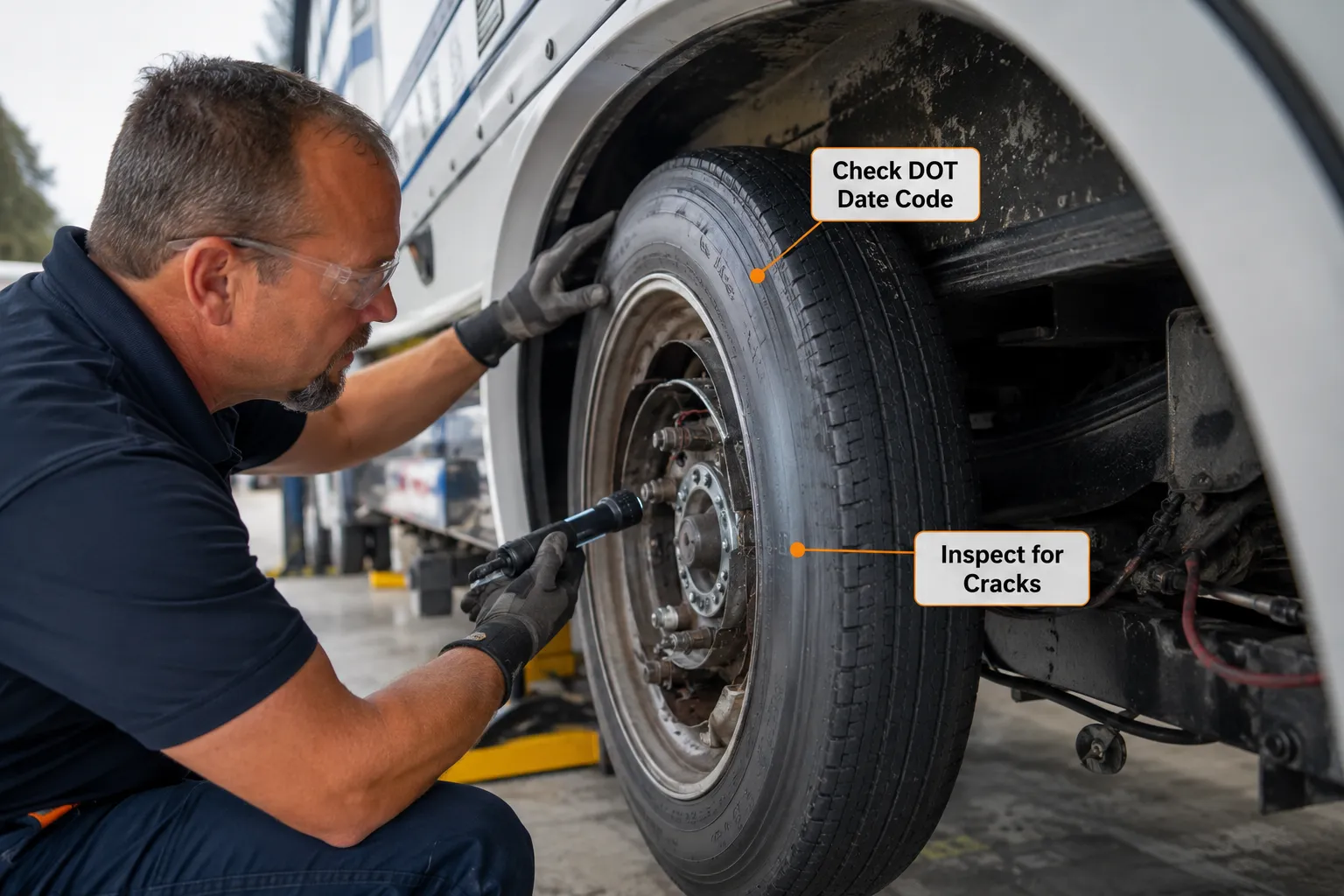
Tires are the single most safety-critical part of any RV, and 2026 guidance is clear: age matters more than tread depth. Check the DOT date code stamped on the sidewall. Most experts, including major RV retailers, recommend replacing tires every five to seven years regardless of how much rubber is left, because heat and UV exposure break down the rubber compound from the inside out.[10][12][13]
Before every single trip, check cold tire pressure with a gauge, not by eye. Look for cracks, bulges, or uneven wear. Torque your lug nuts on a regular schedule, especially after any tire service, and have wheel bearings inspected or repacked at least once a year.[4][10][12]
Roof, Seals, and Exterior
The roof is the part of an RV most owners never look at, which is exactly why it causes so much damage. A soft spot, a bubble, or exposed substrate under the membrane can mean water is already getting into the framing. Comprehensive inspection checklists now call for a hands-on roof walk at least twice a year, spring and fall are ideal, to catch cuts, cracks, and worn caulk around every vent, seam, and roof-mounted attachment.[5][9][11]
Reseal any cracked or peeling caulk immediately. Waiting even one season can let water travel far from the original crack, leading to hidden rot that costs thousands to repair. Owners in harsh sun or wet climates should check even more often.[10][13][14]
Plumbing, Electrical, and HVAC
Water and power systems fail quietly until they fail completely. Plumbing lines, tanks, and faucets should be checked for leaks and cracks each season, with a full flush and sanitizing of the fresh water system in spring.[6][7][9] For deeper detail on keeping your fresh water clean and leak-free, see this breakdown of essential RV water system tips.
Electrical systems need seasonal testing of every outlet and appliance, plus battery terminal cleaning and tightening. Batteries that no longer hold a charge should be replaced before they leave you stranded.[6][7][12] Propane systems deserve their own annual or semi-annual inspection for leaks, since a small propane leak combined with old wiring is a serious fire risk, a danger covered in more detail in this guide to RV propane and wiring dangers from faulty repairs.
Air conditioning filters should be cleaned monthly during heavy summer use, and furnaces, refrigerators, and water heaters need a full service check once a year.[7][10][12] If your air conditioner still feels weak on hot days, this set of simple maintenance tips to make your RV AC colder can help you troubleshoot before calling a technician.
Building a Seasonal RV Maintenance Guide: Spring, Summer, Fall, and Winter Tasks
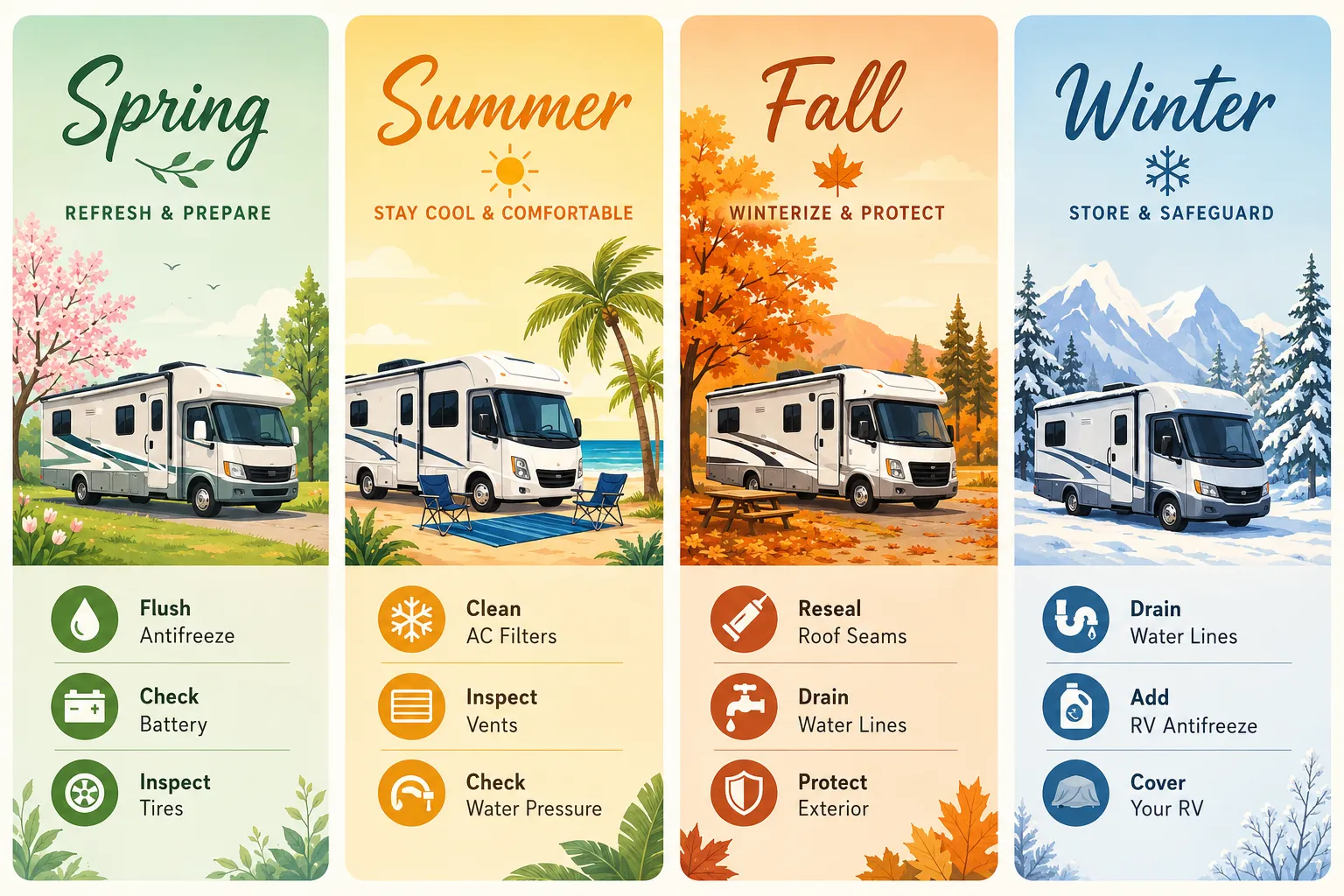
The best modern rv maintenance guide does not use one generic list all year long. It breaks tasks into four seasonal blocks, matching what your RV actually needs at that time of year. This approach has become the standard in 2026 checklists, replacing older one-size-fits-all schedules.[10][14][6]
Spring: Waking the RV Up
Spring is about de-winterizing and inspection. This is when small winter damage shows up, so it is the most important season to slow down and look carefully.
- Flush RV antifreeze completely from every water line.
- Sanitize the fresh water tank and system before drinking any water from it.
- Check all lines, tanks, and faucets for cracks or leaks caused by freezing.[6][7][9]
- Walk the roof and check every seal and seam for winter cracking.
- Test smoke, carbon monoxide, and LP gas detectors.
- Confirm insurance and roadside assistance coverage before the travel season starts.[7][10][13]
Summer: Heavy-Use Season
Summer puts the most stress on cooling systems and tires because of heat and long-distance driving.
- Clean or replace A/C filters monthly during frequent use.[7][10][12]
- Check cold tire pressure before every trip, especially on hot pavement.
- Inspect wheel bearings if towing long distances often.
- Run the generator under load at least monthly if not already used regularly.
Fall: Locking Down for Cold Weather
Fall is the second most important roof and seal check of the year, plus the start of winterizing for anyone not using their RV in freezing temperatures.
- Re-inspect the roof and reseal anything that changed since spring.[10][13][14]
- Drain all water lines and tanks completely.
- Bypass the water heater and push RV-specific antifreeze or compressed air through every line before the first hard freeze.[6][10][14]
- Clean and prepare batteries for storage: charge fully, clean terminals, and disconnect if the RV will sit unused.[9][10][14]
Winter: Storage and Watch Mode
Even a parked RV needs attention. Winter is the season most owners skip, and it is also when hidden damage does the most harm.
- Monitor stored rigs for moisture buildup and slow leaks.[6][10][14]
- Check battery charge level periodically; a fully drained battery can freeze and crack.
- Walk the roof occasionally, even in storage, to clear debris that traps moisture.[9][14]
- Use this quiet season to plan upgrades like lithium batteries or solar panels for the next travel year.[9][10][14]
For a deeper, printable breakdown of cold-weather prep, this complete winter RV maintenance checklist covers extra steps for freezing climates. And if winter is actually your travel season rather than your storage season, this list of cold weather RVing destinations can help you plan trips that pair well with a solid seasonal maintenance routine.
Common RV Repairs and How to Avoid Costly Breakdowns
Most RV repairs are not random bad luck. They follow patterns that show up again and again in service records. Knowing the most common ones, and what causes them, can save real money and real headaches on the road.
Roof and Water Damage
Water damage is widely considered the most expensive and most preventable RV repair. It almost always starts small: a cracked seal, a missed caulk line, or a screw that backed out slightly. Left alone, water travels along the roof framing and shows up as soft flooring or bubbled wall panels far from where it entered.[5][9][11] Two roof inspections a year, done by hand rather than a quick glance, catch almost all of this before it spreads.[10][13][14]
Tire Blowouts
Tire failure on the road is one of the scariest RV repairs, and it is also one of the most preventable. Underinflated tires, tires past their age limit, and unchecked wheel bearings account for the majority of roadside tire emergencies. A five-minute pressure check before departure and a yearly bearing inspection prevent most of these failures.[4][10][12]
Battery and Electrical Failures
Weak or dead batteries are the number one reason generators and appliances fail to start when an owner needs them most. Corroded terminals, deep discharge during storage, and skipping the monthly generator run under load are the usual culprits. Regular terminal cleaning and a charging check every season keep this from becoming an emergency.[6][7][12]
Propane and Appliance Issues
Furnaces, water heaters, and refrigerators that go unserviced for years often fail at the worst possible time, usually during the first cold trip of the season. Combined with an aging propane system, this can also create a genuine safety hazard, not just an inconvenience.[12][13][10] Annual professional inspection of the propane system, including leak testing and tank recertification where required, is one of the cheapest ways to avoid both a breakdown and a dangerous situation.
When to Call a Professional
Some jobs are safe for an owner to handle: checking tire pressure, cleaning filters, testing detectors, and resealing small caulk cracks. Others, like propane leak repair, generator internal service, or major roof membrane replacement, are worth handing to a certified technician. If you are trying to decide where to take your RV for a bigger repair, this directory of RV service and repair centers is a useful starting point, and this collection of tips that could save you thousands on RV repair bills breaks down which repairs are worth doing yourself.
“The cheapest repair is the one you never have to make. Every checklist item skipped today becomes a bigger bill tomorrow.”
Storage, Safety, and Long-Term Care for Every RV Owner
An RV that sits unused for weeks or months needs almost as much attention as one that is on the road every day. Storage damage, pests, moisture, and dead batteries, is one of the most common reasons RVs need major repairs before their next trip.
Preparing for Storage
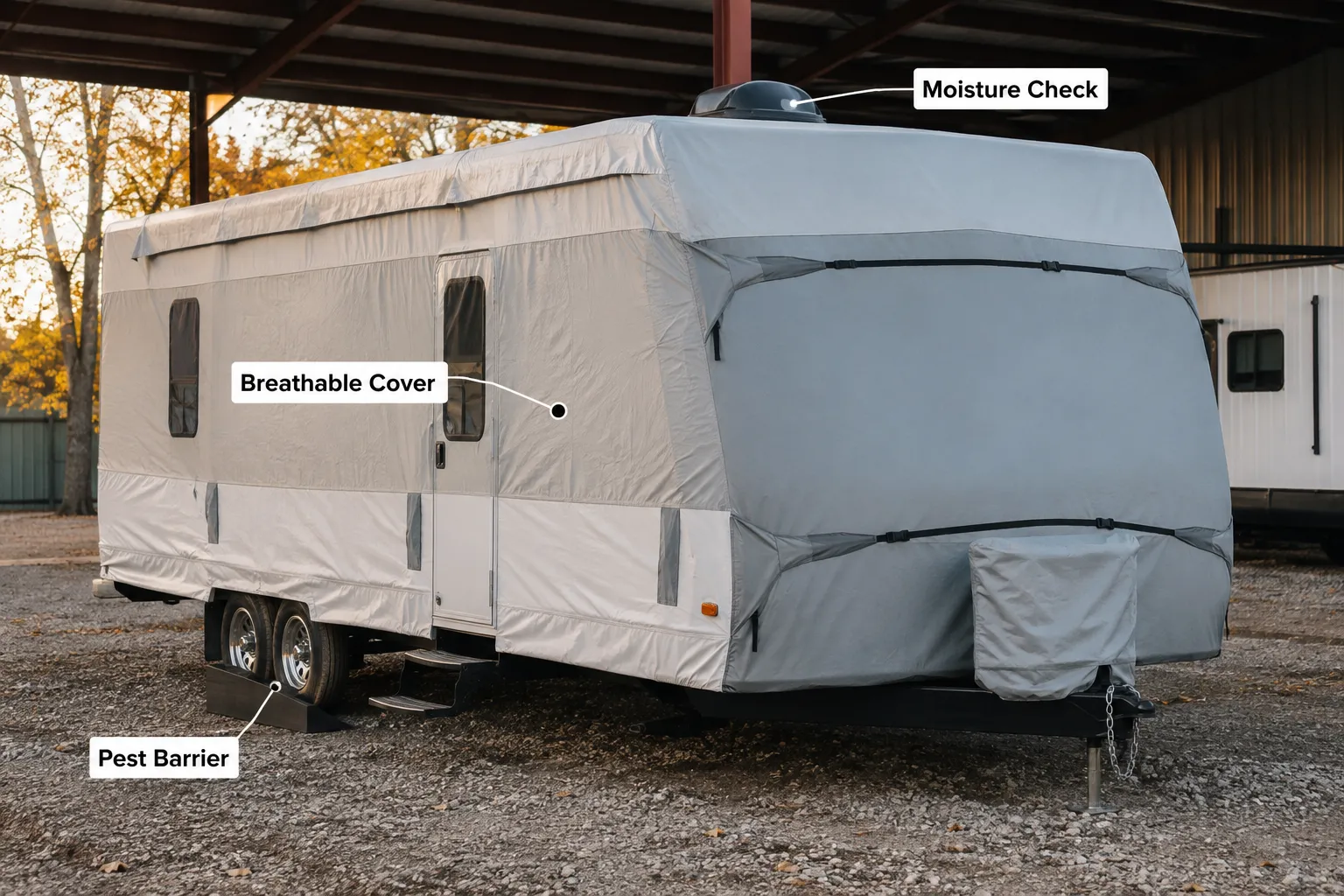
Before parking an RV for an extended period, a deep interior clean removes food sources that attract mice and insects. Rodents chewing through wiring is a shockingly common and expensive repair, and it is almost entirely preventable with a thorough clean-out.[6][9][10]
A breathable cover protects the exterior from UV damage without trapping moisture underneath, which can cause mold. Check regularly for signs of rodent activity, and look inside cabinets and under seating for any moisture buildup, especially after rain or snow.[6][9][10]
Battery and Shore Power During Storage
If the RV stays connected to shore power during storage, monitor it periodically rather than leaving it unattended for months. This prevents both battery damage from improper charging and, in rare cases, fire hazards from faulty wiring left under constant load.[9][14][6] If the RV is disconnected, check charge levels every few weeks; a battery that fully drains in cold weather can freeze and crack, an expensive and completely avoidable failure.
For owners looking to organize a dedicated space for RV supplies, tools, and seasonal gear at home, these seasonal garage organization ideas can help keep maintenance supplies ready year-round instead of scattered and hard to find.
Safety Systems Deserve Their Own Checklist
Detectors and emergency supplies are easy to forget because they sit quietly until an emergency happens. A complete rv maintenance guide treats these as non-negotiable, seasonal checks rather than one-time installs.
| Safety Item | Check Frequency | What to Verify |
|---|---|---|
| Smoke detector | Every season | Battery works, alarm sounds |
| Carbon monoxide detector | Every season | Not expired, tests active |
| LP gas detector | Every season | Sensor responds to test gas |
| Fire extinguisher | Every season | Gauge shows full charge |
| Emergency kit | Twice a year | Supplies not expired |
| Roadside assistance | Before travel season | Coverage active and current |
Testing detectors in spring, before peak travel season, and again before winter storage, closes the biggest safety gaps.[7][9][12][10][13]
Tracking Everything in One Place
The owners who avoid the biggest repair bills are almost always the ones who write things down. Printable or digital checklists that track dates, mileage, and service intervals for brakes, wheel bearings, alignments, and appliance checks make it far less likely that something gets missed for years at a time.[1][2][11][12] This habit also protects resale value, since a documented maintenance history is one of the strongest selling points for a used RV. If you eventually decide to sell or trade in, understanding how to check a used vehicle’s value before buying applies the same logic buyers use when judging a well-maintained RV.
Conclusion
A reliable RV is not the result of luck. It is the result of a simple, repeated habit: checking the same systems on the same schedule, season after season. This rv maintenance guide laid out the core systems, engine, generator, tires, roof, plumbing, electrical, and HVAC, along with a four-season plan and the most common repairs that come from skipping any one of them.
Start small. Pick one task from this guide to do this week, whether that is checking tire pressure, testing a smoke detector, or walking the roof for the first time. Then build a simple calendar around the seasonal checklist above. The owners who follow a written schedule, rather than relying on memory, are the ones who avoid the surprise breakdowns and the surprise bills. Your RV will reward the effort with more miles, fewer repairs, and a much longer life on the road.
References
[1] Rv Maintenance Checklist – https://www.lippert.com/blog/rv-maintenance-checklist [2] Rv Maintenance And Repair Guide – https://rvivy.com/rv-maintenance-and-repair/rv-maintenance-and-repair-guide/ [4] Rv Maintenance 101 – https://rvshare.com/blog/rv-maintenance-101/ [5] Comprehensive Rv Maintenance Inspection Checklist – https://www.trbowlin.com/wp-content/uploads/2026/03/comprehensive-rv-maintenance-inspection-checklist.pdf [6] Essential Rv Maintenance Checklist For Every Season – https://bfsfleetservice.com/2025/09/10/essential-rv-maintenance-checklist-for-every-season/ [7] Rv Spring And Summer Maintenance Checklist – https://roadside.goodsam.com/resources/rv-spring-and-summer-maintenance-checklist [9] Rv Maintenance Guide How To Keep Your Rv In Perfect Condition Year Round – https://truervs.com/blog/rv-maintenance-guide-how-to-keep-your-rv-in-perfect-condition-year-round [10] Rv Maintenance Checklist – https://drivestops.com/articles/rv-maintenance-checklist/ [11] Comprehensive Rv Maintenance Inspection Checklist – https://www.trbowlin.com/wp-content/uploads/2026/03/comprehensive-rv-maintenance-inspection-checklist.pdf [12] Rv Maintenance 101 – https://rvshare.com/blog/rv-maintenance-101/ [13] Rv Spring And Summer Maintenance Checklist – https://roadside.goodsam.com/resources/rv-spring-and-summer-maintenance-checklist [14] Rv Maintenance Checklist – https://drivestops.com/articles/rv-maintenance-checklist/ [15] Rv Maintenance 101 – https://rvshare.com/blog/rv-maintenance-101/