Last Updated on November 12, 2026
You can turn a small boat cabin into a living room by making seating, storage, and lighting work in more than one way. Fold-away furniture and built-in storage free up floor space, while pale finishes and layered light make the cabin feel open and welcoming.
A few well-planned changes can give you a comfortable place to read, eat, and spend time together without blocking walkways or access to essential boat systems. Choose marine-grade hardware, secure loose furnishings for underway, and check that each change preserves ventilation and safe passage.
1) Turn a U-Shaped Dinette Into a Lounge
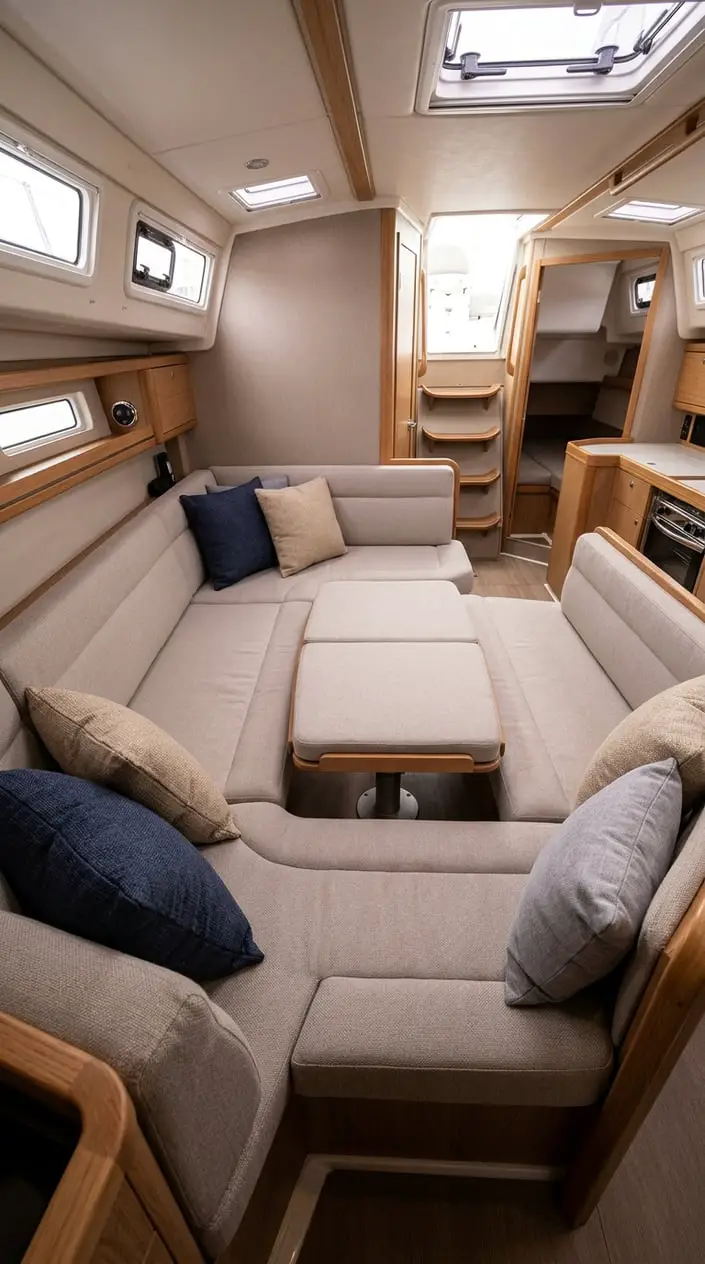
You can turn a U-shaped dinette into a relaxed lounge by adding cushions that bridge the seating and create a broad resting surface. A fitted insert or removable cushion across the open end helps the seating feel like a compact sofa. Add lumbar pillows for back support, and keep a clear route to the companionway.
Measure the space before ordering foam so your cushions fit snugly without catching on table legs or locker lids. Choose marine upholstery that resists moisture and dries quickly; removable covers make cleaning easier.
If you still use the area for meals, store the bridge cushion in a nearby locker and make sure the table can be secured while underway. You get a flexible hangout spot without giving up the dinette’s original function.
2) Build a Window-Side Bench With Hidden Storage
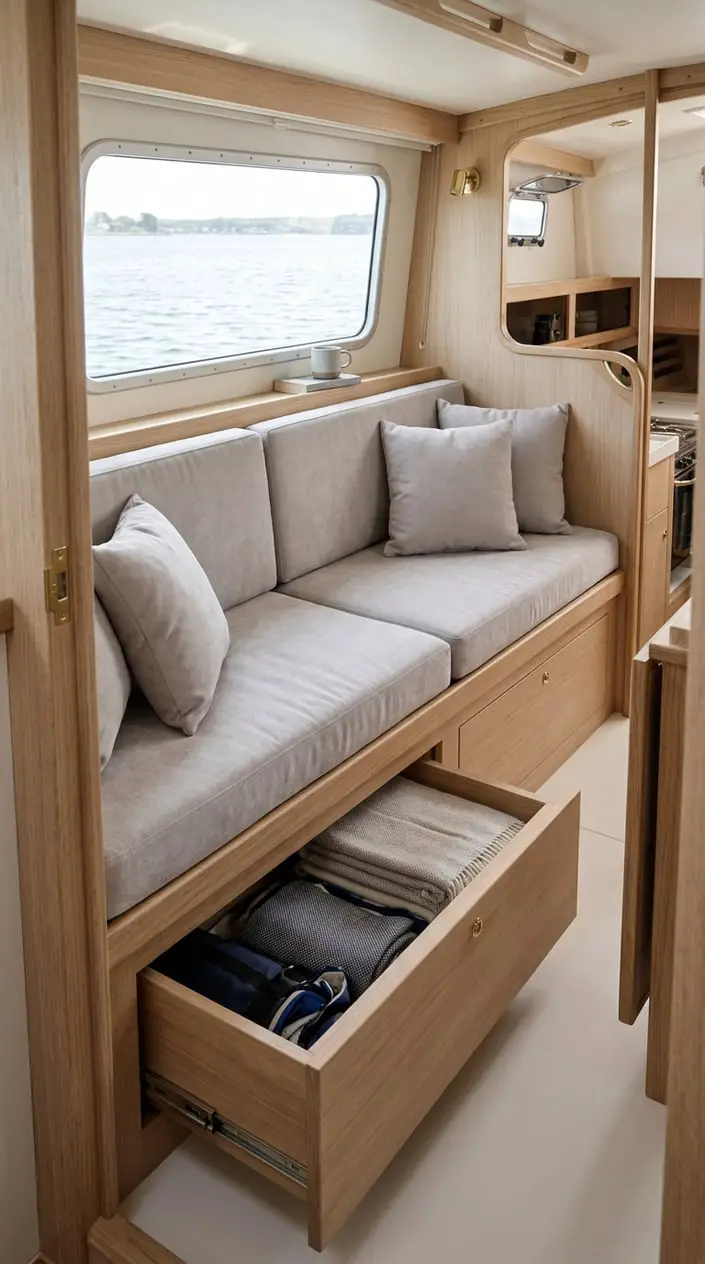
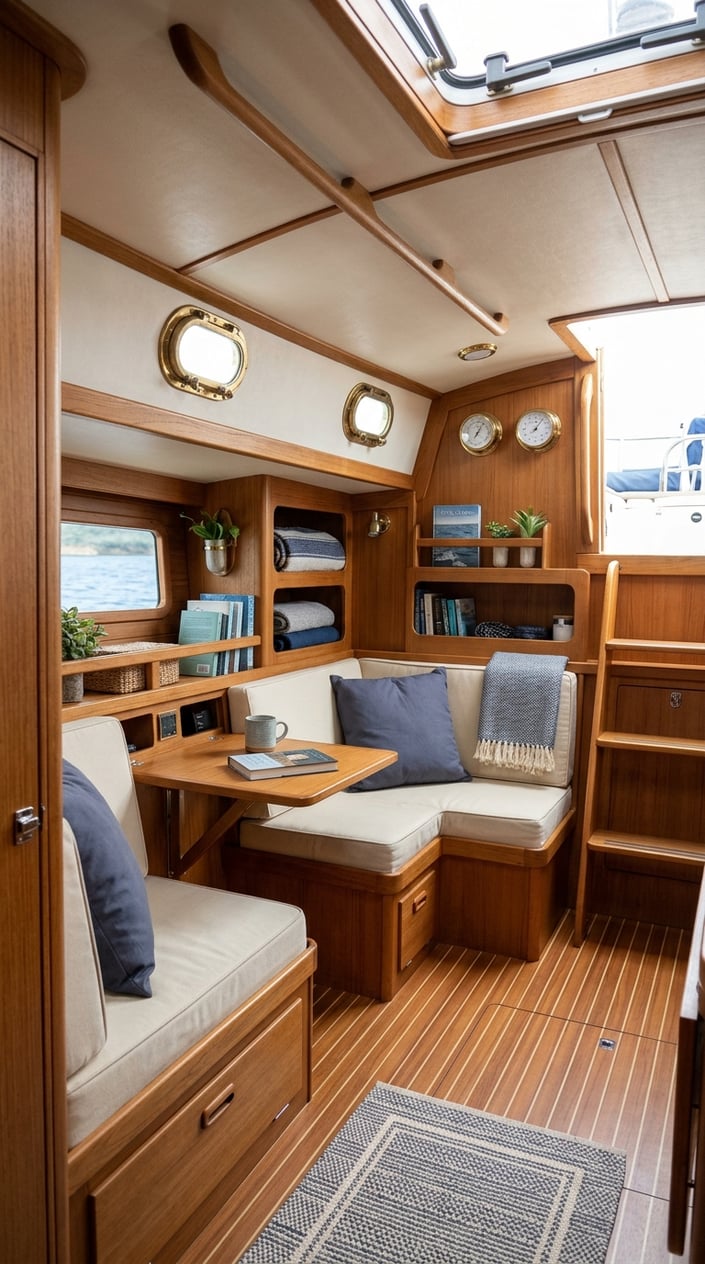
A window-side bench gives you a comfortable place to sit while putting under-seat space to work as storage. Set the seat low enough to preserve the view and leave enough room for your legs. A hinged lid gives quick access to larger items, while drawers make smaller belongings easier to reach.
Use the compartment for lightweight gear you need often, such as blankets or books. Add ventilation openings if you plan to store damp items, and use latches that hold the lid closed when the boat is moving.
Check that the bench doesn’t cover an access panel, plumbing, or electrical equipment. A fitted cushion with ties or nonslip backing stays in place when you shift from reading to lounging.
3) Install a Wall-Mounted Drop-Leaf Table
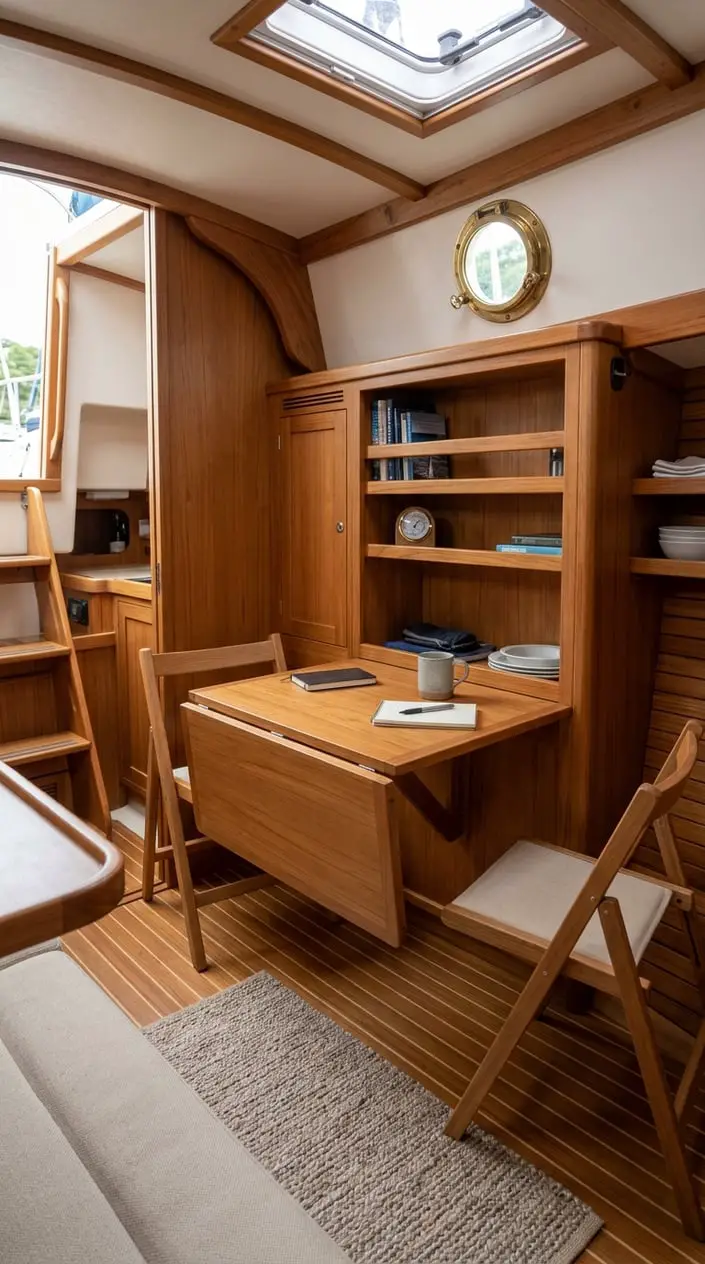
A wall-mounted drop-leaf table gives you a useful dining or work surface that folds flat when you need more floor space. Choose a size that leaves a clear walkway when the leaf is raised, then mount it to a solid backing or structural support with marine-grade hardware. A sturdy folding bracket helps keep the table steady during use.
Before drilling, check the other side of the wall for wiring, plumbing, or other equipment. Round the corners to make tight passage easier, and add a positive latch to keep the leaf secured while underway.
You can use the surface for meals, a laptop, or a board game, then fold it down to open the cabin for lounging. Keep a small nearby shelf for items you use at the table.
4) Use a Foldaway Bunk as a Daybed
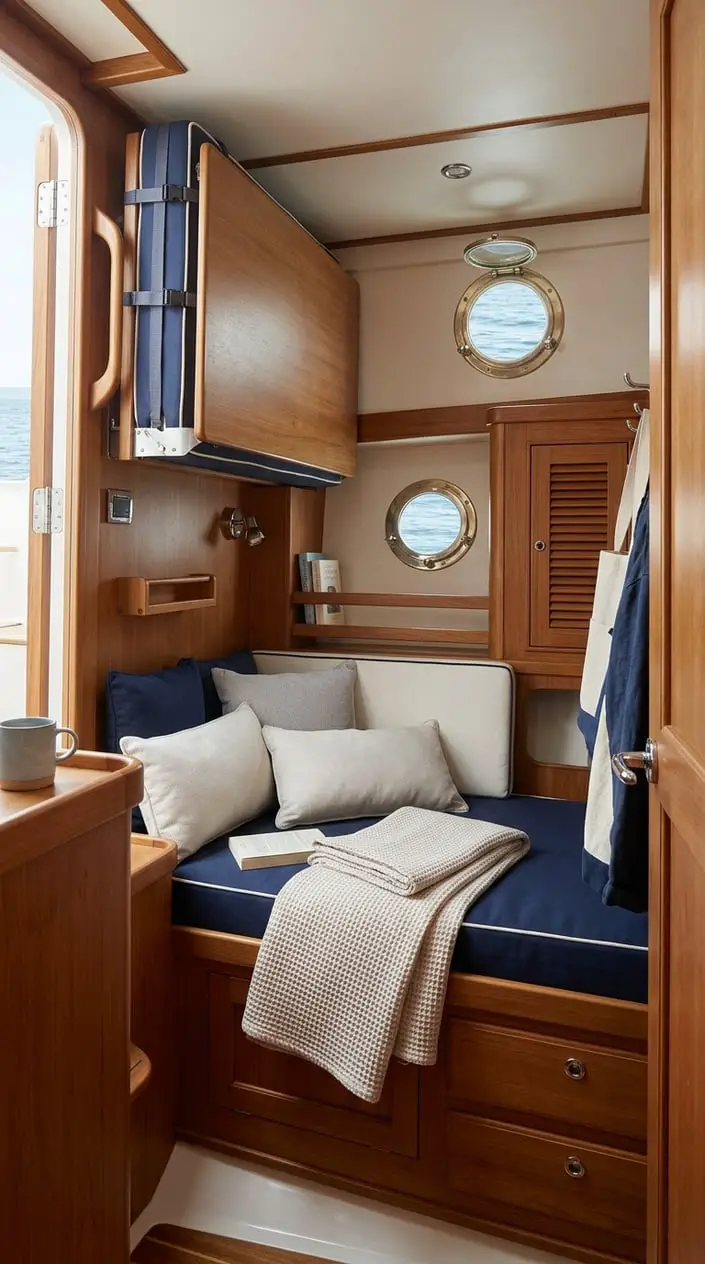
A foldaway bunk can serve as a daybed when you add supportive cushions and keep its folding path clear. Dress the berth with a fitted mattress topper, then layer on a few pillows for back support. This setup gives you a place to sit during the day and keeps the berth ready for sleep.
Check the bunk’s hinges and locking hardware before changing how you use it. The frame needs to stay firmly supported in both positions, and cushions must not interfere with a latch or safety rail. Use secure storage for extra pillows so they don’t shift underway.
If the bunk folds against a wall, make sure bedding can be removed easily and that the folded unit doesn’t block a hatch or passage. A washable cover helps you manage salt, spills, and everyday wear.
5) Swap Bulky Chairs for Folding Seats
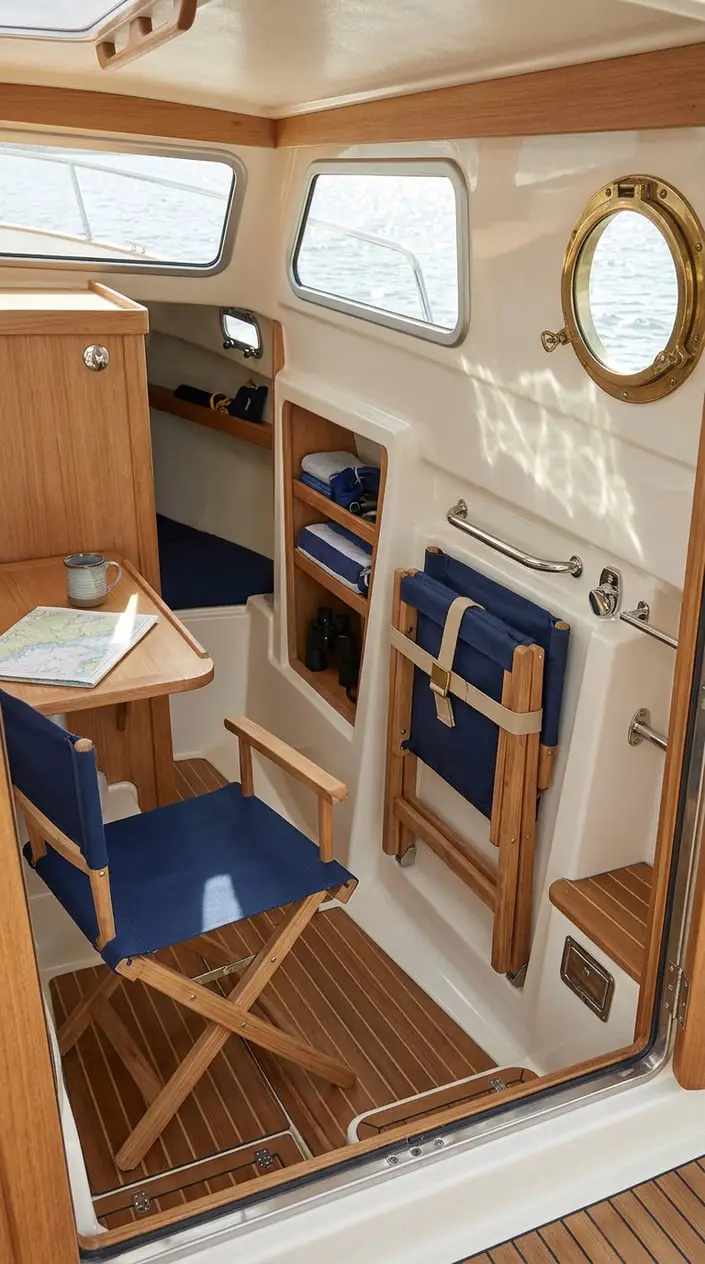
Folding seats give you extra places to sit while freeing the cabin floor when you put them away. Pick chairs that fit your table height and have a stable base on the boat’s flooring. A slim folding design stores in a locker or against a wall, leaving more room to move through the cabin.
Look for secure hardware and a way to stow each chair so it cannot slide when the boat is underway. Add nonslip pads where the seat meets the floor, and avoid placing a chair where it blocks an exit or access to controls.
If you host meals, keep enough seating for your usual group without leaving unused chairs in the main walkway. A padded seat or removable cushion adds comfort while keeping storage simple.
6) Turn Companionway Steps Into Drawers
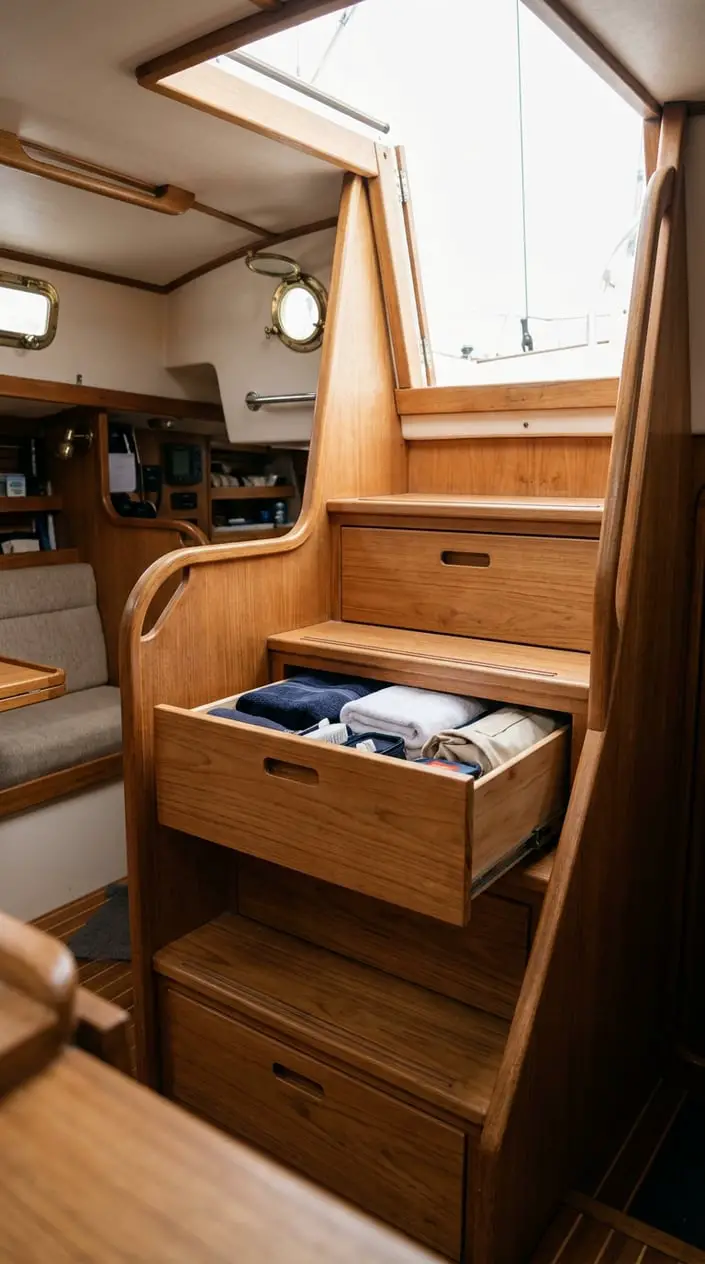
Built-in drawers beneath companionway steps put otherwise unused space to work for small items and supplies. Shallow drawers suit tools, chargers, or everyday accessories, while a deeper compartment can hold bulkier gear. Fit each drawer with a latch that keeps it closed at sea and slides designed for a marine environment.
Keep the steps strong and stable; they carry your weight every time you enter or leave the cabin. Before altering them, confirm that the structure doesn’t conceal wiring, plumbing, or access to the bilge.
Give each drawer a clear label or simple divider so stored items stay easy to find. Smooth, rounded edges help prevent snags in a narrow passage. If you’re unsure how the steps are built, ask a marine carpenter to check the structure before cutting into it.
7) Replace Swing Doors With Sliding Doors
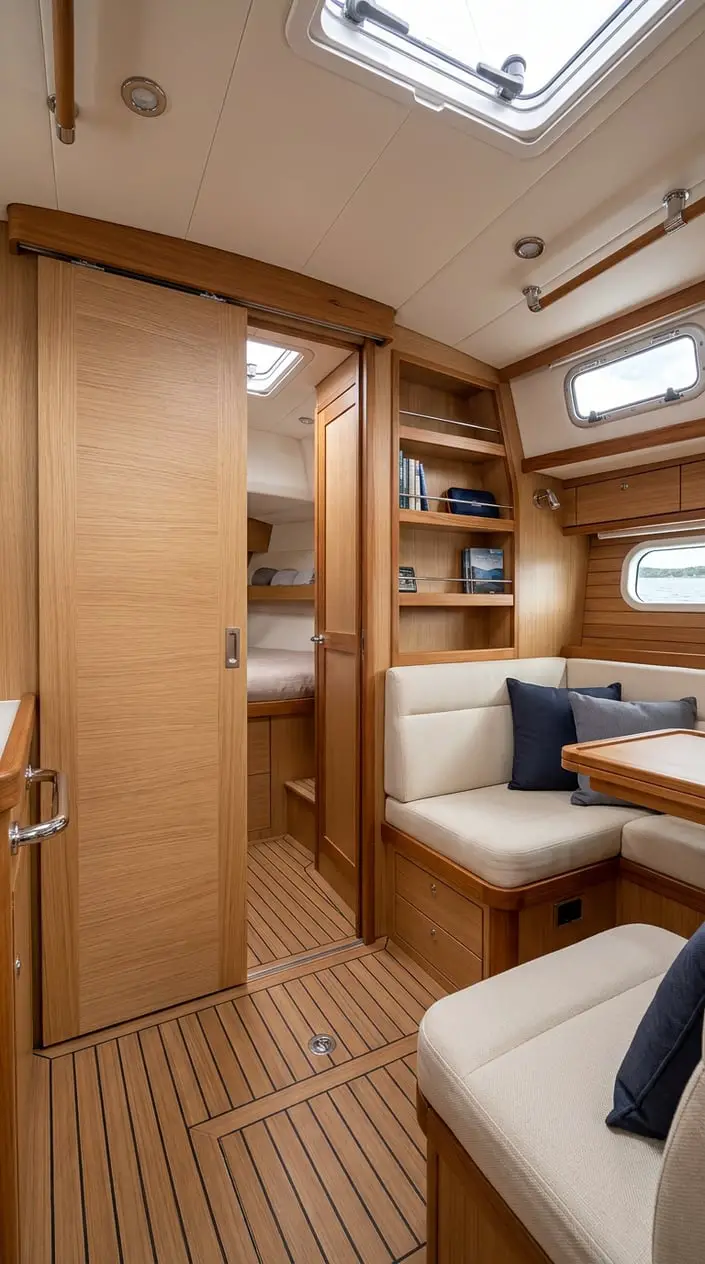
A sliding door saves the floor area a swinging door needs, giving you more room for seating and clear movement. Choose a track and door panel sized for the opening, then make sure the panel can be secured in both open and closed positions. A recessed pull keeps the handle from catching on clothing as you pass.
Measure the wall space beside the opening before choosing a design; the door needs room to slide fully clear. Check that the track won’t interfere with wiring, a nearby cabinet, or an emergency route.
A lightweight panel makes operation easier, while a soft-close feature can reduce slamming. If you need privacy, select a panel that limits sightlines while still allowing safe access and ventilation. Regularly clear salt and grit from the track so the door moves smoothly.
8) Run Storage Cabinets Up to the Ceiling
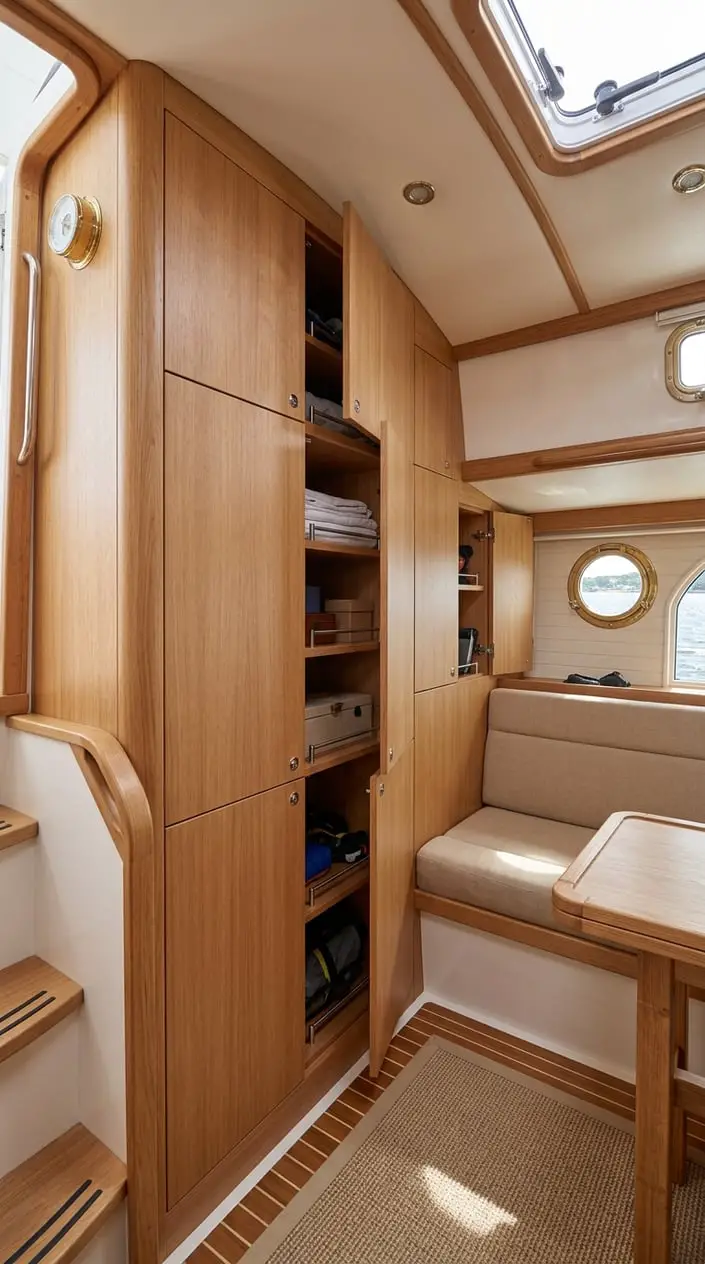
Tall cabinets use vertical wall space to give you more storage without extending into the cabin’s walkway. Keep frequently used items on lower shelves, and reserve higher compartments for lightweight gear you reach less often. Adjustable shelves let you fit items of different sizes as your storage needs change.
Secure cabinet frames to suitable structural supports, and add positive latches so doors stay shut underway. Account for ventilation, windows, and access panels before planning the layout. In a narrow cabin, shallow cabinet depth can preserve elbow room and sightlines.
Use bins or dividers inside to keep small belongings from shifting, and store heavier items low to help keep weight balanced. A clean cabinet front also gives the cabin a calmer, less cluttered feel.
9) Choose Pale Wood and Reflective Finishes
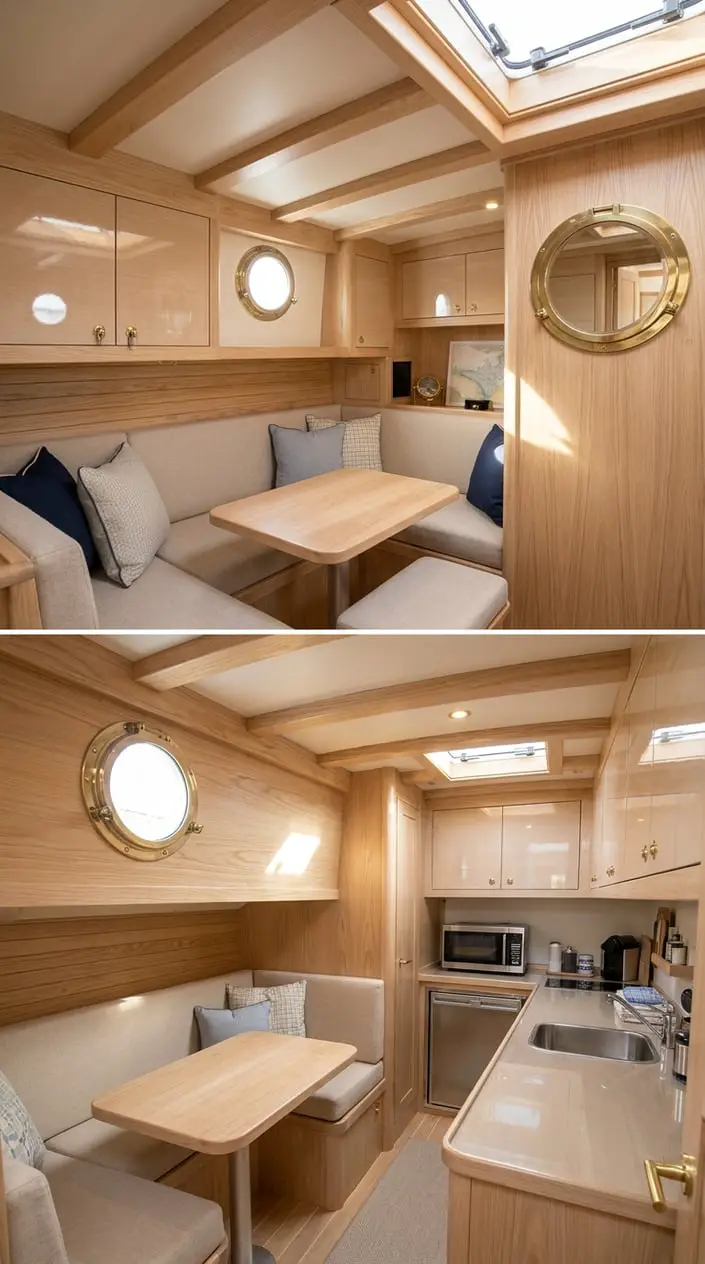
Pale wood and reflective finishes help a small cabin feel brighter by making better use of available light. Light-toned cabinetry, a satin finish, or a small mirror opposite a window can lift the room without adding bulky decor. Keep the view through the porthole clear so natural light and the water remain part of the space.
Choose finishes made for marine conditions, where moisture and temperature shifts put extra wear on surfaces. Glossy areas reflect more light, while a satin sheen softens glare and fingerprints. Use reflective details in moderation so they don’t create distracting reflections while you’re underway.
For a warm look, pair pale wood with a few darker accents in cushions or hardware. Test a finish sample in the cabin’s daylight before treating a large surface.
10) Layer Wall Sconces With Recessed LED Lighting
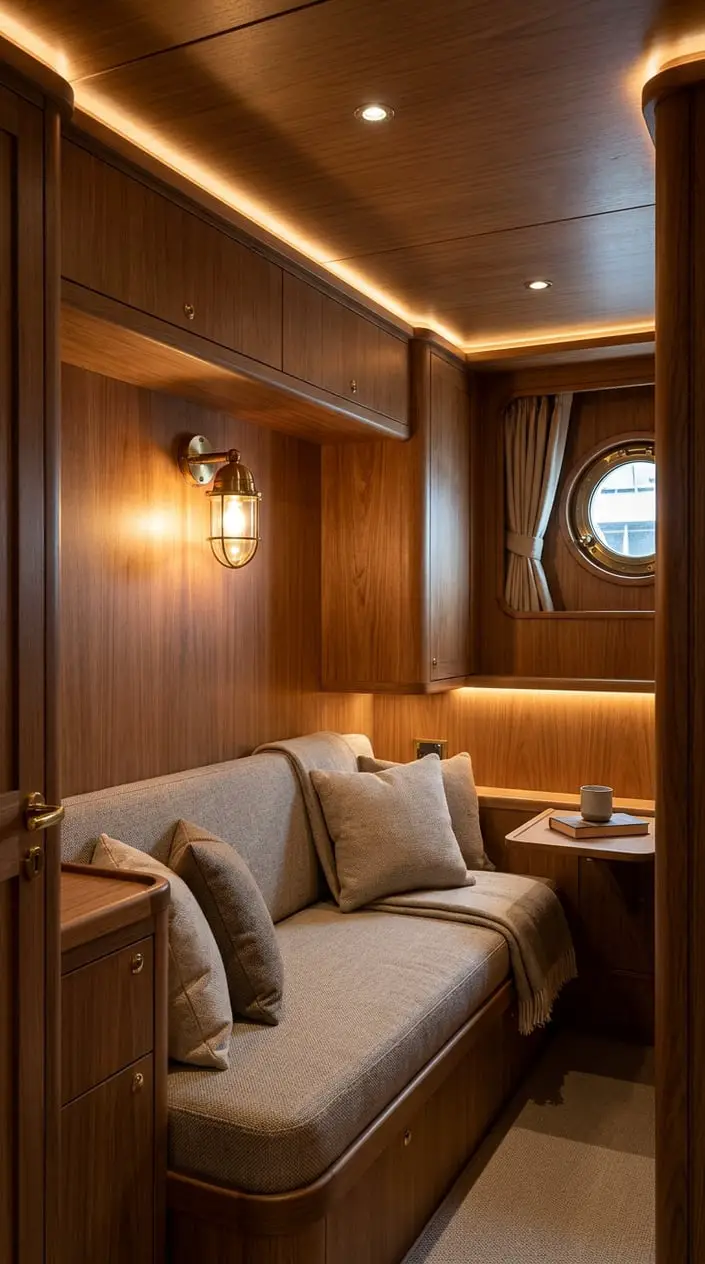
Wall sconces paired with recessed LED lights give you flexible cabin lighting for relaxing, reading, and moving around safely. Use recessed fixtures for even ambient light, then place a sconce near a seat or berth for focused reading. Separate switches let you use only the light you need.
Select fixtures and wiring rated for marine use, and follow the boat’s electrical requirements during installation. Keep lights out of direct sightlines to reduce glare, especially near windows and reflective surfaces.
Warm-white LEDs create a softer feel for evening use, while a brighter setting helps you find gear or tidy the cabin. Check that fixtures won’t interfere with cabinet doors, curtains, or handholds. A dimmer gives you finer control while you relax in the lounge area.