Last Updated on November 12, 2026
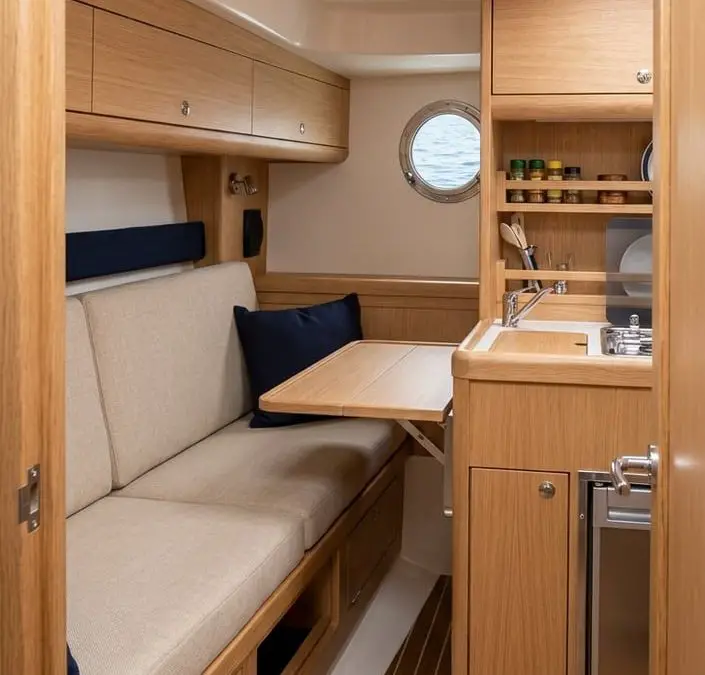
You can make every inch count with 10 Genius Boat Design Ideas That Maximize Tiny Spaces, using flexible furniture and smart storage to free up room aboard.
On a small boat, a clear walkway and a place to put everyday gear can make the cabin feel easier to use. Choose space-saving features that suit your layout, then secure them for movement on the water.
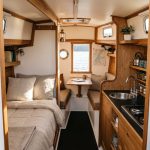
1) A Convertible Dinette-Berth for Day-to-Night Use
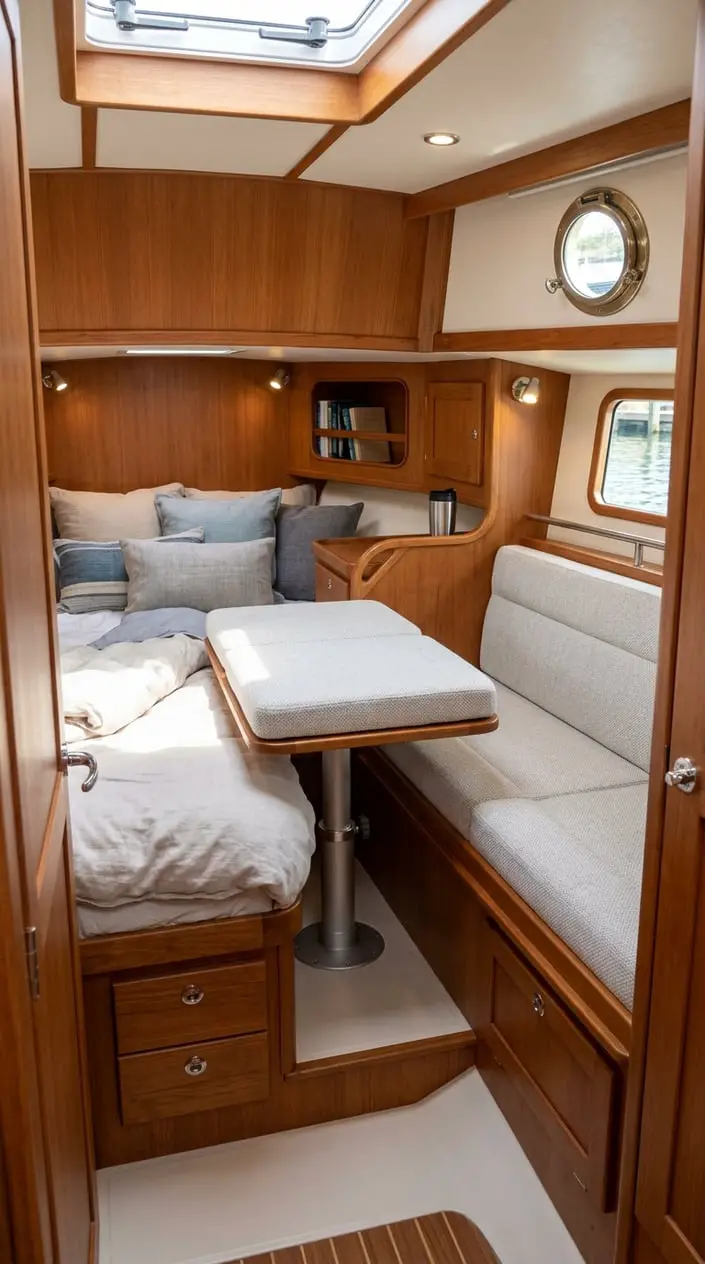
A convertible dinette gives you a daytime eating area and a sleeping space after dark. Arrange the table and settees so the cushions meet evenly when you lower the tabletop. Matching cushion thickness helps create a flatter bed, while removable backrests can fill small gaps.
Measure the full berth length before you settle on a layout. Leave enough room to move around the table during the day, and check that the table leg or support stores securely when you convert the space. Simple latches and a clear conversion routine make the change easier when you’re tired or the cabin is rocking. Choose washable, quick-drying upholstery so meals and overnight use are both easy to manage.
2) Lift-Up Berths with Deep Under-Bed Drawers
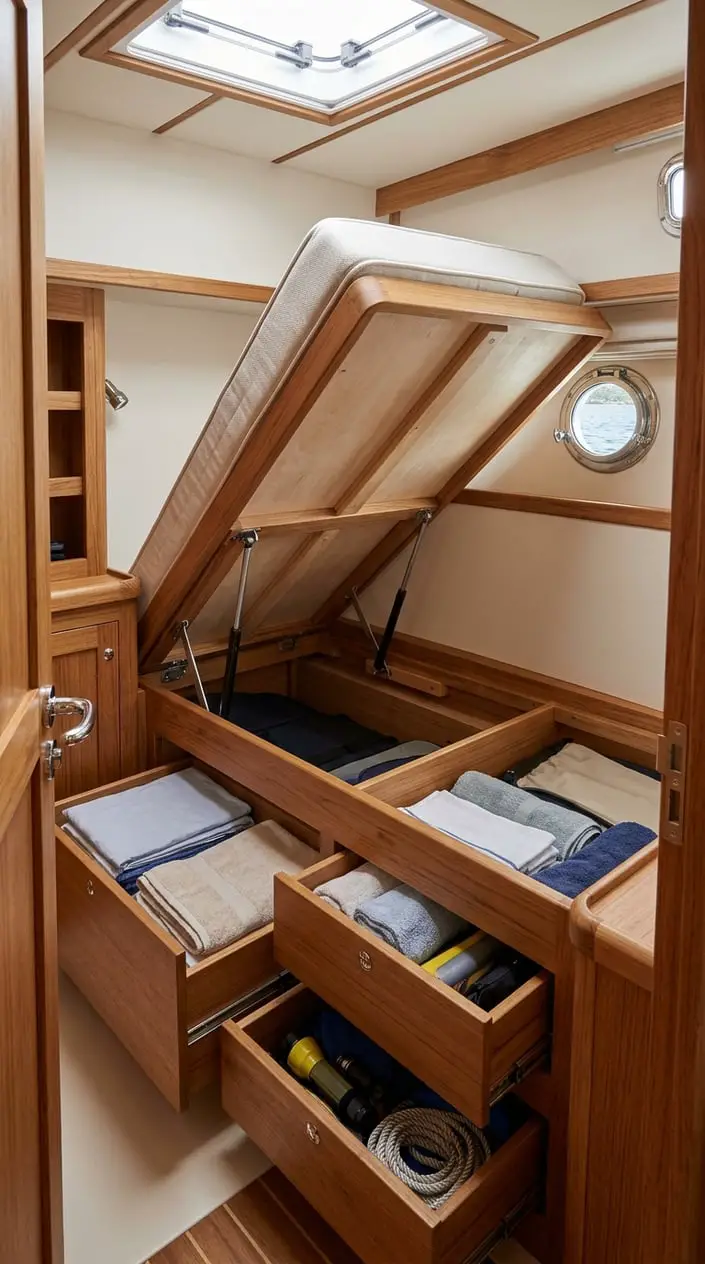
A lift-up berth lets you use the volume beneath your mattress for bulky supplies and clothing. Fit gas struts or sturdy hinges to help raise the platform, then add a positive latch that keeps it shut underway. A raised berth also needs firm support across the frame so the mattress stays level.
Deep drawers make frequent items easier to reach, especially when the berth sits close to a cabin wall. Size each drawer for the gear you plan to store, and install stops so it cannot slide out during a heel or wake. Add ventilation openings if you’ll keep bedding below the mattress. Use smooth drawer slides and rounded edges to reduce snags in a tight cabin passage.
3) A Folding Saloon Table That Stows Against the Bulkhead
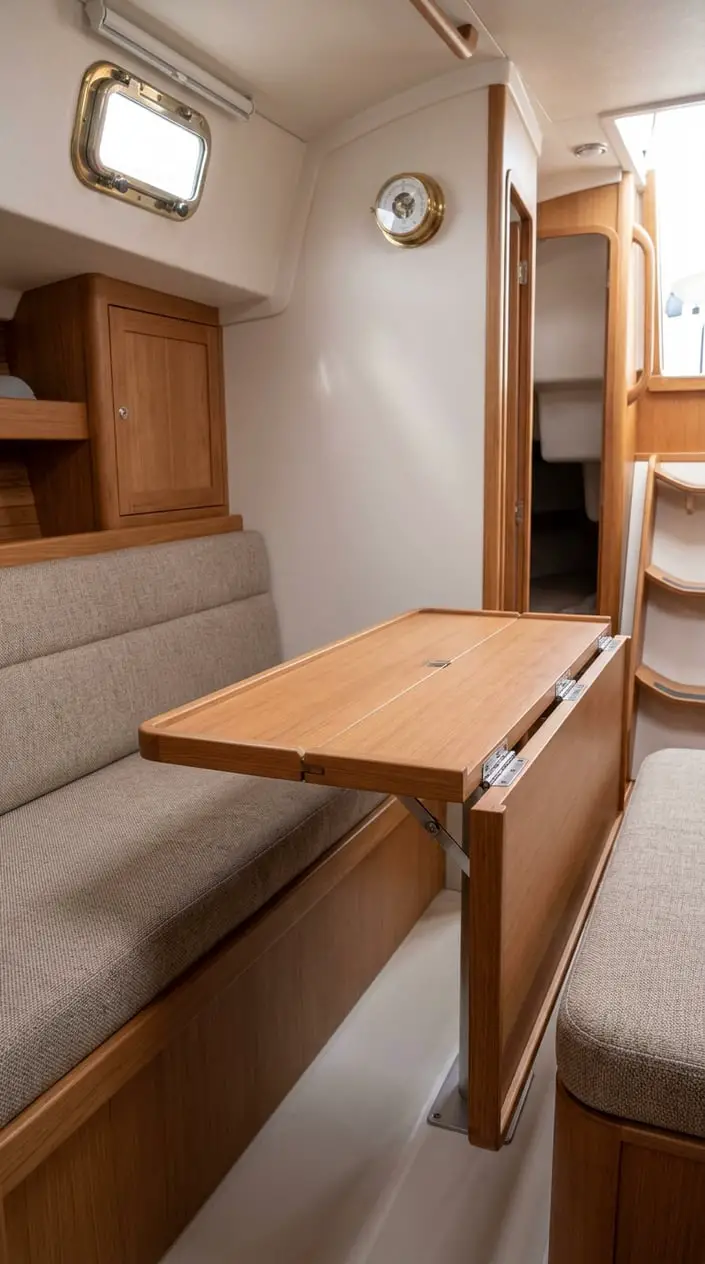
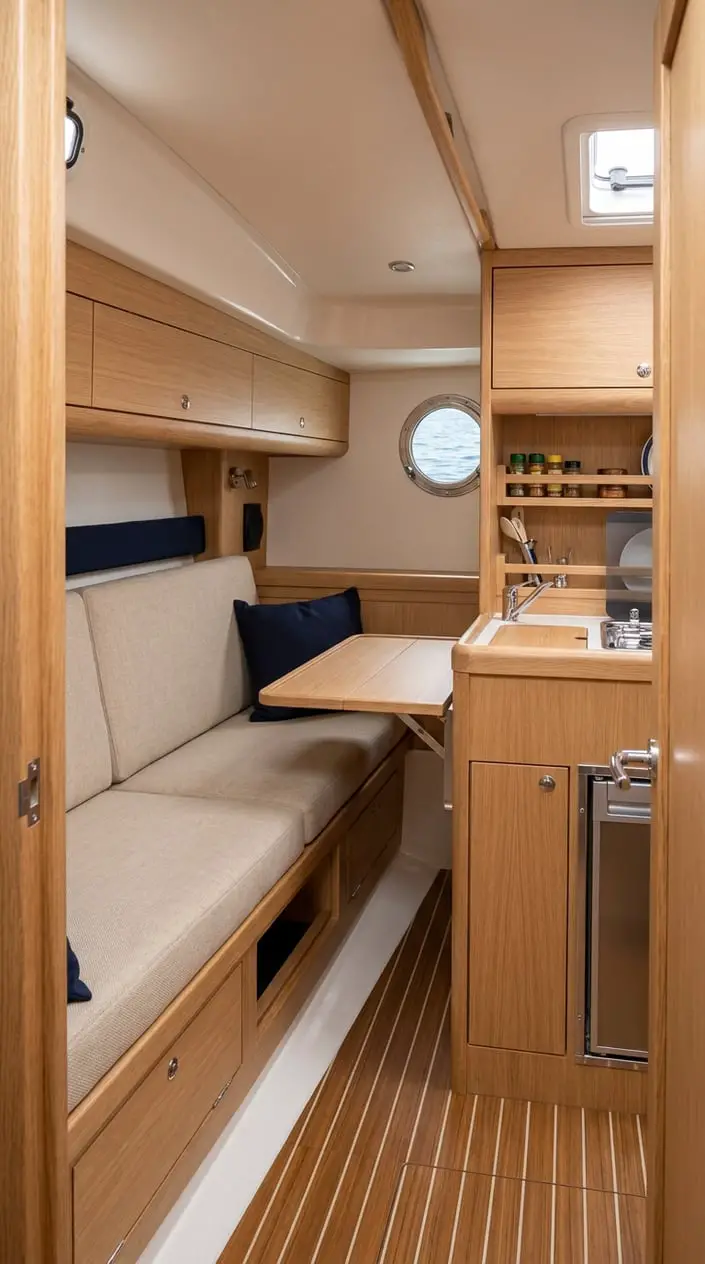
A folding saloon table clears floor space when you’re finished eating or working. Choose a wall-mounted design with a secure hinge and a support leg that folds flat. When open, the surface should sit at a comfortable height for your bench and leave room for knees beneath it.
Before mounting it, check the table’s swing path against doors, lockers, and nearby seating. A compact rectangular top suits a narrow cabin, while a rounded corner helps you pass through the space. Add a catch or strap to hold the table against the bulkhead when stowed. If you use the surface for charts or a laptop, select a finish that wipes clean and resists moisture from damp hands or gear.
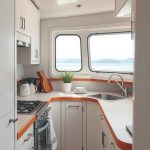
4) A Galley Sink Cover That Doubles as Prep Space
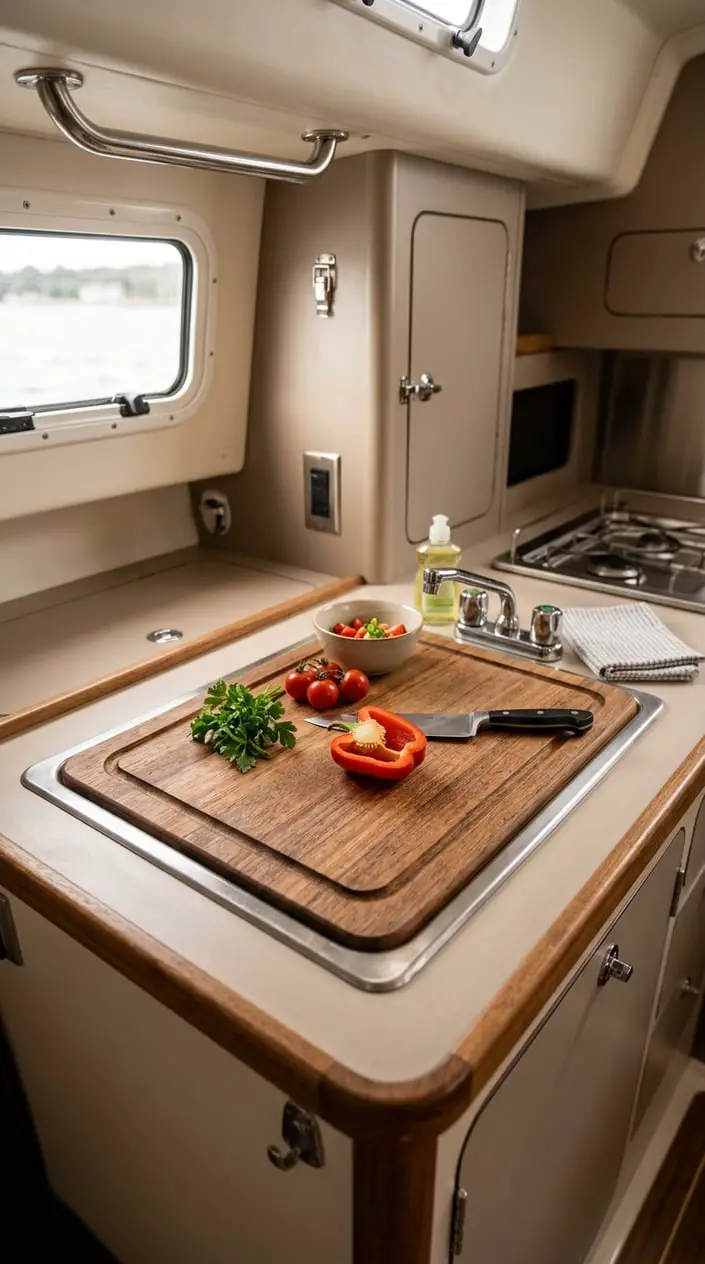
A fitted sink cover turns unused sink space into a useful food-prep surface. Measure the basin and rim carefully so the board rests securely and stays easy to lift. A small finger slot or recessed handle gives you a grip without taking up much counter area.
Use food-safe wood or a durable, non-slip board made for kitchen use. Add soft bumpers underneath to protect the sink edge and limit rattling underway. Keep the cover stored upright in a dedicated slot when you need the sink, and dry it before putting it away. If you cut directly on the surface, choose a board thick enough to stay stable and clean it promptly after preparing food.
5) Companionway Steps with Built-In Drawers
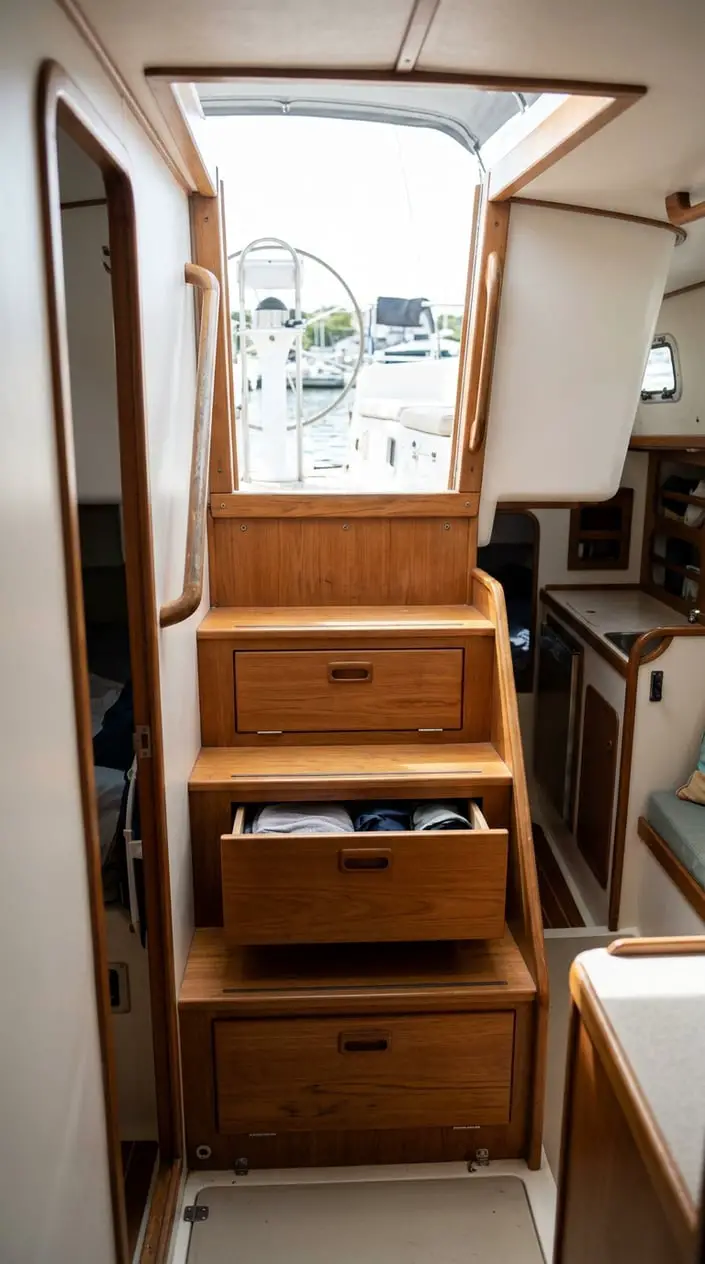
Companionway steps with built-in drawers turn the climb below into storage for small essentials. Use shallow drawers for items you reach often, such as headlamps, gloves, or spare lines. Their placement makes them convenient to access when you enter the cabin.
Keep every drawer front flush with the stair face so clothing and bags pass by cleanly. Fit positive latches to stop the contents from shifting when the boat moves, and use drawer stops to prevent a drawer from pulling free. Choose a tread surface with good grip, then preserve enough tread depth for safe footing. Store heavier items low in the stair unit to help keep the boat’s center of gravity down.
6) Sliding Pocket Doors Instead of Swinging Cabin Doors
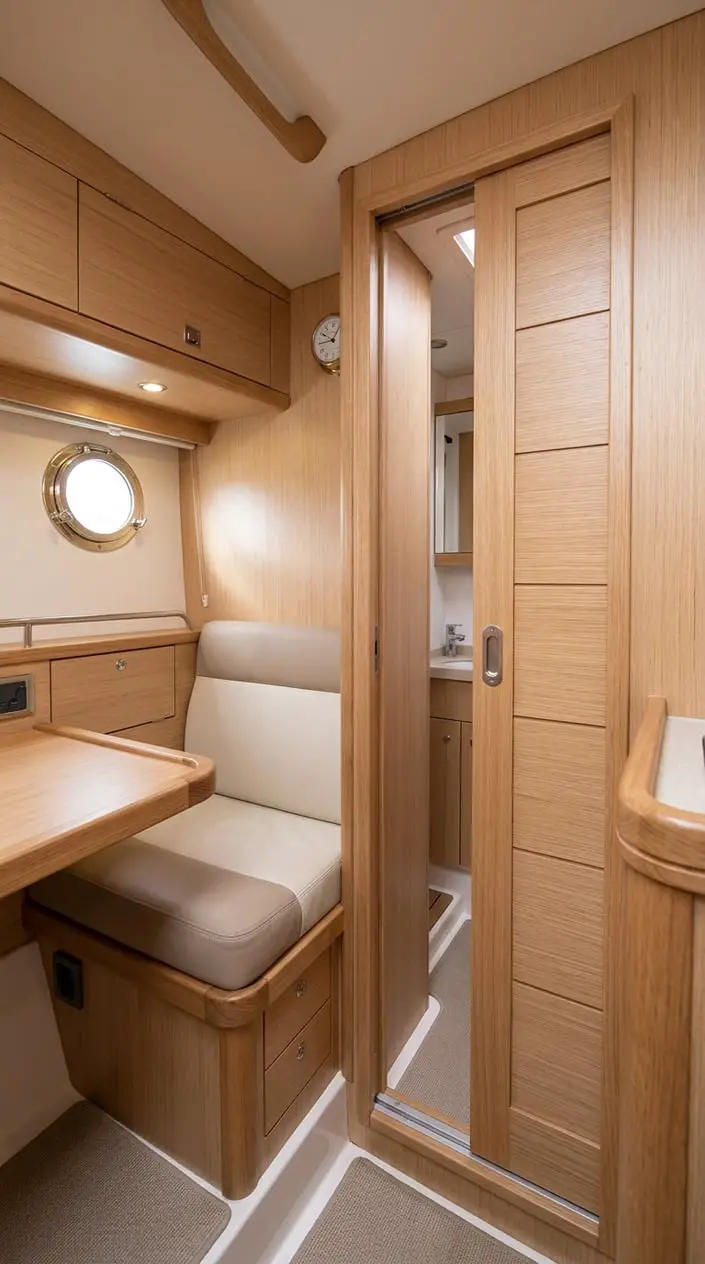
A sliding pocket door saves the floor area a hinged door needs to swing open. The door slides into a wall cavity, leaving nearby space available for a berth, locker, or clear passage. A surface-mounted track can also work when your bulkhead has no room for a pocket.
Check the available wall depth and wiring before choosing a system. Marine hardware should resist corrosion, and a stop or latch helps keep the door in place as the boat moves. Pick a lightweight panel that you can operate with one hand. Add a recessed pull so it sits flat when the door is open. If you need privacy, choose a panel that closes snugly and leaves enough clearance to avoid rubbing against the cabin sole.
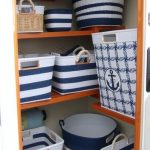
7) Vertical Bulkhead Storage for Everyday Gear
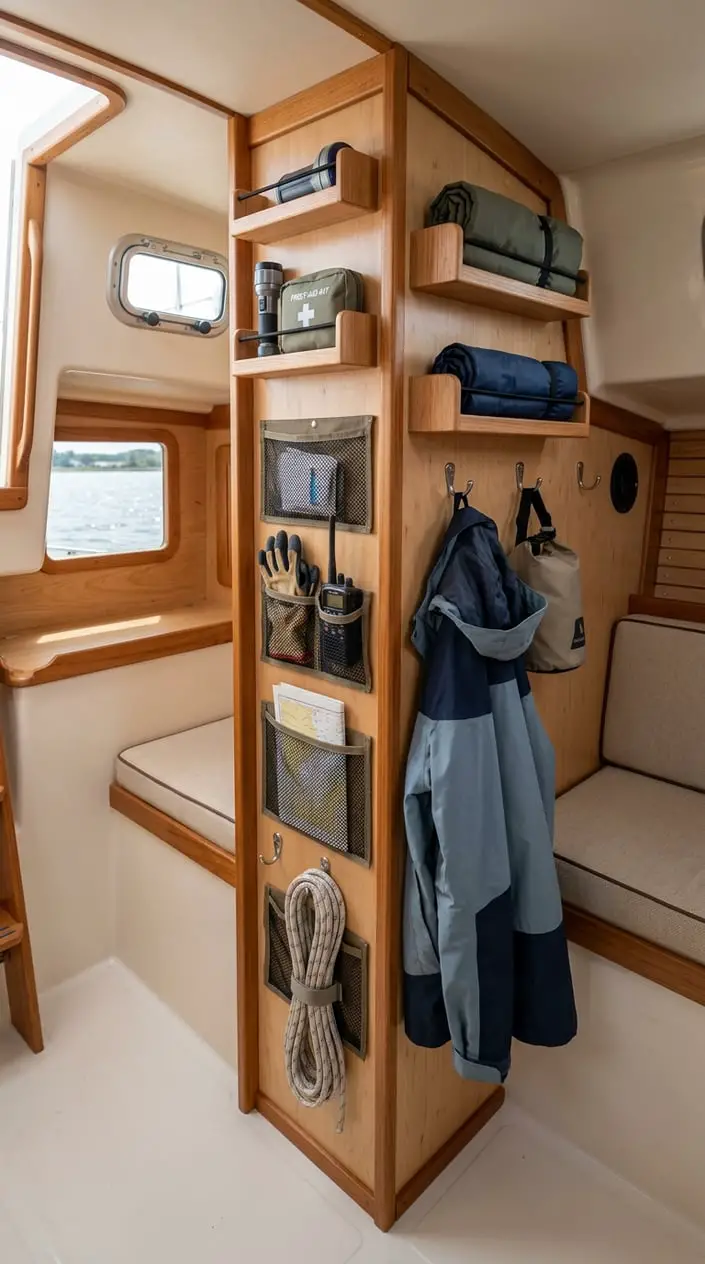
Vertical bulkhead storage keeps daily gear within reach while leaving counters and floors clear. Use shallow shelves for items you grab often, fabric pockets for soft goods, and hooks for jackets or keys. Place each holder where you can reach it safely without blocking a hatch or doorway.
Secure every shelf to a structural backing or a suitable bulkhead fastener, then add a raised lip to help contain loose items underway. Group similar gear together so you can find it quickly, and keep heavier objects low. Leave ventilation around damp clothing and wet foul-weather gear. A labeled pocket near the companionway can serve as a drop zone for small essentials, keeping them out of the galley and away from sleeping cushions.
8) Overhead Hammock Nets for Lightweight Items
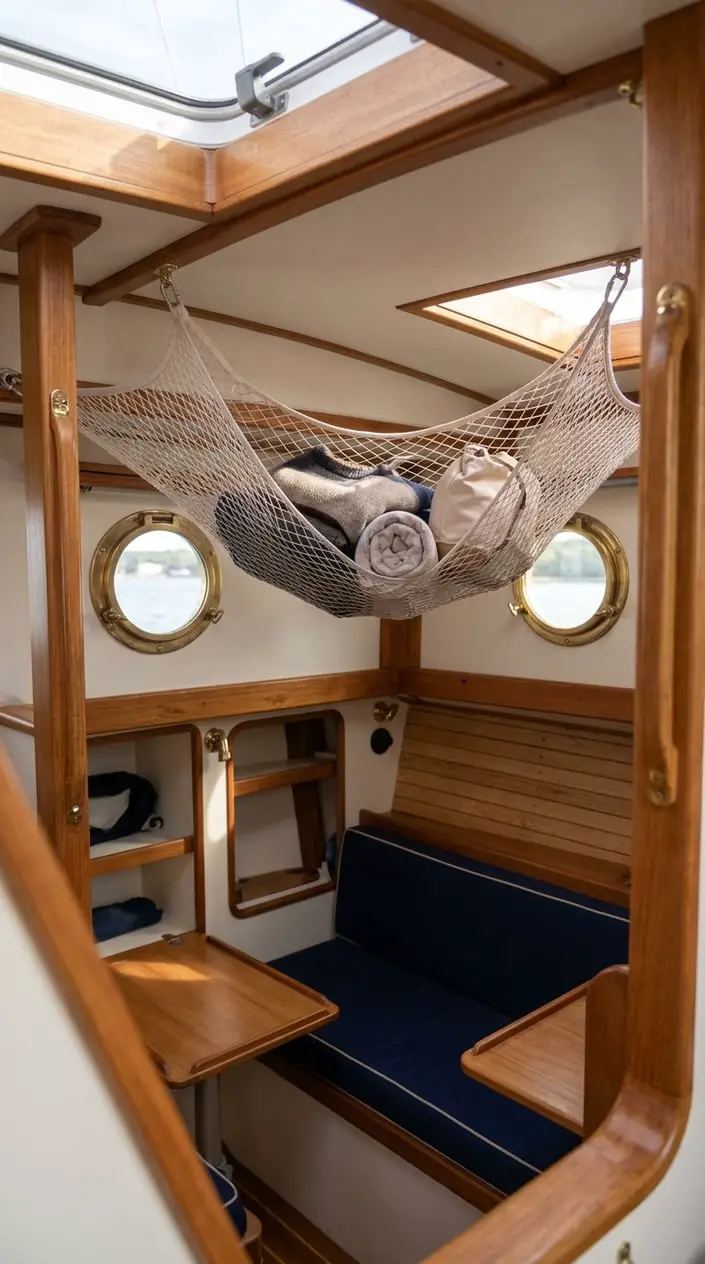
An overhead hammock net makes use of ceiling space for lightweight items that crowd your shelves. Store soft clothing, towels, or spare bedding in a mesh pocket above a berth or along a cabin edge. Mesh lets air move through, which helps fabrics dry after use.
Mount the net to solid attachment points and keep its load modest. Avoid placing hard or heavy gear overhead, where a sudden wake could turn it into a hazard. Position the pocket clear of lights, vents, and hatches, and make sure it leaves enough headroom for sitting up. A net with a zipper or elastic edge helps keep contents contained. Check the fasteners regularly for wear, especially if the net carries items during passages.
9) A Removable Cockpit Cushion System for Flexible Seating
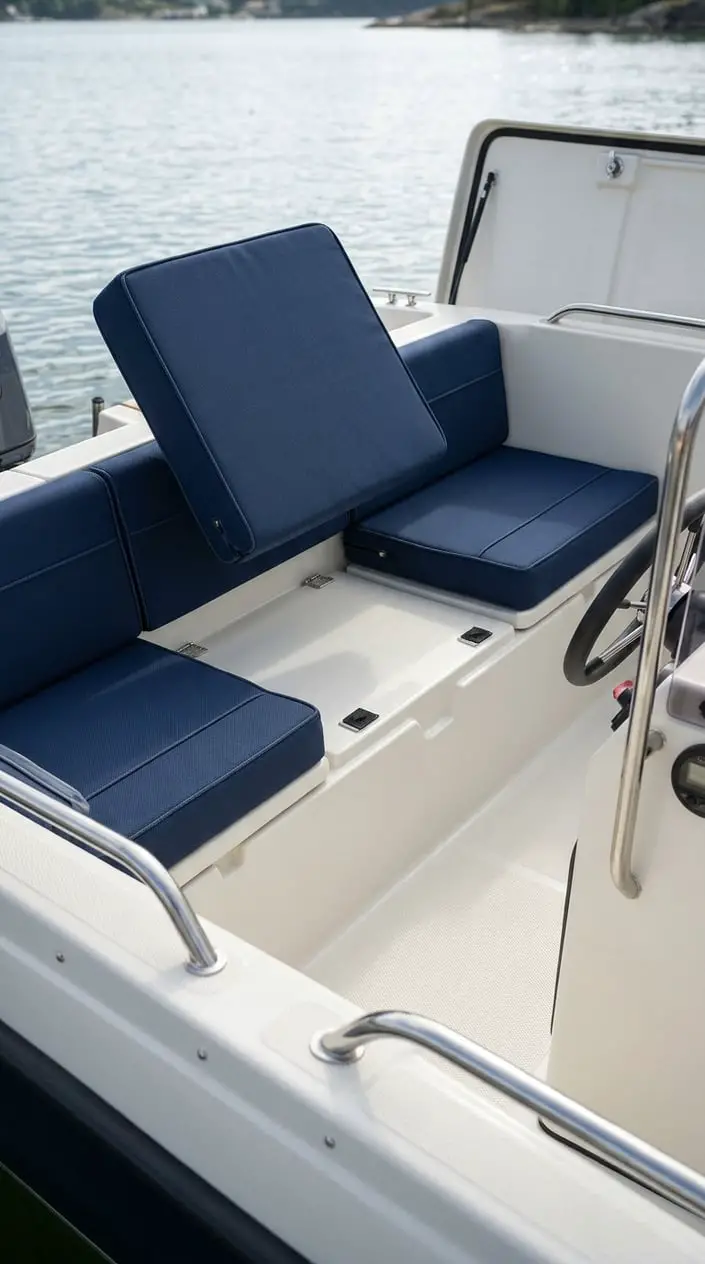
Removable cockpit cushions let you change the seating setup and reclaim bench space when needed. Choose separate cushions sized for each seat section, so you can remove one piece at a time. That leaves room for a cooler, deck bag, or another use of the bench.
Use marine-grade fabric with UV resistance and quick-drying foam to handle sun and spray. Ties or snaps keep cushions in place underway, while a grab loop makes them easier to carry below. Give wet cushions a ventilated storage spot so moisture can escape. Before ordering, measure seat width and depth, including any backrest angle. A simple color or piping detail can help you tell each cushion’s position at a glance.
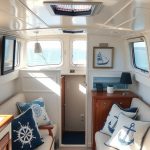
10) A Light Color Palette with One Locally Inspired Accent
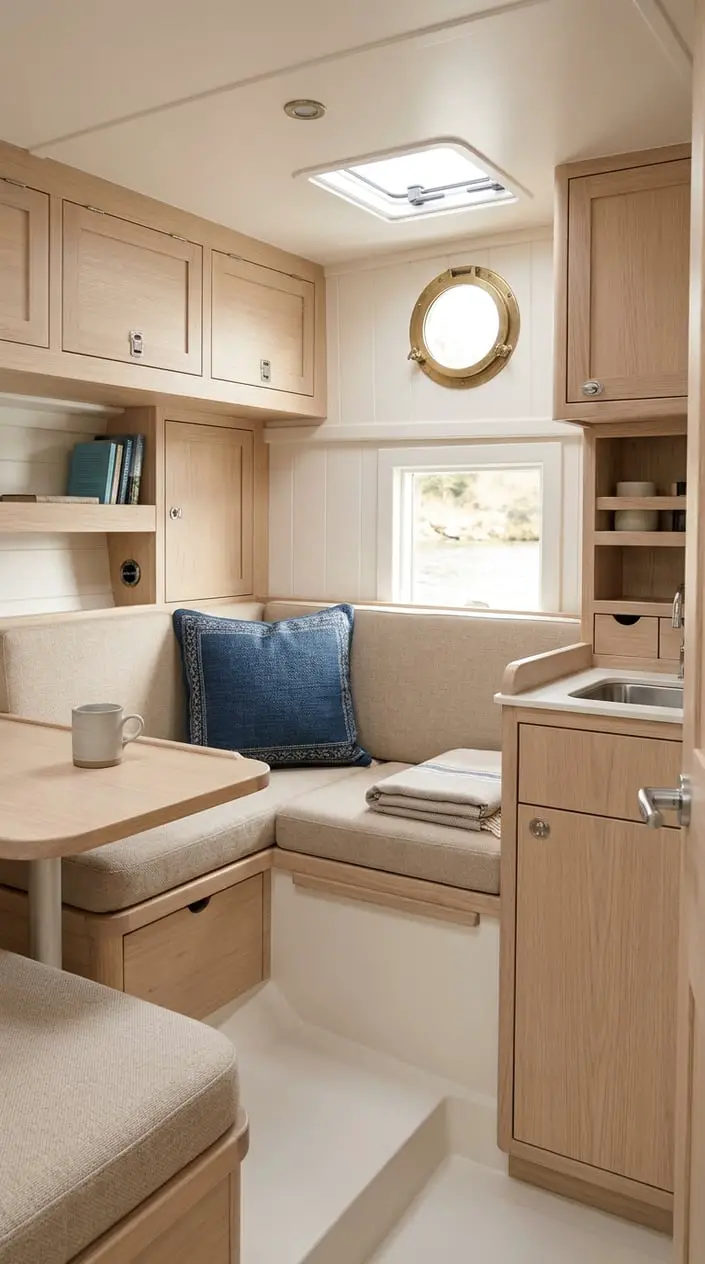
A light color palette helps a compact cabin feel open, while one local accent gives it character. Use pale wood tones or light upholstery across the largest surfaces, then bring in a regional color through a cushion, tea towel, or small piece of art. A single accent keeps the cabin calm and easy to coordinate.
Choose materials that stand up to damp air and frequent cleaning. A washable patterned cushion cover hides everyday marks, while a durable finish on pale cabinetry makes wipe-downs easier.
Keep décor secured so it stays put while underway, and leave clear access to safety gear and lockers. You can connect the accent to a nearby coastline, harbor, or landscape through its colors and pattern, without adding fragile objects that take up precious shelf space.