Last Updated on November 13, 2026
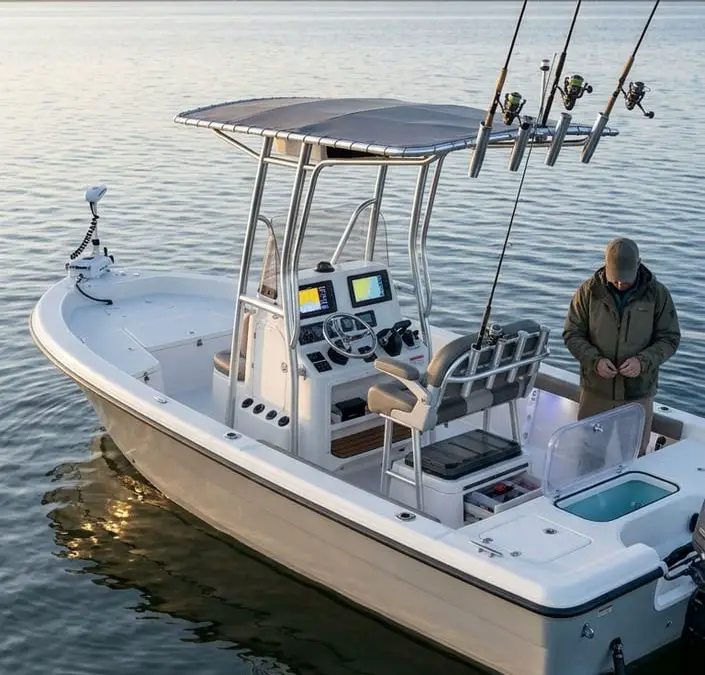
A modern chartplotter is the strongest first upgrade for most anglers: the Garmin GPSMAP 8616xsv gives you a large display for charts, navigation, and compatible sonar data. You can transform your next trip by pairing better navigation and fish-finding tools with reliable power, controlled positioning, and a more comfortable helm.
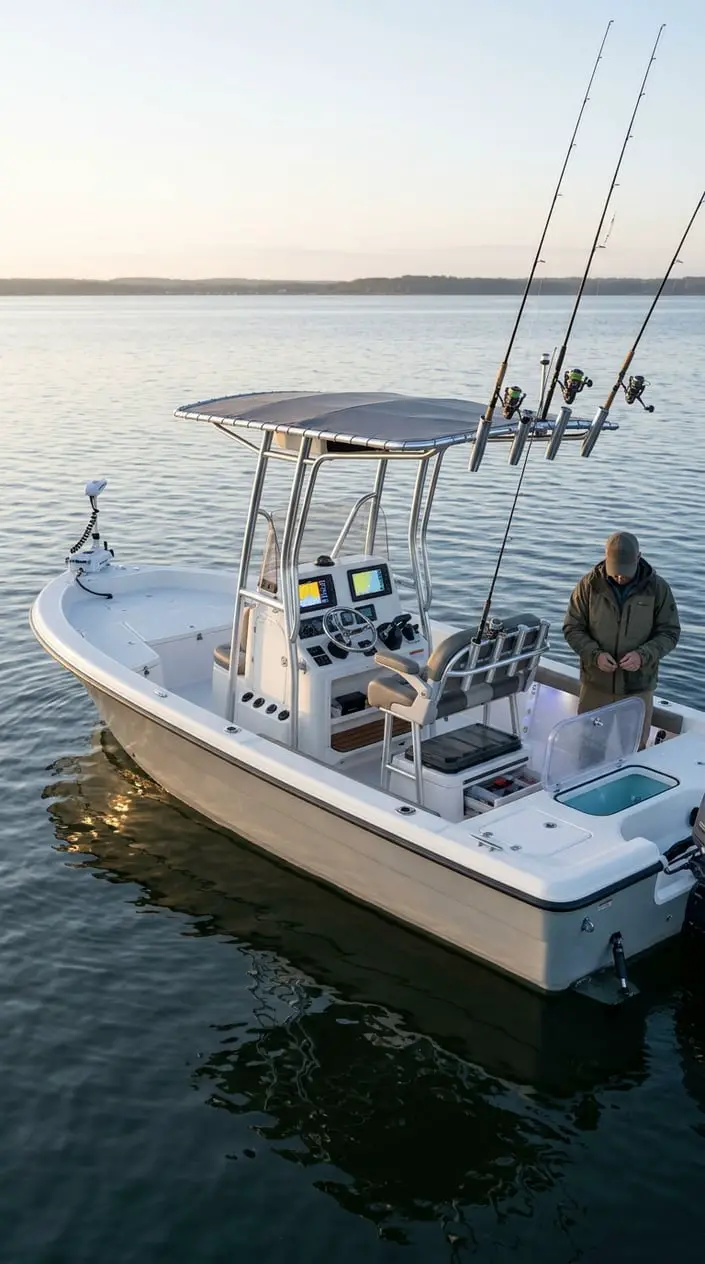
Your best first project depends on what slows you down on the water. Start with the upgrade that addresses a real gap in your boat, then check that its power needs, mounting space, and wiring fit your setup.
Quick picks:
- Best all-around first step: Garmin GPSMAP 8616xsv Chartplotter
- Best for targeted fish-finding: Garmin LiveScope Plus LVS34
- Best for shallow-water positioning: Power-Pole Blade Shallow-Water Anchor
1) Yamaha F150 Outboard Repower
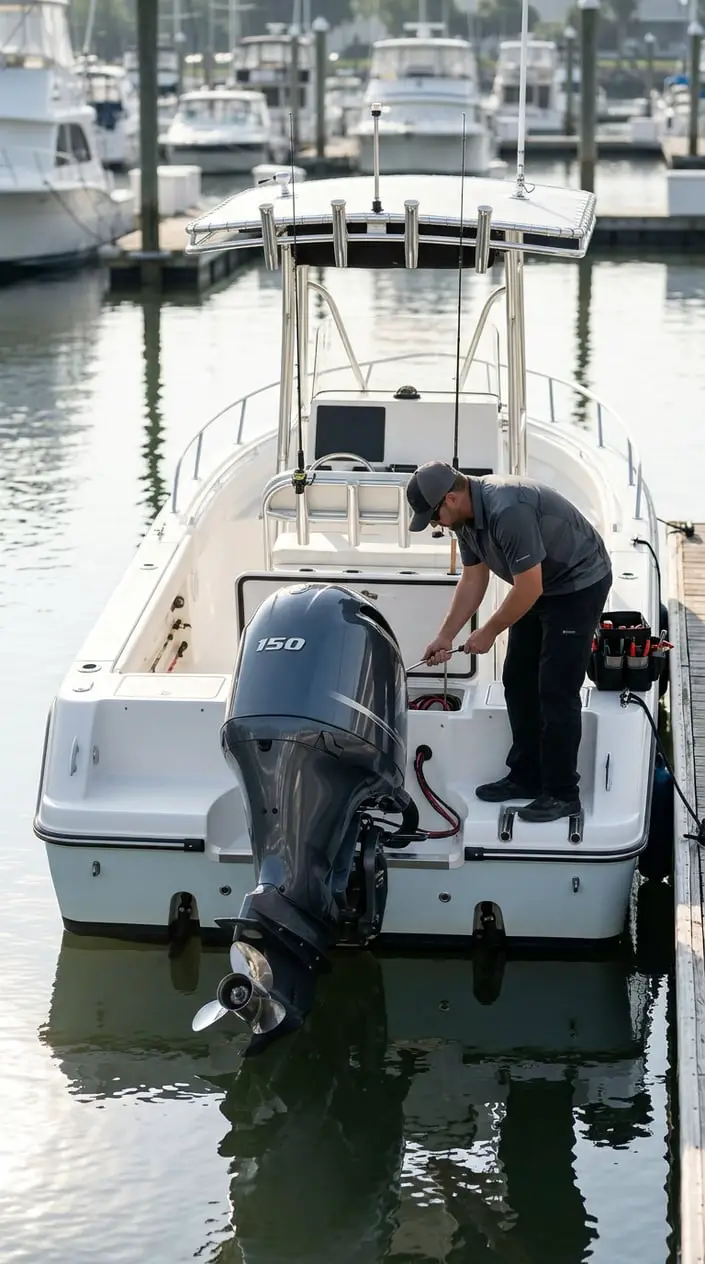
A 150-horsepower outboard repower refreshes your boat’s propulsion and can make aging equipment a better match for regular fishing trips. Before you commit, check the capacity plate and confirm that the engine’s horsepower suits your hull. A marine dealer can also assess transom condition, steering, controls, and installation needs.
Treat the repower as a system update. Ask about fresh fuel hoses, a water-separating fuel filter, battery cables, and compatible gauges alongside the engine. Those details affect safe operation and the information you see at the helm.
Plan the project around your boat’s long-term use and total installation cost. Ask the dealer to confirm fit, controls, and fuel-system requirements before ordering.
2) Garmin GPSMAP 8616xsv Chartplotter
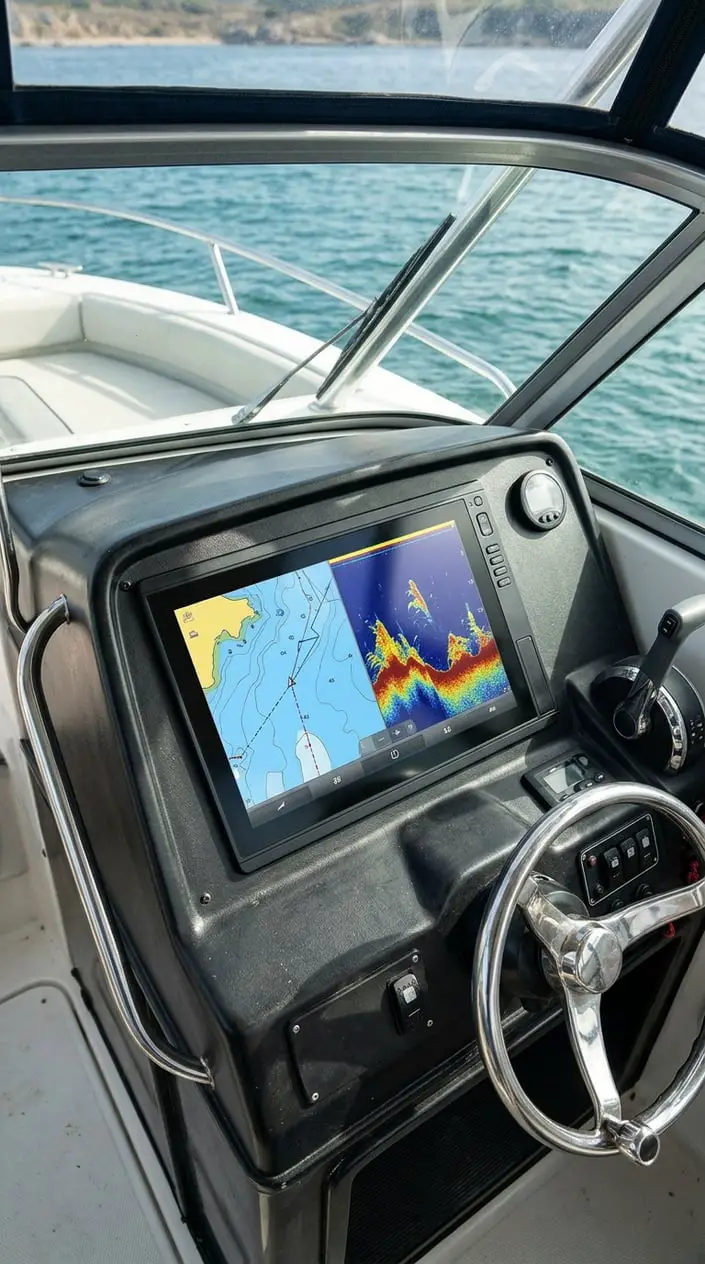
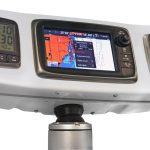
A 16-inch chartplotter gives you room to read navigation details and compatible sonar information on one large helm display. Use it to view electronic charts, mark productive areas with waypoints, and plan routes between launch ramps, fishing grounds, and safe return points. A larger screen is especially useful when you want key details visible at a glance.
Before installation, measure the dash opening and confirm that the unit fits your console and wiring plan. Check chart coverage for the waters you fish, and verify compatibility with your transducer and any existing marine electronics.
Set up clear screen layouts before leaving the dock. Keeping navigation and fish-finding views easy to reach helps you focus on your route and the water ahead.
3) Garmin LiveScope Plus LVS34
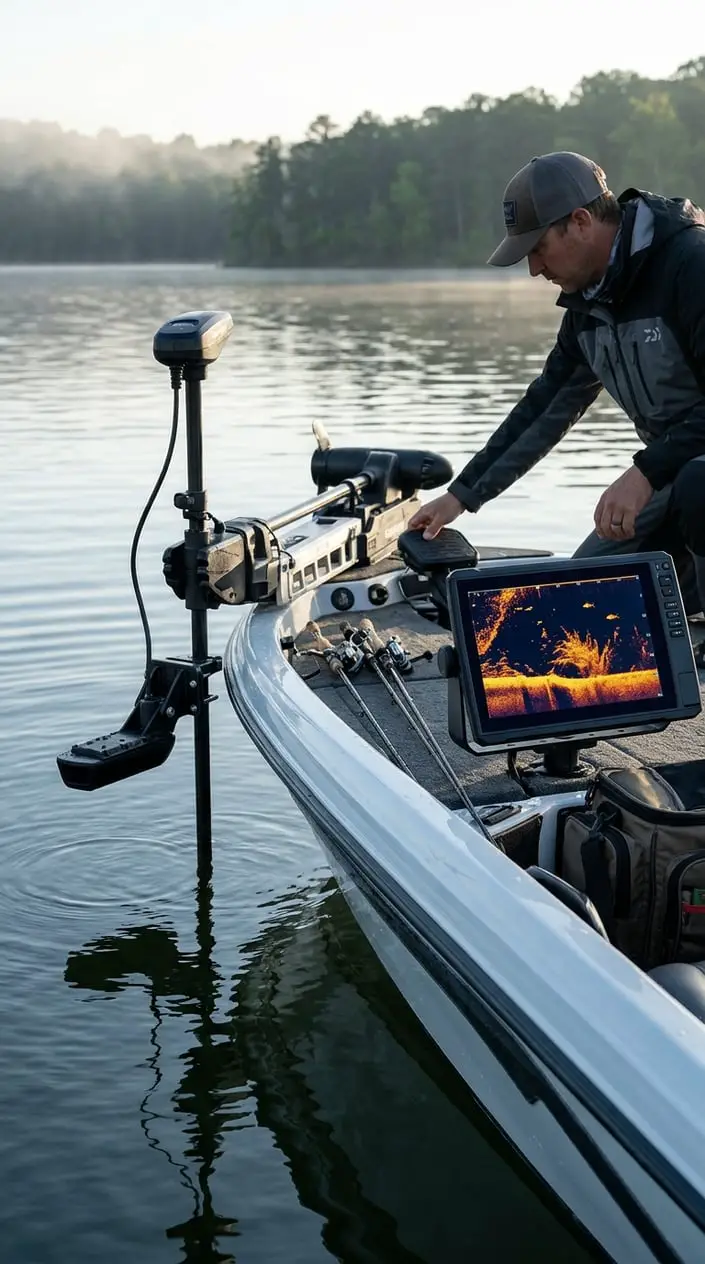
Live sonar helps you watch fish and structure in real time, making it useful when you want to target visible activity instead of relying only on traditional sonar returns. The LVS34 transducer supports forward, down, and perspective views when paired with compatible equipment and the right mounting setup. You can follow fish movement and see how they respond to your lure.
Plan for more than the transducer itself. Confirm display compatibility, mounting options, power supply, and cable routing before purchase. A stable mount and a clear sonar display help you interpret what you see while casting.
Live sonar adds information to your fishing decisions; it does not guarantee a bite. Adjust the view for your fishing position and learn to separate fish returns from nearby cover.
4) Minn Kota Ultrex QUEST Trolling Motor
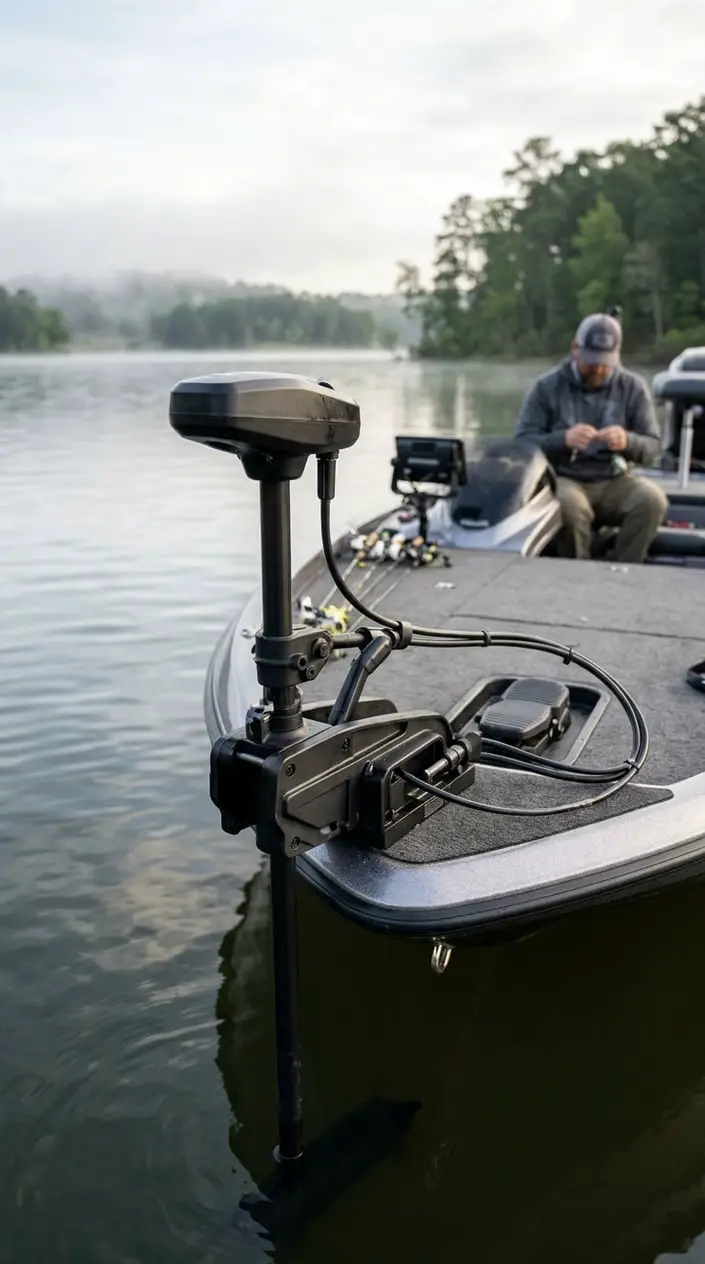
A GPS-enabled trolling motor gives you precise low-speed control for working a shoreline, staying near a waypoint, or holding position while you fish. This bow-mounted option is built for anglers who want hands-free boat control and spot-lock positioning. Its QUEST system supports 24- or 36-volt operation, so match the voltage to your boat’s battery setup.
Check bow space, shaft length, wiring, and battery capacity before installation. A motor upgrade can add a substantial electrical load, so inspect the charging system and connections as part of the plan.
Use GPS functions to make repeat passes over productive water. Learn the controls close to the launch before relying on them in wind or current.
5) Power-Pole Blade Shallow-Water Anchor
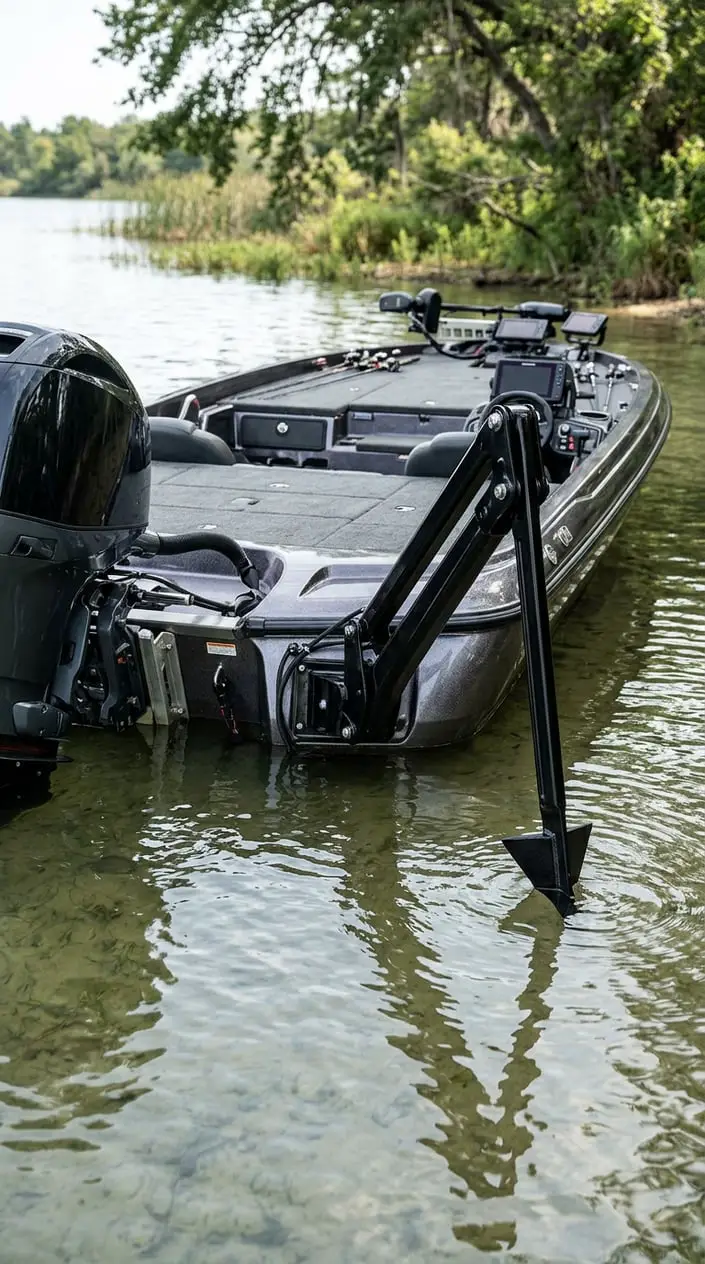
A power-deployed shallow-water anchor helps you stop drift quickly when you reach a shoreline, flat, or other suitable fishing spot. The transom-mounted system is designed to hold a boat in shallow water, giving you time to fish without constantly correcting your position with the motor.
Check the anchor’s reach against the depths you fish and confirm that your transom can accommodate the mounting hardware. Installation also calls for a suitable power connection and room for the anchor to deploy without contacting other equipment.
Use the anchor in conditions that suit its design, and follow the manufacturer’s operating guidance. For deeper water, GPS positioning from a trolling motor may fit your fishing plan better.
6) Garmin GT56UHD-TM Transducer
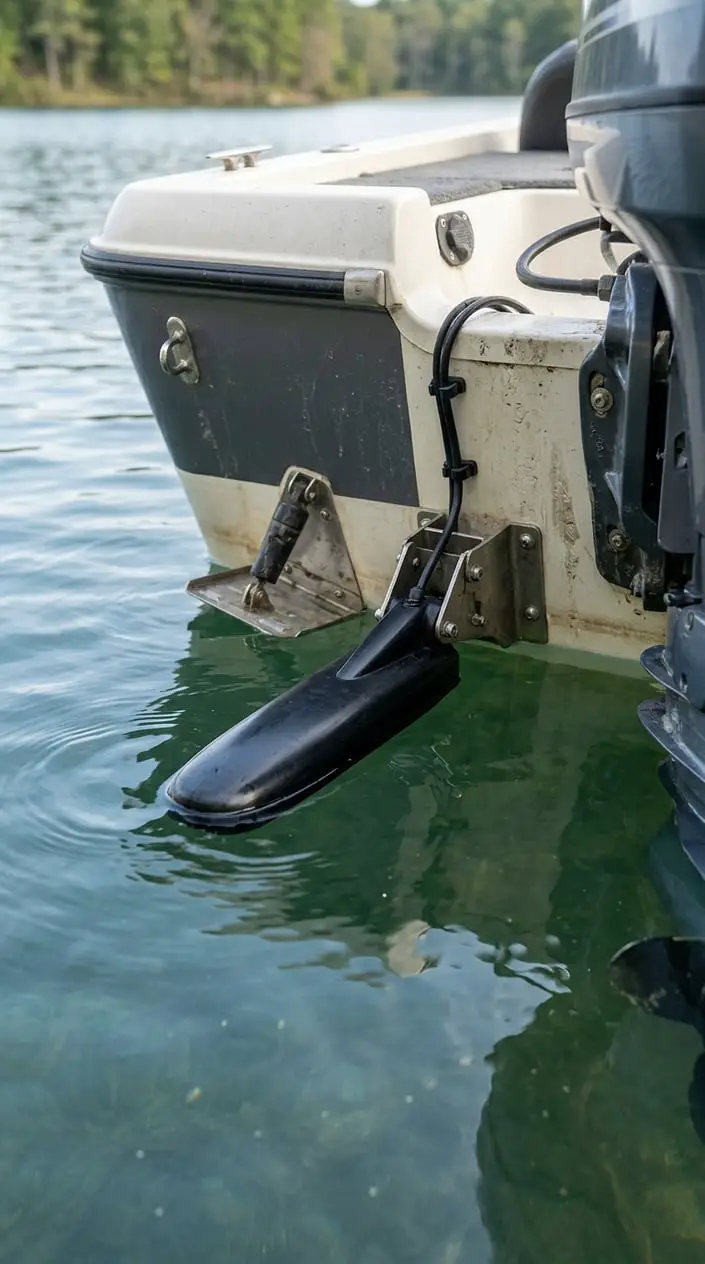
A transom-mounted transducer improves your view of fish and underwater structure when it is paired with a compatible display. This model supports traditional CHIRP sonar along with ClearVü and SideVü scanning, giving you several ways to read depth and examine the area around your boat.
Mount placement affects sonar performance. Position the transducer according to its installation guidance, with a clear path through the water and a setup suited to your hull. Check display compatibility and cable routing before you buy.
Use traditional sonar for depth and fish returns, then switch to scanning views when you want a wider look at nearby structure. Keep the transducer clear of damage during trailering and launching.
7) NMEA 2000 Network
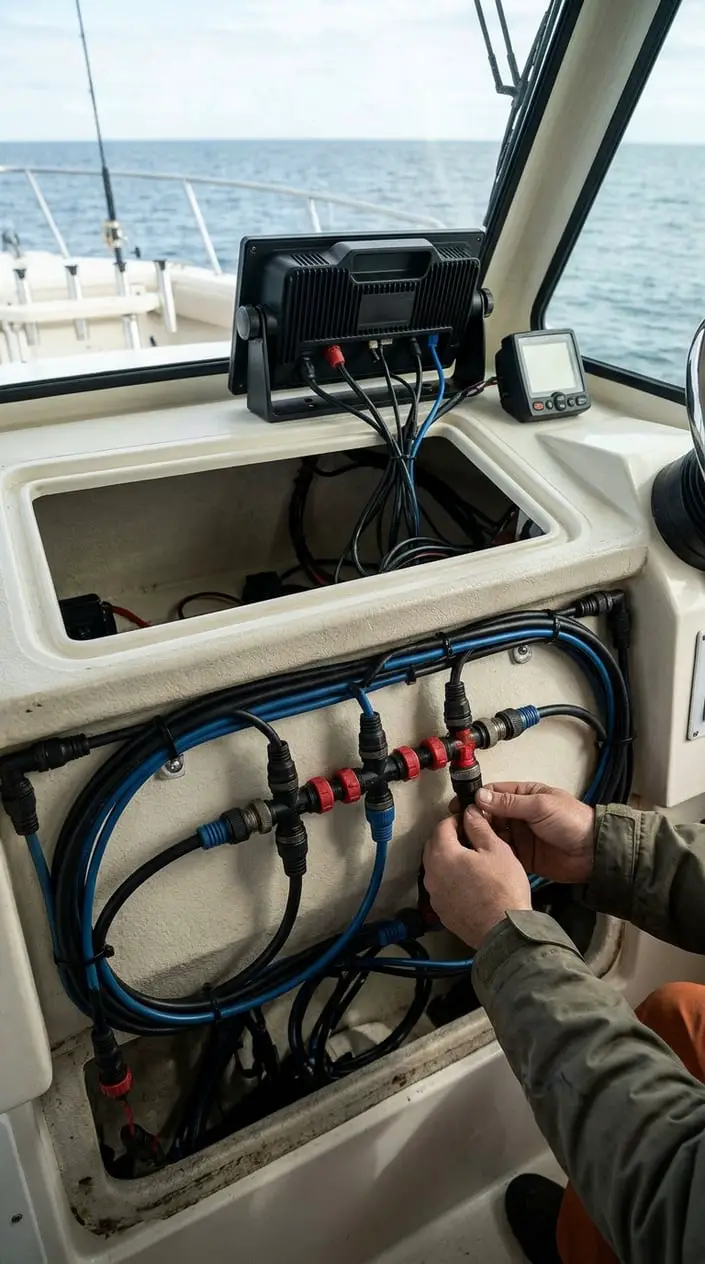
An NMEA 2000 network lets compatible marine devices share information through a common onboard data system. Depending on your equipment, that can include engine data, fuel information, GPS details, and readings from connected sensors. A well-planned network helps bring useful information together at the helm.
Start by listing the devices you want to connect and checking that each supports NMEA 2000. The network needs a correctly sized backbone, power connection, and proper terminators. Use marine-grade cables and follow the device makers’ wiring instructions.
Keep the backbone route accessible for inspection and service. Label cables as you install them, then confirm that each connected device appears and reports data before your next trip.
8) Redesigned Helm Console With Dual Displays
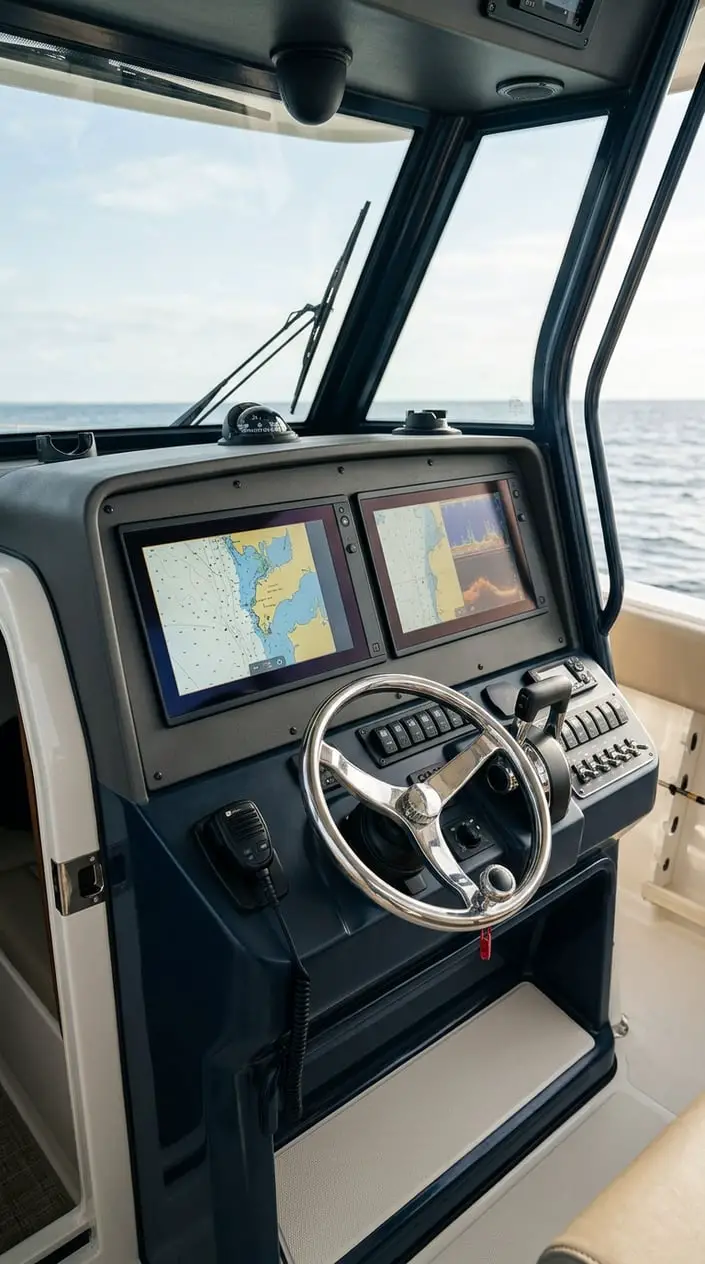
A redesigned console with two displays gives you space to keep navigation and sonar visible at the same time. You can set one screen to show charts and routes while the other displays fish-finding information. That layout helps reduce menu switching when you are running to a spot or searching for structure.
Measure the available dash area before choosing display sizes and mounts. Make sure the screens do not block sightlines, steering access, or important controls. Plan for wiring access and service openings so future repairs remain manageable.
A clean layout also needs thoughtful cable routing and secure mounts. Arrange the displays around your normal helm position, then check visibility from both seated and standing positions.
9) Integrated Hardtop Radio Box
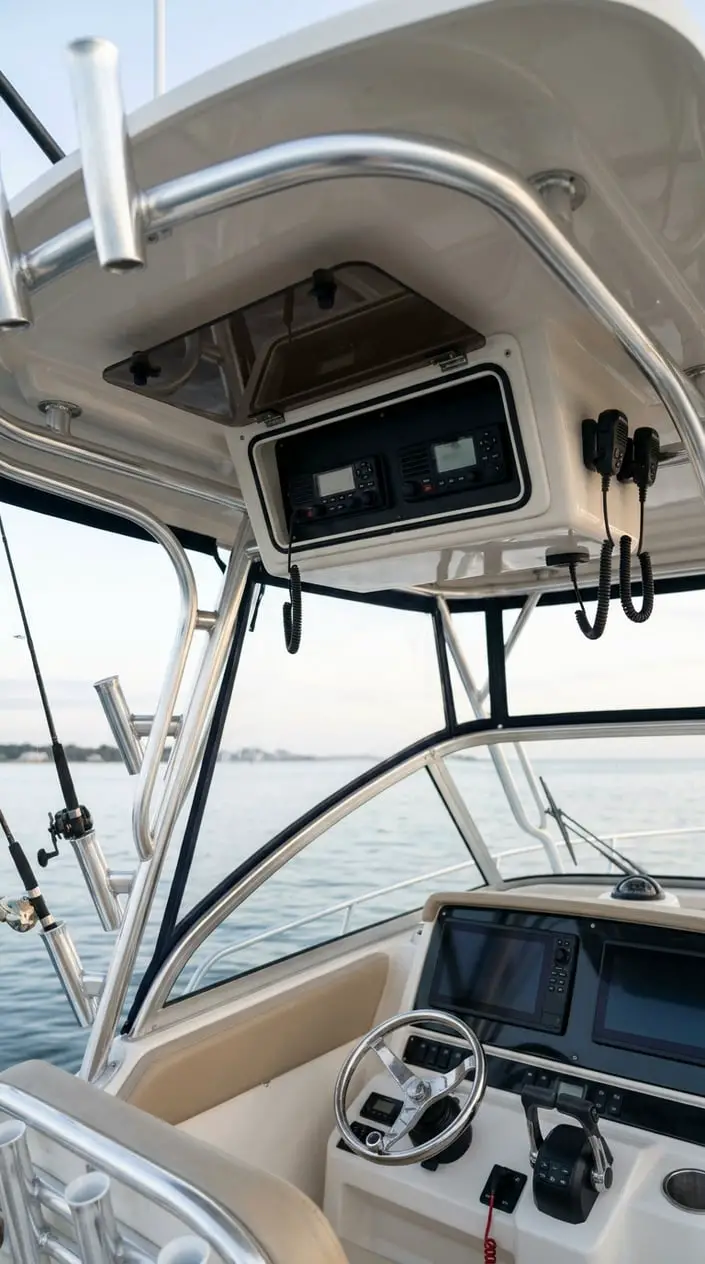
An integrated radio box moves communications equipment overhead and frees up useful space around your helm. A flush-mounted VHF radio keeps controls within reach while helping the dash stay organized. Some hardtop layouts also allow space for an additional display, speakers, or lighting.
Before cutting or mounting anything, confirm the box dimensions and the hardtop’s support structure. Plan antenna placement, wiring routes, and access for service. A VHF radio also needs a suitable antenna and a clear installation path.
Keep the microphone and controls easy to reach from the helm. Test radio operation and check that cables remain protected from weather and rubbing after installation.
10) Ergonomic Leaning Post With Tackle Storage
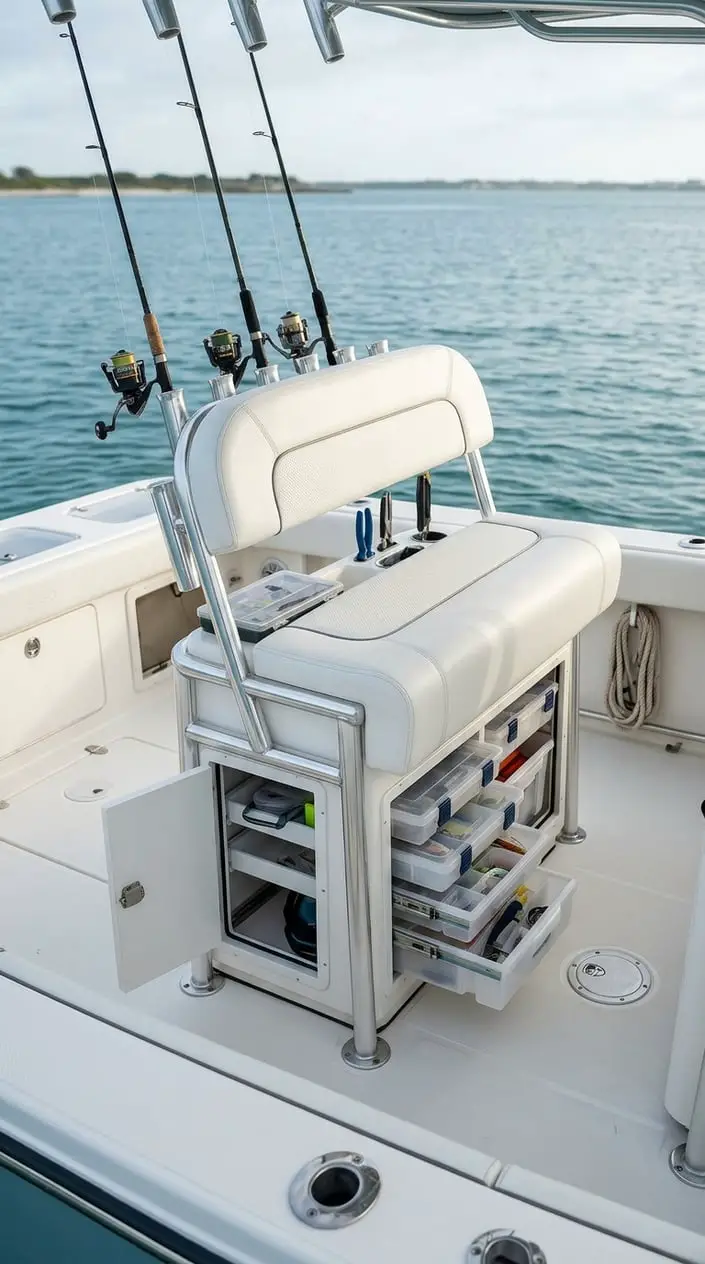
An ergonomic leaning post improves support at the helm while keeping tackle close at hand. A well-planned design gives you a comfortable place to brace while underway and lets you reach frequently used gear without crossing the cockpit.
Built-in storage also helps keep small items secured between fishing spots. Check seat height, foot support, access to controls, and room for crew movement before selecting a replacement. Compare storage compartments with the tackle you carry, and confirm the mounting points suit your deck.
Choose compartments that open easily and stay clear of nearby seating or walkways. Secure loose tackle inside before heading out, especially when the boat is running through chop.