Last Updated on November 13, 2026
The most worthwhile fishing boat modifications improve boat control, fish-finding, safety, and gear storage while making your time on the water easier.
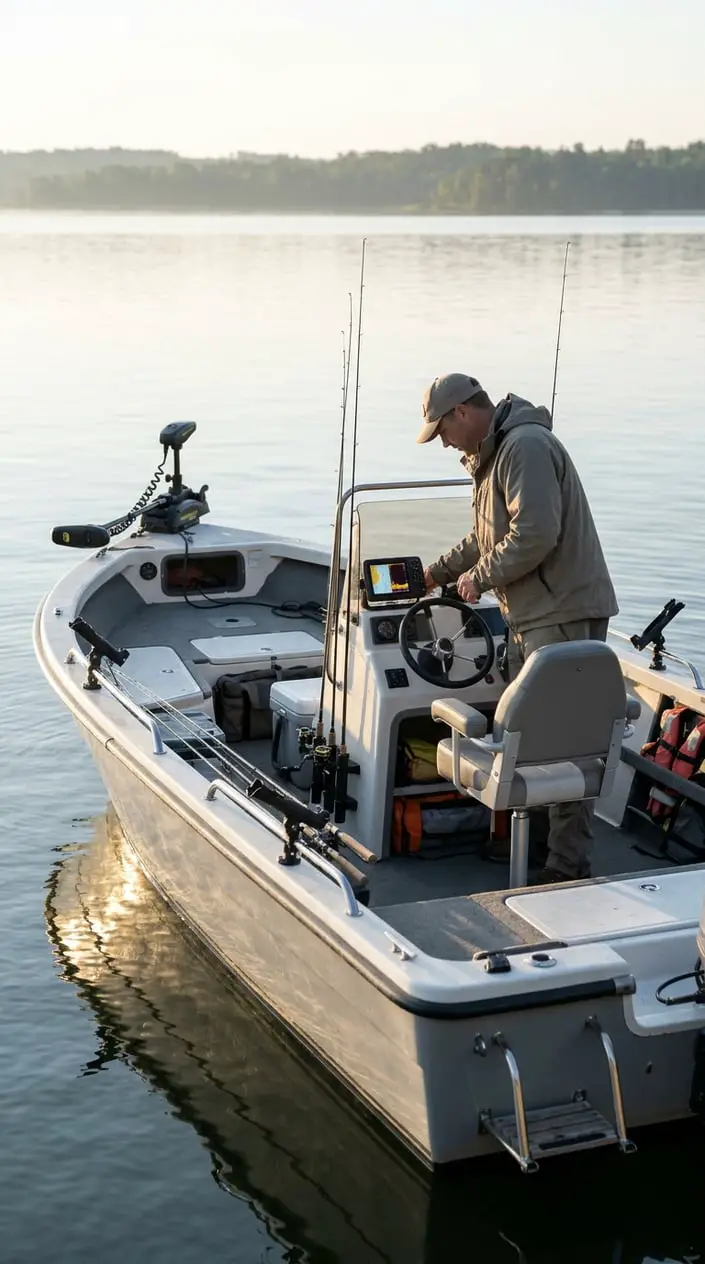
Choose upgrades that fit your boat, fishing style, and budget. Check your boat’s capacity and wiring before adding equipment, and follow the installation instructions for each component.
Quick picks:
- Best for steady boat control: GPS-anchor trolling motor
- Best for finding fish and navigating: Fish finder and chartplotter
- Best for simpler power management: Lithium deep-cycle battery and compatible charger
1) Upgrade to a Bow-Mounted Trolling Motor With GPS Anchor
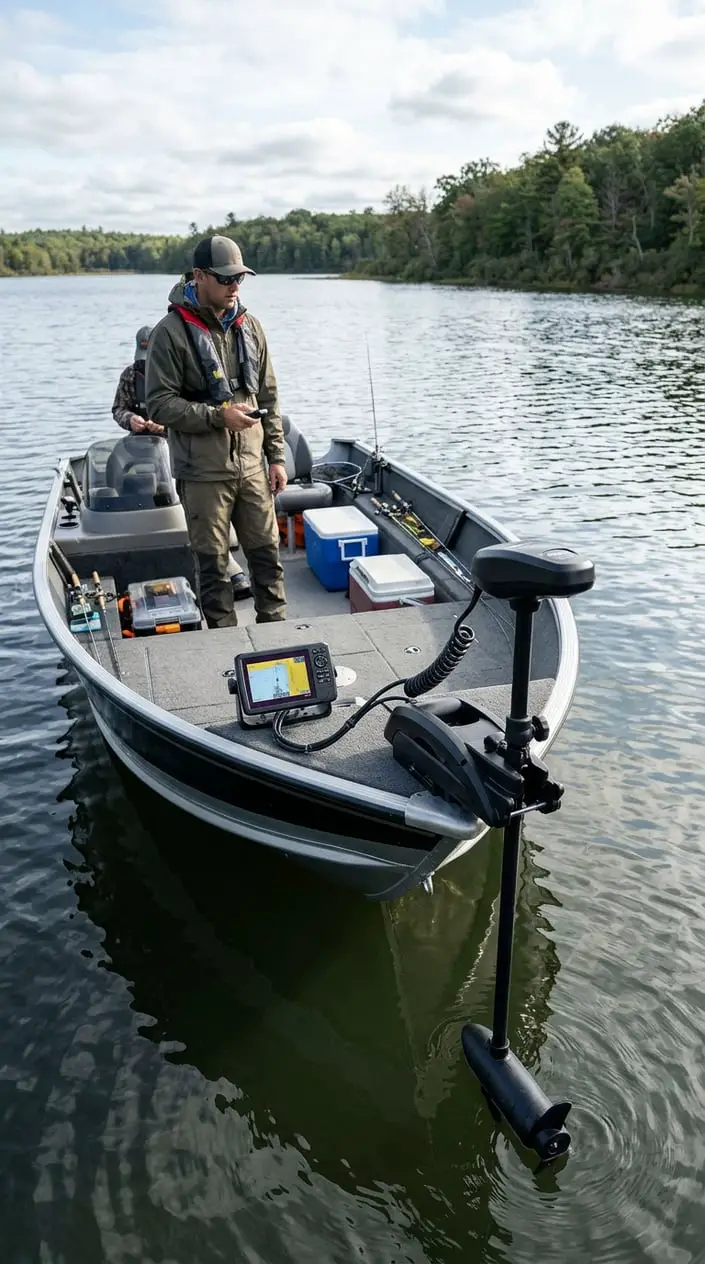
A bow-mounted trolling motor with GPS anchor helps you hold a fishing spot and steer quietly while you cast. GPS positioning can keep your boat near a marked location without constant adjustments to the foot pedal. That’s useful when you’re working a shoreline, drifting over a reef, or fishing in wind.
Match the motor’s thrust and shaft length to your boat’s size and bow height. Check the motor’s voltage requirements, then confirm your battery and wiring can support them. A circuit breaker sized for the motor helps protect the electrical system. Secure the mount to a sturdy section of the bow, and leave room to deploy and stow the motor without blocking your casting area.
2) Install a Fish Finder and Chartplotter
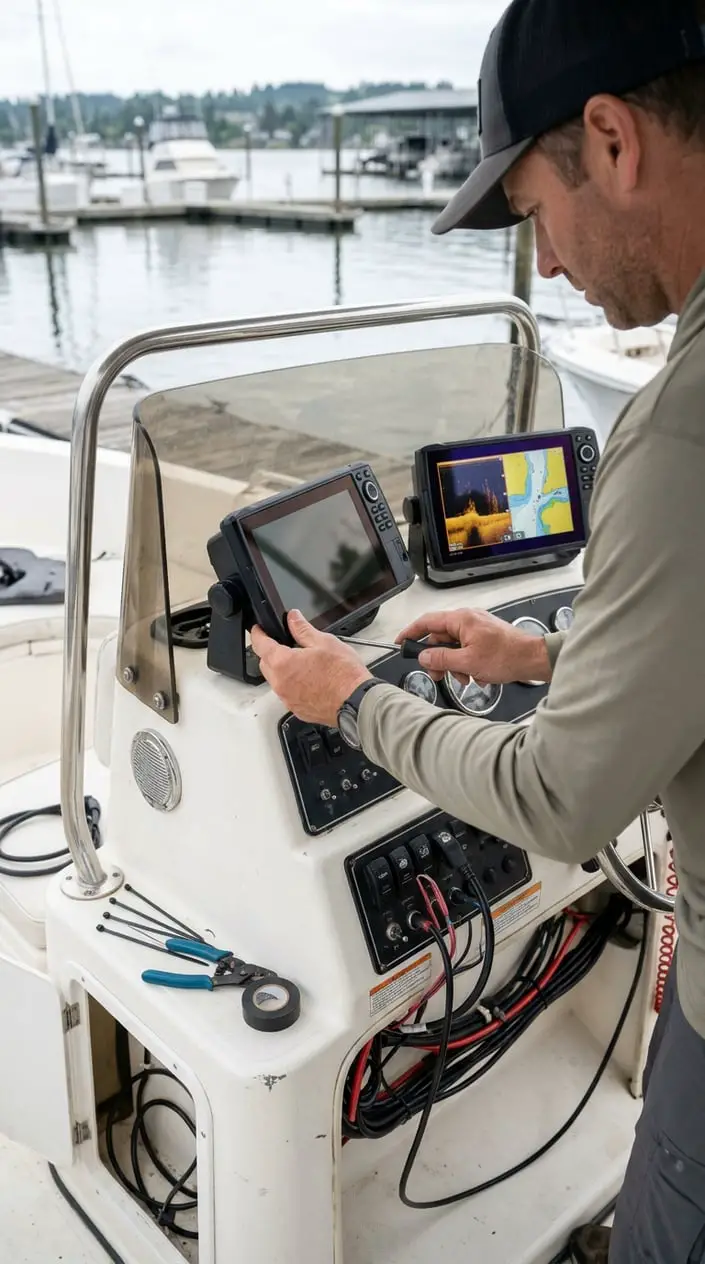
A fish finder with a chartplotter gives you sonar views and map information at the helm or bow. Sonar can help you read depth changes and spot fish or underwater structure. Charts help you follow marked routes and identify hazards in familiar and new waters.
Before choosing a unit, check screen size, mapping coverage, and the sonar features you plan to use. Down-looking sonar helps show what’s below the boat, while side-looking views cover water to either side. Transducer placement affects the readings, so mount it where the hull won’t block its view or create turbulence. Protect the cables from snags, and use the manufacturer’s instructions to set the display for your fishing depth and water conditions.
3) Switch to LED Navigation and Deck Lighting
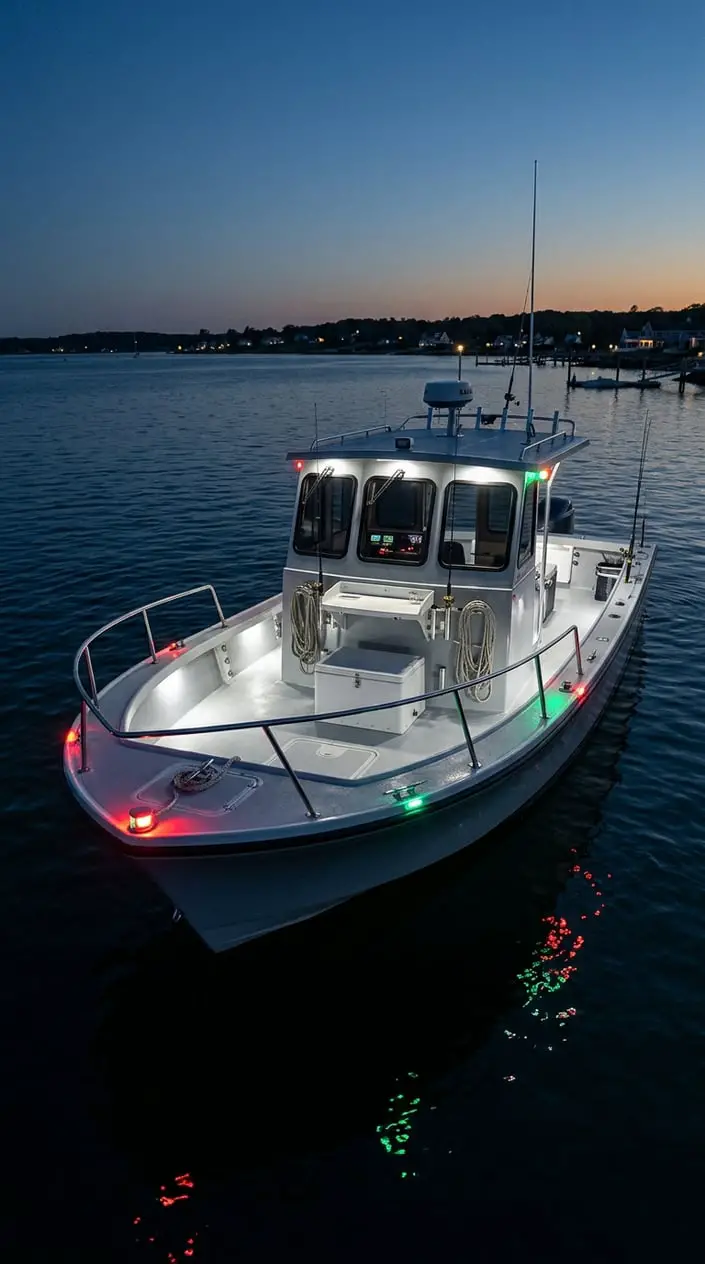
LED navigation and deck lights improve visibility and make nighttime tasks easier with low power draw. Use navigation lights that meet U.S. Coast Guard requirements for your boat, including the correct colors, placement, and visibility. Keep those lights clear and easy to see from other vessels.
For the deck, choose fixtures that illuminate walkways and work areas without shining into your eyes or washing out your night vision. Use marine-rated lights and sealed connections suited to wet conditions. Add a switch or dimmer that lets you control deck lighting separately from navigation lights. Before you launch after an installation, test each light and inspect the wiring for chafe, loose connections, or exposed conductors.
4) Add a Lithium Deep-Cycle Battery and Compatible Charger
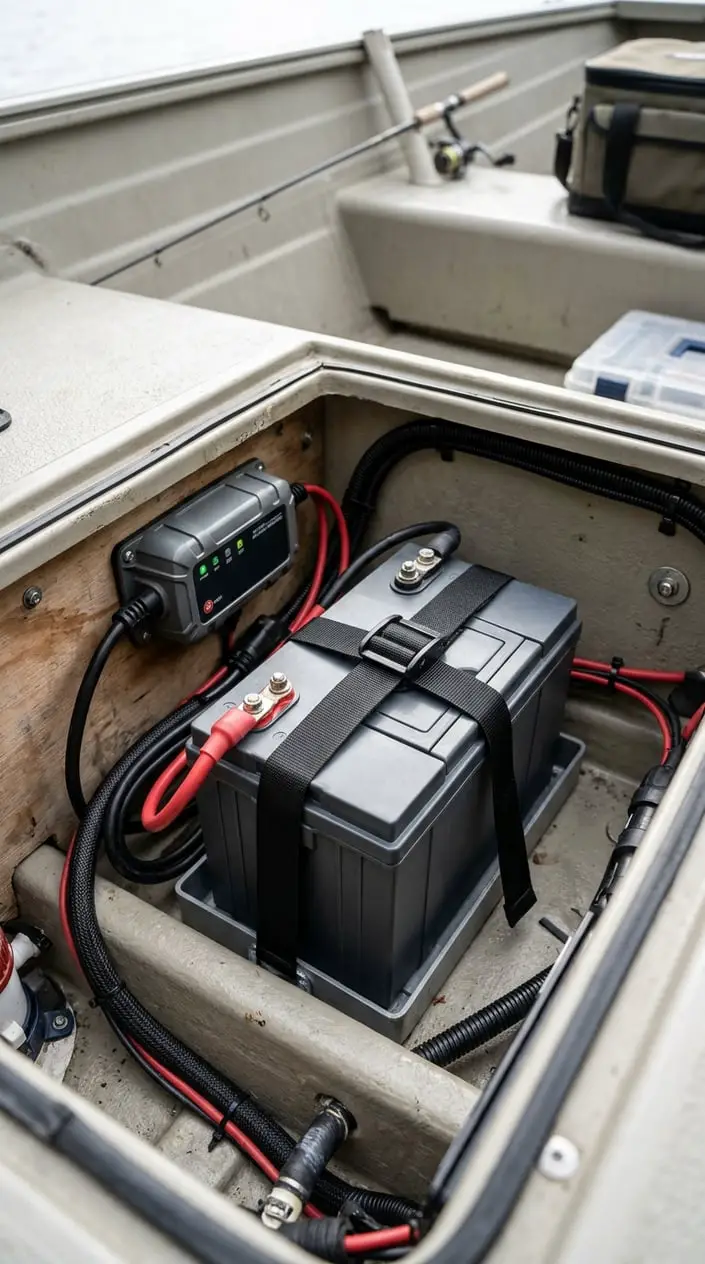
A lithium deep-cycle battery can provide steady power for compatible trolling motors and onboard electronics. Check the battery’s voltage and capacity against your equipment’s requirements, then confirm that the charger has a setting made for that battery chemistry. A charger designed for lead-acid batteries may not suit a lithium battery.
Before installation, review the battery maker’s guidance for charging temperature, mounting, and protection. Secure the battery so it cannot shift in rough water, and keep terminals covered to reduce the risk of a short. Use cables and fuses rated for the electrical load. If your boat has multiple batteries, confirm that the charging system and any battery monitor work with the new setup.
5) Improve the Livewell With Better Aeration
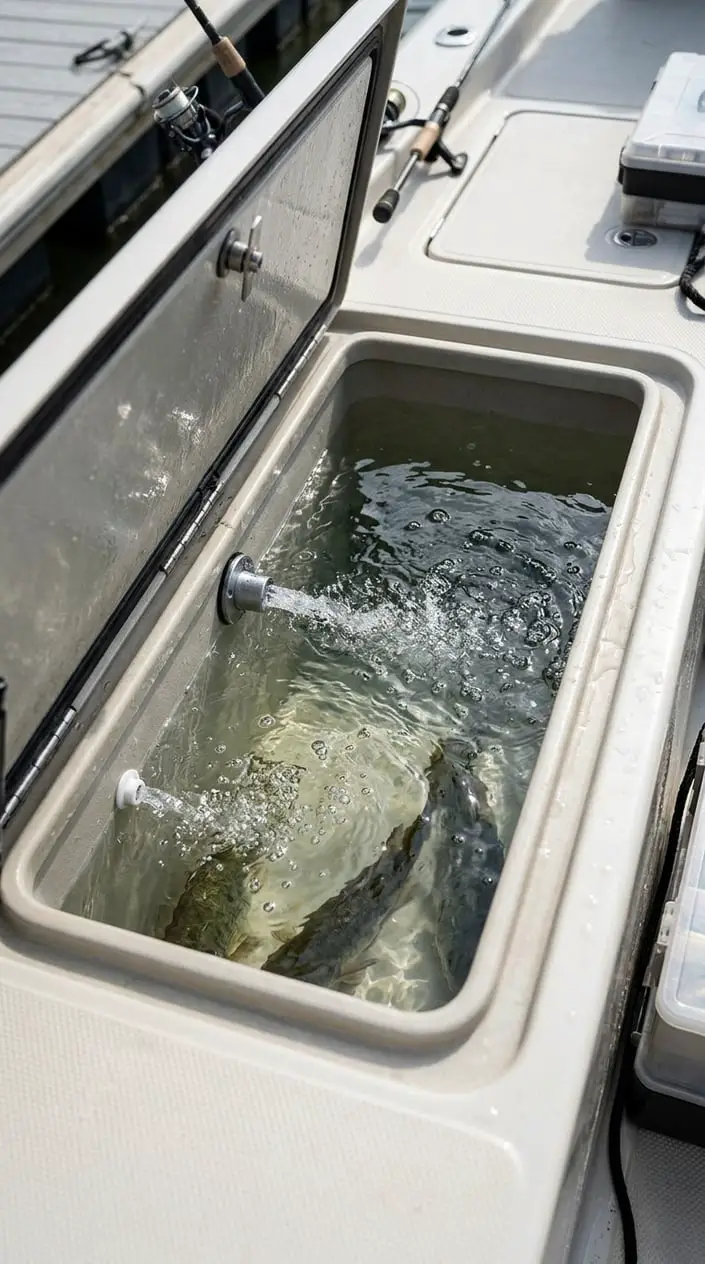
Better livewell aeration helps maintain oxygen levels and water circulation for fish you plan to keep alive. Check that the pump moves water at a rate suited to your livewell, and inspect the intake for debris before each trip. A spray bar or diffuser can spread water and help reduce stagnant areas inside the tank.
A timer lets you manage pump cycles, while a backup aerator adds another option if the main pump stops working. Keep the livewell clean, confirm the drain and overflow are clear, and test the system before you load fish. Water temperature and crowding also affect fish health, so follow local fishing rules and tournament requirements for livewell use and catch handling.
6) Upgrade the Trailer Bunks, Winch, and Lights
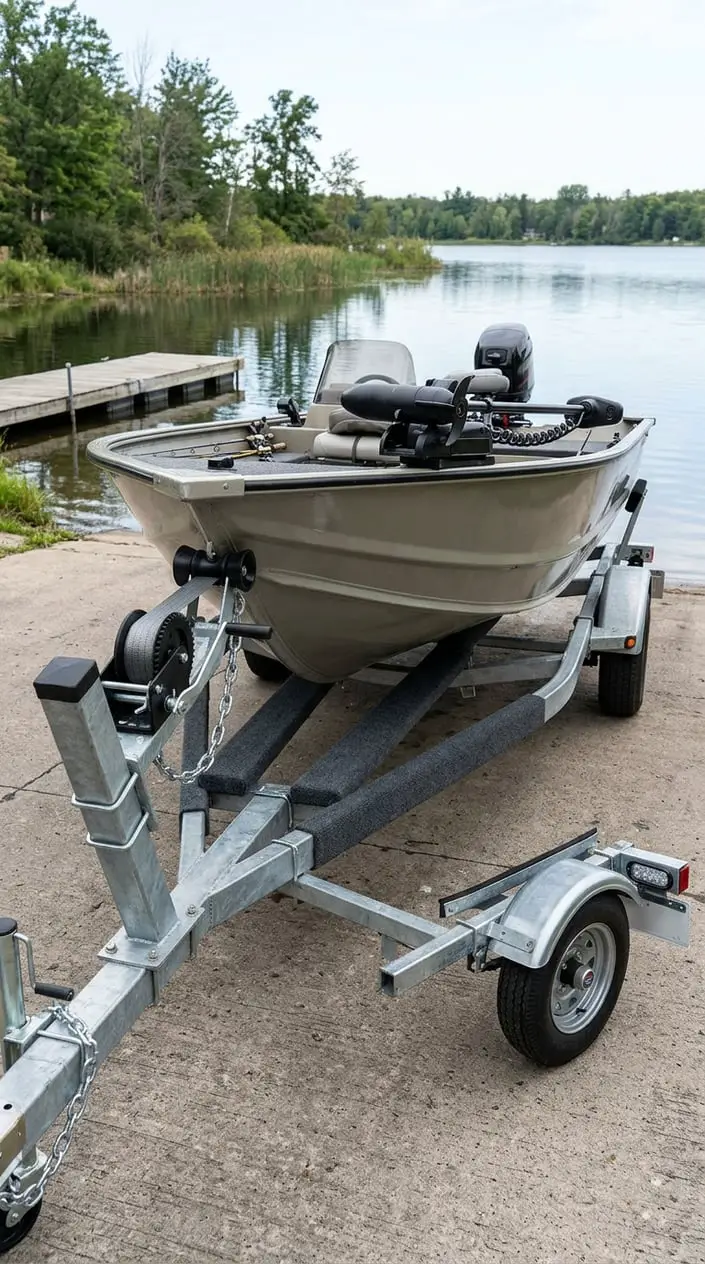
Reliable trailer bunks, a properly rated winch, and working lights make launching and hauling your boat safer. Replace worn or uneven bunk coverings so the hull sits securely and loads in line with the trailer. Check that the bunks support the hull at the points recommended by your boat maker.
Choose a winch rated for your boat and trailer load, and inspect the strap for fraying. A bow safety chain or strap adds a second secure connection during transport. Test the trailer lights before every trip, especially after launching, and replace damaged wiring or corroded connectors. As part of your routine, check tire pressure and look for loose hardware before towing.
7) Add Lockable Rod Storage and Tackle Organization
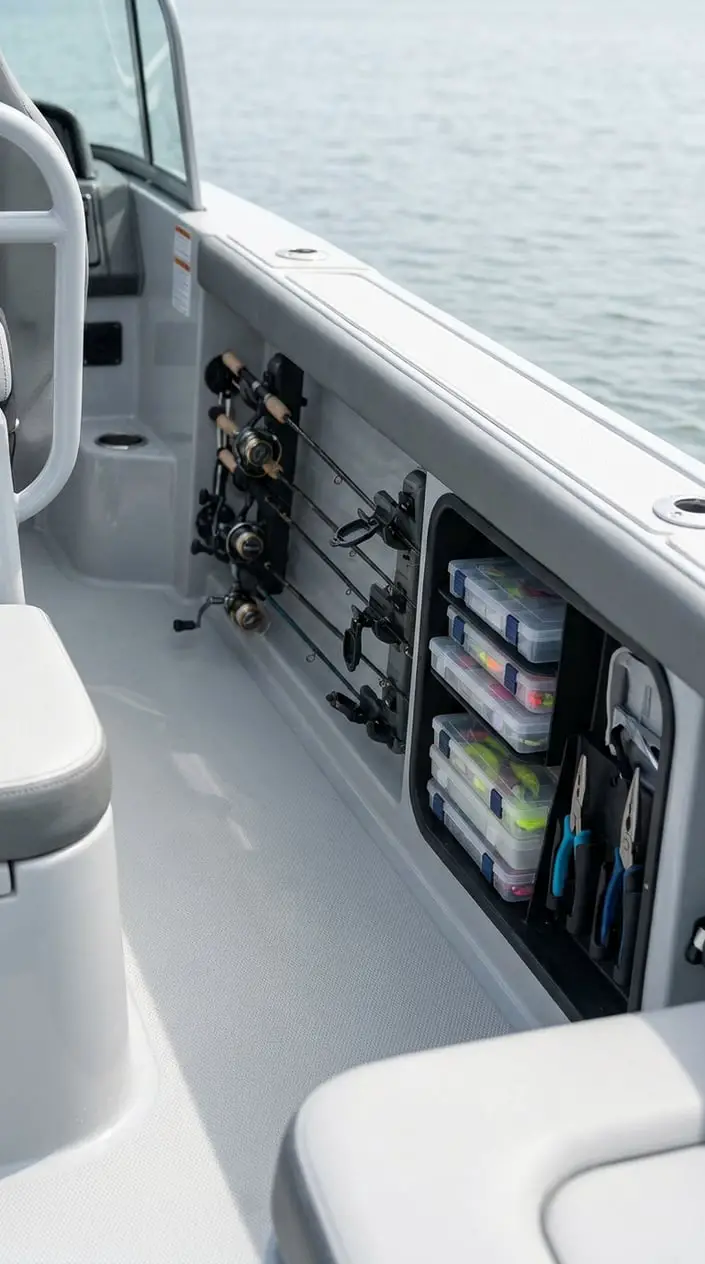
Lockable rod storage and a tidy tackle station protect your gear and keep the deck clear. Measure your longest rods with their reels attached, then check the available locker length and opening before installing a rack or storage tube. Secure rods so they cannot slide when the boat moves, and keep tips away from hatches and walkways.
Sort tackle into labeled, water-resistant boxes that fit your storage compartments. Store frequently used lures within easy reach, and place heavier boxes low and near the boat’s centerline to limit clutter on deck.
Use corrosion-resistant latches or locks, and check that storage lids open fully without hitting seats, electronics, or controls. A quick gear check before launch helps you spot missing tackle before you leave the dock.