Last Updated on November 13, 2026
GPS, sonar, precise boat control, organized storage, and simple safety features make your fishing boat easier to use throughout the day.
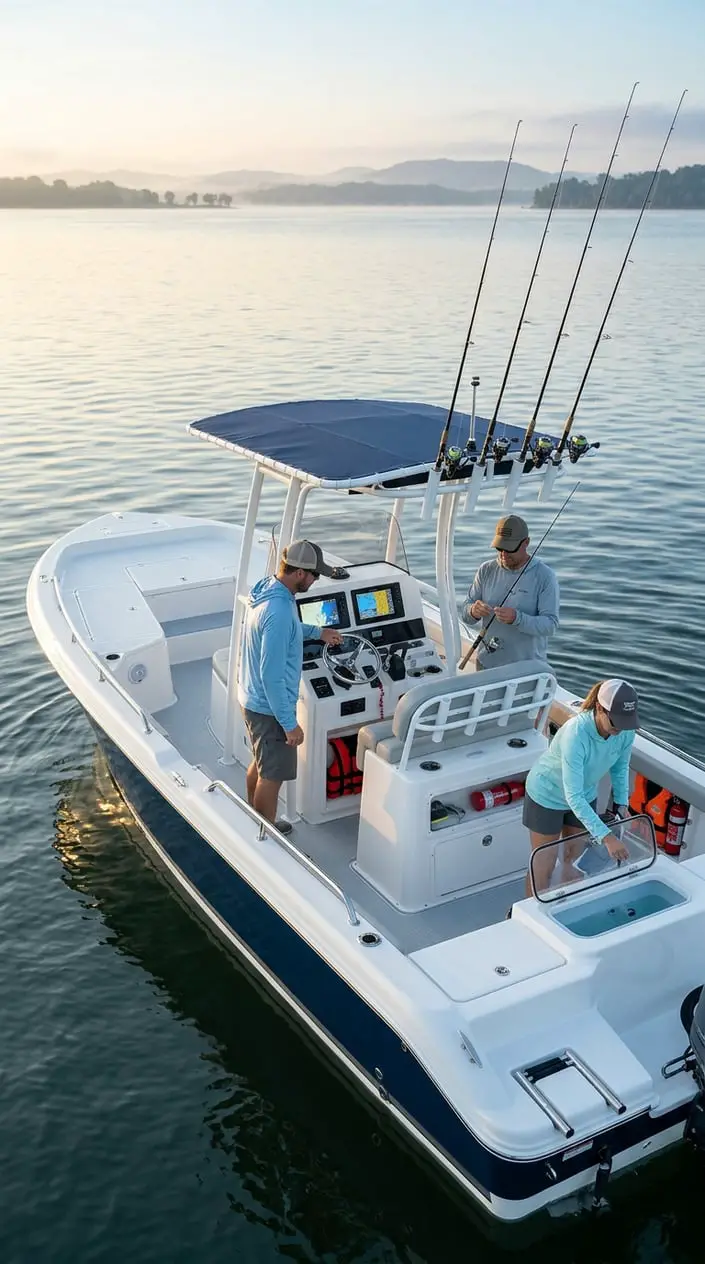
When your gear is easy to reach and your boat responds smoothly, you spend less time sorting out small hassles and more time fishing. A few well-chosen features can also make it easier to handle changing weather and water conditions.
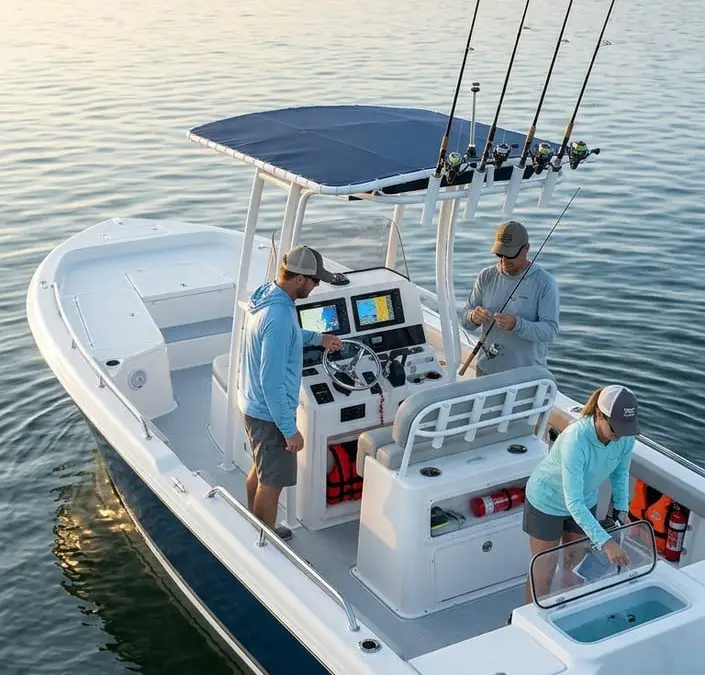
1) GPS Chartplotter With Lake Maps
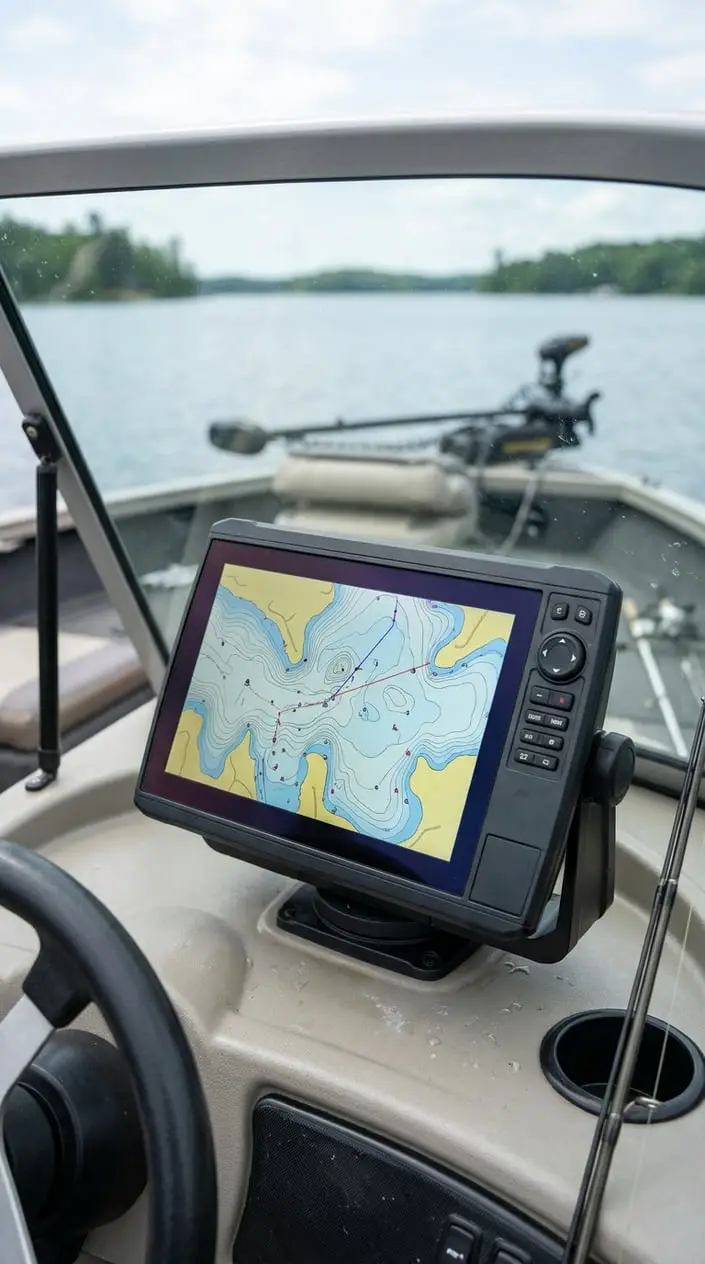
A chartplotter with lake maps helps you navigate, mark fishing spots, and return to familiar water with less guesswork. Use its GPS position and map view to follow channels, locate points, and save productive areas as waypoints. Depth contours can help you find drop-offs and humps where fish may gather.
Check that the unit includes maps for the lakes you fish, and learn how to update its software and charts. A larger screen makes map details easier to read, while split-screen views let you watch mapping and sonar together.
Before heading out, save key locations and check your route while you’re still at the dock. GPS supports navigation, but you should keep a paper chart or other backup and stay alert to changing conditions.
2) Side-Scan Fish Finder
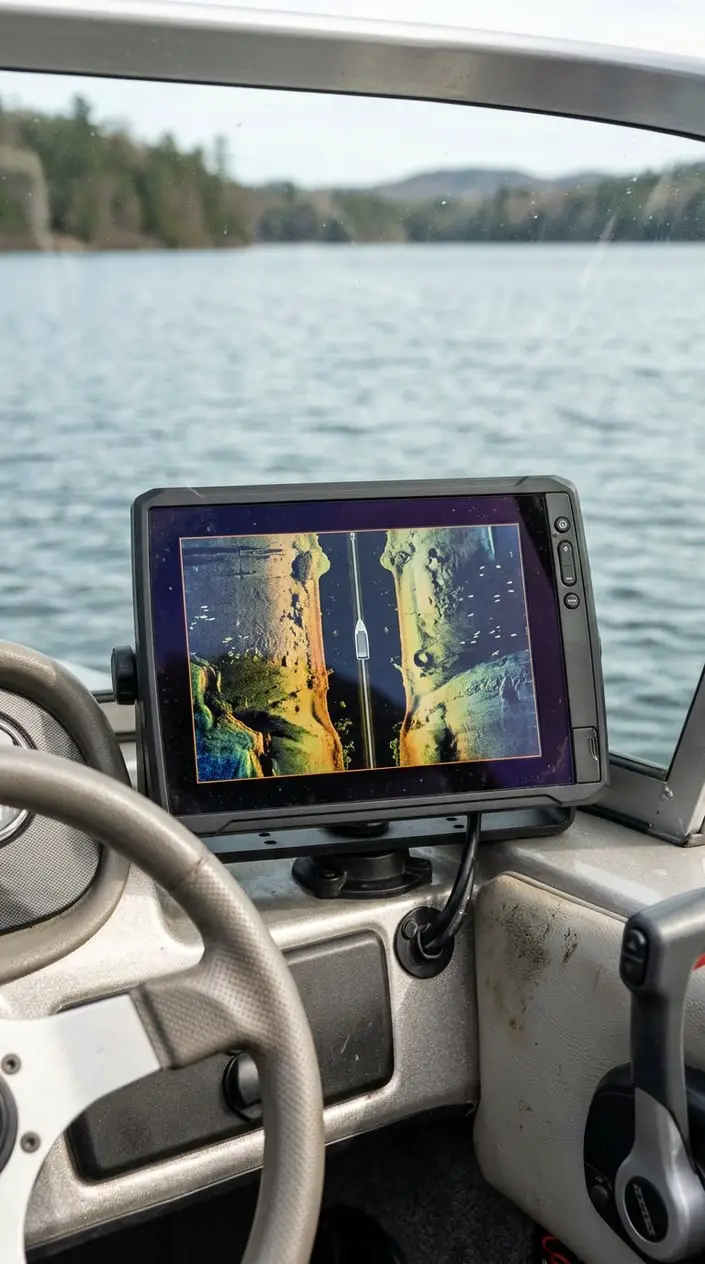
Side-scan sonar gives you a broad view of structure and fish beside your boat, helping you search water more efficiently. Its display can reveal submerged timber, rock piles, weed edges, and other features beyond the narrow area directly below the transducer. That wider view helps you decide where to make your next pass.
For useful readings, mount the transducer where clean water flows past it and follow the maker’s installation guidance. Set a range that suits the depth and area you’re scanning; an overly wide range can make details harder to interpret.
Learn to distinguish fish returns from branches and bottom texture by comparing the screen with familiar spots. Pairing sonar with GPS lets you mark promising structure for a closer look or a return visit.
3) Bow-Mounted Trolling Motor With Spot-Lock
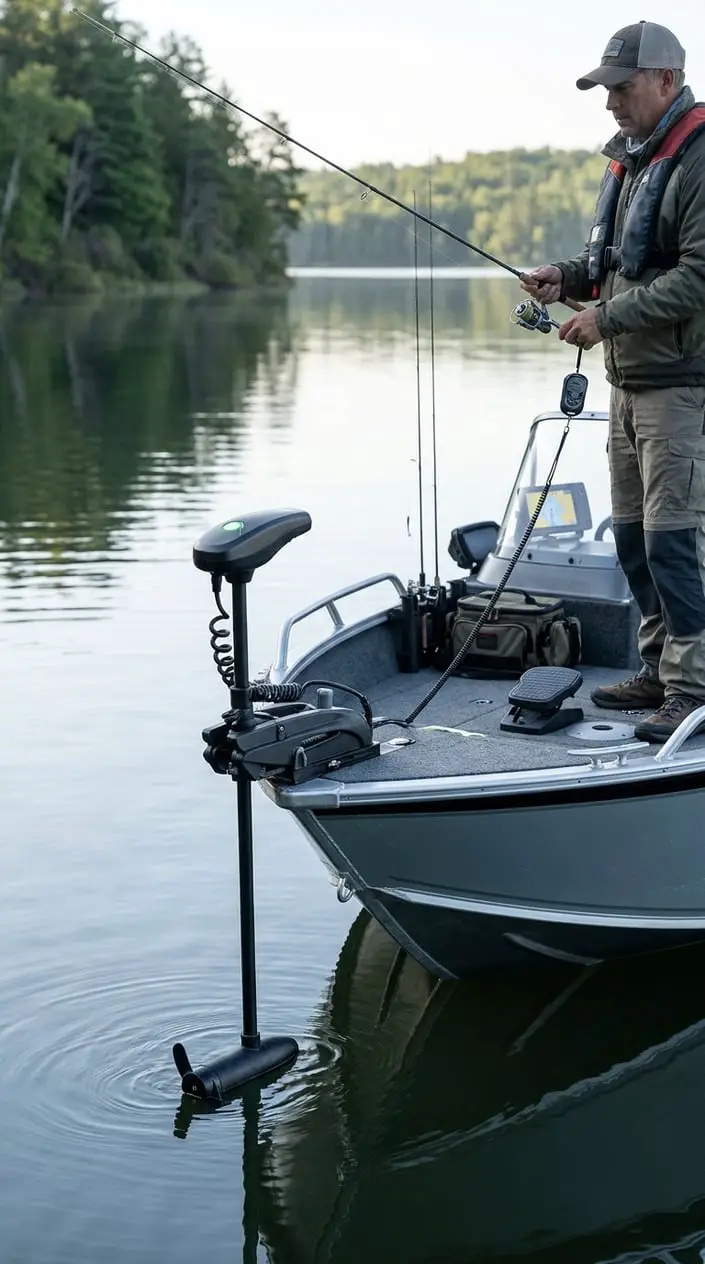
A bow-mounted trolling motor with Spot-Lock holds your position over a fishing spot with less manual steering. GPS-based anchoring helps keep the boat near a waypoint as wind or current pushes against it. You can focus on casting, working a shoreline, or fishing a small patch of cover while the motor makes position adjustments.
Check the motor’s thrust and battery needs against your boat size and the waters you fish. A compatible chartplotter can make it easier to control the motor and save locations from the helm. Keep the propeller clear of weeds, and inspect the battery charge before launch.
Spot-Lock is useful around structure and open-water fishing spots, while a physical anchor remains handy when you need a quiet, fixed hold or the electronics lose power.
4) Shallow-Water Anchor
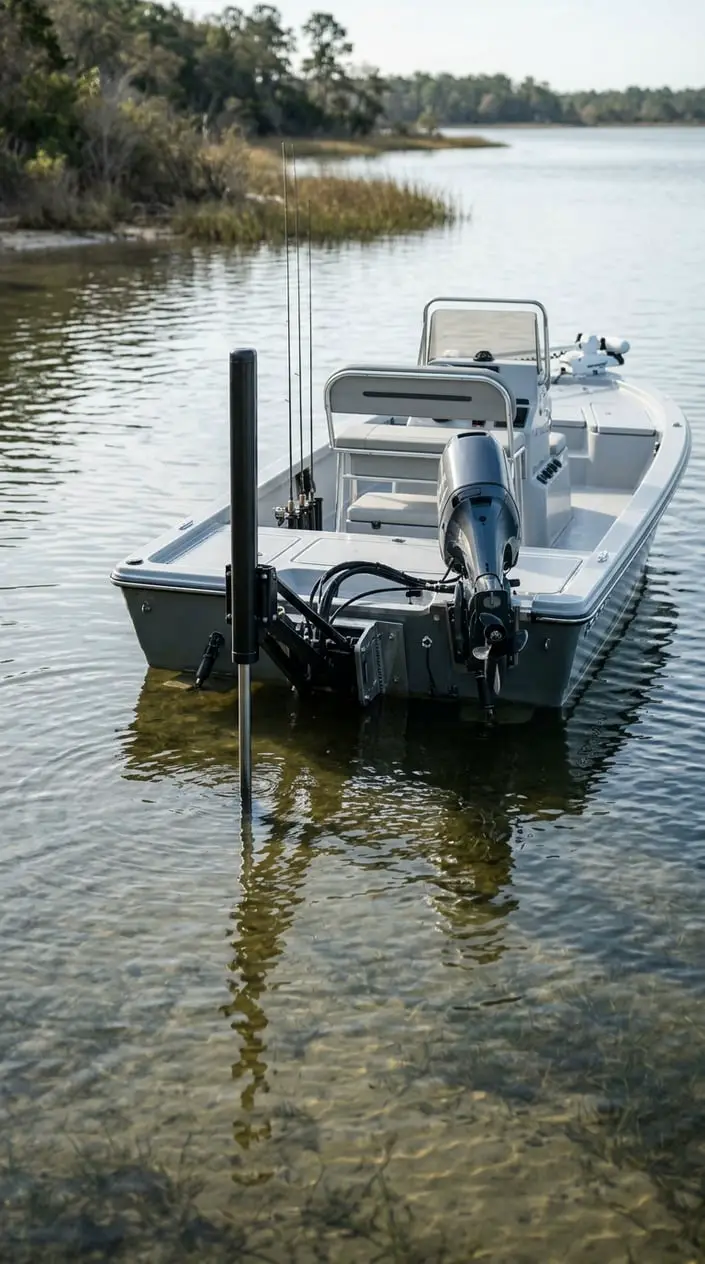
A shallow-water anchor pins your boat in place when you’re fishing flats, shorelines, or other protected areas. With a push of a control, an anchor pole drops into the bottom and helps stop drift from wind or current. That lets you keep a boat positioned for casting without handling a traditional anchor and rode.
Match the pole length and mounting setup to your boat and typical fishing depth. Many systems mount at the transom, where the pole can deploy clear of the fishing area. Use the anchor only where the bottom and depth suit the equipment, and follow its operating limits.
A shallow-water anchor works best in calm, protected water with a bottom that allows secure placement. For deeper water or changing conditions, use anchoring equipment suited to the location.
5) Recessed Rod Holders
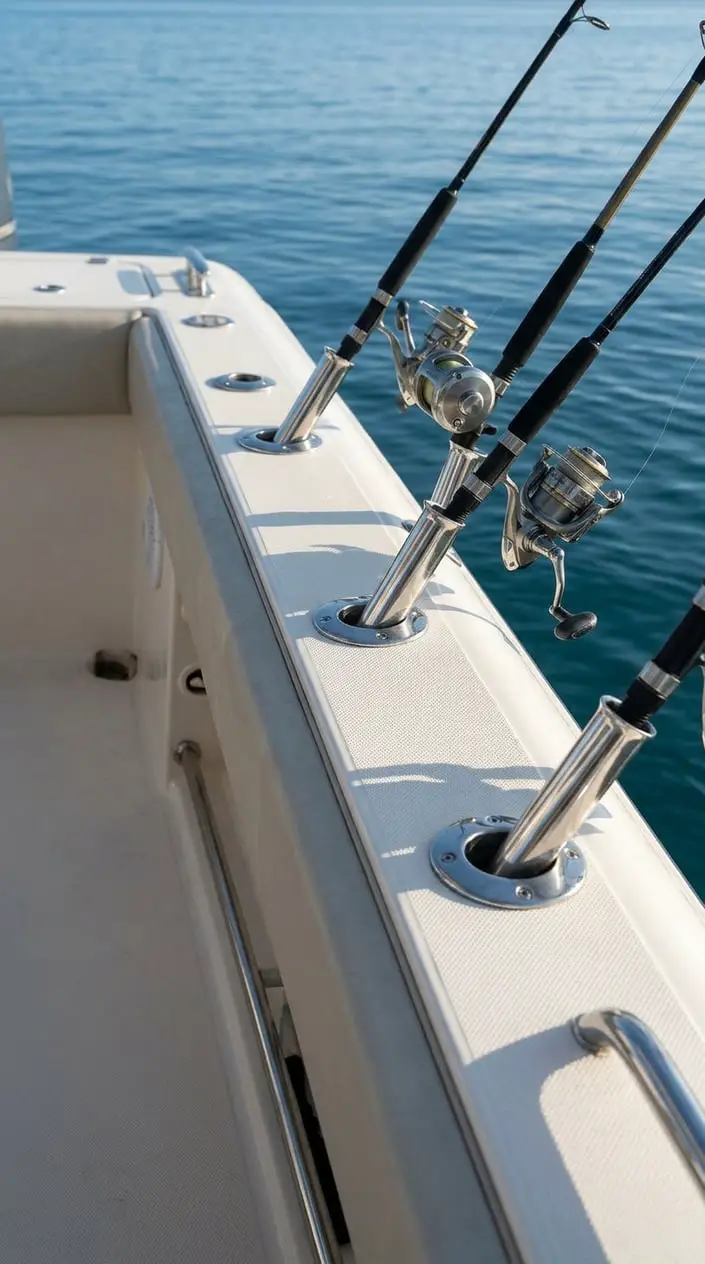
Recessed rod holders keep rods supported and out of the main walkway when you’re moving around the boat. Their flush design helps reduce snags on sleeves, fishing line, and tackle bags. Place holders where you can reach them from the cockpit without blocking access to seats, storage hatches, or the boarding area.
Check the holder’s diameter and angle against the rods you carry. A liner can help protect rod blanks from scratches, while drainage helps prevent water from sitting inside the tube. Position holders so reels remain clear of gunwales and other gear.
If you troll, confirm that the holders are designed for that load and install them securely. A few well-placed holders give you a tidy spot for spare rods between casts and during travel.
6) Aerated Livewell With Timer
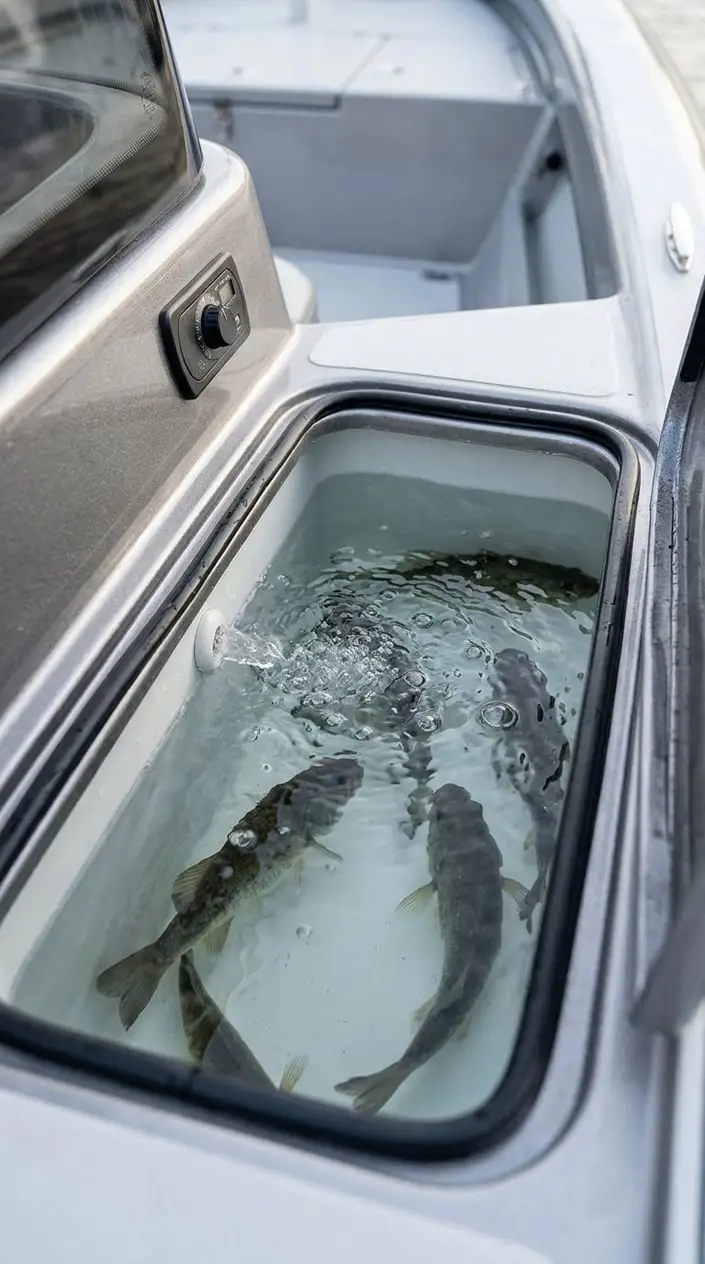
An aerated livewell with a timer helps keep bait or legally retained fish in circulating, oxygenated water. The pump brings in fresh water or recirculates water through the system, while aeration adds oxygen. A timer lets you set pump cycles, which can help manage water flow during a long day on the lake.
Look for a well sized for the fish you target, with a smooth interior and a lid that closes securely. Before launch, check the pump, intake, drain, and timer so you can spot a blockage or leak early. Keep the water level appropriate and avoid overcrowding the tank.
Follow local rules for keeping fish, including any limits on species and size. Regularly clearing debris from the intake helps maintain flow and keeps the system ready for use.
7) Lockable Rod Storage
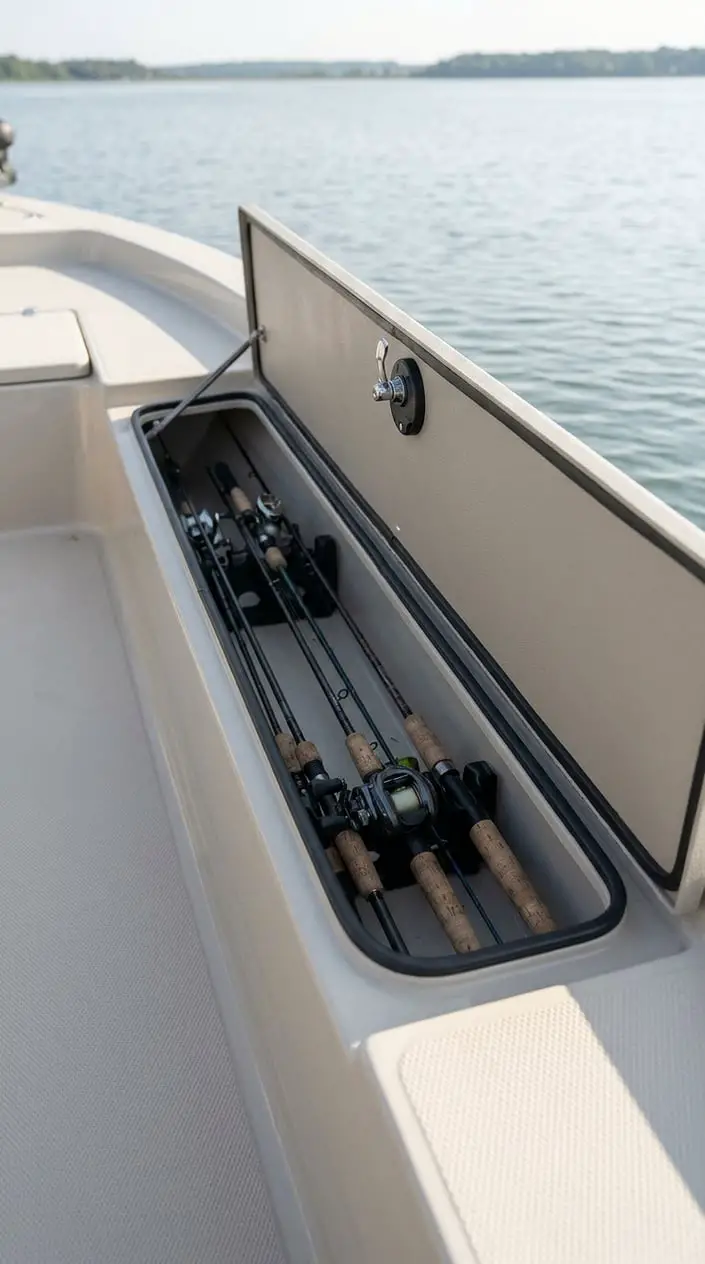
Lockable rod storage protects your fishing rods and reels while keeping the deck clear. A dedicated compartment holds gear in place as you travel and reduces the chance of rods getting stepped on or tangled with loose tackle. A lock adds security when you leave the boat unattended at a launch or marina.
Check the compartment’s length against your longest rods, including the handles and reels. Interior supports or padded dividers help separate setups and reduce contact between rod blanks. Make sure the lid opens freely and drains properly, since trapped water can damage gear over time.
Store rods with line guides positioned so they don’t catch on nearby equipment. Before locking up, dry wet tackle and secure loose items so they stay put when the boat moves.
8) Non-Slip Casting Deck
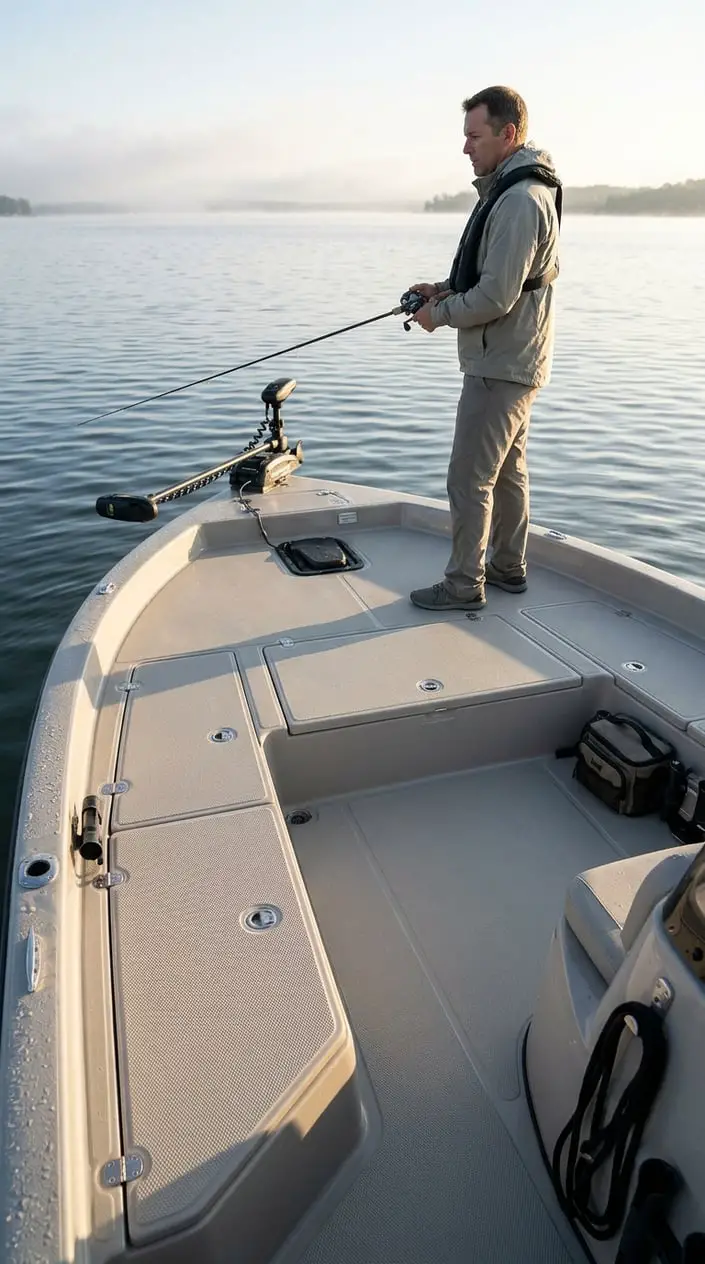
A non-slip casting deck gives you steadier footing while you cast, change lures, or move around the boat. Textured surfaces or marine-grade traction pads help your shoes grip when the deck is damp. A stable, uncluttered casting area also gives you room to shift your stance as you work a fish.
Keep the surface clean and clear of hooks, line, and loose tackle. Rinse away mud and fish slime after a trip, then inspect the deck for worn patches or edges that have lifted. Choose materials made for marine use and follow the installation directions so the surface stays firmly attached.
Traction helps with footing, though you should still move carefully when the boat rocks or the deck is wet. Leave a clear route between the casting area and the seats or ladder.
9) Clear, Labeled Switch Panel
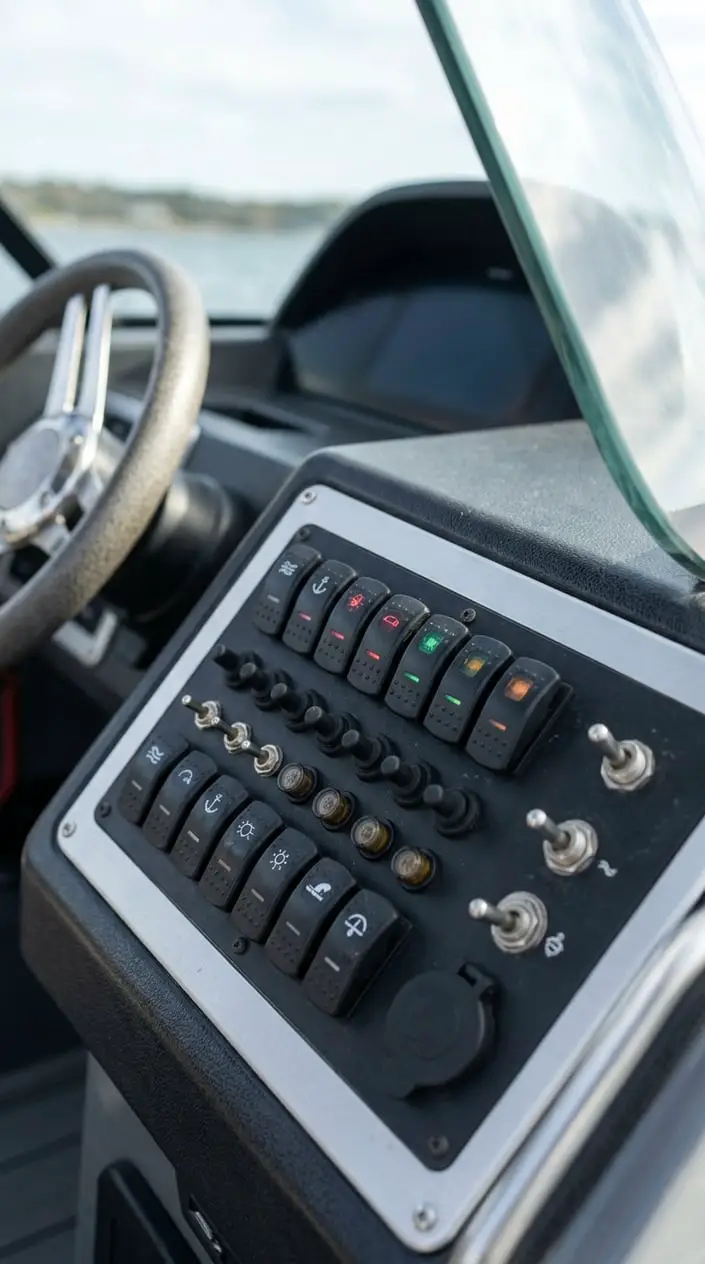
A clear, labeled switch panel helps you operate boat systems without searching for the right control. Labels for lights, pumps, electronics, and accessories make it easier to act quickly at the helm, especially in low light. Backlit switches improve visibility when you’re returning to the launch after sunset.
Choose a layout with readable labels and switches that are easy to reach from your normal driving position. Keep the panel legend or manual aboard so you can check unfamiliar controls. If you add electronics, update the labels and confirm that each switch operates the system named beside it.
A tidy panel also helps you spot a tripped breaker or an indicator light that needs attention. Ask a qualified marine technician to handle electrical work you’re not equipped to do safely.
10) Automatic Bilge Pump
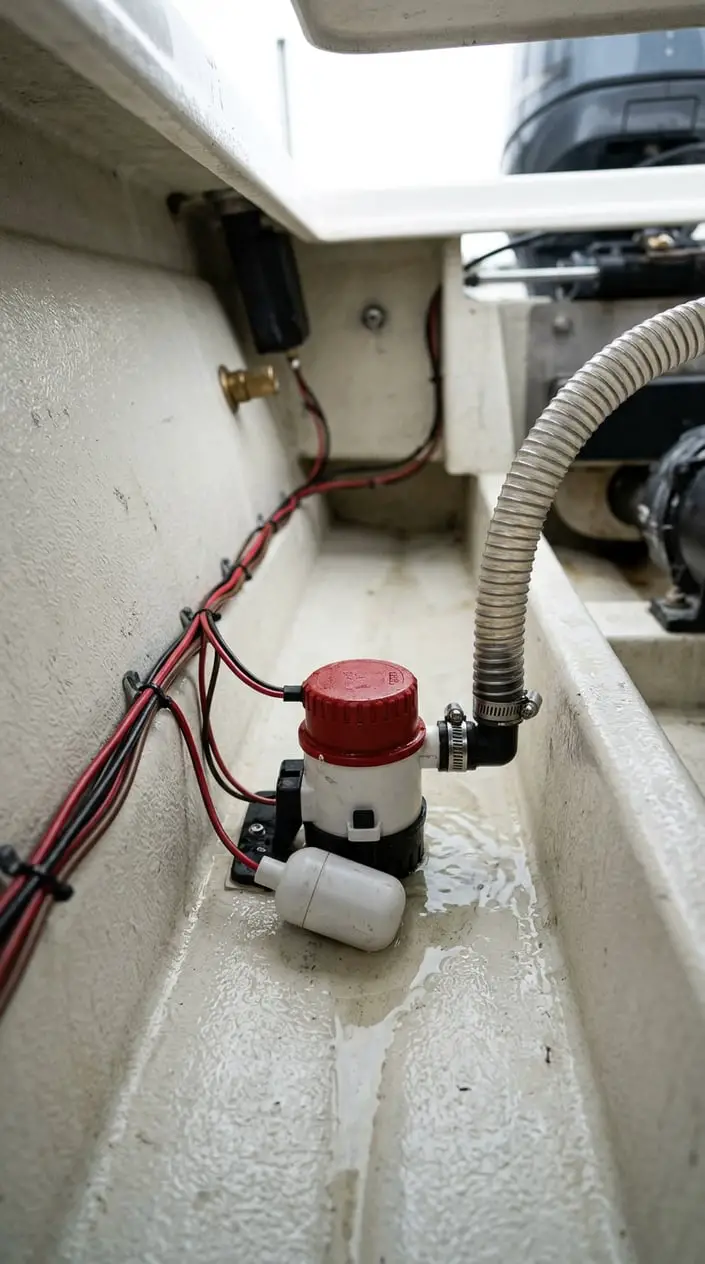
An automatic bilge pump removes water from the bilge when the float switch detects a rising level. It can help manage rainwater, spray, or small leaks while you’re fishing or away from the boat. A working pump provides an important layer of protection, especially when the boat is stored in the water.
Check the pump and float switch before each season, and confirm that the discharge hose is clear and secure. Test the system according to the manufacturer’s instructions, since some setups include a manual switch or test function. Keep the bilge free of leaves, line, and other debris that could block the intake.
Make sure the battery stays charged and that the wiring is protected from water exposure. A bilge pump supports safe boating, but it does not replace checking for leaks or carrying required safety gear.
11) Boarding Ladder
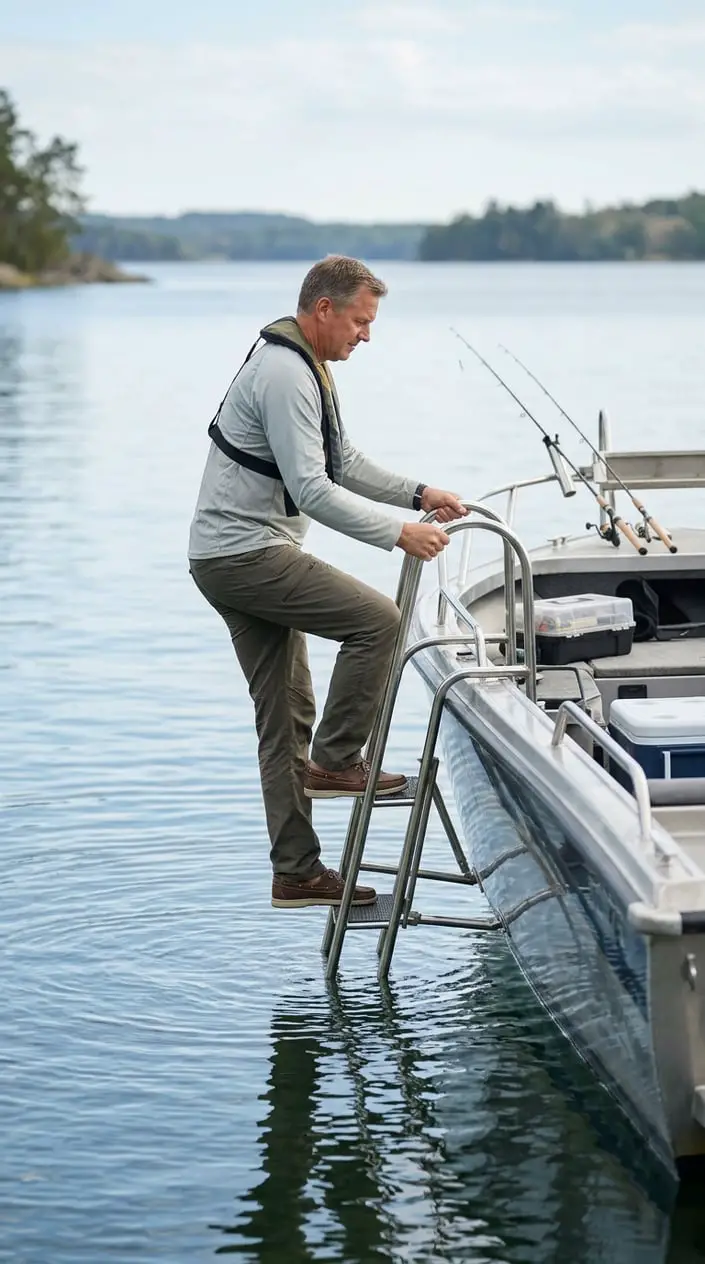
A boarding ladder gives you a secure way to climb back aboard from the water or a low dock. It is especially useful after swimming, retrieving something overboard, or helping another passenger return to the boat. A ladder with wide steps and sturdy handholds makes the climb more manageable.
Check that the ladder extends deep enough for you to reach the lowest step while floating. Mount it where you can deploy it without blocking the motor, propeller, or normal boarding path. Keep the steps clean and inspect hinges, fasteners, and rails for wear or corrosion.
Before anyone enters the water, turn off the engine and keep clear of the propeller. Practice deploying the ladder at the dock so you know how it works before you need it.
12) Bimini Top
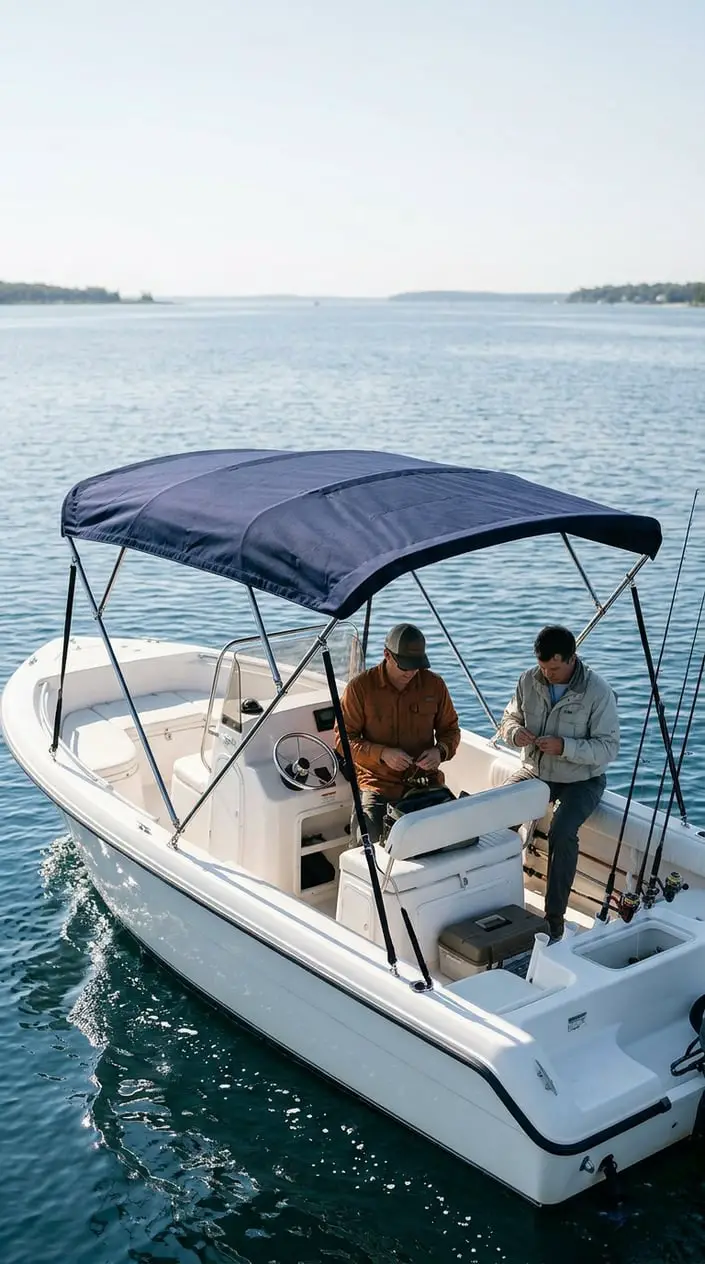
A Bimini top provides shade over the helm or seating area during long, sunny days on the water. Its fabric canopy can make it more comfortable to take a break between fishing spots and helps reduce direct sun exposure. Many tops fold down when you need extra clearance for storage or travel.
Measure the area you want to shade and check the top’s height against your boat and any storage cover. A frame with secure mounts helps the canopy stay in place underway, while straps keep it steady when deployed. Follow the maker’s speed guidance and fold the top down when conditions call for it.
Rinse salt and dirt from the fabric, then let it dry before storage to limit mildew. Keep sunscreen and other sun protection aboard, since shade does not block every ray.