Last Updated on November 12, 2026
You can spot common boat design styles by checking the hull shape, deck layout, and placement of the helm. Those features give you quick clues about a boat’s purpose, from fishing shallow water to carrying a group across a lake.
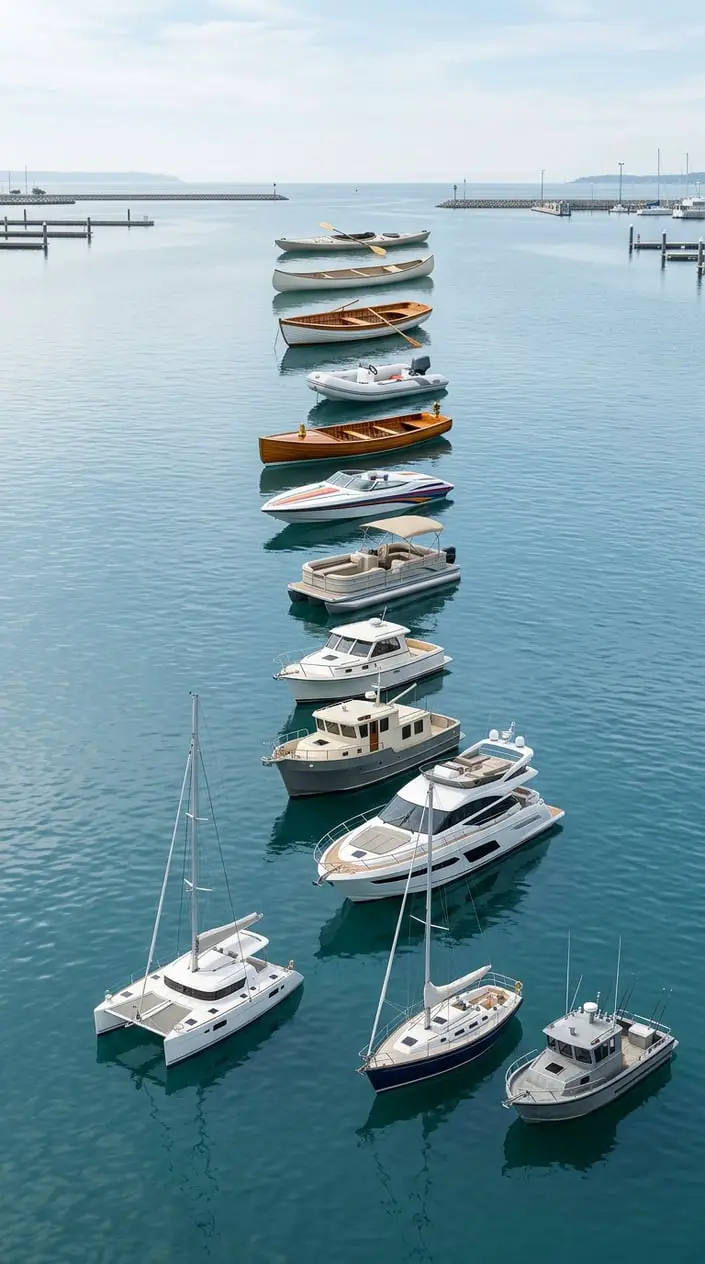
As you look around a marina or boat launch, start with the bow, the front of the boat, then trace the sides toward the stern. You’ll soon see how seating, cabins, sails, and hulls help separate one design from another.
1) Pontoon Boat
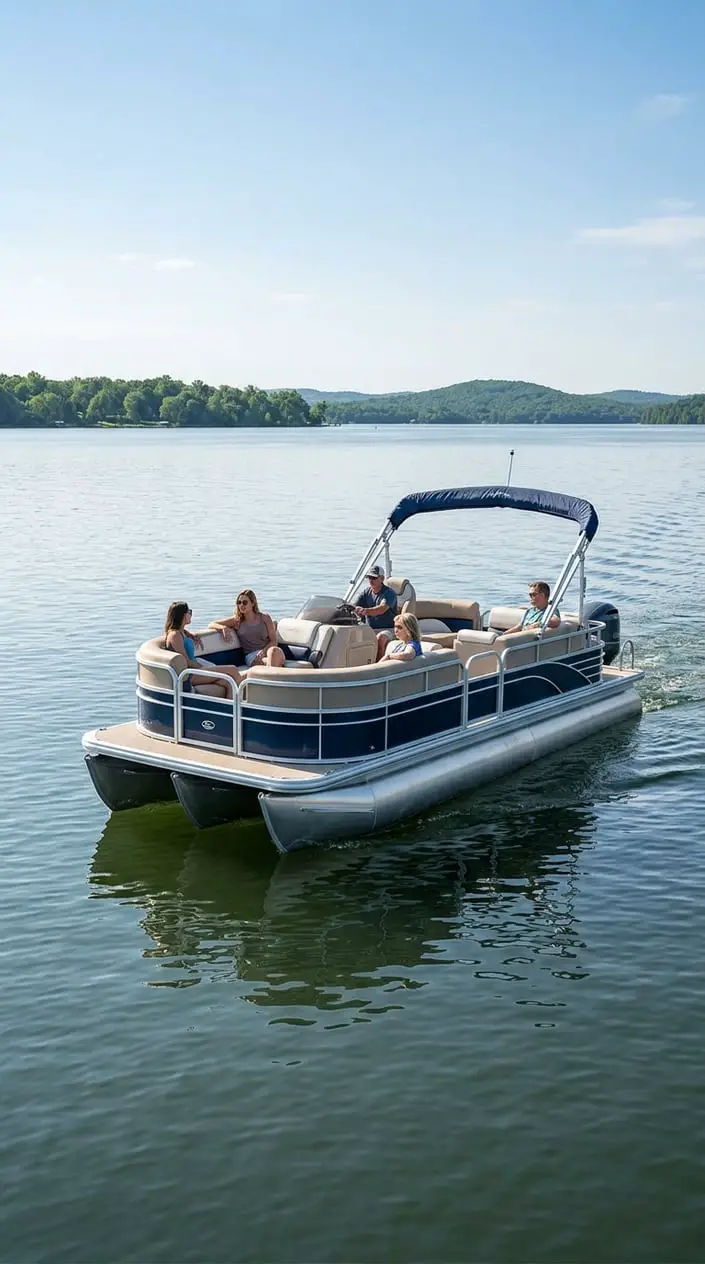
You can recognize this design by its wide, flat deck resting on two or three long flotation tubes. The rounded tubes, called pontoons, sit below the deck and support a roomy platform above the water. You’ll see open railings around the seating area, with the helm commonly set toward the front or side.
This layout gives you plenty of space for passengers, lounge seats, and easy movement around the boat. A pontoon suits calm lakes, rivers, and other protected waters where you want a stable ride and room to socialize. Look beneath the deck for the tubes; that detail separates it from a deck boat, which gets its shape from a single hull.
2) Bowrider
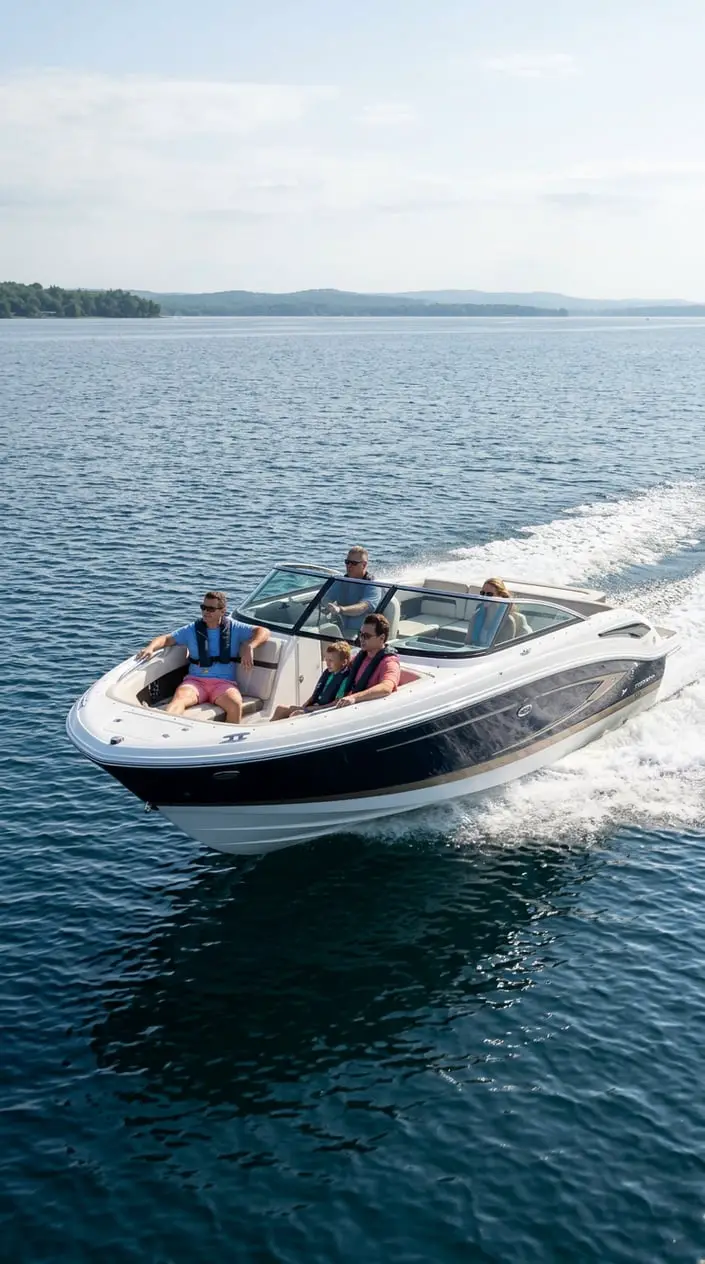
A bowrider gives you open seating in both the bow and the cockpit behind the windshield. Its pointed front often has a U-shaped bench, while the helm and passenger seat sit farther aft. The open bow is the clearest clue when you’re comparing it with other recreational motorboats.
You’ll find this style on many day boats built for cruising, swimming, and watersports. A V-shaped hull helps the boat travel through waves, and a central walkway lets you move between the cockpit and bow. Check that the bow seating has a proper rail or grab handles, especially when passengers move forward underway.
3) Center-Console Boat
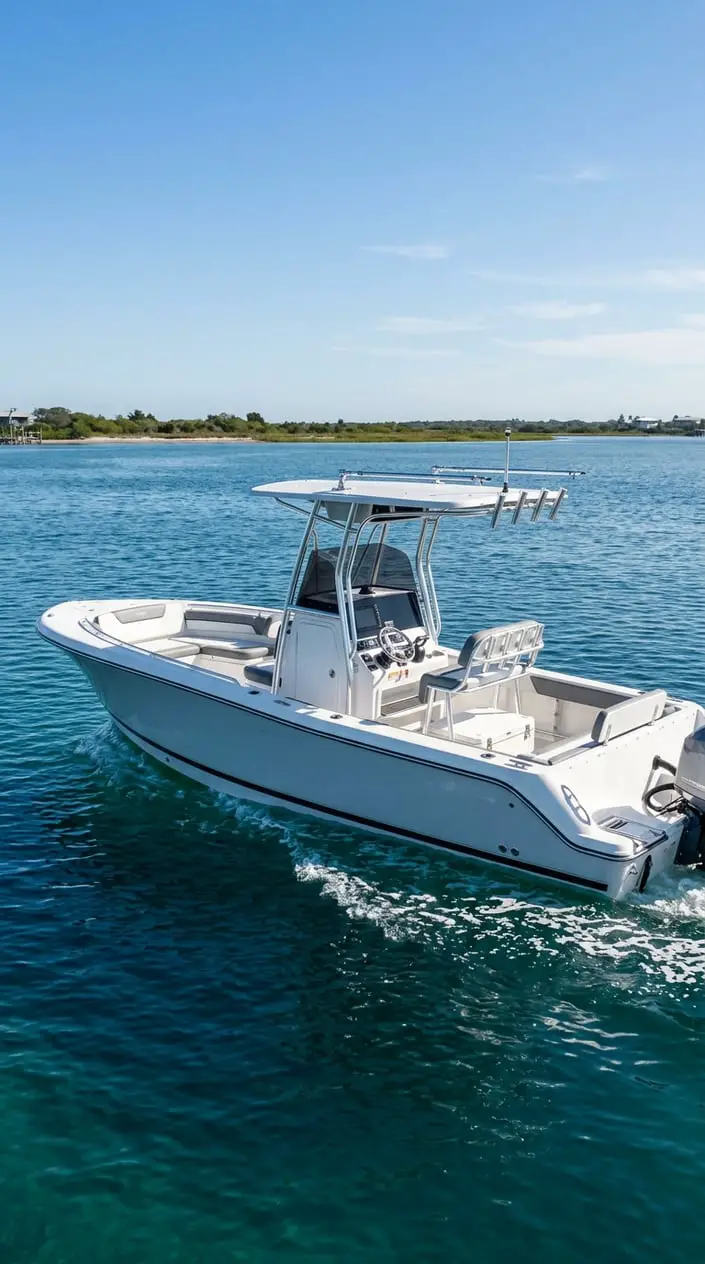
You can identify a center-console boat by its helm station set in the middle of an open deck. The console holds the steering wheel and controls, and you can walk around it to reach the bow from either side. That open path gives you access to much of the boat’s perimeter.
This layout works well for fishing because you can follow a fish around the deck without being blocked by a cabin. Many models include rod holders, storage compartments, and a T-top that shades the helm. You’ll see the style in freshwater and saltwater, from modest inshore boats to larger offshore craft. Look for the central steering console and open side passages to distinguish it from a boat with a side helm.
4) Bass Boat
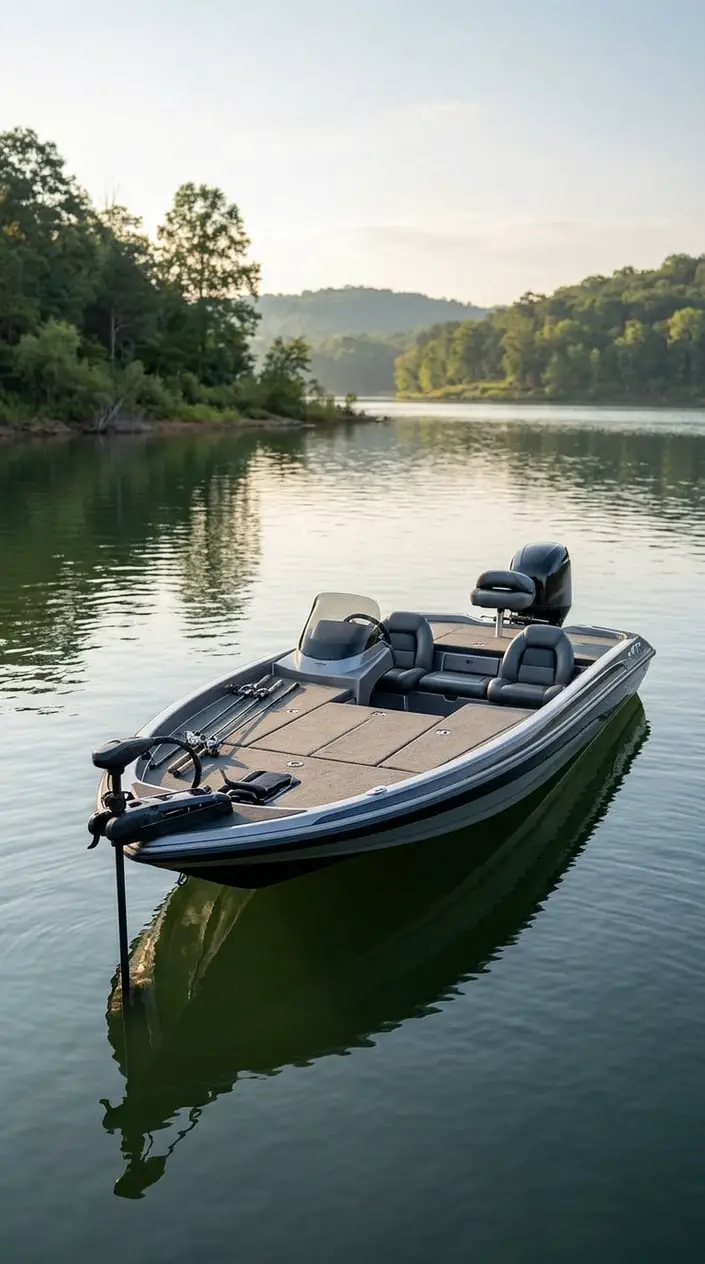
A bass boat has a low profile, a pointed bow, and broad casting decks at the front and rear. You’ll often spot a trolling motor mounted on the bow, along with pedestal fishing seats and storage hatches built into the deck. The cockpit sits lower between the raised fishing platforms.
This design is made for freshwater angling, especially when you need to move quietly along shorelines or around weeds. Livewells hold caught fish, while lockers store rods and tackle. Many bass boats use a fiberglass hull, though aluminum models are also common. When you’re identifying one at a ramp, look for the raised casting platforms and fishing-focused fittings, which give the boat a more specialized layout than a general-purpose runabout.
5) Deck Boat
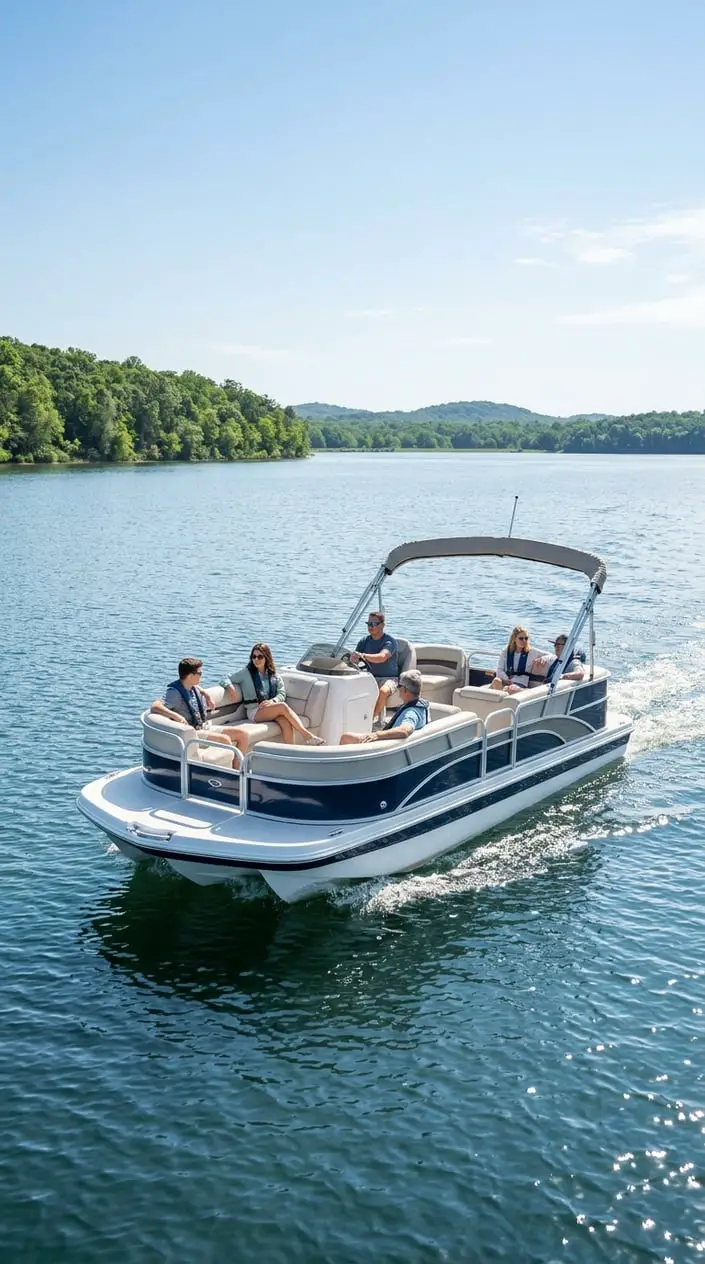
A deck boat stands out through its broad bow and wide open deck, which give you more room for passengers. Its front section is fuller than the pointed bow you’ll see on many runabouts. Inside, you’ll find wraparound seating, a central walkway, and a helm set to one side.
You can use this layout for lake cruising, swimming, and family outings. Many models have a single hull with a modified V shape, though the exact hull varies by boat. The wider forward area creates space for extra seats while preserving a familiar motorboat profile. To tell a deck boat from a pontoon, look below the deck: a deck boat has a shaped hull, while a pontoon rides on long tubes.
6) Jon Boat
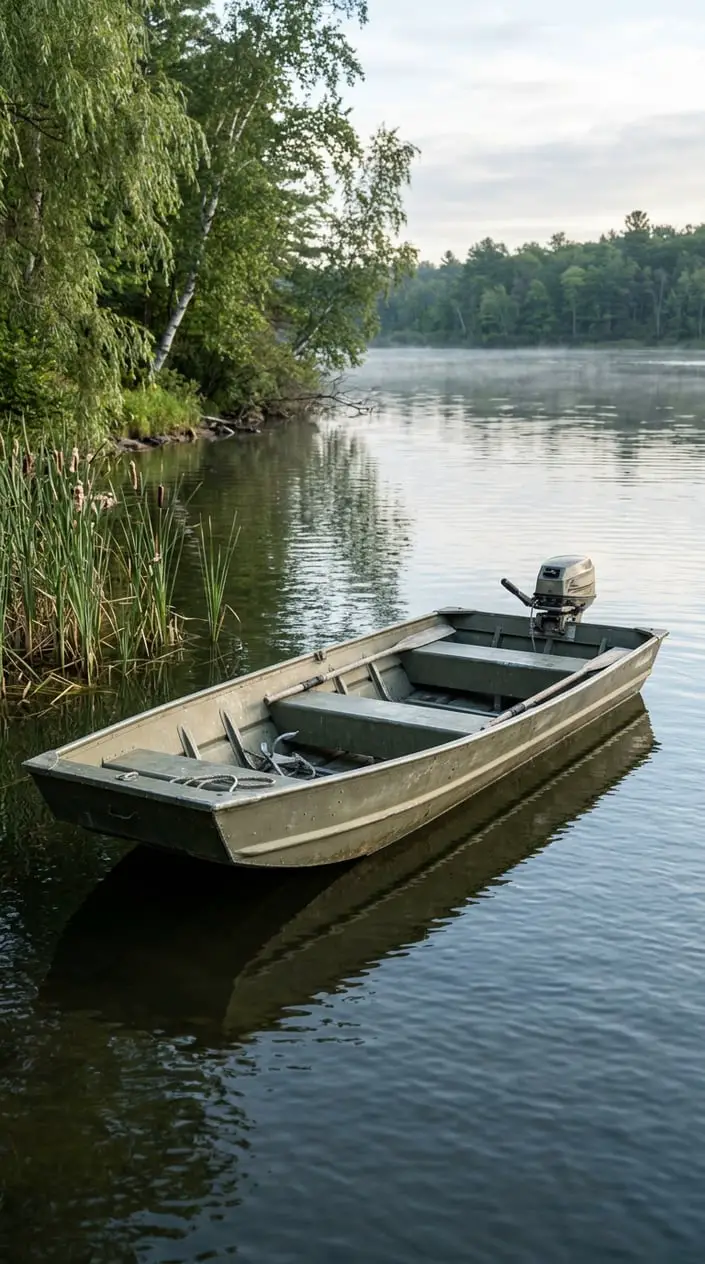
A Jon boat is a small, simple craft with a flat bottom and squared-off bow. Its sides are usually straight, and its open interior gives you a clear view of the basic bench seats and transom at the stern. Many are made from aluminum, though you’ll also find fiberglass versions.
The flat-bottom hull gives you shallow draft, so you can reach calm creeks, ponds, and backwaters. You’ll often see a small outboard motor attached to the transom. This design works well for fishing, hunting, or short trips where a light, easy-to-handle boat fits the water. Watch for the squared bow and flat floor; those features set it apart from a skiff, which may have a sharper entry through the water.
7) Skiff
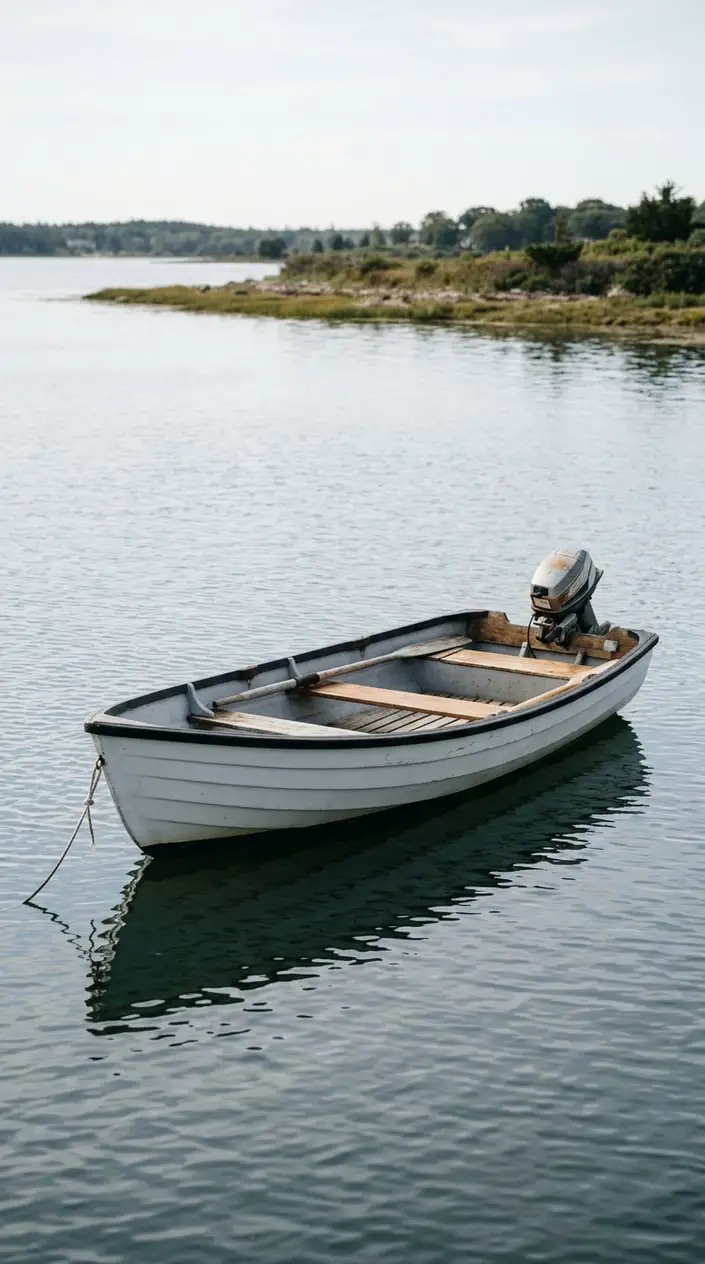
A skiff is a compact open boat built for simple handling in shallow or nearshore water. You’ll recognize its low sides, uncluttered deck, and modest size. The bow may be pointed or slightly rounded, and the hull shape varies by the waters and tasks the boat is designed for.
Skiffs are used for inshore fishing, tending larger boats, and short trips through sheltered waterways. Some have a small center console, while others use a tiller or a simple side helm. You can look for a shallow-draft hull and open layout to identify the style, then check the motor and deck fittings for clues about its intended use. Compared with a Jon boat, a skiff may have a more shaped hull and a sharper bow.
8) Cuddy-Cabin Boat
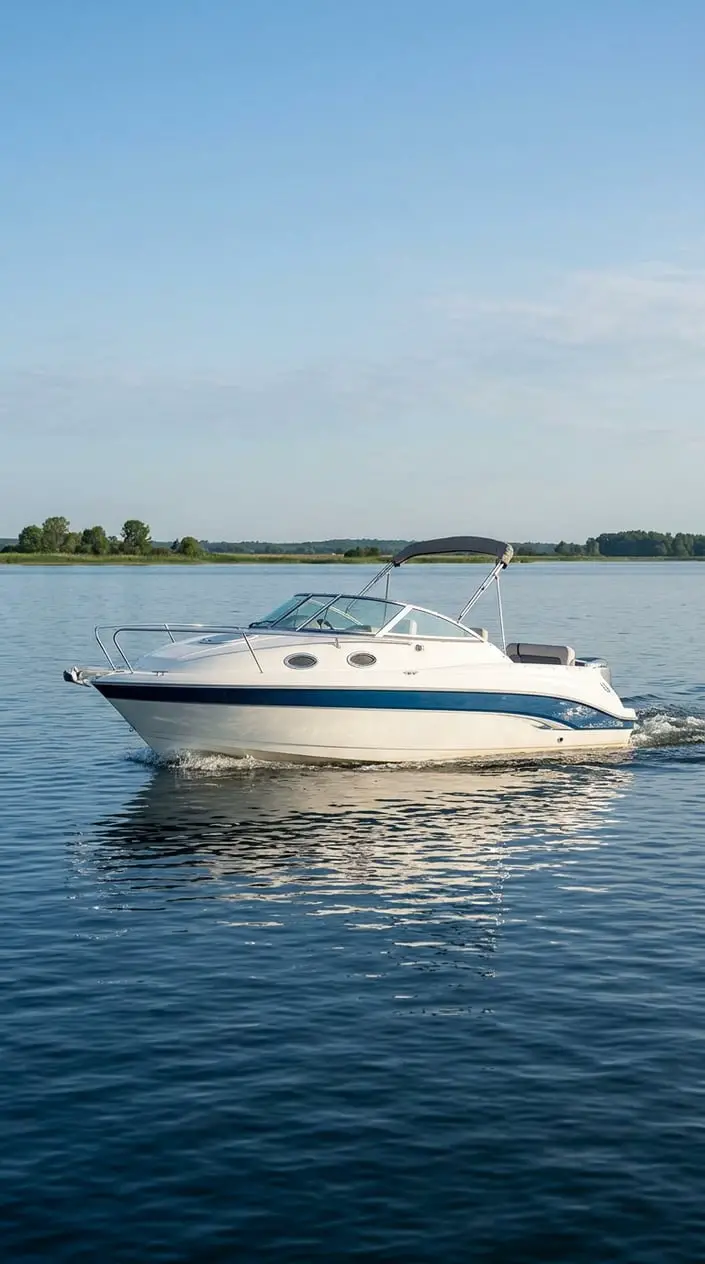
A cuddy-cabin boat gives you a small enclosed space tucked beneath the foredeck. From outside, the cabin appears as a compact raised section near the bow, with a small hatch or window. The cockpit behind it stays open for seating, steering, and day use.
Inside, you may find a low berth for resting, along with compact storage. The cabin’s limited height and space make it more suited to shelter and short breaks than standing or moving around. This design is useful for day trips when you want protection from sun or rain and a place to stow gear. Check the bow area for the cabin entrance; that feature separates it from an open runabout with bow seating.
9) Express Cruiser
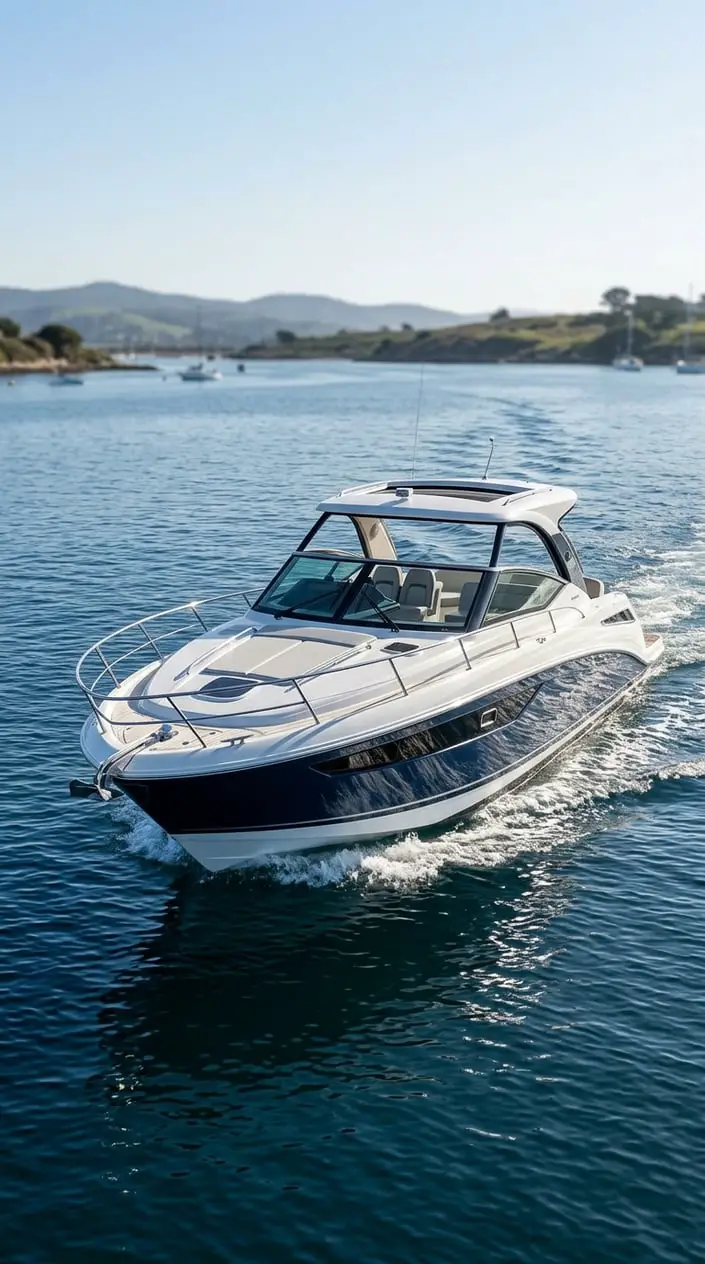
An express cruiser combines an open aft cockpit with an enclosed cabin below the forward deck. You’ll see a windshield and helm above the cabin, plus a broad area at the stern for seating or entertaining. Many models have an inboard engine and a relatively sleek profile.
You get more overnight comfort than a small cuddy cabin usually provides, with sleeping space and often a compact galley or enclosed head. The cabin layout varies by size, so you can inspect the windows and hatches for clues about its interior. This style suits coastal cruising and weekends aboard. Look for the raised cabin structure and open rear cockpit together; that pairing gives you a quick visual distinction from an open bowrider.
10) Trawler
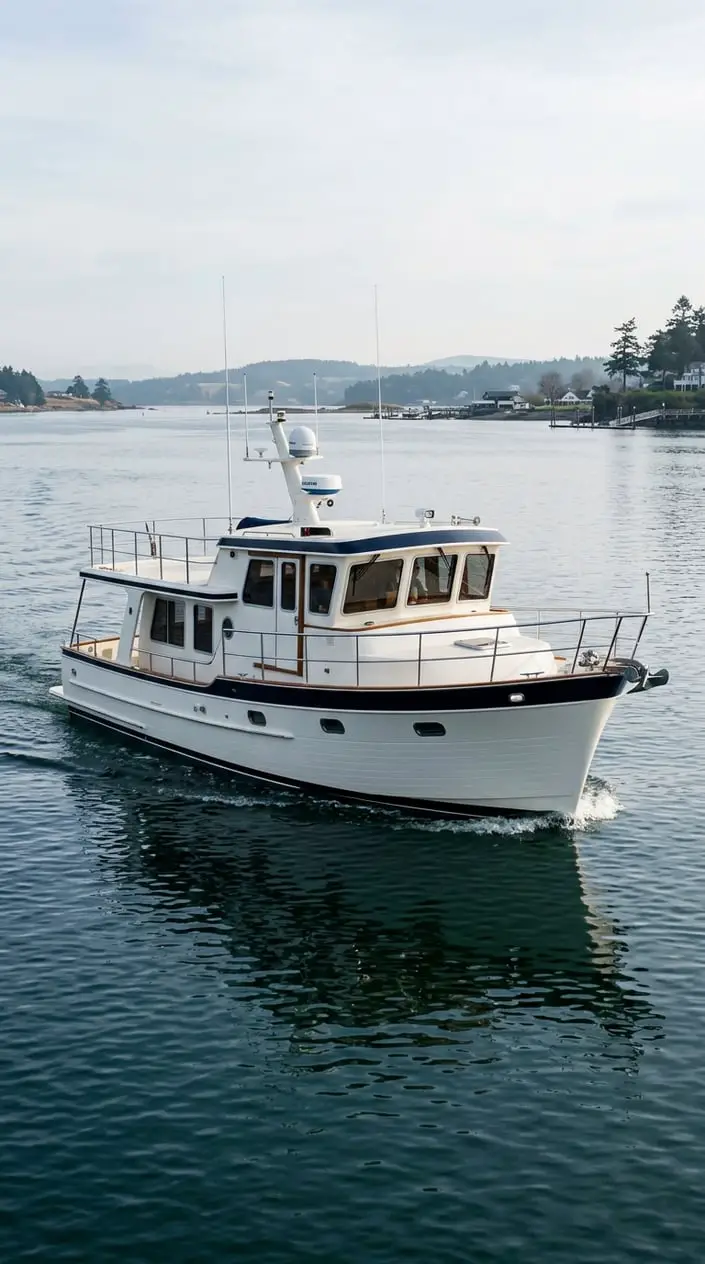
A trawler has a high-sided hull, a substantial cabin, and a helm positioned in a pilothouse or on an upper deck. Its profile looks built for steady cruising, with useful interior space and room for supplies. Many designs have a rounded bow and a displacement or semi-displacement hull.
You’ll see this style on boats made for longer trips at a measured pace. A displacement hull moves through the water, and its shape supports efficient cruising at modest speeds. Some boats called trawlers use different hull designs, so the name alone doesn’t confirm how the boat handles. Look for the full cabin, protected helm, and long-range layout.
11) Monohull Sailboat
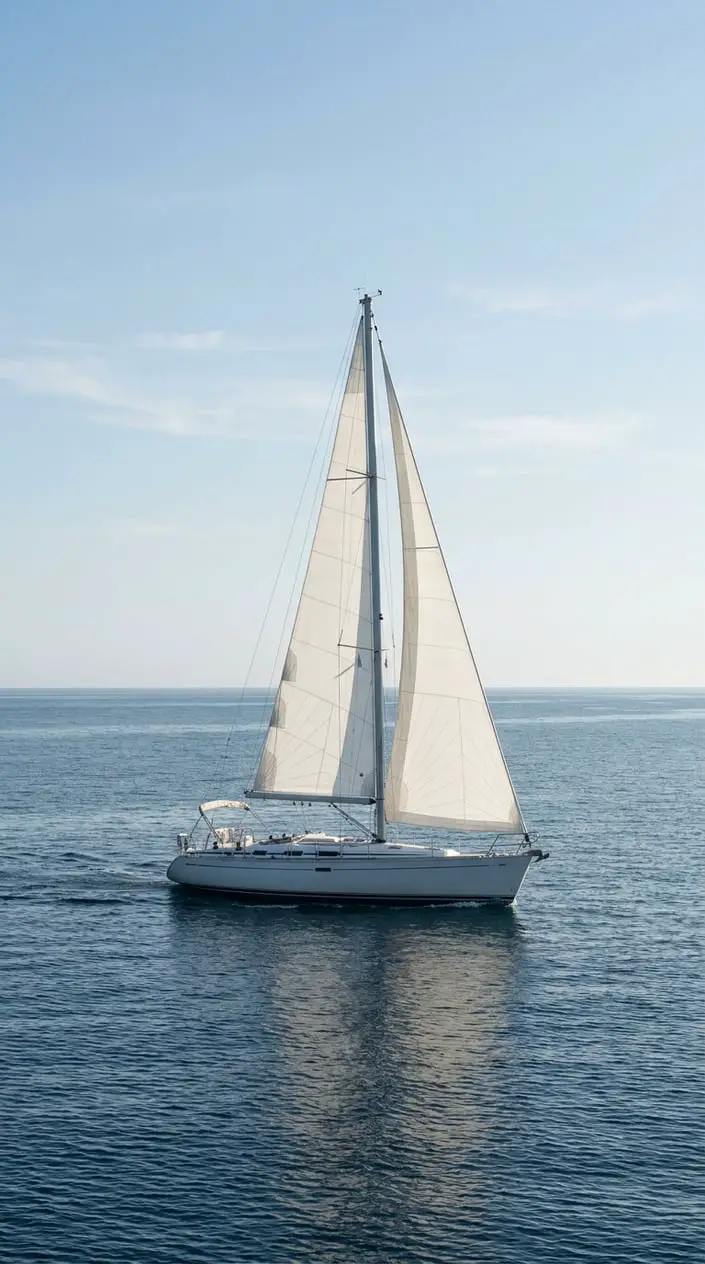
A monohull sailboat has one main hull, a mast, and sails that provide its primary power. You can spot the single narrow hull beneath the deck and the keel extending down into the water. The keel helps the boat track through the water and resist sideways movement under sail.
Its rig may include a mainsail and one or more headsails, with lines running back to the cockpit. Below deck, larger models offer berths and basic living space. This design appears in small day sailors as well as ocean-going cruising boats. When you’re looking from shore, count the hulls first, then note the mast and keel. A single hull separates this style from a catamaran, which rides on two parallel hulls.
12) Catamaran
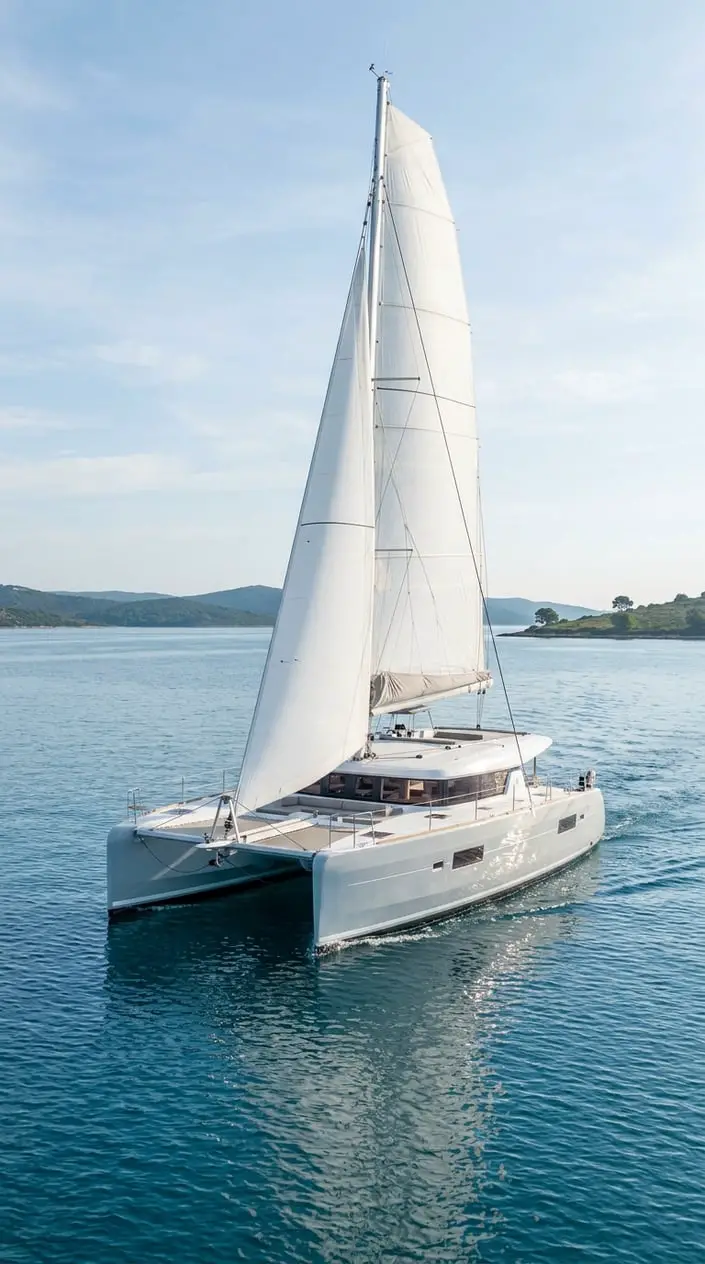
A catamaran rides on two parallel hulls joined by a wide deck or bridge structure. That broad stance is easy to recognize from a dock, especially when you see the open space between the hulls. Sailing models have one or more masts, while power catamarans use engines.
You’ll find cabins and social spaces spread across the connecting structure, with layouts that vary by size. The twin hulls give you a wide platform and often reduce the boat’s rolling motion at anchor. In return, the catamaran takes up more width at a slip than a similar-length monohull. Check for two distinct hulls before judging its purpose; the sail or motor setup tells you whether you’re looking at a sailing or power model.
13) Houseboat
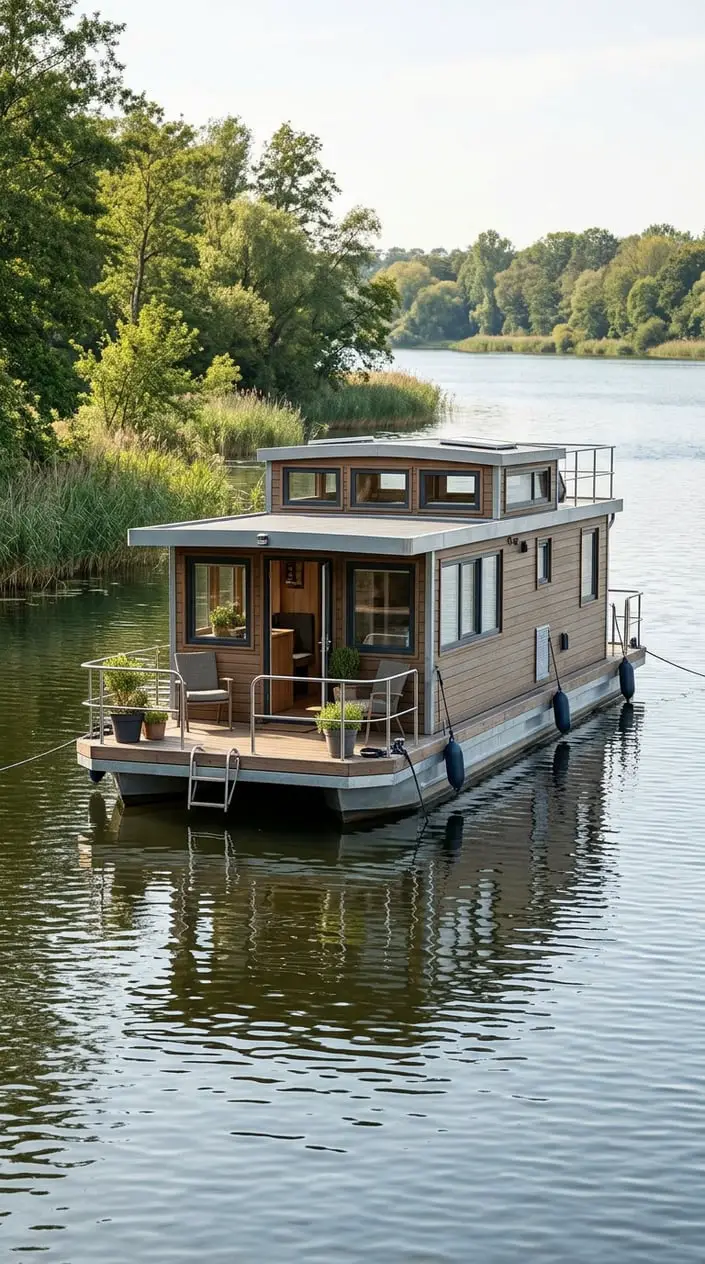
A houseboat is designed around living space, with a broad platform supporting rooms above the water. Its boxy outline, large windows, and roof deck make it look more like a floating cabin than a conventional motorboat.
Many models have a porch-like aft area and a small helm near the front. You’ll find home-style features such as sleeping areas, a galley, and a bathroom, though the layout depends on the boat’s size.
Some houseboats use pontoon-style flotation, while others sit on a different hull platform. Their wide shape suits protected lakes and rivers where you can cruise at a relaxed pace. Look for the cabin-like superstructure and generous deck space to tell one apart from a cruiser with a smaller enclosed cabin.