Last Updated on March 21, 2026
You spend a lot of time in your galley, so making it work for life at sea matters. This article shows practical upgrades that make cooking safer, storage smarter, and daily tasks easier while you cruise.
You’ll find simple, ship-ready changes that improve safety, save space, and keep meals enjoyable underway.
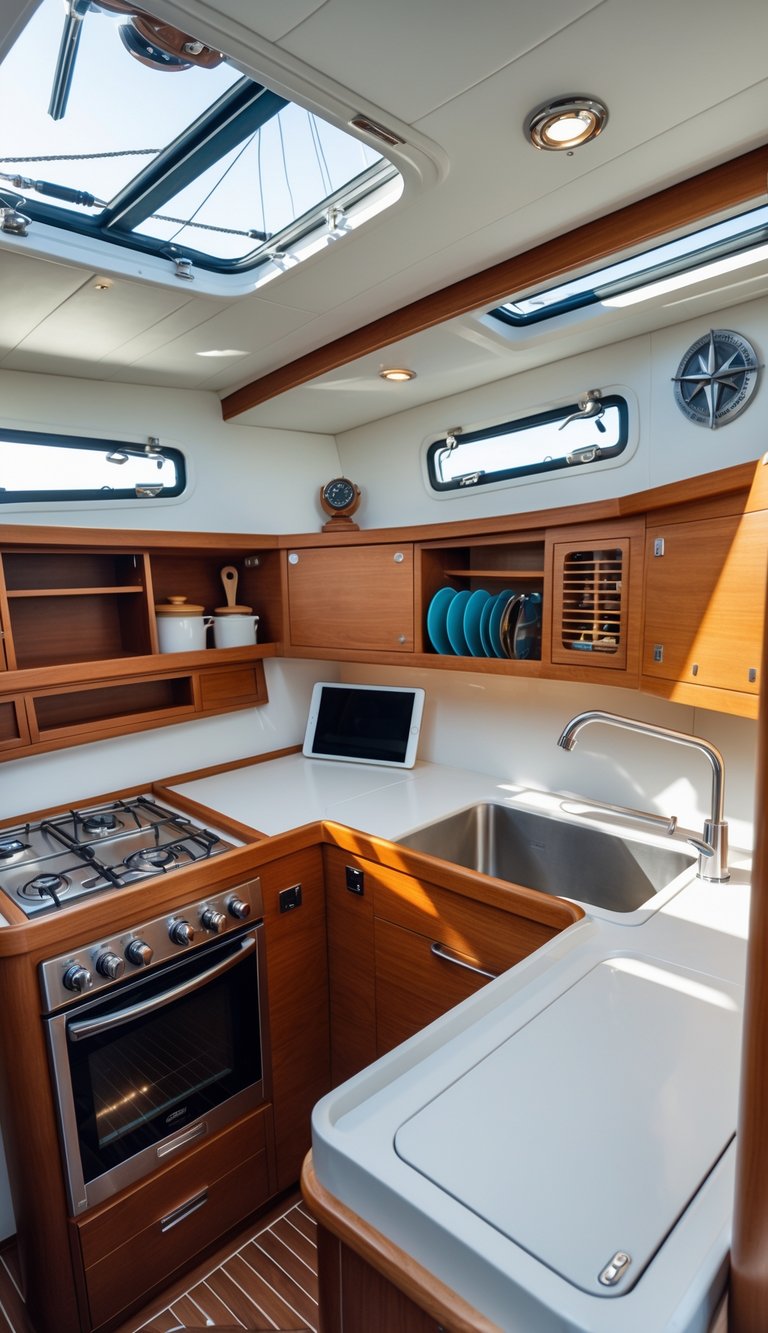
You’ll learn ideas that fit small galleys and larger layouts alike, from better appliances to smarter storage and lighting. Use these tips to plan upgrades that match your budget and sailing style.
PRO TIP
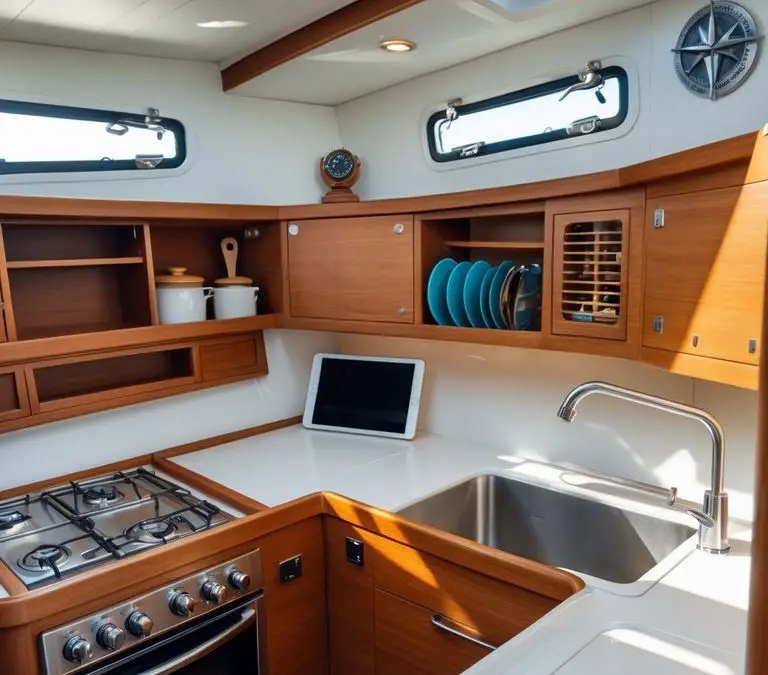
1) Install a gimbaled Force 10 stove for safe cooking underway
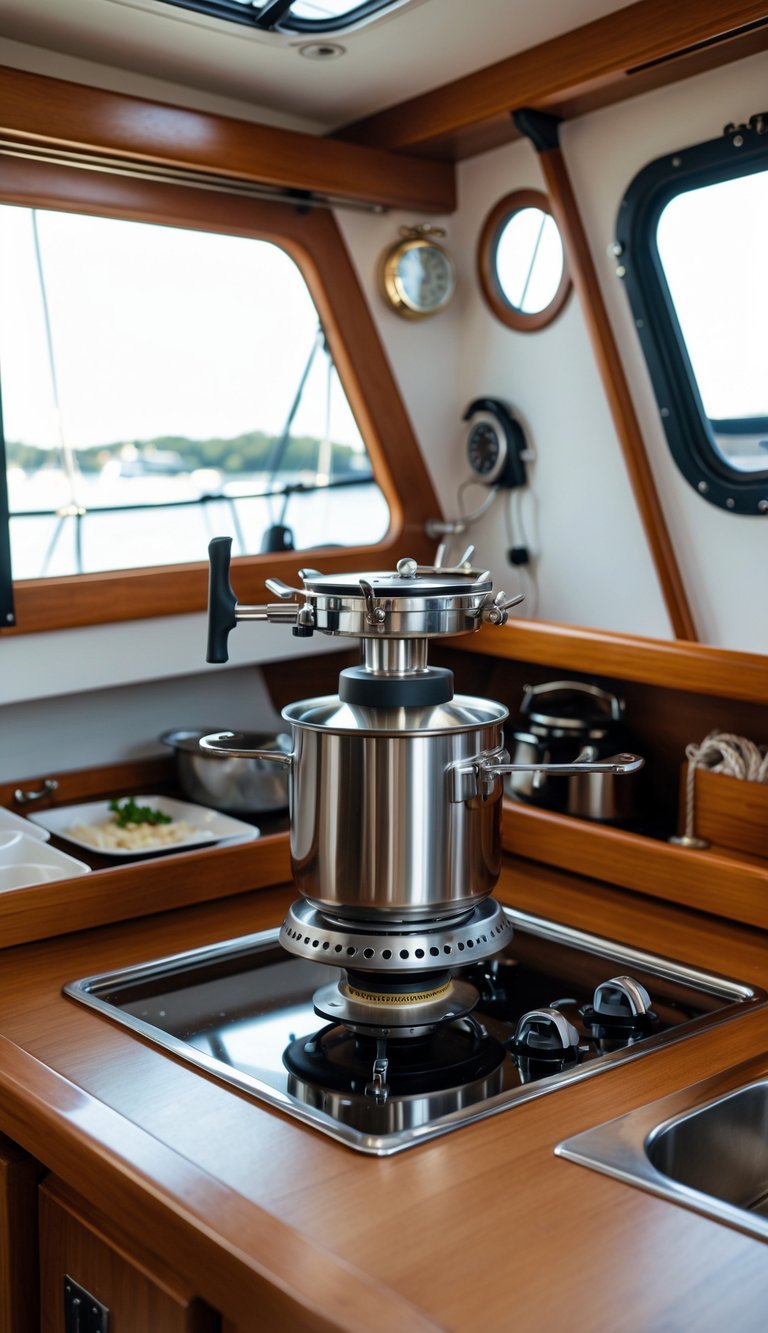
A gimbaled Force 10 stove keeps your pots level when the boat rolls. You can cook while underway with less risk of spills and burned hands.
Force 10 stoves are built for marine use and take up compact galley space. They use LPG or alcohol options and have controls designed to resist corrosion.
Install the stove so the gimbal swing clears surrounding cabinets. Secure gas lines and ventilate the galley to reduce fumes and heat buildup.
PRO TIP
Mount a latch or pot restraint and carry a spare thermocouple and ignition battery. That small prep prevents many common stove problems at sea.
2) Add a Sea Frost refrigeration unit for reliable cold storage
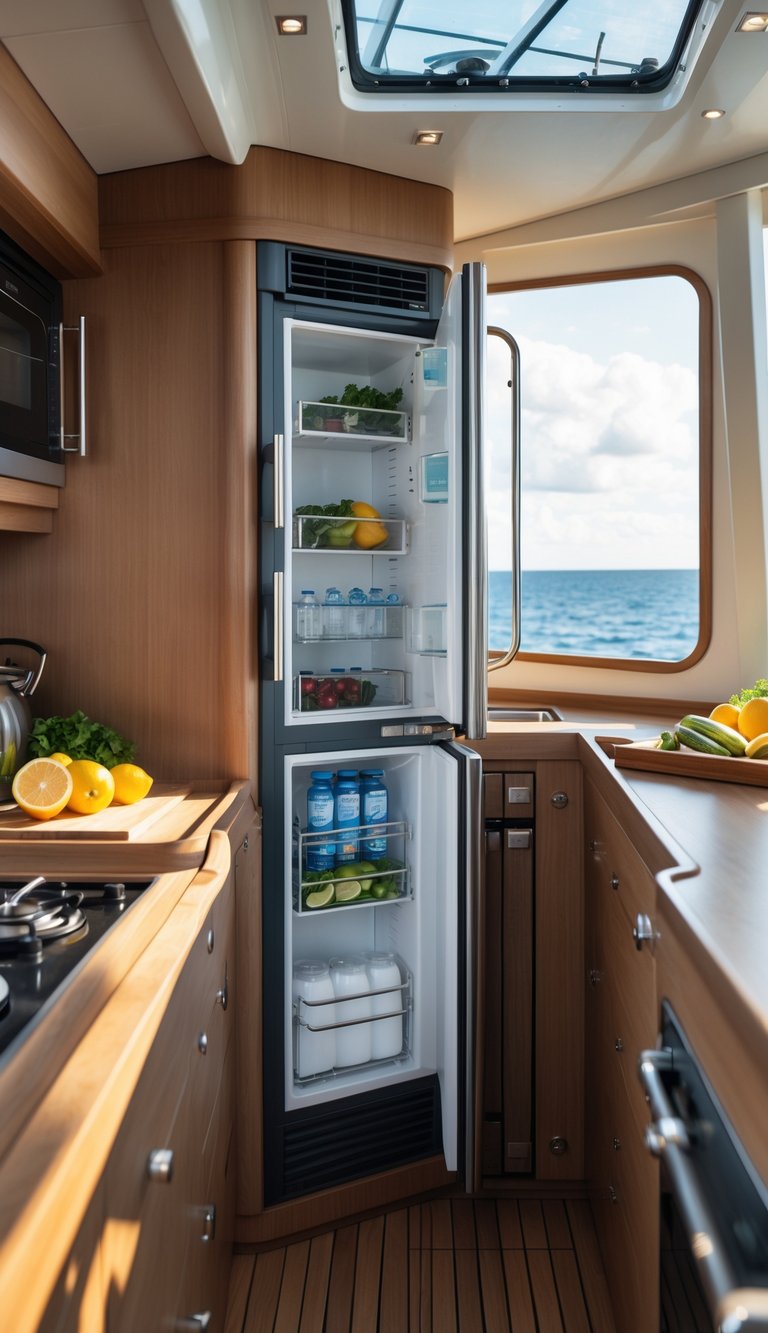
Sea Frost makes marine refrigeration systems built for life at sea. You get heavy-duty construction and models that fit different boat sizes and power setups, so you can choose a fridge or freezer that meets your needs.
A Sea Frost unit works well in small galleys because it mounts cleanly and runs on 12/24V systems common on boats. Installation often replaces an old ice box or fits into a custom space, giving you dependable cold storage for longer trips.
These systems are known for durable parts and easier repairs than cheap, stamped-plate kits. That matters when you cruise far from service and need gear that lasts.
PRO TIP
Plan for insulation and ventilation when you install the unit. Good insulation cuts run time and saves battery power.
3) Use Corian countertops for durable and easy-to-clean surfaces
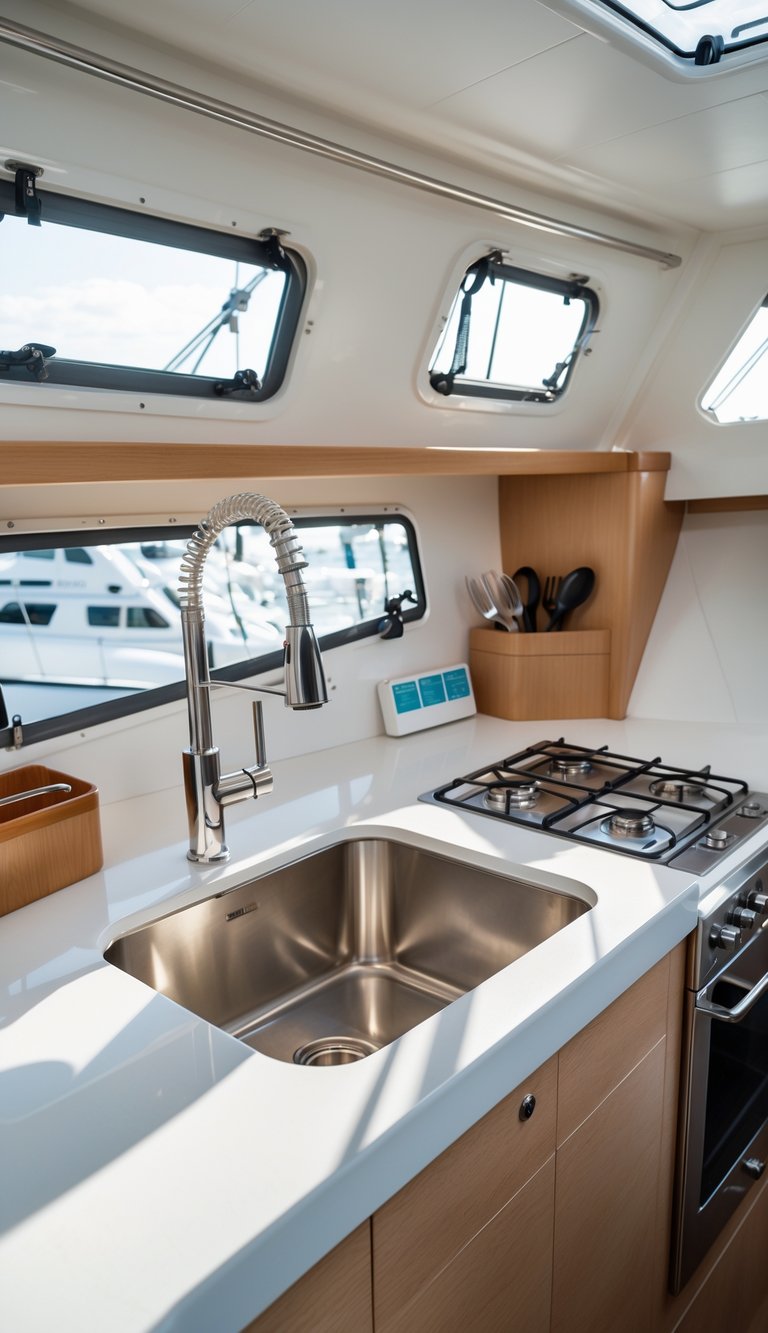
Corian gives you a smooth, nonporous surface that resists stains and water. That makes cleaning simple when you’re at sea, where spills and salt spray are common.
The material repairs well if it gets scratched or nicked, so small damage won’t force a full replacement. It also comes in many colors and patterns, letting you match your galley style.
Avoid placing hot pots directly on Corian; use trivets to protect the surface from heat damage. Cutting directly on it can cause scratches too, so keep a cutting board handy.
PRO TIP
Choose a slightly lighter color to hide salt marks and use a mild soap or diluted bleach for routine disinfection.
4) Upgrade to a deep single-basin stainless steel sink with high-arc faucet
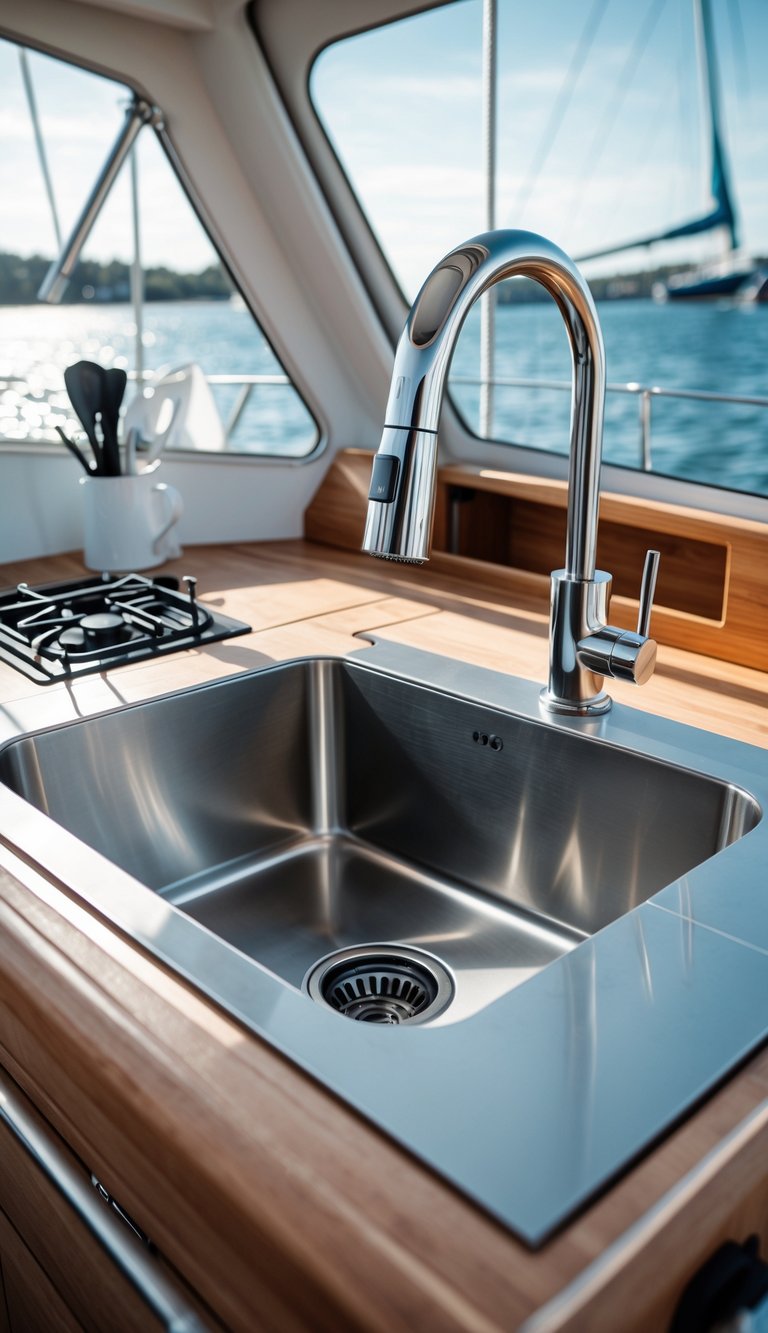
A deep single-basin stainless sink gives you more room for pots, pans, and soaking. It fits well in small galleys because you can wash large items without juggling them between two basins.
Stainless steel resists rust and cleans easily, so it stays shipshape with minimal effort. Choose a thicker gauge metal for better sound dampening and durability on rough passages.
A high-arc faucet makes filling tall containers easy and gives you more clearance to rinse and scrub. Look for a pull-down sprayer to reach corners and speed up rinsing.
PRO TIP
Measure your counter depth and cabinet space before ordering. A sink that’s too deep can interfere with storage or plumbing below, so double-check clearances.
5) Incorporate LED lighting strips under cabinets for better visibility
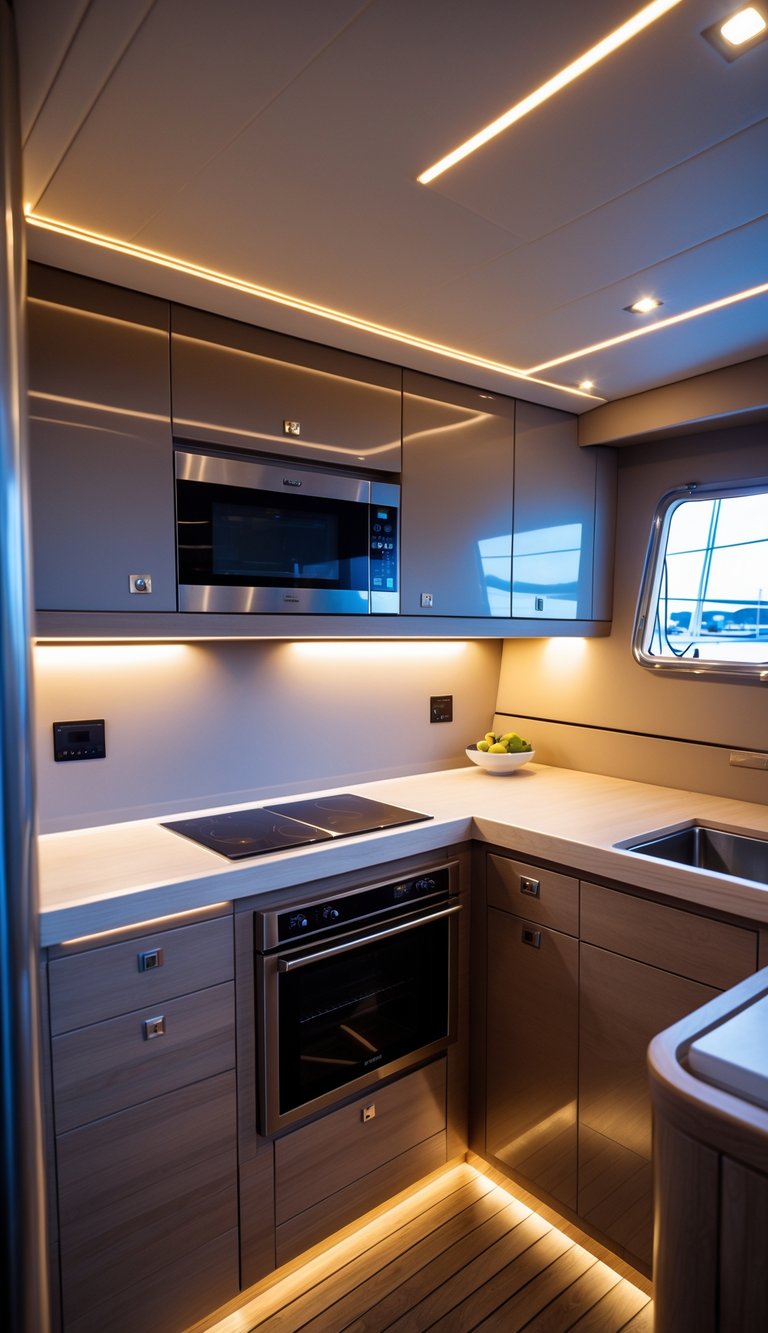
LED strips under your galley cabinets give clear, focused light where you need it most. They cut shadows on work surfaces so you can see chopping boards, gauges, and stove controls more easily.
Choose warm white LEDs for a cozy feel, or cool white for sharper task lighting. Pick strips with a suitable lumen output and a marine-safe adhesive or mounting channel.
Run wiring neatly inside cabinet backs or along trim to keep it tidy and dry. Use a dimmer or separate switch so you can adjust brightness for night watches or cooking.
PRO TIP
Opt for low-voltage 12V LED strips and a compact, fused power supply. That keeps power use low and makes installation simpler on most boats.
6) Install a built-in spice rack that keeps seasonings secure at sea
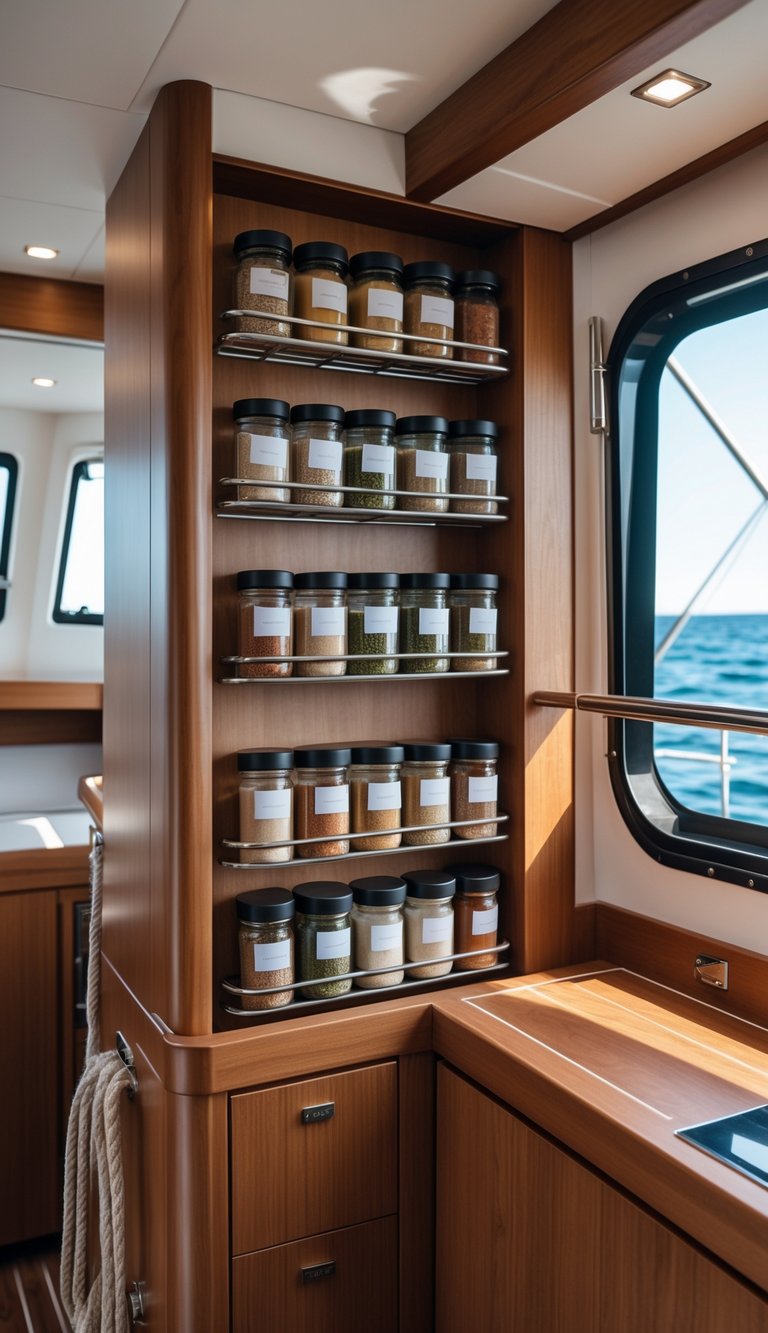
A built-in spice rack saves counter and cabinet space so your galley stays tidy. Mount it near your stove for quick access while cooking underway.
Choose deep, snug slots or small lipped shelves to stop jars from sliding when the boat rolls. Use clear labels and uniform jars so you can grab the right spice fast.
Make the rack removable or hinge it for easy refilling and cleaning. Secure the rack to studs or strong backing to avoid loosening in heavy seas.
PRO TIP
Place highest-use spices at eye level and less-used ones below. Magnetic bottoms or bungee straps add extra hold without making jars hard to remove.
7) Use modular storage bins for flexible organization in drawers
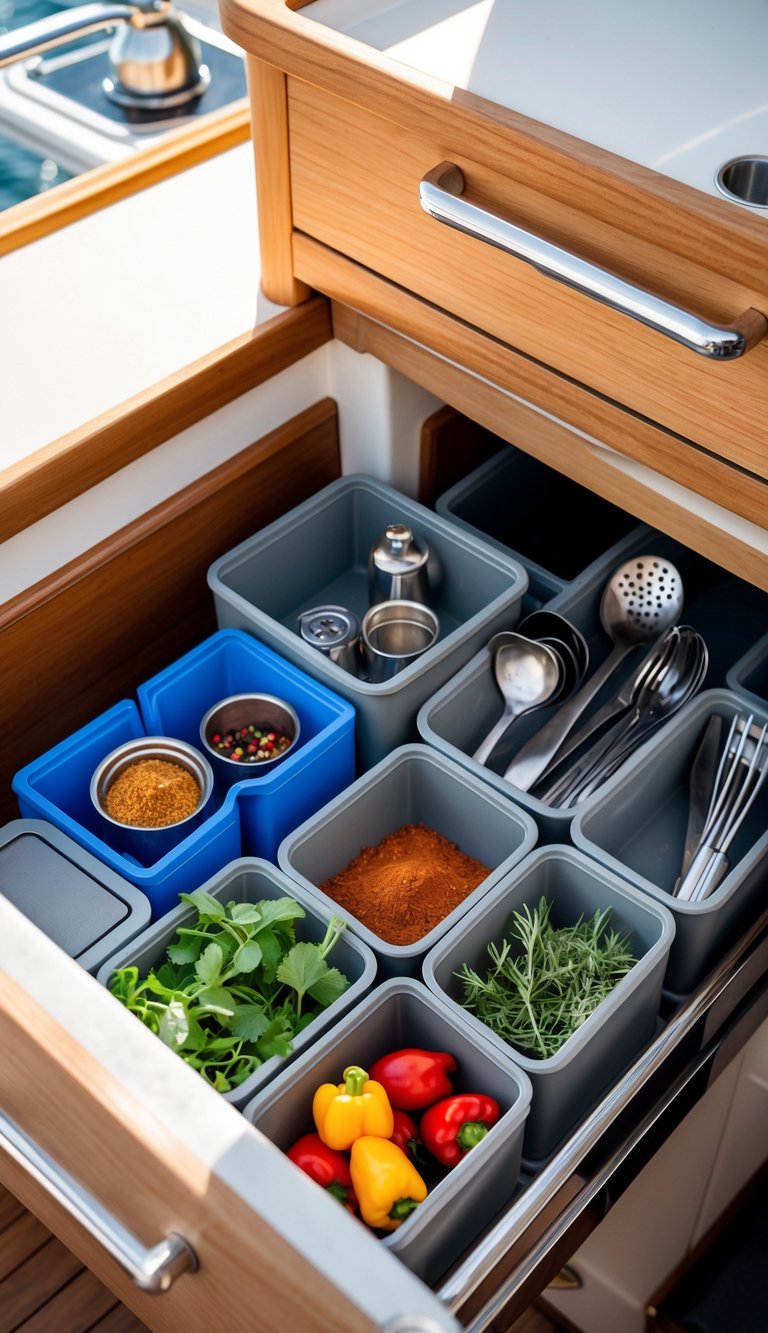
Modular bins let you fit your gear to the space you have. You can move or remove units to match varying drawer sizes and changing needs while cruising.
Use clear or labeled bins so you can see contents at a glance. Small bins keep spices, utensils, and tools from sliding together during a roll.
Stackable bins add vertical storage without clutter. They also make it easy to pull one layer out while the rest stays put.
Choose durable, marine-grade plastic with secure lids. That keeps moisture and salt out and protects fragile items on rough passages.
PRO TIP
Keep a few empty bins for quick swaps. They make it fast to reorganize when you buy fresh supplies or need a spot for wet gear.
8) Add a fold-down teak cutting board that doubles as extra counter space
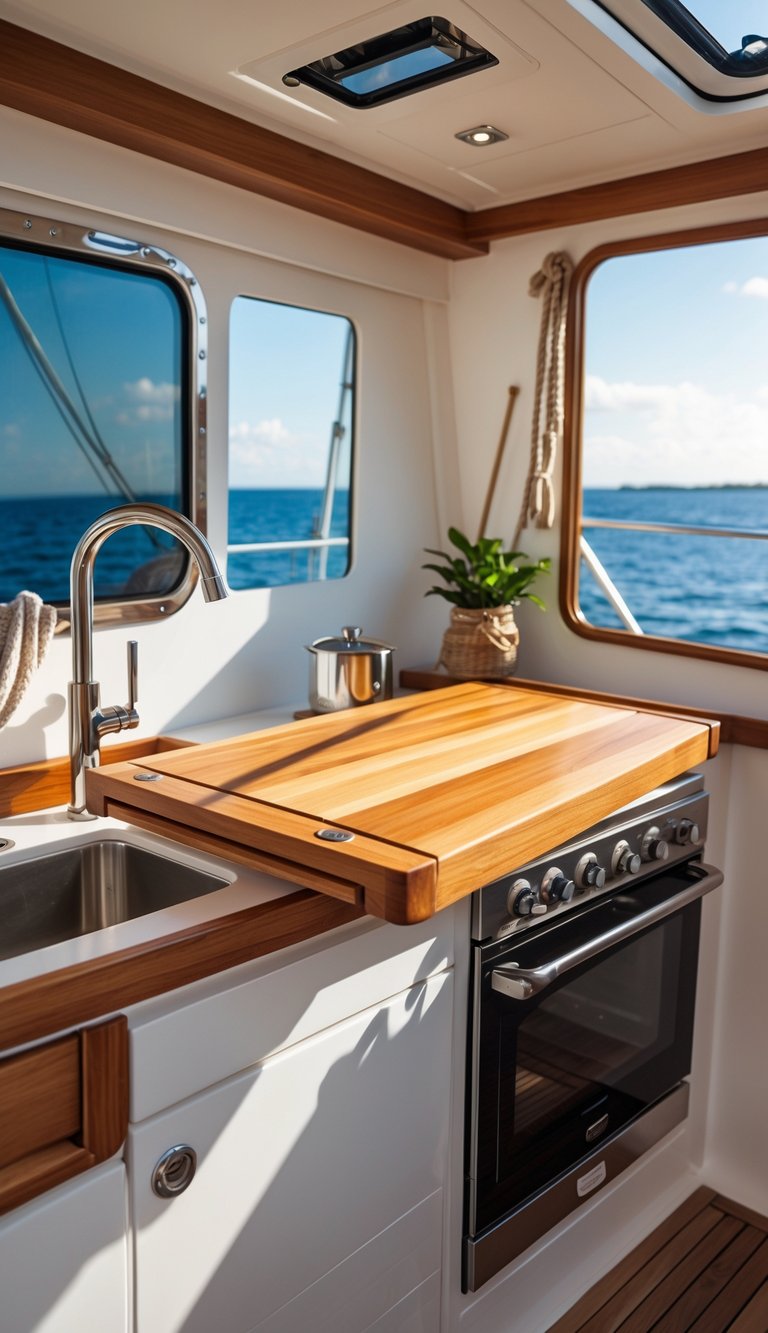
A fold-down teak cutting board gives you more prep area without stealing floor or locker space. Mount it on a galley bulkhead or over the sink so you can fold it up when not in use.
Teak resists water and stands up to salt air better than many woods, so it lasts well aboard. A juice groove helps keep mess off your counters and into the sink or a catch tray.
When folded down it acts like a sturdy countertop extension for chopping or plating. When folded up it stays out of the way and can hide small items behind it.
PRO TIP
Fit a simple latch or gas strut so the board holds steady while you work. Choose a size that clears your stove, hatch, and drawer paths.
9) Install a microwave oven designed for marine use
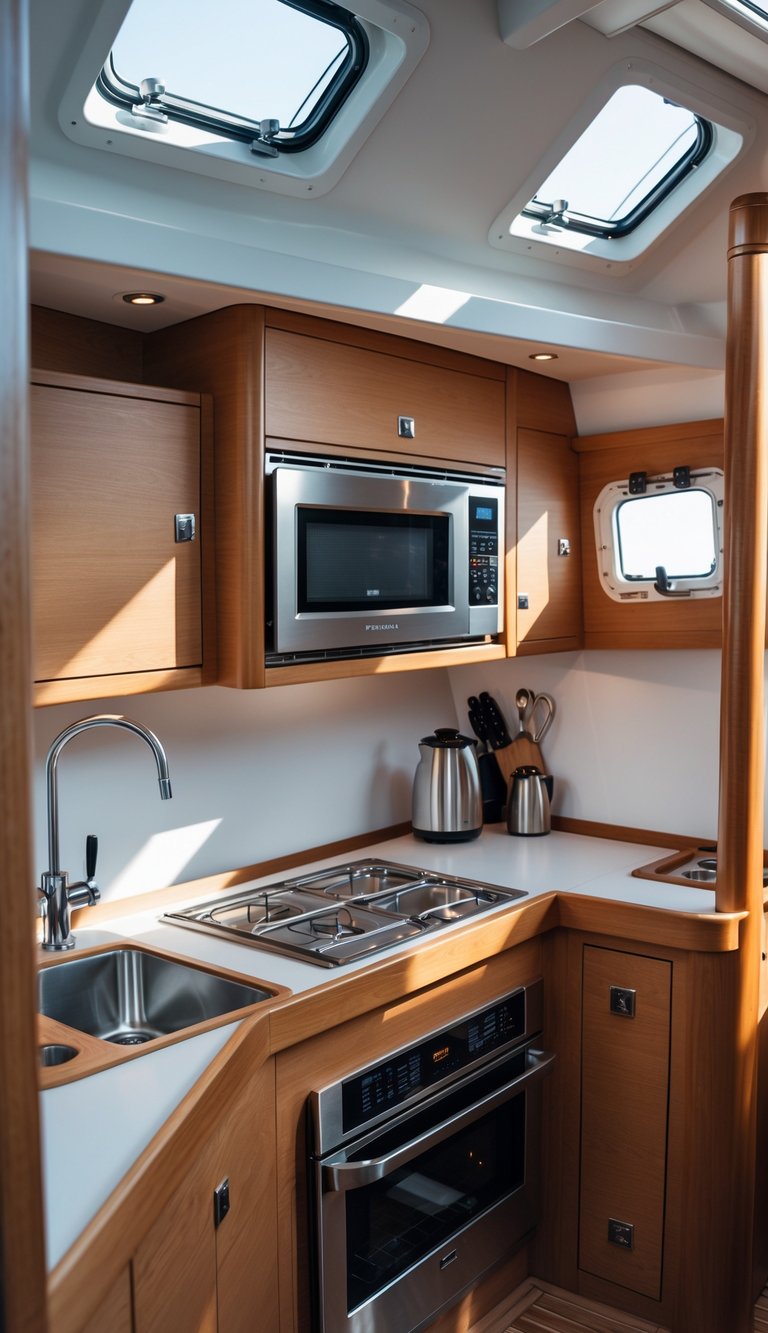
A marine microwave saves space and gives you fast, reliable cooking on board. Choose a model labeled for marine or RV use so it resists vibration, moisture, and salt air.
Look for convection or combo ovens if you want more cooking options without extra appliances. These let you bake, broil, or air-fry in a small footprint that fits galleys.
Check power needs against your boat’s electrical system to avoid overloads. Mount the unit securely, add proper ventilation, and seal openings to keep spray and steam out.
PRO TIP
Measure the cabinet space, door swing, and clearance before you buy. A snug, well-vented fit makes the microwave safer and more useful on longer trips.
10) Use non-slip galley mats to prevent slipping in rough conditions
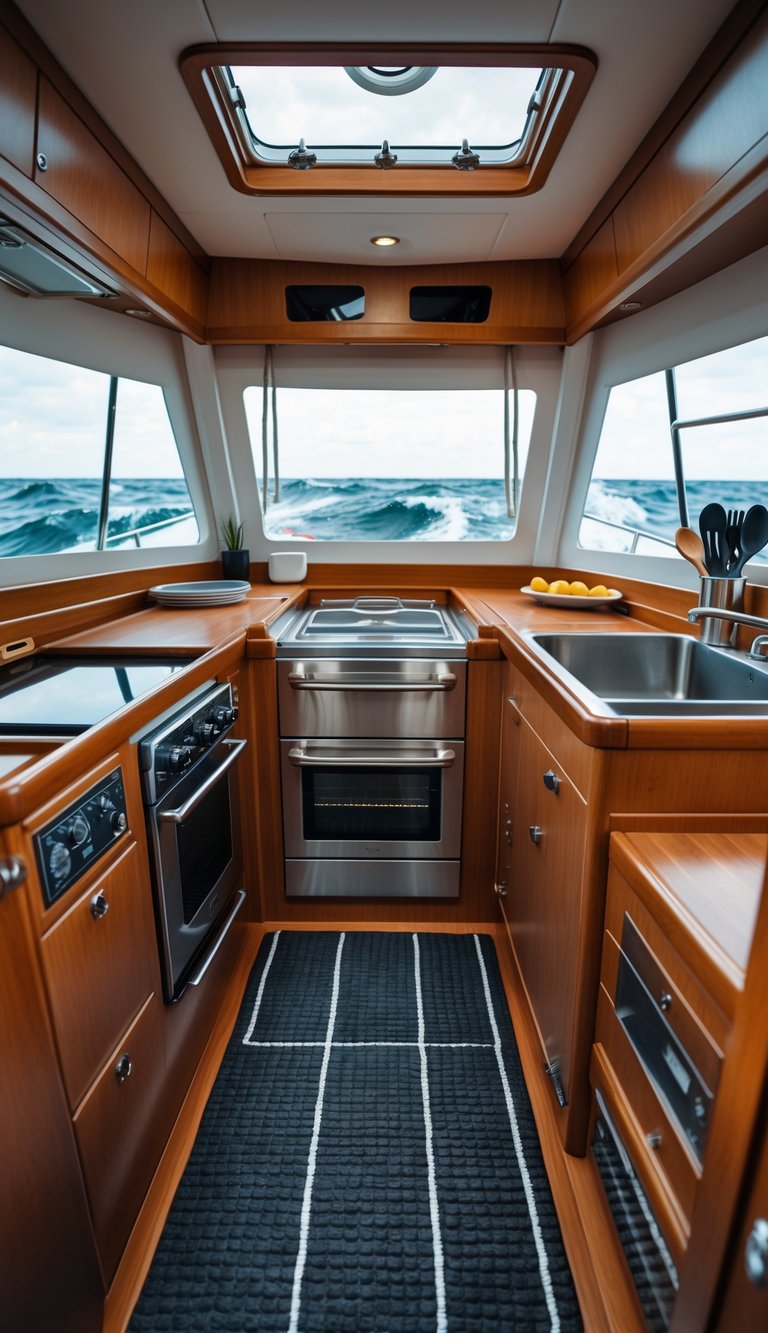
You want a galley that keeps gear and people safe when the boat rocks. Non-slip mats give grip for plates, pots, and your feet so items stay put during sudden rolls.
Look for mats made for marine use. They drain, resist mildew, and keep tack when wet. Thin, cut-to-fit mats work well under cutting boards and stoves.
Place mats where spills and movement happen most: in front of the stove, sink, and prep surfaces. Secure edges so they don’t curl and trip you while moving in tight spaces.
PRO TIP
Choose washable mats with an open weave to let water pass through. Replace mats that lose grip or show wear to keep your galley safe.
11) Upgrade cabinets with soft-close marine-rated hinges
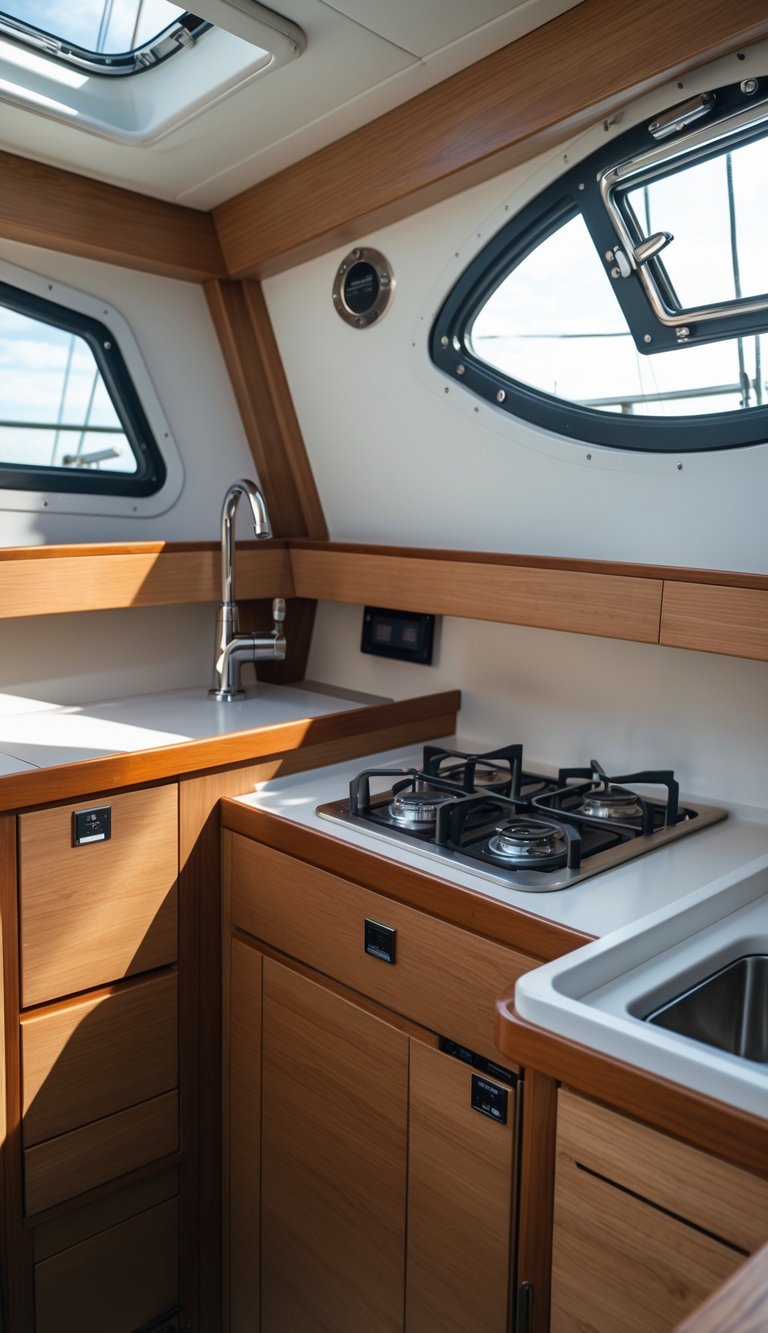
Soft-close marine-rated hinges stop doors from slamming when your boat rolls or hits a wave. They protect your cabinets and keep dishes from shifting, which helps reduce noise and wear.
Choose hinges made for saltwater and high humidity so they resist corrosion. Look for stainless steel or corrosion-resistant coatings and a trusted marine rating.
Installation is usually simple: remove the old hinges, mark holes, and mount the new ones. You can also add small dampers to existing hinges if you don’t want to replace them.
PRO TIP
Test each door fully loaded before you finish. Adjust tension so doors close slowly but still latch securely.
12) Install a propane leak detector for enhanced safety
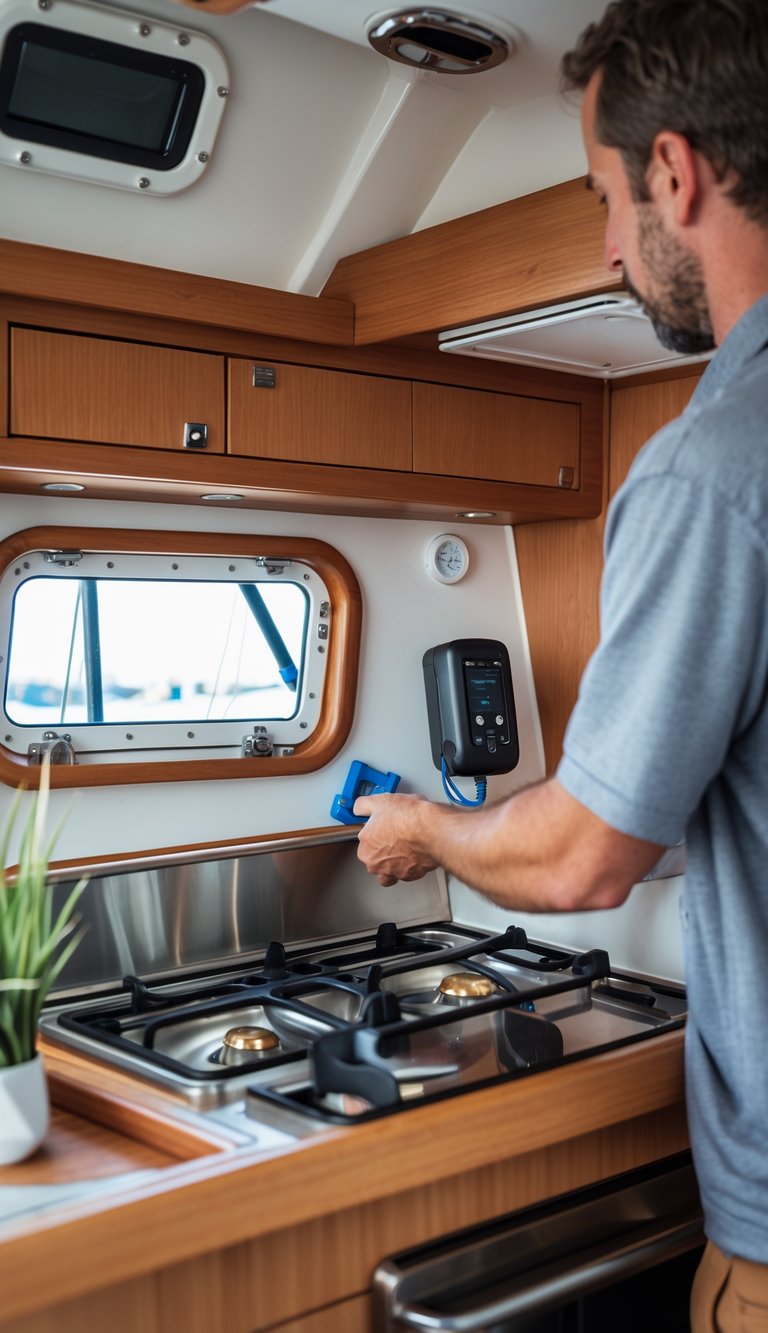
A propane detector gives you early warning if gas gathers in the bilge or galley. Propane is heavier than air, so leaks can pool low and create a serious hazard.
Choose a marine-rated detector with remote sensors you can place near the stove, LP locker, and bilge. Look for models with both audible and visual alarms and a 12V power option that ties into your ship’s electrical system.
Mount sensors low where propane will collect. Test the system after installation and include the detector in your regular safety checks.
PRO TIP
Place one sensor near the stove and one aft where gas might settle. Replace sensors per the maker’s schedule and carry a spare battery if your unit uses them.
13) Add a pull-out trash bin to save space and keep waste contained
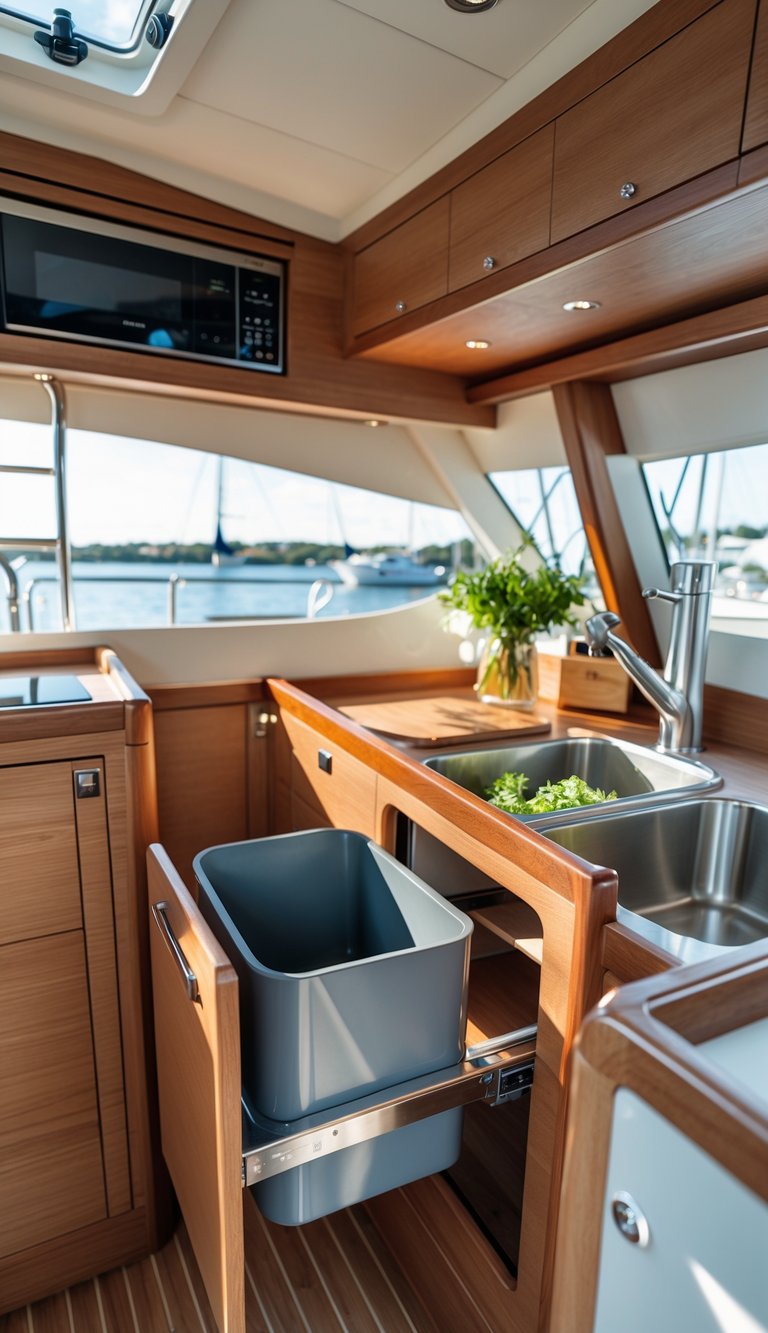
A pull-out trash bin fits neatly inside a cabinet and frees up floor space in your galley. You keep smells and mess out of sight, which matters on a small boat.
Place the bin near the sink or prep area so you can toss scraps quickly while cooking. Choose a single or dual-bin unit depending on whether you want to sort recyclables or food waste.
Mount slides that lock to prevent the bin from sliding when the boat heels. Use a snug lid or a bag clip to reduce odors and keep critters away between hauls.
PRO TIP
Measure your cabinet depth and door swing before buying. A shallow, secure model works best on most cruising boats.
14) Use a compact drip coffee maker specifically for small galleys
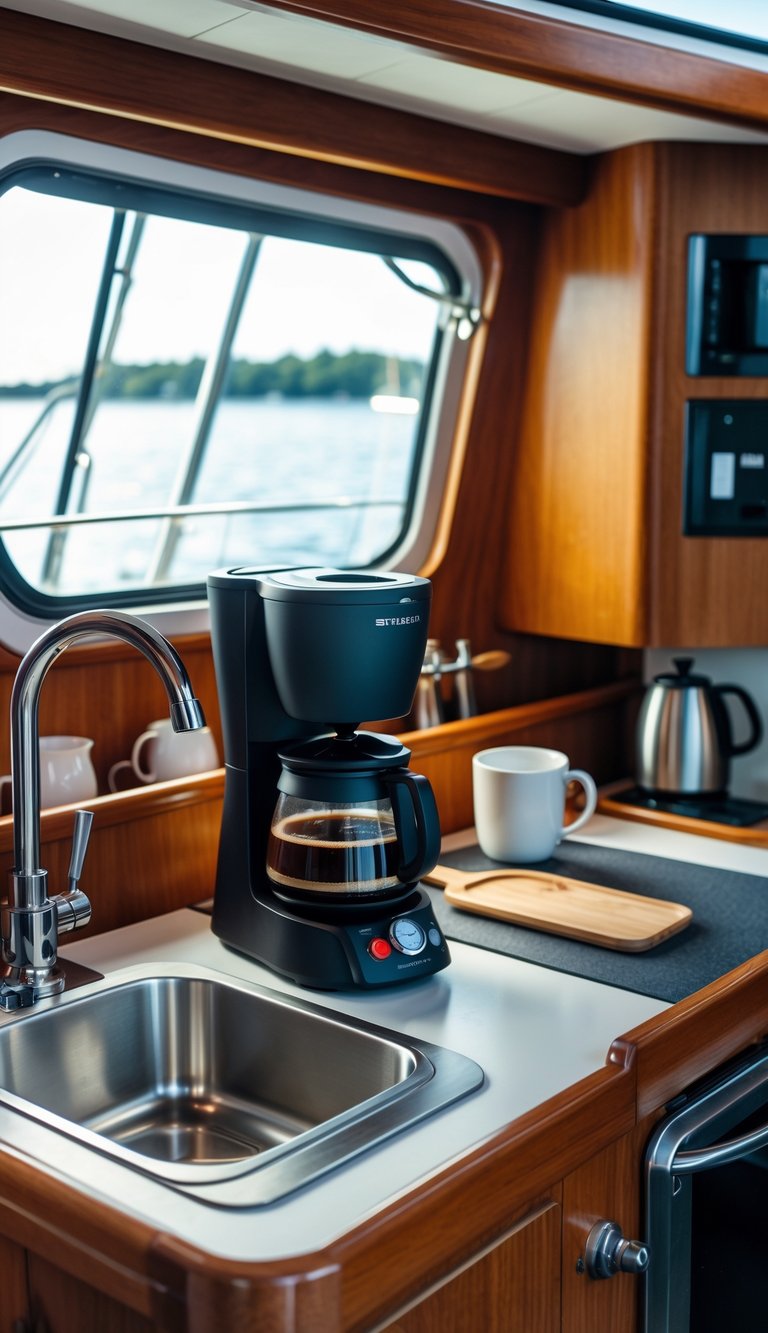
A small drip coffee maker gives you fresh coffee without taking much counter space. Pick a model under about 10 inches deep so it fits tight galleys and cupboards.
Look for features that matter on a boat: a pause-and-serve function, auto shutoff, and anti-drip spout. These reduce spills and let you pour mid-brew without a mess.
Choose stainless or sturdy plastic that can handle movement and damp conditions. A 24-hour programmable timer can have coffee ready when you wake, saving time in the morning routine.
PRO TIP
Secure the machine with non-slip pads or a small bungee so it won’t slide while underway.
15) Install a marine water purifier to improve tap water quality
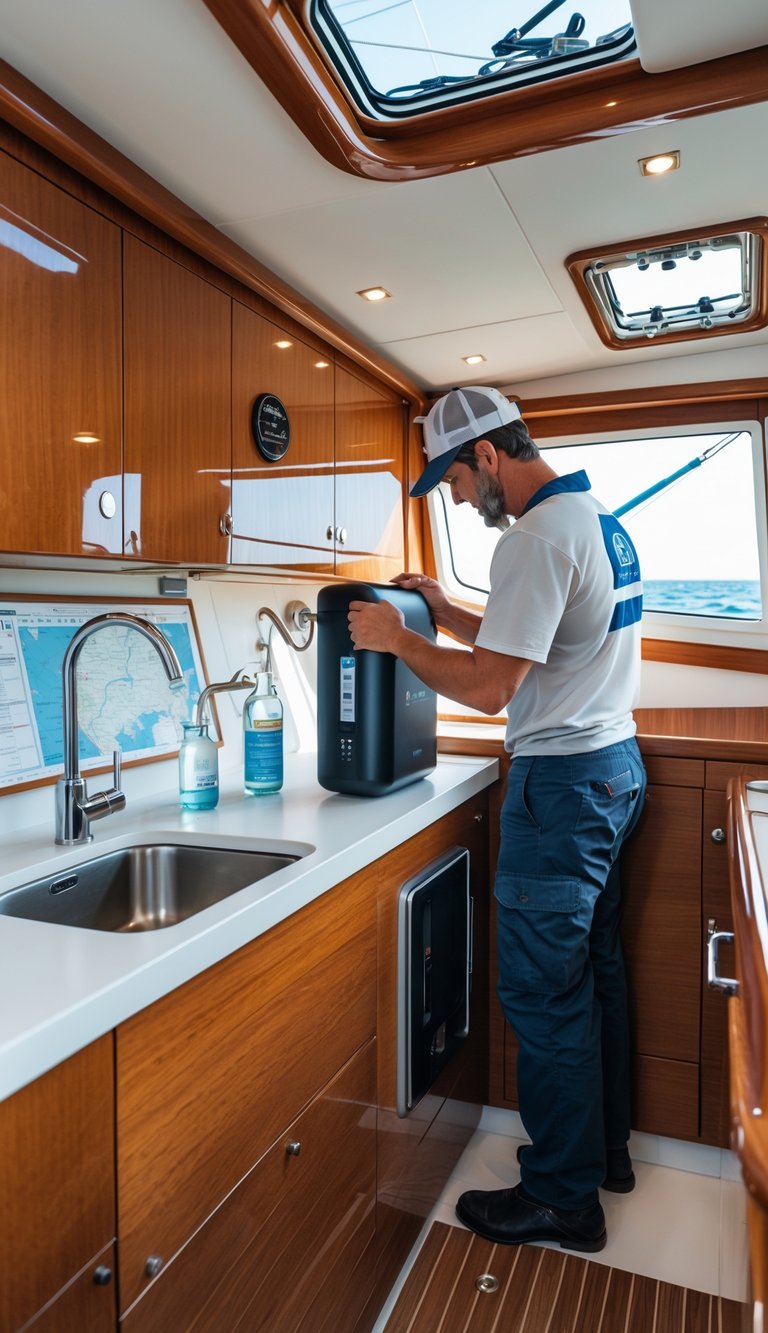
A marine water purifier will make your tank water safer to drink and taste better. You get cleaner water at every tap without hauling bottles or boiling on short trips.
Choose a system that fits your space and water needs. Inline filters behind the pump work well, or pick a 10″ cartridge unit for the galley tap if you want point-of-use purification.
Keep spare cartridges and check availability before you leave port. Replace filters on a regular schedule and clean your tanks to prevent odor and biofilm build-up.
PRO TIP
Fit a pre-filter if you often take on dockside or river water. It protects the purifier and stretches cartridge life.