
Last Updated on November 12, 2026
The Leopard 40 is the strongest fit among the 8 Boats That Are Secretly Perfect for Digital Nomads if you want a roomy cockpit table and separate cabins for work and rest. A boat can give you a memorable office, but your workday still depends on reliable power and internet, so plan for shore power, charging, and cellular or satellite service before leaving a marina.
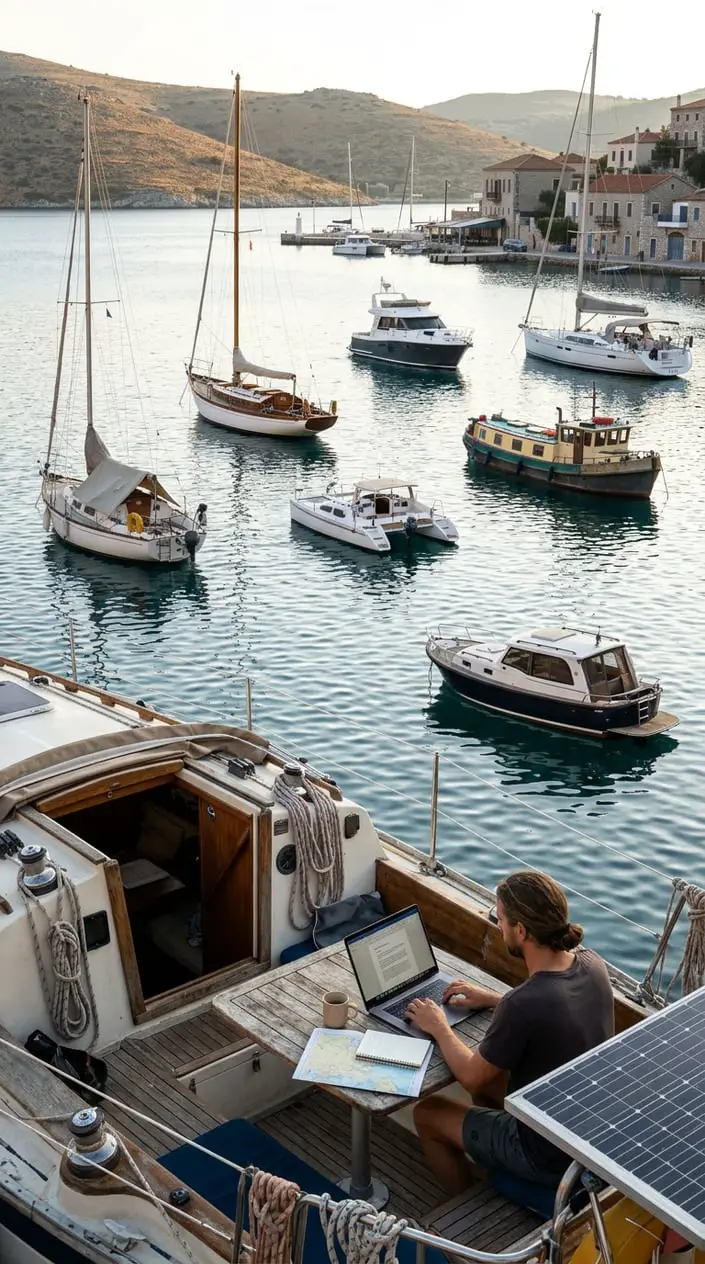
You can choose from sailing catamarans, monohulls, and motor cruisers, each with a different balance of living space, handling, and upkeep. Check the layout in person, then confirm the boat’s power system and your intended route’s internet coverage.
Quick picks:
- Best overall workspace: Leopard 40
- Best monohull for coastal cruising: Beneteau Oceanis 40.1
- Best for bluewater living: Hallberg-Rassy 40C
- Best compact motor cruiser: Ranger Tugs R-27
1) Leopard 40
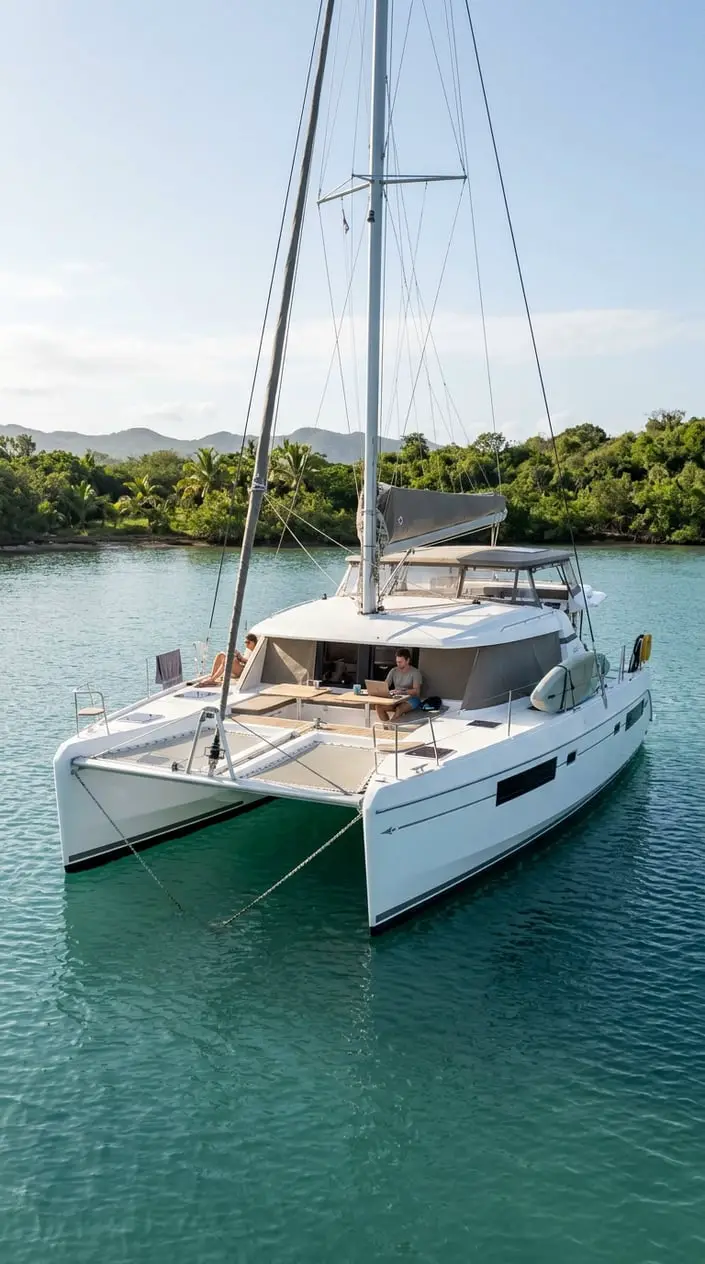
A broad catamaran layout gives you room to work without turning the whole cabin into an office. The bridgedeck saloon and cockpit create connected living areas, while the hulls provide separate cabins for sleeping or storing gear. That separation helps when you share the boat with a partner or traveling companion.
You can set up at the cockpit table for daylight and fresh air, then move inside when the weather shifts. The twin-hull design also offers a stable platform at anchor, although its beam calls for attention when you choose slips and pay marina fees.
Before a long stay aboard, check the actual boat’s battery bank, inverter, solar setup, and internet equipment. Layouts and equipment vary by year and configuration, so inspect the specific boat you plan to buy.
2) Beneteau Oceanis 40.1
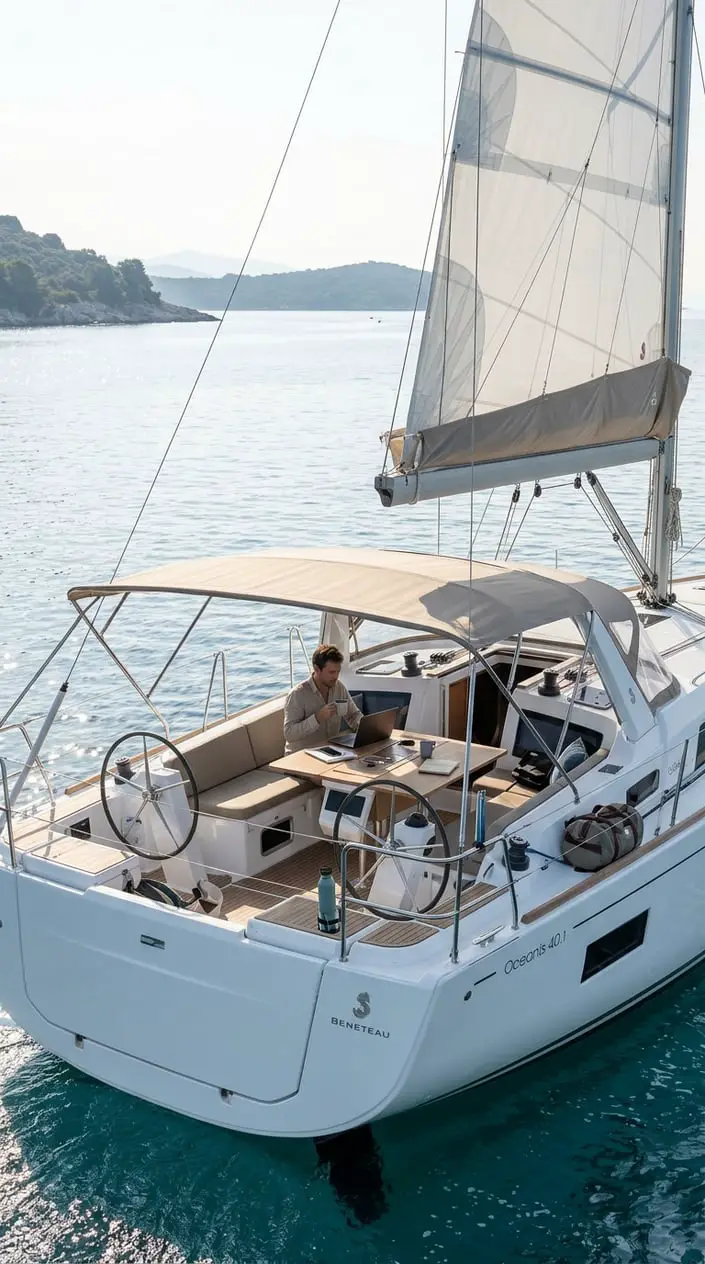
For coastal remote work on a monohull, this 40-foot cruiser gives you a practical mix of cabin space and sailing ability. Its hull design and wide beam create a spacious interior, with layouts available in several cabin configurations. You can pick a setup that gives you a private sleeping cabin or accommodates more guests.
The cockpit offers a place to answer email between passages, and the saloon provides shelter when wind or rain makes outdoor work uncomfortable. A monohull also suits sailors who want a familiar feel under sail and access to many established cruising routes.
Confirm the cabin arrangement, navigation electronics, and charging capacity on the exact boat, since options differ. For a shore-based work schedule, map cellular coverage along your route and keep a marina plan for video calls or large file uploads.
3) Jeanneau Sun Odyssey 410
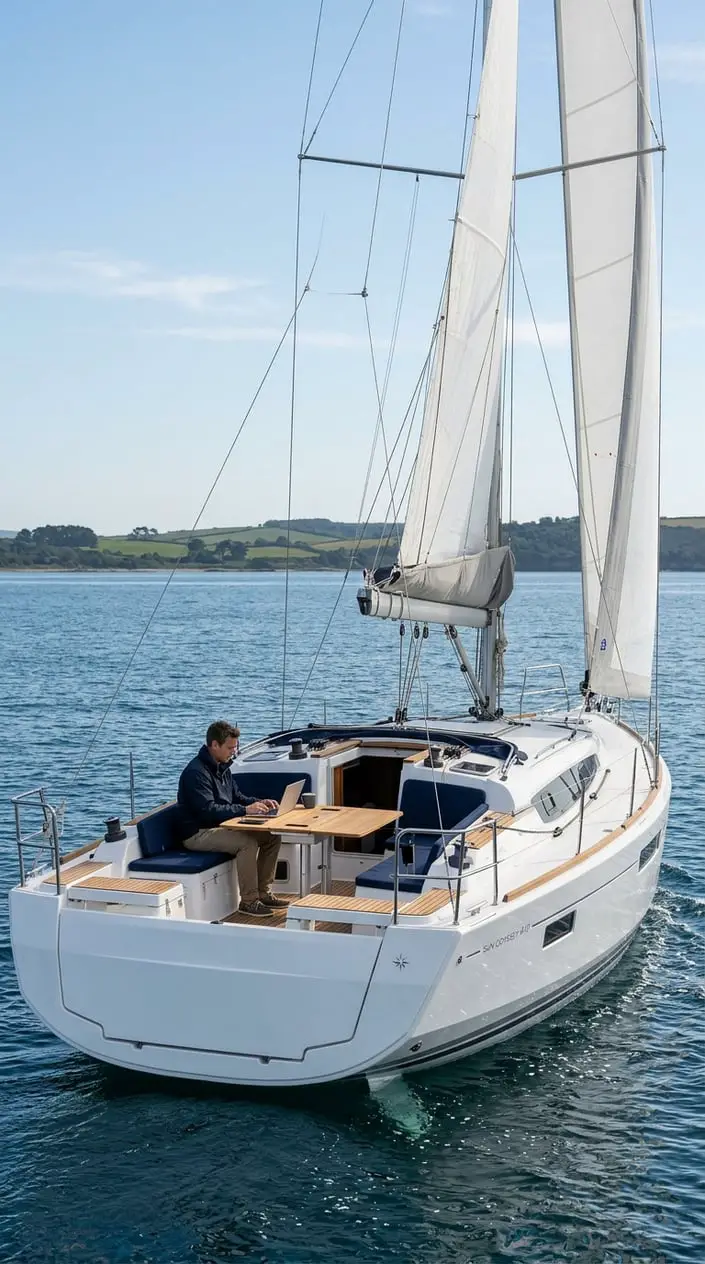
The walkaround side decks make moving around this cruiser easier when you pause work to handle lines or reach the bow. Its design focuses on accessible deck movement, and the cockpit gives you an outdoor place to work at anchor. Below, available layouts include multiple cabins, which lets you set up sleeping space around your crew and gear.
For laptop time, use a secured cockpit table and keep your device protected from spray and direct sun. The 410’s sailing features suit coastal hops and longer passages, though you’ll need to schedule work around weather and boat handling when underway.
Check the cockpit’s shade, table size, and outlet locations during a viewing. Ask for a full inventory of batteries and charging equipment, then match that setup to your daily computer use and any other onboard electronics.
4) Catalina 425
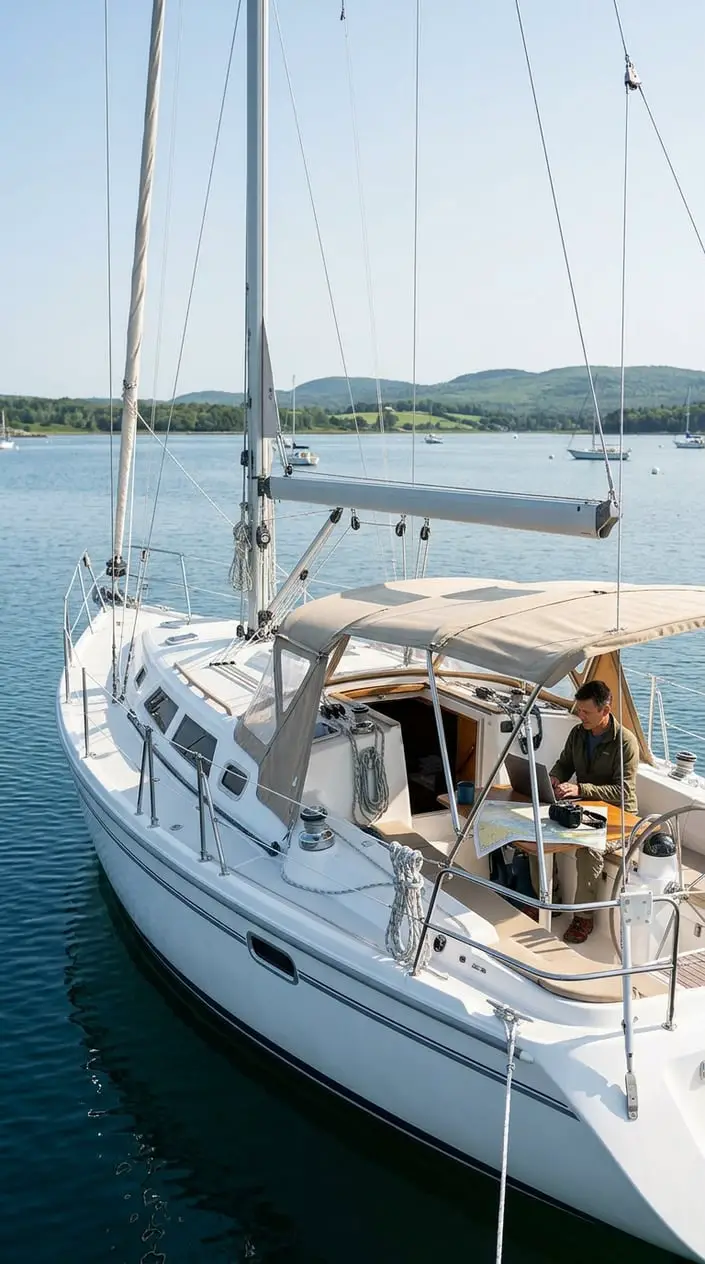
A spacious American-built cruising layout makes this 42-foot monohull a useful choice for extended stays aboard. The interior can include three cabins and two heads, giving you options for a dedicated sleeping cabin or visiting friends. A proper saloon table offers a sheltered work surface when the cockpit is exposed to weather.
You’ll appreciate having room to stow office gear, spare chargers, and cruising supplies without keeping them on the table all day. The boat’s size also brings higher costs for dockage, maintenance, and sail handling than a compact cruiser, so include those expenses in your budget.
Ask about the age and condition of the sails, engine, and house batteries on any used example. If you plan to work from anchorages, verify that your laptop can charge from the onboard system and that your chosen communication gear has a clear installation spot.
5) Hallberg-Rassy 40C
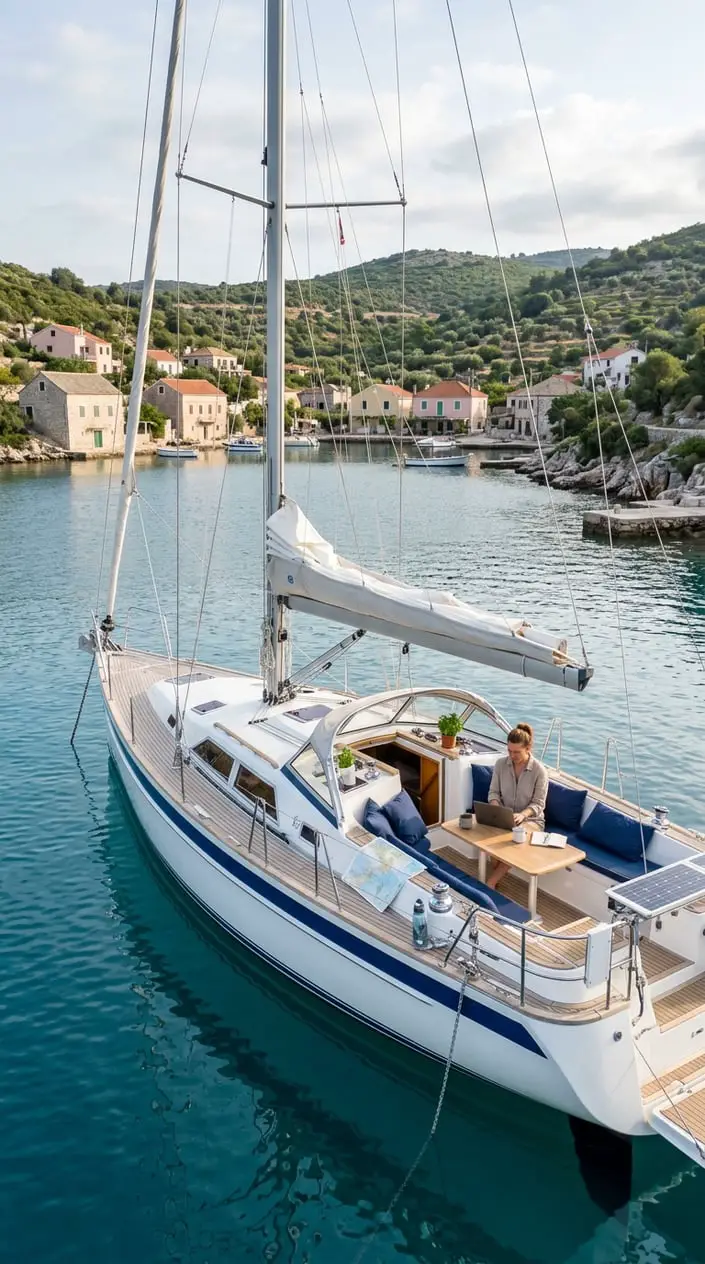
A protected center-cockpit layout makes this sailing cruiser appealing when you want a secure place to work on longer trips. The design emphasizes passage-making, with a sheltered cockpit and a comfortable interior for living aboard. You can use the saloon table as an indoor desk and keep a laptop away from spray while the boat is underway or at anchor.
The 40C is a premium boat, so purchase price and upkeep can be substantial. Its serious cruising design makes sense if your remote-work plans include extended time away from marinas and you have the sailing skills to manage the route.
Check the specific boat’s navigation gear, battery capacity, and charging sources before you rely on it as a mobile office. A satellite communicator or internet terminal also needs suitable power and an installation location with a clear view of the sky.
6) Island Packet 439
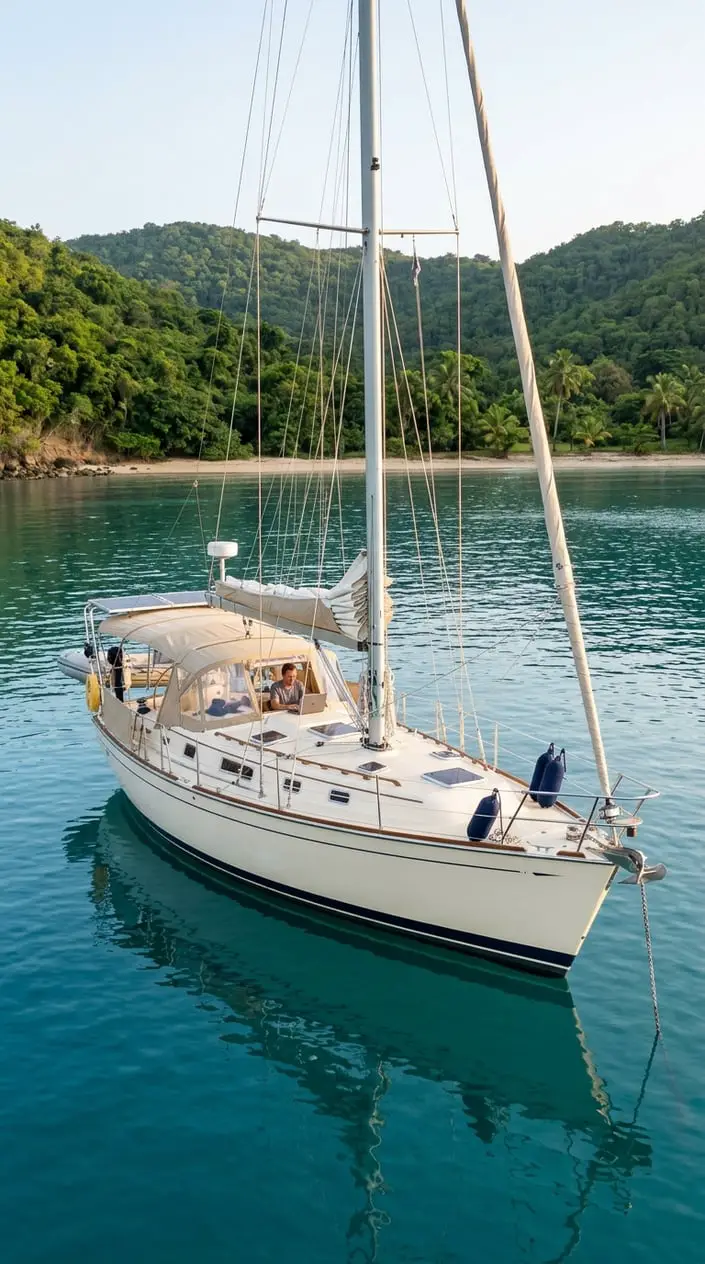
This long-range cruising sailboat gives you a substantial liveaboard interior for work and life between ports. Its full-keel design and heavy-duty cruising focus suit sailors who value a steady, capable platform for extended journeys. Below deck, the roomy saloon gives you a protected workspace, while cabin layouts provide places to sleep and store personal gear.
The boat’s size and displacement call for careful passage planning, and its purchase and maintenance costs can exceed those of smaller coastal cruisers. You’ll want to assess sail condition, engine hours, and onboard systems with a qualified marine surveyor.
For a work-ready setup, look for a secure laptop spot, reliable ventilation, and battery capacity that matches your schedule. Long stretches between towns also make it useful to plan internet access and backup power before departure.
7) Ranger Tugs R-27
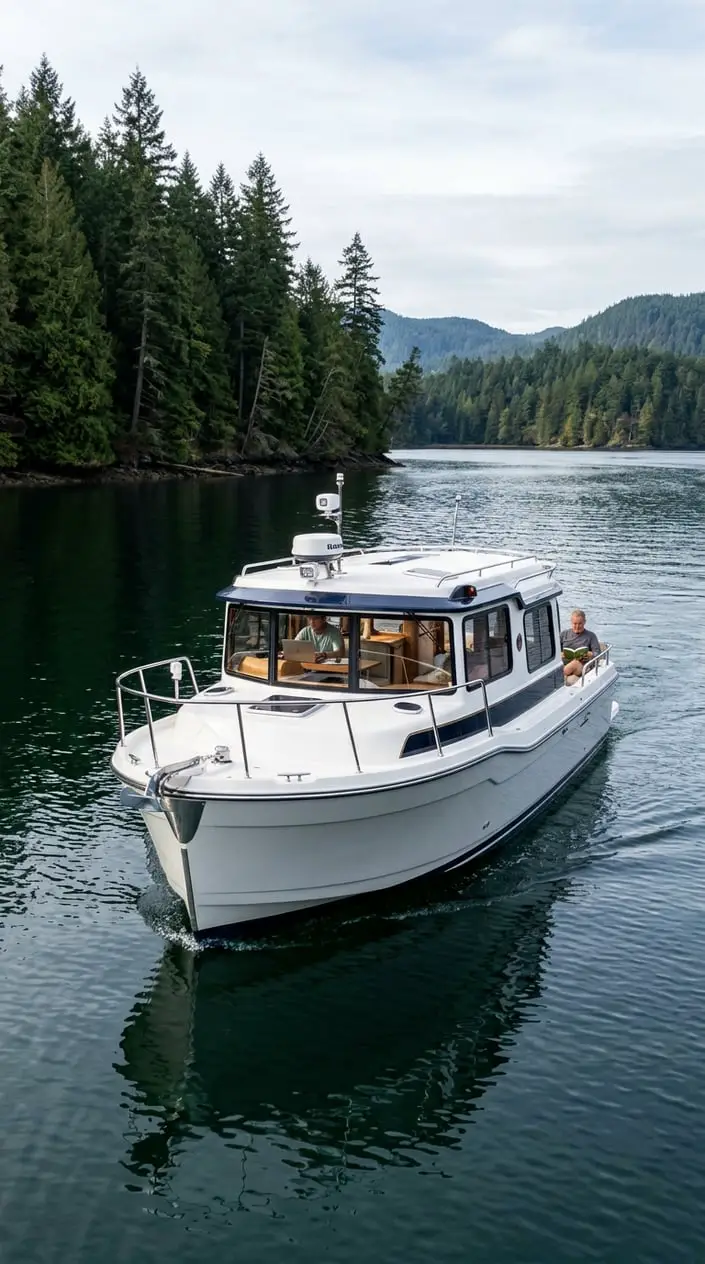
A compact pilothouse and cabin make this motor cruiser a practical choice if you want to travel without managing sails. The enclosed helm area gives you shelter from wind and rain, and the cabin provides a place to work indoors. Its smaller footprint also helps you explore ports and waterways where a larger boat would be less convenient.
This model is designed for coastal cruising and short trips, so plan your route around fuel range, weather, and available services. You’ll have less interior room than on a larger liveaboard sailboat, which makes smart storage and a compact desk setup useful.
Check the exact boat’s engine, battery system, and onboard charging options, then test your work setup at the dock. A laptop stand and a secure place for your phone or hotspot help keep your workspace usable underway.
8) Nordic Tug 34
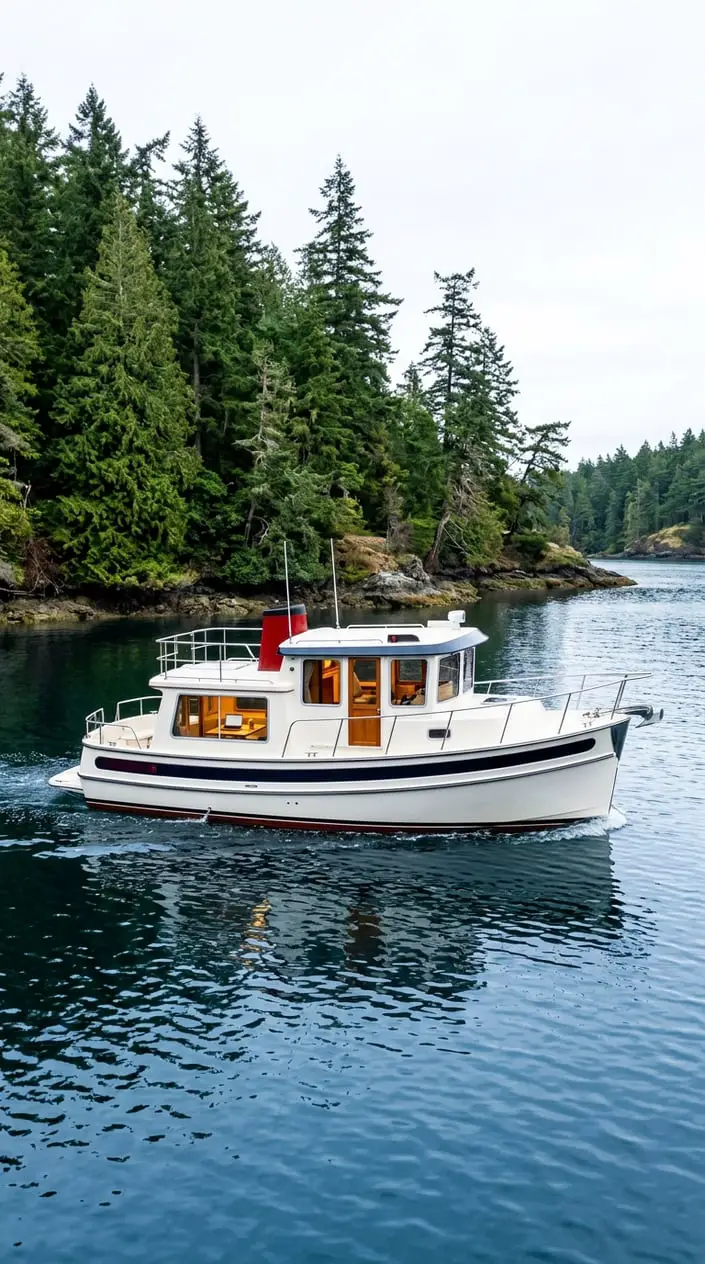
The enclosed pilothouse gives you a sheltered workspace and clear views while you travel by power. This 34-foot trawler-style boat is built for cruising, with a cabin layout suited to time aboard and a helm area that shields you from changing weather.
You can work at the pilothouse table or another secure surface, then head outside during a stop. Its cruising pace supports a measured route through coastal waters and inland passages.
You’ll need to budget for fuel, engine care, and dockage, and confirm the boat’s range against the distances you plan to cover. Check visibility and seating comfort at the helm before treating it as a full workday spot. For dependable remote access, pair your preferred cellular or satellite service with a power system sized for the laptop, router, and other essential devices.