Last Updated on November 12, 2026
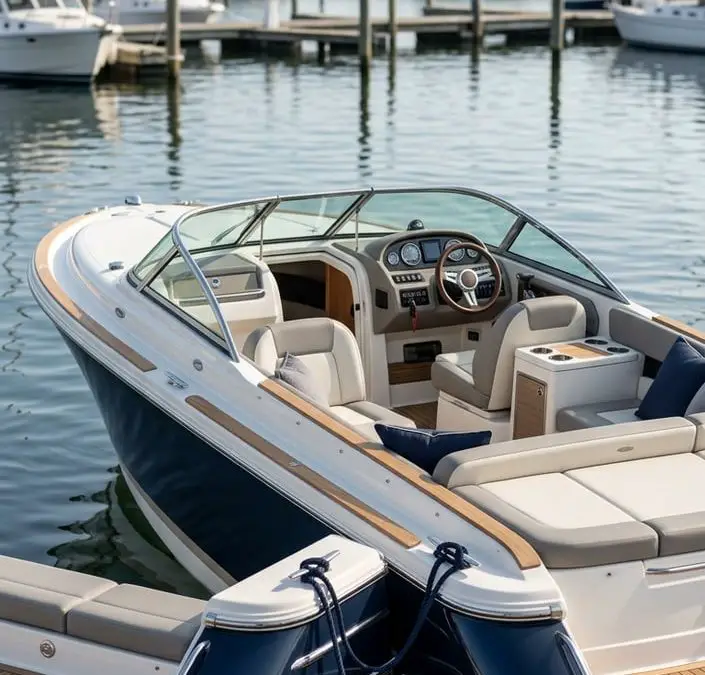
You can give your boat a luxury feel with thoughtful details such as a tidy deck, warm lighting, coordinated seating, and clean metal finishes. These design choices focus on visual harmony and comfort, so you can refresh your boat in stages without taking on a full refit.
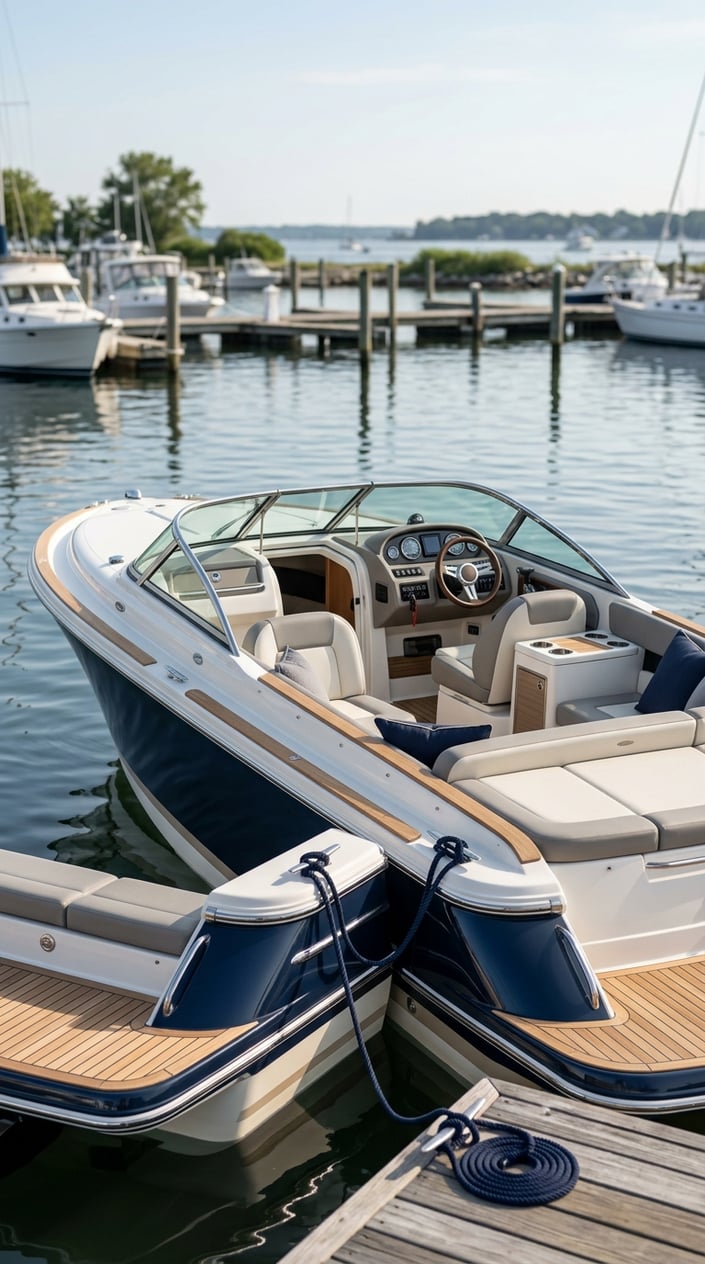
Start with changes that make your boat feel organized and comfortable when you step aboard. Choose materials and colors that suit your boat’s layout, then check that each upgrade stands up to sun, water, and regular cleaning.
1) A Clean, Uncluttered Deck
A clean, open deck gives your boat a polished look and makes moving around easier.
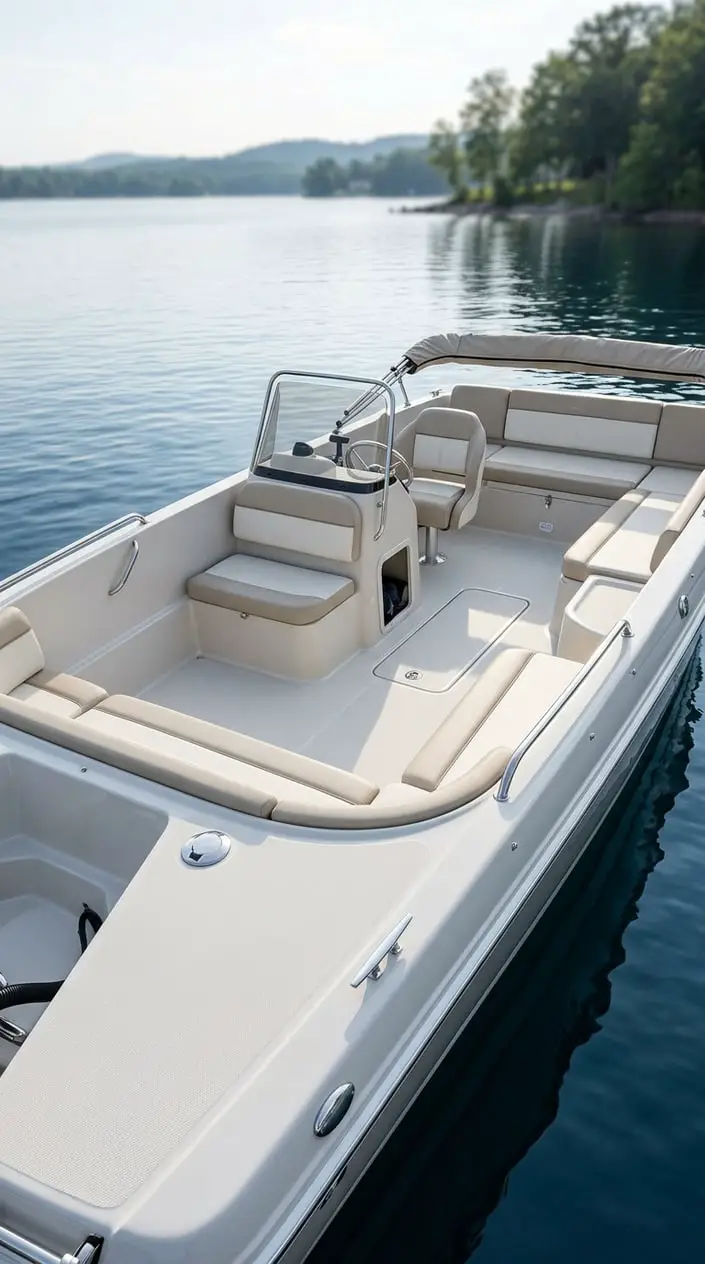
Keep gear in designated lockers, coil dock lines neatly, and stow fenders when you are underway. These small habits reveal more of the deck’s shape and leave seating areas ready for guests. Before adding accessories, check whether you can relocate loose items or remove equipment you rarely use.
Use storage bins that fit existing compartments, and choose finishes that match the boat’s trim. Keep walkways clear, especially around the helm and boarding points. A tidy deck also helps you spot spills or loose hardware during routine checks.
You can create a spacious, considered feel with organization alone, without buying new furniture or changing the boat’s layout.
2) Flush-Mounted Stainless-Steel Cleats
Flush-mounted stainless-steel cleats give your deck a smooth, tailored finish while keeping useful tie-off points close at hand.
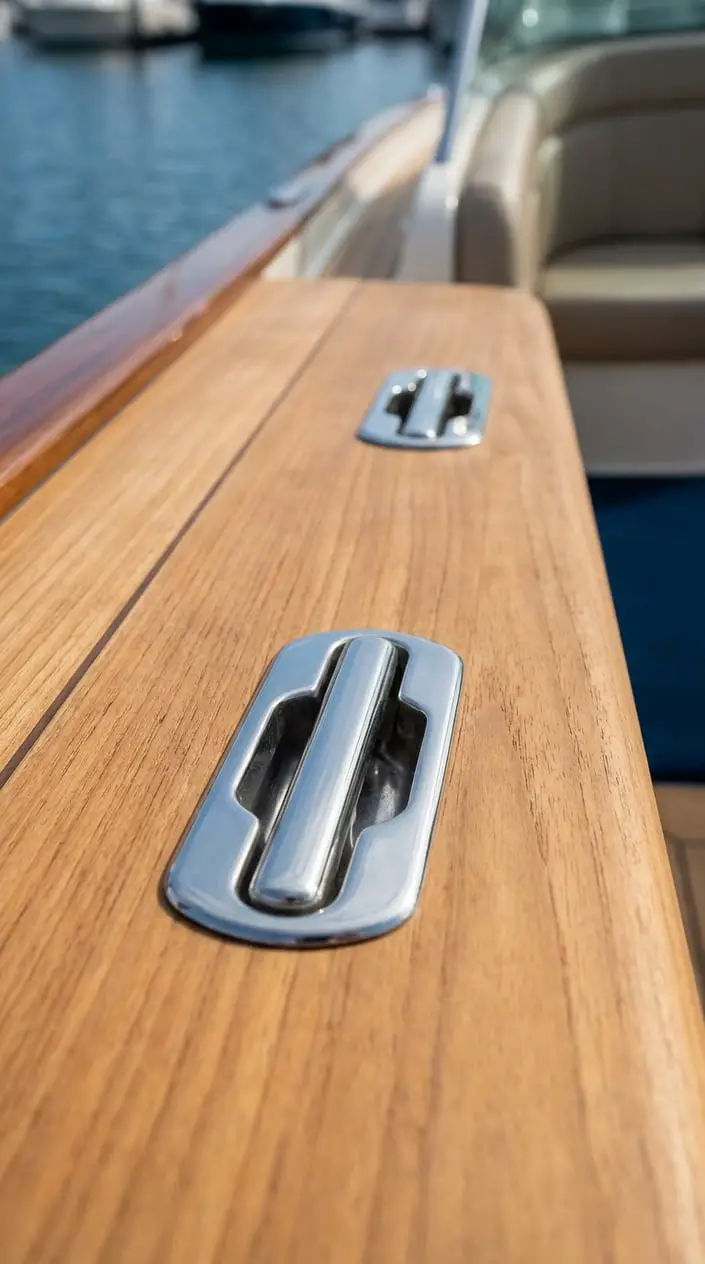
Their low profile keeps hardware from interrupting the deck’s clean lines when you are moving around. Stainless steel also suits the marine setting and pairs well with teak, fiberglass, or painted surfaces. For a cohesive look, match the cleat finish to nearby rails or grab handles.
Before replacing hardware, check the backing plate, fasteners, and deck structure. Cleats take significant loads, so installation needs secure support and a proper seal against water intrusion. Choose a size suited to your boat and the lines you use.
A marine service professional can help confirm placement and installation details if you are unsure about the deck construction.
3) Teak-Style EVA Foam Decking
Teak-style EVA foam decking adds warm color and a cushioned surface without the cost and upkeep of natural teak.
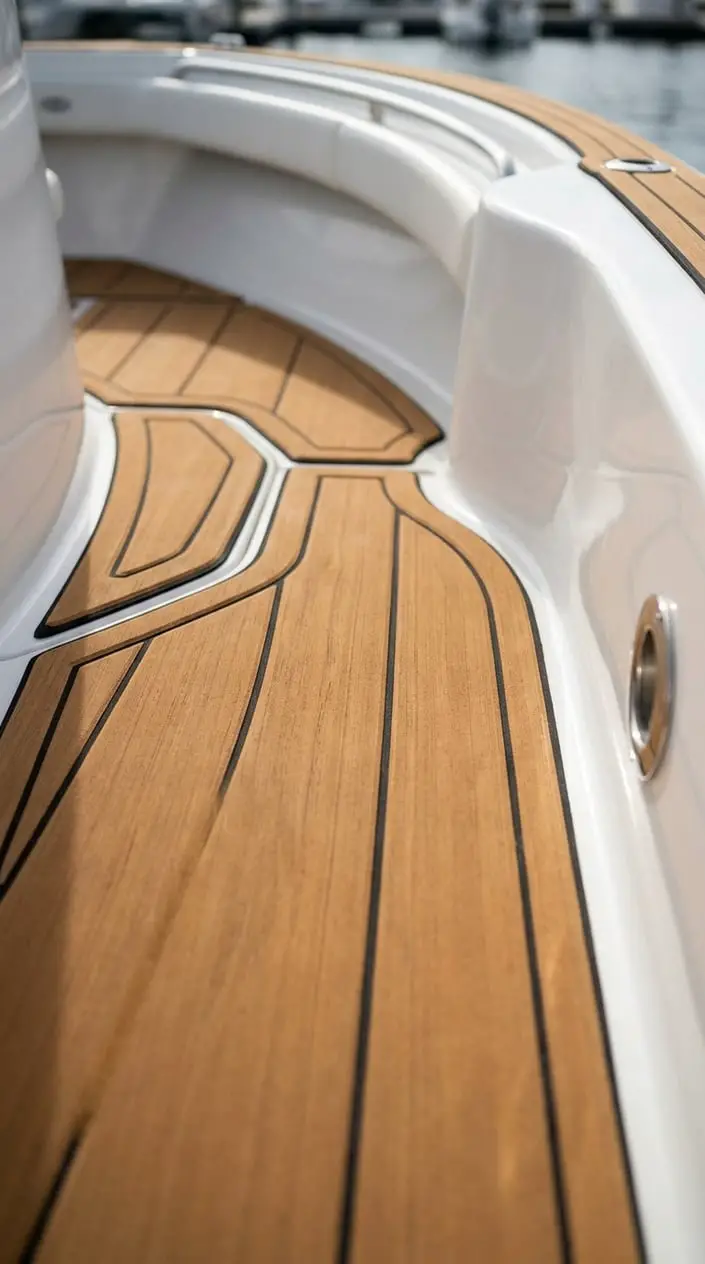
The foam is available in panel styles that mimic teak planks and dark seam lines, giving your deck a coordinated appearance. Its softer feel underfoot can also make time on deck more comfortable. Choose a color that works with your hull and upholstery, then measure carefully around hatches, fittings, and curved edges.
Clean the surface with products approved by the decking maker, and follow its guidance for sun exposure and maintenance. A neat installation depends on smooth preparation and careful alignment.
If you want to cover only a high-traffic area, use a layout that follows the deck’s lines so the new surface looks intentional and integrated.
4) A Lift-Up Hardtop
A lift-up hardtop adds a versatile focal point and lets you adjust shade and airflow to suit the conditions.
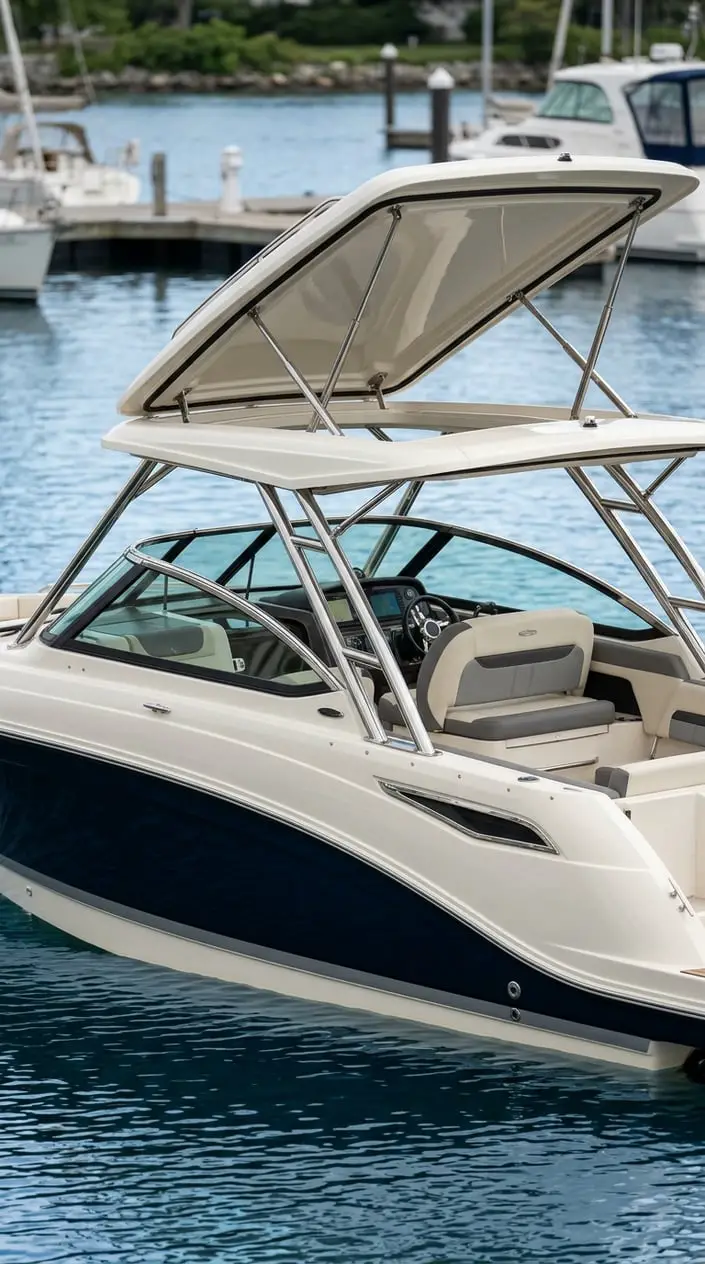
When the top is raised, you gain a more open feel in the cockpit and a clear view overhead. Lowering it provides shelter from strong sun or a passing shower. That flexibility can make a compact boat feel thoughtfully designed for changing weather.
If your boat already has a movable top, keep its hinges, seals, and support struts in good condition. For an upgrade, confirm that the structure suits your boat’s weight, balance, wiring, and clearance. A lift mechanism should move smoothly and lock securely in each position.
Pair the hardtop with simple upholstery and restrained hardware so it remains the cockpit’s main design feature.
5) Warm, Recessed LED Lighting
Warm, recessed LED lighting makes your cabin feel calm and refined while using compact fixtures that sit close to the ceiling or cabinetry.
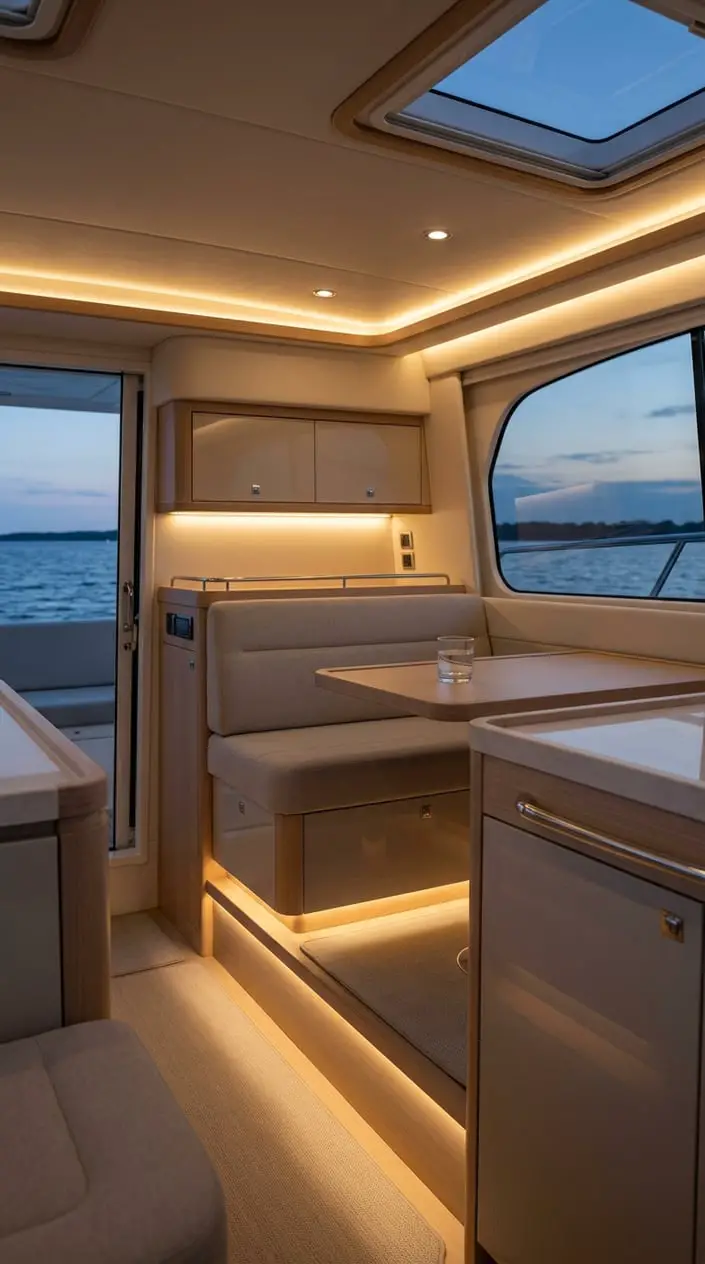
Choose a warm color temperature for relaxation areas, then place lights where you need visibility for reading, dining, or finding stored items. Even spacing helps the cabin feel balanced, while dimmers let you adjust brightness for different times of day. Recessed fixtures also keep the ceiling visually simple.
Marine environments call for fixtures and wiring suited to moisture and vibration. Check the light’s rating and follow the manufacturer’s installation instructions. If you are replacing existing lights, confirm voltage and wiring compatibility before purchasing.
A few well-placed fixtures can create a softer atmosphere without covering every surface in bright light.
6) Coordinated Cockpit Upholstery
Coordinated cockpit upholstery gives your boat a composed, custom look through consistent colors, textures, and stitch details.
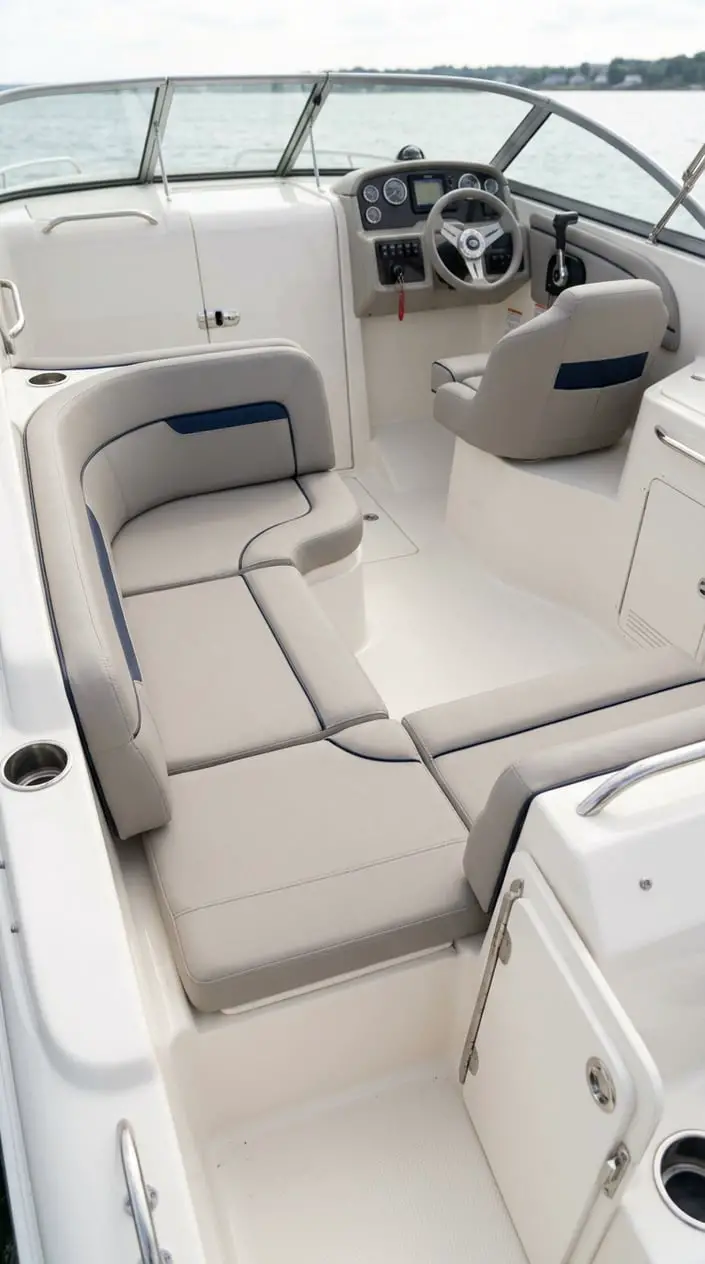
Start with two complementary colors, such as navy and gray, and repeat them across seat cushions and backrests. A restrained accent color can add personality without making the cockpit feel busy. If replacing every cushion strains your budget, begin with the most visible seats and select fabric that works with the existing pieces.
Marine-grade upholstery is built for sun, damp conditions, and frequent use. Ask about UV resistance, cleaning needs, and replacement cushion dimensions before ordering. Keep seams and piping consistent so new pieces look like part of a set.
Matching the upholstery to the boat’s flooring and canvas helps create a finished interior, even with a modest refresh.
7) A Simple, Symmetrical Helm
A symmetrical helm gives your dashboard a balanced appearance and makes key controls easier to locate.
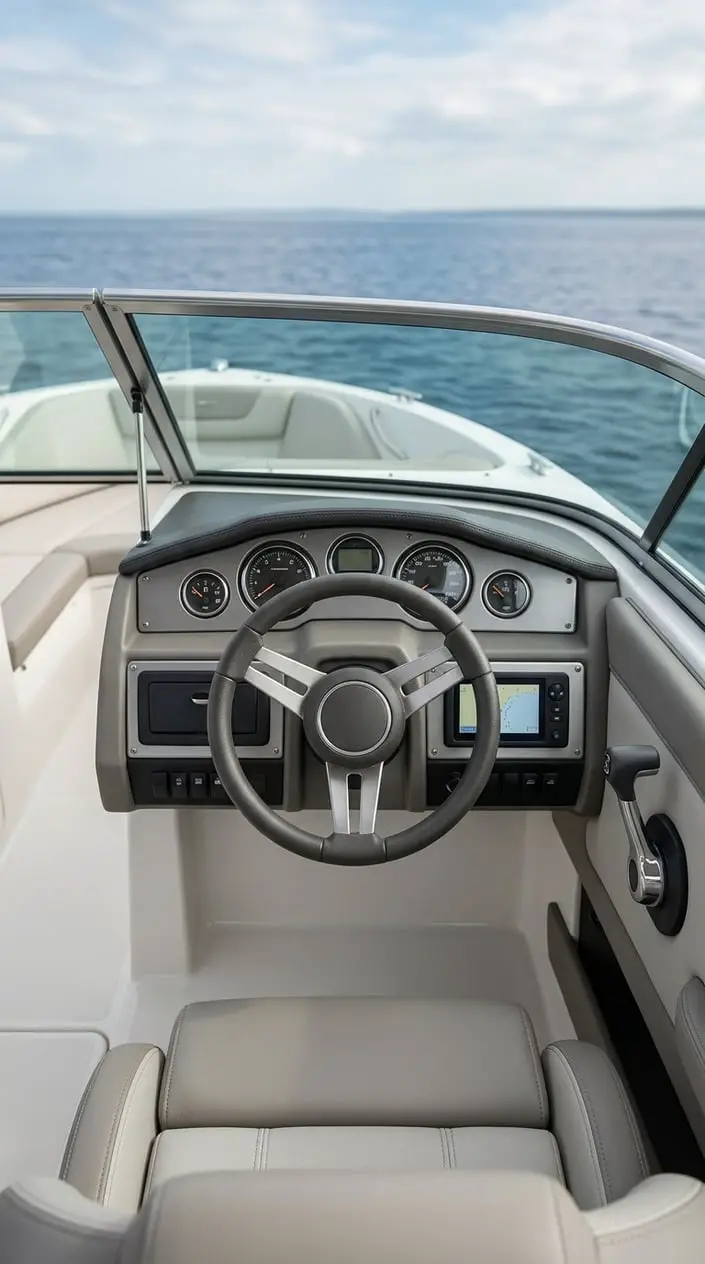
Keep the steering wheel visually centered, then arrange gauges and switches in a clear order around it. Group related controls together and leave enough space to read displays at a glance. A tidy layout can look more refined than a dashboard crowded with extra screens or decorative trim.
Before moving equipment, consider visibility, reach, and safe operation from your normal driving position. Label switches clearly, and keep essential engine and navigation information easy to see. If you add a chartplotter or other electronics, choose a mounting position that does not block your view through the windshield.
Matching bezel finishes can help separate instruments while keeping the whole helm visually consistent.
8) Concealed Storage and Cupholders
Concealed storage and recessed cupholders keep everyday items close while preserving a neat cockpit.
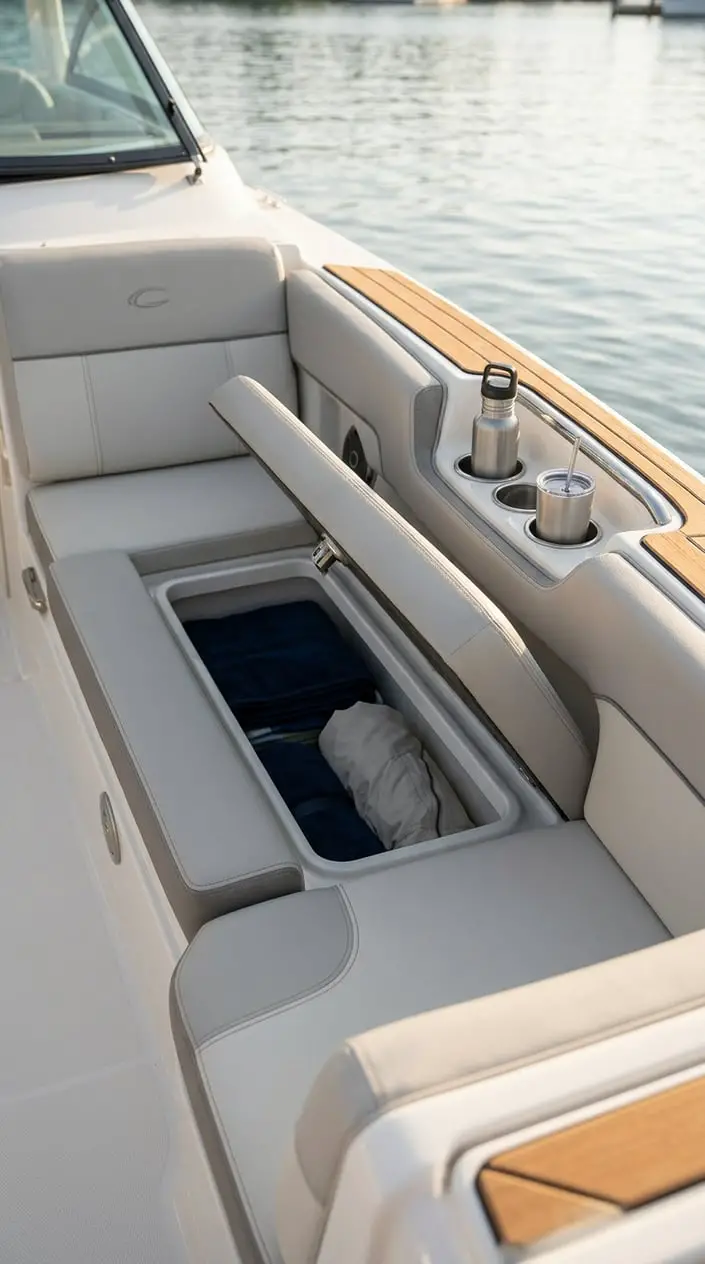
Use compartments beneath seats for gear you want aboard but out of sight, such as towels, dock lines, or life jackets. A hinged cushion or a built-in locker makes access simple. Recessed cupholders keep drinks steady and clear space on tabletops or seat cushions.
Check that storage areas drain and ventilate as intended, especially when you put away damp items. Choose cupholder sizes that suit the drinks you carry, and place them within easy reach of seated passengers. If your boat already has compartments, add fitted organizers to make better use of them.
Keeping loose belongings contained gives the cockpit a quieter, more finished appearance.
9) Brushed-Metal Details
Brushed-metal details add a subtle sheen that makes your boat’s hardware feel coordinated and carefully chosen.
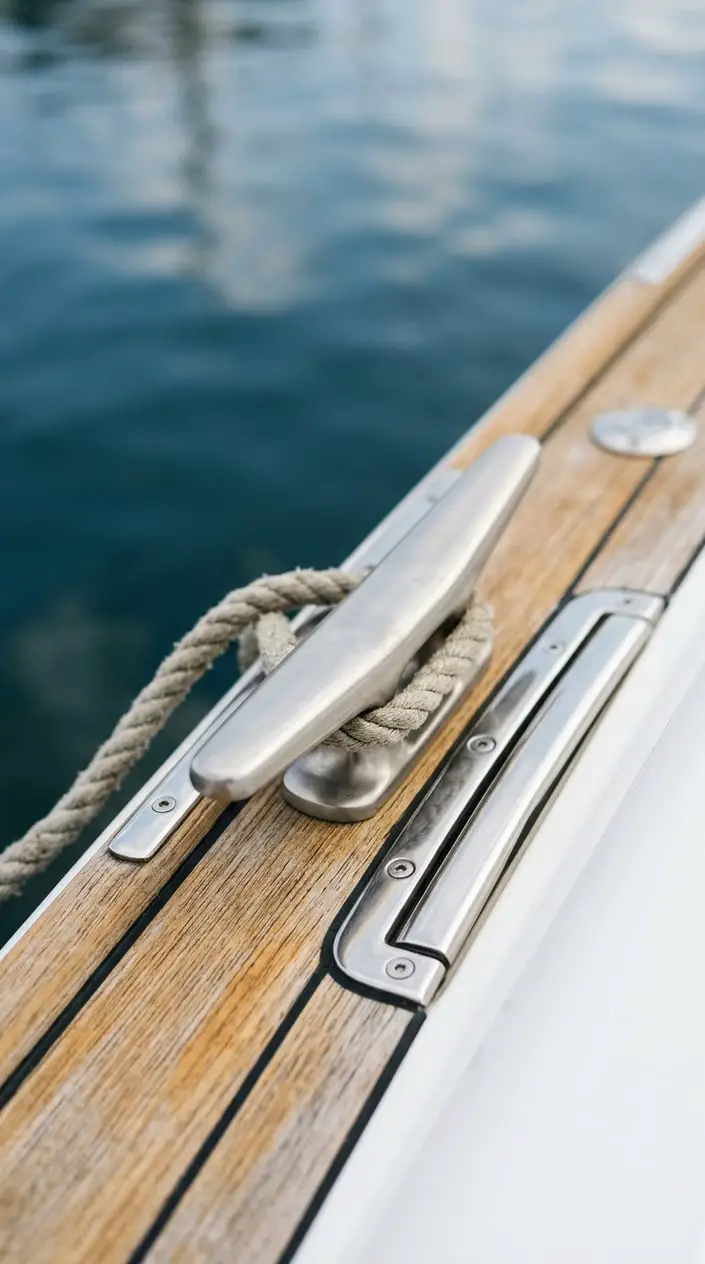
Use a consistent finish for items such as grab handles, latches, trim, and rail fittings. Brushed stainless steel has a soft, satin look that suits many boat interiors and exterior decks. A few matching pieces can tie together areas that otherwise feel visually separate.
Before adding new hardware, compare its color and finish with the metal already aboard. Mixing polished chrome with brushed steel can make an update look piecemeal. Select marine-grade parts and follow cleaning guidance to help protect them from corrosion and water spots.
You can update one area at a time, beginning with the fittings passengers notice as they board or settle into the cockpit.
10) Understated Exterior Graphics
Understated exterior graphics give your hull a sleek, high-end appearance through clean lines and restrained color.
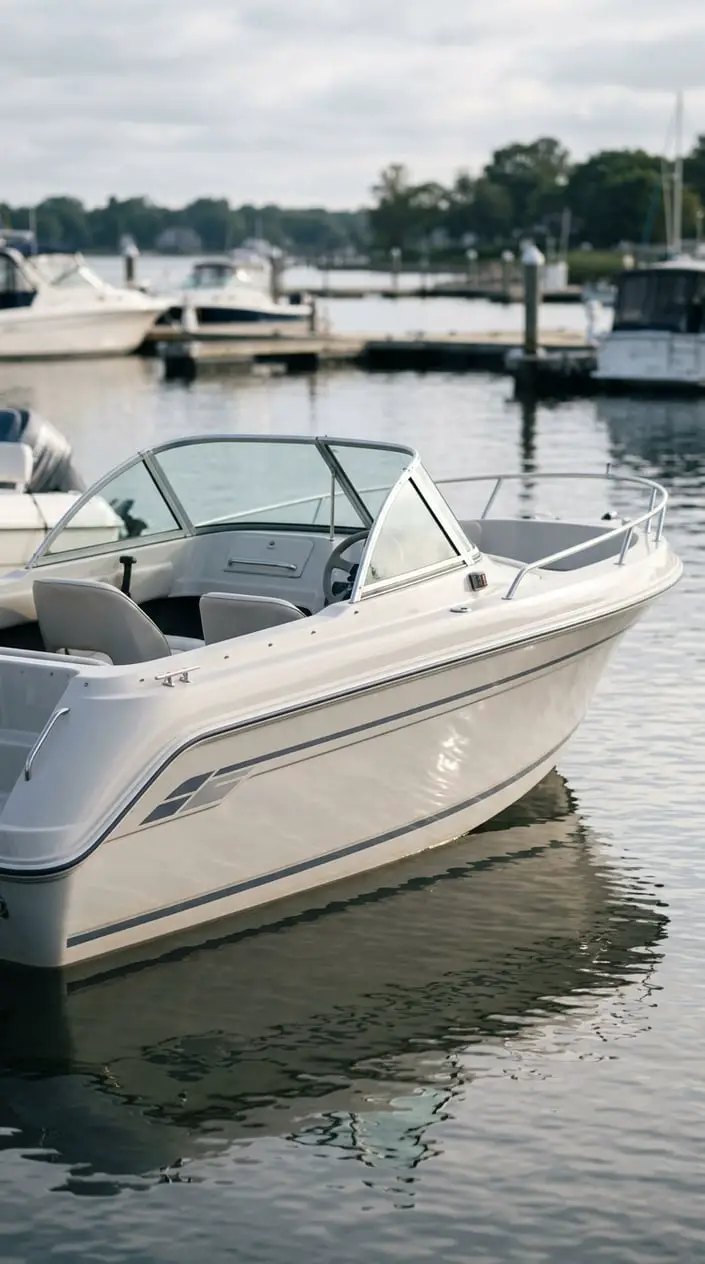
A narrow accent stripe or a simple two-color design can complement the hull without drawing attention away from its shape. Choose tones that work with the boat’s paint, canvas, and metal fittings. Minimal graphics also make it easier to keep the exterior looking visually calm as you add other accessories.
Measure the available hull area and check the boat’s existing lines before ordering decals or paint. Marine vinyl is a practical option for a refreshed look, while painted graphics require careful preparation and application. Follow the material maker’s cleaning instructions to protect the finish. A design that follows the hull’s natural contours helps the boat look cohesive from the dock and underway.