Last Updated on November 13, 2026
The right fishing boat accessories help you hold a spot, read underwater structure, manage power, and stay safe on the water. For a bass boat setup, the Minn Kota Ultrex Quest is a standout upgrade because its brushless drive pairs GPS anchoring with precise trolling control.
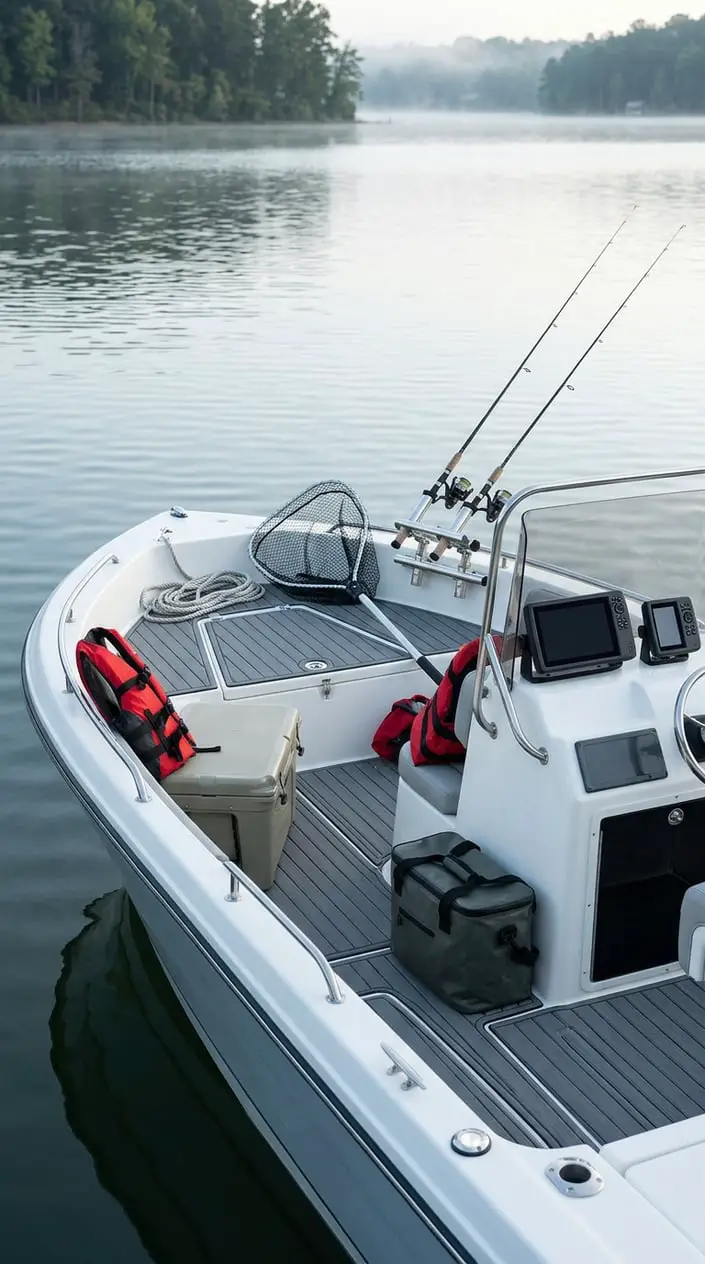
If you want 11 fishing boat accessories that are complete game-changers, focus on equipment that solves a real problem on your boat. Match each upgrade to your hull, wiring, display system, fishing style, and local boating rules before you buy.
Quick picks:
- Best for precise boat positioning: Minn Kota Ultrex Quest Trolling Motor
- Best for viewing fish live: Garmin LiveScope Plus LVS34
- Best for onboard battery charging: NOCO Genius GEN5X3 Onboard Charger
1) Minn Kota Ultrex Quest Trolling Motor
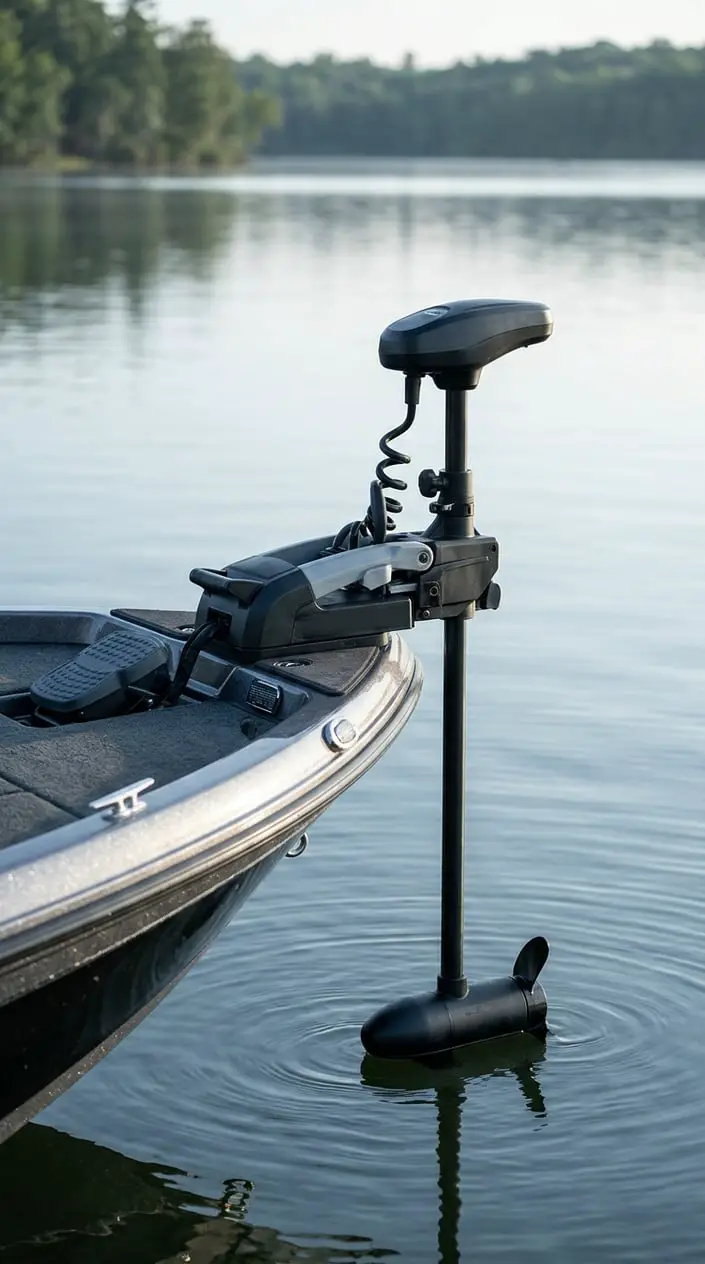
This bow-mounted motor suits anglers who want hands-free boat positioning and fine control while fishing structure. Its brushless drive is designed to deliver efficient, quiet propulsion, while GPS features such as Spot-Lock help hold your boat over a chosen area. That control is useful when wind or current keeps pushing you off a point.
You can steer with the foot pedal while keeping your attention on your line and sonar display. Before choosing a model, check shaft length, thrust, voltage, and compatibility with your boat’s battery system. Confirm there is enough space on the bow for the mount and that your batteries can support the motor’s power needs. Spot-Lock is a positioning aid, so keep an eye on weather, nearby boats, and changing conditions while it is engaged.
2) Garmin GPSMAP 1243xsv Chartplotter
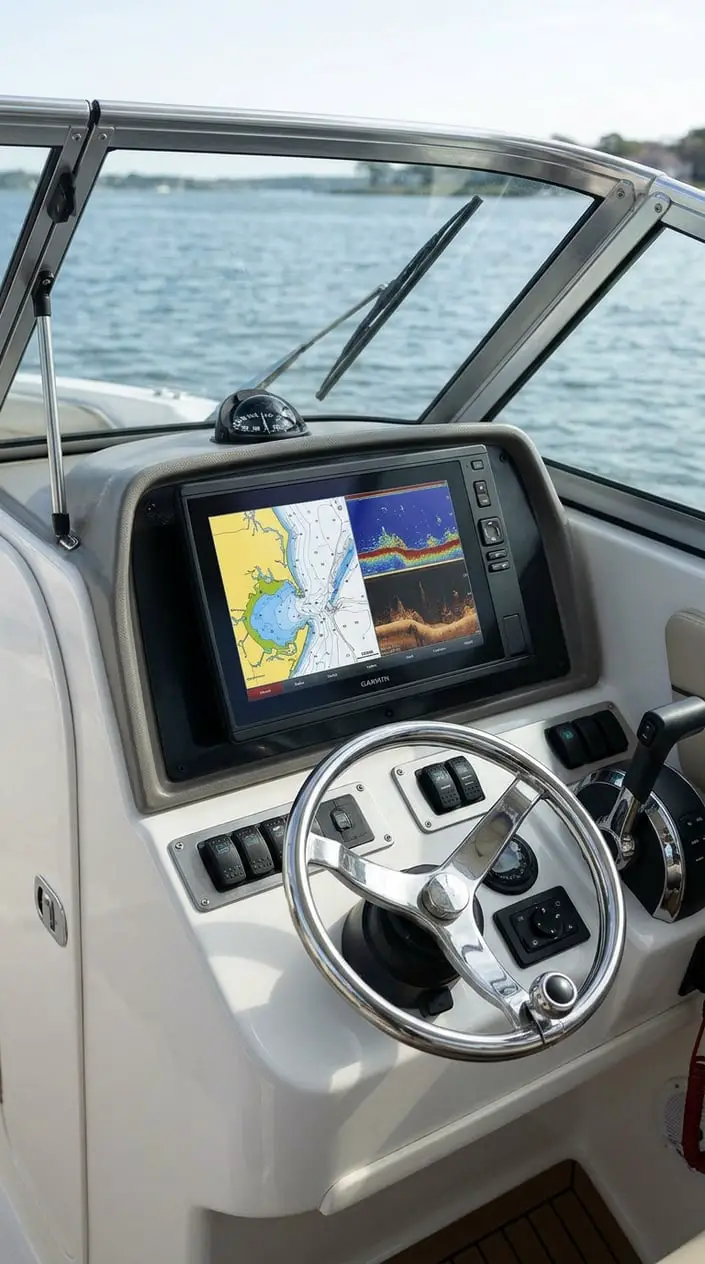
A large touchscreen chartplotter gives you a clear view of navigation charts and sonar information at the helm. The 12-inch display on this unit gives map details and depth readings room to breathe, which helps when you are checking a route or marking productive water. Its sonar support includes CHIRP, ClearVü, and SideVü when paired with compatible transducers.
Check the exact package before buying because transducer and chart details can vary. You will also want to confirm that the display fits your console cutout and works with your existing marine network. Once installed, save waypoints for launches, hazards, and fishing spots, then keep your charts updated. A chartplotter helps you navigate, though safe operation still calls for a lookout and attention to changing water conditions.
3) Garmin LiveScope Plus LVS34
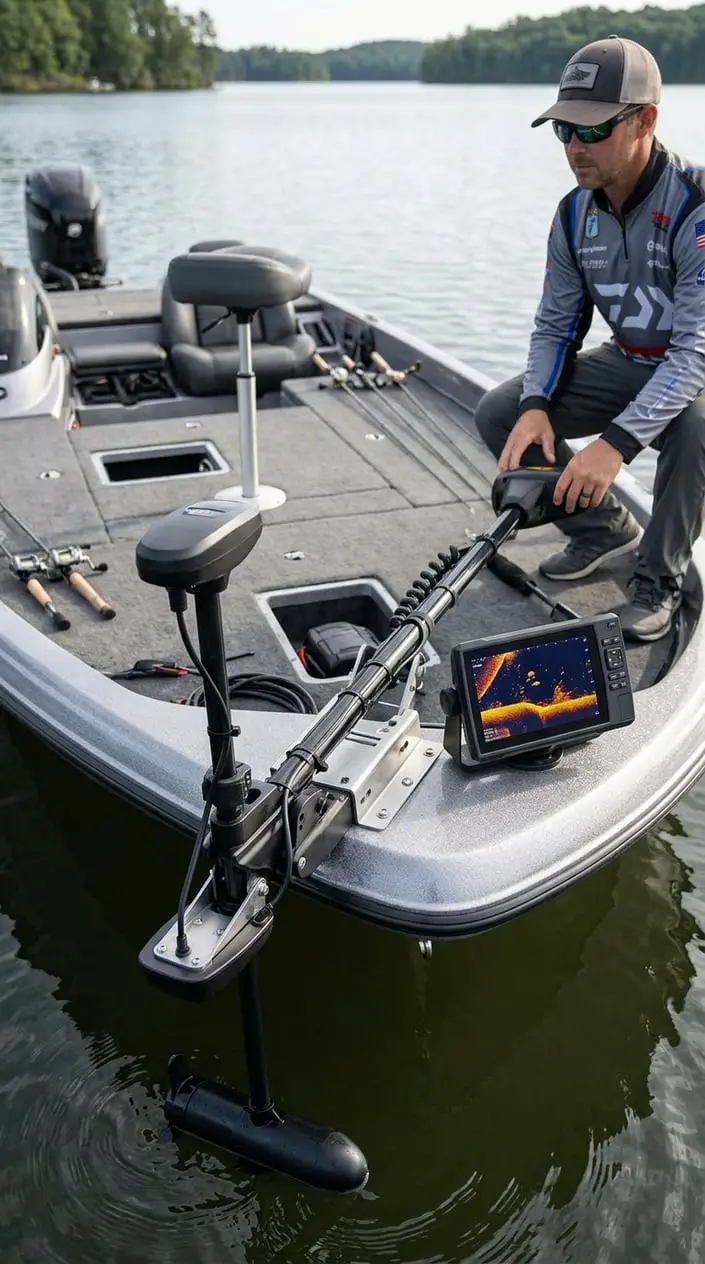
Live sonar helps you watch fish and structure move in real time, making this transducer a useful choice for anglers who study individual targets. The LVS34 supports Forward, Down, and Perspective views when used with compatible equipment. You can scan ahead of the boat, inspect water below the transducer, or set up a broad view for shallow-water searching.
You will need a compatible display and the required sonar components for your setup, so check system compatibility before ordering. Mount position and orientation affect the image, and a stable transducer pole or mount makes adjustments easier. Live sonar also takes practice to read: use familiar structure first, then compare what appears on screen with your lure depth and movement. Keep the transducer cable secured away from moving parts.
4) Minn Kota Raptor Shallow Water Anchor
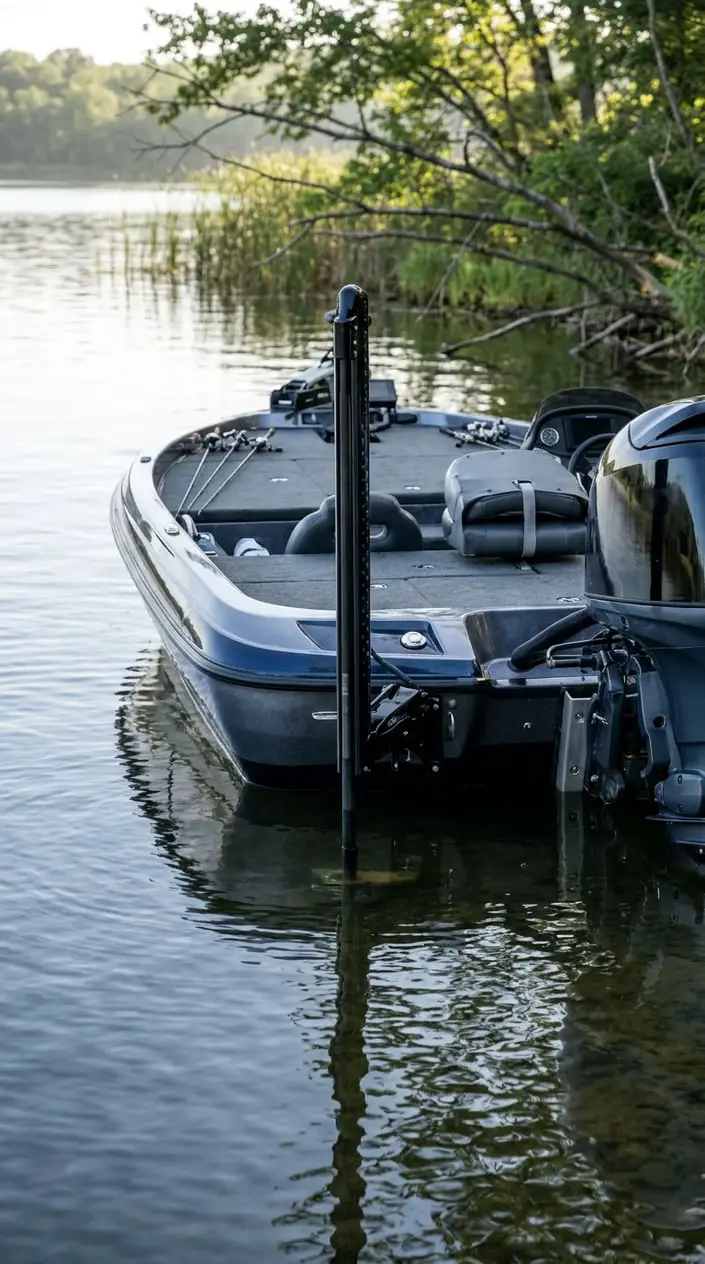
A powered shallow-water anchor helps you stop and hold position with a button press when you reach a shoreline, flat, or weed edge. This transom-mounted system is built for fishing in shallow water, where dropping a conventional anchor can take time and disturb the area. Its anchoring controls are designed to respond to changing conditions and help keep your boat in place.
Choose a model with a length suited to the water depth you fish, and confirm your transom can support the mount. You may also want to pair anchors on both sides of the stern for added control in wind. Follow the installation instructions for wiring and reinforcement, then test deployment in a clear area. Keep people and gear clear of the anchor as it lowers or retracts.
5) Power-Pole Charge Marine Power Manager
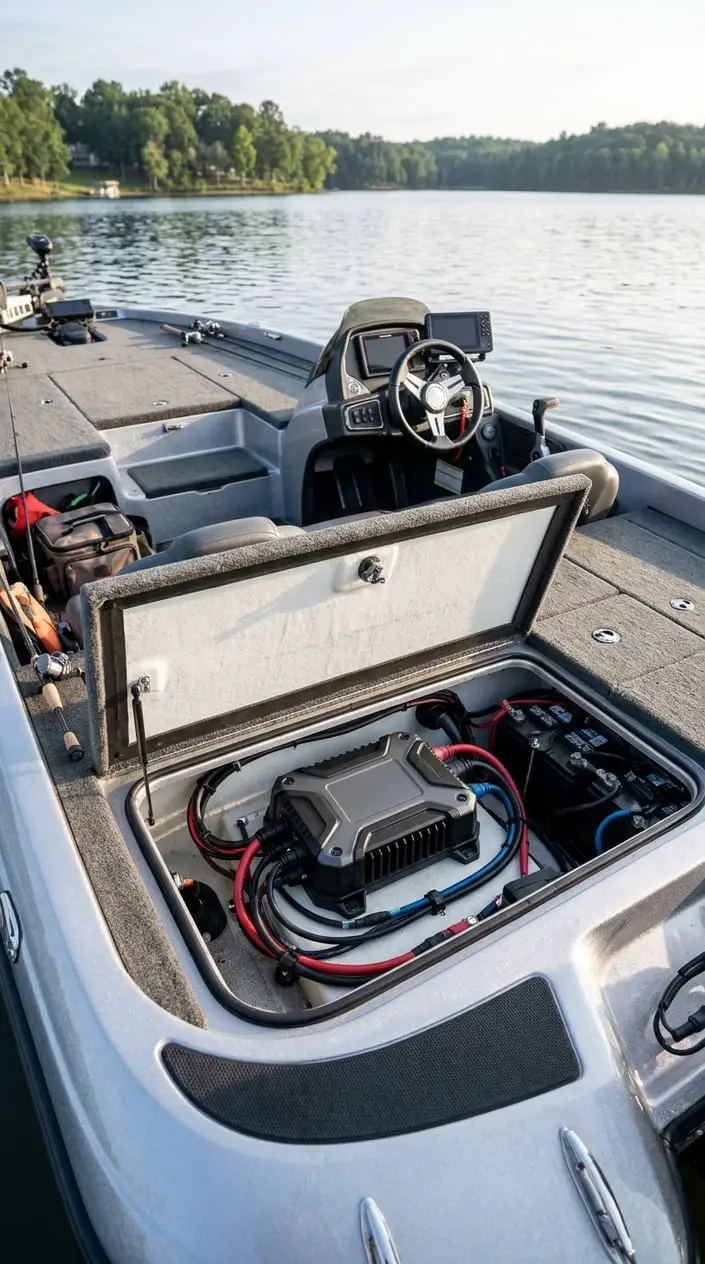
A marine power manager helps you direct charging between boat batteries and monitor the system from the water. This unit is designed to charge batteries while your engine runs, giving you another way to replenish onboard power during a day on the lake. Its battery management functions can help you keep tabs on charge levels across a multi-battery setup.
Before purchase, check that the unit supports your battery types and matches your boat’s charging layout. Installation involves connecting batteries and the engine charging circuit, so use the maker’s wiring diagram and fuse guidance. You can use a compatible app to view system information, which helps you spot a low battery before it affects your electronics. Keep battery terminals clean and secure, and inspect wiring as part of regular boat maintenance.
6) NOCO Genius GEN5X3 Onboard Charger
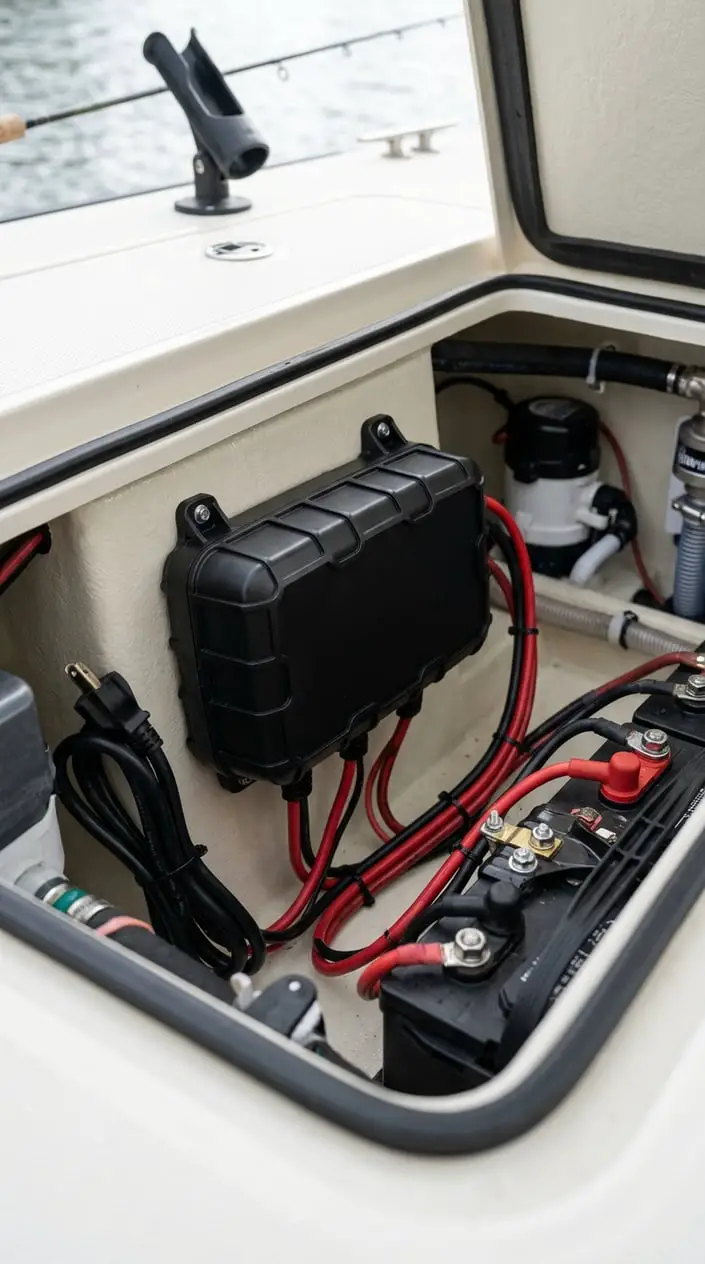
This three-bank onboard charger is a practical fit when you want to charge three separate 12-volt batteries from shore power. It supplies up to 5 amps per bank, for 15 amps total, and supports common lead-acid battery types as well as lithium batteries. Its compact case is made for marine installation, so you can keep charging equipment close to the battery compartment.
Confirm that three banks match your battery arrangement and that each battery’s chemistry is supported. Mount the charger in a location allowed by its installation guidance, with room for cables and airflow. Connect the AC input to a properly protected shore-power source, and follow the wiring instructions for each bank. A dedicated charger gives you a simple routine: plug in after a trip, then check battery status before heading back out.
7) Standard Horizon GX1400GPS VHF Radio
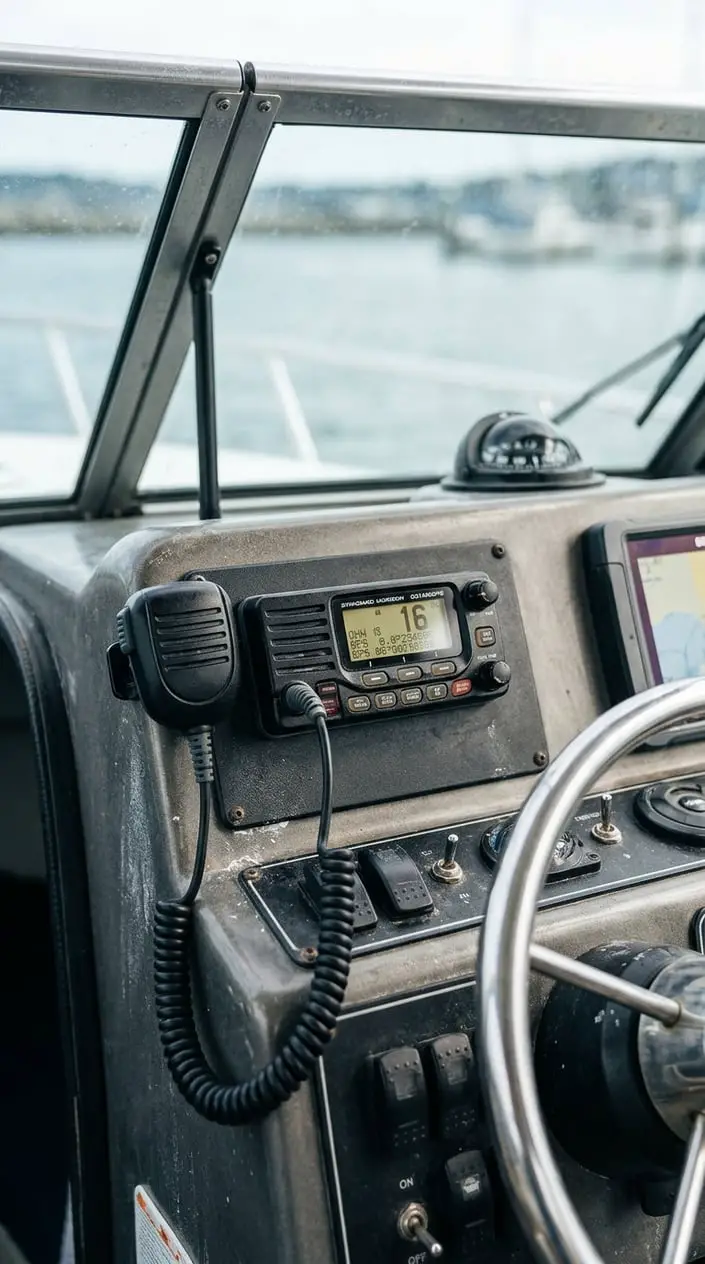
A fixed-mount VHF radio with built-in GPS gives you a reliable way to communicate and send location data in an emergency. This radio includes Class D Digital Selective Calling, which supports a distress call with your position when the unit is connected and set up correctly. Its 25-watt transmission setting provides a choice of output power for marine communication.
You will need a suitable VHF antenna, and you should register the radio’s MMSI and enter the setup details before relying on DSC. Learn how to use Channel 16 for distress and calling, then switch to an appropriate working channel when directed. A VHF radio complements other safety gear; it does not replace a float plan or required safety equipment. Check current FCC and Coast Guard guidance for your boating area.
8) Mustang Survival MIT 100 Inflatable PFD
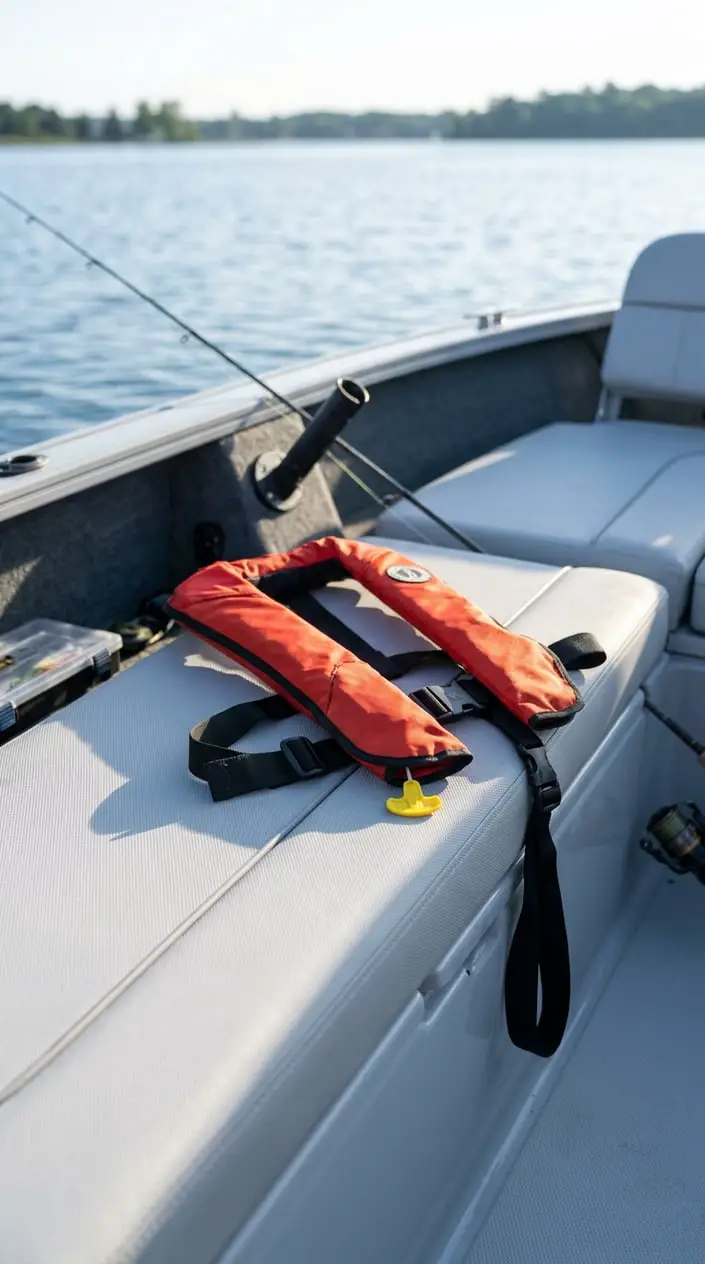
A low-profile inflatable PFD gives you a wearable flotation option for active fishing, provided you wear and maintain it as directed. This model uses manual inflation, so you pull its activation handle when you need to inflate the bladder. Its compact design leaves your arms free for casting and handling gear during normal use.
An inflatable PFD requires more care than a foam life jacket. Check the label for approved use, size, and wearer requirements, then inspect the bladder, cylinder, and status indicator before each outing. Replace or service components according to the manufacturer’s schedule. Since this is a manual model, consider whether you can reach and operate the handle in the conditions where you fish. Keep a properly fitted, accessible life jacket for every passenger as required by law.
9) Scotty 230 Powerlock Rod Holder
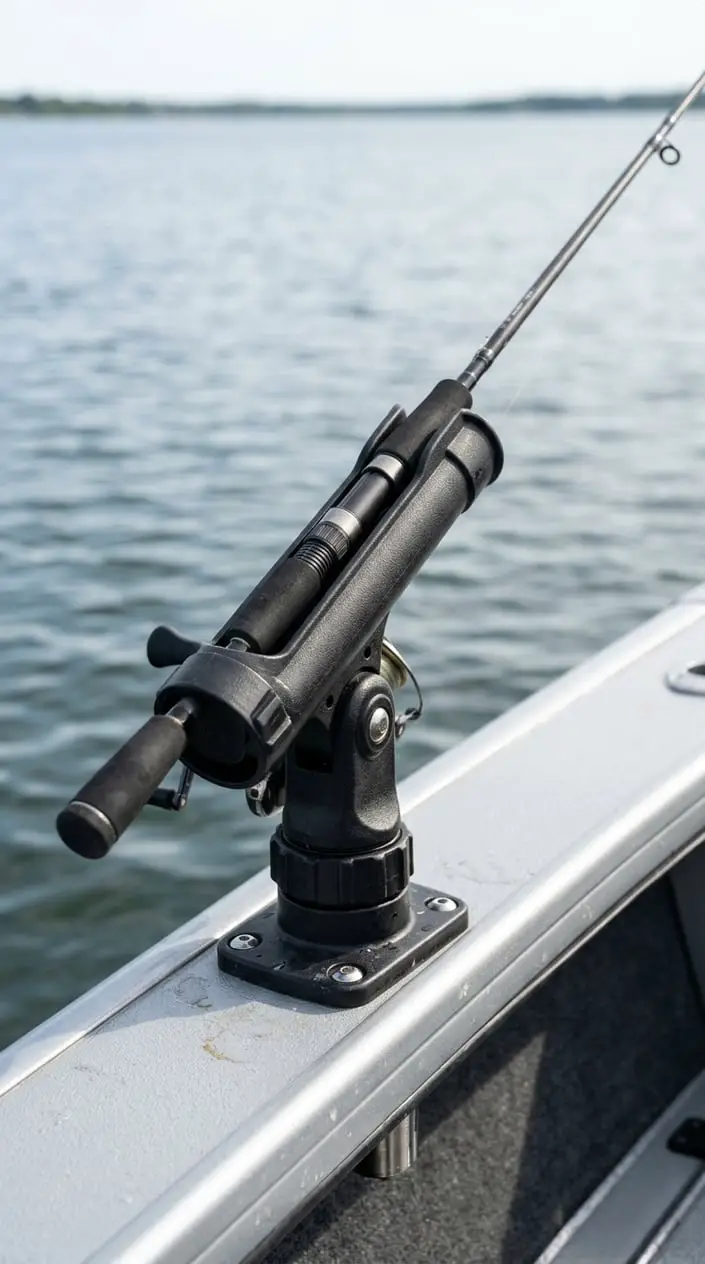
An adjustable rod holder keeps a fishing rod supported while you troll, drift, or pause to work with other gear. This holder’s locking design helps secure the rod, and its adjustable angle lets you set the position for your technique. That gives you a place to stage a spare rod or keep a trolling outfit ready without laying it across the deck.
Check the included mount and confirm it matches the surface where you plan to install it. The rod holder needs a firm base, and your chosen position should leave room to move around the boat. Set the angle before placing a rod under load, then use the locking feature as directed. Keep the rod tip clear of passengers, electronics, and other lines to reduce tangles while you fish.
10) SeaDek Custom Marine Flooring
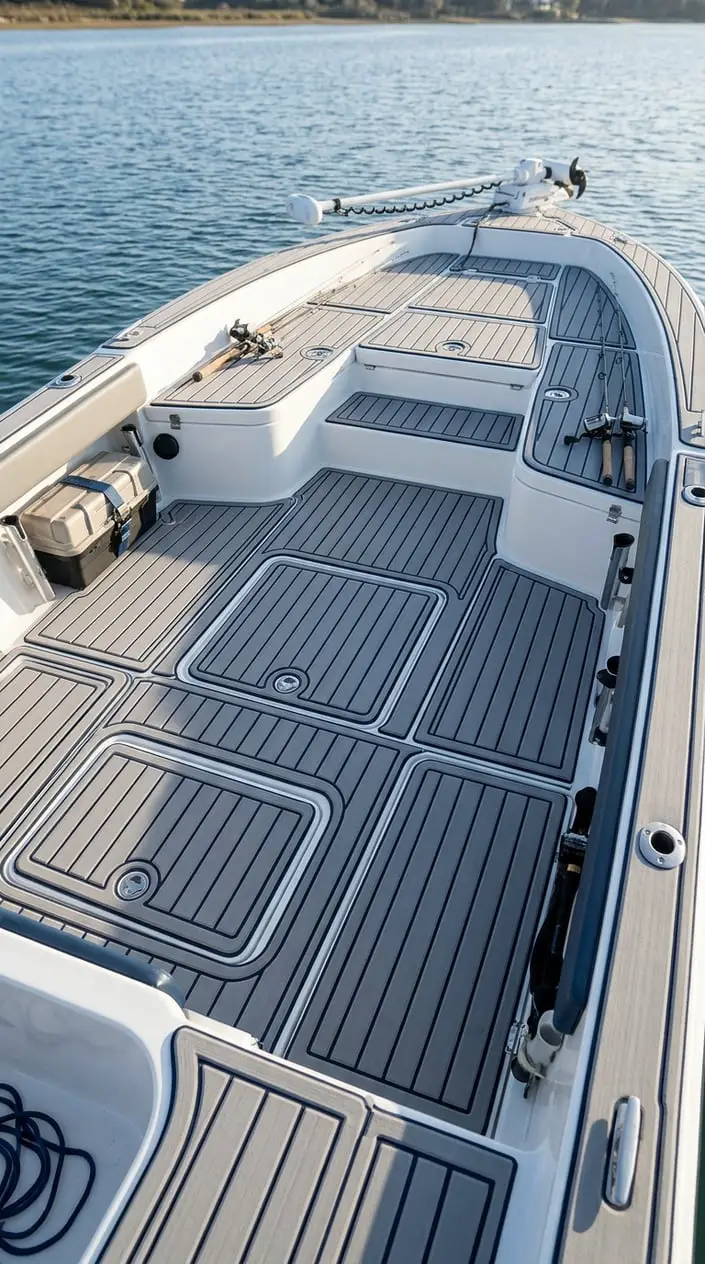
Custom marine flooring adds a cushioned, nonslip surface that can make long hours on deck more comfortable. This closed-cell foam flooring is cut to fit boat layouts and is available in different colors and patterns. A fitted surface can also help define footpaths and working areas, which is useful when you are moving around with wet gear.
Measure your deck carefully and check the template process before ordering a custom kit. Surface preparation affects adhesion, so follow the installation steps and allow the recommended cure time before use. Clean the flooring with products approved for the material, and rinse away fish residue after a trip. A textured surface improves grip, yet you should still move carefully when the deck is wet or covered in bait and slime.
11) Lindy Drift Control Drift Sock
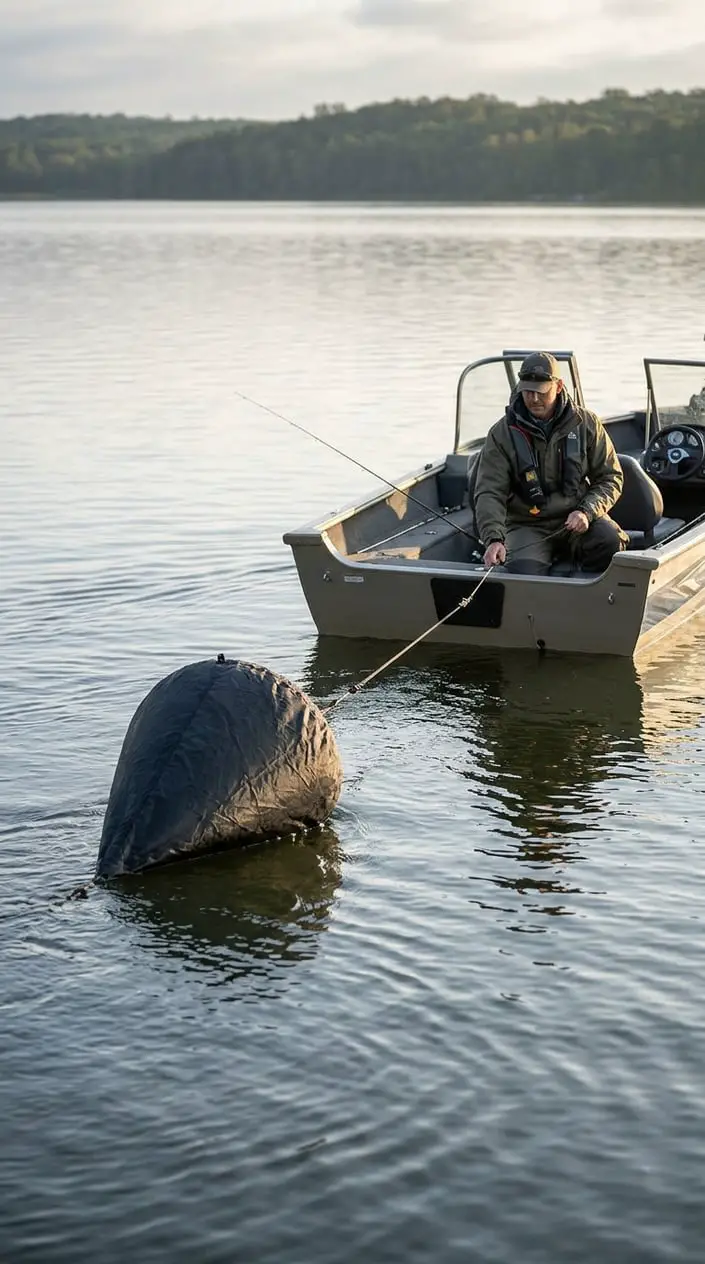
A drift sock slows your boat’s movement in wind, giving you more time to work a shoreline or structure with a controlled presentation. This fabric device opens in the water and creates drag, helping reduce drift speed without running the trolling motor continuously.
It is a simple tool for anglers who fish from a drifting boat and want to keep a lure in the strike zone longer. Choose a size suited to your boat and the conditions you expect, then attach the sock to a secure cleat with the proper line.
Use a retrieval line so you can bring it aboard without reaching into the water. Keep the rope clear of the propeller and passengers, and follow the maker’s guidance for deployment. A drift sock manages speed; continue monitoring wind, traffic, and your position.