Last Updated on January 14, 2026
You plan to cozy up your RV for cold weather without giving up style or function. This article shows simple, practical ways to turn your living room into a warm, snug spot that keeps you comfortable on chilly nights. You’ll find easy ideas that save space, boost warmth, and make your RV feel like a true winter retreat.
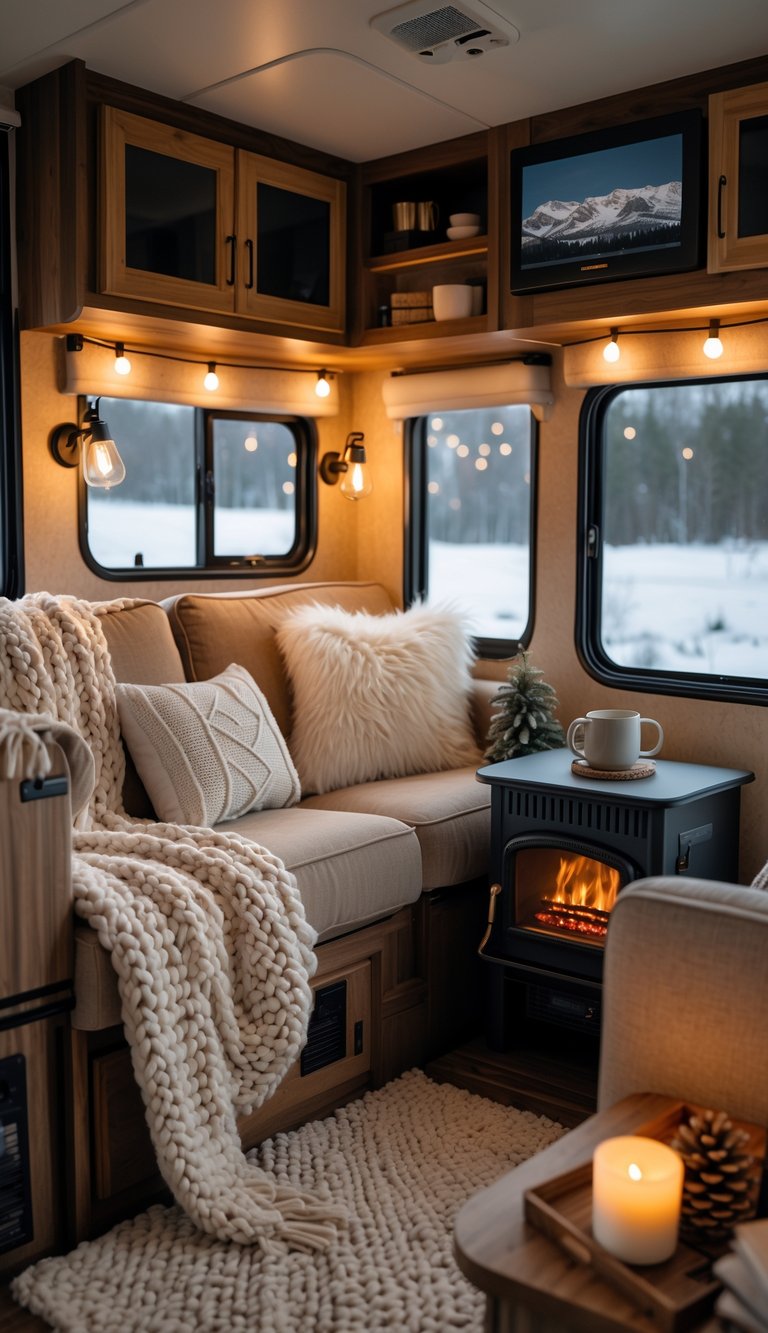
Flip on soft lighting, layer warm textiles, and use smart storage so your small space works harder and feels cozier. Use these ideas to create a welcoming space for relaxing, hosting, or staying put during storms.
PRO TIP
Use items that pull double duty: choose a storage ottoman that holds extra blankets, a convertible sleeper sofa for guests, and a compact electric fireplace that adds warmth without permanent installation. Pick battery-operated LED string lights and decorative lanterns with battery candles to add warm light without wiring. Layer rugs—start with a small wool area rug, then add a faux fur rug for texture and insulation. Install thermal curtains or suction cup window insulation kits to reduce drafts. Opt for slipcovers in sherpa or other cozy fabrics so you can switch looks quickly and wash easily. Keep a chunky knit pouf or folding seat tucked under a table for extra seating when needed. Finally, prioritize safety: choose propane or electric heaters with built-in safety features and keep ventilation clear.
1) Layer plush fleece throws on your sofa
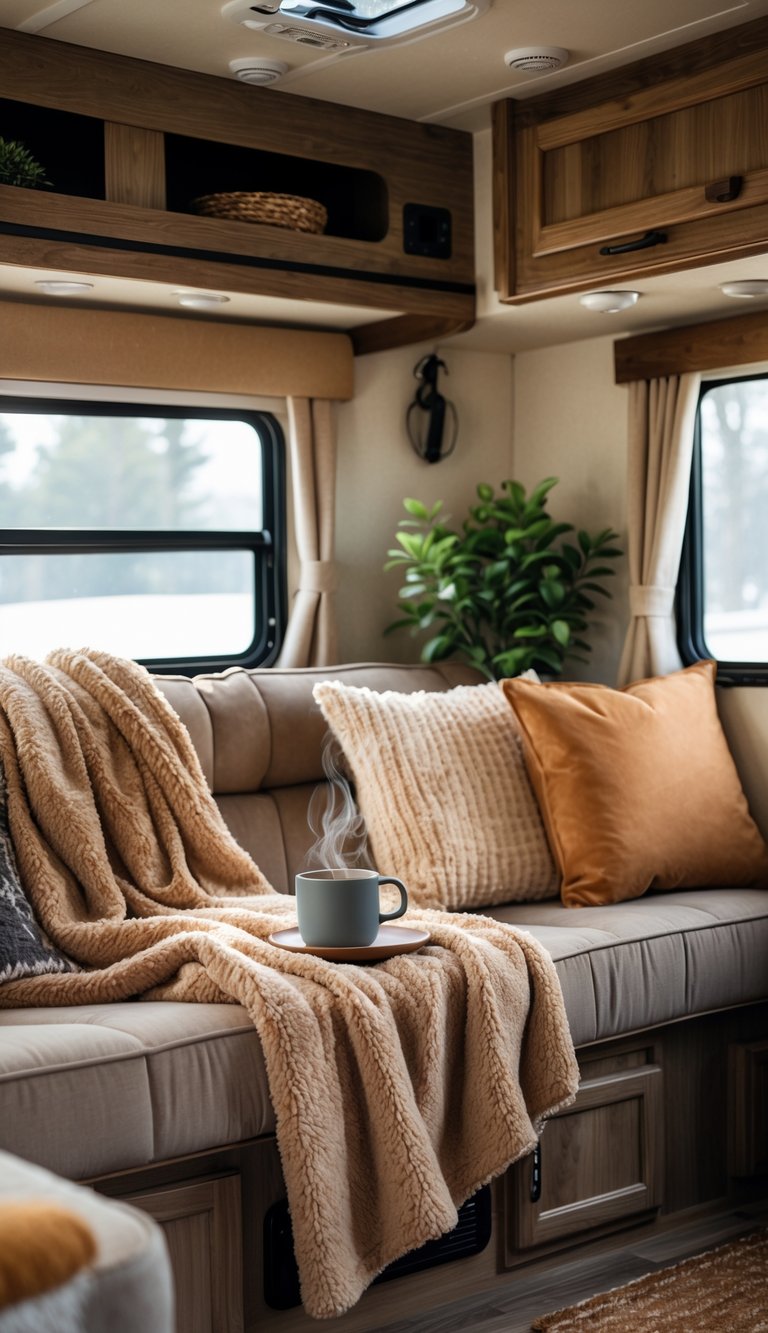
You can make your RV sofa feel warm and inviting by draping plush fleece throws over it. Soft throws add immediate warmth and a cozy look without taking up much space.
Choose throws in different colors and textures to create a layered effect. Fold one across the back and let another hang over the arm for easy access when the temperature drops.
Keep a few smaller throws within reach for quick use while reading or watching TV. They also make cleaning easier since you can wash the throws instead of deep-cleaning upholstery.
PRO TIP
Pick fleece throws that are lightweight but insulating so they won’t crowd your seating or add too much bulk to your storage. Look for throws around 50 x 60 inches to fit most RV sofas without dragging on the floor. Choose two or three that coordinate with your interior—one neutral base and one or two accent colors—to keep the space visually calm and warm. Store extra throws in a bench or under-seat bin to save space. If you spend time outdoors, keep one water-resistant blanket for wet gear and one plush fleece inside for warmth. This system keeps your RV tidy and ready for cold weather without clutter.
2) Use battery-operated LED string lights for warm ambiance
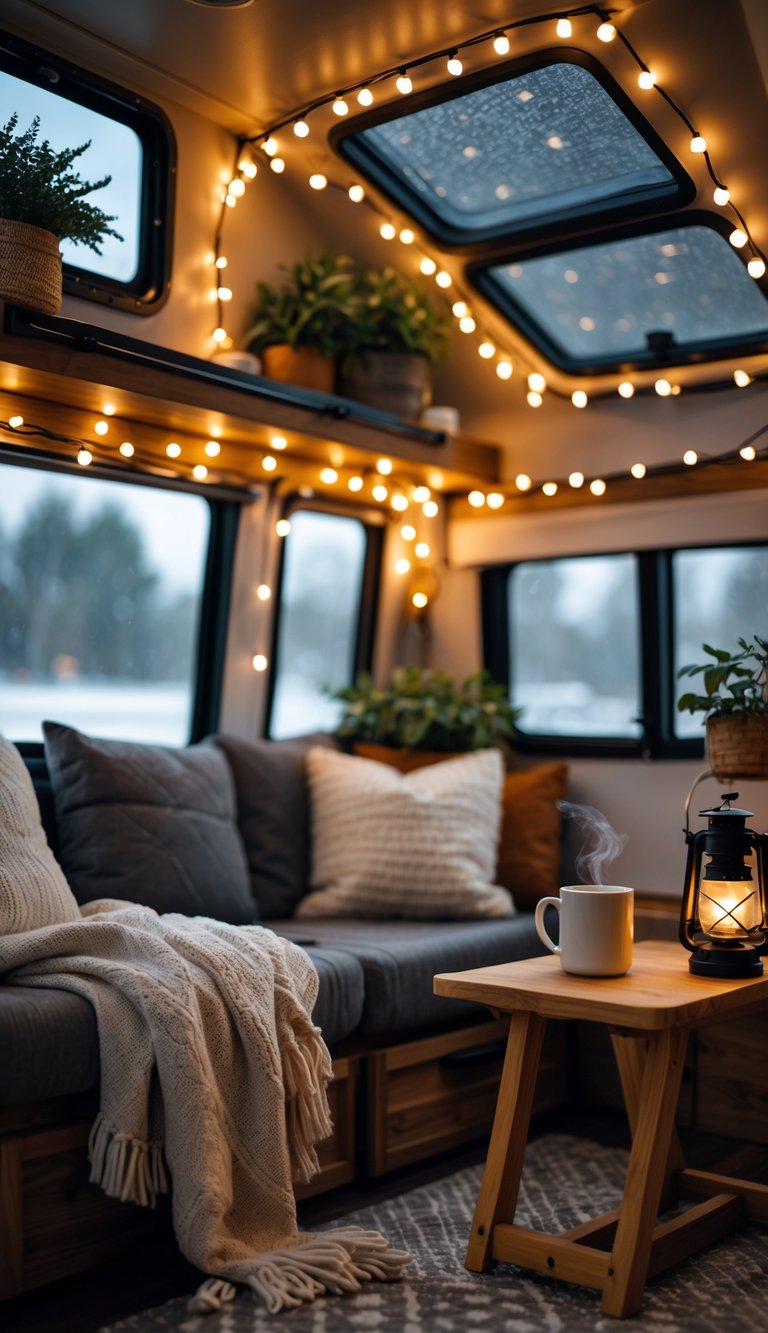
Battery-operated LED string lights give your RV a soft, cozy glow without needing an outlet. You can drape them along cabinets, around windows, or behind cushions to add depth and warmth to the living area. They use little power, so you won’t drain your RV batteries quickly, and many models offer dim or warm-white settings for a comforting tone.
You can move them easily to change the mood or hide cords for a cleaner look. Choose shatterproof bulbs or plastic-covered LEDs for safety in a small space. Look for lights with a timer or remote so you can set them and relax without fuss.
PRO TIP
You can layer string lights with other light sources to create zones—bright for reading and soft for relaxing—so your RV feels larger and more inviting. Use adhesive hooks or removable clips to avoid damage to surfaces and to reposition lights without tools. If you boondock, pick LED strings with long battery life and a low-power mode to preserve energy. Warm-white LEDs (2700–3000K) feel more natural and cozy than cool-white options. Finally, keep spare batteries or a small USB power bank handy to extend run time when outlets are scarce.
3) Install thermal curtains to block drafts
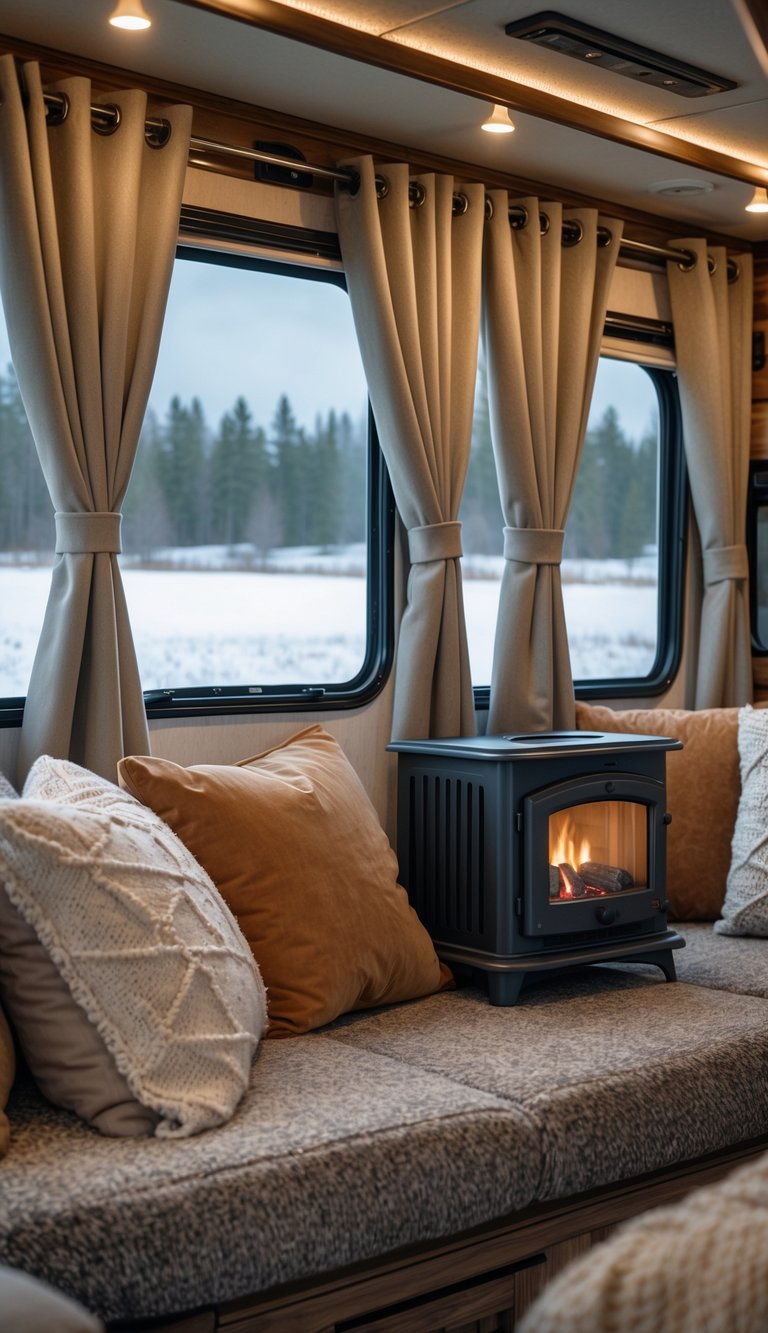
Thermal curtains trap cold air at the window and help keep your living area warmer. Pick curtains with a dense lining or a reflective layer to reduce heat loss through single-pane RV windows.
Mount curtains close to the frame and seal gaps with weatherstripping or Velcro to stop drafts. Use a tension rod or small curtain track so installation stays simple and damage-free.
Thermal curtains also cut noise and add privacy, which makes your space feel cozier. Choose colors and fabrics that match your decor to keep things inviting while staying practical.
PRO TIP
When you shop for thermal curtains, measure each window carefully and add a few extra inches for overlap; that overlap is what really blocks drafts. If a full curtain feels bulky, use a layered approach: a thinner decorative curtain plus a separate insulating panel you can close at night. For curved or oddly shaped RV windows, consider custom-cut foam board or a snap-in insulated liner to pair with the curtain. Secure the bottom edge with small clips or magnets to reduce cold air seepage. Washable liners make maintenance easy and keep your RV smelling fresh without losing insulation value.
4) Add a faux fur rug under the coffee table
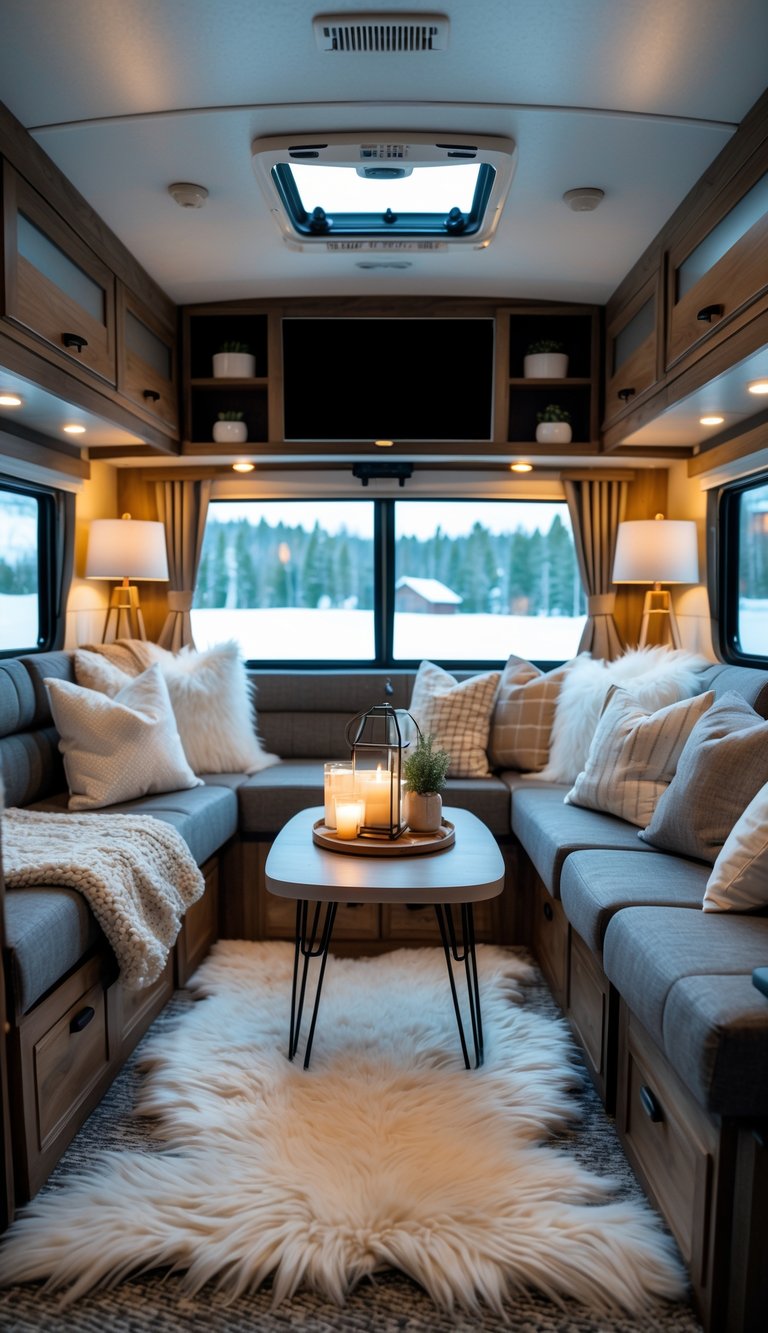
Place a faux fur rug under your coffee table to add warmth and softness to your RV living space. It creates a cozy focal point that feels inviting after a cold day on the road. The rug also adds texture and depth without taking up much room.
Choose a size that fits partially under the table so the rug anchors the seating area but doesn’t block walkways. Light colors brighten a small space, while darker shades hide dirt better between cleanings. Pick a low-pile faux fur for easier vacuuming and less shedding.
Layer the faux fur over a flat rug for grip and extra insulation. Secure with a non-slip pad so it stays put while you drive or move around. This small change makes your RV feel more like home during chilly weather.
PRO TIP
When you pick a faux fur rug, aim for easy care and safety. Look for machine-washable options or ones that tolerate spot cleaning so you can remove mud or pet hair quickly. Always use a thin non-slip rug pad underneath to prevent sliding and to protect the floor from moisture. If you want more warmth, place a thin wool or jute rug beneath the faux fur to add insulation without bulk. Measure the coffee table and walking paths first; leave at least 12–18 inches of clear floor around the rug so people can move freely. Finally, rotate the rug every few months to avoid uneven wear and keep it looking plush.
5) Choose a compact electric fireplace
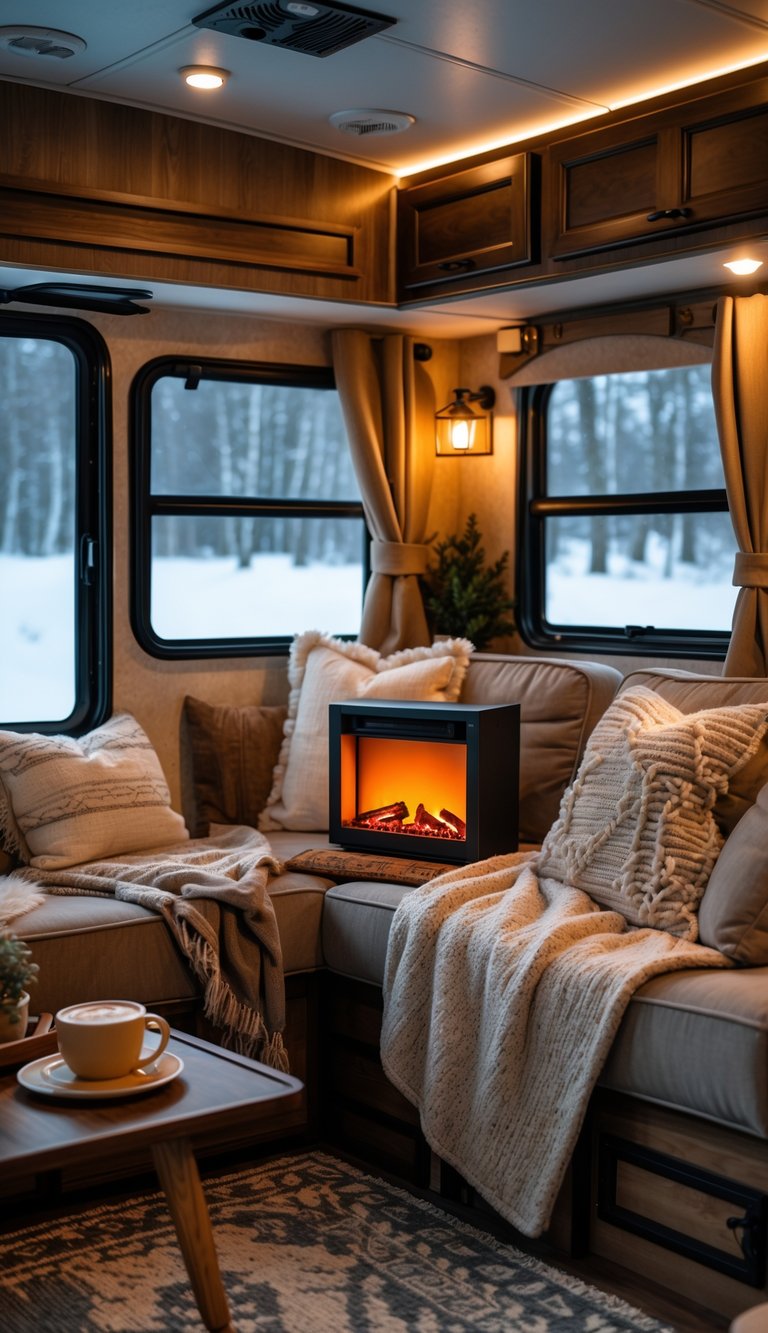
A compact electric fireplace gives your RV real heat without the smoke and fuss of a wood stove. You can mount a slim unit on a wall or tuck a freestanding model into a corner to save floor space.
Look for models with adjustable heat and a thermostat so you won’t overwork your RV’s power. LED flame effects add cozy light and ambiance while using little energy.
Measure the area before you buy and check ventilation and clearance rules in your RV manual. Many units plug into a standard outlet, but higher-output models may need a dedicated circuit or inverter.
PRO TIP
When picking a compact electric fireplace, prioritize size, power draw, and safety features to match your RV setup. Measure the wall or cabinet space carefully and choose a unit that leaves room for airflow and wiring access. Check the unit’s wattage against your RV’s electrical limits; consider an inverter or using shore power for higher-heat models. Look for tip-over protection, automatic shutoff, and overheat sensors. If you plan to mount it, use the manufacturer’s brackets and follow clearance specs. Finally, test the flame effects and heat settings before long trips so you know how it performs in cold weather.
6) Incorporate weatherproofed cushions
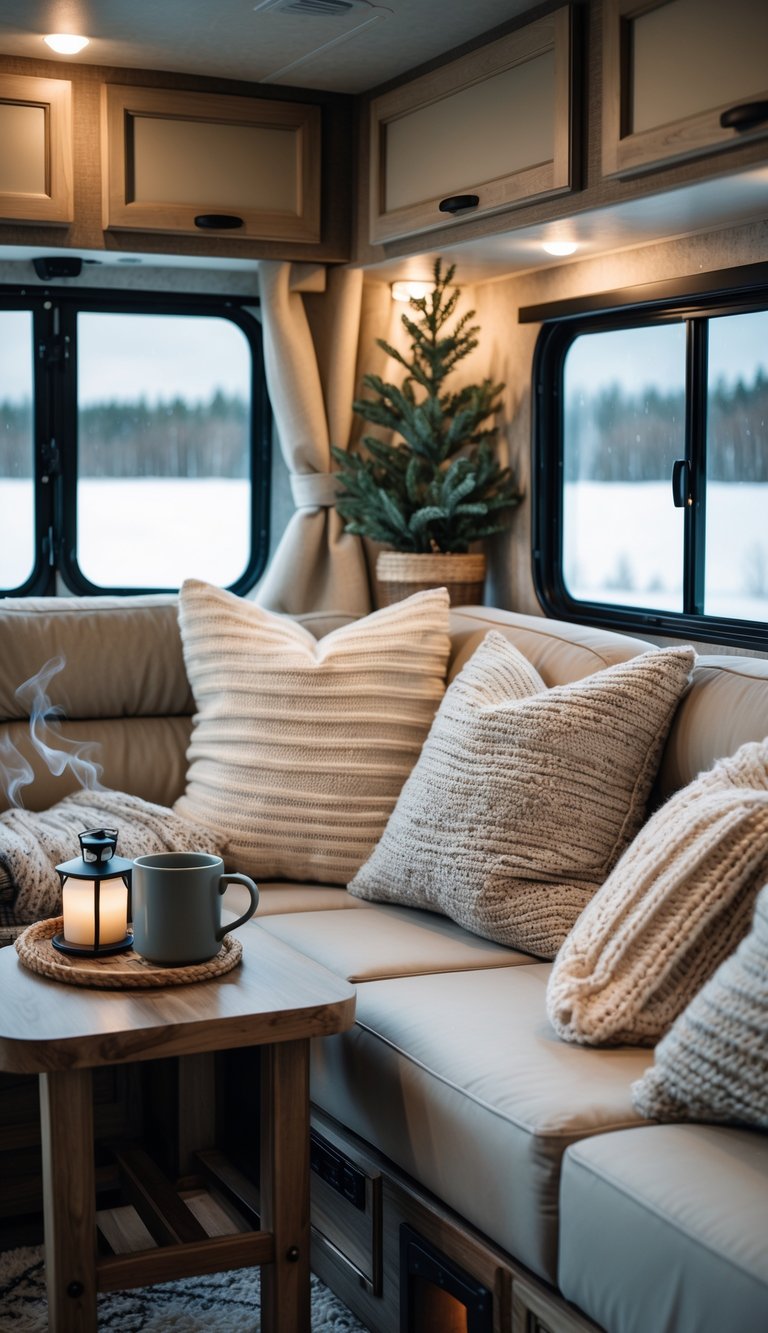
Choose cushions with weatherproof fabric to keep your RV living room cozy in cold, damp weather. These fabrics resist moisture and dry faster, so your seating stays comfortable after a snowy day or a rainy drive.
Pick cushions with high-loft fill for extra warmth and support. Foam or synthetic fills trap heat better than thin options, and they keep their shape over time.
Cover cushions with removable, washable covers to make care easy. You can swap them out for fresh ones if they get wet or muddy, and this helps prevent mildew.
Look for covers with a good zipper and reinforced seams to last through frequent use. A snug fit helps keep heat in and drafts out.
PRO TIP
You can layer a thermal liner under your cushion covers to add warmth without bulk. These thin liners trap body heat and work well with weatherproof fabrics. Use liners made for outdoor gear or buy quilted thermal batting from a craft store. Cut to fit and insert between the cushion and the cover for extra insulation. Also keep a few spare covers in your storage—quick swaps prevent damp cushions from sitting in your RV. If you camp in very cold climates, pair weatherproof cushions with a fitted throw blanket for an extra warm seat that still looks tidy.
7) Use a storage ottoman for blankets and pillows
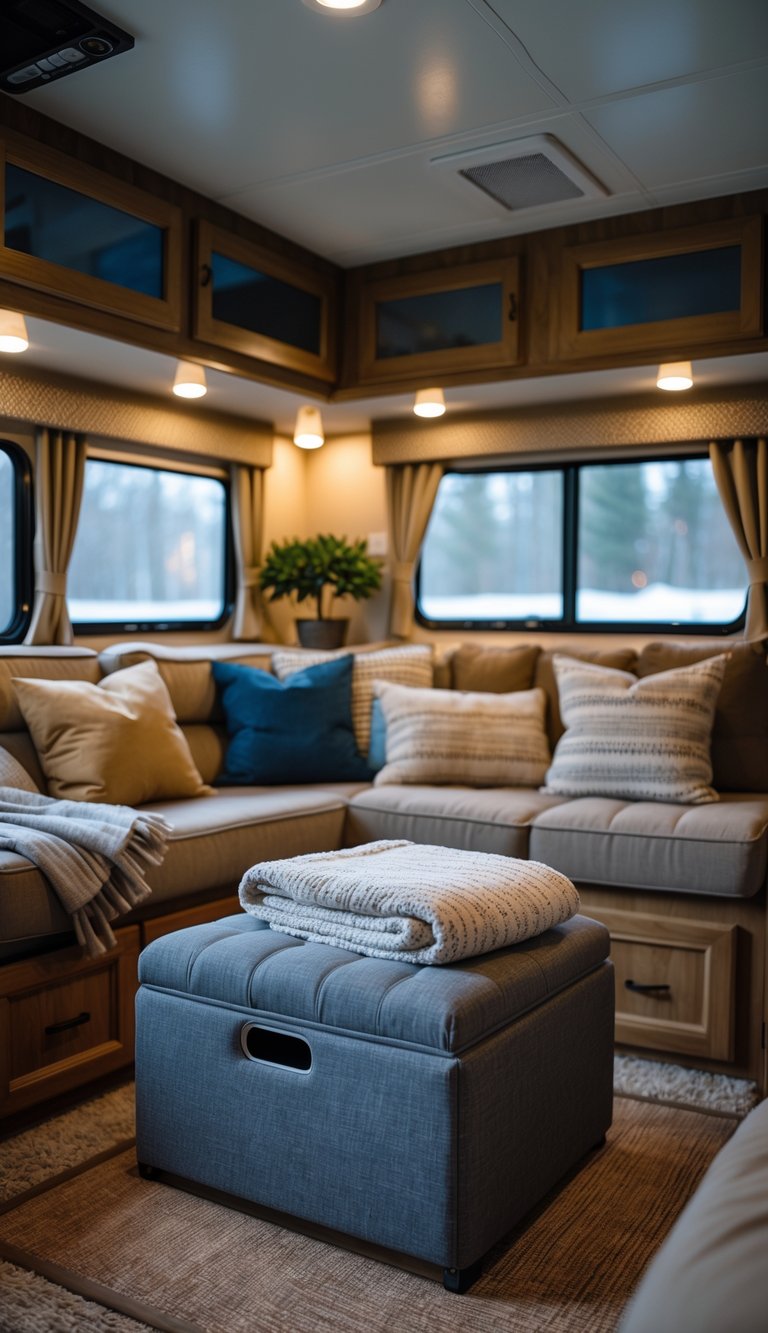
A storage ottoman saves space and keeps your RV tidy. You can tuck away extra blankets and pillows so they stay dry and ready when the temperature drops.
Pick an ottoman with a lift-top or removable lid for easy access. Choose a size that fits your living area without blocking walkways or doors.
Look for models with durable fabric or wipeable surfaces to handle dirt and spills. Neutral colors blend with many decors, while a patterned ottoman can add warmth and style.
PRO TIP
Choose a storage ottoman with firm padding so it works as extra seating when guests visit. Line the inside with a zippered cloth bag or small bins to keep blankets and pillows separate and prevent fabric rubbing. Roll or fold blankets to save room and reduce creases; vacuum-seal bags work if you need maximum space, but avoid over-compressing delicate materials. Add cedar sachets or lavender pouches to protect against musty smells and moths during long trips. Finally, measure the ottoman and RV passageways before buying to make sure it fits through doors and into place.
8) Place a chunky knit pouf for extra seating
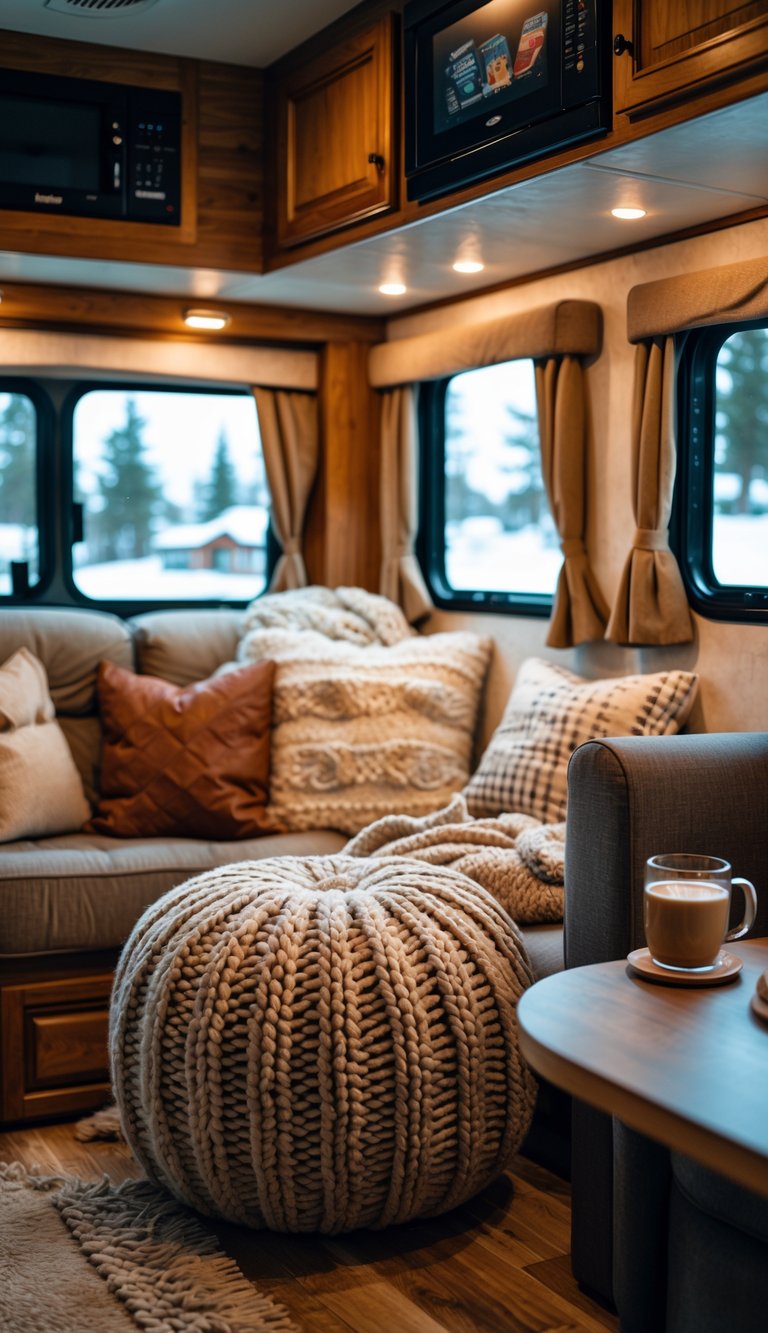
A chunky knit pouf adds soft, movable seating that fits small RV spaces. You can tuck it under a table or pull it out when guests arrive.
Choose a neutral color or a warm tone to match your linens and curtains. The thick texture brings warmth and a cozy look without taking up much room.
Use lightweight stuffing so you can carry it outdoors for a quick campfire seat. It also doubles as a footrest when you want to stretch after a long drive.
PRO TIP
Pick a pouf with a removable cover so you can wash it after spills or muddy shoes. Measure your walking paths before buying so it won’t block doors or narrow aisles. If you knit one yourself, use chunky, machine-washable yarn for easy care and faster stitching. Consider storage that keeps the pouf flat or stacked, like a cubby or under-seat space. Finally, pair the pouf with a small tray or lap table when you use it as a temporary table to keep drinks stable and prevent accidental spills.
9) Opt for a convertible sleeper sofa
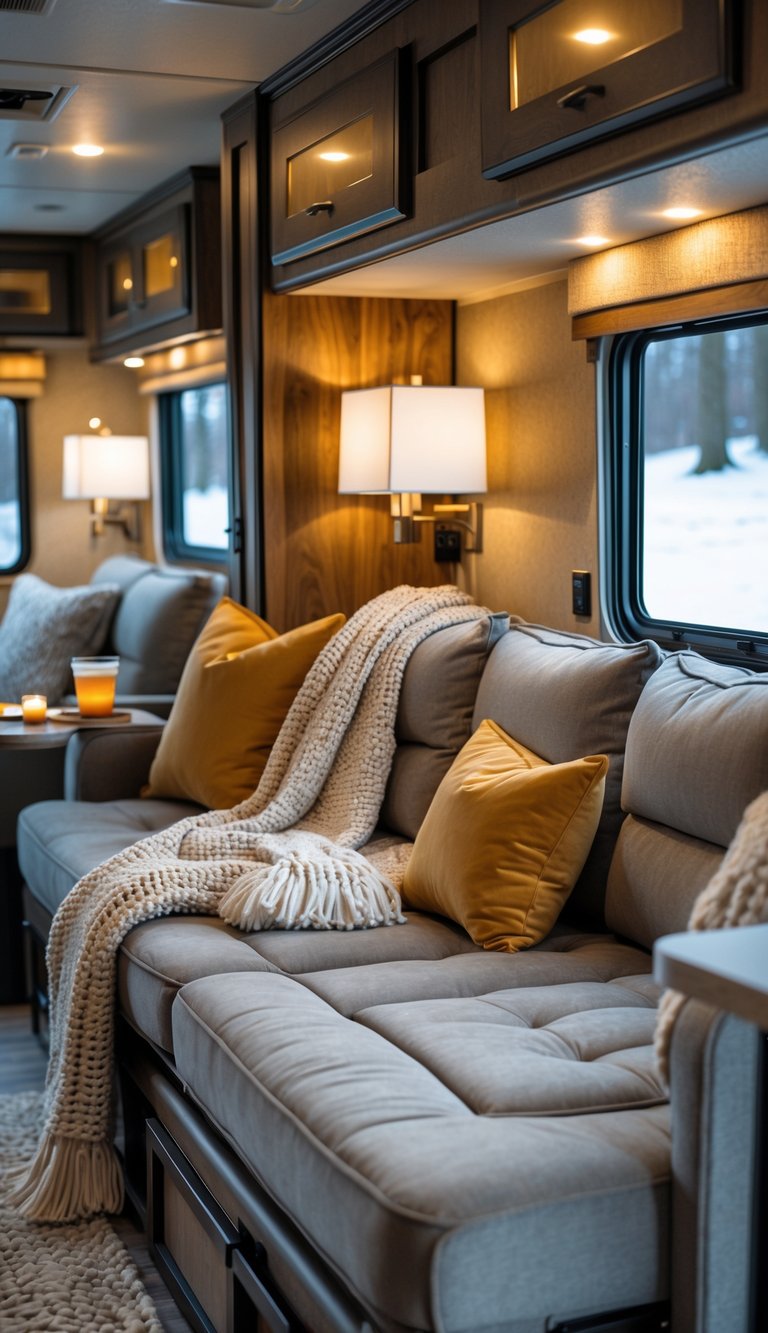
A convertible sleeper sofa saves space and adds warmth when you need extra bedding for cold nights. You can sit comfortably by day and turn it into a bed at night, which keeps your RV sturdy and uncluttered.
Choose a model with built-in storage or under-seat drawers to stash blankets, extra pillows, and winter gear. That way you keep bulky items out of sight and close at hand when the temperature drops.
Look for dense cushions and a mattress designed for support. A thicker mattress helps you stay warmer and more comfortable during long nights.
PRO TIP
Pick a convertible sleeper sofa with a removable, washable cover so you can clean away dirt and salt tracked in during winter trips. Consider models with arm or back insulation to block drafts near windows and slides. Measure your RV space twice before ordering to ensure the sofa converts fully without hitting walls or cabinets. If you use electric blankets, confirm the sofa frame allows safe cord routing and ventilation. Finally, try to test the mattress feel in store or read detailed reviews to match firmness to your sleep style; that reduces the chance of a cold, restless night.
10) Hang rustic wall art with winter themes
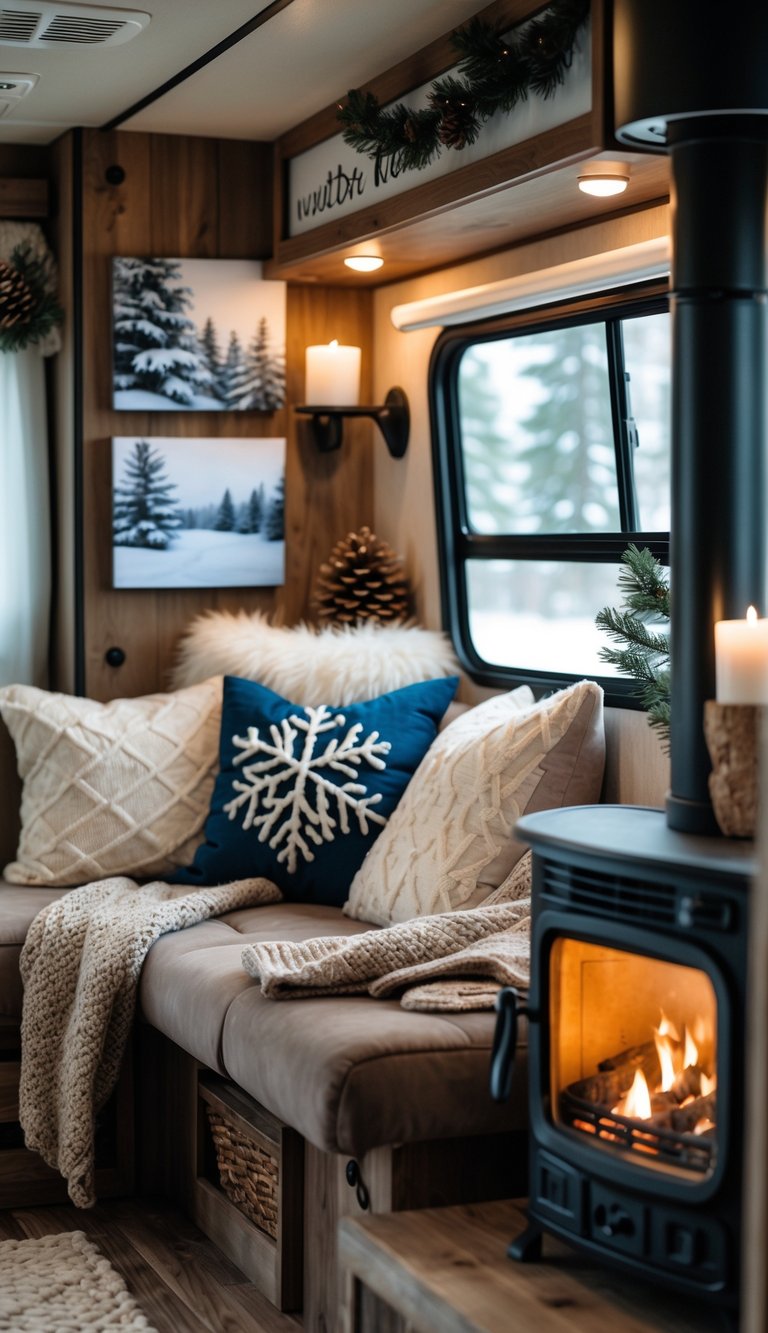
Choose winter-themed rustic wall art to make your RV feel warm and seasonal without taking up floor space. Think reclaimed wood signs, framed snowy landscapes, or metal silhouettes of pine trees and wildlife. These pieces add texture and a cozy look while staying light enough for RV walls.
Group a few smaller pieces into a gallery wall to create a focal point above a sofa or dinette. Use lightweight frames and secure hangers made for mobile homes so nothing shifts while you drive. Match colors to your blankets and pillows for a pulled-together feel.
PRO TIP
When selecting rustic wall art, focus on size, weight, and fasteners so your pieces stay safe on the road. Pick prints on thin wood panels or canvas instead of heavy glass frames. Use command strips, picture-hanging hooks rated for vibration, or screw-in anchors in stud areas to prevent movement. Rotate art by season: swap out bright summer prints for muted winter tones and snowy imagery to keep your space fresh. Layer art with a small shelf or narrow ledge to display one or two small decor items that are travel-safe, like a battery candle or a tiny pinecone arrangement. Keep a tape measure and a stud finder handy to plan layouts and avoid rehanging.
11) Add a small wool area rug for warmth
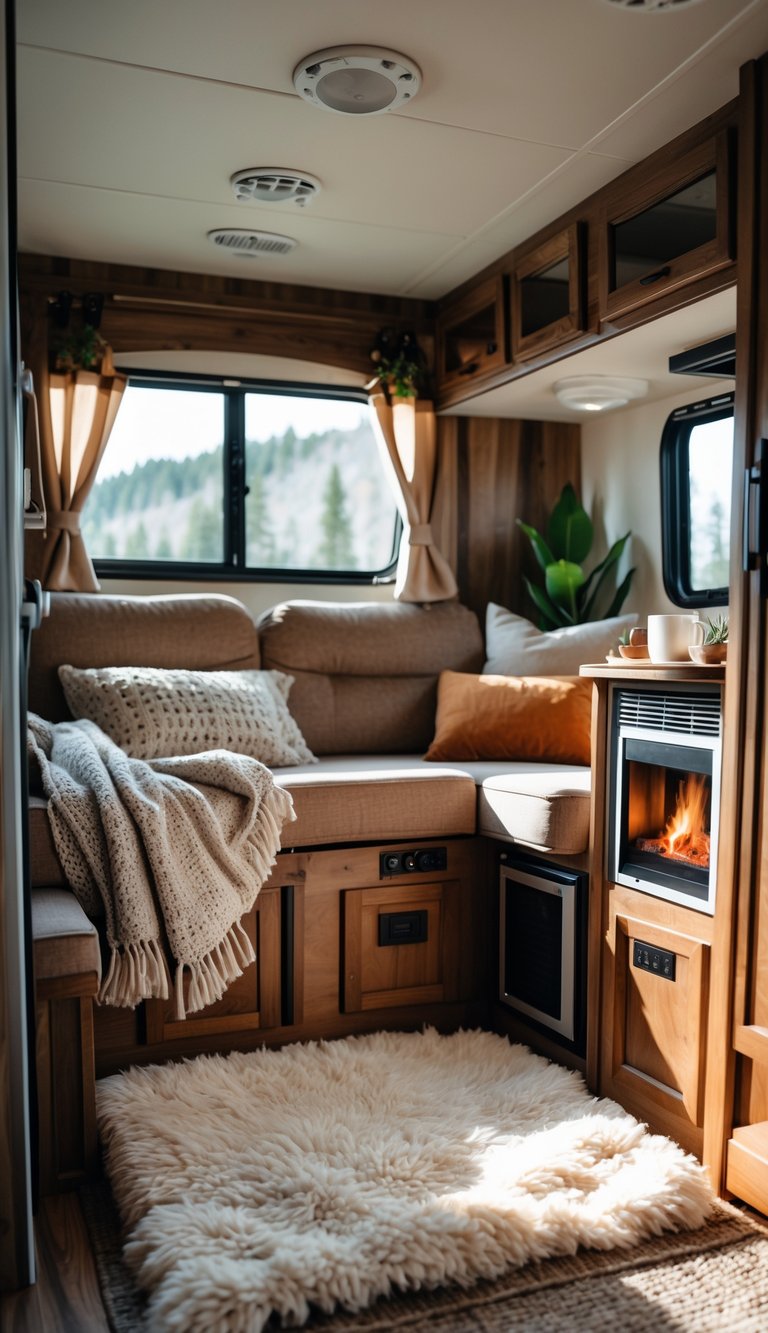
Wool rugs trap heat and feel warmer underfoot than thin synthetic mats. Place a small wool area rug in front of your sofa or under your dining table to make cold mornings more comfortable.
Wool also adds texture and a cozy look to your RV living room. Choose a low-pile wool rug for easy cleaning and to avoid tripping in tight spaces.
A properly sized rug protects your floor from wear and adds a layer of sound dampening. Pick natural colors or subtle patterns to blend with your existing decor and make the space feel homier.
PRO TIP
A wool rug works best if you pair it with a thin rug pad to keep it in place and add extra insulation. Measure the area first so you choose a rug that fits without blocking slide-outs or cabinet doors. If you expect spills or heavy dirt from outdoor use, select a wool blend with stain-resistant treatment or pick a rug that allows easy spot cleaning. Rotate the rug occasionally to even out wear and vacuum regularly with a brushless attachment to protect fibers. Wool can be heavier than synthetic options, so test lifting and moving it before final placement to ensure you can clean and adjust it easily.
12) Use warm color palette decor like burnt orange and deep red
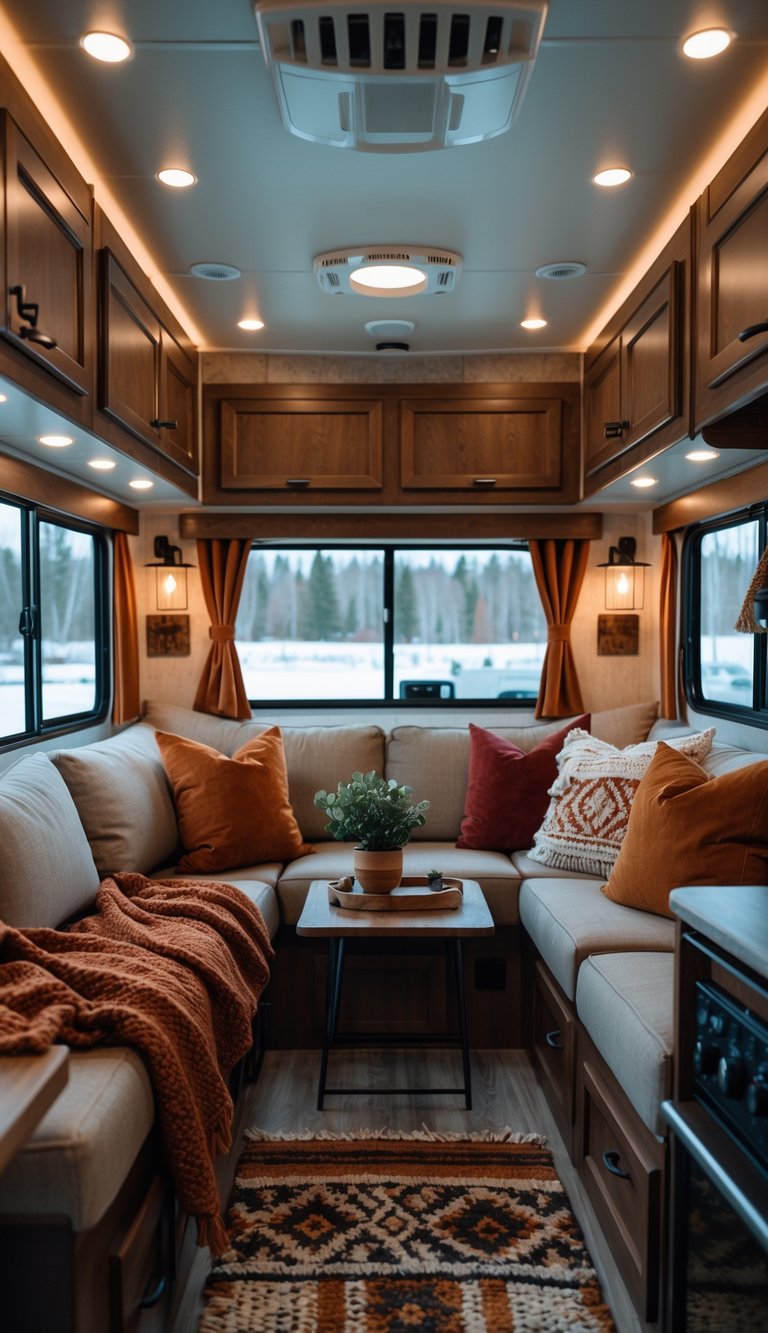
Choose burnt orange, deep red, and mustard tones to make your RV feel warmer fast. These colors add visual warmth and help a small space feel cozy without changing the heater.
Add throw pillows, a soft rug, and a knit blanket in warm shades. Swap out neutral curtains or a throw for richer colors to create a snug focal point near seating.
Pair warm colors with natural textures like wood, wool, and leather. This keeps the look grounded and prevents the palette from feeling too bright.
Keep most surfaces neutral and use warm hues as accents. That way you get a balanced, inviting space that still looks spacious and calm.
PRO TIP
When you shop for warm-color pieces, focus on small updates that make a big cozy impact. Look for burnt orange or deep red pillows, a low-pile rug, and a thermal curtain to help block drafts. Choose layered textiles—velvet, knit, and wool—so each item adds both warmth and texture. Consider peel-and-stick wall art or removable wallpaper in a warm tone for a quick seasonal change. Test one bold item first to see how it changes light and mood before committing. Keep lighter neutrals for larger items so the space won’t feel heavy, and rotate accents to refresh the look through the season.
13) Install peel-and-stick wood accent panels
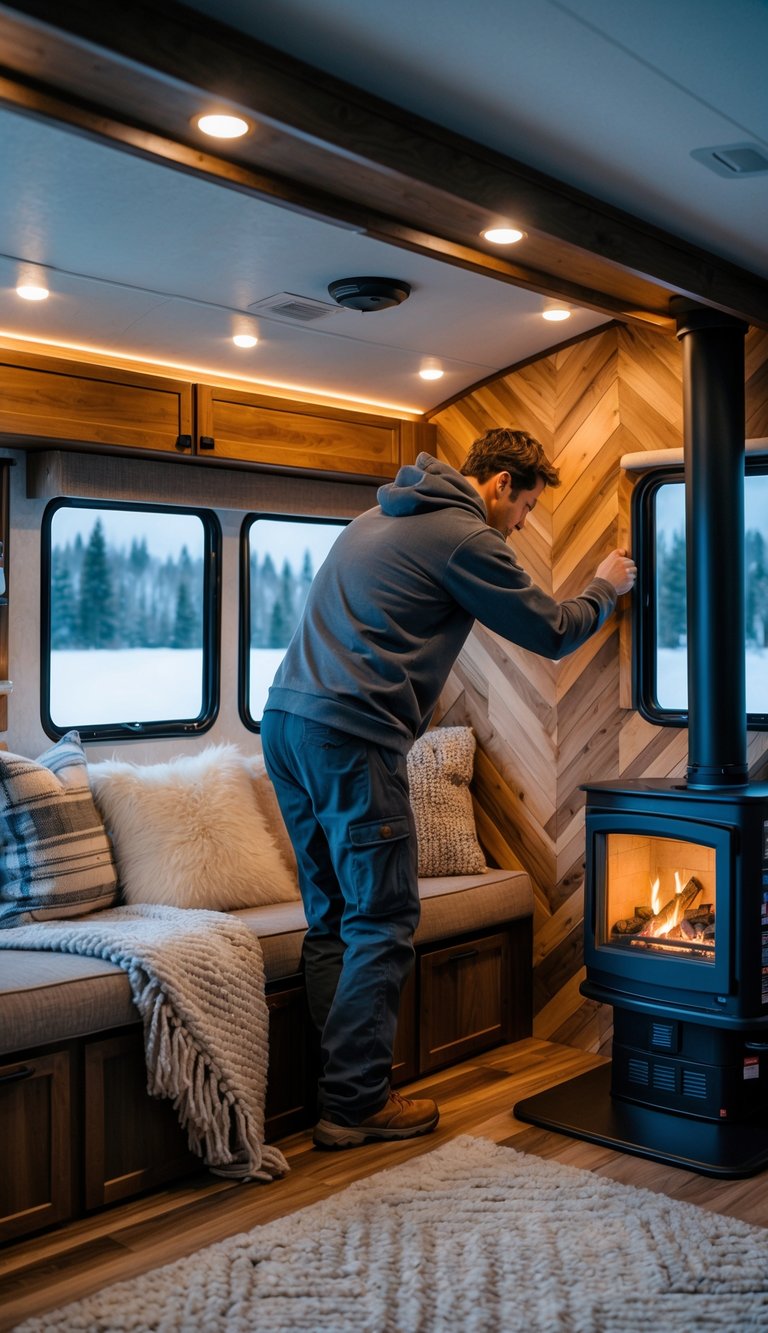
Peel-and-stick wood panels add warmth and texture to your RV living room. They stick right to clean, dry walls, so you can update your space fast without heavy tools.
Pick lighter tones to brighten small spaces, or choose reclaimed-look planks for a cozy cabin feel. Measure carefully and work from the center out to keep seams even and avoid awkward gaps.
Panels help insulate slightly and block drafts when installed over thin or uneven wall surfaces. Press each plank firmly and use a roller or flat tool to ensure full contact, especially at edges and corners.
PRO TIP
Before you jump in, test a small area first to confirm the adhesive won’t damage your RV wall finish. Some panels have very strong glue that can peel paint or vinyl; use a low-tack option if your walls are delicate. Clean the wall with a mild degreaser and let it dry fully so the bond holds. If your RV wall has curves or trim, score the back of the plank lightly to help it bend. Keep extra planks for future repairs and label them with the lot number in case color varies between batches.
14) Use a propane heater with safety features
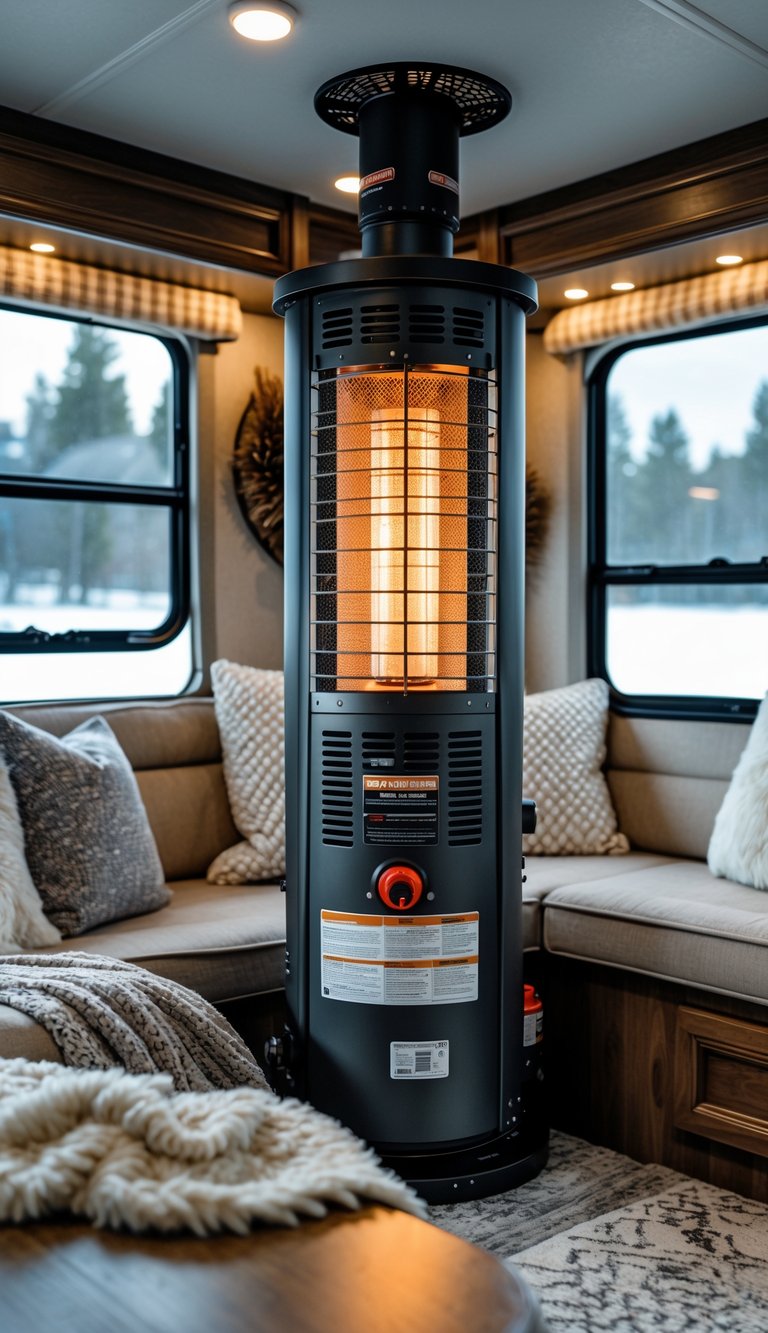
A propane heater can warm your RV fast and save battery power. Choose a model made for RV use that lists safety features like an automatic shutoff and a tip-over switch.
Place the heater on a stable, non-flammable surface and keep it away from curtains and bedding. Run a fresh propane detector and a carbon monoxide alarm nearby so you get an early warning if something goes wrong.
Follow the manufacturer’s venting and clearance rules, and never use an indoor-only heater in an enclosed space. Turn the heater off when you sleep or leave the RV to reduce risk.
PRO TIP
Pick a propane heater with an oxygen depletion sensor (ODS) and certified by a recognized testing body. These features cut the chance of unsafe ventilation and alert you if oxygen gets low. Keep spare batteries for alarms and the heater’s controls, and store propane tanks outside in an upright position. Run your heater for short periods while monitoring the space at first, so you learn how it affects temperature and air quality. Finally, practice a simple safety routine: check propane connections, test alarms, clear combustible materials, and always switch the heater off before bed or when you step out.
15) Add suction cup window insulation kits
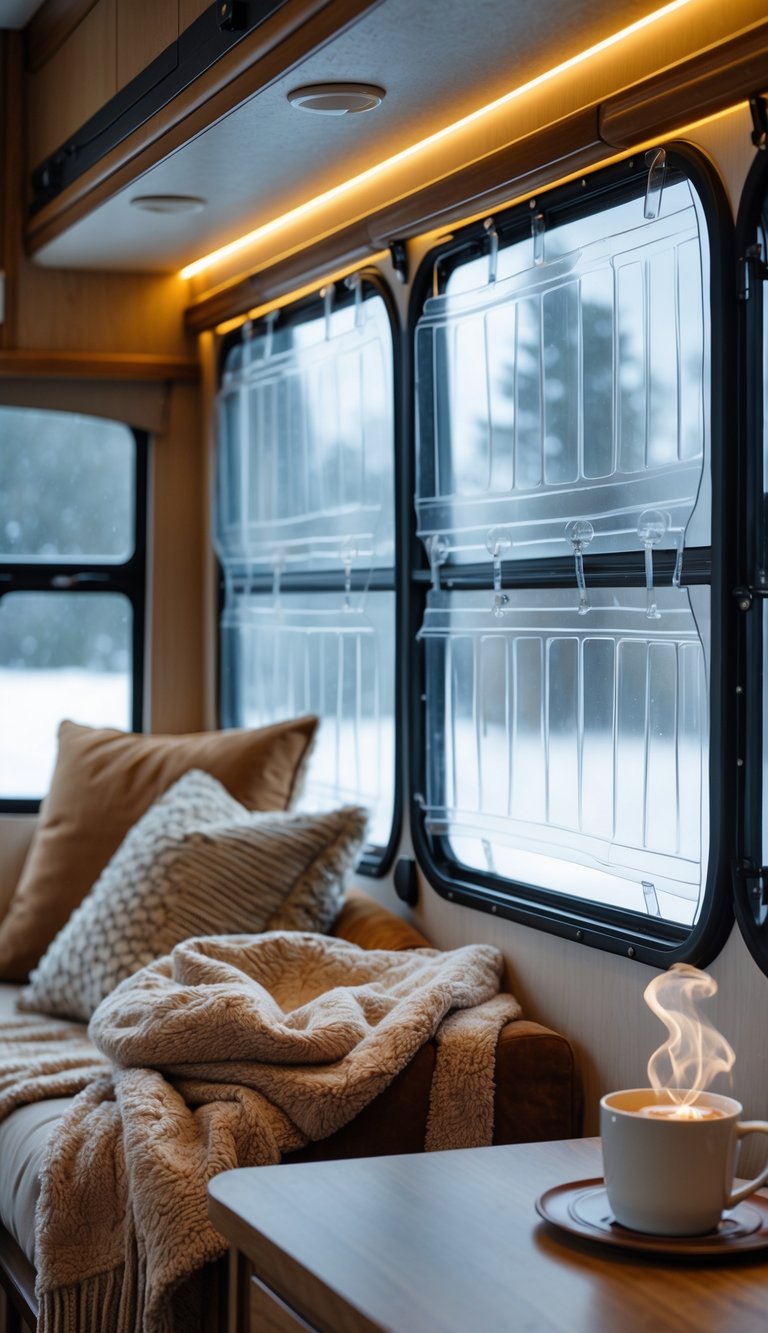
Suction cup window insulation kits stick right to your RV glass and block drafts without permanent changes. You get a clear barrier that traps a thin layer of air, which cuts heat loss and keeps your living room warmer.
Installation is fast and tool-free. Clean the glass, press the suction cups in place, and smooth the film; many kits come with adjustable trims to fit odd sizes.
These kits let light in while reducing cold transfer, so you won’t lose that cozy daylight feel. They’re also easy to remove when you want fresh air or to clean the windows later.
PRO TIP
Choose kits made for RVs or small windows, not just home windows, because RV glass often has different shapes and curves. Measure your windows before buying and pick kits with extra suction cups or adhesive strips for better hold in windy spots. Consider pairing the kit with thin removable insulating panels for nights below freezing, and store the film flat when not in use to avoid creases. If you camp in damp areas, dry the glass completely before applying to prevent trapped moisture. Test one window first to check fit and clarity before doing the rest.
16) Hang lightweight tapestry wall hangings
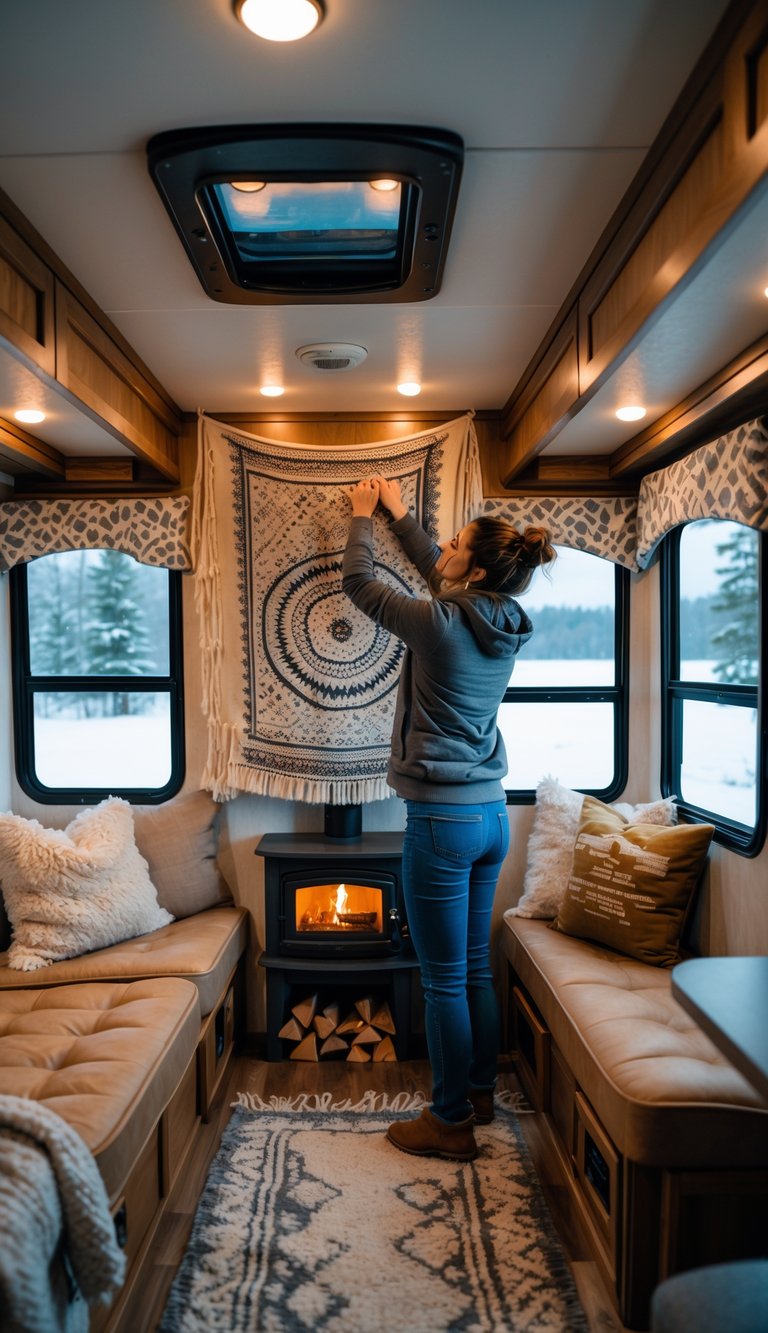
A lightweight tapestry adds color and softness to your RV living room without weighing down the walls. Pick fabrics like cotton or polyester that are thin but durable, so they won’t sag or damage the wall fasteners.
Use command hooks, small nails, or a slim rod to hang the tapestry. These options hold light textiles well and keep things renter-friendly or easy to remove when you need to travel.
Place a tapestry behind the sofa or over a blank wall to create a cozy focal point. It also helps muffle echoes and adds a warmer feel on cold days.
PRO TIP
Choose tapestries with warm colors or nature scenes to make the space feel snug. Layer a tapestry over an insulated wall panel or behind a thin piece of foam board for extra thermal benefit without bulk. Measure the wall and the textile before hanging so you avoid blocking vents or windows. If the tapestry flutters while driving, secure its lower corners with removable adhesive tabs. Wash or spot-clean according to the fabric label to keep the pattern bright and the fibers soft for years.
17) Use smart storage bins under furniture
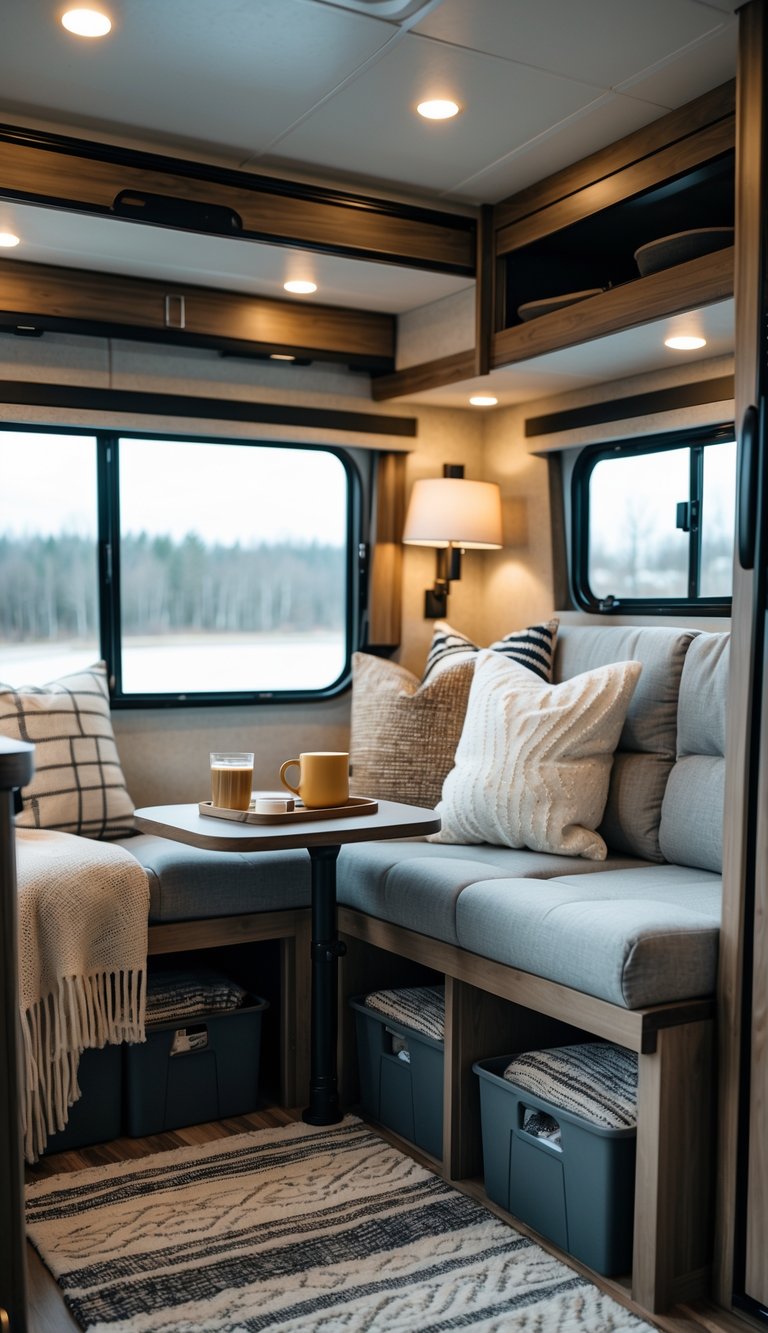
Sliding bins under sofas and benches give you extra room without crowding the living area. You can stash blankets, slippers, and winter gear where they stay warm and out of sight. Clear or labeled bins make it easy to find what you need on cold mornings.
Choose low-profile containers that match the height of your furniture legs so they glide in and out. Soft-sided bins compress when space is tight and expand when full, which helps in small RVs. Waterproof or odor-resistant materials protect textiles from damp or musty smells.
Rotate items seasonally: keep heavier blankets toward the back and daily items up front. This keeps the bins organized and saves time when you’re getting cozy.
PRO TIP
Pick bins with wheels or finger pulls so you can access them quickly without lifting heavy lids. Measure the clearance under seats and beds before buying to avoid returns. Use a mix of opaque and clear containers: opaque ones hide clutter while clear bins let you see contents at a glance. Add simple labels on the short side so you can read them from the aisle. For delicate blankets, place a thin cotton sheet between items to prevent fabric snags. If you store shoes, insert silica packets to reduce moisture. Finally, clean and air out stored textiles every few weeks to keep them fresh for chilly nights.
18) Create a cozy reading nook with layered pillows
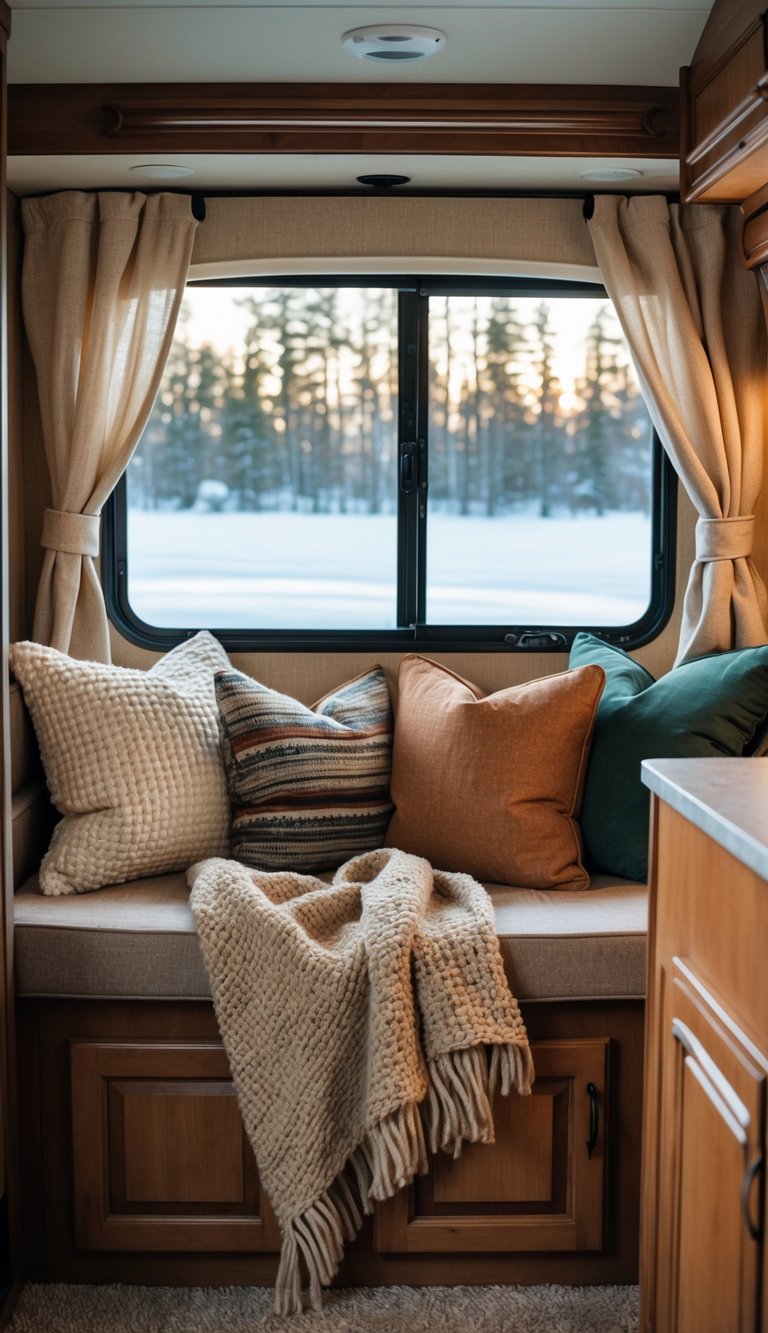
You can turn a corner of your RV into a warm reading nook with a stack of soft pillows. Start with a firm base cushion, then add medium-support pillows and finish with fluffy accents for a layered look and extra warmth.
Choose fabrics that hold heat, like fleece, wool, or brushed cotton. Mix sizes and textures to make the space feel inviting and to support your back and neck while you read. Keep a small throw blanket nearby for chilly mornings and late nights.
Position the nook near a window when possible for natural light and fresh air. Add a clip-on reading light or a small lamp for focused light without draining your RV power.
PRO TIP
When you layer pillows, think about function and space. Use one larger, firmer pillow against the wall or seatback for support. Add two medium pillows for lumbar and side support, then place one or two smaller, softer pillows for comfort and style. Store extra pillows in under-seat storage or a collapsible basket to keep the area tidy when you need more room. Pick pillow covers with zippers so you can wash them easily after travel. Rotate pillow positions to maintain shape and comfort over time.
19) Use heated mattress pads for sofas that convert
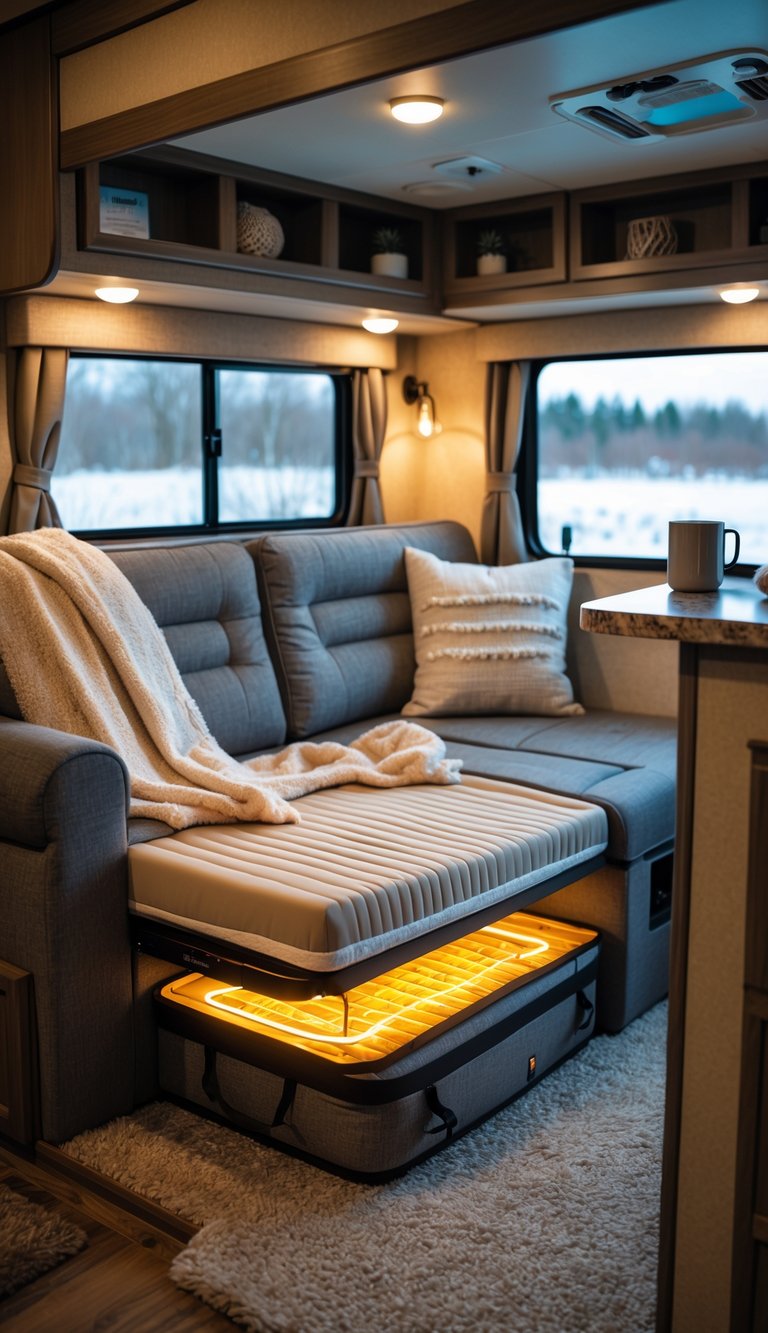
A heated mattress pad can make a convertible sofa much cozier on cold nights. You get focused warmth where you sleep without firing up the RV furnace.
Choose a pad sized for your sofa bed and check power needs before you buy. Many models run on low wattage and offer adjustable heat levels to save battery or shore power.
Secure the pad so it won’t shift when you fold or unfold the sofa. Use a thin fitted sheet over the pad to protect it and keep the surface even for sleeping.
PRO TIP
When shopping, look for pads with auto-shutoff and washable covers for safety and easy cleaning. If you camp off-grid, prefer 12V models or low-wattage 120V pads and pair them with a battery monitor or inverter that matches the pad’s draw. Run the heated pad only while you sleep to conserve power. Test the pad at home first to confirm fit and function, and keep cords away from pinch points in the sofa mechanism. For extra warmth, layer a light blanket on top rather than cranking the pad to maximum.
20) Place decorative lanterns with battery candles
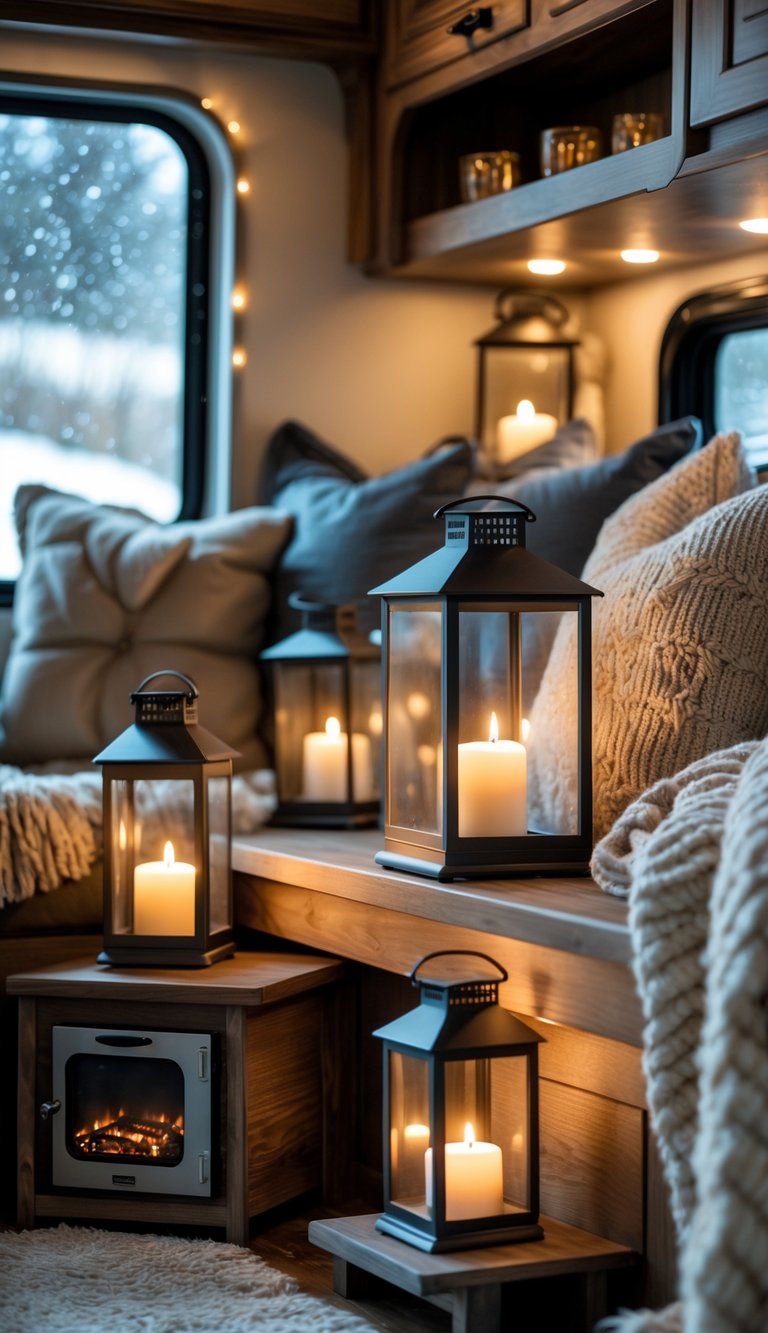
Place a few decorative lanterns around your RV living room to add soft, steady light. Battery candles inside lanterns give the warm glow of real candles without the fire risk, which is important in close quarters.
Choose lanterns that match your style—metal for modern, wicker for rustic, or glass for a neat, bright look. Put them on shelves, the coffee table, or the floor near seating to create pockets of light that feel cozy.
Use flicker-style LED candles for a realistic flame effect, and pick warm white bulbs to keep the light comforting. Rotate lantern placement to change the mood and keep your small space feeling fresh.
PRO TIP
You can group lanterns in odd numbers for a natural, balanced look. Try one large lantern plus two smaller ones on a tray to make a focal point that’s easy to move. If your RV has limited surface space, hang a compact lantern from a hook or place it on a narrow shelf. Choose battery candles with timers so they turn on and off automatically, saving battery life and giving you consistent routines. Keep spare batteries handy in a labeled container so you can swap them quickly when needed. For safety, avoid candles near curtains or fabric; secure lanterns so they won’t tip while driving.
21) Choose slipcovers in cozy sherpa fabric
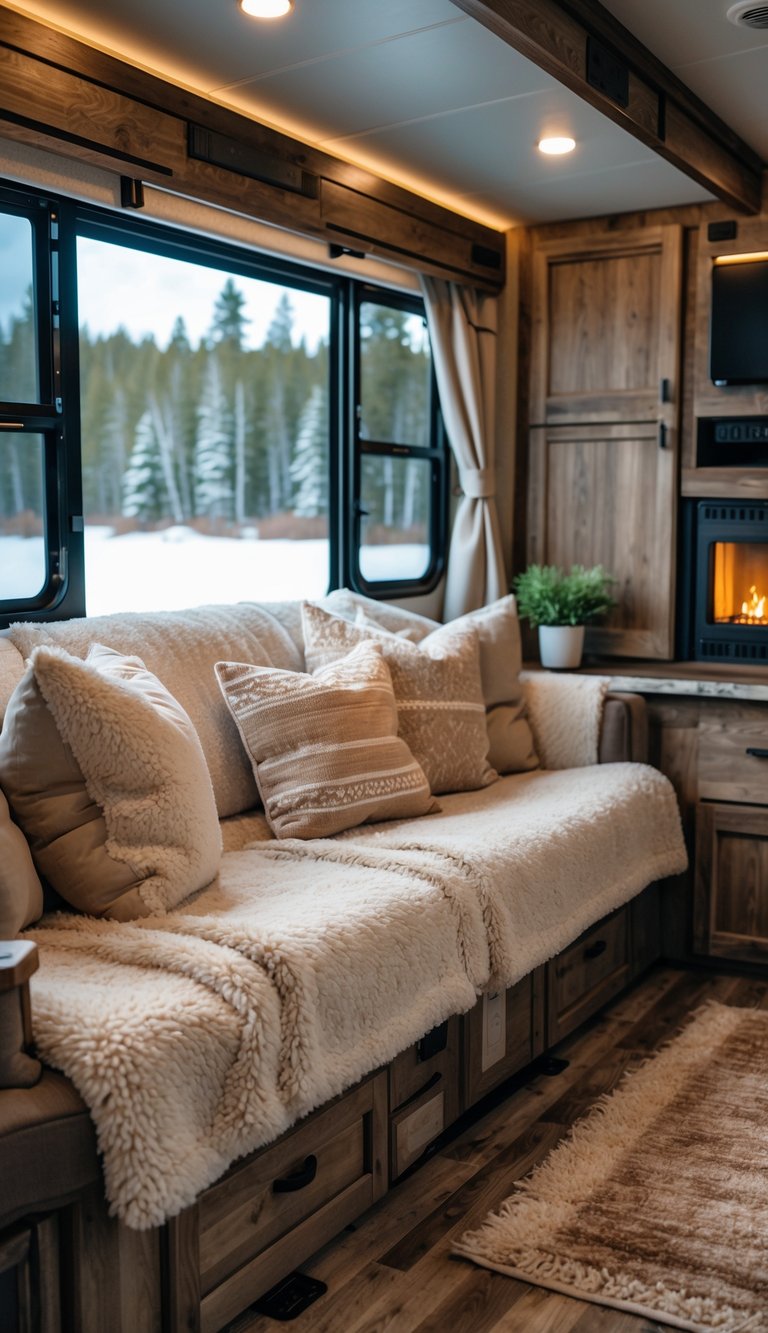
Swap thin covers for sherpa slipcovers to make your RV living room feel warmer fast. The thick, fuzzy texture traps heat and adds soft padding, so your space seems cozier without extra heaters.
Sherpa hides wear and stains better than plain fabric. You can protect your sofa from pet hair, spills, and boot scuffs while keeping a warm, homey look.
Pick slipcovers with a non-slip backing or elastic edges so they stay put on RV seats and sofas. That keeps them neat when you drive and makes daily life easier.
PRO TIP
When you shop, choose sherpa slipcovers that are machine washable and fade-resistant to handle road life. Measure your sofa or bench carefully and pick a cover marked for that size; a snug fit looks neater and keeps cold drafts out. Consider reversible options with sherpa one side and microfiber the other for flexible warmth and easy cleaning. If you have kids or pets, look for covers with silicon or rubberized backing so they won’t shift during travel. Layer thin throws over the top for added warmth that you can remove at night, and carry a spare cover for quick swaps when one is in the wash.