Last Updated on October 7, 2026
A single number explains most of the confusion in this market: 750 watts. That is the motor power ceiling that still defines a “bicycle” rather than a motor vehicle in nearly every US state, and it is the single most important spec buried in the fine print of every listing you will see this year. Shoppers who ignore it often end up with a bike they cannot legally ride on the bike path they planned to use every day.
This Electric Bike Buying Guide: Classes, Range, Battery Life, Safety, and Total Cost in 2026 exists to cut through that confusion. Electric bikes have quietly become one of the most practical vehicle purchases a household can make, replacing short car trips, easing commutes, and hauling kids and groceries without a parking spot or a gas tank. But the category now spans everything from a 350-dollar discount import to a 7,000-dollar cargo hauler, and the rules governing where you can ride one have tightened in several states heading into 2026. Choosing well means matching class, range, battery chemistry, and braking hardware to how you actually plan to use the bike, not just chasing the longest spec sheet.
Key Takeaways
- The three-class system (Class 1, 2, and 3) and the 750-watt motor limit remain the backbone of US e-bike regulation in 2026, though several states have added age limits and labeling rules for Class 3 bikes [3][8].
- Realistic range depends on rider weight, terrain, and assist level far more than battery size alone; a 500Wh battery typically delivers 20 to 40 miles in real conditions, not the marketing-friendly maximum [2][4].
- Hub motors suit flat commuting and budget builds, while mid-drive motors handle hills, cargo loads, and off-road terrain more efficiently [1][10].
- Hydraulic disc brakes and UL-certified batteries are the two safety features worth paying extra for, regardless of brand [2][5].
- Total cost of ownership includes more than the sticker price: budget for a helmet, a lock, annual tune-ups, and eventual battery replacement when comparing models across price brackets [4][9].
Understanding E-Bike Classes in the Electric Bike Buying Guide for 2026
Every serious Electric Bike Buying Guide: Classes, Range, Battery Life, Safety, and Total Cost in 2026 has to start with classification, because the class printed on a bike’s frame sticker determines where you can legally ride it, how fast it can go, and increasingly, whether you need a license at all.
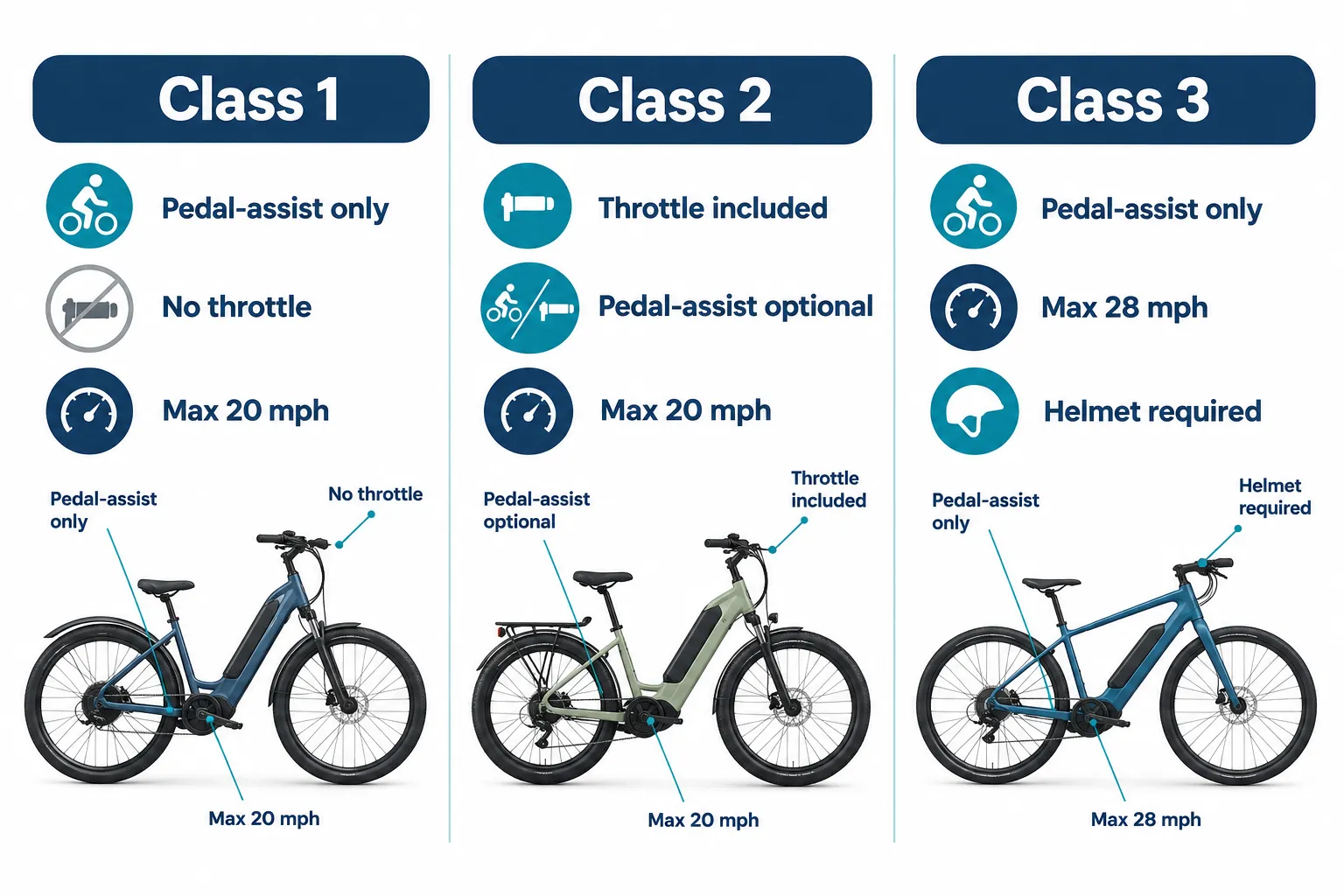
The US framework still rests on three categories, unchanged in substance since most states adopted it, but enforced more strictly in 2026 than in prior years [3].
| Class | Throttle | Top Assisted Speed | Typical Access |
|---|---|---|---|
| Class 1 | None, pedal-assist only | 20 mph | Bike lanes, most multi-use paths |
| Class 2 | Throttle available | 20 mph | Same as Class 1 in most states |
| Class 3 | Pedal-assist only, some allow throttle to 20 mph | 28 mph | Roads and bike lanes; often barred from shared paths |
Why Class 3 Rules Are Tightening in 2026
A number of states have added fresh requirements for Class 3 bikes this year, including minimum rider age (commonly 16) and mandatory manufacturer labeling that states the class and top speed directly on the frame [3][8]. The intent is straightforward: a 28 mph bicycle moving alongside pedestrians and slower cyclists on a shared path creates real collision risk, so regulators are pushing Class 3 bikes toward road use and away from crowded trails.
Buyers should check local ordinances before assuming a Class 3 bike fits their commute. Some cities have carved out stricter local rules than the state baseline, and park districts frequently ban Class 3 e-bikes from trail networks even where state law permits them.
When an “E-Bike” Becomes a Motor Vehicle
Power output above 750 watts, or a top speed beyond 28 mph without pedaling, generally pushes a two-wheeler out of the bicycle category entirely. These higher-power machines, sometimes marketed as “e-motos”, typically require registration, a motorcycle endorsement, insurance, and in many states a license plate, exactly like the machines covered in this breakdown of electric dirt motorcycles and their range, charging times, and trail performance. If a listing advertises 1,000+ watts or speeds near 40 mph, assume it falls outside standard e-bike law and verify titling requirements before buying.
Motor Type, Battery Size, and Realistic Range
Range is the spec most shoppers fixate on and the one marketing departments most love to exaggerate. A battery’s capacity is measured in watt-hours (Wh), voltage multiplied by amp-hours, and a reasonable rule of thumb puts real-world range at roughly 20 to 40 miles for every 400 to 500Wh, depending heavily on terrain, rider weight, cargo load, and how much the throttle gets used versus pedal-assist [2][4].
Hub Motors vs. Mid-Drive Motors
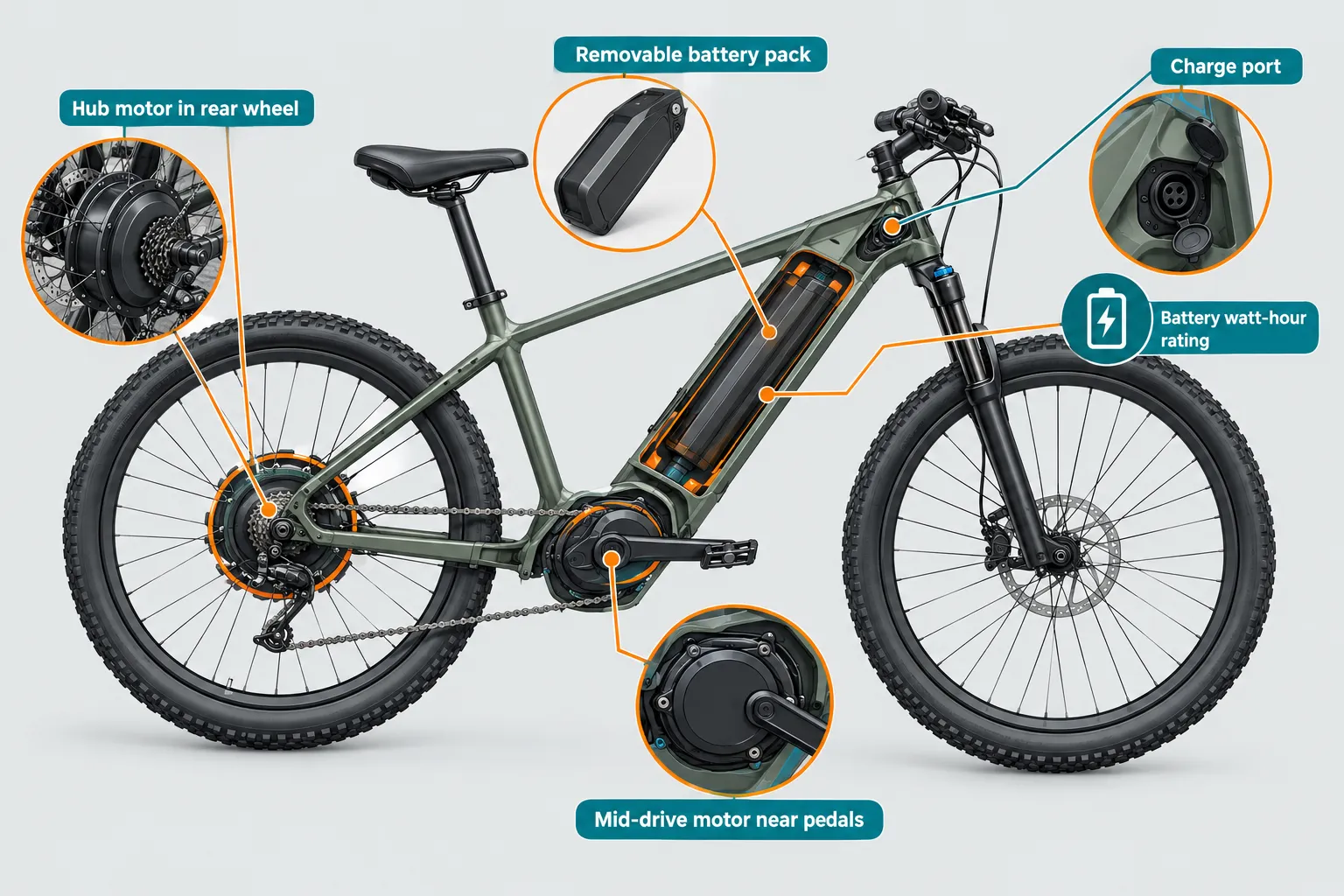
Two motor architectures dominate the 2026 market, and the choice matters more than most buyers expect.
- Hub motors sit inside the front or rear wheel hub. They are simpler, cheaper to produce, and quieter, which is why they dominate budget and commuter bikes. They work well on flat terrain but lose efficiency on steep climbs and under heavy cargo loads [1][10].
- Mid-drive motors mount at the pedal crank and push power through the bike’s existing gears. This makes them far more efficient on hills, with cargo bikes, and on mountain e-bikes, because the motor can use low gears to multiply torque. They cost more and are noisier, but most serious cargo and trail bikes in 2026 use this layout [10].
For flat city commuting, a 500-750-watt hub motor is plenty. For hilly terrain, loaded cargo runs, or off-road trails, a mid-drive motor in the 500-750-watt range delivers noticeably better hill-climbing and battery efficiency.
A Practical Range Calculation
Rather than trusting a manufacturer’s “up to 60 miles” claim, use this adjusted formula:
- Start with the battery’s rated Wh.
- Divide by 20 (a conservative Wh-per-mile estimate for a mixed-terrain commute with moderate assist).
- Subtract 15 to 20 percent if you weigh more than 200 pounds, ride hilly terrain, or carry cargo regularly.
A 500Wh battery, for example, lands around 25 miles under that formula, comfortably inside the 20-to-40-mile range most riders report in independent testing [2][4]. Riders who need longer range without carrying a second battery should look for bikes advertising 650Wh or larger packs, which are increasingly standard on 2026 commuter and cargo models.
A battery spec sheet tells you the maximum. Your commute, your weight, and your hills tell you the truth.
Safety-Critical Components Every Buyer Should Check
Safety hardware is where corner-cutting on cheap e-bikes becomes dangerous rather than just disappointing. A 50-pound bike moving at 20 to 28 mph needs braking power that matches a motorcycle more than a traditional bicycle, and the battery pack sitting under the rider needs a certification trail, not just a sticker.
Brakes
Hydraulic disc brakes are the standard worth insisting on for any Class 2 or Class 3 bike, and strongly recommended even on Class 1 models. Mechanical (cable-actuated) disc brakes are acceptable on lighter, slower bikes but require more frequent adjustment and offer less stopping power in wet conditions [2][5]. Budget bikes under roughly 1,000 dollars sometimes still ship with rim brakes, which is a red flag for anything used above 15 mph.
Battery Certification
Look specifically for UL 2849 certification (covering the complete electrical drive system) or at minimum UL 2271 certification for the battery cell itself. These standards test for the overcharging and short-circuit failures behind the e-bike battery fires that have made national news in recent years [2][5]. Reputable 2026 brands list this certification prominently on the product page; its absence is worth asking about directly before buying.
Helmet and Visibility Rules
Helmet law varies by state and, notably, by class. Several states now mandate helmets for all riders under 18 on any e-bike class, and a growing number require helmets for every rider, regardless of age, on Class 3 bikes given their higher top speed [3][8]. Even where not legally required, a helmet rated for the higher speeds of e-bike riding (rather than a traditional bicycle helmet) is a reasonable upgrade given that Class 3 bikes travel nearly 40 percent faster than a standard pedal bike.
Riders coming from other motorized vehicle backgrounds will recognize the logic here, the same due-diligence habits that matter when buying a used motorcycle, like checking brake condition and verifying parts aren’t counterfeit, apply directly to a used e-bike purchase.
Choosing by Use Case: Matching the Right E-Bike to Your Life
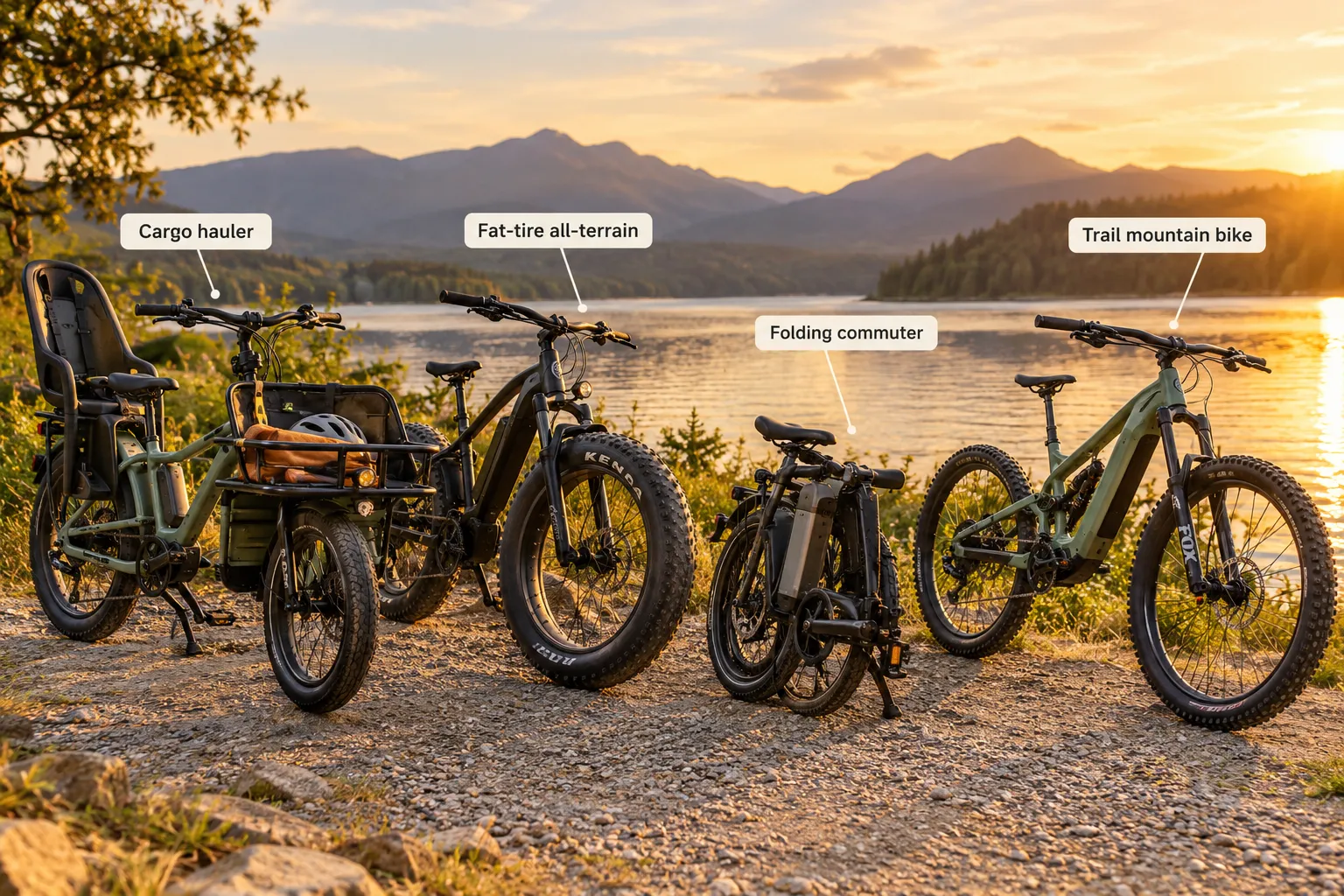
The most useful filter in any Electric Bike Buying Guide: Classes, Range, Battery Life, Safety, and Total Cost in 2026 isn’t brand or color, it’s matching the bike’s design to the job it needs to do. Five categories cover the overwhelming majority of buyers.
Commuter E-Bikes
Built for pavement, these prioritize efficiency, fenders, lights, and rack mounts over raw power. A Class 1 or Class 2 hub-motor bike with a 400-500Wh battery covers most daily commutes under 15 miles round trip comfortably [1][6].
Cargo E-Bikes
Designed to haul kids, groceries, or work gear, cargo bikes need mid-drive motors, reinforced frames, and larger batteries (650Wh or more) to offset the added weight. These are among the most expensive bikes in the category but often replace a second car entirely for short-trip households [6][10].
Folding E-Bikes
Compact frames that fold for apartment storage, trunk transport, or train commutes. They typically use smaller wheels and lighter batteries, trading some range and ride comfort for portability [9].
Mountain E-Bikes
Full-suspension or hardtail frames with mid-drive motors built for torque on climbs and technical terrain. These command the highest prices in the category but deliver the most capable off-road performance [7][10].
Fat-Tire E-Bikes
Wide, high-volume tires provide stability on sand, snow, and loose gravel, making this the pick for riders in rural areas or variable terrain. Fat-tire bikes often use hub motors and run heavier overall, which modestly reduces range compared to a commuter bike of the same battery size [5][9].
| Use Case | Best Motor Type | Typical Battery | Price Bracket (2026) |
|---|---|---|---|
| Commuter | Hub | 400-500Wh | Budget to mid-range |
| Cargo | Mid-drive | 650Wh+ | Mid-range to premium |
| Folding | Hub | 300-450Wh | Budget to mid-range |
| Mountain | Mid-drive | 500-750Wh | Mid-range to premium |
| Fat-tire | Hub or mid-drive | 500-650Wh | Mid-range |
Class-Switching Flexibility
A growing number of 2026 models ship with a software toggle allowing the rider to switch between Class 1, 2, and 3 modes, or to cap top speed for compliance with local trail rules. This flexibility is worth seeking out for anyone who splits time between shared paths and open roads, since it avoids buying two bikes for two riding environments [1][8].
Total Cost of Ownership for Electric Bikes in 2026
Sticker price is only the entry point. A complete Electric Bike Buying Guide: Classes, Range, Battery Life, Safety, and Total Cost in 2026 has to account for what happens after the purchase, because batteries degrade, brakes wear, and tires on a 60-pound cargo bike don’t last as long as on a traditional bicycle.
Price Brackets
- Budget (under $1,200): Hub motors, smaller batteries, often mechanical brakes. Functional for flat commuting but watch for missing UL battery certification [9].
- Mid-range ($1,200,$3,000): Hydraulic brakes, UL-certified batteries, mix of hub and mid-drive motors. This bracket covers most commuter, folding, and fat-tire buyers who want dependable daily transportation [1][4].
- Premium ($3,000,$7,000+): Mid-drive motors, larger batteries, carbon or premium aluminum frames. Standard territory for cargo and mountain e-bikes built for heavy or technical use [6][7].
Ongoing Costs to Budget For
- A helmet rated for higher speeds, typically 50 to 150 dollars
- A quality U-lock or chain, since e-bikes are frequent theft targets, typically 60 to 150 dollars
- Annual tune-ups covering brake pads, tire wear, and drivetrain lubrication, typically 75 to 200 dollars
- Battery replacement every 3 to 5 years or 500 to 1,000 charge cycles, typically 400 to 900 dollars depending on capacity [2][4]
For context on how e-bike costs stack up against other recreational vehicle purchases, it’s worth comparing against figures like how much a snowmobile costs or browsing general vehicle pricing resources, e-bikes land at a fraction of the purchase and maintenance cost of most motorized recreational vehicles, which is a major part of their appeal. Shoppers researching resale value or comparable used-market pricing across vehicle categories can also check the broader Nada Guide archive and the Nada ATV Guide for pricing methodology that applies similarly to used e-bikes entering the resale market.
The cheapest e-bike on the lot is rarely the cheapest bike over five years. Brakes, batteries, and certification determine what you actually pay.
Conclusion: Applying This Electric Bike Buying Guide to Your Next Purchase
Choosing well in 2026 comes down to three decisions made in order. First, pick the class that matches where you’ll actually ride, a Class 3 bike is wasted if your local trail network bans it, and a Class 1 bike will frustrate a rider who needed throttle assist on steep hills. Second, size the battery and motor to your real terrain and weight using the Wh-per-mile calculation rather than the marketing maximum. Third, refuse to compromise on hydraulic disc brakes and UL battery certification regardless of how attractive a discount price looks.
Before buying, confirm your state and city’s current e-bike rules, since Class 3 age limits and labeling requirements have shifted in several states for 2026. Test ride at least two motor types if possible, hub and mid-drive feel meaningfully different under load. And budget beyond the sticker price for a proper helmet, a strong lock, and the battery replacement that will eventually come due. A well-matched e-bike, bought with these factors in mind, typically pays for itself in reduced fuel and parking costs within two to three years of regular use.
References
[1] Best Electric Bikes – https://riderguide.com/best-rated/best-electric-bikes/ [2] Buying Guide – https://www.consumerreports.org/health/electric-bikes/buying-guide/ [3] New Statewide Legislation Regarding E Bikes – https://www.sog.unc.edu/blogs/coates-canons/new-statewide-legislation-regarding-e-bikes%C2%A0 [4] Is An E Bike Right For You: Electric Bike Buying Guide – https://www.consumerreports.org/health/electric-bikes/is-an-e-bike-right-for-you-electric-bike-buying-guide-a2136838953/ [5] Best Electric Bikes – https://www.cyclingnews.com/features/best-electric-bikes/ [6] Best Electric Bikes – https://www.tomsguide.com/best-picks/best-electric-bikes [7] Best Electric Bikes – https://www.bicycling.com/bikes-gear/a22132137/best-electric-bikes/ [8] E Bike Regulations Update – https://velosurance.com/blog/e-bike-regulations-update/ [9] Best Cheap Electric Bikes – https://riderguide.com/best-rated/best-cheap-electric-bikes/ [10] Best Electric Bikes – https://gearjunkie.com/biking/best-electric-bikes