Last Updated on September 26, 2026
A fully charged electric dirt bike battery now covers more trail miles than most riders can comfortably ride in a single afternoon session, yet it still charges faster than it takes to eat lunch. That single fact explains why electric dirt motorcycles have moved from novelty to mainstream trail tool in just a few seasons. This guide to Electric Dirt Motorcycles in 2026: Top Models, Range, Charging Times, and Trail Performance breaks down the machines worth riding, what they cost to own, and how they compare against gas-powered dirt bikes for real trail use.
Electric dirt bikes are no longer a compromise built for backyard laps. Several 2026 models now deliver torque figures and suspension travel that rival mid-size gas enduro bikes, while cutting weight, noise, and maintenance dramatically. Whether the goal is a quiet weekend trail ride, a competitive motocross build, or an affordable first bike for a young rider, the current lineup offers far more choice than it did even two years ago.
Key Takeaways
- Most 2026 electric dirt motorcycles deliver 20 to 60 miles of trail range and top speeds between 45 and 80 mph, depending on battery size and motor class [1][7].
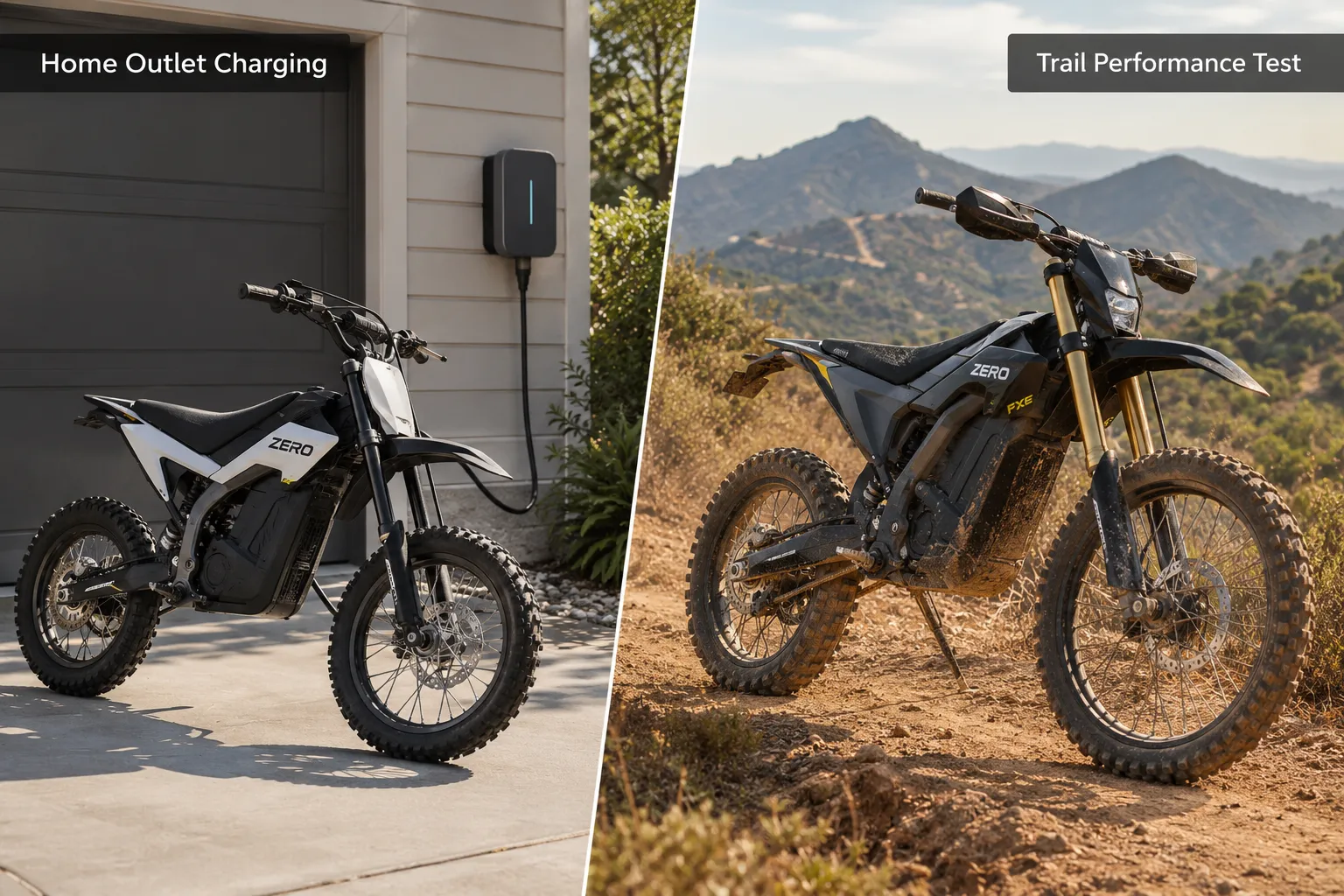
- Charging times range from roughly 1.5 hours for fast-charge setups to 4 to 6 hours on a standard home outlet, making overnight or lunch-break charging realistic for most riders [1][9].
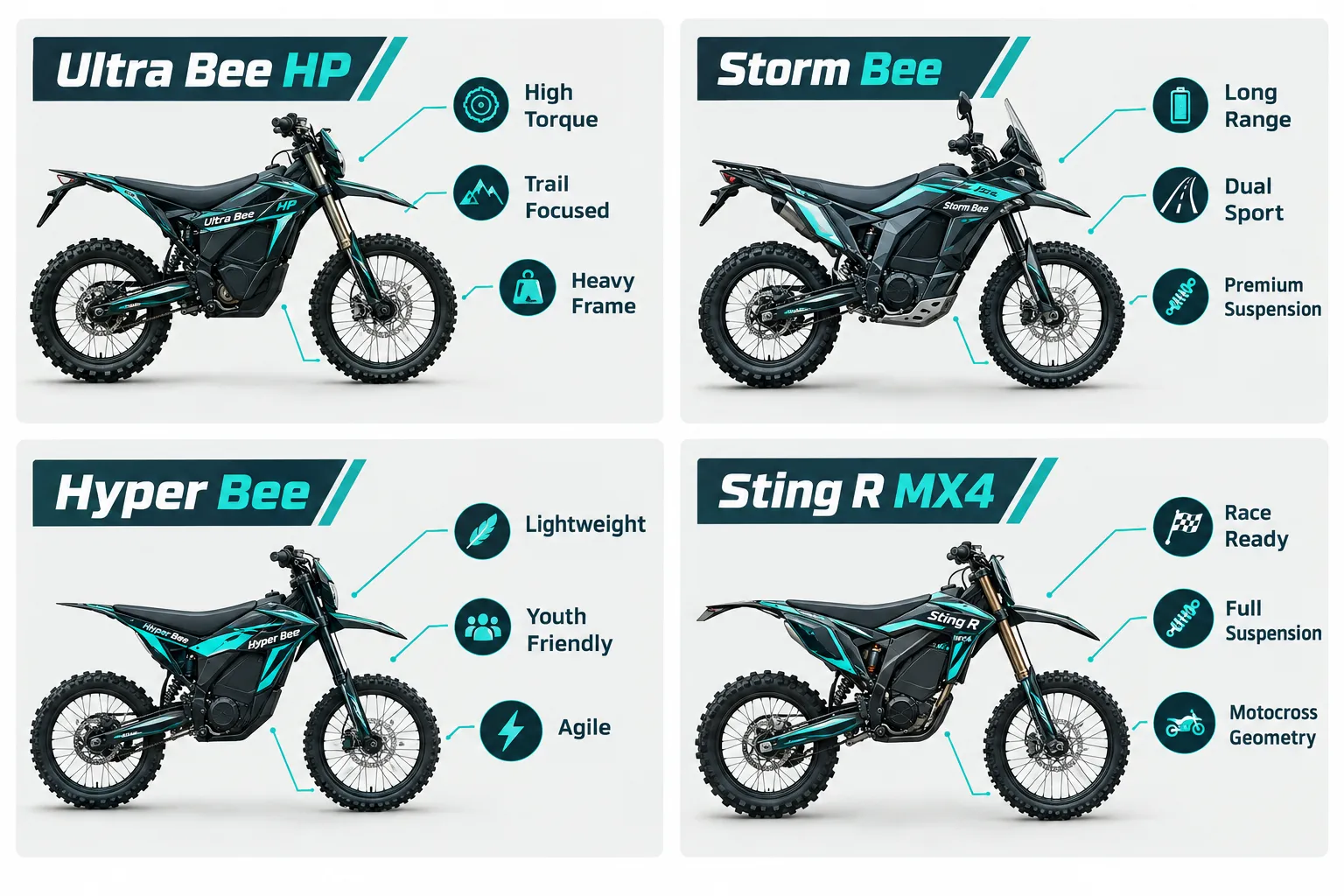
- The Sur-Ron Ultra Bee HP, Storm Bee, Hyper Bee, and Light Bee X remain benchmark models, while the Talaria Sting R MX4 Expert leads the race-oriented flagship segment [7][10].
- Budget-friendly options like the Tasaca T500 Pro now bring near-premium torque and speed to a sub-$2,000 price point, reshaping the entry-level market [6].
- Regulatory scrutiny is increasing, with several 2026 incidents involving unlicensed or underage riders on public roads highlighting the need for legal trail use only [3][5].
The 2026 Performance Envelope for Electric Dirt Motorcycles: Range, Speed, and Charging Times
Before comparing individual models, it helps to understand the baseline numbers that define this category in 2026. Battery capacity, motor wattage, and controller tuning determine how far a bike travels, how fast it accelerates, and how long it sits plugged in before the next ride.
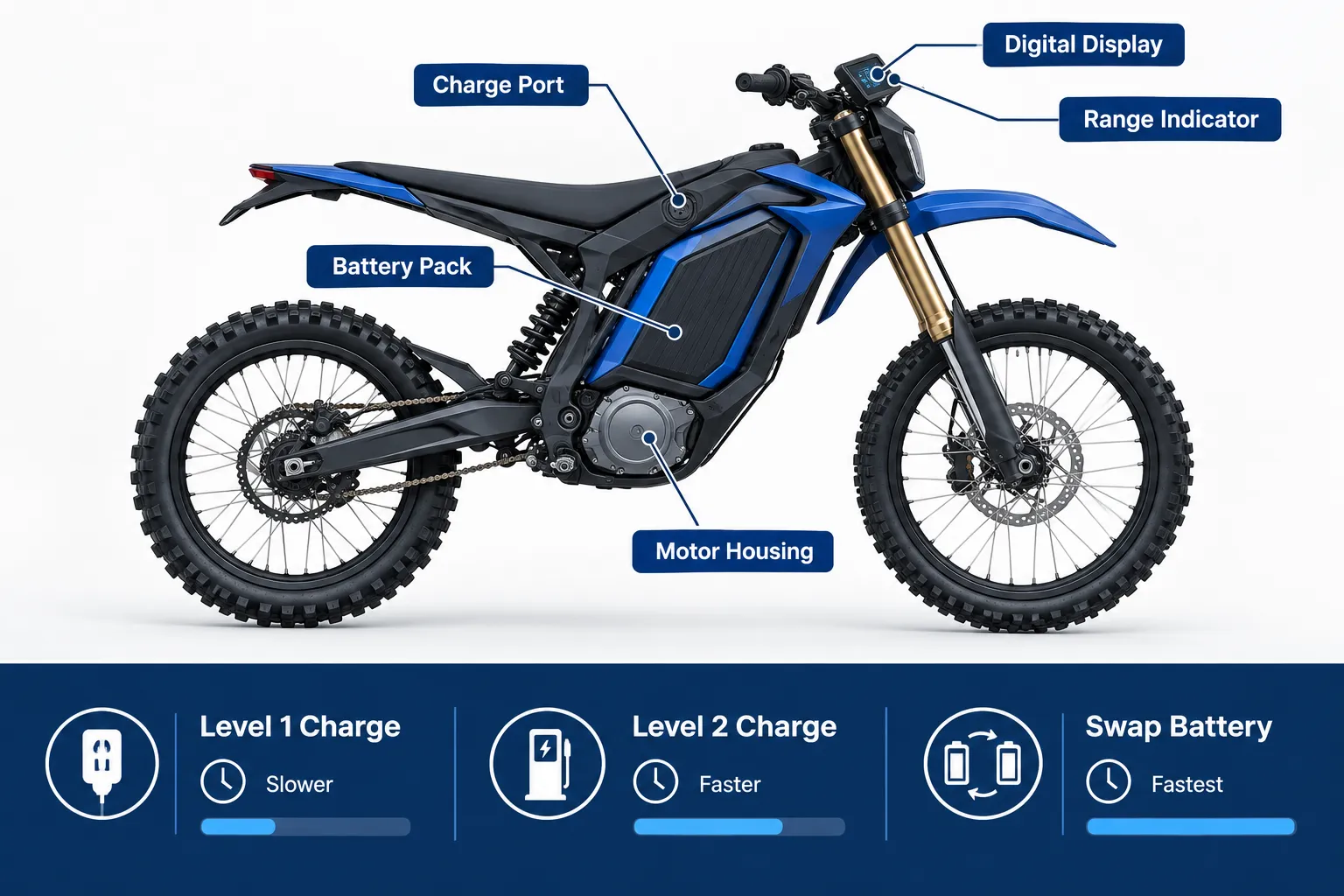
Entry-level and youth-oriented electric dirt motorcycles typically top out near 30 to 45 mph with 20 to 30 miles of mixed-trail range. Mid-tier trail bikes push closer to 50 to 60 mph with 35 to 45 miles of range on a single charge, while high-performance and race-focused machines can exceed 70 mph and, in some configurations, approach 80 mph with swappable battery packs that extend a day’s riding well beyond a single charge cycle [1][7][9]. Charging infrastructure has also matured. Most current-generation bikes accept a standard household outlet, completing a full charge in 4 to 6 hours, while premium models add a fast-charge mode that can restore 80 percent capacity in under 90 minutes [1][9].
Riders storing bikes at home for the season should also think about how charging fits into garage space and seasonal upkeep, a topic covered in detail in the guide to winterizing a motorcycle garage space.
“Range and charge time are now marketing numbers riders actually check before torque figures,” one 2026 buyer guide noted, reflecting how battery performance has become the deciding factor for trail riders choosing between electric and gas machines [7].
Top Electric Dirt Motorcycles in 2026: Benchmark and High-Performance Models
The Sur-Ron lineup remains the reference point that most competitors are measured against, but 2026 has introduced serious challengers from Altis, Rawrr, Stark, and Talaria that push torque, suspension travel, and race pedigree further than ever before.
Sur-Ron Ultra Bee HP and Storm Bee: Benchmark 2026 Trail Models
The Ultra Bee HP is widely treated as the current gold standard for aggressive trail riding, combining a stiffened frame, upgraded suspension, and a high-output motor tuned for climbing and technical terrain [10]. The Storm Bee builds on that foundation with a larger battery pack aimed at longer-range dual-sport style riding, making it a favorite among riders who split time between forest trails and light street-legal use where permitted [7][10].
Sur-Ron Hyper Bee and Light Bee X: Lighter 2026 Options for Mixed Trails
Not every rider needs maximum power. The Hyper Bee and Light Bee X trade some top-end speed for a lighter chassis that is easier to control at low speed, making them popular with newer riders and smaller-framed adults tackling mixed single-track and fire-road terrain [7][10]. Both remain part of the broader Sur-Ron ecosystem, which benefits from a mature aftermarket and wide parts availability.
High-Performance Rankings: Altis Sigma, E Ride Pro SS, Rawrr Mantis X Pro, and Stark Varg
Several 2026 buyer guides rank the Altis Sigma, E Ride Pro SS, Rawrr Mantis X Pro, and Stark Varg among the top overall performers for serious trail and race use [1][9]. The Stark Varg in particular has drawn attention for motocross-grade power delivery and suspension geometry that closely mirrors gas-powered 250cc four-stroke competitors, while the Rawrr Mantis X Pro is frequently praised for its balance of light weight and strong low-end torque on technical single-track [1][9].
Talaria Sting R MX4 Expert: Race-Oriented 2026 Flagship
For riders chasing genuine motocross and enduro performance, the Talaria Sting R MX4 Expert stands out as a 2026 flagship built specifically for competitive trail and race use, pairing full-size suspension travel with a chassis tuned for jumps, whoops, and high-speed technical sections [7]. It represents the clearest signal yet that electric dirt bikes are closing the gap with mid-displacement gas motocross machines rather than simply competing at the entry level.
Budget-Friendly and Mid-Price Electric Dirt Motorcycles in 2026
Not every rider needs a race-spec machine, and 2026 has brought a wave of budget and mid-price electric dirt motorcycles that make the category accessible to far more households.
Sub-$2,000 Performance Segment: Tasaca T500 Pro and EM-Series Bikes
The Tasaca T500 Pro has been singled out in 2026 industry coverage as bringing genuinely high-performance torque and speed to a price point that undercuts most competitors, a move described as reshaping expectations for what an affordable electric dirt bike can deliver [6]. Alongside it, EM-series bikes from smaller emerging brands continue to fill the sub-$2,000 shelf with lighter-duty options suited to casual trail riders and younger family members learning to ride off-road for the first time [8].
New 2026 Launches and Mid-Price Options: ORYXEARTH, Engwe, Heybike, Solar, and NIU
Established e-bike and micromobility brands have entered the dirt bike space aggressively this year. ORYXEARTH’s VRME1000 launch has drawn coverage for combining electric bike design language with dirt-capable running gear, positioning it as a crossover option for riders who also commute [2]. Engwe’s Eagle model, launched alongside promotional bundling with Heybike, targets riders who want dirt-bike styling with more approachable pricing and easier maintenance than traditional powersports brands typically offer [4]. Solar and NIU round out the mid-price tier with options that lean on established battery and motor supply chains, generally trading some peak performance for reliability and dealer support [9].
Riders comparing these mid-price electric options against other off-road vehicle categories, including UTVs and ATVs that have also seen significant price shifts in 2026, can find a broader market comparison in the guide to the best UTVs and ATVs for 2026.
Budget and Mid-Tier Lists to Watch: Qronge, ValtinsuSport, and Others
Several 2026 roundups also flag Qronge and ValtinsuSport as brands worth monitoring in the budget and mid-tier space, particularly for riders prioritizing value over top-tier suspension or motor output [9]. While these brands lack the track record of Sur-Ron or Talaria, they illustrate how quickly the affordable end of the market is expanding as more manufacturers compete for entry-level buyers.
Quick Reference: 2026 Electric Dirt Bike CategoriesEntry-level and youth models generally top out around 30-45 mph with 20-30 miles of range. Mid-tier trail bikes reach 50-60 mph with 35-45 miles of range. High-performance and race-focused models can exceed 70 mph with extended-range battery options.
Electric vs Gas Dirt Bikes: Trail Performance, Torque, and Total Cost
The core appeal of electric dirt motorcycles is instant torque delivery. Unlike a gas engine, which needs revs to build power, an electric motor produces peak torque from a standstill. This makes electric bikes noticeably easier to control on technical climbs, rock gardens, and slow-speed obstacles where clutch control on a gas bike can be unforgiving [1][9].
Gas dirt bikes still hold advantages in a few areas. They generally offer longer effective range per tank than most electric batteries per charge, faster refueling than even quick-charge electric systems, and a wider network of trail-ready repair shops. Electric bikes counter with dramatically lower running costs, near-silent operation that keeps access open on noise-sensitive trails, and far less routine maintenance since there is no air filter, spark plug, or oil change to manage.
| Factor | Electric Dirt Bike (2026) | Gas Dirt Bike (Comparable Class) |
|---|---|---|
| Typical trail range | 20-45 miles per charge | 40-80 miles per tank |
| Refuel/recharge time | 1.5-6 hours | 2-5 minutes |
| Noise level | Very low, often near-silent | Loud, audible from distance |
| Routine maintenance | Minimal (chain, tires, brakes) | Regular (oil, filters, plugs, valves) |
| Low-speed control | Strong instant torque | Requires clutch skill |
| Trail access | Growing, some restrictions | Widely established |
For riders who split time between electric dirt bikes and traditional motorcycles, seasonal gear planning still matters just as much. Ideas for packing efficiently on longer rides are covered in 13 motorcycle packing ideas for summer rides, while riders switching gear between seasons may benefit from the storage tips in 17 autumn motorcycle riding gear storage.
Regulatory Landscape, Safety, and the Racing Scene in 2026
The rapid growth of electric dirt motorcycles has not come without friction. Several 2026 news reports document incidents involving electric dirt bikes on public roads, including a crash in St. Albert that drew safety scrutiny [3] and a police chase involving two teenagers on electric dirt bikes that resulted in criminal charges [5]. These cases underscore a consistent theme: most electric dirt motorcycles, regardless of top speed or battery size, are designed and legally classified for off-road or private-property use only, not public streets.
Regulators in many regions have responded by tightening enforcement around youth riders and unregistered electric bikes operating in traffic, treating them similarly to unlicensed mopeds or minibikes when used on public roads [3][5]. Riders and parents purchasing an electric dirt bike in 2026 should confirm local classification rules before assuming trail-only machines can be ridden legally to a trailhead or around a neighborhood.
On a more positive note, the competitive and recreational riding scene has expanded alongside the hardware. Electric-specific classes have appeared at grassroots motocross events and trail festivals, giving riders on machines like the Stark Varg or Talaria Sting R MX4 Expert a dedicated space to race without the noise restrictions that limit gas-bike events near residential areas [1][7]. This growth in electric-only competition is helping normalize the category as a legitimate trail and race discipline rather than a casual alternative.
How to Choose an Electric Dirt Motorcycle for Trail Riding in 2026
Selecting the right machine from the current lineup of Electric Dirt Motorcycles in 2026: Top Models, Range, Charging Times, and Trail Performance comes down to matching battery range, motor class, and chassis weight to the type of riding planned.
For casual weekend trail riders: A Sur-Ron Light Bee X or a mid-price option like Solar or NIU typically offers enough range and power without the higher cost or weight of a race-focused machine [7][9].
For technical single-track and climbing: The Ultra Bee HP, Rawrr Mantis X Pro, or Stark Varg deliver the torque and suspension needed for steep, rocky terrain [1][10].
For race-oriented enduro or motocross use: The Talaria Sting R MX4 Expert remains the clearest choice for riders wanting full suspension travel and race-tuned geometry [7].
For budget-conscious buyers or first-time off-road riders: The Tasaca T500 Pro and comparable EM-series bikes provide a lower-cost entry point without sacrificing basic performance [6][8].
A short checklist can simplify the decision:
- Confirm the realistic range needed for typical rides, adding a buffer for hills and aggressive throttle use.
- Check whether the bike supports fast charging or only standard outlet charging.
- Match motor wattage and torque to the terrain, prioritizing torque for climbs and technical trails.
- Verify local regulations on where the bike can legally be ridden.
- Factor in weight, since lighter bikes are easier to maneuver but may sacrifice top-end power.
Conclusion
Electric dirt motorcycles have reached a point in 2026 where range, charging speed, and trail performance genuinely compete with gas-powered alternatives, rather than simply offering a quieter substitute. Benchmark models like the Sur-Ron Ultra Bee HP and Storm Bee, high-performance entries like the Stark Varg and Rawrr Mantis X Pro, and race-ready machines like the Talaria Sting R MX4 Expert all demonstrate how far battery and motor technology have advanced in a short time. Budget options like the Tasaca T500 Pro further prove that strong performance no longer requires a premium price tag.
Riders considering a purchase should start by defining the type of trail riding planned, then match that need to a bike’s range, charge time, and motor class rather than chasing the highest headline speed. Confirming local legal use rules before buying is equally important, given the regulatory attention electric dirt bikes have drawn in 2026. With careful selection, an electric dirt motorcycle can now serve as a primary trail machine rather than a secondary novelty, offering lower running costs, quieter operation, and performance that holds its own against traditional gas dirt bikes.
References
[1] Best Electric Dirt Bikes – https://riderguide.com/best-rated/best-electric-dirt-bikes/ [2] Oryxearth Launches Vrme1000 5 Electric 141700512 – https://finance.yahoo.com/technology/articles/oryxearth-launches-vrme1000-5-electric-141700512.html [3] St Albert Electric Bike Crash – https://globalnews.ca/news/12039669/st-albert-electric-bike-crash/ [4] Engwe Eagle Electric Dirt Bike Launch Promotion Heybike – https://technewstube.com/electrek/1857220/engwe-eagle-electric-dirt-bike-launch-promotion-heybike/ [5] Two Teens Facing Charges Police Chase Electric Dirt Bikes – https://globalnews.ca/news/12027819/two-teens-facing-charges-police-chase-electric-dirt-bikes/ [6] Tasacas New Dirt Bike Brings High Performance At Accessible Price – https://powersportsbusiness.com/news/electric/2026/08/19/tasacas-new-dirt-bike-brings-high-performance-at-accessible-price/ [7] Best Electric Dirt Bikes – https://www.bikebound.com/2026/01/22/best-electric-dirt-bikes/ [8] Bikes – https://emotobykes.com/bikes/ [9] Best Electric Dirt Bikes Emotos 2026 Ranked – https://www.voromotors.com/blogs/news/best-electric-dirt-bikes-emotos-2026-ranked [10] Sur Ron Electric Dirt Bikes – https://riderguide.com/guides/sur-ron-electric-dirt-bikes/
electric dirt bikes, Sur-Ron, Talaria Sting R MX4, Stark Varg, dirt motorcycle range, electric motorcycle charging, trail riding gear, off-road electric vehicles, enduro bikes 2026, budget dirt bikes, motocross electric bikes, dual sport electric motorcycles