
Last Updated on September 22, 2026
A fully loaded Yamaha Wolverine RMAX4 1000 Limited now stickers at roughly $27,199. That is enough money to walk into a dealership and drive off in a new compact sedan, with cash left over for a year of gas. Just a decade ago, that same amount would have bought two mid-range side-by-sides. The off-road world has quietly crossed a threshold: buying the best UTVs and ATVs for 2026: comfort, capability, and value as prices climb toward passenger cars now requires the same kind of research and budgeting that used to be reserved for buying a car.
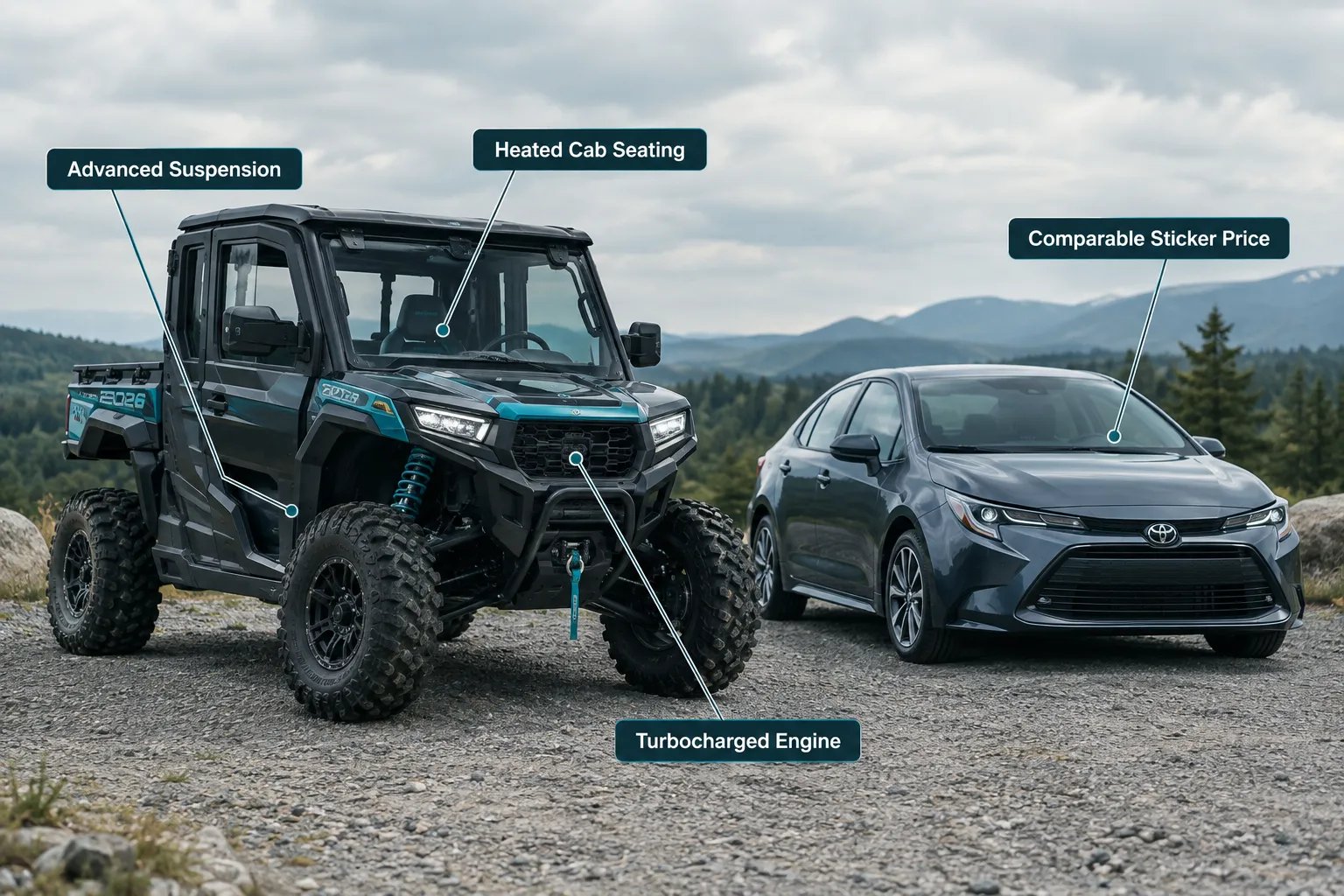
This shift is not just about inflation. Manufacturers have packed UTVs with heated seats, power steering, Bluetooth stereos, climate-controlled cabs, and turbocharged engines that rival small SUVs in output. The machines are more capable and more comfortable than ever, but that upgrade comes at a real cost. Buyers now have to weigh trail performance against sticker price the same way they would compare a crossover to a sedan.
This guide breaks down where the money is going, which machines deliver the strongest combination of comfort and capability, and how to find genuine value whether the budget is $8,000 or $28,000.
Key Takeaways
- Flagship 2026 UTVs like the Yamaha Wolverine RMAX4 1000 Limited now price in the same range as entry-level passenger cars, driven by comfort upgrades and turbocharged performance.
- The Can-Am Maverick X3 R leads on raw speed, the Can-Am Defender HD11 is the strongest all-around family value pick, and the Kawasaki Mule Pro FX 1000 dominates pure work capability.[6]
- Electric UTVs such as the Massimo MVR Cargo Max are closing the capability gap with gas machines while cutting operating costs, making them a serious contender for property owners.[1][5][9]
- Budget-friendly options like the Venom Armored UTV 200cc and the X-PRO Ranger 150 prove that families and casual riders do not need to spend five figures to get a usable machine.[1][2][8]
- Simple upgrades, especially tires, remain one of the cheapest ways to boost comfort and capability on a UTV or ATV that is already in the garage.[10]
Why 2026 UTV and ATV Prices Are Climbing Toward Passenger Car Territory
The price jump is not a mystery once you look at the feature list. Turbocharged engines, four-wheel independent suspension, digital dashboards, and factory doors and windshields all cost real money to engineer and build. Yamaha’s own 2026 lineup illustrates the spread clearly: the entry Wolverine X2 850 starts around $16,499, while the mid-range Wolverine RMAX2 1000 XT-R lists near $22,999, and several RMAX4 1000 trims land between $24,999 and $27,199. That is a difference of more than $10,000 between the base model and the top trim, almost entirely explained by comfort and refinement upgrades rather than raw engine displacement.
Sport-segment machines follow the same pattern. Industry comparison tables from early September 2026 show the Can-Am Maverick X3 priced roughly between $20,000 and $25,000, with the Polaris RZR XP 1000 landing between $18,000 and $22,000. Both machines earn strong user satisfaction scores, with the Maverick X3 rated around 4.8 out of 5 and the RZR XP 1000 close behind, largely because their high-performance suspension and turbocharged power deliver a genuinely smoother, faster ride over rough terrain. Buyers are effectively paying automotive money for automotive-grade engineering.
Work-class machines have not escaped the trend either, though they remain the relative bargain of the segment. The CFMoto UForce 1000 XL, for example, packs a 963cc engine producing 71 horsepower into a 1,853-pound chassis, with an MSRP around $15,999. Compare that to the Yamaha Viking EPS, which uses a smaller 686cc engine making 47 horsepower at a lighter 1,475 pounds. Both are useful farm and property machines, but the specification gap shows why utility-focused buyers can still find meaningfully lower prices than sport or luxury trims.
For context on how this pricing squeeze compares to the broader vehicle market, it is worth reviewing Best Cars to Buy in 2026: Complete Buyer’s Guide by Budget and Category, which shows just how much overlap now exists between entry-level car pricing and mid-tier off-road machines.
Best UTVs and ATVs for 2026: Comfort, Capability, and Value as Prices Climb Toward Passenger Cars by Segment
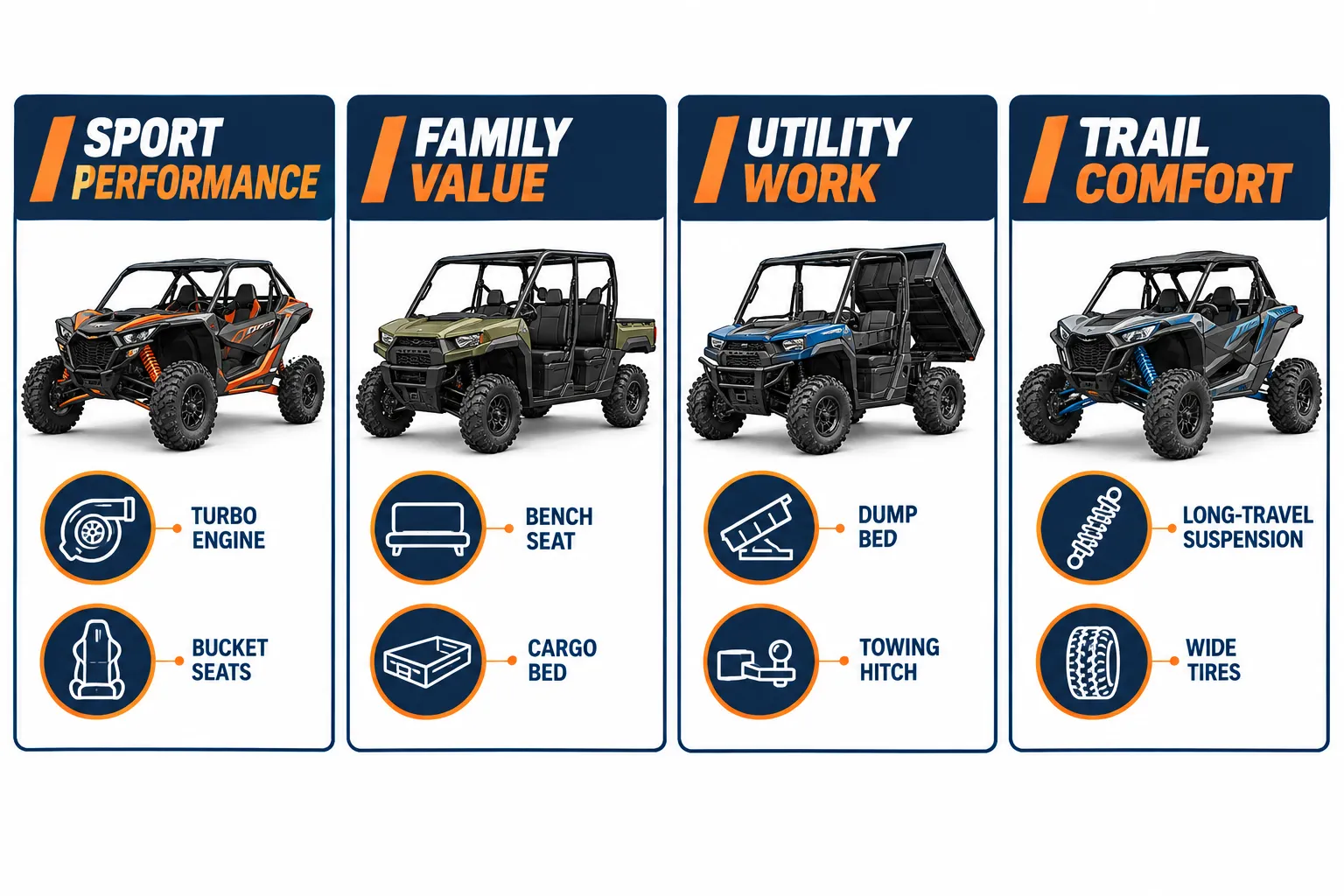
Not every rider needs the same machine. A rancher hauling feed has different priorities than a family looking for weekend trail fun, and a competitive racer wants something entirely different again. The strongest way to evaluate the best UTVs and ATVs for 2026: comfort, capability, and value as prices climb toward passenger cars is by matching the machine to its actual job.
A widely cited 2026 buying guide breaks the field into three clear winners by category: the Can-Am Maverick X3 R for outright performance, the Can-Am Defender HD11 for all-around family value, and the Kawasaki Mule Pro FX 1000 for heavy-duty work.[6] The Maverick X3 R uses race-bred turbo power rated around 240 horsepower, giving it the acceleration and top-end speed that dedicated sport riders want. The Defender HD11 earns its reputation for reliability and trail comfort, making it a sensible pick for families who want one machine that can handle chores during the week and trail rides on the weekend. The Mule Pro FX 1000 wins on torque, towing capacity, and storage, which matters more than speed for anyone moving hay bales or hauling gear across a large property.[6]
Here is a simplified breakdown of how these three flagship categories stack up on the traits that matter most:
| Category | Standout Model | Best For | Key Strength |
|---|---|---|---|
| Sport Performance | Can-Am Maverick X3 R | Racing and fast trail runs | Turbocharged power, high-speed stability |
| Family and All-Around | Can-Am Defender HD11 | Mixed chore and recreational use | Reliability, trail comfort |
| Heavy-Duty Work | Kawasaki Mule Pro FX 1000 | Farms and large properties | Torque, towing, cargo capacity |
The lesson here is straightforward. Chasing the fastest machine on the lot is not always the smartest purchase. Buyers who define their actual use case first, whether that is racing, family duty, or property work, will land on a far better value than those who simply buy the most expensive trim available.
Electric UTVs and ATVs Are Redefining Comfort and Value
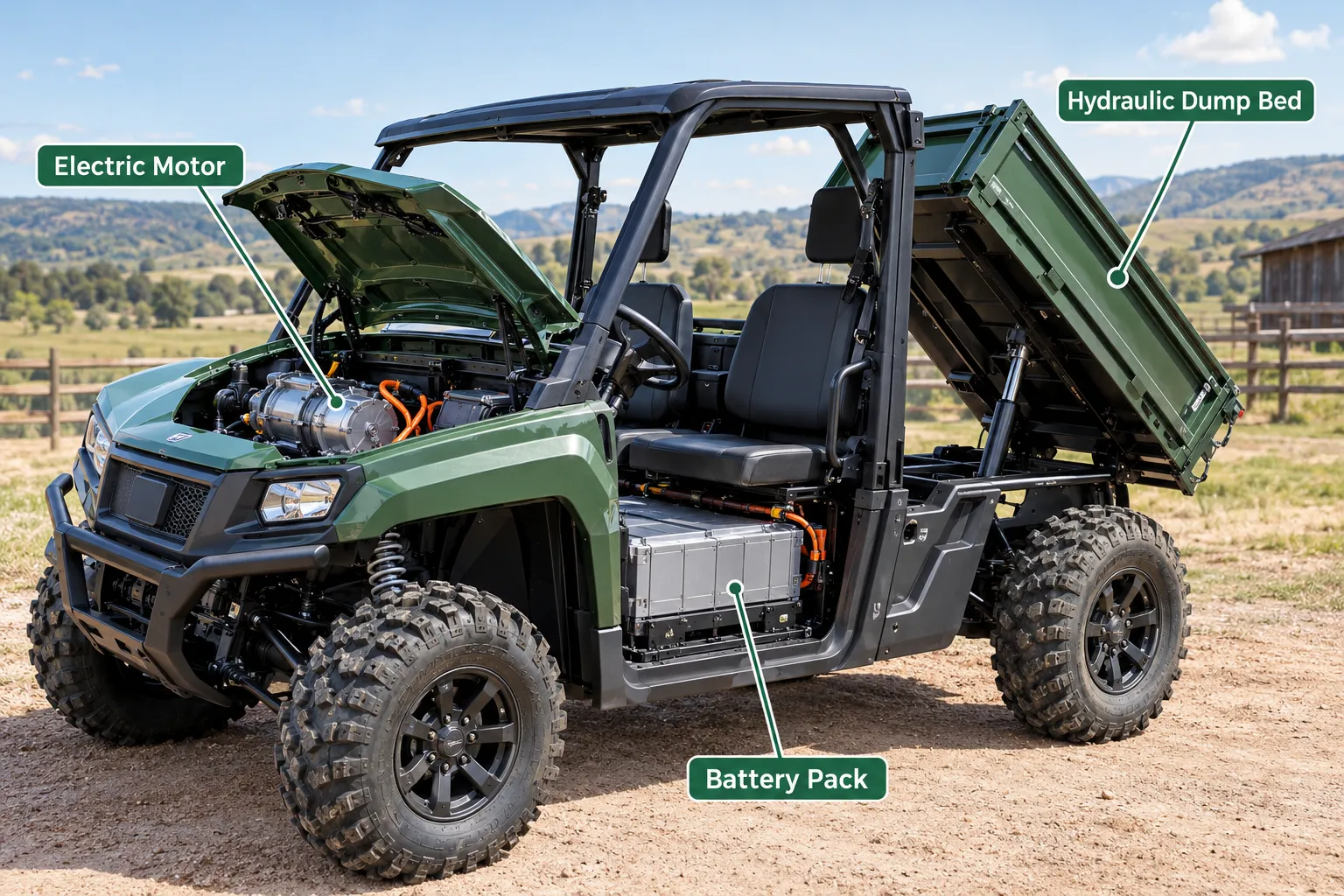
Electric side-by-sides have moved from novelty to serious contender in 2026, and the shift is happening fast. Multiple September 2026 reviews consistently rank the Massimo MVR Cargo Max as the best electric UTV for serious property work.[1][5][9] It runs on a 5,000-watt motor, carries roughly 1,100 pounds of cargo, covers about 45 miles per charge, and includes a hydraulic dump bed that matches many gas-powered work machines on usability. Reviewers highlight near-silent operation and low running costs as major selling points, especially for landowners who use their machine daily rather than occasionally.[1][5][9]
Trail riders have options too. A September 19, 2026 guide points to emerging electric trail machines like the Kavirox 72V 3000W and the Zyliathor 48V 4000W.[4] The Kavirox produces a peak output around 10.8 kW with a range near 37 miles and a top speed close to 45 mph, while the Zyliathor delivers about 4 kW peak, roughly 30 miles of range, and a top speed near 31 mph. Both use four-wheel suspension systems that improve ride comfort on rough trails, showing how electric machines are catching up to gas models in both capability and comfort while often undercutting premium gas UTV pricing.[4]
Budget-conscious buyers are not left out of the electric shift either. The PVG WISELD GT3 4WD is frequently called a smart budget pick for lighter hauling jobs, offering four-wheel drive at a lower price point than heavier-duty electric work UTVs.[1][5] Reviewers suggest pairing a budget electric model like the WISELD GT3 with a higher-end option such as the Massimo MVR Cargo Max to cover both light and heavy chores, since the main trade-off between the two is payload capacity and range rather than day-to-day usability.[1][5]
Looking further ahead, an August 21, 2026 industry profile reports that HuntVe plans to expand its 2027 lineup with the Game Changer Crew HVAC, an electric 4×4 UTV featuring a full crew cab and integrated climate control system.[7] Analysts quoted in that profile expect enclosed, climate-controlled electric UTVs to become more common, pushing prices closer to mainstream passenger vehicles as heating, air conditioning, and quiet electric drivetrains become standard rather than optional.[7]
The gap between a work UTV and a work truck is shrinking every model year, and electric drivetrains are accelerating that trend rather than slowing it down.
Budget-Friendly and Family-Focused Picks Worth Considering
Not every buyer needs a $25,000 flagship, and the market has responded with genuinely useful low-cost options. The Venom Armored UTV 200cc keeps showing up on 2026 best-of lists for good reason. It features a CVT automatic transmission, a two-seat layout with a small cargo bed, and a top speed around 45 mph, all at a purchase price well below the premium segment.[1][2] It gives up plush suspension and cabin refinement compared to flagship models, but for light work and casual recreational riding, it remains a strong value choice.[1][2]
Families with younger or smaller riders have their own standout pick. Several late-August and early-September 2026 guides single out the X-PRO Ranger 150, a go-kart-style UTV built around a 140cc engine paired with either a semi-automatic or a 3-speed transmission, riding on 18-inch wheels.[2][8] Reviewers describe it as a top recommendation for families wanting an affordable recreational UTV that fits smaller drivers while still handling basic off-road duties. Safety-oriented features and manageable power output make it a sensible entry point before stepping up to a full-size machine.[2][8]
Property owners on a budget also have a strong option in the Massimo Tiro 480 RC utility cart, recommended in guides updated through mid-September 2026 for buyers who need real utility capacity without a premium price tag.[9] It runs dual 500-watt motors, carries a 1,100-pound load rating, and offers a 12.5 cubic foot bed. Its most unique feature is remote-control capability, which lets the cart maneuver through tight spaces on a property without a driver on board, a genuine comfort and convenience upgrade that reviewers see as a strong value add at its price point.[9]
For readers weighing whether a used vehicle purchase makes more sense than a new UTV altogether, the pricing logic overlaps closely with what is covered in Used Cars Under $20,000: Finding Affordable Options in 2026, since both markets reward buyers who prioritize actual need over feature creep.
Simple Upgrades That Boost Comfort and Capability Without a New Purchase
Not every improvement requires a new machine. Tires remain one of the most cost-effective upgrades available, and the data backs this up. A hunting-focused UTV review published in mid-September 2026 reports that after more than 1,400 trail miles and a full hunting season, SUNF A033 25-inch all-terrain tires remained the top pick for upgrading hunting UTVs, particularly in rough terrain.[10] The review stresses that tire choice alone can markedly improve ride comfort, traction, and perceived capability without changing anything else about the underlying machine.[10]
This matters for anyone trying to stretch a budget. A few practical upgrade priorities worth considering, in rough order of value:
- Tires, the single biggest comfort and traction upgrade for the money, as confirmed by extended trail testing.[10]
- Seat cushions or aftermarket seats, reduce fatigue on long work days or trail rides.
- Suspension components, worth considering only after tires, since suspension upgrades cost significantly more for a similar comfort gain.
- Cab enclosures and doors, extend the usable season in cold or wet climates.
- Winches and racks, add practical capability for hauling and recovery without touching the drivetrain.
Owners thinking about resale down the line should also factor depreciation into upgrade decisions. Just as motorhome owners track resale value with tools like the RV Depreciation Calculator: Estimate Your Motorhome Resale Value, UTV and ATV owners benefit from understanding which upgrades hold value and which ones simply add cost without a resale return.
How to Choose the Best UTVs and ATVs for 2026 for Your Needs and Budget
Choosing among the best UTVs and ATVs for 2026 comfort, capability, and value as prices climb toward passenger cars ultimately comes down to answering three questions honestly before shopping.
First, what is the machine’s primary job? A family that rides trails on weekends does not need the towing capacity of a Kawasaki Mule Pro FX 1000, and a rancher moving equipment daily does not need the turbocharged speed of a Maverick X3 R. Matching the machine to the actual use case avoids paying for capability that will never get used.
Second, how much does comfort actually matter for this use? Heated seats, power steering, and climate control are wonderful, but they add thousands of dollars to the price. Buyers who mostly use a machine for short work trips around a property may find that a mid-tier utility model like the CFMoto UForce 1000 XL delivers everything they need without the luxury premium.
Third, is a gas or electric drivetrain the better fit? Electric models like the Massimo MVR Cargo Max now match many gas work UTVs on hauling and usability while cutting fuel and maintenance costs, making them worth serious consideration for property owners who use their machine daily rather than occasionally.[1][5][9]
Buyers who want a broader framework for separating genuine value from marketing hype should also read Value vs Price, since the same principles that apply to buying a car apply directly to buying a UTV: the sticker price only tells part of the story. It also helps to understand how dealers price used inventory generally, covered in How to Check Used Car Value Before Buying: The Complete NADA Guide, since many of the same valuation principles now apply to used UTVs and ATVs as this market matures and resale values become more standardized. And because warranty coverage is increasingly a differentiator on higher-priced machines, reviewing how coverage works on the vehicle side through Certified Used Cars: Complete Guide to Benefits, Warranties, and How to Find the Best Deals is a useful parallel exercise before signing for a five-figure UTV.
Frequently Asked Questions
Are 2026 UTVs really priced like cars now? Yes, at the upper end. Flagship models from Yamaha, Can-Am, and Polaris now regularly cross $20,000, with some trims exceeding $27,000. That places them squarely in entry-level and even mid-tier passenger car territory.
What is the best all-around UTV for families in 2026? The Can-Am Defender HD11 earns top marks for combining reliability, trail comfort, and everyday usability, making it the strongest all-around pick for families who need one machine to cover chores and recreation.[6]
Are electric UTVs actually good enough for real work? Increasingly, yes. The Massimo MVR Cargo Max matches many gas work UTVs on hauling capacity and usability while offering quieter operation and lower running costs, making it a legitimate option for property owners rather than just a novelty.[1][5][9]
What is the cheapest way to improve an existing UTV or ATV? Upgrading tires. Extended trail testing found that a quality all-terrain tire upgrade improved comfort, traction, and overall capability more noticeably than most other single upgrades.[10]
Conclusion
The days of treating a UTV or ATV as a simple weekend toy are fading. As comfort features and performance specs climb, so does the price, and the smartest buyers in 2026 are the ones who shop with the same discipline they would use for a car purchase. Start by defining the actual job the machine needs to do, whether that is racing, family trail riding, or daily property work. From there, compare specific models like the Can-Am Maverick X3 R, the Can-Am Defender HD11, the Kawasaki Mule Pro FX 1000, or the Massimo MVR Cargo Max against that job description rather than against a spec sheet alone.
Buyers on tighter budgets should not feel priced out. Options like the Venom Armored UTV 200cc, the X-PRO Ranger 150, and the Massimo Tiro 480 RC prove that real utility and recreational value still exist well below the premium tier. And for anyone already holding a machine, a tire upgrade remains one of the fastest, cheapest ways to close the comfort gap with a brand-new model. Whatever the budget, the path to a smart purchase in this market is the same one used to buy a good car: know the job, know the true value, and buy the machine that fits both.
References
[1] Best Electric Utvs – https://www.dognotebook.com/best-electric-utvs/ [2] Best Utility Vehicles – https://www.thirstybear.com/best-utility-vehicles/ [3] Best Utvs – https://www.thirstybear.com/best-utvs/ [4] Best Utvs For Trail Riding – https://www.ohiodronellc.com/best-utvs-for-trail-riding/ [5] Best Electric Utvs – https://www.ohiodronellc.com/best-electric-utvs/ [6] Best Side By Sides 2026 – https://offroadgatlinburg.com/best-side-by-sides-2026/ [7] Profiling The Latest Atvs And Utvs – https://www.outdoornews.com/2026/08/21/profiling-the-latest-atvs-and-utvs/ [8] Best Utvs For Recreational Riding – https://mydroneauthority.com/best-utvs-for-recreational-riding/ [9] Best Utvs For Properties – https://www.clevelandheart.com/best-utvs-for-properties/ [10] Best Utvs For Hunting – https://austineubanks.com/best-utvs-for-hunting/