Last Updated on November 4, 2026
A car that costs $12,000 in Shanghai can cost more than $25,000 by the time it clears U.S. trade policy, if it is allowed to clear at all. That gap is not about shipping costs or dealer markup. It is the direct result of stacked tariffs and a new wave of national security rules that have made Chinese-branded vehicles effectively unsellable in American showrooms. Understanding why Chinese cars are not widely sold in the U.S.: tariffs, software rules, pricing, and what buyers can actually purchase requires looking past rumors of “$10,000 EVs” and into the real policy mechanics blocking them.
This article breaks down the tariff math, the new connected-vehicle software restrictions, and the realistic alternatives available to American buyers who want an affordable, well-equipped EV or compact car in 2026.
Key Takeaways
- Combined U.S. tariffs on Chinese EVs now sit near 127.5%, roughly doubling sticker prices and erasing the cost advantage that made Chinese EVs attractive elsewhere [1].
- A Commerce Department “Connected Vehicles” rule effective March 17, 2026 restricts Chinese-linked software and hardware in vehicles sold in America [2].
- Starting with model year 2027, most Chinese-developed connected-car software is banned; by model year 2030, Chinese hardware is barred too [3].
- No Chinese-branded passenger vehicle is sold through U.S. dealerships as of late 2026; only Chinese-owned but non-Chinese-branded companies like Volvo have exceptions [4].
- Buyers seeking low-cost EVs and compact cars still have strong options from Kia, Toyota, and other established brands.
The Tariff Wall: Why Chinese Cars Are Not Widely Sold in the U.S. on Price Alone
The first and most straightforward barrier is cost. Combined U.S. tariffs on Chinese electric vehicles now total approximately 127.5%, a figure built from layered duties stacked on top of one another over the past several years [1]. This is not a modest import tax, it is a structural wall that turns a competitively priced vehicle into one of the most expensive options in its class the moment it touches American soil.
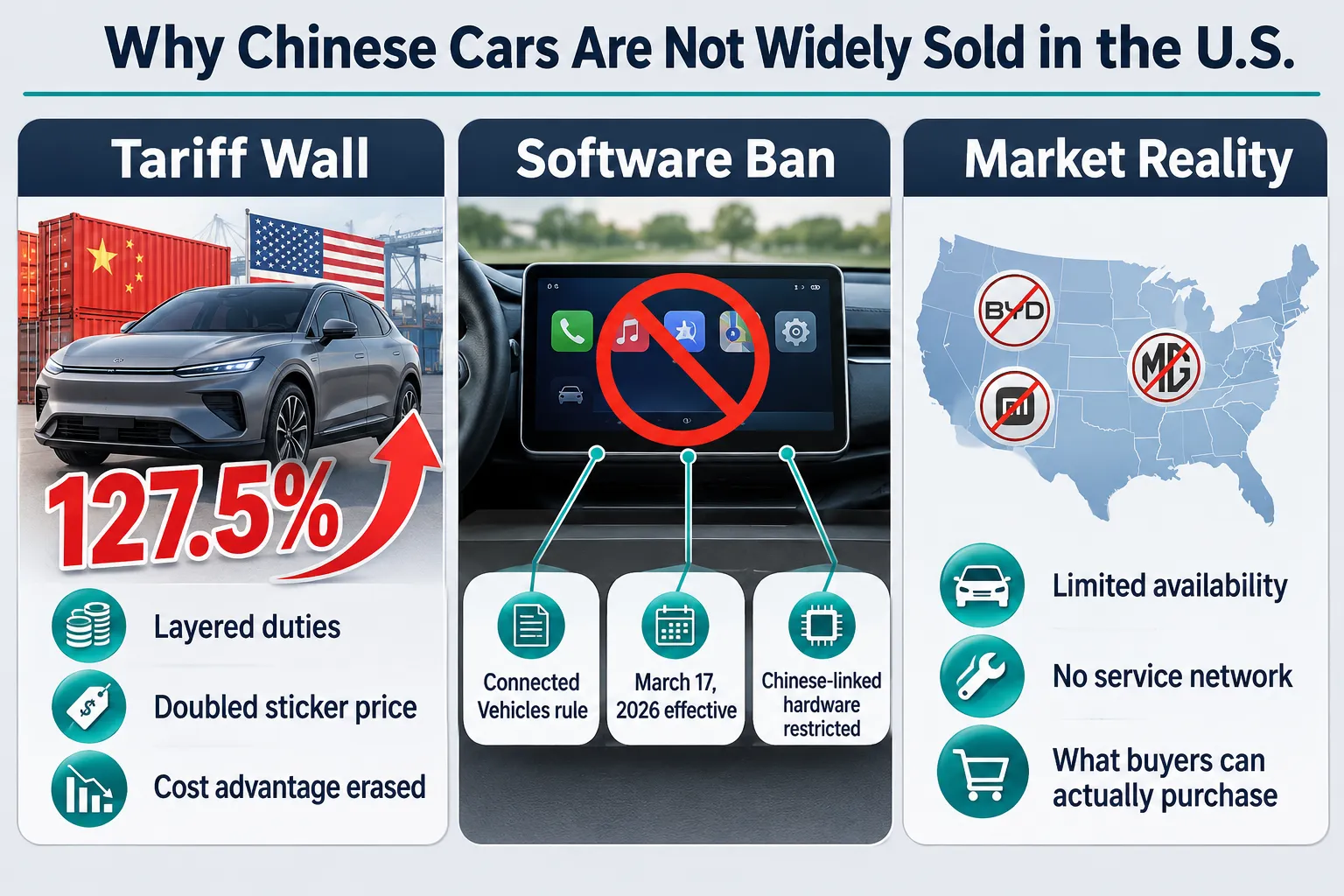
Consider the practical math. A compact Chinese EV that retails for roughly $15,000 in its home market would, after tariffs, land closer to $30,000 or more once logistics, compliance, and dealer margin are added. At that price point, it competes directly with established, trusted brands that already have decades of U.S. service networks, crash-test data, and resale value. The tariff does not just raise the price, it strips away the single advantage that made Chinese EVs disruptive in Europe, Southeast Asia, and Latin America in the first place [5].
Industry groups representing American manufacturers, including coalitions tied to GM, Ford, and Toyota, have been vocal supporters of keeping these tariffs in place and have pushed for permanent restrictions through Congress [6]. For buyers comparing options, this pricing reality echoes other import cost pressures discussed in the complete guide to motorcycle tariffs and pricing, where trade disputes similarly reshape what riders and drivers can afford.
Software Rules, Security Law, and What Buyers Can Actually Purchase
Tariffs are only half the story. Even if a Chinese automaker absorbed the cost and tried to sell below cost to gain market share, a separate and arguably more permanent barrier now exists: the Commerce Department’s Connected Vehicles rule, which took effect March 17, 2026 [2]. This regulation sharply restricts the use of Chinese-linked software in any vehicle’s connectivity systems sold in the United States, regardless of where the car is physically assembled.
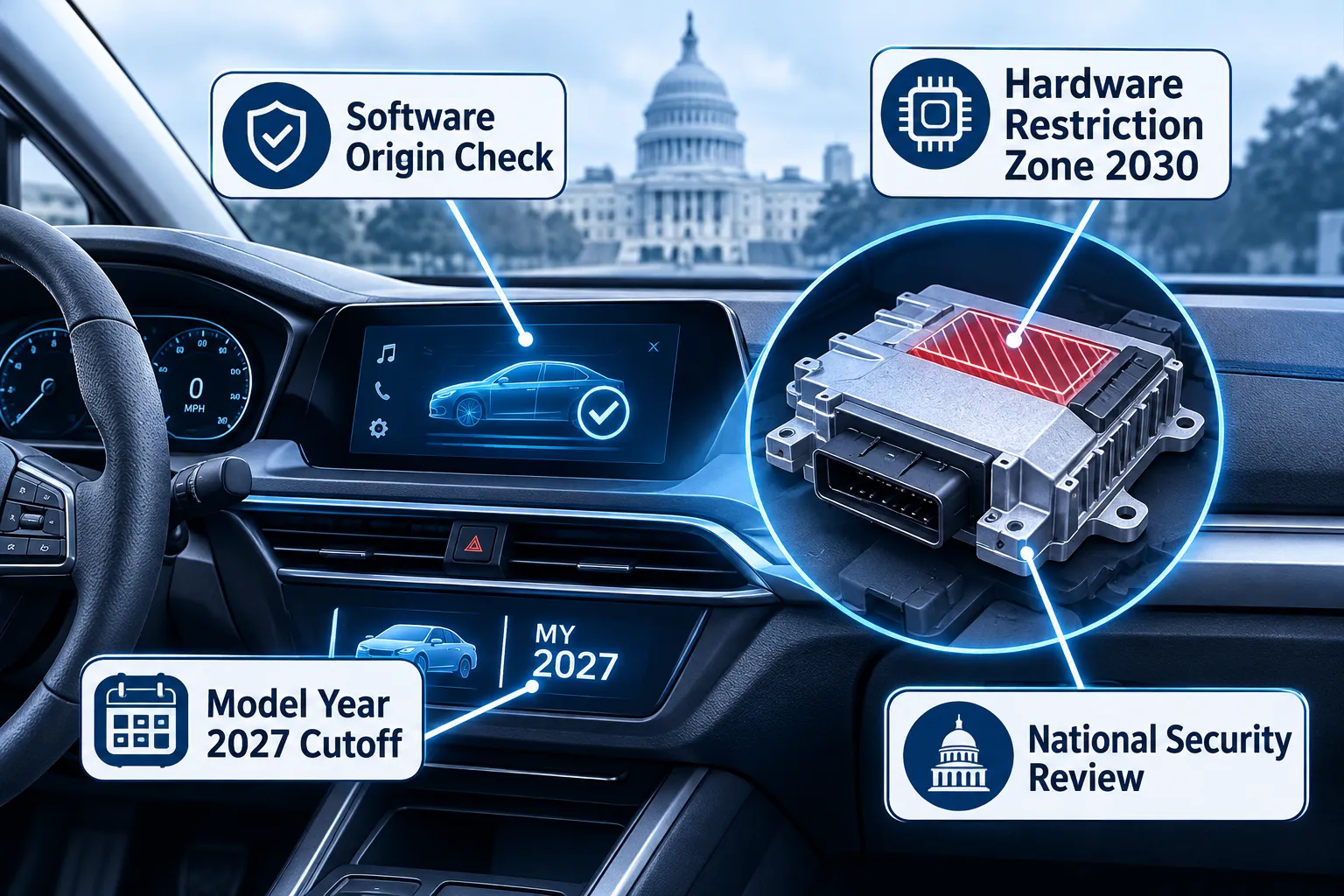
The timeline matters here. Starting with model year 2027, most Chinese-developed connected-car software will be banned outright from vehicles sold in the U.S. [3]. By model year 2030, the restriction extends to Chinese-made hardware components used in those connected systems. At that point, Chinese-controlled automakers will not be permitted to sell connected vehicles in the American market at all, not as imports, not as domestically assembled cars, and not under a different brand name [2][3].
Lawmakers have moved to make this more durable through the Connected Vehicle Security Act of 2026, which aims to codify these restrictions into law so they cannot be easily reversed by a future administration [7]. Security analysts and policymakers frame the concern in stark terms, describing Chinese connected vehicles as potential rolling data-collection platforms capable of gathering location, driving, and even biometric data tied back to Chinese servers [8].
This is why even BYD, widely regarded as the world’s most successful EV maker, remains blocked from the U.S. market, not only by tariffs but by rules that apply even if BYD built cars in Mexico or domestically [9]. Ford and other automakers have already begun seeking special licenses for China-built components to stay compliant, illustrating how deeply this rule reaches into global supply chains [3]. For context on how supply chains and sourcing affect vehicle choice more broadly, see the complete guide to foreign cars, which covers how imported brands navigate U.S. regulation.
Who Is Actually Exempt
A small handful of companies occupy a gray zone. Volvo, which is owned by China’s Geely, continues to sell cars in the U.S. because it is not a Chinese-branded company and its engineering and primary software development remain rooted outside China [4]. This exception is narrow and closely watched, regulators have made clear that ownership structure alone will not guarantee future access if software origin rules tighten further [10].
Legal, Safety, and Political Pressure Add to the Barrier
Beyond tariffs and software rules, Chinese automakers face a thicket of legal and regulatory friction that discourages even attempting U.S. entry. Crash-testing certification, EPA emissions compliance, state-by-state dealer franchise laws, and cybersecurity audits all require years of investment with no guarantee of approval [9]. Combined with the political reality that major U.S. industry groups are actively lobbying Congress for a permanent ban, the business case for trying to enter the American market has essentially collapsed [6][7].
“No Chinese-branded passenger vehicle is sold through U.S. dealerships as of late 2026.” This single fact captures just how comprehensive the current restrictions have become [4].
Automakers operating in the U.S. and allied markets have responded by proactively purging Chinese software and hardware from their own supply chains, even in vehicles that have nothing to do with Chinese brands, simply to avoid falling afoul of the new compliance rules [3]. This ripple effect shows how the connected-vehicle rule is reshaping sourcing decisions well beyond the handful of Chinese automakers it was designed to target.
Looking ahead, most analysts expect a near-total ban on Chinese-controlled connected vehicles to solidify starting with model year 2027, regardless of whether production shifts to Mexico, Canada, or even U.S. soil. Ownership and software origin, not factory location, appear to be the deciding factors [3][9].
What Buyers Can Actually Purchase: Realistic Lower-Cost Alternatives
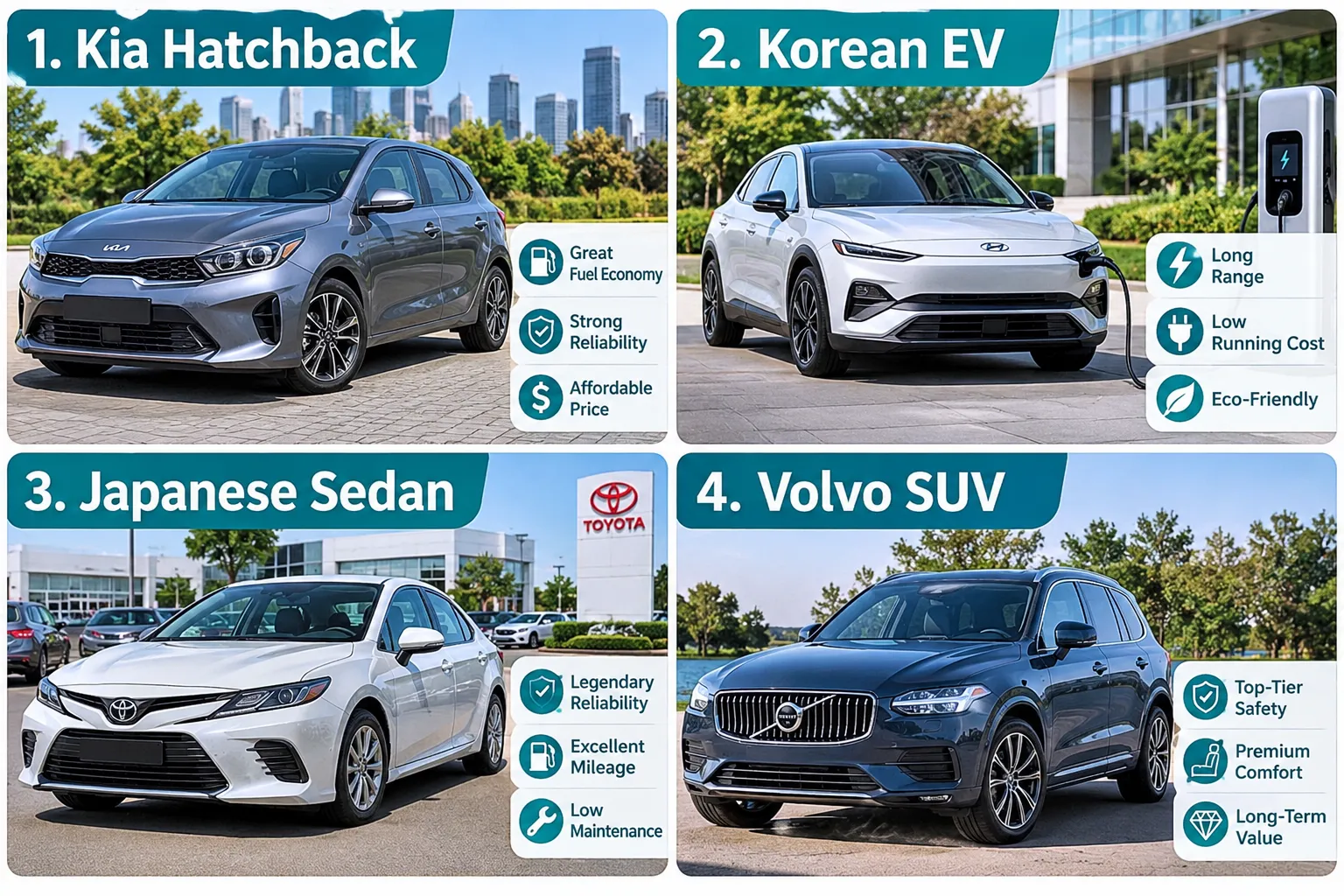
Given these restrictions, American buyers hoping for an ultra-cheap Chinese EV should redirect their search toward brands that are actually available, serviced, and insured in the U.S. market. Fortunately, there are strong options.
Compact and budget-friendly gasoline cars: Buyers on a tight budget still have excellent choices among established brands. The guide to the 15 most reliable cheap cars under $15,000 highlights dependable options that do not carry tariff risk or software uncertainty.
Affordable EVs from trusted brands: Kia has become one of the strongest value plays in the EV and compact segment. The breakdown of Kia models, pricing, and reliability scores is a useful starting point for shoppers who want modern tech without the geopolitical baggage.
Used and certified options: For buyers prioritizing value over brand-new EV tech, certified used cars offer warranty protection at a lower price point, while the guide to used cars under $20,000 outlines specific models worth considering.
Reliability-first shoppers: Those who care most about long-term dependability should review the most reliable used cars to buy in 2026, which ranks options across every budget tier using data rather than marketing claims.
Here is a simplified comparison of what a budget-conscious buyer is choosing between in today’s market:
| Buyer Priority | Realistic Option | Why It Works |
|---|---|---|
| Lowest upfront cost | Used compact sedan | No tariff exposure, established parts supply |
| Modern EV tech on a budget | Kia EV lineup | Strong warranty, growing charging support |
| Long-term reliability | Certified pre-owned vehicle | Factory-backed inspection and warranty |
| Brand trust and resale value | Established Japanese or Korean brand | Decades of U.S. market data |
For a broader view of how imported brands stack up against domestic options, the comparison of American cars vs Japanese cars offers useful context on reliability and value trade-offs that apply just as well when Chinese brands are removed from consideration entirely.
What This Means for the Next Few Years
The trajectory is fairly clear. Tariffs near 127.5% are not likely to be lowered anytime soon, and the Connected Vehicle Security Act of 2026 is designed specifically to prevent a future administration from quietly reopening the door [7]. Combined with model year 2027 software restrictions and model year 2030 hardware restrictions, the window for Chinese automakers to enter the U.S. market through any conventional channel is closing, not opening [2][3].
Buyers should treat any online claims of upcoming “cheap Chinese EVs hitting U.S. dealers” with skepticism. As of late 2026, there is no credible path for that to happen under current law, and the political consensus across both industry and Congress points toward making these restrictions permanent [6][7].
Conclusion
The reasons why Chinese cars are not widely sold in the U.S., tariffs, software rules, pricing, and what buyers can actually purchase, come down to two overlapping forces: a tariff structure that erases pricing advantages, and a security-driven software ban that applies regardless of where a car is built. Together, these rules have produced a market where no Chinese-branded passenger vehicle is available through U.S. dealerships, and the few exceptions, like Volvo, exist only because they are not considered Chinese-branded in practice.
For buyers, the practical path forward is straightforward: focus on established, U.S.-available brands with proven reliability records. Compare Kia’s EV and compact lineup, explore certified pre-owned inventory for warranty protection, and use data-backed reliability rankings rather than chasing vehicles that are not legally available. Start by reviewing current pricing and reliability data for mainstream brands before making a purchase decision, the best value in today’s market is not a hypothetical import, but a well-reviewed vehicle you can actually buy, finance, insure, and service in the United States right now.
References
- Why Americans Cant Buy World 150000859. yahoo.com.
- Connected Vehicles Rule Takes Effect. dlapiper.com.
- US Connected Car Rule Prompts Ford Other Automakers Seek Licenses China Built 2026 06 15. reuters.com.
- Chinese Cars Changing Automotive Industry. ajc.com.
- Article317144486. heraldsun.com.
- Moodys:0d7539639886f:0 Us Auto Industry Group Urges Congress To Impose Permanent Ban On Chinese Vehicles. tradingview.com.
- Chinese Vehicle Ban Permanent. cbtnews.com.
- Why US Allies Should See Chinese Cars as Security Risk. nationalinterest.org.
- US Bans on Chinese Ev. superlawyers.com.
- Industry. mt.co.kr.