Last Updated on March 21, 2026
You want a garage that works for projects and for family life. This article shows practical safety steps you can use so everyone stays protected while you build, fix, or tinker.
You’ll learn simple, realistic safety ideas that make your garage safer for kids and adults without stopping you from using the space.
1) Install auto-reversal garage door systems to prevent accidents
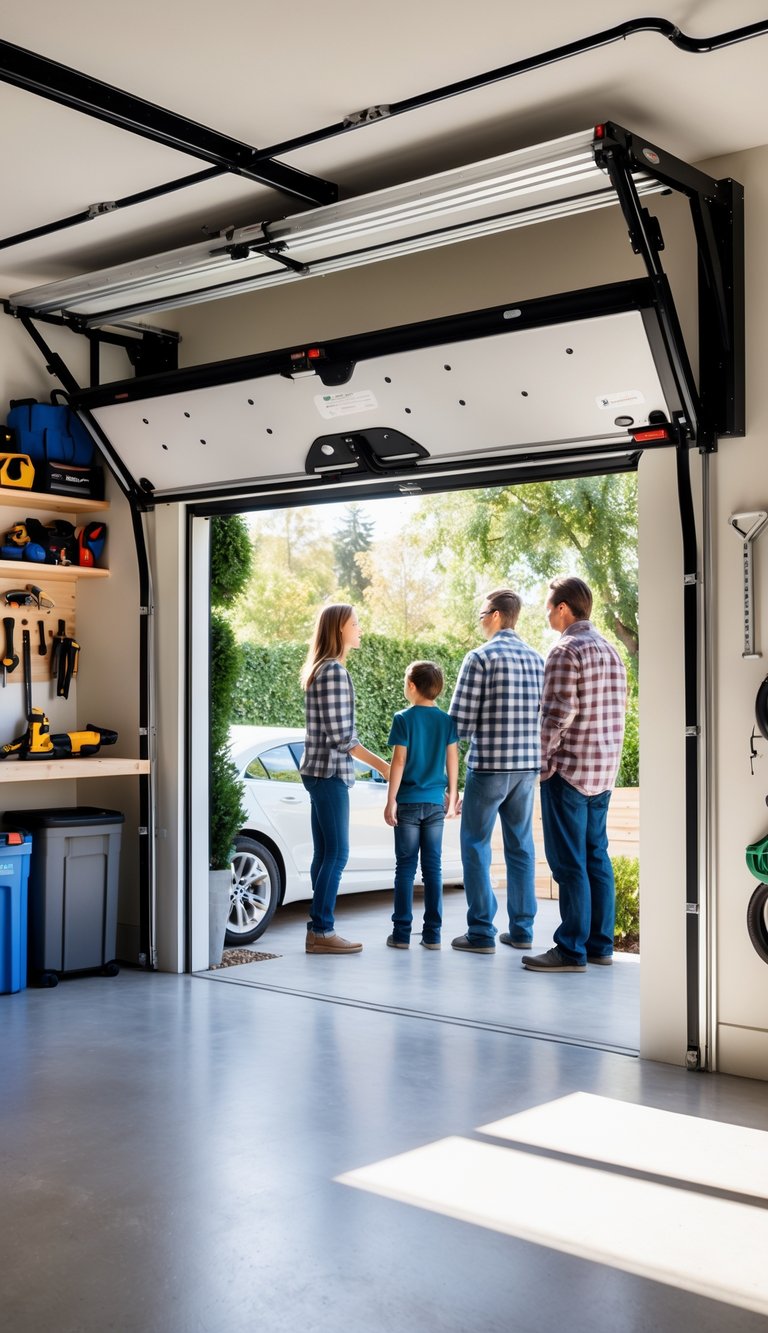
An auto-reverse system stops the door if something blocks its path. This protects your family, pets, and cars from being crushed or damaged.
Most systems use pressure sensors and photo-eye sensors near the floor. These sensors detect objects and force the door to go back up when needed.
Make sure the sensors align and the opener’s force settings match the door weight. Test the reversal every few months by placing a small object in the door’s path.
Keep the sensor lenses clean and replace worn parts right away. If you’re unsure, hire a pro to check wiring and settings for reliable operation.
PRO TIP
Mark a testing schedule on your calendar and run the reversal test after any repair or power outage.
2) Use safety sensors near garage entrances to detect movement
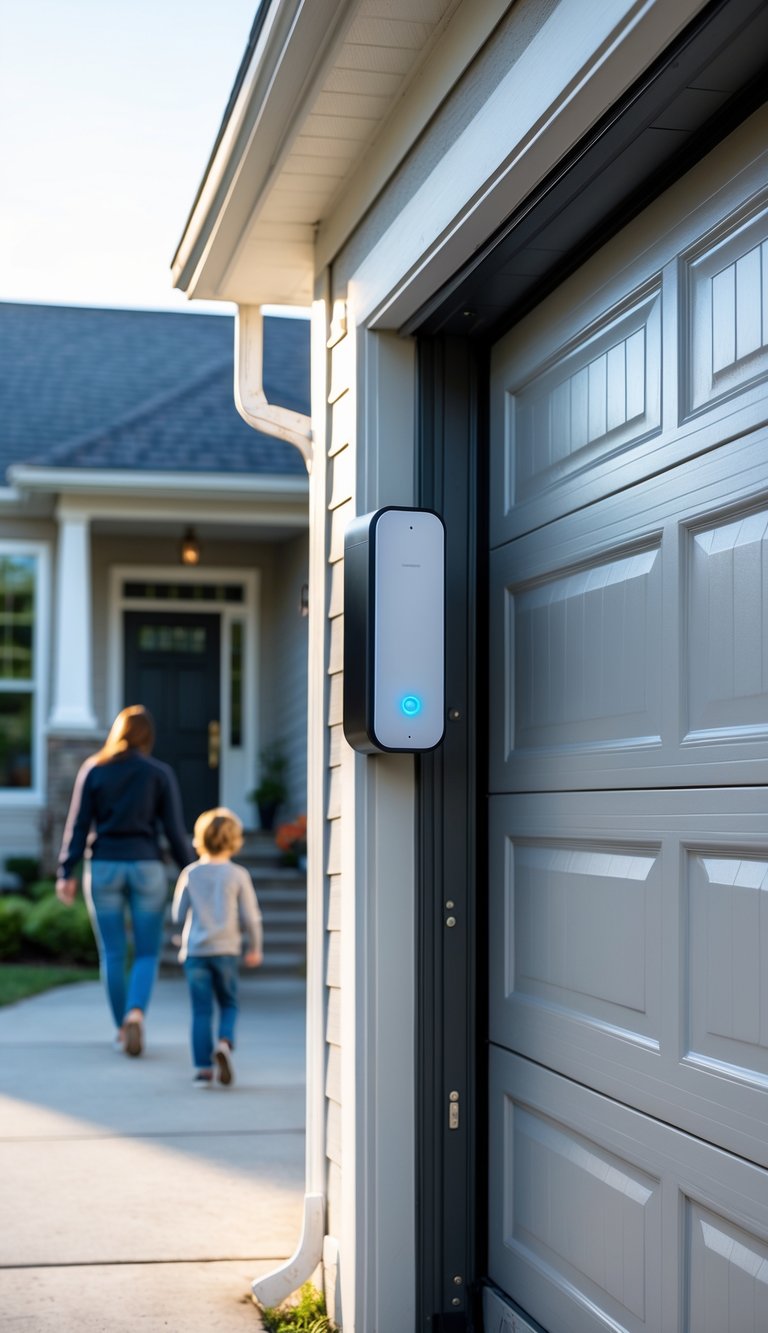
You can add safety sensors at garage entrances to catch people, pets, or objects before a door closes. Photoelectric sensors (photo-eyes) send an invisible beam across the doorway and stop the door if the beam breaks.
Mount sensors low on each side of the door track and aim them at each other. Keep their lenses clean and aligned so they work reliably.
Some systems use motion or radar sensors for wider coverage near entry points. These can alert you to movement or turn lights on when someone approaches.
PRO TIP
Test sensors monthly by passing an object through the beam while the door closes. If the door doesn’t reverse, stop using it and fix or replace the sensor right away.
3) Keep all sharp tools out of children’s reach with locked cabinets
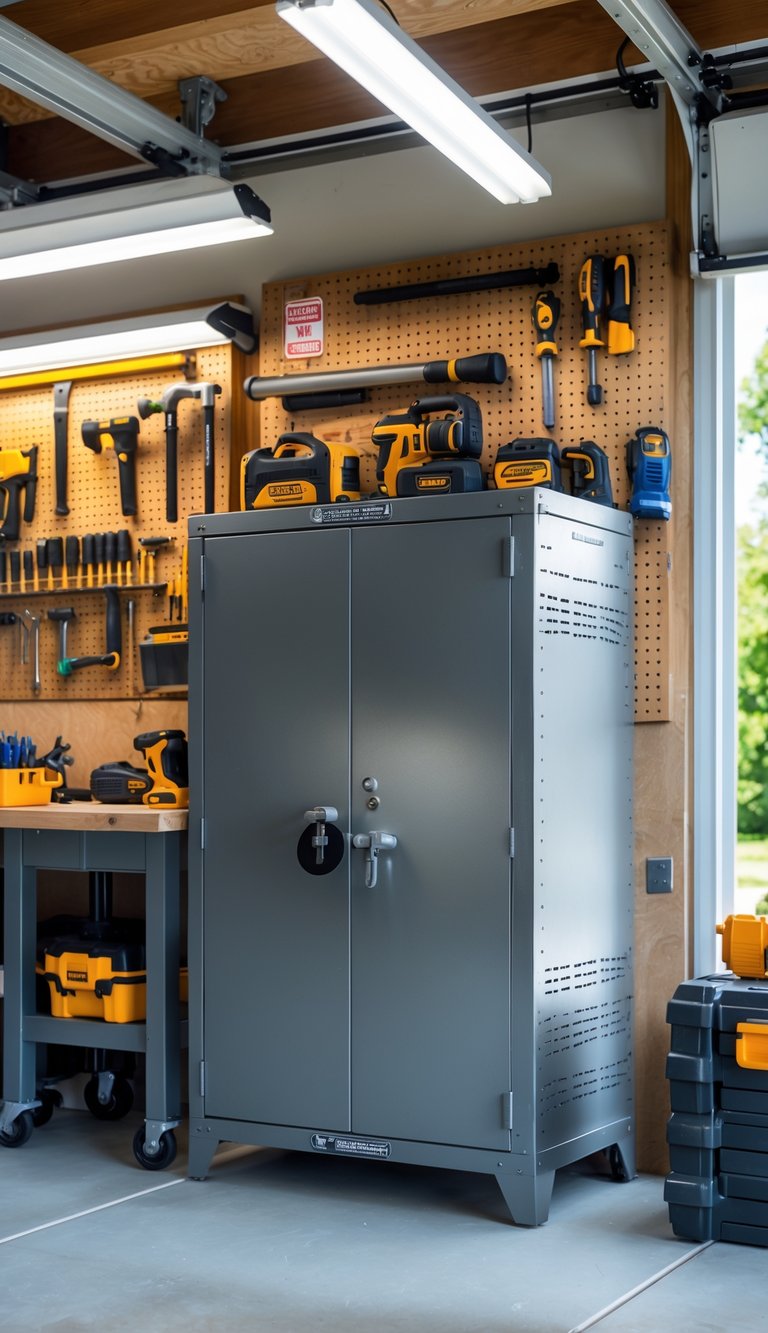
Store knives, saws, and other sharp tools in lockable cabinets or drawers you can secure with childproof locks. Put these cabinets high on the wall or bolt them to the floor so they cannot tip over.
Label each cabinet so you always know what is inside. That makes it faster to find what you need without leaving tools out where children can reach them.
Teach older kids that locked cabinets are off-limits. Still, never rely on rules alone—locks and proper placement give you a physical barrier.
PRO TIP
Keep a small, clearly marked box for used blades and other sharps. Empty it into a safe disposal bag regularly to avoid accidental cuts.
4) Set up clear, designated zones for different tasks
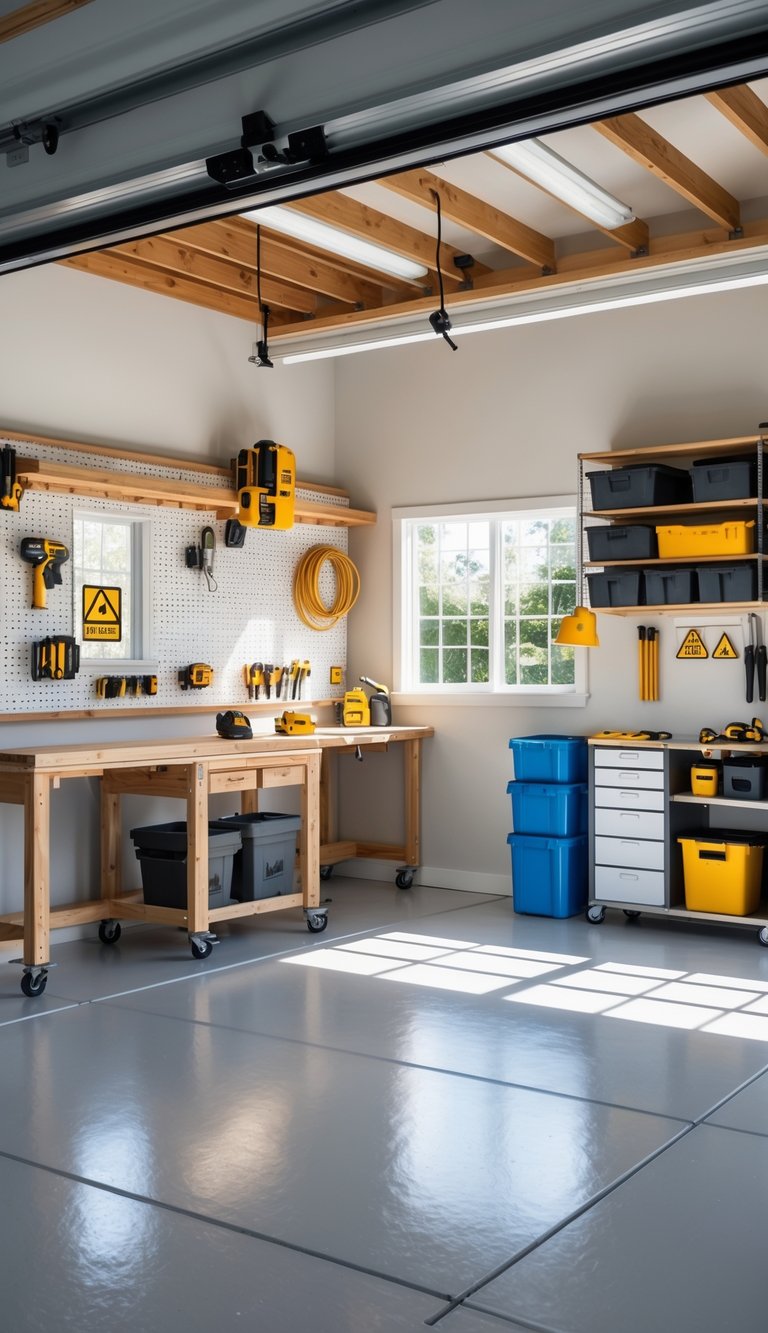
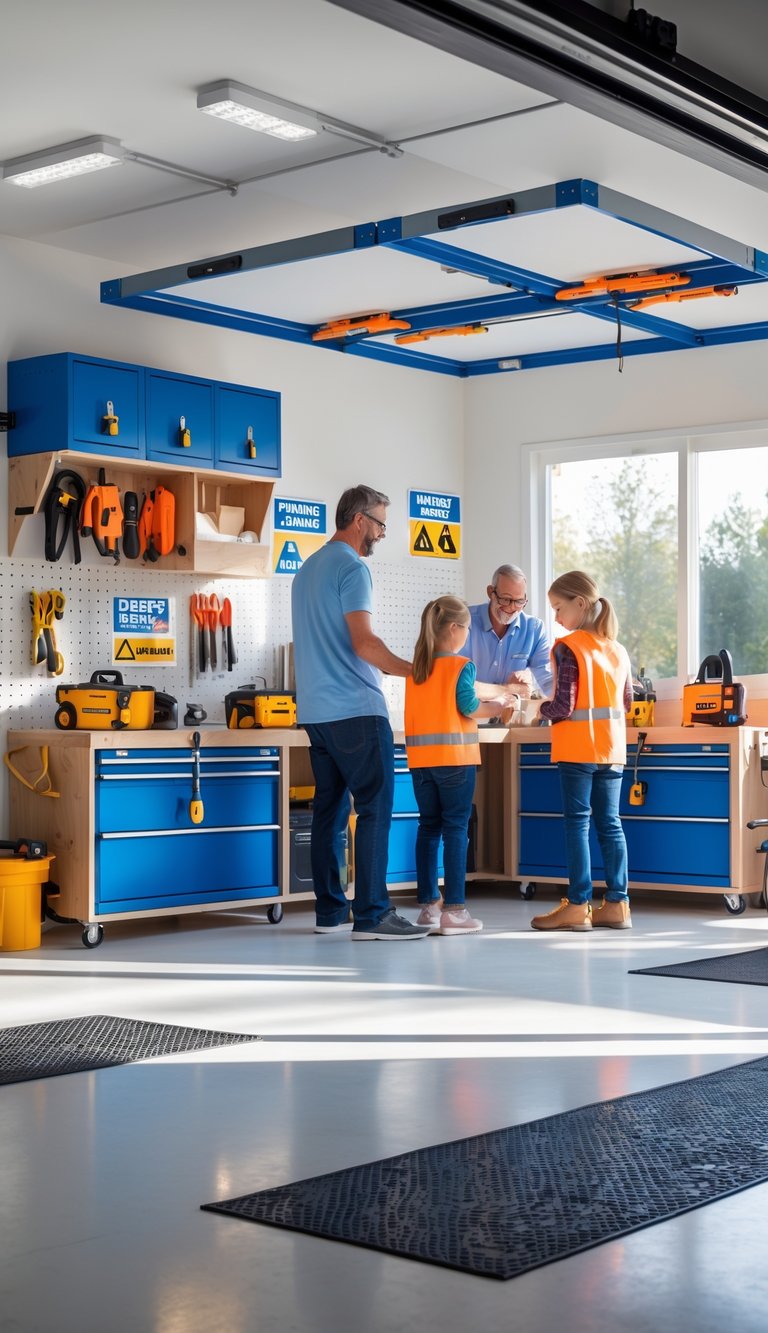
When you divide your garage into zones, each task gets its own space and your family stays safer. Put heavy machinery and noisy tools in one area, and a clean bench for small parts or crafts in another.
Keep flammable liquids and paints in a locked, well-ventilated storage zone away from power tools. Mark walking paths and clear floor space so people can move without tripping over cords or materials.
Use shelves, pegboards, and mobile carts to keep tools in their zones and make cleanup fast. Label bins and drawers so everyone knows where things belong.
PRO TIP
Use bright tape or paint on the floor to outline zones. It helps kids and guests see boundaries at a glance.
5) Use pegboards and mobile carts for organized tool storage
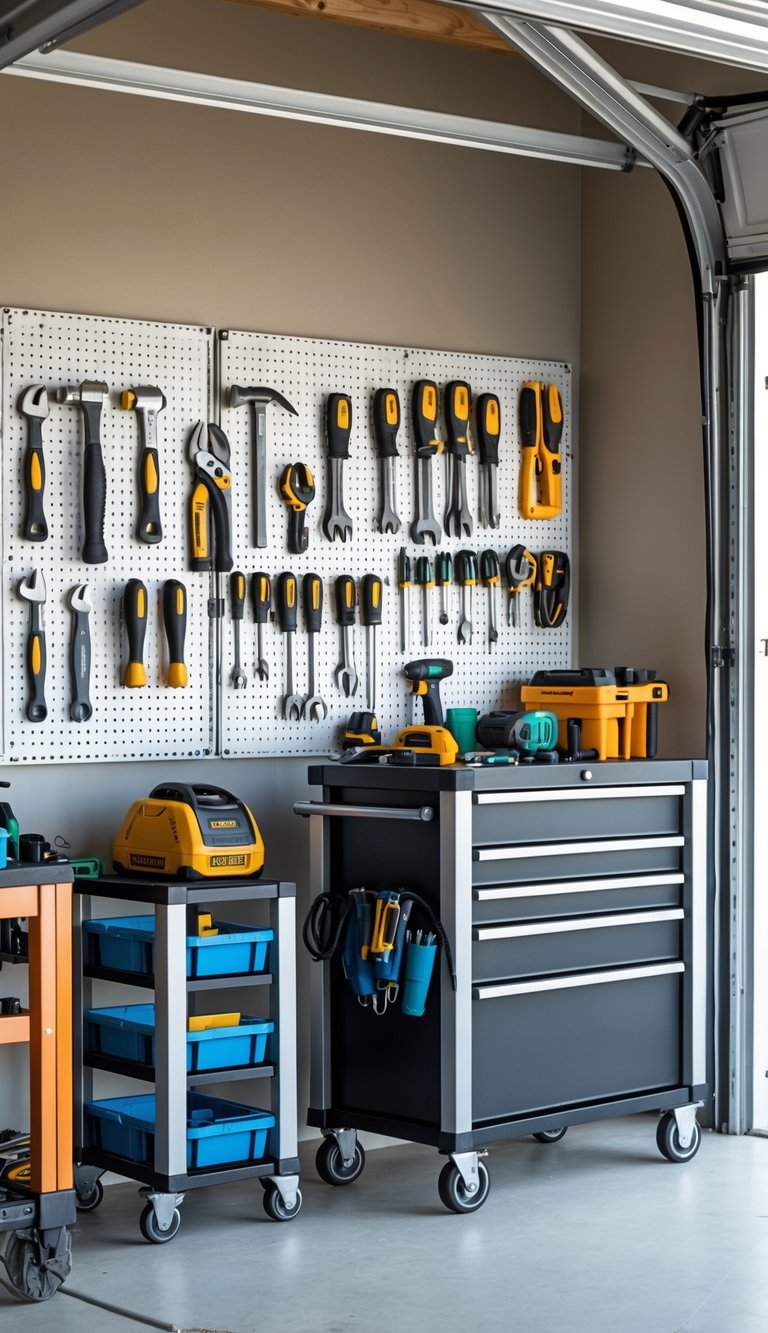
Pegboards keep tools visible and easy to grab. You can hang hammers, screwdrivers, and clamps where you can see them, which cuts down on searching and messy benches.
Mobile carts move tools to the job, so you don’t carry sharp or heavy items across the garage. Lock the wheels when you work to keep the cart steady and avoid spills.
Use baskets, hooks, and small bins on the pegboard for loose parts and tape. Label each spot so everyone in the family returns tools to the right place.
PRO TIP
Arrange tools by task or zone, and take a photo of the layout. That makes it faster to put things back and helps kids learn where items belong.
6) Ensure proper ventilation when using paints or chemicals
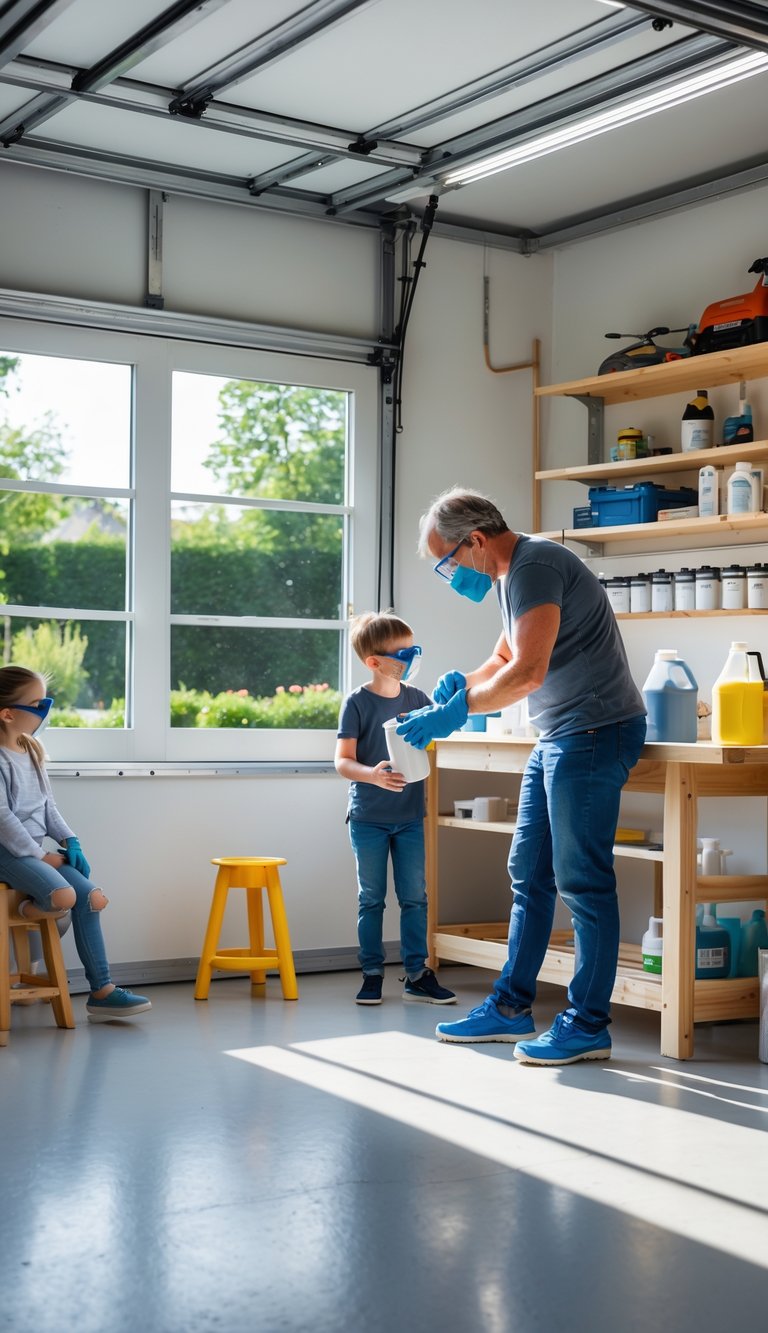
When you paint or use solvents, fumes can build up fast and make the air unsafe. Open doors and windows to create a cross breeze, and run a fan to push fumes outside.
Use a dedicated exhaust fan or a portable fume extractor when you can. These remove vapors at the source and cut down on smells and health risks.
Store paints and chemicals in tightly sealed containers and keep them in a well-ventilated cabinet or outside the living space. Never leave containers open where children or pets can reach them.
PRO TIP
Place a box fan in a window blowing outward to create negative pressure. Combine that with an NIOSH-approved respirator for extra protection during heavy work.
7) Install bright, shatterproof lighting to avoid accidents
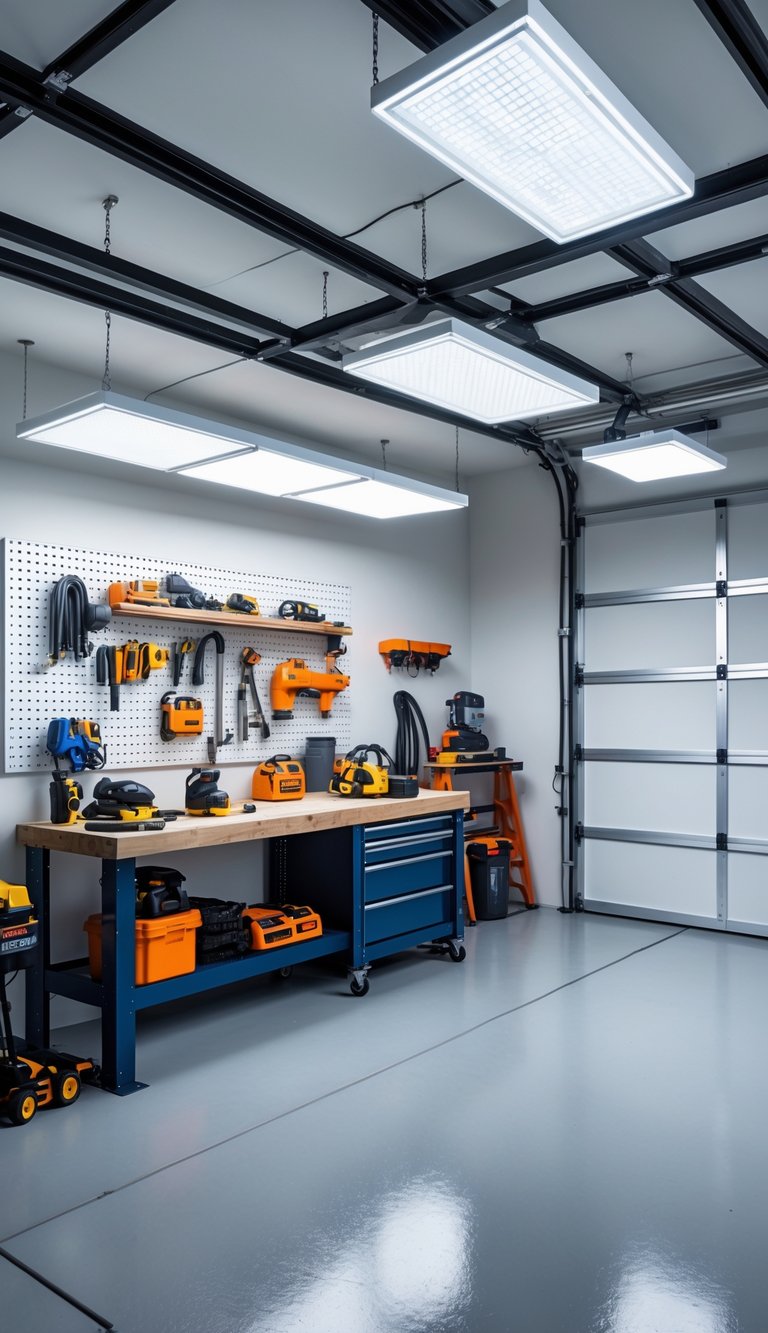
You need clear, even light across the whole garage so you can see tools, steps, and spills. Bright LED fixtures reduce shadows and help you spot hazards quickly.
Choose shatterproof covers or polycarbonate lenses to protect family members from broken glass. That matters when kids play nearby or when you work with ladders and power tools.
Aim for daylight-color bulbs (around 4000–5000K) so colors show true and details stand out. Use multiple fixtures or linear LED shop lights to avoid dark spots over workbenches and vehicle areas.
PRO TIP
Mount lights high and center them over task areas, then add adjustable task lamps where you work most. This gives both broad coverage and focused light when you need it.
8) Create non-slip flooring with rubber mats or coatings
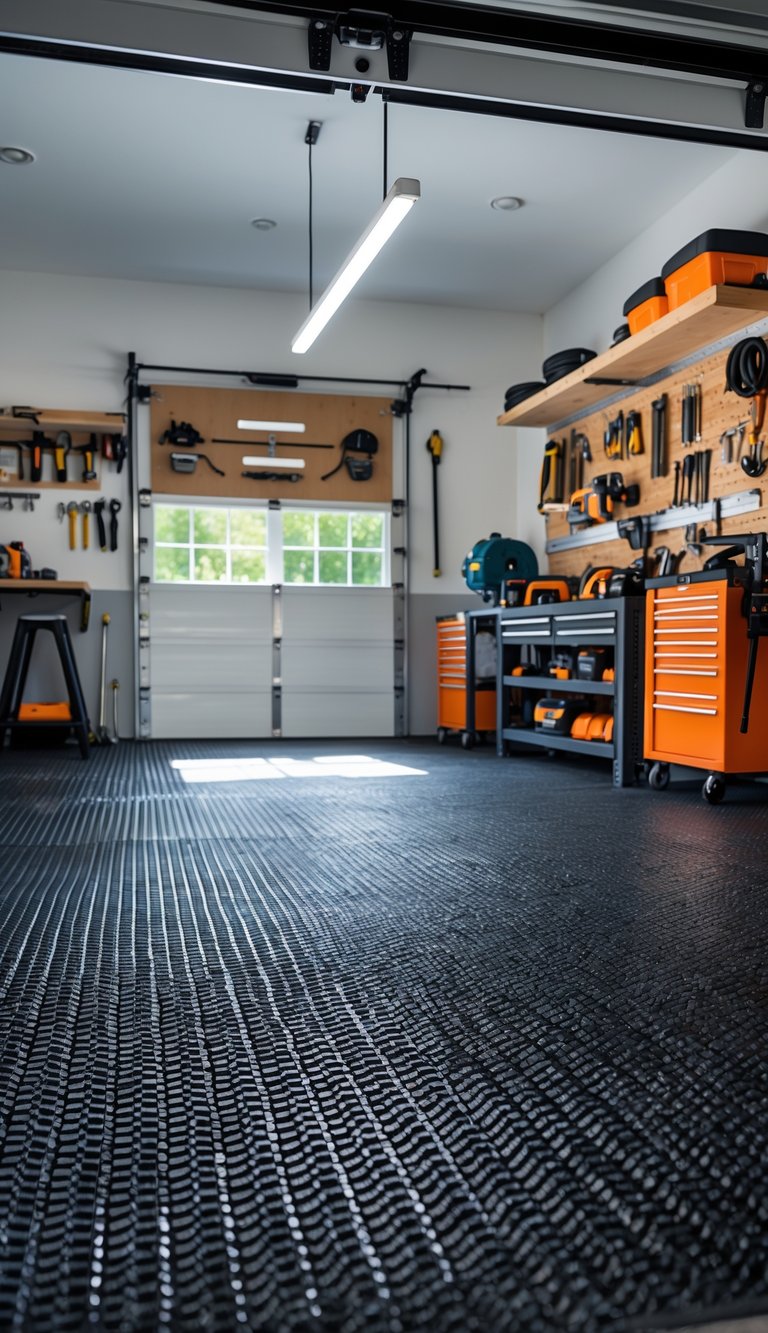
You can reduce slips by adding rubber mats or a textured coating to work areas. Mats work well under benches and near tool stations where oil and water collect.
Anti-slip coatings bond to concrete and add grip across the whole floor. They come in different textures, from fine grit to heavier patterns, so pick one that fits your needs.
Keep mats flat and secure them with tape or adhesive to stop tripping. Clean spills right away and sweep frequently to preserve traction.
PRO TIP
Place mats where you stand most, like in front of the workbench and near the car lift. Use a combo of mats and coating for the best balance of comfort and safety.
9) Use dust collection systems to minimize inhalation hazards
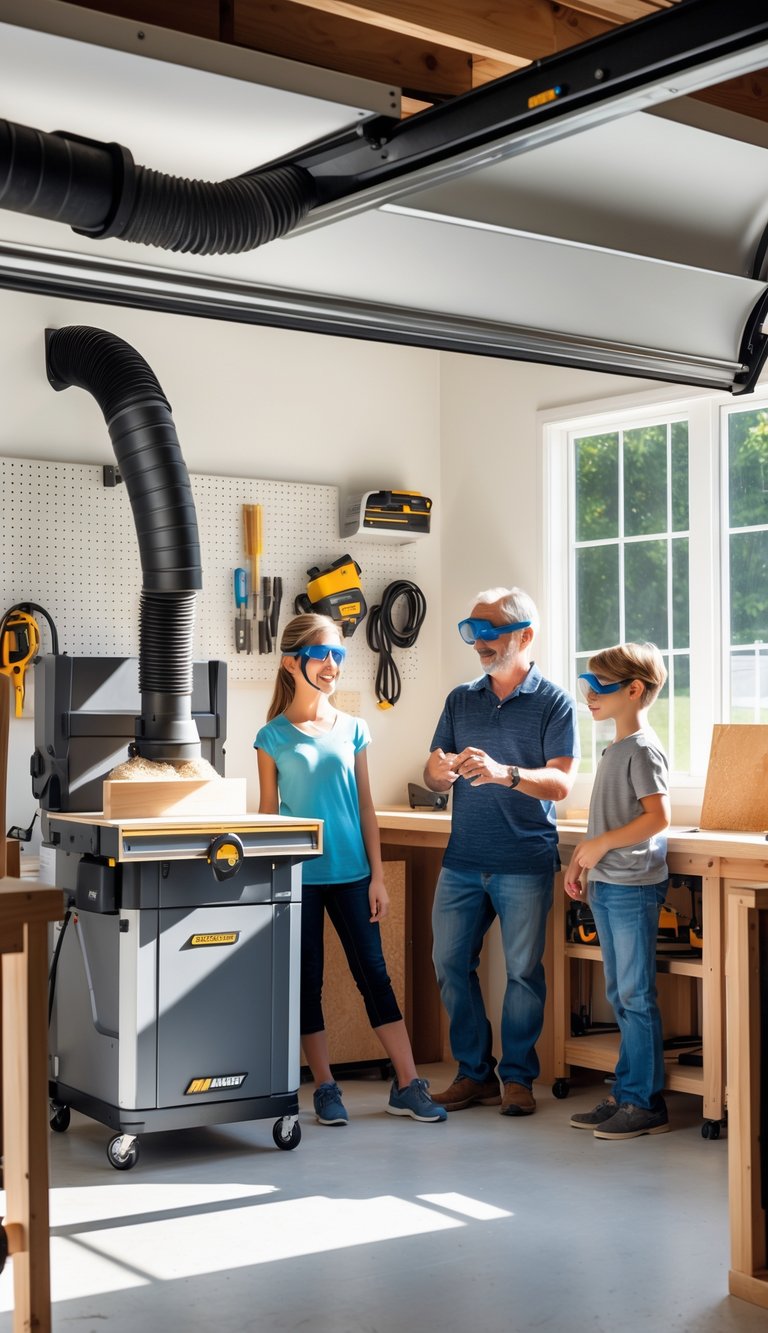
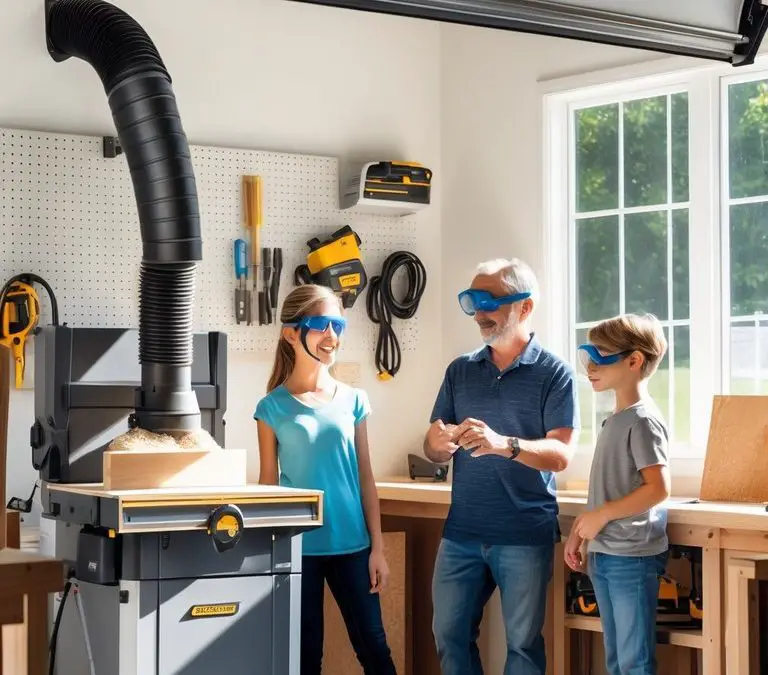
You should connect a dust collection system to your tools to catch dust at the source. This reduces the amount that floats in the air and settles on surfaces.
Run your system while you work and clean filters regularly. Clogged filters lower performance and let fine particles escape.
Place a portable HEPA air purifier near where you work for extra protection. HEPA units capture very small particles your dust collector might miss.
Keep hoses and ducting short and straight when you can. That helps the system pull dust more effectively and cuts down on leaks.
PRO TIP
Wear a properly fitted N95 or P100 mask when sanding or cutting fine materials. Even with collection, a mask adds an important layer of protection.
10) Store flammable materials in fireproof cabinets
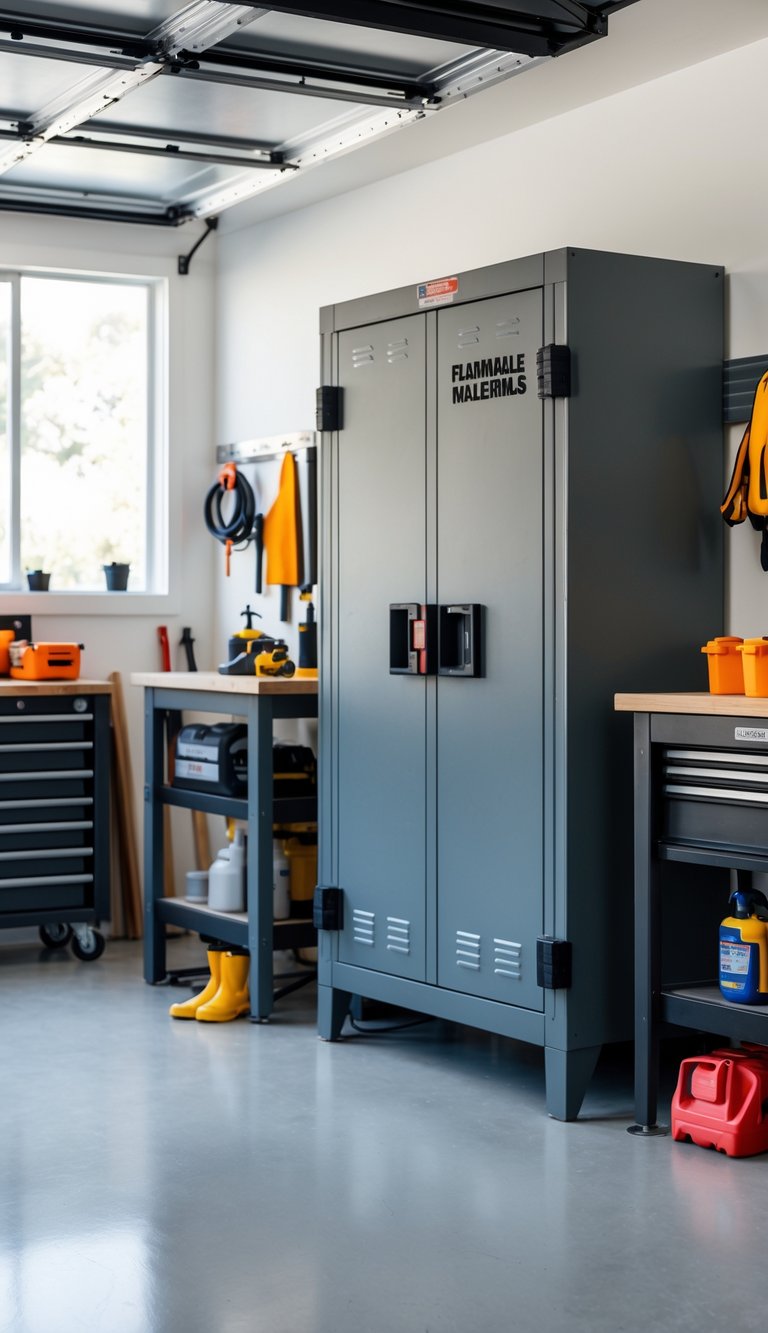
You should keep gasoline, paints, solvents, and other flammable liquids in a fireproof cabinet. These cabinets slow heat and flames, giving you time to move people and stop the fire from spreading.
Place the cabinet away from heat sources like water heaters, furnaces, and direct sunlight. Keep it locked and labeled so children and visitors can’t access the contents.
Only store approved containers inside and avoid overfilling the cabinet. Follow local rules and product labels for limits on quantities and separation of incompatible chemicals.
PRO TIP
Keep a small inventory list taped to the cabinet door. Update it when you add or remove items so you always know what’s inside.
11) Use socket covers to prevent electrical shocks
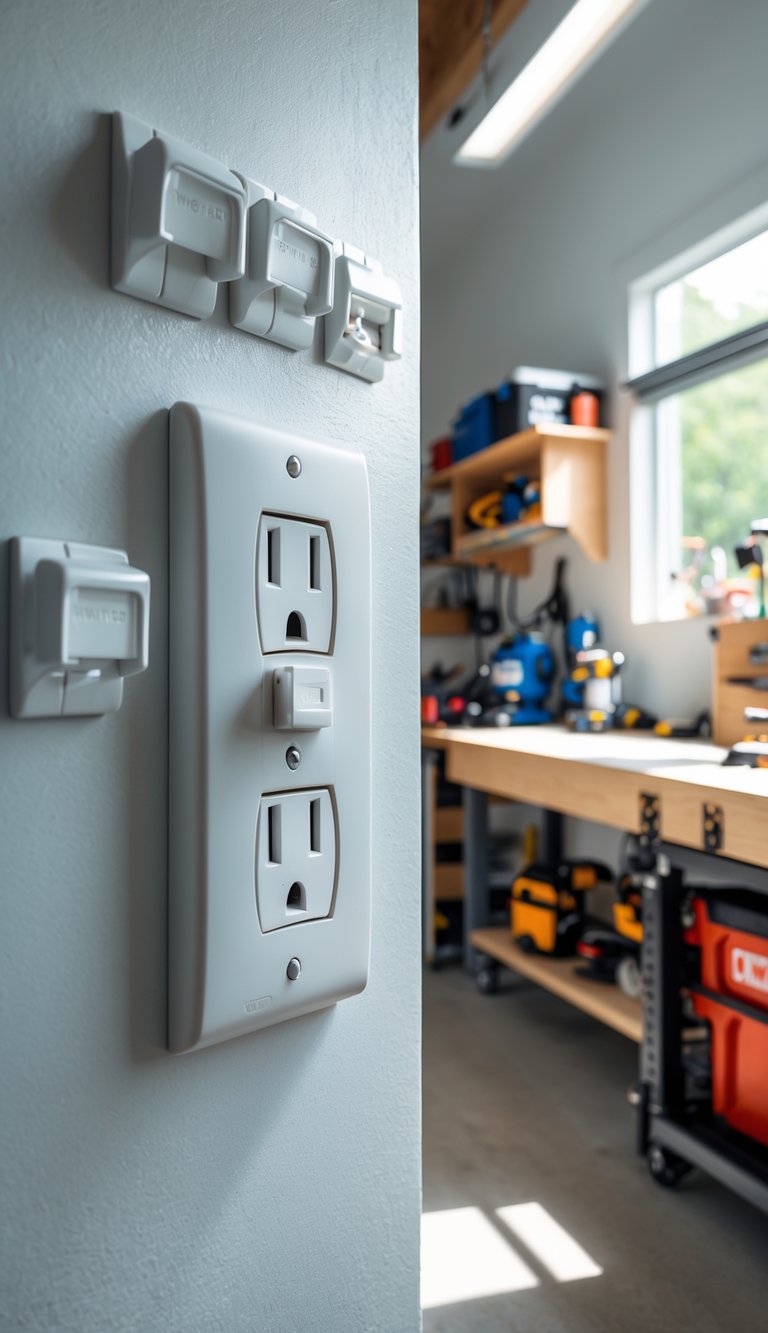
You can reduce the risk of kids or pets touching live parts by fitting socket covers. Tamper-resistant outlets or spring-loaded covers that close when not in use are best because they block access automatically.
Be careful with cheap plastic inserts. Some covers do not meet safety standards and can push past built-in protections, so avoid loose or poorly fitting models.
Always check covers and outlets for damage and replace any that are cracked or loose. Teach older children not to play with sockets and keep cords tidy to cut down on temptation.
PRO TIP
Buy tamper-resistant outlets from a reputable brand or have an electrician install them for extra safety.
12) Keep a well-stocked first aid kit easily accessible
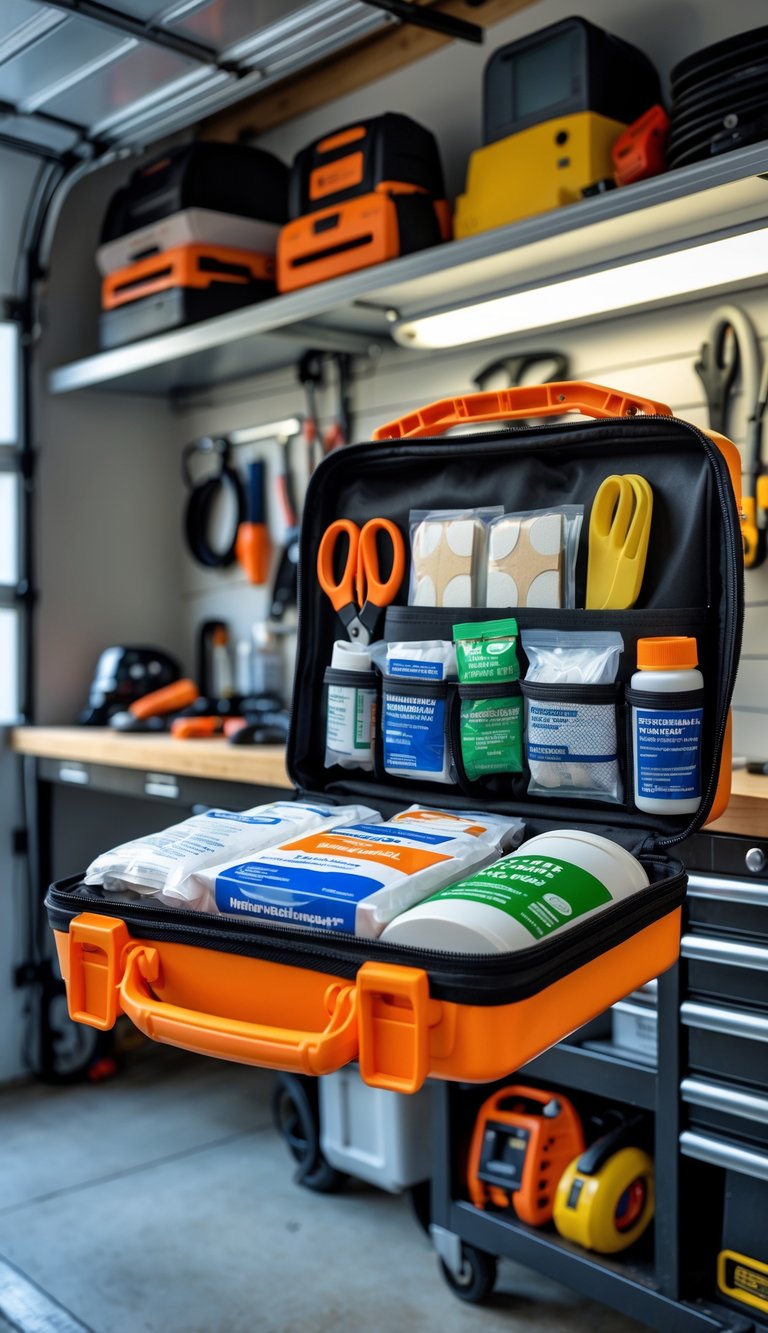
Keep a first aid kit in a clear, easy-to-reach spot in your garage. You and your family should not have to move tools, climb over boxes, or go through doors to get supplies.
Stock basics like bandages, gauze, antiseptic wipes, adhesive tape, disposable gloves, and a cold pack. Add items for common workshop cuts and splinters, plus any family-specific meds or allergy treatments.
Check the kit monthly and after any use. Replace expired items and note low supplies so you can restock before you need them.
Place the kit near the main workbench or door so everyone sees it. Teach family members where it lives and how to open it quickly.
PRO TIP
Label the kit with a bright sticker and include a simple list of contents for fast checks.
13) Label all hazardous materials clearly and visibly
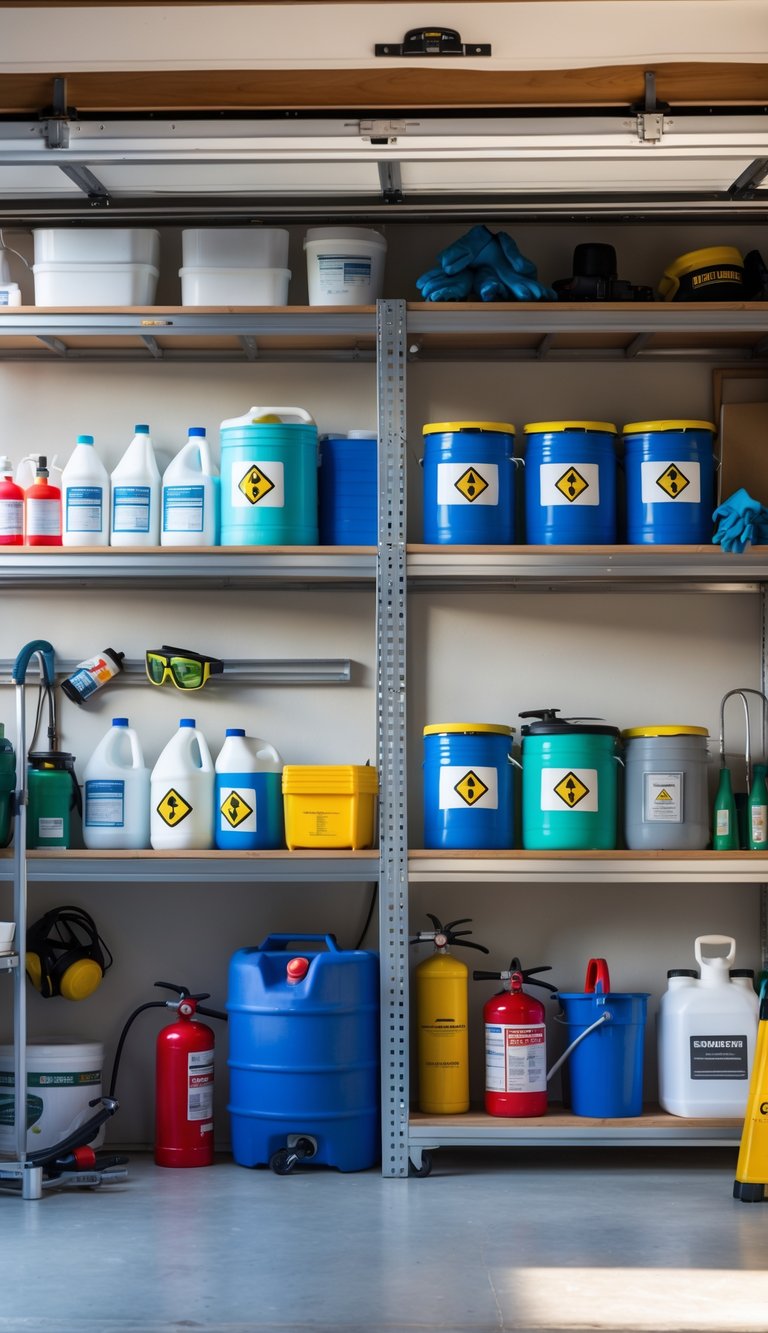
You should label every can, bottle, and container that holds chemicals, fuels, or other hazards. Use large, clear text and include the product name and main hazard like “FLAMMABLE” or “TOXIC.” Place labels on the front and top so they show on a shelf or in a pile.
Keep labels waterproof and legible; replace any that fade or peel. For mixed or transferred liquids, write the contents and the date you moved them. That helps you avoid accidental use of the wrong substance.
Store labeled items in a dedicated zone away from kids and pets. Lock cabinets for stronger controls and keep an inventory list nearby so you can quickly check what you have.
PRO TIP
Use color-coded labels or stickers to sort by hazard type. That speedily shows risk at a glance and helps everyone in your household stay safer.
14) Install motion-activated garage fans for air circulation
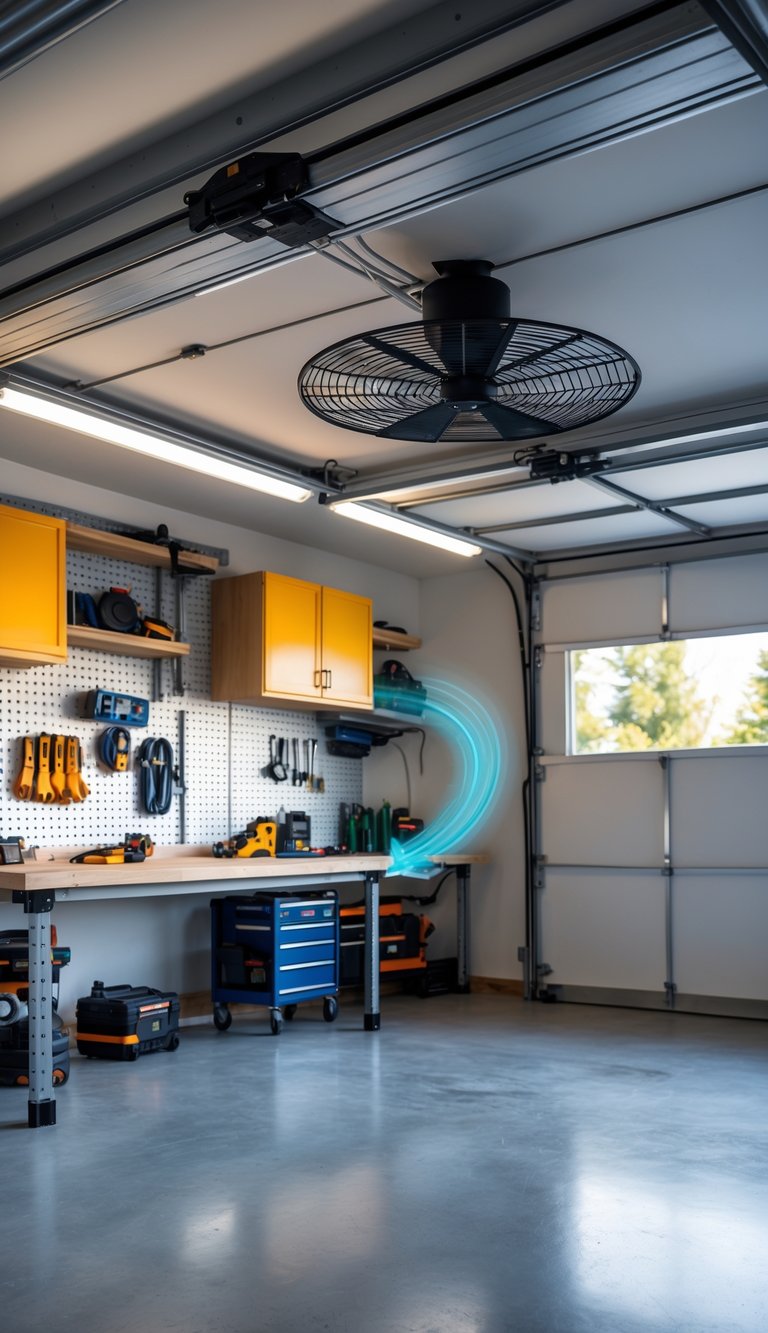
Motion-activated fans turn on when you enter, so you get airflow without flipping switches. They help move fumes, dust, and humidity out of the space while you work or enter with a running car.
Place the fan to pull air toward an exterior vent or door. Ceiling or wall fans work well; make sure the fan size matches your garage volume for effective circulation.
Motion sensors save energy by running the fan only when needed. They also add safety by reducing stale air buildup that can harm your family or damage stored items.
PRO TIP
Set the sensor timer so the fan runs long enough to clear fumes, but not so long it wastes power.
15) Use cordless power tools to reduce tripping hazards
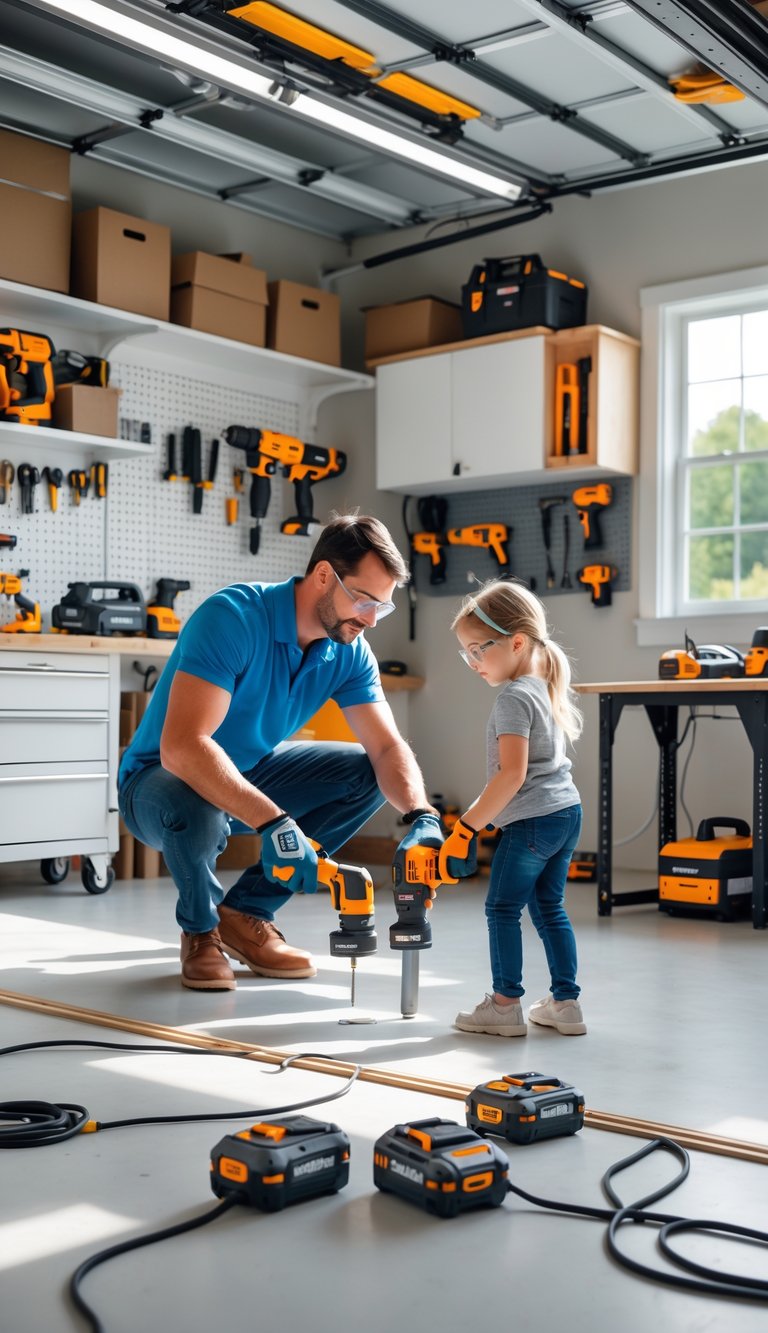
Cordless tools cut down on cords that cross floors and walkways. Without long extension cords, you lower the chance someone trips while carrying materials or moving around the garage.
You still need to keep batteries charged and spare ones handy. Swapping a dead battery is faster and safer than rerouting cords across your workspace.
Store cordless chargers off the floor and mount stations at workbenches. This keeps charging gear tidy and reduces clutter where kids or pets might wander.
PRO TIP
Label battery packs and keep a small bin for spent batteries so you can recycle them properly.
16) Set strict guidelines about no unsupervised kids during work
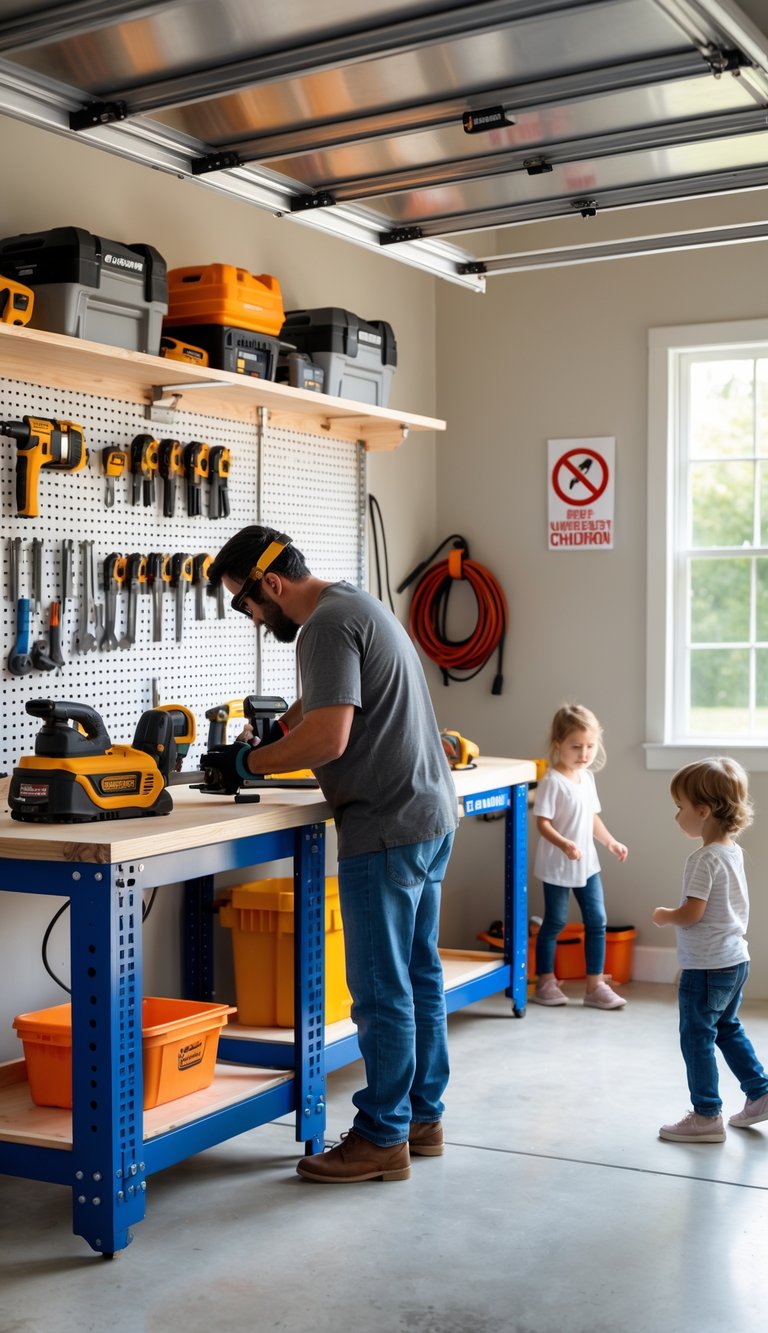
You should make a clear rule that kids are never allowed in the garage when tools or machines are running. Tell family members the rule and post it on the door where everyone can see it.
Keep children in a separate area with games or a device if you need to work. Short breaks let you check on them without leaving tools unattended.
Teach older kids why the rule matters. Explain hazards like sharp tools, chemicals, and moving parts in simple terms they can understand.
PRO TIP
Use a baby gate or locked door to create a physical boundary. A visible sign that says “No Entry — Workshop in Use” helps remind visitors and reduces risky interruptions.
17) Make regular safety checks part of your routine
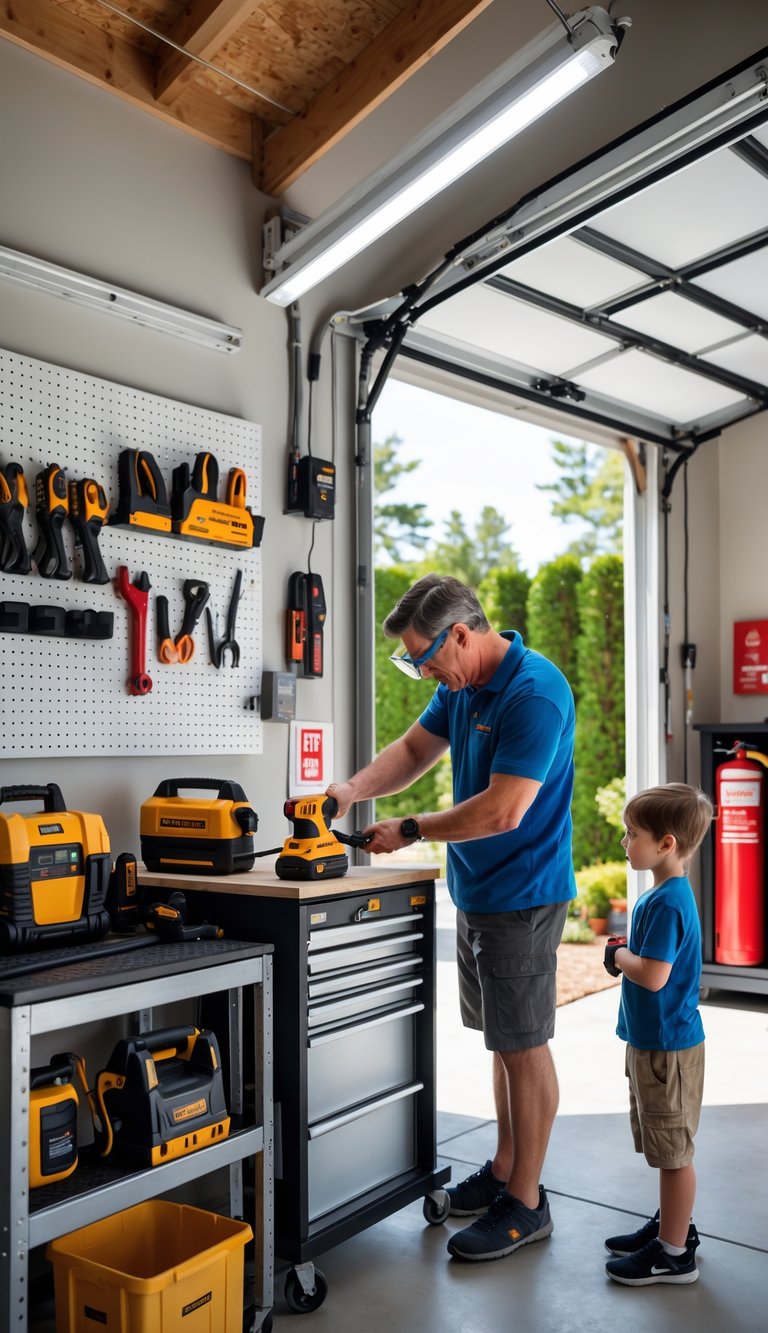
You should walk through the garage at set times each week to spot hazards early. Look for spills, loose cords, damaged tools, and anything blocking exits.
Check fire safety equipment and first aid supplies often. Make sure extinguishers are charged and easy to reach, and restock your kit when items run low.
Test emergency lights, eyewash stations, and ventilation systems so they work when needed. Replace burned-out bulbs and fix fans or vents that are not moving air.
Keep a simple checklist and mark dates so you can track fixes over time. Involve the family so everyone learns what to look for and how to report problems.
PRO TIP
Set a phone reminder for the checks and store the checklist where everyone can see it.