Last Updated on February 27, 2026
You plan a motorcycle road trip and want to pack smart so you stay safe, dry, and comfortable. This article shows 18 practical packing solutions that save space, protect your gear, and help you handle common problems on the road. You’ll learn what items matter most and why they make a difference for long rides.
You’ll find options for waterproof luggage, compact tools, charged devices, and safety gear that work together to keep your trip smooth. Use these ideas to build a lean, reliable kit that fits your bike and your route.
PRO TIP
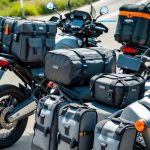
1) Compact waterproof luggage
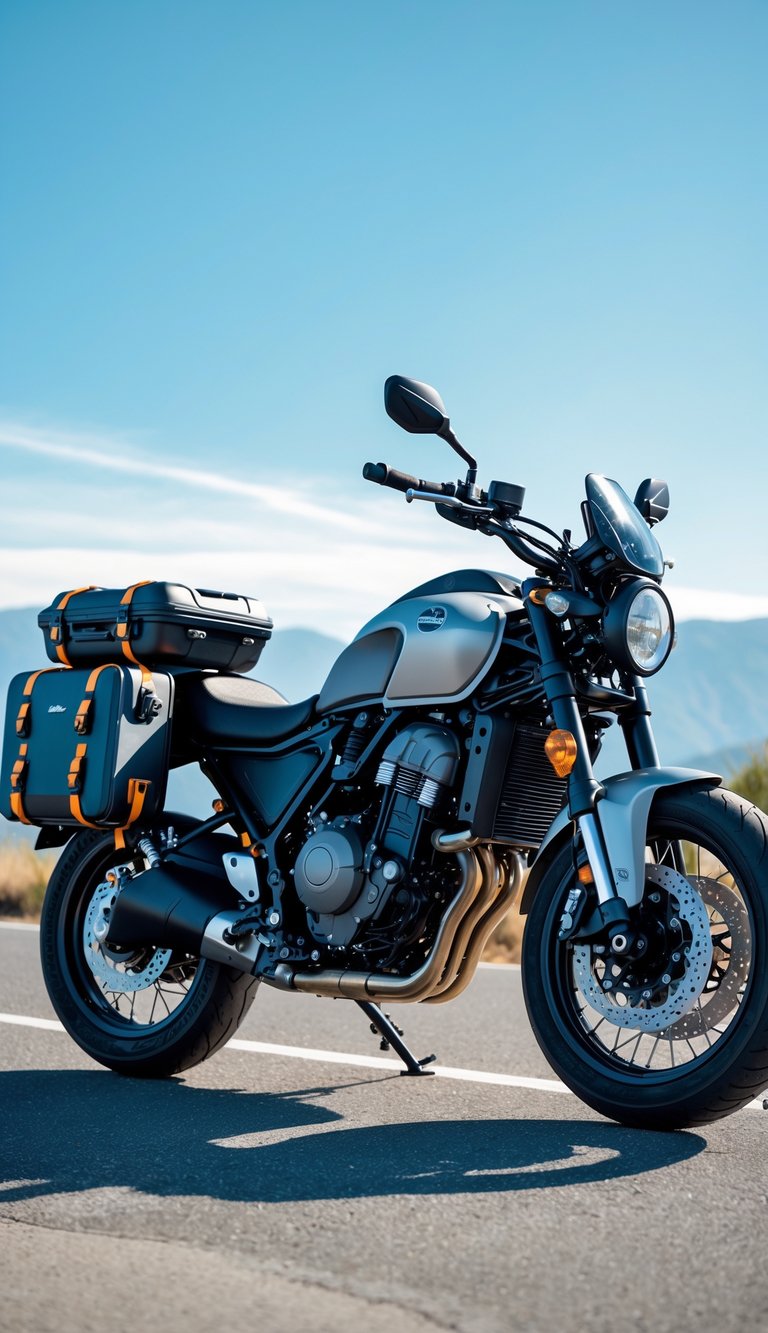
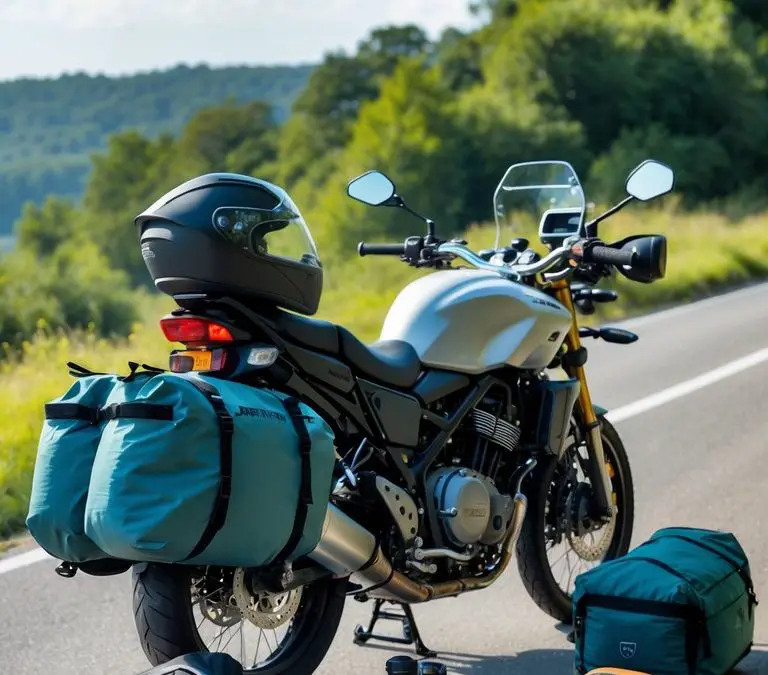
Choose compact waterproof luggage that fits your bike and keeps your gear dry. Small tail bags and roll-top dry bags work well when space is tight and weather turns bad.
Pick materials like TPU or coated nylon for real water protection, and check seams and zippers for quality. A well-made bag can handle rain and splashes without adding much bulk.
Look for bags with straps that mount securely to racks or pillion seats. Low-profile designs reduce wind drag and keep weight centered for better handling.
PRO TIP
Place heavier items low and toward the center of the bag to keep the bike balanced. Balance waterproof storage with quick-access items in a small tank or handlebar bag.
2) ECBC Adventure Waterproof Backpack
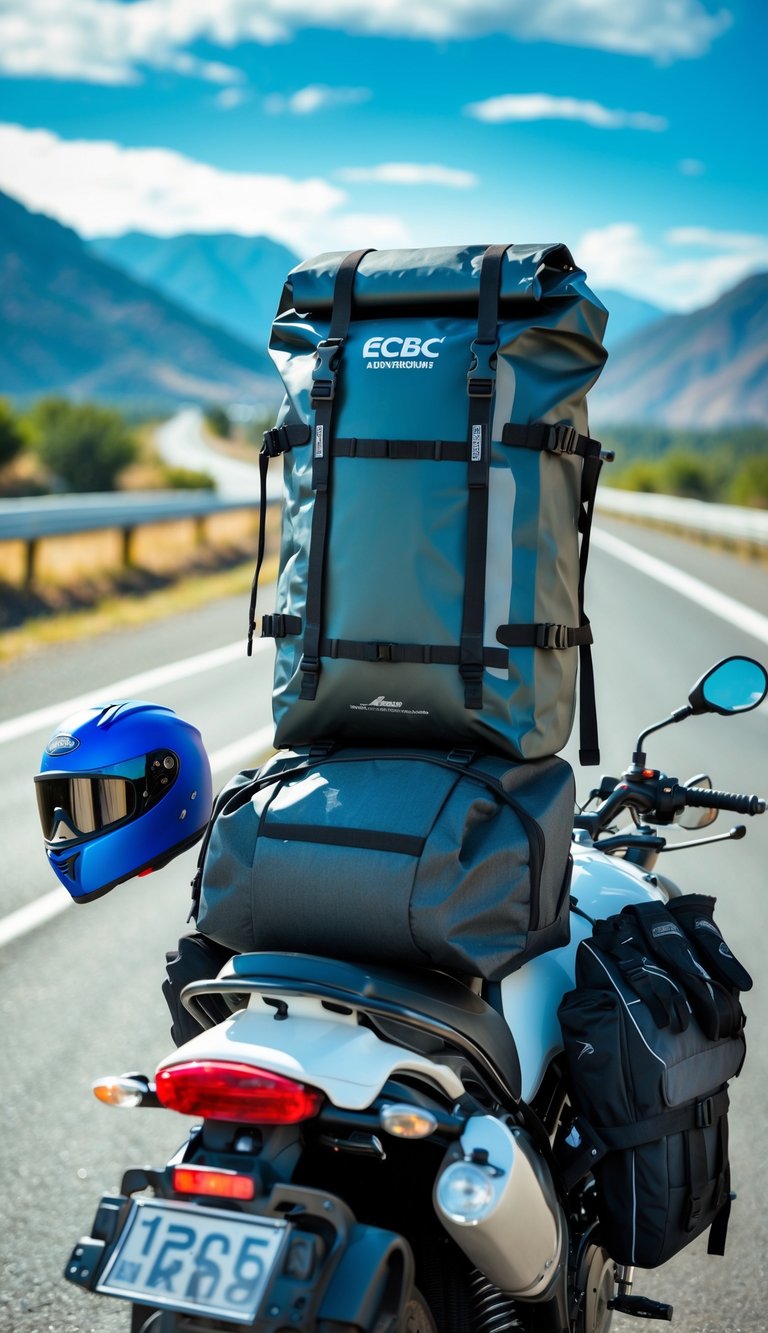
The ECBC Adventure Waterproof Backpack keeps your gear dry when weather turns. It uses a roll-top closure and sealed seams to block rain and spray, so your clothes and electronics stay safe.
You’ll find a roomy main compartment and smaller pockets for organization. A padded back panel and adjustable straps make long rides more comfortable.
The pack works well on both short day trips and longer tours. You can strap a jacket or small bag to the outside using the compression straps for extra carry capacity.
PRO TIP
Clip your heavier items low and close to your back to keep the bike balanced. Use dry sacks inside for extra protection of electronics and documents.
3) Kriega US-20 Drypack
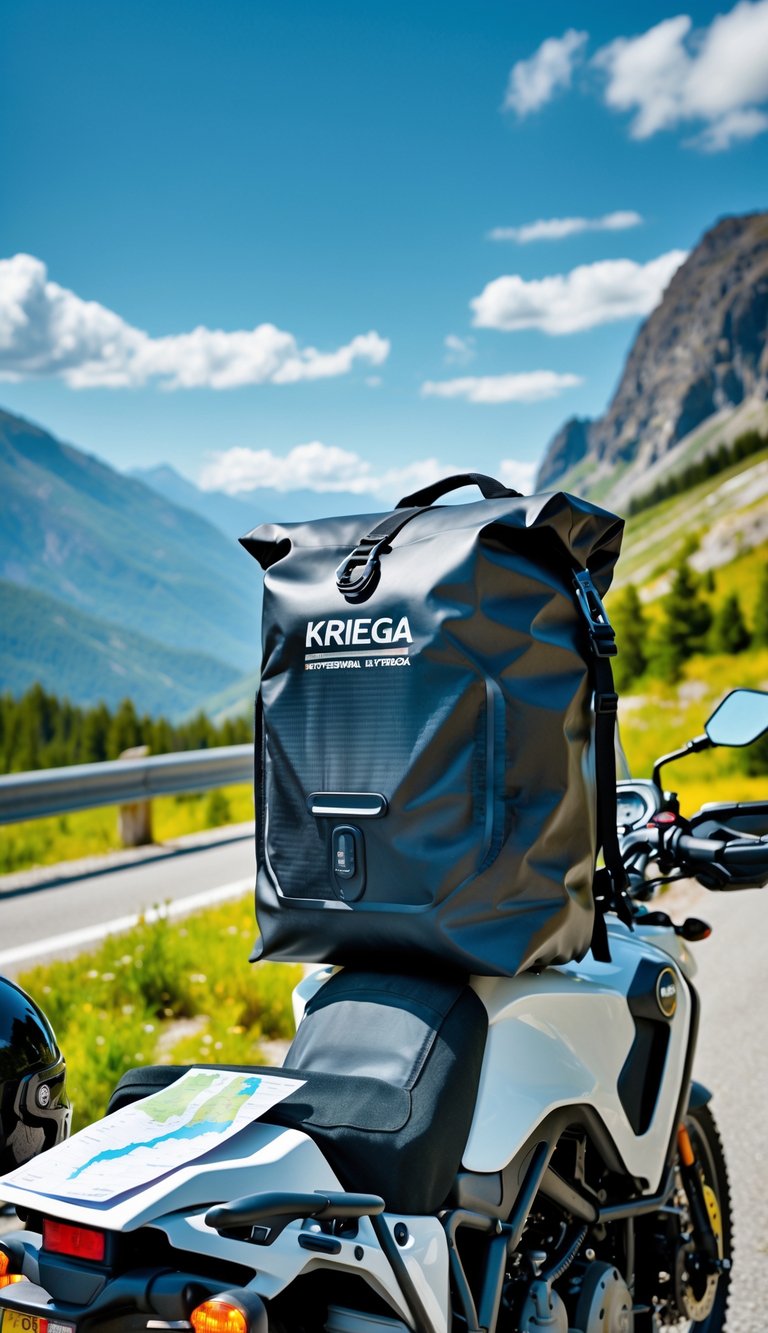
The Kriega US-20 gives you 20 liters of waterproof storage for day rides or short overnight trips. It uses Cordura fabric and a roll-top closure to keep gear dry and resist abrasion on rough roads.
You can mount it to most bikes with included buckle loops and alloy hook straps. The design stays compact but expands slightly when you need extra room.
PRO TIP
Use a small dry bag inside for electronics and a compression sack for clothes to save space. Secure the pack low and centered to keep your bike balanced on curves.
4) Bluetooth motorcycle helmet headset
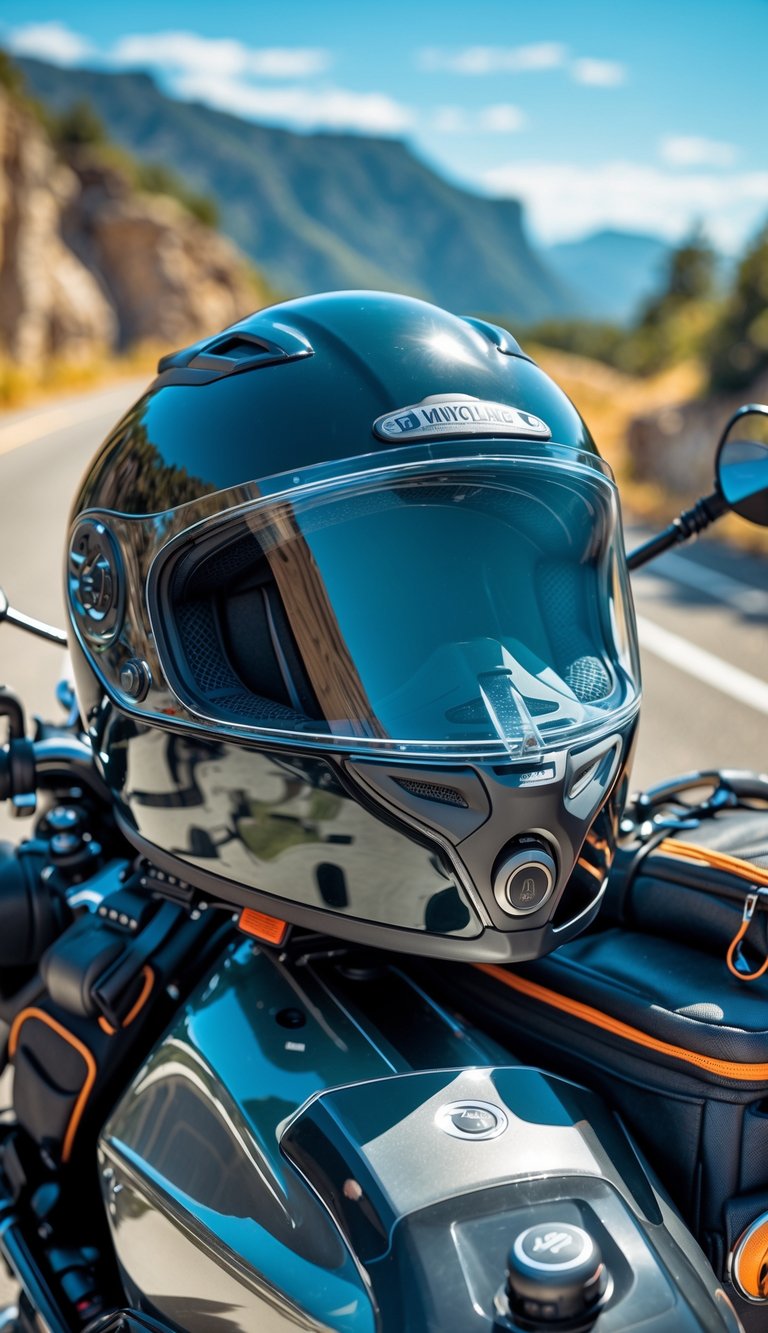
A Bluetooth helmet headset keeps you connected on the road. You can take calls, hear GPS directions, and play music without taking your hands off the bars.
Choose a unit with good wind-noise reduction and clear audio at speed. Battery life matters for long trips, and easy controls let you change settings while riding.
Look for models made for helmets so speakers and mic fit thinly and stay secure. Weather resistance helps if you hit rain or road spray.
PRO TIP
Pair your headset with a spare charging cable and a small power bank. Test voice prompts and intercom with a passenger before you leave.
5) Scorpion EXO-R420 Helmet
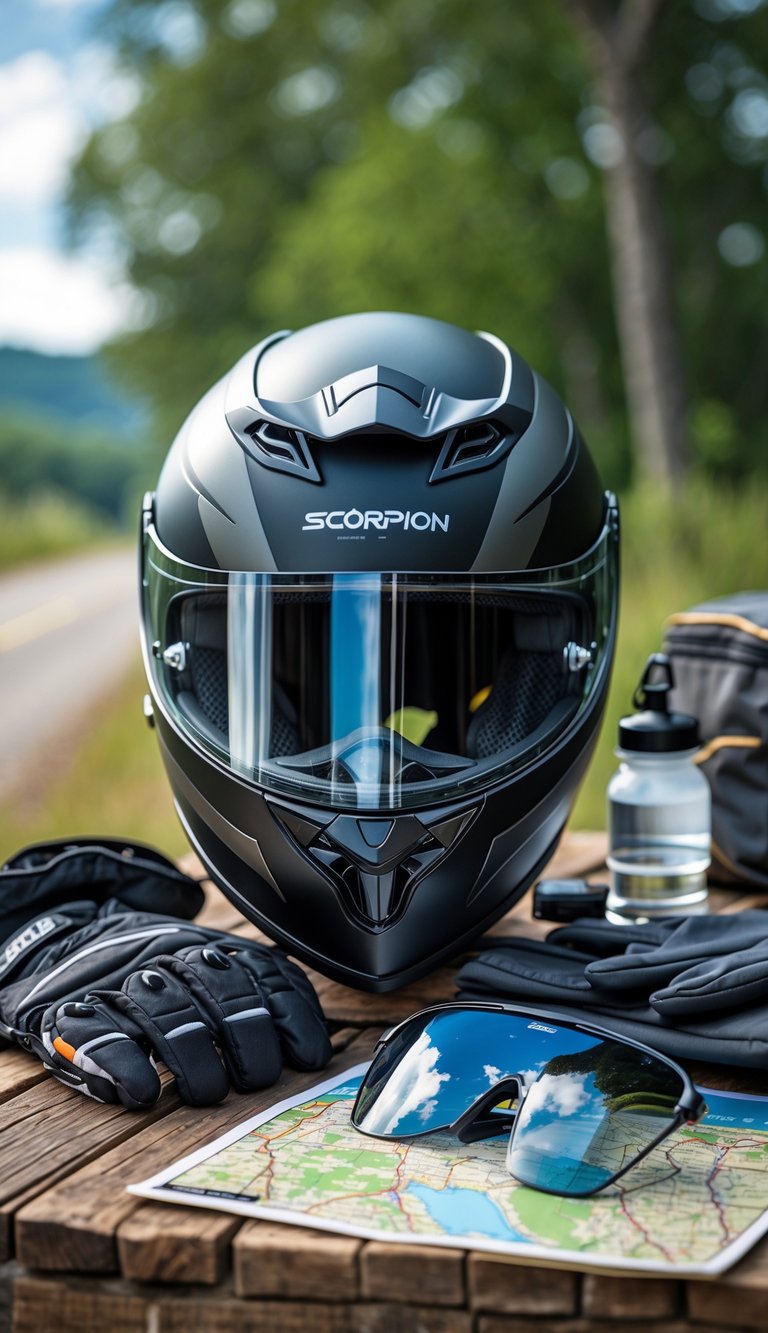
The EXO-R420 gives you a lot of value for the price. It uses a lightweight polycarbonate shell and meets known safety standards, so you get decent protection without a heavy, bulky feel.
Ventilation and noise control are better than older budget helmets. You’ll find large top vents and mouth vents that help airflow on long rides, keeping you cooler and more focused.
Fit matters on the road trip. The EXO-R420 tends to have a compact, aerodynamic shell that works well for many head shapes, and some models include speaker pockets for communication or music.
PRO TIP
Bring your earbuds or a small comms unit and test fit them with the helmet before you ride far. Secure padding or a different cheek pad can make long days more comfortable.
6) Oxford heated gloves
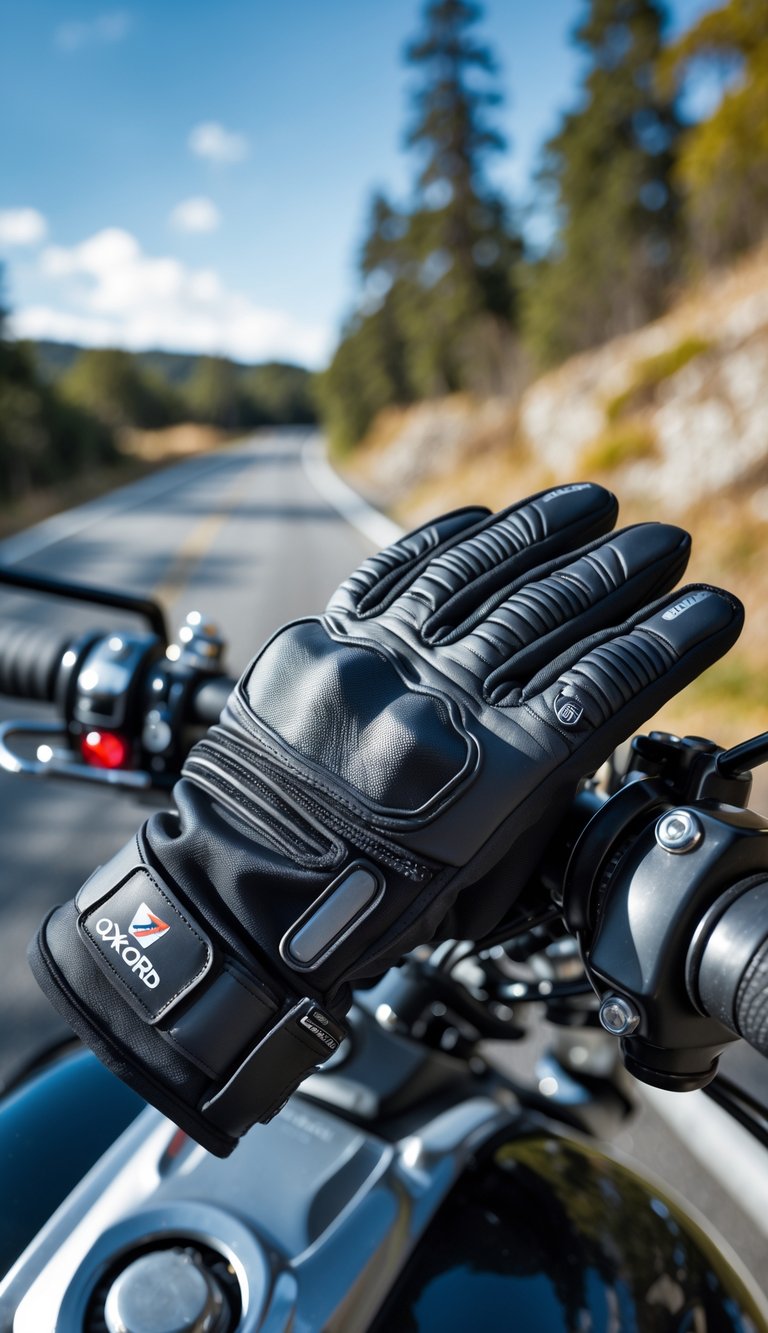
Oxford heated gloves plug into your bike’s 12V system and give steady, controllable warmth. They help keep your hands comfortable on long, cold rides so you can focus on the road.
Most models offer multiple heat settings and waterproof shells. That means you can dial heat up or down and still stay dry in light rain.
These gloves pair well with heated grips or heated liners for layered heat control. They add bulk, so try them on with your leathers before a long trip.
PRO TIP
Always test the gloves with your bike’s power before you head out. Pack a small waterproof bag for the controller and cables to keep them tidy.
7) Gerber Suspension multi-tool
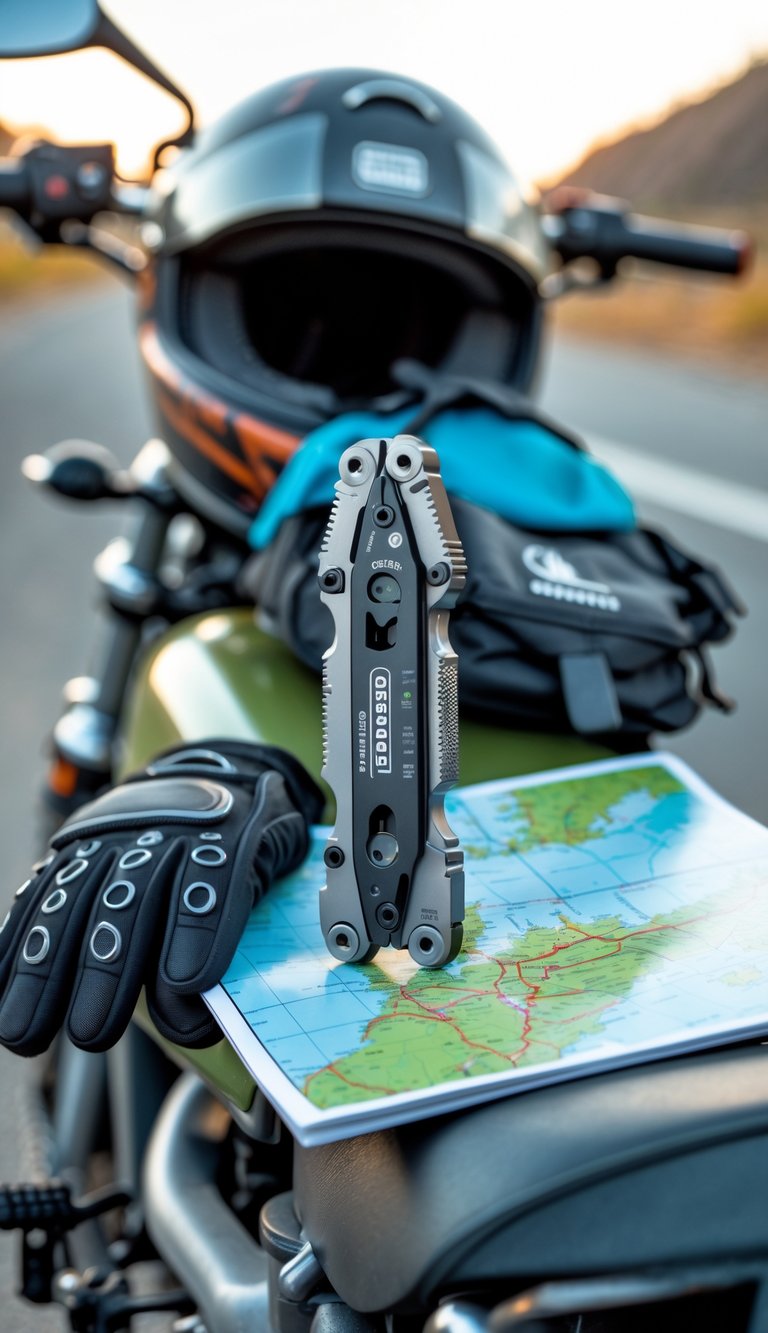
The Gerber Suspension gives you many tools in one compact package. It has pliers, a knife, screwdrivers, a saw, and more, so you can handle small roadside fixes without a bulky toolbox.
Its butterfly design opens fast so you can access tools quickly. The spring-loaded pliers make gripping easier when your hands are cold or tired.
You can clip it to a pocket or keep it in your saddlebag for easy reach. It’s light enough to not bother you, but sturdy enough for common repairs and adjustments.
PRO TIP
Carry the tool in a sheath to protect the finish and your gear. Practice opening and using each tool at home so you’re ready if a roadside problem pops up.
8) Power Bank with USB ports
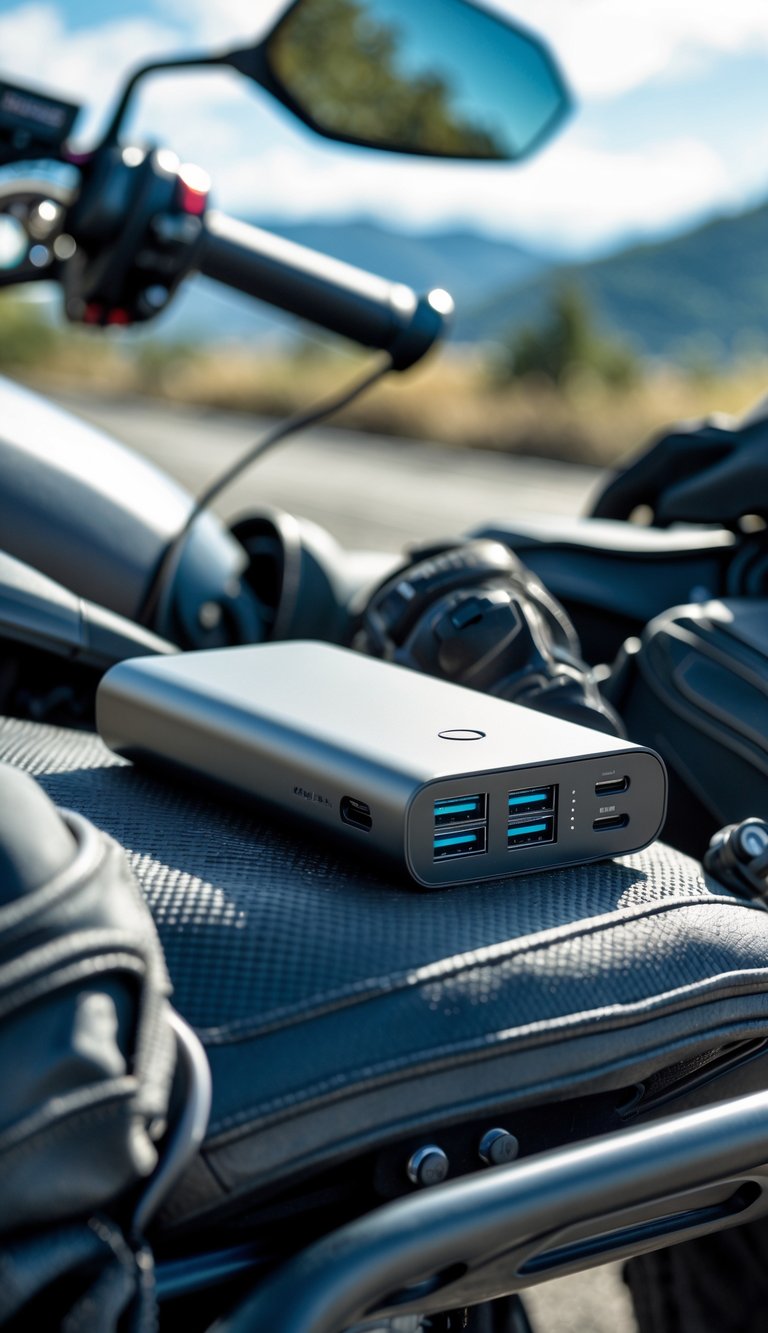
A good power bank keeps your phone, GPS, and lights charged on long rides. Pick one with at least one USB-C and two USB-A ports so you can charge multiple devices at once.
Look for a capacity around 10,000–20,000 mAh for multi-day trips without adding too much weight. Fast-charging support helps top up a phone quickly during short stops.
Choose a rugged, weather-resistant case so the pack survives rain and vibration. Mount it in a dry pocket or small tank bag to keep cables tidy and accessible.
PRO TIP
Bring short charging cables and a small multi-port adapter to reduce clutter. Charge the power bank fully before you leave and top it up whenever you have shore power.
9) Compact tire repair kit
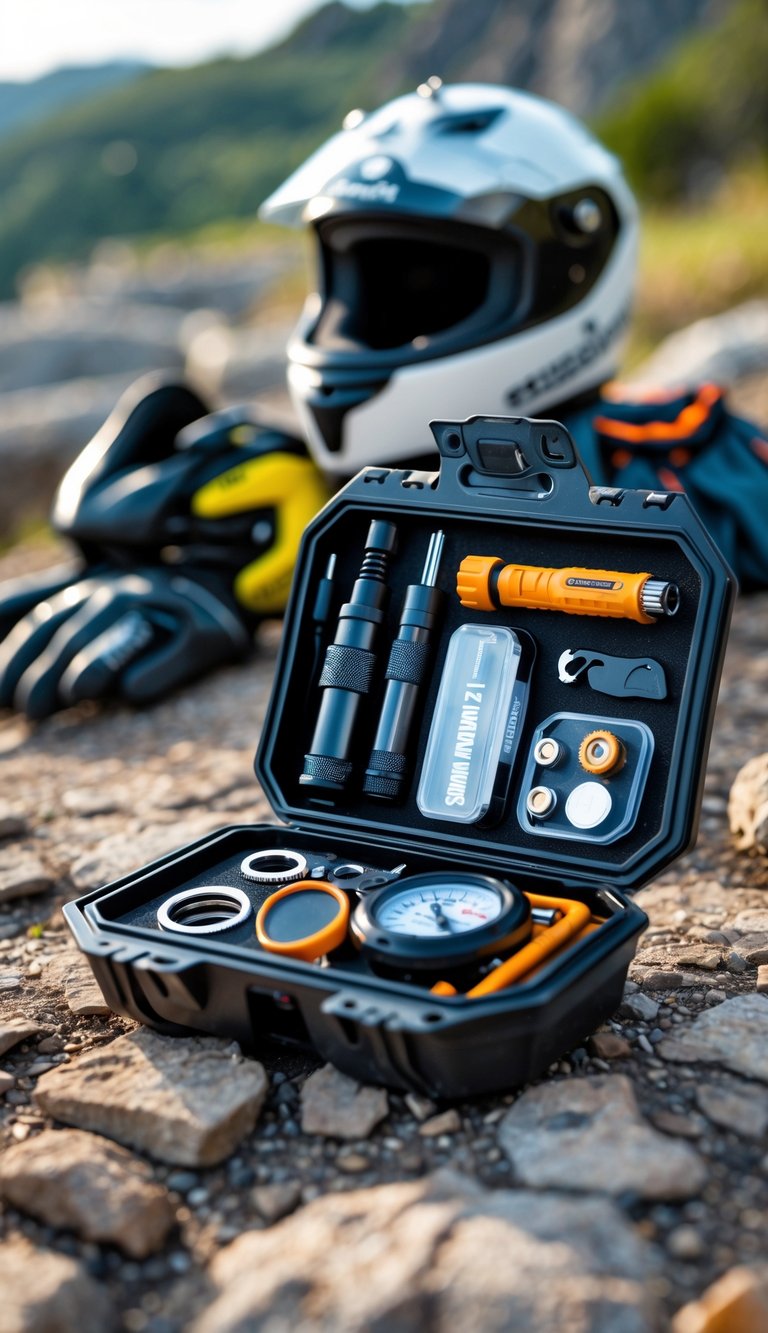
A compact tire repair kit saves your trip when a tubeless tire goes flat. Keep one in your luggage or tail bag so you can handle small punctures without changing the wheel.
Look for kits that include plugs, an insertion tool, a reamer, and a small case to keep parts organized. Some kits also pair well with a CO2 inflator or mini compressor for quick air top-ups.
Practice using the tools at home so you stay calm and efficient on the road. A short drill can cut repair time and prevent mistakes when you’re roadside.
PRO TIP
Choose a kit that fits your bike’s tire type and store a few extra plugs and a spare CO2 cartridge with it.
10) Rukka Air Vent II Jacket
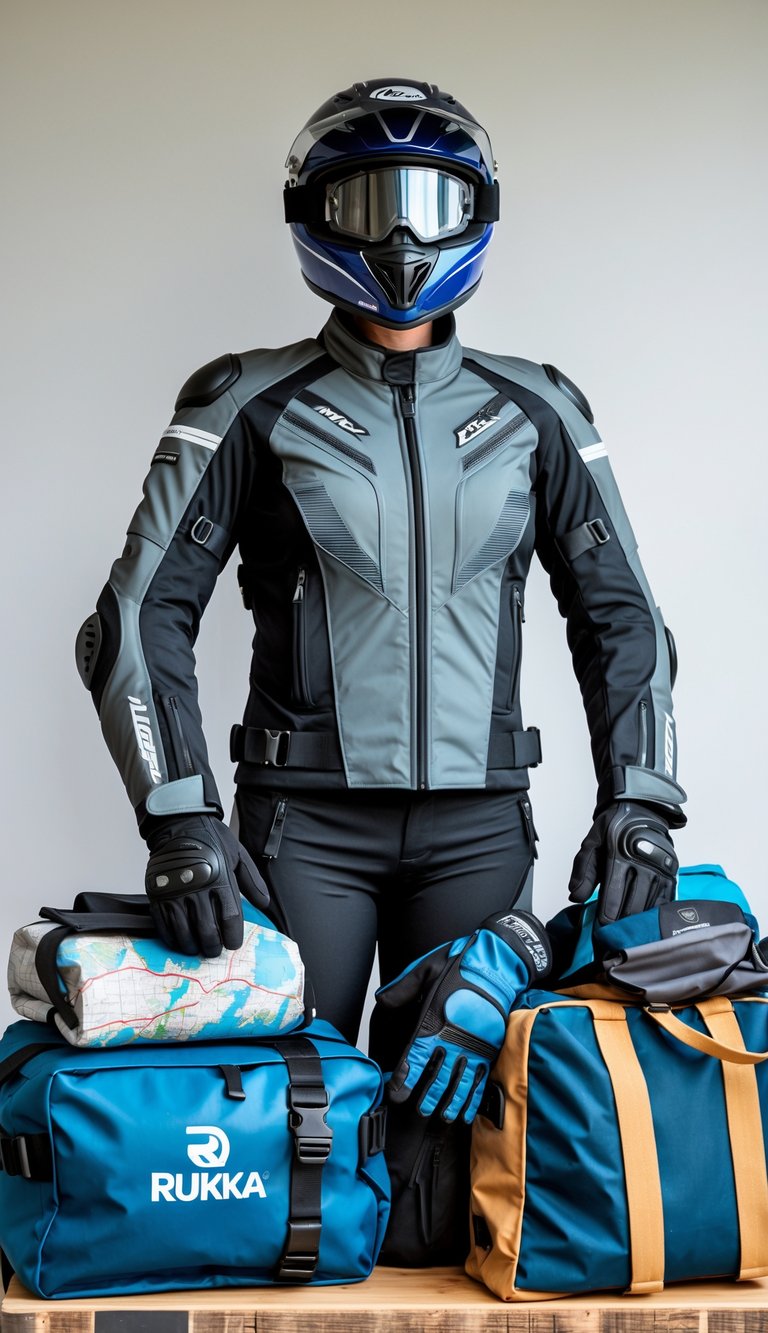
You get a jacket built for airflow and protection. The Rukka Air Vent II uses mesh panels and sturdy textiles so you stay cool without giving up safety on long rides.
The jacket fits well for touring because it balances ventilation with weather resistance. You will find pockets, adjustable cuffs, and D3O-style protectors that help on impacts while keeping movement easy.
The design suits hot days and active riding. You can layer a rain shell under it for cooler or wet conditions and still carry less weight.
PRO TIP
Pack a thin waterproof shell in an easy-reach pocket. That way you handle sudden rain without swapping jackets or stopping for long.
11) Waterproof riding pants
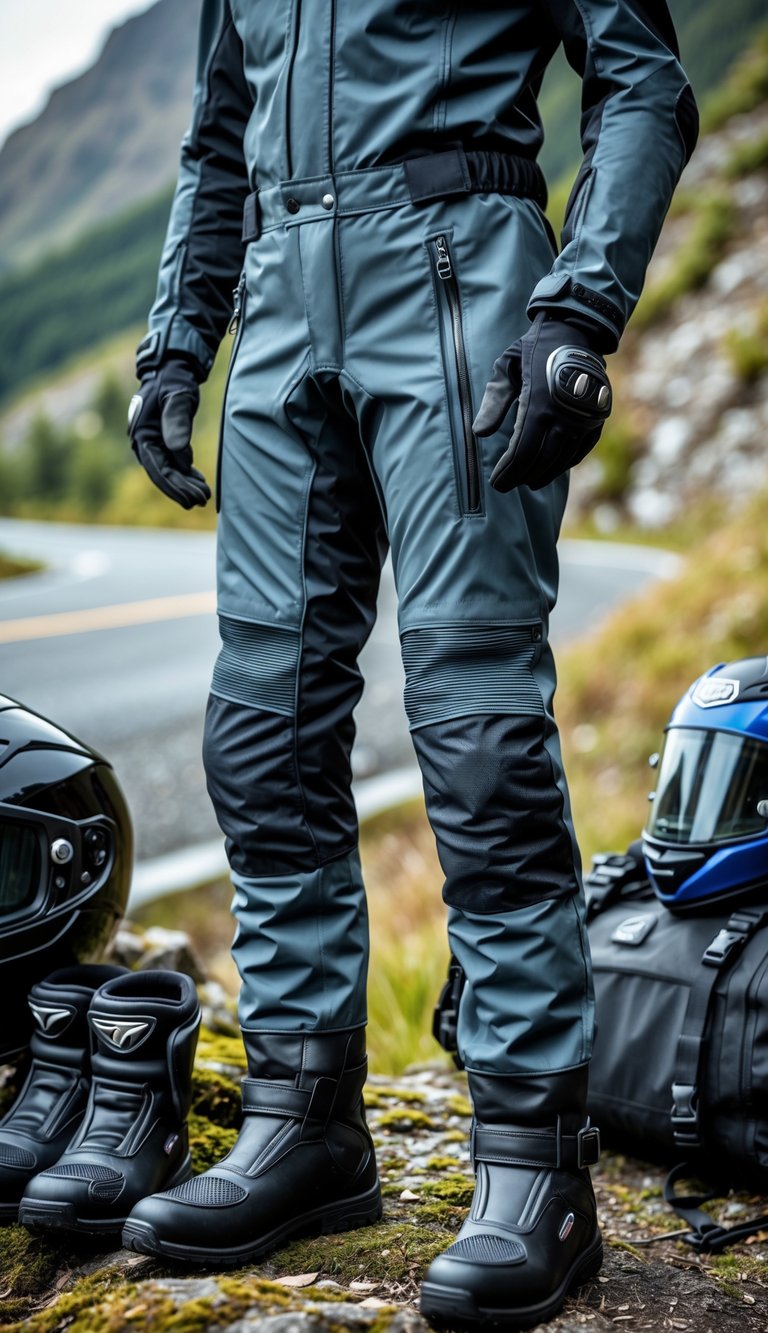
Waterproof riding pants keep you dry when rain hits. Pick pants with sealed seams and a reliable membrane so water can’t soak through your layers.
Look for pants that fit over your riding jeans or have built-in armor pockets. Breathability matters too; you want moisture out without letting rain in.
Lightweight packable pants save space on long trips. Some models come with reflective accents for low-light visibility and cuffs that fit over boots.
PRO TIP
Carry a thin waterproof overpant as a backup. It takes little room and can protect heavier gear during unexpected downpours.
12) CamelBak hydration pack
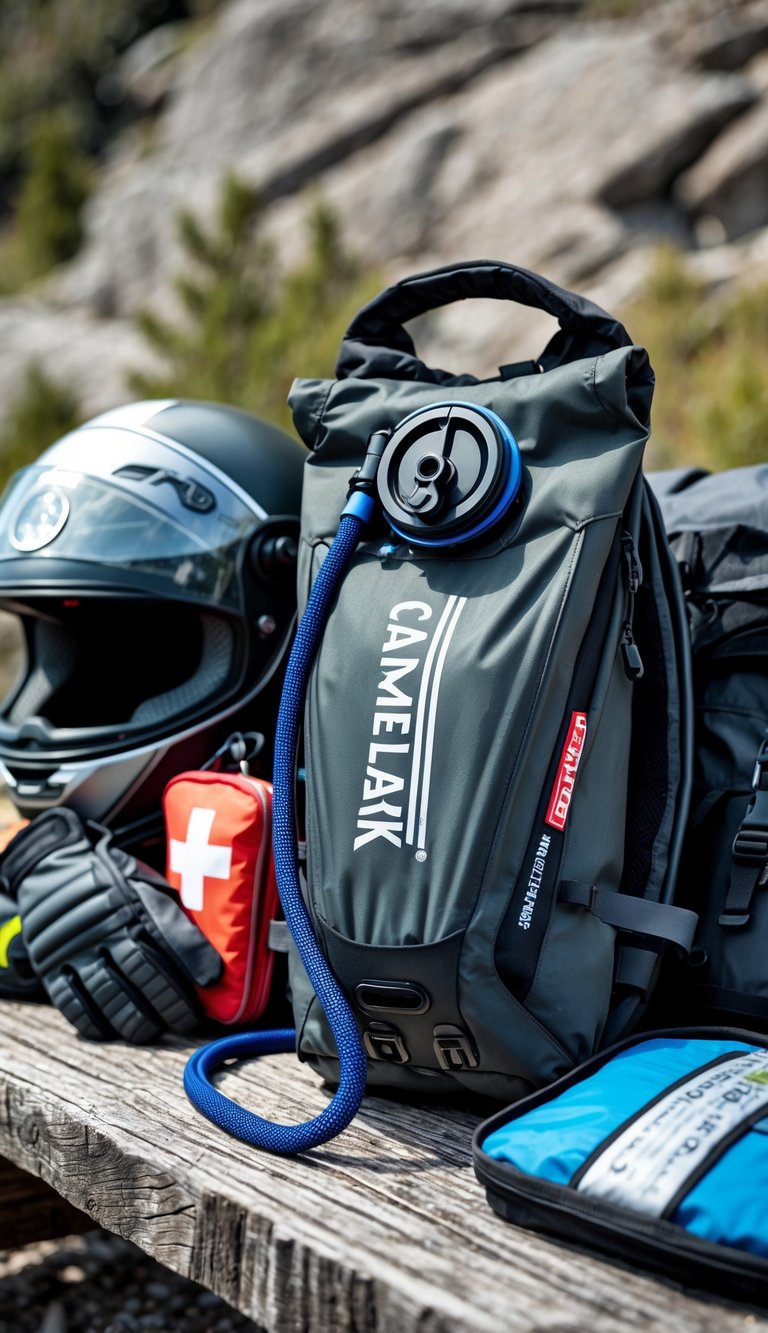
A CamelBak hydration pack keeps water within easy reach while you ride. You sip through a tube without stopping, so you stay hydrated and alert on long legs of your trip.
These packs come in small, lightweight designs that fit under a jacket or in a tank bag pocket. Many models add storage for tools, snacks, and a light layer, which helps cut down on bulked-up luggage.
Choose a size that matches your route and heat conditions. Look for easy-fill reservoirs and bite valves that resist leaks so you don’t fight spills at the gas stop.
PRO TIP
Rinse and dry the reservoir after each day to prevent mold. Carry a small cleaning kit and keep the tube clipped to your chest strap for quick access.
13) Bike-specific first aid kit
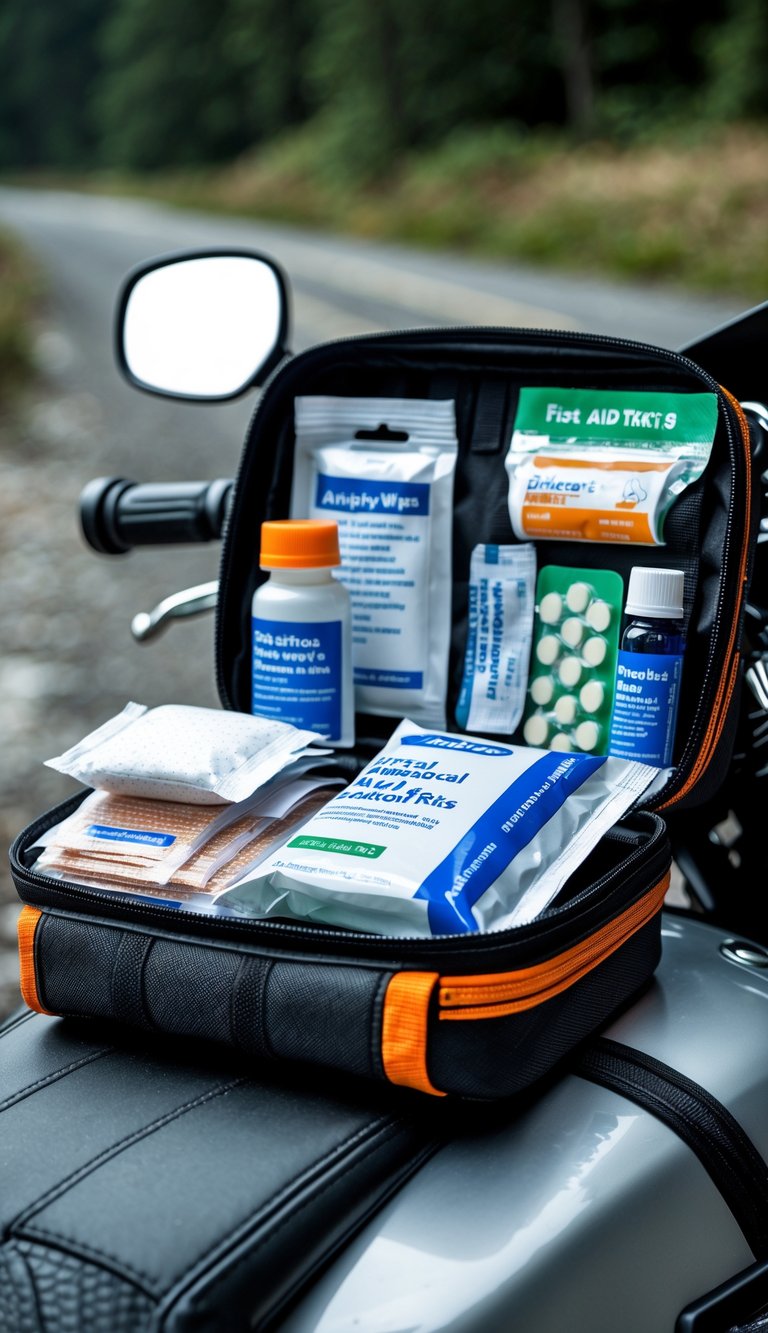
You should carry a compact first aid kit sized for your bike. Choose one that fits in your saddlebag or tail pack so it stays accessible during a stop.
Pack basics like bandages, antiseptic wipes, gauze, tape, and scissors. Add trauma items such as a tourniquet, chest seals, and hemostatic gauze if you ride fast roads or remote routes.
Include personal meds, allergy treatments, and a copy of your emergency contacts and medical info. Check and replace expired items before long trips.
Keep the kit organized in clear pouches so you can grab what you need quickly. Label everything and practice using key items so you stay calm in an emergency.
PRO TIP
Mount a small, weatherproof pouch on your handlebars or tank bag for instant access to bleeding control items.
14) Microfiber cleaning cloth
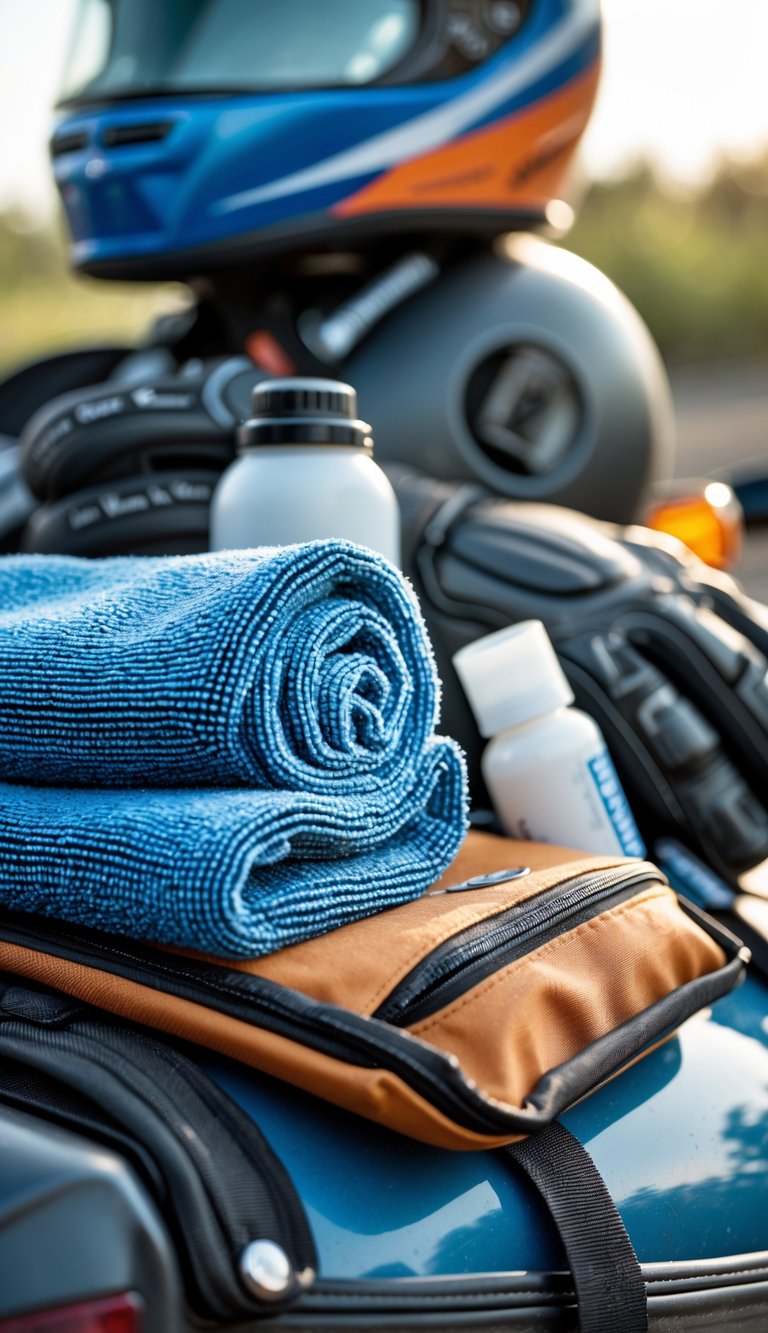
A microfiber cloth is small but mighty on a road trip. You can use it to wipe dust, remove bug splatter, and dry wet spots after rain without scratching your paint.
Keep one folded in an accessible pocket or tank bag so you can grab it during fuel stops. Microfiber works well with just water, so you won’t need heavy cleaners for quick touch-ups.
Pick a soft, lint-free cloth and wash it separately to keep fibers clean. A few spare cloths let you rotate them if one gets greasy or too dirty.
PRO TIP
Store a damp cloth in a small plastic bag to use later for stubborn grime.
15) Garmin Zumo XT GPS
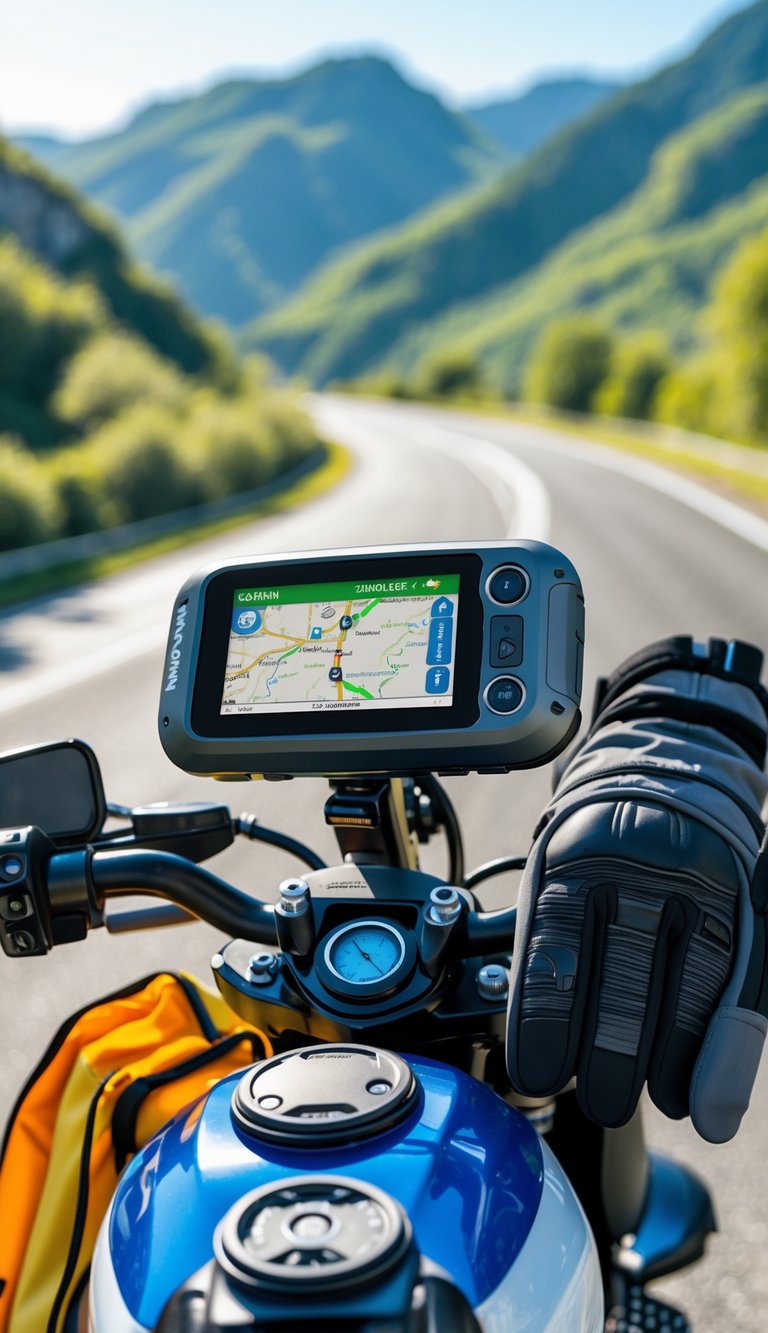
The Garmin Zumo XT gives you a bright, glove-friendly screen that stays readable in sun and rain. It’s made for motorcycles, so the case is rugged and the maps include both on- and off-road routes.
You can plan trips on your phone or computer, then load them to the unit. The visual route planner and trip-saver features help you keep stops and shaping points organized.
The unit pairs with headsets and phones for turn prompts and alerts while you ride. Battery life and mounting options make it a solid choice when you want reliable navigation on longer rides.
PRO TIP
Load your route and a backup track before you leave cell service. That way you still navigate if signal drops.
16) Portable tire inflator
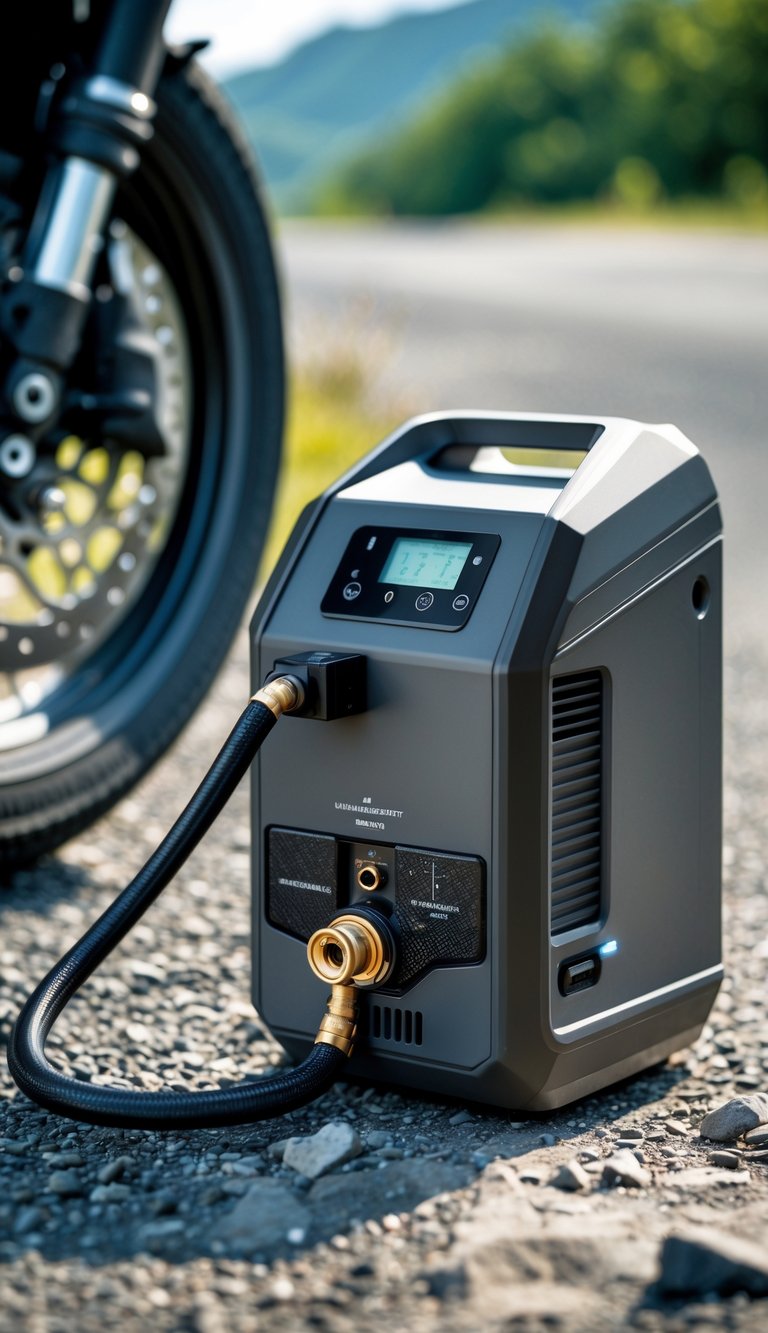
A compact inflator saves you time and worry on the road. You can top up tire pressure in minutes and avoid rides on underinflated tires.
Look for a unit that’s lightweight, easy to store, and has a clear pressure gauge. Many models offer fast inflation up to about 150 PSI and can run from your bike’s battery or an internal battery.
Choose one with a reliable chuck and a built-in auto-shutoff so you don’t overfill. Some inflators also include LED lights or pressure presets, which help during night fixes or quick checks.
PRO TIP
Keep the inflator, an extra valve adapter, and a small roll of tape together in a weatherproof pouch. That makes roadside fixes faster and less stressful.
17) Reflective safety vest
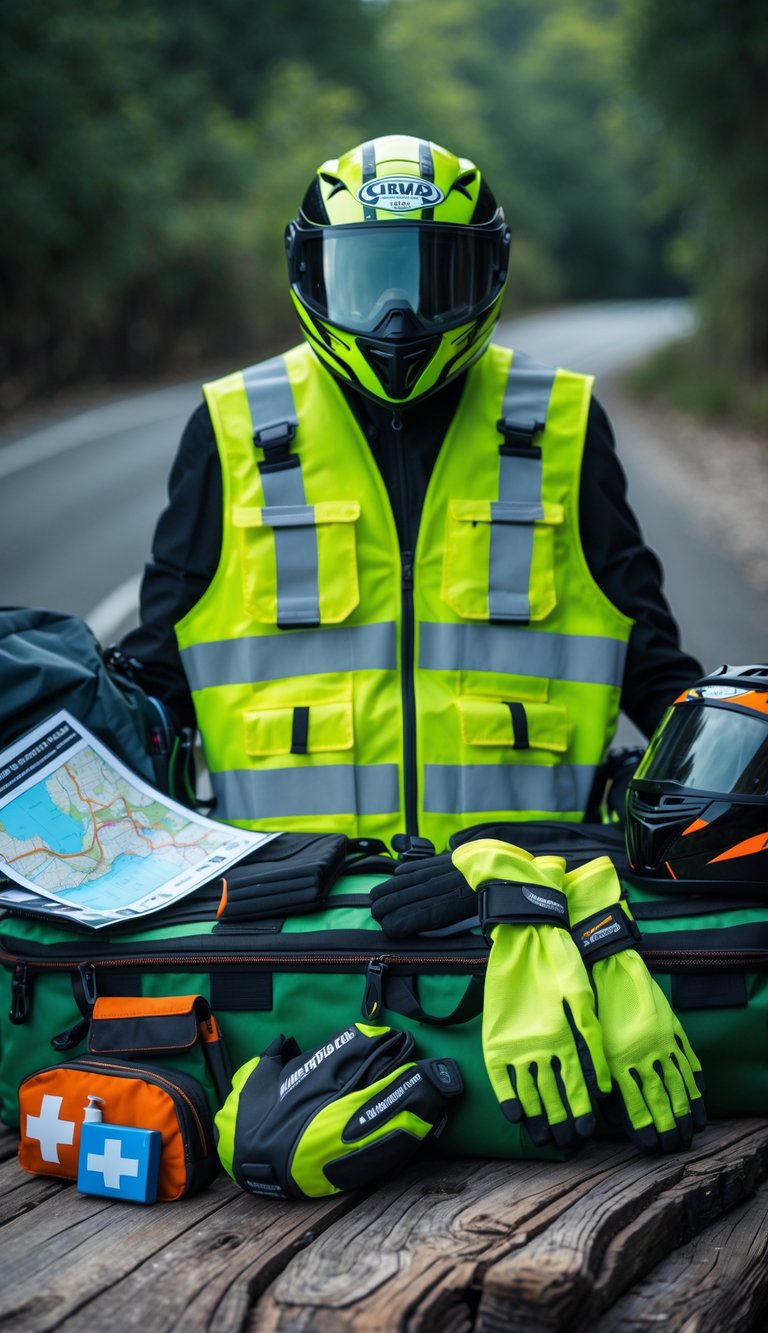
A reflective safety vest makes you easier to see at dusk, night, and in bad weather. You can wear it over your jacket or carry a lightweight packable version for sudden low-light rides.
Choose a vest with bright neon color and wide reflective bands. Mesh construction keeps you cool, and pockets add useful storage for small items like a map or phone.
Store the vest where you can grab it quickly, such as a top tank bag pocket or outer tail bag. If you ride in mixed lighting or urban areas, put it on before you leave to stay visible from the start.
PRO TIP
Pick a vest with elastic grippers at the hem so it won’t flap at speed. A reversible or waterproof option gives more use across conditions.
18) Anti-theft motorcycle lock
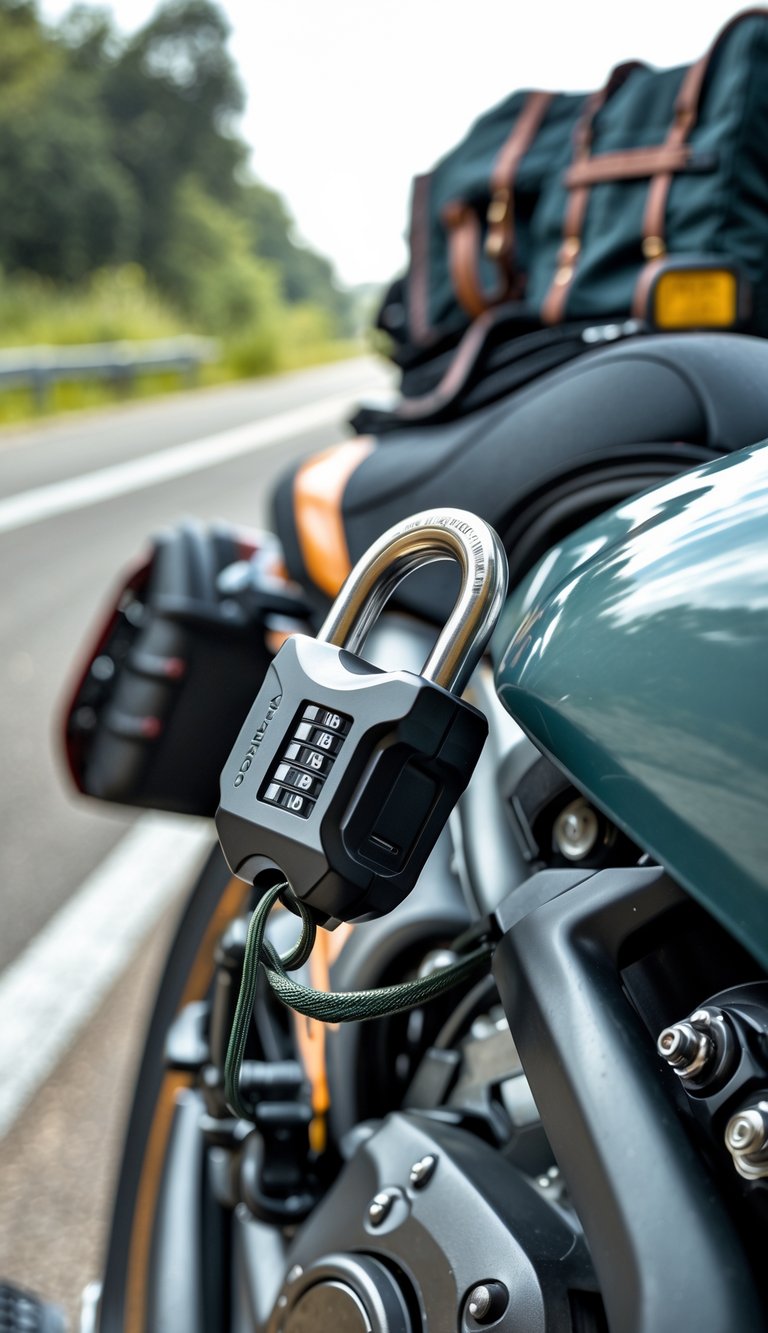
You need an anti-theft lock for peace of mind on long rides and overnight stops. A good lock acts as a strong visual deterrent and adds time and effort for a thief, which often is enough to stop them.
Choose a lock that fits your bike and your trips. Disc locks are compact for quick stops, while heavy-duty chain or U-locks work better for longer stays or high-risk areas. Look for hardened steel, secure keys, and weather-resistant finishes.
Use the lock every time you leave the bike, even for short breaks. Combine it with alarms or a GPS tracker for extra security when you park overnight or in unfamiliar places.
PRO TIP
Carry two different types of locks. Thieves specialize; varying your locks makes theft much harder.