Last Updated on February 27, 2026
You’re about to plan an RV trip that runs smoothly, feels safe, and stays fun from start to finish. This article guides your prep with 24 clear, practical ideas that cover everything from vehicle checks and campground bookings to power, water, and handy gear so you can focus on the road ahead.
You’ll get simple, actionable steps that help prevent breakdowns, save time at campsites, and keep your crew comfortable.
Split into easy-to-follow tips, the list helps you tackle key areas like vehicle maintenance, safe hookups, cooking and storage, emergency readiness, and comfort items for the campsite. Use these ideas to craft a packing and prep plan that fits your trip length and style so you feel confident before you pull out of the driveway.
1) Check RV tire pressure and tread depth
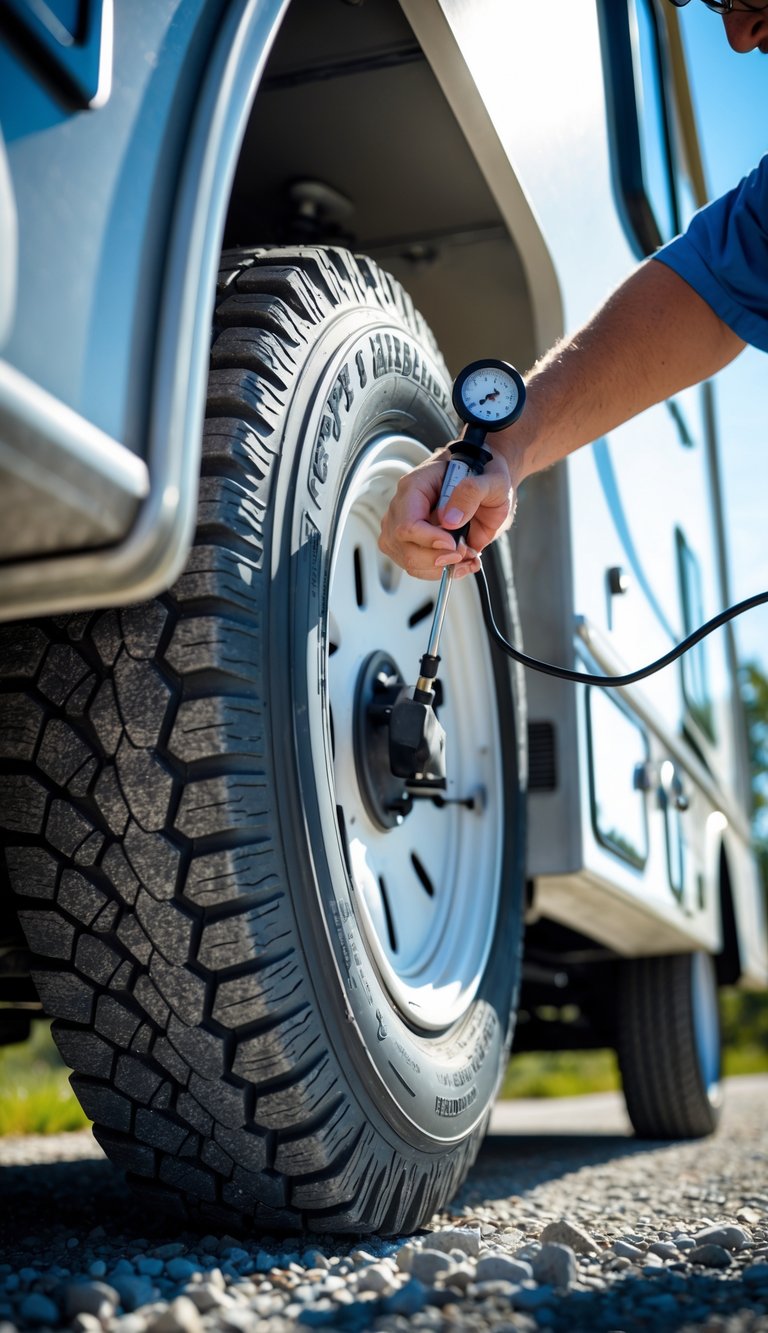
You should check tire pressure before every trip and at least once a month when parked. Proper pressure helps handling, fuel economy, and reduces blowout risk.
Use a reliable gauge and compare to the tire sidewall or vehicle placard for the correct PSI. Check cold tires for an accurate reading and recheck after driving if you adjust pressure.
Measure tread depth with a gauge or the penny test to spot uneven wear. Look for cuts, bulges, or embedded objects that can cause sudden failure.
PRO TIP
Mark valve caps with a date or color so you remember when you last checked them. Keep a spare gauge and a portable air compressor in the RV for quick fixes.
2) Test all lights and signals on the RV
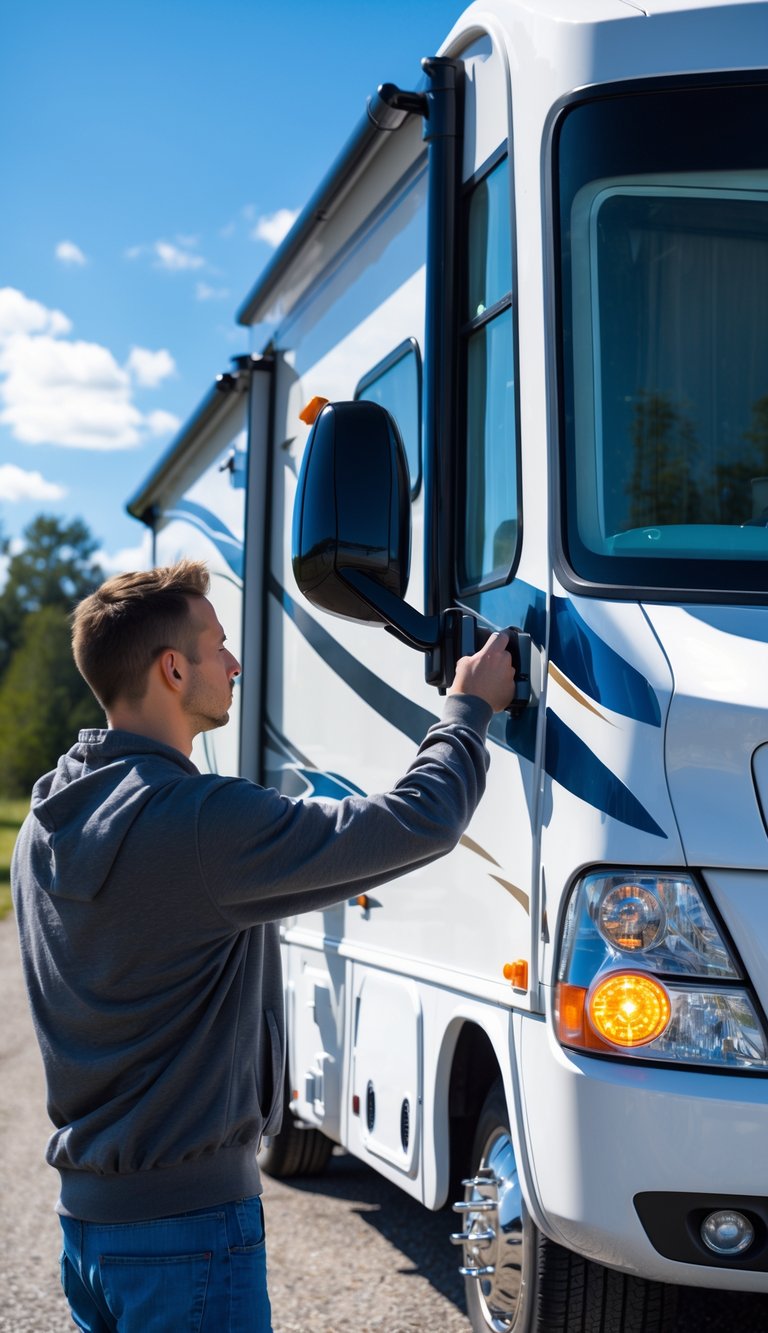
Before every trip, check your headlights, taillights, brake lights, turn signals, and running lights. Have someone stand behind the RV while you activate each light so you can confirm they work.
Inspect the trailer plug and seven-way connector for corrosion, bent pins, or loose wires. Clean contacts and tighten connections if needed to prevent intermittent failures.
Walk around and look for cracked lenses or moisture inside lights. Replace bulbs and seals when you spot damage to avoid sudden outages on the road.
PRO TIP
Carry a basic light kit with spare bulbs, fuses, and a compact wiring tester. A quick fix at the roadside keeps you moving and safer.
3) Secure all loose items inside the RV
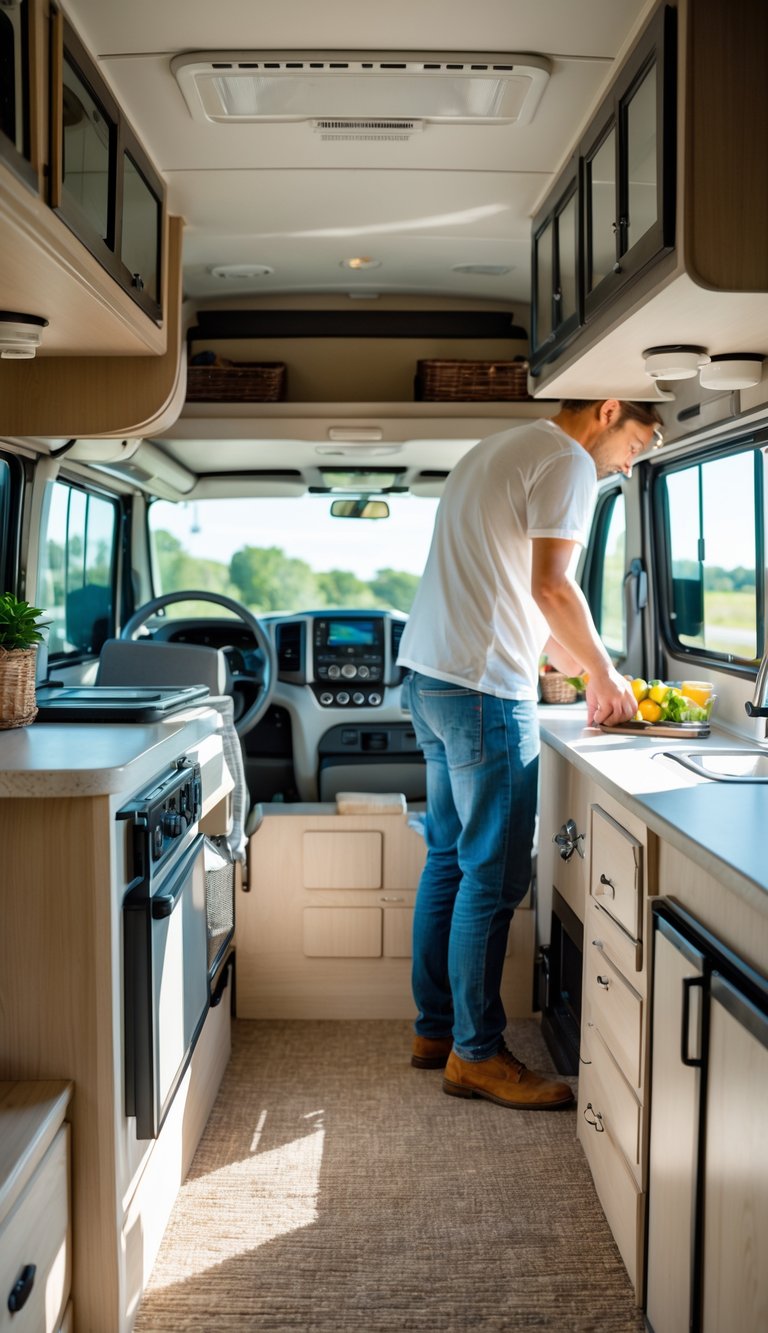
Before you drive, walk through the RV and look for anything that can move. Small items like phones, books, and kitchen tools can slide or fall and break other things.
Close and latch all cabinets, drawers, and the fridge. Use childproof locks, bungee cords, or Velcro strips on doors that don’t stay shut.
Group and store breakables in padded bins or on low shelves to stop them from shifting. Put heavy items low and centered to keep your RV balanced.
Secure decor and loose cords with simple ties or mounts. Tape or non-slip mats work well for items on counters.
PRO TIP
Keep a small bag with basic tie-downs and extra Velcro in an easy spot so you can fix anything quick before you pull out.
4) Review your route with RV-friendly maps
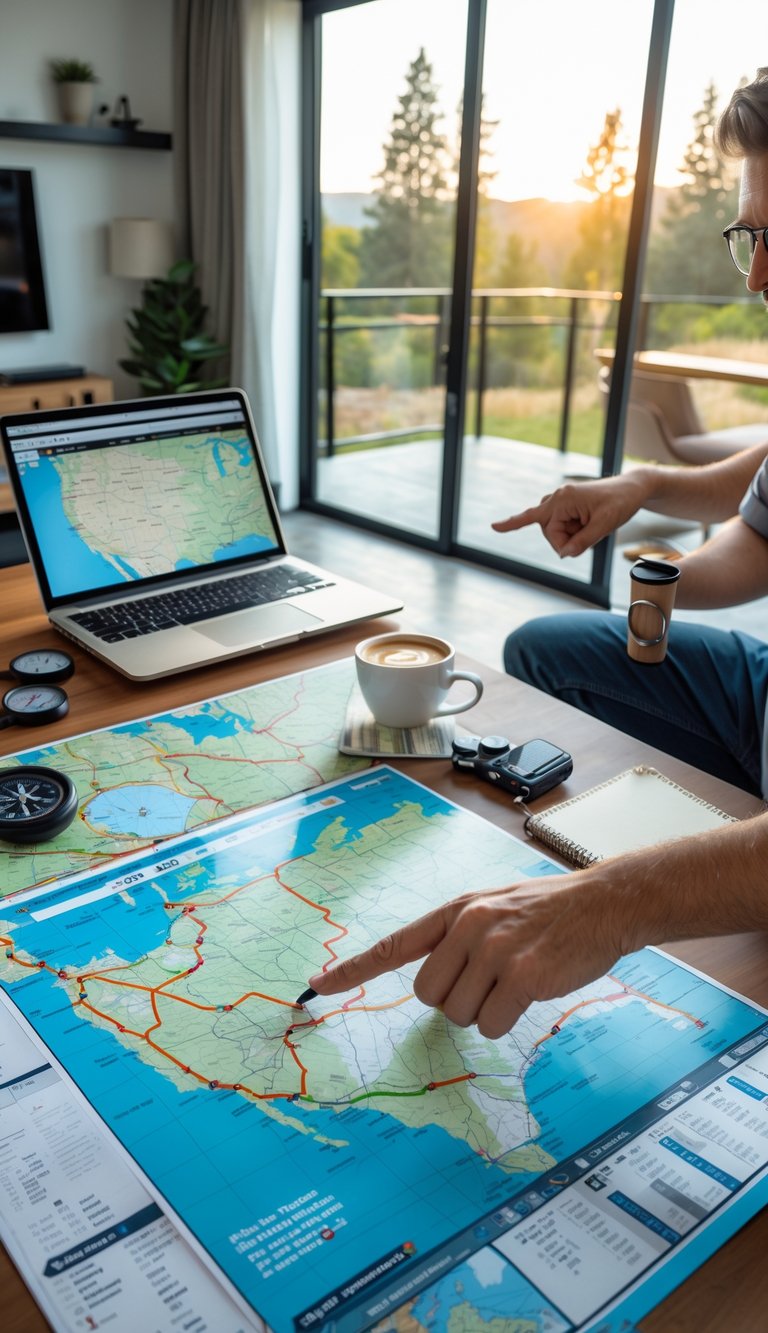
Use maps made for RVs so you avoid low bridges, narrow roads, and weight or length limits. These maps mark truck routes, clearances, and steep grades that standard maps often miss.
Trace your planned path and check alternate options for each day. That helps you spot tight turns, construction zones, or campground entrances that could be tricky in a big rig.
Compare a few sources: app-based RV maps, state DOT maps, and campground site maps. Each shows different details, so layering them gives a clearer picture.
PRO TIP
Save offline copies of your route and key maps. Cell service can drop in remote areas, and an offline map can keep you on a safe, RV-friendly road.
5) Book campgrounds in advance
Popular campgrounds fill up fast, especially in summer and near national parks. Reserve sites early so you get the spot and hookups you need.
Check each campground’s rules and amenities before you book. Look for hookups, dump stations, size limits, and pet rules to avoid surprises on arrival.
Use sites and apps that list many options, including public lands and private parks. Have a backup plan for nightly stops in case your first choice falls through.
Pay attention to cancellation policies and reservation windows. That lets you change plans without losing a lot of money.
PRO TIP
Book the busiest nights first and then add extra days around them.
6) Pack a portable water pressure regulator
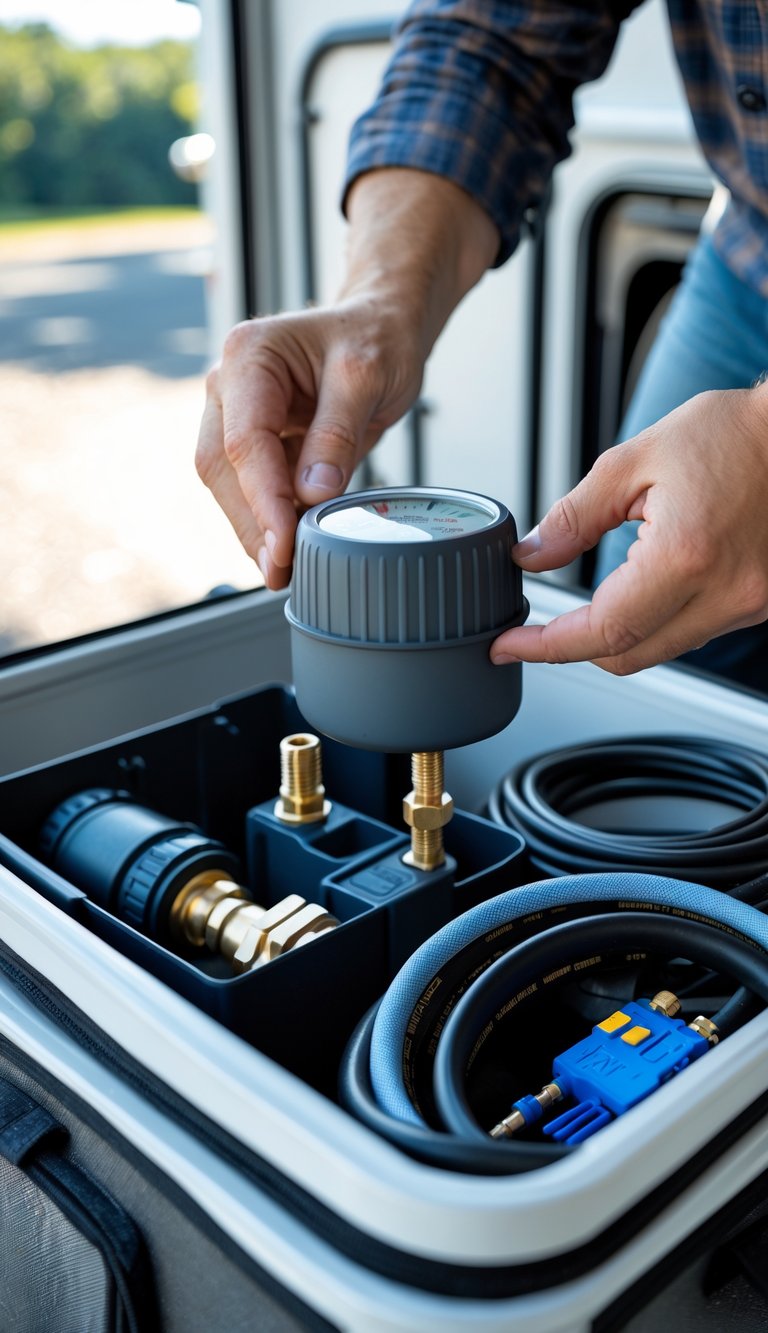
A water pressure regulator protects your RV plumbing from high campground water pressure. Without one, pipes, fittings, and appliances can leak or fail when pressure spikes happen.
Carry a portable regulator that screws onto the park spigot before your hose. Most models are small, cheap, and easy to install by hand. Pick one rated for RV use and set to about 40–50 psi unless your coach maker recommends otherwise.
PRO TIP
Keep a small wrench or pliers in your kit in case the connector gets tight. Inspect the regulator for cracks or mineral buildup before each trip.
7) Carry a surge protector for electrical hookups
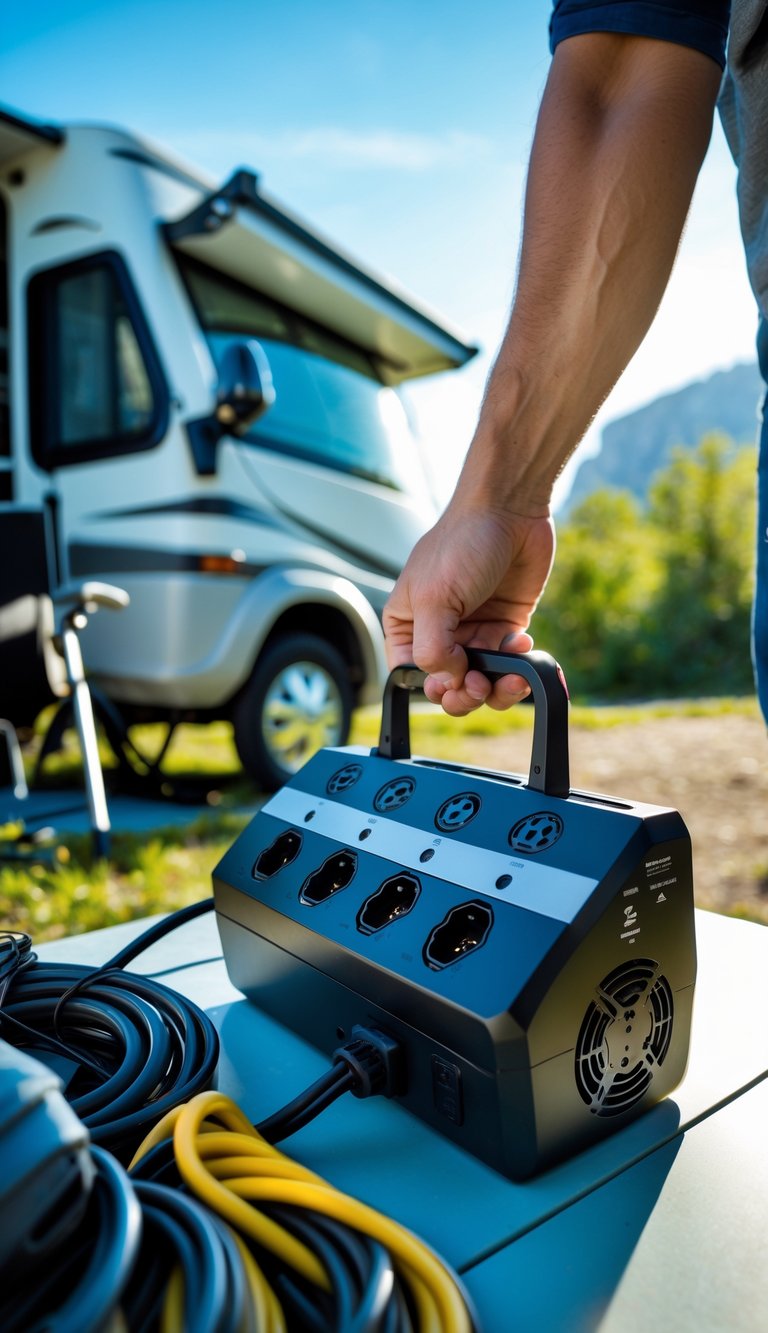
A surge protector stops sudden voltage spikes from damaging your RV’s appliances and electronics. You plug it between the campground pedestal and your power cord to monitor and block unsafe power.
Some models also act as an electrical management system (EMS). Those can detect wiring faults, low or high voltage, and open grounds before power reaches your rig.
Portable units are easy to store and use at any site. Hardwired options give permanent protection but need professional installation.
PRO TIP
Test the protector before each trip and replace it after a major surge or lightning strike to keep your gear safe.
8) Bring a reliable portable generator
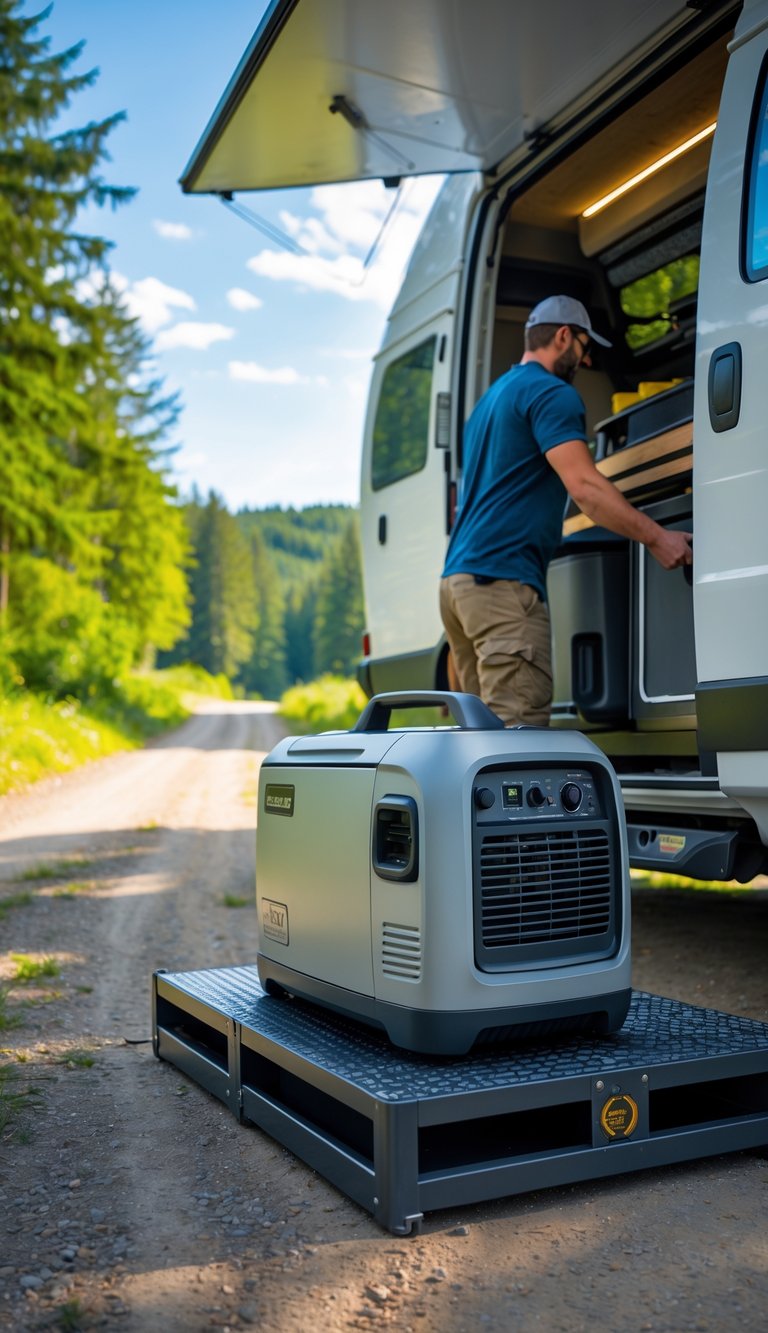
A portable generator keeps your lights, fridge, and devices running when shore power isn’t available. Pick one that matches your RV’s starting and running watt needs so you don’t overload it.
Choose quieter models if you plan to camp near others. Inverter generators and dual-fuel units often run quieter and give cleaner power for sensitive electronics.
Place the generator outside and downwind from doors and vents to avoid carbon monoxide buildup. Keep spare fuel stored safely and follow the manufacturer’s run-time and maintenance rules.
PRO TIP
Test the generator at home before you leave and pack the right cords, adapters, and a basic tool kit for quick fixes.
9) Stock up on RV-specific motor oil and coolant
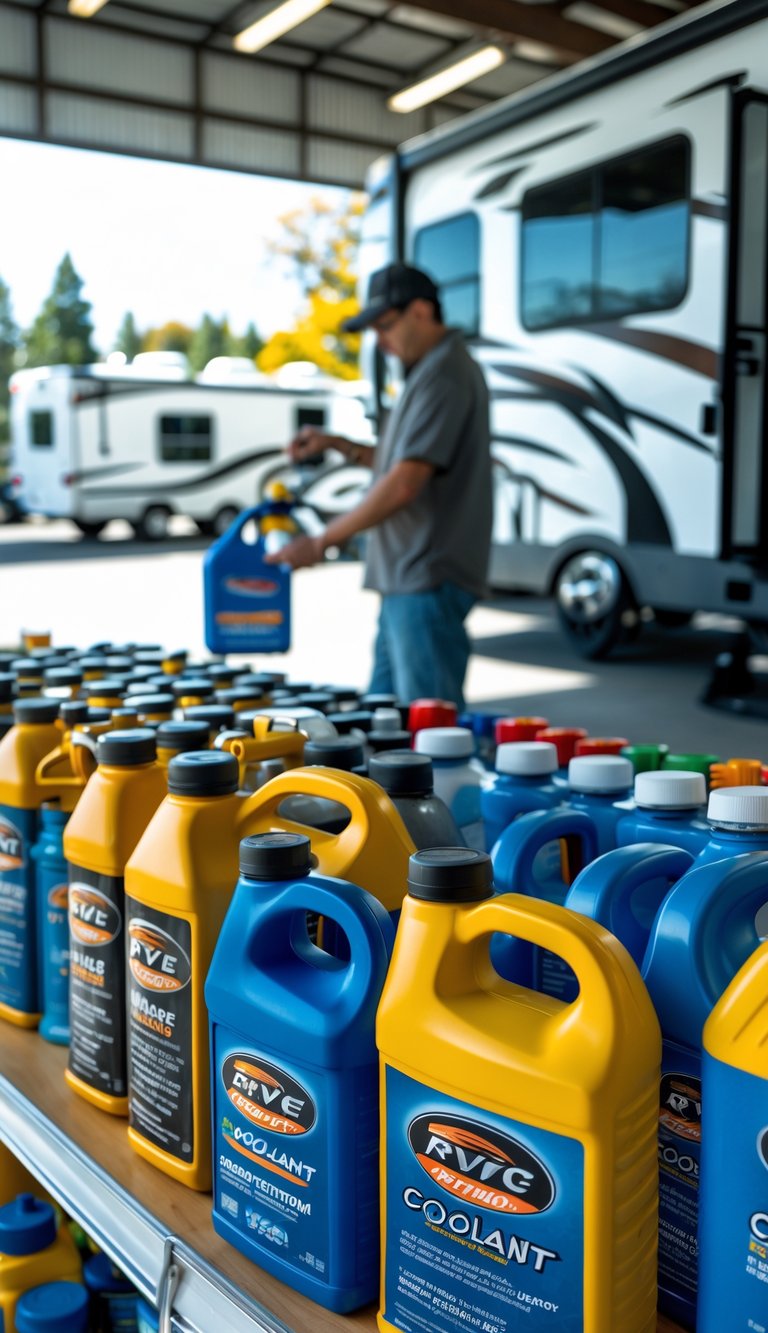
You need the right fluids for long trips. RV engines are bigger and may need different oil grades than your car, so check the owner’s manual before you buy.
Carry extra motor oil that matches the engine maker’s specs. Include enough for at least one full oil change and a bit more for top-ups if you spot a leak.
Bring the correct coolant type and some distilled water for topping off. Use coolant rated for your engine and climate to prevent overheating or freezing.
PRO TIP
Label each container with the date and engine type. That makes quick roadside fixes easier and avoids mixing incompatible fluids.
10) Prepare a first aid kit tailored for travel
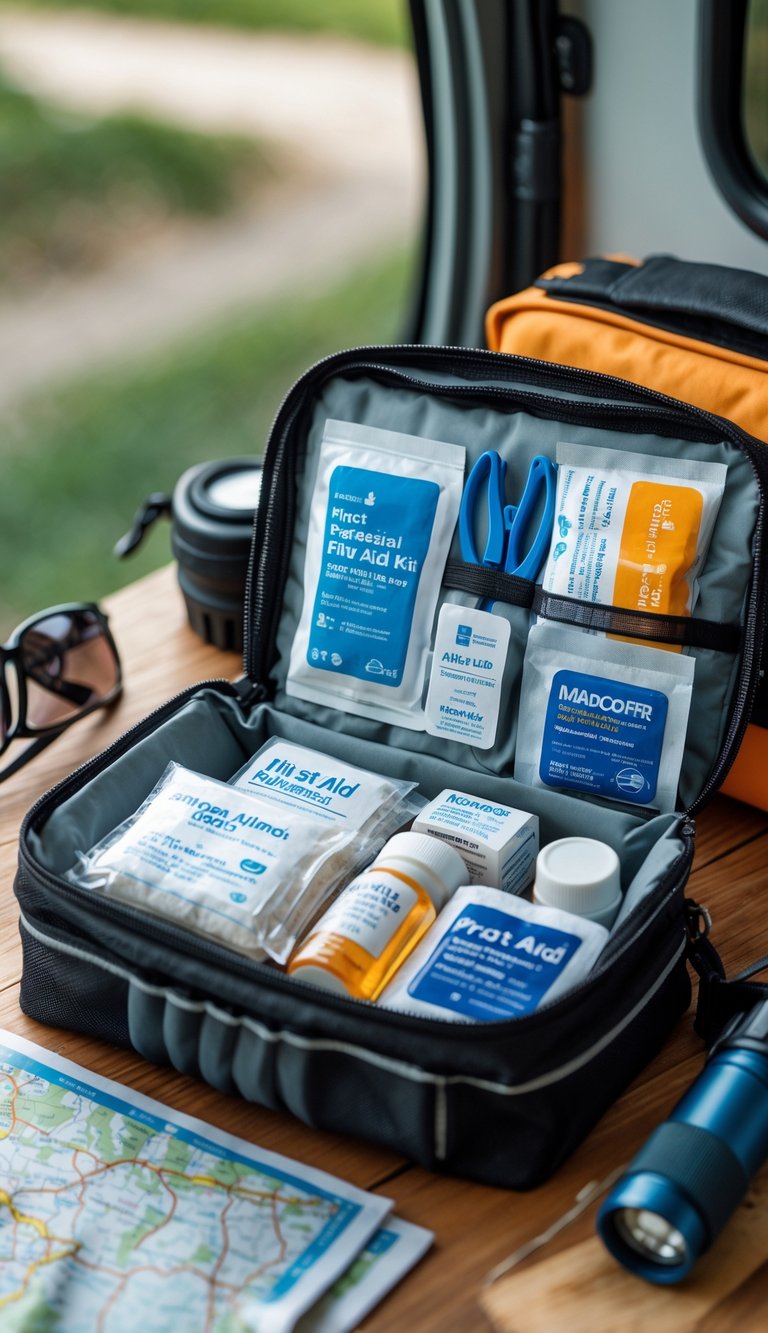
Pack a first aid kit that fits your route, who’s with you, and how long you’ll be gone. Include basics like bandages, sterile gauze, adhesive tape, antiseptic wipes, tweezers, and a digital thermometer.
Add supplies for likely problems: blister care, pain relievers, antihistamines, and any prescription meds with copies of prescriptions. Include a tourniquet and hemostatic gauze if you expect remote travel and someone trained to use them.
Store items in a waterproof, labeled case and keep it where everyone can reach it quickly. Check and replace expired meds and used items before each trip.
PRO TIP
Take a short first aid class and add a printed checklist to the kit so you know what’s inside and when to resupply.
11) Pack collapsible camping chairs
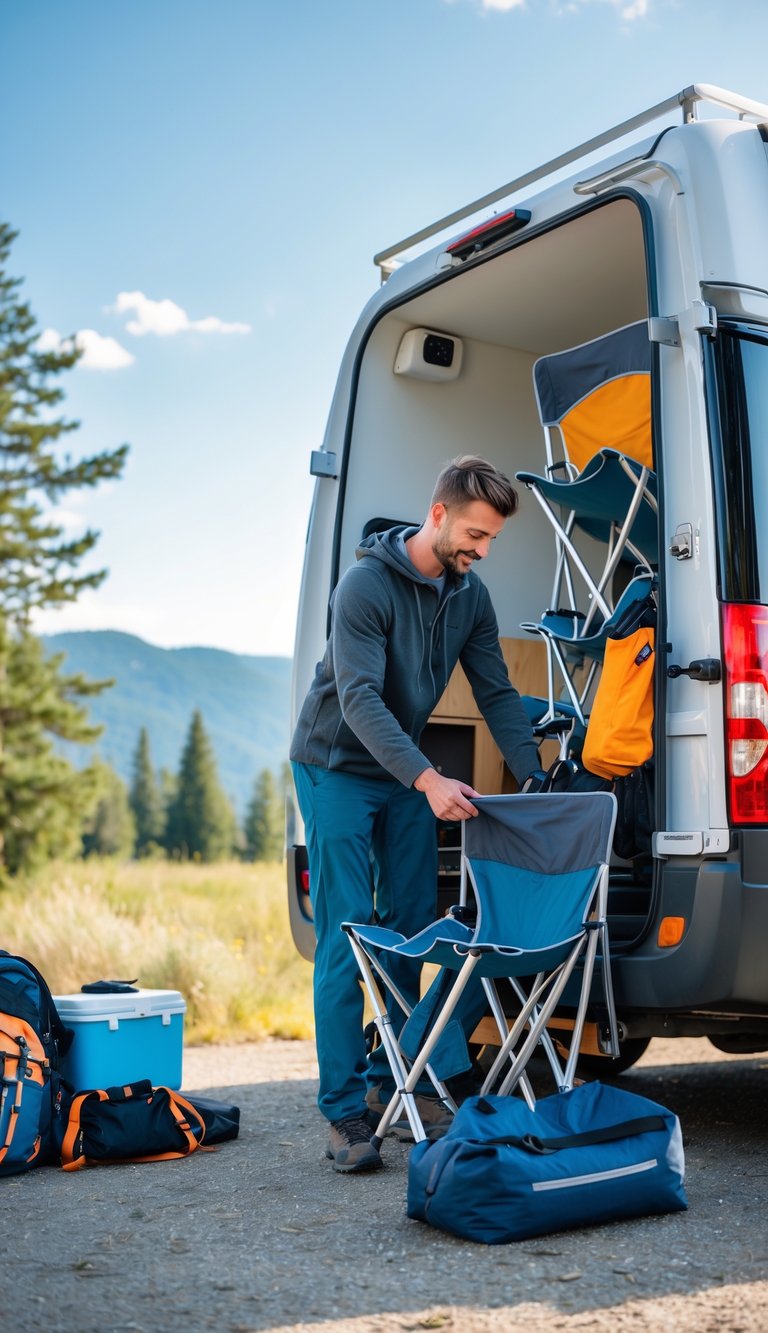
Collapsible camping chairs save space and make outdoor relaxing simple. You can set them up in minutes at a campsite, picnic spot, or trailhead. They fold down small so they fit in tight storage areas or under a bed.
Choose chairs with sturdy frames and weather-resistant fabric. Look for padded seats or high backs if you want more comfort. Check weight limits and packed size before you buy.
Carry a small repair kit for broken clips or loose screws. A lightweight sling bag keeps chairs organized and easy to grab. That way you spend more time enjoying the view and less time wrestling with gear.
PRO TIP
Bring one low chair and one higher chair for variety. Low chairs are great for campfires; high chairs make eating and socializing easier.
12) Include a compact outdoor grill
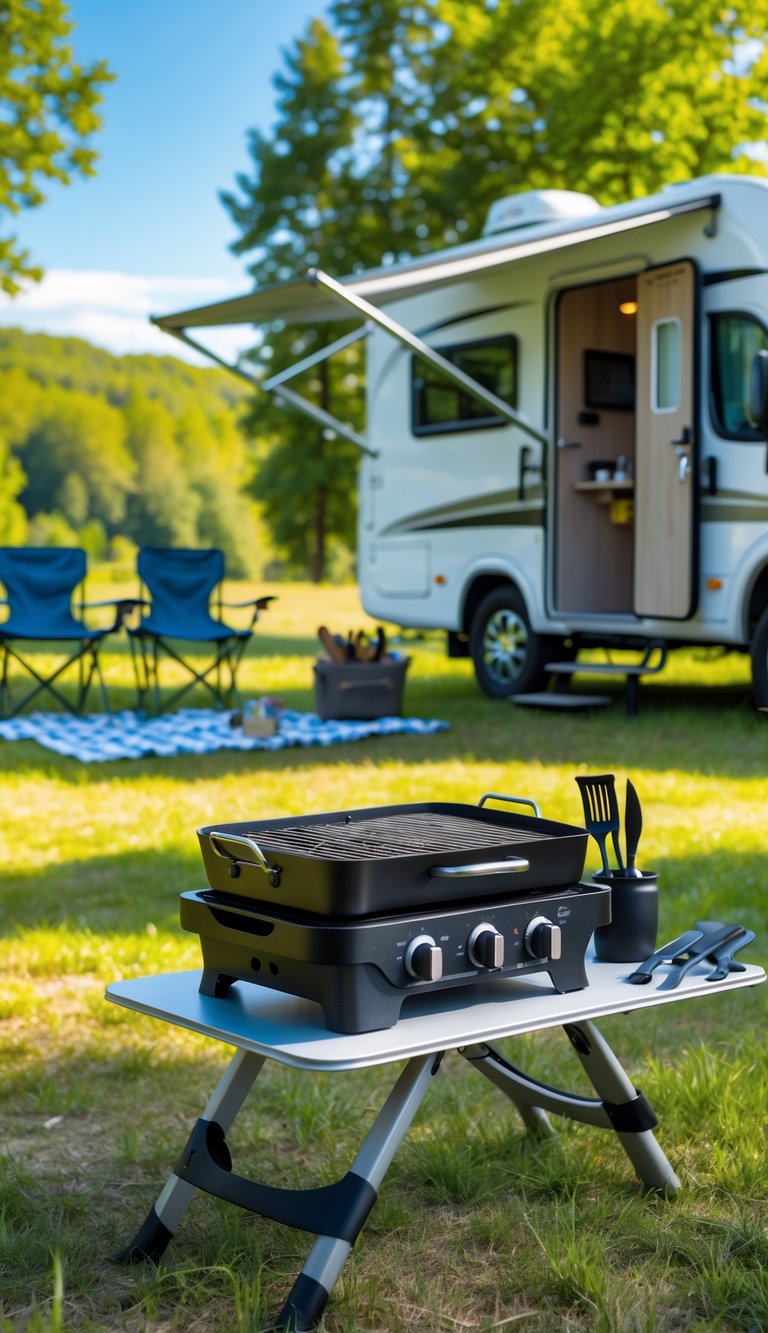
A small outdoor grill makes cooking simple and keeps strong smells out of your RV. Bring a propane or portable charcoal model that fits your storage and weight limits.
Choose a grill that is easy to set up and clean. Look for foldable legs, a locking lid, and removable grates to make packing and cooking faster.
Store fuel, tools, and a small fire extinguisher nearby. Keep grease under control with foil or a drip tray to avoid messes and flare-ups.
PRO TIP
Pick a grill with a carrying case or built-in handle. It saves space and makes it easier to move between campsites.
13) Bring RV sewer hose with fittings
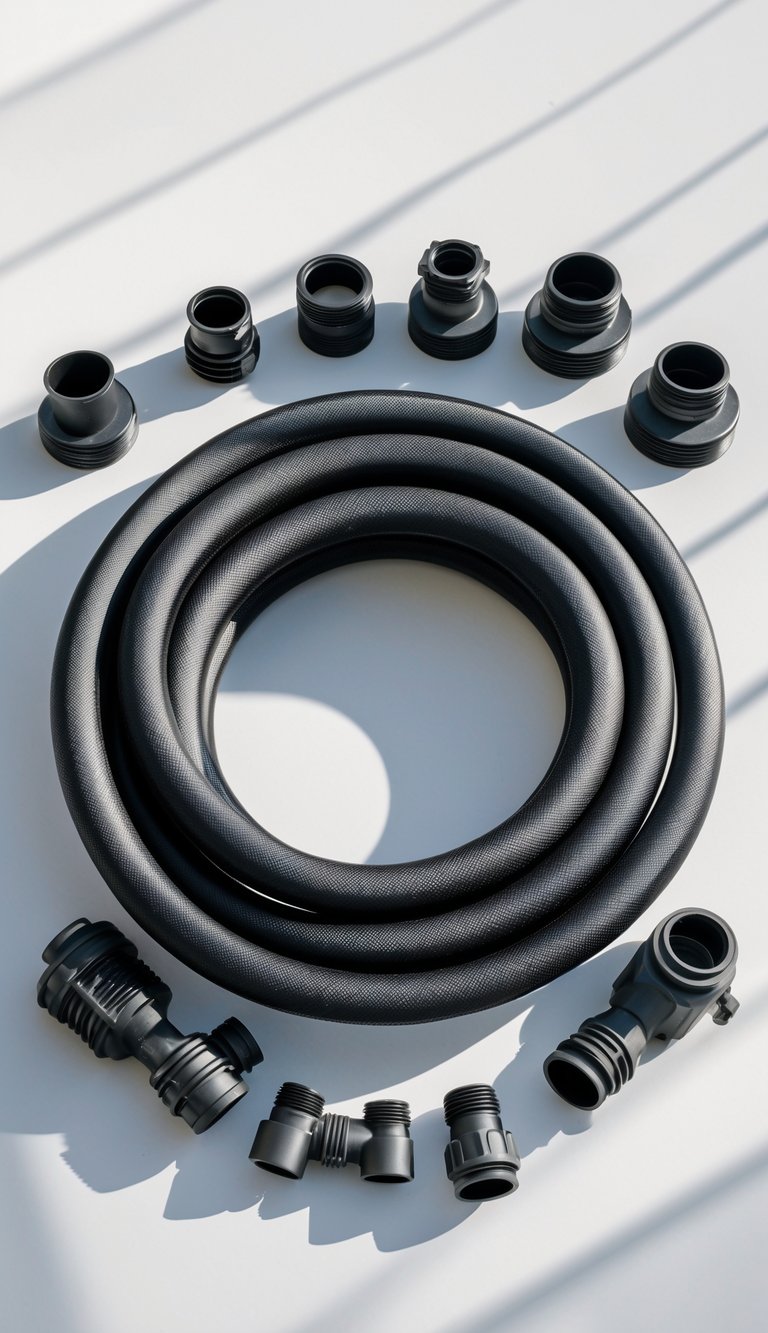
You need a good sewer hose and the right fittings. They connect your RV to dump stations and prevent leaks or messy spills.
Most kits include hose, bayonet ends, and adapters. Still, check your RV outlet and local dump designs so you have the correct fittings on hand.
Bring a hose support and gloves for safer, cleaner dumping. Carry extra clamps or a spare adapter in case a fitting wears out or a station uses a different size.
PRO TIP
Practice hooking up your hose at home once or twice. That builds speed and confidence and helps you spot missing parts before you travel.
14) Carry a leveler kit for uneven sites
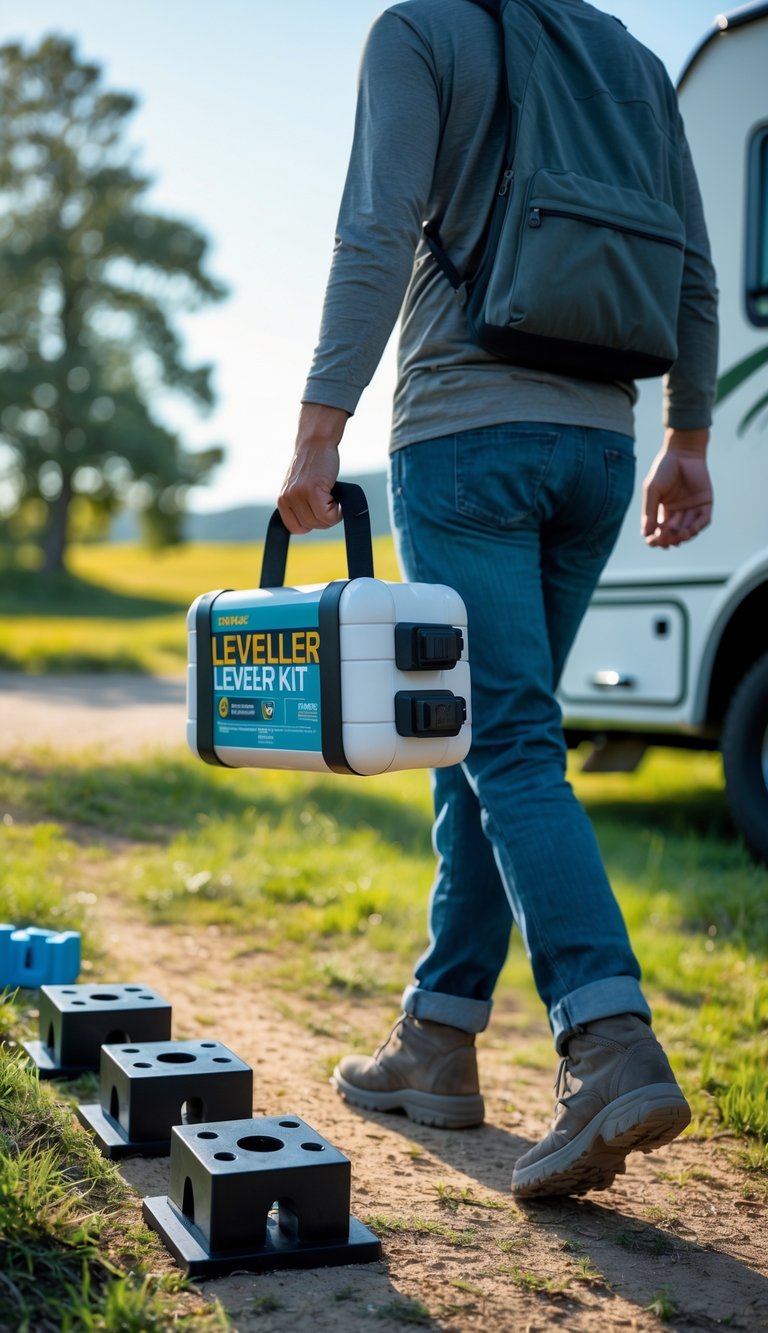
You will hit uneven ground more often than you think. A leveler kit helps you get the RV stable fast, which protects appliances and makes sleeping and cooking easier.
Choose blocks or ramps that stack securely and can handle your rig’s weight. Include a small bubble or digital level so you can check side-to-side and front-to-back quickly.
Bring wheel chocks and a pair of anti-slip mats for soft or wet surfaces. These add safety and keep the blocks from shifting when you move around inside.
Keep the kit in an easy-to-reach bag or case so you can set up before you unhitch. Practice using the kit at home to save time and avoid stress at the campsite.
PRO TIP
Mark a preferred stack height on the blocks with tape for faster setup.
15) Organize a tool kit with basic wrenches and screwdrivers
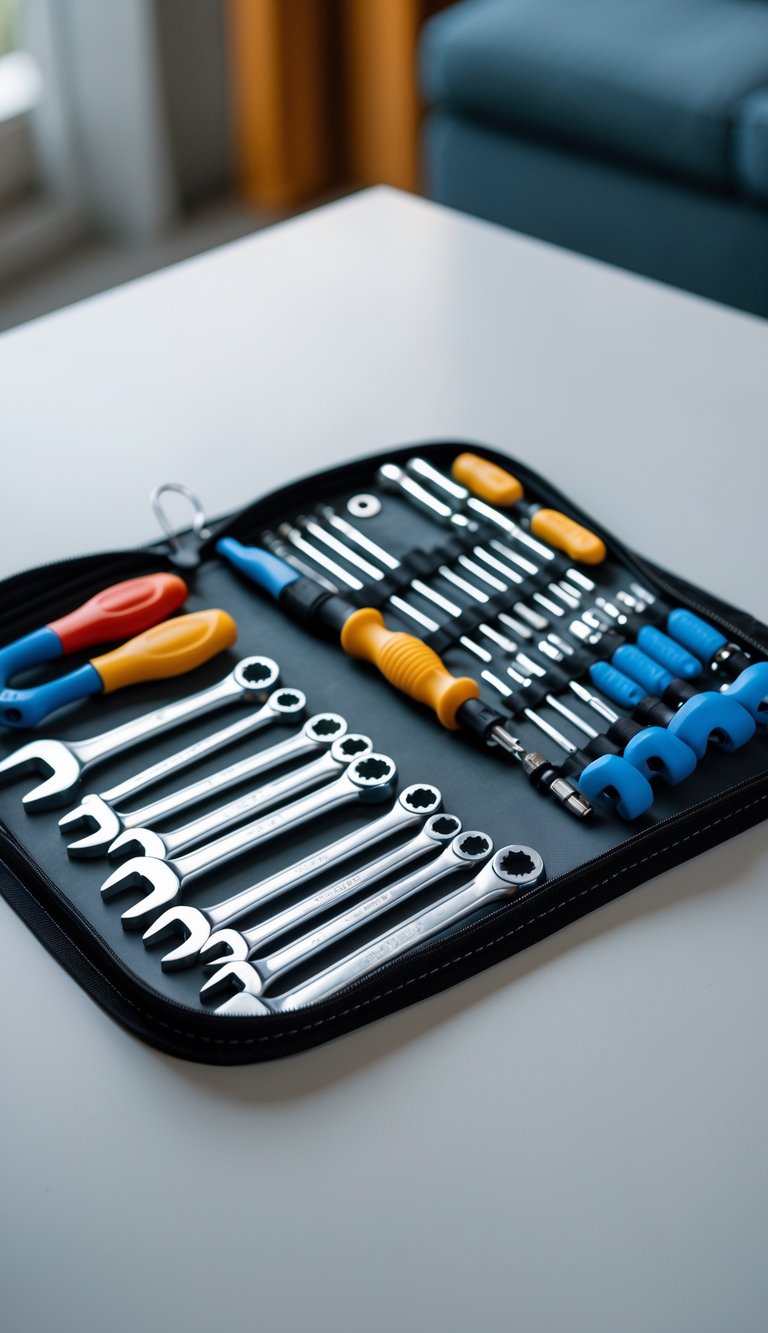
Pack a small kit with open-end and adjustable wrenches plus flathead and Phillips screwdrivers. These cover most roadside fixes and fit easily in a drawer or tote.
Use a foam insert or small plastic organizer to keep each tool in place. That prevents rattling and makes it faster to find what you need.
Label slots or use color tape so you stop searching when you’re stressed. Put the most-used tools on top for quick access.
Store the kit near other emergency gear, like jumper cables and a tire gauge. That way everything you need for simple repairs stays together and ready.
PRO TIP
Add a compact socket set and a multi-bit screwdriver to handle nuts and odd screws without adding much weight.
16) Download offline maps for remote areas
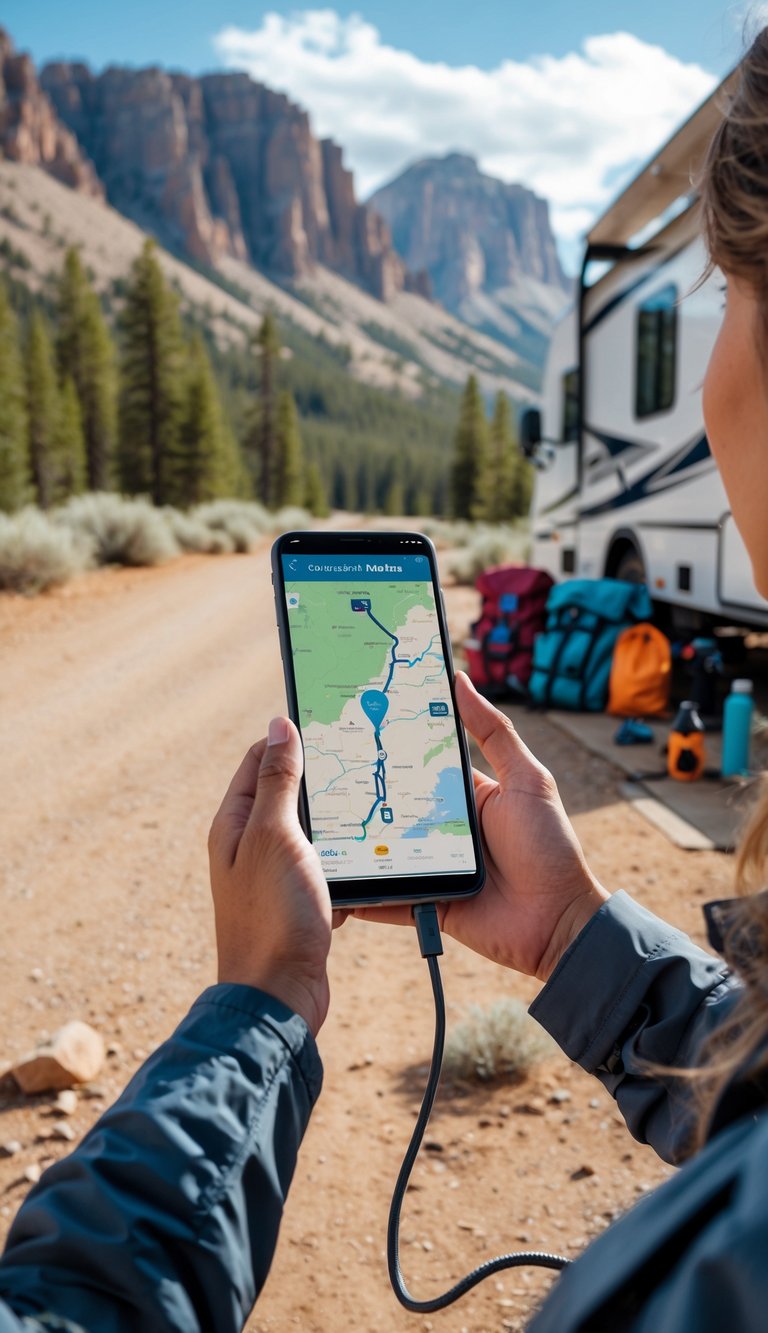
You should download offline maps before you leave cell range. Save the regions you plan to drive through, plus nearby towns and alternative routes.
Offline maps let you follow turns, find campgrounds, and spot gas stations without a signal. They work with many apps, so pick one you trust and test it while still online.
Keep extra areas on your device in case you detour. Also update downloaded maps if your trip date is weeks away.
Charge your devices and carry a spare battery or power bank. That way your maps stay available when you need them most.
PRO TIP
Download both driving and topographic maps if you’ll hike or boondock. Test navigation with airplane mode to confirm everything runs offline.
17) Pack weather-appropriate clothing and rain gear
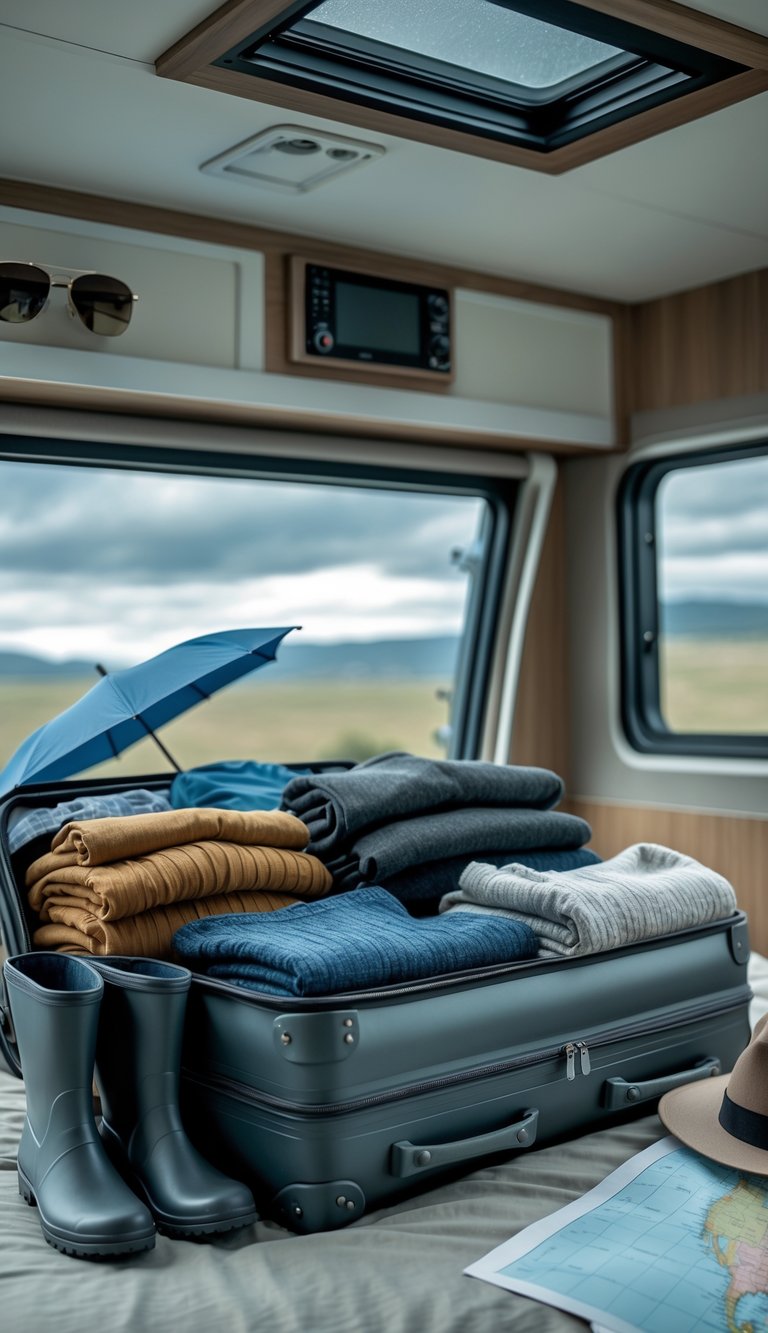
You’ll face changing weather on an RV trip, so pack layers you can mix and match. Start with base layers for warmth, add a mid layer for insulation, and bring a lightweight shell for wind and light rain.
Bring a waterproof jacket and quick-dry pants. Keep a compact umbrella and waterproof shoes or boots handy for sudden downpours.
Include warm accessories like a beanie and gloves if you travel to higher elevations or colder months. For hot weather, pack breathable shirts, a wide-brim hat, and sun-protective clothing.
Keep a small bag of spare clothes and a towel in the main living area for quick changes. Store rain gear where you can grab it fast when the skies turn.
PRO TIP
Pack clothes in separate cubes by type or weather. That way you can pull the right layer without unpacking everything.
18) Bring reusable silicone food storage bags
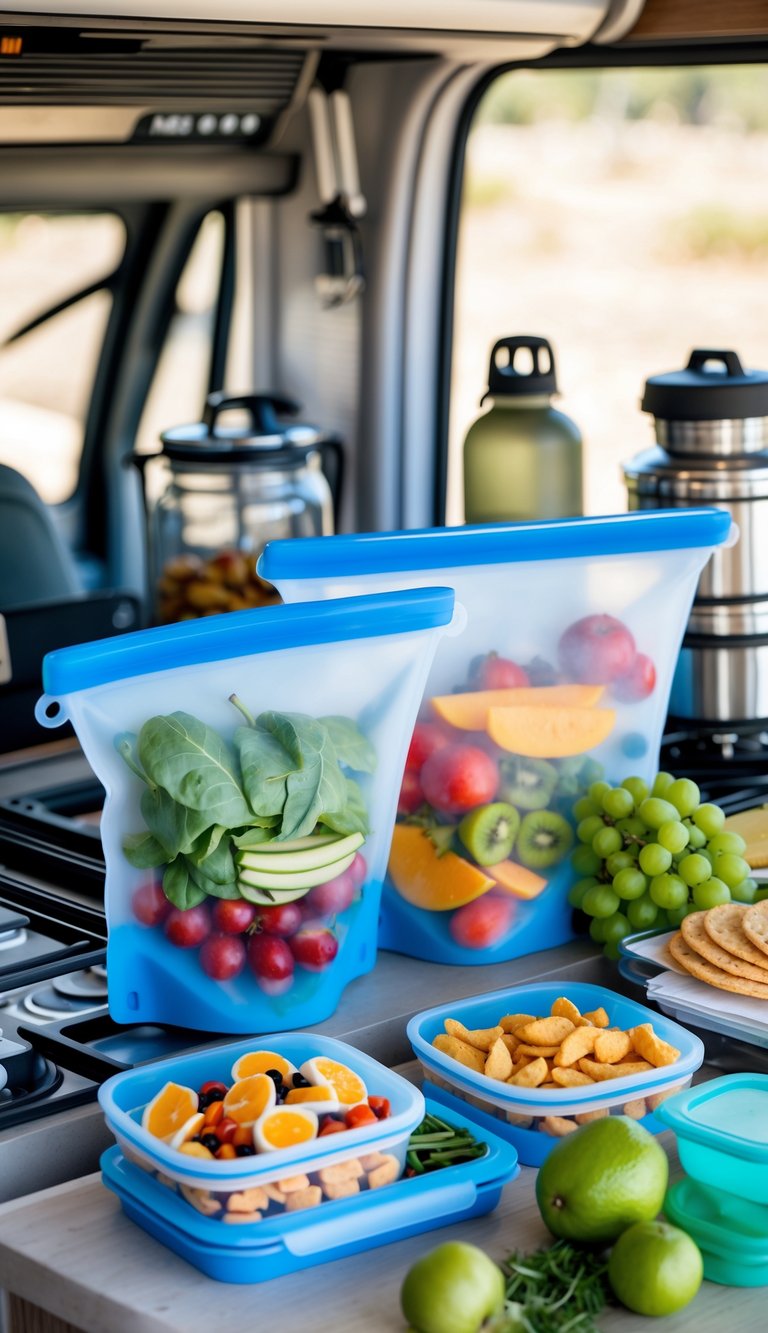
Reusable silicone food storage bags save space and cut down on trash while you travel. You can pack snacks, sandwiches, and leftovers without needing single-use plastic or bulky containers.
They work for hot or cold items, and many handle boiling water or the freezer. Use them to portion meals, keep ingredients fresh, or hold toiletries to prevent spills in your cabinets.
PRO TIP
Label each bag with the date and contents so you grab the right meal fast. Pack a small drying rack or let bags air dry on a towel to keep them clean between uses.
19) Carry a fire extinguisher rated for RVs
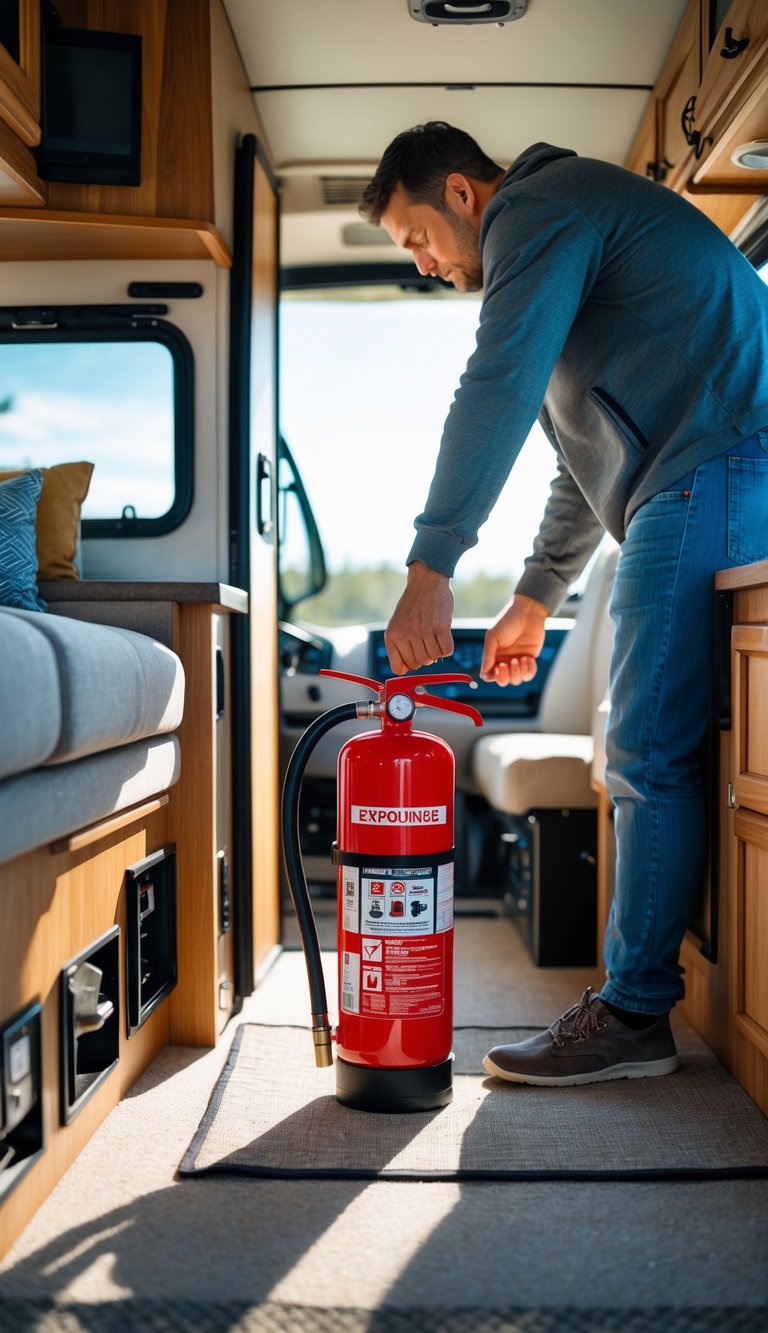
You need at least one ABC-rated fire extinguisher on your RV. These handle paper, liquids, and electrical fires—common causes in tight RV spaces.
Place extinguishers near exits and the kitchen. That helps you reach one quickly if smoke or flames block your path.
Check the pressure gauge and inspection tag before each trip. Replace or service units that show damage, low pressure, or expired dates.
PRO TIP
Carry two extinguishers if you can: one by the door and one in the kitchen area. Small, easy-to-use models work best for quick response during a fire.
20) Include insect repellent and citronella candles
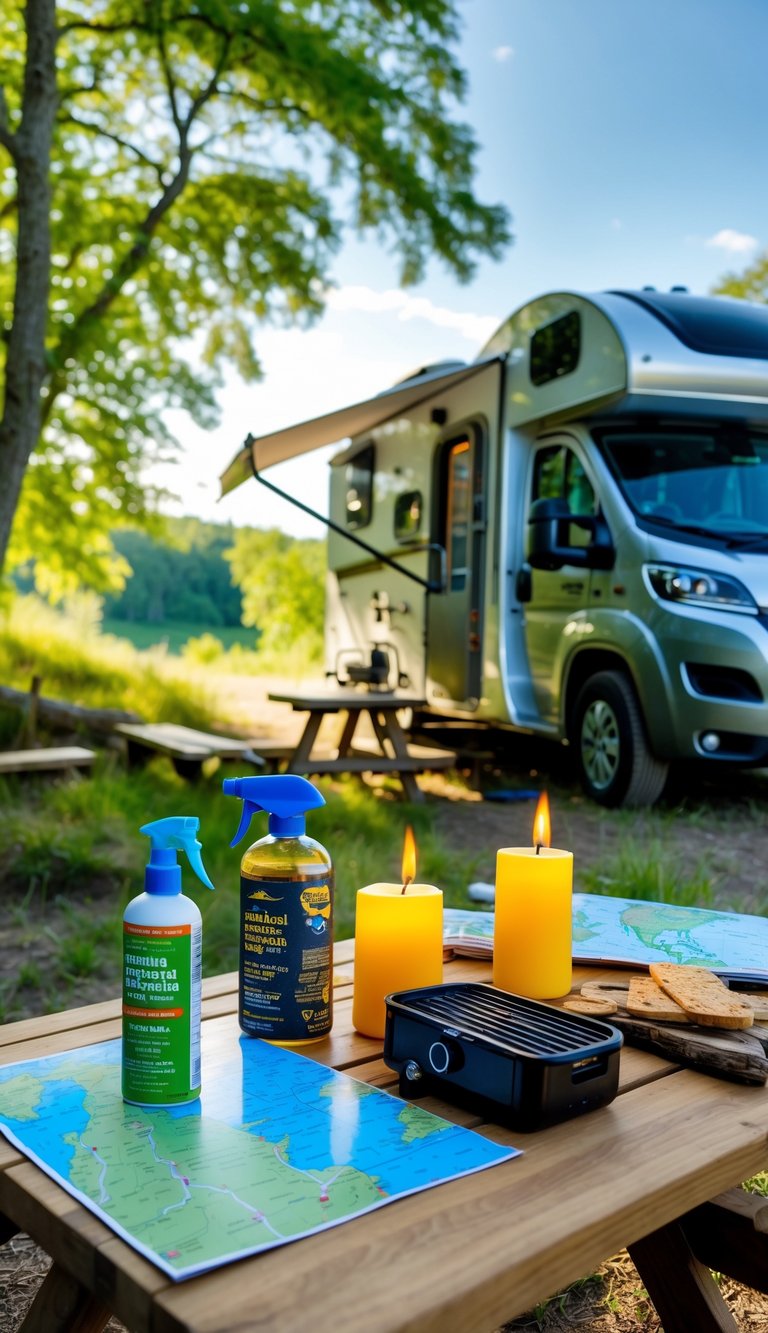
Bring a small bottle of EPA-registered insect repellent for you and your travel companions. Apply it before dinner and reapply as the label directs to keep bites down while you relax outside.
Pack citronella candles or torches for your campsite or RV awning area. They help lower flying insects nearby and add a soft, pleasant light for evening meals.
Keep candles in stable holders and never leave them burning unattended. Store repellents and extra candles in a dry, cool spot so they work when you need them.
PRO TIP
Choose unscented or mild-scented personal repellents if you use scented candles, to avoid overwhelming odors.
21) Pack a durable outdoor mat
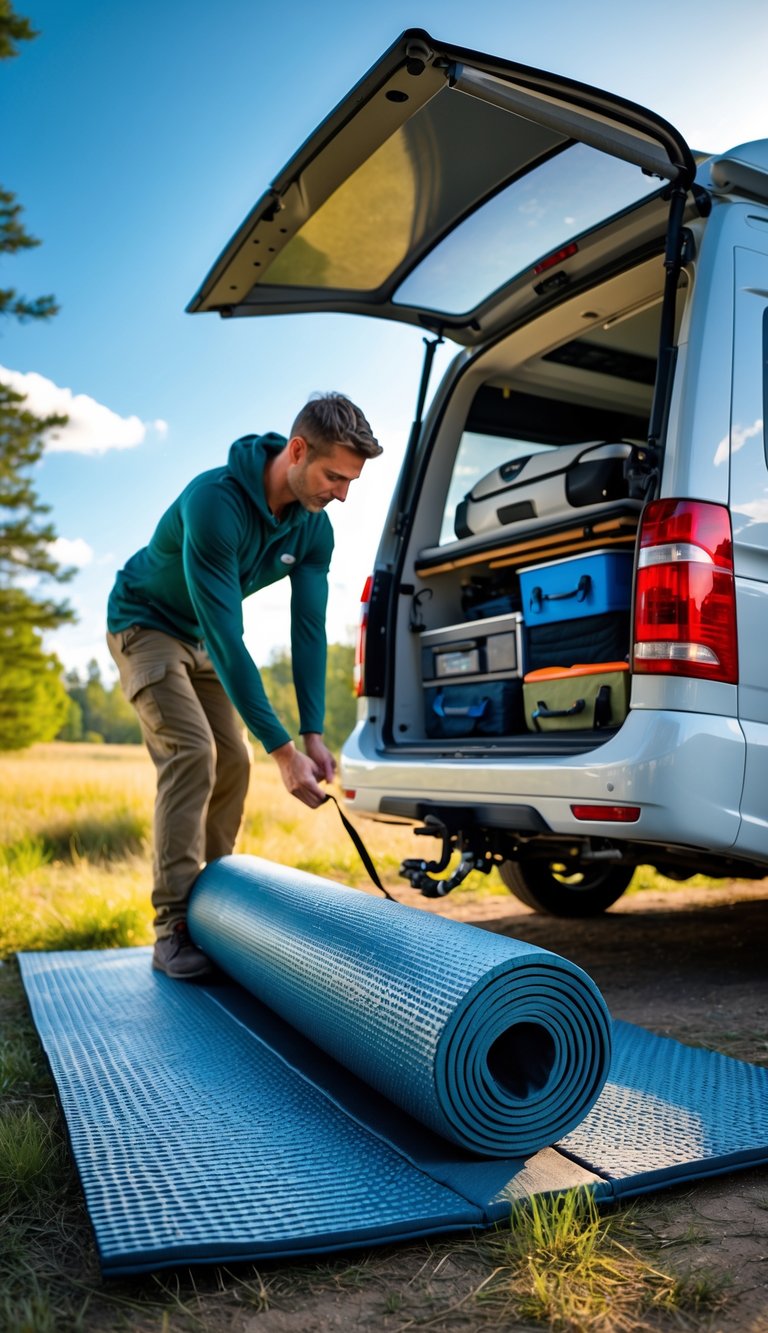
A good outdoor mat keeps dirt and grit out of your RV. Lay it at the entry to catch mud, sand, and wet shoes before they cross your threshold.
Choose a mat made from tough, quick-drying material. Look for ones with a non-slip backing and reinforced edges so it stays flat and lasts through many trips.
You can use it for cooking zones, a clean play area, or as a dry spot for gear. Folding or roll-up mats save space and fit easily into storage compartments.
PRO TIP
Bring a brush or small shake-out bag to clean the mat each evening. That helps keep your RV floors cleaner and reduces wear on the mat.
22) Bring a solar battery charger
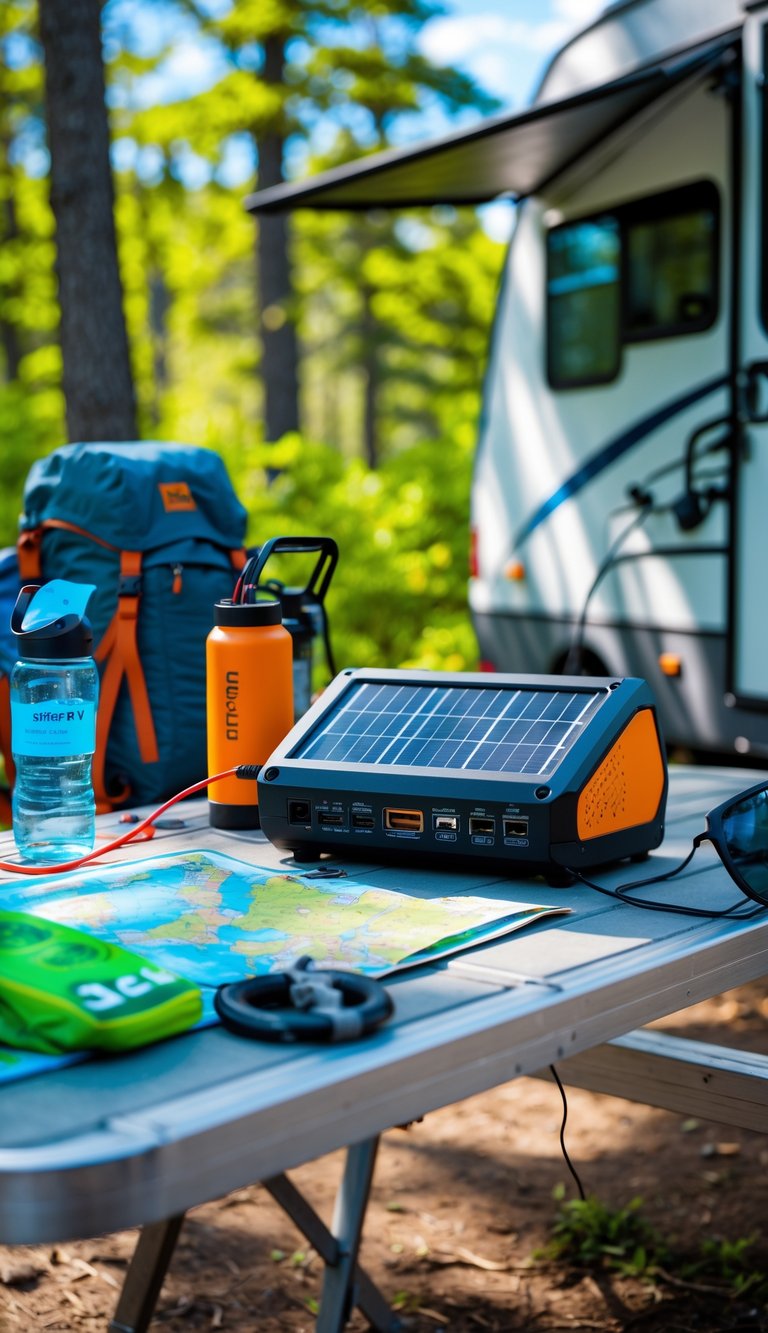
A small solar battery charger gives you quiet, reliable trickle charging when you’re parked without shore power. It helps maintain your house battery and can prevent a dead battery after a few days of lights, fans, and small appliances.
Choose a charger sized for your battery type and capacity. MPPT controllers charge more efficiently than PWM, especially in low light. Pair the charger with a proper mounting spot or a portable panel you can angle toward the sun.
Carry the right cables and fuses to connect safely. Check charge settings for lead-acid or lithium batteries before use to avoid overcharging. This simple device adds freedom on longer boondocks and reduces generator use.
PRO TIP
Run a short test at home to confirm the charger and controller behave with your battery before you hit the road.
23) Include flashlights with extra batteries
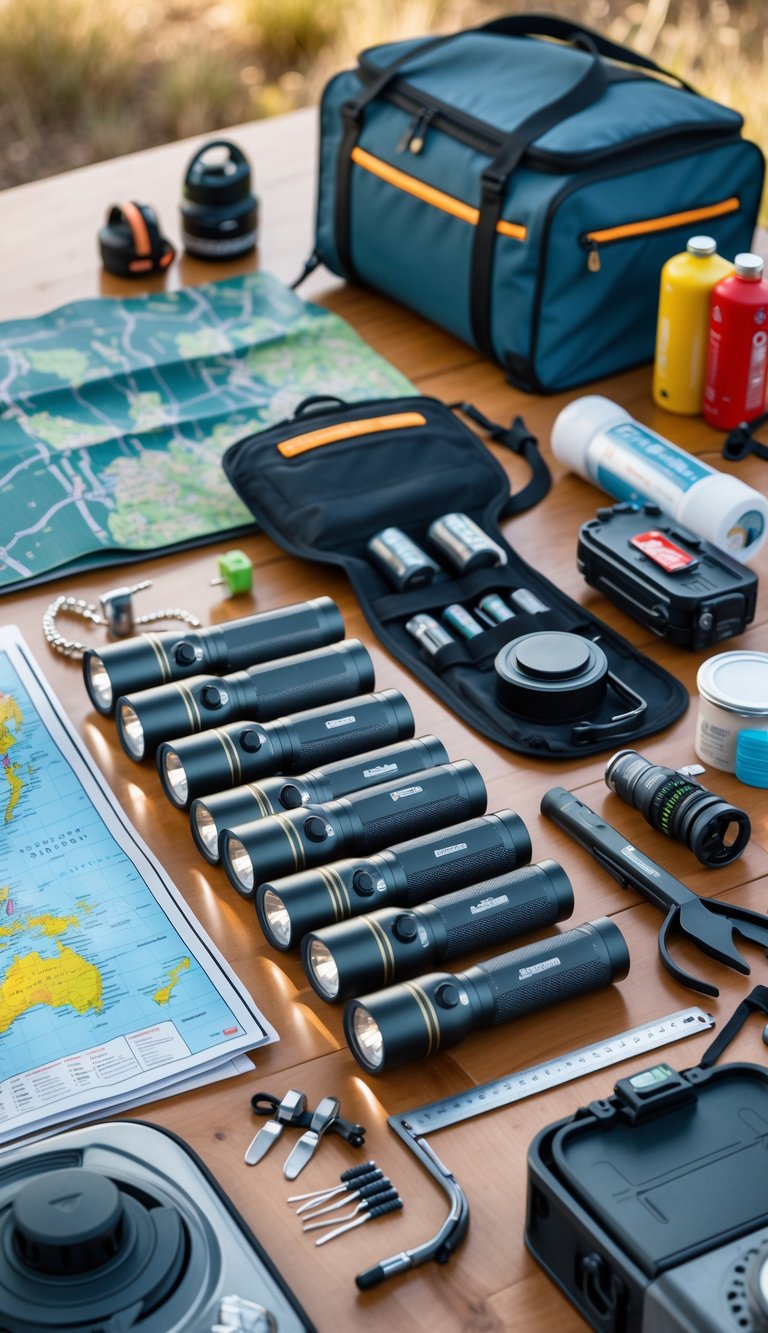
You should carry several flashlights in your RV and pack extra batteries. Small handheld lights work for quick tasks, headlamps free your hands, and a larger lantern lights a whole area.
Place flashlights where you can grab them in the dark: by the door, near the bed, and in the glove box. Test each light before you leave and swap in fresh batteries if needed.
Keep batteries in a sealed container to prevent corrosion and mix battery types only if the device allows it. Rechargeable flashlights are useful, but bring spare disposable batteries in case you can’t recharge.
PRO TIP
Label flashlights for specific spots so you always know which goes where.
24) Stock non-perishable snacks like trail mix and jerky
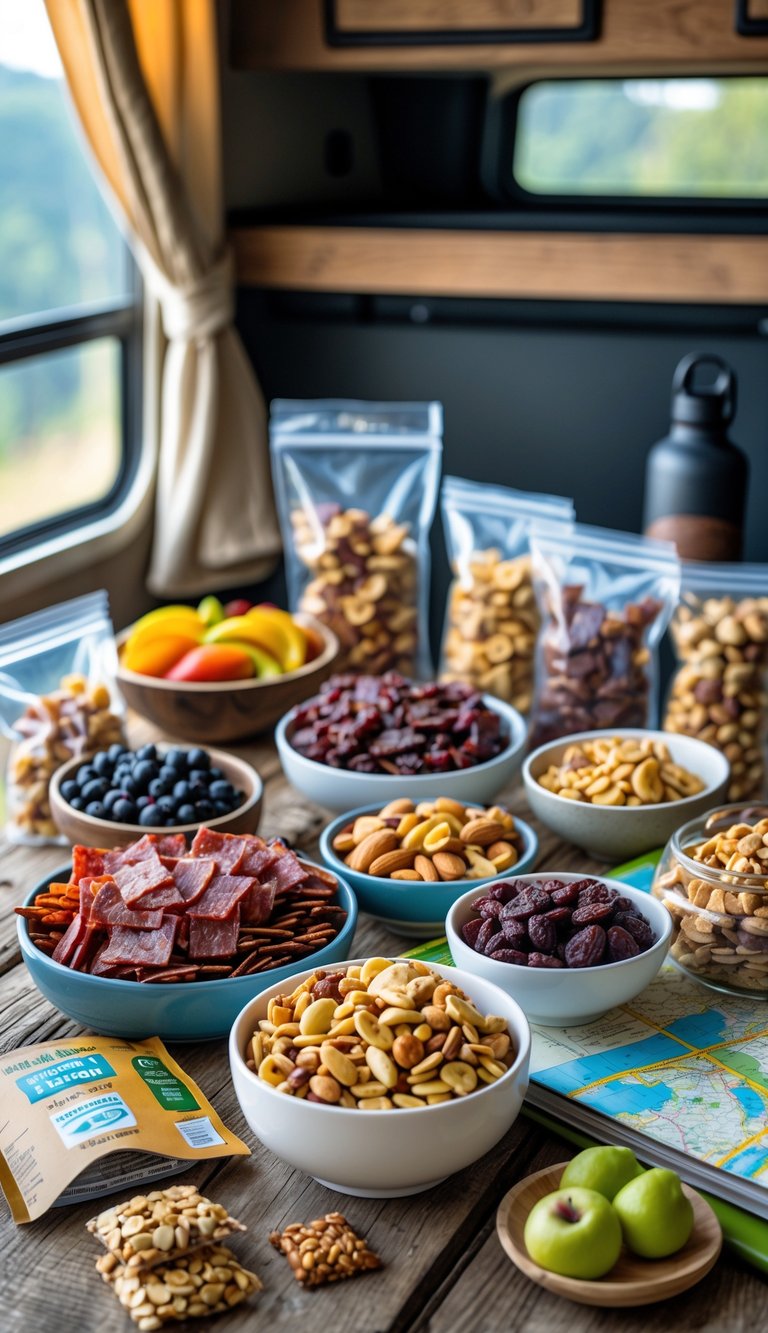
Pack a variety of shelf-stable snacks so you can grab food without stopping. Trail mix, nuts, jerky, granola bars, and dried fruit give you protein and energy on long drives.
Choose items that don’t need a cooler and resist heat. Individual packs cut down on crumbs and make portion control easy.
Keep snacks in easy-to-reach spots like the glove box or a labeled bin. Rotate supplies on longer trips to avoid stale or soft items.
PRO TIP
Buy a few single-serve packs to share and reduce waste. Also include a small trash bag and hand wipes to keep the RV tidy while snacking.