Last Updated on March 21, 2026
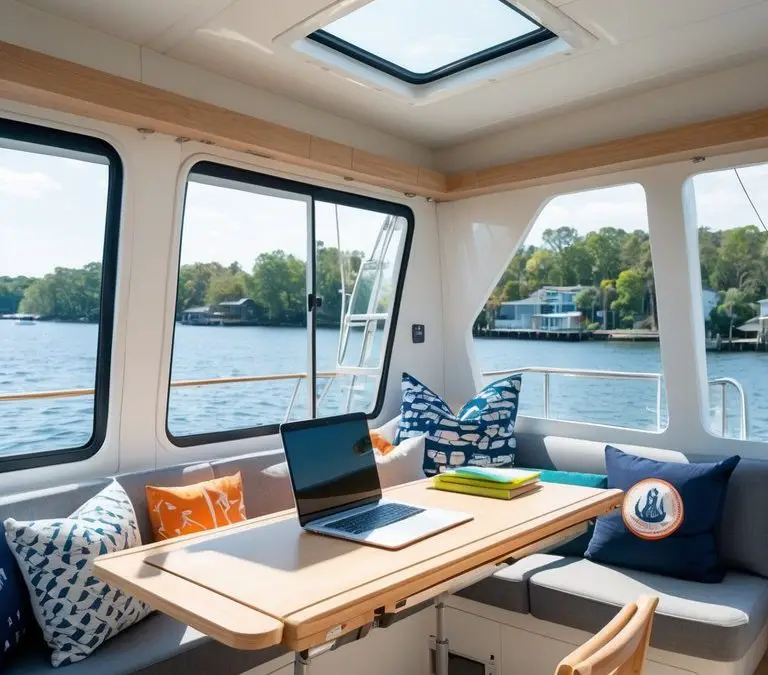
You live and learn where space matters, and homeschooling on a houseboat asks you to be both creative and practical. This article helps you shape a calm, organized learning spot that fits tight corners, moves with the tide, and keeps daily lessons on track.
You’ll find simple, space-smart solutions that make teaching and learning easy, tidy, and pleasant even in small, floating homes.
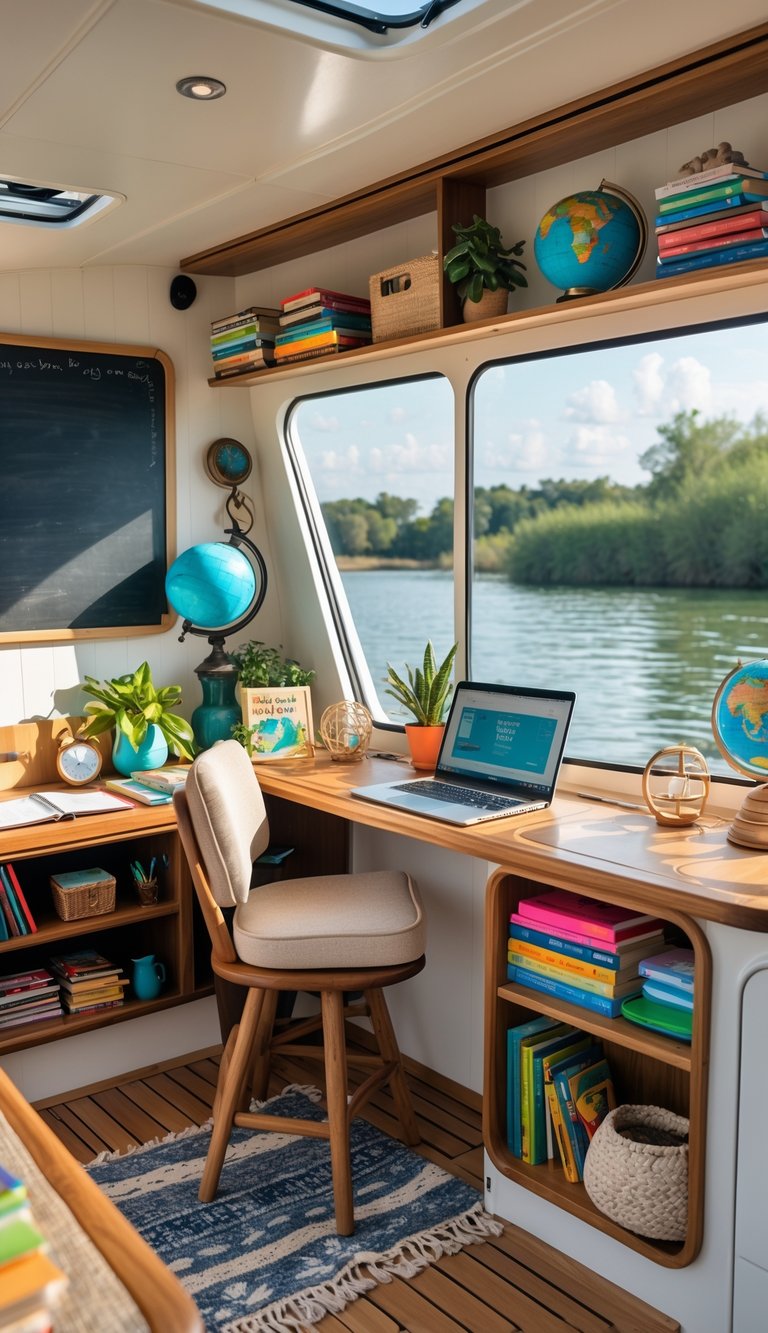
Use these ideas to build work zones, stash supplies, and keep focus without crowding your living area. Small changes like fold-down desks, stackable bins, and multiuse furniture will help you make the most of every inch.
1) Compact fold-down desk with storage
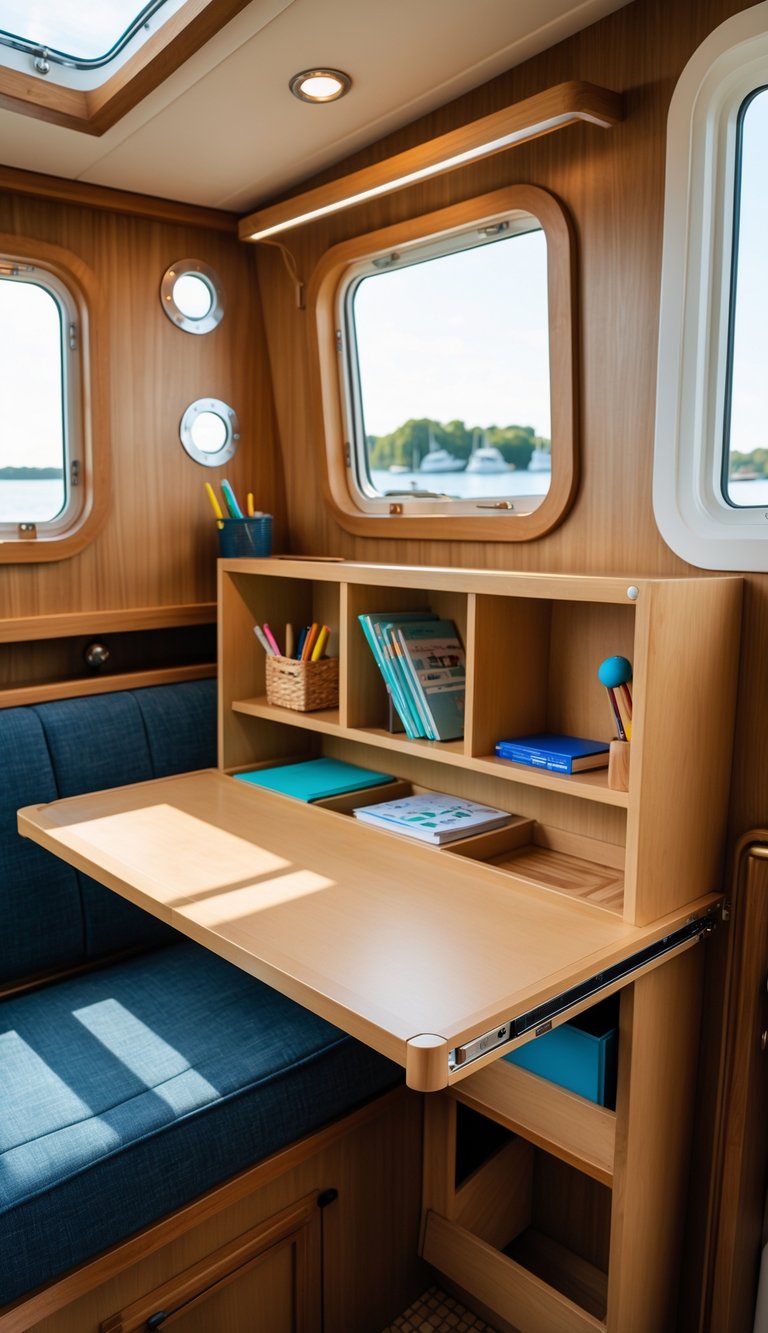
A compact fold-down desk saves space on a houseboat while giving your child a steady place to work. Mount it on a wall or bulkhead so it folds flat when not in use, freeing up the cabin for play or chores.
Choose a model with built-in shelves or cubbies to hold books, pencils, and a tablet. That keeps supplies tidy and within reach without needing extra furniture.
Pick a sturdy latch and quality hinges so the desk stays safe when open and secure when closed. Add non-slip pads underneath to protect surfaces and reduce noise while rocking.
PRO TIP
Install a small LED strip under the shelf for even lighting without glare.
2) Magnetic whiteboard for quick notes
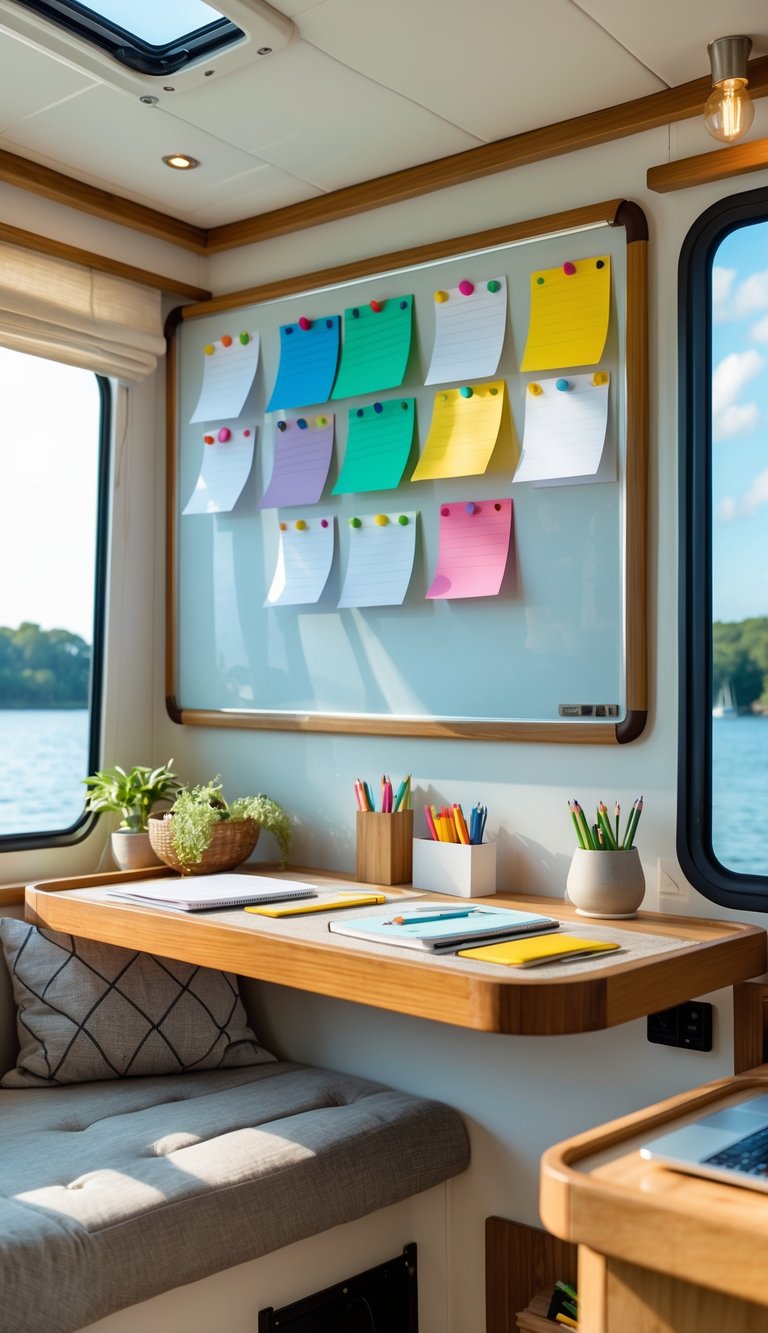
A magnetic whiteboard gives you a fast surface for ideas, schedules, and reminders. You can stick it to a wall or lean it on a shelf to save floor space on a houseboat.
Use colorful markers to mark lessons, chores, and meal plans. Magnets hold flashcards, printable worksheets, and small art projects where you can see them.
Keep a small basket or tray for markers and erasers so things don’t float away when the boat rocks. A wipe-clean board makes transitions smooth between subjects and helps kids stay on task.
PRO TIP
Choose a magnetic board with a durable surface and strong magnets so papers don’t slide off when the boat moves.
3) Under-seat storage benches
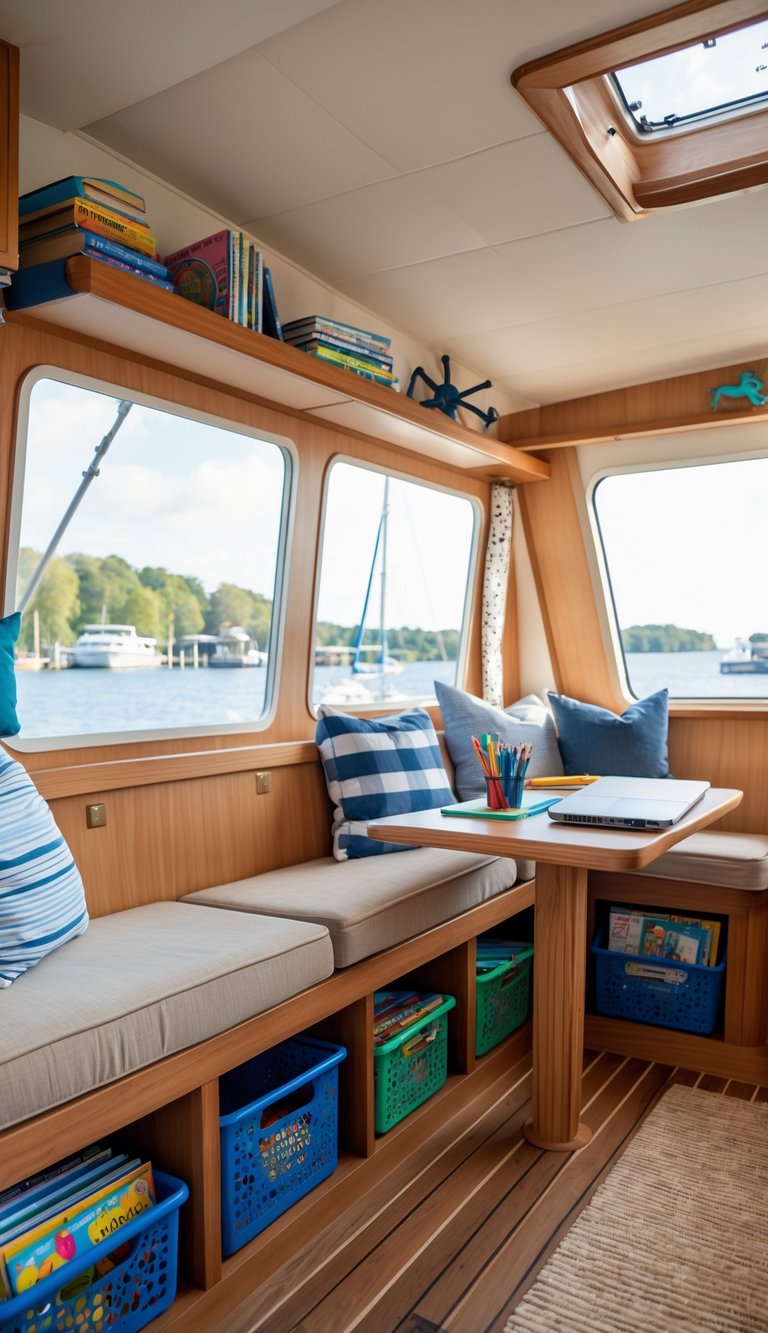
Under-seat storage benches give you a place to sit and a place to hide supplies. You can store textbooks, art supplies, games, and spare cushions where kids can reach them easily. This keeps the main living area tidy and makes cleanup faster between lessons.
Pick benches that fit your boat’s width and weight limits so you don’t affect stability. Look for waterproof materials or add liners to protect papers and fabrics from damp. Use labeled bins inside the bench to keep items sorted by subject or age.
PRO TIP
Place frequently used items in the top layer and less-used or seasonal items at the back. Add soft-close hinges so fingers stay safe during lively homeschool moments.
4) Modular bookshelves that fit tight spaces
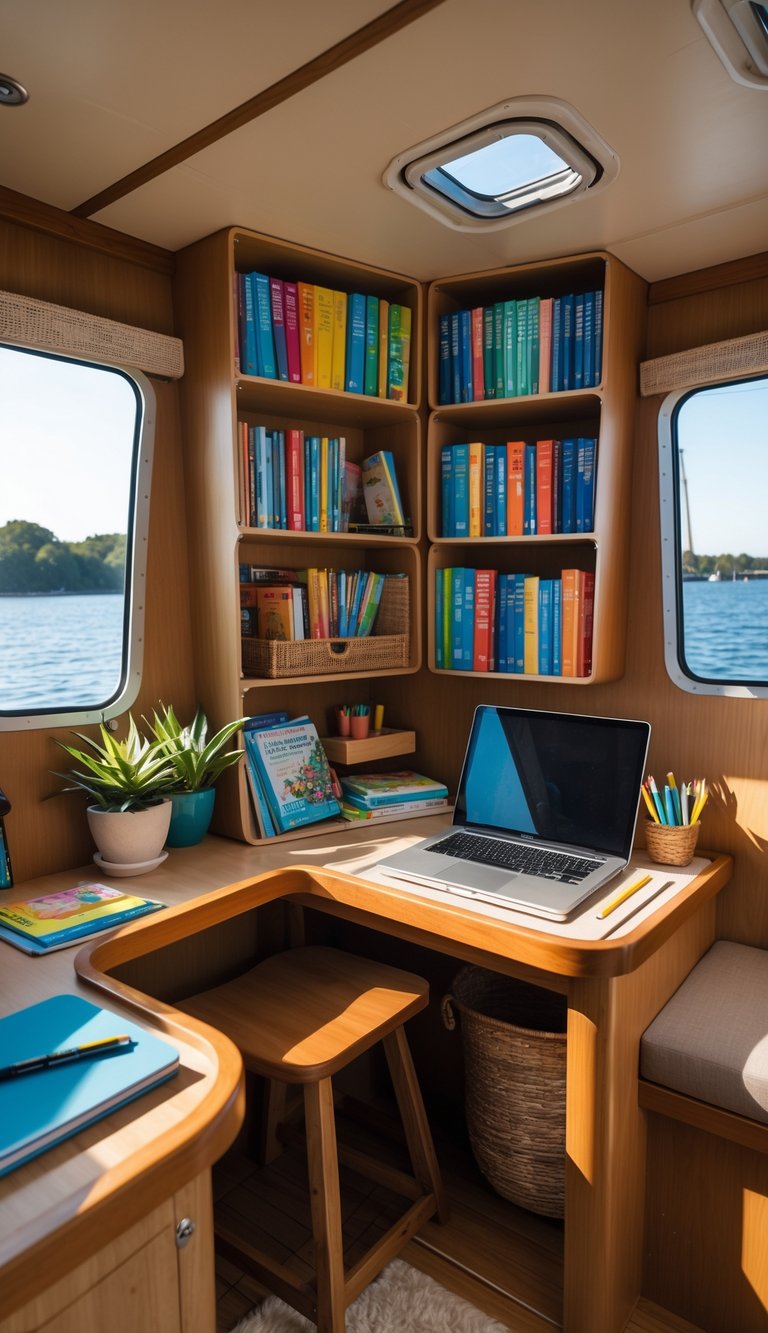
Modular bookshelves let you shape storage to your houseboat’s odd corners. You can stack, spread, or tuck units under stairs and windowsills to keep books and supplies handy without crowding the room.
Choose pieces that change with your needs. Some convert into desks or fold flat when you need floor space for projects or playtime.
Pick lightweight, water-resistant materials to handle humidity. Anchor taller units to walls for safety while underway.
PRO TIP
Measure narrow gaps before buying. A few inches saved can mean the difference between a perfect fit and wasted space.
5) Clip-on LED task lights
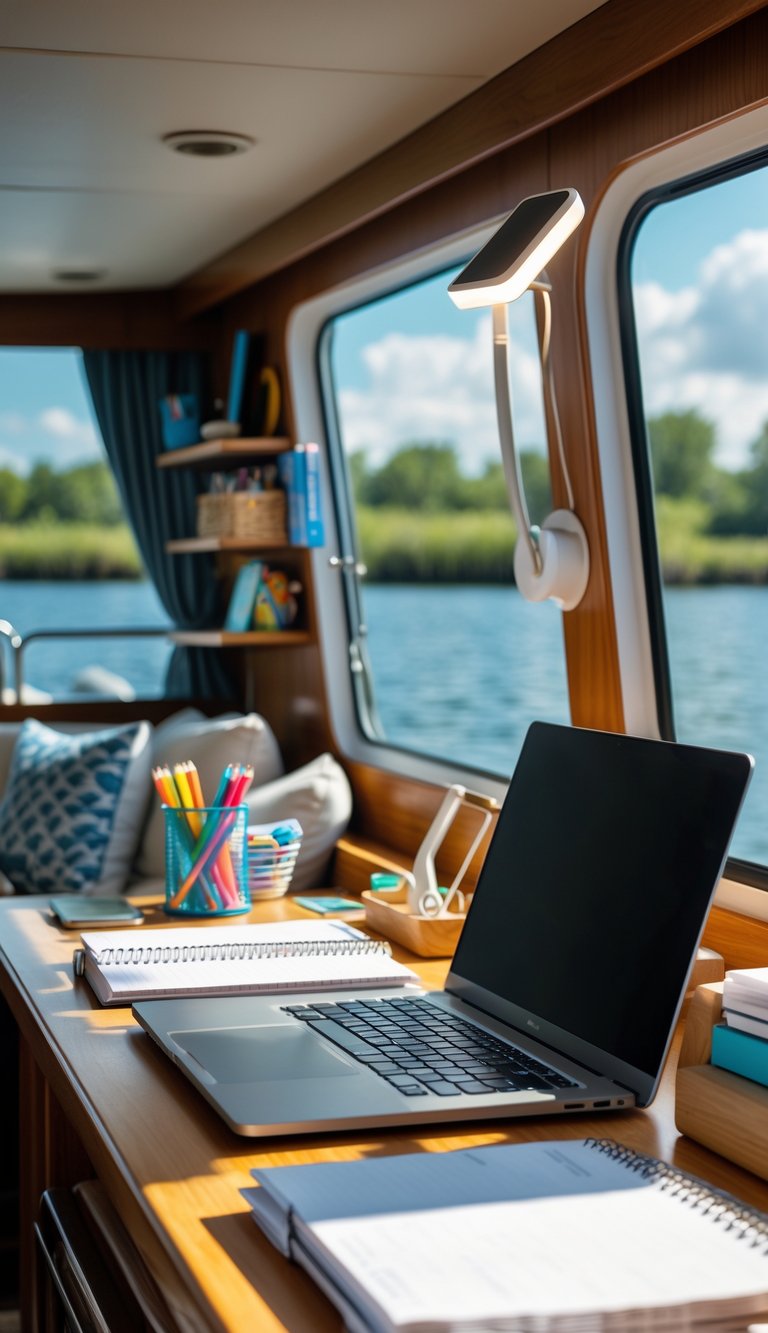
Clip-on LED lights save space and give focused light where your child needs it most. You can attach them to a shelf, bunk, or table edge to create a bright work spot without taking up surface area.
Look for lights with adjustable necks and dimming settings so you can change brightness for reading, writing, or craft work. LEDs stay cool and use less power, which matters on a houseboat.
Clip-on lights are portable, so you can move learning stations easily around tight quarters. They also help reduce eye strain by putting light exactly where it’s needed.
PRO TIP
Choose a model with a strong clip and a rechargeable battery to avoid constant wiring.
6) Portable lap desks
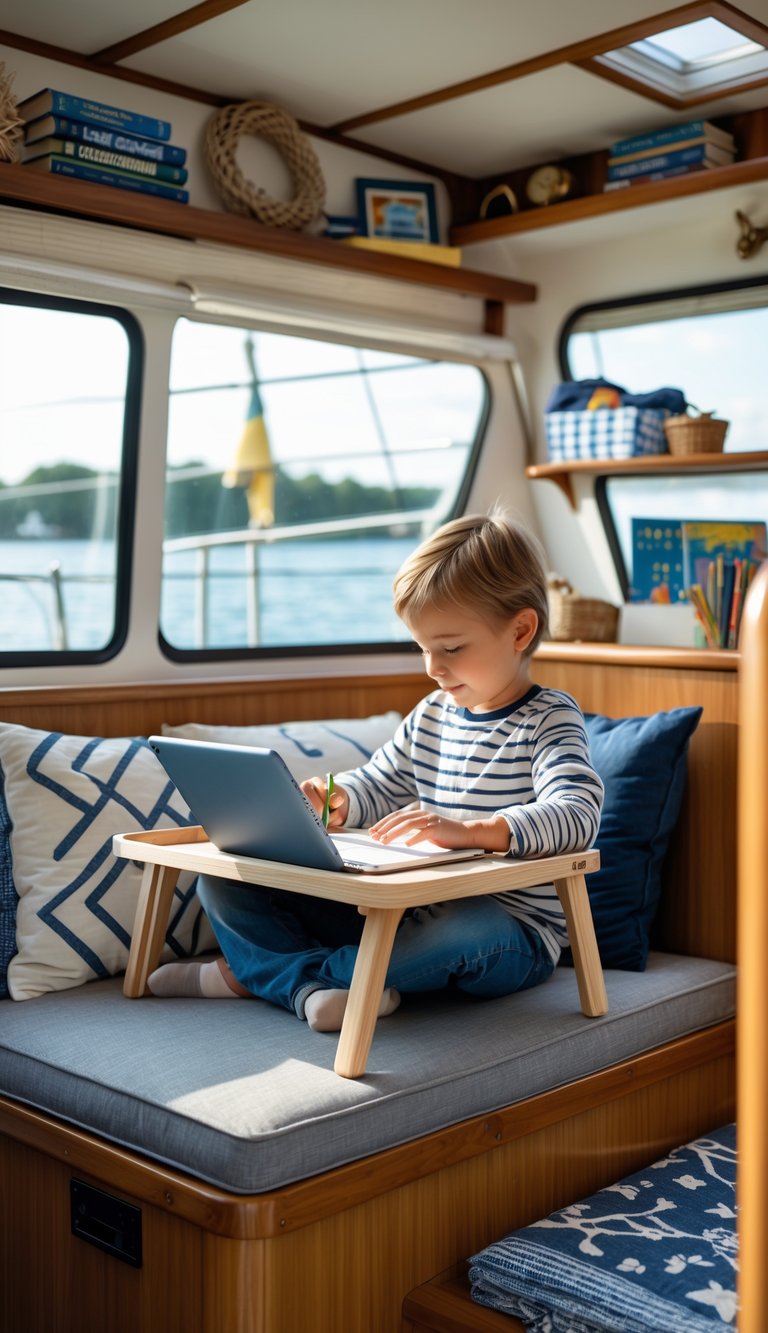
Portable lap desks let you move learning to any comfy spot on the houseboat. You can study on the deck, in a cabin, or even on a cushioned bench without dragging a big desk around.
Look for lap desks with a flat surface and a soft bottom for comfort. Some have built-in storage or a cup holder to keep pencils and snacks tidy while you work.
A lap desk helps keep devices steady and books open, which reduces distractions. You can grab one quickly when a kid wants to switch rooms or join an outdoor lesson.
PRO TIP
Choose a lightweight, wipeable model so you can clean spills fast and carry it between tight spaces easily.
7) Wall-mounted art display clips
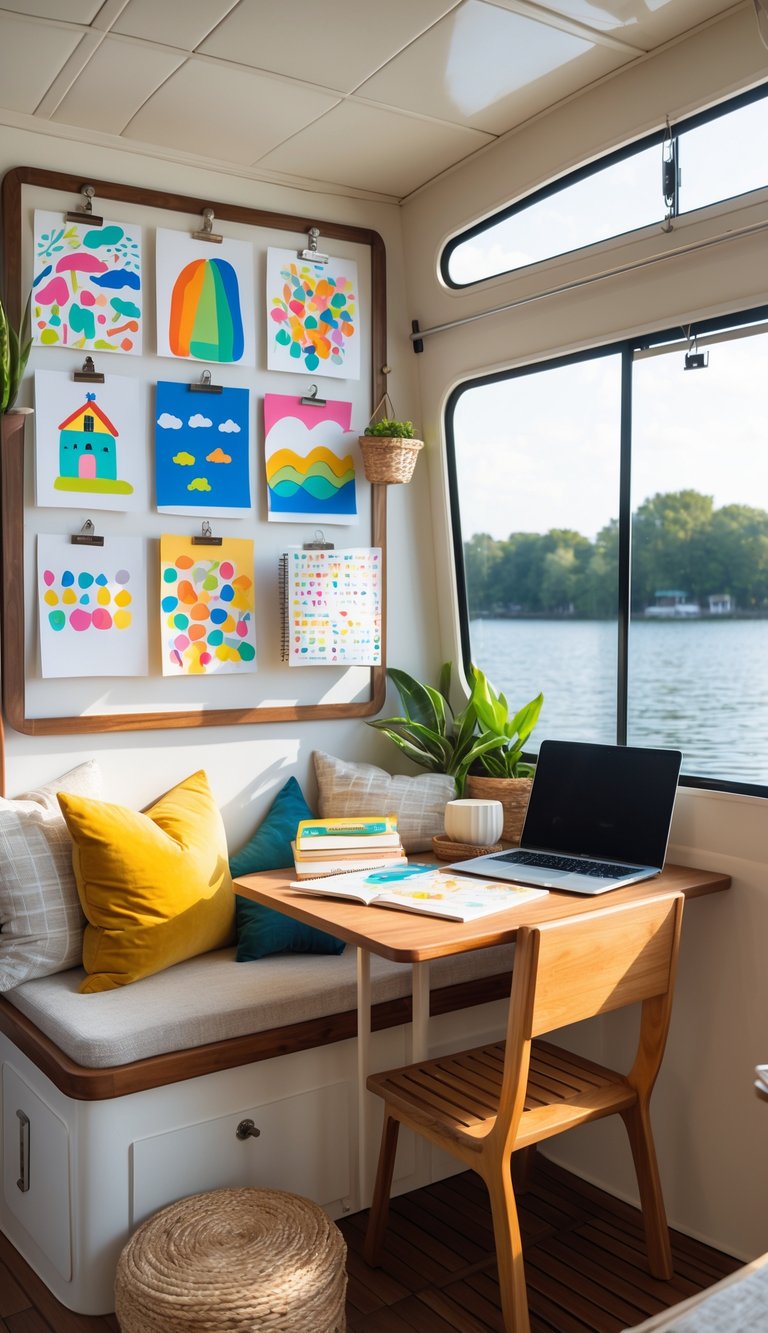
You can mount simple clip strips or individual clips along a wall to show drawings, maps, and projects. Clips let you swap pieces quickly, so your space stays fresh without taking up floor area.
Choose rust-resistant clips and anchors for a houseboat’s moist air. Metal clips with wooden backing look warm and fit small spaces, and they keep paper flat for easy viewing.
Place a few rows at different heights so kids of all ages can reach their work. You can also clip up thin sketchbooks or science charts for easy reference during lessons.
PRO TIP
Use removable adhesive hooks if you don’t want holes in the wall. They hold light displays and make it easy to change layouts as your homeschool needs shift.
8) Multiuse furniture like convertible tables
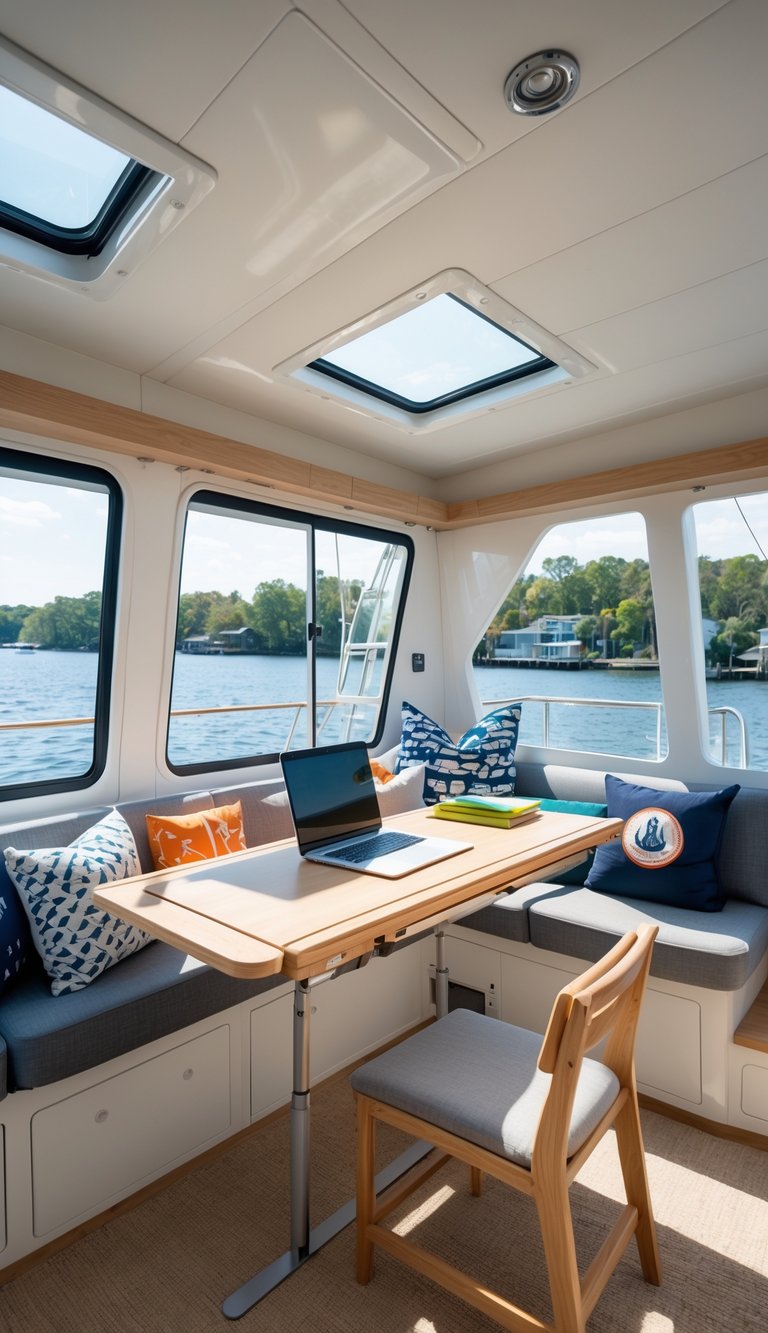
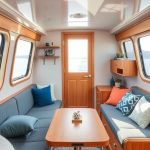
Multiuse furniture saves space and clears clutter. You can use a convertible table for meals, crafts, lessons, and storage, all in one spot.
Choose tables that fold, extend, or flip to change size quickly. Some models tuck away when not needed, giving you more floor space for play or projects.
Look for durable surfaces that resist spills and are easy to clean. Smooth edges and sturdy locks help keep kids safe during transitions.
PRO TIP
Put baskets or labeled bins under the table to keep supplies close but tidy. That way you switch activities fast and stay organized on your houseboat.
9) Noise-cancelling headphones for focus
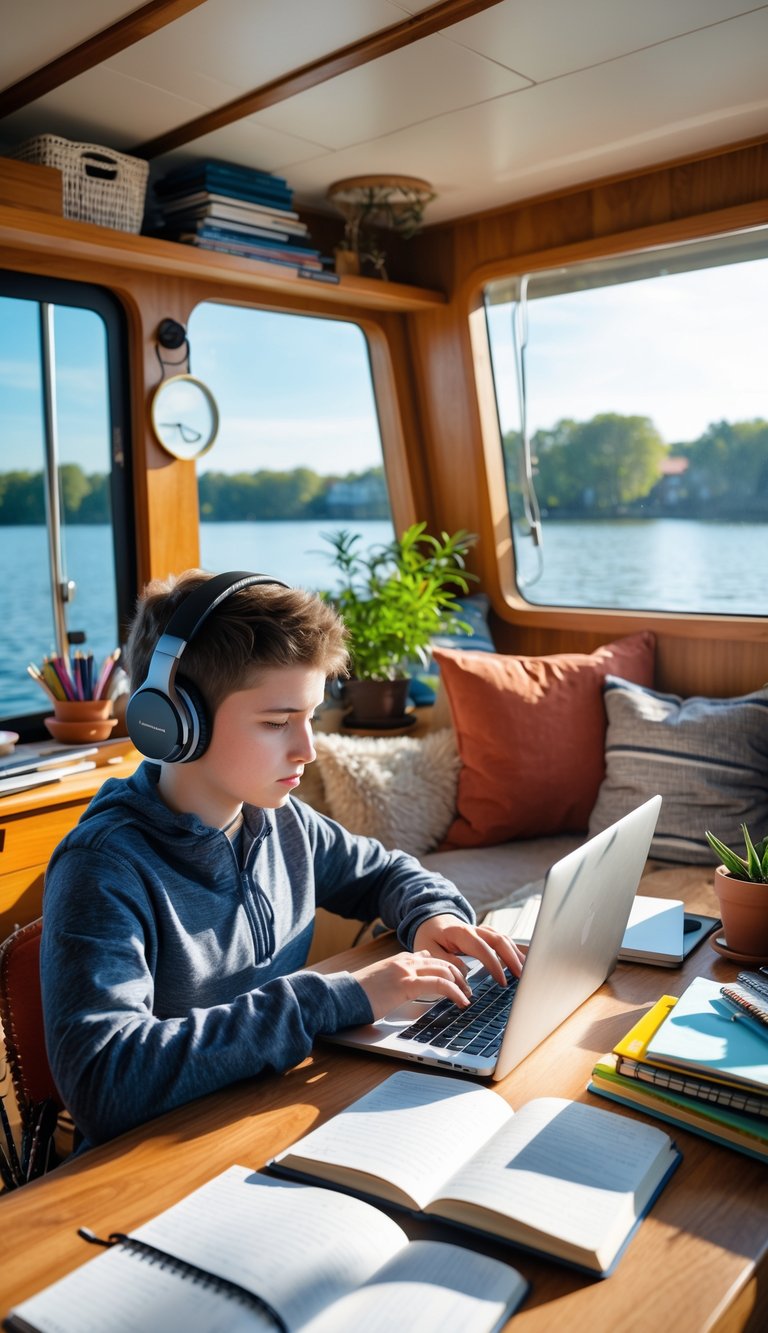
Noise-cancelling headphones help you keep a steady learning zone on a moving houseboat. They cut steady engine hum and dock noises so your child can hear lessons and think clearly.
Pick a comfortable, over-ear pair for long study sessions. Many brands offer strong noise control and good sound for speech and videos.
Use them during read-alouds, online classes, or quiet work times. Remember to check battery life and fit so they stay comfy and effective.
PRO TIP
Let your child take short breaks from wearing headphones to rest their ears. Keep a spare inexpensive set for shared use or guest visitors.
10) Stackable bins for school supplies
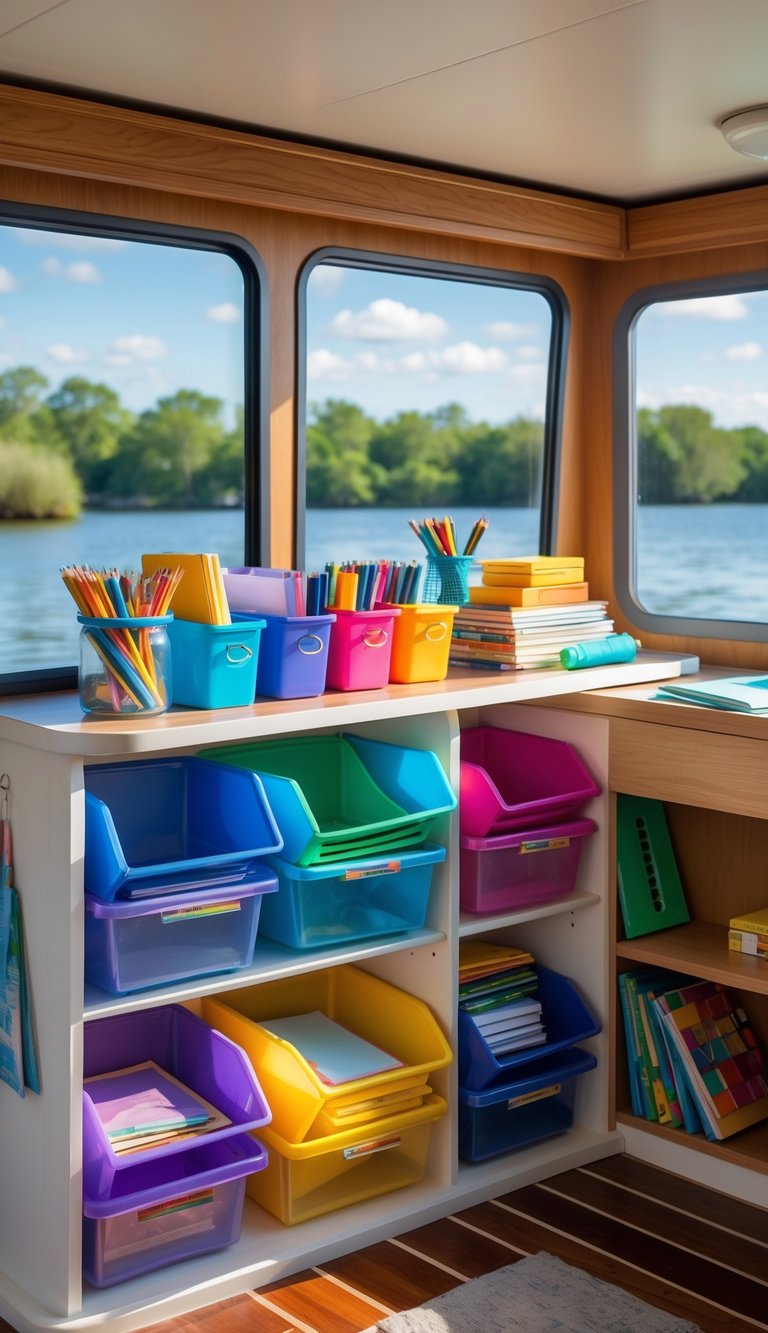
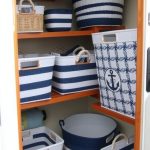
Stackable bins save space on a houseboat where every inch counts. You can keep books, art supplies, and worksheets neatly separated and within reach.
Choose clear or labeled bins so you and your kids can find items fast. Stackable designs make it easy to reconfigure storage as needs change.
Look for bins with lids and secure clips to prevent spills when the boat rocks. Lightweight plastic bins work well and slide onto narrow shelves or into cabinets.
PRO TIP
Place frequently used items on the middle shelves at eye level. Reserve top and bottom bins for seasonal or rarely used supplies.
11) Roll-out cart for learning materials
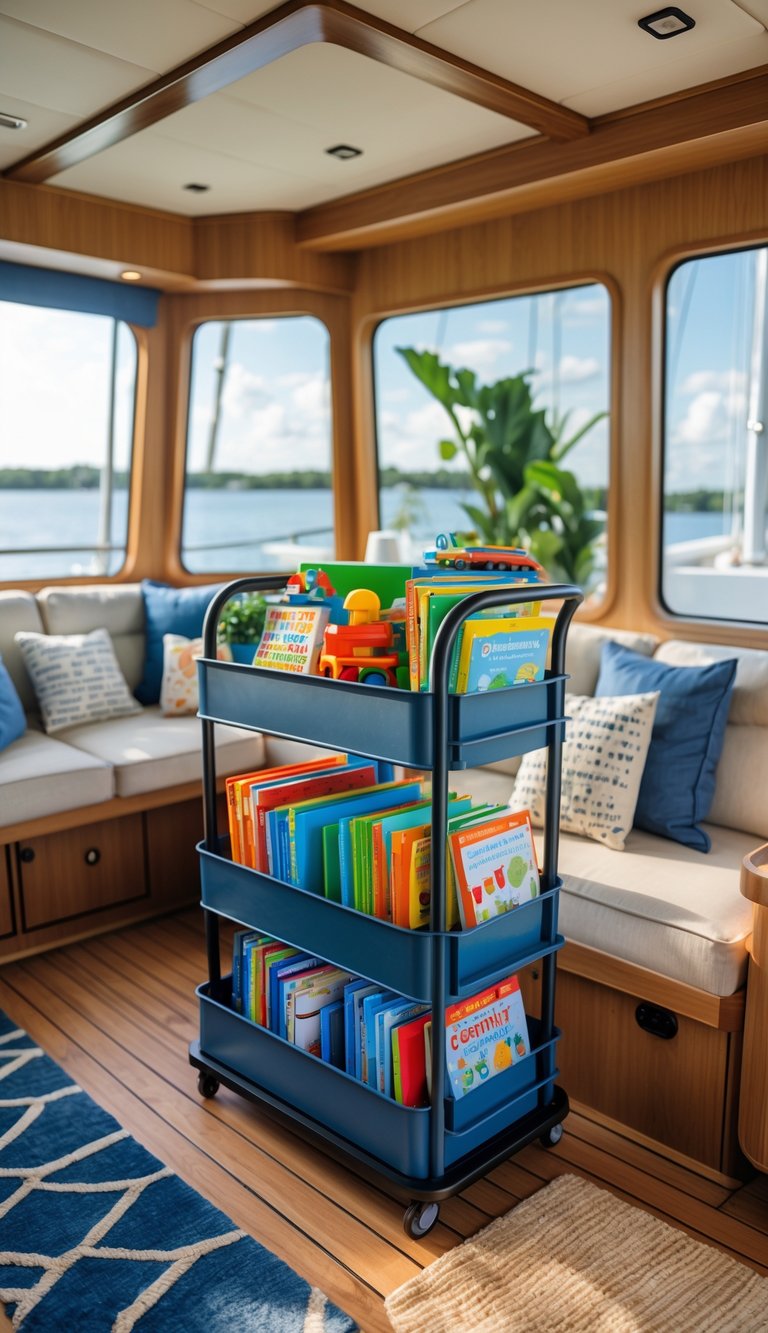
A roll-out cart gives you quick access to books, art supplies, and small manipulatives. You can tuck it under a counter or beside a seating area, then pull it out when lessons start.
Pick a cart with shallow drawers or open trays so nothing gets lost in deep bins. Wheeled carts let you move materials to different parts of the boat for noisy projects or quiet reading time.
Use clear bins or label each shelf to keep pencils, paper, and math tools separate. Rotate materials by week to avoid clutter and keep your lessons fresh.
PRO TIP
Secure the cart with a simple latch or strap when not in use so it won’t roll during wakes or rough weather.
12) Corkboard for schedules and reminders
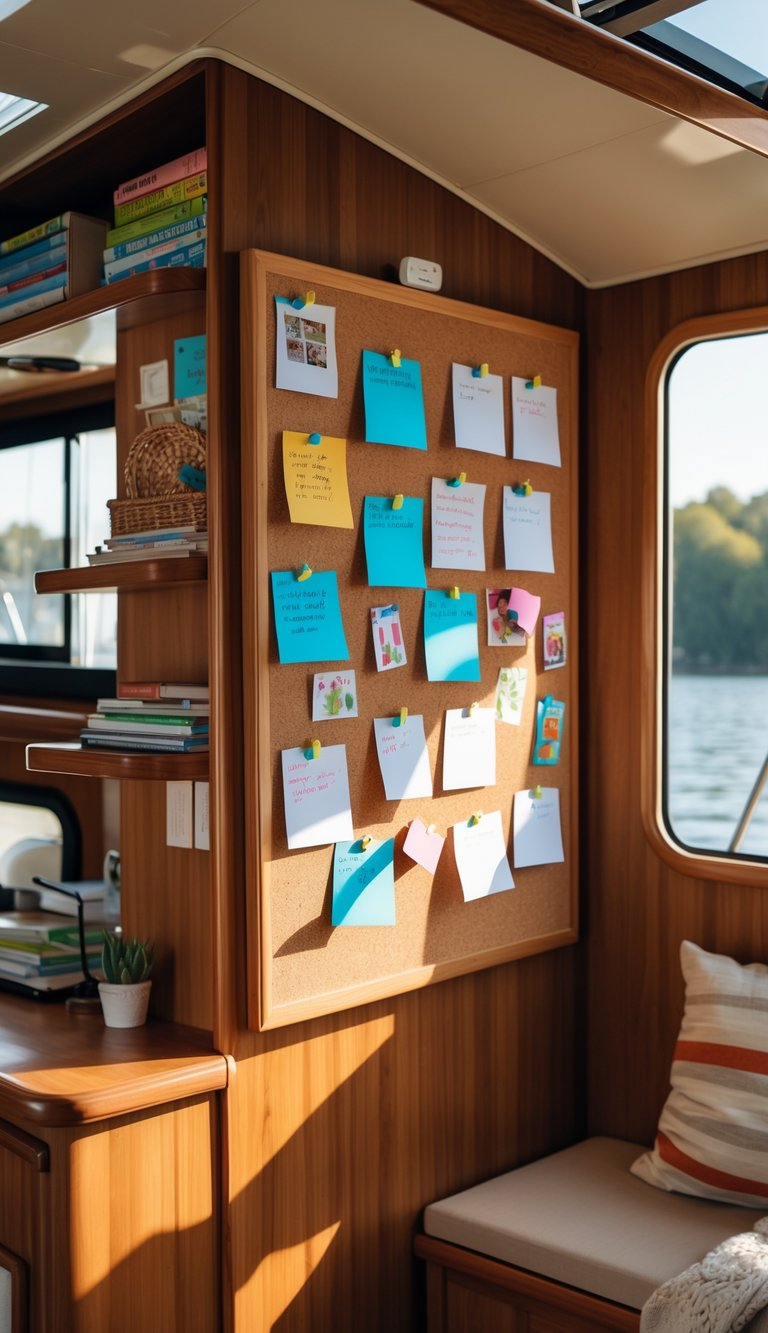
A corkboard gives your homeschool on a houseboat a clear, central spot for schedules and reminders. Pin daily lesson plans, field trip notes, and chore charts where everyone can see them easily.
Place the board near your main learning area or the galley so it stays visible during the day. Use color-coded pins or paper for different kids, subjects, or weeks to keep things tidy.
Swap out items weekly to avoid clutter and keep the board relevant. You can also attach small envelopes for permission slips or art supplies and a pocket for loose papers.
PRO TIP
Cover the cork with fabric to match your space and protect it from moisture. Use lightweight pins and laminated cards for durability on a moving boat.
13) Durable, water-resistant rugs
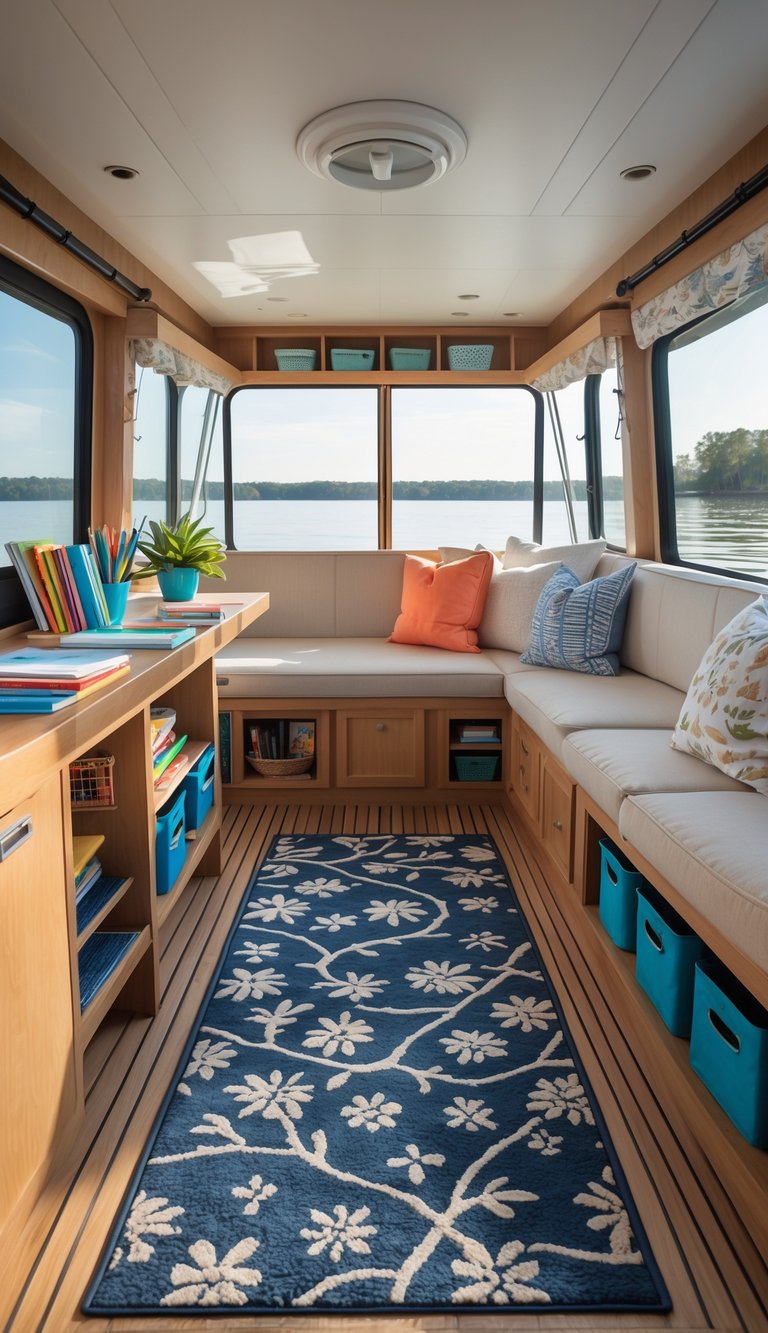
Pick rugs made from polypropylene, olefin, or nylon so they stand up to spills and dampness. These fibers resist stains and dry quickly, which helps on a houseboat where water and muddy shoes are common.
Choose low-pile or flatweave styles to keep tripping risks low and make cleaning easier. You can hose them off or spot-clean with mild soap, then air dry on the deck.
Rugs with rubber or marine backing stay put and protect floors from scratches and moisture. They also add color and a soft play area for lessons and crafts without trapping mildew.
PRO TIP
Measure your space before buying and pick a pattern that hides stains. Neutral tones hide dirt, while stripes can mask wear and traffic paths.
14) Adjustable-height stools
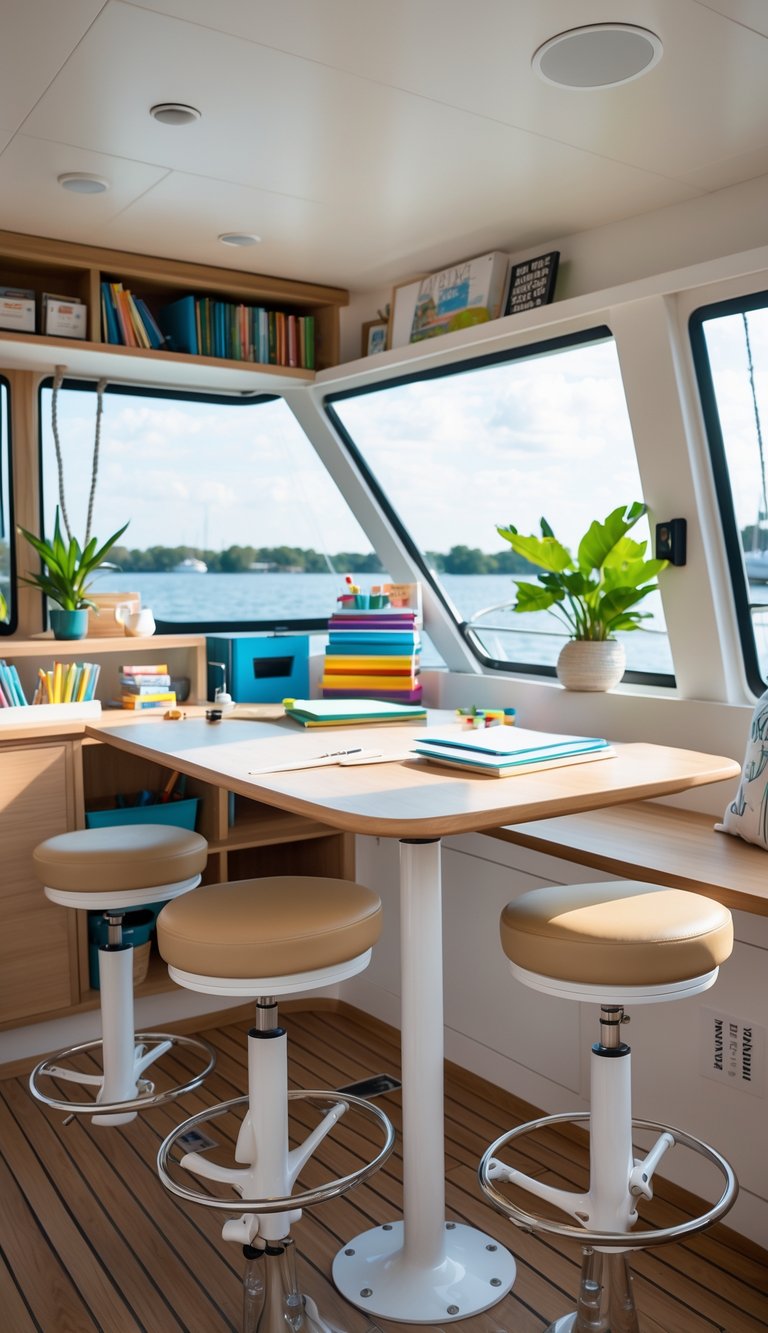
Adjustable-height stools help you fit seating to different tasks and people on a houseboat. You can raise a stool for a high counter or lower it for a small desk, so kids and adults work comfortably.
Choose stools with a stable base and non-marking feet to protect floors and reduce tipping risk. Lightweight, stackable models save space when you need room for activities or storage.
Look for easy-to-clean surfaces and durable materials that handle damp marine air. If you want movement, convex or wobble-style bases let you shift gently while studying.
PRO TIP
Pick stools with simple levers or knobs you can adjust without tools. That makes quick height changes easy during lessons or craft time.
15) Hanging file organizers
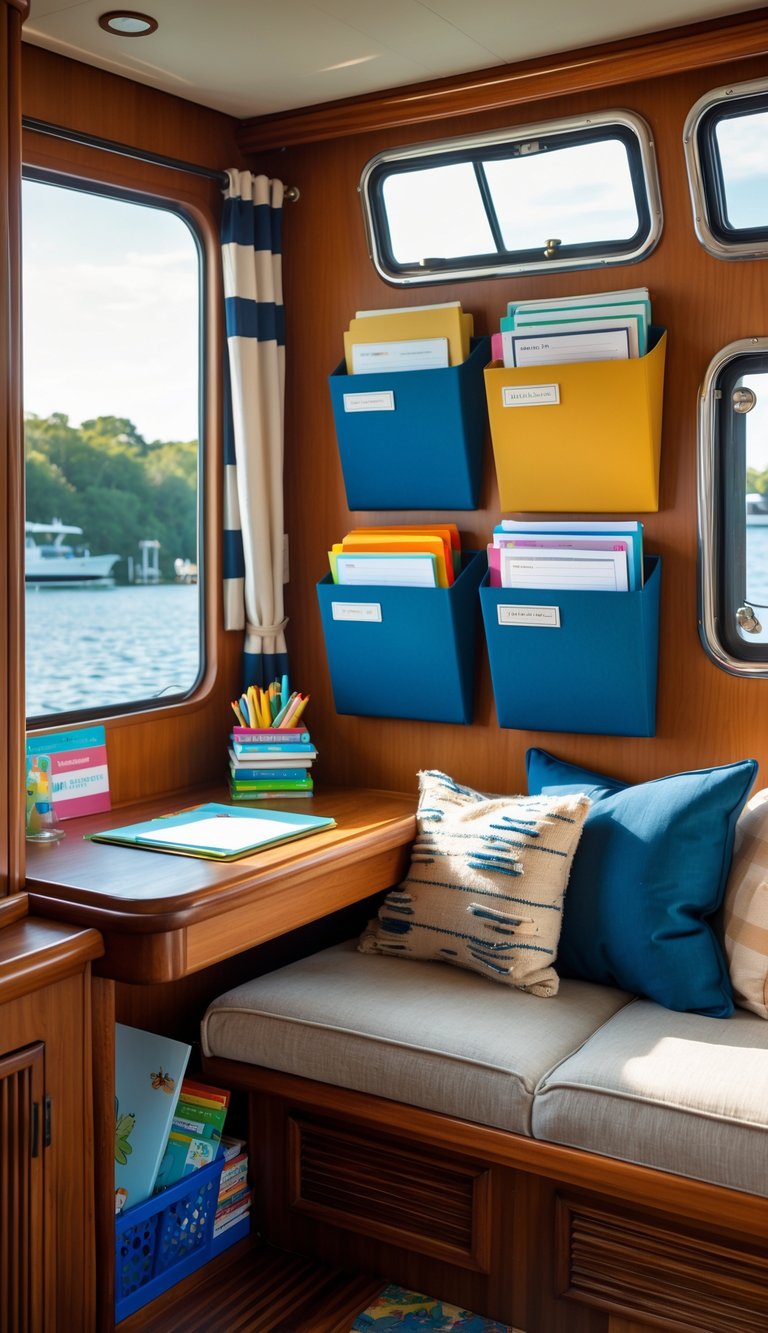
Hanging file organizers free up floor and shelf space, which matters a lot on a houseboat. You can mount them on a bulkhead or hang them from a rail to keep papers tidy and within reach.
Use them for lesson plans, workbooks, art paper, and permission slips. Clear or labeled folders help you grab what you need fast during a lesson.
Pick slim, water-resistant styles to handle damp conditions and motion. Velcro or clips prevent slips when the boat rocks, and you can move organizers easily between cabins.
PRO TIP
Attach a small clipboard or pocket to the front of each organizer for daily checklists. This keeps tasks visible and makes transitions smooth for both you and your kids.