Last Updated on August 25, 2026
You want your autumn riding gear ready, safe, and easy to grab when the weather flips. This article helps you sort helmets, jackets, boots, and battery care so your equipment stays in top shape through damp, cool days. You will learn practical storage ideas that protect gear, save space, and cut prep time before every ride.
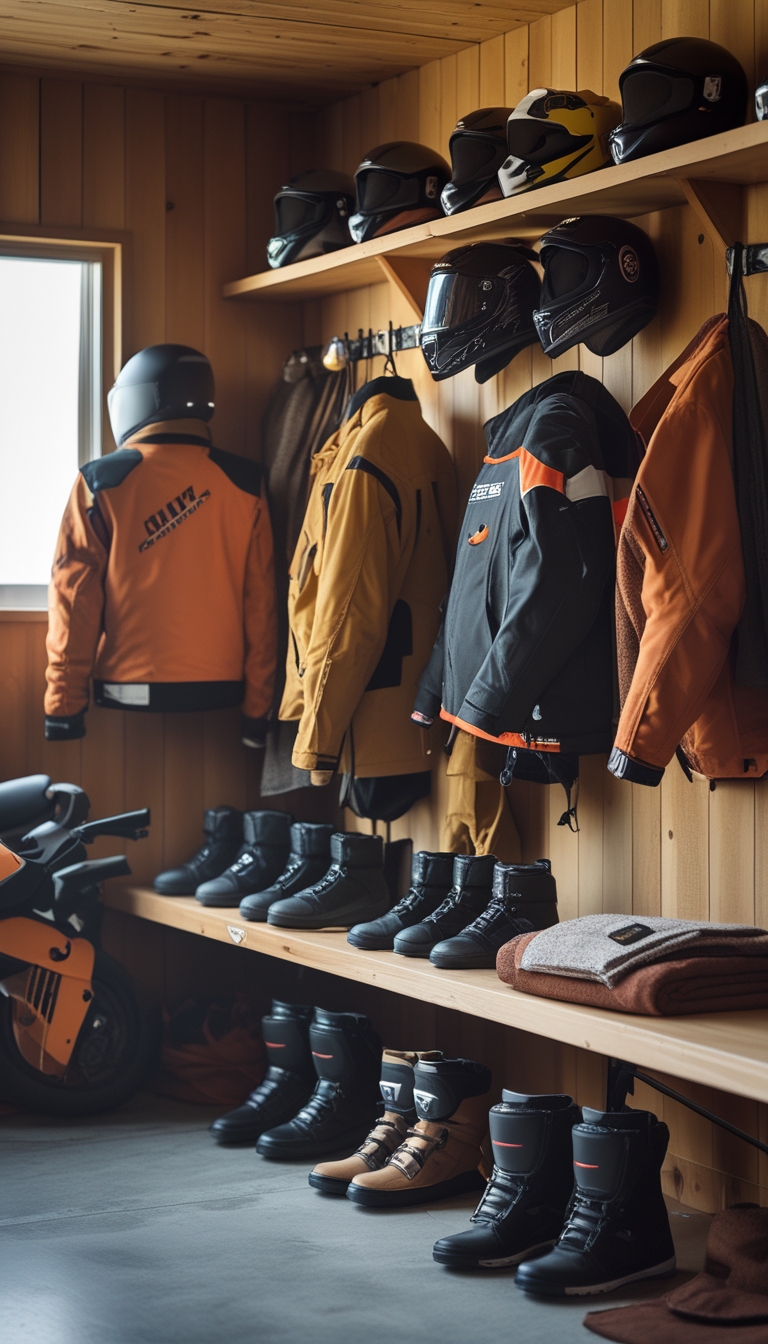
You’ll find options that fit garages, entryways, and small spaces, plus simple maintenance items that extend gear life. The tips cover wall hooks and shelves, breathable bags, boot boxes, dehumidifiers, and small extras like stabilizers and silica packs so you can pick what works for your setup.
1) Wall-mounted helmet shelf (heavy-duty steel)
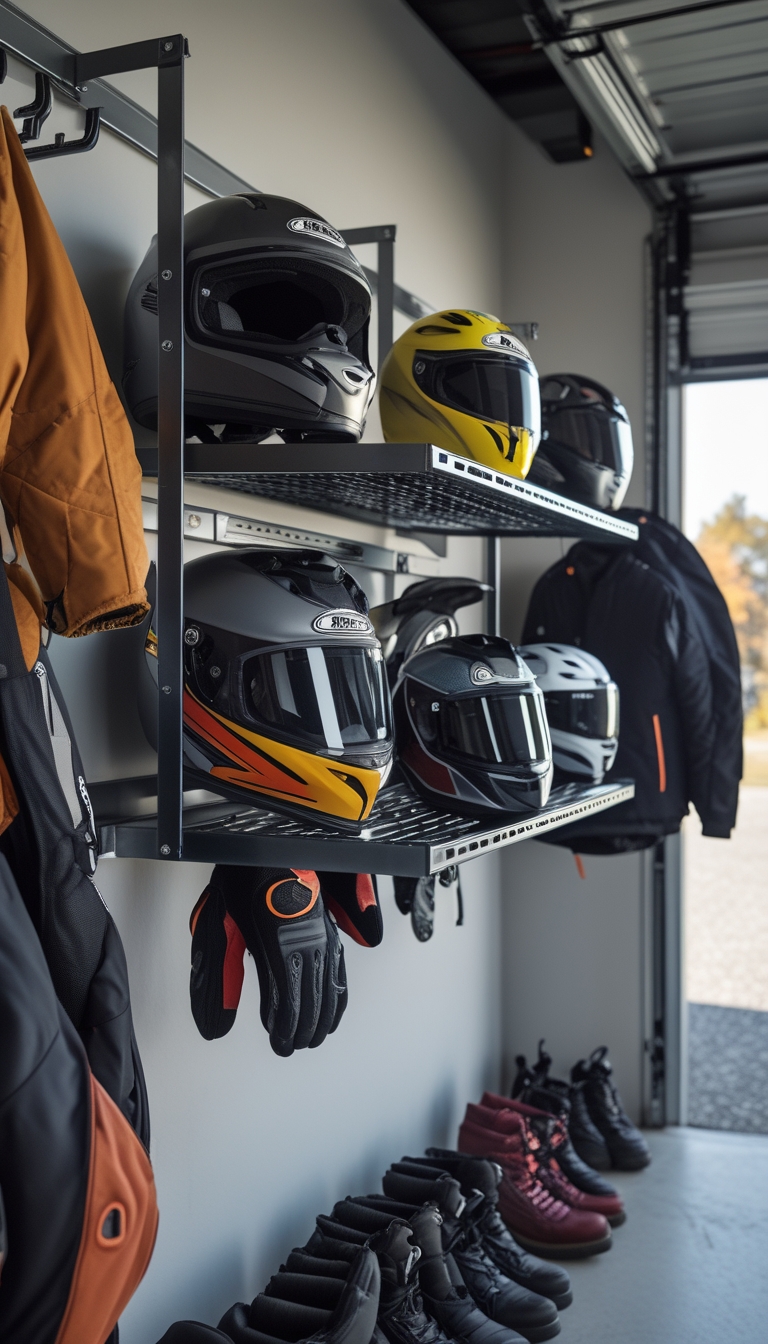
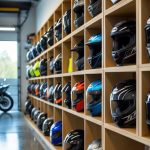
A wall-mounted helmet shelf made from heavy-duty steel saves floor space and keeps your helmets safe. You can mount it in a garage or entryway to keep gear off benches and out of the way.
Choose a shelf with padded supports or rounded bars to avoid scratches. Look for rust-resistant finishes and strong anchors so the shelf holds multiple helmets and small items like gloves.
Installation usually takes basic tools and one other person to help hold the shelf steady. Once mounted, the shelf also works for jackets, small bags, and display helmets.
PRO TIP
Mount the shelf at shoulder height for easy access and add adhesive foam where helmets touch metal to prevent wear.
2) Motorcycle jacket breathable garment bag
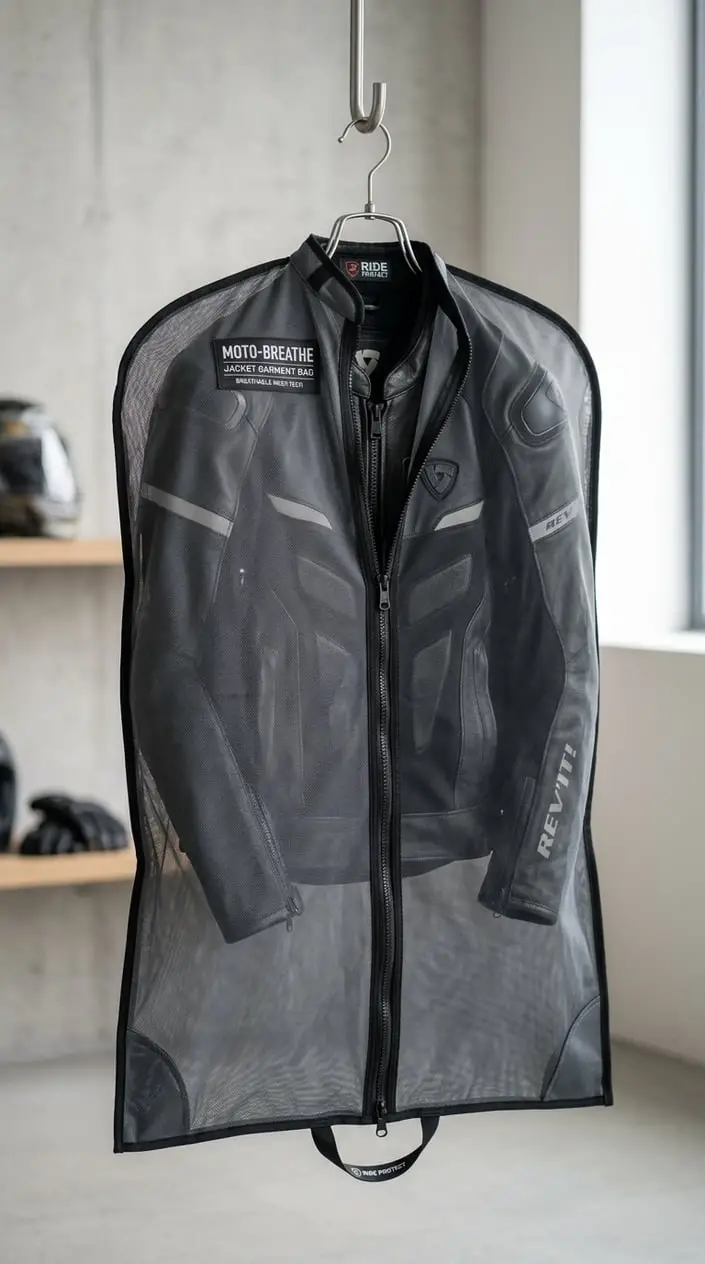
A Mesh garment bag helps keep your jacket ready for cool autumn rides. You can hang your jacket inside to dry after a wet ride, while the mesh lets air flow and prevents mildew.
The bag protects zippers and armor from dust and light knocks when stored in a garage or closet. It also keeps insects and small debris off your gear without trapping moisture.
PRO TIP
When you store a damp jacket, open all vents and remove electronics or liners first. Hang the bag in a shaded, well-ventilated spot to extend the life of your jacket.
3) Gloves drying rack with clips
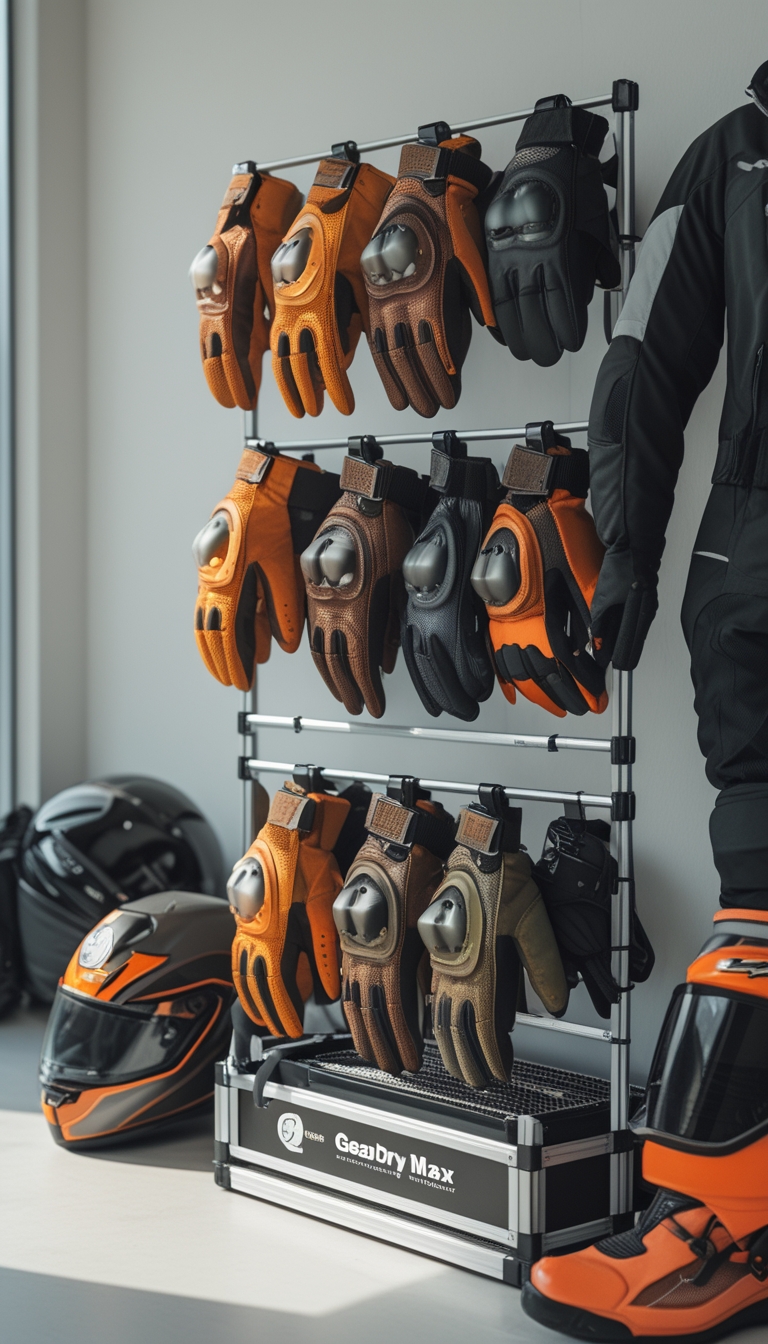
A gloves drying rack with clips keeps your gloves open and lets air move through them. You can hang several pairs at once, which saves space in your garage or entryway.
The GearDry Max style uses sturdy clips that hold gloves without crushing fingers. This helps retain shape and speeds up drying after a wet ride.
You place the rack near a heater or fan for faster results, but avoid direct heat that can damage materials. The clips work for leather, textile, and insulated liners, so you can dry different types of gloves together.
PRO TIP
Attach the rack at waist height so you can easily clip and remove gloves with one hand. Clean the clips occasionally to avoid salt or dirt build-up.
4) Waterproof boot storage box
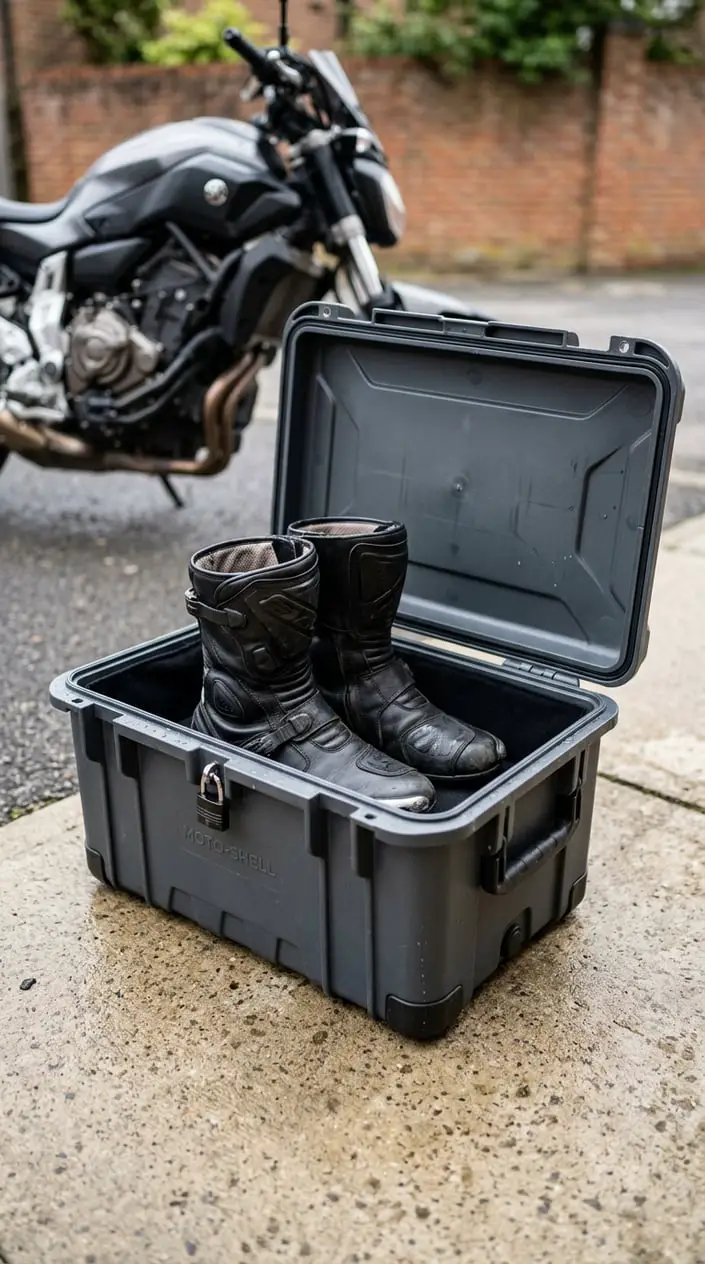
A waterproof boot storage box keeps your boots dry and ready all season. You can store wet or muddy boots without worrying about leaks or damp smells.
The Box seals out rain and snow with a tight lid and gasket. It also has a sturdy latch and molded handles so you can move it easily.
Inside, the box fits tall motorcycle boots and leaves room for liners or insoles. The hard shell protects against knocks, pests, and damp concrete when stored in a garage or shed.
PRO TIP
Store a small silica gel pack inside to cut moisture and odors. Wipe boots dry before storing to extend their lifespan.
5) Motorcycle cover with breathable fabric
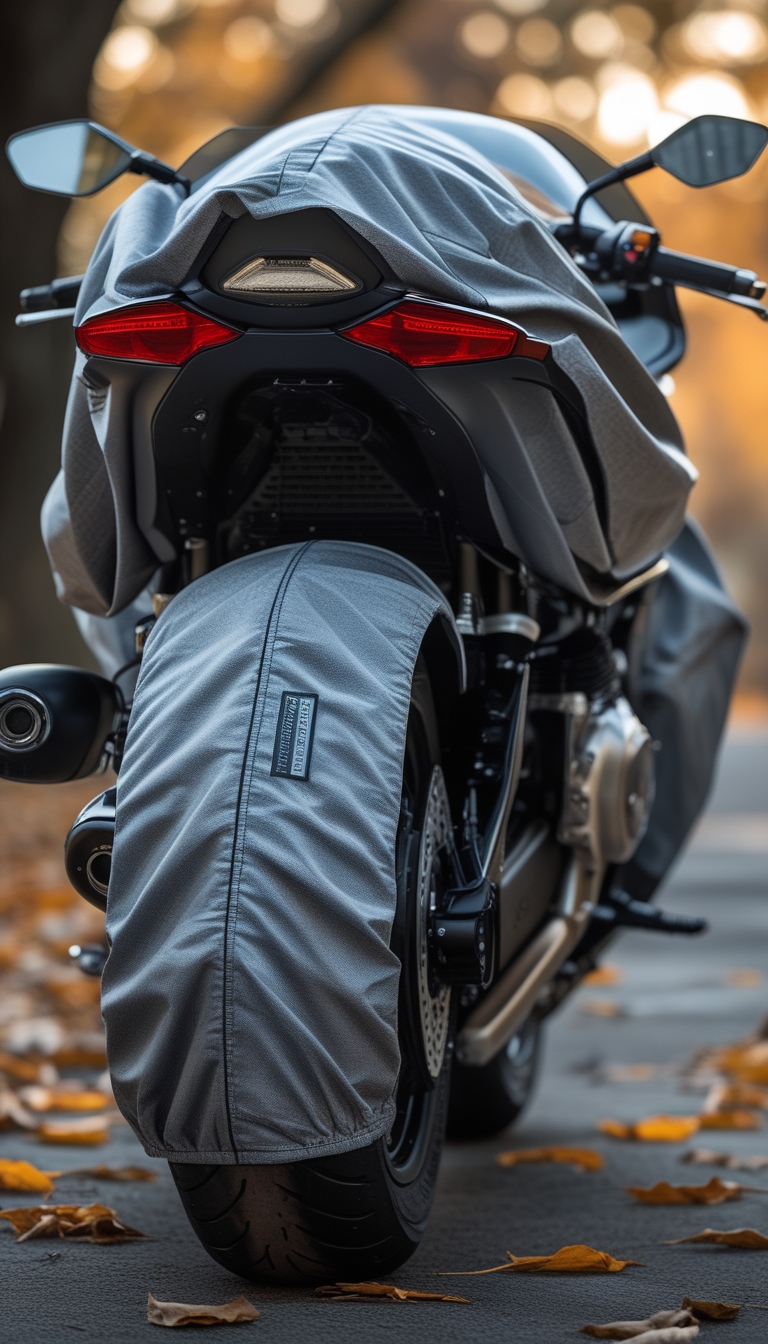
A breathable cover keeps moisture from building up under the fabric while protecting your bike from rain, dust, and sun. You can leave this cover on for short-term outdoor parking or indoor storage without trapping condensation that causes rust.
Look for a fitted design that hugs your bike to cut down on flapping in wind. Oxford-style covers often use sealed seams and a tough outer layer to stop water while letting vapor escape.
A good cover also includes tie-downs or straps to secure it during storms. Check for antenna or mirror pockets so the cover sits smoothly and won’t rub paint.
PRO TIP
Before covering, wipe your bike dry and remove loose dirt. This helps the breathable fabric work best and keeps your bike looking good.
6) Battery tender and maintainer
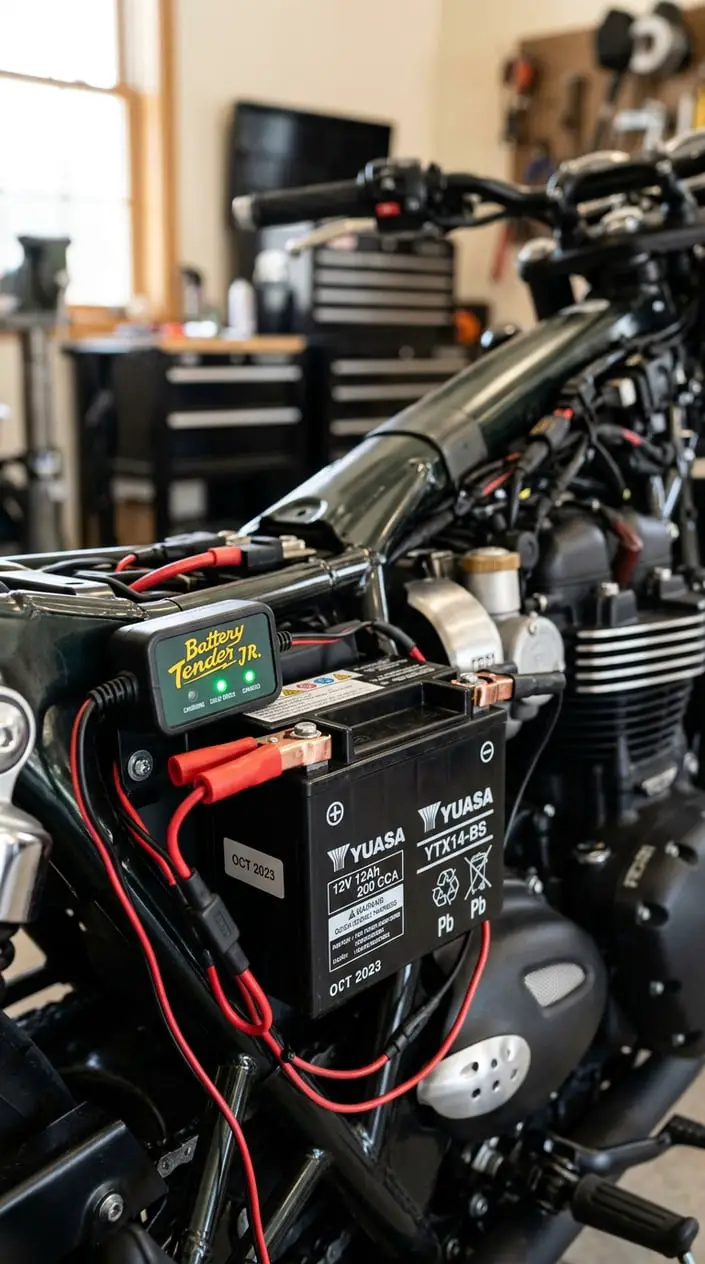
A battery tender keeps your motorcycle battery healthy during cool, damp autumn months. It’s small and can stay connected safely for weeks without overcharging.
It monitors voltage and applies a gentle float charge when needed. This prevents sulfation and keeps your battery ready for short rides or sudden cold snaps.
You can mount it in a sheltered spot or tuck it under the seat. The LCD helps you see charge status at a glance, so you know when your bike is ready.
PRO TIP
Plug the tender in after each ride if you won’t use the bike for several days. This keeps the battery topped up and makes cold mornings easier.
7) Corrosion inhibitor spray
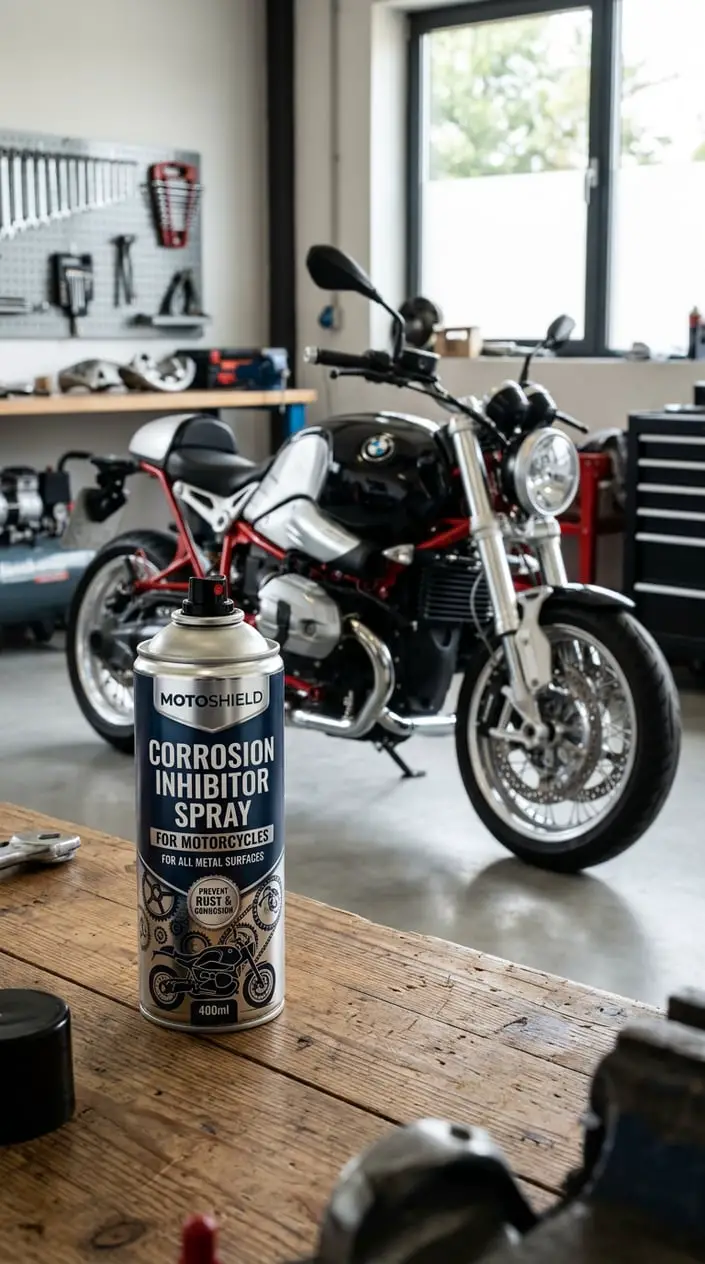
The spray is a clear, thin film that helps stop corrosion on metal parts. You can use it on exposed bolts, frame sections, and electrical contacts before storing your bike for autumn.
Spray a light, even coat and let it dry fully. The film is non-sticky and won’t attract dirt or dust, so it suits areas that need to stay clean.
Keep spray windows short and target only metal surfaces. Avoid brake discs, pads, and hot engine parts to prevent safety issues.
PRO TIP
Wipe excess off with a clean cloth after a few minutes. Reapply before wet weather or every few months for long-term storage.
8) Fuel stabilizer (STA-BIL Storage)
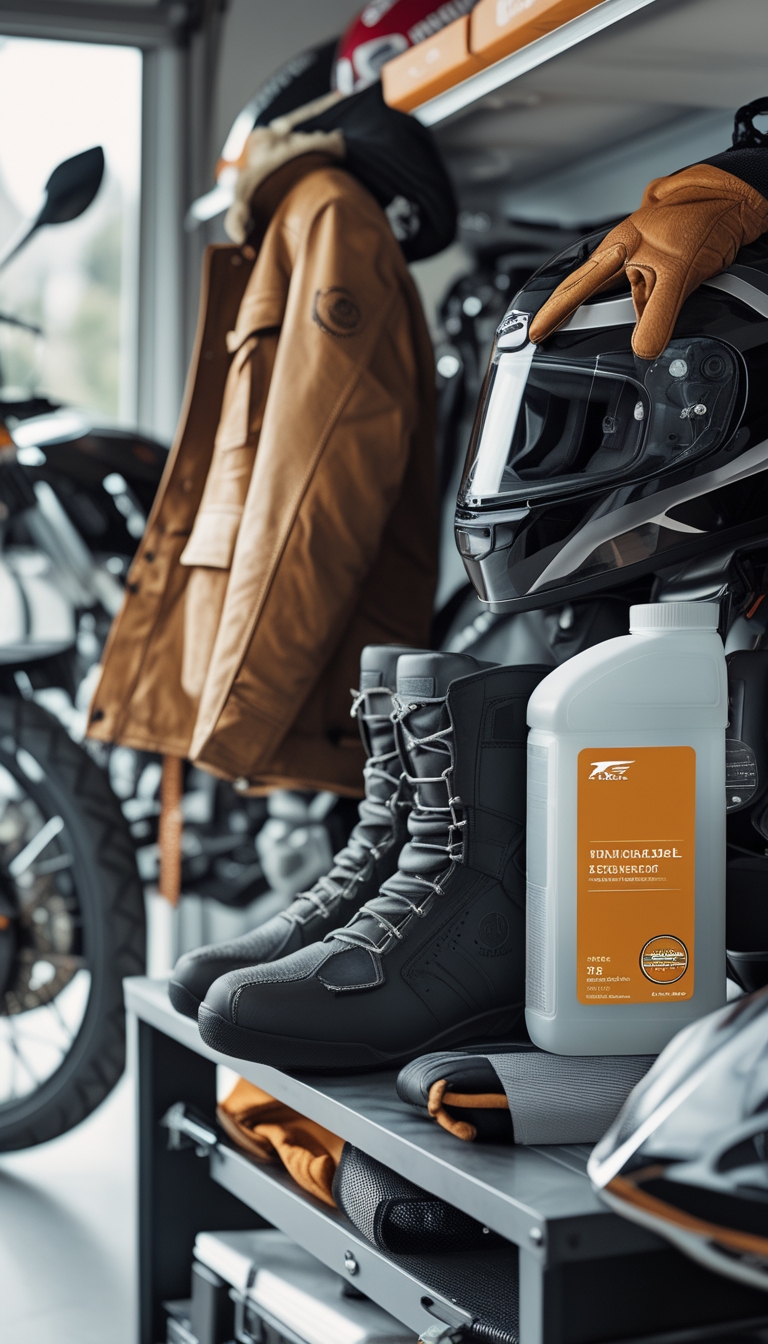
You should add a fuel stabilizer to your motorcycle before storing it for autumn or longer. STA-BIL Storage keeps gasoline from breaking down and helps prevent gum, varnish, and corrosion in the fuel system.
Pour the correct dose into a full tank to reduce air space and slow fuel aging. Treated fuel can stay fresh for up to 24 months when you follow the product directions.
Run the engine briefly after adding the stabilizer so treated fuel reaches the carburetor or injectors. This step helps ensure easier starts when you ride again.
PRO TIP
Label the tank or your maintenance log with the date you added stabilizer. That way you know when to refresh it and avoid surprise fuel problems.
9) UV-blocking helmet bag
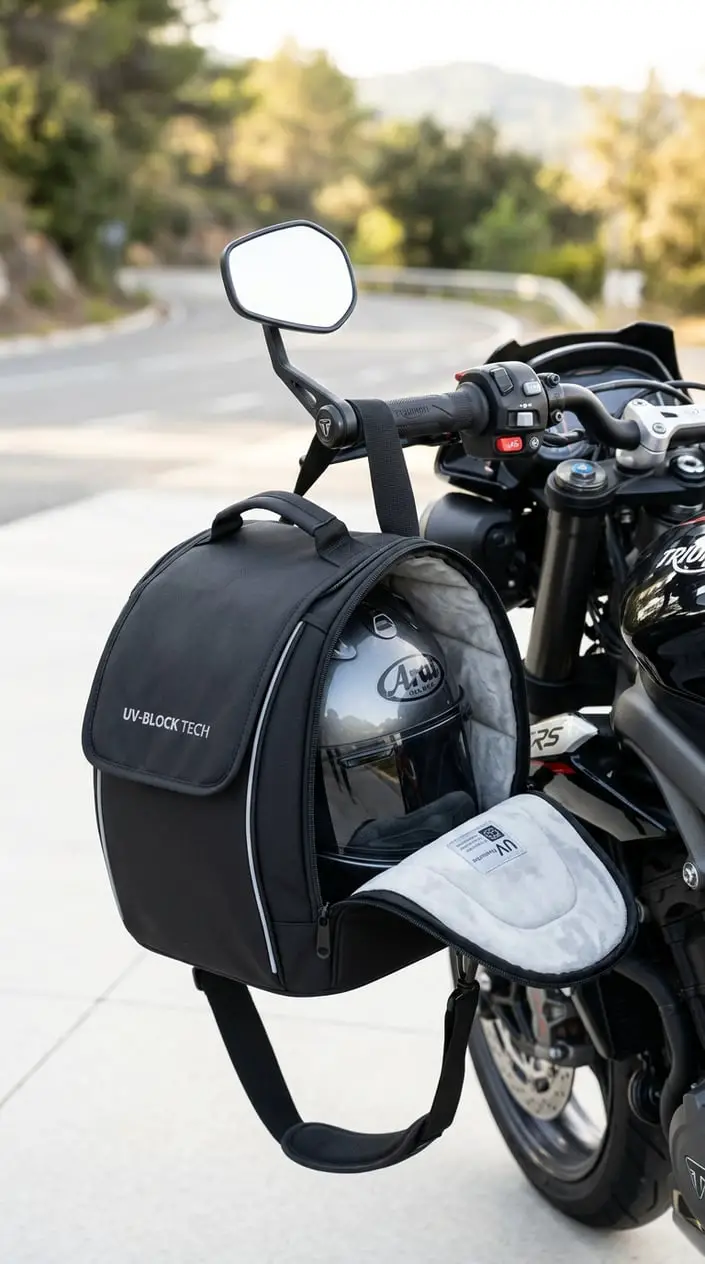
A UV-blocking helmet bag shields your helmet shell and finish from sun fading and light damage. You can stash your helmet in it between rides, keeping dust and insects off the visor and vents.
Good ones uses soft, stretch fabric with a drawcord to hold the shape. It fits most full-face and modular helmets and slips on easily so you won’t fuss when you’re packing up.
Keep the bag in your garage or trunk to cut UV exposure when you park. For longer storage, clean the helmet first and let it dry; moisture trapped inside can harm liners and padding.
PRO TIP
Label the bag with your helmet size or model if you have multiple helmets. This saves time and prevents mix-ups when you ride with friends.
10) Foldable gear organizer bin
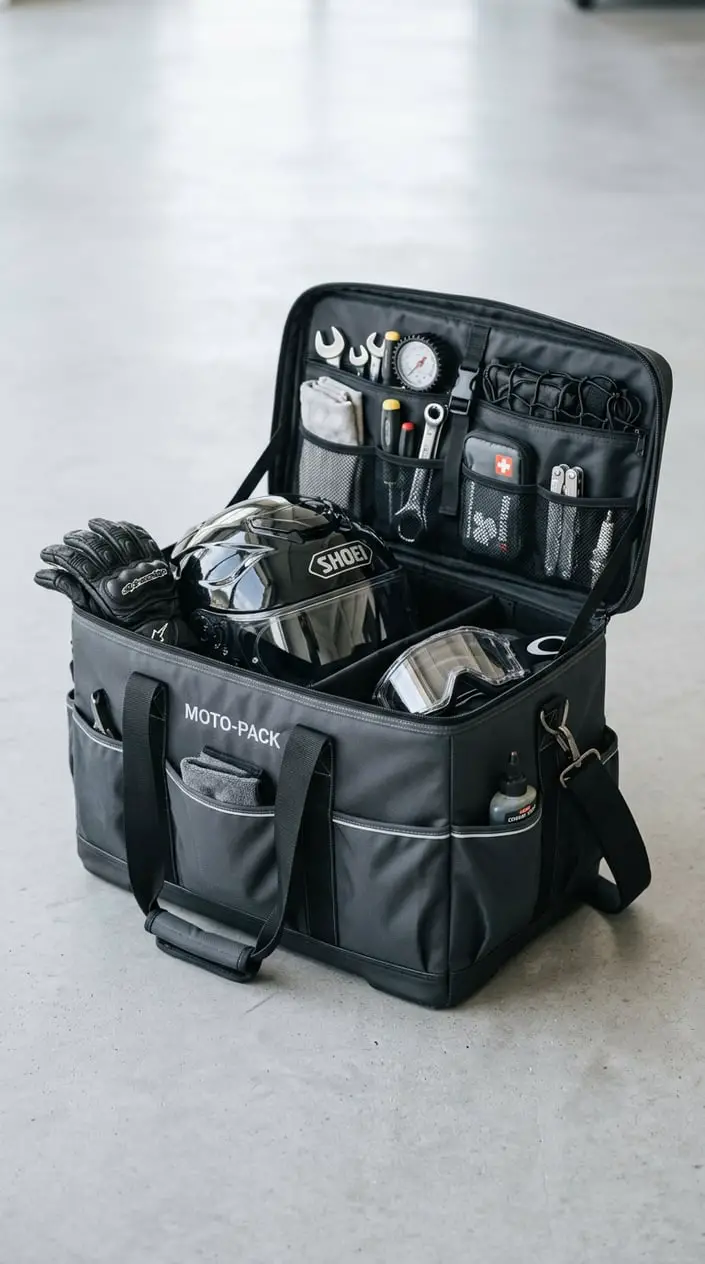
A foldable gear organizer bin saves space when you’re not riding. You can stash helmets, gloves, and liners in one place and fold the bin flat for storage.
The bin is lightweight and easy to move. It works well in a garage, trunk, or closet and keeps items clean and ready to grab.
You will like the multiple compartments for separating wet gear from dry gear. That helps prevent smells and makes it easier to find what you need quickly.
PRO TIP
Line the bin with a breathable bag before storing damp items. This reduces mildew and keeps your bin fresher longer.
11) Dehumidifier puck for garage
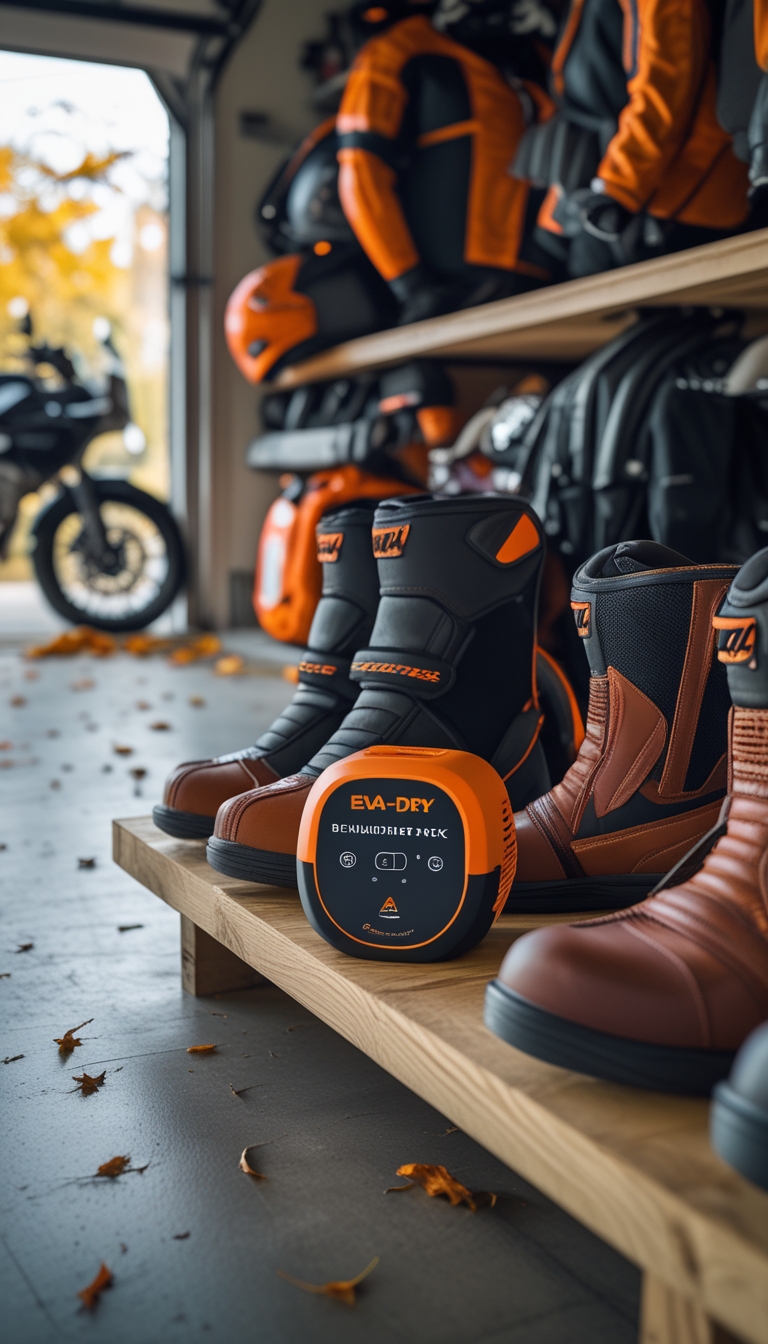
Place an Eva-dry E-333 puck in your garage near where you store your helmet, gloves, and jackets. It uses silica beads to pull moisture from the air without cords or batteries, helping cut down on damp smells and surface rust.
The unit works quietly and fits on a shelf or hangs inside a cabinet. It covers small enclosed spaces up to about 333 cubic feet, so it’s ideal for a single-bike area or storage locker.
You’ll need to recharge the beads by heating the unit when they turn color, which makes it reusable for years. That saves money over disposable packs and keeps your gear drier with low maintenance.
PRO TIP
Put the puck inside a ventilated box or the helmet bag overnight after rainy rides to speed drying and protect linings from mildew.
12) Wall-mounted helmet hook (Hangerz Helmet Hook)
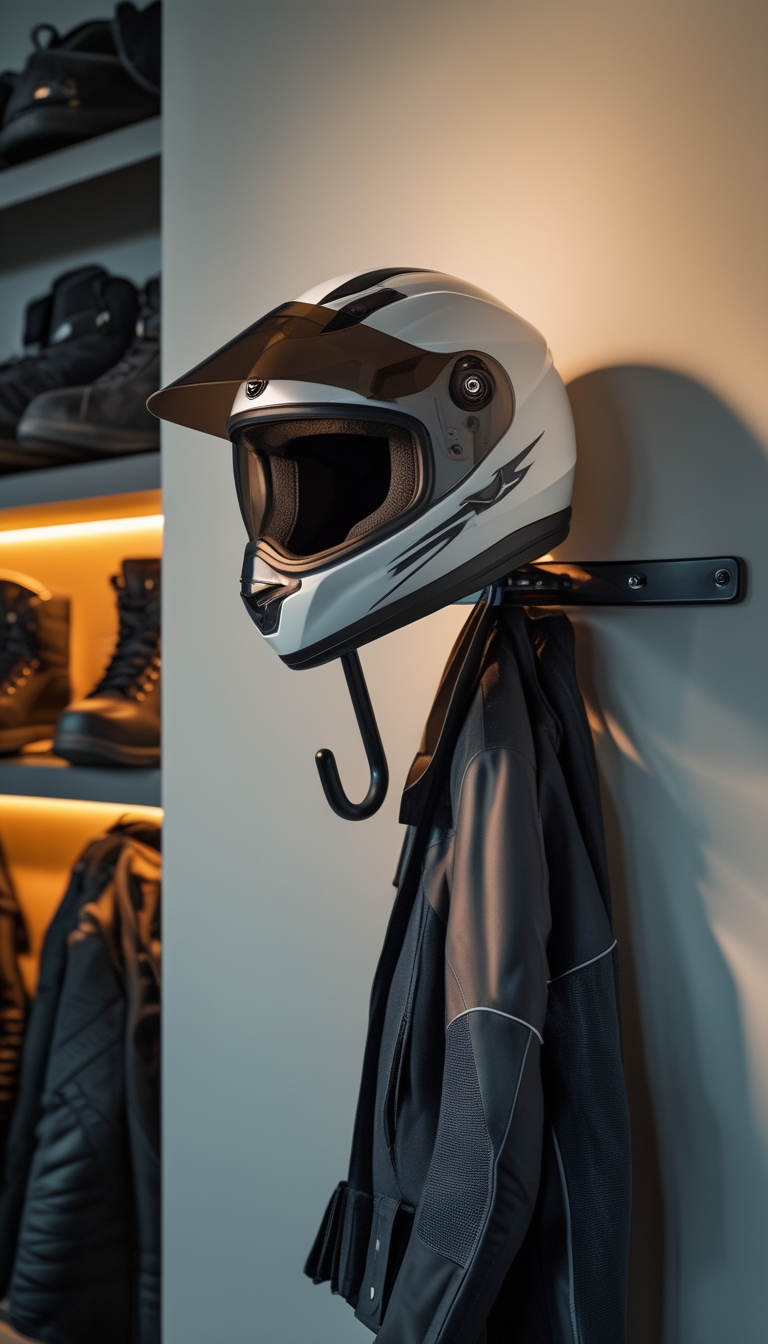
A wall-mounted helmet hook saves floor space and keeps your helmet easy to grab before a ride. You hang it near the door or on a garage wall so your gear stays off the bench and out of the way.
The Hangerz Helmet Hook fits most full-face and open-face helmets. It holds a helmet securely and often includes an extra hook for gloves or keys, which helps keep things organized.
Mount it at a height that lets the helmet sit naturally without tilting. Use proper anchors if you install on drywall to avoid sagging over time.
PRO TIP
Place the hook near your jacket rack so you can gear up quickly. A small label above the hook helps guests know which helmet belongs to whom.
13) Lockable gear cabinet (Husky 2-Door Steel Cabinet)
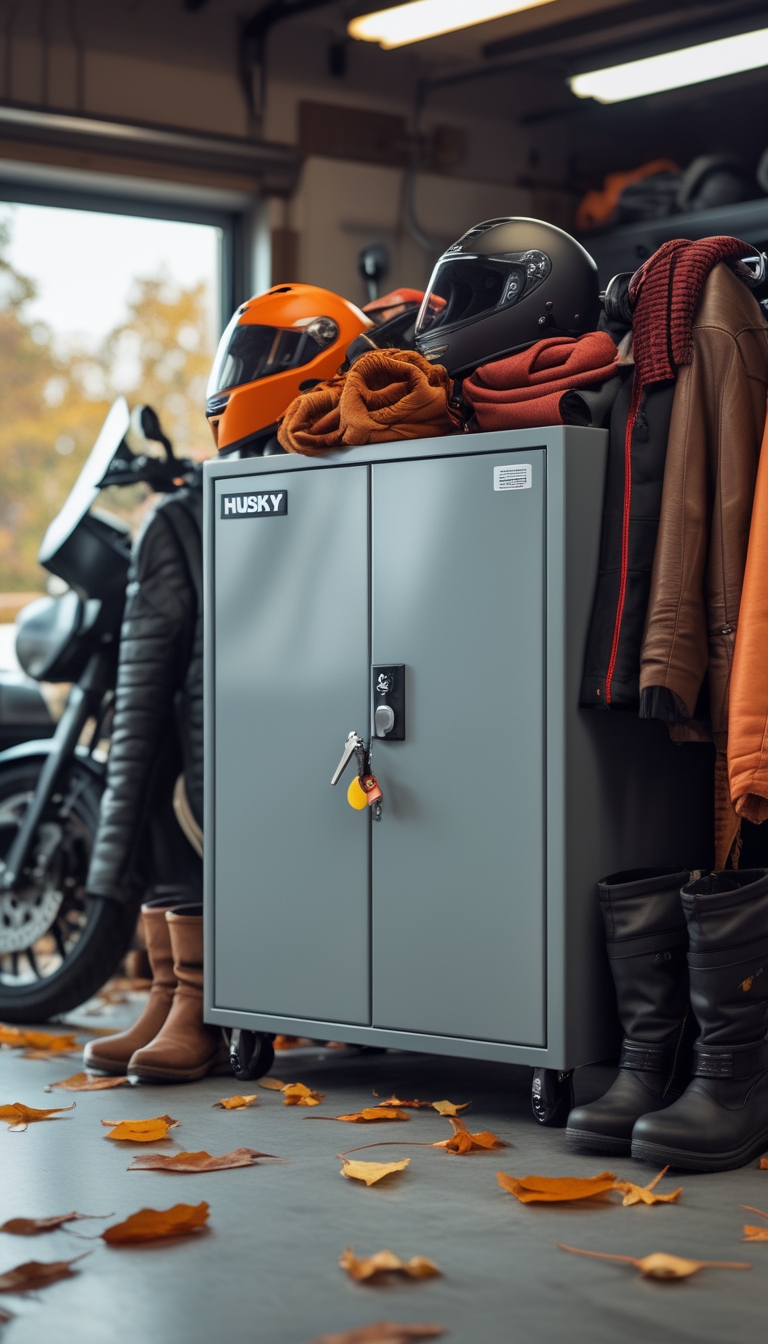
A lockable Husky 2-door steel cabinet gives you a strong, secure place to store helmets, jackets, and gloves. It uses welded steel and a 3-point lock to help protect your gear from theft and dust.
The cabinet often includes an adjustable shelf and a wood worktop that doubles as a small workspace. You can keep bulky items on the bottom and use the top shelf for smaller pieces like gloves and goggles.
Pick a cabinet with a matte finish or powder coat to resist scratches and light rust. Place it against a wall and bolt it down if you have kids or pets, so it won’t tip over when you pull heavy items out.
PRO TIP
Label shelves or use small bins to keep items visible and easy to grab. Store damp liners or gloves on a moisture-absorbing mat to help your gear dry faster.
14) Silica gel packs (Dry & Dry Motorcycle Pack)
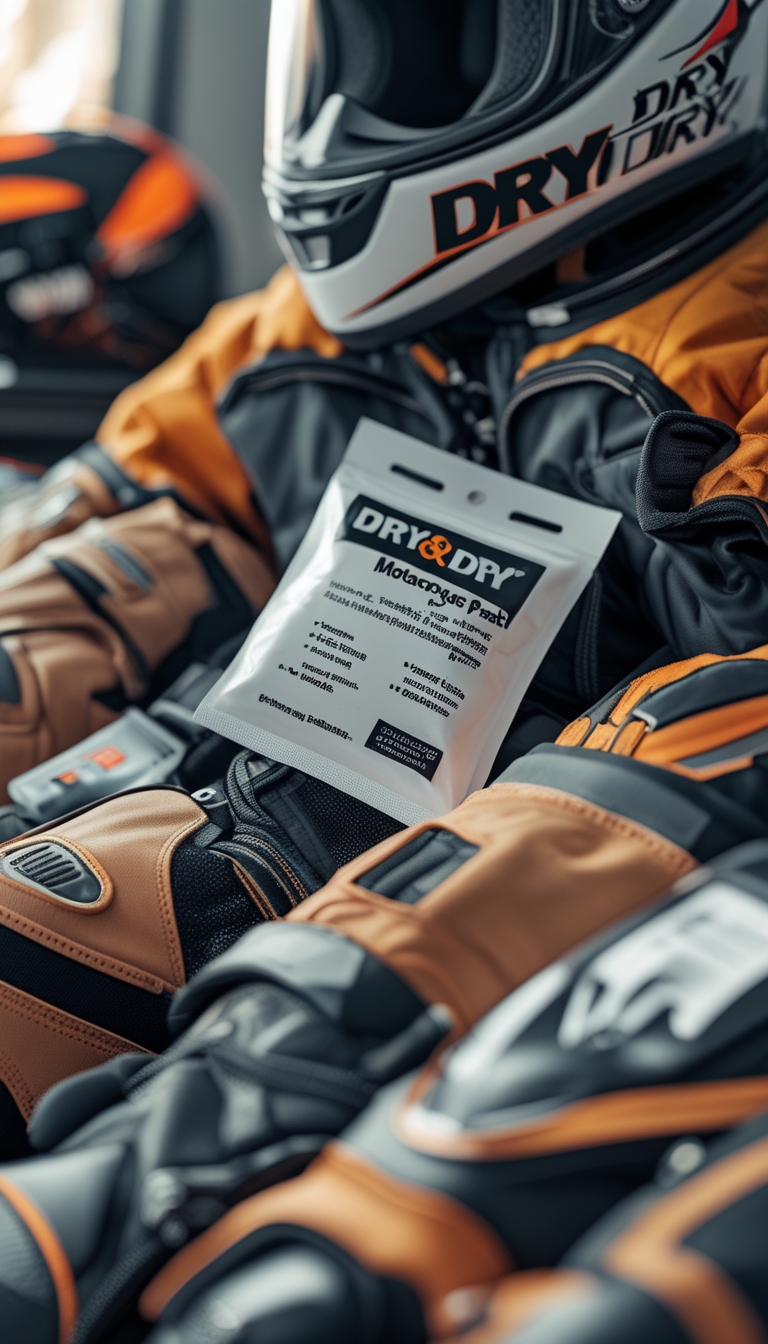
Silica gel packs help keep your helmet, gloves, and textiles dry when you store them for fall. You can tuck a few packets into boots, saddlebags, or inside your helmet bag to cut down on moisture and musty smells.
Dry & Dry packets are made for gear and come in small sizes that fit tight spaces. They are reusable; heat them to recharge and they regain their drying power.
Place more than one packet in larger storage boxes to cover the whole space. Check packets now and then so they stay effective and replace any that are damaged.
PRO TIP
Put packets in the same bag as foam liners and soft gear, not directly on leather, to avoid uneven drying.
15) Helmet inner-liner wash kit (Muc-Off Helmet Care Kit)
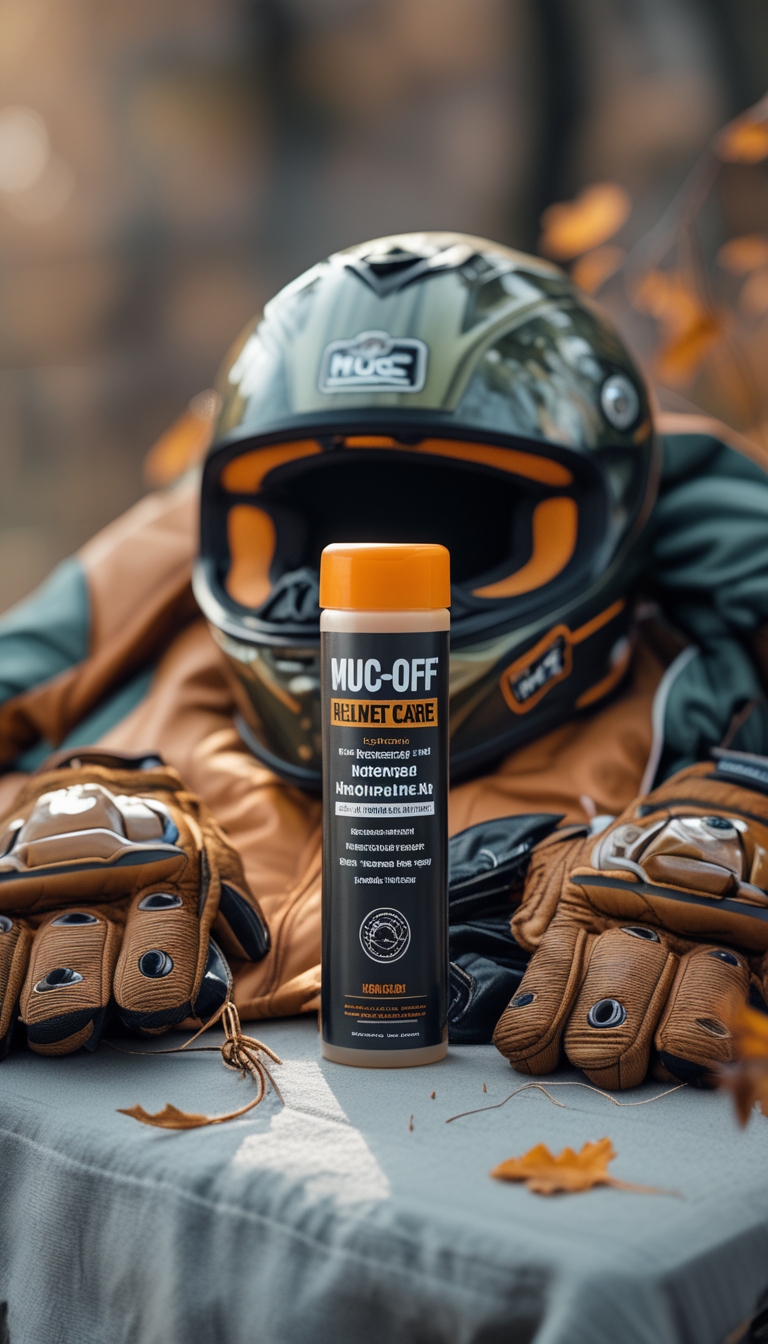
A helmet inner-liner wash kit helps keep your helmet fresh and sanitary during autumn rides. You get a foam cleaner for liners, a visor cleaner, an anti-fog treatment, and microfiber cloths to wipe surfaces without scratching.
Use the foam on the padding to lift sweat, dirt, and odor. It works well on liner fabric and other gear like gloves or boots, so you can clean more than just the helmet.
Spray the visor cleaner for clear vision after wet, muddy, or leaf-splattered rides. Finish with anti-fog on the inside of the visor for steady visibility in cool, humid weather.
PRO TIP
Remove removable liners before cleaning when you can, and let them air dry fully. Store the kit where it won’t freeze to keep sprays effective.
16) Motorcycle lift/stand (Ron’s Heavy-Duty Rear Stand)
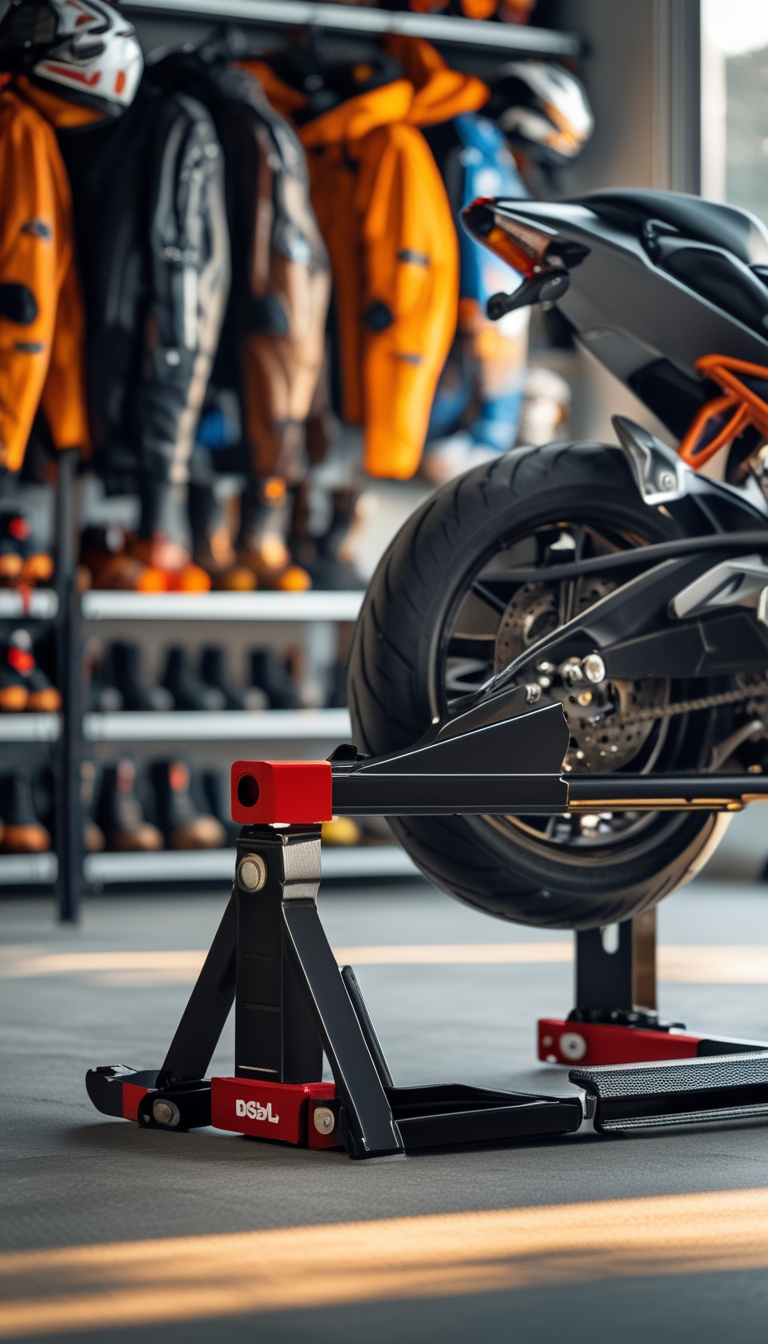
A solid rear stand like Ron’s Heavy-Duty Rear Stand keeps your bike stable during fall storage and chores. You can lift the rear wheel to clean, lubricate the chain, or change the tire without worrying about it tipping.
Choose a stand rated for your bike’s weight and with adjustable pads that fit your swingarm. Steel construction and wide feet add stability on concrete and garage floors.
Using a rear stand reduces pressure on tires and suspension while the bike sits idle. It also makes winter prep and small repairs faster and safer for you.
PRO TIP
Place a thin wood plank under the stand on soft ground to prevent sinking. Always secure the bike with the ignition off and use a helper for heavy or tall models.
17) Labelled storage totes set (Sterilite Moto Totes)
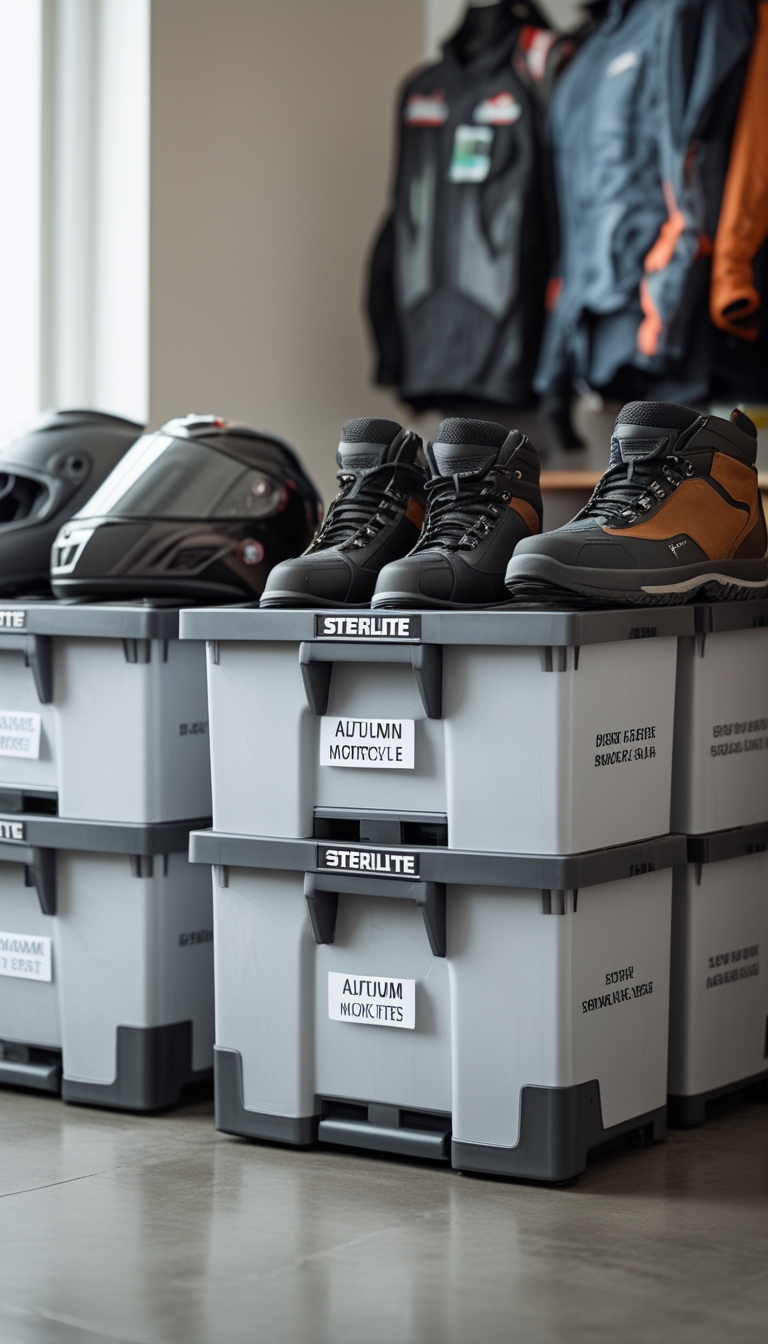
Use labelled Sterilite-style totes to keep your riding gear easy to find. Stackable, durable tubs work well for helmets, gloves, liners, and small tools. Clear or semi-clear sides help you spot items without opening every box.
Label each tote by gear type, bike, or season so you grab the right items fast. Keep heavier items in lower tubs to avoid tipping. Nest empty totes to save space when not in use.
Place frequently used gear near the door or on a low shelf for quick access. Use waterproof labels or a label maker so text stays legible after handling.
PRO TIP
Add a small inventory card inside each tote to list contents and check items before rides.