Last Updated on February 7, 2026
As the riding season winds down and the first frost settles on the pavement, every motorcyclist faces the same bittersweet ritual: tucking their bike away for the winter. However, simply parking your motorcycle in the corner of the garage and walking away is a recipe for a mechanical nightmare come spring. From dead batteries and gummed-up fuel systems to rusted chains and flat-spotted tires, improper storage can lead to expensive repairs that drain your wallet before the first warm day even arrives.
To help you protect your investment and ensure a seamless start to next season, we’ve compiled 20 essential motorcycle winter storage solutions. These budget-friendly tips and expert strategies will keep your bike in showroom condition all winter long, saving you both stress and money.
1) Store your motorcycle in a heated garage
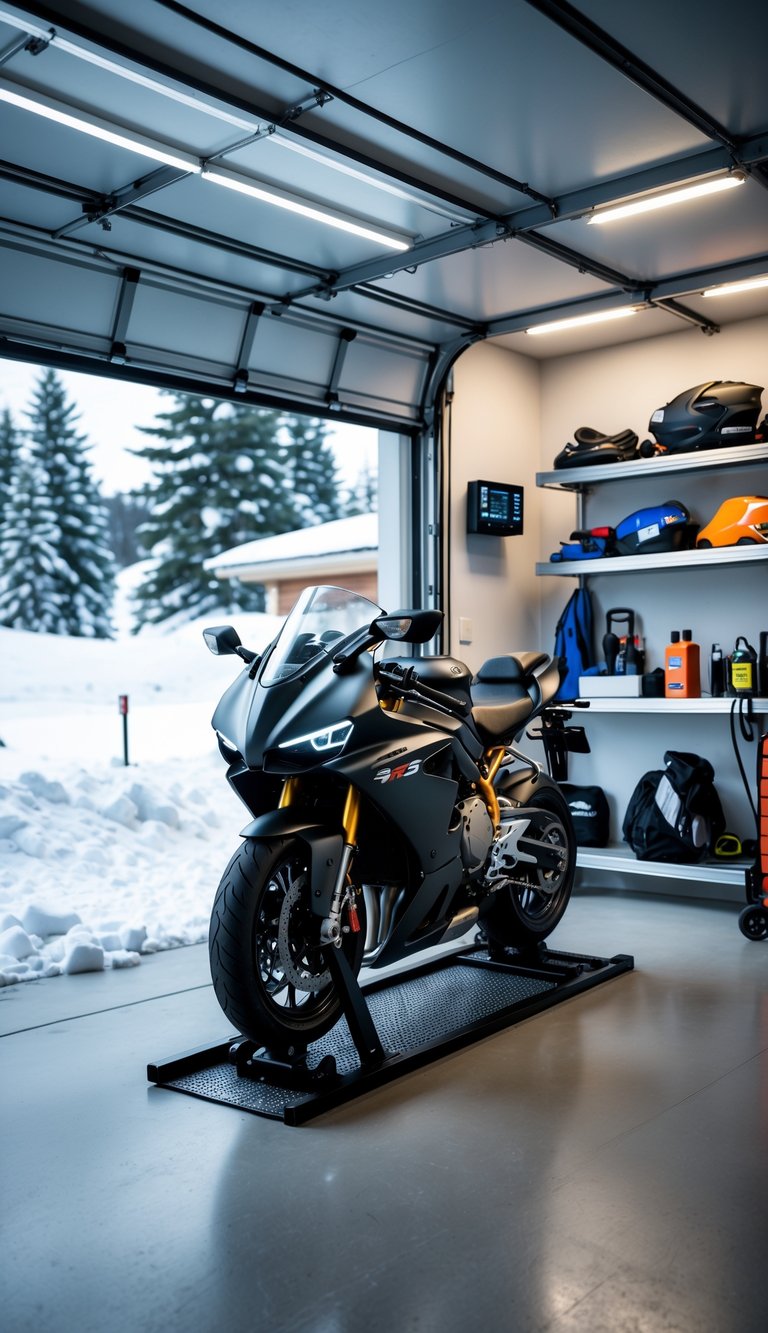
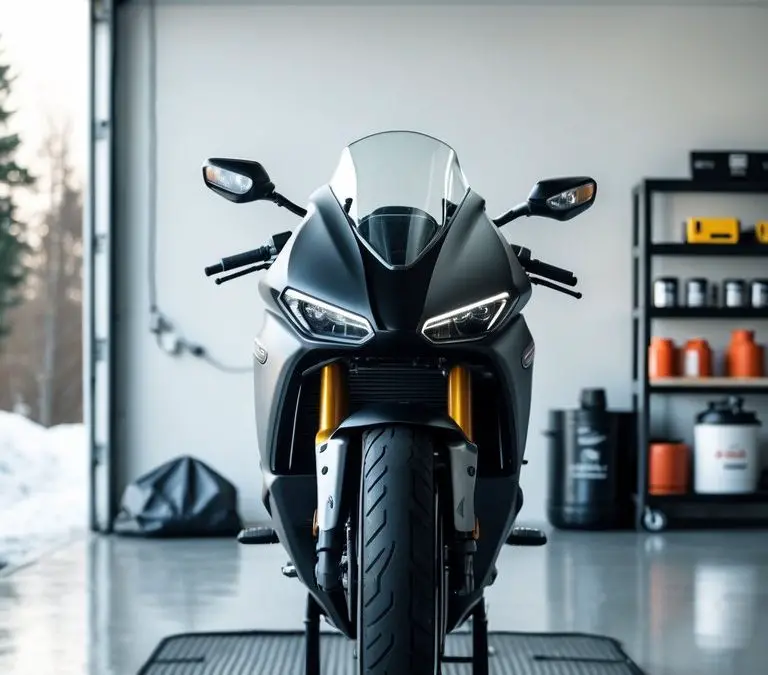
Storing your motorcycle in a heated garage gives it the best protection from freezing temperatures and moisture. A steady, moderate temperature prevents condensation that can rust metal and damage electrical parts.
You can keep fluids, seals, and batteries in better shape when the bike stays above freezing. Heat also makes it easier to run maintenance tasks, like starting the engine occasionally or checking tire pressure.
If you use a space heater, place it safely away from the bike and fuel. Keep the garage ventilated enough to avoid trapped fumes, and park on a stand or blocks to prevent flat spots on tires.
PRO TIP
You can prep your bike for winter storage in a heated garage by following a few simple steps that make wake-up easy in spring. First, add a fuel stabilizer and run the engine a few minutes to circulate it through the system. Change or top off the oil and filter so corrosive acids don’t sit on engine parts. Disconnect or use a battery tender to keep the battery at optimal charge without overcharging. Inflate tires to the correct pressure and, if possible, elevate the bike on a stand to avoid flat spots. Clean and wax painted surfaces, and lube the chain or shaft drive to prevent rust. Cover the bike with a breathable motorcycle cover to keep dust off while allowing moisture to escape. Finally, leave a small dehumidifier or moisture absorber in the garage if humidity is an issue; this helps prevent condensation that can cause corrosion on chrome and electronics.
2) Use a high-quality breathable motorcycle cover
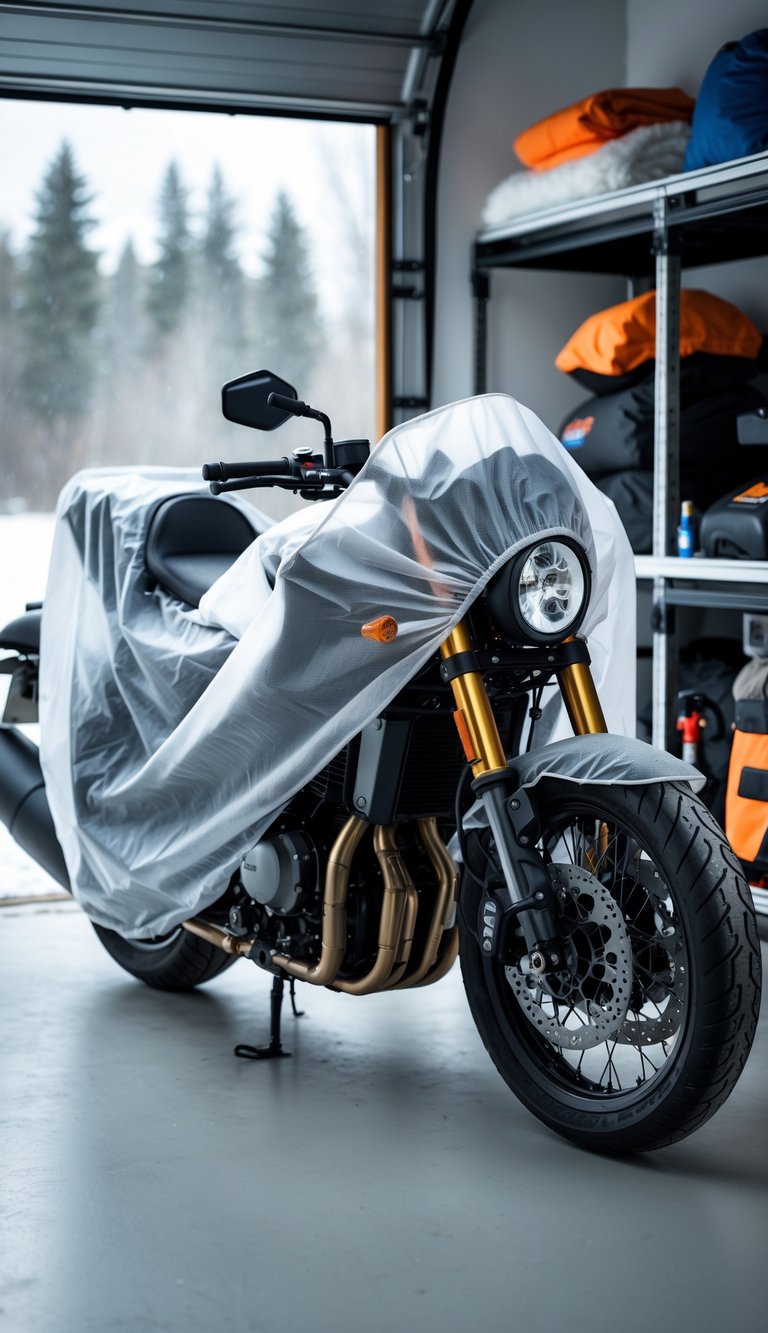
You should pick a cover made from breathable, waterproof fabric. Breathable layers let trapped moisture escape, which lowers the chance of condensation that can cause rust and paint damage. A good cover fits well without rubbing or flapping in the wind.
Avoid thin plastic or non-breathable materials. Those trap humidity and can promote corrosion and mold over time. Look for multi-layer construction and soft inner lining to protect chrome and paint from scratches.
Choose a cover with secure fastenings like straps or a lock loop. These keep the cover on during storms and reduce movement that wears the finish. Replace worn covers and check seams for leaks before storing your bike.
PRO TIP
When shopping, prioritize fit and breathability over price. A slightly more expensive cover with vents, a soft inner layer, and strong seams will save you money on repairs later. If you store your bike outdoors, pick a cover labeled UV-resistant and windproof to protect surfaces and prevent fading. For indoor storage, choose a lighter breathable cover to stop dust while allowing moisture to escape. Add silica gel packs under the cover if your storage space gets damp. Check the cover every few weeks for trapped moisture or pests, and air the bike when weather is dry.
3) Connect a Battery Tender to maintain battery health
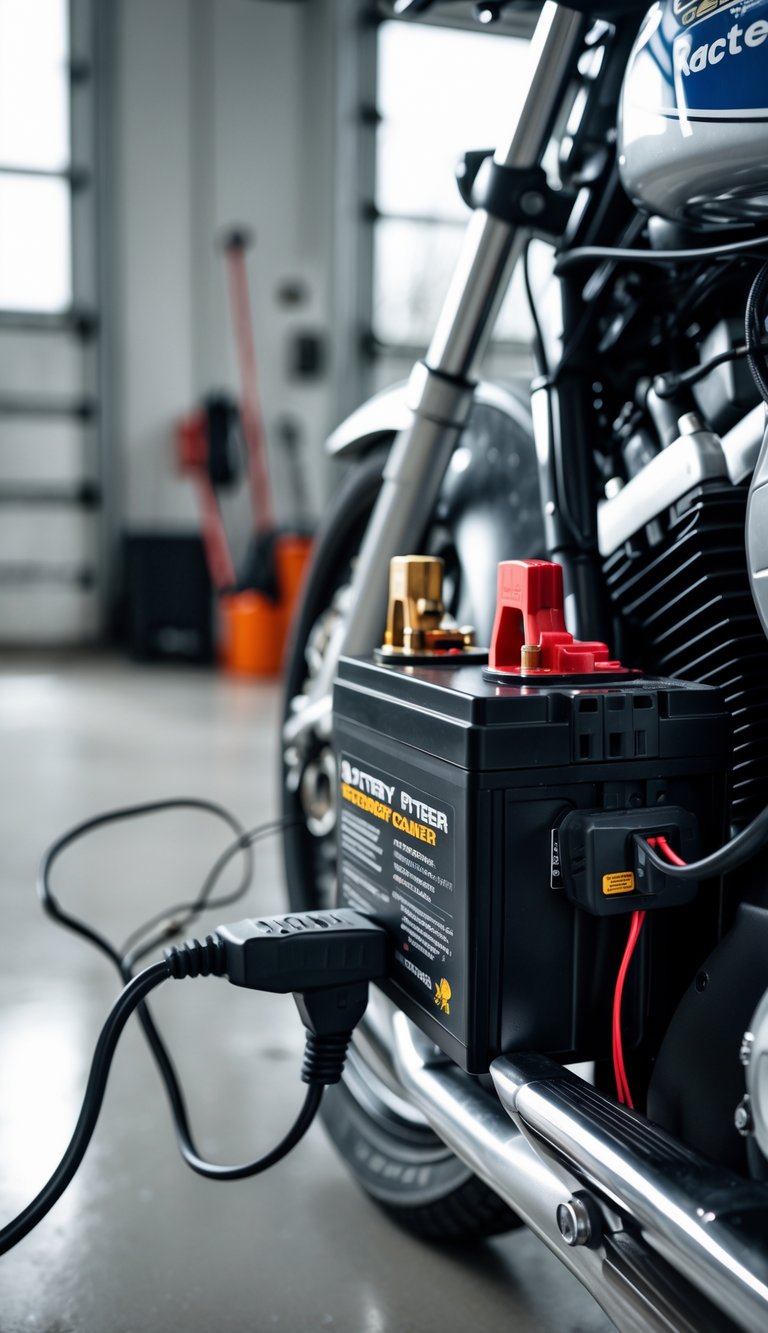
Connect a Battery Tender to keep your battery at the right charge while your bike sits. These smart chargers supply a low, steady voltage that prevents discharge and reduces battery wear over time.
Leave the tender hooked up for the whole storage period. You won’t have to worry about overcharging because modern tenders switch to a float mode when the battery is full.
Make sure connections are clean and secure before you tuck your bike away. If possible, remove the battery and store it in a cool, dry place while charging to extend its life.
PRO TIP
Using a Battery Tender correctly saves time and money. Always check the tender’s compatibility with your battery chemistry — most work with lead-acid and AGM batteries, but lithium batteries sometimes need a specific model. Clean the battery terminals and apply a light coat of dielectric grease to prevent corrosion at the clamp points. Route the cable so it won’t be pinched or chewed by pests, and use a small weatherproof box or cover for the connection if your bike stays outside. Periodically inspect the tender and battery during storage; a quick visual check every few weeks catches issues early. If you store the battery indoors, place it on a non-conductive surface away from direct heat and concrete floors.
4) Add fuel stabilizer to prevent gas degradation
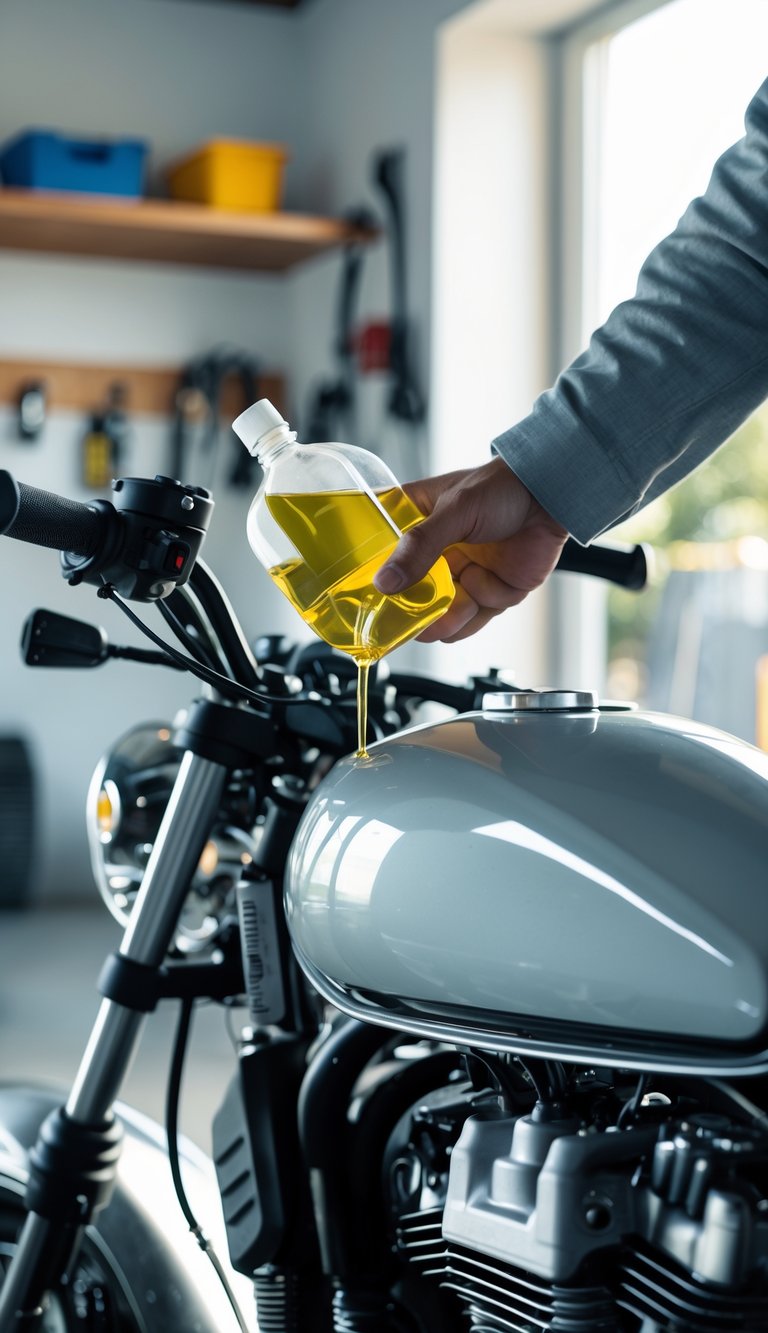
Add a fuel stabilizer to a full tank before you store your bike. Stabilizer helps stop fuel from breaking down and forming varnish that can clog jets and fuel lines.
After adding the stabilizer, run the engine for a few minutes so treated fuel reaches the whole system. This helps protect the carburetor or fuel injectors and reduces the chance of starting problems in spring.
Use the dose recommended on the product label—typically about one ounce per gallon. Pick a stabilizer that mentions ethanol protection if your fuel contains ethanol, since ethanol can attract water and cause corrosion.
Store the bike with a full tank to limit air space and reduce moisture buildup. Top off fresh fuel right before storage for the best protection.
PRO TIP
You can choose between different stabilizers like STA-BIL or enzyme-based products; both work if used correctly. Measure the stabilizer accurately and pour it into a full tank, then let the engine run for three to ten minutes so the additive circulates through the fuel system. If your motorcycle has a carburetor, consider draining float bowls after treating the tank if the bike will sit more than a year. Keep the stabilizer bottle labelled with the date and the tank volume treated so you remember when to replace the fuel. Store the stabilizer in a cool, dry place away from direct sunlight and out of reach of children or pets.
5) Keep tires off the ground with a motorcycle stand
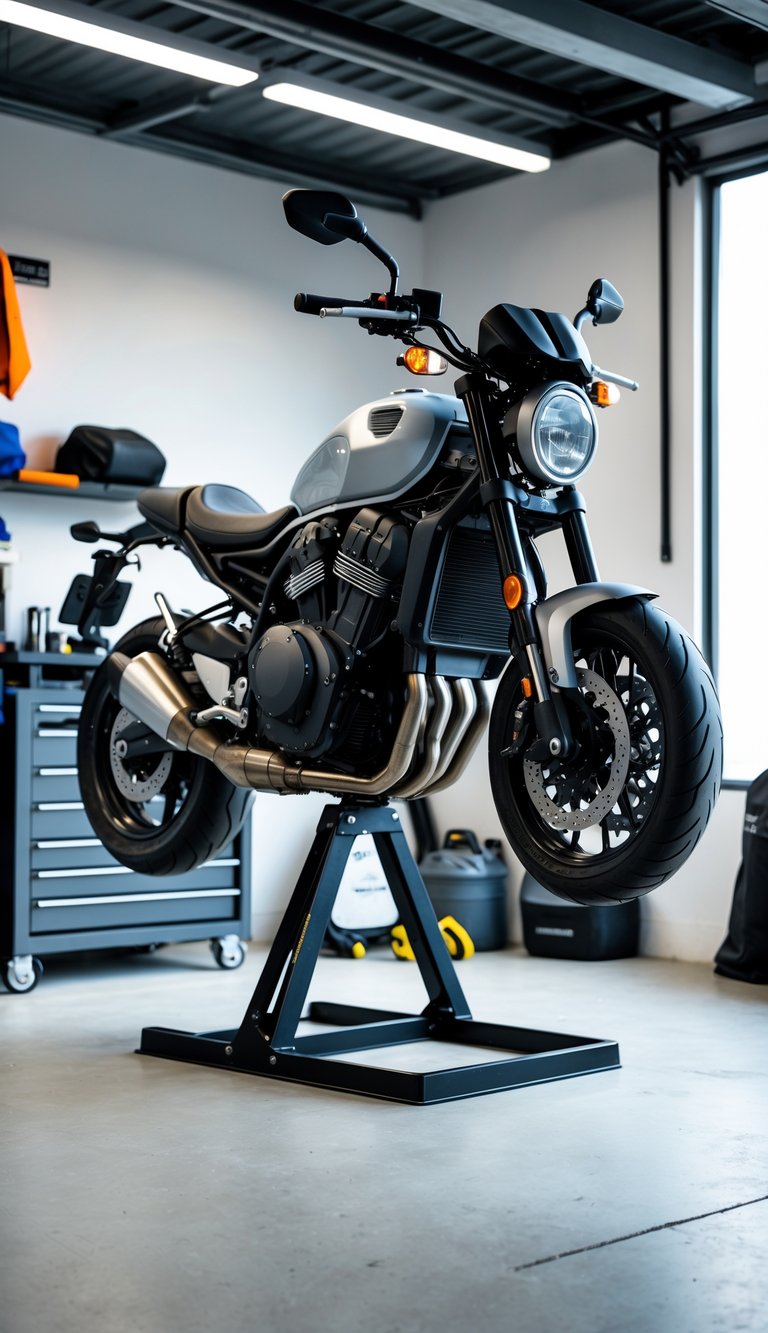
Using a motorcycle stand keeps your tires from bearing the bike’s weight and helps prevent flat spots. You can use a center stand, paddock stands, or a fork/headlift stand depending on your bike and storage space.
Stands also make it easier to clean and inspect tires and brakes before storage. They lift the bike a few inches so the rubber doesn’t sit on one contact patch for months.
Pick a sturdy stand rated for your bike’s weight and follow the maker’s instructions to avoid slips. If you can’t use a stand, roll the bike a few inches now and then to change the contact area.
PRO TIP
If you store your bike long-term, consider using both front and rear stands to fully relieve tire pressure and suspension load. Place the bike on a level surface and chock the stand’s feet to stop slipping on smooth floors. Inflate tires to the pressure recommended in your owner’s manual before lifting; that helps the tire hold shape when weight shifts. For longer storage, remove the battery and connect a tender, and rotate the wheels every few weeks if you can’t access the stands easily. Also keep the bike covered with a breathable cover to prevent moisture build-up while the tires stay off the ground.
6) Clean and lubricate the chain before storage
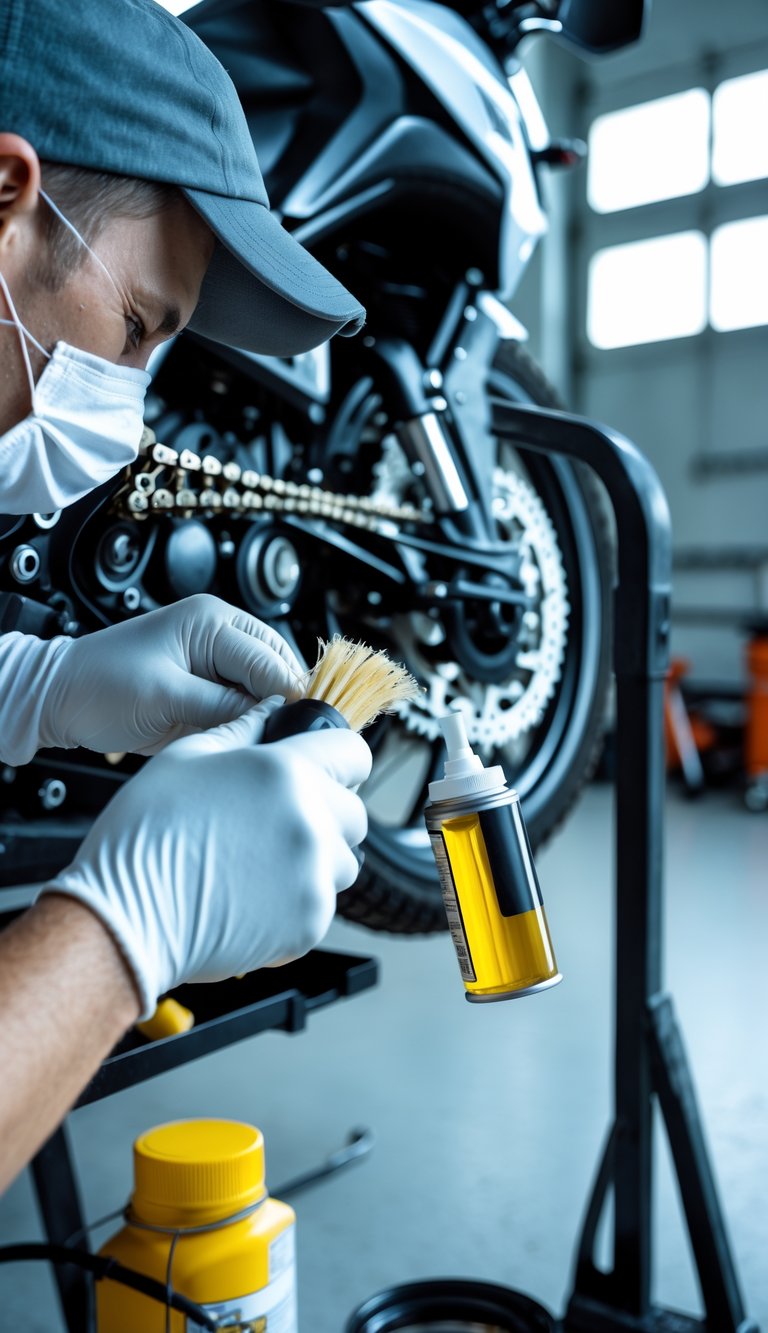
You should clean the chain thoroughly before storing your bike for winter. Use a chain cleaner or a mild solvent to remove grime, old lube, and road salt. Work the cleaner into the links and scrub with a soft brush, then rinse or wipe dry.
After the chain is clean and dry, apply a quality chain lubricant made for your chain type. Put lube on every link while slowly rotating the rear wheel so the lube spreads evenly. Wipe off excess to avoid attracting dirt during storage.
Check the chain tension and condition while you’re at it. If the chain is worn or has stiff links, replace or service it now so you won’t face bigger problems in spring.
PRO TIP
Before you store the bike, coat the chain with a corrosion-inhibiting lube designed for long-term storage. Apply a slightly heavier film than for daily riding, but remove heavy buildup that can trap moisture. Consider running the bike briefly after applying storage lube so the oil settles into the rollers and pins. If you store the motorcycle in a humid area, place a small desiccant pack nearby or move the bike to a drier spot to further reduce rust risk. Inspect the chain periodically through winter and reapply lubricant if you see any dryness or surface rust starting to form.
7) Wax the bike’s paint for extra protection
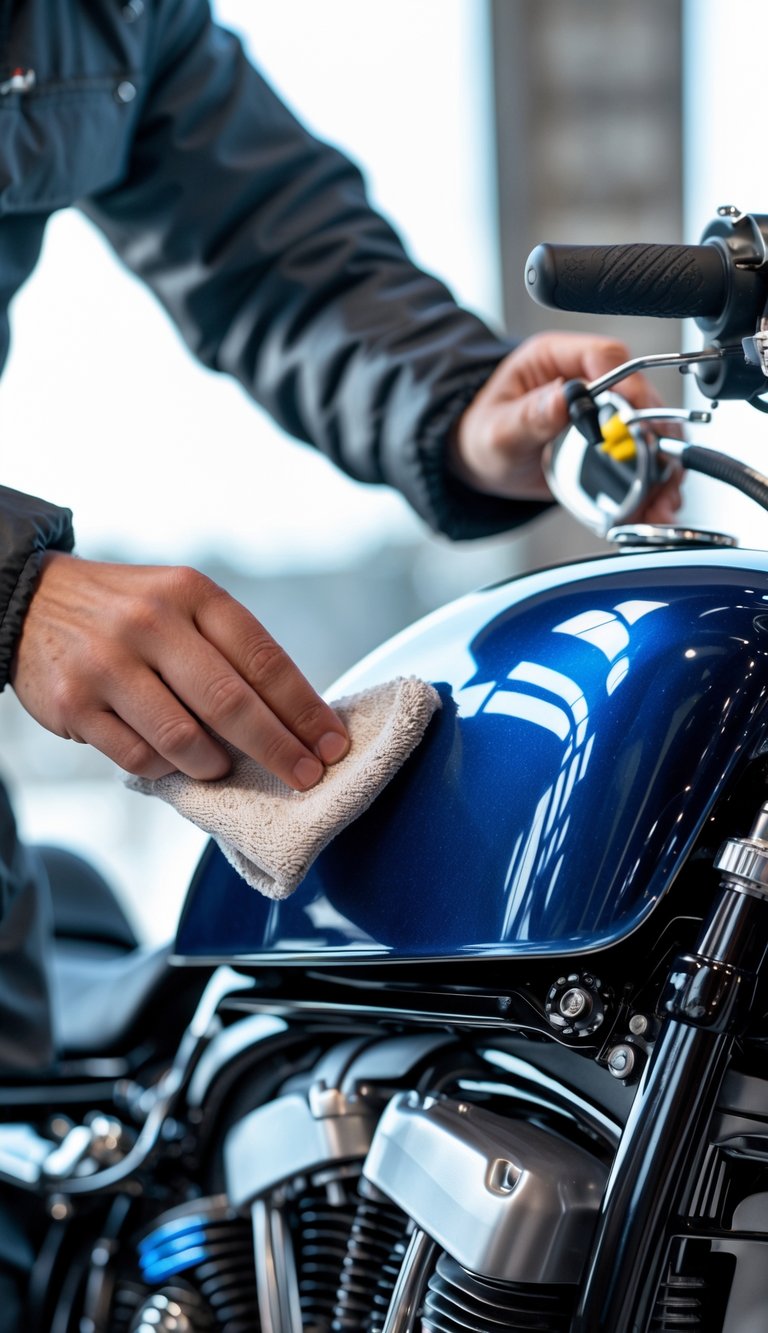
Waxing your bike adds a thin barrier that keeps moisture and road grime off the paint. This helps reduce the chance of rust and keeps the finish from dulling while the bike sits.
Clean the bike thoroughly first. Dirt or grit trapped under wax can scratch the paint, so wash and dry every surface before you start.
Use a good quality car or motorcycle wax and apply in small sections. Work in a shaded, cool area and follow the product’s directions for best results.
After waxing, let the bike sit for a few minutes then buff with a soft cloth. The smoother surface also makes it easier to remove dust during storage.
PRO TIP
Pick a wax made for outdoor protection and friendly to clear coats to avoid harming modern finishes. Apply a second thin layer if you expect long-term storage or high humidity. When waxing, protect nearby rubber and plastic by masking them off or using a product safe for those materials. If you store the bike in a garage, leave it covered with a breathable motorcycle cover after waxing to keep dust off without trapping moisture. Check the waxed surfaces once during storage and reapply if you see dull spots or buildup.
8) Change the engine oil to remove contaminants
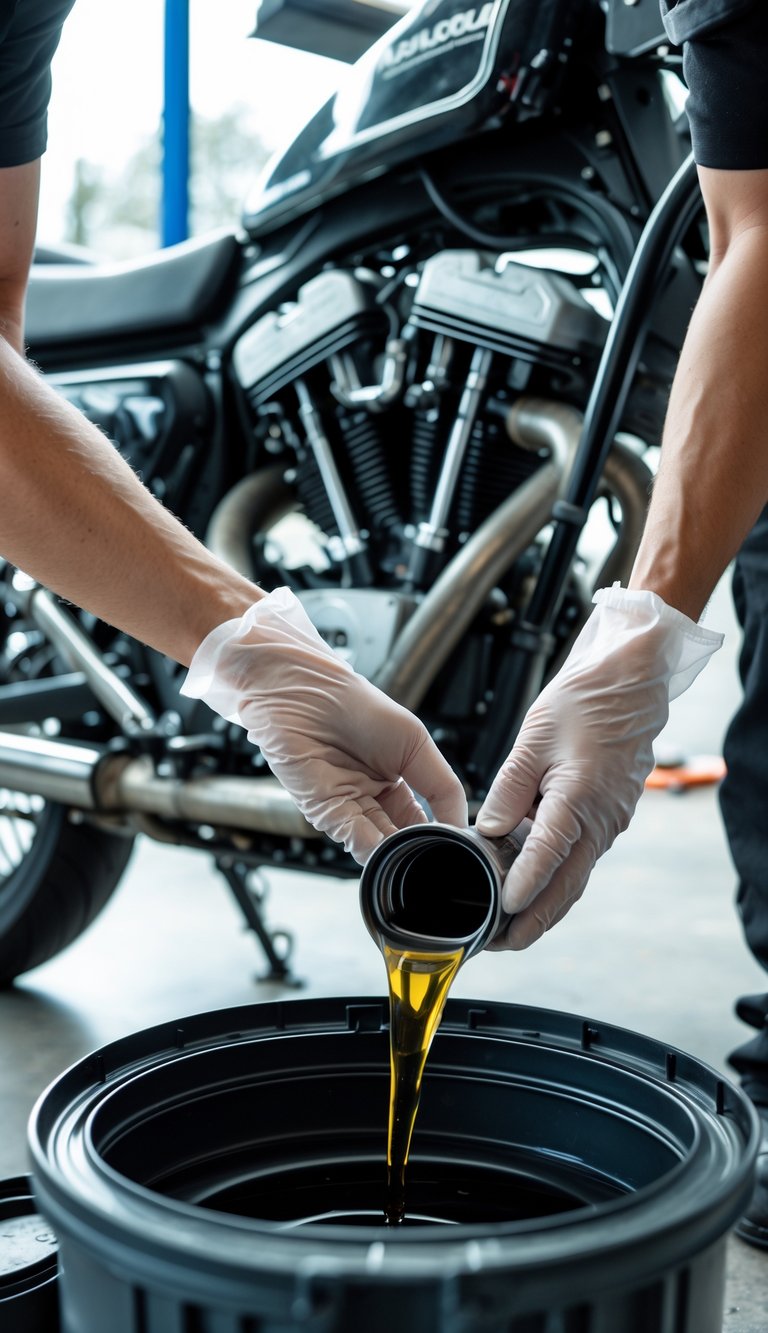
You should change your engine oil and filter before storing your motorcycle for winter. Old oil carries combustion byproducts, moisture, and tiny particles that can corrode metal and form sludge if left in the engine for months.
Fresh oil gives internal parts a clean protective film while the bike sits. That reduces the chance of rust and wear when you start the bike again in spring.
Use the oil grade and filter recommended in your owner’s manual. Warm the engine briefly before draining to help the oil flow out with more of the contaminants.
Seal and dispose of used oil responsibly at a recycling center. Label the bike’s service date so you know when the next oil change is due.
PRO TIP
If you plan to store the bike for several months, consider doing the oil change as the final maintenance step right before storage. This way, fresh oil sits in a warm, clean engine and protects internal parts through the whole inactive period. Change the filter at the same time so the fresh oil won’t pass through a clogged element. Also run the engine a few minutes after adding new oil so pressure builds and circulates oil to bearings and valve train. Keep a record of the oil type, mileage, and date on the bike or in your maintenance log. This makes spring startup checks easier and helps you spot any issues that might have developed during storage.
9) Remove the windshield if prone to cracking
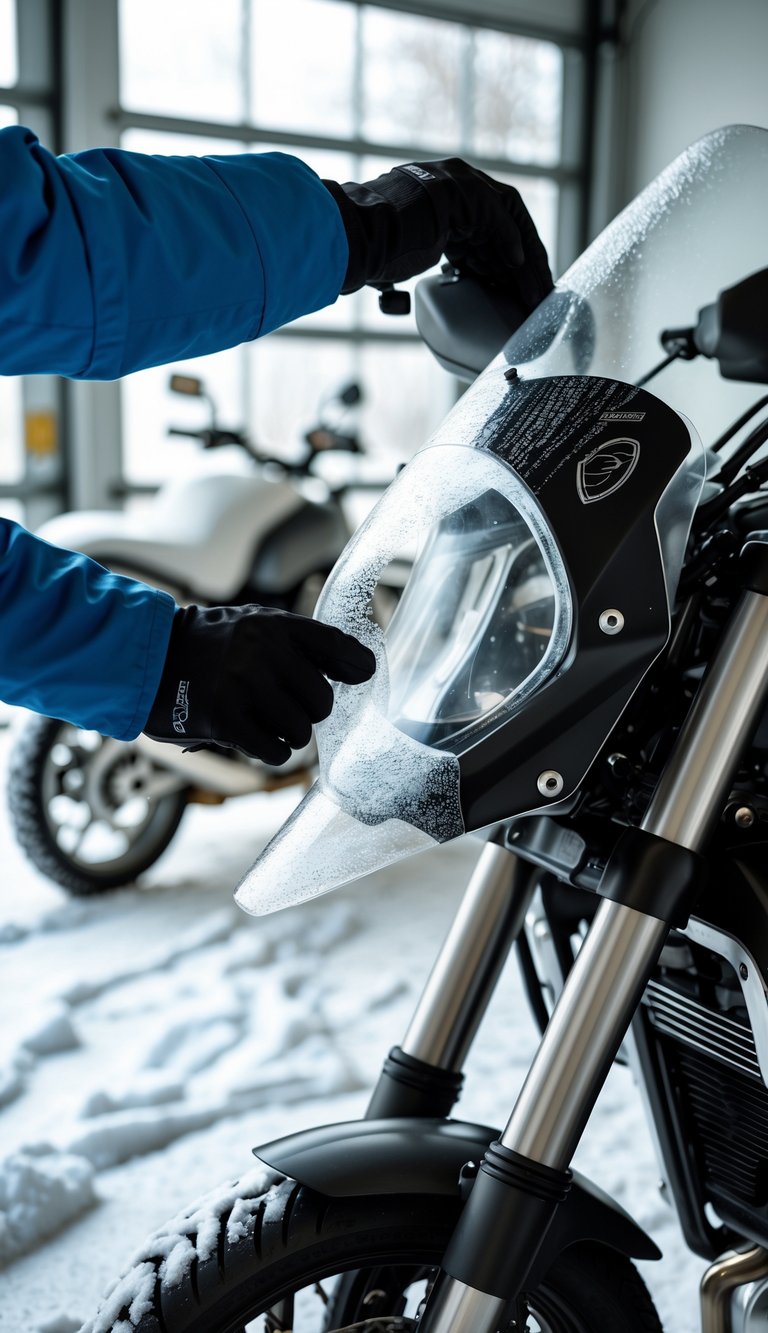
If your windshield shows hairline cracks or feels brittle from age, take it off before storage. Cold temperatures and shifting parts can widen those cracks, so removing the screen reduces the risk of further damage.
Store the windshield flat or upright in a padded, stable spot away from direct sunlight. Wrap it in a soft cloth or bubble wrap and place it in a rigid box to prevent bending or being knocked over.
Label the box and keep any mounting hardware together in a sealed bag. This makes reinstallation quick and helps you avoid lost bolts or misaligned brackets when spring arrives.
PRO TIP
You can protect your windshield long-term by polishing scratches and applying a plastic-safe protectant before storing it. Use a mild plastic polish to reduce fine scratches and follow with a UV-safe product to slow yellowing and brittleness. Keep the protectant residue light; too much can attract dust. If you have multiple windshields or accessories, store them vertically between foam sheets to save space while preventing pressure points. Check the windshield once or twice during winter storage to confirm padding stays in place and no new stress marks appear.
10) Drain the fuel tank if storing over 6 months
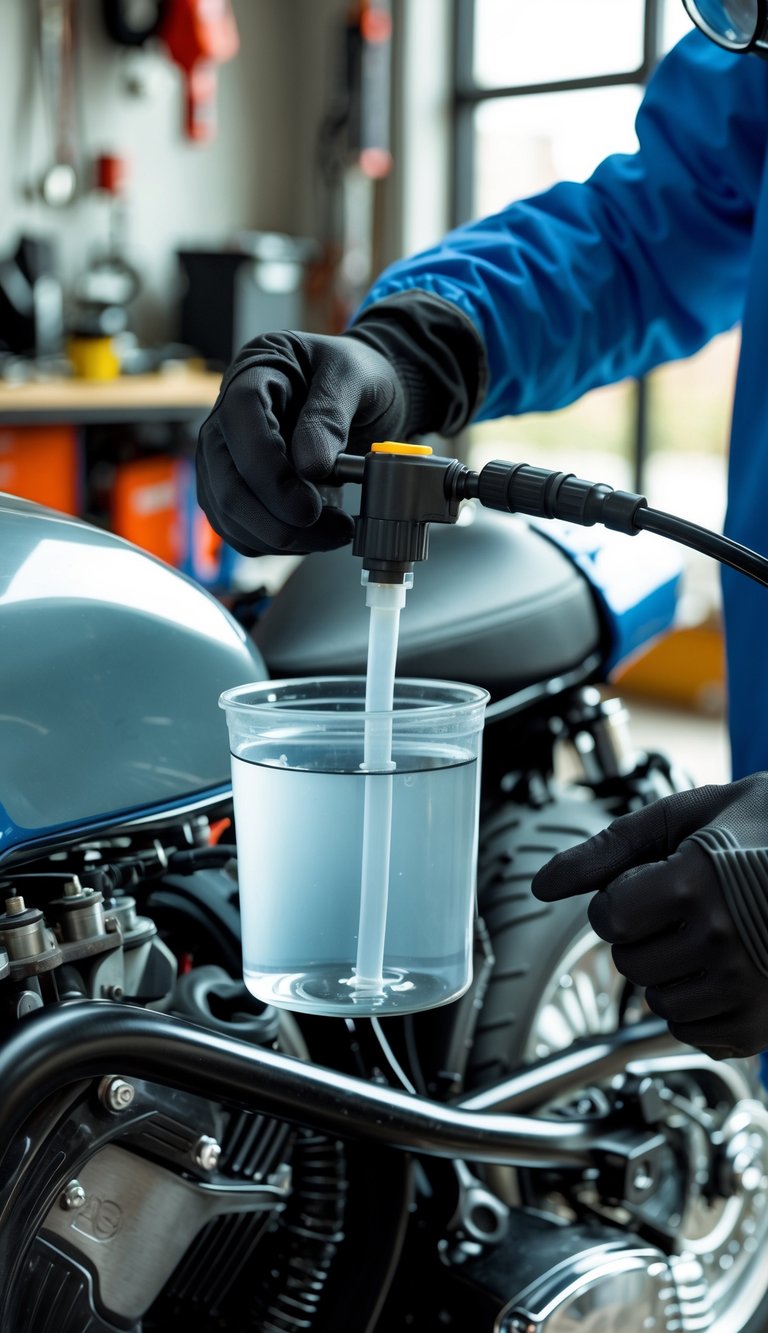
If you plan to store your motorcycle longer than six months, drain the fuel tank. Old gasoline, especially with ethanol, can break down and gum up the fuel system. This can clog injectors or carburetor jets and cause starting problems in spring.
For carbureted bikes, drain the float bowls and run the engine until it stalls to clear remaining fuel. For fuel-injected bikes, siphon the tank and run the bike until it stops. Wear gloves and work in a well-ventilated area to avoid fumes and spills.
Label a container for the drained fuel and dispose of it or recycle it according to local rules. Leave a little oil in the spark plug holes and turn the engine by hand to protect internal metal surfaces from rust during long storage.
PRO TIP
If you dislike draining fuel, use a high-quality fuel stabilizer and fill the tank to the top to limit air and condensation. Add the stabilizer, then run the engine for several minutes so it reaches the fuel system. This helps protect seals and prevents varnish build-up for shorter storage periods. Still, for storage over six months, draining remains the safest choice. If you must store with fuel, pick ethanol-free gasoline or a known stable blend like Aspen where available. Always store drained fuel in a labeled, approved container away from heat and direct sunlight.
11) Keep the motorcycle in a dry, well-ventilated space
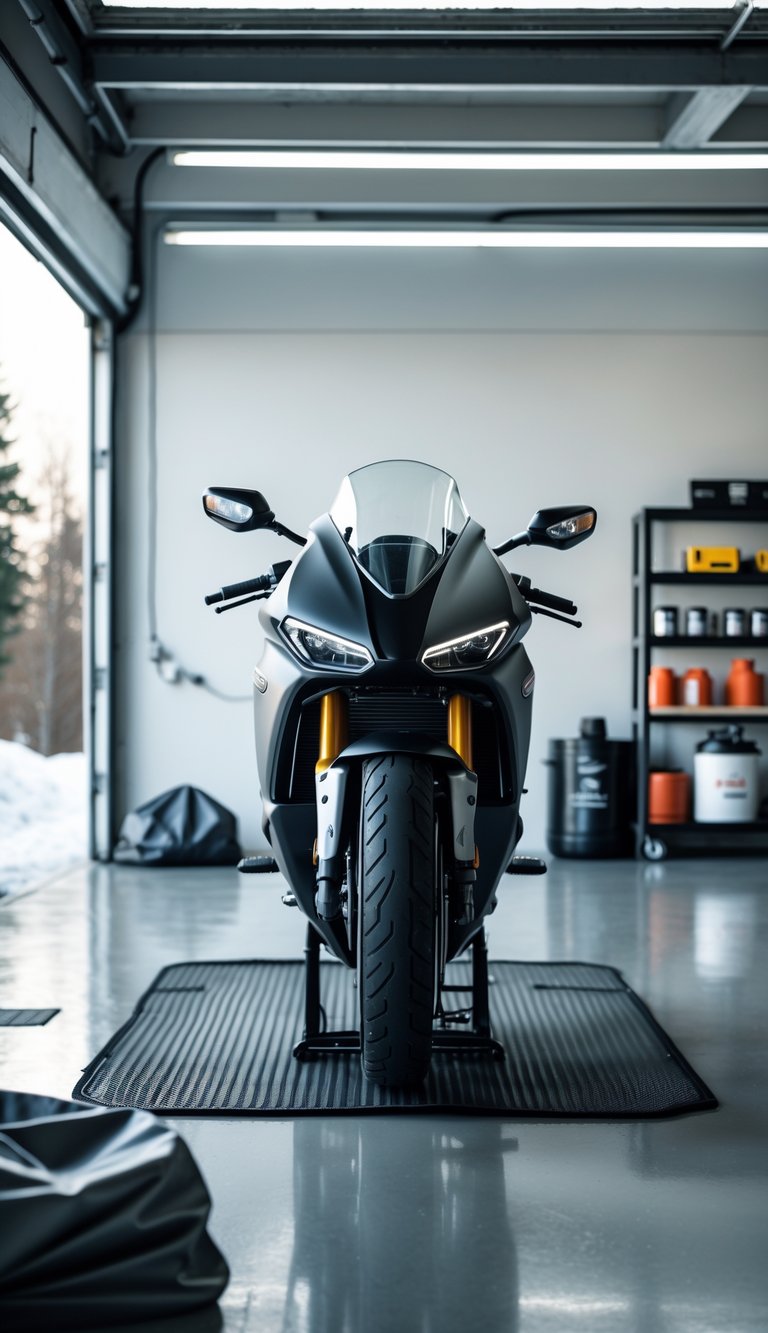
You should store your motorcycle in a dry, ventilated area to cut down on rust and mildew. A garage or insulated shed works best because it keeps temperature swings and moisture low.
Ventilation keeps stale air moving and reduces condensation on metal and electrical parts. If your space is tight, crack a window or use a small fan to keep airflow steady.
Avoid plastic tarps that trap moisture against paint and chrome. Use a breathable cover instead; it sheds dust while letting damp air escape.
Check the storage spot for leaks, puddles, or high humidity before you park your bike. Move the motorcycle away from exterior walls to reduce cold and damp exposure.
PRO TIP
When you pick a storage spot, aim for steady temperature and humidity around 30–50 percent if possible. You can monitor conditions with an inexpensive hygrometer placed near the bike. If humidity tends to rise, add desiccant packs or a small dehumidifier to keep moisture down. For short-term needs, elevating the bike off the concrete on plywood or a stand reduces cold transfer and damp buildup. Also, seal gaps where rodents or pests could enter and block exhaust pipes lightly to keep critters out. Regularly check the area during winter; one quick weekly look can catch problems before they cause damage.
12) Protect exposed chrome parts with anti-rust spray

Chrome parts show dirt and rust fast. Spray a thin coat of anti-rust product on exhausts, handlebars, and trim before storage. That creates a barrier against moisture and salt.
Clean and dry the chrome first. Any grime or water left behind will trap corrosion under the spray and reduce protection.
Use a product made for long-term corrosion protection and follow the label directions. Light, even sprays work best; avoid heavy builds that can drip or attract dust.
Check the chrome every few weeks if possible. Reapply the spray if you notice spots where the coating thinned or washed off.
PRO TIP
You want the best protection with the least effort, so choose a corrosion inhibitor labeled for long-term indoor or outdoor use. Products like clear rust blockers or VCI sprays leave a thin, non-sticky film that won’t change the chrome’s look. Before spraying, wipe parts with isopropyl alcohol to remove oils and fingerprints; this improves adhesion. For hard-to-reach areas such as behind shields or under clamps, use a spray with a skinny straw or apply with a soft brush. After application, let the product dry fully and store the bike in a dry, covered spot away from road salt. Keep the spray can in a cool place and inspect your chrome at least once a month, reapplying as needed to maintain continuous protection.
13) Disconnect the battery if not using a tender
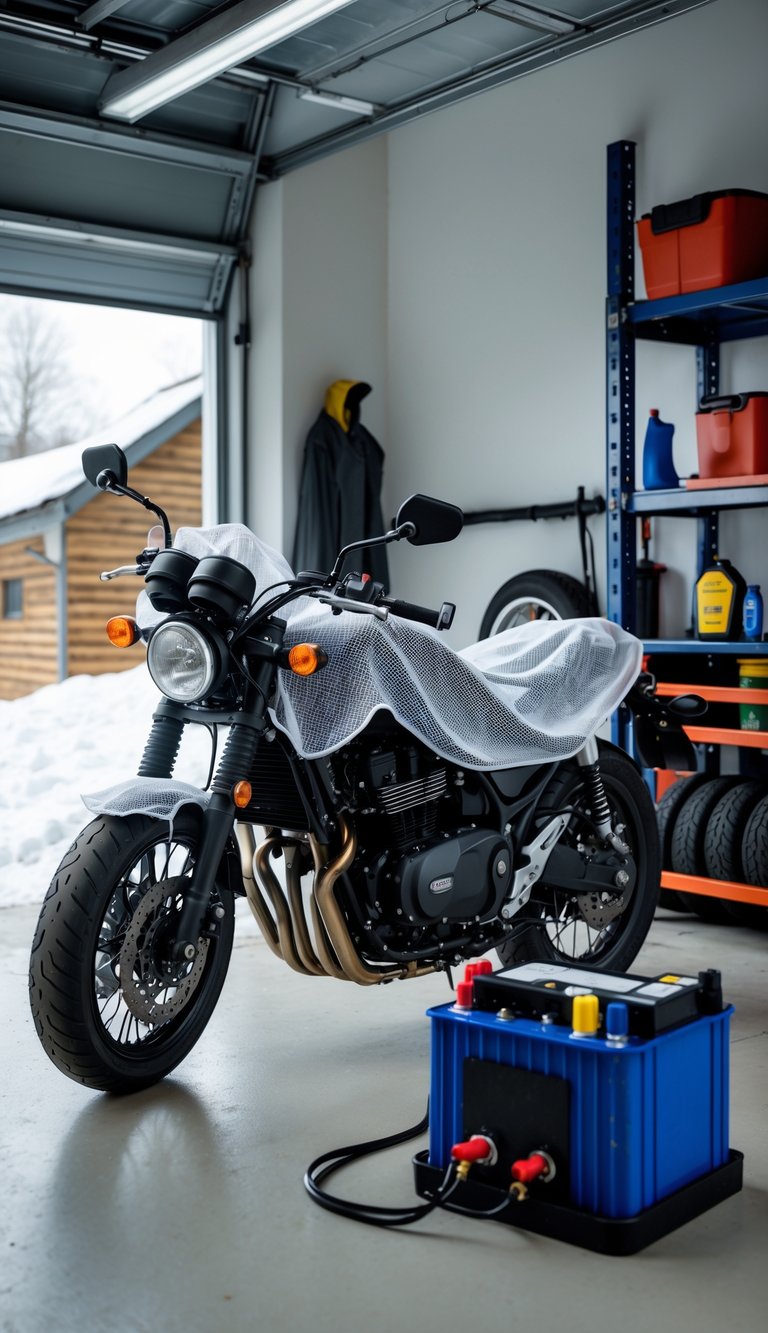
If you won’t use a battery tender, disconnect the battery to prevent slow drains. Many bikes have small circuits that draw power even when off, and that can kill a battery over winter.
Begin by turning off the ignition and removing any accessories. Disconnect the negative (ground) terminal first, then the positive, and lift the battery out carefully. Keep AGMs level and handle acid batteries with caution.
Store the battery indoors at a cool, stable temperature away from freezing. Check its charge every few weeks and top it up with a charger if it drops. This simple step helps preserve battery life and gives you a ready bike in spring.
PRO TIP
If you choose to remove the battery, mark the terminals and take a photo of the wiring to make reinstallation easy. Use protective gloves and eye protection when handling the battery, and place it on a non-conductive surface. Consider a small, smart maintainer if you have access to power later; it will prevent sulfation without overcharging. If you can’t bring the battery indoors, at least disconnect it and tape the terminals to avoid accidental shorts. Regularly inspect for corrosion and clean terminals with a baking soda solution if needed to ensure a solid connection when you reinstall the battery.
14) Store the bike away from direct sunlight
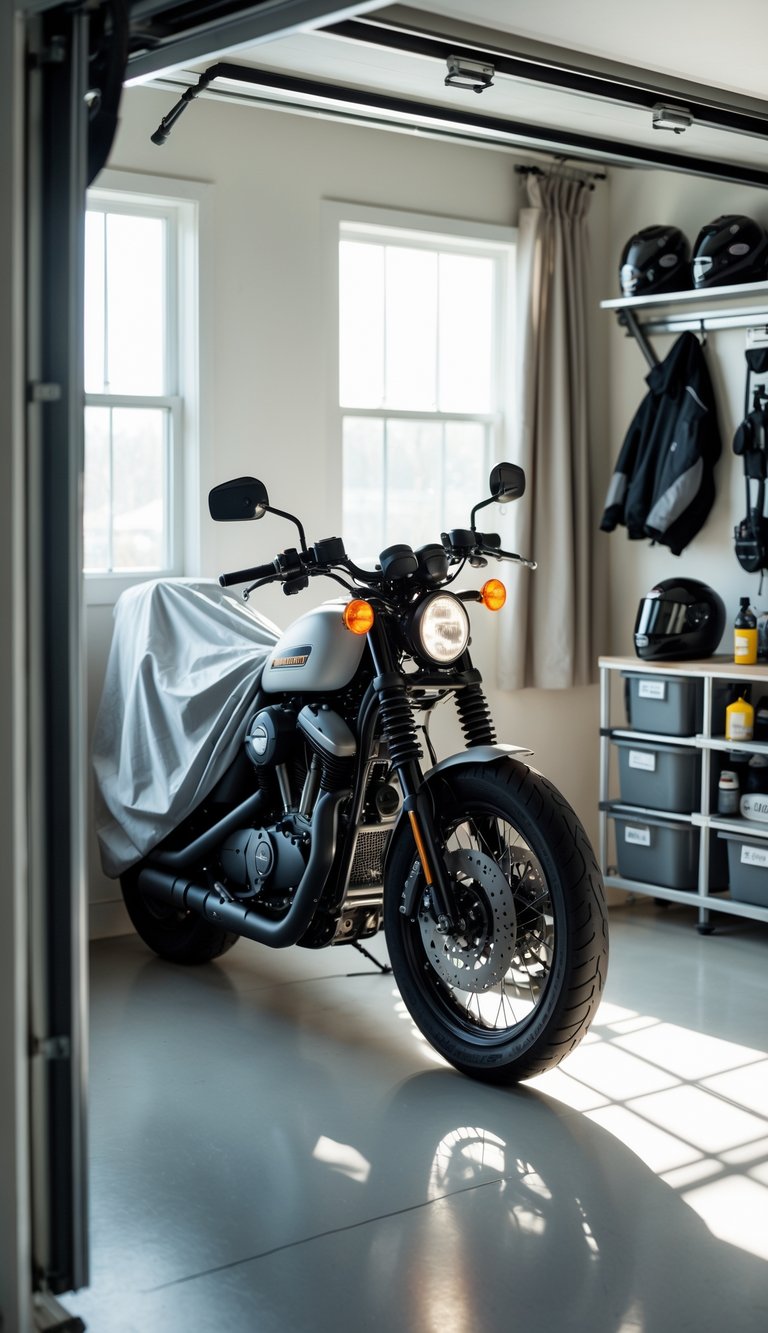
Direct sunlight can fade paint, crack plastics, and dry out rubber parts. Park your bike in a shaded spot or under a breathable cover to slow UV damage.
If you must store outdoors, choose a north-facing wall or under an overhang. These locations reduce sun exposure and keep temperatures more stable.
Indoor storage is best when you can. Even a garage with a small window still protects your seat, dash, and hoses from sunlight.
Check the storage spot on sunny days. Move the bike if you see bright patches or heat buildup on the paint or seat.
PRO TIP
You can add inexpensive UV protection to extend the life of plastic and rubber parts. Use motorcycle-specific protectants on seats, hoses, and trim, and reapply every few months. A breathable cover with UV blocking fabric helps but avoid tight plastics that trap moisture. If the bike sits in a garage with a window, hang a reflective shade or use a removable panel to block midday sun. For long-term storage, consider rotating the bike’s position monthly to even out any light exposure and prevent one side from fading faster than the other.
15) Use silica gel packs in storage areas to reduce moisture

Silica gel packets help stop moisture from building up in your motorcycle storage space. Place several packets inside your saddle bags, tank bag, and under the seat to protect leather, electronics, and metal parts.
Check packet size and count for the volume you’re protecting. For larger spaces like a trunk or storage box, use larger packs or multiple small ones to cover more air space.
Replace or recharge packets when they feel damp or after a few months. That keeps them working well and prevents mold or rust from forming on your bike.
PRO TIP
Keep silica gel packs in clear labeled containers so you always know when to replace them. If you store your bike in a shed or garage that sees temperature swings, use a combination of silica gel packs and a breathable cover to balance moisture control without trapping condensation. You can reactivate many reusable silica packs by heating them in an oven at the manufacturer’s recommended temperature, but follow safety instructions and avoid open flames. For long-term storage, swap fresh packs every 3–6 months, or sooner in humid climates. Store spare packets in airtight bags so they stay dry until you need them.
16) Inflate tires to recommended pressure
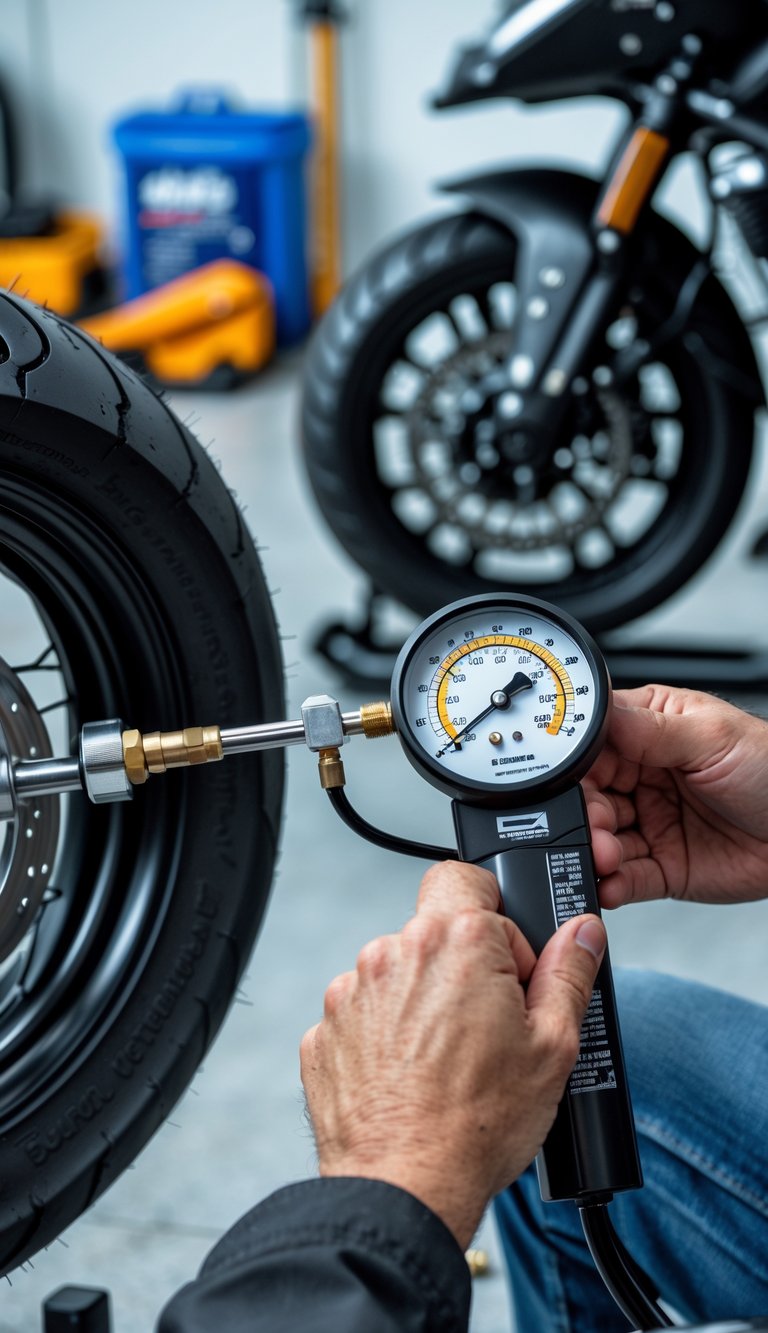
Check your tire pressure before storing your bike. Cold air shrinks, so tires can lose pressure during winter even if you rode a little before storage.
Inflate to the pressure listed in your owner’s manual or on the tire placard. Do not exceed the maximum PSI stamped on the tire sidewall; follow the manufacturer’s recommended riding pressure for best balance of grip and wear.
If you’ll store the bike long-term, consider slightly higher pressure—about 2 psi above recommended—to help resist flat spots. Also lift the bike on stands if possible to take weight off the tires and keep their shape.
Recheck pressure when you take the bike out of storage. Proper inflation lowers risk of cracking, flat spots, and poor handling when you ride again.
PRO TIP
Before inflating, warm the tires slightly by moving the bike into sunlight or a warm garage for a few minutes. Cold tires give lower readings, so warming them helps you set a more accurate pressure. Use a quality gauge and pump; cheap gauges can be off by several psi. If you can’t lift the bike, rotate the tires occasionally during storage to avoid long flat spots on one contact patch. Keep a small air canister or portable pump with your storage gear so you can top up pressure without a trip to a gas station. Finally, mark your recommended pressure on a small sticker near the seat or in your toolkit so you always have the right number handy.
17) Cover exhaust openings with tape or plugs
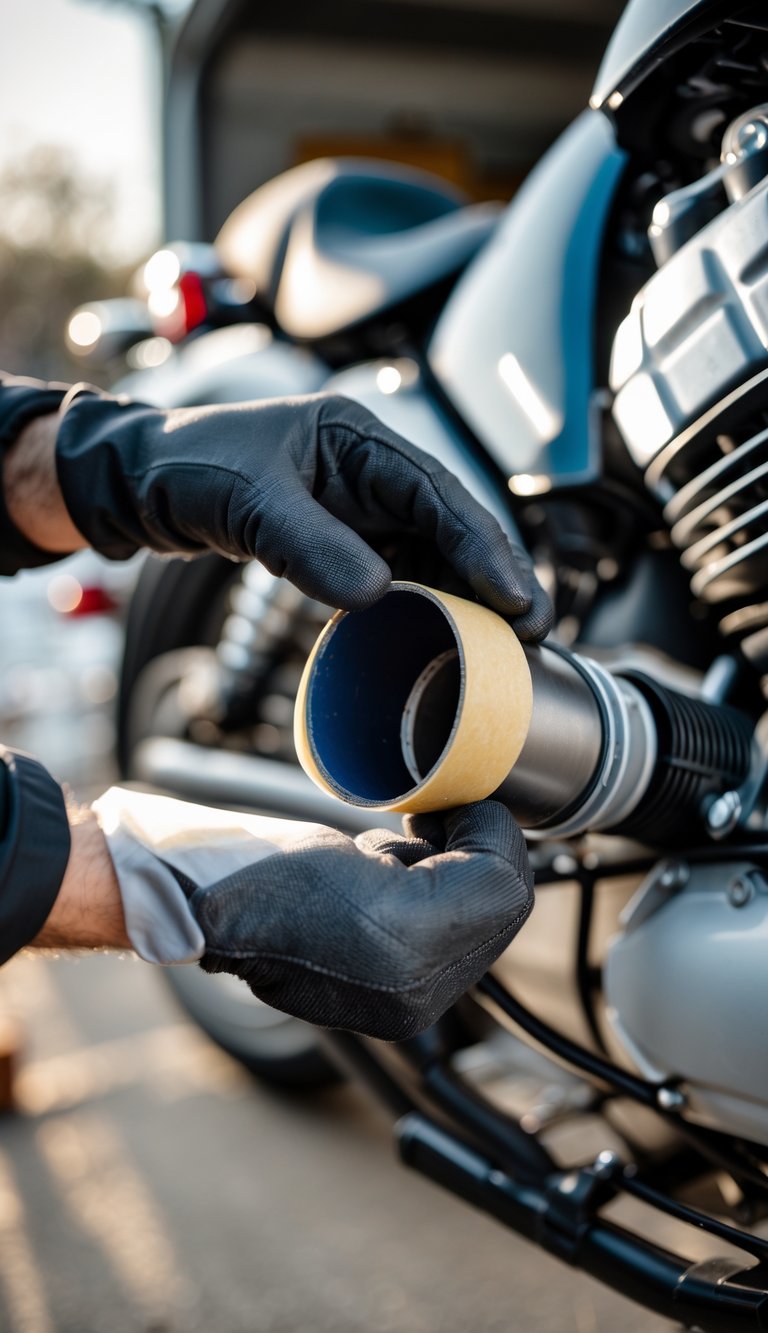
You should block the exhaust and intake openings before storage. Moisture, dirt, and small animals can enter and cause rust or nests that are hard to remove later. Simple plugs or a wrapped rag work well for short-term storage.
Use materials that won’t degrade inside the pipe. Foam or rubber exhaust plugs fit many mufflers and do not leave residue. If you use tape or plastic, pick ones that won’t melt or leave sticky gunk when temperatures change.
Make the plugs clearly visible so you remember to remove them before you ride. Tie a bright ribbon or hang a tag from the handlebar as a reminder. That small step prevents clogged pipes and avoids dangerous blockages when you start the bike.
PRO TIP
When choosing plugs, buy a set that fits different pipe sizes so you can protect both exhaust and intake openings. Clean the pipes first to remove oil and grit, which can trap moisture against metal. For long storage, use breathable covers on the bike and a desiccant or moisture absorber near the plugs to cut humidity. Avoid sealing everything airtight; a little airflow reduces condensation problems. Finally, write the removal reminder into your winter startup checklist and put that checklist where you’ll see it on reassembly day.
18) Perform a full mechanical check before storing
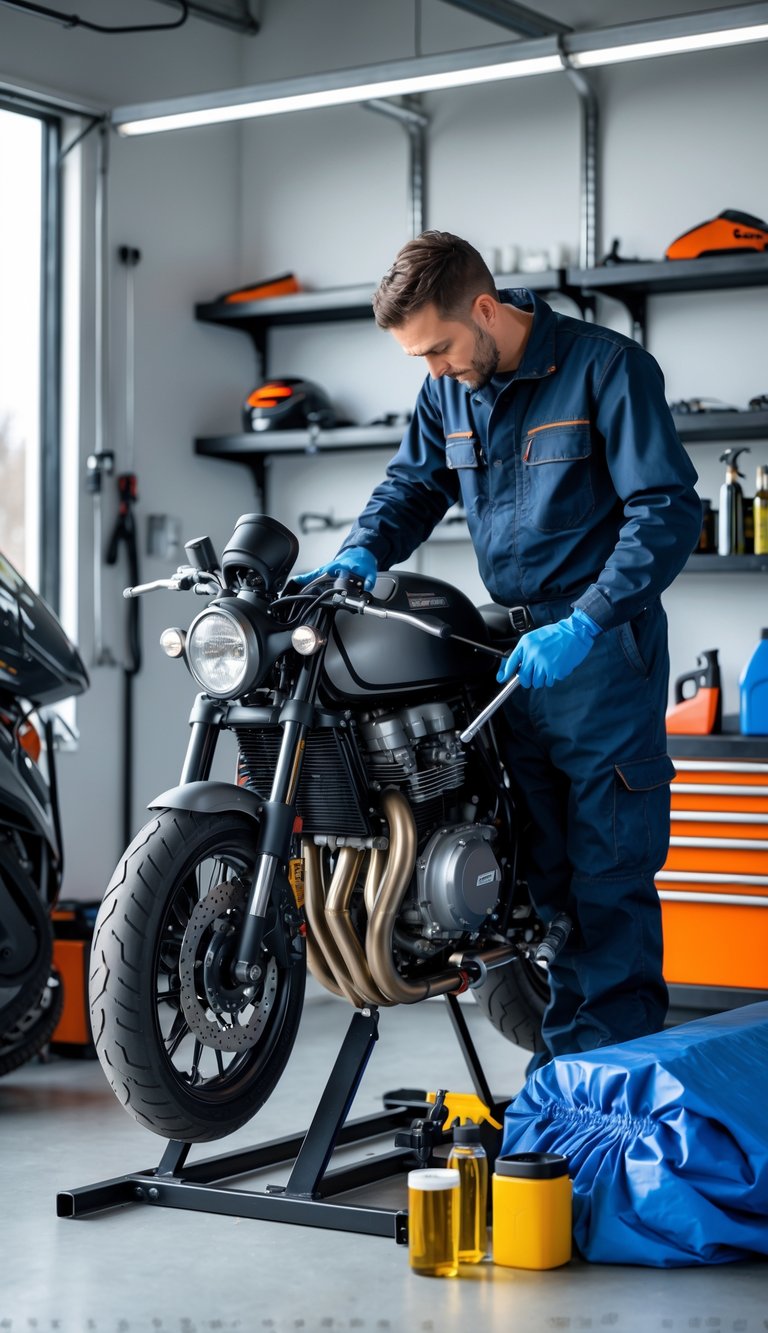
You should do a full mechanical check before you store your motorcycle. Check fluid levels, brakes, lights, and fasteners. Fix small problems now to avoid bigger repairs in spring.
Inspect the oil and filter and change them if overdue. Clean the bike so grime doesn’t trap moisture and cause corrosion. Look for leaks and tighten any loose bolts.
Test the battery and either remove it or hook it to a maintainer. Inflate the tires to the correct pressure and look for cracks or flat spots. Lubricate the chain and pivot points to keep metal parts from drying out.
PRO TIP
Before you store your bike, make a short checklist and take photos of key areas like the engine, wiring, and brake lines. This helps you spot any changes while in storage and speeds up spring prep. Label any parts you remove and keep small bolts in a sealed bag stuck to the frame with tape. If you don’t feel confident checking complex items like the fork seals or carburetor, schedule a quick shop visit. A basic service now often costs less than fixing damage caused by neglect, and it gives you peace of mind during the off-season.
19) Keep the motorcycle upright using a center stand
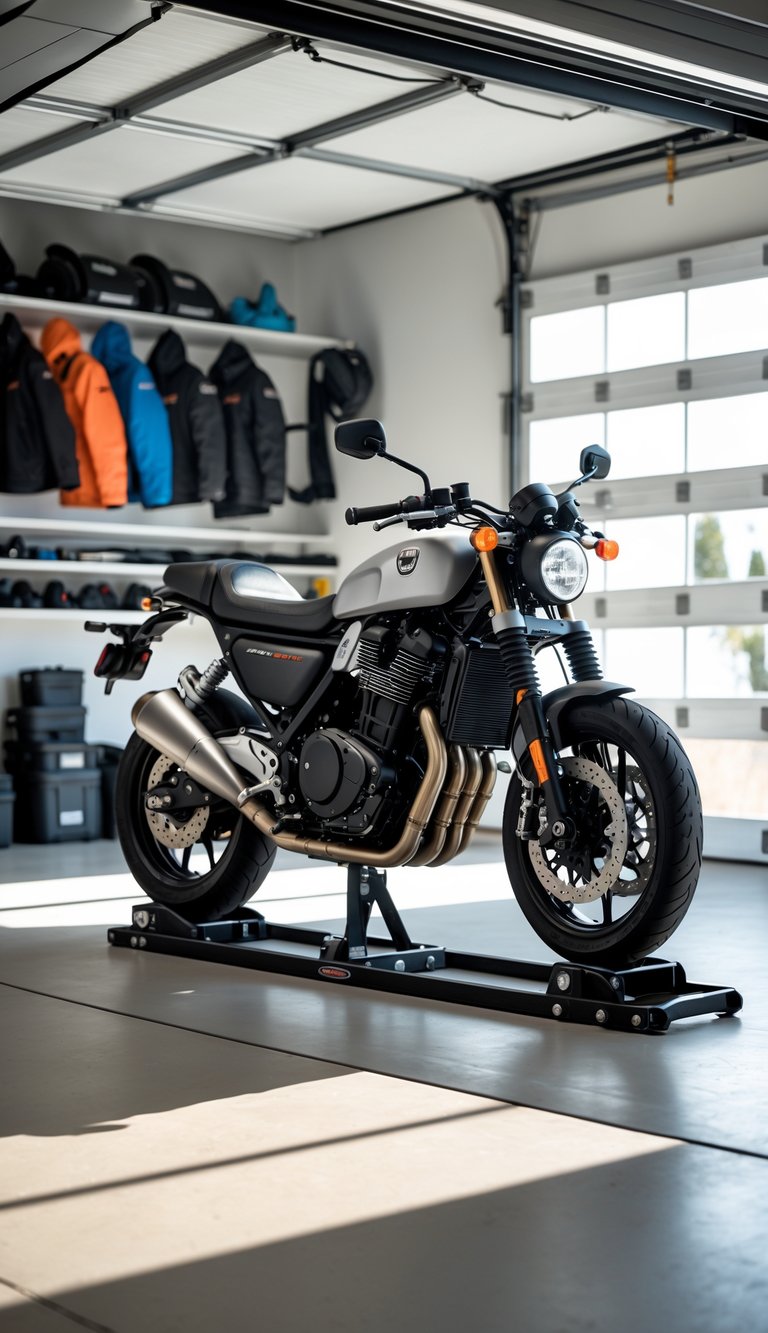
Using a center stand keeps your motorcycle more stable than a side stand. It lifts some weight off the tires and frames the bike in an upright position that reduces stress on suspension and prevents tire flat spots.
You can do maintenance more easily when the bike is on a center stand. Tasks like changing fluids, lubricating the chain, or checking brakes feel safer and take less effort.
If your bike doesn’t have a center stand, consider a paddock stand or a rear wheel stand as an alternative. Make sure the stand fits your model and sits on solid, level ground to avoid tipping.
PRO TIP
If you plan long-term storage, put a small block or wheel chock under the front wheel even with the center stand engaged. This gives extra backup stability and helps if the stand shifts slightly on certain surfaces. Inflate tires to the recommended pressure before putting the bike on the stand so sidewall stress is minimized. Also, clean and dry the stand feet and the floor area to prevent rust and slipping. Check the stand and bike once a month, and rotate the tires if you cannot lift both wheels off the ground. Use soft padding under the stand feet on concrete to reduce vibration and moisture transfer.
20) Avoid parking on grass or dirt to prevent moisture
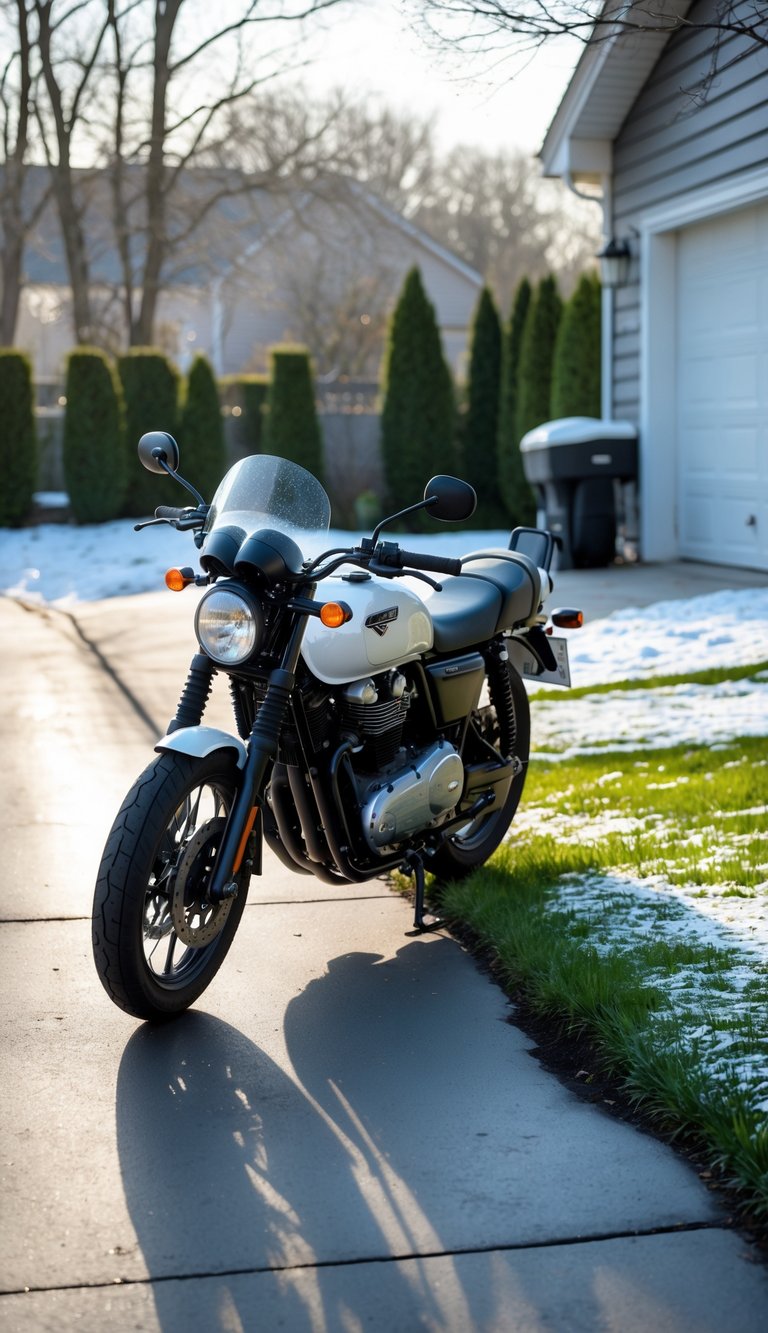
Parking on grass or dirt holds moisture under your motorcycle. That steady damp can lead to rust on the frame, chain, and exhaust over time. Even if the surface looks dry, soil can release moisture at night or after rain.
Soft ground also lets your bike sink a little, which puts stress on the stand and can tip the bike in long storage. Pavement or a concrete pad gives firm support and reduces contact with wet soil. If you must park outdoors, use a piece of plywood or a small platform under the kickstand to spread the load.
PRO TIP
Place your motorcycle on a hard, level surface like concrete, asphalt, or a garage floor to cut moisture risk. If you lack paved space, lay a sheet of pressure-treated plywood or an interlocking plastic mat beneath the bike to keep it off the ground and improve airflow. Add a breathable cover to block rain but avoid tarps that trap humidity. For long storage, consider a portable shed or motorcycle pod to protect from weather while keeping ventilation. Check the area under the bike every few weeks for puddles or pooling condensation and move it if the ground becomes soft.