
Last Updated on October 1, 2026
More than 100,000 people joined a waiting list just to ride in a car with nobody behind the wheel. That single number tells you almost everything about where robotaxis and autonomous ride-hailing in 2026 stand right now: demand is real, the technology is spreading fast, and everyday drivers are starting to ask whether buying a car the old-fashioned way still makes sense. Between Waymo’s public launch in Las Vegas and Tesla’s push to get its Cybercab-style robotaxi service running in Texas and Florida, this year marks a turning point, not because self-driving cars are suddenly everywhere, but because they just became something ordinary people can actually book, ride in, and judge for themselves.
This article breaks down what’s actually happening on the ground, the glitches and growing pains nobody wants to talk about, and what all of it means if you’re trying to decide whether to buy a car, hold onto one, or just wait and see.
Key Takeaways
- Waymo opened its Las Vegas robotaxi service to the public in mid-September 2026, covering roughly 24 square miles of the city including major tourist corridors [1][2].
- Nevada regulators have cleared Waymo to scale up to 1,000 robotaxis in Las Vegas, and the state has also approved Tesla and Uber’s Aviari subsidiary to operate autonomous vehicles [4][6].
- Waymo has logged more than 220 million rider-only autonomous miles across its markets, giving it the deepest real-world safety record of any robotaxi operator [1][9].
- Tesla’s Cybercab-branded service is running limited, paid robotaxi rides in Texas and Florida using Model Y SUVs, but it is widely seen as testing the edges of existing regulation rather than operating under settled rules.
- For everyday car buyers, robotaxis are becoming a genuine option in select cities, but they are not a replacement for personal car ownership anywhere close to a national scale yet.
Waymo’s Las Vegas Launch Signals a New Phase for Robotaxis and Autonomous Ride-Hailing in 2026
Las Vegas has always been a city built around getting people from point A to point B efficiently, taxis, rideshares, and shuttle buses have been part of the tourism economy for decades. In mid-September 2026, that infrastructure got a new entrant: Waymo opened its driverless ride-hailing service to the general public across the city, following months of employee-only testing and a gradual, cautious rollout [1][10].
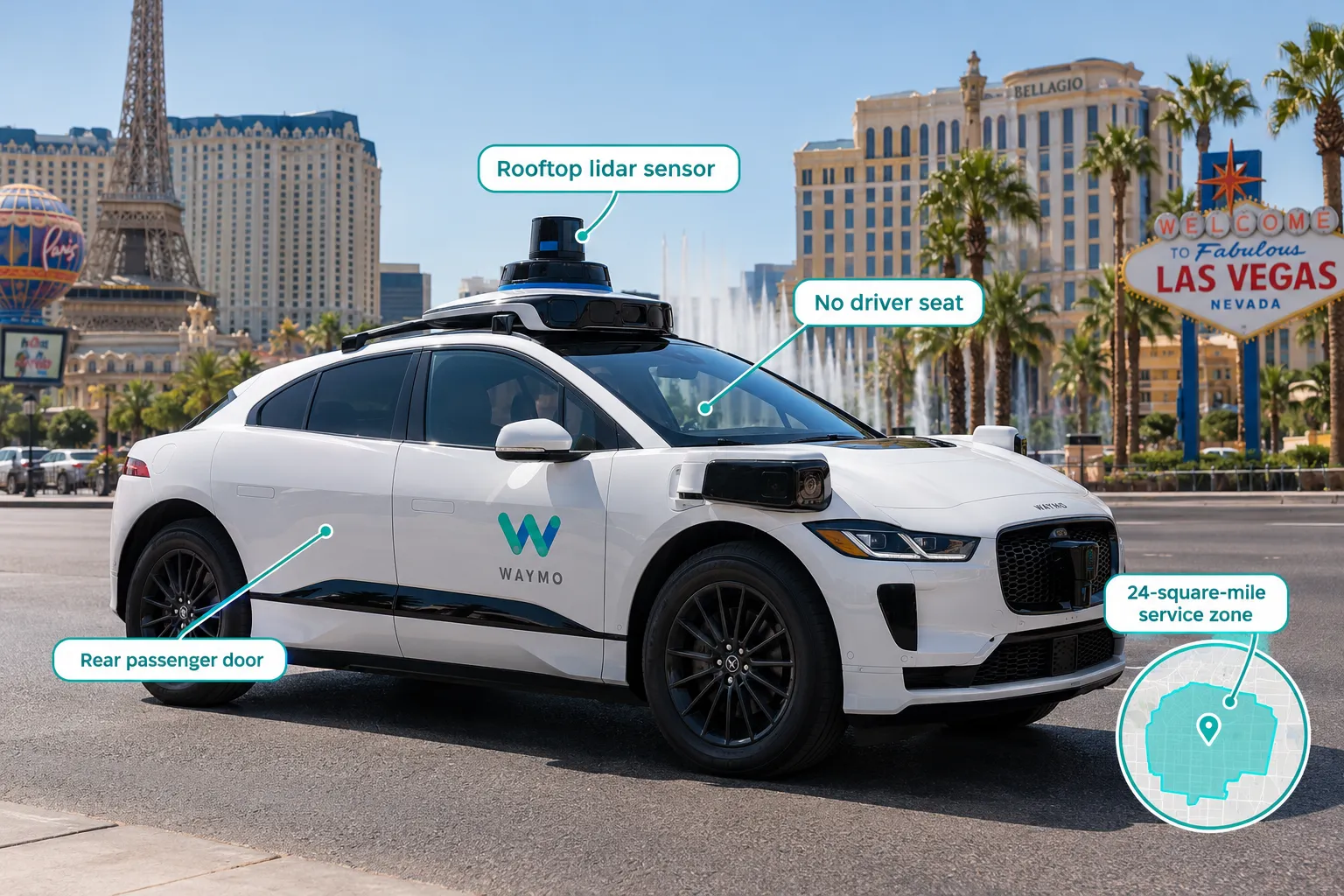
The initial coverage area spans about 24 square miles, which sounds modest until you realize it includes the Strip, downtown, and several major tourist corridors where ride demand is constant around the clock [1][2]. Local news outlets covering the launch described long lines of curious riders and a steady stream of app downloads in the days following the announcement, a sign that novelty alone is driving a lot of early adoption [4][5].
What makes the Las Vegas rollout different from earlier robotaxi experiments is the regulatory runway behind it. State regulators have already authorized Waymo to expand its fleet up to 1,000 vehicles in the market, a scale that would put Las Vegas on par with some of Waymo’s longest-running operations [4][6]. That approval didn’t happen overnight. Waymo has been building a safety case for years, and the company now points to more than 220 million miles driven with no human safety driver behind the wheel as its core credibility argument [1][9].
It also doesn’t hurt that Las Vegas is friendly territory for autonomous vehicle testing. Wide boulevards, predictable grid patterns in the tourist core, and a state government eager to brand itself as tech-forward have all made Nevada one of the more permissive environments for robotaxi operators. That’s part of why Nevada has approved multiple companies to run autonomous vehicles in the state, not just Waymo, but Tesla and Uber’s Aviari subsidiary as well [4][6]. Las Vegas Sun reporting described the city as becoming a genuine proving ground where “the machine at the wheel” is learning to handle real traffic, real pedestrians, and real unpredictability, not a closed test track [7].
For riders, the appeal is straightforward: no tipping, no small talk, and a vehicle that shows up exactly when the app says it will. For the broader industry, the signal is bigger. Las Vegas becoming a multi-operator robotaxi market, rather than a single-company pilot, is the clearest evidence yet that autonomous ride-hailing is moving from demonstration project to competitive business.
Tesla Cybercab and the Race to Scale Autonomous Ride-Hailing
While Waymo leans on accumulated mileage and years of safety data, Tesla is taking a different approach entirely. Its Cybercab-branded robotaxi service is currently running limited, paid rides in parts of Texas and Florida, using Model Y SUVs rather than the purpose-built, steering-wheel-free Cybercab concept vehicle Tesla has shown off publicly.
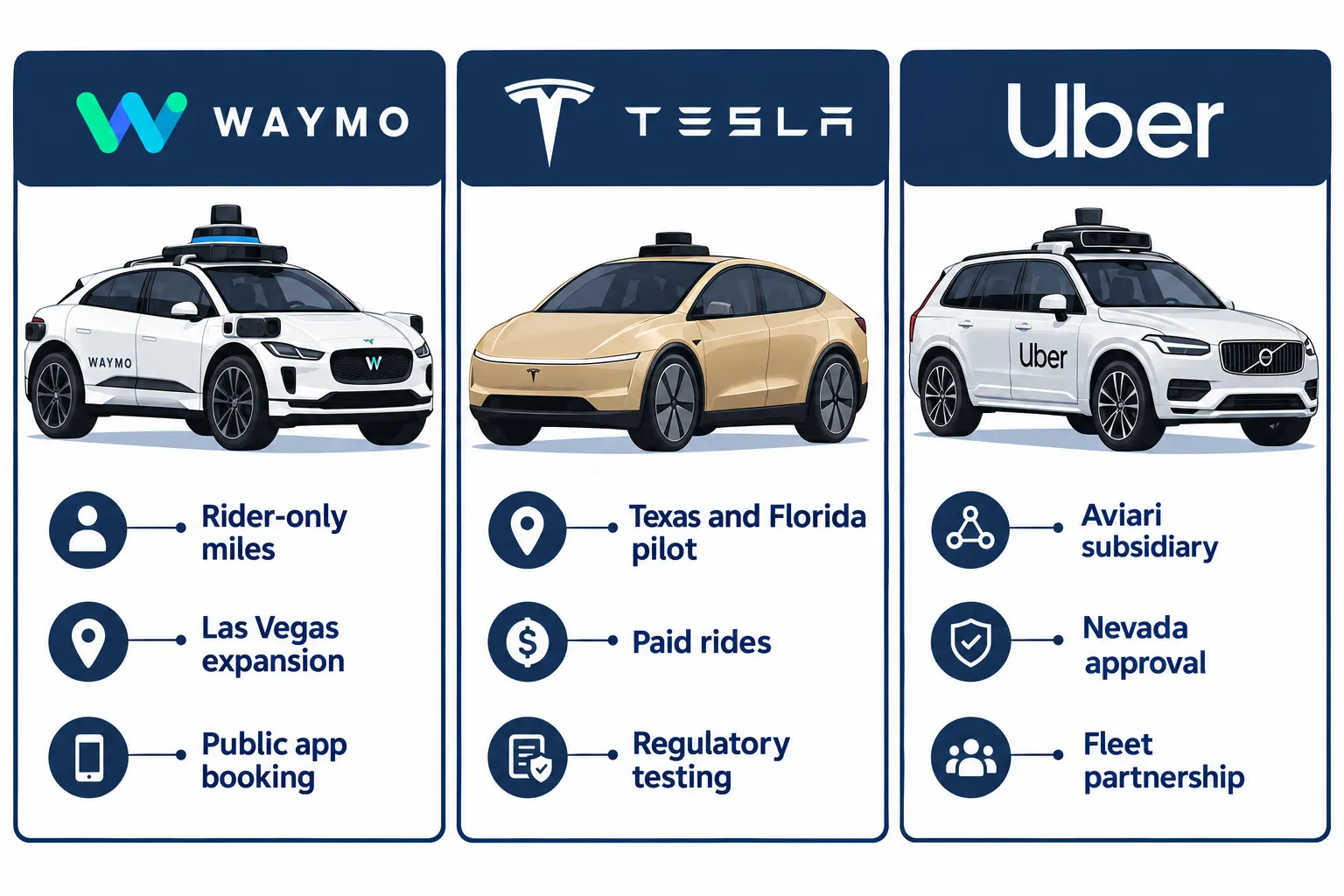
This distinction matters. The vehicles actually carrying paying passengers today are modified versions of an existing consumer SUV, equipped with Tesla’s self-driving software stack and, in many markets, a human safety monitor present in the vehicle. That’s a meaningfully different setup than Waymo’s fully driverless Jaguar and Hyundai-based fleets, which operate with no human inside at all in most of their service areas.
Tesla’s strategy has been to move fast and expand aggressively, launching in new cities and loosening restrictions on its service footprint at a pace that has drawn scrutiny from regulators and safety advocates. Industry observers widely describe Tesla’s approach as testing the limits of existing rules rather than waiting for a fully settled regulatory framework, a strategy that has worked well for Tesla in other product categories, but one that carries real risk when the product is a vehicle operating in mixed traffic with pedestrians and cyclists.
The contrast between the two companies’ philosophies is worth laying out directly:
| Factor | Waymo | Tesla Cybercab Service |
|---|---|---|
| Vehicle type | Purpose-built autonomous fleet (no driver controls in many markets) | Modified Model Y SUVs |
| Safety record disclosed | 220+ million rider-only miles [1][9] | Limited public mileage disclosure |
| Current markets | Las Vegas, Phoenix, San Francisco, and others | Texas and Florida, limited areas |
| Regulatory posture | Years of staged approvals and public safety reporting | Faster rollout, more regulatory friction |
| Human in vehicle | No, in most rider-only zones | Often yes, as a safety monitor |
Neither approach is objectively “right” yet. Waymo’s caution has produced an enviable safety record but slower geographic expansion. Tesla’s speed has produced broader near-term availability but less public data for riders, and regulators, to evaluate. Both companies are racing toward the same goal: a robotaxi network that operates at the scale of a normal rideshare app, in enough cities that it becomes a real alternative to owning a car.
Glitches, Regulatory Friction, and the Risks Nobody’s Pricing In
It would be dishonest to write about robotaxis and autonomous ride-hailing in 2026 without talking about what goes wrong. Every robotaxi operator, including the most cautious ones, has had public incidents: vehicles stopping unexpectedly in traffic, confusion at construction zones, awkward interactions with emergency vehicles, and the occasional viral video of a car doing something a human driver never would. Local coverage of the Las Vegas launch noted that even Waymo’s well-tested system is still learning to navigate a city built around casino valet lanes, pedestrian-heavy crosswalks, and unpredictable tourist behavior [7][8].
These aren’t necessarily dealbreakers. Waymo’s 220-million-mile track record suggests the company has gotten meaningfully safer over time, and regulators wouldn’t be approving fleet expansions to 1,000 vehicles if the data didn’t support it [1][6]. But “meaningfully safer” is not the same as “flawless,” and that gap is exactly where the regulatory friction lives.
Tesla’s situation illustrates this tension more sharply. Because its robotaxi service launched faster and with less public mileage disclosure, outside observers, including safety regulators, have less information to evaluate whether its approach is as proven as Waymo’s. That uncertainty is part of why Tesla’s Cybercab rollout is widely characterized as testing regulatory boundaries rather than operating inside a mature, settled framework.
For everyday readers, the practical takeaway is simple: robotaxi safety is not a solved problem with one universal answer. It varies by company, by city, and by how much data that company is willing to share. Anyone comparing services should look at three things before assuming a robotaxi ride is automatically safer than driving themselves:
- How many rider-only miles has the company actually logged, and in what kind of traffic
- Whether a human safety monitor is present in the vehicle
- How the local regulator has described its approval process, a fast rubber stamp or a multi-year staged rollout
What Robotaxis and Autonomous Ride-Hailing in 2026 Mean for Everyday Car Buyers
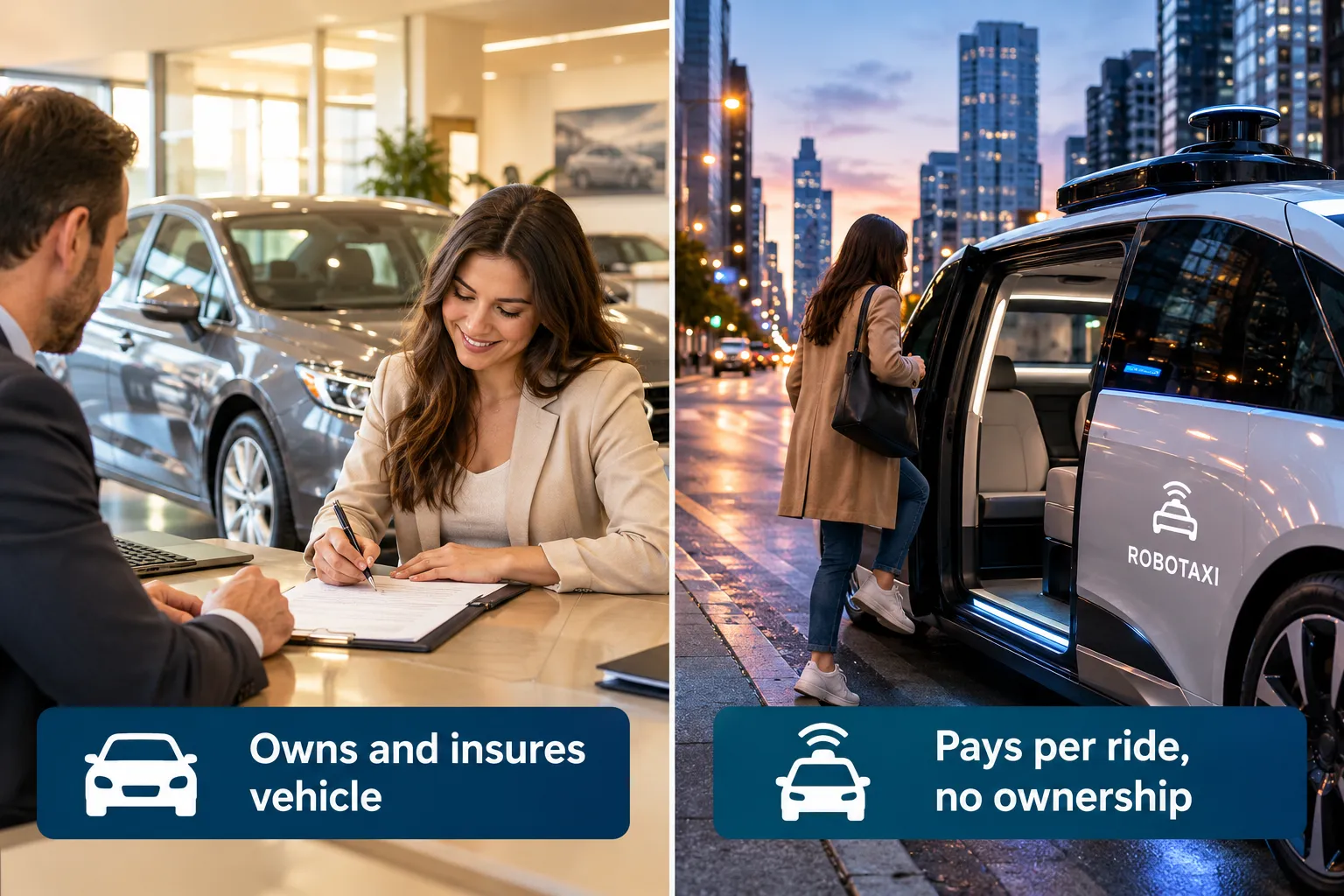
Here’s where this stops being a tech story and starts being a car-buying story. If you’re in the market for a new or used vehicle right now, the rise of robotaxis in a handful of cities doesn’t change much for most of the country yet. But it is already starting to ripple into three very concrete areas: resale values, insurance, and the simple question of whether it’s smart to wait.
Resale Values in an Autonomous Future
Resale value has always been shaped by things like brand reputation, mileage, and maintenance history. Autonomy adds a new wrinkle. As robotaxi fleets expand in cities like Las Vegas, Phoenix, and parts of Texas, some urban buyers may start questioning whether they need a second car at all, or any car, if a reliable, app-based robotaxi is available around the clock.
That shift, if it happens at scale, would most likely hit specific segments first: older sedans bought mainly for commuting in dense cities, and used vehicles purchased as a “second car” for occasional errands. If you’re trying to gauge how a car’s resale value might hold up over the next several years, it’s worth reading our breakdown of used car trade-in value and what dealers won’t tell you, since dealers are already adjusting appraisal models for vehicles in markets with growing autonomous ride-hailing coverage.
Outside the handful of cities where robotaxis actually operate, this effect is close to zero right now. Suburban and rural car values aren’t meaningfully threatened by a service that only runs in 24 square miles of one city. But buyers in dense metro areas with active or announced robotaxi expansion should factor it into how long they plan to keep a vehicle.
Insurance Premiums Are Already Shifting
Insurance is quietly becoming one of the more interesting side effects of the robotaxi boom. Companies operating autonomous fleets carry commercial-grade liability coverage built around their own safety data, which is a very different model than the personal auto policy an individual driver buys. As robotaxi operators publish more safety statistics, like Waymo’s growing mileage totals, some insurers are starting to use that data to refine how they price risk for human drivers in the same cities, particularly around high-traffic corridors where robotaxis now operate.
The practical effect for most car buyers today is minimal, but it’s a trend worth watching. If you’re shopping for a reliable used car and want to understand how changing market conditions affect ownership costs, our guide to the most reliable used cars to buy in 2026 covers the kind of data-backed picks that tend to hold their value and keep insurance costs predictable regardless of what’s happening with robotaxi expansion.
Should You Wait on Self-Driving Tech Before Buying?
This is the question most readers actually came here to answer, so here’s a straightforward take.
If you live in Las Vegas, Phoenix, San Francisco, or another city with active, scaled robotaxi service, it is now genuinely reasonable to consider going car-free or car-light and relying on robotaxis for a meaningful share of your trips. The math works for some households, especially single commuters without kids, pets, or regular hauling needs.
If you live anywhere else, which is still the overwhelming majority of the country, waiting for self-driving technology to change your car-buying decision makes little sense right now. Robotaxi expansion has been described consistently as a gradual process over the next 12 to 24 months, not an overnight shift to nationwide coverage. Buying decisions should still be based on the fundamentals: reliability, total cost of ownership, and fit for your actual lifestyle. Buyers comparing mainstream brands can get a solid starting point from our look at Volkswagen cars in 2026, including models and pricing, which walks through what buyers need to know regardless of how the robotaxi story unfolds.
There’s also a middle-ground argument worth considering: cars equipped with more advanced driver-assist features today tend to hold value better and may be easier to resell if autonomy keeps advancing. That’s not a reason to pay a premium chasing the newest tech, but it’s a reasonable tiebreaker between two otherwise similar vehicles.
The Next 12 to 24 Months: What to Expect
Nobody serious in the autonomous vehicle industry is promising robotaxis everywhere by next year. The realistic near-term picture looks like this:
- Gradual geographic expansion. Waymo will likely add neighborhoods within Las Vegas before adding entirely new cities, following the same staged approach it used in Phoenix and San Francisco [1][6].
- More operators entering approved states. Nevada’s approval of Tesla and Uber’s Aviari subsidiary alongside Waymo suggests other states will follow with multi-operator frameworks rather than single-company exclusivity [4][6].
- Continued public scrutiny of incidents. Every operator will have visible mistakes covered by local media, and that coverage will shape how fast regulators allow further expansion.
- Slow bleed into insurance and resale modeling. Expect more granular, city-specific adjustments rather than a sudden nationwide shift.
Longer term, think three to five years rather than one, the calculus could change more dramatically in dense urban cores if safety records keep improving, regulation matures, and pricing drops enough to beat the cost of owning a car outright. That’s a real possibility, not science fiction, but it’s conditional on three things lining up at once: safety, regulation, and price. Right now, only safety data (at least for Waymo) is clearly trending in the right direction.
Frequently Asked Questions
Is Waymo available to the public in Las Vegas right now? Yes. Waymo opened its Las Vegas service to the general public in mid-September 2026, covering about 24 square miles including the Strip and downtown corridors [1][2].
How many robotaxis can operate in Las Vegas? Nevada regulators have authorized Waymo to scale up to 1,000 vehicles in the market, though the fleet started smaller at launch [4][6].
Does Tesla have a true driverless robotaxi service? Tesla’s current paid robotaxi rides in Texas and Florida use modified Model Y SUVs, often with a human safety monitor present, rather than a fully driverless, purpose-built Cybercab vehicle operating at scale.
Are robotaxis safer than human drivers? Waymo’s disclosed safety data from more than 220 million rider-only miles suggests its system performs well relative to human driving benchmarks, but not every operator publishes comparable data, so safety claims should be evaluated company by company [1][9].
Should I sell my car because of robotaxis? Only if you live in one of the limited cities with mature robotaxi coverage and your lifestyle genuinely doesn’t require a personal vehicle. For most of the country, this is not yet a realistic trade-off.
Conclusion
Robotaxis and autonomous ride-hailing in 2026 have moved from experimental curiosity to a real, bookable service in specific cities, and Waymo’s Las Vegas launch, backed by more than 220 million rider-only miles and regulatory approval to scale toward 1,000 vehicles, is the clearest proof point yet [1][4][6]. Tesla’s faster but less transparent Cybercab rollout shows there’s more than one way to chase this market, and more than one set of risks attached to getting there first.
For everyday car buyers, the right move isn’t to panic about resale values or wait indefinitely for self-driving cars to arrive in your driveway. It’s to stay informed, watch how robotaxi expansion unfolds in your specific city over the next year or two, and keep making car-buying decisions based on reliability, cost, and your actual daily needs. If you’re shopping now, start with a model that holds its value well, understand how trade-in appraisals work before you negotiate, and revisit the robotaxi question again once service areas, and safety data, have had more time to mature.
References
[1] Ride In Las Vegas – https://waymo.com/blog/2026/09/ride-in-las-vegas/ [2] Waymo Bring Autonomous Ride Hailing Las Vegas 2026 09 14 – https://www.reuters.com/business/autos-transportation/waymo-bring-autonomous-ride-hailing-las-vegas-2026-09-14/ [3] Ride In Las Vegas – https://waymo.com/intl/jp/blog/2026/09/ride-in-las-vegas/ [4] Waymo Launches Limited Robotaxi Rides In Las Vegas 3886281 – https://www.reviewjournal.com/local/traffic/waymo-launches-limited-robotaxi-rides-in-las-vegas-3886281/ [5] Waymo Launches Robotaxi Service Las Vegas – https://www.fox5vegas.com/2026/09/14/waymo-launches-robotaxi-service-las-vegas/ [6] Waymo Opens Robotaxi Las Vegas 180237073 – https://finance.yahoo.com/technology/ai/articles/waymo-opens-robotaxi-las-vegas-180237073.html [7] The Machine At The Wheel Learns To Maneuver Las Ve – https://lasvegassun.com/news/2026/sep/21/the-machine-at-the-wheel-learns-to-maneuver-las-ve/ [8] Waymo Public Service Self Driving Cars Las Vegas Autonomous Vehicles Ride Hailing Robotaxi – https://news3lv.com/news/local/waymo-public-service-self-driving-cars-las-vegas-autonomous-vehicles-ride-hailing-robotaxi [9] Ro Den Lv Sd Tmpa – https://waymo.com/blog/shorts/ro-den-lv-sd-tmpa/ [10] Waymo Offering Rides To Public Joining Growing Aut – https://lasvegassun.com/news/2026/sep/14/waymo-offering-rides-to-public-joining-growing-aut/