Last Updated on August 25, 2026
Thanksgiving aboard a boat takes careful planning, especially when your galley has limited space, power, and cooking surfaces. You can still serve a satisfying holiday meal by adapting familiar dishes to your boat’s equipment and storage limits.
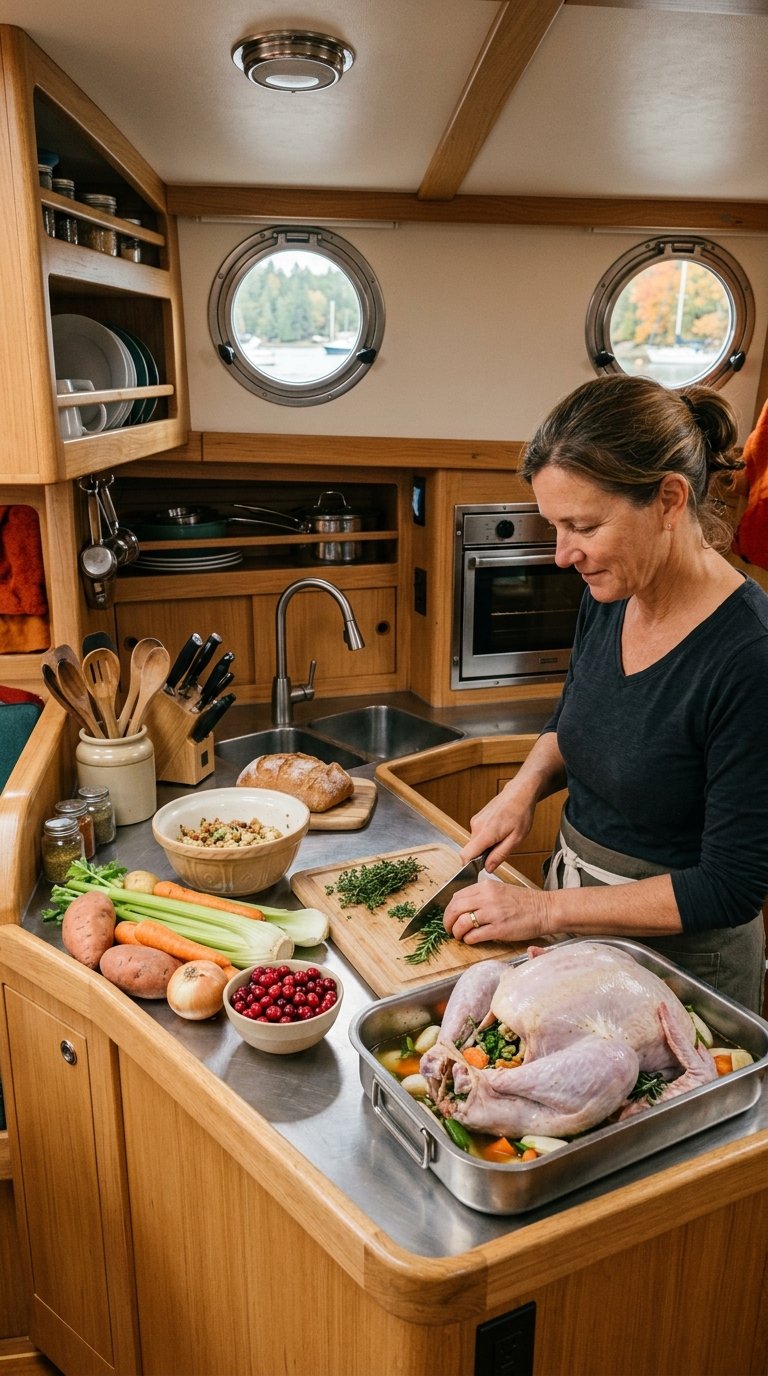
These 17 tips help you plan efficiently, reduce cleanup, and prepare a warm Thanksgiving meal safely on the water. You’ll learn how to manage the turkey, sides, ingredients, and serving space without overloading your galley.
Prep as much as possible before leaving the dock, and keep every ingredient secured for the trip.
1) Plan the menu around your galley’s oven and stovetop capacity
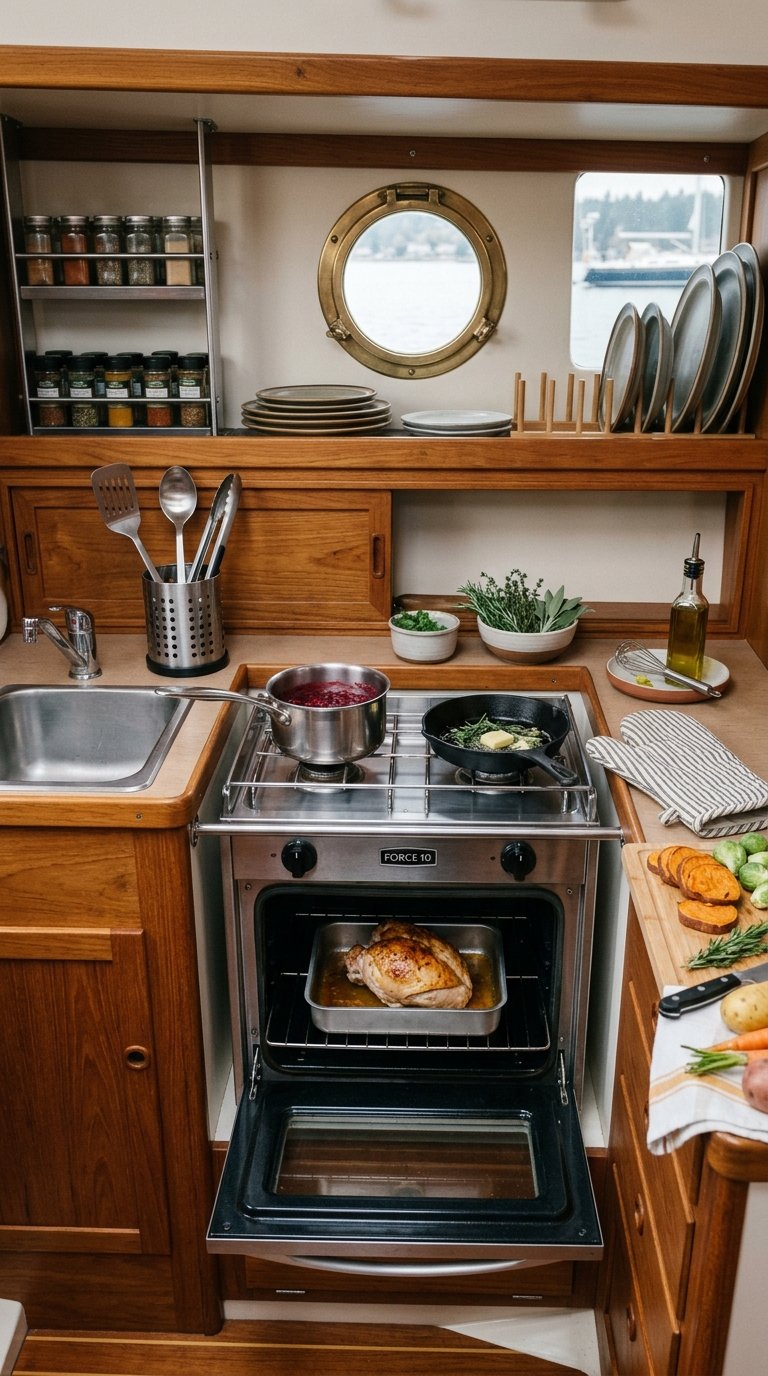
Start by checking how many burners, oven racks, and usable pans you have. Choose dishes that fit this space, and avoid planning several recipes that need the oven at the same time. A small cooking area works best when each appliance has a clear job.
Cook some foods ahead, such as cranberry sauce, gravy, or desserts. You can also select side dishes that taste good at room temperature or reheat quickly. This leaves your oven free for the turkey or another main dish.
Plan a cooking schedule before you shop. Write down each dish, its cooking time, temperature, and serving time. Use one burner for boiling and another for warming when possible.
PRO TIP
Use a cooler or insulated container to keep cooked food warm for a short time. Line it with clean towels, and place covered dishes inside. Do not use this method for long-term food storage.
2) Choose a turkey breast instead of a whole turkey
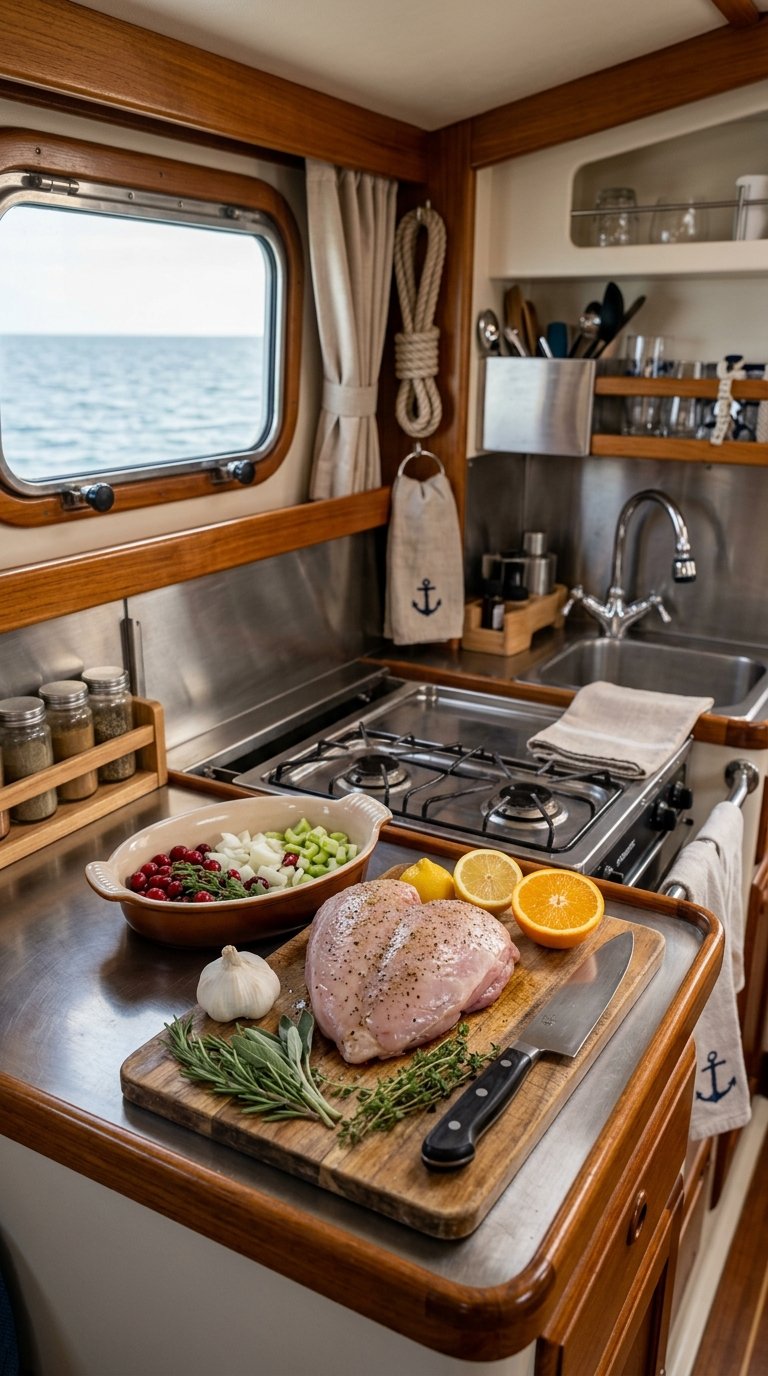
A turkey breast gives you plenty of meat without taking up the space of a whole bird. It also cooks faster, which helps when you have limited oven time or a small galley stove. Choose a bone-in or boneless breast based on your storage space and cooking equipment.
Before cooking, check that the turkey breast fits your roasting pan and refrigerator. Pat it dry, season it well, and use a meat thermometer to check the thickest part. Cook it until it reaches 165°F, then let it rest before slicing.
PRO TIP
Place the turkey breast on a rack or a layer of vegetables so heat can circulate underneath. Save the pan juices for gravy, but keep the preparation simple to reduce cleanup in your boat galley.
3) Spatchcock the turkey to reduce cooking time
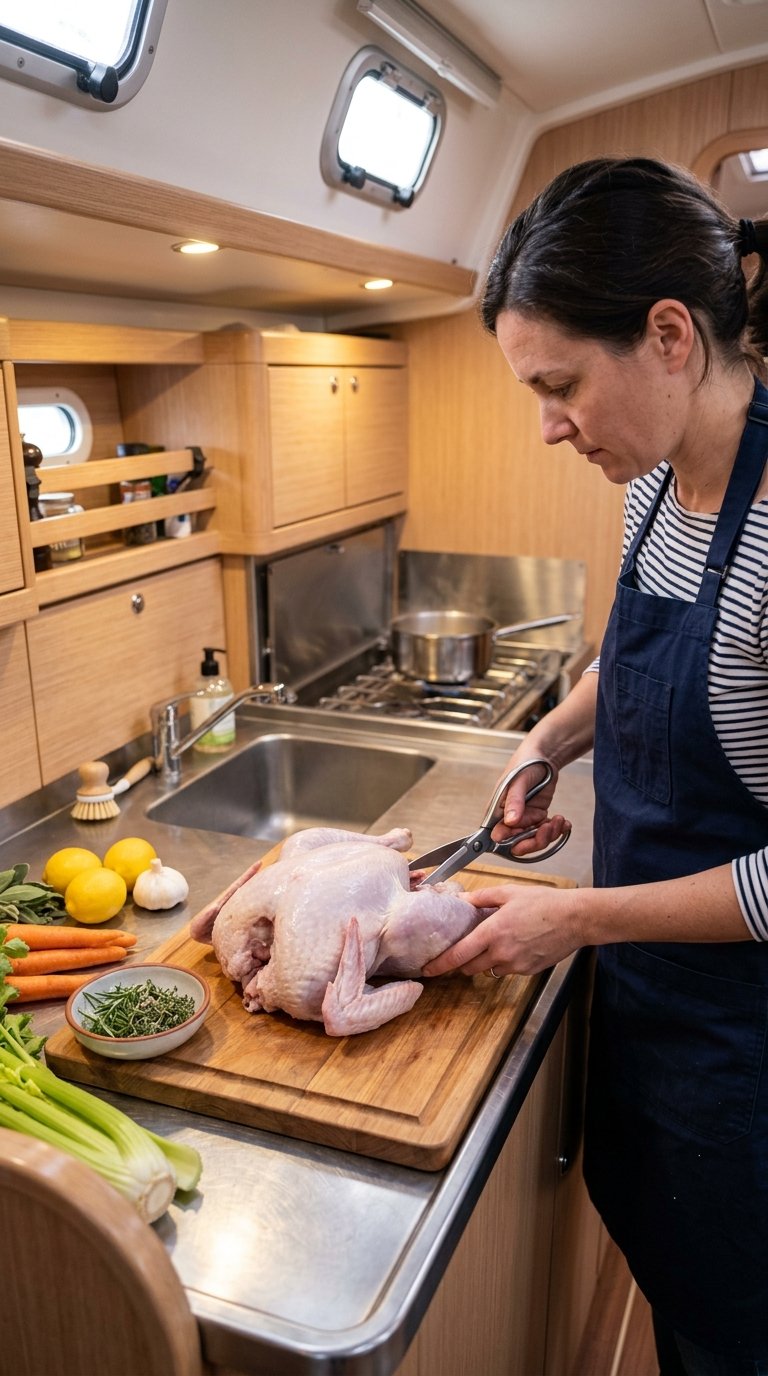
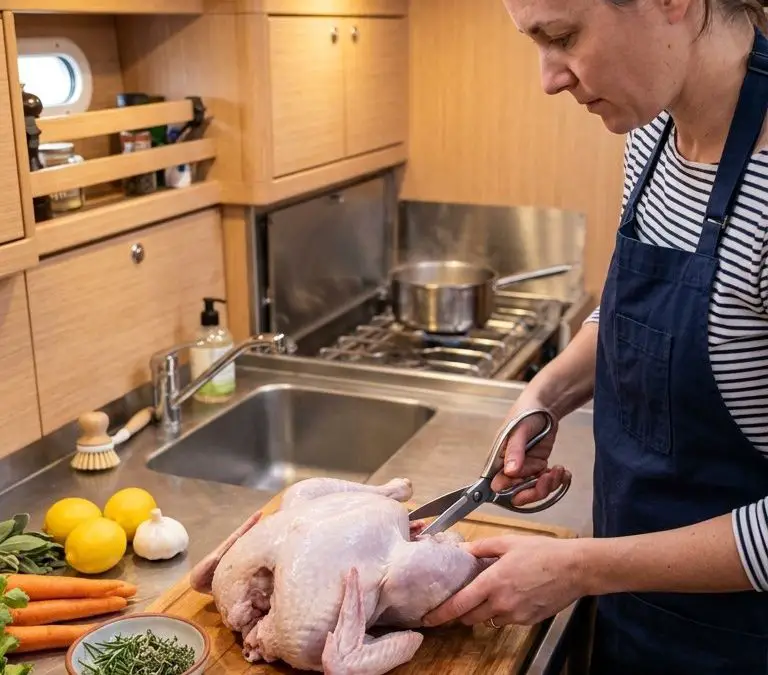
Spatchcocking means removing the backbone and pressing the turkey flat. This shape helps heat reach the breast and thighs at the same time, which can shorten cooking time and make the bird easier to fit in a boat galley oven.
Use sturdy kitchen shears to cut along both sides of the backbone. Turn the turkey breast-side up, then press firmly on the breastbone until the bird lies flat. Pat the skin dry and season it before roasting.
PRO TIP
Check the turkey’s temperature in several places with a reliable thermometer. The breast and thighs should reach 165°F (74°C). Let the turkey rest before carving so the juices can settle. If you prepare it ahead, refrigerate leftovers within two hours and freeze portions you will not eat soon.
4) Cook the turkey before departure when possible
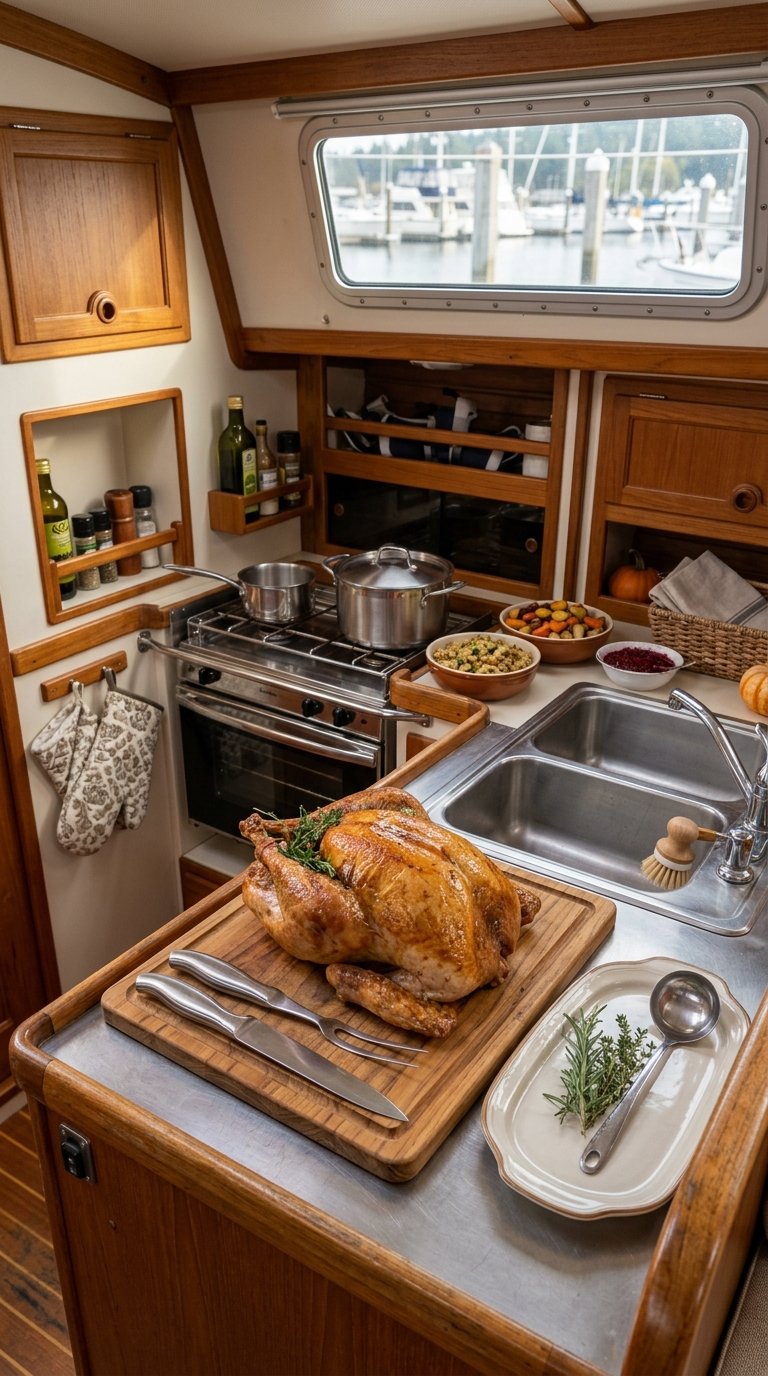
Cook the turkey before you leave when your schedule allows. Let it cool safely, then carve it into smaller portions and store them in sealed containers. Smaller pieces take up less room and reheat more evenly in a small galley oven.
Keep the turkey chilled during travel with plenty of ice or cold packs. Check that your cooler stays at 40°F (4°C) or below. Pack gravy and side dishes in separate containers to prevent leaks and make meal preparation easier.
PRO TIP
Warm the turkey gently with a little broth or gravy to keep it moist. Heat each portion until it reaches 165°F (74°C), then serve it right away. This method also reduces cooking time, saves fuel, and limits heat and steam inside the boat.
5) Use a compact electric pressure cooker for side dishes
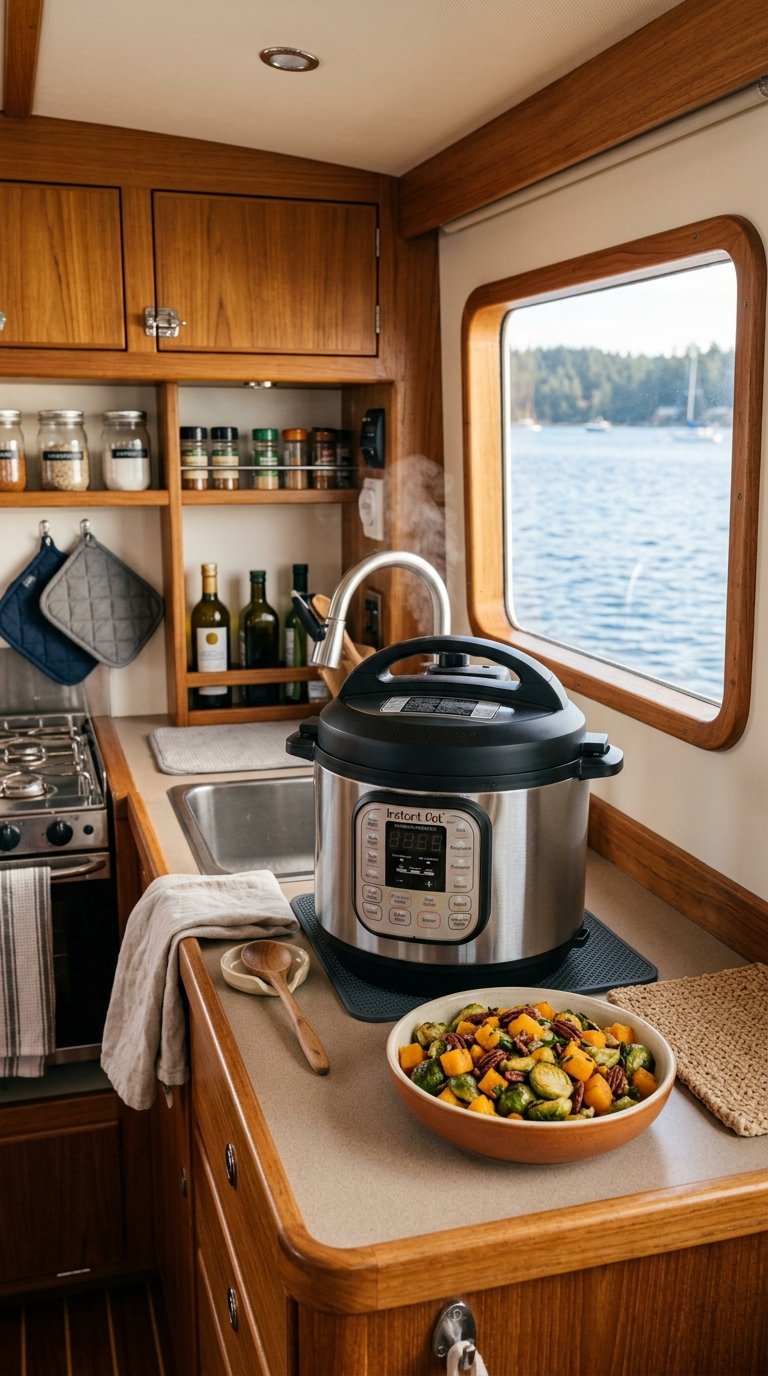
A compact electric pressure cooker can help you prepare side dishes while your main meal cooks. Use it for mashed potatoes, rice, beans, corn, or steamed vegetables. Its small size fits well on a boat galley counter and leaves room for other tasks.
Measure ingredients before you start, and follow the cooker’s liquid requirements. Secure the lid, check that the steam valve works, and place the cooker on a stable surface. Avoid filling it beyond the marked limit, especially when cooking foods that expand.
PRO TIP
Prepare ingredients in advance and store them in sealed containers. When you are ready to cook, add the ingredients, liquid, and seasonings together. Let the cooker release pressure safely before opening the lid, and keep hot food covered until serving.
6) Prepare make-ahead cranberry sauce
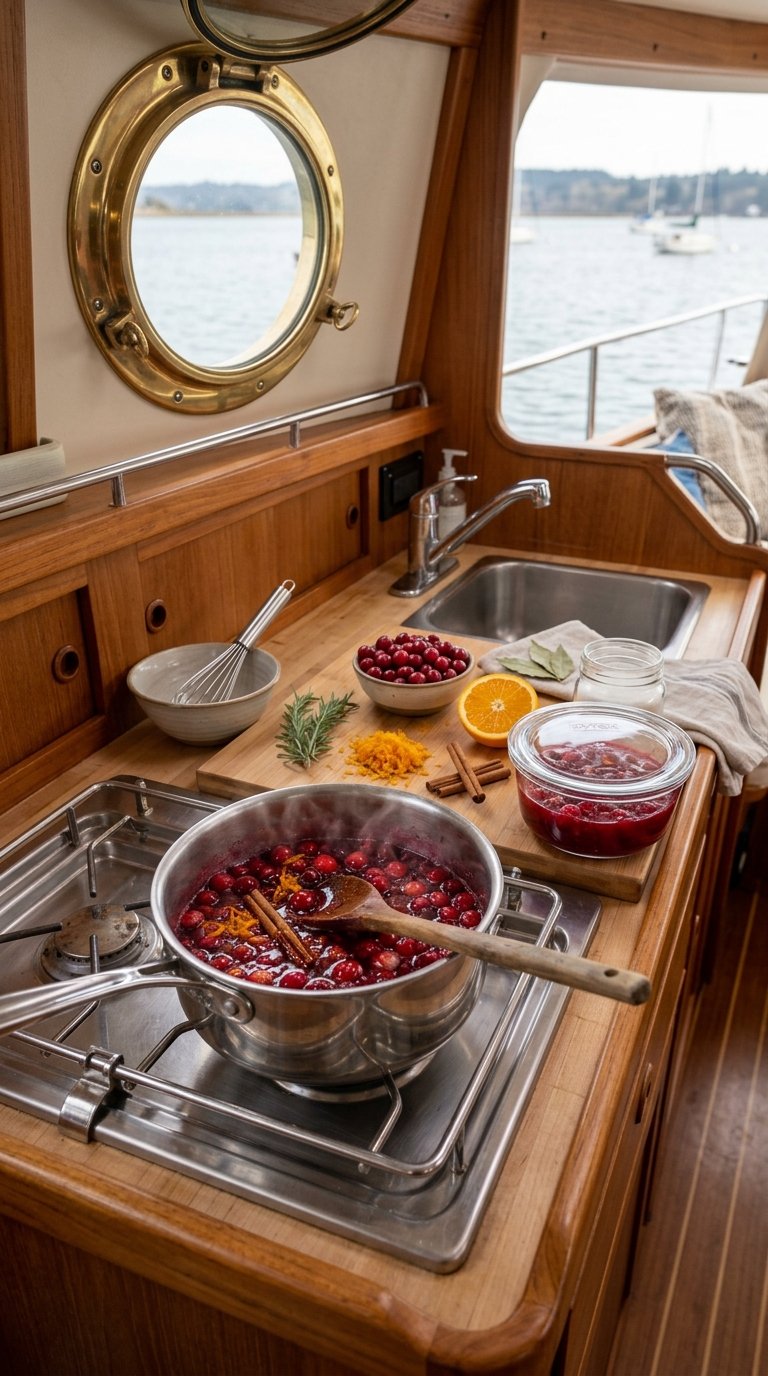
Make your cranberry sauce one or two days before departure, then store it in a sealed container in the refrigerator. Chilled sauce travels well and frees your limited galley space for dishes you must cook on Thanksgiving Day.
Use fresh or frozen cranberries, orange juice, sugar, and a small amount of grated orange zest. Simmer the mixture in a saucepan until the berries burst and the sauce thickens. Let it cool fully before covering and chilling it.
PRO TIP
Pack the sauce in a leakproof container with a little extra room at the top. If you need to carry it in a cooler, keep it below 40°F and avoid opening the lid often. Bring it to the table cold, or warm it gently in a small pot.
7) Bake stuffing in a covered skillet
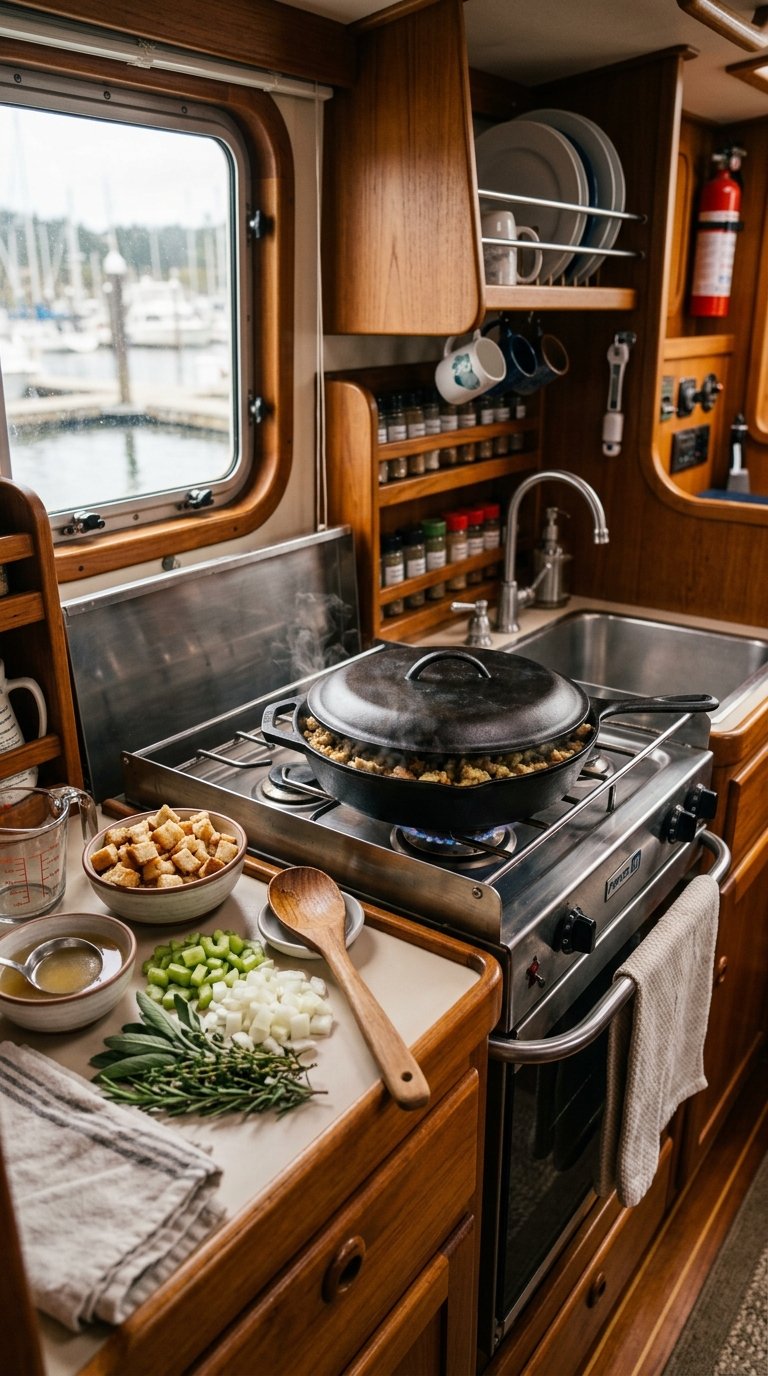
Use a heavy, oven-safe skillet to bake stuffing on your boat. Melt butter, then sauté diced onion and celery until soft. Stir in dried bread cubes, herbs, broth, and beaten egg if you use one. Add enough broth to moisten the mixture without making it soggy.
Cover the skillet tightly with foil or its lid. Bake until the center reaches 165°F and the top feels firm. If you want a crisp top, remove the cover during the last 10 minutes. Keep the skillet handle turned away from walkways, and use oven mitts when moving it.
PRO TIP
Prepare the stuffing mixture before you leave the dock and keep it chilled in a sealed container. Bake it shortly before serving, and avoid leaving cooked stuffing at room temperature for more than two hours.
8) Use instant mashed potatoes to save space and water
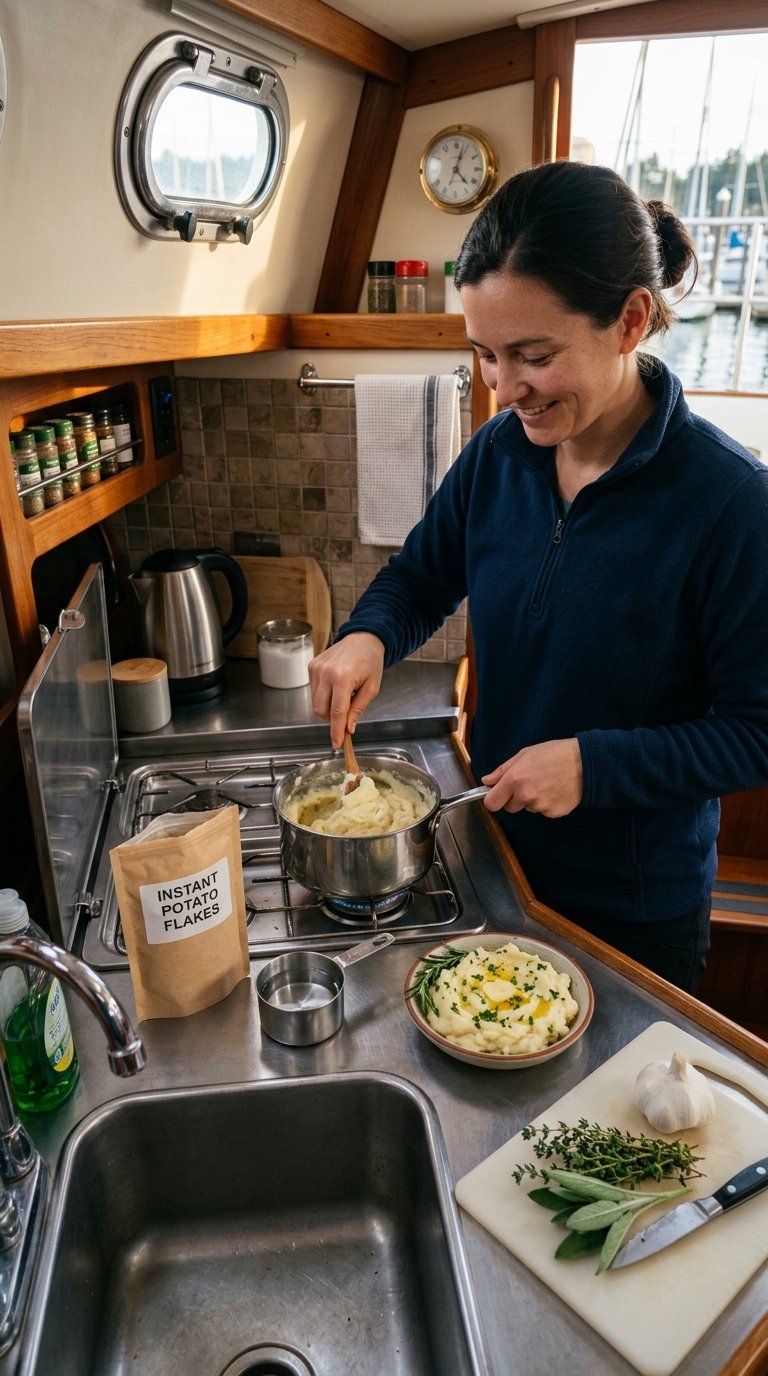
Instant mashed potatoes take up less room than fresh potatoes and do not need peeling, cutting, or boiling. Pack the dry mix in a sealed container or its original pouch to protect it from moisture.
You only need hot water, a pot, and a spoon to prepare them. This saves fuel and reduces cleanup, which helps when your boat galley has limited space. Measure the water carefully, then add more only if the potatoes seem too thick.
You can improve the flavor with butter, milk powder, garlic, herbs, or grated cheese. Add these ingredients before leaving home so you do not need extra containers on the boat.
PRO TIP
Prepare a small test batch before Thanksgiving. This lets you adjust the water and seasoning before serving the potatoes to your guests.
9) Roast vegetables in a small sheet pan
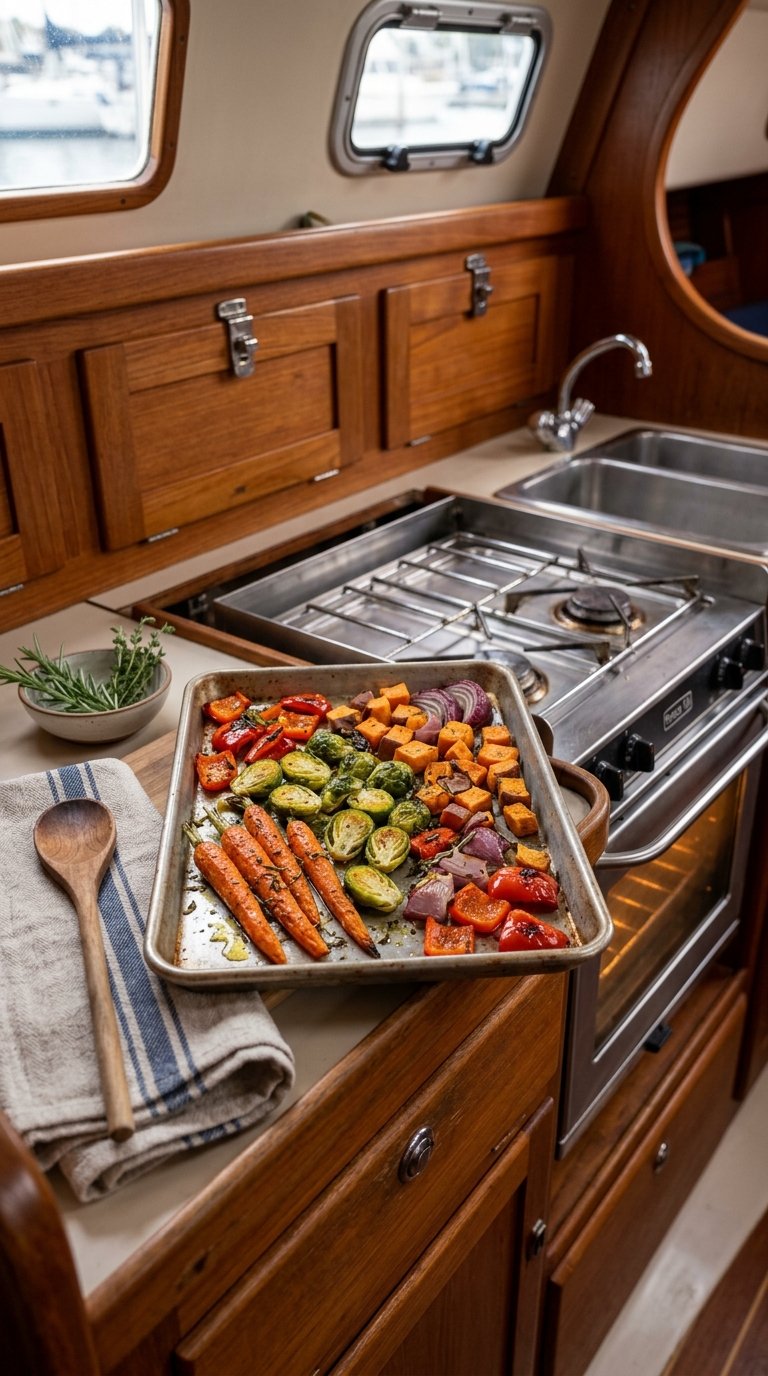
A small sheet pan helps you cook vegetables without taking over your boat galley. Choose sturdy options such as carrots, potatoes, onions, Brussels sprouts, or squash. Cut them into similar-sized pieces so they cook evenly.
Toss the vegetables with a small amount of oil, salt, pepper, and your preferred herbs. Spread them in one layer, leaving a little space between pieces. Crowding can cause steaming instead of browning, so roast in batches if needed.
Cover the pan with foil during storage or transport, then uncover it for roasting. Keep the pan level while carrying it to the oven, and use oven mitts because small galley ovens heat quickly.
PRO TIP
Chop the vegetables before you leave the dock. Store them in a sealed container, and add the oil and seasonings just before roasting to keep the pieces firm.
10) Keep ingredients secured against boat movement
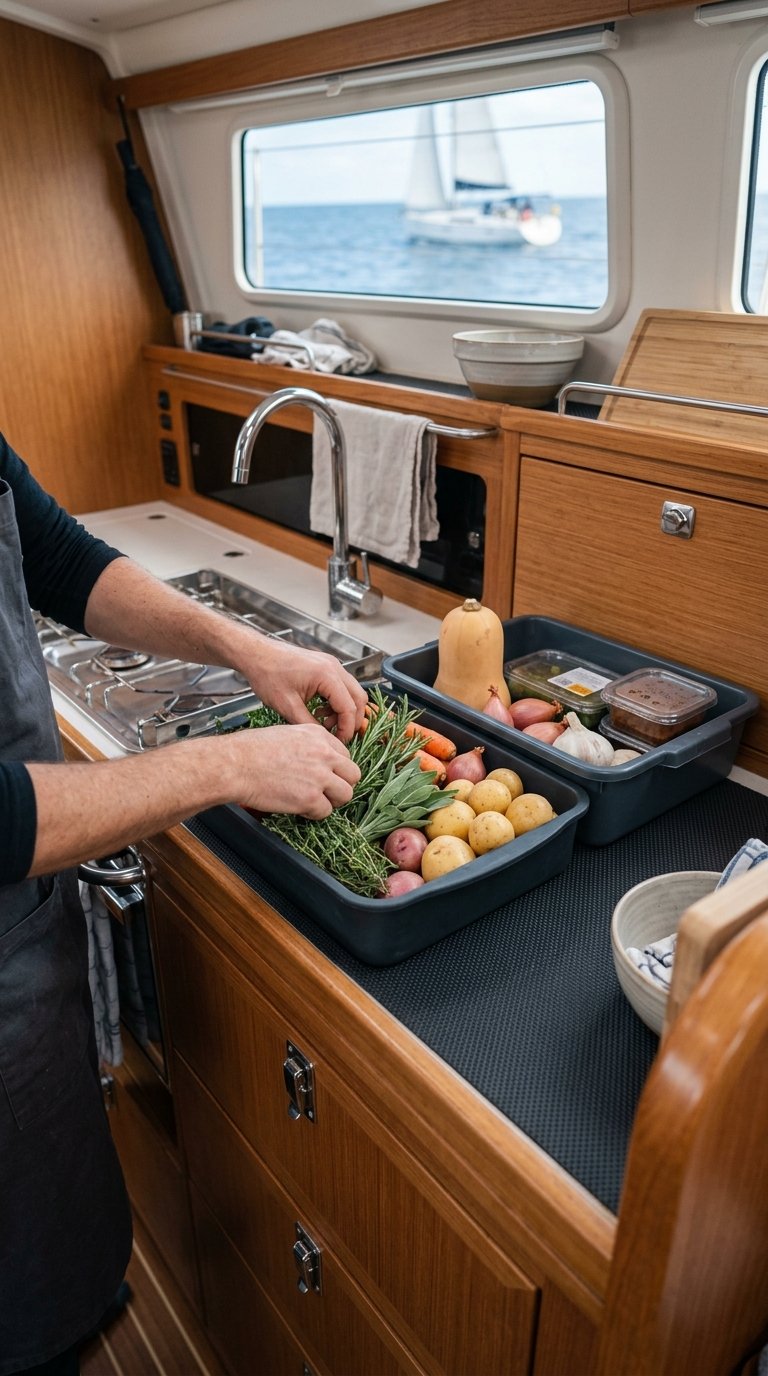
Secure your ingredients before you start cooking. Boat movement can send jars, cans, and bowls sliding across counters or falling from shelves. Place heavy items low, and keep breakable containers in padded storage.
Use lidded bins, non-slip mats, and storage racks with raised edges. Tie down coolers and keep their lids closed. Store liquids upright, then check each cap before leaving the dock.
PRO TIP
Put small ingredients in sealable containers and label them clearly. Keep the items you need most in one stable spot near your work area. Avoid stacking containers too high, and leave enough space to open cabinets without knocking anything loose.
11) Use non-slip mats beneath cutting boards and cookware
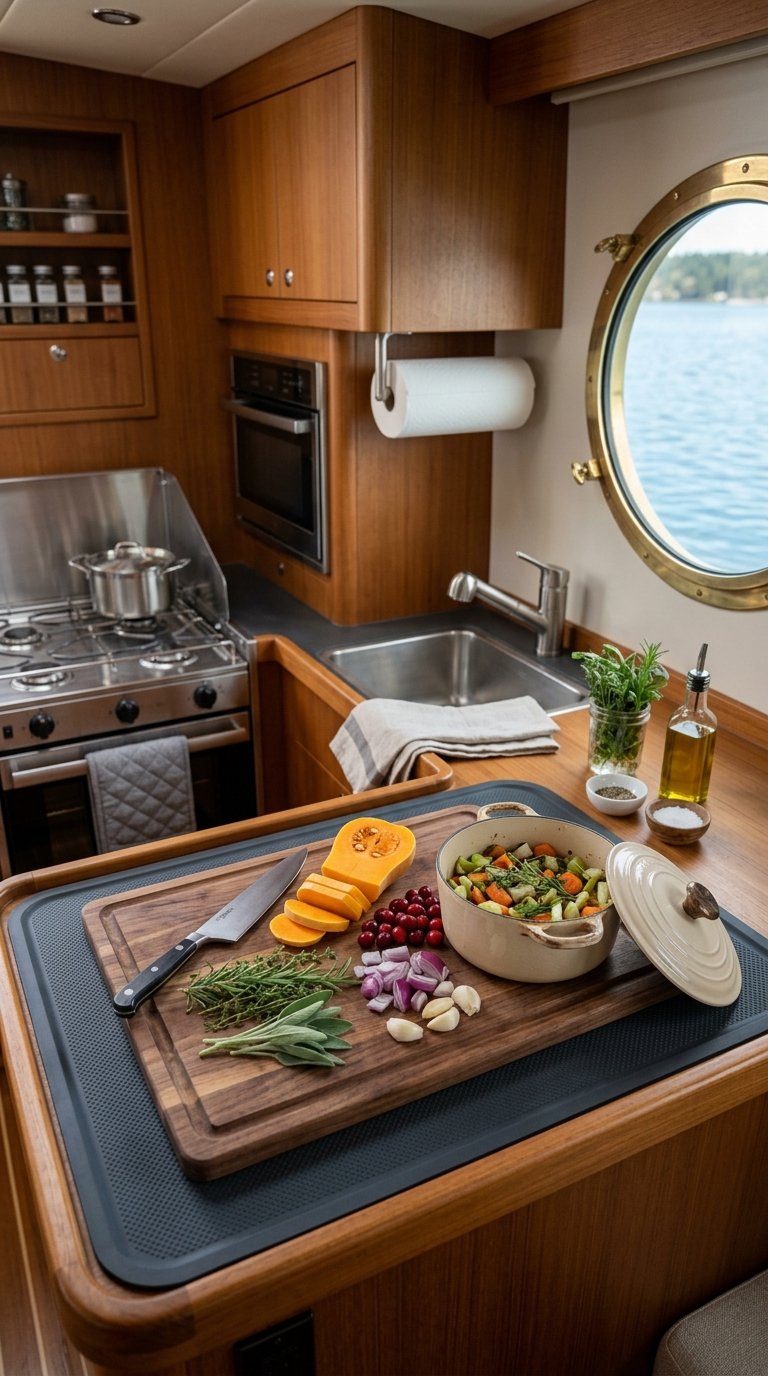
Place a non-slip mat beneath your cutting board before you prepare vegetables, bread, or meat. The mat helps keep the board steady when the boat moves, so you can cut with better control and reduce spills.
Use smaller mats beneath mixing bowls, pans, and portable burners. They help prevent cookware from sliding across the counter when you stir, pour, or reach for another ingredient. Keep the mats flat and dry for the best grip.
Wash the mats after handling raw meat or poultry, then let them dry fully before storing them. Choose mats that fit your work surface without curling at the edges.
PRO TIP
Cut one mat into several smaller pieces if you need extra coverage. Store each piece near your cutting board, cookware, and serving area so you can place them quickly when cooking.
12) Store pre-measured ingredients in labeled containers
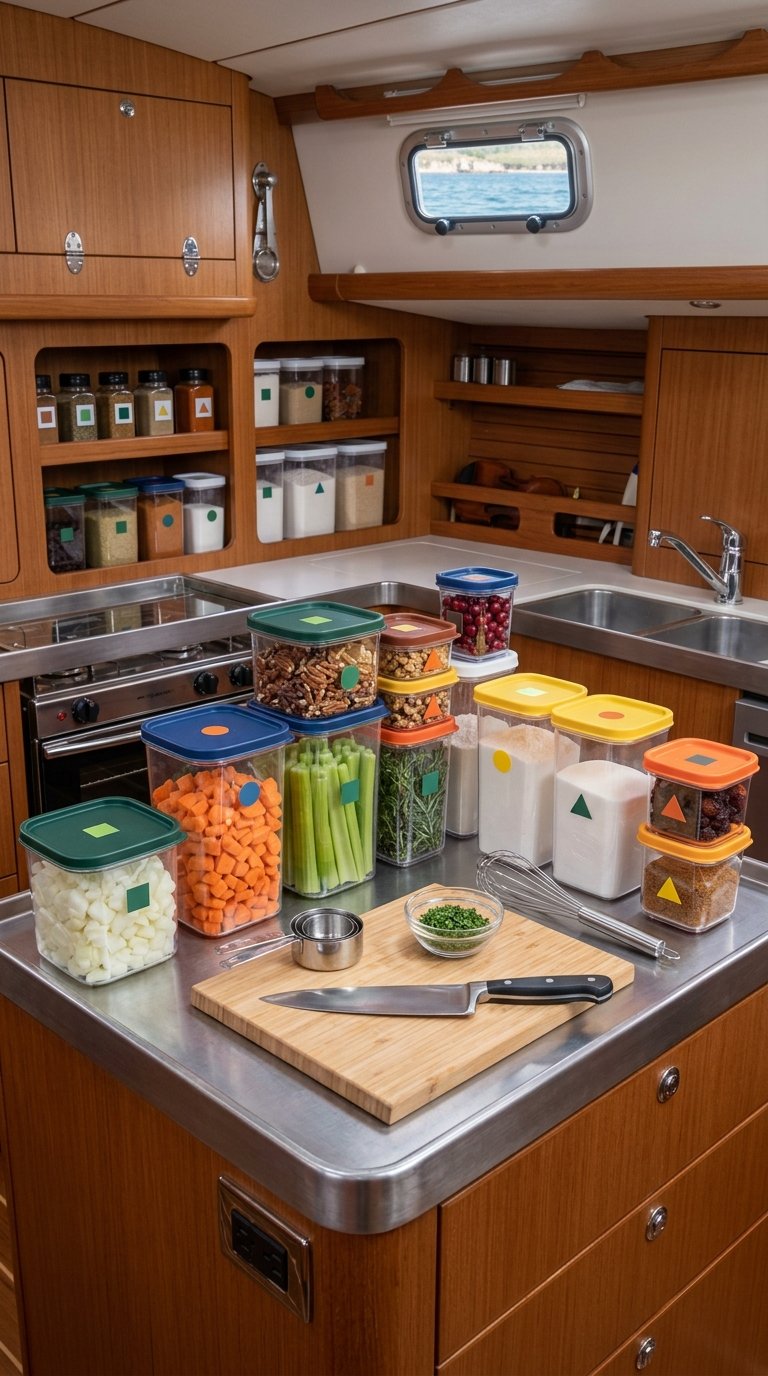
Measure dry ingredients before you leave home, then pack each recipe’s portions in small, sealed containers or bags. Write the ingredient name and amount on every label so you can find what you need without opening several containers.
Group ingredients by recipe and keep them in a small bin or tote. This keeps your galley organized and reduces spills while the boat moves. For items such as flour, sugar, herbs, and spices, use containers that close tightly and stay dry.
PRO TIP
Add the recipe name and the step where you will use each ingredient. You can also mark containers with notes such as “mix first” or “add at the end.” Keep liquids in leakproof bottles and leave a little space for expansion if you chill them.
13) Chop vegetables and mix sauces before leaving the dock
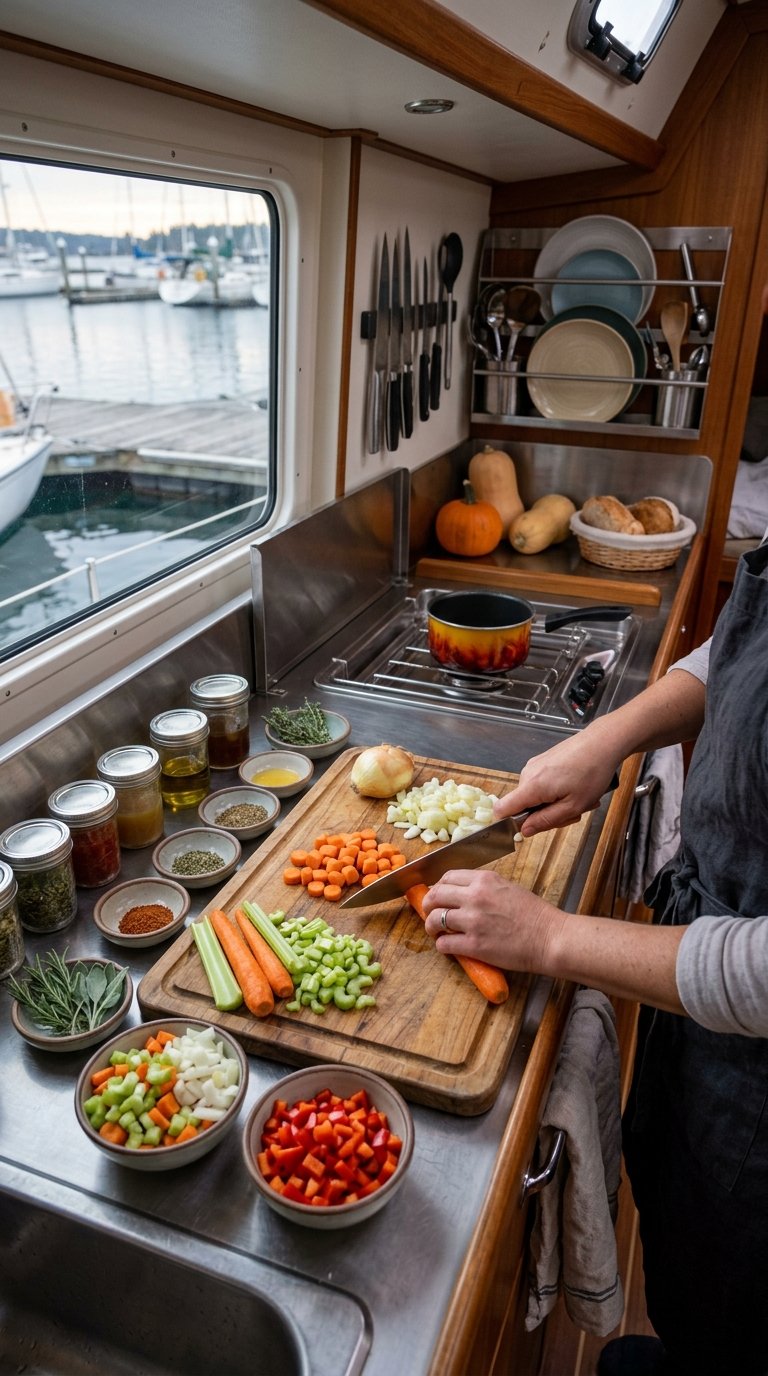
Chop onions, celery, carrots, and other vegetables at home before your trip. Store them in sealed containers or bags, and label each one for quick use. This saves counter space and reduces mess in your boat galley.
Mix sauces, dressings, marinades, and gravy base ahead of time. Keep each mixture in a leakproof container, and chill it until you need it. Shake or stir the contents before serving or cooking.
Pack only the amounts your recipes require. Premeasured ingredients help you avoid extra dishes and make it easier to track supplies on board. Keep a small cutting board and a sharp knife ready for last-minute tasks.
PRO TIP
Place prepped ingredients in the order you plan to use them. Store items for the first meal near the top of your cooler or food box. Keep raw vegetables separate from cooked foods and ready-to-eat dishes.
14) Use one-pot recipes to minimize cleanup
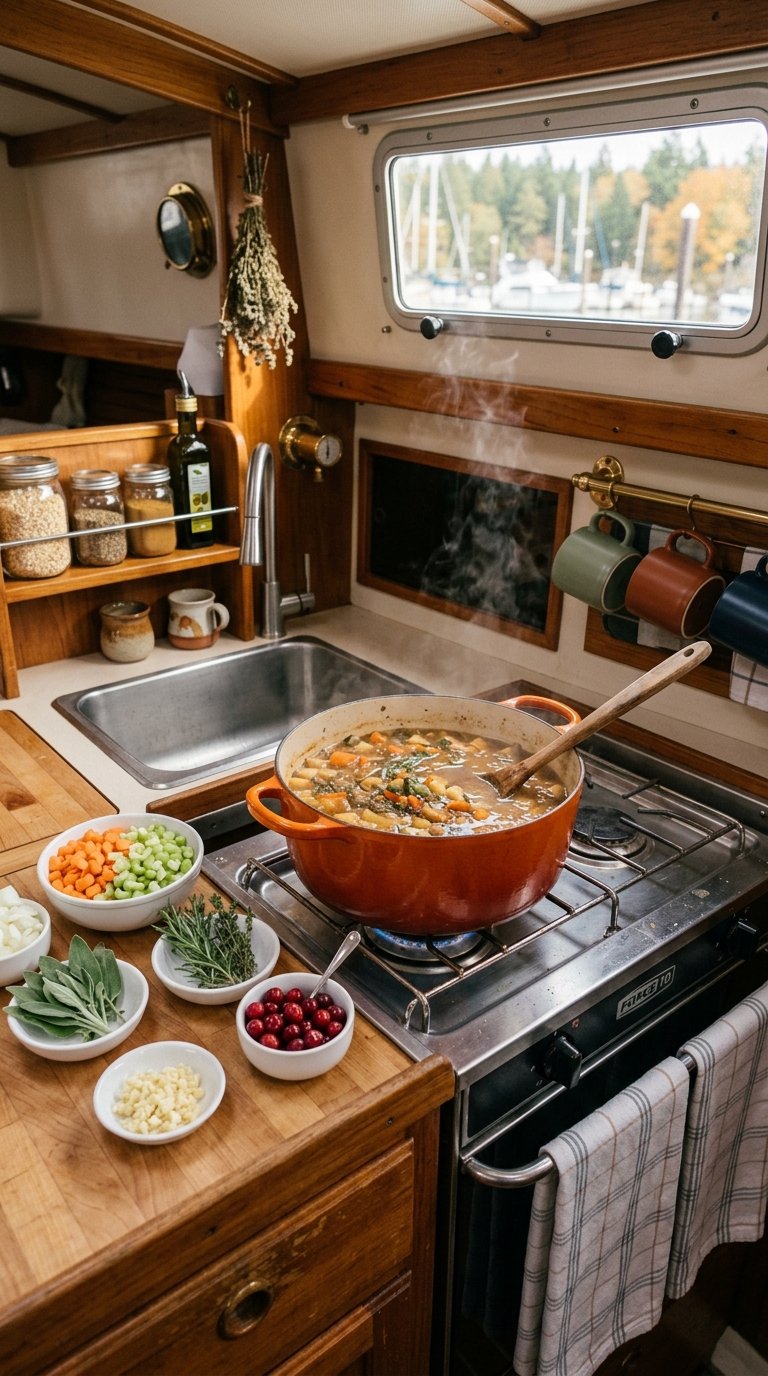
Choose one-pot recipes that combine several Thanksgiving ingredients, such as turkey, vegetables, and stuffing. You can prepare a hearty stew, skillet meal, or rice dish without using several pans in your small galley.
Plan recipes around the cookware you have available. A pot with a lid can help you cook, serve, and store food while reducing the number of dishes you need to wash. Cut ingredients into similar sizes so they cook evenly.
Clean as you go when the pot finishes each stage. Scrape food from the pot while it remains warm, then soak it with a small amount of water before residue dries.
PRO TIP
Use parchment paper or a heat-safe liner when suitable for your recipe. It can reduce sticking and make cleanup easier, but check that the material matches your cookware and cooking method.
15) Pack shelf-stable stock and pantry staples
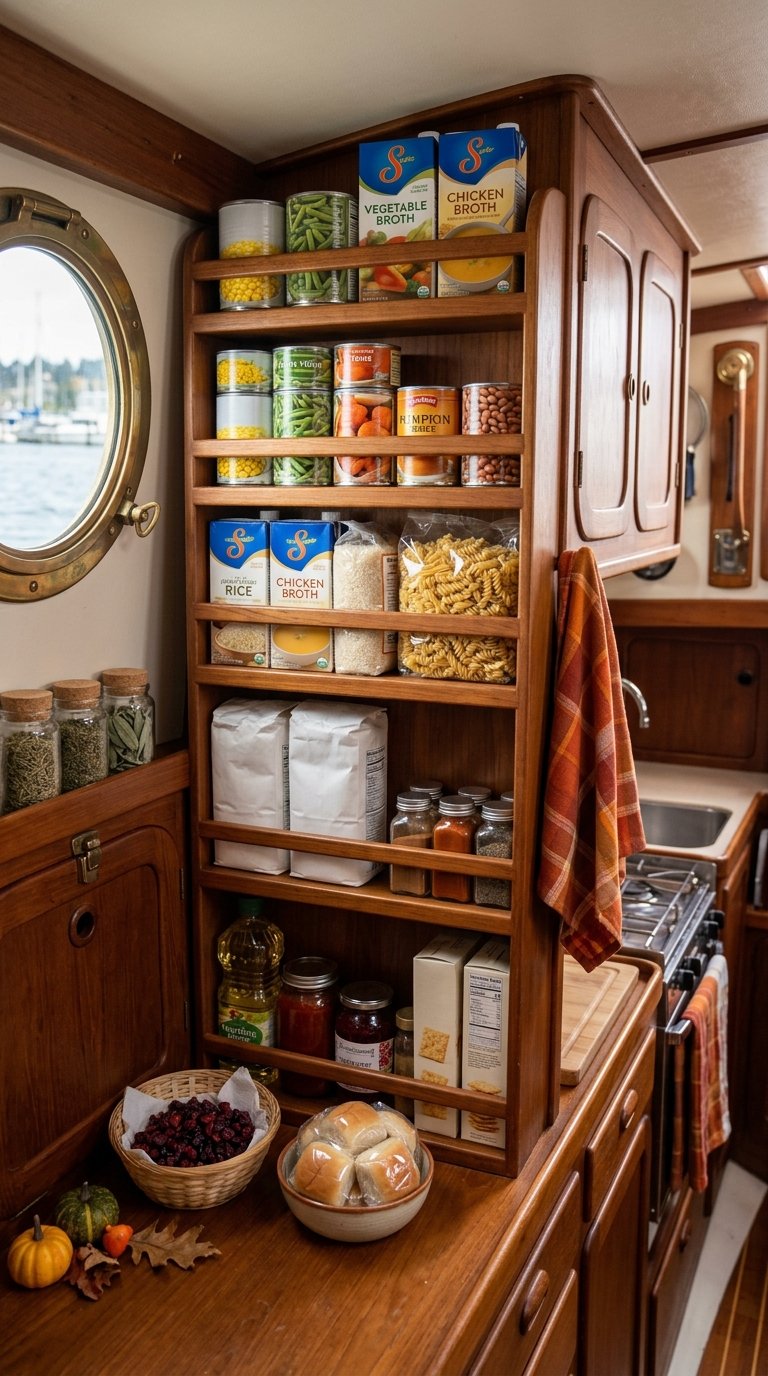
Pack shelf-stable stock to make gravy, stuffing, soup, and rice without using limited fresh ingredients. Choose small containers or single-use cartons so you do not store leftovers longer than needed. Check expiration dates before you leave, and keep unopened packages in a cool, dry cabinet.
Bring pantry staples such as flour, cornstarch, sugar, salt, pepper, dried herbs, cooking oil, and bouillon. Pre-measure dry ingredients into labeled bags or containers to save space and reduce cleanup in the galley. Pack extra seasoning because wind, humidity, and limited lighting can make cooking harder.
PRO TIP
Place the ingredients for each dish in one labeled bag. Add the recipe and required liquid amount so you can start cooking quickly, even when the boat moves.
16) Reserve limited refrigerator space for perishables
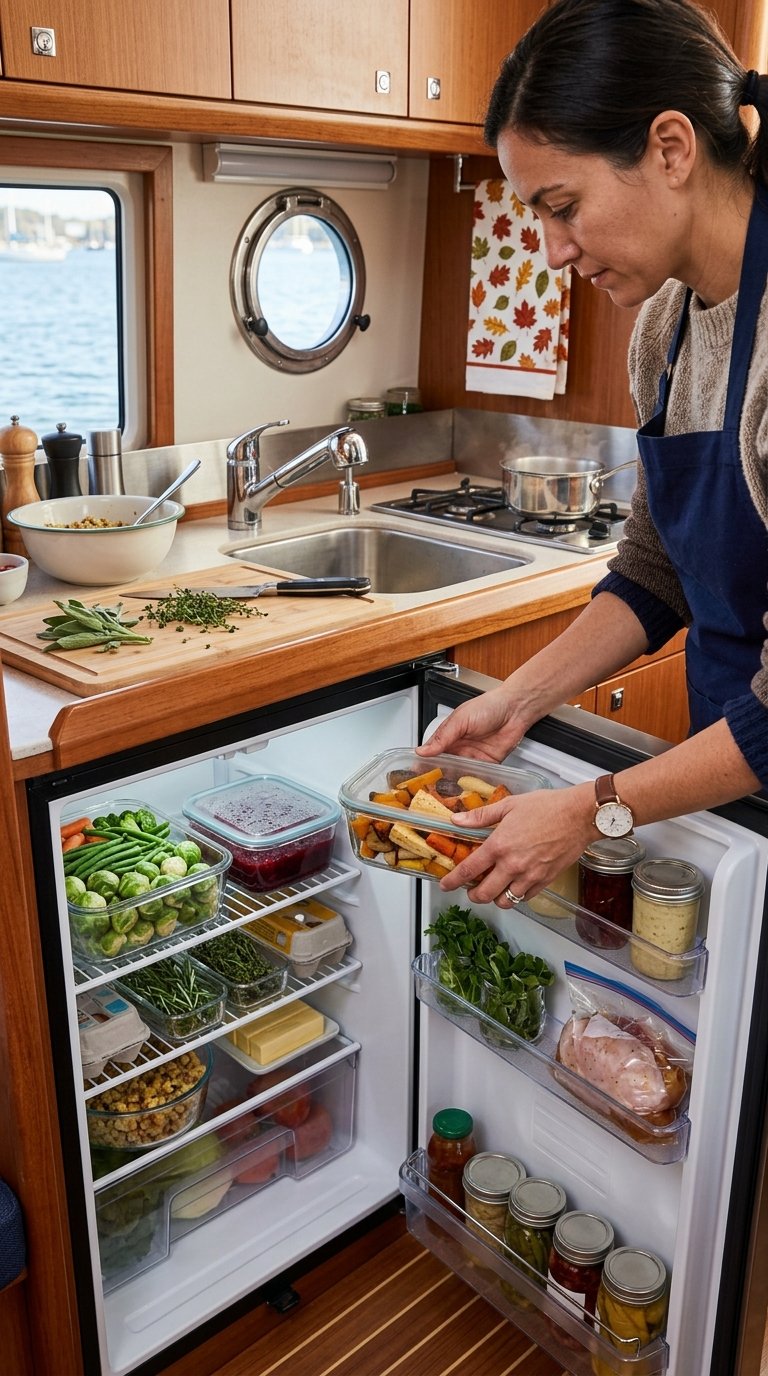
Plan your refrigerator space before you start cooking. Reserve the coldest shelves for turkey, seafood, dairy products, eggs, and prepared dishes that need chilling. Keep raw meat sealed and stored below ready-to-eat foods to prevent spills and cross-contamination.
Use a cooler with ice for drinks, whole vegetables, and other items that do not need constant refrigerator storage. Check the ice during the day, especially in warm weather, and keep the cooler closed as much as possible.
Store ingredients in stackable containers to use the available space efficiently. Label each container with its contents and date so you can find items quickly and avoid leaving the refrigerator open.
PRO TIP
Chill cooked dishes in shallow containers before placing them in the refrigerator. Smaller portions cool faster and leave room for other perishables.
17) Keep hot food covered to retain heat
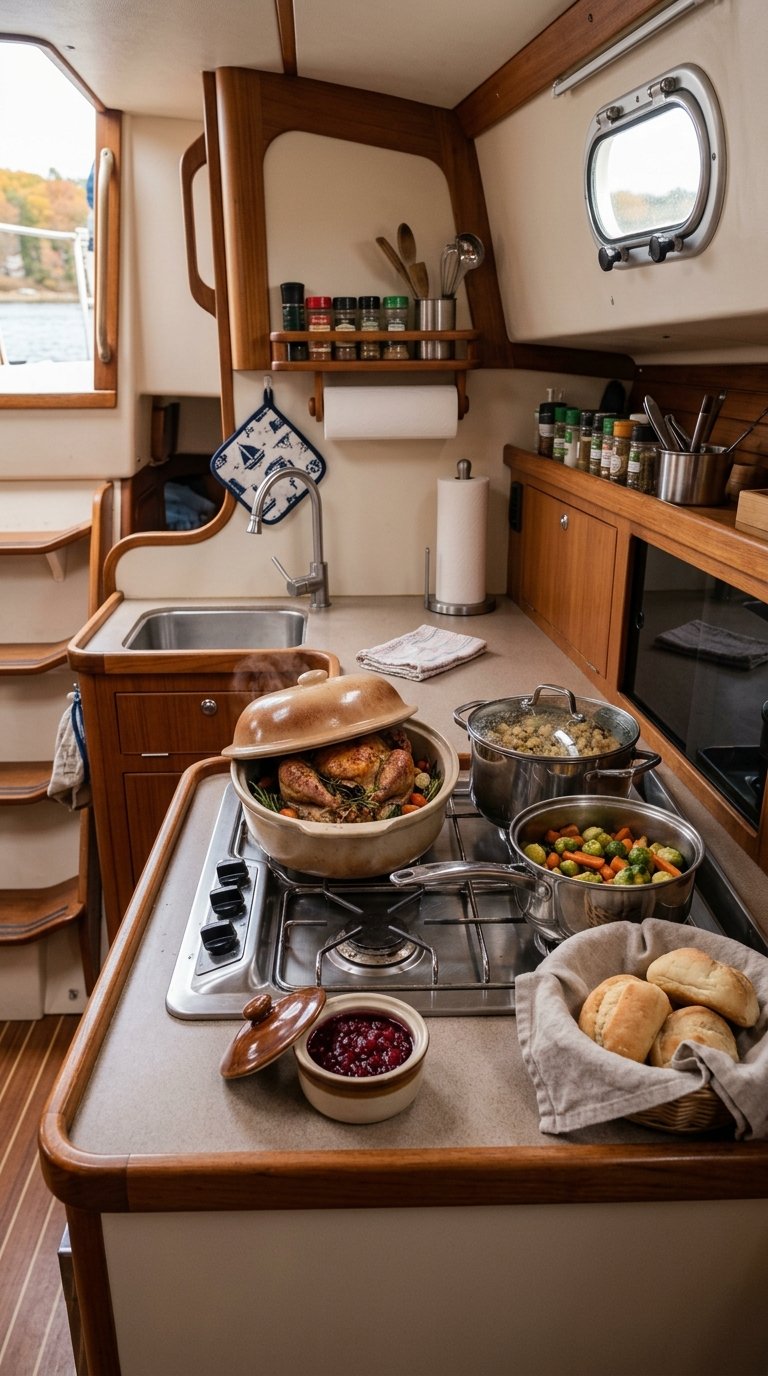
Cover hot dishes as soon as you finish cooking or serving them. Lids, foil, or insulated containers help hold in heat and keep food from drying out. Leave a small opening if steam makes the food soggy.
On a boat, place covered dishes away from drafts, open hatches, and cold surfaces. Set them on a dry towel or heat-safe mat to reduce heat loss and protect the counter. Check the food before serving, and reheat it if needed.
PRO TIP
Warm your serving dishes with hot water, then dry them before adding food. This simple step helps your meal stay warm longer without using extra stove space. Keep covers nearby so you can replace them between servings.