Last Updated on October 4, 2026
A quart of the wrong oil can cost more in engine wear over 100,000 miles than the price difference between every premium brand on the shelf. That is the uncomfortable truth hiding behind the glossy bottles at the auto parts store. Shoppers often assume the brand name is the deciding factor, when the real variables are viscosity grade, API and JASO certification, and whether the base oil is synthetic or conventional.
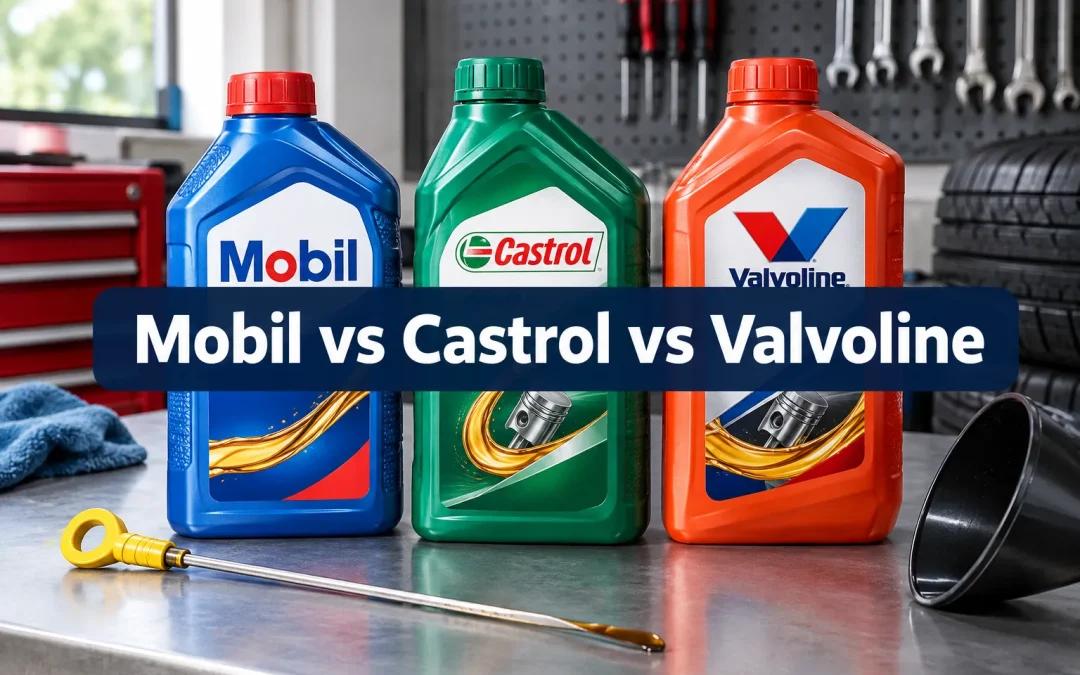
This guide breaks down Mobil vs Castrol vs Valvoline: Best Motor Oil for Cars, Motorcycles, and RV Engines using current lab data, independent rankings, and manufacturer specifications so you can match the right oil to your engine instead of just the loudest marketing claim.
Key Takeaways
- Viscosity, API service category, and JASO rating matter more for engine protection than the brand on the bottle.
- Independent 2026 testing still names Mobil 1 the overall benchmark for most gasoline engines, with exceptionally high consumer ratings across viscosities [6][3].
- Valvoline Advanced Full Synthetic leads on the newest API SQ and ILSAC GF-7A specifications and offers strong value for typical 6,000 to 8,000-mile intervals [6].
- Castrol Edge leans on Formula 1 motorsport development and markets seven specific performance claims, but head-to-head lab protection is close to its rivals [2][7].
- A brand-specific premium is justified mainly for extended drain intervals, turbocharged or towing-heavy engines, and motorcycles needing JASO-certified wet-clutch protection.
Understanding Viscosity, API, and JASO Ratings Before You Compare Brands
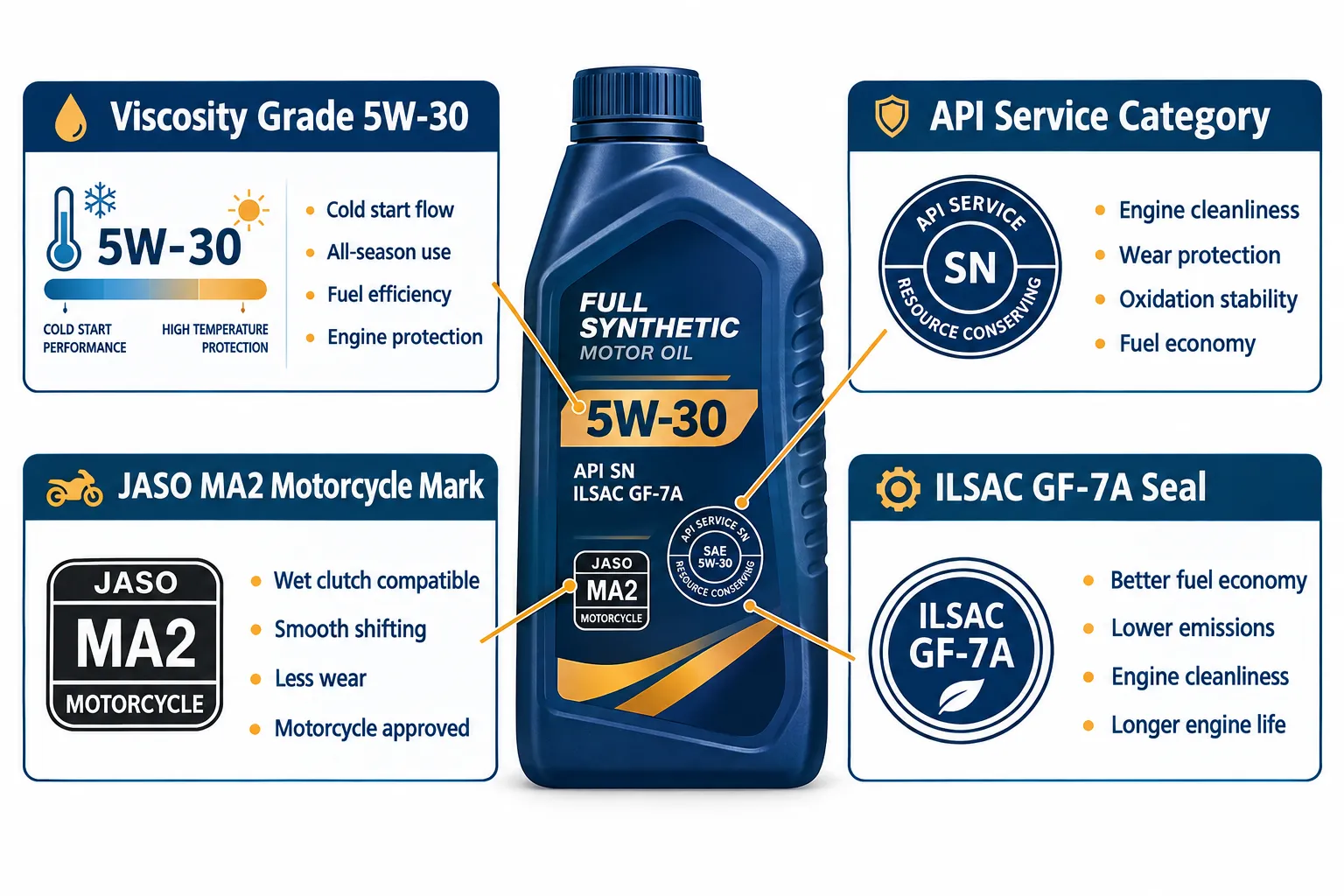
Before arguing over Mobil versus Castrol versus Valvoline, it helps to understand what the numbers and letters on the bottle actually mean. Viscosity is the oil’s resistance to flow, written as something like 5W-30 or 0W-20. The number before the “W” describes how the oil behaves in cold starts; the number after describes thickness at normal operating temperature. A 0W-16 flows almost like water when cold, which is why it shows up in newer fuel-efficient Mobil 1 formulations designed for tight engine tolerances [4].
The American Petroleum Institute (API) rating tells you what emissions and wear-protection standards the oil meets. The newest passenger-car category is API SQ, paired with the ILSAC GF-7A specification, which focuses on improved fuel economy, deposit control, and protection for modern turbocharged, direct-injection engines [6]. Older vehicles may still be fine with API SP or SN oils, but newer warranties increasingly reference the latest letter grade.
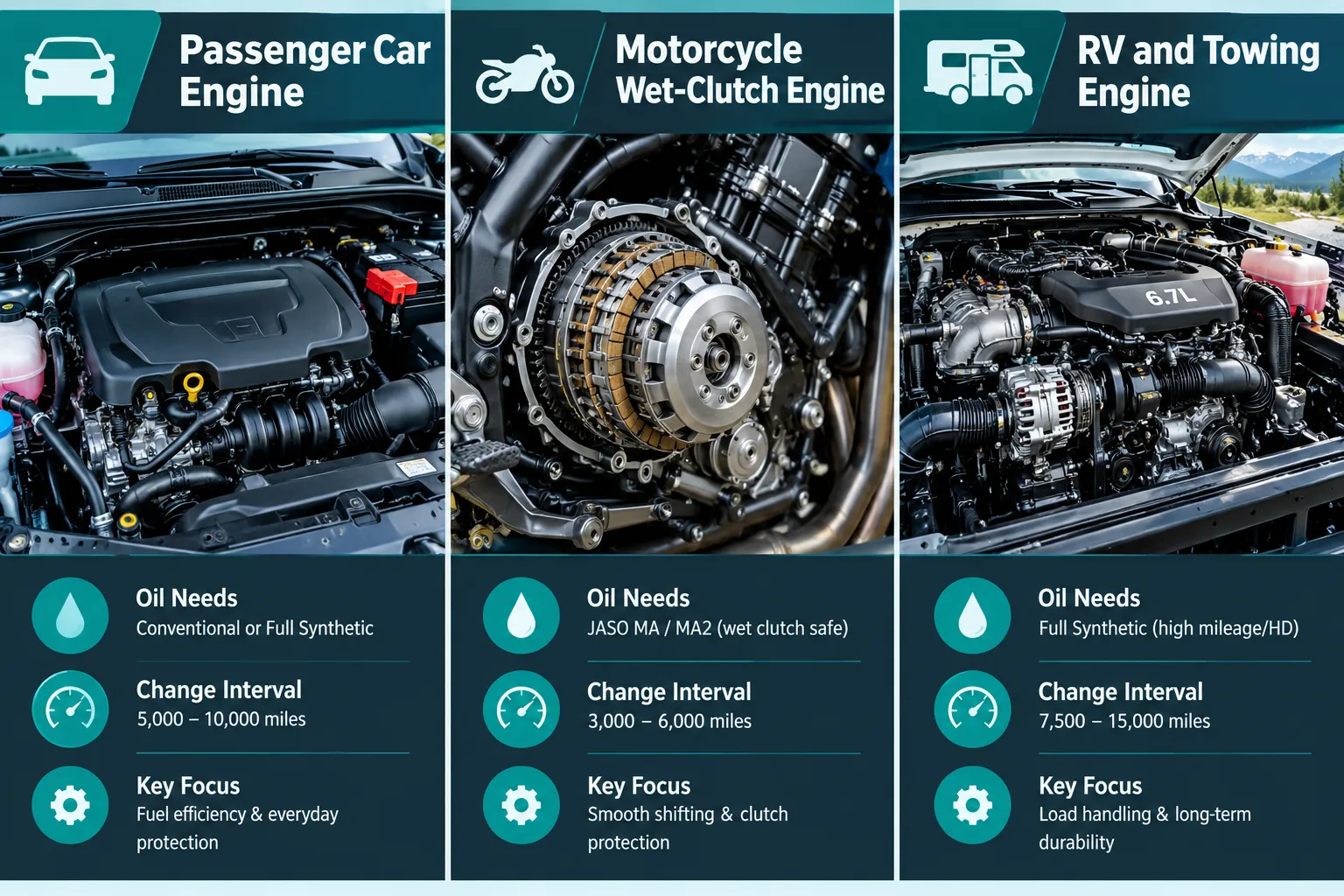
Motorcycles use a separate standard: JASO. Regular car oil often contains friction modifiers that make a motorcycle’s wet clutch slip, so JASO MA or MA2 certification confirms the oil has the right friction characteristics for a bike’s clutch and gearbox sharing the same oil supply as the engine.
Skipping these ratings and buying purely on brand loyalty is one of the most common mistakes among new vehicle owners, similar to shoppers who rush into a purchase without checking the fundamentals outlined in a complete guide to buying and selling cars.
Synthetic vs Conventional Oil: Why It Matters More Than the Brand Name
Full synthetic oil is engineered from chemically modified base stocks rather than refined crude alone. The result is more consistent molecule size, better resistance to breakdown at high temperatures, and stronger protection during cold starts. Conventional oil is cheaper but breaks down faster and typically needs replacement every 3,000 to 5,000 miles.
Here is why this debate overshadows the brand argument: a conventional Valvoline oil and a conventional Castrol oil will perform more similarly to each other than either will perform compared to its own full-synthetic line. The synthetic-versus-conventional choice moves the needle on protection far more than switching between major brands at the same formulation tier.
Quick comparison of oil types:
| Oil Type | Typical Change Interval | Best For |
|---|---|---|
| Conventional | 3,000 – 5,000 miles | Older, low-mileage daily drivers |
| Synthetic Blend | 5,000 – 7,000 miles | Budget-conscious daily driving |
| Full Synthetic | 7,500 – 10,000+ miles | Modern turbo engines, towing, hot climates |
| High Mileage Synthetic | 5,000 – 7,500 miles | Engines over 75,000 miles |
Full synthetic oils dominate the premium shelf space from all three brands discussed here, which is why the real debate in Mobil vs Castrol vs Valvoline: Best Motor Oil for Cars, Motorcycles, and RV Engines comparisons almost always happens at the full-synthetic tier rather than between conventional products.
Mobil vs Castrol vs Valvoline: Best Motor Oil for Cars, Motorcycles, and RV Engines, Head-to-Head
Each brand has carved out a distinct identity. Mobil leans on decades of OEM approvals and lab consistency. Castrol leans on Formula 1 motorsport credibility and celebrity-driven marketing. Valvoline leans on aggressive lab claims and competitive pricing. Here is how they actually stack up.
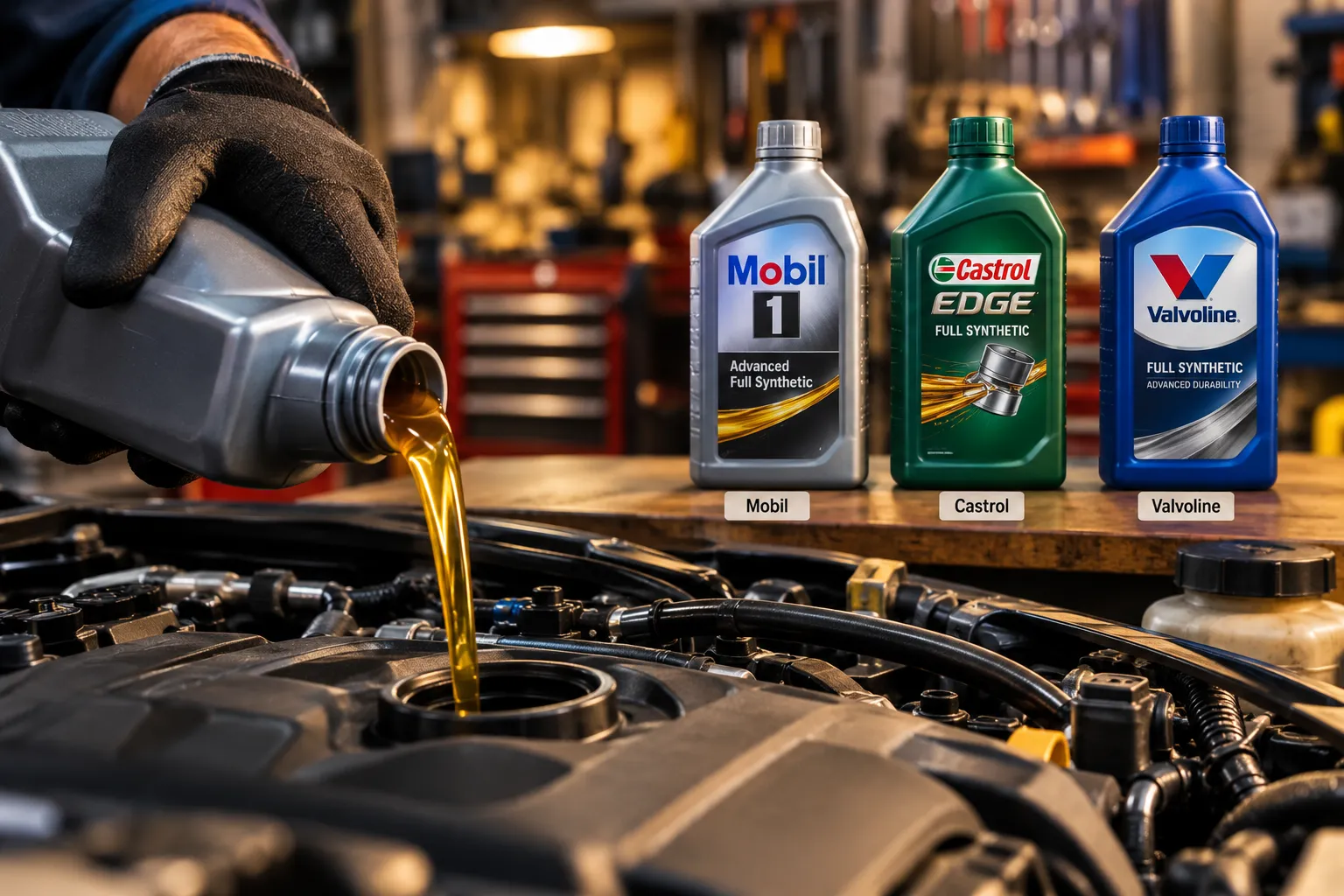
Mobil 1 remains the independent benchmark for most consumer vehicles in 2026 rankings [6]. Consumer ratings across its 5W-30, 0W-20, 5W-20, and 0W-16 viscosities stay exceptionally high through the summer and fall of 2026, with retailers and enthusiast communities repeatedly citing perceived fuel-economy benefits and deposit control [3][4][5][9]. European consumer comparisons have also highlighted Mobil 1 specifically for quality consistency and deposit control versus regional competitors [1]. It is widely available at major retailers in multiple pack sizes, including the common 0W-20 Dexos-approved quart sold at home improvement chains [10].
Castrol Edge Extended Performance markets itself around seven specific claims covering areas like wear protection, deposit resistance, and performance under extreme temperatures [2]. Much of that technology development traces back to Castrol’s motorsport partnerships, including its role as a Formula 1 power unit supplier, which the brand positions as a real-world proving ground for its road-car formulas [7]. Castrol also invests heavily in consumer-facing marketing, such as its athlete ambassador partnerships, to build brand trust beyond the technical sheet [2].
Valvoline Advanced Full Synthetic is the brand most aggressively chasing the newest certification ceiling, positioning itself among the first to meet API SQ and ILSAC GF-7A specifications [6]. Valvoline’s own lab data claims its contaminant protection is 24 times stronger than a leading synthetic competitor, a figure the brand uses prominently in its performance marketing [8]. Broader brand-level evaluations in 2026 continue to rate Valvoline as a strong value pick, particularly for drivers who change oil on a standard 6,000 to 8,000-mile schedule rather than chasing maximum extended intervals [8].
At a glance:
- Mobil 1: Best all-around reputation, broadest OEM approvals, strongest for extended intervals.
- Castrol Edge: Strong marketing and motorsport pedigree, competitive protection claims.
- Valvoline Advanced Full Synthetic: Leads on newest spec compliance, best price-per-protection ratio for typical intervals.
Change Intervals: How Often Each Brand Recommends Service
Drain intervals depend more on your owner’s manual than on brand loyalty, but each company publishes guidance for its premium synthetic lines. Mobil 1 Extended Performance is formulated and marketed around intervals up to 20,000 miles or one year in many passenger vehicles, reflecting its positioning for drivers who want fewer trips to the shop [6]. Castrol Edge Extended Performance targets a similar extended window, built around its seven-area performance claims for deposit control and thermal stability [2]. Valvoline Advanced Full Synthetic is typically positioned around the standard 6,000 to 8,000-mile window favored by many owners, though its newest-spec formulation still delivers protection that independent evaluators consider essentially indistinguishable from Mobil 1 at that shorter interval [6].
Interval guidance by scenario:
- Naturally aspirated daily driver, moderate climate: 7,500 to 10,000 miles with any major full-synthetic brand.
- Turbocharged or towing-heavy engine: Favor Mobil 1 Extended Performance or Castrol Edge for thermal stability at shorter real-world intervals.
- High-mileage engine over 75,000 miles: Use a high-mileage synthetic formulation regardless of brand, changed every 5,000 to 7,500 miles.
- Seasonal or low-mileage RV engine: Change by time elapsed (often annually) rather than mileage, since idle time degrades oil too.
Always follow the interval printed in your owner’s manual first. Brand marketing describes a ceiling under ideal conditions, not a guarantee for every driving style, climate, or towing load.
When a Brand-Specific Premium Is Actually Worth Paying
Paying a few extra dollars per quart is not automatically wasted money, but it is only worth it in specific situations. For modern cars and light-duty RVs, current data favor Mobil 1 Extended Performance or Advanced Full Synthetic when long drain intervals, broad OEM approvals, and maximum all-around protection are the priority [6]. That premium buys peace of mind on engines where missing a change interval by a few thousand miles is a real risk, such as a motorhome used only a few times a year between long storage periods, a scenario covered in more detail in this breakdown of common mistakes learned from buying a motorhome.
Valvoline Advanced Full Synthetic is often the smarter choice when the newest API SQ or ILSAC GF-7A spec and a lower cost per jug matter most, since protection is essentially indistinguishable from Mobil 1 for typical 6,000 to 8,000-mile intervals on naturally aspirated engines [6]. In other words, if you already change your oil on schedule and drive a mainstream engine without heavy towing, the premium jump to the most expensive bottle on the shelf buys very little extra protection.
Castrol Edge earns its premium for drivers who specifically value its documented performance claims across the seven areas it markets and who trust the motorsport development pipeline behind the formula [2][7]. It is a reasonable middle-ground pick between Mobil’s broad reputation and Valvoline’s aggressive value pricing.
Choosing the Right Oil for Cars, Motorcycles, and RV Engines
Matching oil to vehicle type matters as much as the brand debate. Passenger cars with modern direct-injection engines benefit most from the latest API SQ and ILSAC GF-7A formulations across any of the three brands, since those specs specifically target deposit control in that engine design [6]. Shoppers comparing used daily drivers before a purchase, including reliable models covered in guides to used cars under $20,000 or certified used cars and their warranty coverage, should check what oil spec the manufacturer actually requires before assuming any premium full synthetic will do.
Motorcycles need the JASO MA or MA2 certification mentioned earlier, since a standard automotive oil’s friction modifiers can cause wet-clutch slip and shortened clutch life. Riders shopping for a used bike should pair proper oil selection with a full pre-purchase inspection, similar to the checklist in this guide on buying a used motorcycle, and should also understand how maintenance history affects resale value using tools like Kelley Blue Book motorcycle value lookups. Long-distance riders planning a summer trip can find more general upkeep tips in these motorcycle packing ideas for summer rides.
RV and motorhome engines face a different challenge: long idle periods between trips, heavy towing loads, and often older engine designs. A full synthetic with strong deposit control and thermal stability, such as Mobil 1 Extended Performance or Castrol Edge, tends to serve towing-heavy RV engines better than a budget conventional oil, especially given how slowly oil degrades by calendar time versus mileage when a rig sits in storage for months.
Quick-reference by vehicle type:
| Vehicle Type | Priority | Suggested Approach |
|---|---|---|
| Modern passenger car | Latest API/ILSAC spec | Any brand’s current full synthetic meeting API SQ |
| Turbocharged car | Thermal stability | Mobil 1 or Castrol Edge Extended Performance |
| Motorcycle | JASO MA/MA2 certification | Dedicated motorcycle-specific synthetic |
| Towing-heavy RV | Deposit control, time-based changes | Full synthetic changed by season, not just mileage |
| High-mileage vehicle | Seal conditioning | High-mileage synthetic formulation from any major brand |
The broader shift toward longer-lasting, higher-spec lubricants mirrors other changes reshaping the industry, a trend explored further in this look at trends shaping the future of the automobile industry.
Frequently Asked Questions
Is Mobil 1 really better than Castrol and Valvoline? Independent 2026 rankings still treat Mobil 1 as the overall benchmark for most cars, with exceptionally strong consumer ratings across viscosities, but Valvoline leads on the newest certification spec and Castrol offers competitive protection backed by motorsport development [6][3][2].
Can I mix brands when topping off oil? Yes, as long as the viscosity and API or JASO rating match. The base oil chemistry across major full-synthetic brands is compatible, though it is best to fully switch at your next scheduled change rather than make a habit of mixing.
Does a motorcycle really need different oil than a car? Yes. Motorcycle engines often share oil between the engine and a wet clutch, so JASO-certified oil avoids the friction modifiers found in typical car oil that can cause clutch slip.
How much does the extended-interval premium actually save? For engines that genuinely reach 15,000 to 20,000-mile intervals safely, fewer oil changes can offset the higher per-quart cost of Mobil 1 Extended Performance or Castrol Edge over a year, but drivers who already change oil every 6,000 to 8,000 miles see little financial benefit from the priciest bottle.
Is synthetic oil worth it for an older RV engine that sat unused for months? Generally yes. Full synthetic resists the thickening and moisture absorption that happens during long storage periods better than conventional oil, which matters for RV engines that spend much of the year parked.
Conclusion
The honest answer to the Mobil vs Castrol vs Valvoline: Best Motor Oil for Cars, Motorcycles, and RV Engines debate is that viscosity, API or JASO certification, and synthetic quality matter more than brand loyalty. Mobil 1 still earns the strongest overall reputation and broadest OEM trust for 2026, Valvoline offers nearly identical protection at a better price for standard drain intervals while leading on the newest spec, and Castrol brings a credible motorsport-backed alternative for drivers who want a middle path.
Start by checking your owner’s manual for the exact viscosity and API or JASO rating your engine requires. Then decide whether your driving pattern, towing load, or storage habits justify paying for an extended-interval premium oil, or whether a standard full synthetic changed on schedule will serve you just as well. Either way, the right rating on the bottle will protect your engine far more reliably than the logo on the label.
References
[1] Motoroel Test – https://www.rtl.de/vergleiche/heimwerken/motoroel-test/ [2] Ronda Rousey Teams Up With Castrol As New Brand Ambassador – https://www.castrol.com/en_us/united-states/home/about-castrol/newsroom/Ronda-Rousey-teams-up-with-Castrol-as-new-brand-ambassador.html [3] Mobil 1 5w 30 – https://www.mobil.com/en/lubricants/for-personal-vehicles/our-products/products/mobil-1-5w-30 [4] Mobil 1 0w16 – https://www.mobil.com/en/lubricants/for-personal-vehicles/our-products/products/mobil-1-0w16 [5] Mobil 1 5w 20 – https://www.mobil.com/en/lubricants/for-personal-vehicles/our-products/products/mobil-1-5w-20 [6] Best Synthetic Motor Oil – https://motoroilguide.com/best-motor-oil-reviews/best-synthetic-motor-oil/ [7] Castrol To Power The Audi Revolut F1 Team Through The New Era – https://www.castrol.com/en/global/corporate/about-castrol/newsroom/castrol-to-power-the-audi-revolut-f1-team-through-the-new-era.html [8] Valvoline – https://www.carcaretruth.com/brands/valvoline [9] Mobil 1 0w 20 – https://www.mobil.com/en/lubricants/for-personal-vehicles/our-products/products/mobil-1-0w-20 [10] lowes – https://www.lowes.com/pd/Mobil-1-Mobil-1-Synthetic-0W20-Dex-Os-Motor-Oil-32-oz/1002654136