Last Updated on November 12, 2026
If you’re buying a fishing boat in 2026, the 8 Boat Design Features That Every New Buyer Should Know About are the ones that improve your sightlines, helm controls, storage, service access, and comfort. These details shape how easily you can operate the boat and move around while underway.
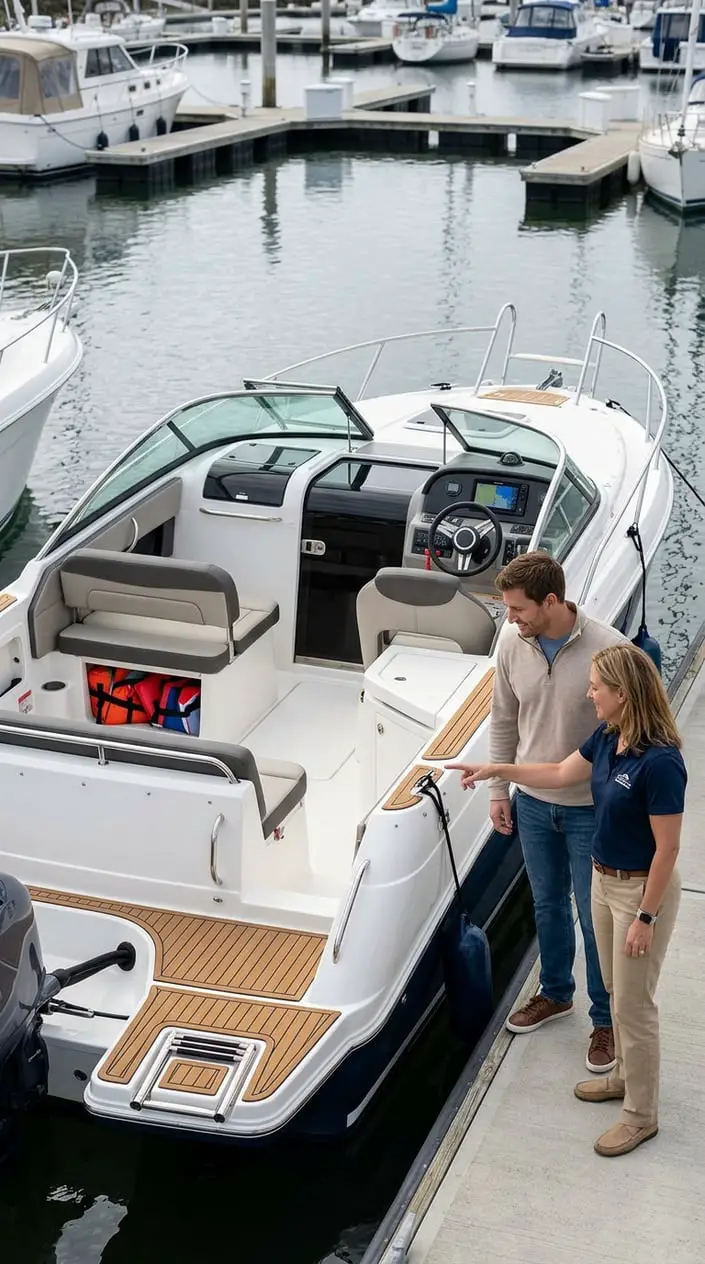
The 2026 Contender 39ST offers a useful example of how a fishing boat’s helm and deck layout can support daily use. As you compare boats, consider how each feature fits your boating plans and whether you can reach, see, and use it comfortably.
1) Contender 39ST’s Lower Helm Console
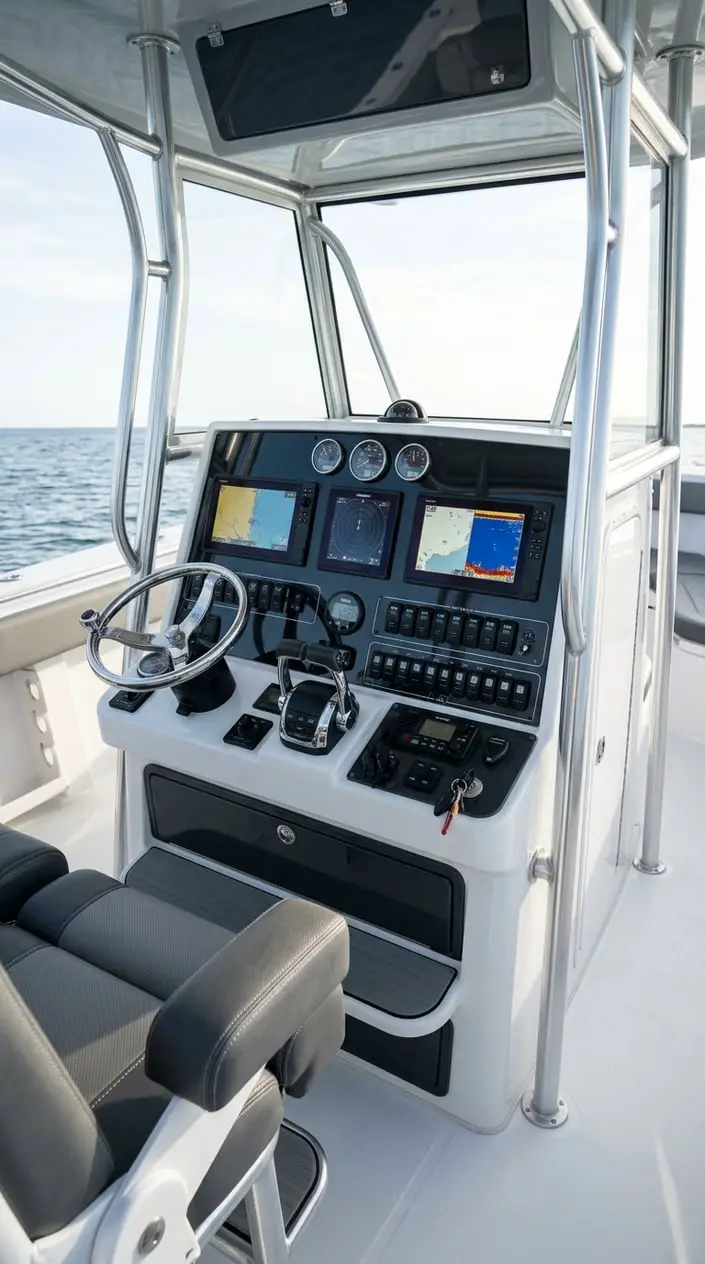
A lower helm console can improve your sightline across the water. The updated console sits 1½ inches lower, giving you a clearer view when you’re at the controls. When you shop, check your view from both a seated and standing position, and look past the console toward the bow and the sides of the boat.
Your line of sight should feel clear in the position you expect to use underway. A console’s height also affects how the helm feels during routine operation, so reach for the steering wheel and controls while you’re in place. If you boat in spray or changing weather, consider how the console’s shape and placement help shield you at the helm.
2) Contender 39ST’s Wider, Longer Console
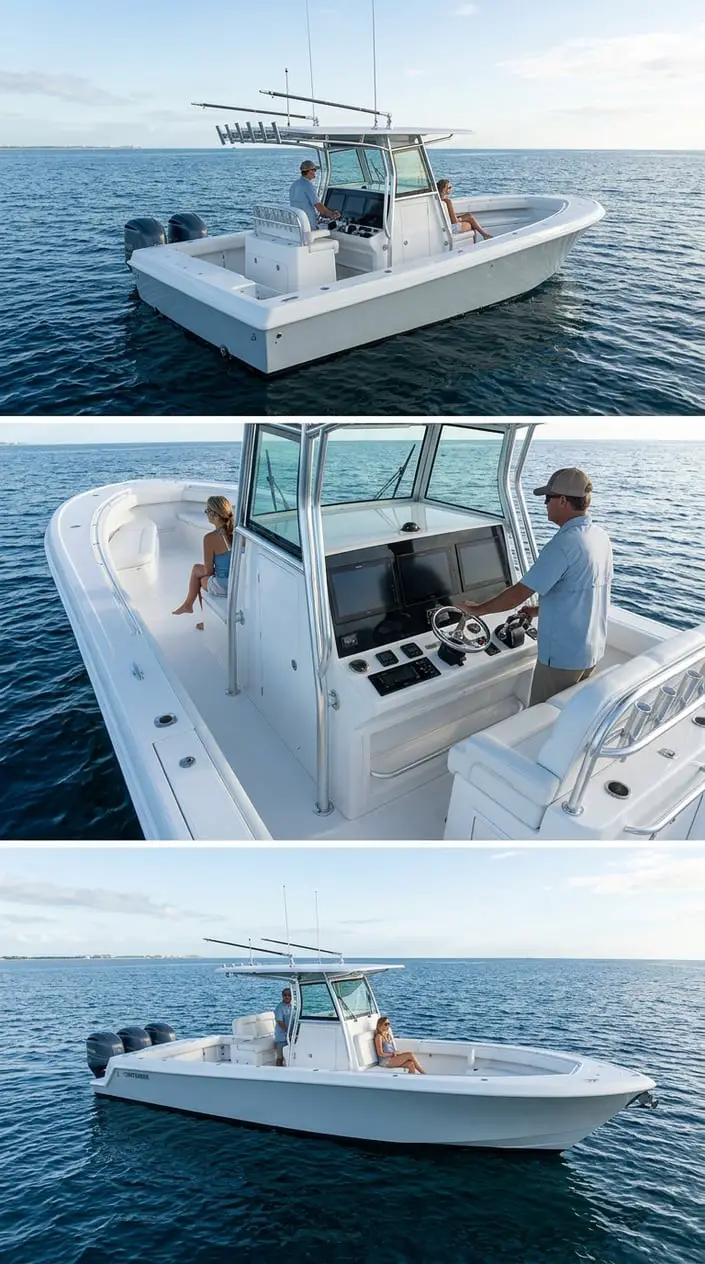
The wider, longer console adds room and helps protect you from spray and weather. This design adds 5 inches of width and 2 inches of length while keeping cockpit space in view as part of the layout. When you inspect a boat, walk through the cockpit and check how much room remains for moving around the helm.
Your crew needs a usable path between the bow and stern, especially when fishing or handling gear. Stand at the wheel and check whether the console feels roomy without making nearby seating or passageways awkward. Dimensions tell you where the design has changed, while a walkthrough helps you judge how that space works for your crew.
3) Contender 39ST’s Dual 22-Inch Display Capacity
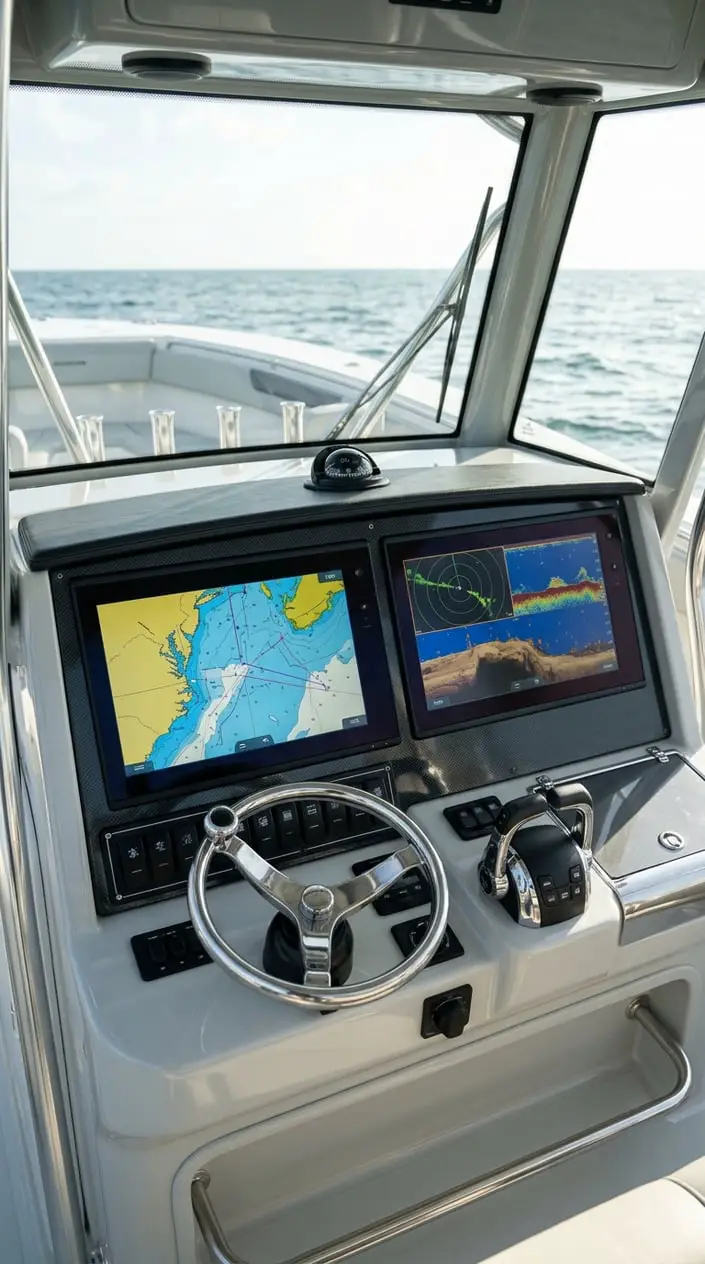
Capacity for two 22-inch multifunction displays gives you room to organize key electronics at the helm. The acrylic electronics face accommodates both screens, letting you view navigation and other compatible information in one place. As you compare boats, check how the displays sit relative to the steering wheel and your normal viewing position.
Ask which electronics are included and which are options, since screen capacity alone doesn’t tell you what equipment comes with the boat. You’ll also want to see whether you can reach the screen controls without leaning across the helm. A clear, comfortable layout helps you keep your attention on the water while using your navigation system.
4) Contender 39ST’s Molded-In Hardtop Radio Box
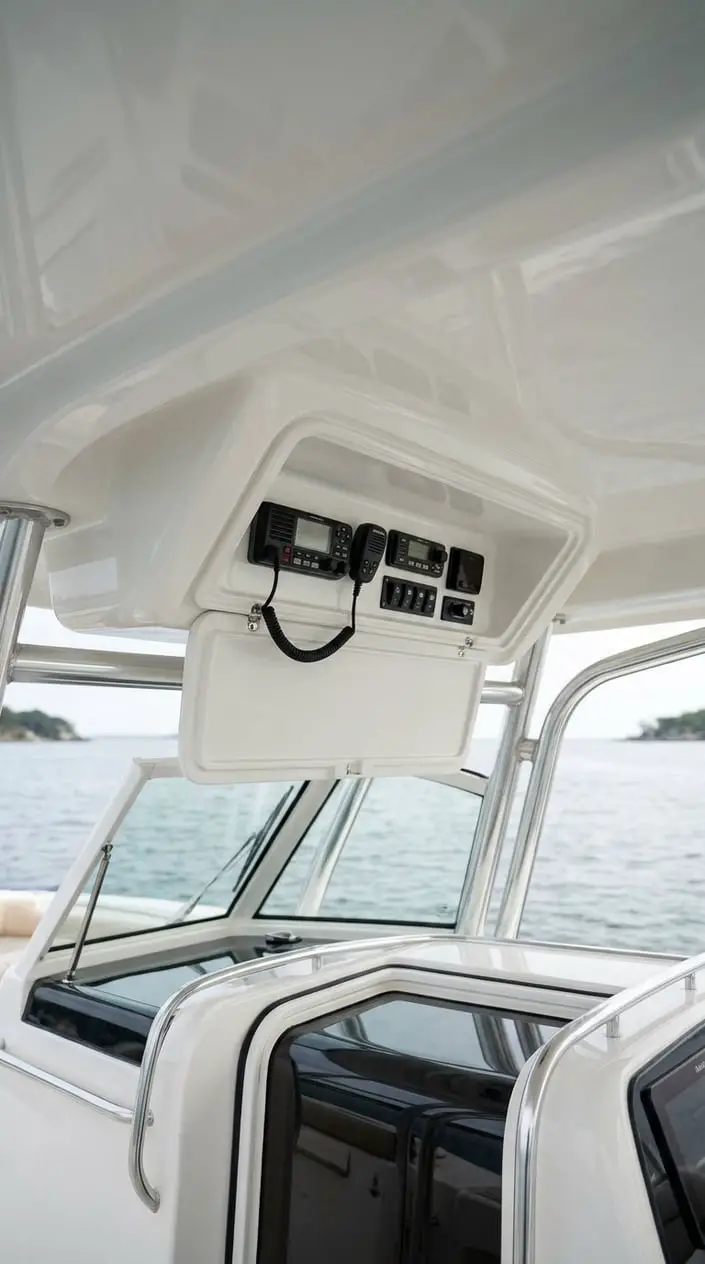
A molded-in hardtop radio box gives you an overhead location for a flush-mounted VHF radio or an additional screen. Integrating that equipment into the hardtop helps keep the helm area orderly and leaves the console face available for other controls. When you look at a boat, check whether the radio is easy to see and reach from the helm.
Ask what equipment is installed and whether the box has room for the setup you want. Pay attention to how wiring is routed into the hardtop, too. A clean installation should feel secure and should leave you with a practical view of the radio while you operate the boat.
5) Contender 39ST’s Integrated Speaker and Lighting Pockets
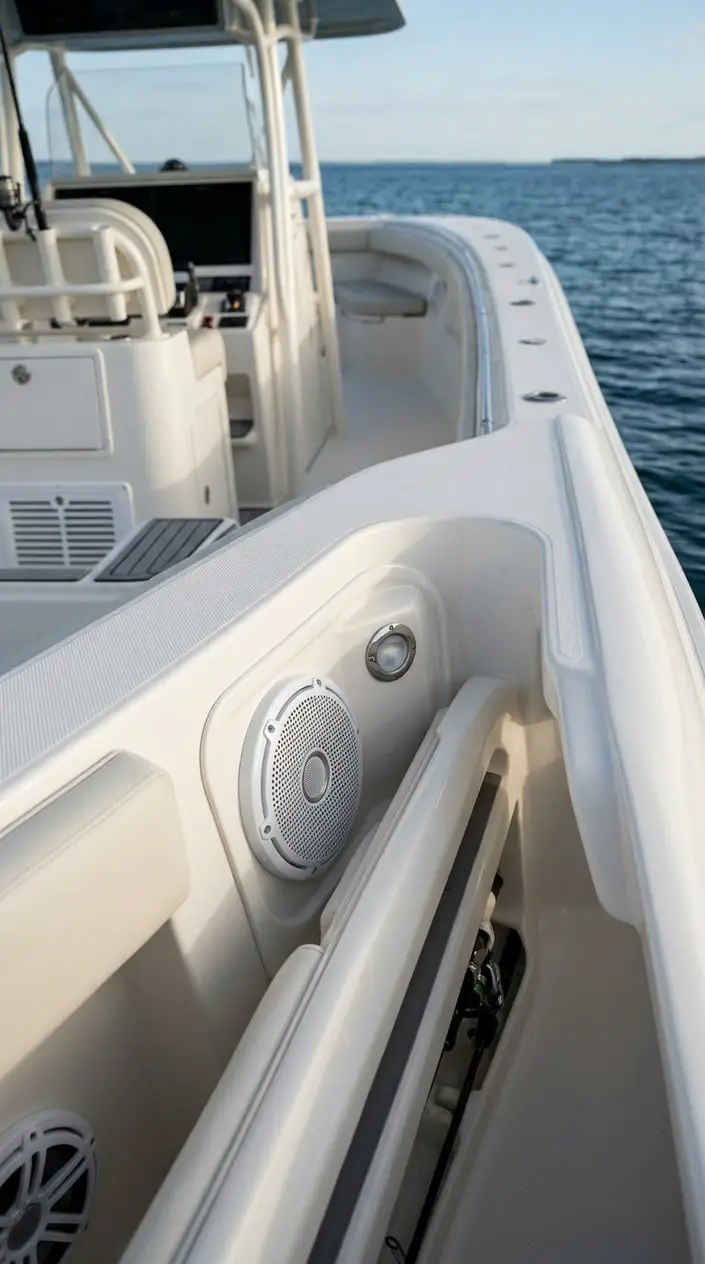
Integrated pockets give speakers and lights a fitted place in the hardtop structure. This built-in approach keeps the design tidy, with no exposed bolts around those components. When inspecting a boat, look at how the speaker and lighting sit within the surrounding surface, then check that the lights cover the areas you need after dark.
Ask how you access each component for service or replacement. You’ll also want to confirm that the speaker controls are within easy reach from the helm or seating area. These details help you judge whether the audio and lighting setup suits your time on the water, including evening returns to the dock.
6) Contender 39ST’s Lighted Glovebox and Dash Trays
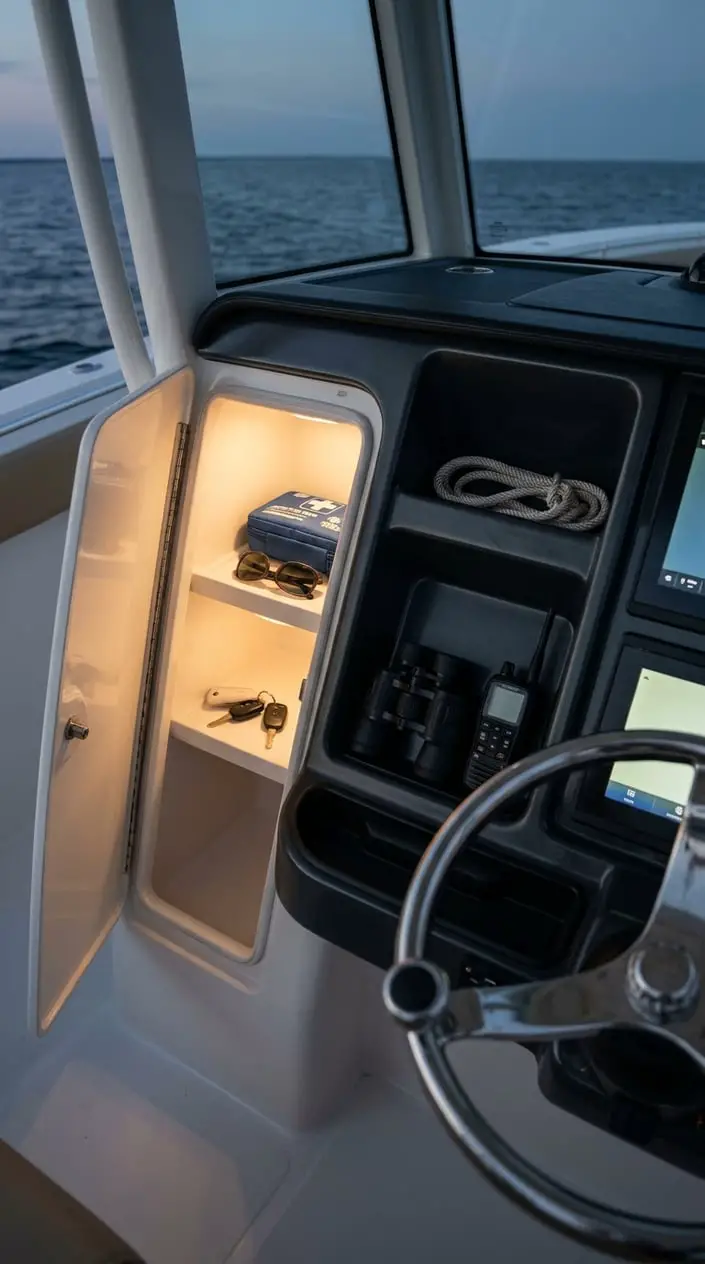
A lighted glovebox and molded-in dash trays keep small items close at the helm. The oversized glovebox gives you a place to store essentials, and its light helps you see inside when daylight fades. The molded trays put frequently used items within reach.
Before you buy, open the glovebox and check whether its shape and capacity suit what you plan to carry. Place a few everyday items in the trays to see how they fit and whether they stay clear of the controls. Ask whether the glovebox latches securely, and consider where you’ll keep items that need extra protection from water or weather.
7) Contender 39ST’s Three Wiring-Access Compartments
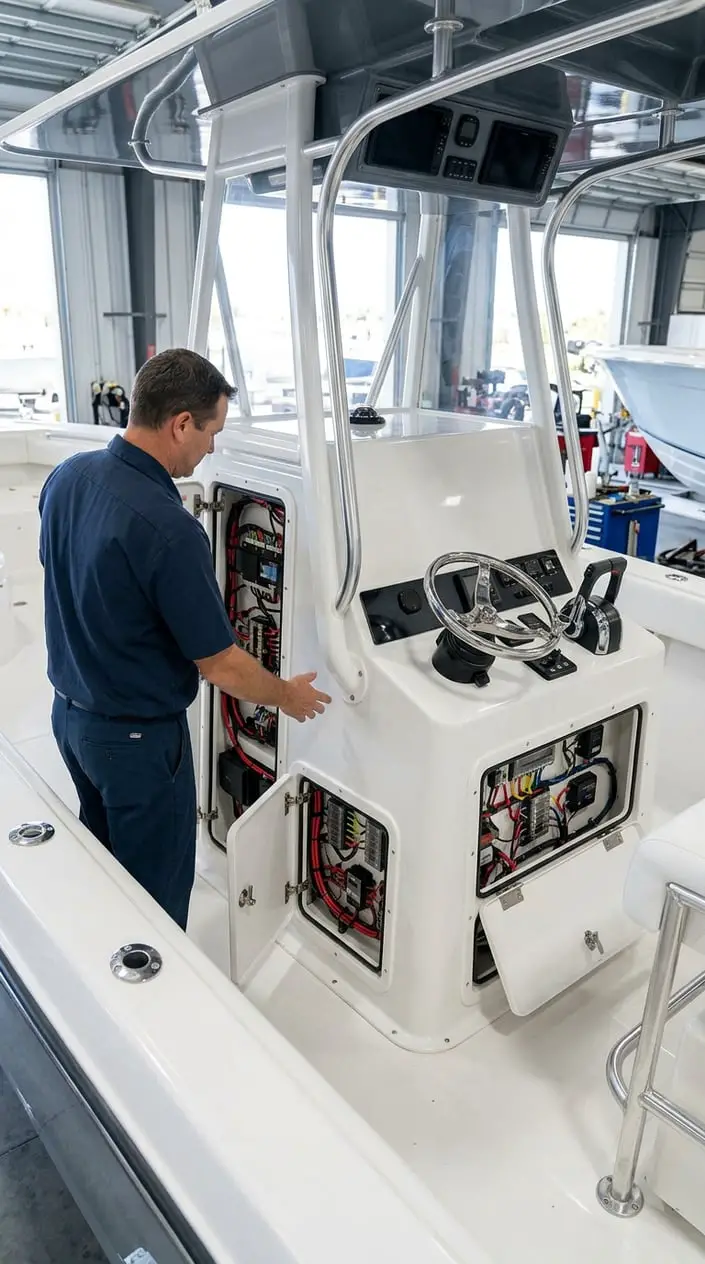
Three access compartments make wiring and electronics easier to reach for service. You’ll want clear access when a technician needs to inspect a connection or work on onboard electronics. During a boat walkthrough, ask the dealer to show you each compartment and explain what equipment or wiring sits behind it.
Check that the panels open easily and close securely. If you expect to add electronics later, ask how the access points support that work and whether the planned equipment fits the available space. Good access helps you understand how the boat is arranged before a repair or upgrade is needed, so you can plan maintenance with your dealer.
8) Contender 39ST’s Ergonomic Leaning Post
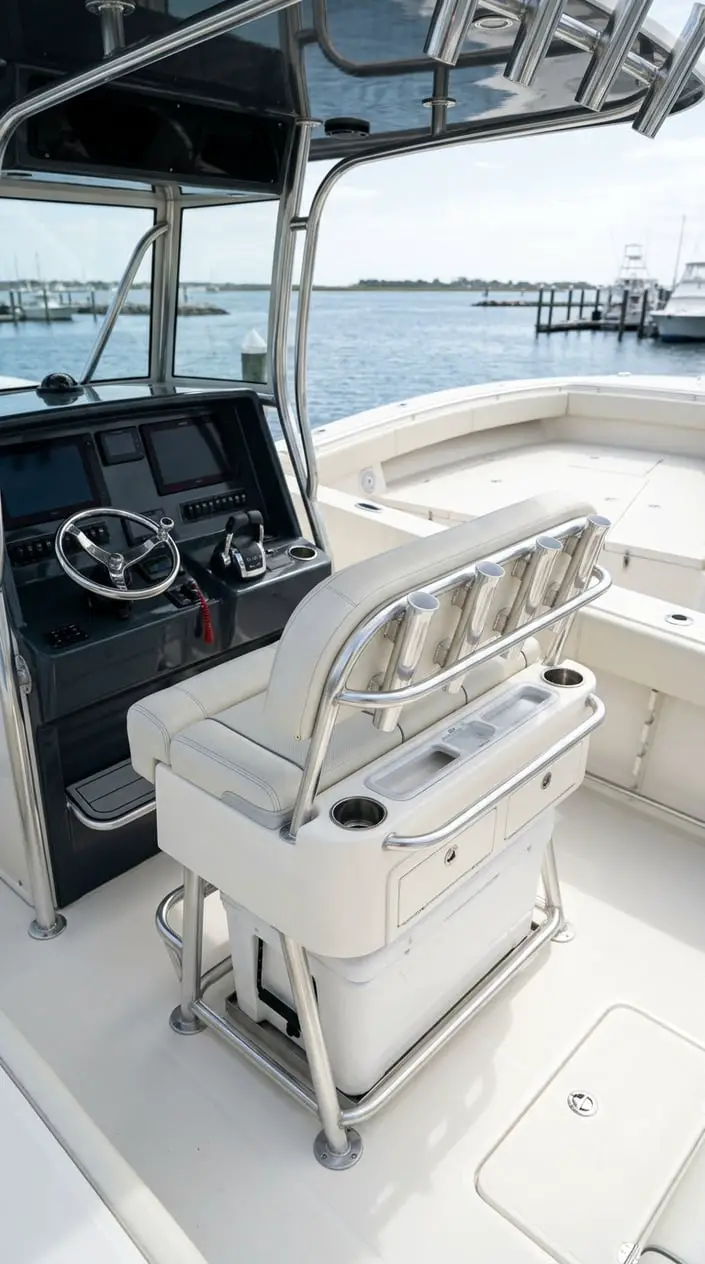
An ergonomic leaning post gives you a more supportive place to brace while operating the boat. Try the position at the helm before you buy: check how the post supports you, where your hands fall, and whether you can reach the controls comfortably. The updated design also pairs with mezzanine seating, adding a place for passengers near the helm area.
Sit in the available seats and consider how your crew will use them while underway. The boat also has an insulated cooler that is 50 percent larger than the previous version. Ask where it sits and how you’ll access it when the leaning post and nearby seating are occupied.