Last Updated on November 12, 2026
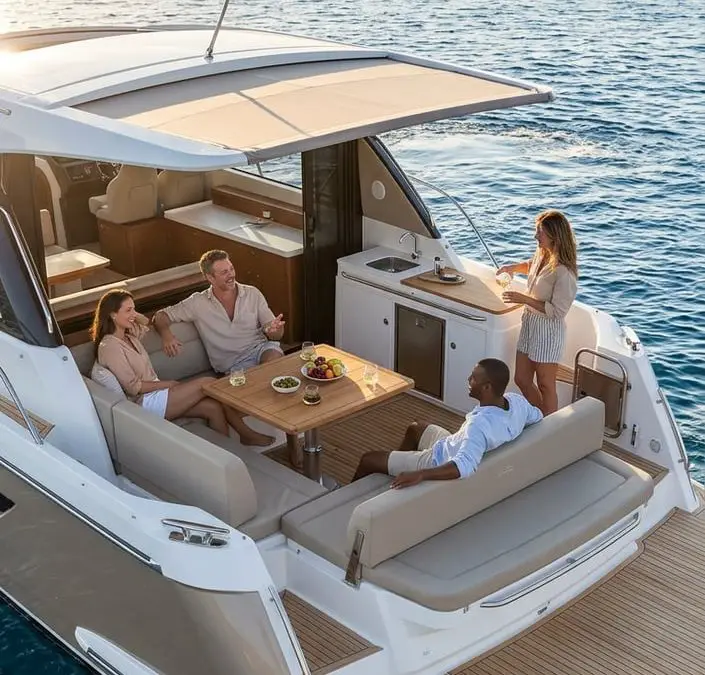
You can make entertaining on the water easier with boat designs that keep seating comfortable, food and drinks close at hand, and paths clear for moving around. A thoughtful mix of social seating, convenient serving spaces, shade, and easy access to the dock helps you host with less effort.
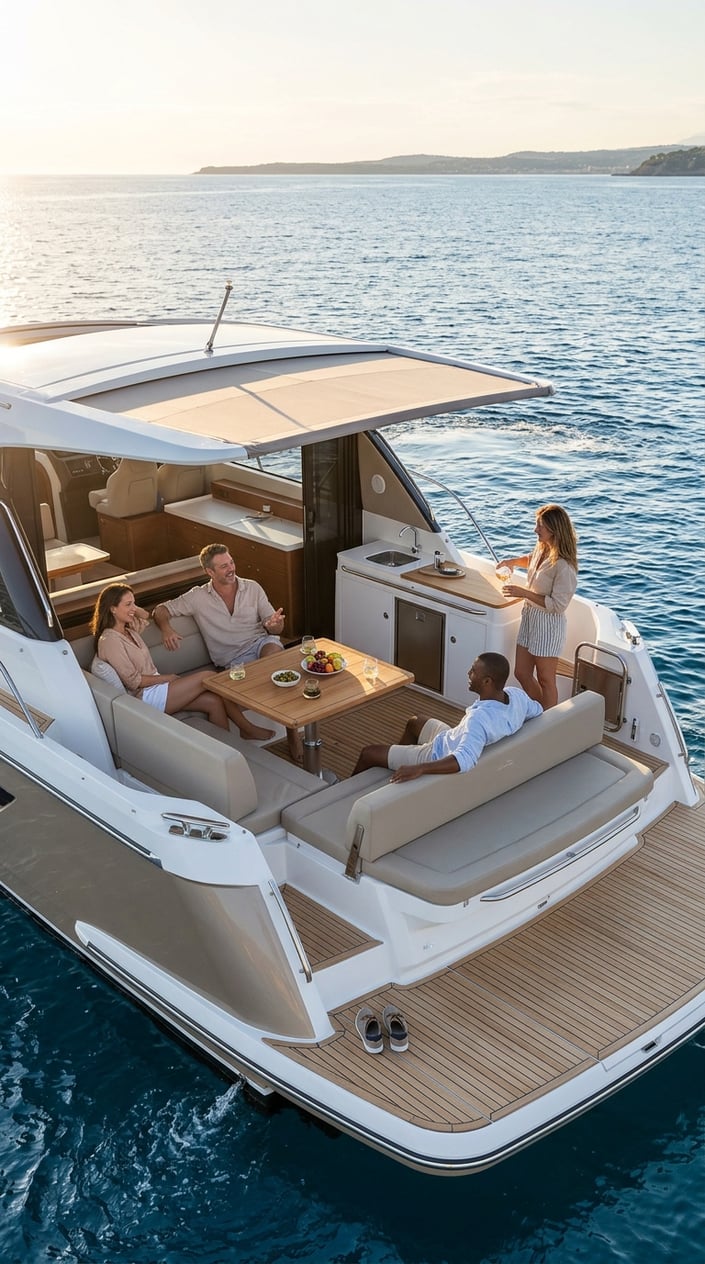
As you plan a new boat or update your current layout, consider how your group will gather, eat, swim, and move between spaces. Prioritize features that fit your boat’s size, passenger capacity, and the kind of outings you enjoy.
1) A Wraparound Cockpit Lounge
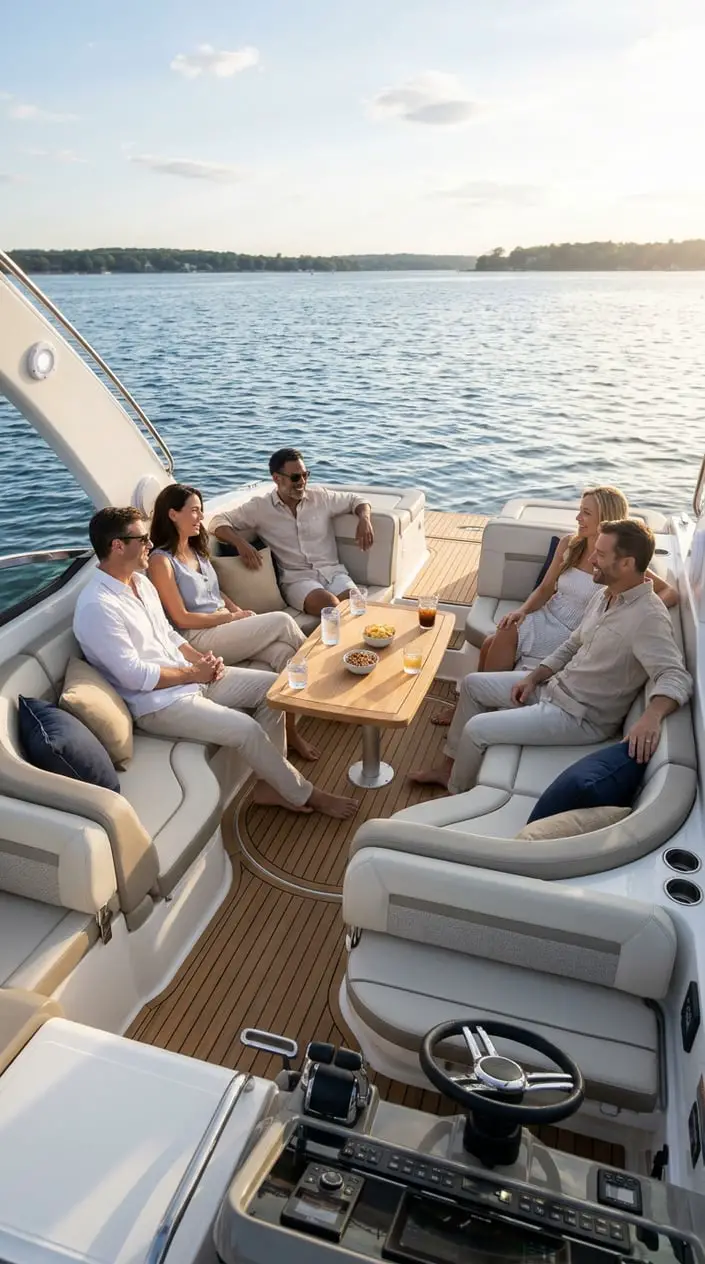
A wraparound cockpit lounge gives your group a shared place to talk while keeping the main walkway open. With seating along several sides, you can fit more people around a table or leave the center clear for standing and serving. Choose cushions with marine-grade fabric and removable covers, so you can clean up spills and dry the seats after a splash.
Check how the lounge connects to the helm, side deck, and swim area. A clear route lets you carry food through the cockpit without asking guests to shift every time. If you add a table, make sure you can remove or fold it away when you need more room. Measure the seating footprint before choosing a layout, since a larger lounge can reduce open deck space.
2) A Convertible U-Shaped Dinette
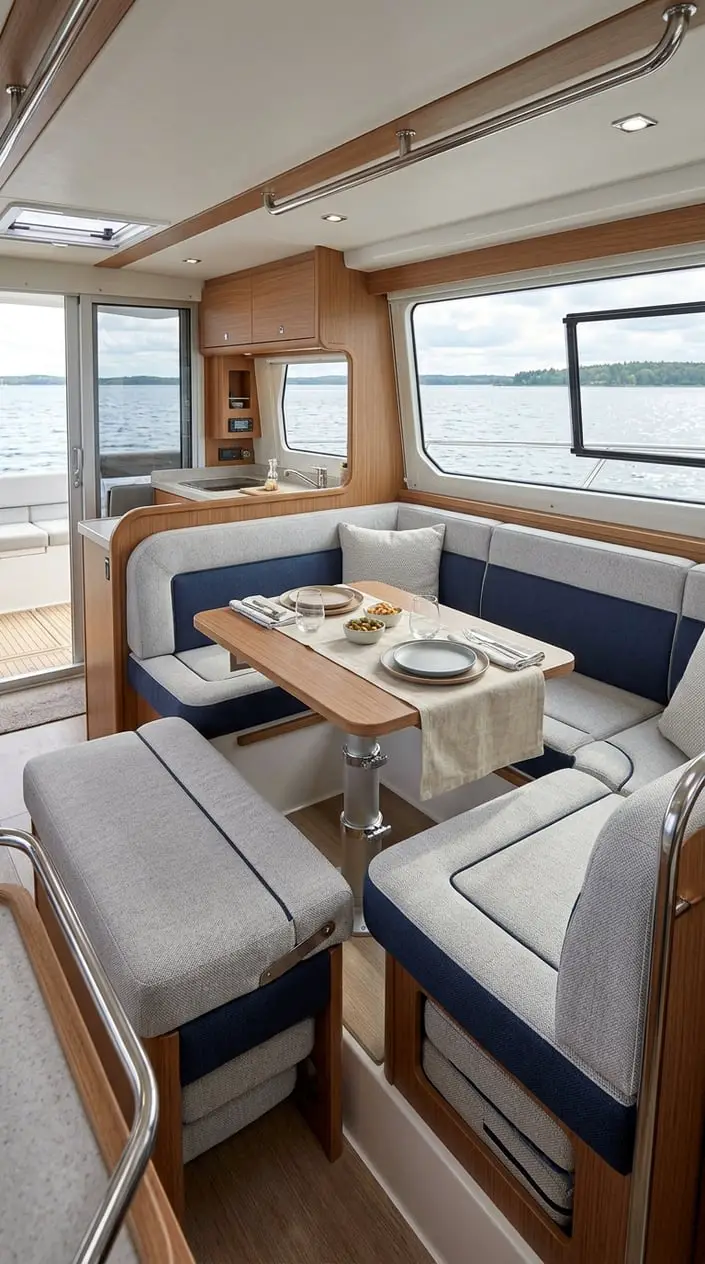
A convertible U-shaped dinette lets you switch between mealtime seating and a more open lounge. The wraparound bench brings your group together at one table, while a removable or adjustable tabletop gives you flexibility when the meal ends. Ask how the cushions and table support work before choosing a design, so you know how quickly you can change the setup.
For comfortable dining, check that seated guests have enough knee room and a stable place to set plates. Storage beneath the benches helps you stow table gear, linens, or games without using the walkway. Look for upholstery made for a marine setting, with surfaces that wipe clean. If you plan to use the dinette as a berth, confirm its finished dimensions and the steps required to convert it.
3) A Built-In Wet Bar With a Pass-Through
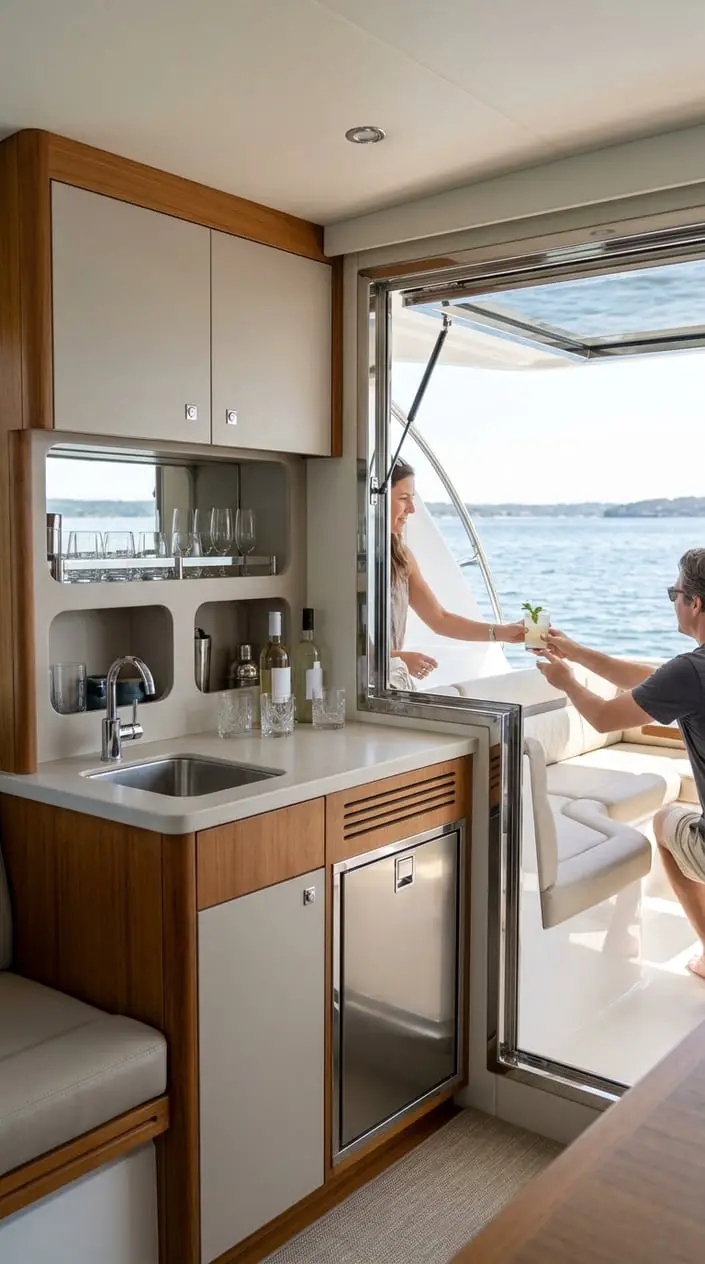
A built-in wet bar with a pass-through helps you serve drinks without carrying them across the full deck. You can prepare beverages on the working side, then hand them directly to people in the cockpit or at the seating area. Place the counter where guests can reach it without blocking a main walkway or crowding the helm.
Plan for a sink, faucet, cup storage, and a trash spot within easy reach. Use a secure, lidded bin and add a raised edge or non-slip surface to help manage spills while the boat moves. Before installation, check access to water lines, drainage, and electrical connections if your setup includes a refrigerator. Keep glassware stored securely, and choose drinkware suited to boating for use underway.
4) A Full-Width Swim Platform
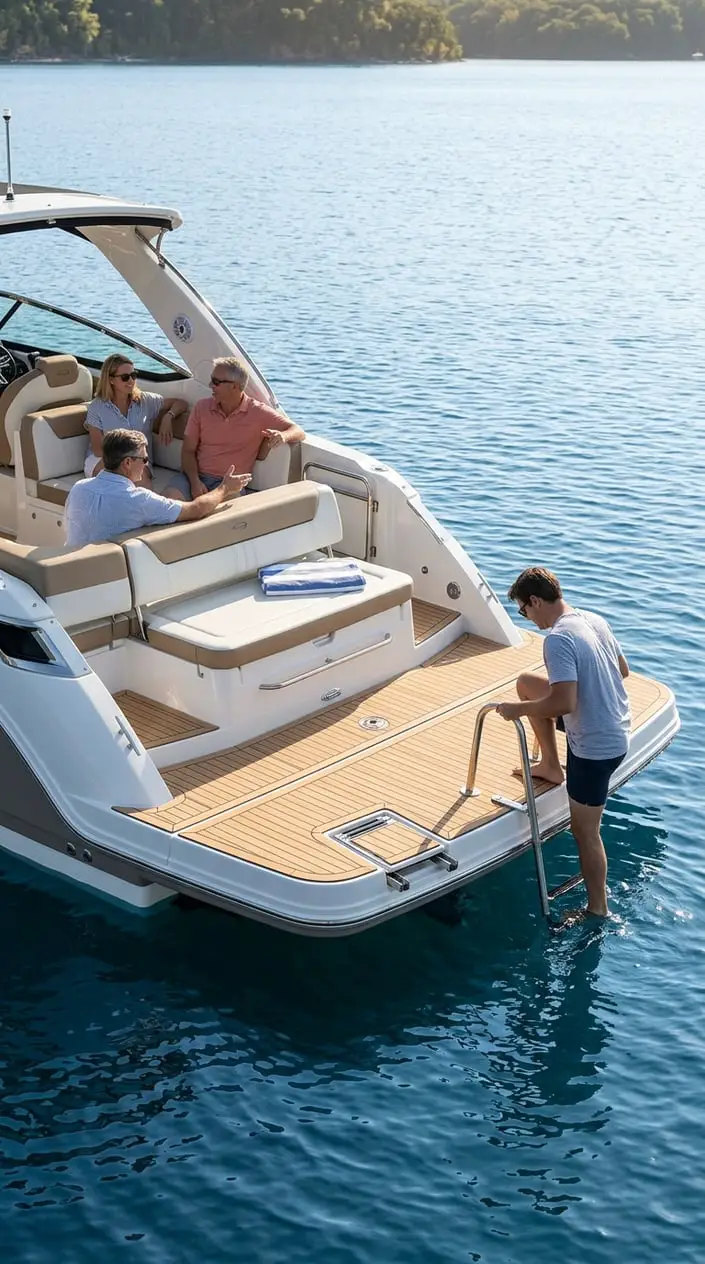
A full-width swim platform gives your group more room to gather at the stern before or after a swim. You can use the space to sit near the water, handle towels, or help swimmers climb aboard. A nonskid surface and a sturdy boarding ladder make the area more practical; check that the ladder extends far enough below the waterline for your guests.
Add handholds and storage for swim gear where they remain easy to reach without narrowing the walking area. Confirm the platform’s weight rating and how its size affects the boat’s balance and clearance. A platform also needs a clear boundary from the engine and propeller area. Follow the boat maker’s guidance for safe swimming and keep the engine off when people are in the water near the stern.
5) A Hardtop With Integrated Shade
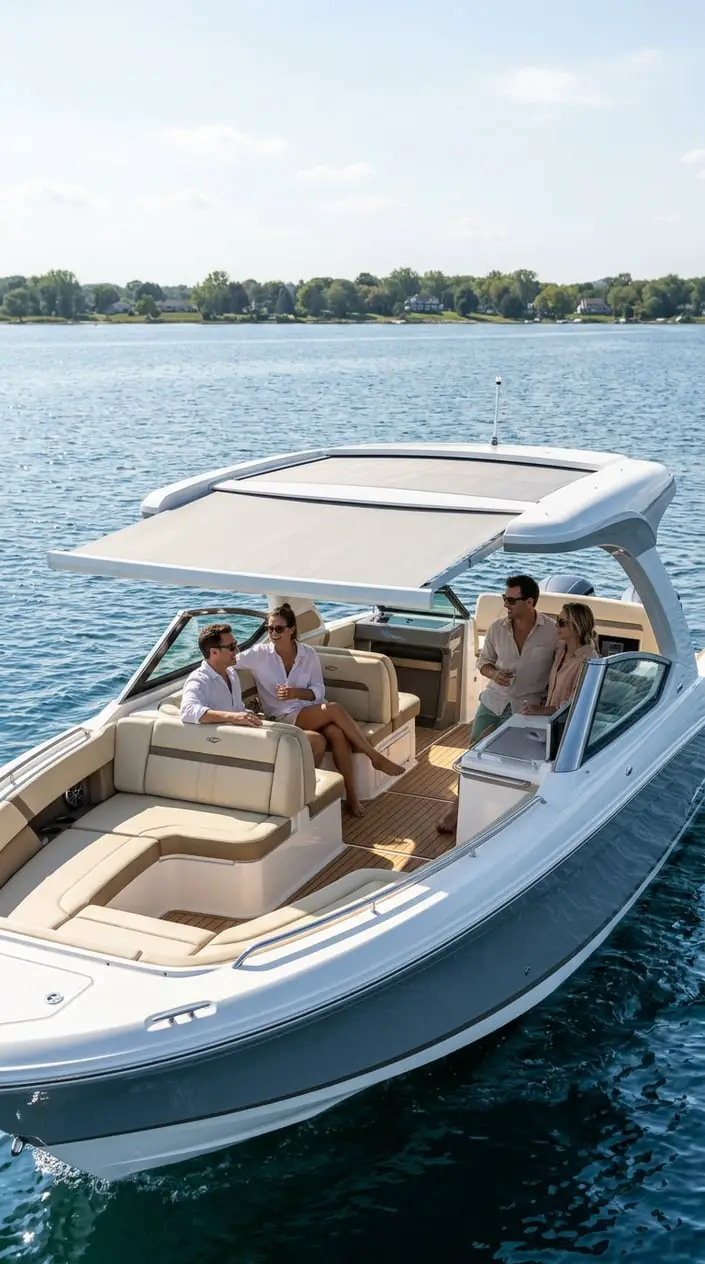
A hardtop with integrated shade gives your guests a protected place to sit during sunny outings. You can extend the shaded area over the cockpit or dining space, which makes longer meals more comfortable. Check how much coverage the top provides at different sun angles, and consider an extendable canvas panel if you want shade beyond the fixed roof.
Built-in lighting, grab rails, and mounts for speakers can keep useful features close without filling the deck with extra equipment. Ask about the top’s weight and its effect on clearance beneath bridges or storage structures. Ventilation also deserves attention, especially if the hardtop covers a galley or enclosed seating. Choose materials made for marine exposure, and inspect attachment points as part of routine boat care.
6) A Bow Lounge With Face-to-Face Seating
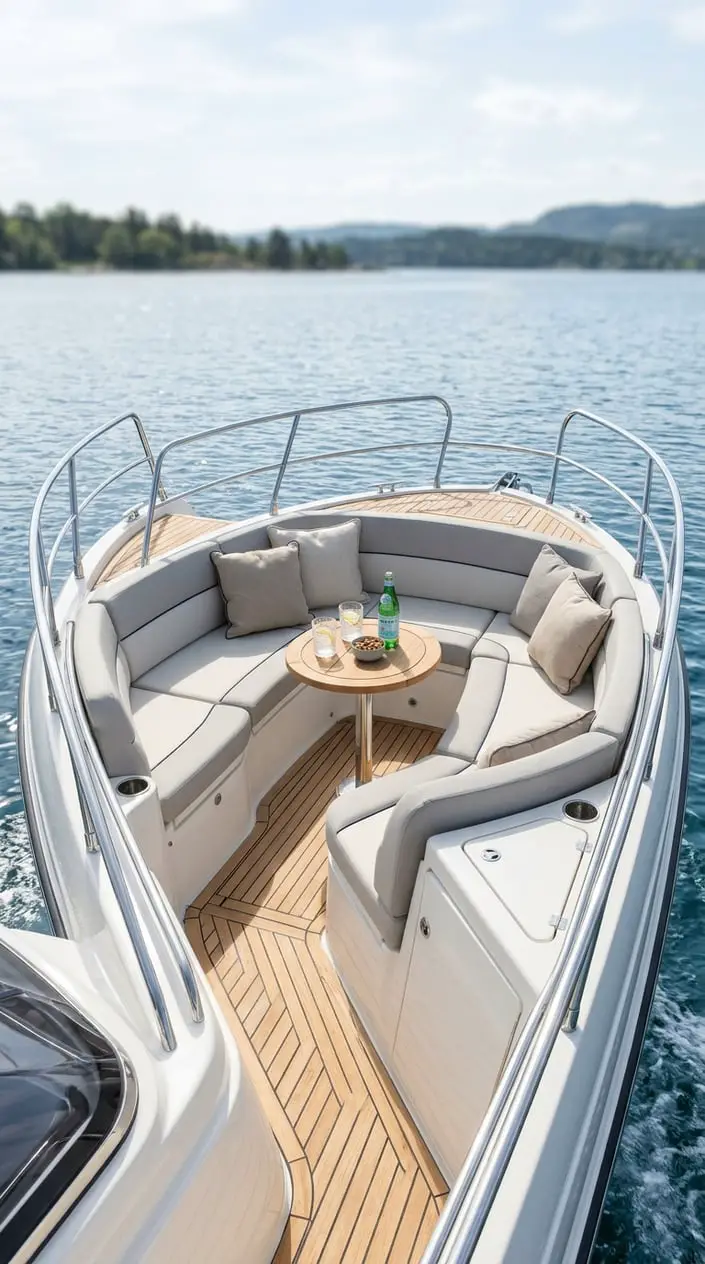
Face-to-face seating in the bow creates a natural spot for conversation away from the cockpit. You can add a compact table between the benches for snacks or drinks, while angled backrests help guests settle in. Check that the layout leaves enough room to reach the anchor locker and move safely around the bow.
For a comfortable setup, look for grab handles and secure footrests, especially if you expect to cruise with guests seated forward. Removable cushions make it easier to clear the area for docking or other tasks. Consider how quickly you can secure loose items before getting underway, since the bow is exposed to wind and spray. A fitted storage compartment can hold cushions or small items when the lounge is in use.
7) A Cockpit Galley Beside the Conversation Area
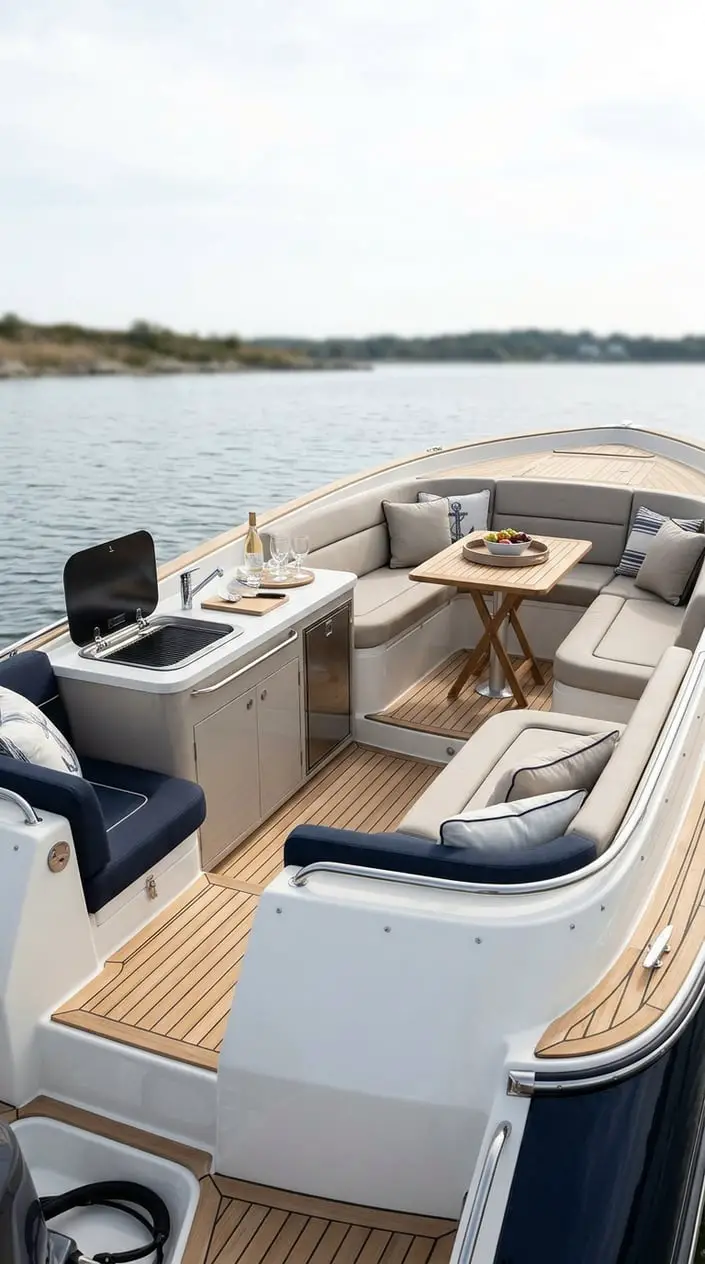
Placing the cockpit galley beside the conversation area lets you prepare food while staying close to your guests. You can serve from a short counter and keep cooking tools within reach, which reduces trips through the cabin. Check that the galley work surface does not cut across a route between the helm, seating, and boarding areas.
A useful layout groups the sink, cooktop, and food storage in a compact work zone. Secure cabinet latches and deep drawers help keep supplies in place as the boat moves. Choose surfaces that clean easily, and make sure ventilation suits your cooking equipment. Before settling on a design, test the reach to commonly used items from the working position. That check helps you spot awkward corners and tight clearances before installation.
8) A Dedicated Cooler and Ice-Maker Station
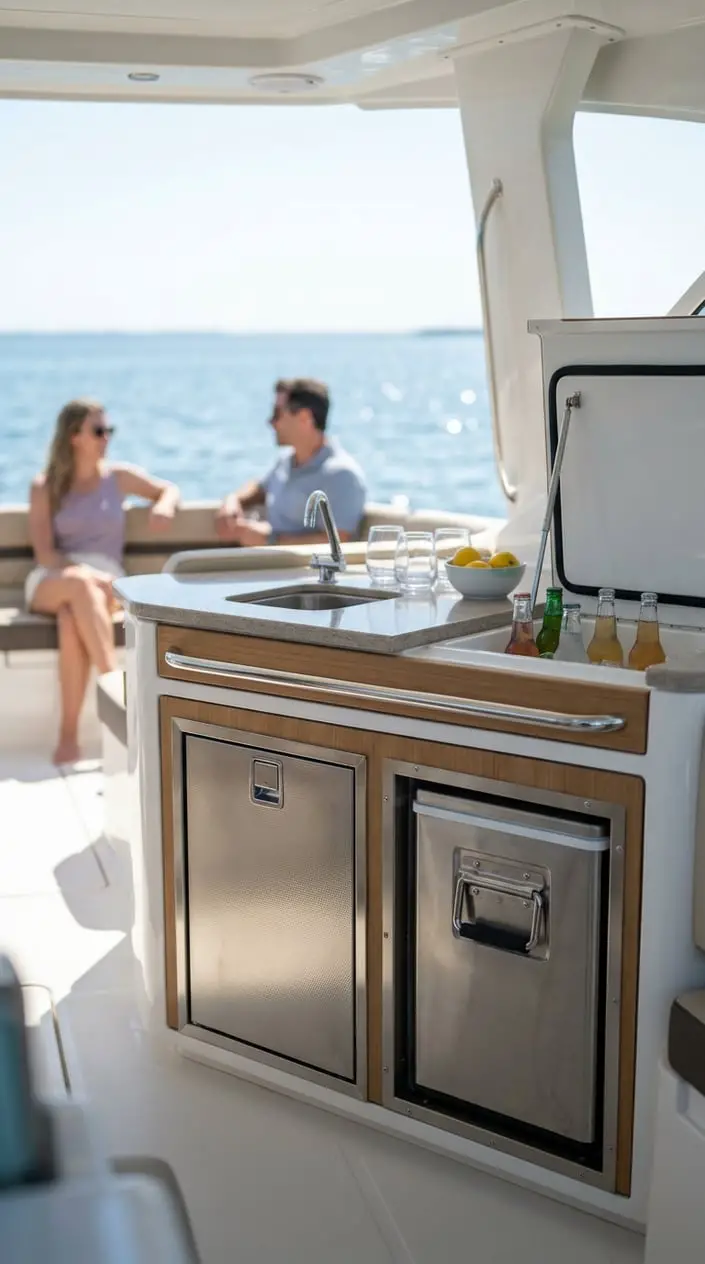
A dedicated cooler and ice-maker station keeps cold drinks together and easy to serve. You can place it near the seating area while leaving enough counter space for cups and a small tray. Choose a location where guests can reach refreshments without crowding the helm or standing in a narrow passage.
Check the station’s capacity, power needs, and ventilation requirements before selecting equipment. A cooler with a secure lid can hold ice and beverages during travel, while an ice maker needs a suitable electrical supply and water setup. Add a drain plan for melted ice and wipeable surfaces for drips. Keep frequently used cups close by, and secure bottles so they stay in place while the boat is underway.
9) Dimmable, Low-Glare LED Lighting
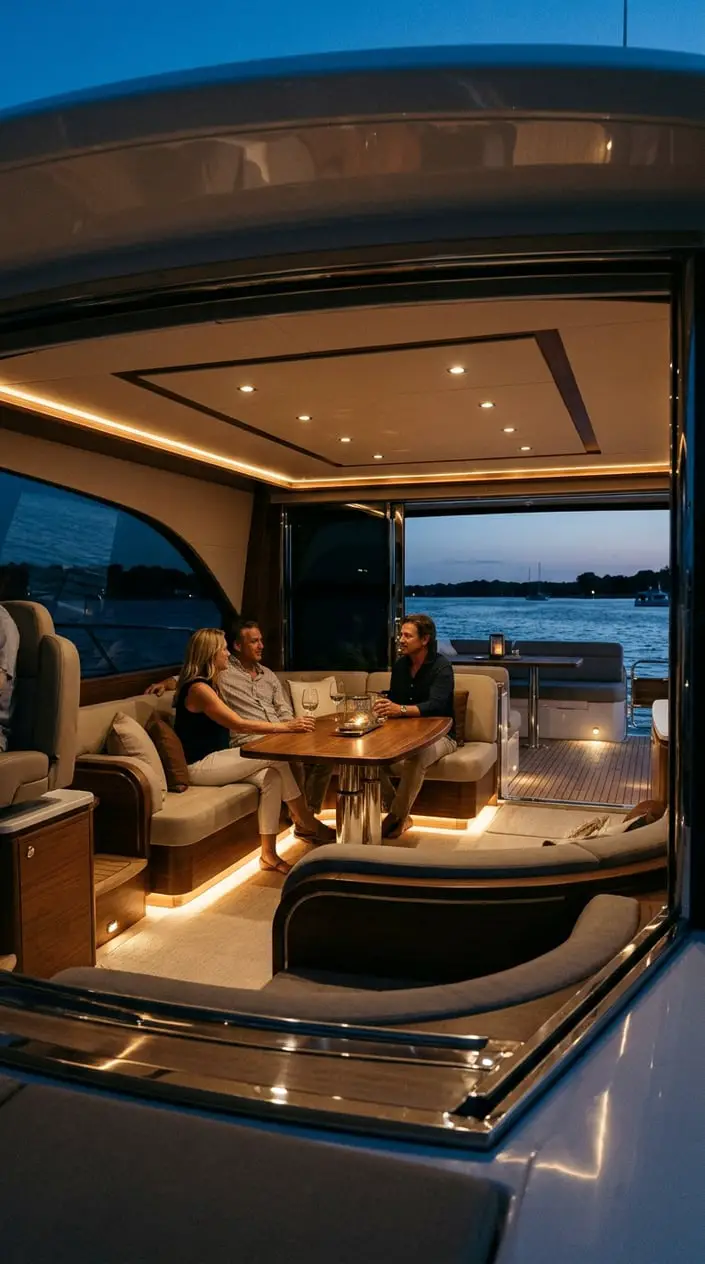
Dimmable, low-glare LED lighting helps you set a comfortable mood after sunset while keeping walkways visible. You can use brighter task lights over the galley and softer lights around the lounge. Separate controls let you adjust each area without flooding the whole deck with light.
Place fixtures so they illuminate steps and deck edges without shining into the helm or reflecting strongly off windows. Use marine-rated lights and switches designed for the conditions aboard your boat. A dimmer should be easy to reach from the seating area, and controls should be labeled clearly for guests. If you add colored accent lights, keep them subtle so they support the setting without making it harder to see surfaces underfoot.
10) A Marine Audio System With Separate Zones
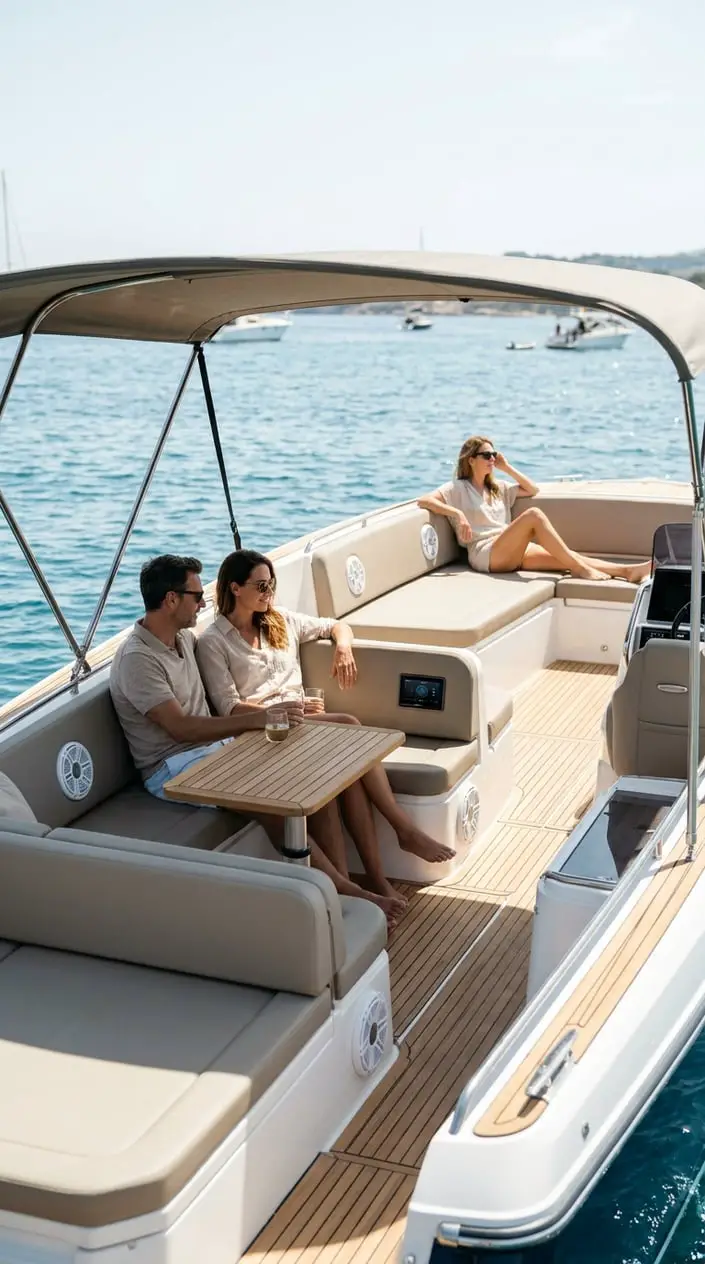
A marine audio system with separate zones lets you set different sound levels across the boat. You can keep music near the cockpit while lowering it around the bow or helm. That control helps guests hold conversations in one area while others enjoy music nearby.
Plan speaker locations around seating and walking paths, keeping controls within easy reach. Marine-rated speakers and wiring are built for exposure to moisture and sun, while secure mounts help keep equipment in place. Check that the system pairs with the devices you plan to bring and that the controls are simple enough for guests to use. Set a considerate volume when you are near other boats, marinas, or shorelines, and follow local rules for sound on the water.
11) A Side-Boarding Door for Easy Dock Access
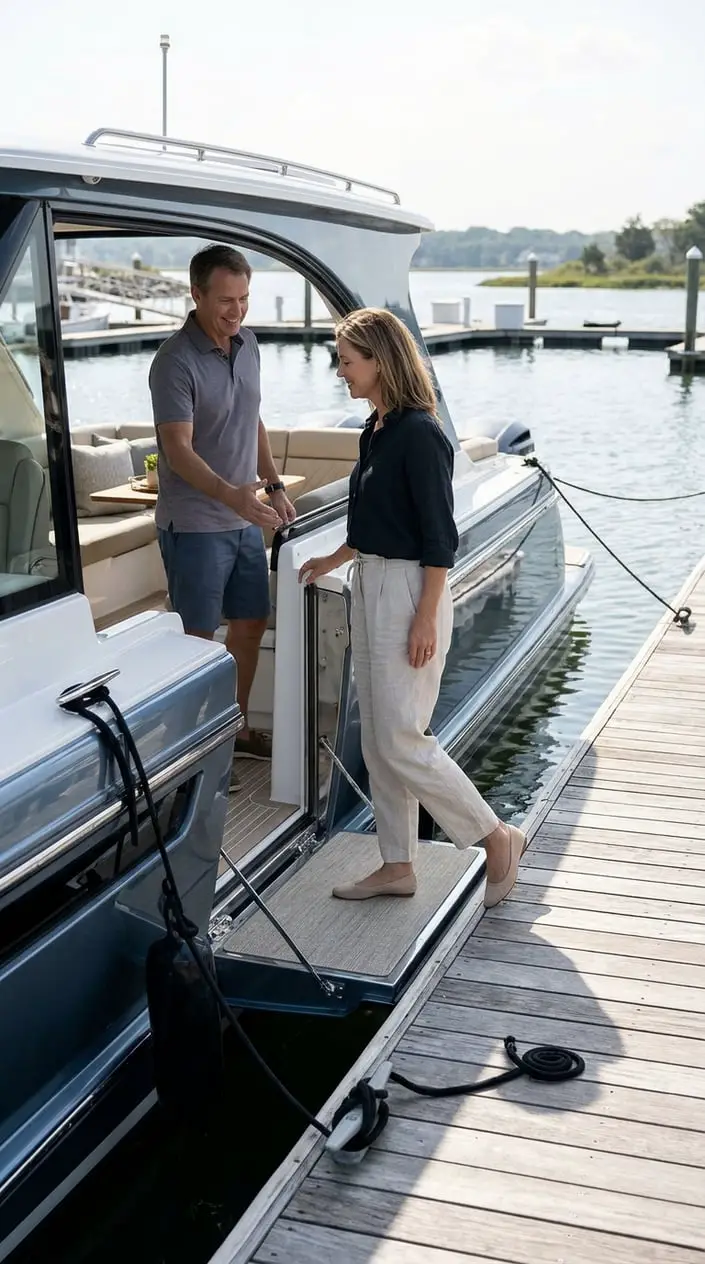
A side-boarding door gives your guests a direct entry point from the dock. You can make boarding easier for people carrying bags or stepping aboard with limited mobility, especially when the door aligns with a stable dock or boarding platform. Check the opening width, threshold height, and handholds before choosing its location.
The door should latch securely and open without blocking the main walkway. Ask how its position affects the hull structure and nearby seating, and confirm that the installation follows the boat maker’s specifications. A nonskid step and a grab rail help guests keep their footing as they cross the gap. Keep the passage clear when hosting, and secure the door before the boat leaves the dock.
12) A Private Head With a Changing Area
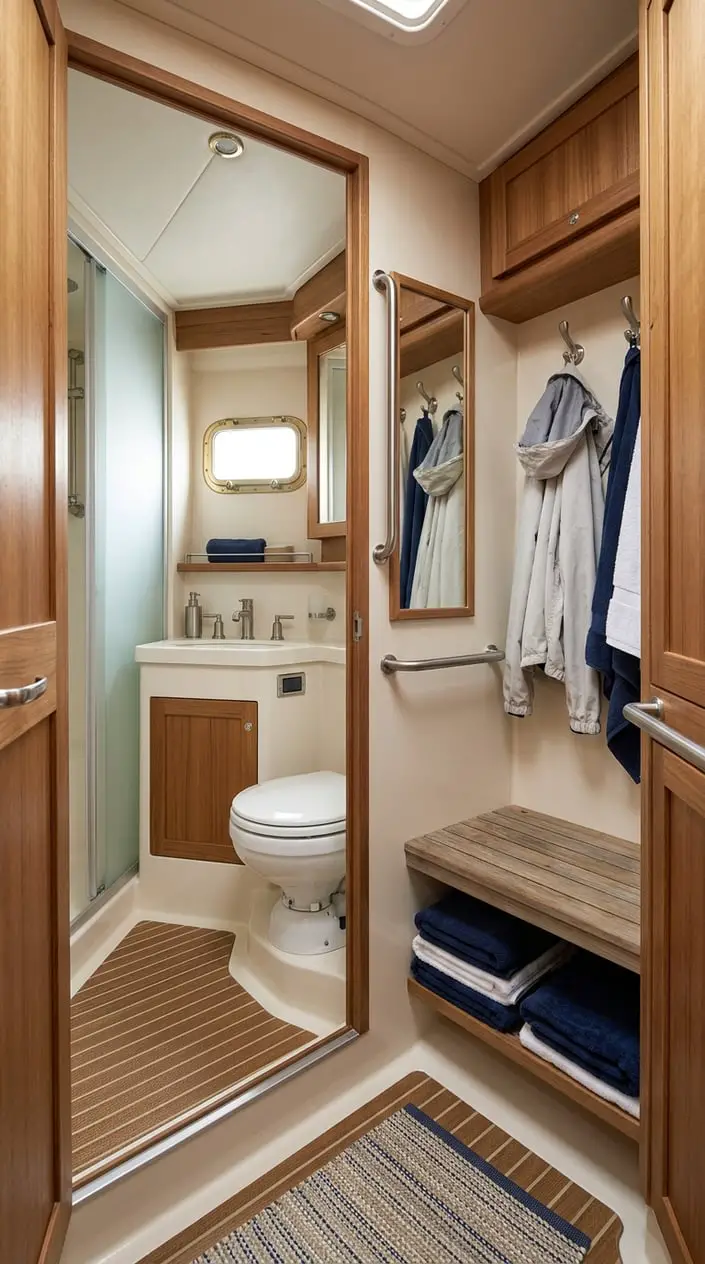
A private head with a changing area gives guests a place to use the bathroom and change out of wet swimwear. You can improve privacy with a door, curtain, or separate changing nook, depending on the cabin layout. A bench and hooks help keep clothing off damp surfaces, while a handheld shower supports quick rinsing.
Check the space around the toilet, sink, and shower so guests can move without bumping into fixtures. Ventilation, lighting, and easy-clean surfaces make the room more comfortable after repeated use.
Confirm freshwater and holding-tank capacity for the number of people you expect aboard. Add a small storage shelf for toiletries, and choose latches that keep cabinets closed while the boat is underway.