Last Updated on November 13, 2026
These 8 Fishing Boat Setup Ideas That Serious Anglers Swear By focus on better boat control, clearer fish-finding, safe power, and easy access to gear. You can make your fishing boat more efficient by setting up those four areas around the way you fish.
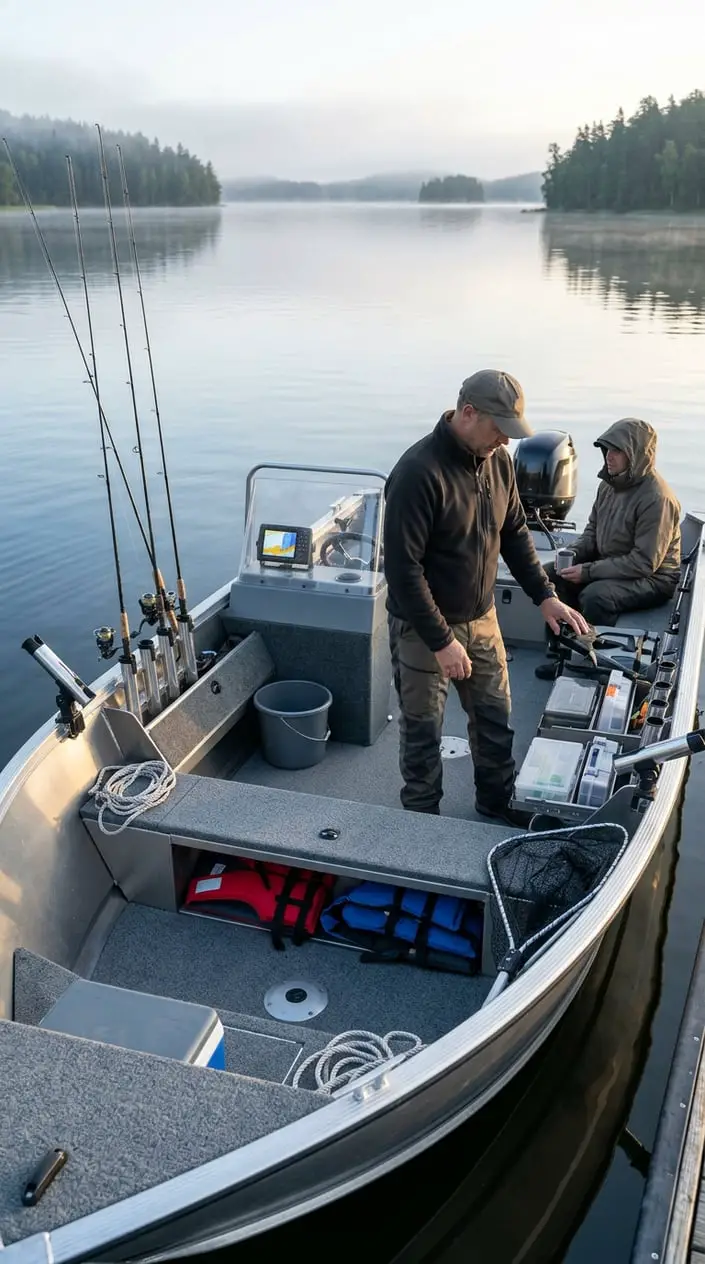
A well-planned layout saves time on the water and keeps loose equipment from getting in the way. Start with the upgrades that suit your boat, fishing style, and budget, then check that each one fits your available space and electrical system.
Quick picks:
- Best for boat control: GPS-guided trolling motor with anchor lock
- Best for mapping and sonar: Large-screen chartplotter with side imaging
- Best for shallow-water stops: Quiet, stern-mounted shallow-water anchor
- Best for a tidy cockpit: Dedicated tackle station with tool storage
1) Minn Kota Ultrex QUEST for GPS-Guided Boat Positioning
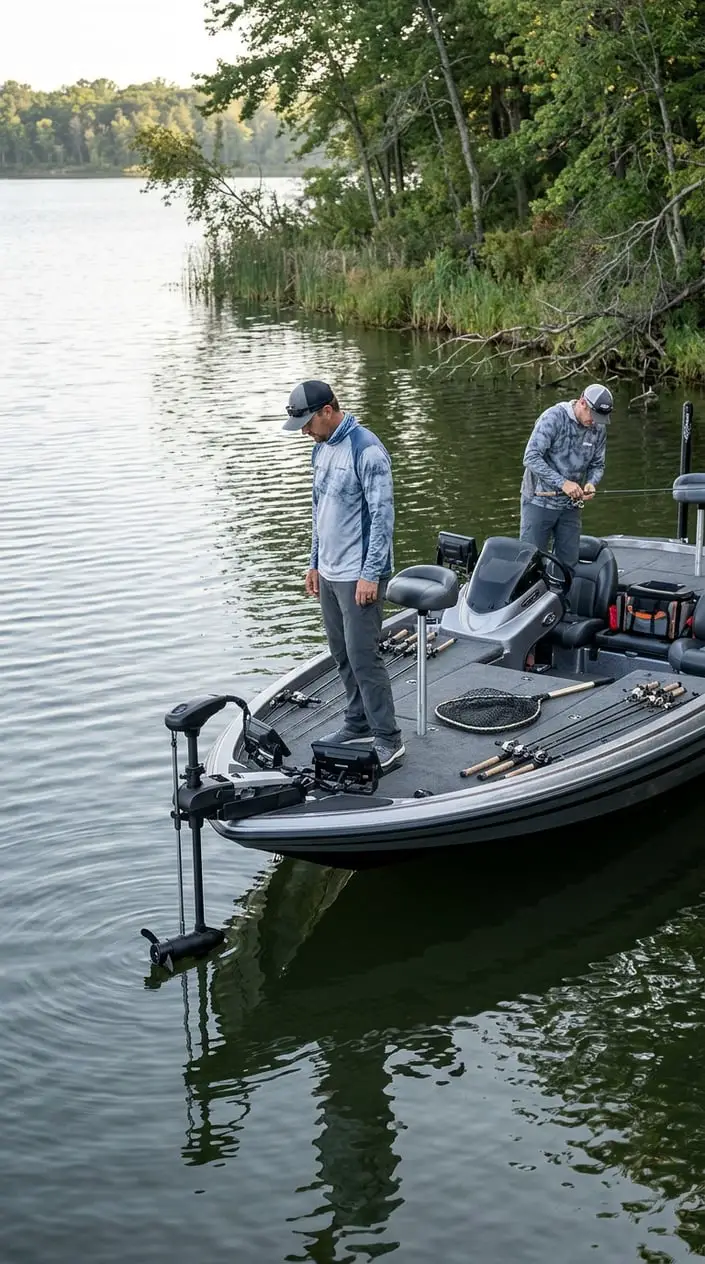
A GPS-guided trolling motor with anchor lock helps you hold position while you fish, so you can focus on the cast. This setup suits anglers who work points, brush piles, or windblown banks and need steady boat control. GPS features can hold a chosen spot or follow a planned route, while foot-pedal steering leaves your hands free for casting and line management.
Before installation, check your boat’s voltage, bow space, shaft length, and mounting pattern. A properly sized motor gives the prop enough depth to stay in the water as the bow rises and falls. Keep the pedal and its cable clear of walking paths, and save frequently fished locations in the system. Anchor-lock functions can use substantial battery power during long sessions, so plan your battery capacity around your fishing day.
2) Garmin GPSMAP 8612xsv for Side-Imaging and Chartplotting
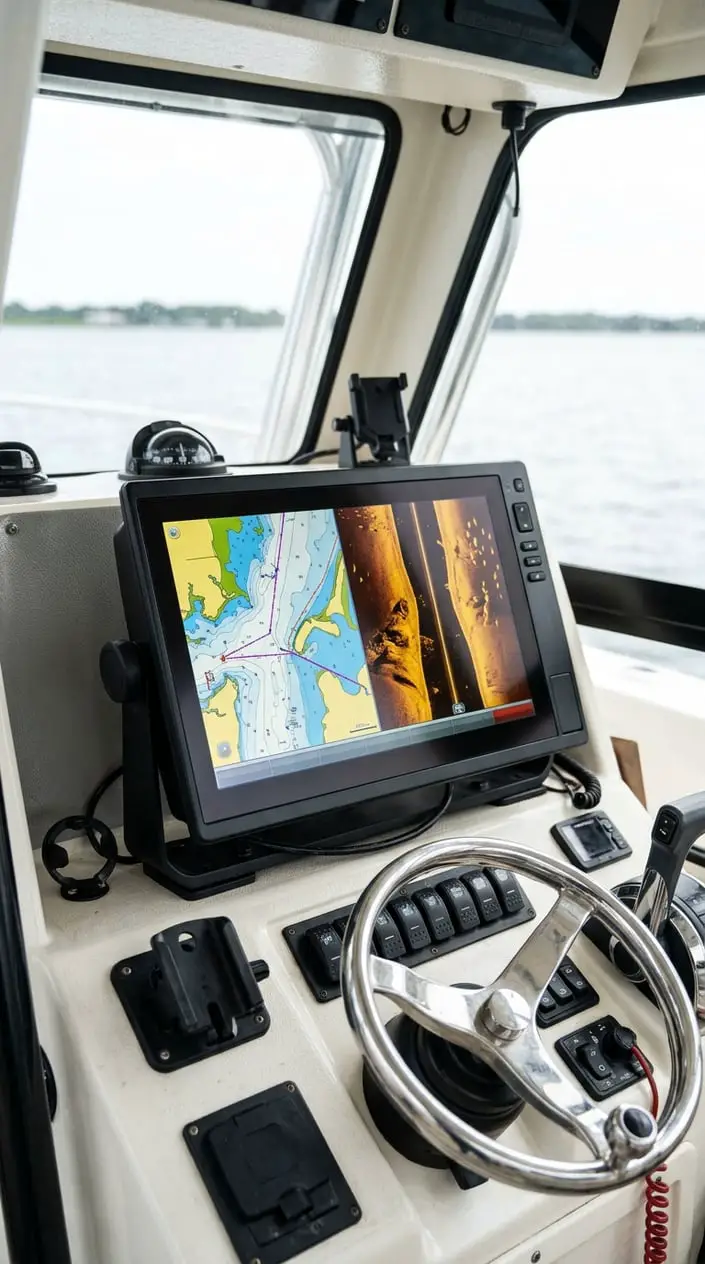
A large chartplotter with side-imaging sonar helps you read structure and navigate from one screen at the helm. Side imaging shows areas to either side of the boat, helping you inspect ledges, submerged timber, and other cover. Chart maps add depth contours and navigation details, while traditional sonar gives you a view beneath the hull.
Mount the display where you can see it without blocking your view or crowding the steering controls. Before buying, confirm that the unit works with your transducer, mapping needs, and any existing marine network equipment. Set the screen split to show the information you use most, and adjust brightness for daylight. Learn to mark a waypoint when you find a productive feature, then label it clearly so you can return to it later.
3) Power-Pole Blade for Quiet Shallow-Water Anchoring
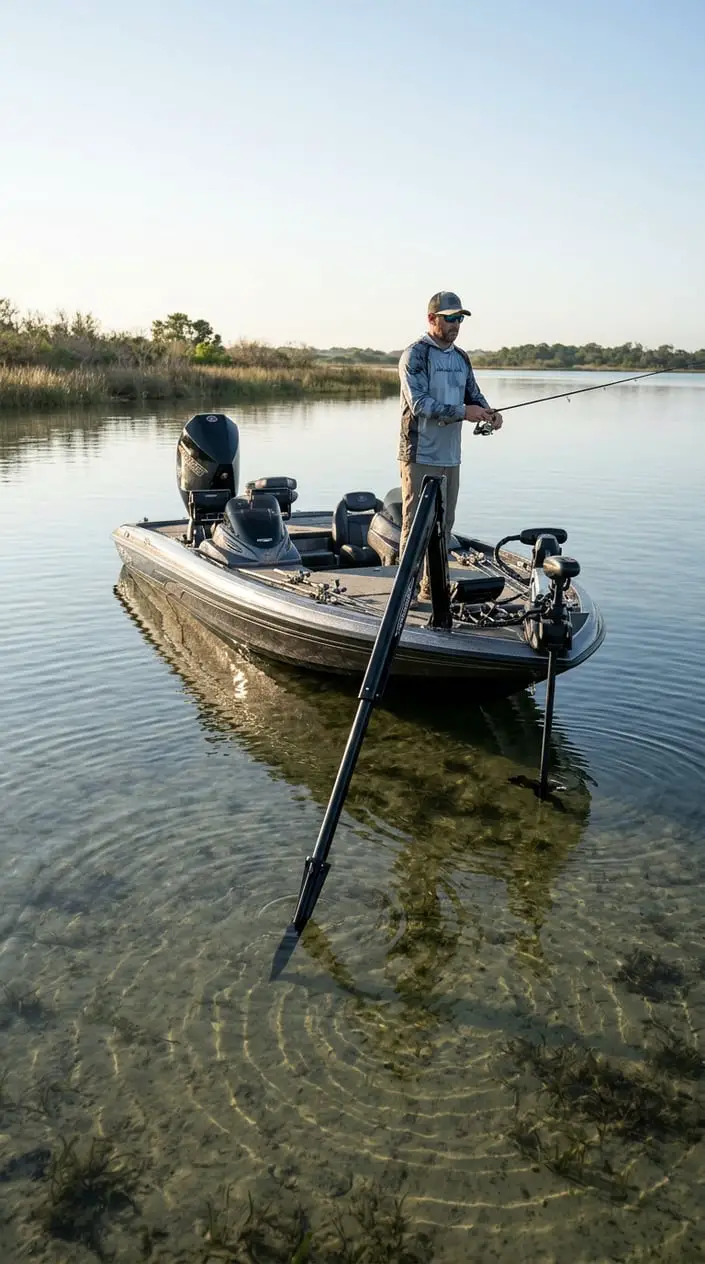
A hydraulic shallow-water anchor lets you stop quietly in fishable water with the push of a control. Its stern-mounted pole lowers into the bottom to help hold your boat in place, which is useful when you want to fish a flat or shoreline without dropping a traditional anchor. Remote controls make it easy to set or raise the anchor from your fishing position.
Check the unit’s model range, transom clearance, and mounting requirements against your boat before installation. Choose water depth and bottom conditions within the manufacturer’s operating guidance, and raise the pole before running at speed. A shallow-water anchor is designed for positioning, so keep your boat’s standard anchor aboard for deeper water or situations that call for one. Inspect mounting hardware and hydraulic lines as part of routine boat checks.
4) A Dedicated Rod Locker With Secure Vertical Holders
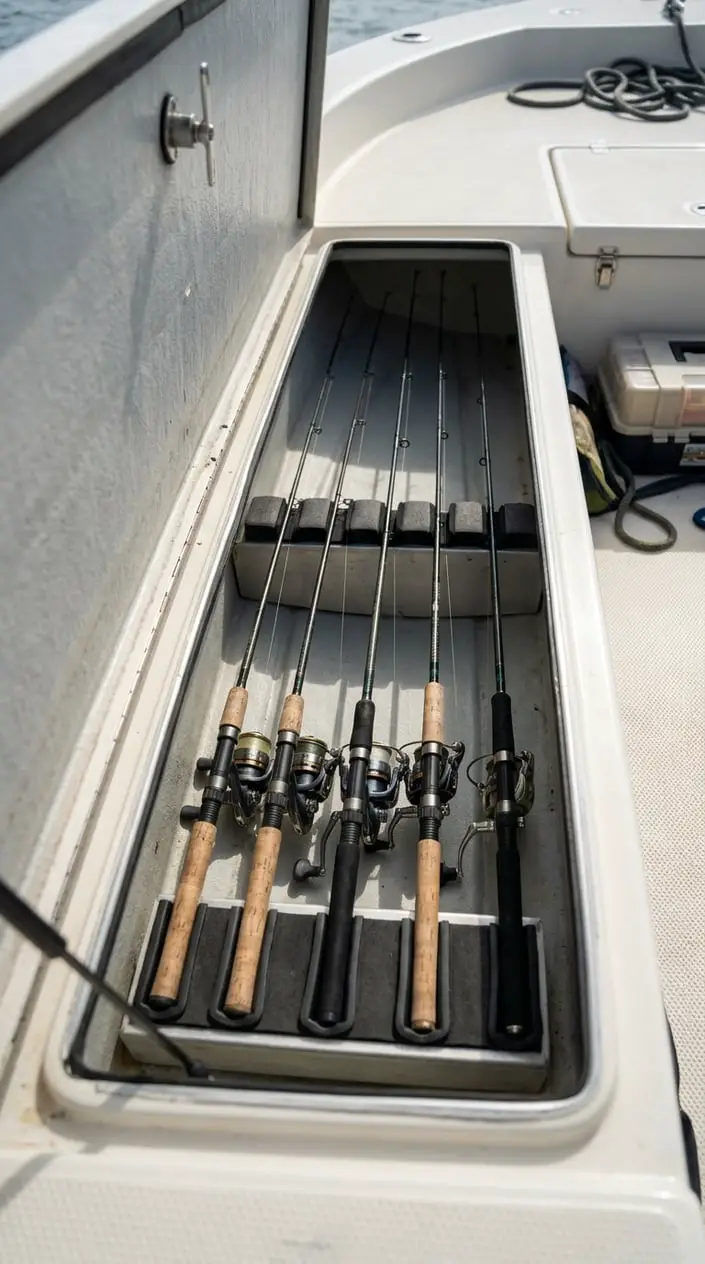
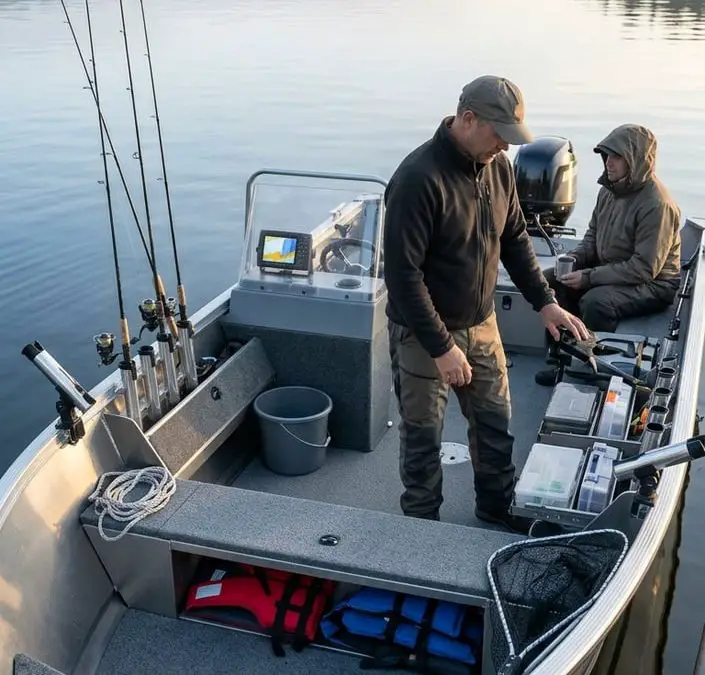
A rod locker with individual vertical holders keeps rods organized, separated, and ready to reach. It also helps protect guides and blanks from the tangles that form when outfits slide together during travel. Measure your longest rods before choosing or modifying a locker, and leave room for reels, butt sections, and rod tips.
Fit each holder so the rod stays upright without pressure on the tip. Soft, non-marking contact points help protect finishes, while straps or retainers keep rods in place when the boat moves. Store similar setups together, such as spinning rods in one group and baitcasting rods in another.
Keep loose hooks covered and check that line cannot catch on hinges or latches. A clear label for each rod type makes it quicker to grab the right setup.
5) A Recirculating, Oxygenated Livewell for Healthy Fish
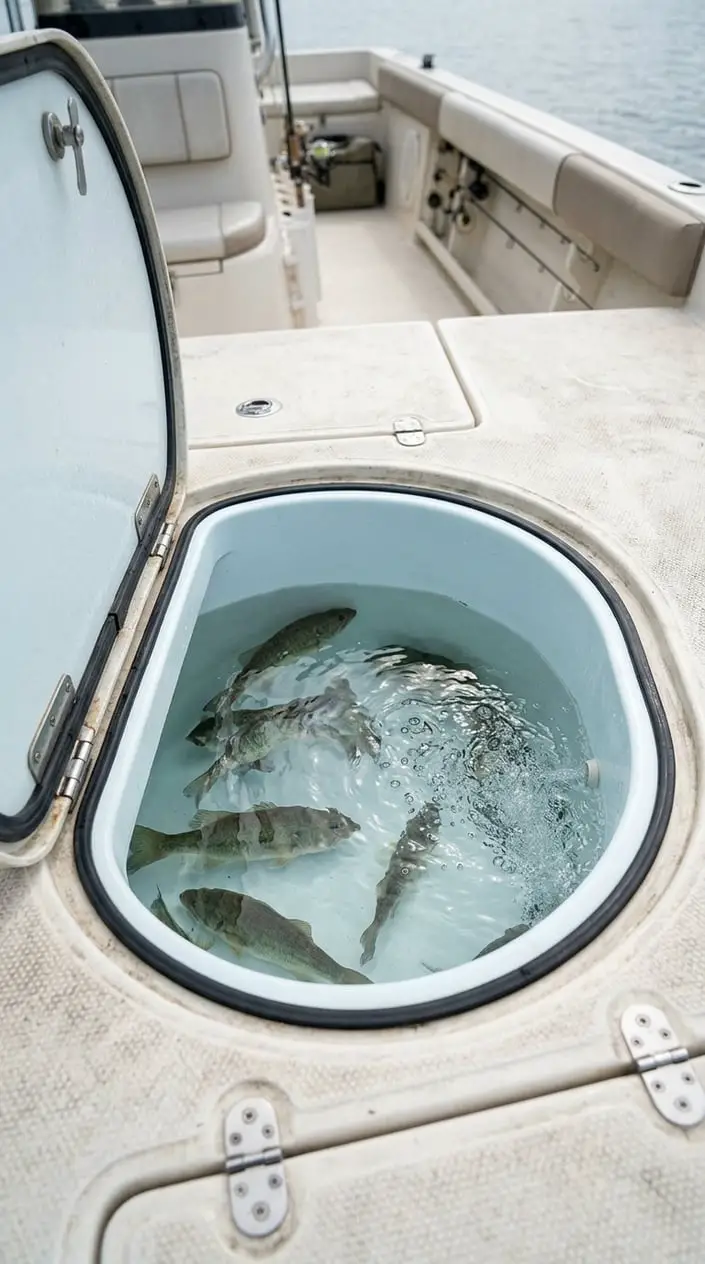
A recirculating livewell with steady aeration supports fish care during a day on the water. The pump moves water through the system, while aeration adds oxygen to help keep the water suitable for holding fish. Choose a well with enough room for the species and number of fish you keep, and learn how its fill, recirculation, and drain controls work before launch.
Keep the livewell clean and check that the pump intake is clear of debris. Use a thermometer to track water temperature, especially on hot days, and follow local rules for keeping or releasing fish. Avoid crowding the well, since fish need space and clean water.
Test the system before a trip by filling it and confirming that water circulates and drains as expected. Carry a backup plan for pump trouble, such as a compatible replacement fuse.
6) A Separate Lithium Trolling-Motor Battery and Onboard Charger
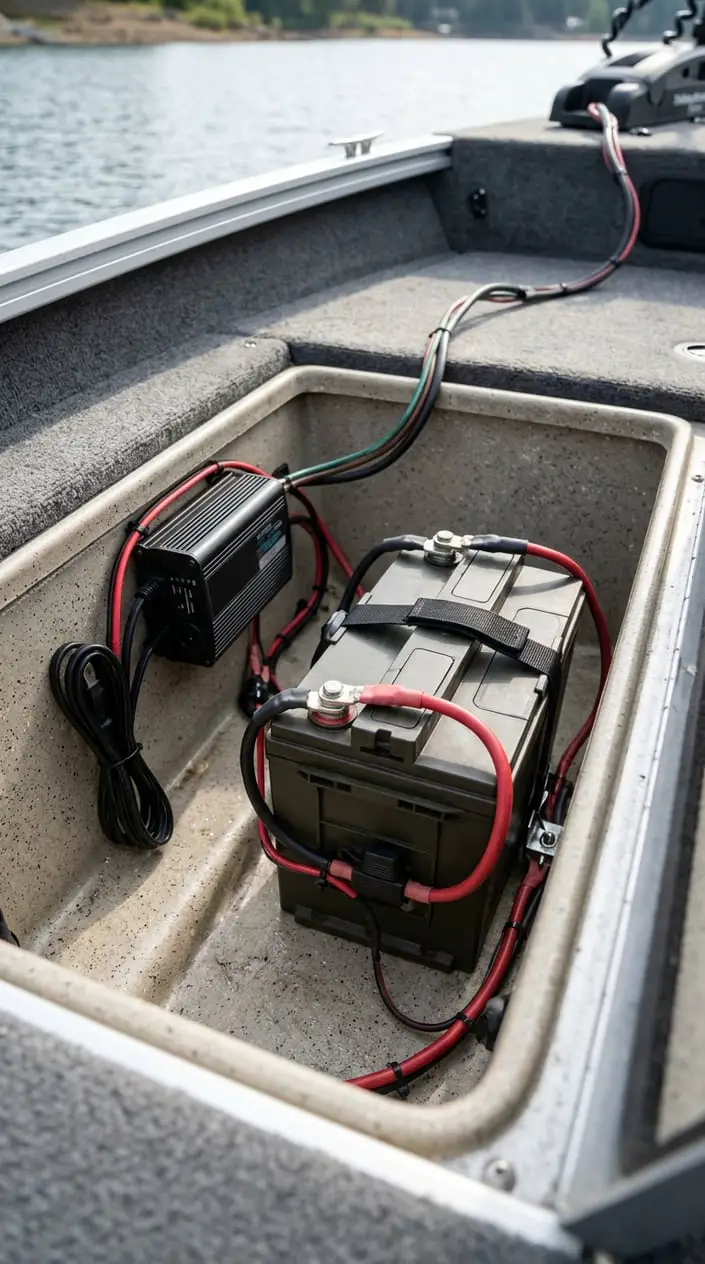
A dedicated lithium battery gives your trolling motor its own power supply, while an onboard charger makes recharging convenient at the dock or home. Separating the trolling-motor circuit from starting and accessory loads helps you plan power use more clearly. Select a battery with the voltage and capacity required by your motor, and confirm the charger is designed for that battery chemistry.
Secure the battery in a ventilated, dry location with suitable hold-downs. Use correctly sized wiring, fuses, and connectors, and follow the motor and battery makers’ installation instructions. Keep terminals protected from moisture and inspect cables for wear.
A battery monitor helps you track charge during a long day, while a charger with the proper output helps restore the battery after use. Leave enough access around the battery for inspection and service.
7) A Humminbird MEGA Live 2 Transducer for Real-Time Fishing
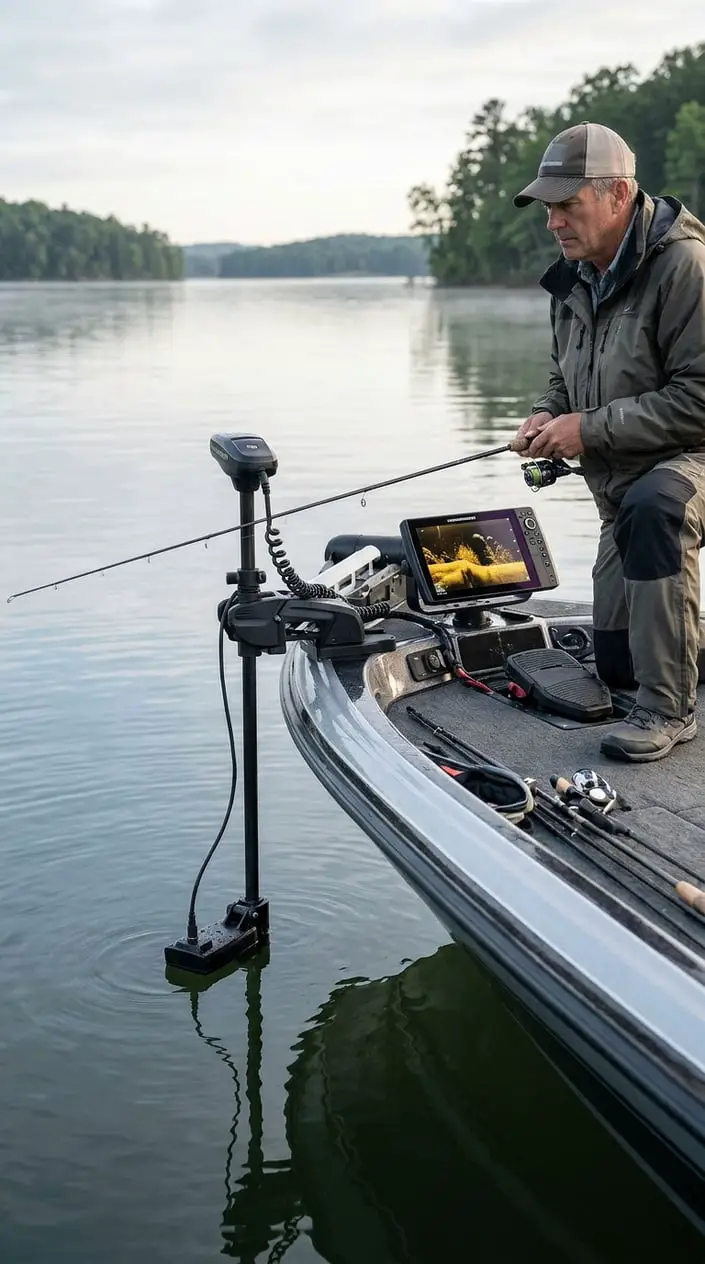
A forward-facing live sonar transducer shows fish and cover in real time, helping you watch how targets respond to your presentation. You can aim the view toward a likely holding area and follow movement on a compatible display. This setup is useful for anglers who want to see the relationship between fish, structure, and their lure while they work a spot.
Mount the transducer on a stable pole or compatible bracket that lets you adjust its direction. Keep the cable routed away from foot traffic and sharp edges, and check that the display and transducer are compatible before purchase. Start with a clear view and a practical range, then adjust sensitivity and contrast to suit water clarity and depth.
Live sonar adds useful visual information, while map and conventional sonar remain helpful for locating structure and navigating.
8) A Cockpit Tackle Station With Tool and Lure Storage
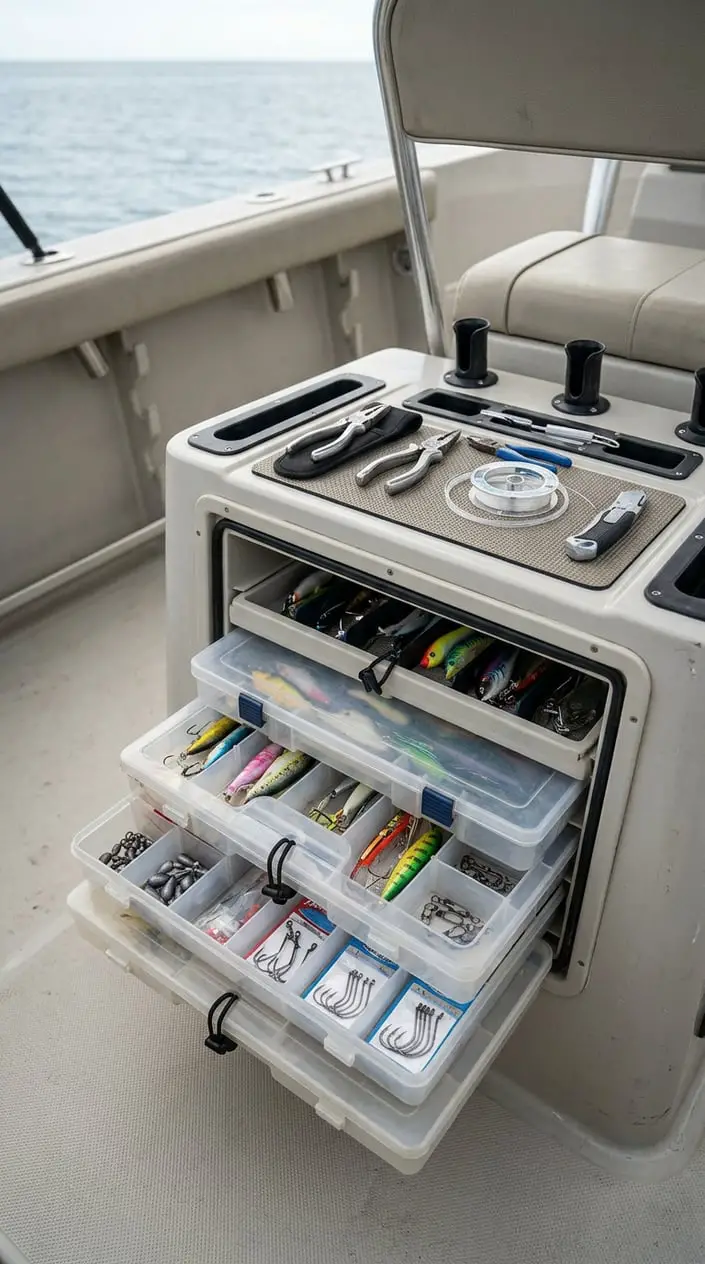
A cockpit tackle station keeps frequently used lures and tools within reach without leaving loose gear across the deck. Choose storage that fits your boat’s layout and the tackle you carry, including trays sized for your common lure styles. A spot for pliers, line cutters, and spare leaders helps keep small essentials easy to find.
Place the station where it stays clear of the steering wheel, pedal, and casting path. Use removable boxes to sort lures by technique or depth, and label the lids so you can identify contents quickly.
Secure the trays before running the boat, and choose closures that stay shut over rough water. Keep sharp hooks covered and return tools to their assigned spots after use. At the end of a trip, remove wet tackle and let compartments dry before storing gear.