
Last Updated on October 28, 2026
A salvage-titled sedan can sell for half the price of an identical clean-title car, and plenty of bidders never notice the difference until the tow truck shows up. Auction listings are written in a shorthand that rewards people who know the code and punishes everyone else. Learning how to read a used car auction listing: title brands, condition reports, fees, and red flags is the single most valuable skill a budget-minded buyer can pick up before registering a bidder number.
This guide breaks down the exact language auctions use, what each sale light and announcement actually means legally, and how to build a total-cost formula so your “bargain” doesn’t become a money pit.
Key Takeaways
- Title brands like salvage, rebuilt, flood, and Not Actual Miles must be disclosed at sale, undisclosed brands make a title non-negotiable and open to arbitration.[1][2]
- Sale lights (green, yellow, red, blue) and announcement fields carry legal weight; disclosures buried only in free-text comments may not protect you.[3]
- Title delivery timing matters: “Title Present” vehicles require a title within three business days, while “Title Absent” vehicles can take up to 30 days.[3]
- Arbitration windows are short, some locations require claims by 5 p.m. on sale day, so review condition reports immediately.[4][5]
- A realistic bid must include buyer fees, transport, repair estimates, inspection costs, and title work, not just the hammer price.
Decoding Title Brands and Disclosures Before You Bid
Every auction operates under rules modeled on the National Auto Auction Association (NAAA) Arbitration Policy, which requires sellers to announce title brands and liens at the time of sale. If a brand like salvage, rebuilt, flood, theft recovery, or Not Actual Miles isn’t disclosed, the title is considered non-negotiable, and that gives buyers grounds for arbitration.[1][6][7] This is the backbone of how to read a used car auction listing: title brands, condition reports, fees, and red flags, the brand disclosure is not marketing copy, it’s a contractual representation.
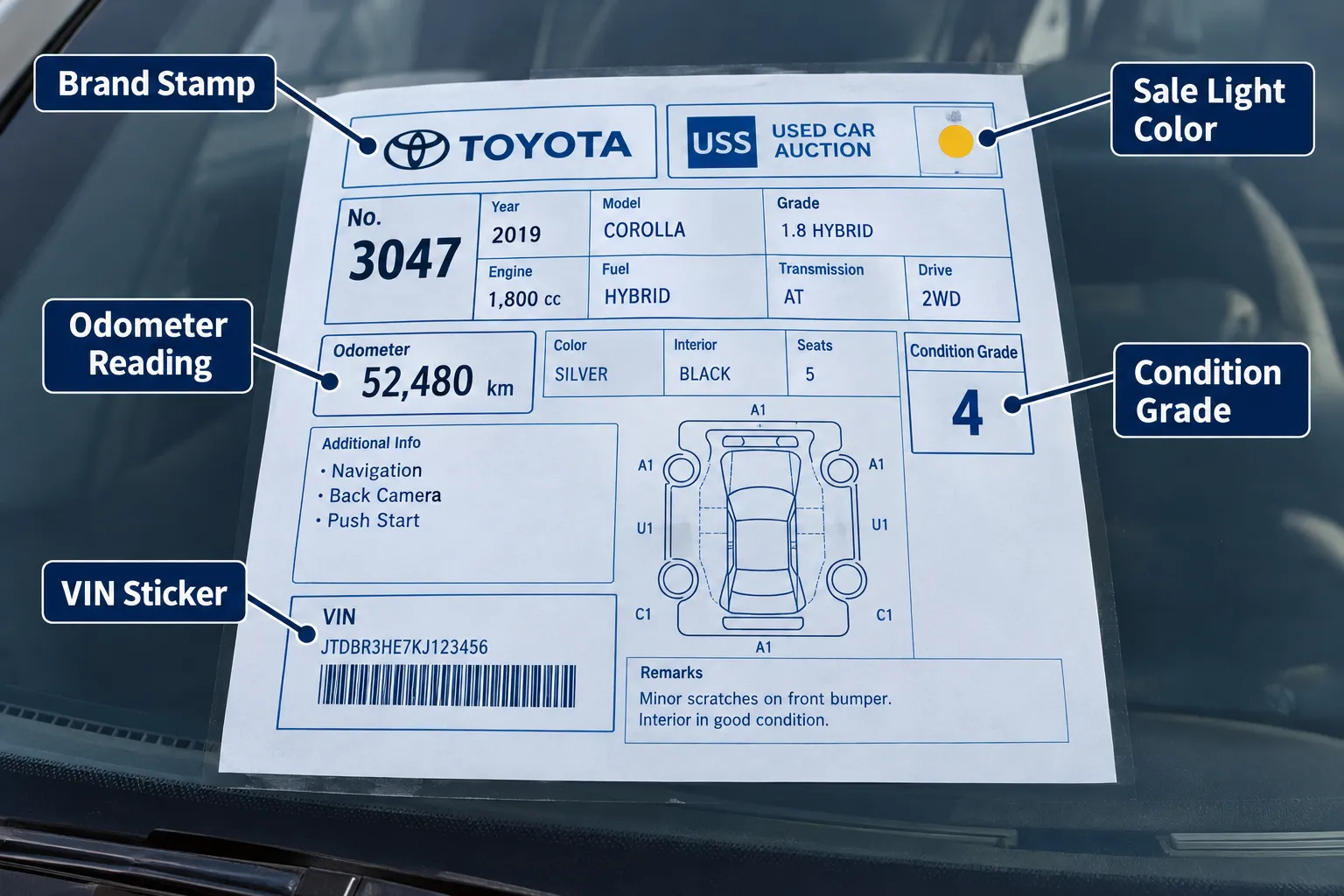
Here’s what the common brands actually mean for resale value, based on current industry data:
| Title Brand | What Triggered It | Typical Value vs. Clean Title |
|---|---|---|
| Salvage | Insurer declared total loss (often 75-80% of pre-loss value in repair costs) | 50-70% |
| Rebuilt | Former salvage vehicle, repaired and inspected, legally drivable | 30-50% |
| Flood/Water Damage | Submersion or water intrusion documented | 60-80% |
| Not Actual Miles | Odometer reading is unreliable or disputed | Varies, always a red flag |
If a listing shows a clean title but the price sits in salvage territory, treat that gap as a warning sign worth investigating through independent title and DMV records.[1] Grey market vehicles, stolen-recovery units, and liens are also explicit disclosure categories, missing any of these is itself grounds to challenge the sale.[1][2][8]
It’s worth noting that current-year DMV administrative fees in some states, like California, are not treated as encumbrances for arbitration purposes, so don’t mistake a minor fee line for a title problem.[1]
If you’re cross-shopping auction cars against retail listings, it also helps to understand other costs when buying a used car so you know which expenses are standard and which are auction-specific.
Reading Condition Reports, Sale Lights, and Run-and-Drive Claims
Condition reports and grading tools, like the Autograde scoring system used by major auctions, are treated as binding representations of a vehicle’s state, not casual notes. Buyers are expected to rely on them, and sellers are bound by the arbitration policies tied to that data.[7][8]
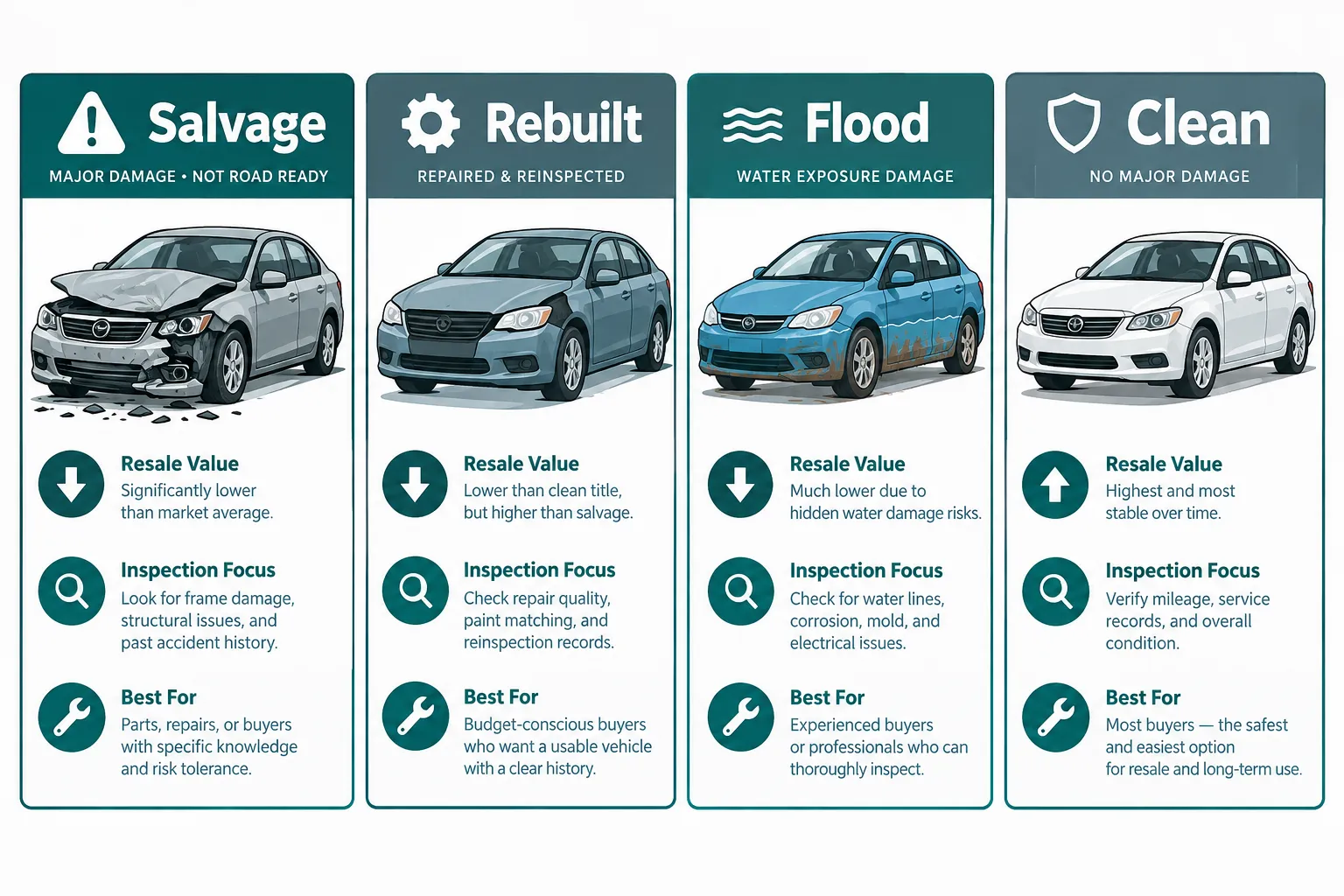
The sale-light system is the fastest visual cue in the lane or online listing:
- Green light, normal “ride and drive,” meaning the car started, drove, and stopped under its own power.
- Yellow light, limited guarantee, often covering only major mechanical components.
- Red light, sold “as-is,” with almost no mechanical recourse.
- Blue light, no title present at time of sale.[3][8]
If a seller skips the blue light or fails to properly announce a title-absent status, that’s a procedural failure buyers can use in arbitration under local title rules.[3]
A critical nuance in updated Timed Sales rules: disclosures like “AS-IS,” True Mileage Unknown (TRA), or structural damage indications only count fully when they appear in the official announcement fields, not when they’re mentioned only in free-text “Seller Comments.”[3] If you see a major issue casually dropped into a comment box rather than flagged in the structured disclosure section, treat the listing as higher risk. That mismatch is one of the clearest red flags in how to read a used car auction listing: title brands, condition reports, fees, and red flags, because it suggests either carelessness or an attempt to soften a serious problem.
Arbitration rights are also narrower than many bidders assume. Under the Limited Arbitration Rights Policy, claims are generally confined to odometer problems, title branding, True Miles Unknown issues, certain structural defects, and specific seller misrepresentations.[8] Some locations only allow one mechanical arbitration per vehicle and require electronic claims the same day or next business day after sale.[4] Low-priced “as-is” vehicles frequently restrict arbitration to just odometer and title issues, meaning a cheap listing with hidden mechanical trouble may offer almost no recourse.[4][5]
For buyers considering a salvage or rebuilt vehicle as a project, it’s worth comparing against the complete guide to buying used cars for a broader inspection checklist that applies beyond the auction lane.
Calculating Your Real Bid: Fees, Transport, Repairs, and Red Flags
The hammer price is rarely the real cost. A full read of how to read a used car auction listing: title brands, condition reports, fees, and red flags has to end with math, not just vocabulary. Use this formula before you ever raise a paddle or click “bid”:
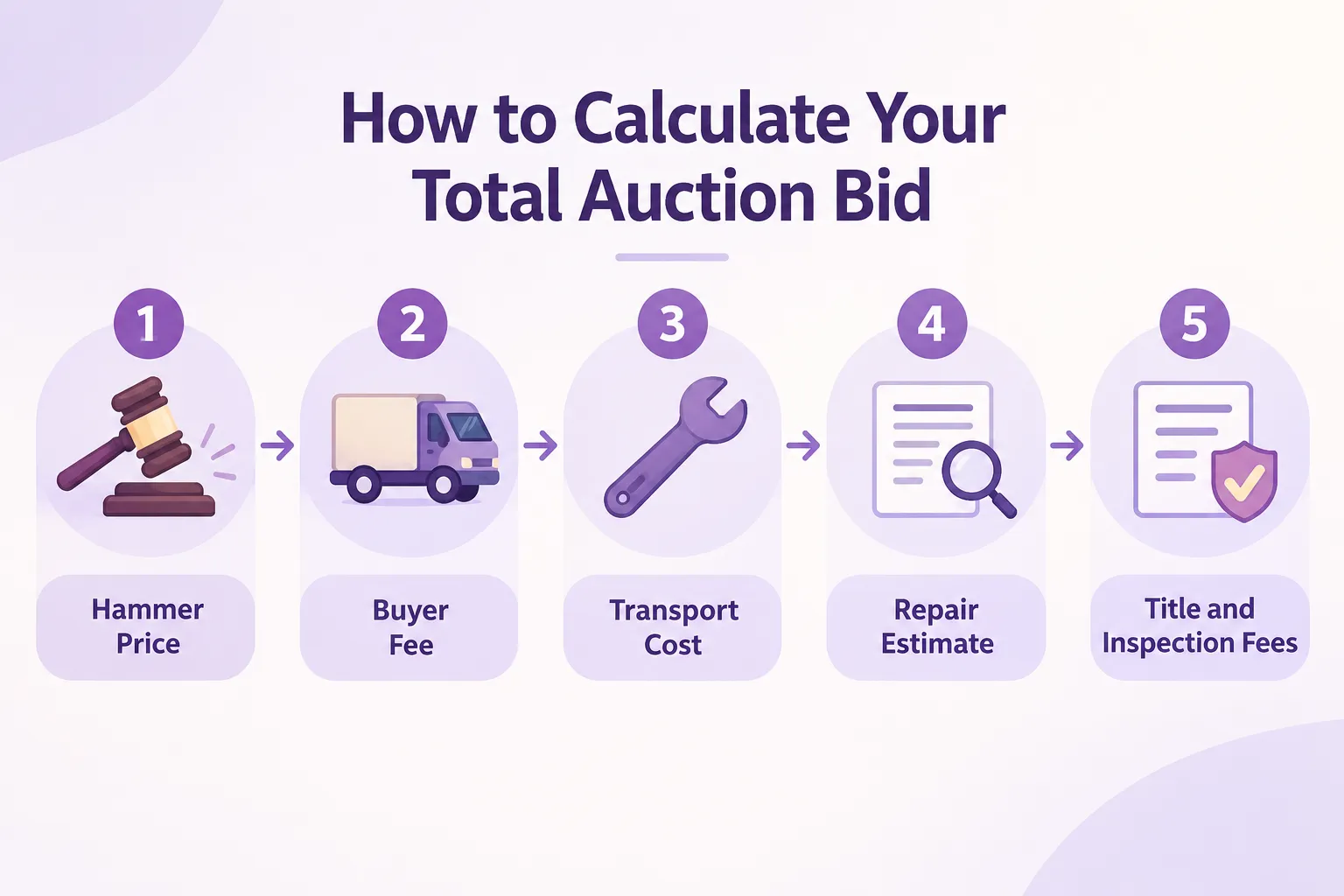
Total Cost = Hammer Price + Buyer Fee + Transport + Repair Estimate + Inspection Fee + Title/Registration Work
Break it down line by line:
- Buyer fee, Auction houses charge a percentage or tiered flat fee on top of the hammer price. Always check the fee schedule before bidding, since it can add hundreds of dollars.
- Transport, Hauling the vehicle from the auction lot to your location, often priced per mile plus a base fee.
- Repair estimate, Use the condition report grade and any disclosed mechanical issues to build a conservative repair budget, especially for yellow- or red-light vehicles.
- Inspection fee, A pre-purchase or post-purchase independent inspection is cheap insurance, particularly on rebuilt or flood-title cars.
- Title and registration work, Branded titles sometimes require extra state inspections, re-certifications, or delayed processing, which can mean added fees and lost time.
Pad your repair line generously on any vehicle carrying a salvage, rebuilt, or flood brand, since those cars historically trade well below clean-title comparables and often carry hidden issues beyond what the condition report captures.[1] Title delivery timing also factors into your real cost: “Title Present” vehicles should arrive within three business days, but “Title Attached” or “Title Absent” vehicles can take up to 30 calendar days, during which your money is tied up and you can’t legally resell or register the car.[3]
Watch for these specific red flags as you scan a listing:
- Clean title claim at a price that matches typical salvage or rebuilt ranges
- Major damage or brand language appearing only in free-text comments, not official fields
- No sale light shown, or a blue light with no title-absent announcement
- Vague or missing odometer disclosure
- Extremely short arbitration windows paired with a complex mechanical history
If you’re weighing an auction SUV against a retail purchase, this comparison matters even more, see our guide on how to choose a used SUV for ownership cost factors that apply whether the vehicle came from a dealer lot or an auction block. And if you’re specifically eyeing a reliable daily driver rather than a project car, cross-reference the most reliable used cars to buy in 2026 before you commit auction funds to something with a branded title.
Recent arbitration guides from major auctions, updated through 2026, emphasize strict timing: some in-lane claims must be filed by 5 p.m. on sale day, and once a title claim is submitted, the seller often has only until the end of the next business day to respond.[5] That means your window to catch a mistake is measured in hours, not weeks, read the listing, condition report, and sale light carefully before the gavel falls, not after.
Conclusion
Auction listings reward preparation. Before you bid, confirm the title brand matches the price, check the sale light and condition report against the official announcement fields (not just the comments), and calculate your total cost using the full formula, hammer price plus buyer fee, transport, repairs, inspection, and title work. Treat any mismatch between disclosed condition and asking price as a reason to walk away or dig deeper with independent title records. Mastering how to read a used car auction listing: title brands, condition reports, fees, and red flags turns an intimidating process into a calculated purchase, and it’s the difference between a genuine deal and an expensive lesson. Start your next auction search armed with this checklist, and don’t bid until every line of the listing makes sense.
References
- Naaa Arbitration Policy. site.manheim.com.
- Commercial Vehicles and Equipment Arbitration Policy. site.manheim.com.
- Arbitration. site.manheim.com.
- Additional Arbitration Policy for Manheim Maryland and Manheim Tallahassee. site.manheim.com.
- Manheim Arbitration Guides. site.manheim.com.
- Naaa Arbitration Policy. site.manheim.com.
- Manheim Terms and Conditions. site.manheim.com.
- Limited Arbitration Rights Policy. site.manheim.com.
used car auctions, title brands, salvage title, rebuilt title, flood title, condition report, auction fees, odometer disclosure, car buying guide, arbitration policy, vehicle history, auction red flags