Last Updated on August 25, 2026
You can make your houseboat feel warm and lived-in without losing precious space. This article shows practical ideas that help you create cozy seating, smart storage, soft lighting, and tactile textiles so your floating home feels calm and inviting.
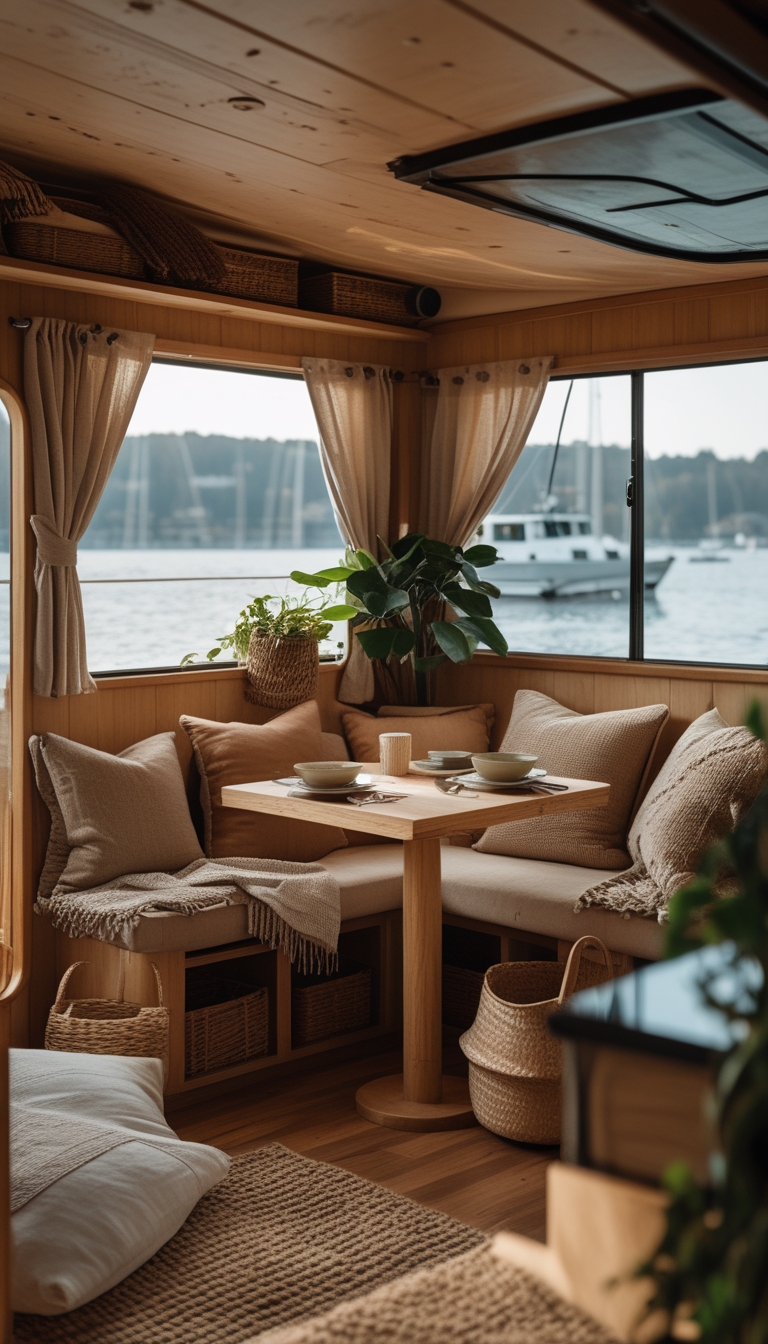
Use these tips to shape a comfortable, stylish interior that fits your layout and daily needs. You’ll find easy, space-smart ways to add warmth, texture, and function so every corner feels welcoming.
1) Layered wool and faux-shearling throws
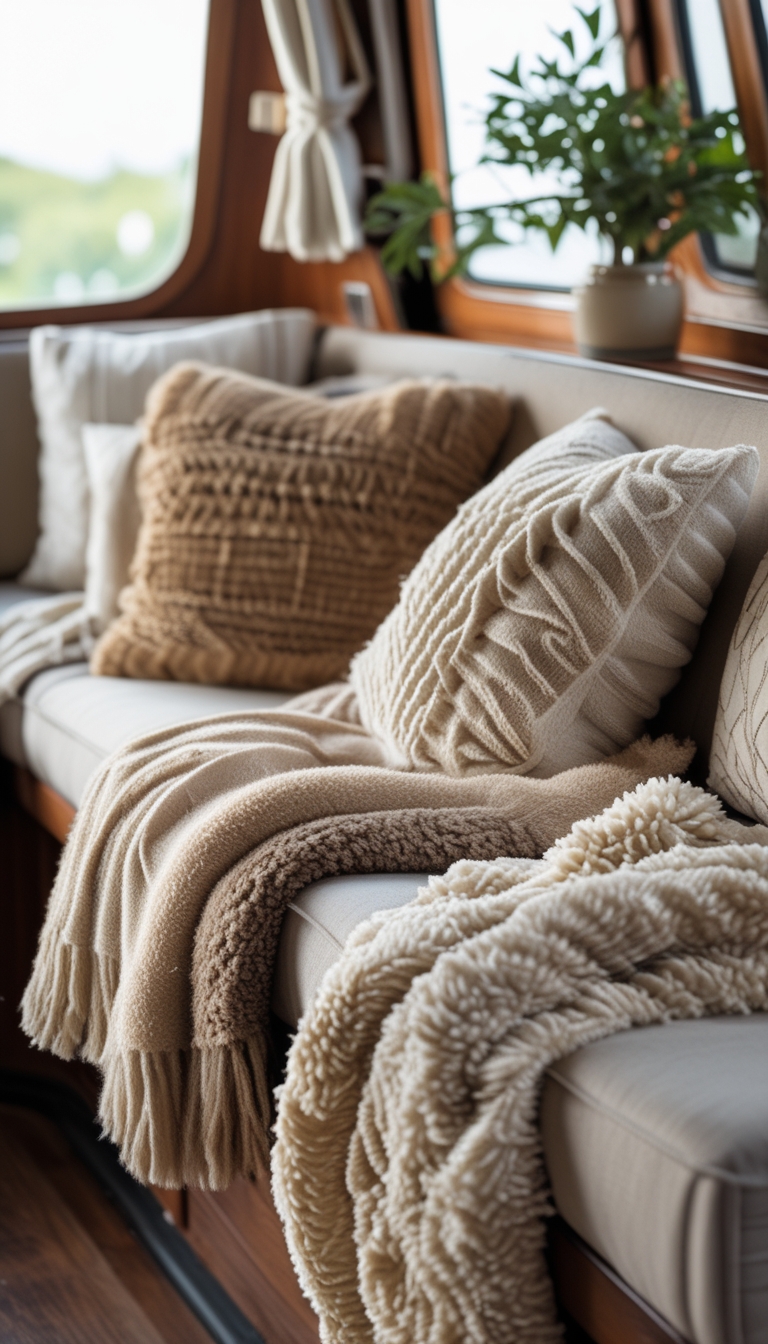
Wool and faux-shearling throws add instant warmth to your boat’s small spaces. Drape them over benches or beds to soften hard edges and make seating feel more inviting.
Mix textures and weights for depth. Use a heavier wool blanket under a soft faux-shearling throw so you get both insulation and a plush top layer that looks cozy.
Pick colors that match your cabin palette. Neutral tones hide wear and salt air better, while a muted accent color can brighten a corner without feeling loud.
PRO TIP
Fold throws in thirds and stack them at the foot of a bed or in a basket. That keeps them tidy and easy to grab on chilly nights.
2) Built-in bench seating with hidden storage
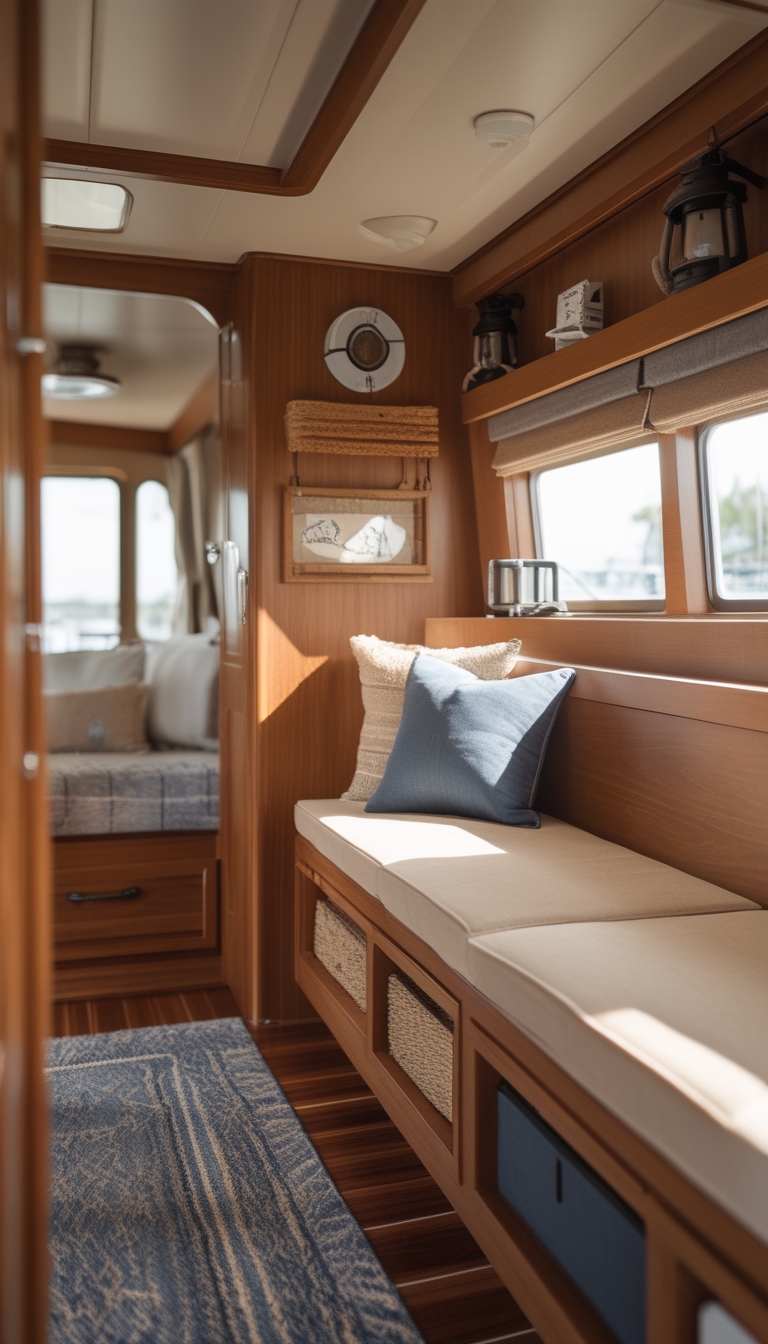
Built-in bench seating fits tight houseboat spaces and gives you both a seat and a storage spot. It keeps clutter out of sight while making a cozy nook for reading or dining.
Choose flip-top lids or drawers so you can access blankets, life jackets, or kitchen items easily. A shallow depth works well along narrow corridors, while a deeper bench suits dining areas.
Use cushions with removable covers for easy cleaning and quick style changes. Add a low back or pillows to make the bench more comfortable without taking up much room.
PRO TIP
Paint the bench the same color as the wall to make the space feel larger. Add discreet handles or push-latches for a cleaner look.
3) Warm-toned oak plywood paneling
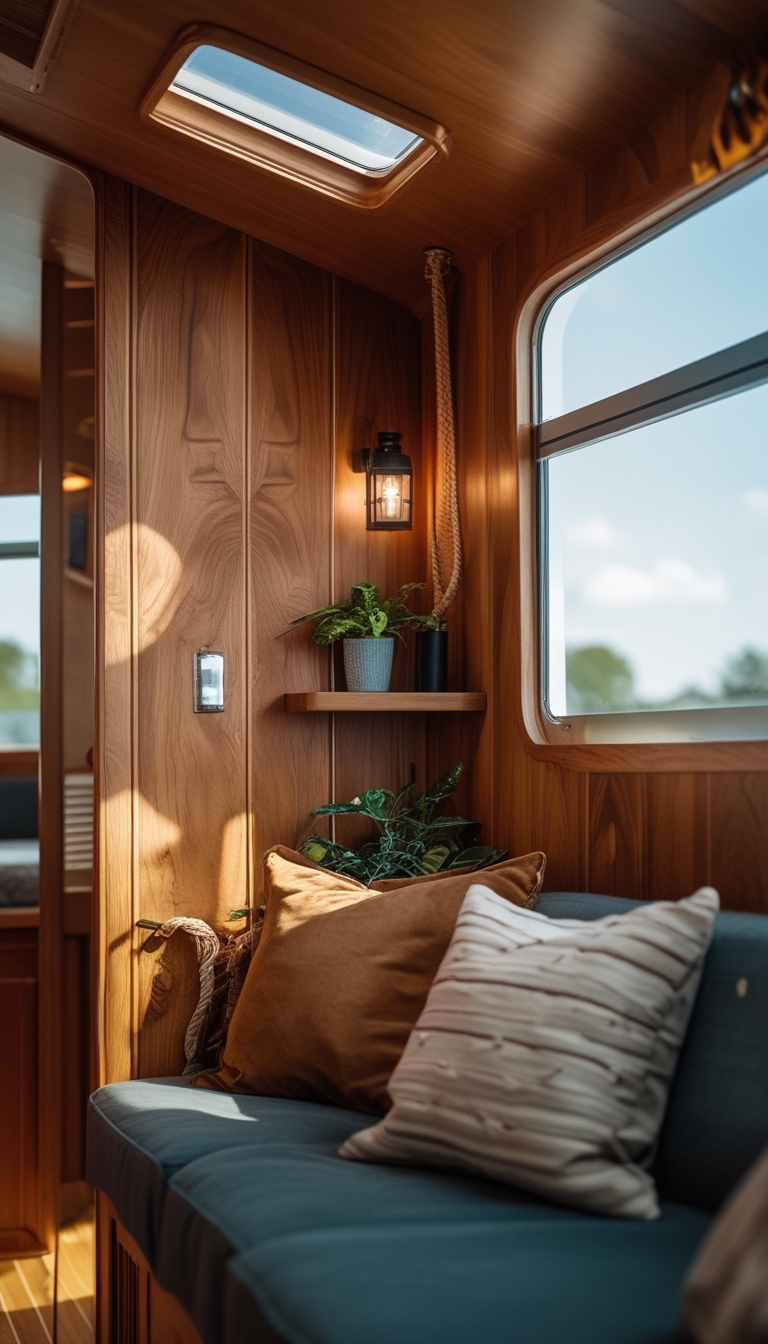
Warm-toned oak plywood brings cozy, lived-in warmth to a houseboat without feeling heavy. You can line a galley or sleeping nook with it to soften the hull’s metal or fiberglass surfaces.
The grain adds visual interest while staying simple and modern. Light finishes keep the space bright, while slightly deeper stains make small areas feel snug.
Plywood is affordable and stable for a moving home. It accepts paint, stain, and clear finishes so you can customize the look as your style or light changes.
PRO TIP
Install panels horizontally to make low ceilings feel wider. Seal edges and use marine-grade finish for moisture resistance and easier cleaning.
4) Soft amber LED dimmable cabin lighting
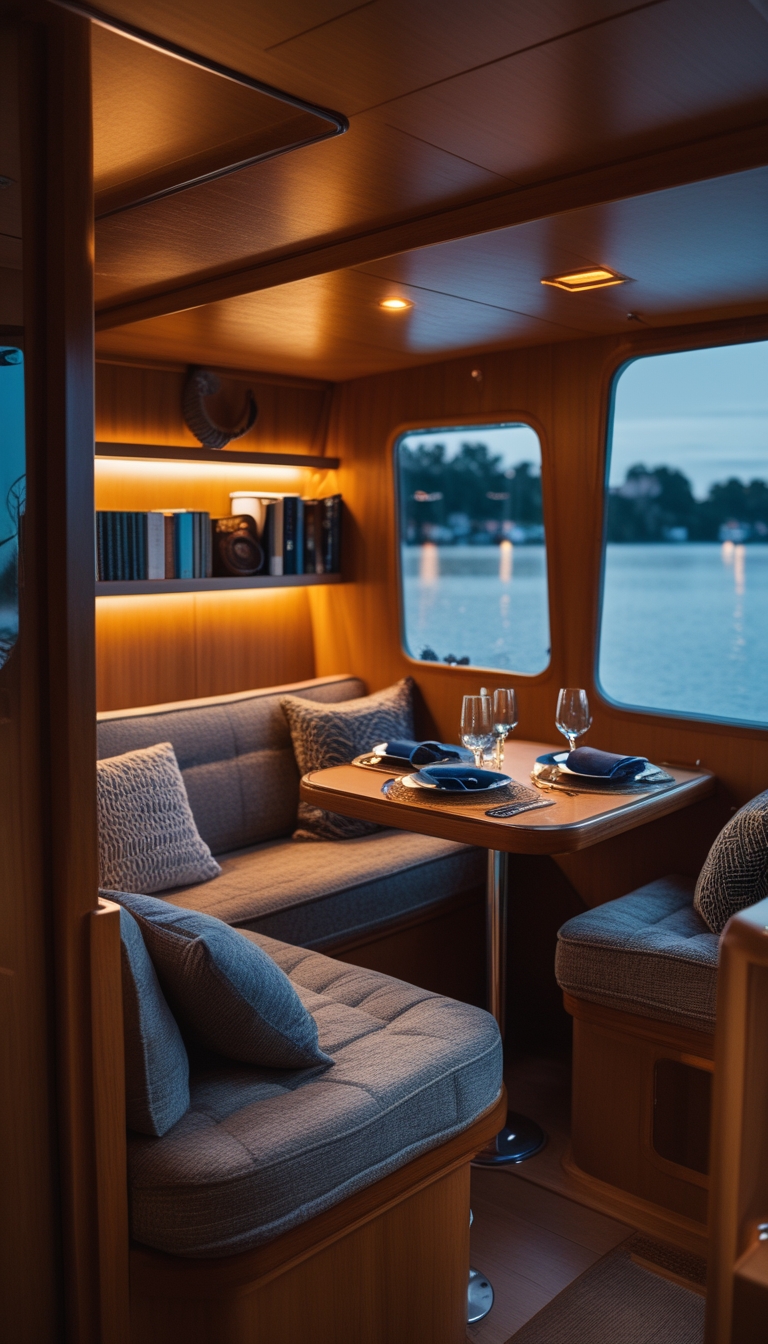
Soft amber LEDs give your houseboat a warm, calm glow that feels cozy at night. You can use dimmable fixtures to set brightness for reading, dinner, or quiet conversation.
Choose LED bulbs or strips rated for 12V systems if you run low-voltage power. LEDs use little energy and stay cool, so they work well in tight cabin spaces and near fabrics.
Mix overhead dimmers with small reading lights and puck lights to layer light without harsh shadows. Warm amber (around 2200K–2700K) keeps skin tones and wood finishes looking natural.
PRO TIP
Install dimmers that let you program low-night levels. That helps preserve night vision and keeps the space restful.
5) Plush window seat with memory foam cushion
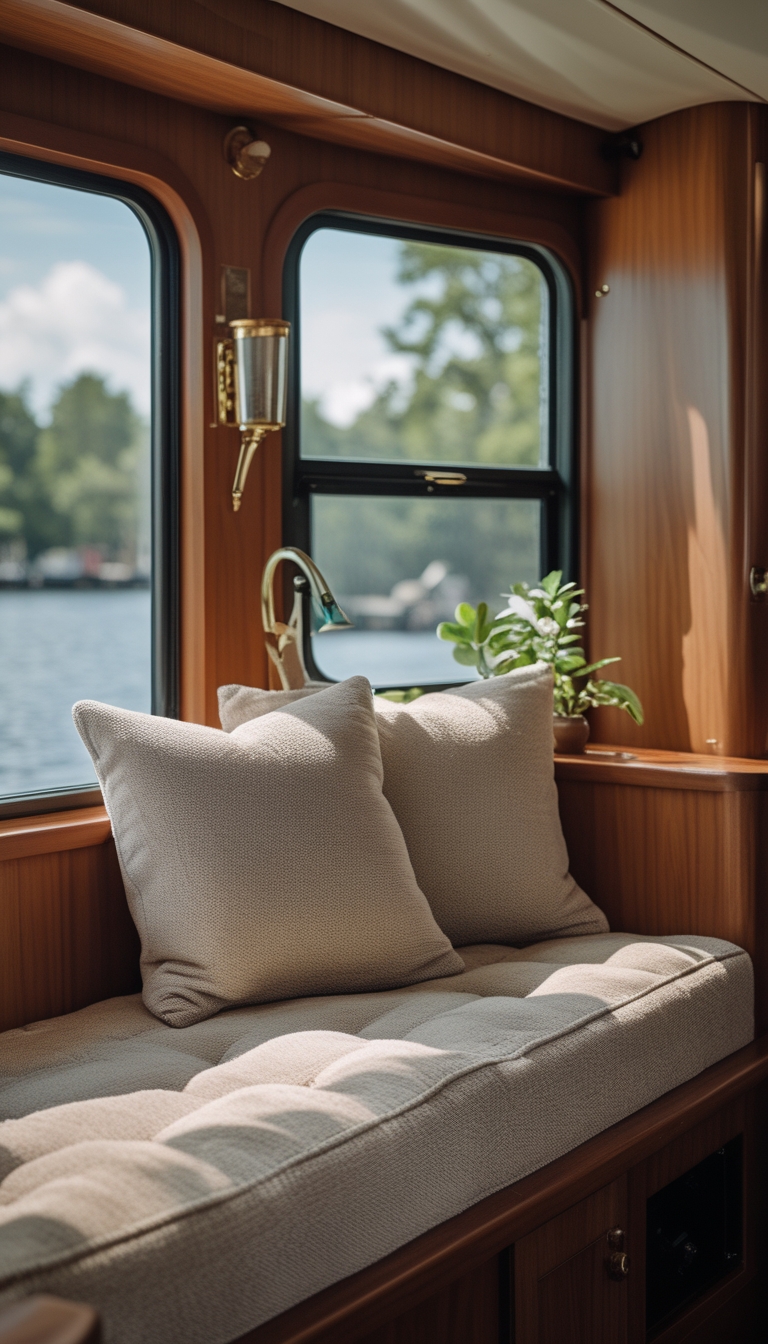
A plush window seat brightens a houseboat by making a comfy spot to relax and watch the water. You can use a memory foam cushion for pressure relief and lasting shape, wrapped in a soft, durable cover that holds up to daily use.
Add layered throw pillows for back support and a cozy look. Pick fabrics that resist moisture and clean easily, since boat interiors face humidity and splashes.
Place a low shelf or slim storage under the seat for books, blankets, or life vests. This keeps the area tidy and makes the most of limited space.
PRO TIP
Use a removable, washable cover and a thin waterproof liner under the foam. That protects the cushion and makes upkeep simple.
6) Compact Murphy bed with integrated shelving
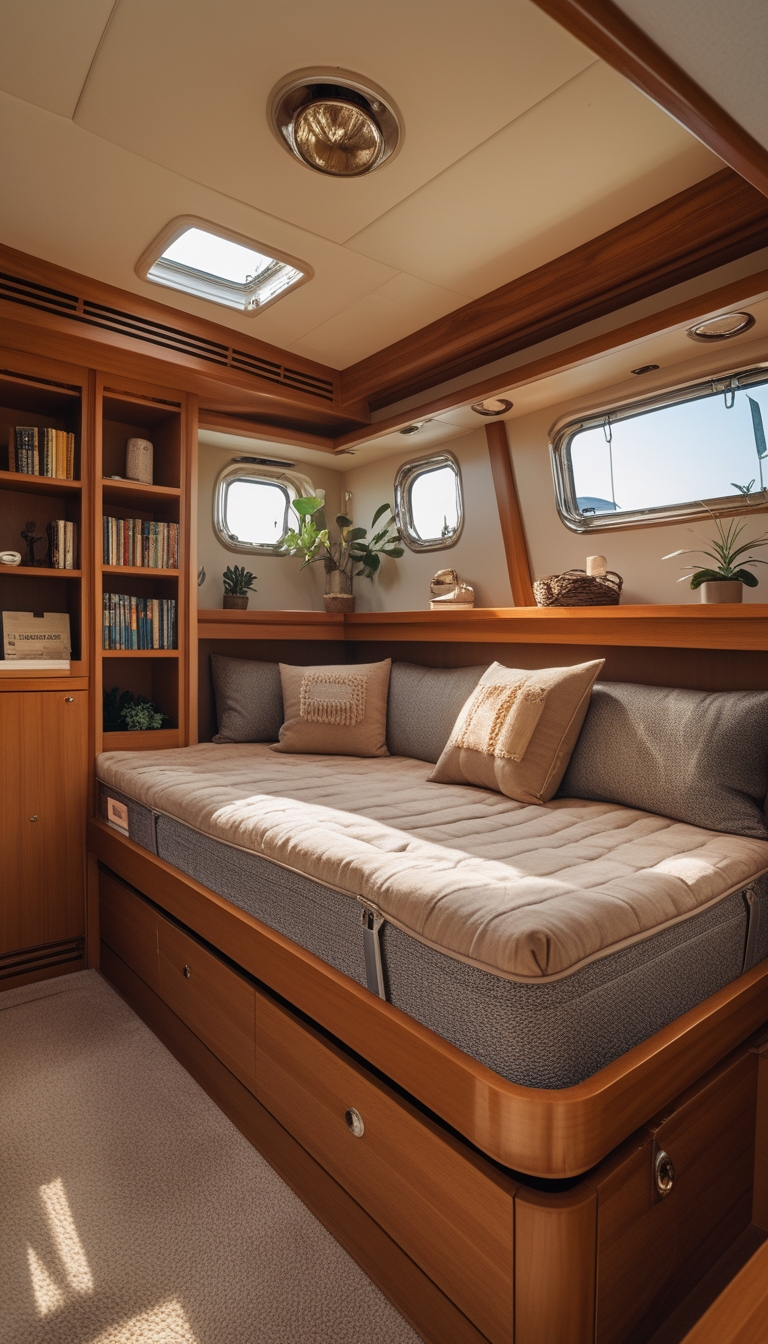
A compact Murphy bed keeps your houseboat flexible. You pull it down at night and fold it back up during the day to free floor space for dining or relaxing.
Integrated shelving around the bed gives you easy storage for books, plants, and small decor. Use the shelves for essentials like reading lights and a glass of water so you don’t need a bedside table.
Choose shallow shelves and low-profile cabinets to avoid a bulky look in tight corridors. Light wood or matte paint helps the unit blend with cabin walls and keeps the space feeling warm.
PRO TIP
Mount a simple latch or soft-close mechanism so the bed stays secure in rough water.
7) Vintage brass wall sconces
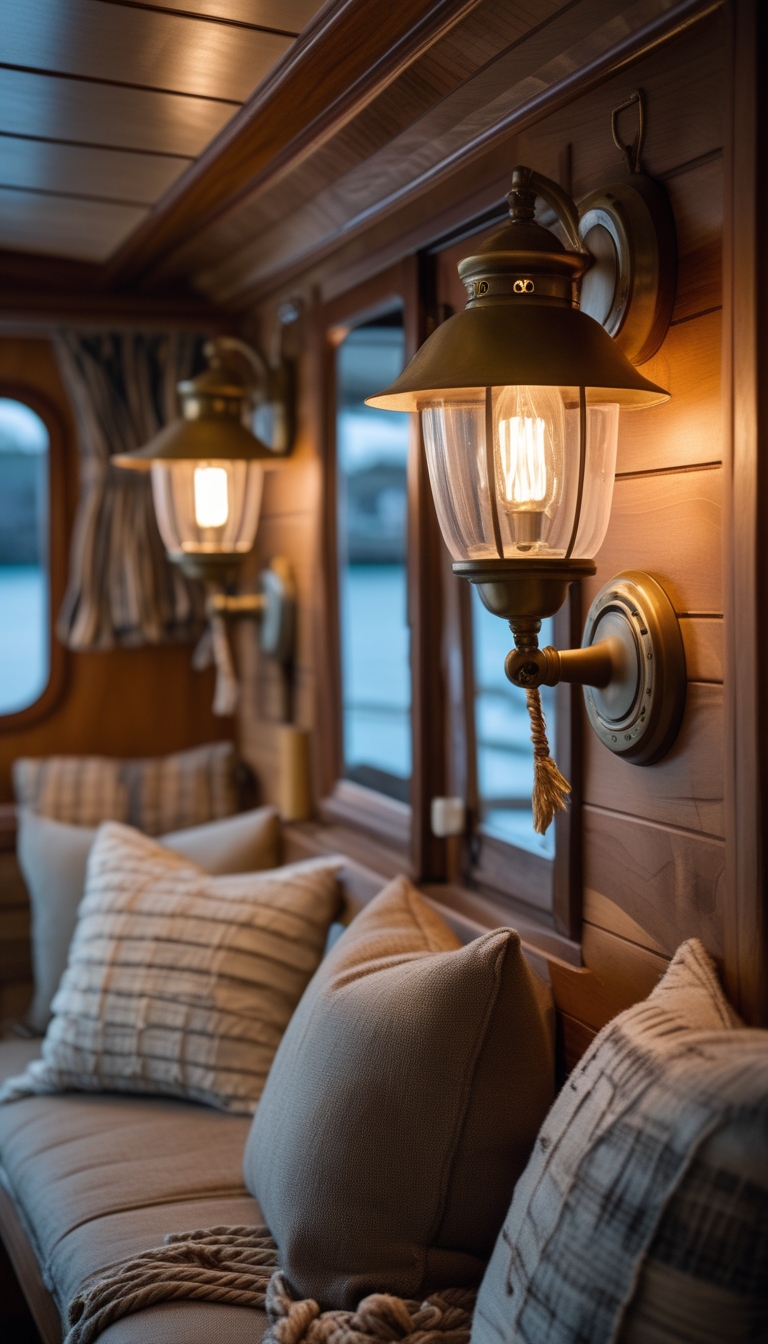
Vintage brass wall sconces bring warm light and old-world charm to your houseboat. They save floor space and give you focused light for reading or relaxing.
Place sconces beside a bed or along a narrow hallway to create pockets of glow. The brass finish reflects light softly, which helps make small rooms feel cozy without harsh glare.
Choose simple globe or dome styles for a clean look, or pick ornate designs for a more traditional vibe. Mix finishes sparingly so the brass stands out without clashing with other metals.
PRO TIP
Mount sconces at eye level—about 60–66 inches from the floor—for comfortable lighting. Use dimmable bulbs so you can shift from bright task light to soft ambient mood.
8) Textured jute and wool area rug
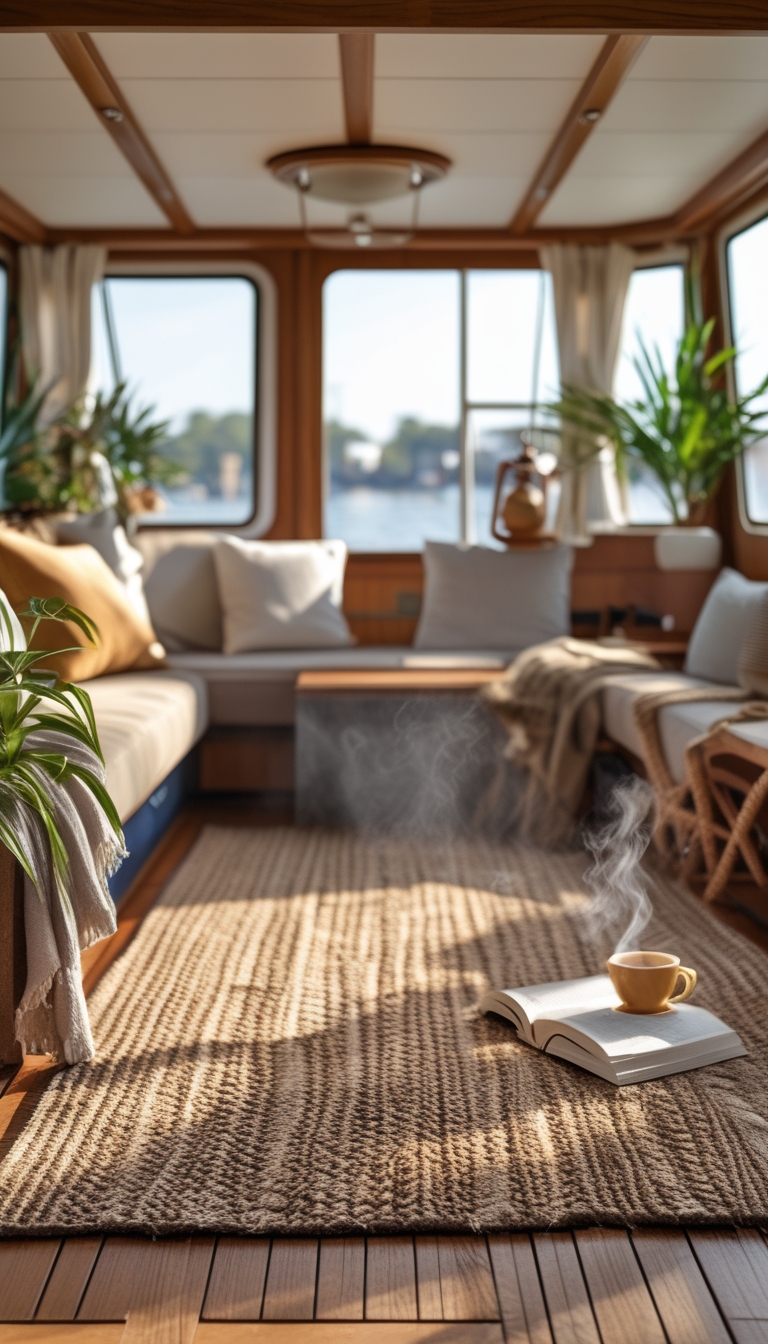
A textured jute and wool rug adds warmth underfoot and a natural look to your houseboat. It balances the cool, hard surfaces you often find on boats and makes seating areas feel cozier.
Choose a blend with more wool if you want softness, or more jute for a rugged, coastal vibe. Handwoven pieces show slight variations that give your space character without shouting for attention.
Place the rug under a coffee table or at the foot of a bed to anchor the layout. You can layer a softer rug on top for comfort where you need it most.
PRO TIP
Vacuum gently and spot-clean spills quickly to protect both fibers. Rotate the rug occasionally to keep wear even and extend its life.
9) Galley-style mini kitchen with butcher block counters
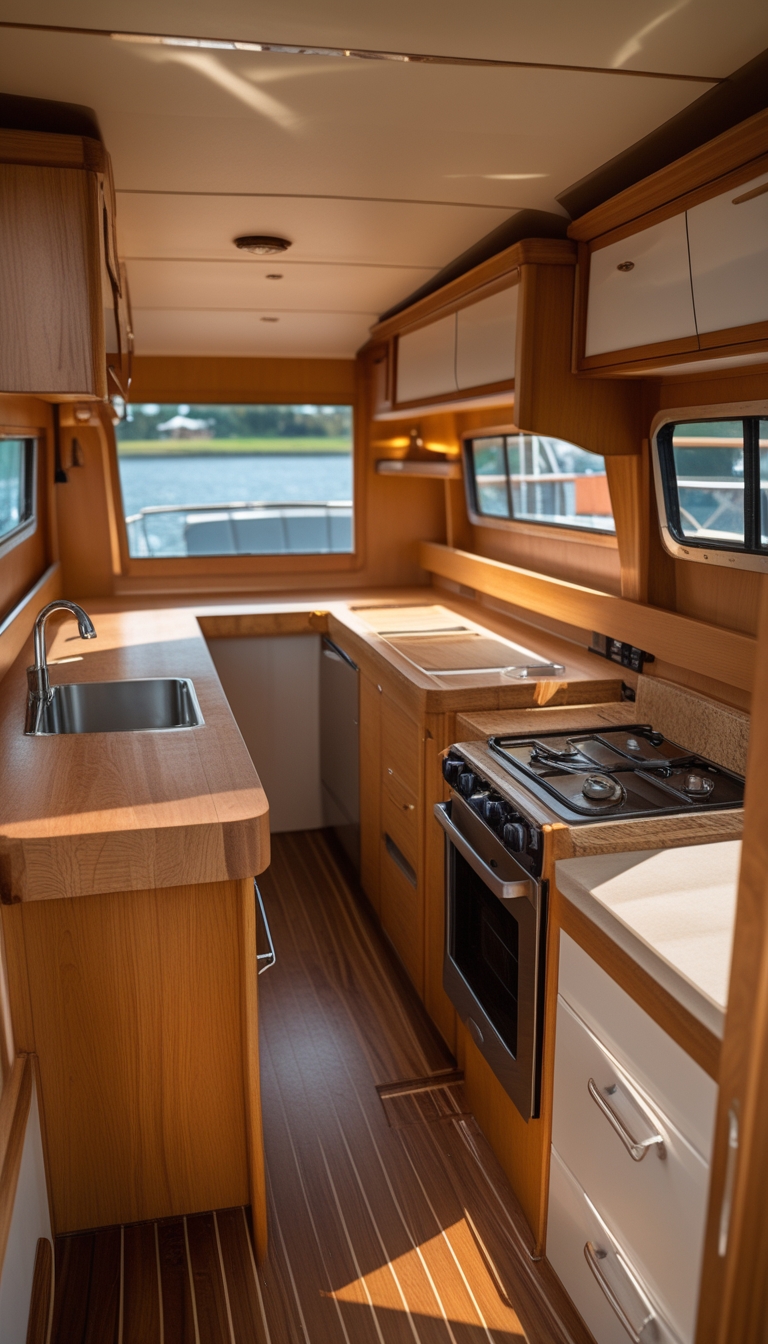
A galley-style mini kitchen fits well on a houseboat because it makes efficient use of narrow space. You can line counters on one or both sides for clear work zones and easy movement while cooking.
Butcher block counters add warmth and a natural feel that plays well with wood interiors. They give you a solid prep surface and a cozy look without overwhelming the small galley.
Keep storage shallow and vertical to avoid clutter. Open shelves, magnetic knife strips, and under-counter drawers help you access items quickly.
PRO TIP
Seal the butcher block with marine-grade oil or varnish to protect it from moisture and salt. This keeps the wood durable and easy to clean while preserving its warm color.
10) Space-saving folding dining table
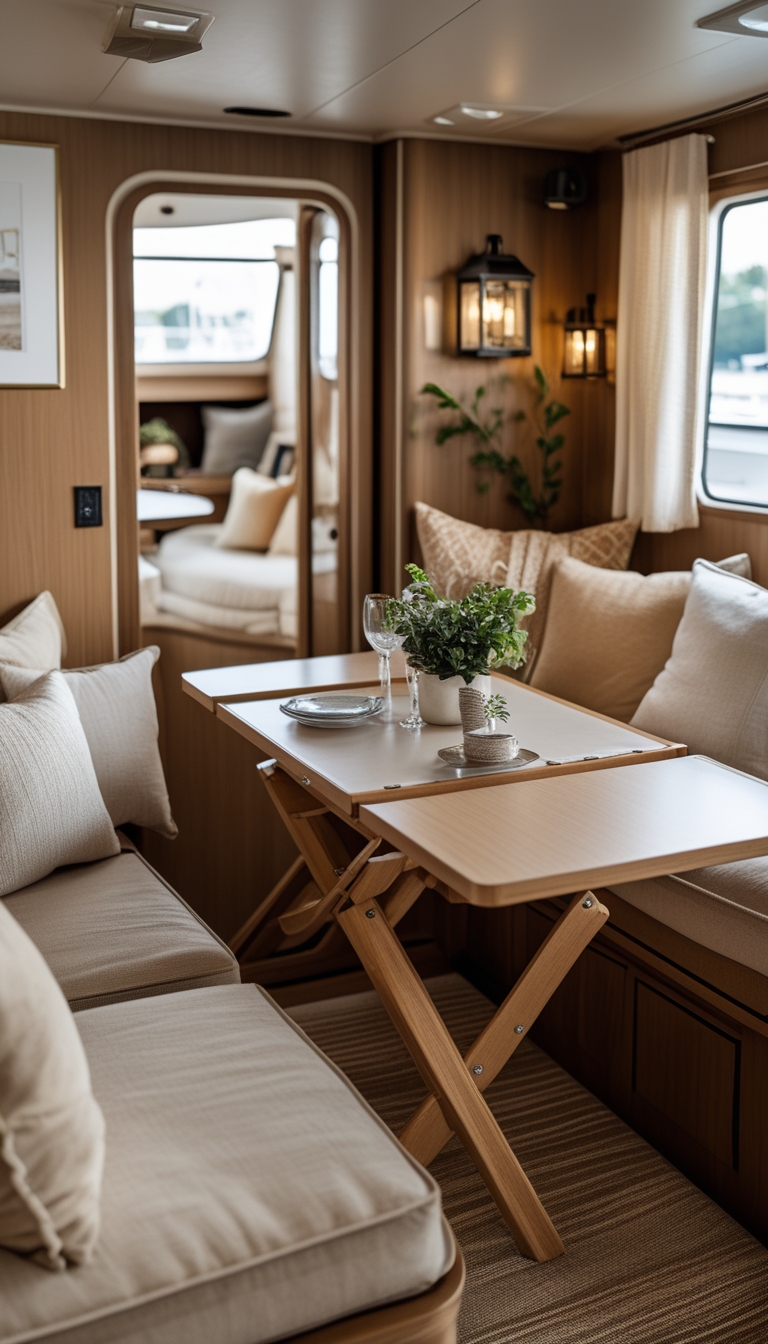
A folding dining table lets you eat, work, and entertain without losing floor space. You can fold it down when not in use and open it up for meals or projects.
Choose a wall-mounted drop-leaf or a folding table on hinges to free up walkways. Many designs convert from coffee table to full dining height, so one piece does multiple jobs.
Pick materials that stand up to moisture and movement on a boat, like treated wood or marine-grade laminate. Fast, simple latches and sturdy hinges keep the table safe while you move or dock.
PRO TIP
Mount the table on a stud or reinforced panel and add soft-close hinges to prevent slamming. A built-in storage shelf or bench with hidden compartments keeps linens and dishes close at hand.
11) Porthole framed gallery wall of coastal prints
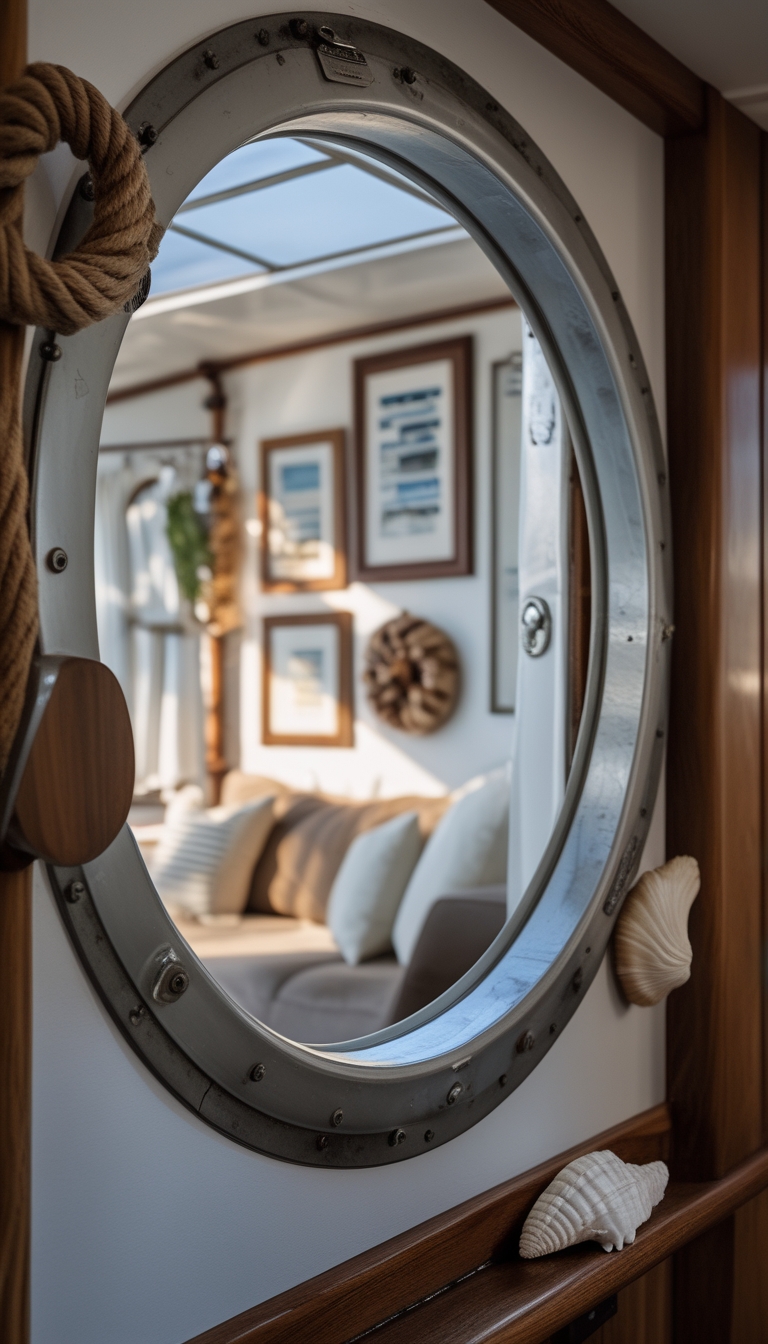
A porthole framed gallery wall gives your houseboat a nautical feel without taking up floor space. You can mix small round frames with a few rectangular coastal prints to balance variety and calm.
Place porthole frames at eye level and group them closely for a cohesive look. Use warm wood or aged metal frames to match other boat elements like brass fixtures or timber trim.
Keep the artwork simple: seascapes, shells, and vintage maps work well. Rotate pieces seasonally to keep the room feeling fresh and personal.
PRO TIP
Hang frames on a single line or in a loose cluster to make hanging easier in a moving home. Secure frames with hooks rated for marine motion to prevent shifting.
12) Reclaimed teak floating shelves
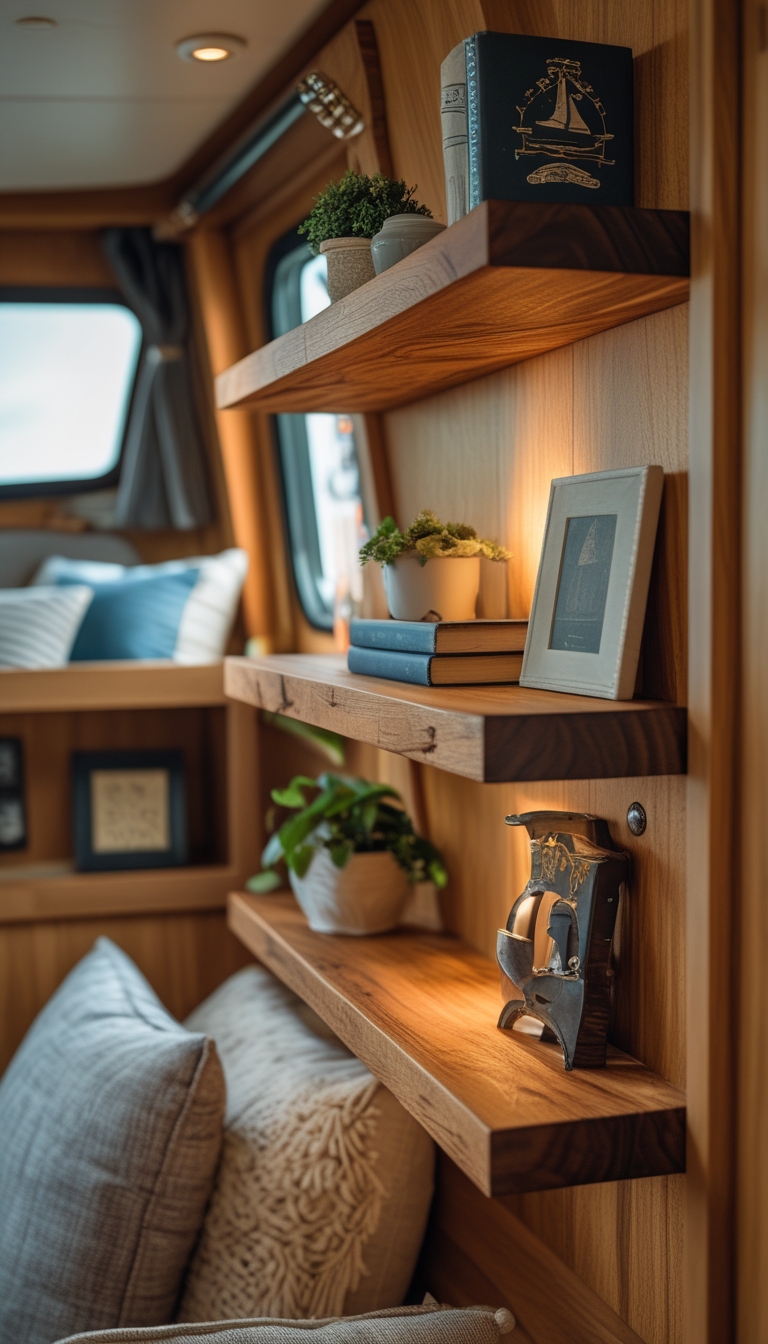
Reclaimed teak floating shelves bring warmth and history to your houseboat. You get the rich color and tight grain of teak without a heavy new-wood price.
These shelves save space and keep walls feeling open, which matters on a boat. Use them to display plants, books, or a few meaningful objects without cluttering surfaces.
The worn texture and slight imperfections add character and hide small scratches better than smooth finishes. You can choose varying lengths to fit odd wall spaces or to frame a window.
PRO TIP
Anchor shelves into studs or use marine-grade anchors so they stay secure when the boat moves. Seal the wood with a clear, water-resistant finish to protect it from humidity.
13) Thermal insulated blackout curtains
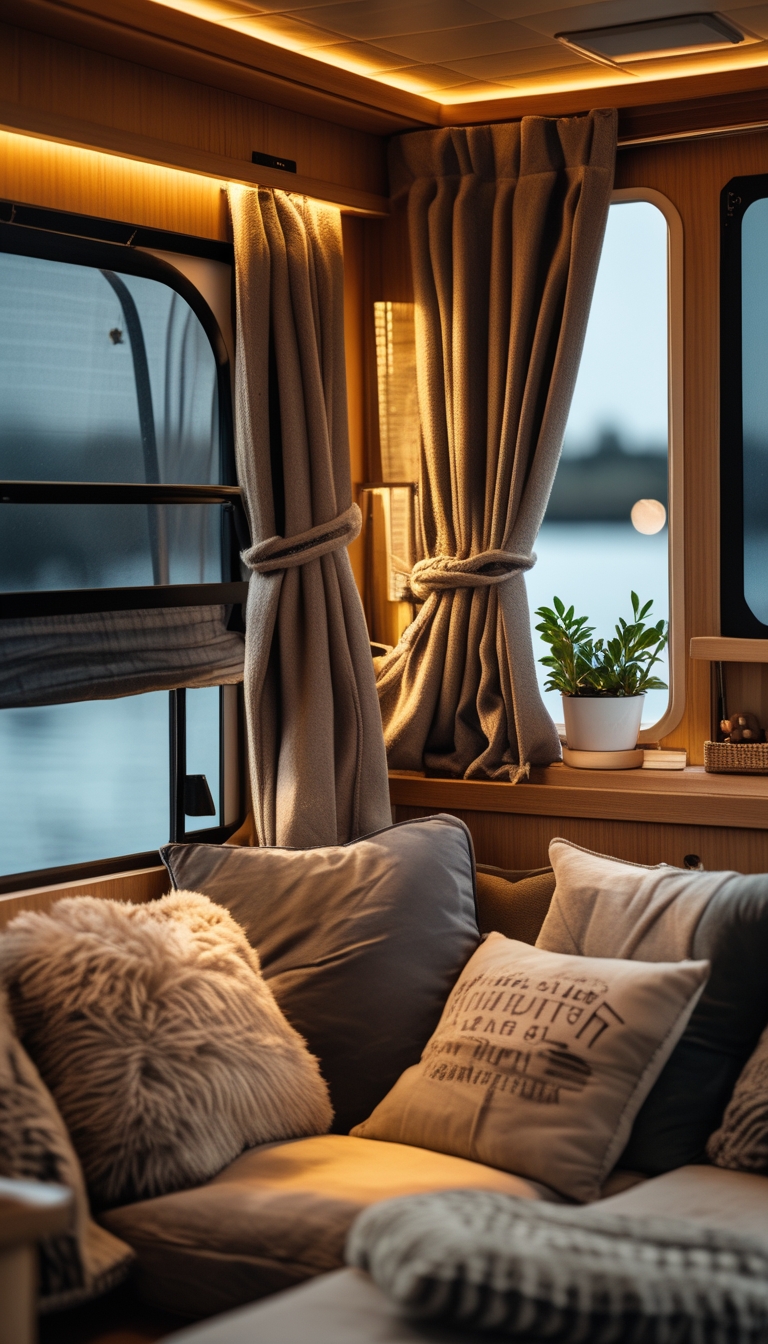
Thermal insulated blackout curtains help keep your houseboat comfortable. They block light for better sleep and reduce drafts to keep heat in during cool nights.
These curtains also cut outside noise a little, which matters on busy waterways. Choose fabrics with a dense backing and tight weave to get real insulation without adding bulk.
Install a tight curtain rod and overlap panels at the edges to prevent light and cold leaks. You can pick colors and textures that match your cabin style while still being practical.
PRO TIP
Measure above the window frame and mount the rod higher to make ceilings feel taller and to improve insulation by covering more glass.
14) Electric radiant floor mats for small spaces
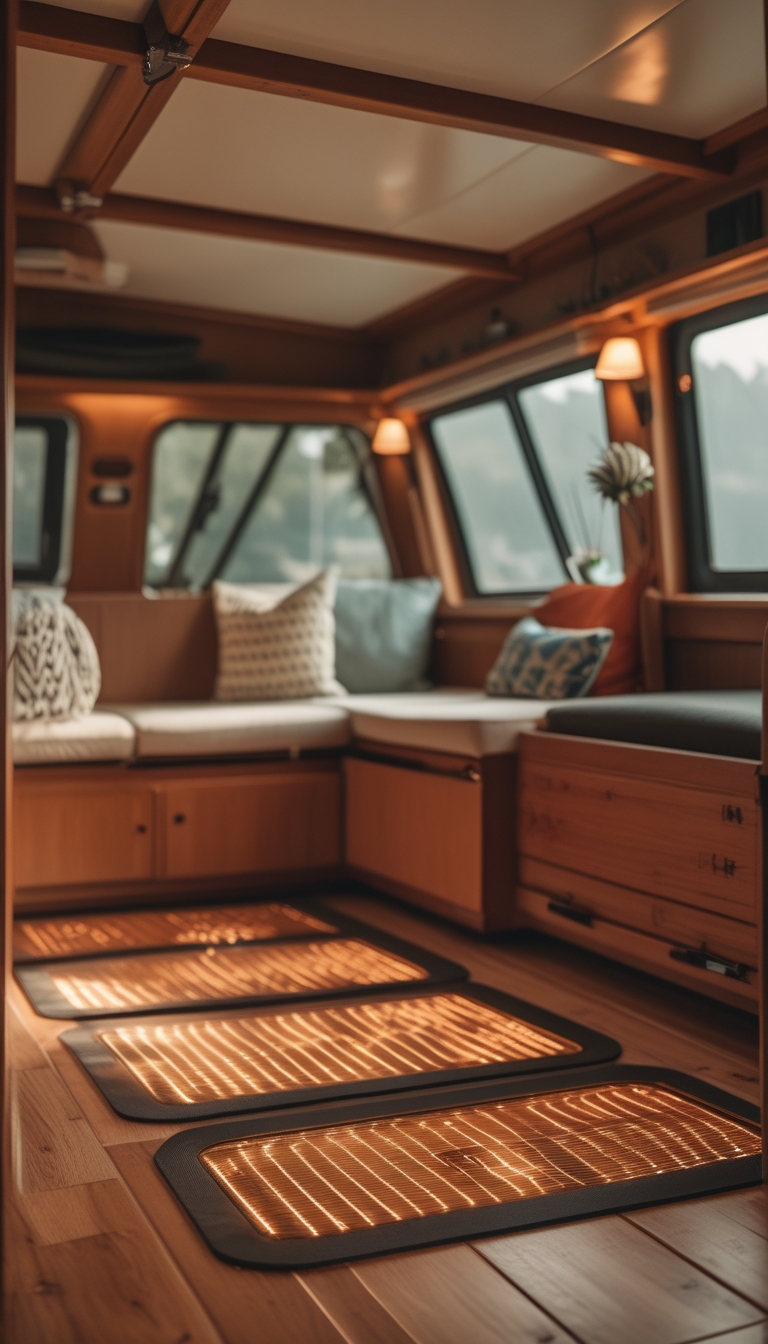
Electric radiant floor mats give your houseboat quick, even warmth underfoot. They work well in small rooms like a galley or compact bathroom without bulky radiators.
You can install mats under tile, vinyl, or engineered wood. Most kits fit tight spaces and offer easy DIY options with programmable thermostats.
These systems run on 120V or 240V depending on power needs. They use low-profile mats, so you won’t lose much floor height.
PRO TIP
Place a floor sensor where you walk most to keep temperatures steady. Match wattage to square footage for efficient, safe heating.
15) Cozy nook with a hanging rattan chair
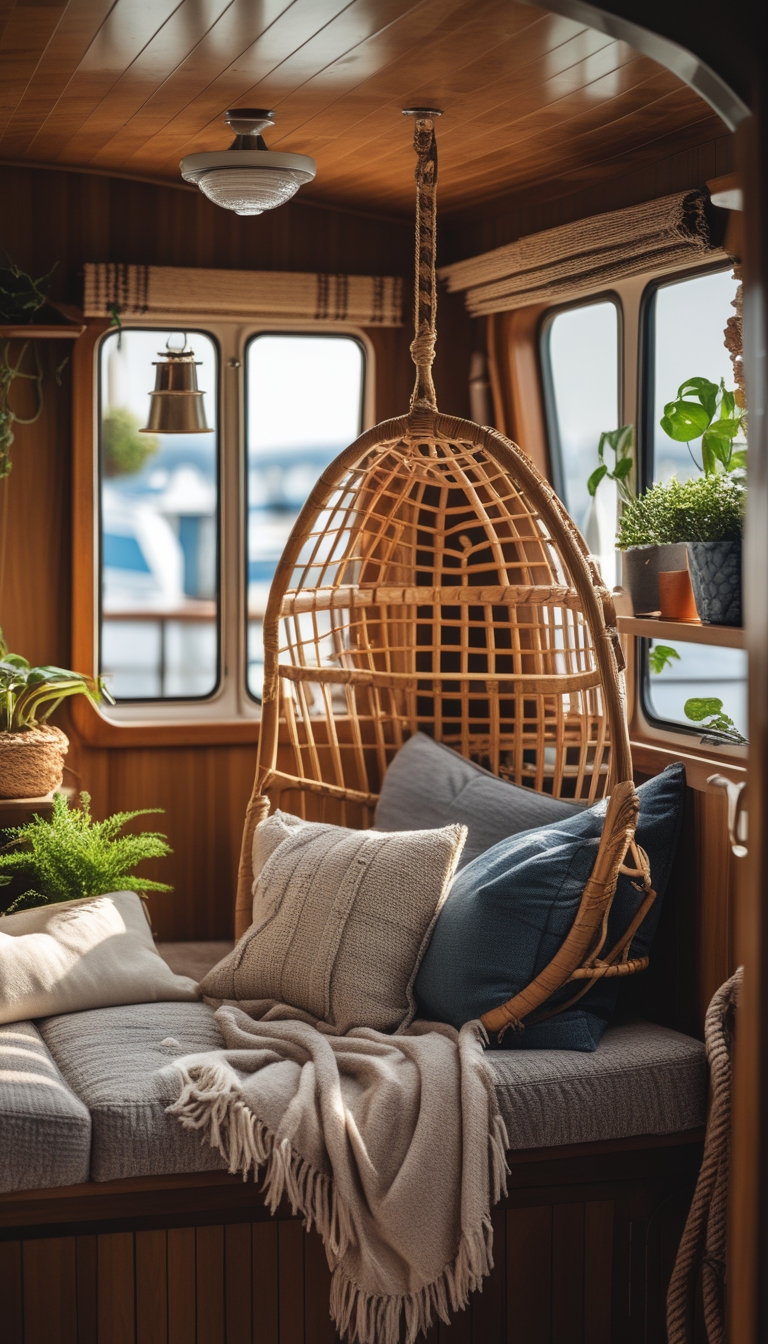
A hanging rattan chair gives your houseboat a relaxed, boho feel and saves floor space. Place it near a window so you can enjoy light, water views, and a gentle breeze while you read or rest.
Layer soft cushions and a throw to make the chair extra comfy. Use natural tones and a textured rug underfoot to tie the nook to the rest of the interior.
Add small shelves or a narrow side table for a cup, a lamp, or a plant. Keep the area uncluttered so the swinging chair remains the focal point and your moves stay easy and safe.
PRO TIP
Anchor the chair to a strong beam and check hardware regularly. Use weather-resistant cushions if the nook faces moisture or sun.
16) Neutral palette with muted rust and forest green accents
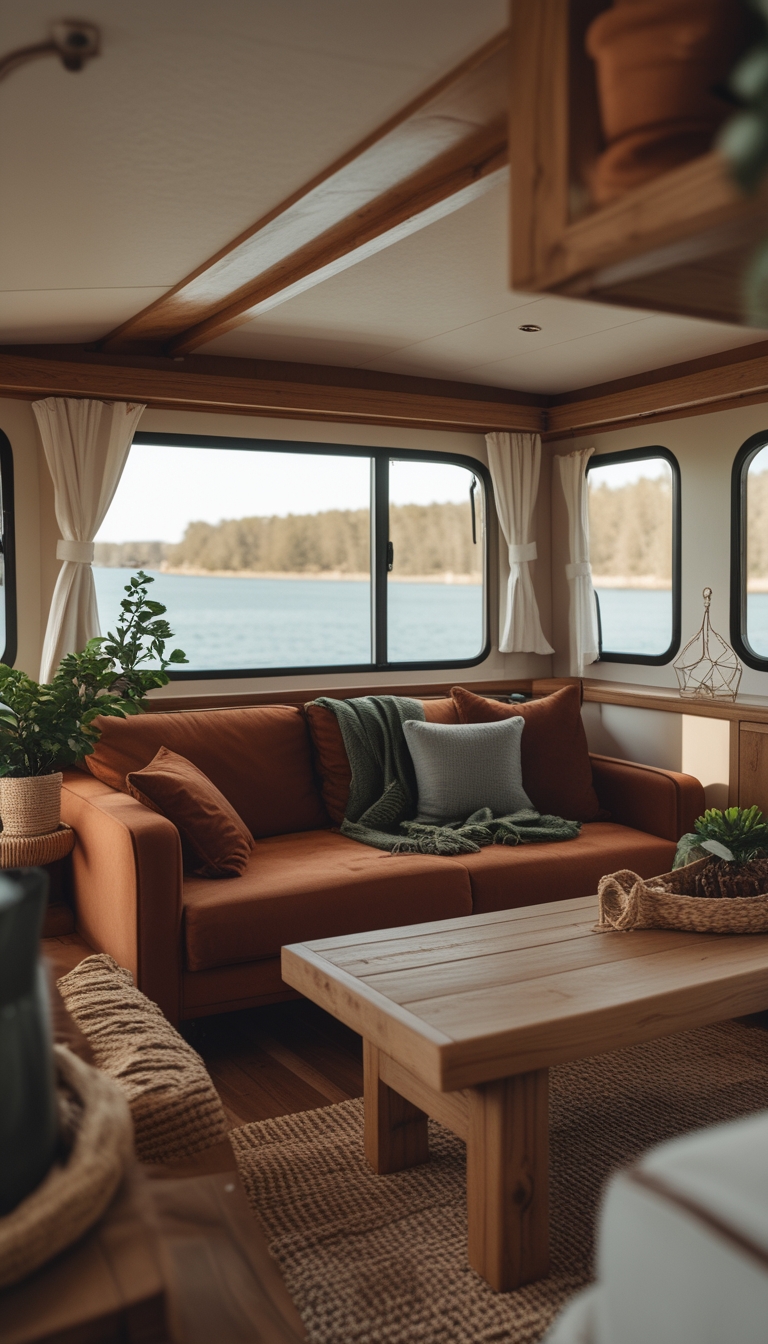
You can keep walls and large pieces in soft neutrals like warm beige, stone, or greige to make your houseboat feel open and calm. These tones brighten tight spaces and let light bounce around the cabin.
Add muted rust and forest green in small doses—throw pillows, a wool blanket, or a painted cabinet door. The colors bring warmth and a natural, grounded feeling without overpowering the room.
Choose materials with texture: linen curtains, woven rugs, and matte ceramics. Texture makes the neutral base feel layered and cozy, while the rust and green accents add character.
PRO TIP
Pick one accent color for textiles and the other for a fixed element like cabinetry or trim. This keeps the scheme balanced and easy to update.
17) Custom-fit boat-safe upholstery fabric
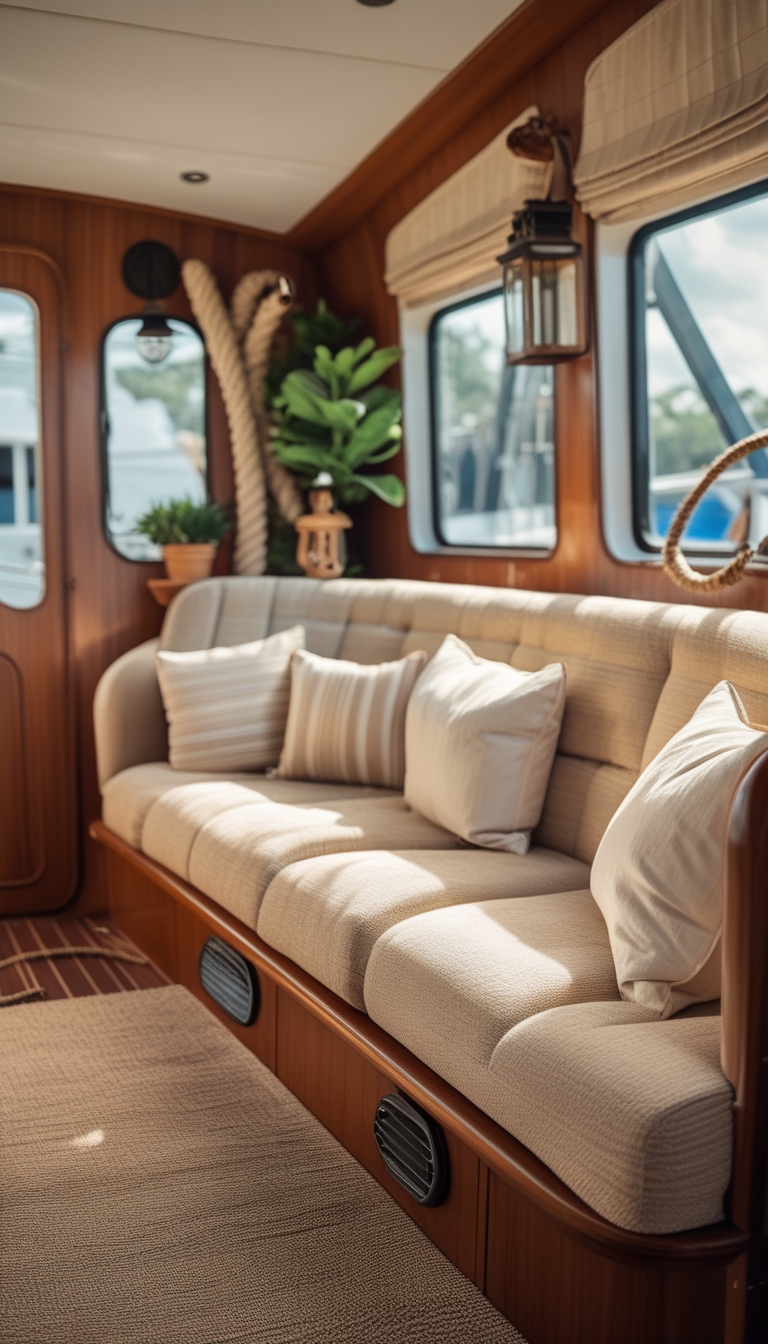
Choose boat-safe upholstery fabric that fits your cushions and seats exactly. You get a neater look and fewer gaps where water and dirt collect.
Pick materials made for marine use, like marine vinyl or Sunbrella-style fabrics. They resist UV, mildew, and salt, so they last longer on a houseboat.
Have pieces tailored to each seat shape. Custom cutting and sewing make cushions comfortable and prevent slipping during waves.
PRO TIP
Ask for four-way stretch or soft-touch vinyl if you want easier shaping and better comfort. Also request UV-stable threads and sealed seams to keep moisture out.
18) Multi-functional ottoman with tray top
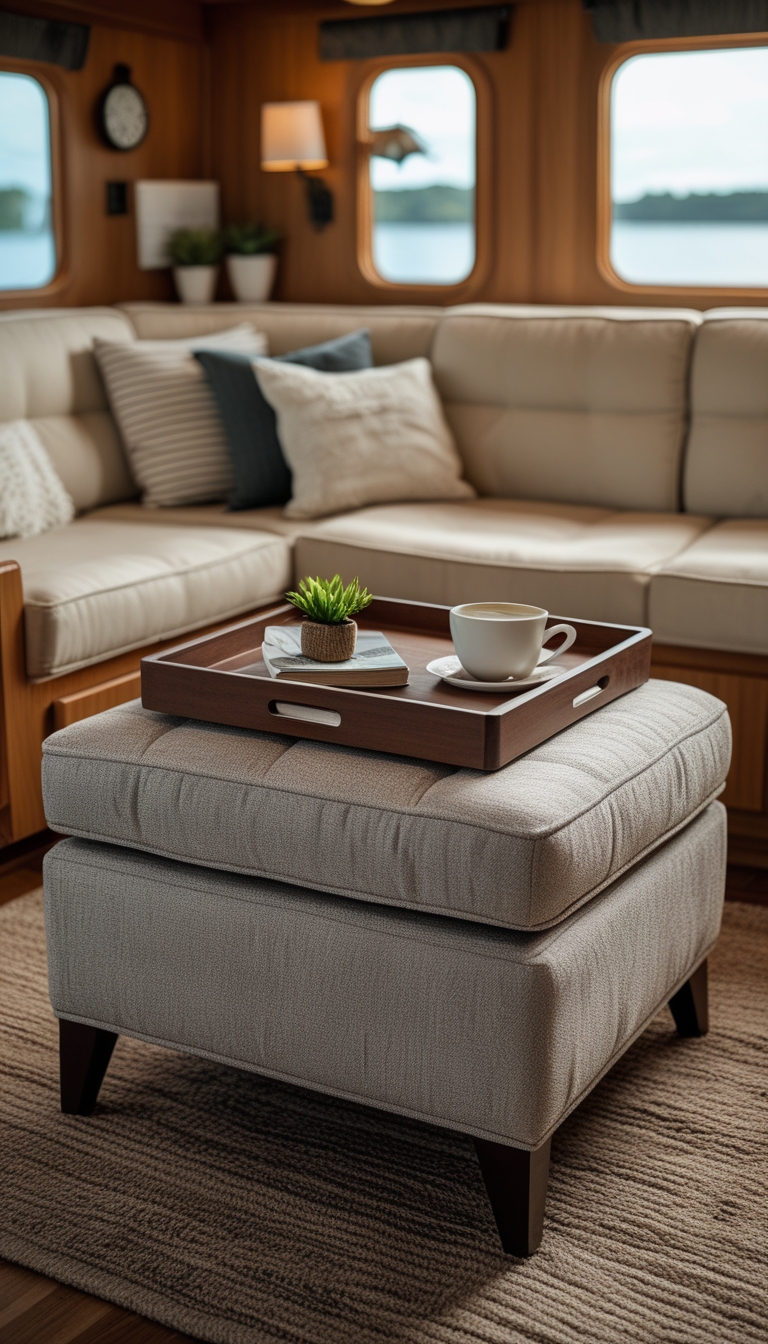
An ottoman with a tray top gives your houseboat extra function without taking much space. You can use it as a footrest, extra seating, a coffee table, or hidden storage for blankets and books.
Choose a durable fabric that resists moisture and stains to handle the boat’s humid air. Pick a tray with a raised edge so cups and small items stay put while the boat rocks.
Place it near the sofa or under a window to create a cozy hub for reading or drinks. A round or square ottoman keeps traffic flowing in narrow walkways and makes the cabin feel more open.
PRO TIP
Use a reversible tray lid: one side for serving, the other padded for comfort when used as a seat.
19) Indoor herb garden in magnetic planters
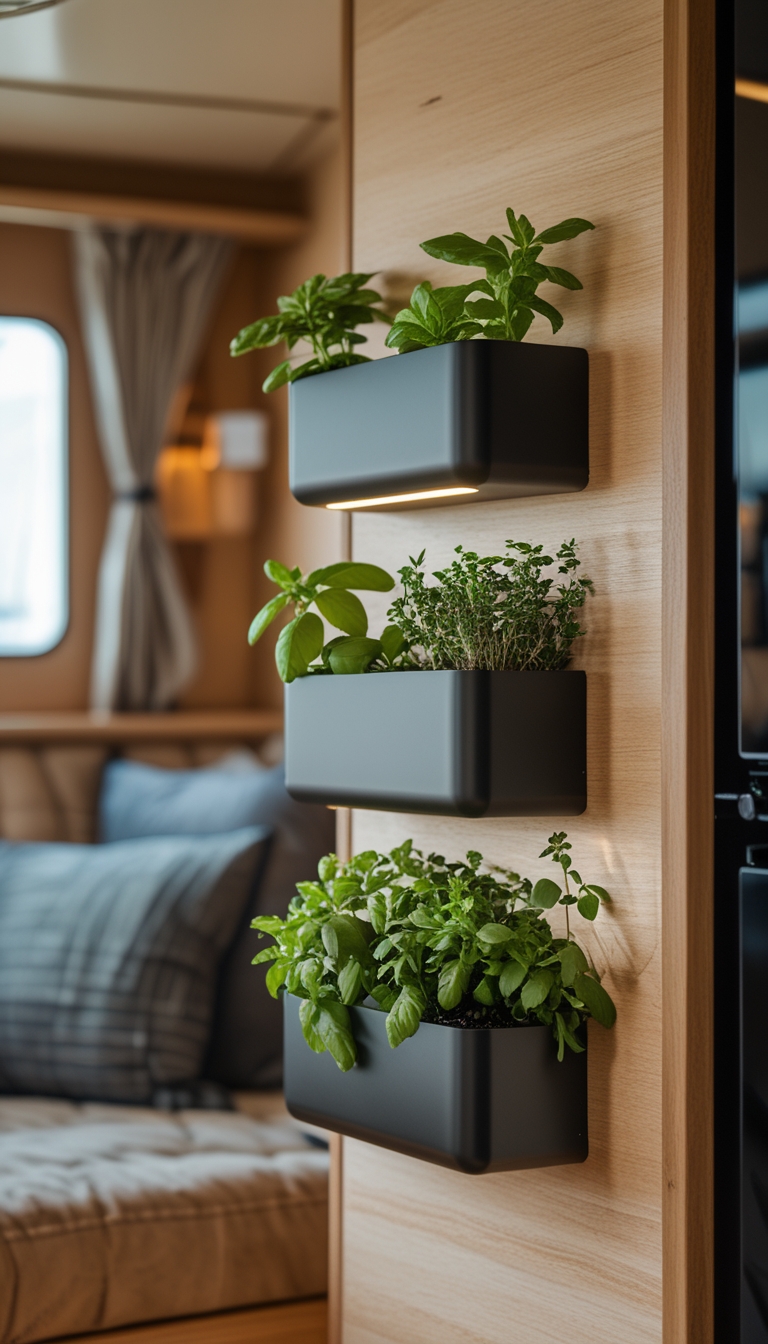
You can add fresh herbs to your houseboat without taking up counter space. Magnetic planters stick to metal surfaces like the fridge or a steel cabinet, keeping herbs within reach while saving room.
Choose small herbs such as oregano, thyme, or dwarf basil that don’t need deep pots. Use lightweight planters with drainage or a layer of pebbles to avoid waterlogging and protect surfaces from moisture.
Arrange planters where they get bright, indirect light or add a small LED grow light if needed. Rotate pots every few days so plants grow evenly and stay healthy.
PRO TIP
Label each planter and water gently from the top. This helps you track care needs and prevents overwatering in compact containers.