Last Updated on August 25, 2026
You can turn your garage into a fun, safe place where kids learn, play, and make a mess you don’t have to clean up right away. This article shows 20 easy activity-zone ideas to help you plan corners for art, reading, sports, sensory play, music, and more—so you can use the space your family already has.
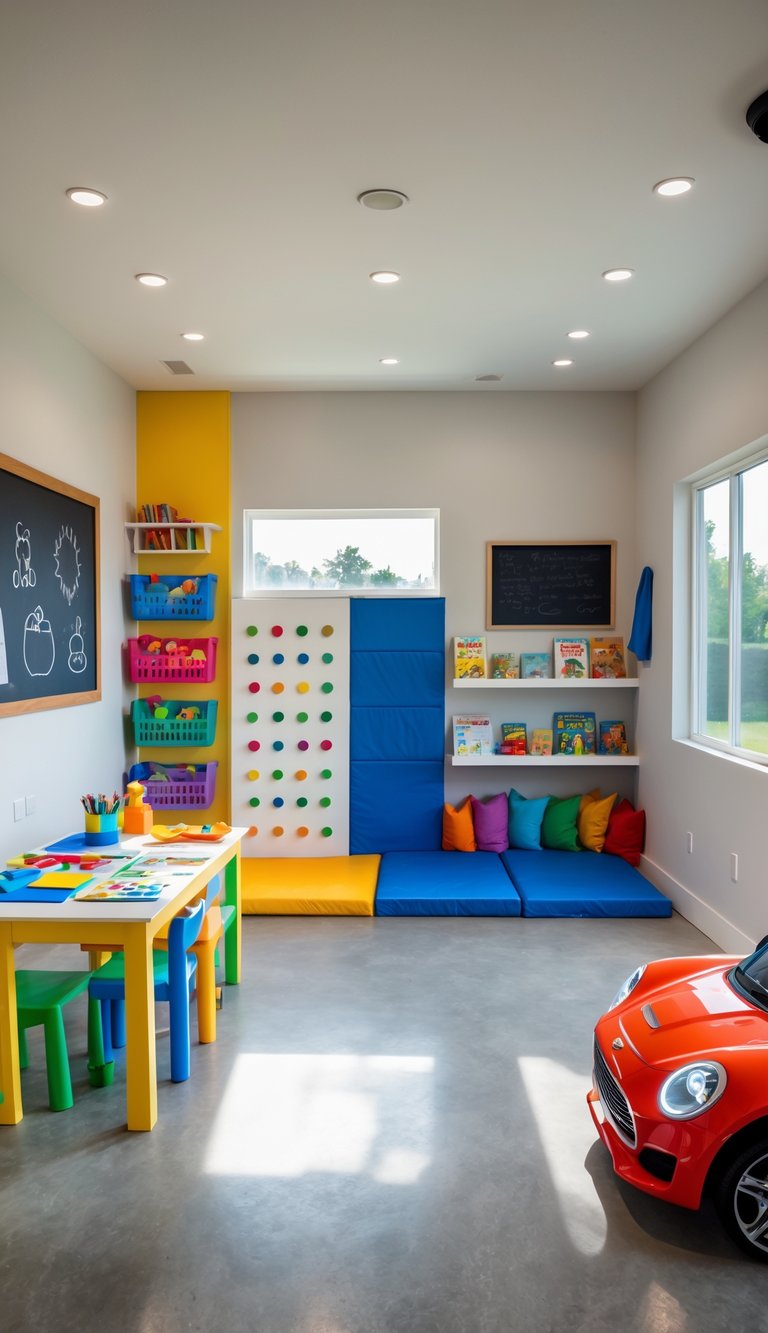
You’ll find simple ways to organize, protect floors, add storage, and create kid-sized spots for building, dress-up, science, and quiet time.
Start by mapping zones on paper to fit your garage layout before buying supplies.
1) Create an arts and crafts corner with easels and storage bins
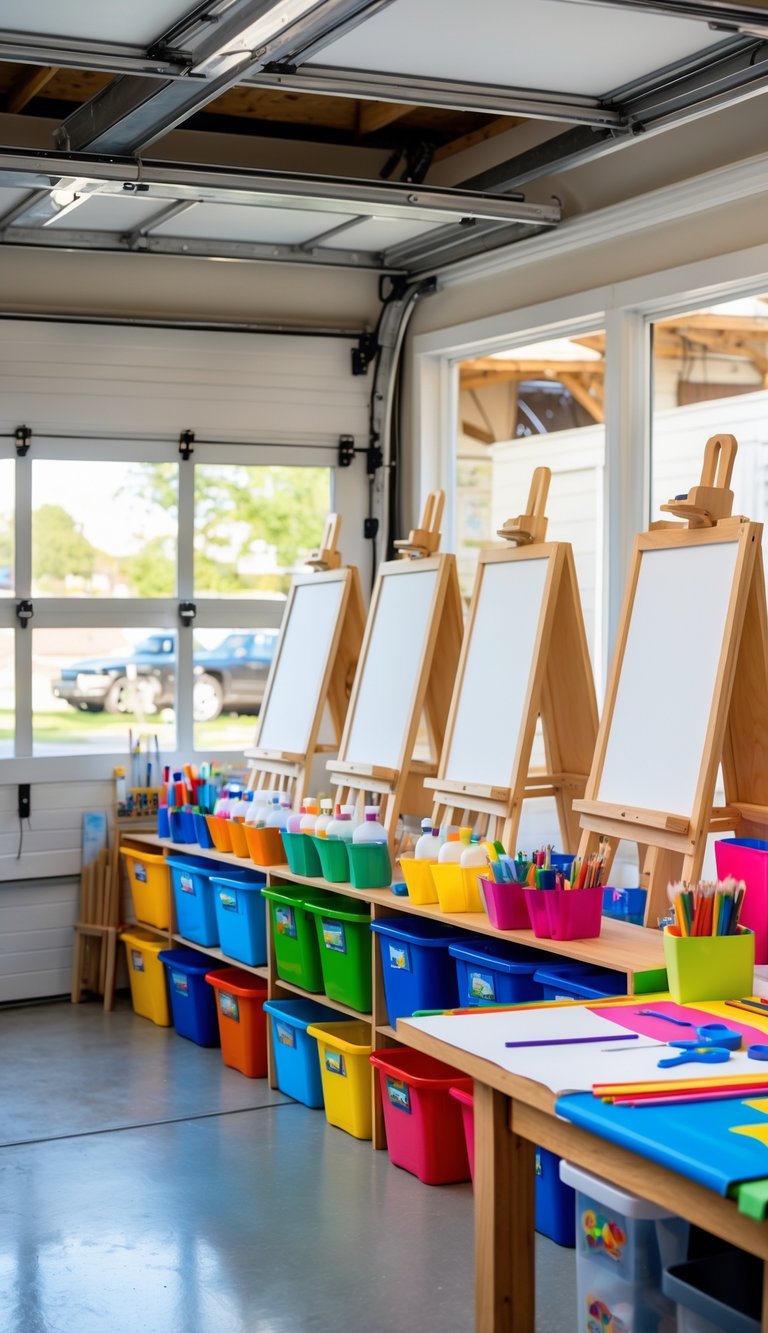
Set up a small table or corner with kid-sized easels to make painting and drawing feel special. Easels keep paper upright and help little ones practice hand control while they create.
Use clear storage bins for paints, brushes, glue, scissors, and paper. Label each bin with words or pictures so kids can find and return supplies on their own.
Add a washable mat or drop cloth under the area to protect the floor from spills. Keep a small shelf or cart nearby for drying artwork and holding extra supplies.
PRO TIP
Anchor tall shelves to the wall and choose containers that snap shut to keep supplies safe and tidy.
2) Set up a reading nook with bean bags and shelves of children’s books
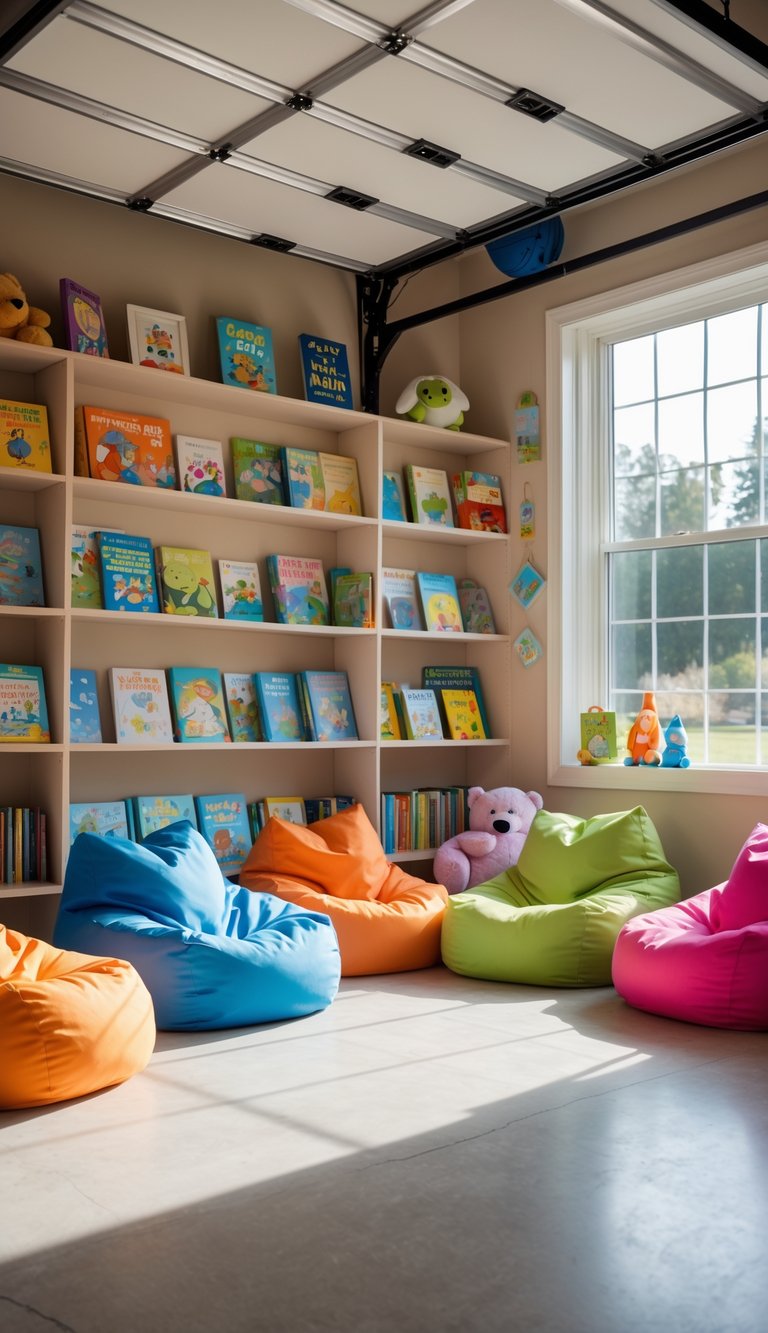
Create a cozy corner in your garage with soft bean bags and low shelves filled with kids’ books. You can use bright pillows and a small rug to mark the space and make it feel special.
Place shelves at child height so your kids can choose books on their own. Use face-out displays for picture books to help non-readers pick by cover art.
Add a soft lamp or string lights for gentle reading light, and keep a small basket for stuffed animals or bookmarks. This simple setup makes reading feel fun and keeps books tidy.
PRO TIP
Rotate books every few weeks to keep the selection fresh and match seasonal themes or current interests.
3) Install a chalkboard wall for drawing and writing
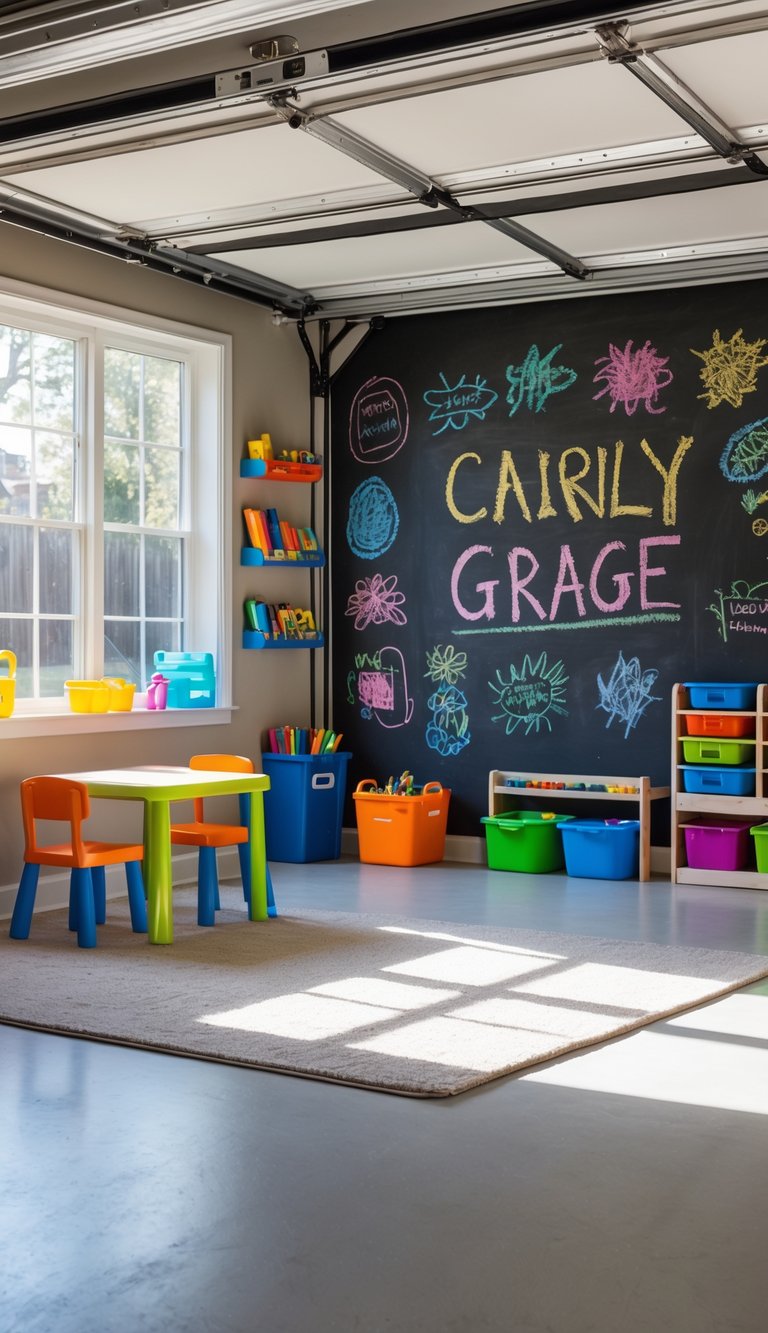
A chalkboard wall gives your garage a low-cost, high-fun surface for drawing, planning, and learning. You can paint a section of wall with chalkboard paint or mount a large chalkboard panel for instant use.
Kids can sketch, practice letters, or play games while you work nearby. It keeps paper and markers contained and wipes clean so the space stays tidy.
Use it for chore lists, project plans, or seasonal art that you change often. Keep a small tray or bucket nearby to hold chalk, erasers, and a damp cloth for quick cleanups.
PRO TIP
Prime the wall and roll on two thin coats of chalkboard paint for the smoothest finish. Rub a piece of chalk sideways across the whole board and wipe it off before first use to prevent ghosting.
4) Designate a sports zone with a mini basketball hoop
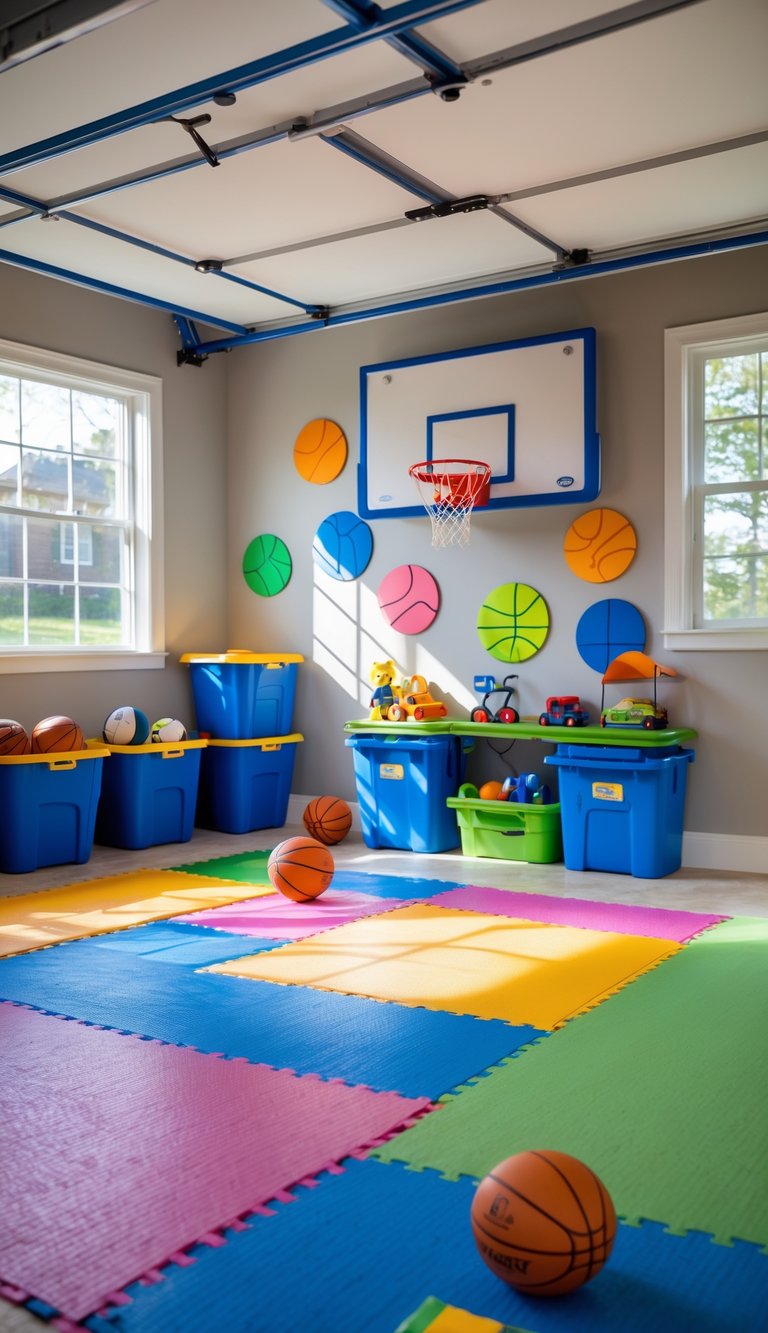
A mini basketball hoop turns a corner of your garage into a simple sports zone. You can mount it on a wall or hang it over a door to save floor space and keep the area flexible.
Pick a hoop that fits your kids’ ages and your garage layout. Adjustable rims grow with your children, and soft or foam balls cut down on noise and breakage.
Mark the playing area with tape or cones to keep other activities clear. Add a small mat or cushioned tiles to protect the floor and reduce slips.
PRO TIP
Place the hoop at a height that lets kids practice shooting but still reach the rim. Store extra balls and safety gear nearby so play stays safe and tidy.
5) Add a sensory play area with textured mats and toys
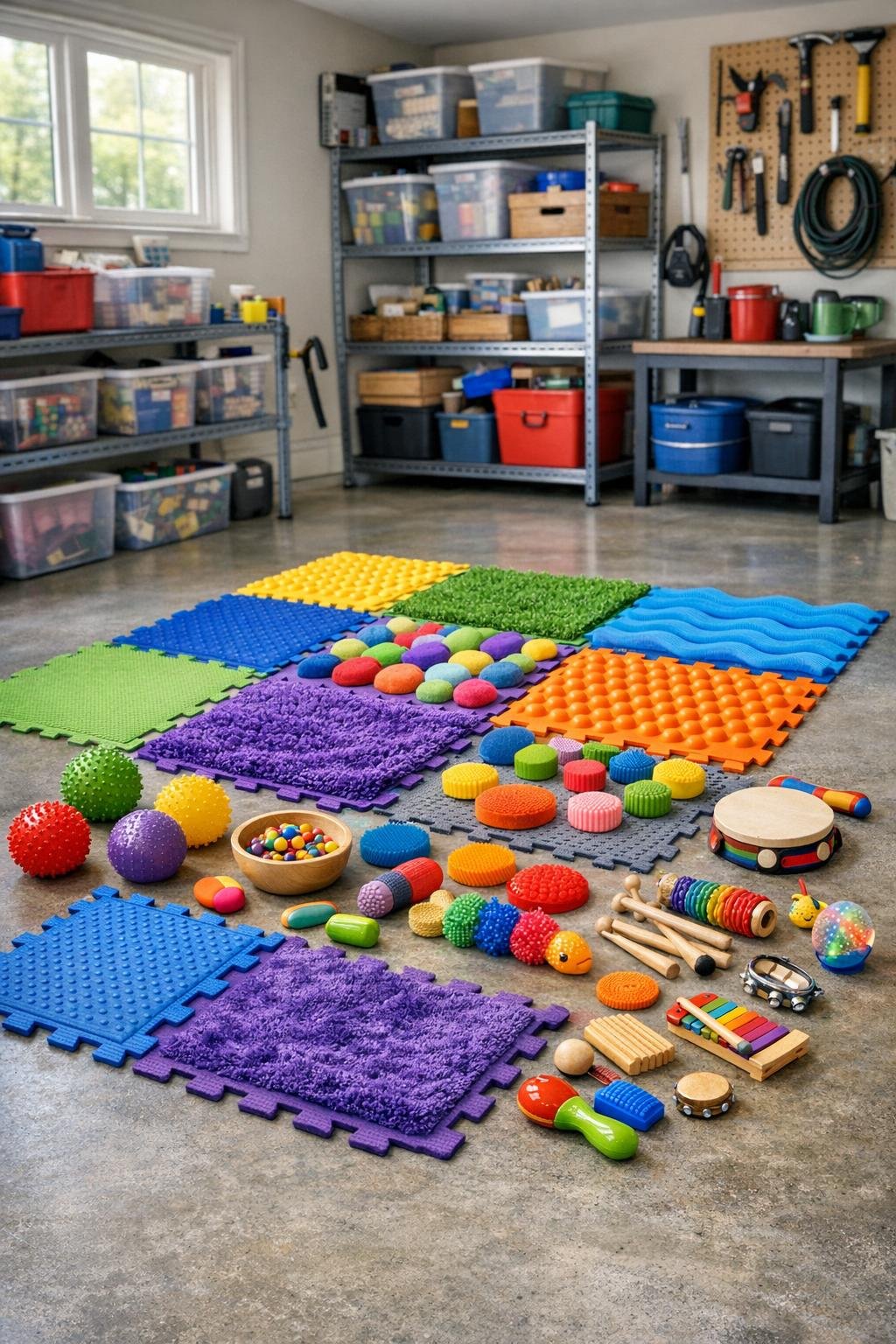
You can carve a cozy sensory corner in your garage with textured mats, soft rugs, and low shelves for toys. Kids explore touch, balance, and hand-eye skills when they move over different surfaces or squeeze sensory balls.
Include items like foam tiles, bubble wrap mats, and fabric swatches for varied textures. Add bins with rice, pasta, or water beads for supervised tactile play; clear lids keep spills contained.
Rotate toys and materials to keep things fresh and inviting. Simple tools like scoops, cups, and tongs build fine motor skills while you keep the space tidy.
PRO TIP
Lay down a washable mat and keep a small broom or hand vacuum nearby so cleanup stays quick.
6) Build a small stage for performances and dress-up
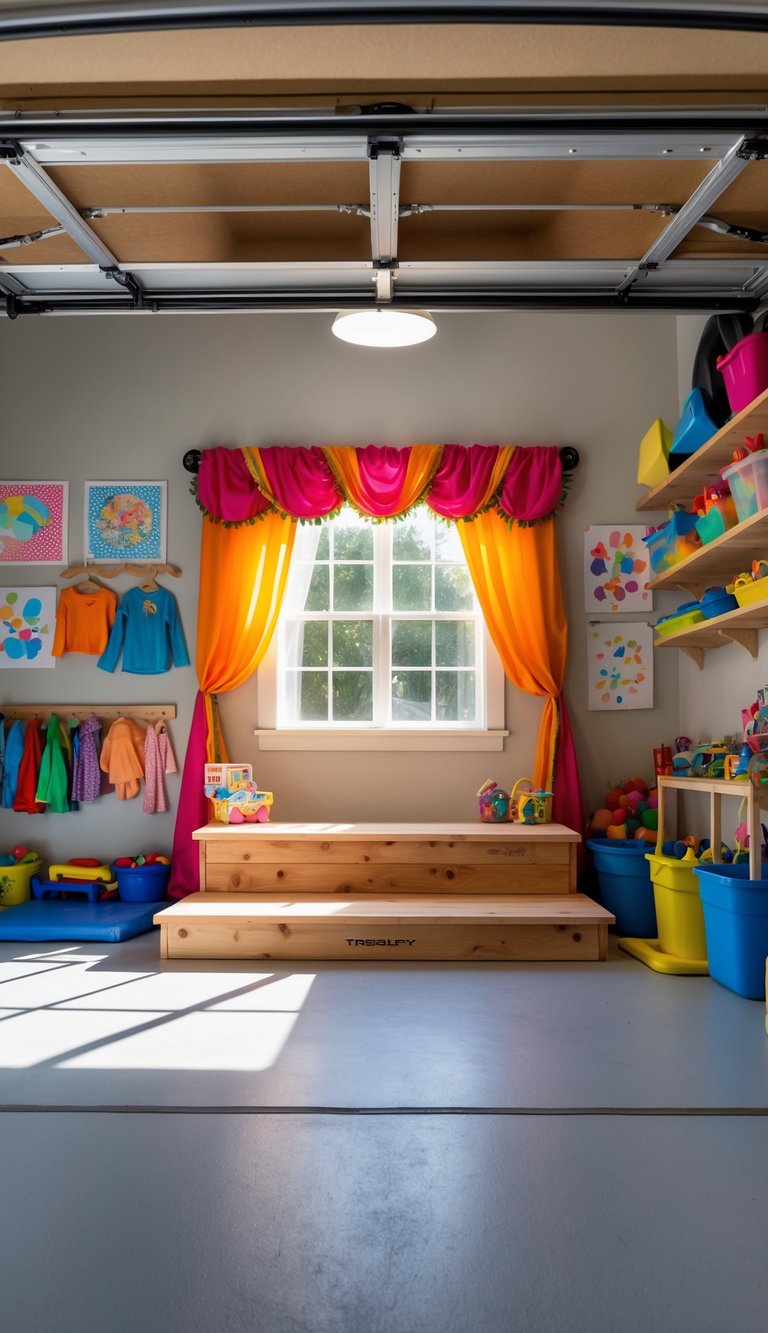
Give kids a simple platform to spark play and confidence. Use plywood or stacked pallets with a sturdy frame so the stage stays safe during dances and shows.
Add a curtain, a few costume hooks, and a box for props. Small changes like string lights or a painted backdrop make the space feel special without costing much.
Keep the stage low to the ground to prevent falls. Make a storage area underneath for dress-up clothes and puppets to keep the garage tidy.
PRO TIP
Place a washable rug or foam tiles in front of the stage to mark the audience area and protect knees during rehearsals.
7) Use colorful storage bins to keep toys organized
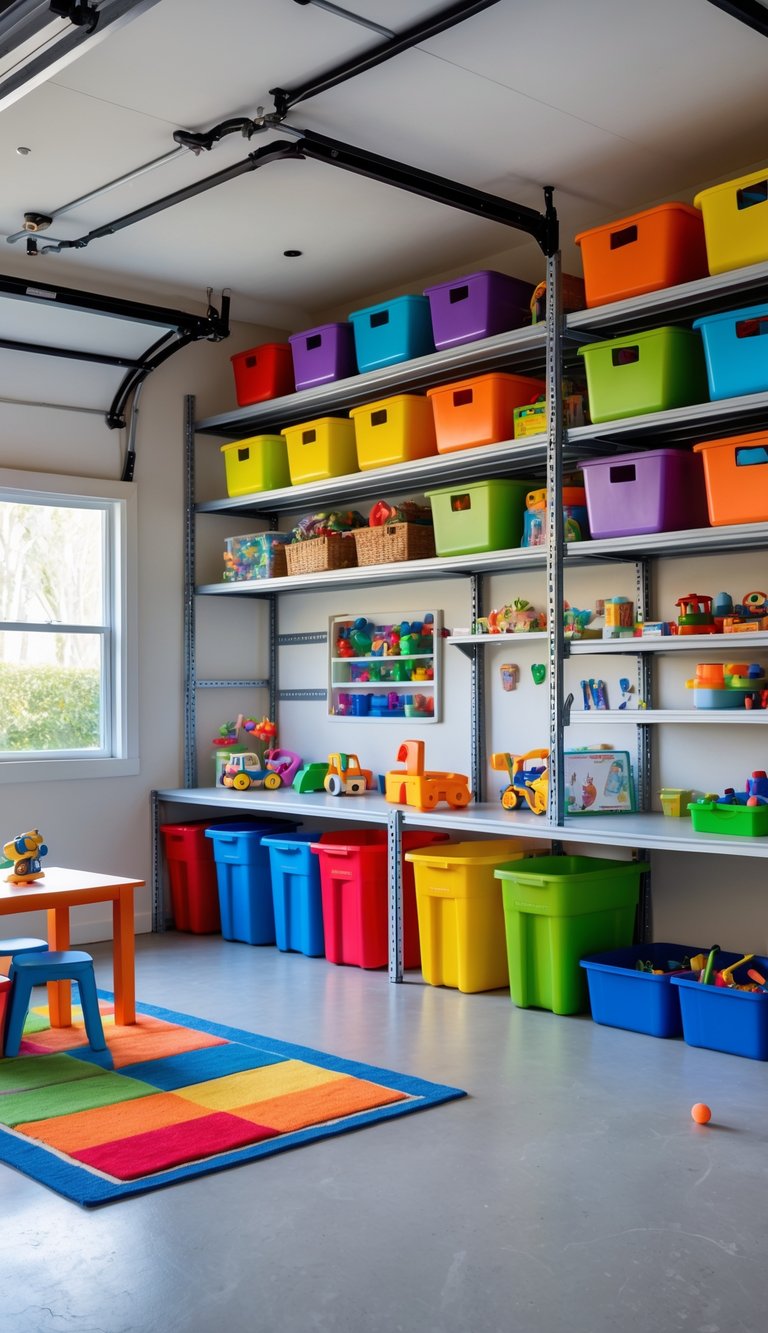
Colorful bins make it easy for kids to find and put away toys. Use clear or labeled bins so children can see what’s inside at a glance.
Group similar items together — cars, art supplies, balls — and assign each group a color. That helps your child learn sorting and makes clean-up faster.
Stackable bins save floor space in a garage activity zone. Choose durable plastic with lids to keep dust out and protect toys from garage grime.
Place bins at floor level or on low shelves so your kids can reach them. Keep a few special bins for outdoor gear that you bring in and out often.
PRO TIP
Use color-coded labels with pictures for non-readers. Change colors by season or theme to keep the system fresh and fun.
8) Include a climbing wall with soft mats underneath
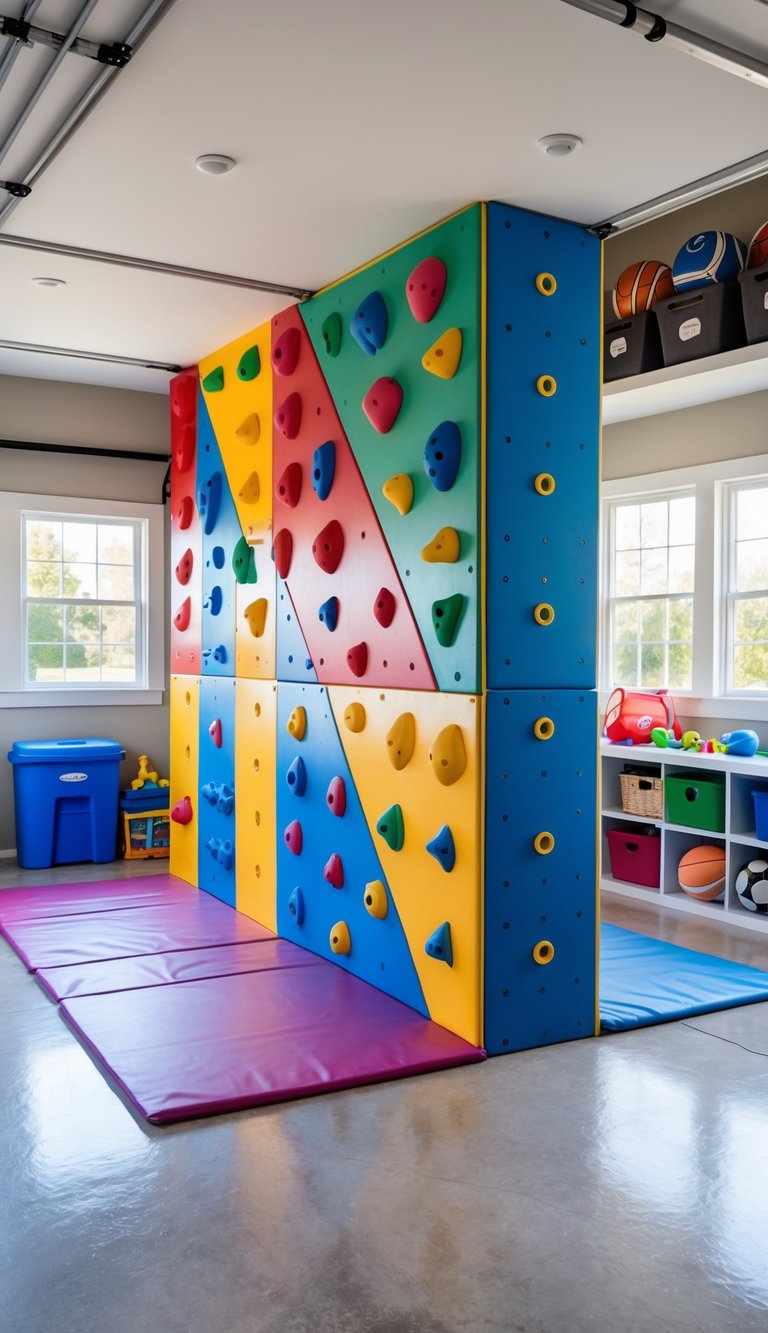
A climbing wall turns a garage into an active play zone that builds strength and coordination. You can scale the difficulty for different ages by moving holds or adding routes.
Install crash mats or thick foam tiles under the wall to protect against falls. Make sure mats cover a wide landing area and meet safety thickness for kids.
Use durable, washable holds and anchors rated for climbing. Check bolts and hardware regularly and supervise climbs to reduce risk.
PRO TIP
Paint routes with bright colors or add stickers to mark beginner and advanced paths. This keeps climbing fun and helps kids pick challenges that match their skill.
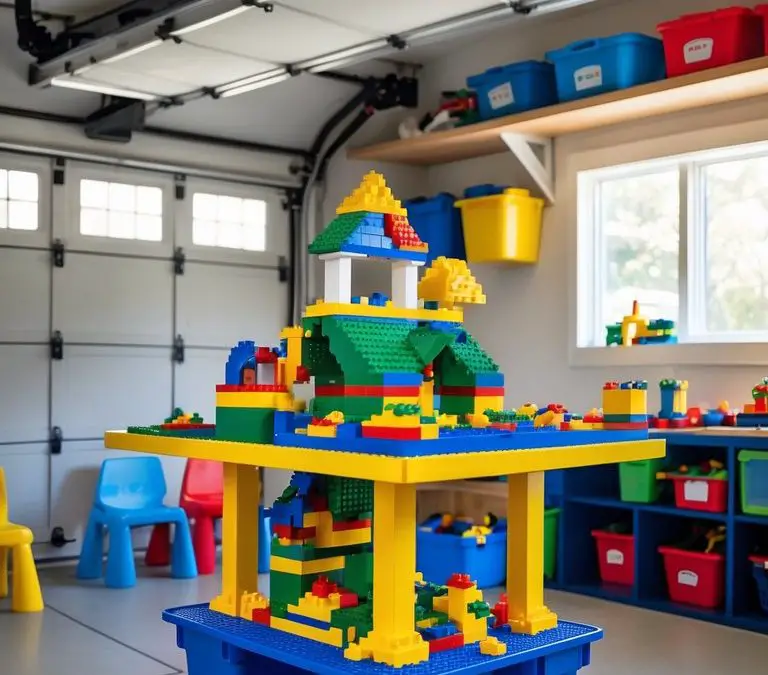
9) Set up a LEGO building table with ample lighting
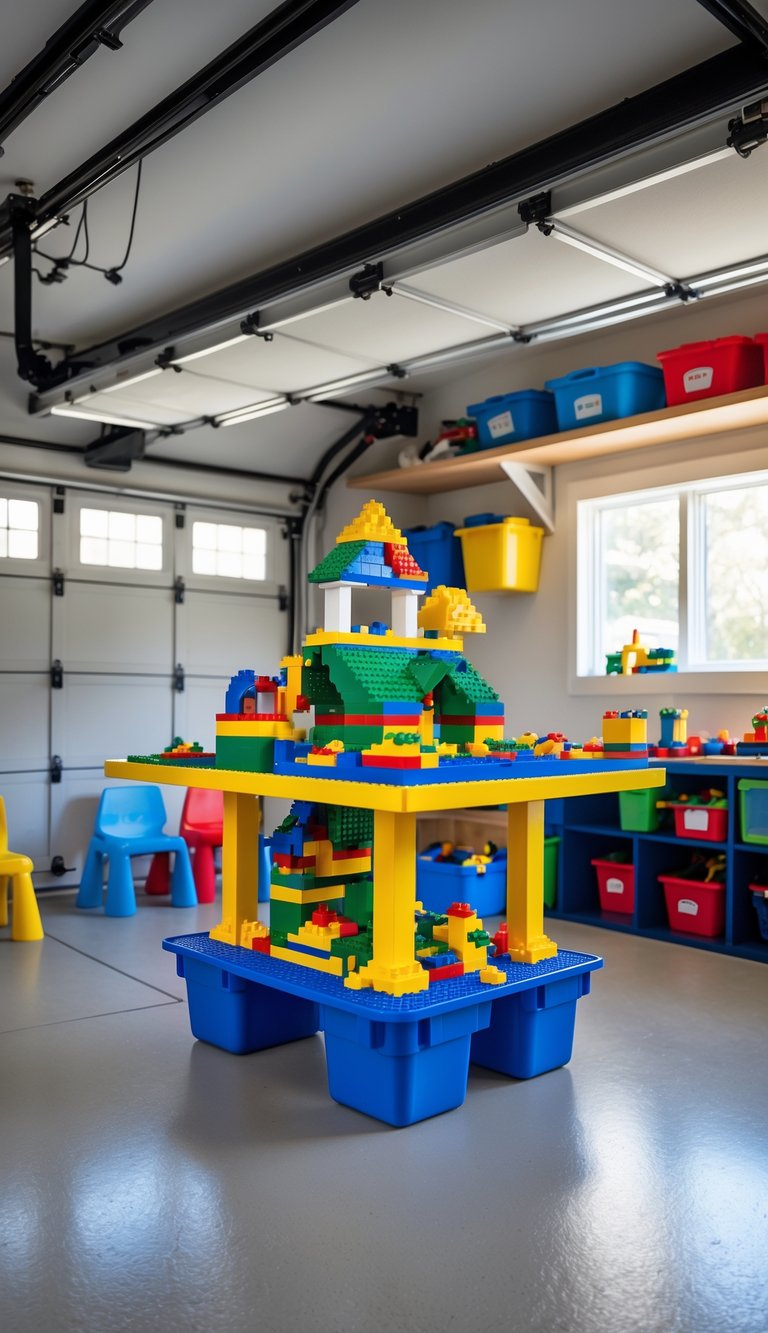
Give your kids a dedicated LEGO table so they have a clear space to build and store projects. A raised baseplate surface keeps pieces in place and makes creations easy to move.
Place the table near a bright light source or add a task lamp with a flexible arm. Good lighting helps kids see small pieces and reduces eye strain during long play sessions.
Use clear bins or shallow drawers under the table for quick cleanup and sorting. Keep a small tray for in-progress builds so creations stay safe between playtimes.
PRO TIP
Mount a strip light or adjustable LED bar above the table for even, shadow-free light. Choose warm white light to keep the space cozy and inviting.
10) Create a music corner with kid-safe instruments
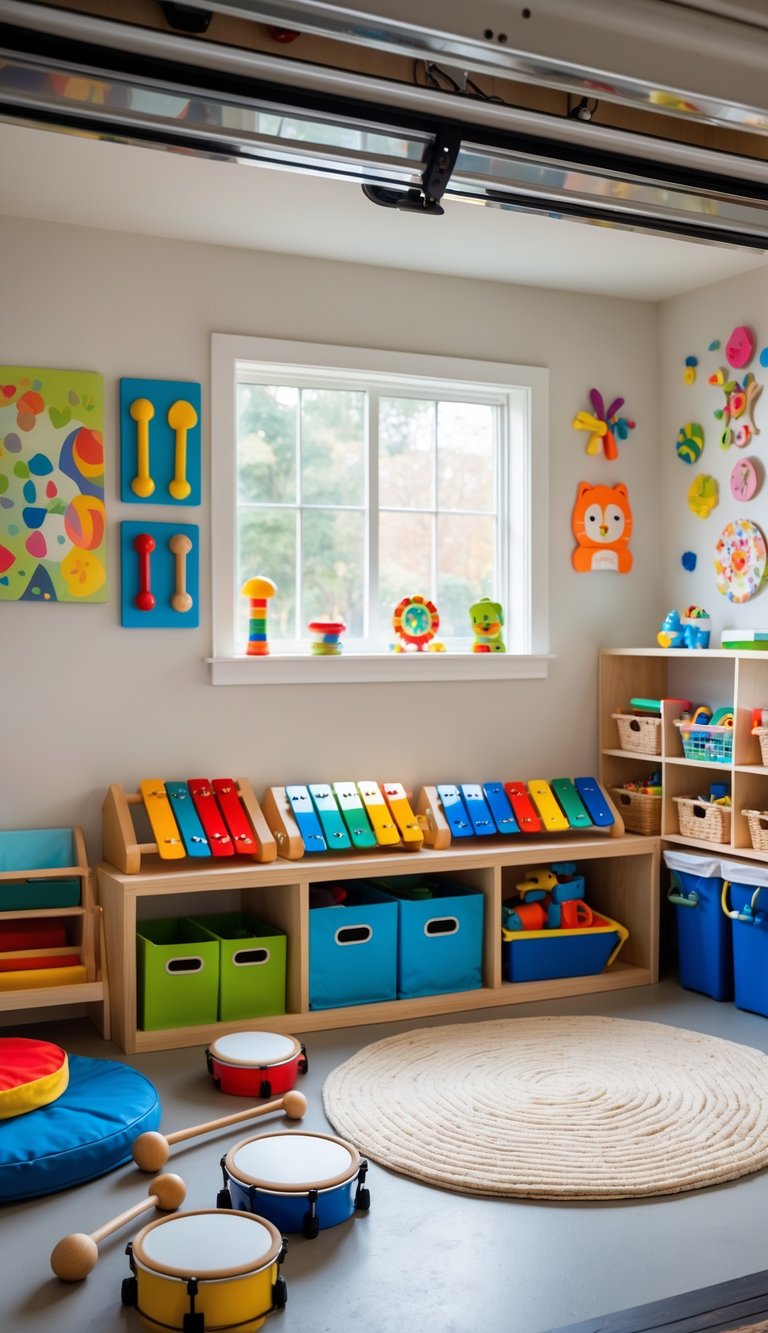
Set up a small area with soft mats, a low shelf, and a few easy instruments. Choose items made for kids: small keyboards, ukuleles, hand drums, shakers, and xylophones with rounded edges.
Keep things organized so kids can reach instruments safely. Use wall hooks low enough for them and bins labeled with pictures to help clean up.
Include headphones with volume limiters for quiet practice and online lessons. Make the space inviting with simple chairs and a music stand sized for children.
PRO TIP
Rotate instruments every few weeks to keep play fresh and encourage new sounds. Let your child help pick or make simple instruments from safe recycled materials.
11) Add a puzzle and board game station
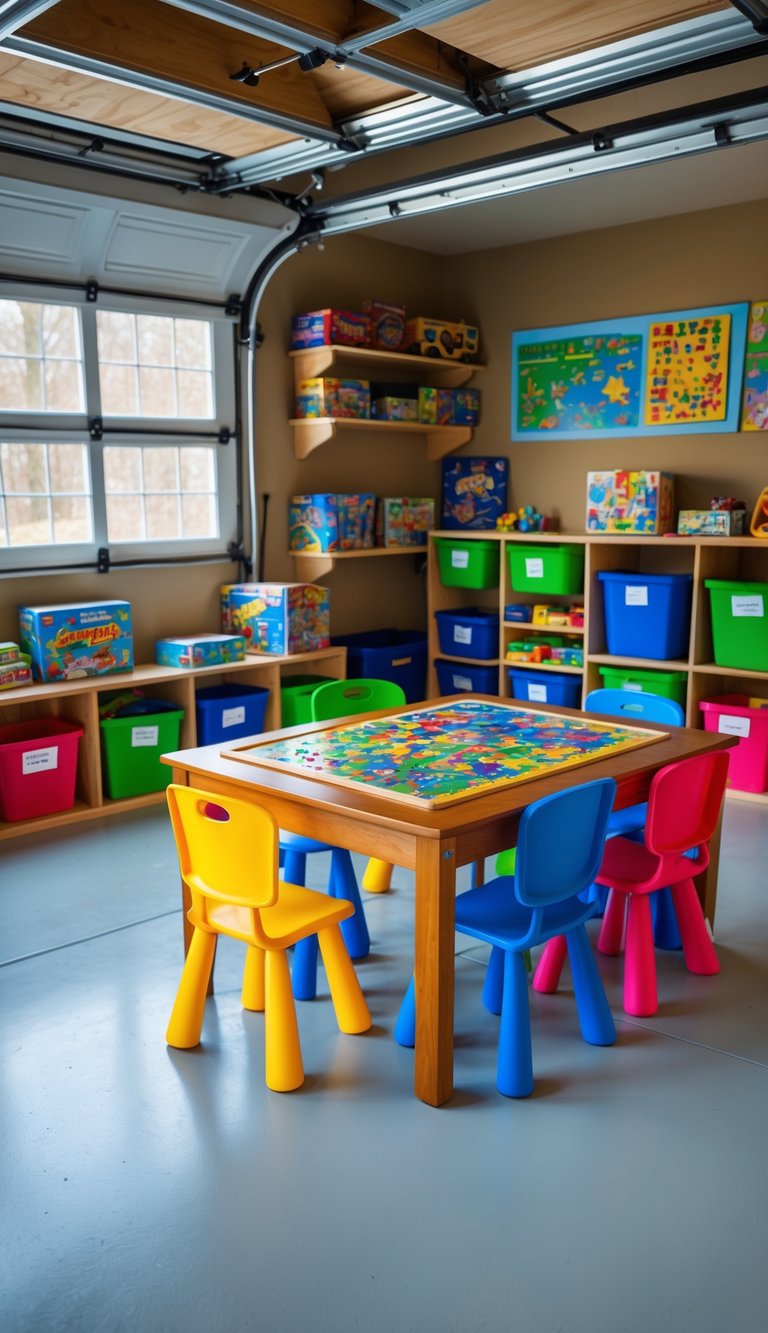
Create a dedicated corner with a sturdy table and comfortable chairs where your kids can spread out puzzles and play board games. Keep a range of puzzles and games for different ages and skill levels to keep everyone engaged.
Use clear storage bins or labeled drawers so you can find pieces fast. A small bookshelf nearby helps organize board games upright and saves space.
Add a soft mat or rug under the table to protect pieces that fall and to make the spot cozy. Rotate games every few weeks to keep the station fresh and fun.
PRO TIP
Keep a bag of extra game pieces and a simple rules cheat sheet for each game. That makes it easy to start play without hunting for parts.
12) Install low shelving for easy access to toys
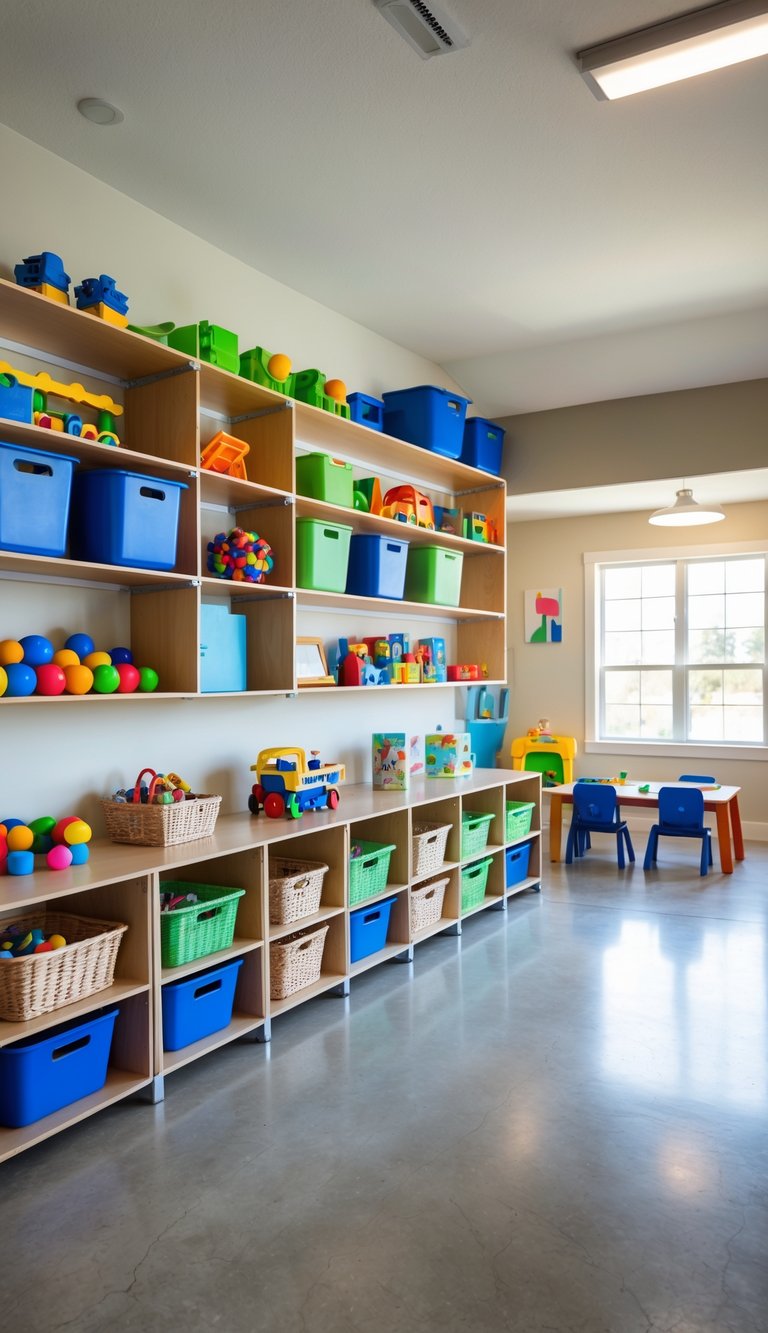
Place low shelves where kids can reach without help. This gives them ownership and makes cleanup faster.
Choose sturdy, open shelves so toys stay visible. Bins or baskets on the shelves keep small pieces together and reduce spills.
Label bins with pictures or simple words to help non-readers find things. Rotate toys seasonally to keep the shelves uncluttered and fun.
Keep heavier items on the bottom shelf to prevent tipping. Anchor shelves to the wall for safety and add rounded corners if possible.
PRO TIP
Use colorful bins to make zones—one color for art supplies, another for sports gear. It makes finding and returning items easier for kids.
13) Put down cushioned, non-slip flooring for safety
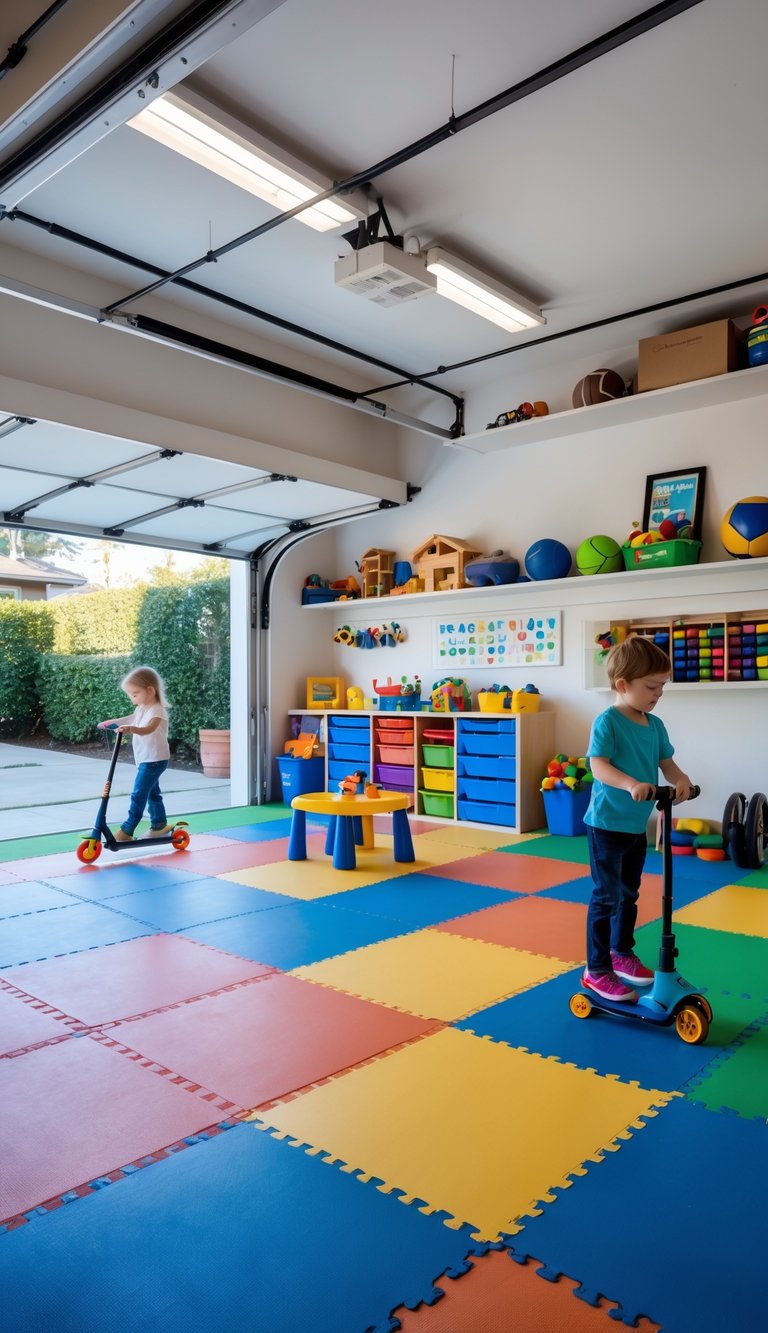
Choose cushioned, non-slip flooring to reduce slips and soften falls. Materials like rubber, foam tiles, or textured vinyl give traction and comfort for kids running or playing.
Low-profile options with beveled edges cut trip risks and fit under doors. Look for full-coverage rubber or high-quality TPR backing to keep mats from sliding.
Cushioned floors also absorb noise and protect dropped toys and equipment. They are easy to clean and hold up to spills, so maintenance stays simple for busy families.
PRO TIP
Measure your activity zones before buying tiles. Leave a small gap at doorways and secure edges with transition strips to prevent catching and shifting.
14) Incorporate a science exploration station with simple experiments
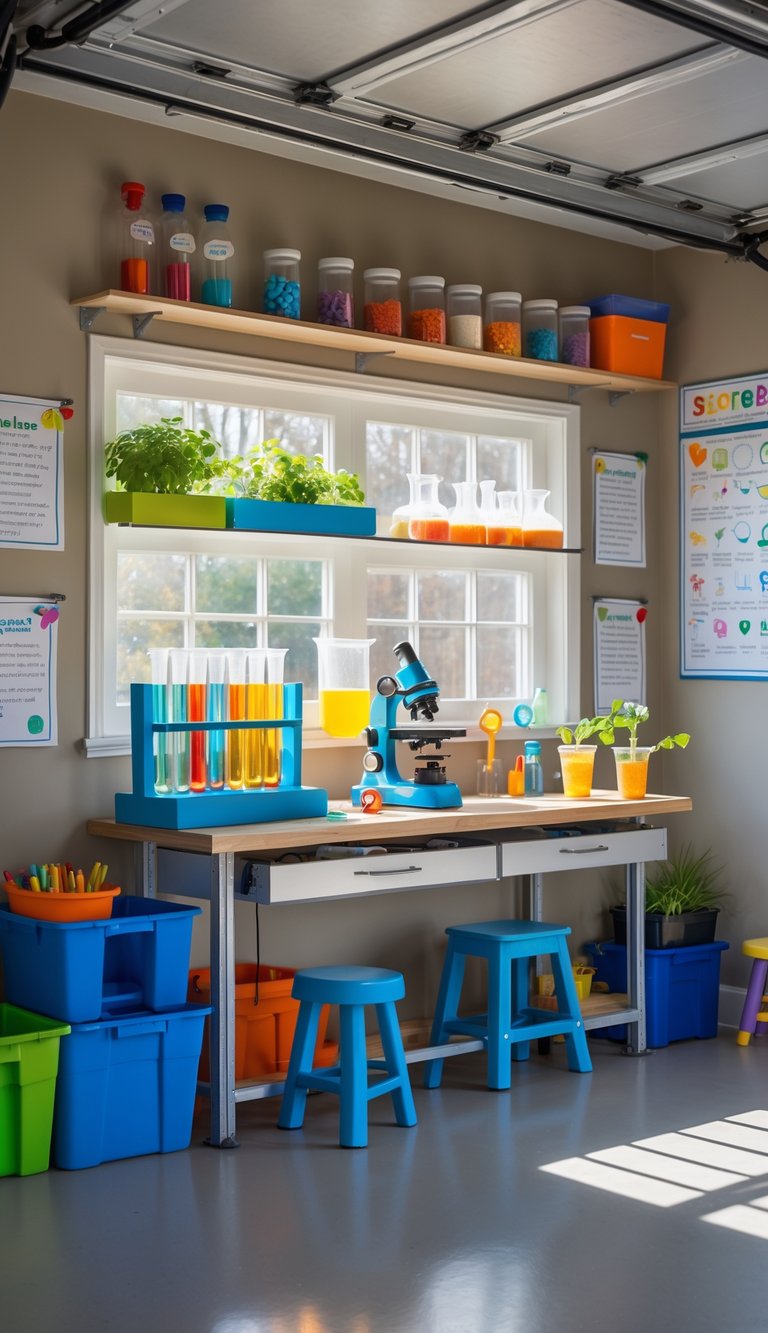
You can set up a small table or shelf with clear bins for tools, materials, and instructions. Keep experiments short and safe so kids stay excited and curious.
Choose activities that use common household items like baking soda, vinegar, food coloring, and magnets. These let kids see cause and effect quickly, from fizzing reactions to floating and sinking tests.
Label each station with simple steps and a safety reminder. Offer goggles, gloves, and a waste bin so cleanup stays fast and safe.
PRO TIP
Rotate experiments every week to keep things fresh. Swap in new materials and a short challenge so your kids keep coming back.
15) Create a cozy nap area with mats and blankets
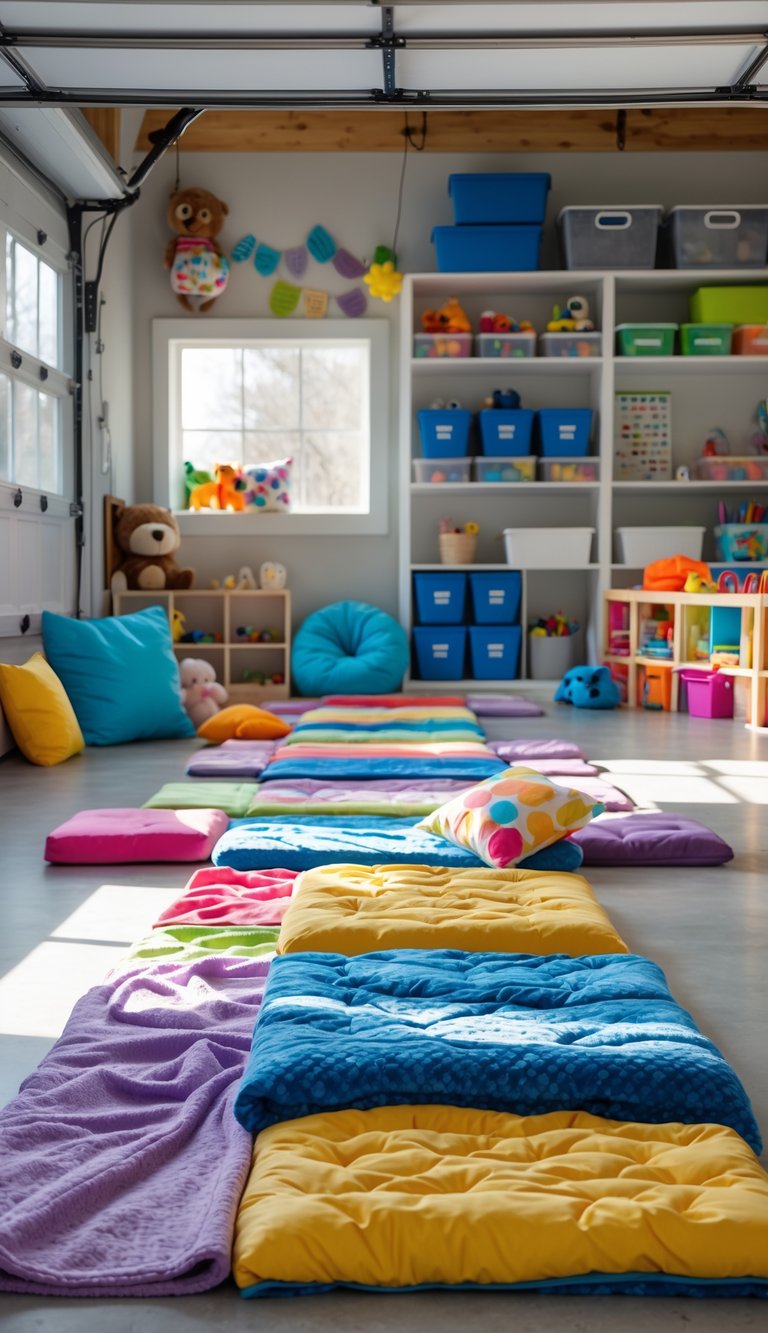
You can set up a calm spot in the garage for quiet time with simple mats and soft blankets. Lay down foam nap mats or foldable play mats to give kids a cushioned base that is easy to clean.
Add lightweight blankets and a few small pillows for comfort. Choose washable fabrics and store extras in a nearby bin so you can swap them out quickly.
Keep the area low-traffic and slightly separated from loud play zones. A small room divider, rug, or even a painted line on the floor helps signal that this space is for resting.
PRO TIP
Use calming colors and dimmable lighting to help kids settle down faster. A portable white-noise machine or soft instrumentals can also make naps more consistent.
16) Use wall-mounted hooks for hanging costumes and gear
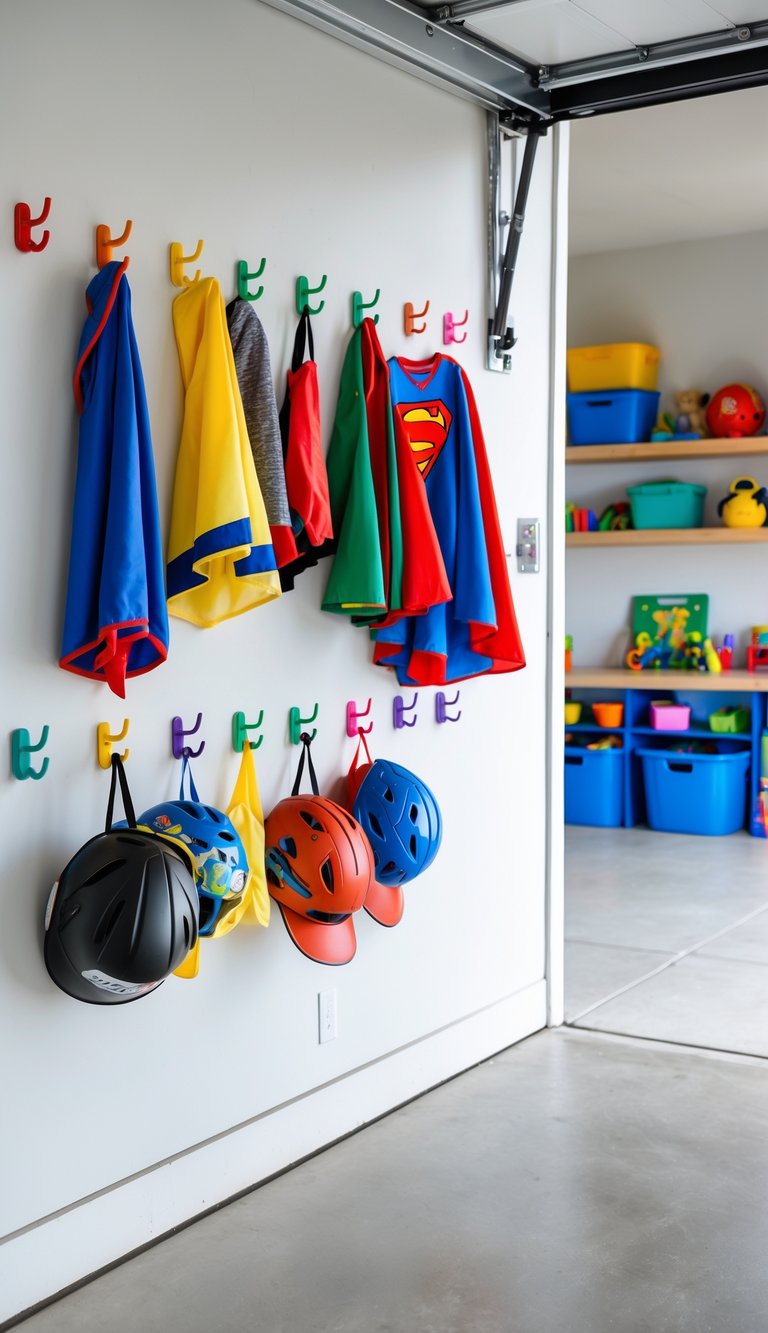
Wall-mounted hooks free up floor space and keep costumes and gear easy to find. You can hang capes, helmets, backpacks, and props so they stay neat and dry.
Install hooks at kid-friendly heights so children can reach their own items. Mix small hooks for masks and accessories with larger ones for coats and helmets.
Choose sturdy metal or heavy-duty plastic hooks that hold weight without bending. Space them out so costumes don’t overlap and get wrinkled or snagged.
PRO TIP
Label each hook or use color coding to help kids put things back in the right spot. Removable hooks work well if you want to change the layout later.
17) Set up a DIY car wash play area with sponges and buckets
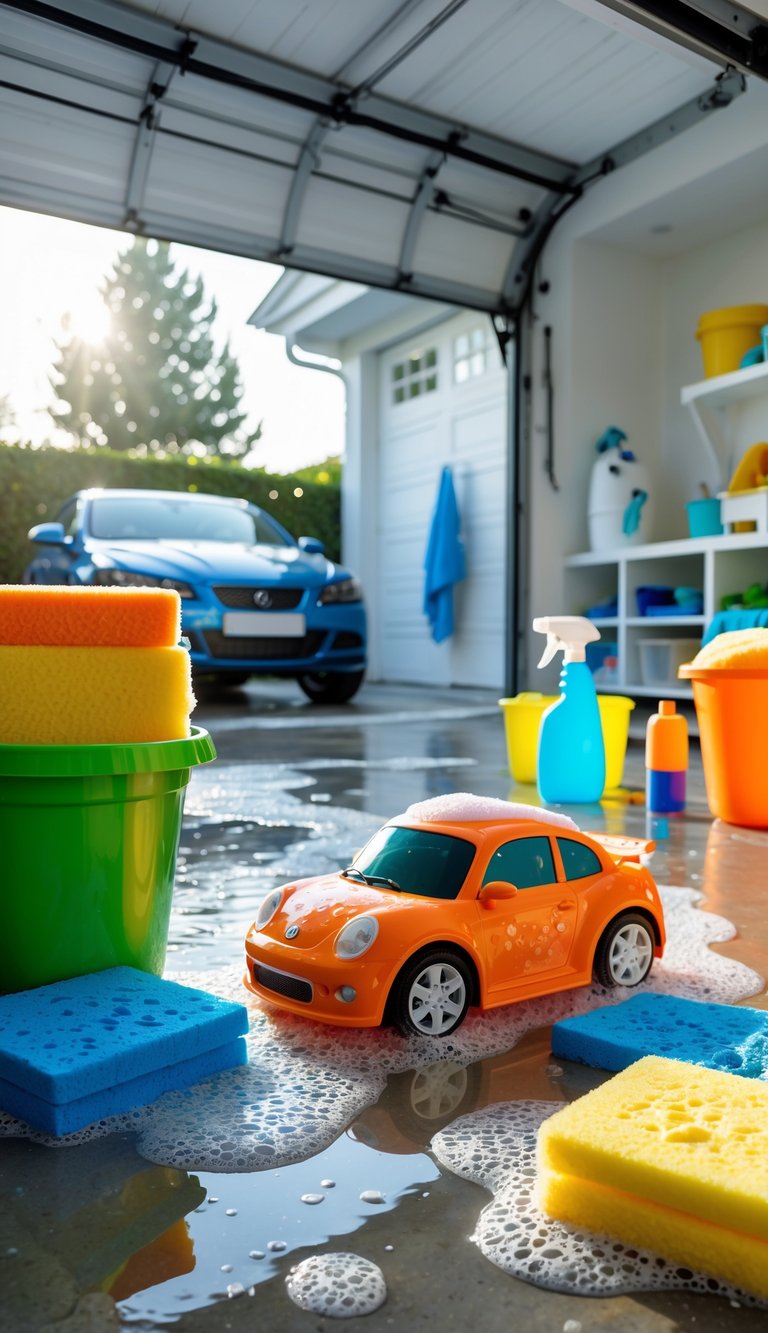
Turn part of your garage into a car wash where kids wash toy cars or small bikes. Put down towels or a plastic sheet to catch water, and line up buckets of soapy water, clean rinse water, and sponges.
Let kids move between stations: soap, scrub, and rinse. Add spray bottles or a small hose with a gentle spray if space and weather allow. Keep a tub of clean towels nearby for drying and quick changes.
This activity builds fine motor skills and gives kids a chance to role-play. It also stays simple: everyday items, low cost, and easy cleanup make it a go-to for rainy-day or warm-weather play.
PRO TIP
Use a shallow kiddie pool as the rinse station to contain water.
18) Add a miniature kitchen play set
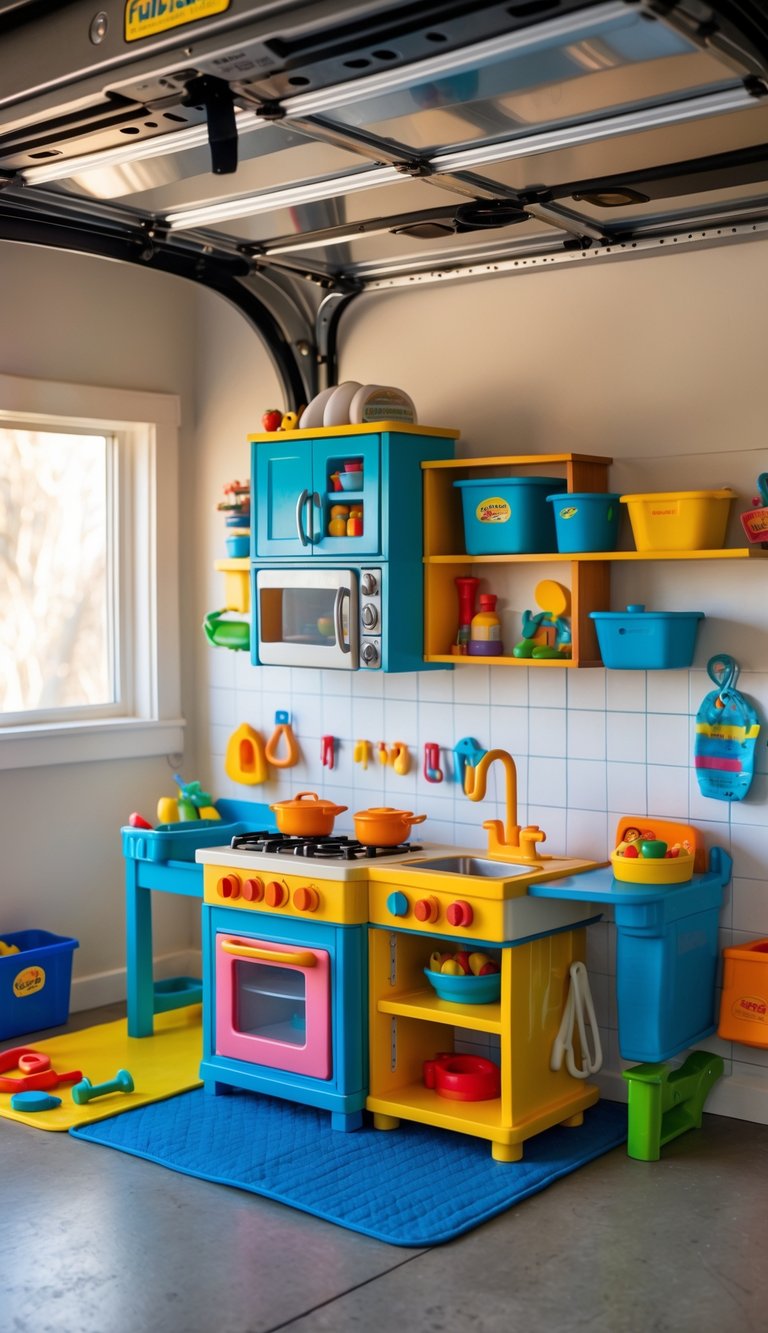
A play kitchen brings pretend cooking into your garage activity zone. Kids love copying real-life chores, and a small kitchen gives them a safe place to practice.
Place the set near shelves for toy dishes and play food. Keep it away from tools and chemical storage to avoid hazards.
Choose a sturdy, age-appropriate model with few small parts. Add a mat underneath to define the space and protect the floor.
PRO TIP
Rotate accessories every few weeks to keep play fresh. Include a small basket for tidy-up to teach responsibility while keeping the area neat.
19) Include a large whiteboard for creative drawing and note-making
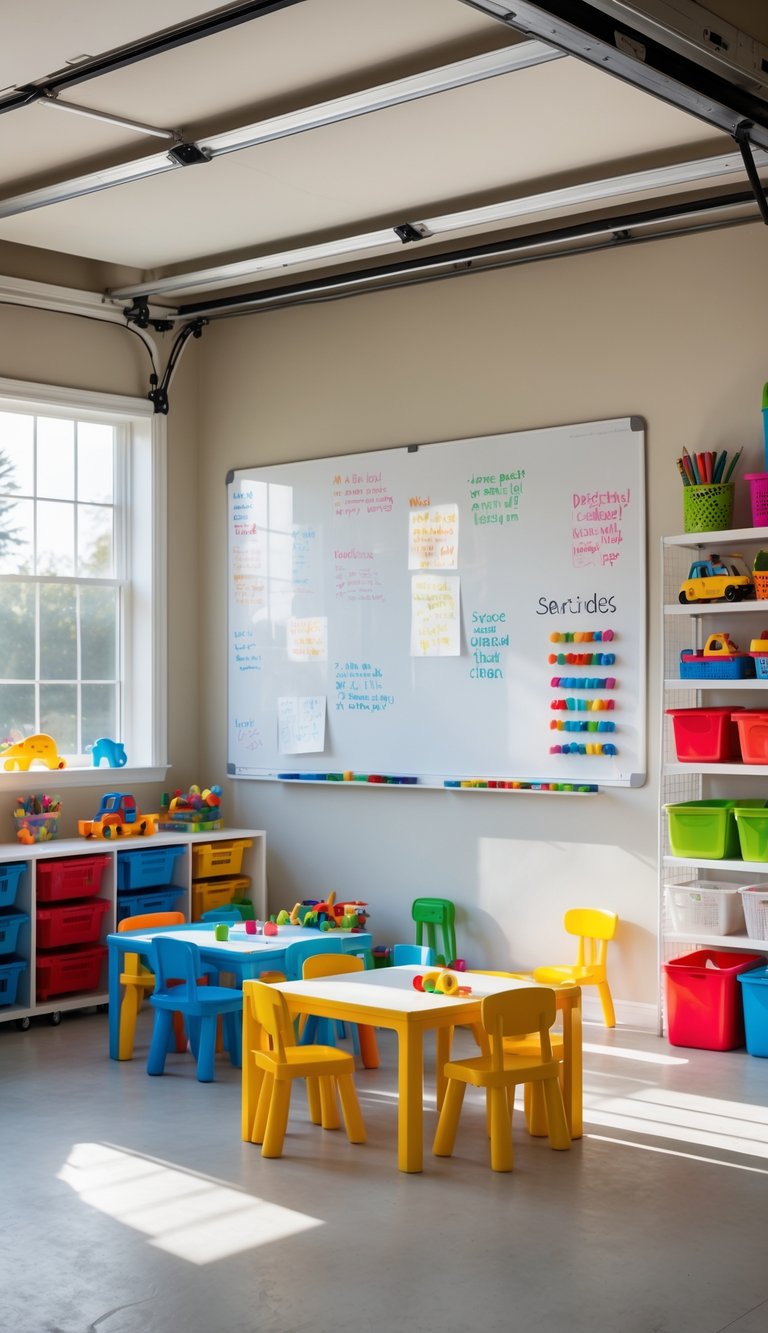
A big whiteboard gives your kids a place to draw, plan projects, and practice lessons. You can mount it on a wall or use a rolling board so it moves with activities.
Whiteboards work for art, math, and storytelling. Let children erase and start over; that freedom boosts creativity and reduces waste.
Keep markers, erasers, and rulers in a nearby tray or caddy. Label supplies so kids can find and return items easily.
Place the board at kid height and use magnets if the board is magnetic. That way you can add printouts, photos, or magnetic letters for extra play.
PRO TIP
Use low-odor, child-safe markers and a soft cloth for cleaning. Change drawing themes weekly to keep interest high.
20) Design a puppet theater with storage for puppets
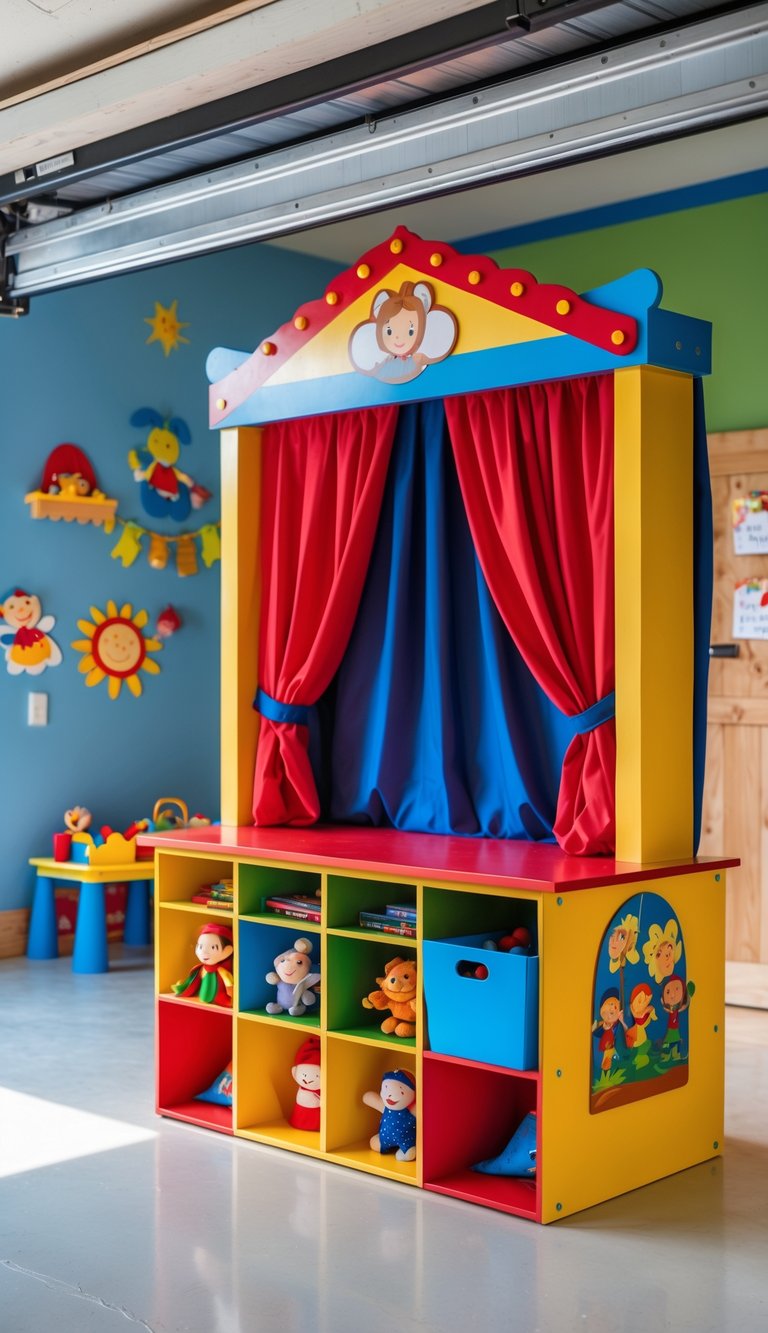
Create a simple puppet theater along one garage wall to spark play and storytelling. Use plywood or an old cabinet for the stage and add a curtain that kids can open and close.
Build cubbies or shallow drawers under the stage to hold puppet boxes, props, and scripts. Clear bins or labeled baskets keep things tidy and help kids find their favorite characters fast.
Mount a pegboard or small shelves beside the theater for extra storage and to display puppets between shows. This keeps the floor clear and makes cleanup part of the routine.
PRO TIP
Attach Velcro or magnetic strips inside bins so small puppet parts don’t get lost. Keep a marker and notepad nearby for quick script notes and sign-up lists.