Last Updated on September 11, 2026
New RV registrations fell more than 24% in February 2026 compared to the year before, yet used RV sales quietly climbed [10]. That single fact tells you almost everything about the current market for RVs recreational vehicles. Buyers are cautious. Dealers are motivated. And the people who understand the numbers are getting better deals than ever.
This guide breaks down everything a buyer needs to know about RVs recreational vehicles in 2026. It covers the types of rigs on the market, what is really happening with prices and inventory, how to decide between new and used, and what ownership actually costs once you drive off the lot. Whether this is a first purchase or a fifth, this guide is built to make the decision simple and the ownership experience smooth.
Key Takeaways
- New RV sales dropped sharply in early and mid-2026, while used RV sales held steady or grew, giving buyers more negotiating power on new inventory [5][10].
- Travel trailers remain the most popular RV type, making up about 75% of shopper interest in early 2026 [3].
- Total ownership costs go far beyond the sticker price. A financed new Class C motorhome can cost $1,200 to $1,800 a month, while a paid-off travel trailer used occasionally may cost only $300 to $600 a month [9].
- Manufacturers slowed production in late 2025 and into 2026 to match softer demand, which is shrinking new inventory but keeping used inventory more available [4][5].
- Careful budgeting for fuel, insurance, storage, and maintenance is just as important as the purchase price when choosing among RVs recreational vehicles.
What Are RVs Recreational Vehicles? Types, Classes, and Key Differences
An RV is a vehicle built for living and traveling at the same time. It has a bed, a place to cook, and a place to sit, all packed into one moving box. Some RVs have their own engine. Others get pulled by a truck or SUV. Both kinds fall under the same big label: RVs recreational vehicles.
Picking the right type matters more than picking the right brand. Here is a simple breakdown of the main categories buyers compare most often.
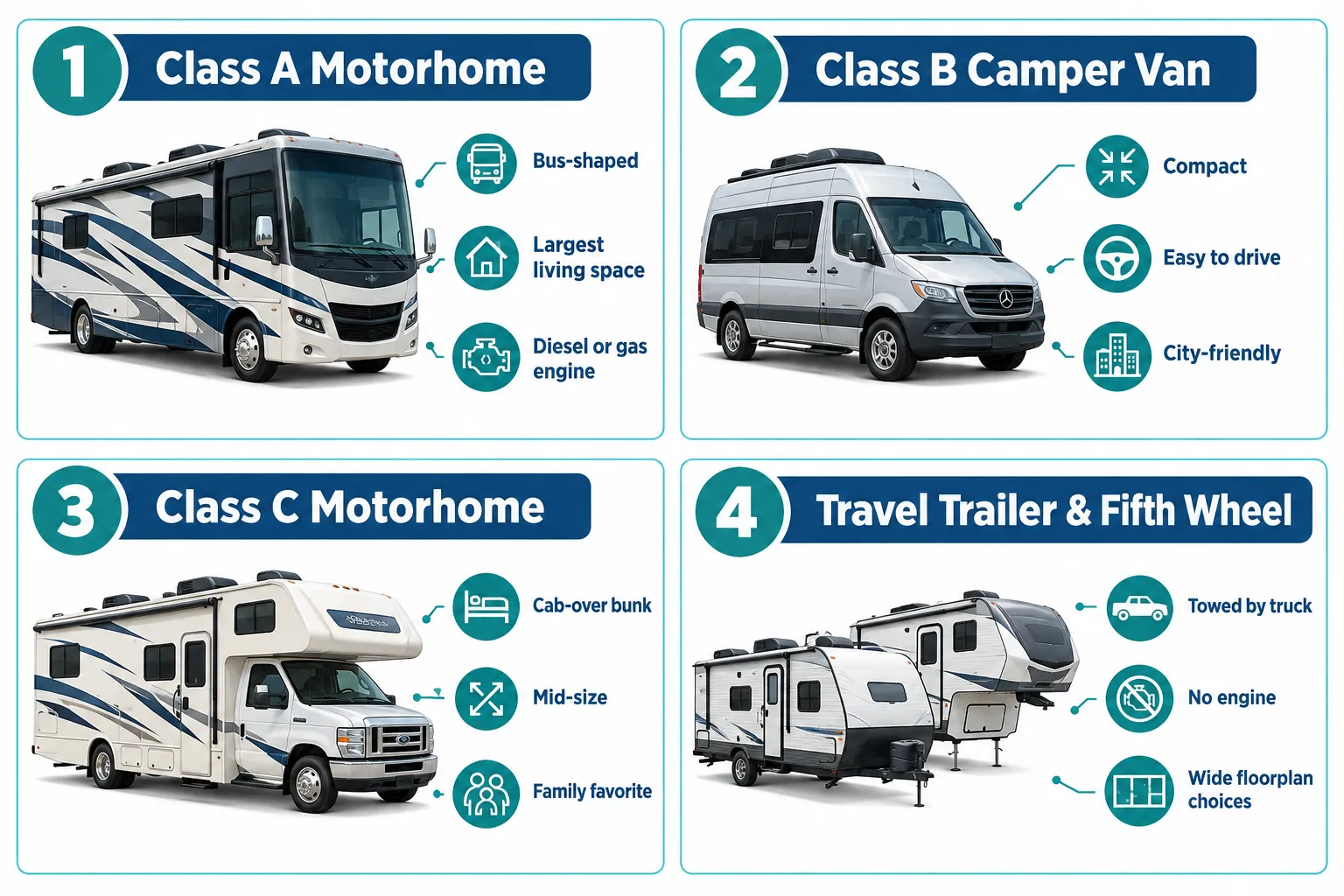
Motorized RVs (have their own engine):
| Class | Best For | Typical Length | Notes |
|---|---|---|---|
| Class A | Full-time living, long trips | 30-45 feet | Bus-shaped, largest living space, higher fuel cost |
| Class B | Solo or couple travel, daily driving | 17-24 feet | Van-based, easy to park, most fuel efficient |
| Class C | Families, weekend trips | 20-33 feet | Cab-over bunk, easier to drive than Class A |
Towable RVs (pulled by a truck or SUV):
| Type | Best For | Notes |
|---|---|---|
| Travel Trailer | Most buyers, flexible sizes | No engine to maintain, cheapest entry point |
| Fifth Wheel | Bigger families, more storage | Needs a pickup truck with a special hitch |
| Pop-Up / Camping Trailer | Occasional campers | Lightweight, can often be towed by a regular car |
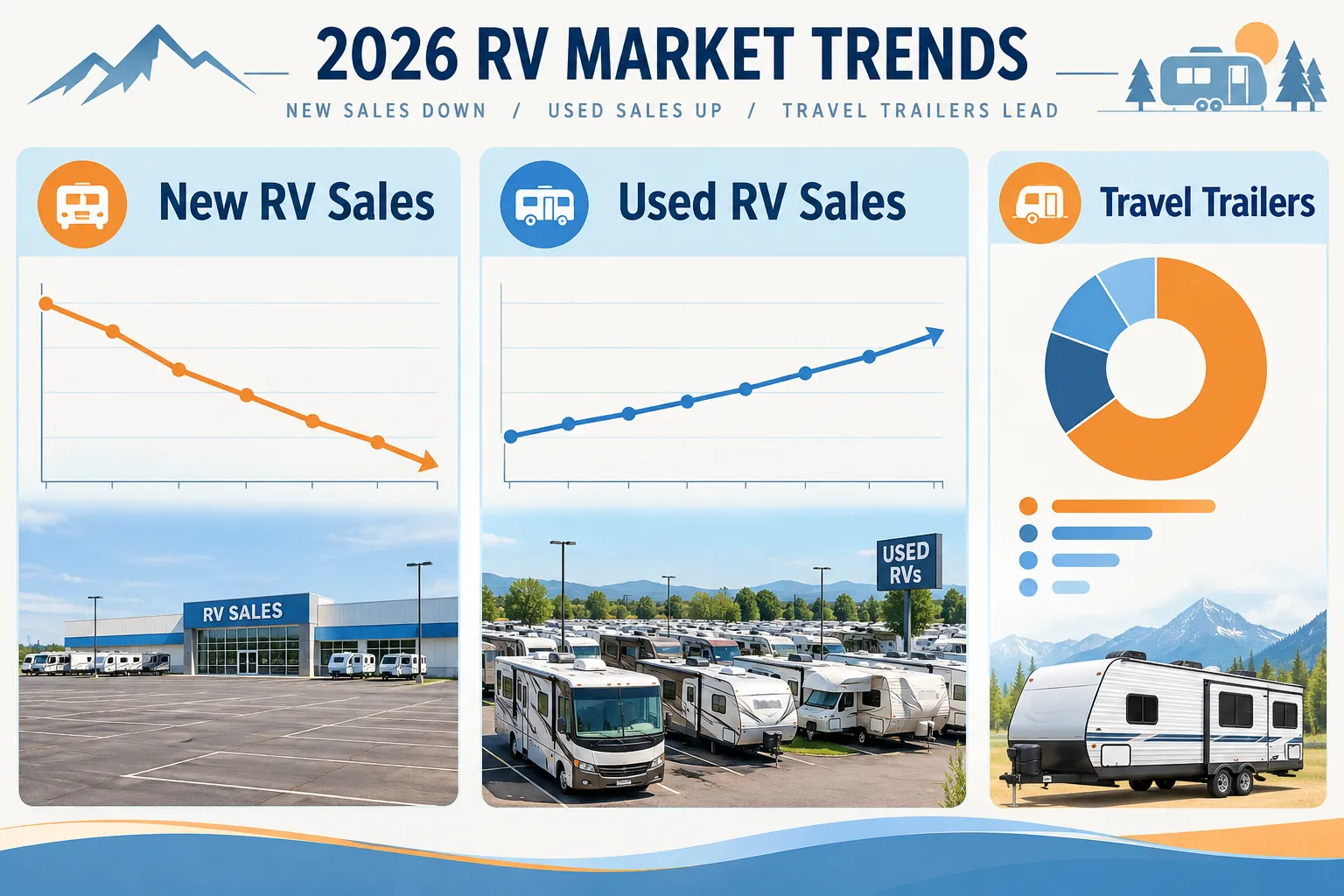
Travel trailers are the clear favorite in today’s market. A Q1 2026 market report found travel trailers made up about 75% of consumer shopping views and 82% of finance-and-insurance activity, with the standard hitch travel trailer holding an average value near $25,565 [3]. Camping trailers, the smaller pop-up style units, were the only segment where 2026 values actually beat both 2025 and 2024, landing around $11,628 [3]. That tells buyers something useful: smaller, simpler rigs are holding their value better than bigger ones right now.
Before choosing a class, think about three things. First, how many people will sleep in it. Second, whether a driver in the household is comfortable driving or towing something large. Third, whether the household already owns a truck strong enough to tow a trailer. Answering these three questions narrows the choice fast.
For readers cross-shopping other big purchases, the same budgeting logic used for buying a used car applies here too: know the real market value before setting a budget.
The 2026 RVs Recreational Vehicles Market: Sales Trends, Prices, and Buyer Leverage
The RV market is sending mixed signals in 2026, and buyers need to understand both sides of the story.
On one hand, the long-term forecast is positive. The RV Industry Association’s Spring 2026 RV RoadSigns forecast projects wholesale shipments will grow modestly this year, landing somewhere between 328,800 and 367,000 units, with a median estimate near 349,000 units. That would build on the 342,200 units shipped in 2025 and mark a third straight year of industry growth [1].
On the other hand, the short-term data tells a rougher story. July 2026 wholesale shipments were down 11.9% compared to July 2025. Cumulative shipments through June 2026 reached only 110,259 units, a 16.4% drop from the 131,957 units shipped over the same period in 2025 [5][7]. Independent market trackers reported double-digit declines in new RV sales across both motorized and towable segments in October and November of 2025, as buyers pulled back and became more careful with big purchases [4][6].
New RV registrations kept falling into early 2026. February 2026 new registrations dropped 24.12% year-over-year, with motorized RVs down 31.24% and towable units down 22.96%. Used RV sales moved the opposite direction, rising 1.57% in the same month, led by strong gains in Class B vans (up 7.27%), Class A motorhomes (up 4.99%), and fifth wheels (up 2.24%) [10].
“New unit sales in many categories saw steep declines even as used sales in the same categories climbed”, a pattern that has repeated across nearly every month of early 2026 [10].
What does this mean for someone shopping right now? A few things:
- Dealers have more new units sitting on lots than they want. That usually means more room to negotiate.
- Inventory is shrinking fast, though. New RV listings on a major online marketplace fell from about 125,235 units to 94,151 units between early July and August 5, 2026, a 24.8% drop in just one month and a 23.5% drop compared to the same time in 2025 [5]. Used listings only dipped slightly month-over-month and sat about 8% below year-ago levels [5]. That means the window for negotiating on new inventory may be closing.
- Manufacturers are under pressure. Winnebago and Thor, two of the largest RV builders, both missed earnings expectations in August 2026, reinforcing the slowdown story and pushing companies toward disciplined production, sharper pricing on certain models, and stronger dealer support programs to move stock [5].
- Trade rules are shifting supply chains. In August 2026, the U.S. International Trade Commission was reviewing antidumping and countervailing duty cases involving hardwood and decorative plywood imported from Indonesia, China, and Vietnam. The RV Industry Association flagged this as a potential issue for RV component sourcing and costs [8]. Meanwhile, Canadian and U.S. dealer groups confirmed the RV sector narrowly avoided a fresh round of Canadian tariffs that could have pushed consumer prices higher [8][11].
There is also a bright spot worth noting. RV show attendance dropped in early 2026 compared to prior years, but the mix of people attending changed. Dealers reported that a higher share of show visitors were serious, ready-to-buy shoppers rather than casual browsers, and many dealers saw sales that matched or beat the year before. Buyer interest has also shifted toward efficient floorplans and newer onboard technology, rather than simply chasing the biggest rig on the lot [2].
For anyone tracking value trends closely, comparing notes with NADAguides vehicle pricing data is a smart habit before making an offer, since pricing benchmarks shift monthly in a market this active.
New vs. Used RVs Recreational Vehicles: Which Path Fits Your Budget
This is the single biggest fork in the road for most buyers. The 2026 data actually makes the decision easier than it has been in years, because the two markets are moving in opposite directions.
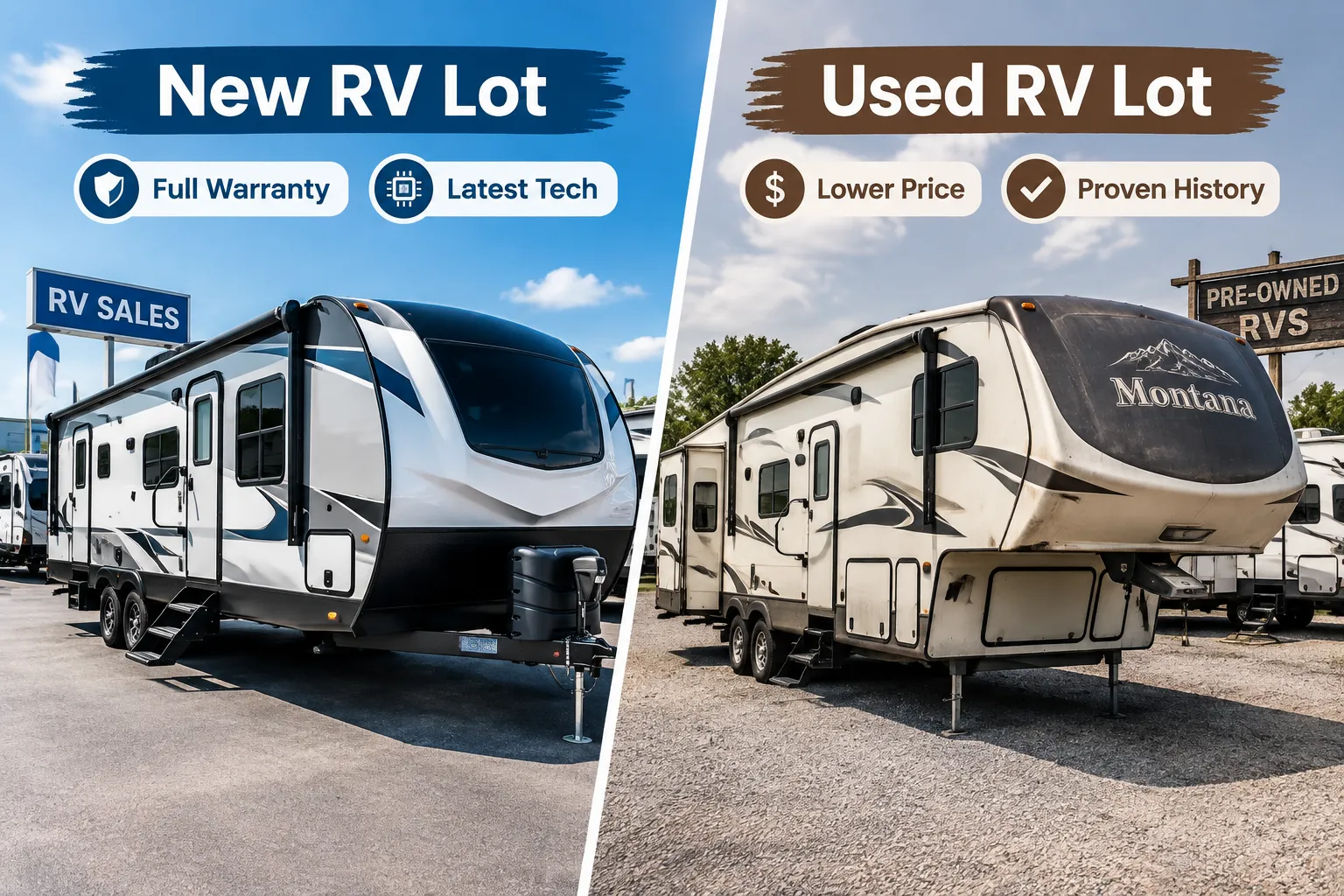
New units come with full warranties, the newest technology, and zero prior wear. But new RV sales fell hard across almost every category in early and mid-2026 [10], which tells buyers that demand is soft and dealers likely have room to move on price. The catch is that new inventory is shrinking fast. Fewer new units were listed for sale by August 2026 than a year earlier, which means fewer choices and less time to shop around before the best units sell [5].
Used units are the quieter winner in this market. Sales of used RVs actually grew in February 2026, even while new sales in the same categories dropped by double digits [10]. Used Class B camper vans, Class A motorhomes, and fifth wheels all posted gains that month. Used inventory levels also stayed more stable through the summer of 2026 compared to new inventory [5]. In plain terms: there are more used RVs to choose from, and more buyers are choosing them.
Here is a simple side-by-side to help decide:
| Factor | New RV | Used RV |
|---|---|---|
| Price flexibility | High right now, but inventory is shrinking | Moderate, prices have been stable |
| Warranty coverage | Full manufacturer warranty | Limited or none, unless certified pre-owned |
| Technology | Latest solar, smart systems, safety tech | Depends on model year |
| Depreciation risk | Highest in first five years | Already absorbed by prior owner |
| Inventory availability | Falling sharply in 2026 [5] | Holding steady [5] |
| Sales momentum | Down double digits in most segments [10] | Up in Class B, Class A, and fifth wheels [10] |
A useful rule of thumb: if budget is the top priority, a used unit almost always wins. If long-term reliability with zero prior use matters more, a new unit with a strong warranty may be worth the extra cost, especially while dealers are motivated to negotiate.
Buyers who have shopped for certified pre-owned vehicles in the car market will recognize the same logic applies to RVs. A certified used RV, inspected and backed by a dealer warranty, often splits the difference between price and peace of mind.
It also helps to learn from people who have already made the leap. Real owner accounts of buying a new motorhome, including the surprises they didn’t expect, are collected in this breakdown of RV owners’ experiences with new motorhomes, both good and bad. Reading real stories before signing paperwork is one of the smartest steps a buyer can take.
The Real Cost of Owning RVs Recreational Vehicles: Budgeting Beyond the Price Tag
The sticker price is only the entry fee. The real cost of owning RVs recreational vehicles shows up month after month, year after year, in loan payments, fuel, insurance, campground fees, and repairs. Skipping this step is the number one reason buyers regret a purchase.
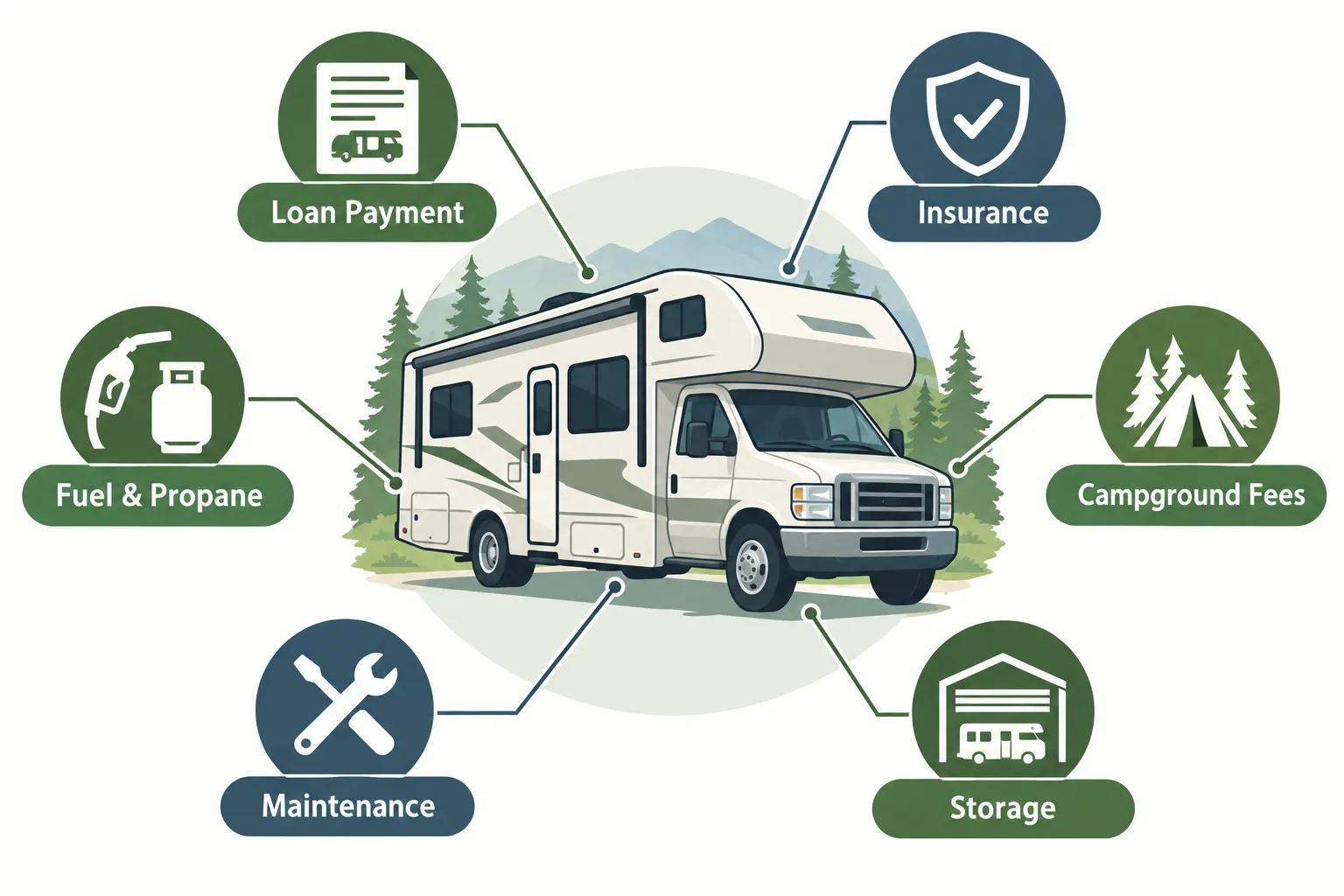
A 2026 ownership cost guide lays out the full range buyers should expect:
- Purchase price: roughly $40,000 to $250,000 new, with large motorhomes and fifth-wheels at the top end [15].
- First five-year depreciation: typically $6,000 to $75,000, depending on the model and how much demand exists for it on the resale market [15].
- Annual fuel and propane: about $2,000 to $12,000 a year, depending on how far and how often the RV travels [15].
- Annual maintenance and repairs: generally $500 to $6,000 a year [15].
Updated 2026 cost calculators break this down by lifestyle, which is more useful than a single flat number:
| Ownership Style | Typical Annual Cost | Typical Monthly Cost |
|---|---|---|
| Financed new Class C motorhome | $14,000 to $22,000 | $1,200 to $1,800 |
| Full-time Class A motorhome | $25,000 to $40,000 | Varies widely |
| Paid-off travel trailer, used occasionally | $4,000 to $7,000 | $300 to $600 |
Source: seasoned RV owner cost calculator data for 2026 [9]
These numbers include the loan payment, insurance, fuel, campground fees, maintenance, memberships, and storage. Notice the huge gap between a financed motorhome and a paid-off travel trailer. That gap is exactly why travel trailers remain the most popular category among RVs recreational vehicles shoppers today [3].
A few budgeting tips worth following before signing any paperwork:
- Add up every recurring cost, not just the loan payment. Insurance, storage, and campground fees add up fast.
- Check depreciation before buying, not after. A detailed motorhome valuation and depreciation guide can help estimate what a rig will be worth in three or five years, which matters if there is any chance of selling or trading later.
- Build a maintenance reserve fund. Systems like the roof, plumbing, and appliances all need attention over time. A full breakdown of what to expect is covered in this RV maintenance guide covering systems, seasonal prep, and repairs.
- Avoid impulse add-ons at the dealership. Some accessories and upgrades sound appealing on the lot but rarely get used. This list of things RV owners often regret buying is worth a read before adding extras to the deal.
Pull quote worth remembering:
Budgeting for RVs recreational vehicles means planning for the whole year, not just the day of purchase.
Step-by-Step: How to Buy an RV the Smart Way
Buying an RV does not have to feel overwhelming. Breaking it into clear steps keeps the process calm and controlled.
Step 1: Decide how the RV will actually be used. Weekend trips, long road trips, or full-time living all point toward different classes of RVs recreational vehicles. Be honest about how many nights per year it will realistically get used.
Step 2: Set a total budget, not just a purchase price budget. Use the cost ranges above as a starting point. Add loan payments, insurance, fuel, and storage together before deciding what price range to shop in.
Step 3: Research current market values. Prices shift often, especially in a market this active. Checking current values before negotiating is just as important for an RV as it is for a car. This guide on checking used vehicle value before buying explains the same core principles that apply to RV shopping.
Step 4: Compare new inventory against used inventory side by side. Given that new inventory dropped by nearly a quarter in a single month during summer 2026, while used listings held closer to steady, it pays to check both before locking in a decision [5].
Step 5: Get a full inspection, even on new units. Manufacturing defects happen. A pre-delivery inspection catches problems before they become expensive headaches.
Step 6: Review financing terms carefully. RV loans often stretch 10 to 20 years. A longer loan lowers the monthly payment but increases total interest paid and raises the risk of owing more than the RV is worth.
Step 7: Walk through common buying mistakes before signing. Many first-time buyers repeat the same errors. A detailed list of common RV buying mistakes and a companion guide on mistakes to avoid when buying an RV both cover the traps that catch new buyers most often, from underestimating towing capacity to skipping a test drive.
Step 8: Negotiate with current market conditions in mind. Since new sales fell sharply in 2026 while used sales climbed, buyers shopping new units have real leverage right now. Use that leverage, but move quickly since new inventory is shrinking [5][10].
Keeping Your RV Running: Maintenance, Storage, and Resale Value
Ownership does not end at the purchase. Keeping an RV in good shape protects both safety and resale value.
Seasonal maintenance basics:
- Check the roof seals every few months for cracks or soft spots.
- Winterize plumbing lines before freezing temperatures hit.
- Test batteries, propane systems, and smoke detectors before every long trip.
- Inspect tires for age and wear, since RV tires often crack from sun exposure before they wear out from mileage.
A full walkthrough of these systems, along with seasonal prep checklists, is available in this complete RV maintenance guide, which covers everything from roof care to appliance servicing in more depth than a single article can.
New owner reality check: A lot of first-time buyers worry about the wrong things. Some stress over minor cosmetic issues while ignoring bigger safety systems. This guide on things new RV owners shouldn’t worry about helps separate real problems from normal wear and tear.
Traveling with pets: Many RV owners travel with dogs or cats, and it changes how the rig should be set up and maintained. Practical advice on this topic is covered in tips RV pet owners should know.
Storage matters more than people think. An RV left outside year-round ages faster than one kept under cover. Covered storage costs money, but it protects resale value, especially for buyers planning to sell or trade within five years.
Resale value planning. Since first-five-year depreciation on RVs can range from $6,000 to $75,000 depending on the model [15], keeping detailed maintenance records and avoiding heavy customization helps protect resale value down the road. A full breakdown of how depreciation works across different RV types is available in the motorhome valuation and depreciation guide referenced earlier in this article.
Frequently Asked Questions
Is now a good time to buy an RV? It depends on the type. New inventory is shrinking fast, but dealers are still motivated to sell after months of soft new sales [5][10]. Used inventory is holding steady, giving buyers more time to compare options without rushing [5].
Why are new RV sales falling while used RV sales are rising? Buyers became more cautious through late 2025 and early 2026, pulling back on big new purchases. Manufacturers slowed production to match that softer demand, while more shoppers turned to the used market for better value [4][6][10].
What type of RV holds its value best? Camping trailers, the smaller pop-up style units, were the only segment where 2026 values beat both 2025 and 2024 in early-year market data [3]. Smaller, simpler rigs tend to hold value better than very large motorhomes.
How much should someone budget per year to own an RV? It ranges widely by lifestyle. A financed new Class C motorhome used part-time can run $14,000 to $22,000 a year. A paid-off travel trailer used occasionally can cost as little as $4,000 to $7,000 a year [9].
Should a first-time buyer choose a motorized RV or a towable RV? Towable RVs, especially travel trailers, are the most popular choice and often the most budget-friendly entry point, since there is no engine to maintain and no separate vehicle payment beyond the tow vehicle already owned. For buyers exploring lower-cost options, this guide to budget-friendly RVs for 2026 is a good next stop.
Conclusion
The market for RVs recreational vehicles in 2026 is unusual. New sales are falling fast, used sales are climbing, and manufacturers are under real pressure to move inventory [5][10]. That combination creates a rare window for buyers who do their homework.
The path forward is simple. Decide how the RV will actually be used. Compare new and used honestly, using the current market data rather than guesswork. Budget for the full year of ownership, not just the loan payment. And lean on real tools and real records, from valuation guides to maintenance checklists, before signing anything.
Next steps worth taking this week: check current values on the specific make and model being considered, calculate a full annual ownership budget using the ranges in this guide, and read through the common buying mistakes covered above before stepping onto a dealer lot. A little preparation now prevents an expensive surprise later.
References
[1] 2026 Rv Wholesale Shipments Rise Modestly – https://www.rvia.org/news-insights/2026-rv-wholesale-shipments-rise-modestly [2] Rv Industry Trends 2026 What Show Season New Tech And Market Shifts Mean For Buyers – https://www.bishs.com/blog/rv-industry-trends-2026-what-show-season-new-tech-and-market-shifts-mean-for-buyers/ [3] 2026 Q1 Recreational Vehicle Market Report Rv Values Segment Trends Industry Outlook – https://www.jdpowervalues.com/article/2026-q1-recreational-vehicle-market-report-rv-values-segment-trends-industry-outlook [4] Q2 2026 Recreational Vehicles Market Update – https://www.blackbook.com/market-insights/q2-2026-recreational-vehicles-market-update/ [5] Rv News Is It Time To Buy A New Rv August 2026 – https://johnmarucci.com/2026/08/06/rv-news-is-it-time-to-buy-a-new-rv-august-2026/ [6] Q1 2026 Recreational Vehicles Market Update – https://www.blackbook.com/market-insights/q1-2026-recreational-vehicles-market-update/ [7] Top Story – https://rvbusiness.com/category/top-story/ [8] Top Rv News Aug 20 2026 Rvbusiness Grivf – https://www.linkedin.com/pulse/top-rv-news-aug-20-2026-rvbusiness-grivf [9] Rv Cost Calculator – https://seasonedrv.com/tools/rv-cost-calculator [10] State Of The Rv Industry February 2026 – https://www.statisticalsurveys.com/2026/04/08/state-of-the-rv-industry-february-2026/