
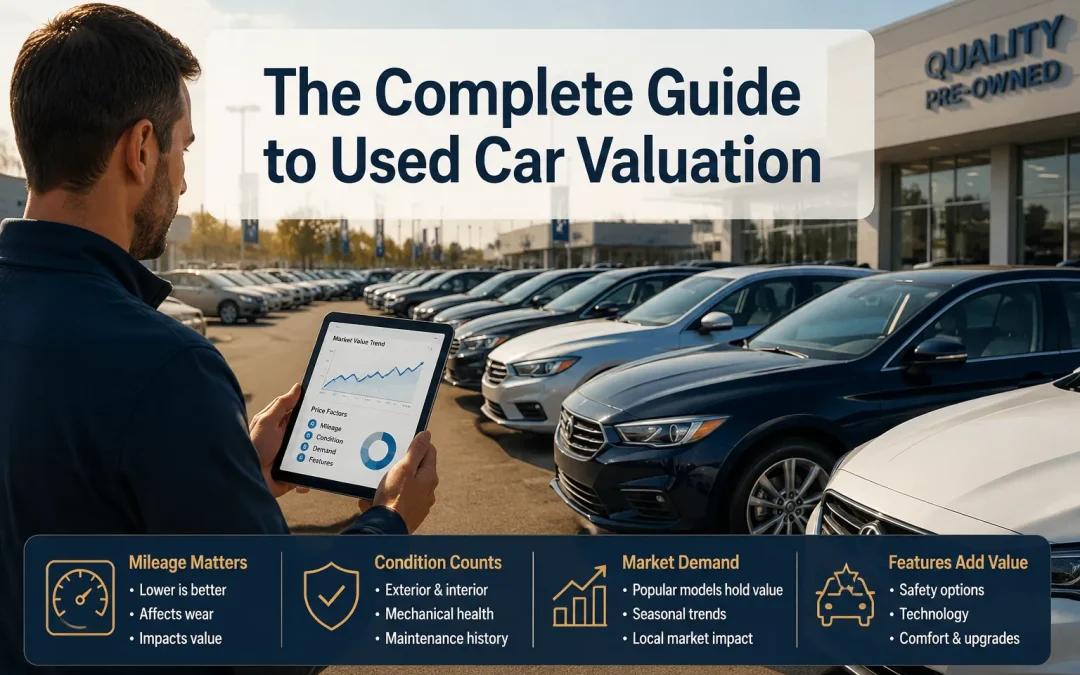
Last Updated on September 4, 2026
A used car that sold for $19,000 last year might sell for $21,000 today, even with more miles on it. That is not a typo. It is the strange math of the current used car market. If you plan to buy, sell, or trade a vehicle in 2026, understanding used car valuation is not optional anymore. It is the difference between paying a fair price and losing thousands of dollars on a bad deal.
Average used car prices have climbed back above $26,000 [9], and the gap between what cars cost now and what they cost in 2019 has grown wider than most buyers realize [3]. At the same time, wholesale values are starting to slide down from their summer highs [8], which means the market is shifting under everyone’s feet. This guide breaks down exactly how used car valuation works, how tools like NADA, Kelley Blue Book, and Edmunds set their numbers, and how you can use that information to get a fair deal.
Key Takeaways
- Used car valuation tools like NADA, KBB, and Edmunds use sales data, condition, mileage, and location to estimate a fair price.
- Average used car prices are again above $26,000, and affordability has worsened sharply compared with 2019 [9][3].
- Wholesale prices are cooling from their mid-year peak, but retail prices are staying high because inventory is tight, especially under $15,000 [8].
- Kelley Blue Book’s “Fair Market Range” and “Fair Purchase Price” are two different numbers that serve different purposes, and mixing them up costs buyers money [4].
- Checking more than one valuation source, and comparing it against local listings, gives the most accurate real-world price.
Why Used Car Valuation Matters More Than Ever in 2026
Prices have not calmed down the way many buyers hoped. Used car prices rose again in August 2026, marking another jump instead of the steady drop that was expected [1]. Year-over-year figures still show used car prices growing, even if the growth rate has slowed from the wild swings of a few years ago [3].
This matters because a car is often the second-biggest purchase a family makes, right after a house. Getting the number wrong by even a few thousand dollars can wreck a budget. A solid used car valuation protects you in three ways:
- It stops you from overpaying at a dealership.
- It helps you negotiate a fair trade-in value instead of accepting the first offer.
- It protects you when applying for a loan, since lenders often check NADA or J.D. Power numbers before approving financing.
Buyers who skip this step are flying blind. Sellers who skip it often leave money on the table. Either way, guessing is expensive.
How Used Car Valuation Works: NADA, KBB, and Beyond
There is no single “official” price for any used car. Instead, several companies collect huge amounts of sales data and build their own pricing models. Each one uses slightly different math, which is why the same car can show three different numbers on three different websites.
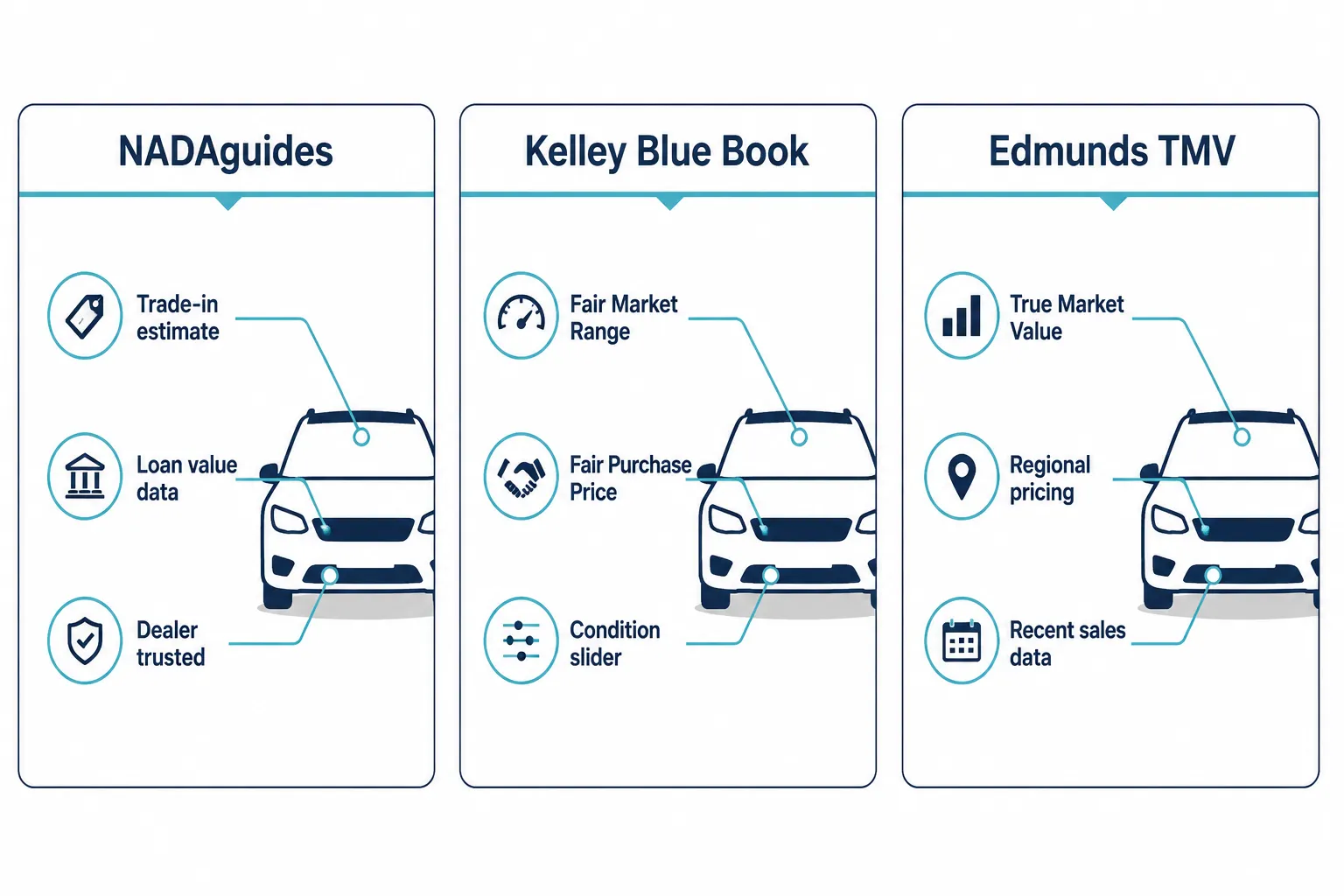
Here is a simple breakdown of the major players:
| Tool | What It Focuses On | Best Used For |
|---|---|---|
| NADAguides / J.D. Power | Trade-in, loan, and retail values based on auction and dealer data | Lenders, dealers, trade-ins |
| Kelley Blue Book (KBB) | Fair Market Range and Fair Purchase Price | Private sales, negotiating at a dealership |
| Edmunds TMV | True Market Value based on recent local sales | Comparing what people actually paid |
| CARFAX Value Range | Segment and history-based pricing | Checking price against vehicle history |
NADAguides and J.D. Power Valuations
NADAguides, now closely tied to J.D. Power, has long been a trusted source for lenders and dealers. It pulls from auction results, dealer sales, and wholesale data to build trade-in, loan, and retail estimates. Because banks and credit unions often use these numbers to decide how much they will lend on a vehicle, understanding this system before you buy or sell gives you a real advantage. For a deeper walkthrough, see this complete NADA guide to checking used car value before buying, and this overview of Nadaguides vehicle pricing.
Kelley Blue Book Fair Market Range and Fair Purchase Price
Kelley Blue Book uses two related but different numbers. The Fair Market Range shows a spread of prices based on the car’s condition, mileage, and options. The Fair Purchase Price is a single number that reflects what people are actually paying in a specific area right now [4]. Many buyers confuse these two figures. The range is a starting point for research. The purchase price is closer to what you should expect to pay after negotiating. This detailed look at using Kelley Blue Book for used cars explains how to read both numbers correctly.
Other Valuation Tools: Edmunds TMV and CARFAX
Edmunds True Market Value (TMV) leans heavily on recent local sales, which can make it more responsive to short-term price swings than some other tools. It is a strong second opinion when cross-checking a price. Learn more in this guide to used car prices using Edmunds TMV.
CARFAX also tracks segment-level pricing trends. Its recent data confirms that regular “cars” (sedans and coupes) remain the main type of vehicle still available under $20,000, while trucks and SUVs have mostly moved above that price point [2]. If you are searching for an affordable vehicle, this fact alone should shape your search strategy.
For a broader look at combining these tools, check out this complete guide to using a car valuation tool in 2026.
What Drives Used Car Prices in 2026
Used car pricing is not random. It follows patterns driven by supply, new car prices, and buyer demand. Right now, several forces are pulling in different directions.
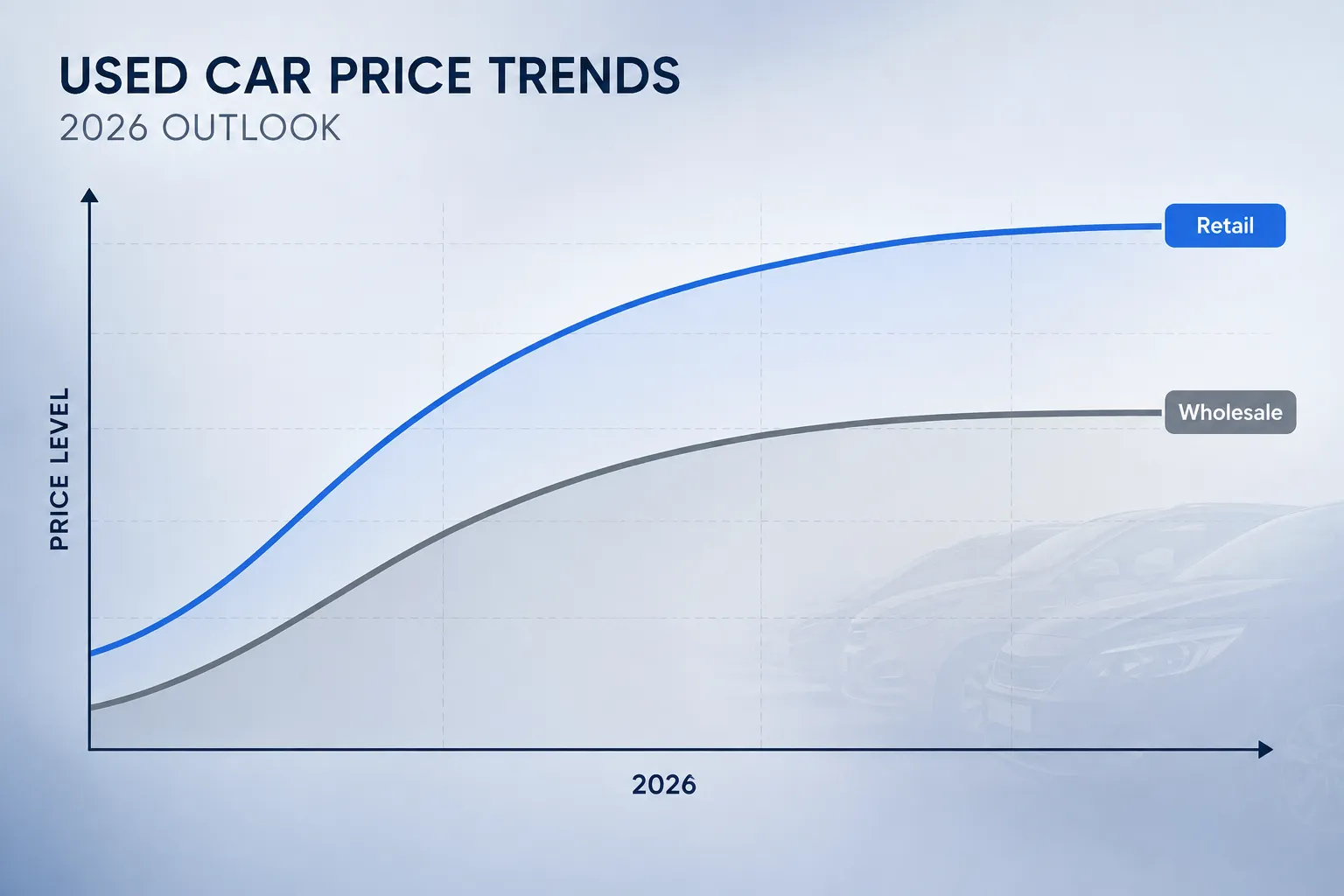
Wholesale vs Retail Pricing
Wholesale values, which reflect what dealers pay at auction, have been sliding down from their mid-year peak according to the Manheim Used Vehicle Value Index [8]. This usually signals that retail prices should follow eventually. But retail listing prices are staying stubbornly high because inventory, especially for cheaper vehicles, remains tight [1]. In simple terms: dealers are paying a little less at auction, but they are not passing much of that savings on to shoppers yet.
New vehicle transaction prices are also playing a role. When new cars stay expensive, more buyers shift toward the used market, which keeps demand, and prices, elevated for used inventory too [5][9].
The Affordability Gap
Perhaps the most important shift is affordability. Compared with 2019, the cost of owning a used vehicle has grown far faster than wages for many households. This gap is especially painful for 3-year-old vehicles, which used to be the sweet spot for buyers wanting a newer car without new-car pricing [3][9]. Today, those same vehicles often carry price tags that would have seemed unreasonable just a few years ago.
This is part of why sub-$15,000 inventory has become so scarce. Fewer cars qualify, and the ones that do often have higher mileage or need repairs. If you are hunting in this price range, this list of reliable cheap cars under $15,000 in 2026 can help narrow your search.
Step-by-Step: How to Get an Accurate Used Car Valuation
Getting a trustworthy number takes more than typing a make and model into one website. Here is a simple process anyone can follow.
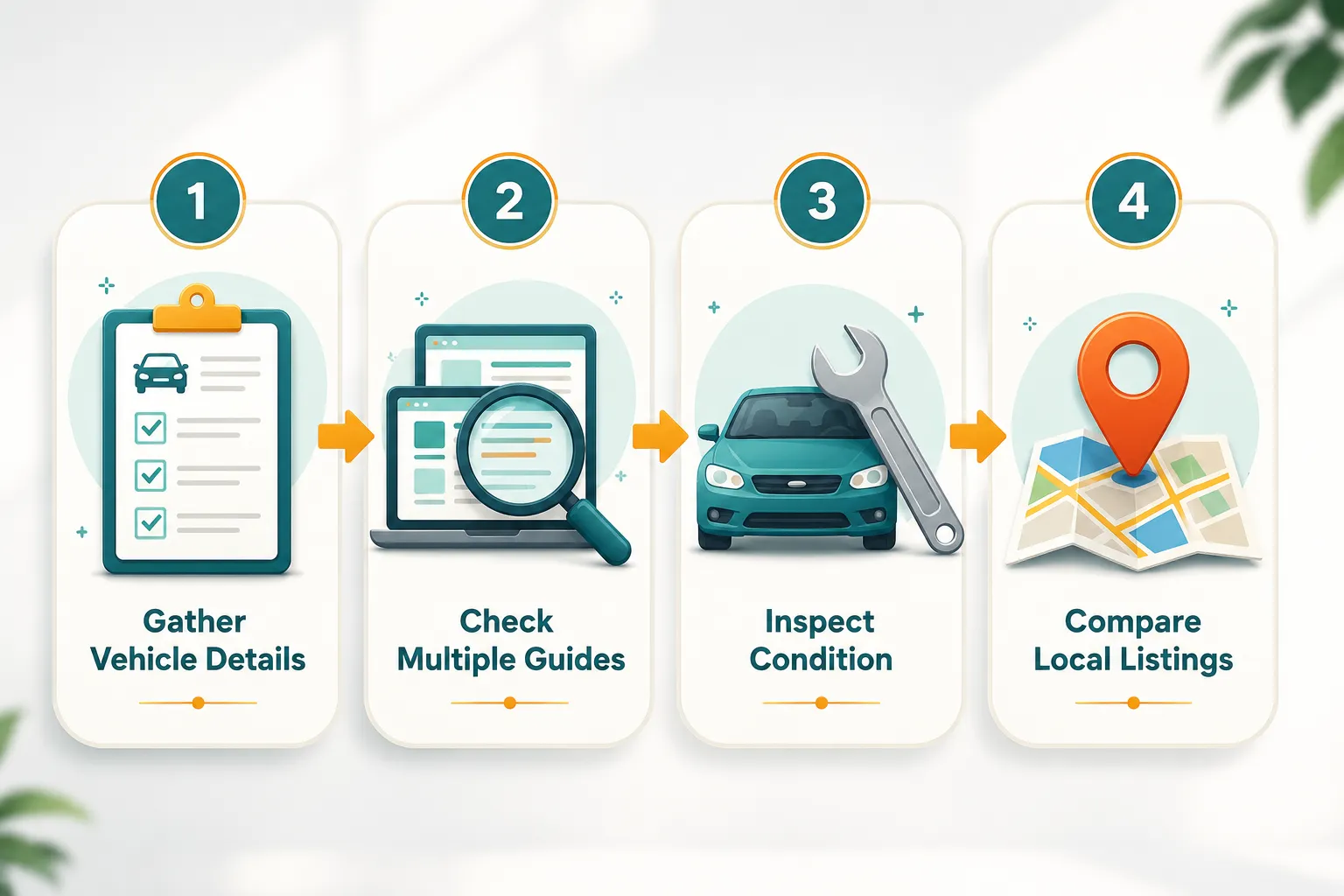
- Gather exact vehicle details. Write down the year, make, model, trim level, mileage, and any major options like leather seats or a sunroof. Small details change the price.
- Check at least two valuation guides. Compare NADA, Kelley Blue Book, and Edmunds. If all three land in a similar range, you have a solid number. If they differ a lot, dig deeper into why.
- Inspect the actual condition. Valuation tools assume a condition level like “good” or “excellent.” A car with worn tires, a cracked windshield, or interior damage should be valued lower than the guide price.
- Compare against real local listings. Search nearby dealerships and private sellers for the same make and model. This shows what buyers in your area are actually paying right now, not just a national average.
This same process works whether you are buying, selling, or figuring out a trade-in offer. For sellers specifically, this guide on what dealers won’t tell you about trade-in value is worth reading before walking into a dealership.
It also helps to understand the difference between what a car is technically “worth” and what someone is willing to pay for it. This distinction is explained clearly in Value vs Worth: Selling Your Car at a Fair Price.
Used Car Valuation by Vehicle Segment
Not every type of vehicle is moving the same way in today’s market. Segment data from CARFAX shows mixed results, but a clear pattern stands out: traditional “cars” remain the main option for budget-focused buyers, while SUVs and trucks have largely priced themselves out of the sub-$20,000 range [2].
Here is a simplified view of how segments generally compare right now:
| Segment | Typical Price Trend | Availability Under $20,000 |
|---|---|---|
| Sedans / Coupes | Stable to slightly rising | Most common option |
| Compact SUVs | Rising | Limited |
| Midsize/Large SUVs | Rising sharply | Rare |
| Trucks | Rising | Very rare |
| Hybrids | Rising due to demand | Limited |
If you are shopping on a budget, this pattern is important. It may mean widening your search to include smaller cars instead of holding out for an affordable SUV. This guide to best small cars in 2026 is a useful starting point, along with this broader list of the best used cars to buy in 2026.
Common Mistakes That Skew Used Car Valuation
Even careful shoppers make errors that throw off their price estimate. Watch out for these:
- Using only one valuation source. Every guide has slight differences. Relying on just one number can leave you exposed if that source is off.
- Ignoring regional pricing differences. A car in a rural area may sell for less than the same car in a big city, simply due to demand and shipping costs.
- Confusing trade-in value with private sale value. Trade-in numbers are almost always lower because the dealer needs room to resell the car at a profit.
- Forgetting about condition adjustments. A guide price assumes a certain condition level. Skipping this step leads to unrealistic expectations.
- Overlooking vehicle history. Accidents, flood damage, or multiple owners can lower a car’s real-world value even if the mileage looks good.
- Not checking recent local sales. National averages do not always match what is happening in your specific market.
Avoiding these mistakes is one of the fastest ways to protect your budget, whether you are buying your first car or your fifth. New drivers especially benefit from a careful approach, and this guide to buying your first car walks through the basics in simple terms.
Fair Market Pricing Outlook for Late 2026
So where is the market headed? The short answer: prices are flattening, not collapsing. Analysts expect the sharp price jumps seen earlier in the year to slow down, but a major drop is not expected before the end of 2026 [8][3]. Wholesale prices may continue easing slightly, which could eventually translate into modest retail relief, but that usually takes several months to filter through to consumer-facing prices.
For buyers, this means patience can pay off, but waiting indefinitely for a big price crash is probably not realistic. For sellers, it means now may still be a reasonably strong time to sell, since retail prices remain elevated even as wholesale softens [9].
A few practical takeaways for the months ahead:
- Expect prices to move sideways more than downward through the rest of 2026.
- Sub-$15,000 vehicles will likely remain hard to find.
- Sedans and compact cars will likely stay the most affordable path into ownership.
- Certified programs may offer better value relative to price, since they add warranty protection. This guide to certified used cars explains what to look for.
Frequently Asked Questions
Is NADA or Kelley Blue Book more accurate for used car valuation? Neither is universally “more accurate.” NADA is often preferred by lenders and dealers, while KBB’s Fair Market Range and Fair Purchase Price are popular with private buyers and sellers. Checking both gives a more complete picture.
Why do used car prices keep rising in 2026? Tight inventory, especially for affordable vehicles, combined with high new car transaction prices, keeps demand for used cars elevated even as wholesale values ease [1][5][8].
Should I trust an online valuation over a dealer’s offer? Use online tools as a starting point, then compare against local listings and, if trading in, get quotes from more than one dealer. Online guides do not always account for local demand or a car’s exact condition.
How much does mileage affect used car valuation? Mileage is one of the biggest factors. Higher-than-average mileage for the car’s age typically lowers value, while lower-than-average mileage can raise it, sometimes significantly.
Conclusion
Used car valuation is not guesswork, but it does require effort. Prices in 2026 remain higher than many buyers expect, average values have pushed back above $26,000, and truly affordable vehicles are harder to find than just a few years ago [9][3]. The buyers and sellers who come out ahead are the ones who check multiple valuation tools, understand the difference between trade-in and private sale value, and compare guide prices against real local listings before making a decision.
Start by pulling numbers from at least two sources, such as NADA and Kelley Blue Book. Then walk around the actual vehicle with a critical eye, noting anything that might lower or raise its true condition score. Finally, search nearby listings to confirm the number reflects your local market, not just a national average. That simple three-part check is the single best way to make sure you pay, or receive, a fair price in today’s used car market.
References
[1] Used Cars See 1 Jump In Price In August 2026 08 27 – https://news.dealershipguy.com/p/used-cars-see-1-jump-in-price-in-august-2026-08-27 [2] Used Car Index – https://www.carfax.com/used-car-index [3] Used Car Prices Yoy – https://tradingeconomics.com/united-states/used-car-prices-yoy [4] Car Values – https://www.kbb.com/car-values/ [5] February 2026 Kelley Blue Book Average Transaction Price Tables – https://www.coxautoinc.com/wp-content/uploads/2026/03/February-2026-Kelley-Blue-Book-Average-Transaction-Price-tables.pdf [6] kbb – https://www.kbb.com/cars-for-sale/used/2026 [7] Should You Buy Used Car – https://www.autotrader.com/car-shopping/should-you-buy-used-car [8] Manheim Used Vehicle Value Index Mid August 2026 Trends – https://www.coxautoinc.com/insights/manheim-used-vehicle-value-index-mid-august-2026-trends/ [9] Average Used Car Price Again Tops 26000 – https://www.kbb.com/car-news/average-used-car-price-again-tops-26000/ [10] Used Car Prices Skyrocketing August 2026 – https://carbuzz.com/used-car-prices-skyrocketing-august-2026/
used car valuation, NADA guides, Kelley Blue Book, fair market price, used car prices 2026, car trade-in value, Edmunds TMV, car buying tips, vehicle pricing tools, wholesale car prices, retail car pricing, car affordability