Last Updated on October 27, 2026
A beginner electric dirt bike can run out of usable power in under an hour of hard trail riding, even though its spec sheet brags about a much longer battery life. That gap between claimed range and real trail range is the single biggest source of buyer confusion in 2026, and it shapes almost every other decision riders make between electric and gas machines.
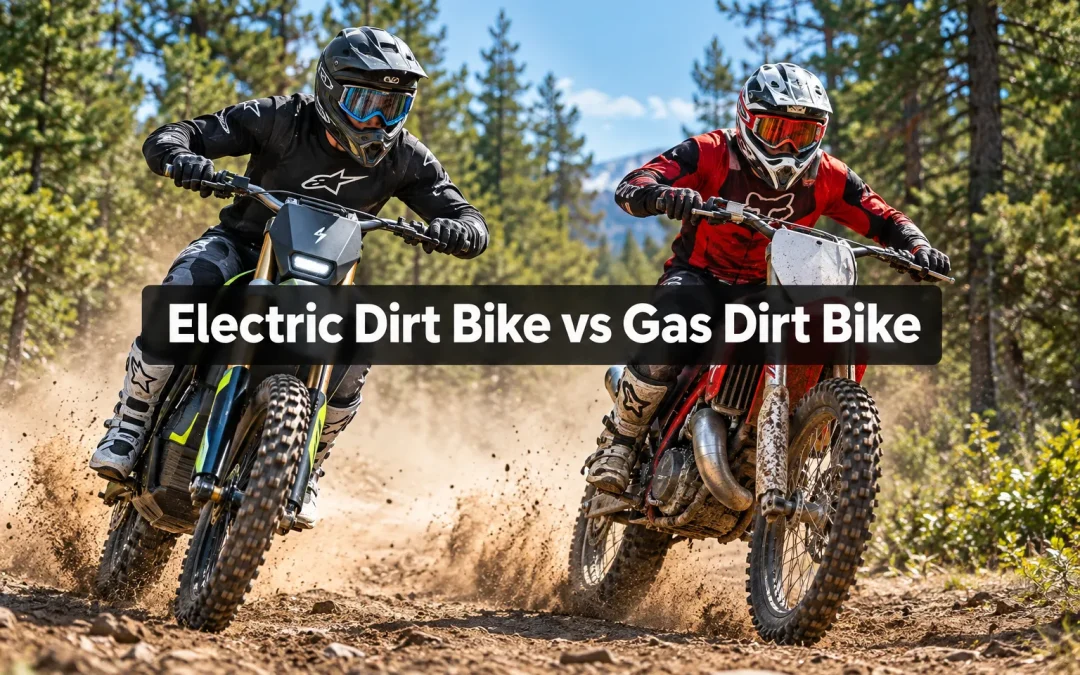
This guide breaks down Electric Dirt Bike vs Gas Dirt Bike: Speed, Range, Maintenance, Noise, and Trail Legality by comparing equivalent beginner and intermediate models side by side, not just on paper specs, but on how they actually perform once dirt, hills, and real riding habits enter the picture.
Key Takeaways
- Gas dirt bikes still win on top speed and sustained high-RPM power, but electric models deliver instant torque that feels faster off the line for beginners and intermediate riders.
- Claimed battery range numbers are measured under ideal, low-throttle conditions; aggressive trail riding can cut real-world runtime by 40 to 60 percent.
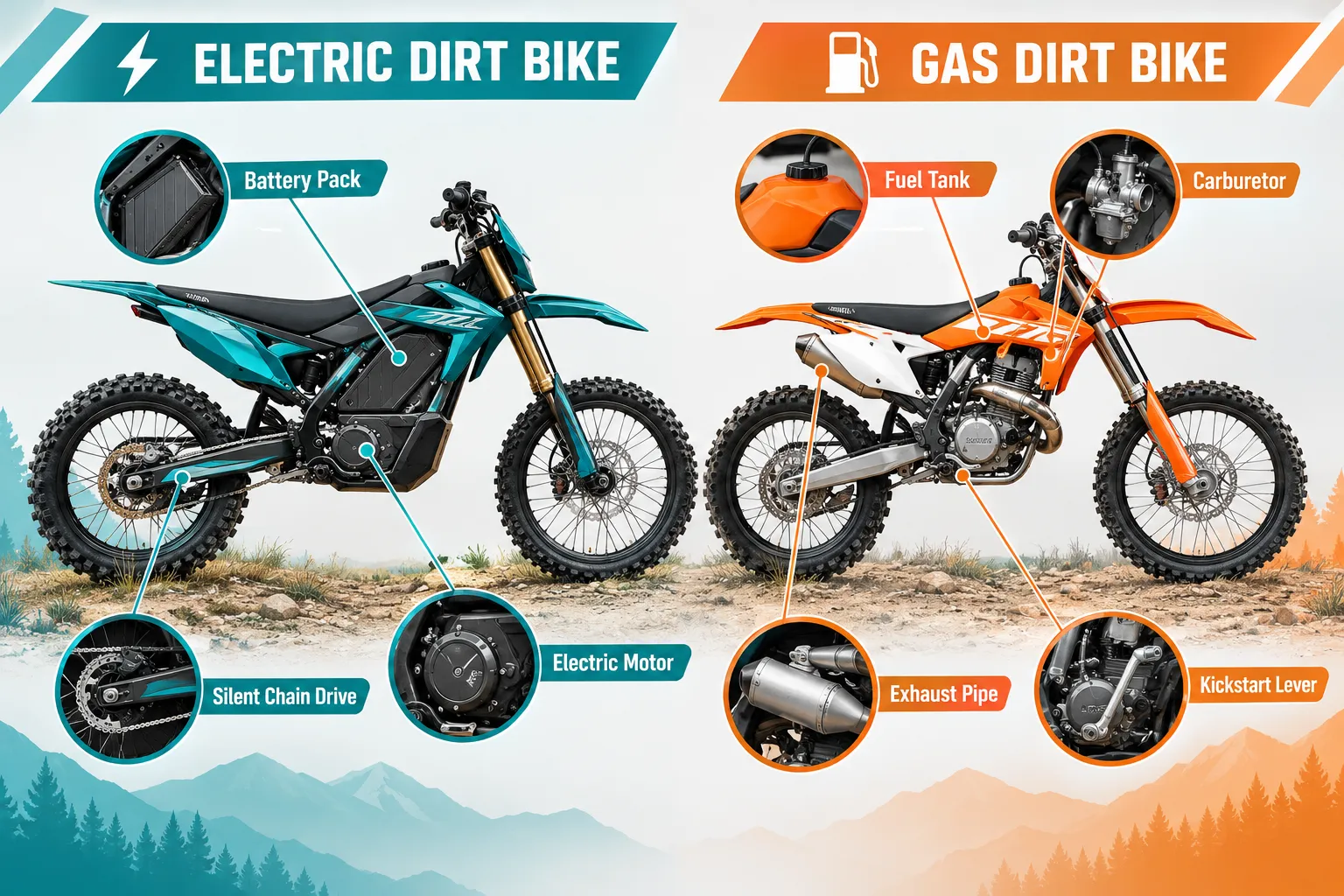
- Electric bikes slash maintenance to tires, brakes, and chain tension, while gas bikes require oil changes, air filter cleaning, and periodic top-end rebuilds.
- Noise is the clearest electric advantage, electric motors run near silent, while gas engines average 90 to 100-plus decibels, a key factor in trail access.
- Trail legality varies sharply by state, province, and land manager, so riders must check local e-moto and off-highway-vehicle rules before buying.
Speed and Performance: Electric Dirt Bike vs Gas Dirt Bike in 2026
Current retail electric dirt bikes aimed at beginners and intermediate riders, such as popular 60V and 72V models, typically top out between 45 and 60 mph, with instant torque from a standing start that can outpace small-displacement gas bikes in short bursts [1][2]. That immediate power delivery is a major reason electric models are opening up off-road riding to new and younger riders who find clutch and gear-shifting intimidating [3].
Gas dirt bikes, particularly 125cc to 250cc four-stroke models common in the beginner-to-intermediate class, still dominate sustained speed and top-end power once a rider is comfortable rowing through gears [1][4]. On long straightaways or extended climbs, a gas engine’s ability to rev and refuel keeps delivering power lap after lap, while an electric motor’s output can taper as the battery depletes [5][6].
Pull quote: “Electric motors win the first ten seconds; gas engines win the next ten laps.”
For casual trail riders and kids learning the basics, electric’s smooth, clutch-free power is often the more confidence-building option [7]. For racers and experienced intermediate riders pushing full moto tracks, gas still edges ahead in raw performance consistency [4].
Range, Runtime, and Refueling vs Charging: Electric Dirt Bike vs Gas Dirt Bike Trail Range
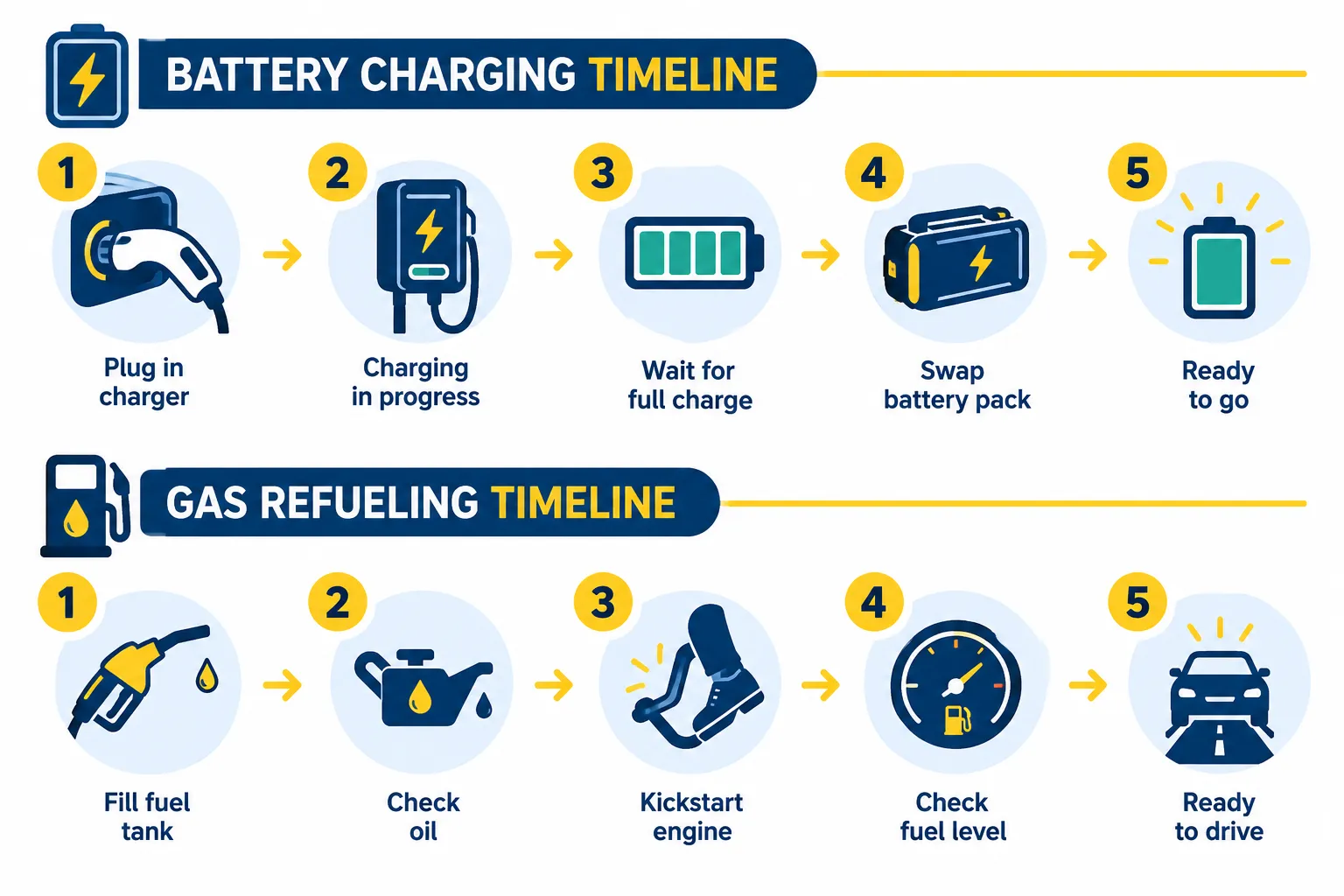
This is where marketing numbers and trail reality diverge the most. Manufacturers advertise electric dirt bike range and runtime figures based on steady, moderate-speed testing, numbers that rarely survive contact with hills, throttle-happy teenagers, or technical single-track [1][2].
Why the gap exists:
- Throttle behavior: Aggressive acceleration and high-torque climbs drain batteries far faster than the flat, steady-state conditions used in official range tests.
- Terrain: Rocky, muddy, or hilly trails demand more sustained power output than the smooth proving grounds used for spec-sheet numbers.
- Temperature: Cold weather reduces usable battery capacity, sometimes by 20 percent or more.
- Rider weight and skill: Heavier riders and less efficient throttle control burn through charge faster.
In practice, a battery advertised for 90 minutes of “ride time” might deliver closer to 45 to 60 minutes of genuine, hard trail riding before power noticeably drops off [2][5]. Many riders solve this with swappable battery packs, carrying a spare to double effective ride time, similar to how electric bike buyers in other categories plan around real-world range rather than advertised numbers.
Gas dirt bikes sidestep this problem entirely. A full tank typically lasts two to three hours of mixed riding, and refueling takes under five minutes at nearly any gas station [1][4]. For multi-hour trail days or remote riding far from charging infrastructure, gas remains the more dependable choice.
Maintenance: Engine vs Drivetrain and Chassis Upkeep Compared
Gas dirt bikes carry the maintenance burden of an internal combustion engine: regular oil changes, air filter cleaning, spark plug replacement, carburetor or fuel injection servicing, and eventual top-end or full engine rebuilds as hours accumulate [1][4][6]. Owners also deal with jetting adjustments for altitude and temperature, plus periodic valve checks on four-stroke models.
Electric dirt bikes eliminate nearly all of that. There is no oil to change, no air filter to clean, and no combustion components to wear out. Maintenance narrows down to tires, brake pads, chain tension, and occasional battery health checks [1][2][5]. Many owners find electric upkeep closer to maintaining a bicycle than a motorcycle.
| Maintenance Task | Gas Dirt Bike | Electric Dirt Bike |
|---|---|---|
| Oil changes | Required regularly | Not applicable |
| Air filter cleaning | Required regularly | Not applicable |
| Spark plugs | Periodic replacement | Not applicable |
| Chain and sprockets | Regular adjustment | Regular adjustment |
| Brakes and tires | Standard wear items | Standard wear items |
| Battery health | Not applicable | Periodic monitoring |
| Major overhaul | Every few hundred hours | Rare, mainly battery replacement |
This lower-maintenance profile is a major reason electric dirt bikes appeal to parents buying for kids and to casual riders who do not want to spend weekends wrenching [7]. It mirrors a broader shift seen across powersports, much like the growing interest in best UTVs and ATVs for 2026, where buyers increasingly weigh long-term ownership cost alongside upfront price.
Noise: Quiet Operation vs Traditional Engine Sound
Noise is arguably the clearest, least debatable advantage for electric dirt bikes. Electric motors run nearly silent, producing a soft whir barely audible over ambient trail sounds, while gas dirt bike engines commonly register 90 to over 100 decibels at full throttle [1][2][5].
That quiet operation matters beyond rider comfort. It is reshaping where riding is even allowed:
- Neighbors near private and shared land are far less likely to complain about electric bikes.
- Wildlife disturbance is reduced, which matters to land managers balancing recreation and conservation.
- Quiet bikes can realistically be ridden earlier or later in the day without drawing noise complaints.
Retailers are already responding to this shift in consumer appetite, reports note that some stores now sell gas dirt bikes in-store while shifting electric models to online-only sales channels, reflecting differing demand and regulatory handling between the two categories [8].
Trail Legality: Electric Dirt Bike vs Gas Dirt Bike on Public Land
Trail legality is the most fragmented, confusing part of this comparison, and it depends heavily on where you ride.
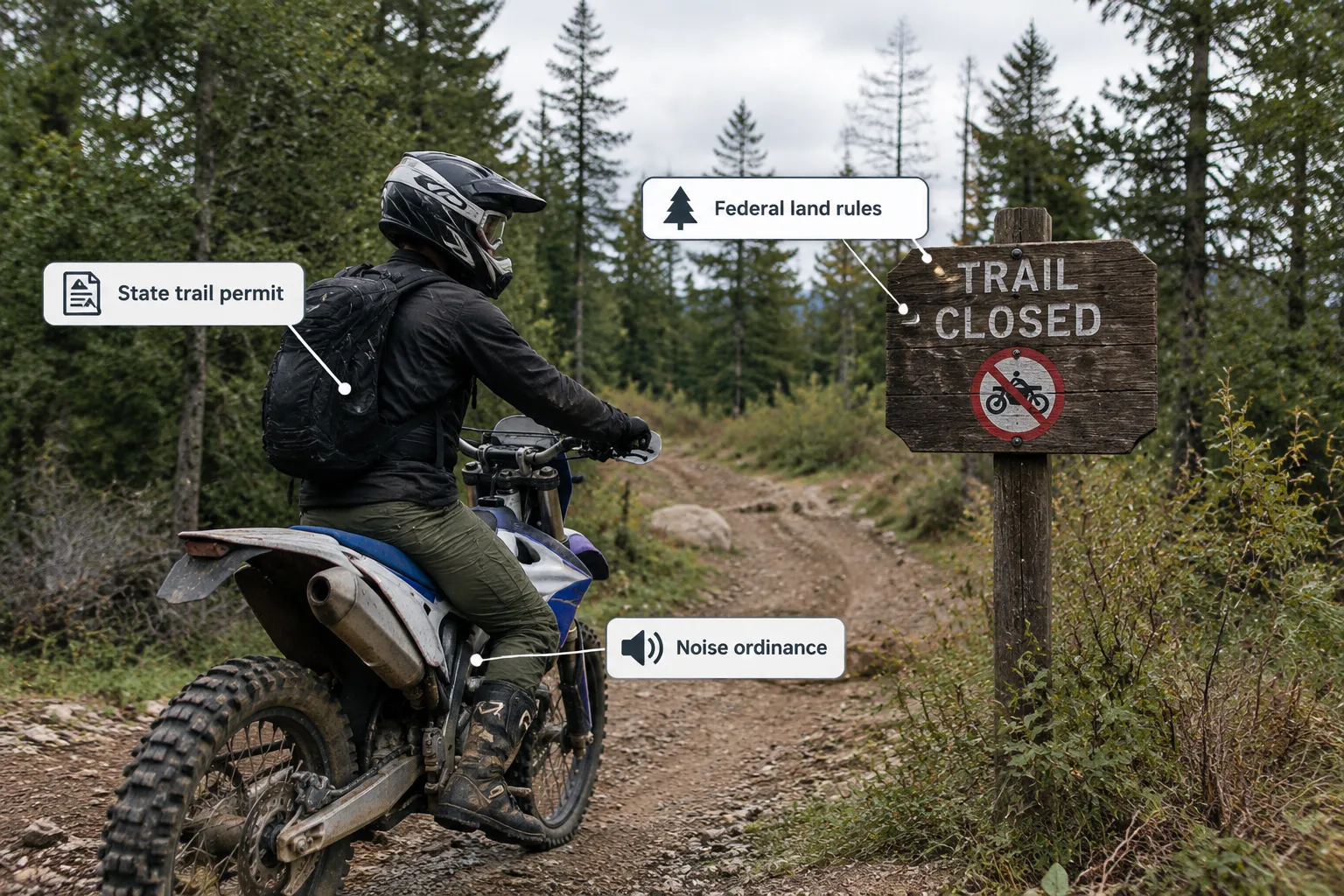
U.S. federal lands: The Bureau of Land Management distinguishes electric bicycles (e-bikes, pedal-assist Class 1 to 3) from electric dirt bikes and other off-highway vehicles. E-bikes may be allowed on certain non-motorized trails under specific designations, but throttle-only electric dirt bikes without pedals are generally classified and regulated like other motorized off-highway vehicles, not e-bicycles, meaning they typically need designated OHV routes [9].
New Brunswick, Canada: Law enforcement guidance issued in September 2026 clarified that electric dirt bikes and similar off-road electric motorcycles are not permitted on public roads without proper registration, insurance, and licensing, treating them the same as gas-powered off-road motorcycles for public road use [10]. This closes a loophole some riders assumed existed simply because the bikes are electric and quiet.
New York State (2026 season): Trail access rules for the current season continue to require off-highway motorcycles, electric or gas, to be registered for use on designated OHV trail systems, with local trail networks setting their own additional restrictions on noise, speed, and vehicle class [1][4].
The consistent theme across jurisdictions: being electric does not automatically grant extra trail access. Riders must confirm local OHV registration, insurance, and designated-trail requirements before assuming a quiet motor changes the legal picture.
Pricing and Cost Trends as of Late 2026
Entry-level electric dirt bikes for kids and casual riders now start in a similar price range to comparable small-displacement gas bikes, though premium electric models with swappable batteries and higher power output carry a price premium tied to battery technology [1][5][6]. Gas bikes retain a wider range of used-market options, since decades of production have created a large secondary market with more price flexibility.
Total cost of ownership often favors electric once maintenance savings are factored in, no oil, filters, or fuel purchases over years of ownership, though battery replacement after several years can offset some of that savings [2][4]. Buyers cross-shopping powersports purchases may find similar total-cost thinking useful when comparing categories, much like readers evaluating motorcycle tariffs and pricing trends in 2026 for on-road bikes.
Use-Case Consensus: When Electric vs Gas Wins in 2026
Industry consensus heading into late 2026 points to a clear split by use case [1][2][3][4]:
- Electric wins for: beginners, kids, short trail sessions, neighborhoods sensitive to noise, and riders who value low maintenance over raw power.
- Gas wins for: long trail days far from charging access, racing and motocross at competitive levels, and riders who want the widest range of used bikes and aftermarket parts.
Many experienced riders now keep both: an electric bike for quick evening sessions and skill-building, and a gas bike for full-day rides and competition.
Ease of Riding, Learning Curve, and Rider Demographics
Electric dirt bikes have measurably lowered the entry barrier to off-road riding. Without a clutch or gear shifter to master, new riders, including kids and first-time adult riders, can focus entirely on balance, throttle control, and trail reading [3][7]. This has broadened the rider demographic beyond the traditionally young, mechanically inclined gas-bike crowd.
Gas dirt bikes still demand a steeper learning curve: clutch feathering, gear selection, and engine braking all take practice. But that same complexity is part of why many intermediate and advanced riders prefer gas bikes once skills develop, the manual control offers more nuanced performance feedback [1][4].
Emissions and Environmental Impact at the Point of Use
Electric dirt bikes produce zero tailpipe emissions and no combustion byproducts at the point of use, a meaningful difference on sensitive trail systems and near waterways [1][5]. Gas dirt bikes emit combustion exhaust, and two-stroke models in particular can leave a noticeable fuel-oil smell and visible exhaust haze on trails.
This environmental distinction is increasingly cited by land managers weighing expanded access for quieter, zero-emission vehicles, even as legal classification questions (as seen in the BLM and New Brunswick guidance above) remain unresolved in many regions [9][10].
Market Trajectory and Expert Outlook for Late 2026
Analysts tracking the powersports market note accelerating adoption of electric dirt bikes among younger and newer riders, driven by lower maintenance, quieter operation, and simplified controls [3][8]. Retail strategy is shifting too, with some chains favoring online-only electric sales while keeping gas models on showroom floors, suggesting different marketing and liability considerations between the categories [8].
Gas dirt bikes are not disappearing, their range, refuel speed, and sustained performance keep them the default choice for serious off-road competition and long-distance trail riding [1][4][6]. Expect the two categories to continue serving different needs rather than one fully displacing the other through the rest of 2026 and beyond.
Conclusion
Choosing between an electric dirt bike and a gas dirt bike in 2026 comes down to matching the machine to real riding habits, not spec-sheet numbers. If quiet operation, low maintenance, and an easier learning curve matter most, especially for kids or casual weekend riders, an electric model is likely the better fit, as long as expectations around real trail range stay realistic. If long trail days, competitive racing, or riding far from charging infrastructure define your routine, a gas dirt bike still delivers more dependable, sustained performance.
Before buying either type, confirm local trail legality rules for your state or province, check OHV registration requirements, and test-ride both categories if possible. Matching the bike to your actual trail conditions, not just the marketing claims, is the single best way to avoid an expensive mismatch.
References
- Electric vs. Gas Dirt Bike. store.segway.com.
- Electric vs. Gas Dirt Bike. voltripper.com.
- Electric Dirt Bikes Open Off Road Riding to New Riders. kvia.com.
- Electric Dirt Bike vs. Gas Dirt Bike. bhivemotoshop.com.
- Electric Dirt Bikes. vikingbags.com.
- Electric Dirt Bike vs. Gas Dirt Bik. windone.com.
- Electric Dirt Bike vs. Gas Dirt Bike for Kids. frpmoto.com.
- Tractor Supply Sells Gas Dirt Bike in Store Electric Online Only. slashgear.com.
- FAQ. blm.gov.
- News. rcmp.ca.
electric dirt bike, gas dirt bike, dirt bike comparison, off road riding, trail legality, OHV rules, dirt bike maintenance, battery range, powersports 2026, beginner dirt bike, motorcycle noise, electric vehicle trails