
Last Updated on November 7, 2026
Wholesale RV prices sat 23% above year-ago levels in an August 2026 report, even as seasonal softening set in [1][2]. That single fact changes how you should shop. Private-seller used RVs are not distressed inventory waiting for a lowball offer. They are assets in a firm market, and the buyers who win are the ones who inspect like a pro and negotiate with documented evidence, not guesswork.
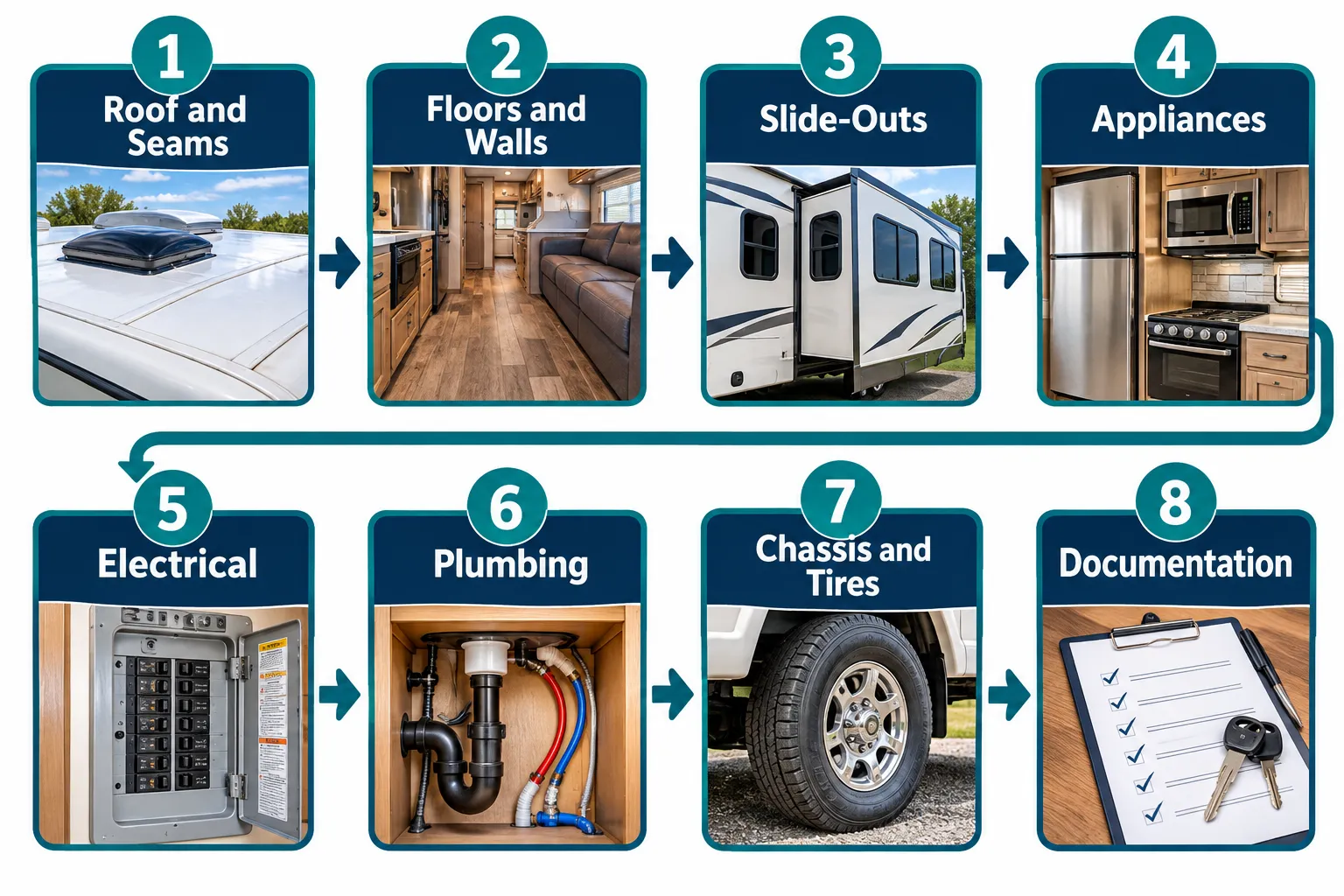
This guide walks through exactly how to buy a used RV from a private seller: water damage detection, systems testing, title checks, and negotiation, using the same inspection sequence a paid inspector would follow, roof, floors, slide-outs, appliances, electrical, plumbing, chassis, and paperwork.
Key Takeaways
- Average pre-owned RV prices rose 10.6% year-over-year in Q1 2026, so expect firm pricing even on older units [3].
- Water damage is the single biggest risk in a used RV; check ceilings, walls, floors, and cabinets on exterior walls for soft spots, stains, and odors [4][5][6].
- A moisture meter reading above 16% signals active or recent water intrusion, and above 20% indicates significant damage even if surfaces look fine [7].
- Insist the seller provide propane, charged batteries, fresh water, and shore power so you can test every appliance and system before paying anything [6][7].
- Confirm a clean title with no liens and a matching VIN before negotiating, and use documented defects as leverage to lower the price or demand repairs [5][6][7][8].
Why the Used RV Market Rewards Careful Buyers in 2026
The pre-owned RV market has stayed surprisingly resilient. National Powersport Auctions data put average pre-owned RV prices up 10.6% year-over-year in Q1 2026, with standard hitch travel trailers averaging about $25,565 [3]. A later NPA report found wholesale prices 23% above August 2025 levels, even with normal seasonal easing underway [1][2]. That means there is limited “fire sale” pricing out there, sellers know their rigs have value, and they will not budge without a reason.
JD Power’s 2026 used RV values report offers a useful nuance: used travel trailers averaged roughly $27,164 in Q2 2026, barely up from $27,100 a year earlier, while used camping trailers averaged only about $12,309, the lowest of any tracked segment [9]. If budget is tight, smaller towables may offer more room to negotiate than large motorhomes.
A May 2026 Black Book market update reinforced that used RVs remain central to the industry, calling them an accessible entry point for cost-conscious buyers rather than a fringe option [10]. In other words, private-seller deals are mainstream, but you need a system. Before you even start shopping, it helps to understand how valuation works broadly; the same logic used in determining the value of your used car applies to RVs, where mileage, condition, and documented maintenance all move the number.
How to Buy a Used RV From a Private Seller: The Water Damage Inspection Sequence
Water intrusion is the number one reason a seemingly great deal turns into a money pit. Multiple 2026 inspection guides agree that water damage is the single biggest risk buyers face in a used RV [4][5][6]. The good news is that most of it is detectable if you slow down and work through a sequence rather than a quick walk-through.
Step 1: Roof and Seams
Start at the top. Climb up if it is safe, or use a ladder and flashlight to inspect roof penetrations, vents, skylights, air conditioner mounts, and antenna bases. Sealant that is cracked, lifted, or missing is an open invitation for leaks. Check seams around slide-out toppers and roof edges for separation.
Step 2: Floors and Walls
Walk every inch of the floor slowly, pressing down with your full weight in sections, especially near entry doors, bathrooms, and slide-out floors. Soft or spongy spots mean rot beneath the surface. Inside, look for:
- Ceiling and wall stains, especially near windows and skylights
- Ripples or waviness in wall coverings
- Swollen or warped cabinets and trim
- Musty odors or visible mold
- Rust on interior screws (a sign moisture has been present for a while)
- Exterior wall delamination, bubbling or separation of the fiberglass skin
These signs show up consistently across 2026 buyer checklists as the clearest tells of hidden water intrusion [4][5][6].
Step 3: Targeted Probing
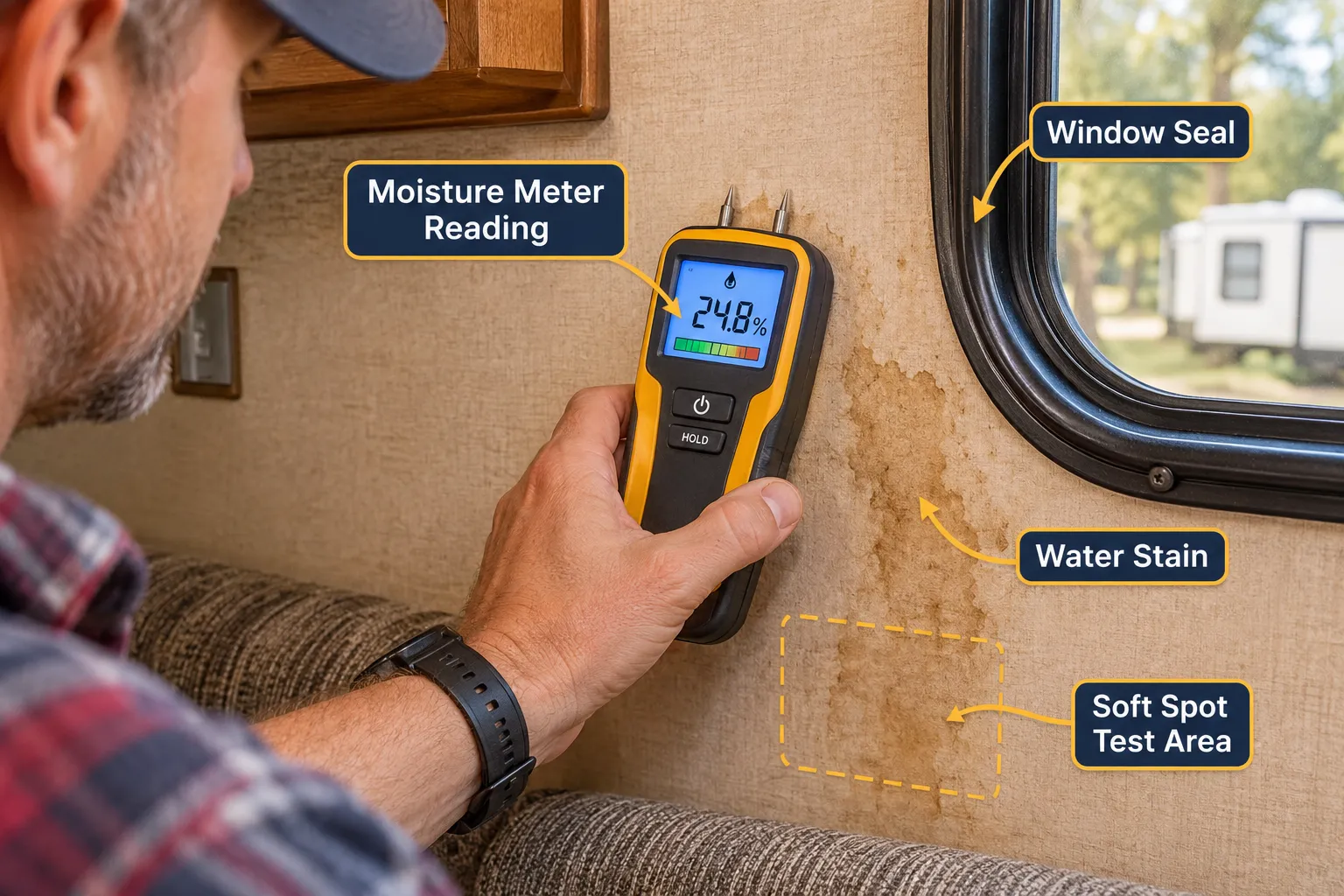
Press firmly around every window, skylight, and slide-out seam. Check cabinet interiors along exterior walls, moisture often travels down inside the wall before it ever reaches a visible surface [4][5][6]. A gentle screwdriver probe (not a stab) into suspect trim can reveal soft, rotted wood underneath paint that still looks fine.
The Moisture Meter Is Non-Negotiable
Bring a pin-type moisture meter. It is now considered a must-have tool for private-sale RV shopping [7]. Here is how to read it:
| Reading | What It Means |
|---|---|
| Under 12% | Normal, dry material |
| 12% to 16% | Borderline, investigate further |
| Above 16% | Active or recent water intrusion |
| Above 20% | Significant water damage, even if it looks fine |
Test multiple spots: around every window, below skylights, inside cabinets on exterior walls, and along slide-out sweep paths [7]. One high reading in isolation might be nothing. Multiple high readings in a pattern around seams are a red flag worth walking away from.
Build a Simple Inspection Kit
Pack these before you ever visit a seller:
- Pin-type moisture meter
- Bright flashlight
- Work gloves
- Kneeling pad or creeper
- Flathead screwdriver for gentle probing
- Outlet tester
- Phone charged for photos and notes
This kit matches what 2026 inspection toolkits recommend for a thorough, systematic check of roof penetrations, window surrounds, cabinet interiors, and slide-out paths [7].
Systems Testing, Title Checks, and Negotiation Strategy for a Used RV
Once the structure checks out, move to the mechanical and electrical heart of the rig. This is also where title verification and negotiation come together, because every defect you find becomes a bargaining chip.
Step 4: Appliances and Comfort Systems
Insist the seller have propane, charged batteries, water in the fresh tank, and shore power connected before your visit. You cannot properly evaluate an RV with everything turned off [6][7]. Test:
- Furnace and water heater (both gas and electric modes if dual-fuel)
- Stove and oven
- Refrigerator on both AC and propane settings
- Air conditioner(s), listen for unusual noise and check cooling output
- Generator, if equipped, under load
Step 5: Electrical Systems
Check both 12-volt and 120-volt circuits. Flip every light switch, test every outlet with an outlet tester, and confirm the breaker panel and fuse box are in good condition, not corroded or jury-rigged.
Step 6: Plumbing
Run the water pump and test the city water connection. Open every faucet, flush the toilet, run the shower, and check all drains for slow flow or backups. While you are at it, this is a good time to think ahead to ownership, knowing how to dump RV water properly and understanding options for dumping black water without hookups will matter once you own the rig, and asking the seller about their dumping routine can reveal how well the tanks and valves were maintained.
Step 7: Slide-Outs and Chassis
Extend and retract every slide-out multiple times, listening for grinding or uneven movement. Inspect the slide mechanism for rust or wear. On the chassis, check tire age (not just tread, tires over six years old are a concern regardless of appearance), brakes, suspension, leveling jacks, and the frame itself for rust or previous accident repair.
Step 8: Documentation and Title Checks
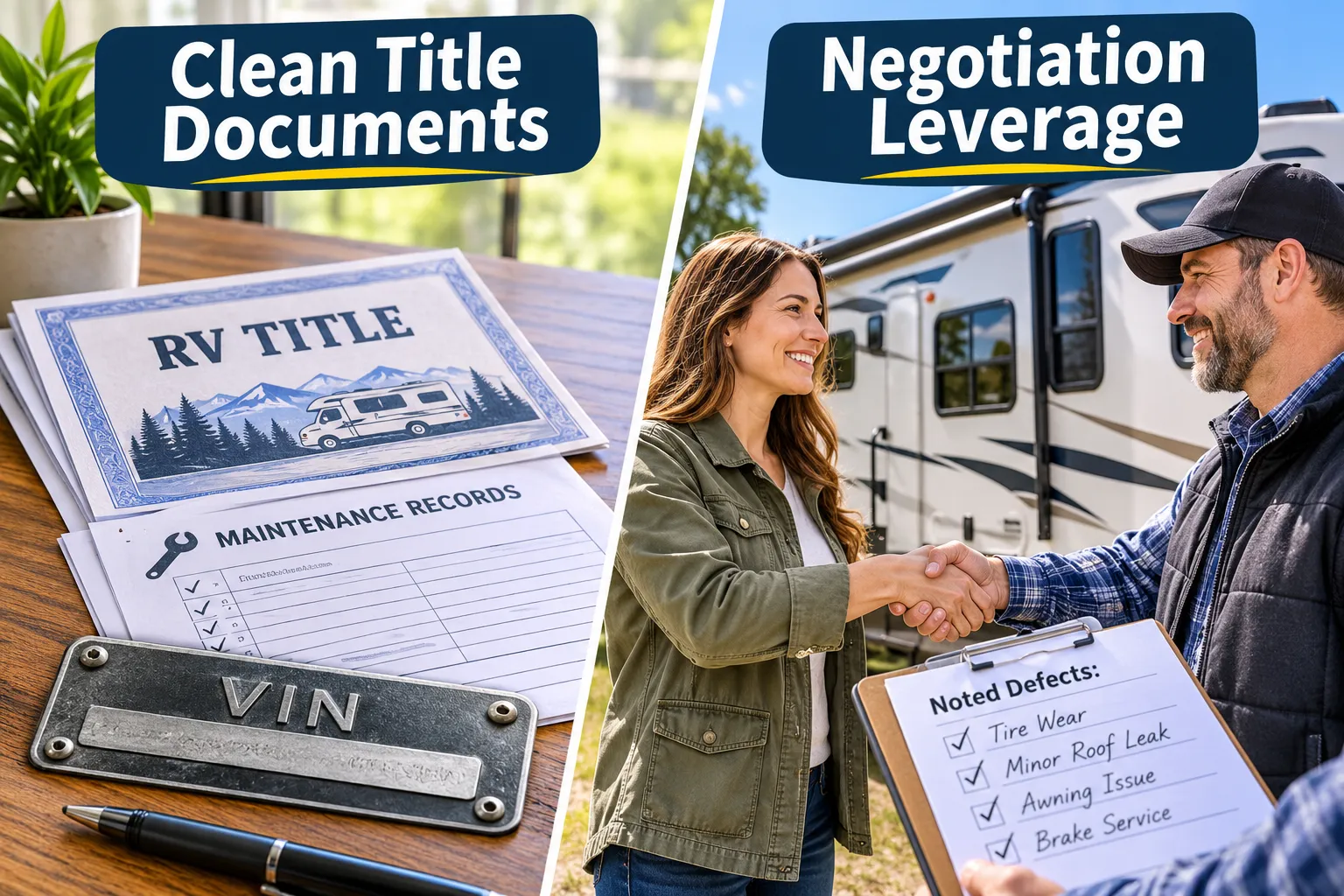
This is where “how to buy a used RV from a private seller” shifts from mechanical inspection to legal diligence. Confirm:
- A clean title with no liens
- The VIN on the title matches the VIN on the RV itself
- Maintenance records are available and consistent with the seller’s story
- No signs of salvage or rebuilt branding
Buying checklists are blunt about this: walk away from any unit with unclear ownership or missing documentation, since there is no dealer standing behind a private sale [5][8]. If you are new to reading value and paperwork signals, reviewing a resource like using Kelley Blue Book for used cars can help you understand how valuation tools cross-reference VINs and history, even though RV-specific guides work a bit differently.
Because most private sellers will not pay for a professional third-party inspection themselves, consider hiring one yourself, particularly for units priced above roughly $15,000 or anything with an unclear history. Typical inspections now run about $400 to $1,500 depending on RV type and report depth [4][6][7], a small cost against a five-figure purchase.
Negotiation: Turn Defects Into Leverage
“Documented defects are the single most effective negotiation tool in a private RV sale, vague complaints get ignored, but a moisture reading and a photo rarely do.”
Once you have your inspection notes, moisture readings, and photos, you have real leverage. Recent buyer guides recommend using specific documented issues, moisture readings above normal, evidence of past leaks, aged tires, failing appliances, and cosmetic delamination, to either request repairs before closing or negotiate a price reduction that covers realistic repair costs [6][7]. Be specific: cite the actual meter reading, the exact location, and a rough repair estimate if you have one. Vague requests like “it needs some work” rarely move a seller. Precise, documented ones often do.
Be prepared to walk away if the seller refuses reasonable adjustments or becomes evasive about the title or maintenance history. In a market where wholesale RV values are running double digits above last year [1][2][3], patience is itself a negotiating tool, there will be another rig.
Conclusion
Buying a used RV from a private seller rewards buyers who treat the process like a structured inspection, not a casual test drive. Work the sequence in order: roof and seams, floors and walls, targeted moisture probing, appliances and comfort systems, electrical, plumbing, slide-outs and chassis, and finally title and documentation. Bring a moisture meter, an outlet tester, and a flashlight, and insist the seller power everything up before you commit to anything.
Next steps: schedule the viewing during daylight, request propane and shore power access in advance, bring your inspection kit, and if the price exceeds roughly $15,000 or the history feels uncertain, book a professional pre-purchase inspection. Then negotiate from documented evidence, not impressions, and remember that in a market still running well above last year’s values, walking away from a bad deal is often the smartest move you can make.
References
- Npa Report Finds Used Rv Values Higher Than 2025. rvnews.com.
- Prices Up Year Over Year Npas Rv Pre Owned Report. rvbusiness.com.
- Ingrassia Pre Owned Rv Market Stable Amid Challenging 2026. rvbusiness.com.
- What to Look for When Buying a Used Rv. piercerv.com.
- Used Rv Buying Checklist. peopledrivencu.org.
- What to Inspect on a Used Rv. nationalvehicle.com.
- Rv Inspection Checklist. recnationstorage.com.
- Best Used Rvs Under 25k. rvivy.com.
- Report Finds Travel Trailer Values Steady. rvnews.com.
- Recreational Vehicle Market Update May 2026 1. blackbook.com.