
Last Updated on August 31, 2026
The average American leaves between $1,000 and $3,000 on the table every single time they trade in a vehicle. That is not an accident. Dealers use a precise, behind-the-scenes formula to calculate your used car trade in value, and they have every reason to keep that formula quiet. Understanding how that number is built, what market forces are shaping it right now in 2026, and how to push back effectively can mean the difference between a fair deal and a costly mistake.
Key Takeaways
- Dealers calculate trade-in offers using wholesale auction prices, then subtract reconditioning costs and a profit margin of $1,000 to $3,000.
- Private sales typically return 10 to 20 percent more than a dealer trade-in offer for the same vehicle.
- Average positive trade-in equity hit an all-time high of $13,330 in Q2 2026, giving most sellers more leverage than they realize.
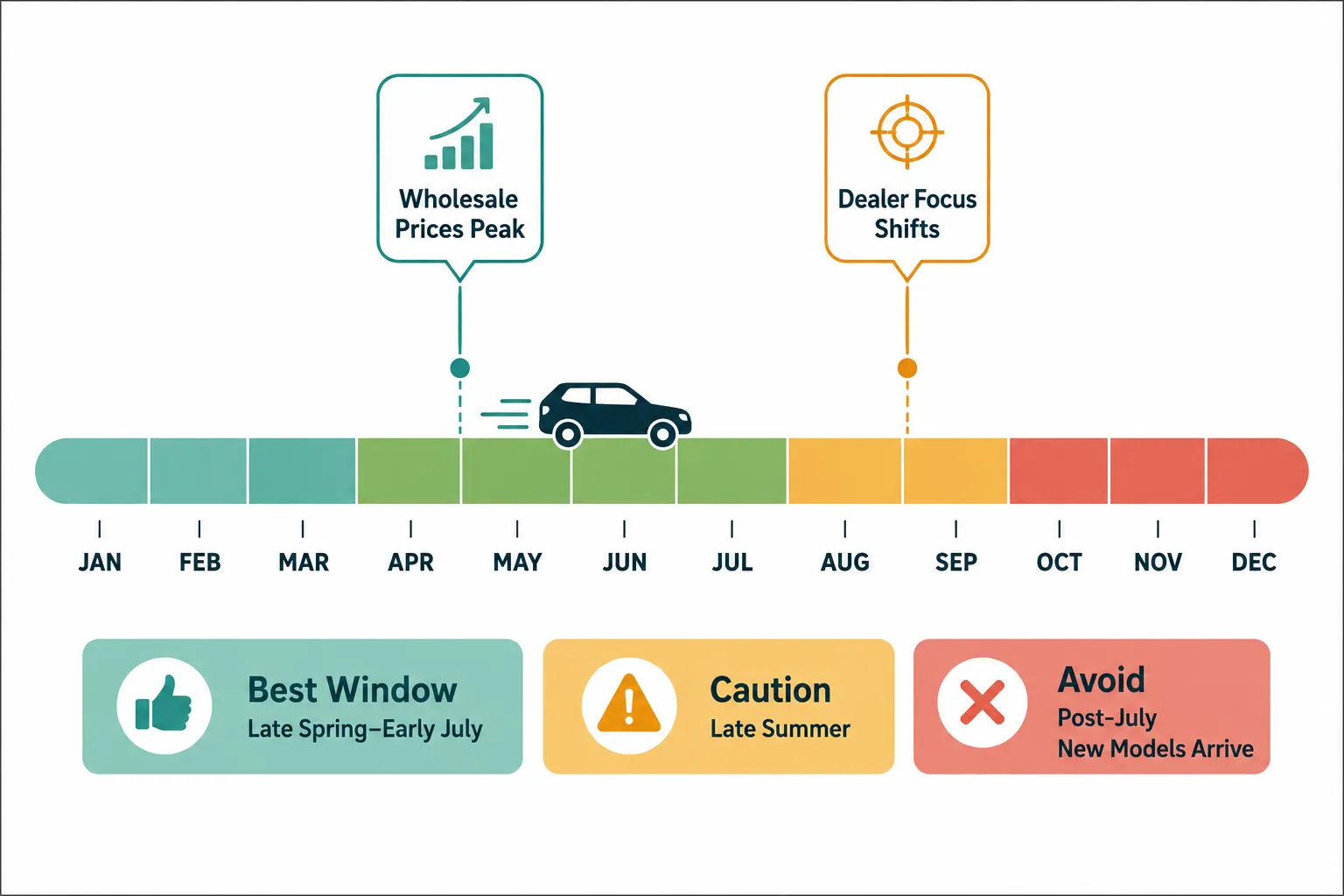
- Wholesale used-car prices peaked in March 2026 and have been easing since, timing your trade-in matters more than most people know.
- Getting two or three competing written offers before walking into a dealership is the single most effective negotiating tool available.
How Dealers Actually Calculate Your Used Car Trade-In Value
Most people assume a dealer looks at their car, checks a book, and offers a fair number. The reality is more calculated than that.
Every trade-in offer starts with something called the Actual Cash Value (ACV). This is the dealer’s best estimate of what your car would sell for at a wholesale auction. From that number, the dealer subtracts two things: reconditioning costs and a target profit margin.
Reconditioning costs cover everything needed to put the car on the lot, detailing, new tires, minor repairs, and any safety work. These costs can range from a few hundred dollars to well over $1,500 depending on the vehicle’s condition. The profit margin on top of that typically runs between $1,000 and $3,000 per vehicle.
What you see as your trade-in offer is what is left after those deductions. The dealer still plans to retail your car for significantly more than they paid you.
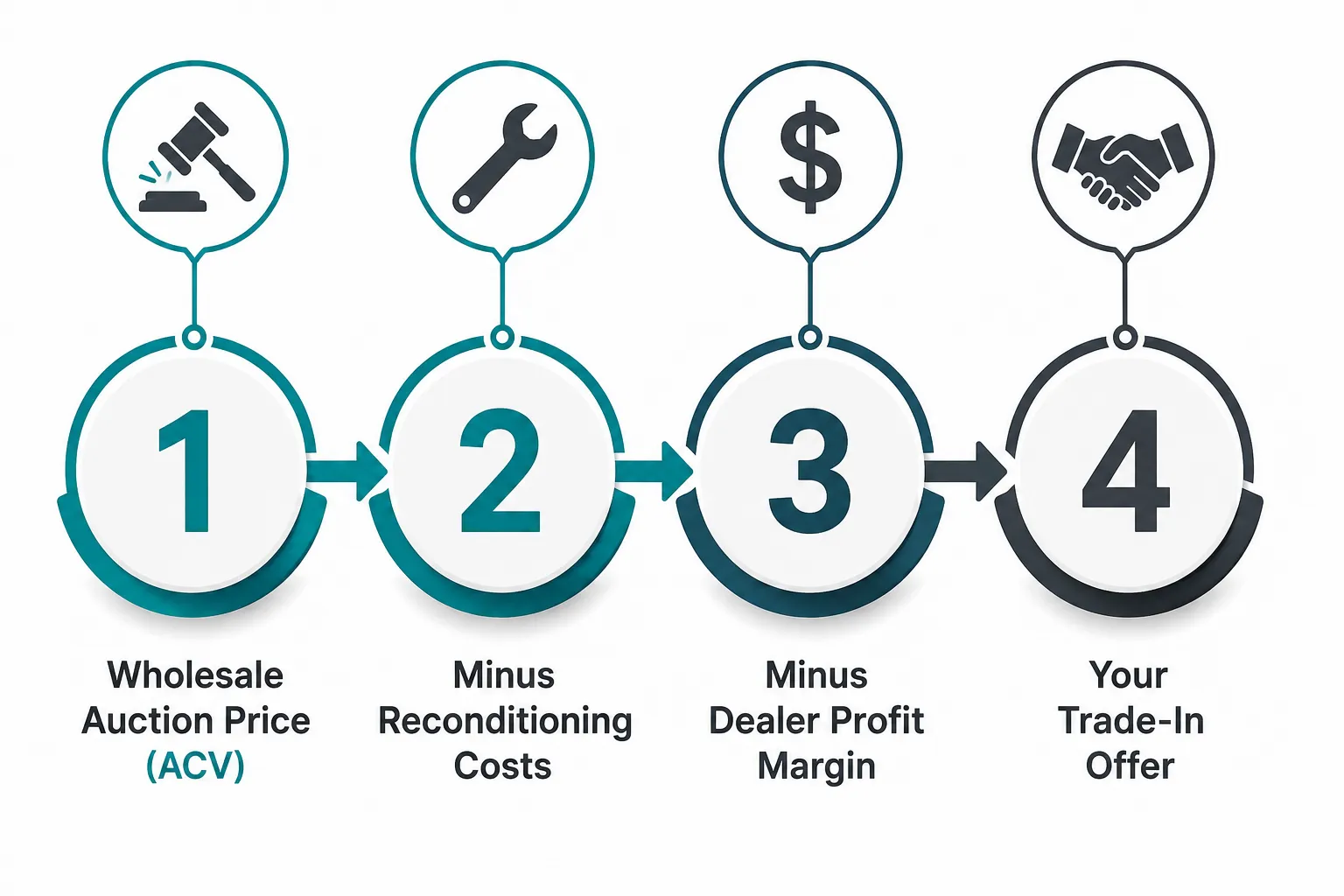
This formula explains why trade-in values consistently run 5 to 15 percent below realistic private-party prices. It is not that the dealer is being dishonest about your car’s condition. The spread is simply built into the business model.
“Trade-in value is what a dealer offers to apply toward another purchase, and that amount shifts with local market conditions, dealer inventory, and how easily the car can be resold.”, Consumer Reports
Major valuation tools like Kelley Blue Book, NADA, and Edmunds all frame trade-in value as a wholesale-anchored number. They each offer separate private-party values that run noticeably higher. Understanding this distinction before you walk into a dealership is essential. For a deeper look at how these tools compare, see this guide on NADA vs Kelley Blue Book: what you should know.
What “Book Value” Really Means
When a salesperson says they are giving you “book value,” they almost always mean the wholesale-side number, not the retail or private-party figure. Those are very different prices. The retail price is what a buyer would pay on the lot. The wholesale price is what the dealer expects to pay at auction. Your offer is anchored to the lower of those two.
Knowing this, it makes sense to check multiple sources before any trade-in conversation. Tools like Kelley Blue Book can give you a realistic range. Learn more about using Kelley Blue Book for used cars to make sure you are reading the right number for your situation.
The 2026 Market Reality: Where Used Car Trade-In Value Stands Right Now
The used-car market in 2026 is at a turning point, and most dealers are not rushing to explain which direction it is turning.
Wholesale prices peaked in March 2026 with the Manheim Used Vehicle Value Index (MUVVI) reaching around 215, the strongest level since summer 2023 [3]. By July 2026, that index had slipped to 210, down 1.4 percent from June but still 1.3 percent above July 2025 [3]. In the first half of August 2026, the index fell another 1.2 percent to 207.4, leaving prices essentially flat compared to August 2025 [1][2].
What does that mean for you? Dealers who are still quoting “strong market” numbers may be referencing the spring peak, not the current softening trend. [1]
At the same time, retail used-car prices remain elevated. The average used car sold for about $27,028 in July 2026, the highest level since mid-2023 [3]. This matters because dealers can still retail your trade-in at strong prices even while offering you a lower wholesale-based number. The gap between what they pay you and what they collect from the next buyer is wider than it has been in years.
Segment Differences Dealers Rarely Mention
Not all vehicles are moving the same way. Mid-2026 wholesale data show meaningful differences by category:
| Vehicle Segment | Year-Over-Year Wholesale Change |
|---|---|
| Used EVs | +12% |
| Compact Cars | +7.6% |
| Mainstream SUVs | +0.3% |
| Overall Market (June 2026) | +2.1% |
If you own a compact car or a late-model electric vehicle, current auction trends support a stronger trade-in offer than a generic appraisal might suggest. Dealers rarely volunteer this information. They apply the same cautious framing regardless of segment performance.
For context on which used vehicles are holding value best right now, the 15 best used cars to buy in 2026 guide offers useful perspective on reliability and resale strength.
The Private Sale Gap and Your Hidden Leverage
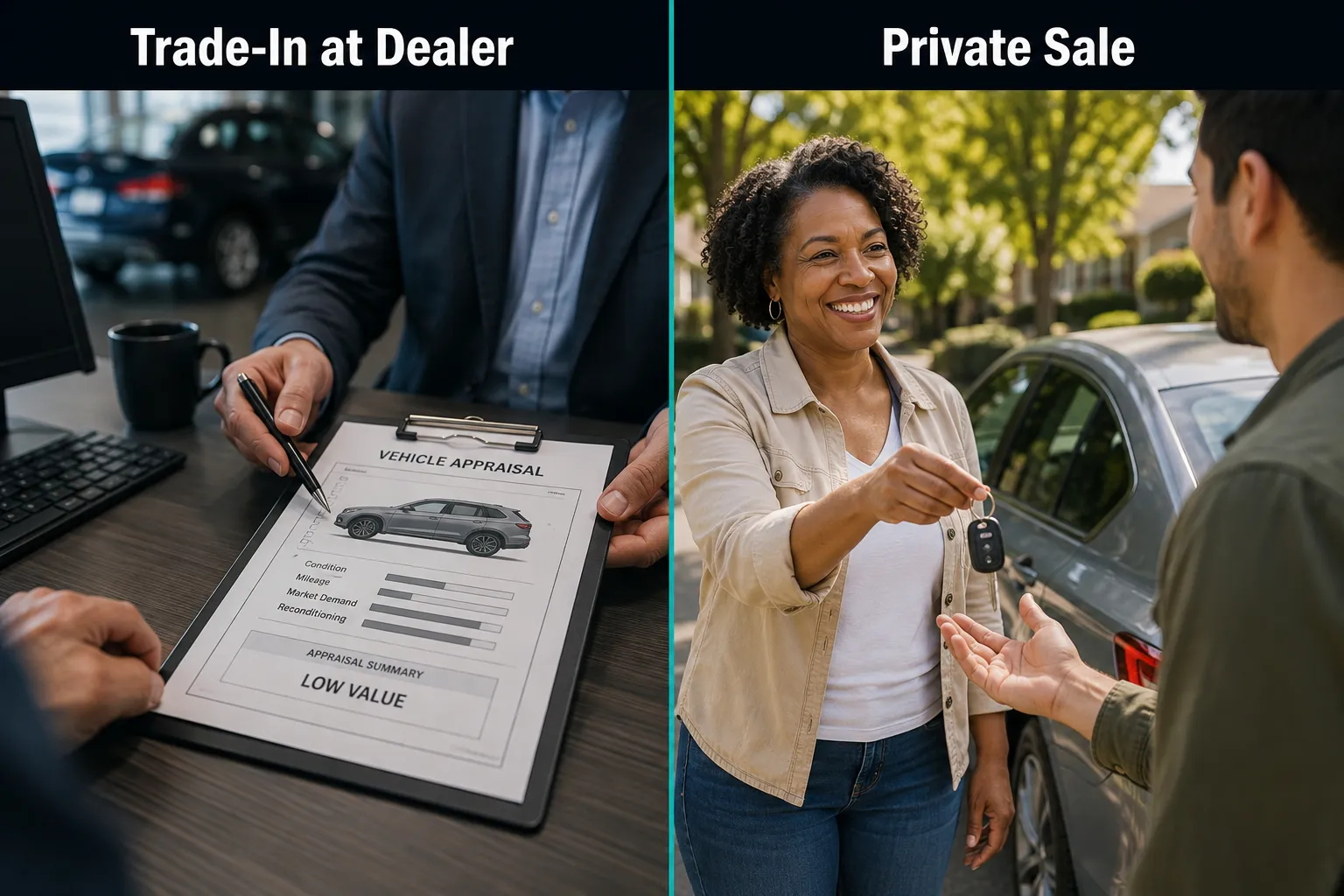
Here is the number dealers really do not want you to think about: private sales typically return 10 to 20 percent more than a dealer trade-in offer for the same vehicle in similar condition.
A 2026 trade-in value calculator based on KBB, NADA, and Edmunds data shows trade-in values averaging around 82 percent of fair-market price. That remaining 18 percent does not disappear, it becomes dealer profit.
For trucks, the gap is even more visible. Data on Ford F-150 transactions shows private sellers often asking about $2,575 more than dealer asking prices for comparable vehicles. Carfax’s consumer guidance states plainly that you can typically get more money in a private sale than by trading in at a dealership.
The Equity Situation Works in Your Favor
One of the most overlooked facts in the current market: average positive trade-in equity toward a new-vehicle purchase hit an all-time high of $13,330 in Q2 2026. That figure comes from Edmunds data published in August 2026.
About 68.8 percent of trade-ins currently carry positive equity, meaning the car is worth more than any remaining loan balance. That is lower than the 83.6 percent peak in early 2022, but still well above pre-pandemic norms.
This matters for negotiation. When you walk in with significant equity, a dealer can use that cushion in two ways: they can pass some of it back to you in the form of a better trade-in offer, or they can absorb it into their margin. Which outcome you get depends almost entirely on whether you know your number before they give you theirs.
Understanding the difference between value and what a dealer is actually willing to pay is a critical skill. This breakdown of value vs worth when selling your car explains the distinction in practical terms.
Timing Your Trade-In: The Seasonal Secret
Most car owners think about trading in when it is convenient for them, end of the year, after a long road trip, when the repair bills start climbing. Dealers know something different: when you trade in matters almost as much as what you trade in.
A February 2026 timing guide advises avoiding trade-ins after July unless you own an all-wheel-drive vehicle. Here is why: by late July, dealers begin shifting their focus from acquiring used inventory to clearing space for incoming new-model-year vehicles. That shift naturally pushes trade-in values down, even if your car has not changed at all.
The best window for most vehicles is late spring through early July. During this period:
- Wholesale auction prices are typically near their annual peak
- Dealer demand for used inventory is high
- Buyers are actively shopping, which motivates dealers to stock up
A July 2026 dealer market update confirms that July often marks a high-demand period for trade-in valuations. But once you move past mid-July, the window starts to close.
The Manheim data supports this pattern. The MUVVI hit its 2026 high around March, stayed elevated through May and June, then began declining in July and August [1][3]. Sellers who traded in during May or June 2026 captured a meaningfully stronger market than those waiting until August.
Residual Values and the “Low Percentage” Trick
Edmunds’ Q1 2026 data shows three-year-old vehicles averaging $31,548, near record used-car prices, but retaining just 66 percent of their original MSRP. That is a five-year low in residual value percentages.
Dealers sometimes use this low residual percentage as a reason your car “is not worth as much as you think.” What they do not say: the actual dollar value of your three-year-old car is still near record highs. A lower residual percentage on a higher MSRP can still mean a strong absolute trade-in number. Do not let percentage framing distract from the real dollar figure.
How to Get the Most From Your Used Car Trade-In Value
Knowing the system is only half the battle. The other half is using that knowledge to negotiate effectively.
Here is a practical step-by-step approach:
Step 1: Research your car’s value before any dealer conversation. Use at least two tools, KBB and NADA or Edmunds, to establish a realistic range. Look at both trade-in and private-party values so you understand the full spread. For a practical walkthrough, see finding the value of your car for a straightforward starting point.
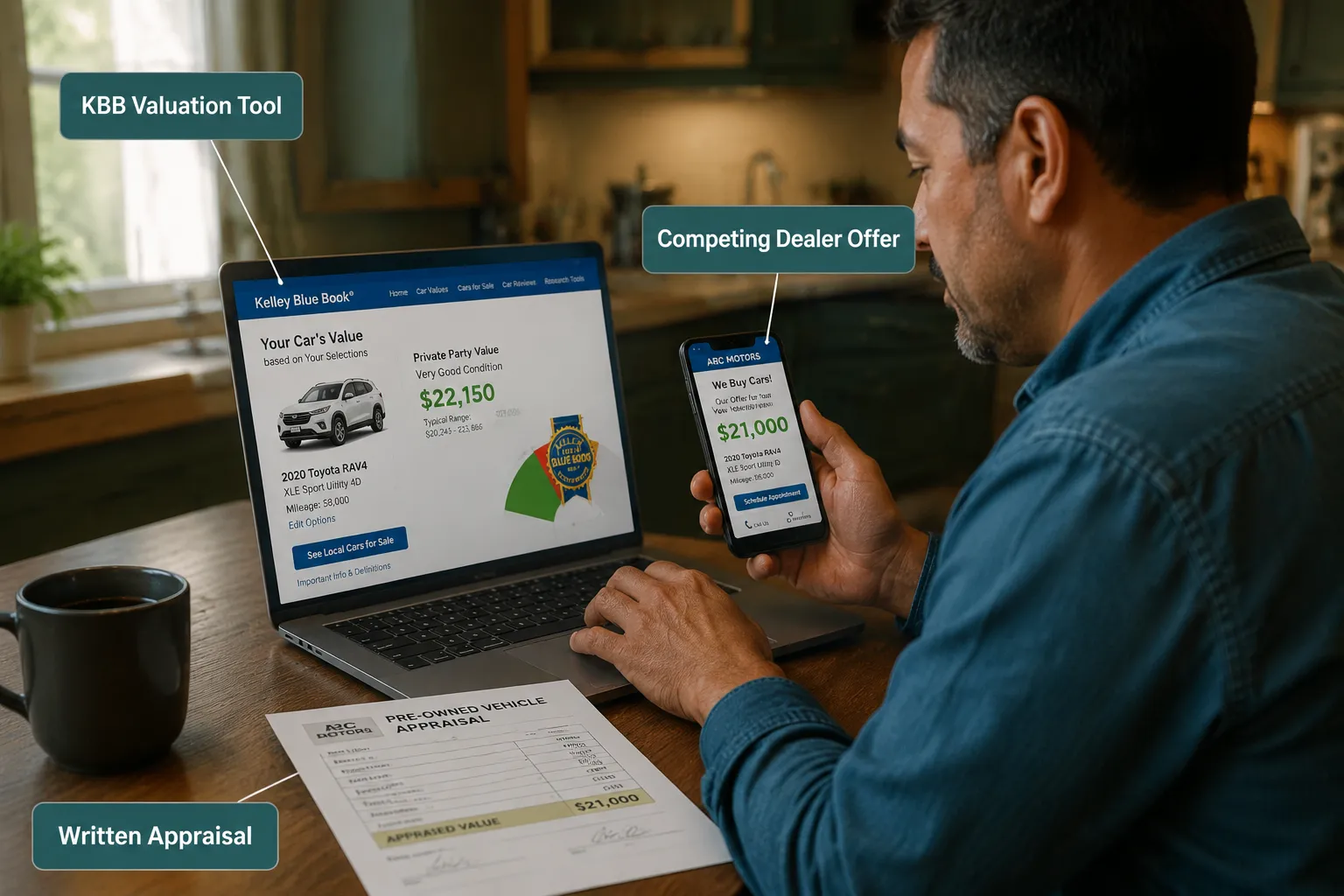
Step 2: Get written competing offers. Visit or submit online appraisals to at least two or three sources, local dealers, Carvana, CarMax, or similar instant-offer platforms. These written offers reveal your real ceiling and give you concrete leverage. Dealers now offer online instant appraisals calibrated to live auction data, but sales staff rarely encourage you to compare them.
Step 3: Separate the trade-in negotiation from the purchase negotiation. Dealers prefer to bundle everything together. When trade-in value, purchase price, and financing are all mixed into one conversation, it is easy to give ground in one area without realizing it. Negotiate the trade-in price first, on its own, before discussing the new vehicle.
Step 4: Know your segment. If you own a compact car or EV, current market data supports a stronger offer. If you own a mainstream SUV, the market is closer to flat. Walk in knowing which category your vehicle falls into and what that means for current auction trends [1][2].
Step 5: Use your equity as leverage, not a gift. With average positive equity at a record $13,330, you have real bargaining power. If a dealer’s first offer seems low, remind them of the current market. Show them your competing written offers. The shortage of quality used inventory means dealers remain motivated to secure desirable trade-ins even as they talk about “normalizing” values [2].
For more strategies on what dealerships prefer you not know, the car buying tips dealerships do not want you to know guide covers the broader negotiation picture.
A Quick Comparison: Trade-In vs. Private Sale vs. Instant Offer
| Method | Typical Return | Convenience | Best For |
|---|---|---|---|
| Dealer Trade-In | ~82% of fair market | Very high | Speed and simplicity |
| Instant Offer (Carvana/CarMax) | 85-90% of fair market | High | Quick cash, no haggling |
| Private Sale | 95-100% of fair market | Low | Maximum return |
Conclusion
The used car trade in value system is not designed to work against you, but it is designed to work for the dealer by default. The formula is real, the market timing matters, and the gap between what a dealer pays and what they collect is wider in 2026 than it has been in years.
Here are the most important actions to take before your next trade-in:
- Research your value first. Use KBB, NADA, and Edmunds before any dealer conversation. Know both the trade-in range and the private-party range.
- Get at least two competing written offers. Online instant appraisals from Carvana, CarMax, or competing dealers take minutes and give you real leverage.
- Know your segment. EVs and compact cars are outperforming the broader market right now. If you own one, push harder.
- Time it right. Late spring through early July is the strongest window. The Manheim index has been declining since March 2026, waiting costs money [1][3].
- Separate the negotiations. Lock in your trade-in value before discussing the new vehicle or financing.
The dealers who profit most from trade-ins are counting on sellers who walk in underprepared. A few hours of research and two or three competing offers can close most of that gap. The information is available, using it is the only step left.
References
[1] Manheim Used Vehicle Value Index 1 2 First Half August – https://collisionweek.com/2026/08/26/manheim-used-vehicle-value-index-1-2-first-half-august/
[2] Manheim Used Vehicle Value Index Mid August 2026 Trends – https://www.coxautoinc.com/insights/manheim-used-vehicle-value-index-mid-august-2026-trends/
[3] Manheim Used Vehicle Value Index 1 4 July – https://collisionweek.com/2026/08/10/manheim-used-vehicle-value-index-1-4-july/