Last Updated on August 27, 2026
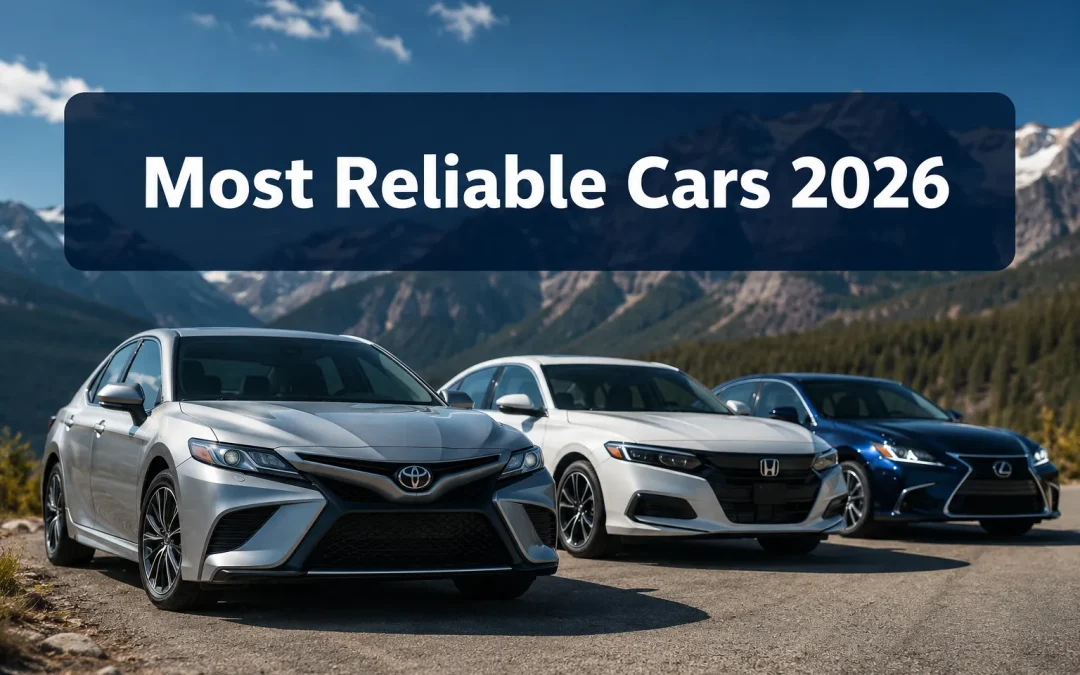
The most reliable cars in 2026 are led by Toyota, Lexus, and Subaru according to Consumer Reports, while Lexus and Buick top the J.D. Power 2025 Vehicle Dependability Study. Japanese automakers and hybrid models dominate the top rankings, while early EVs and plug-in hybrids still show higher problem rates. If you want a dependable car with low ownership costs, a Toyota or Lexus model is the safest starting point in 2026.
Key Takeaways
- Toyota ranks as the most reliable mainstream brand in 2026 based on Consumer Reports data, with Lexus leading the luxury segment.
- Lexus and Buick earned the top spots in the J.D. Power 2025 Vehicle Dependability Study, which measures three-year-old vehicles.
- Hybrids from Japanese brands consistently outperform both traditional gas cars and early EVs in reliability rankings.
- Jeep, Chrysler, and Volkswagen rank among the least dependable brands in 2026 reliability studies.
- Reliable cars like the Toyota Camry, Honda CR-V, and Lexus ES also hold their resale value better than most competitors.
- A reliable car is not the same as a safe car, reliability measures mechanical dependability, while safety ratings measure crash protection.
- The most reliable used cars under $15,000 are typically 2018-2021 Toyota Corollas, Honda Civics, and Mazda3s.
- Tesla entered the top 10 most reliable brands in 2026 rankings, while Audi and Mazda dropped out of the top tier.
- High-mileage drivers get the most value from reliable cars because the savings on repairs compound over time.
- Always check a used car’s reliability history using a VIN report, Consumer Reports owner data, and a pre-purchase inspection.
What Makes a Car Reliable
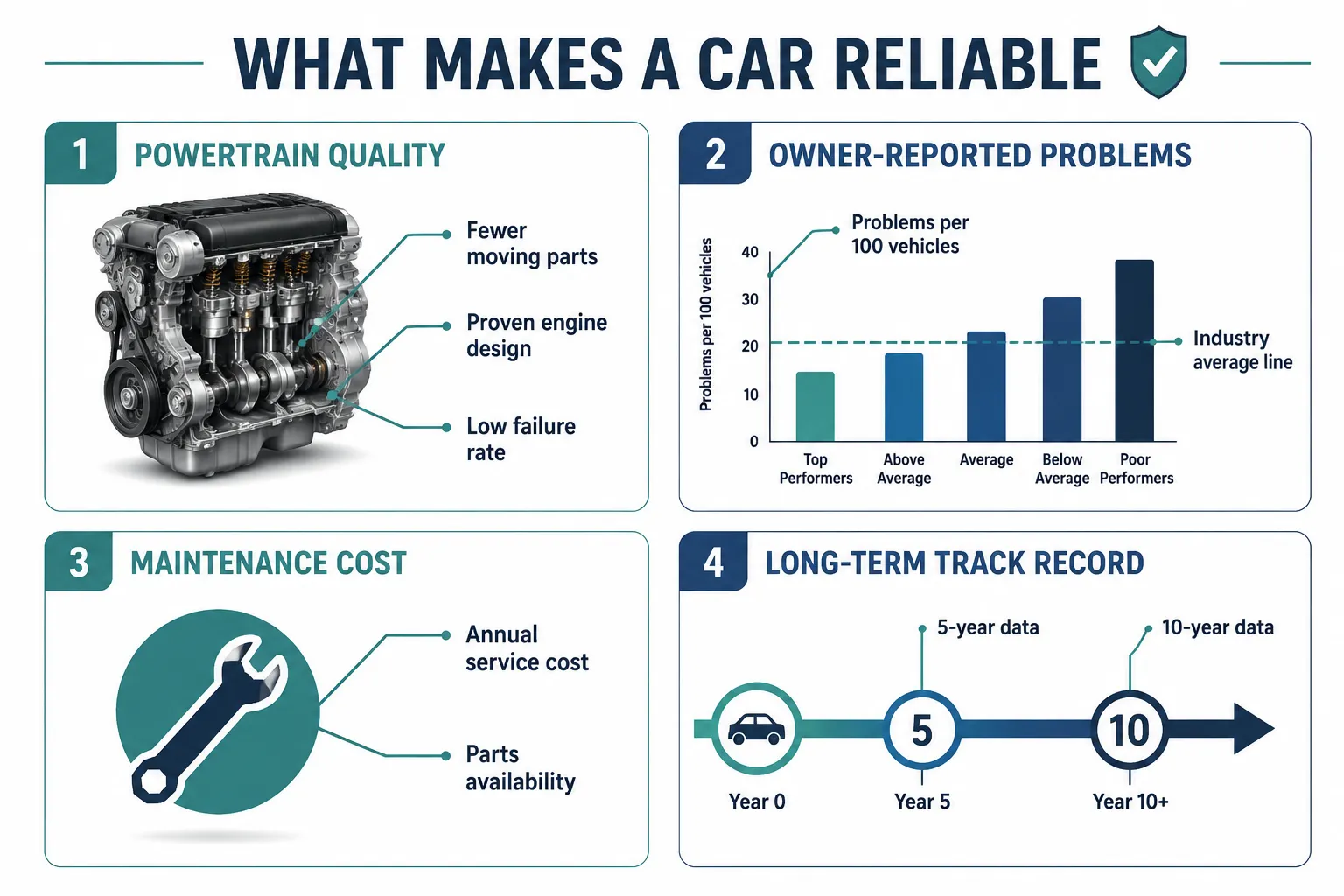
A reliable car is one that works as expected, needs fewer unplanned repairs, and holds up well over many years of driving. Reliability is measured by tracking how many problems owners report per 100 vehicles over a set period, usually one to three years.
Several factors determine whether a car earns a strong reliability record:
- Powertrain simplicity: Engines and transmissions with fewer complex parts tend to fail less often. Proven designs that have been in production for many years carry fewer surprises.
- Owner-reported problems: Studies like the J.D. Power Vehicle Dependability Study and Consumer Reports annual reliability survey collect data from hundreds of thousands of real owners. Fewer reported problems per 100 vehicles means a higher reliability score.
- Maintenance cost and parts availability: Cars with widely available parts and straightforward service needs cost less to keep running. This matters a lot over five or more years of ownership.
- Long-term track record: A brand or model that has been reliable for a decade is much more likely to stay reliable than one with only one or two good years.
- Build quality: Tight tolerances, quality materials, and consistent factory assembly all reduce the chance of early failures.
Common mistake: Many buyers confuse a car’s features or technology with reliability. A car loaded with the latest tech can still be unreliable if those systems break down frequently. Simpler, proven technology often scores better in long-term reliability studies.
Most Reliable Car Brands in 2026
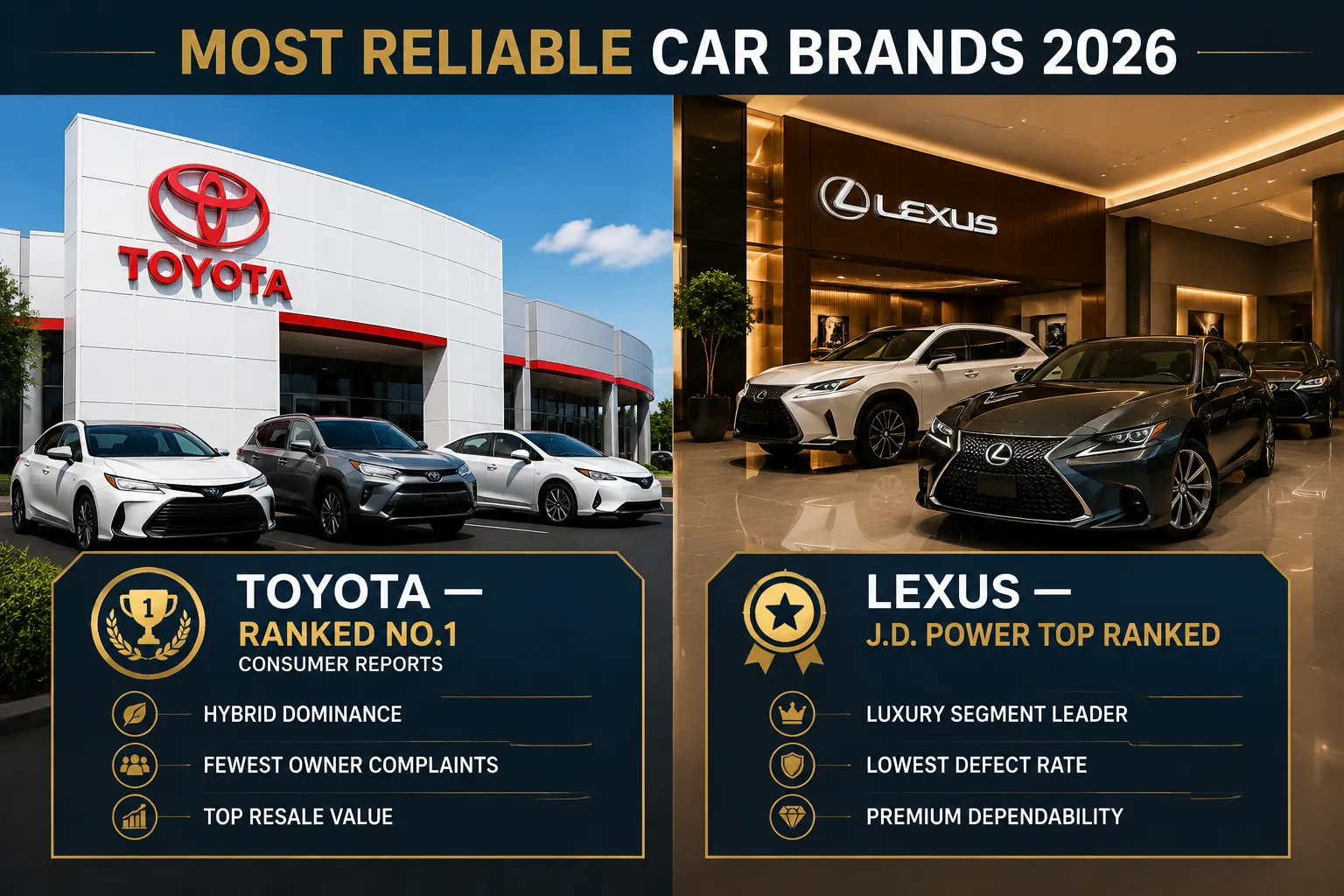
Toyota, Lexus, and Subaru lead the pack for the most reliable car brands in 2026. According to Consumer Reports, Toyota has again claimed the top spot among mainstream brands, while Lexus leads the luxury category. [2] The J.D. Power 2025 Vehicle Dependability Study, which measures problems reported by original owners of three-year-old vehicles, placed Lexus and Buick at the very top of its rankings. [1]
Here is how the brand hierarchy looks for 2026:
Top mainstream reliable car brands:
- Toyota
- Honda
- Subaru
- Mazda (strong in individual models despite dropping from the overall top 10)
- Buick
Top luxury reliable car brands:
- Lexus
- Genesis
- Porsche (strong in specific models)
Brands that improved in 2026:
- Buick and GM brands showed segment-level dependability gains in the J.D. Power 2025 study. [1]
- Tesla entered the top 10 most reliable brands in 2026 rankings, a notable shift from prior years. [2]
- Nissan also moved into the top 10, replacing Audi and Mazda at the brand level. [9]
Brands that lag behind:
- Jeep, Chrysler, and Volkswagen ranked among the least dependable in both J.D. Power and Consumer Reports data. [6]
- Several plug-in hybrid and early EV models from various brands continue to show higher-than-average problem rates. [4]
Choose Toyota or Lexus if you want the strongest combination of reliability data, resale value, and long-term ownership confidence in 2026.
Best Reliable Cars Under $30,000
The best reliable cars under $30,000 in 2026 include the Toyota Corolla, Honda Civic, Mazda3, Subaru Impreza, and Toyota Camry. These models consistently rank at or near the top of reliability surveys and are widely available at or below the $30,000 price point.
Here are strong choices at different price levels:
Under $25,000:
- Toyota Corolla (sedan and hatchback)
- Honda Civic
- Mazda3
- Subaru Impreza
$25,000 to $30,000:
- Toyota Camry (base and LE trims)
- Honda CR-V (base trim)
- Subaru Forester
- Mazda CX-5 (base trim)
Why these models stand out: Hybrids and Japanese brands dominate the most reliable 2026 models. [8] The Toyota Camry Hybrid, for example, combines a proven powertrain with excellent fuel economy and a reliability record that stretches back more than a decade. The Honda CR-V has been one of the best-selling and most dependable compact SUVs for years.
Edge case: Some trim levels of otherwise reliable models add complex technology that can hurt reliability scores. Stick to base or mid-level trims when reliability is the top priority, especially on newer platforms.
For help understanding what a used version of any of these models is worth, the Blue Book Car Value Guide is a useful starting point.
Toyota vs. Honda Reliability Comparison
Toyota and Honda are the two most consistently reliable mainstream brands, but Toyota holds a slight edge in 2026 reliability rankings. Consumer Reports has ranked Toyota at the top of its annual reliability survey, while Honda sits just behind in the upper tier. [2] [8]
Here is a direct comparison:
| Factor | Toyota | Honda |
|---|---|---|
| Consumer Reports Brand Rank (2026) | No. 1 mainstream | Top 5 mainstream |
| Hybrid lineup reliability | Best in class | Strong, improving |
| Most reliable model | Camry, Corolla, Prius | Civic, CR-V, Ridgeline |
| Average annual maintenance cost (est.) | Lower | Slightly higher |
| Resale value | Excellent | Excellent |
| SUV options under $30,000 | RAV4, Corolla Cross | CR-V, HR-V |
Bottom line: Choose Toyota if hybrid reliability is a priority, or if you want the brand with the strongest overall track record. Choose Honda if you prefer the Civic’s driving dynamics or need a compact pickup (the Ridgeline is Honda’s most reliable truck). Both brands are excellent choices for long-term ownership.
How to Check a Used Car’s Reliability History
Checking a used car’s reliability history takes four steps: pull a vehicle history report, review owner reliability data from Consumer Reports or J.D. Power, inspect the car’s maintenance records, and get a pre-purchase inspection from an independent mechanic.
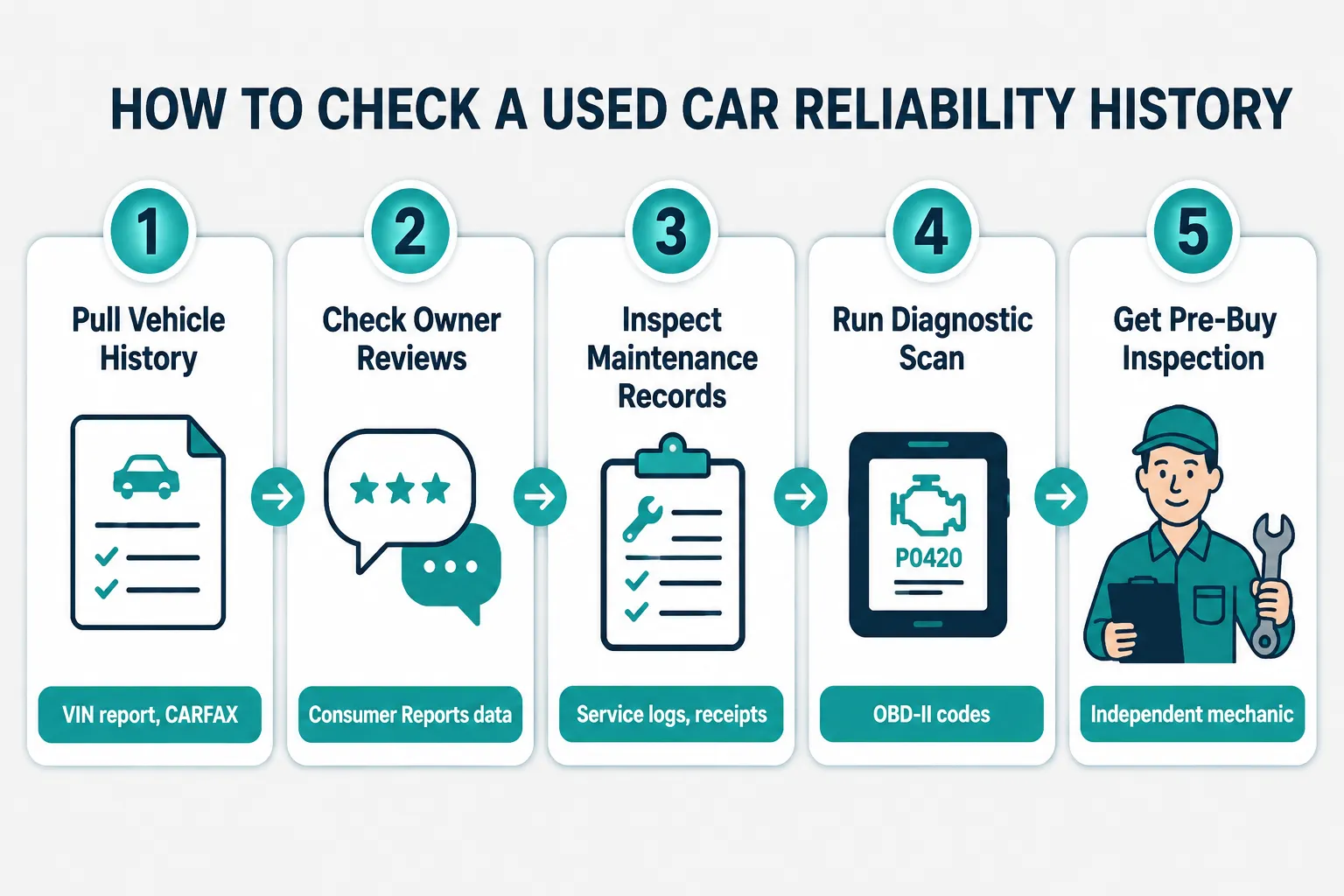
Here is the full process:
Pull a VIN history report. Services like CARFAX or AutoCheck show accident history, number of owners, odometer readings, and whether the title is clean. A clean title and single-owner history are positive signs.
Check model-level reliability data. Consumer Reports and J.D. Power track problems by model year. A 2019 Honda Civic, for example, may have a different reliability record than a 2021 Honda Civic. Always look up the specific year, not just the model name.
Review the maintenance records. Ask the seller for service receipts. Regular oil changes, timing belt or chain replacements (where applicable), and brake service show the car was cared for. Missing records are a warning sign.
Run an OBD-II diagnostic scan. A basic OBD-II scanner (available at most auto parts stores) reads any stored error codes. Codes that have been recently cleared can indicate the seller is hiding a known problem.
Get a pre-purchase inspection. Pay an independent mechanic (not the seller’s shop) to inspect the car before you buy. This typically costs $100 to $150 and can save thousands in unexpected repairs.
For more guidance on used vehicle valuation, see this 7 Steps to NADA Guides Used Car Values resource.
Common mistake: Skipping the pre-purchase inspection because the car “looks fine.” Many serious mechanical issues, like worn suspension components or early transmission problems, are not visible to the eye.
Reliable Cars with Good Resale Value
Reliable cars hold their value better because buyers trust them. Toyota, Honda, and Lexus models consistently rank among the highest in resale value, and their reliability reputation is a direct reason why. [8]
Top reliable cars with strong resale value in 2026:
- Toyota Tacoma, one of the highest resale values of any vehicle sold in the U.S.
- Toyota 4Runner, older models still command strong prices due to legendary durability.
- Toyota Camry Hybrid, holds value well and has low running costs.
- Honda CR-V, among the best-resale compact SUVs year after year.
- Lexus ES, strong resale in the luxury segment with lower depreciation than German rivals.
- Subaru Outback, popular in specific markets (mountain states, Pacific Northwest) where demand keeps prices high.
Why reliability drives resale value: A car with a strong reliability record attracts more buyers in the used market. More demand means sellers can hold a higher price. Brands like Jeep and Chrysler, which rank low in reliability, tend to depreciate faster because buyers factor in the higher expected repair costs.
To understand how resale value is calculated, the Blue Book Car Value Guide explains the key factors that affect a vehicle’s market price.
What Is the Difference Between Reliability Ratings and Safety Ratings
Reliability ratings and safety ratings measure completely different things. Reliability ratings track how often a car breaks down or needs unplanned repairs. Safety ratings measure how well a car protects occupants in a crash.
A car can score perfectly in safety tests and still be unreliable. Likewise, a highly reliable car may not earn top crash-test scores. Both matter, but for different reasons.
Reliability ratings come from:
- Consumer Reports annual reliability survey (owner-reported problems)
- J.D. Power Vehicle Dependability Study (problems per 100 vehicles over three years) [1]
- J.D. Power Initial Quality Study (problems in the first 90 days of ownership)
Safety ratings come from:
- NHTSA (National Highway Traffic Safety Administration), 5-star crash test ratings
- IIHS (Insurance Institute for Highway Safety), Top Safety Pick and Top Safety Pick+ awards
Decision rule: When shopping for a family vehicle, check both. A car that scores well on reliability AND earns an IIHS Top Safety Pick+ is the strongest all-around choice. The Toyota Camry, Honda CR-V, and Subaru Outback routinely score well in both categories.
Reliable Cars for High-Mileage Driving
For drivers who put 20,000 or more miles on a car each year, reliability becomes even more important because problems happen faster. The best reliable cars for high-mileage driving are the Toyota Camry, Toyota Corolla, Honda Civic, and Honda Accord, all of which have documented histories of reaching 200,000 miles or more with proper maintenance. [4]
Why high-mileage drivers need extra reliability: Every extra mile is another chance for something to fail. A car that averages one unplanned repair per year costs a low-mileage driver one repair in five years. A high-mileage driver hits that same repair rate in two years or less. The savings from choosing a reliable car compound quickly.
Best choices for high-mileage drivers:
- Toyota Camry and Camry Hybrid
- Honda Accord
- Toyota Corolla
- Honda Civic
- Lexus ES (for those willing to spend more upfront)
- Subaru Legacy (with consistent maintenance)
Maintenance tip for high-mileage drivers: Follow the manufacturer’s severe-duty maintenance schedule if you drive in stop-and-go traffic, extreme heat, or very cold climates. This means more frequent oil changes and earlier fluid replacements than the standard schedule suggests.
Most Common Problems with Reliable Car Brands
Even the most reliable car brands have known weak points. Understanding these helps buyers make smarter choices and plan for maintenance costs.
Toyota:
- Some models have had issues with excessive oil consumption on certain four-cylinder engines (notably 2010-2015 Camry with the 2.5L engine).
- Water pump failures on some hybrid models, though typically covered under extended warranty.
- Infotainment system glitches on newer models (a common complaint across the industry).
Honda:
- The 1.5L turbocharged engine in some Civics and CR-Vs had oil dilution issues in cold climates (2017-2019 model years).
- Some Accord and Pilot models had transmission concerns in earlier years.
- Paint quality has been a recurring complaint in owner surveys.
Subaru:
- Head gasket issues on older EJ-series engines (pre-2012 models) are well-documented.
- Oil consumption on some 2.5L engines (2011-2019 Forester, Outback, Impreza).
- CVT transmission durability concerns on higher-mileage vehicles.
Lexus:
- Very few widespread mechanical issues, which is why it consistently tops reliability rankings. [6]
- Some owners report minor electrical and infotainment glitches, but mechanical failures are rare.
Key point: Even brands with known issues still rank far ahead of less reliable brands. A Toyota with a known oil consumption quirk is still more dependable overall than a Jeep or Chrysler product with multiple systemic problems. [5]
Reliable Electric Cars in 2026
The most reliable electric cars in 2026 are the Tesla Model 3, Toyota bZ4X (improved), and the Hyundai IONIQ 6. Early EVs and plug-in hybrids as a category still show higher problem rates than traditional gas vehicles, but the gap is closing. [4]
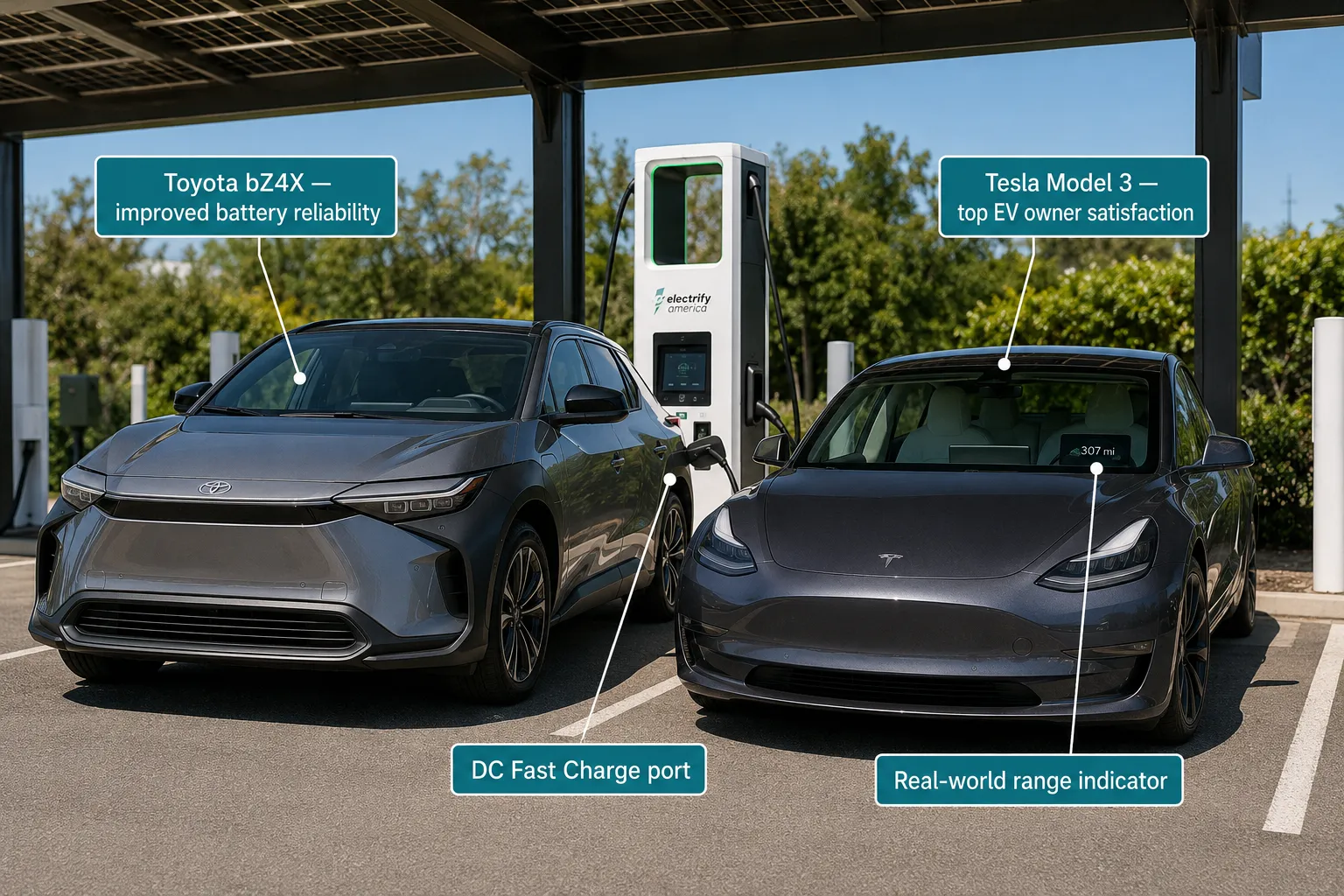
Why early EVs had reliability problems: First-generation EV platforms introduced many new systems at once, battery management software, regenerative braking, and complex thermal management. These systems had higher early failure rates than proven gas powertrains.
What has improved in 2026:
- Tesla’s build quality and software reliability have improved significantly, earning the brand a place in the top 10 most reliable brands. [2]
- Toyota’s bZ4X received significant updates that addressed early battery and software issues.
- Hyundai and Kia EV platforms have matured and show stronger reliability data than their first-generation models.
Still problematic:
- Plug-in hybrids (PHEVs) continue to show the highest problem rates of any powertrain type in 2026. The added complexity of both a gas engine and an electric drivetrain creates more potential failure points. [4]
- Some newer EV brands with less production history still lack the long-term reliability data needed for confident recommendations.
For more context on the long-term cost picture for electric vehicles, see this article on electric cars becoming cheaper than ICE vehicles.
Choose an EV if: You want lower fuel and routine maintenance costs, and you are comfortable with the current reliability data. Stick to Tesla Model 3, Toyota bZ4X, or Hyundai IONIQ 6 for the strongest reliability track record among EVs in 2026.
How Long Do Reliable Cars Last
A well-maintained reliable car from a top brand can last 200,000 to 300,000 miles. Toyota and Honda models regularly hit these milestones, and some Lexus and Subaru vehicles have documented records beyond 300,000 miles with consistent maintenance.
What determines how long a car lasts:
- Maintenance consistency: Regular oil changes, fluid replacements, and scheduled service are the single biggest factor in longevity. A reliable car that is poorly maintained will fail sooner than a less reliable car that is well cared for.
- Climate and driving conditions: Extreme heat, extreme cold, and heavy stop-and-go traffic all accelerate wear. Cars driven in mild climates with highway miles tend to last longer.
- Powertrain type: Traditional gas engines with proven designs (like Toyota’s 2AR-FE four-cylinder) have the longest documented track records. Hybrids from Toyota have also shown excellent longevity. Early EVs do not yet have 15-20 year ownership data.
- Rust protection: In regions that use road salt, rust is often what ends a car’s life before the engine or transmission fails. Subaru and Toyota have improved rust protection, but older models in rust-belt states still face this issue.
Practical estimate: Buy a reliable car from Toyota, Honda, Lexus, or Subaru, follow the maintenance schedule, and plan for 15 or more years of service life. That is a realistic expectation, not an optimistic one.
Reliable Cars That Are Cheap to Maintain
The cheapest reliable cars to maintain are the Toyota Corolla, Honda Civic, Mazda3, and Toyota Camry. These models combine low parts costs, widely available service at independent shops, and infrequent unplanned repairs.
What drives maintenance costs:
- Parts cost: Japanese brand parts are generally less expensive than European or American brand parts. A Toyota Camry brake job costs significantly less than the same job on a BMW 3 Series.
- Labor complexity: Simple engine layouts with easy access to common service items (filters, spark plugs, belts) reduce labor hours and cost.
- Service interval length: Some reliable models have longer oil change intervals (up to 10,000 miles with synthetic oil), which reduces annual service visits.
- Dealer vs. independent shop: Toyota and Honda have large independent service networks. Owners are not forced to use expensive dealerships for routine maintenance.
Estimated annual maintenance costs (general range, not exact figures):
- Toyota Corolla: low end of the industry average
- Honda Civic: near the industry average
- Subaru Outback: slightly above average due to AWD system service needs
- Lexus ES: moderate, higher than mainstream but lower than German luxury brands
Avoid if low maintenance cost is the priority: German luxury brands like BMW, Mercedes-Benz, and Audi have significantly higher parts and labor costs, even when the cars are reliable. A used Audi A4 may cost less to buy than a used Lexus ES, but the ownership costs over five years often reverse that gap.
If you are also considering a used truck for work or hauling, this guide to buying a used commercial truck covers similar reliability and cost considerations.
Should You Buy a Reliable Car or a Luxury Car
For most buyers, a reliable mainstream car delivers better long-term value than a luxury car. Luxury cars offer more comfort, features, and prestige, but they typically cost more to buy, more to insure, and significantly more to repair.
Choose a reliable mainstream car if:
- Long-term ownership cost is a priority.
- You drive high annual mileage.
- You plan to keep the car for 10 or more years.
- Budget is a constraint.
Choose a luxury car if:
- You want premium interior quality and advanced features.
- You can afford higher insurance and maintenance costs.
- You are buying a Lexus, Genesis, or Porsche, brands that combine luxury with strong reliability.
The middle-ground option: Lexus is the strongest argument for buying a luxury car over a reliable mainstream car. It offers near-Toyota reliability, a premium interior, and lower long-term costs than German luxury rivals. The Lexus ES, for example, consistently tops reliability rankings in the luxury segment. [6]
Common mistake: Buying a used German luxury car at a mainstream price. A three-year-old BMW or Mercedes-Benz may cost the same as a new Toyota Camry, but the repair bills over the next five years often far exceed what the buyer expected.
Reliable Cars for Families vs. Single Drivers
Reliable cars for families prioritize space, safety ratings, and long-term durability. Single drivers can prioritize fuel economy, lower purchase price, and driving dynamics while still choosing a dependable model.
Best reliable cars for families in 2026:
- Toyota Sienna (minivan, hybrid only, excellent reliability)
- Honda Odyssey (minivan, strong reliability record)
- Toyota RAV4 Hybrid (compact SUV, top reliability and safety scores)
- Subaru Outback (wagon/SUV, strong safety and AWD for families in snowy regions)
- Honda CR-V (compact SUV, dependable and spacious for small families)
Best reliable cars for single drivers in 2026:
- Toyota Corolla (sedan or hatchback, low cost, excellent reliability)
- Honda Civic (sporty, fuel-efficient, consistently reliable)
- Mazda3 (best driving dynamics in the reliable compact segment)
- Toyota Prius (best fuel economy among reliable non-EV options)
Key difference: Families benefit most from models with strong reliability AND top safety ratings, since more passengers means higher stakes in a crash. Single drivers have more flexibility to prioritize fuel economy or driving feel, as long as the reliability foundation is solid.
Edge case: Single drivers who occasionally carry passengers or cargo may find a compact SUV like the Honda HR-V or Toyota Corolla Cross offers the best of both worlds, reliable, fuel-efficient, and versatile enough for occasional family use.
Most Reliable Used Cars Under $15,000
The most reliable used cars under $15,000 in 2026 are the 2018-2021 Toyota Corolla, 2018-2021 Honda Civic, 2017-2020 Mazda3, and 2017-2020 Toyota Camry. These model years hit the sweet spot of modern safety features, proven reliability, and affordable pricing in the used market.
What to look for in this price range:
- Model years with clean reliability records (avoid first-year redesigns)
- Under 80,000 miles for the best remaining lifespan
- Clean title, no major accident history
- Full maintenance records
Top picks under $15,000:
| Model | Best Model Years | What to Watch |
|---|---|---|
| Toyota Corolla | 2018-2021 | Check for any recall completions |
| Honda Civic | 2018-2021 | Avoid 1.5T in cold climates (oil dilution) |
| Mazda3 | 2017-2020 | Strong reliability, lower resale demand |
| Toyota Camry | 2017-2019 | Higher mileage at this price, still reliable |
| Honda Fit | 2016-2020 | Small but extremely reliable |
Where to find values: Use the 7 Steps to NADA Guides Used Car Values to check fair market pricing before you negotiate. Knowing the actual value of a used car prevents overpaying, especially in a competitive used market.
FAQ
Q: What is the single most reliable car brand in 2026? Toyota is the most reliable mainstream car brand in 2026 according to Consumer Reports, and Lexus leads the luxury segment in both Consumer Reports and J.D. Power data. [2] [1]
Q: Are Toyotas really more reliable than Hondas? Yes, by a small margin in most 2026 reliability studies. Both brands are far above average, but Toyota’s hybrid lineup and broader model range give it a slight overall edge. For individual models, Honda’s Civic and CR-V are among the most reliable cars in their segments.
Q: What is the J.D. Power Vehicle Dependability Study? It is an annual study that measures problems reported by original owners of three-year-old vehicles. The 2025 study (covering model year 2022 vehicles) placed Lexus and Buick at the top of its rankings. [1] It is one of the most widely cited reliability benchmarks in the auto industry.
Q: Are electric cars less reliable than gas cars in 2026? As a category, yes. EVs and especially plug-in hybrids still show higher problem rates than traditional gas vehicles in 2026 reliability data. [4] However, Tesla Model 3 and Toyota bZ4X are exceptions that perform well against the broader EV average.
Q: How many miles can a reliable Toyota or Honda last? With consistent maintenance, 200,000 to 300,000 miles is a realistic expectation for Toyota and Honda models. Some well-maintained examples exceed 300,000 miles.
Q: Is Buick actually reliable? Yes. Buick has consistently ranked near the top of J.D. Power dependability studies, including the 2025 study where it tied for the top spot with Lexus. [1] [6] Many Buick models share platforms with well-regarded GM vehicles and benefit from strong quality control.
Q: What is the cheapest reliable car to own long-term? The Toyota Corolla is widely considered the cheapest reliable car to own long-term when factoring in purchase price, fuel economy, maintenance costs, and resale value. The Honda Civic is a very close second.
Q: Should I buy a new or used reliable car? It depends on budget. A new Toyota or Honda comes with a full warranty and the latest safety features. A used 2018-2021 model from the same brands offers nearly the same reliability at a lower price, especially if it has under 80,000 miles and a clean history.
Q: Which reliable car brands dropped in the 2026 rankings? Audi and Mazda dropped out of the top 10 most reliable brands in 2026 rankings at the brand level, replaced by Tesla and Nissan. [9] Mazda’s individual models still perform well, but brand-level data shifted.
Q: Are Subarus reliable for snowy climates? Yes. Subaru’s standard AWD system and strong reliability record make it a top choice for snowy regions. The Outback and Forester are particularly popular for this reason. Watch for the oil consumption issue on some 2.5L engines in older models.
Q: What does “problems per 100 vehicles” mean in reliability studies? It means the average number of problems reported for every 100 cars of that model. A lower number is better. The industry average in the J.D. Power 2025 study was 190 problems per 100 vehicles. [3] Top brands like Lexus score well below that average.
Q: Can a reliable car also be fun to drive? Yes. The Mazda3, Honda Civic, and Toyota GR86 all combine strong reliability with engaging driving dynamics. Reliability and driving enjoyment are not mutually exclusive.
Conclusion
Choosing a reliable car in 2026 does not have to be complicated. The data points clearly in one direction: Toyota, Lexus, Honda, and Subaru deliver the strongest combination of dependability, low maintenance costs, and long-term value. Lexus and Buick lead the J.D. Power 2025 dependability rankings, while Toyota tops Consumer Reports for mainstream brands. [1] [2]
Actionable next steps:
Narrow your budget first. Under $15,000 points you toward used Toyota Corolla or Honda Civic models. Under $30,000 opens up new Corollas, Civics, and Camrys. Above $30,000, the Lexus ES offers luxury reliability at a competitive price.
Check the specific model year, not just the brand. Use Consumer Reports or J.D. Power data to confirm the exact year you are considering has a strong reliability record. First-year redesigns often carry higher risk.
Run a full used car check. Pull a VIN report, review model-year reliability data, inspect maintenance records, and get a pre-purchase inspection before buying any used vehicle.
Consider a hybrid. Japanese hybrid models from Toyota and Honda consistently outperform both traditional gas cars and early EVs in reliability rankings. They also offer lower fuel costs without the range concerns of a full EV.
Check resale value before you buy. A reliable car that holds its value well costs less to own over time. Use the Blue Book Car Value Guide to understand what your car will be worth in three to five years.
Reliable cars are not glamorous, but they are smart. The money saved on repairs, the peace of mind on long drives, and the stronger resale value all add up to a better ownership experience over time. Start with the brands and models that have earned their reputation through years of real-world owner data, and you will be in good shape.
References
[1] 2025 US Vehicle Dependability Study (VDS) – https://www.jdpower.com/business/press-releases/2025-us-vehicle-dependability-study-vds/
[2] Who Makes the Most Reliable Cars – Consumer Reports – https://www.consumerreports.org/cars/car-reliability-owner-satisfaction/who-makes-the-most-reliable-cars-a7824554938/
[3] J.D. Power 2025 VDS Full Report (PDF) – https://www.jdpower.com/sites/default/files/file/2025-02/2025010%20U.S.%20VDS_0.pdf
[4] What Are the Most Reliable Cars and Brands – Cars.com – https://www.cars.com/articles/what-are-the-most-reliable-cars-and-brands-505538/
[5] Winners and Losers of 2025’s J.D. Power Dependability Study – Motoring Research – https://www.motoringresearch.com/slideshow/winners-and-losers-of-2025s-j-d-power-dependability-study/
[6] Lexus, Buick Top J.D. Power’s Latest Car Dependability Survey – Yahoo Finance – https://finance.yahoo.com/news/lexus-buick-top-jd-powers-latest-car-dependability-survey-with-volkswagen-chrysler-lagging-behind-160004587.html
[8] Toyota Again Tops Consumer Reports Annual Auto Reliability Survey – Cars.com – https://www.cars.com/articles/toyota-again-tops-consumer-reports-annual-auto-reliability-survey-519312/
[9] These Are 2025’s Most Reliable Automakers – MSN Autos – https://www.msn.com/en-us/autos/news/these-are-2025-s-most-reliable-automakers/ar-AA1BfOmy