Last Updated on August 27, 2026
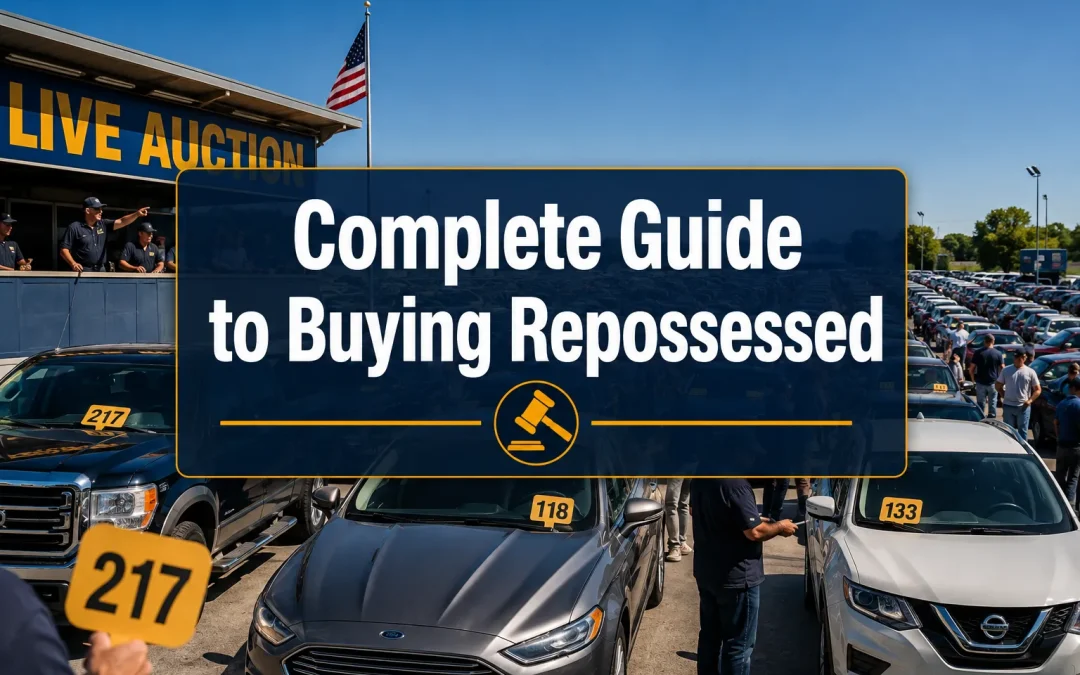
Repossessed cars are vehicles taken back by lenders after borrowers stop making payments. You can buy them through bank sales, credit union auctions, online auction platforms, and government sales, often at prices below typical used-car market value. The savings are real, but so are the risks, since most repo cars sell as-is with no warranty and limited inspection time.
Key Takeaways
- Repossessed cars are sold by banks, credit unions, online auction sites, and government agencies after borrowers default on loans.
- Repossession volumes in 2026 are near post-2009 highs, meaning there is more inventory available than in recent years.
- Buyers can find repo vehicles through lender websites, specialized auction platforms like Copart, and consumer-facing marketplaces.
- Most repossessed cars sell as-is, with no manufacturer warranty and no return policy after purchase.
- Savings compared to retail used-car prices are possible but vary widely based on competition, fees, and vehicle condition.
- Always run a vehicle history report, inspect the car in person, and factor in auction fees before bidding.
- Financing is available for repo cars, but some auction purchases require cash or pre-arranged loans.
- Scams exist in this market, so buying from established, licensed auction houses or direct lender programs is the safest approach.
- Government and law enforcement auctions are a separate but related source of discounted vehicles.
- Knowing the true market value before bidding is essential. The Blue Book Car Value Guide is a good starting point for research.
What Does Repossessed Car Mean
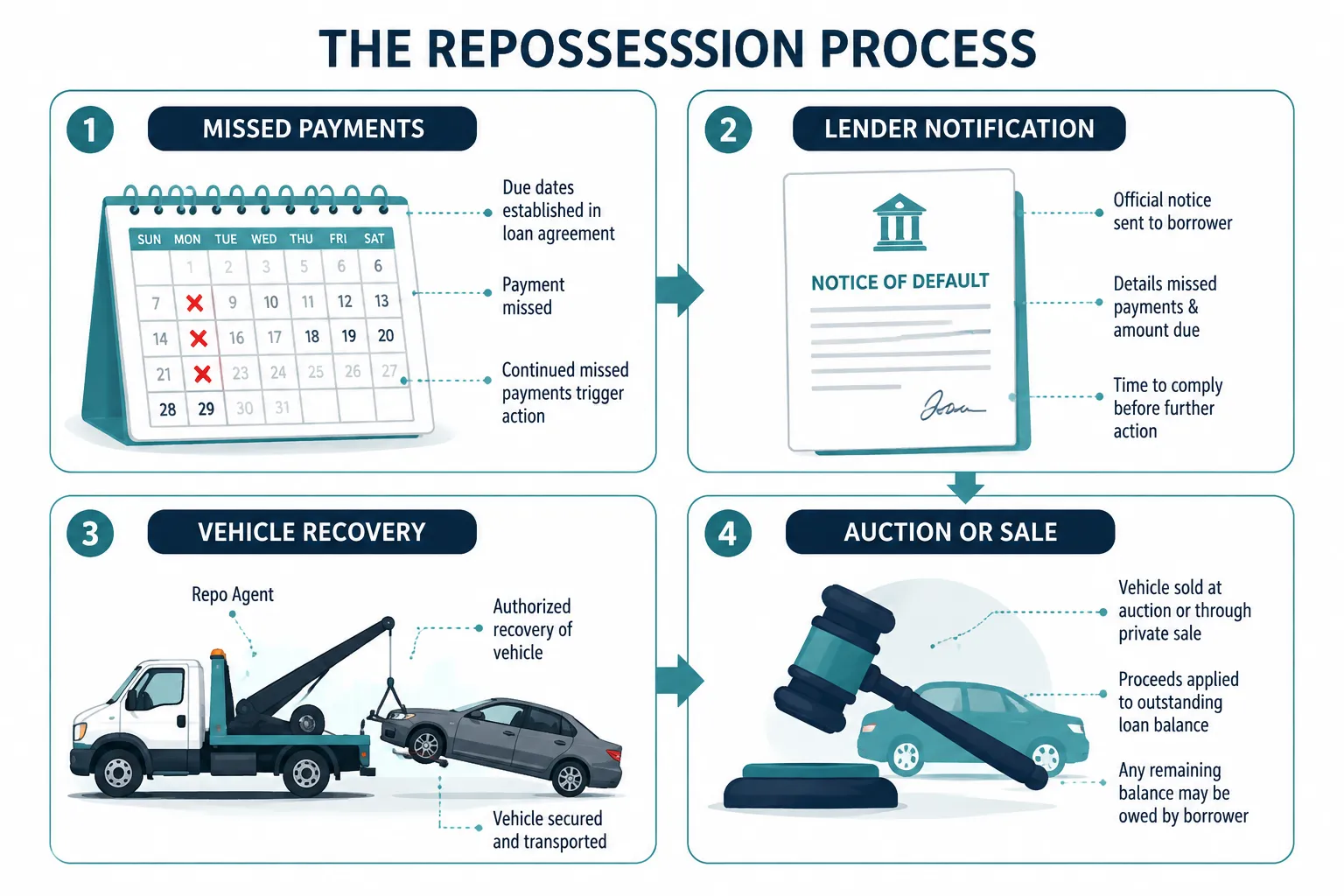
A repossessed car is a vehicle that a lender, usually a bank or credit union, has taken back from a borrower who stopped making loan payments. The lender holds the legal title to the car until the loan is paid off, so when payments stop, the lender has the right to reclaim the vehicle.
After repossession, the lender typically sells the car to recover the outstanding loan balance. That sale can happen through a dealer, a public auction, or a direct listing to consumers.
Key facts about the repossession process:
- Lenders can begin the repossession process after just one missed payment in most U.S. states, though most wait 60 to 90 days.
- A repo agent (sometimes called a recovery agent) physically retrieves the car, often without warning to the borrower.
- The borrower usually has a short window to reclaim the car by paying the full overdue balance plus fees, called “redeeming” the vehicle.
- If the car sells for less than the loan balance, the borrower may still owe the difference, called a deficiency balance.
Repossession rates in 2026 are elevated. Delinquency rates on auto loans have been climbing, pushing repossession volumes near levels not seen since the aftermath of the 2008 financial crisis [2]. This means there is a larger pool of repo vehicles available to buyers right now than there was just a few years ago [6].
Where Can I Buy Repossessed Cars
Repossessed cars are sold through several distinct channels, each with different processes, fees, and buyer requirements. The main options are bank and credit union direct sales, physical auction houses, online auction platforms, and government sales.
Banks and Credit Unions
Many lenders list repossessed vehicles directly on their websites or through affiliated dealer networks. This is often the most straightforward path for everyday buyers because you can sometimes negotiate a price and arrange financing through the same institution.
- Search the websites of major banks like Bank of America, Wells Fargo, Chase, and regional credit unions for “repossessed vehicles” or “repo cars for sale.”
- Some credit unions offer repo cars exclusively to members at competitive prices.
- Prices may be closer to market value here than at auction, but the process is simpler and less competitive.
Physical Auction Houses
Large auction companies like Manheim and ADESA primarily serve licensed dealers, but some locations allow public buyers on specific days. These auctions move high volumes of vehicles quickly.
- Copart operates repo and impound sales open to registered buyers, with thousands of vehicles listed at any given time [10].
- Physical auctions require registration in advance and often a refundable deposit.
- Inspection time is limited, typically a walk-around only, with no test drives allowed.
Online Auction Platforms
Specialized online marketplaces for bank-repossessed vehicles have expanded significantly in 2026 [5]. These platforms let buyers browse, bid, and sometimes purchase repo cars entirely online.
- Copart.com lists repo and impound vehicles from lenders and law enforcement nationwide [10].
- A Better Bid aggregates repossessed vehicle listings across auction sources [3].
- RepoDepo.ca serves the Canadian market with active car and vehicle listings [7][9].
- Open Road Bids launched in 2026 as a nationwide online auction marketplace specifically for bank-repossessed vehicles [5].
Government and Law Enforcement Auctions
Police impound lots and government agencies sell seized and abandoned vehicles through public auctions. These are not technically “repossessed” by a lender, but the buying process and pricing dynamics are very similar. Sites like GovPlanet and local municipality websites list these sales.
Tip: If you are also considering a used commercial vehicle, the process shares many similarities. See this guide to buying a used commercial truck for related advice.
How Much Cheaper Are Repossessed Cars
Repossessed cars can sell for meaningfully less than comparable retail used cars, but the discount is not guaranteed and varies based on competition, vehicle condition, and fees. A realistic estimate is a savings of 10% to 30% below private-party or dealer retail prices in low-competition scenarios, but popular models in good condition can sell at or near market value when multiple bidders compete.
Factors that affect how much you save:
- Auction competition: More bidders drive prices up. Late-model, low-mileage vehicles attract the most interest.
- Vehicle condition: Repo cars are often not maintained well in the final months before repossession. Deferred maintenance, interior damage, and missing items (floor mats, charging cables, spare tires) are common.
- Auction fees: Buyer’s premiums at auction can add 5% to 15% or more to the final bid price. Always calculate the all-in cost before bidding.
- As-is sales: No warranty means any repairs come out of your pocket after purchase.
- Market timing: With repossession volumes near post-2009 highs in 2026 [2][6], supply is elevated, which can moderate prices at auction compared to tighter inventory periods.
Before you bid, always check the vehicle’s market value. The Blue Book Car Value Guide and NADA Guides used car values are two reliable tools for setting your maximum bid.
The real savings from a repossessed car come from doing your homework before the auction, not from assuming the low starting bid is a guaranteed deal.
What’s Wrong With Buying a Repossessed Car
The biggest downside to buying a repossessed car is that you are buying it as-is, with limited information about its history and condition. Most repo sales offer no warranty, no return option, and no guarantee that the vehicle is free of mechanical problems.

Common problems buyers encounter:
- Deferred maintenance: Borrowers in financial distress often skip oil changes, tire rotations, and other routine service in the months before repossession.
- Interior damage: Personal items may be removed hastily, and the interior can show significant wear, stains, or damage.
- Missing components: Keys, owner’s manuals, spare tires, and accessories are sometimes absent.
- Unknown accident history: Not all damage shows up in a vehicle history report, especially if repairs were done privately.
- Liens or title issues: In rare cases, a vehicle may have secondary liens that complicate the title transfer. Always verify the title is clean before completing a purchase.
- Emotional damage: Some previous owners, upset about losing their vehicle, intentionally damage it before it is repossessed.
Who should be cautious about buying a repo car:
- First-time car buyers with no mechanical knowledge and no budget for repairs.
- Anyone who cannot afford to be without a vehicle if repairs are needed immediately after purchase.
- Buyers who need financing already in place, since some auction platforms require cash or certified funds.
Common Problems With Repossessed Vehicles
Beyond the general risks above, repossessed vehicles have a few specific, recurring issues that buyers consistently report. Knowing these in advance helps you inspect more effectively and budget realistically.
Mechanical issues seen frequently in repo cars:
- Battery problems: Vehicles that sat for weeks or months after repossession often have dead or weakened batteries.
- Tire condition: Tires may be underinflated, worn unevenly, or past their service life.
- Fluid levels: Coolant, brake fluid, and transmission fluid may be low or contaminated.
- Check engine lights: Deferred maintenance often triggers warning lights. Some sellers clear codes before sale, so a recent code clear on the OBD port is a red flag.
- Brake wear: Brakes are one of the most commonly neglected items when owners are in financial distress.
- Rodent damage: Vehicles stored outdoors or in impound lots for extended periods can have wiring damage from rodents.
For electric vehicles specifically: Repo EVs may have depleted 12-volt auxiliary batteries and reduced high-voltage battery capacity if they sat discharged for long periods. The EV market is growing, and repo EVs are appearing more frequently in 2026 auctions.
How to Inspect a Repossessed Car Before Buying
Inspecting a repossessed car before bidding is the single most important step in protecting yourself. Most auctions allow a pre-sale inspection window, typically 30 to 60 minutes, so use that time efficiently.
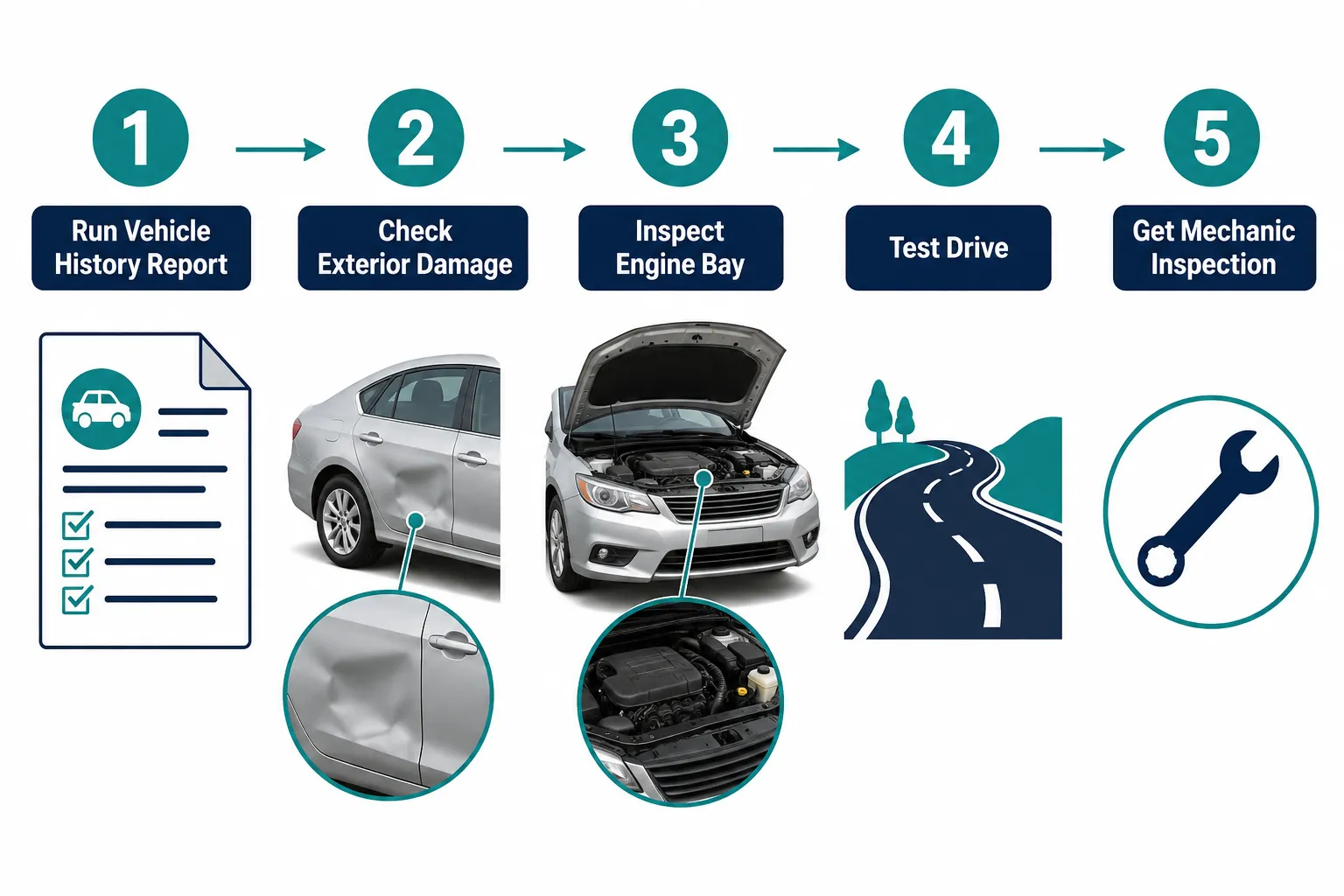
Step-by-step inspection checklist:
- Run a vehicle history report first. Use Carfax or AutoCheck with the VIN. Look for accident history, title issues, odometer discrepancies, and the number of previous owners.
- Check the exterior. Walk around the entire vehicle. Look for panel gaps, mismatched paint (sign of prior repair), rust, dents, and cracked glass.
- Inspect the interior. Check for water damage (musty smell, stained headliner, wet carpet), damaged seats, broken controls, and missing items.
- Open the hood. Check fluid levels, look for corrosion on the battery terminals, inspect belts and hoses for cracking, and look for signs of leaks or recent repairs.
- Check under the vehicle. Look for rust on the frame, fluid leaks, and damage to the exhaust system.
- Plug in an OBD-II scanner if allowed. This reads stored and pending diagnostic codes that may not trigger the check engine light yet.
- Test all electronics. Windows, locks, air conditioning, infotainment, and backup camera should all be tested.
- Arrange a pre-purchase inspection. If the auction allows it, have an independent mechanic inspect the car before you bid. Some online auction platforms allow a third-party inspection service.
Decision rule: If you cannot inspect the car in person and cannot arrange a third-party inspection, only bid on vehicles with a clean history report and at a price low enough to absorb a significant repair bill.
Can I Get a Loan for a Repossessed Car
Yes, financing is available for repossessed cars, but the process depends on where you are buying. Bank direct sales and some dealer auctions allow traditional financing. Most public auction platforms, however, require payment in full within 24 to 72 hours of winning a bid, which means financing must be arranged before you bid.
Financing options for repo car buyers:
- Bank or credit union pre-approval: Get pre-approved for an auto loan before attending any auction. This gives you a firm budget and speeds up payment after winning.
- Lender direct programs: If you are buying directly from a bank’s repo inventory, the same bank may offer financing on the vehicle.
- Dealer auctions: Some dealer-run repo sales offer in-house financing, though interest rates may be higher.
- Personal loans: For lower-priced vehicles, a personal loan from a credit union or online lender can work, but rates are typically higher than auto loans.
Important: A prior repossession on your credit report can make it harder to qualify for a new auto loan. Lenders view it as a significant risk factor. If your credit is affected by a recent repo, expect higher interest rates or the need for a larger down payment.
Repossessed Cars vs. Auction Cars vs. Used Cars
These three categories overlap, but they are not the same thing. Understanding the differences helps you choose the right buying channel for your situation.
| Category | Source | Condition Guarantee | Warranty | Best For |
|---|---|---|---|---|
| Repossessed Cars | Banks, credit unions, auction houses | None, as-is | Rarely included | Experienced buyers, budget-focused |
| Auction Cars (general) | Dealer trade-ins, fleet, lease returns | Varies by auction type | Sometimes available | Dealers, experienced buyers |
| Used Cars (dealer) | Dealerships, certified pre-owned programs | Inspection completed | Often included | Buyers wanting peace of mind |
| Used Cars (private) | Individual sellers | None, as-is | None | Buyers who can inspect independently |
Choose repossessed cars if you have mechanical knowledge or a trusted mechanic, you can handle the auction process, and you are flexible on the specific make and model you end up with.
Choose a dealer used car if you need a warranty, want a specific vehicle, or are not comfortable with the uncertainty of an as-is purchase.
Do Repossessed Cars Come With a Warranty
Most repossessed cars do not come with any warranty. The vast majority of repo sales are “as-is,” meaning the seller makes no promises about the vehicle’s condition, and you accept all responsibility for repairs the moment the sale is complete.
There are a few exceptions:
- Remaining factory warranty: If the vehicle is recent enough and the original factory warranty has not expired, that warranty may transfer to you as the new owner. Check the model year and mileage against the manufacturer’s warranty terms.
- Extended warranty purchases: Some auction platforms and dealers allow you to purchase a third-party extended warranty at the time of sale. Read the terms carefully, as these vary widely in coverage.
- Certified pre-owned repo programs: A small number of banks and credit unions recondition repossessed vehicles and sell them with a limited warranty. These are less common but worth seeking out.
Bottom line: Do not assume any warranty exists. Ask specifically before bidding, and budget for out-of-pocket repairs regardless.
Is It Safe to Buy a Repossessed Car
Buying a repossessed car is safe when you use a licensed, established auction house or a direct lender program, do your research, and inspect the vehicle thoroughly. The risks are manageable with preparation, but skipping due diligence can result in buying a vehicle with serious mechanical problems or title issues.
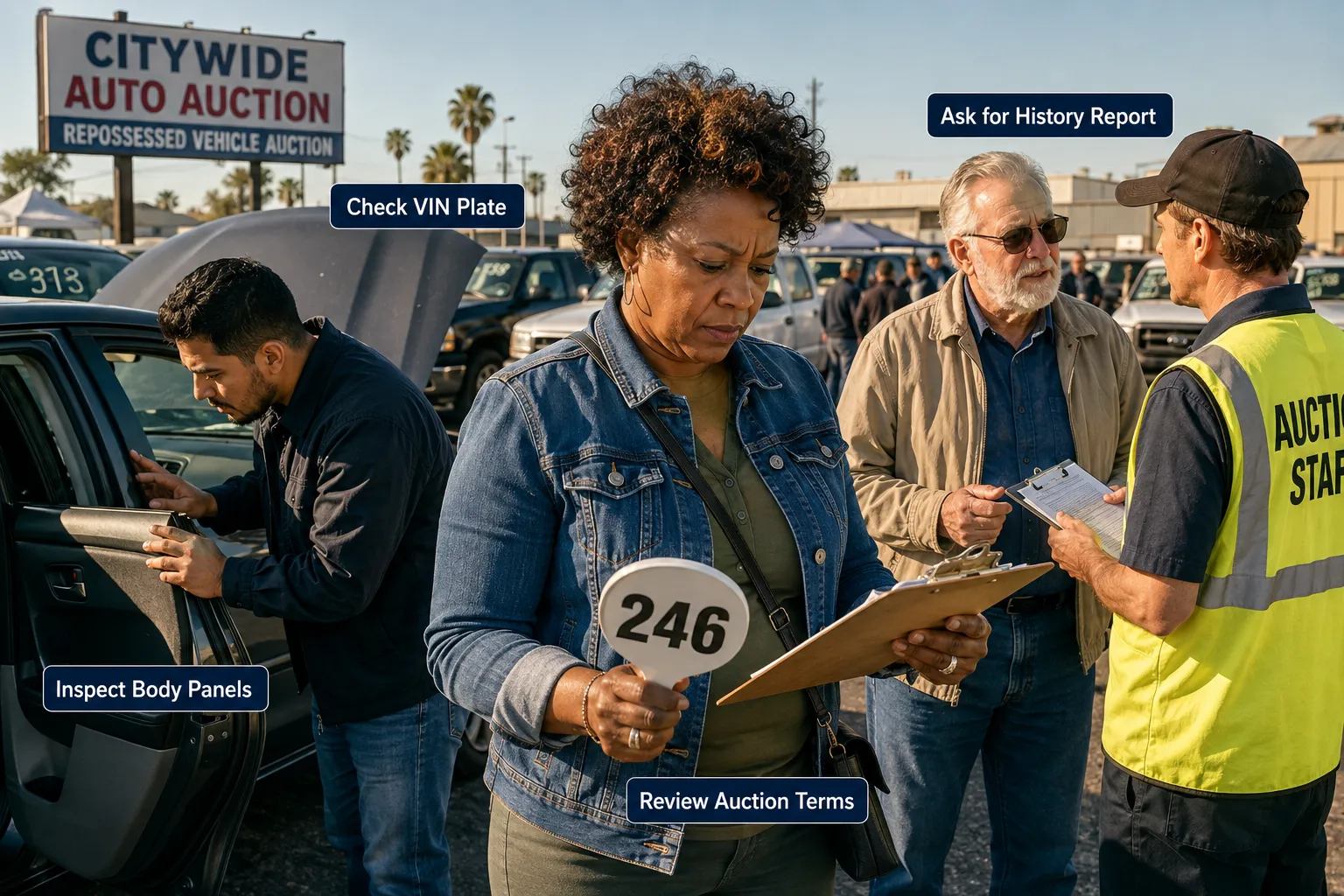
Safety checklist for repo car buyers:
- Buy only from licensed auction houses, bank direct programs, or well-reviewed online platforms.
- Verify the title is clean and free of liens before completing the purchase.
- Run a full vehicle history report on every vehicle you consider.
- Inspect the car in person or pay for a third-party inspection service.
- Understand the auction’s payment terms, fee structure, and dispute resolution process before bidding.
- Never wire money to an individual claiming to sell a repo car privately. This is a common scam.
How to Avoid Scams When Buying Repossessed Cars
Scams targeting repo car buyers are real, and they follow predictable patterns. The most common involve fake listings, upfront fees, and vehicles that do not exist or have title problems.
Red flags to watch for:
- Prices that seem too good to be true. A 2023 pickup truck listed for a fraction of its market value is almost certainly a scam.
- Requests for wire transfer or gift card payment. Legitimate auction houses and banks do not accept payment this way.
- No physical address or verifiable business license. Always confirm the seller is a registered business.
- Pressure to decide immediately. Scammers create urgency to prevent you from doing research.
- Listings on general classified sites (Craigslist, Facebook Marketplace) claiming to be “bank repo” sales. Legitimate repo sales happen through established auction platforms or directly through lenders, not through individual classified ads.
Safe buying practices:
- Use only established platforms: Copart [10], A Better Bid [3], bank websites, or credit union direct programs.
- Confirm the VIN on the vehicle matches the title and history report.
- Pay through the auction platform’s official payment system, never outside of it.
- If something feels wrong, walk away. There will always be another vehicle.
Best Websites to Find Repossessed Cars Near Me
Several reliable platforms list repossessed vehicles for sale, ranging from national auction giants to regional lender programs. In 2026, the number of online options has grown significantly [5].
Top platforms for finding repo cars:
- Copart (copart.com): One of the largest repo and impound auction platforms in the U.S. Listings include vehicles from lenders, insurance companies, and law enforcement [10]. Open to registered buyers with a valid ID and deposit.
- A Better Bid (abetter.bid): Aggregates repossessed vehicle listings from multiple auction sources, searchable by location and vehicle type [3].
- Open Road Bids (openroadbids.com): Launched in 2026 specifically as a bank-repossessed vehicle marketplace, offering consumer-friendly listings nationwide [5].
- RepoDepo (repodepo.ca): Active Canadian marketplace with current repo car and vehicle listings [7][9].
- Bank and credit union websites: Search directly on the websites of major lenders. Many have a “repossessed vehicles” or “owned vehicles” section.
- GovSales (govsales.gov) and PublicSurplus (publicsurplus.com): For government and law enforcement seized vehicle auctions.
- Local credit unions: Call or check the website of credit unions in your area. Many list repo vehicles for members first.
To find options near you specifically:
- Search “[your city or state] repossessed cars for sale.”
- Filter by zip code on Copart and A Better Bid.
- Contact local credit unions directly and ask about their repo inventory.
- Check your state’s Department of Motor Vehicles website for information on government vehicle auctions.
What Paperwork Do I Need to Buy a Repossessed Car
The paperwork required to buy a repossessed car depends on where you are buying, but several documents are consistently needed across all channels.
Documents you will typically need:
- Valid government-issued photo ID: Driver’s license or passport. Required for auction registration and title transfer.
- Proof of insurance: Most states require you to show proof of insurance before you can drive the vehicle off the lot. Arrange coverage before the sale date.
- Payment method: Certified check, cashier’s check, or wire transfer details for auction purchases. Credit cards are accepted on some platforms but may carry a surcharge.
- Pre-approval letter (if financing): If you have arranged a loan, bring the lender’s approval letter and contact information.
- Auction registration documents: Most auction platforms require you to register in advance and sign their terms and conditions.
After the purchase, you will need:
- Bill of sale: Provided by the auction house or lender. Keep this for your records.
- Certificate of title: The seller transfers the title to you. Verify it is a clean title with no liens.
- Odometer disclosure statement: Required by federal law for vehicles under 10 years old.
- State-specific registration forms: Take the title and bill of sale to your local DMV to register the vehicle in your name.
Common mistake: Some buyers forget to arrange insurance before the auction day and cannot legally drive the vehicle home. Set up at least a basic policy before you bid.
FAQ
Q: How long does it take to buy a repossessed car from start to finish? A: From finding a vehicle to completing the purchase, the process typically takes one to two weeks. Online auctions can move faster, sometimes closing within 24 to 48 hours of listing. Title transfer and registration at the DMV can add another one to two weeks.
Q: Can anyone buy a repossessed car, or do you need a dealer license? A: Most repo auctions are open to the general public, though some wholesale auctions (like Manheim) are restricted to licensed dealers. Copart, A Better Bid, and bank direct programs are all accessible to individual buyers with a valid ID.
Q: Do repossessed cars have clean titles? A: Most do, since the lender holds the title. However, always verify before purchasing. Occasionally a vehicle will have a salvage title, rebuilt title, or an unresolved lien. A title check through the DMV or a vehicle history report will reveal any issues.
Q: What happens if I win an auction and then cannot pay? A: Most auction platforms charge a non-refundable deposit and may ban you from future auctions if you fail to complete payment. Some platforms pursue the buyer for the difference if the vehicle sells for less in a subsequent auction.
Q: Are there repossessed motorcycles, boats, or RVs available too? A: Yes. Lenders repossess all types of financed vehicles, including motorcycles, boats, RVs, and commercial trucks. The same auction platforms that list cars often list these as well. For motorcycle values, the Kelley Blue Book Motorcycle Value guide is a useful reference before bidding.
Q: Is it better to buy a repo car at the beginning or end of the month? A: End-of-month auctions sometimes see less competition as buyers exhaust their budgets, but this is not a reliable pattern. Vehicle condition and your preparation matter far more than timing.
Q: Can I negotiate the price on a repossessed car? A: At most auctions, the answer is no. The auction process sets the price. However, if you are buying directly from a bank or credit union’s repo inventory, there is often room to negotiate, especially if the vehicle has been sitting unsold for more than 30 days.
Q: What is a “deficiency balance” and does it affect me as a buyer? A: A deficiency balance is the amount the original borrower still owes after the repo sale. It does not affect you as the buyer. It is the seller’s (lender’s) responsibility to pursue that debt from the original borrower, not from you.
Q: How do I know if a repossessed car has been in an accident? A: Run a Carfax or AutoCheck report using the VIN. Also inspect the car carefully for signs of repaired collision damage: uneven panel gaps, mismatched paint, overspray on rubber trim, and non-factory welds under the hood.
Q: Are repossessed electric vehicles a good buy? A: They can be, but require extra caution. Check the battery health report if available, and factor in the cost of battery replacement if the range is significantly degraded. The electric cars cheaper than ICE study provides useful context on EV ownership costs.
Q: What if I find a problem with the car after I buy it at auction? A: In most cases, you have no recourse. As-is sales are final. This is why pre-purchase inspection is so critical. Some platforms offer a limited dispute window for title issues only, not mechanical problems.
Q: How many repossessions are happening in 2026? A: Repossession volumes in 2026 are near post-2009 highs, driven by rising auto loan delinquency rates [2][6]. Projections have suggested repo numbers could reach very high levels as delinquency trends continue [8], though actual outcomes depend on economic conditions. This elevated supply benefits buyers by creating more inventory at auction.
Conclusion
Buying a repossessed car in 2026 is a legitimate way to save money on a vehicle, but it rewards preparation and punishes shortcuts. The inventory is there: repossession volumes are near post-2009 highs [2][6], and specialized online platforms are making it easier than ever to find and bid on repo vehicles from anywhere in the country [5].
Actionable next steps:
- Set your budget. Include the vehicle price, buyer’s premium, taxes, registration fees, and a repair reserve of at least 10% of the purchase price.
- Research values before you bid. Use the Blue Book Car Value Guide and NADA Guides used car values to set a firm maximum bid.
- Register on reputable platforms. Start with Copart [10], A Better Bid [3], and your local bank or credit union’s repo listings.
- Arrange financing and insurance in advance. Do not wait until after you win a bid.
- Inspect every vehicle. Run a history report, do a physical inspection, and use a mechanic whenever possible.
- Avoid scams. Buy only through established, licensed channels. Never wire money to an individual.
- Complete the title transfer promptly. Take your bill of sale and title to the DMV as soon as possible after purchase.
The buyers who do best in the repo market are the ones who treat it like a research project, not a lottery. Do the work upfront, and a repossessed car can be one of the smartest vehicle purchases you make.
If you are also considering other types of vehicles, the same disciplined approach applies. The guide to buying a used commercial truck covers similar due diligence principles for larger vehicles, and the difference between SUV and minivan guide can help you decide which vehicle type fits your needs before you start bidding.
References
[1] Auto Loan Default Rates – https://defisolutions.com/defi-insight/auto-loan-default-rates/
[2] Setting The Repossessions Record Straight – https://afsaonline.org/2026/02/16/setting-the-repossessions-record-straight/
[3] Sale Type Repossessed – https://abetter.bid/en/car-finder/type-automobiles/sale-type-repossessed
[4] Car Repossession Rates – https://americandefault.org/guides/car-repossession-rates/
[5] Open Road Bids Inc Launches Nationwide Online Auction Marketplace Bank – https://natlawreview.com/press-releases/open-road-bids-inc-launches-nationwide-online-auction-marketplace-bank
[6] Car Repossessions Approaching Record High As Delinquency Rates Soar – https://www.newsweek.com/car-repossessions-approaching-record-high-as-delinquency-rates-soar-10908518
[7] Vehicles – https://repodepo.ca/vehicles/
[8] Massive 7.5 Million Car Repos Expected To Exceed 10.5 Million Repos By 2026 – https://medium.com/@rawprince10/massive-7-5-million-car-repos-expected-to-exceed-10-5-million-repos-by-2026-352c3fbc21ac
[9] Cars – https://repodepo.ca/vehicles/cars/
[10] Repo And Impound Sales – https://www.copart.com/repo-and-impound-sales