Last Updated on November 13, 2026
A Harley-Davidson Road King with 100,000 miles on the odometer is not rare. Neither is a Honda Gold Wing that has crossed the same mark without a single unscheduled repair. Both brands can go the distance. The real question buyers should ask in 2026 is not “which one lasts longer,” but “which one fits how I actually want to ride.”
This comparison of Harley-Davidson vs Honda Motorcycles: Reliability, Service Costs, Insurance, and Best Use Cases breaks down what separates these two legendary brands beyond brand loyalty and engine sound. It covers real-world reliability data, maintenance demands, insurance realities, and which rider profile each bike actually suits.
Key Takeaways
- Honda consistently scores higher in independent reliability and build-quality rankings, while Harley-Davidson wins on heritage, resale sentiment, and long-haul cruiser comfort.
- Harley-Davidson motorcycles can reliably reach 100,000+ miles with disciplined maintenance, but service intervals and parts costs run higher than Honda’s.
- Honda motorcycles tend to have lower long-term ownership costs, wider parts availability, and are generally easier for new riders to manage.
- Insurance costs depend more on bike value, engine size, and rider history than brand alone, but Harley models often carry higher premiums due to theft rates and repair costs.
- Choosing between them comes down to use case: long-distance cruising and image versus daily commuting, affordability, and beginner-friendly handling.
Harley-Davidson vs Honda Motorcycles: Reliability and Build Quality Compared
Independent reliability surveys have repeatedly placed Honda near the top of motorcycle build-quality rankings, citing tight tolerances, proven engine architecture, and fewer electrical gremlins [1]. Honda’s long-running platforms, like the CB and Gold Wing families, benefit from decades of incremental engineering refinement rather than dramatic redesigns, which tends to reduce the number of early-model bugs [2].
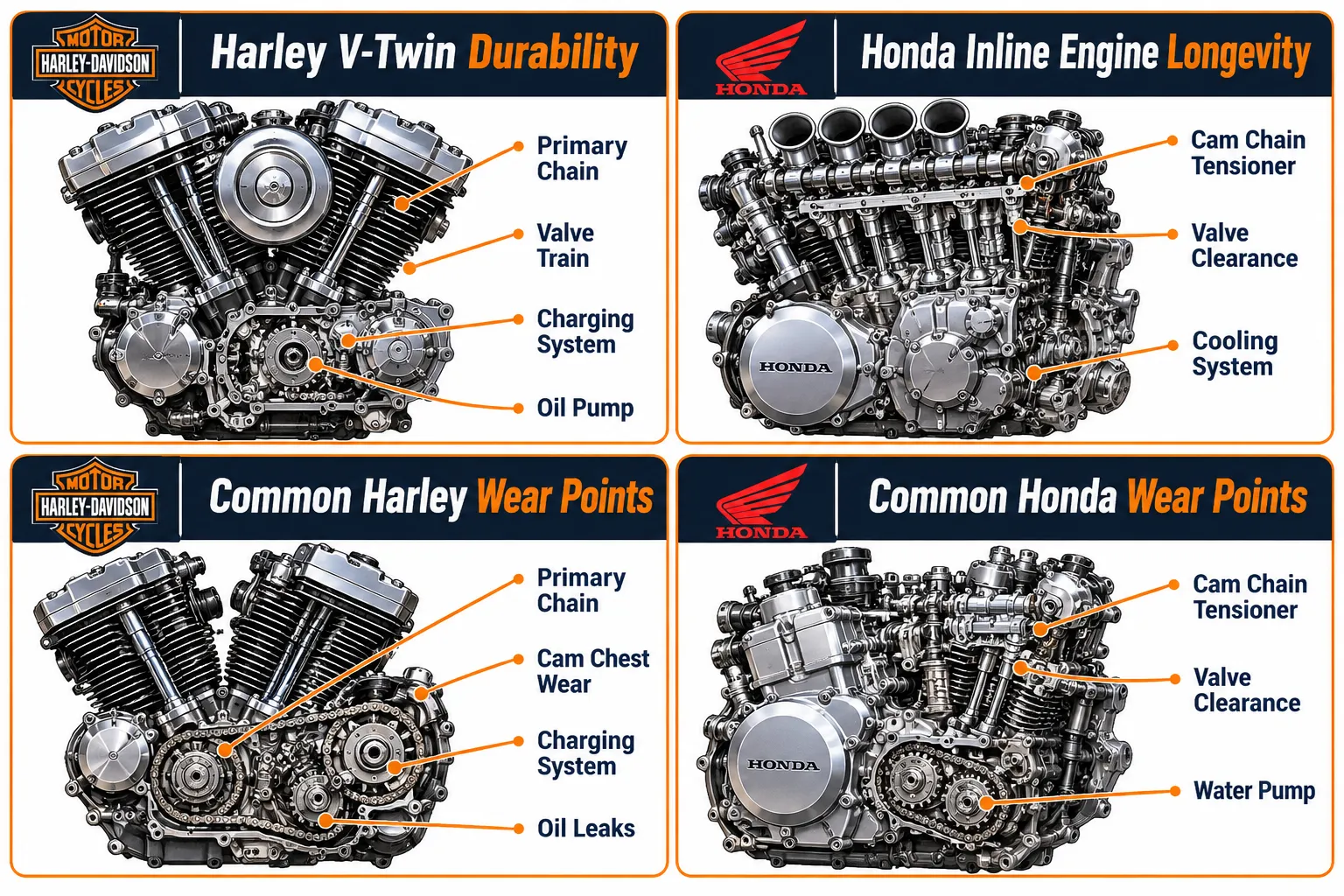
Harley-Davidson, by contrast, trades some of that polish for a distinctive riding character. The brand has made real reliability gains in the last decade, particularly with the Milwaukee-Eight engine platform, and official service documentation shows a mature, well-supported maintenance structure [3]. Still, Harley bikes report more recurring issues tied to belt drive wear, charging systems, and heat management in stop-and-go traffic [4].
What Car’s 2025 reliability survey data, while car-focused, reflects an industry-wide pattern that also shows up in two-wheel ownership: brands with simpler, long-tenured engine designs report fewer owner-reported faults than brands balancing performance with heavier, more complex drivetrains [5]. Honda’s smaller-displacement bikes, including models like the NC750X, continue to earn praise for dependable daily use with minimal drama [6].
For riders cross-shopping other brands before settling on Harley or Honda, it’s also worth reviewing how returning street bikes from competitors like Kawasaki stack up for commuting, touring, and beginner riding.
Harley-Davidson vs Honda Motorcycles: Service Costs and Maintenance Demands
This is where the gap between the two brands becomes most obvious to an owner’s wallet.
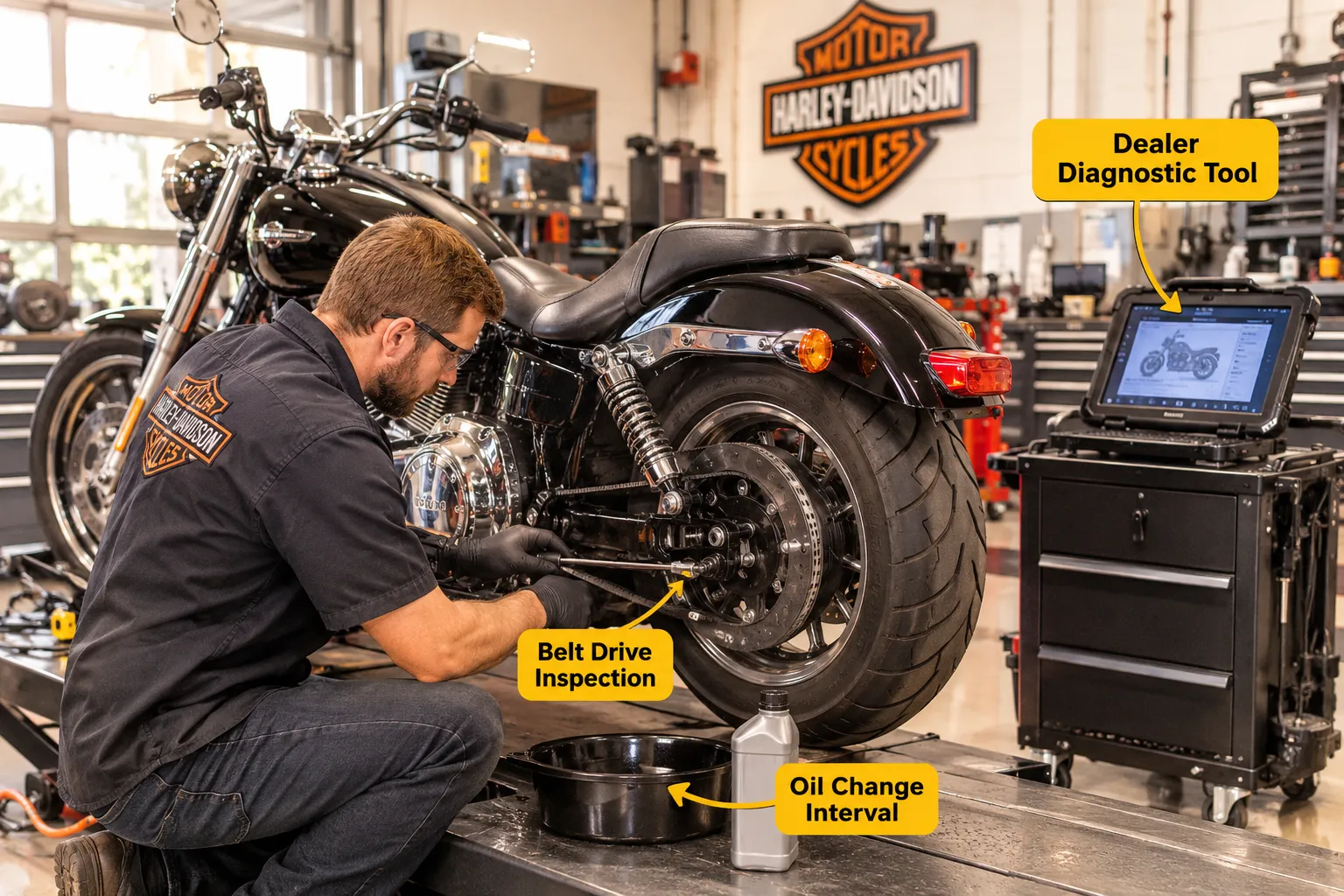
Harley-Davidson maintenance characteristics:
- Belt or chain drive inspections and replacements are a recurring cost item
- Dealer-recommended service intervals are shorter for certain fluid and valve checks
- Genuine parts and labor rates at Harley dealerships run higher than many competitors
- Big V-Twin engines generate more heat, which can accelerate wear on seals and exhaust components in heavy traffic [4]
Honda maintenance characteristics:
- Valve adjustment intervals are often longer, especially on shaft-drive tourers
- Independent and dealer service options are more widely available and competitively priced
- Parts availability is excellent due to Honda’s global manufacturing scale
- Known weak spots are narrower and well documented, such as certain charging system components on older models, but overall outlay is lower [2][7]
| Factor | Harley-Davidson | Honda |
|---|---|---|
| Typical service interval | Shorter for major checks | Often longer |
| Parts cost | Higher, brand-specific | Lower, widely available |
| Labor rate | Dealer-premium pricing | More competitive shops available |
| DIY friendliness | Moderate | High on many models |
| Long-term wear items | Belt, charging system, heat-related seals | Valve adjustment, select electrical components |
Riders who enjoy wrenching on their own bikes may find Honda’s broader aftermarket and independent mechanic network more forgiving for keeping long-term costs down. Those building out a touring setup on either brand might also want to check practical gear reviews like the best motorcycle tail bag options for extended trips.
Harley-Davidson vs Honda Motorcycles: Longevity, Warranty, and Resale
Harley-Davidson has built a reputation on longevity when maintenance is taken seriously. With regular service, many Harley V-Twin engines are expected to comfortably exceed 100,000 miles, and some owners report well beyond that with top-end rebuilds along the way [4]. Harley’s own insurance resources note that “high mileage” on a motorcycle is a relative term, with cruisers often rated for longer service lives than sport bikes due to lower redline operation and robust construction [8].
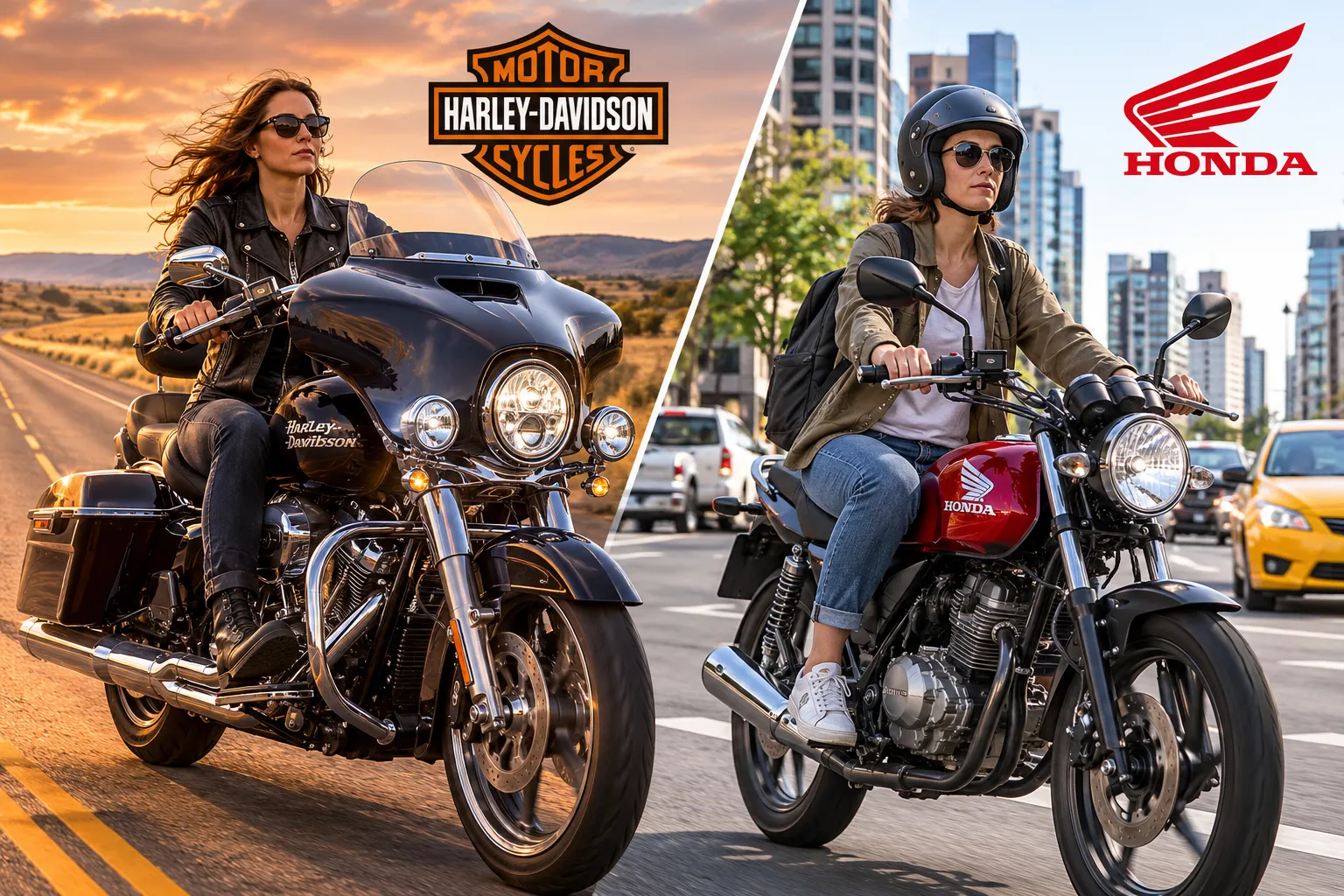
Honda’s longevity story is arguably even more consistent across more model types. Riders routinely keep Honda motorcycles for decades, citing bulletproof engines and minimal unscheduled repairs as the reason they never feel pressure to upgrade [2]. This is reflected in recognition for reliable cruiser-class engineering as well, where Honda models have earned mentions among the most dependable cruisers ever built [9].
On warranty support, Harley-Davidson’s official service network provides detailed procedural documentation and dealer-backed coverage that reflects a mature, structured maintenance program [3]. Honda’s warranty support is similarly dealer-backed, with the advantage of lower-cost routine visits offsetting any coverage differences over the ownership period.
Resale value tends to favor Harley-Davidson emotionally and sometimes financially, because the brand carries cultural cachet that keeps used models desirable even with higher mileage. Honda resale is steadier but less dramatic, driven by trust in reliability rather than image.
For riders also comparing recreational vehicle options that carry similar long-term reliability questions, the breakdown of best UTVs and ATVs for 2026 covers comparable themes of durability versus rising costs.
Insurance Considerations for Harley-Davidson and Honda Riders
Insurance premiums are never purely about brand, but Harley and Honda do skew differently in practice.
Factors that push Harley-Davidson premiums higher:
- Higher average vehicle value on many touring and cruiser models
- Elevated theft rates in certain metro areas due to resale demand for parts
- Higher repair costs per claim because of dealer-specific parts pricing
Factors that can keep Honda premiums lower:
- Wide range of displacement options, including smaller, cheaper-to-insure models
- Lower average parts and labor costs per claim
- Strong safety and reliability reputation that some insurers factor into risk models
Mileage also plays a meaningful role in both pricing and risk assessment. Harley’s own insurance resources point out that higher mileage doesn’t automatically equal higher risk if maintenance records are solid, but insurers may still ask about annual mileage when calculating premiums, especially for long-distance touring policies [8].
Riders planning extensive touring on either brand should also think about protective gear investment, since insurers increasingly consider safety tech. The growing category of smart AR motorcycle helmets and crash detection technology is worth reviewing before a policy renewal, since some insurers now offer discounts tied to safety features.
Best Use Cases: Harley-Davidson vs Honda Motorcycles for Different Riders
Neither brand is universally “better.” Each wins clearly in specific situations.
Harley-Davidson fits best for:
- Long-distance highway touring with an emphasis on comfort and presence
- Riders who want a strong resale and brand community experience
- Owners planning to keep a bike for decades with disciplined, dealer-level maintenance
- Riders prioritizing low-end torque and cruiser ergonomics over agility
Honda fits best for:
- New riders who want forgiving handling and lower repair bills while learning
- Daily commuters needing dependable, low-maintenance transportation
- Budget-conscious owners who want strong parts availability nationwide
- Riders who want a wide range of displacement and body styles, from naked bikes to full touring rigs
A quick personality check: if the goal is Sunday rides to a rally with friends and a bike that turns heads at a stoplight, Harley-Davidson usually wins. If the goal is reliable transportation that just starts every single morning without drama, Honda usually wins.
“The best motorcycle is the one that matches how you actually ride, not the one with the loudest badge.”
Beginner riders weighing either brand should also consider how storage and garage setup affects long-term bike care. A well-organized space, as shown in these vintage motorcycle garage decor ideas, can protect a bike’s finish and components regardless of brand.
Conclusion: Which Brand Should You Choose
The debate over Harley-Davidson vs Honda Motorcycles: Reliability, Service Costs, Insurance, and Best Use Cases doesn’t have one universal winner. Honda delivers stronger reliability scores, lower service costs, and easier ownership for budget-focused and beginner riders. Harley-Davidson delivers a deeper emotional ownership experience, strong long-haul touring comfort, and proven longevity for riders who commit to its maintenance rhythm.
Next steps before buying:
- Test ride both a Harley cruiser and a comparable Honda model on the same type of road you’ll ride most often.
- Request service records if buying used, and compare dealer quotes for the first 20,000 miles of maintenance.
- Get insurance quotes for the exact model and trim before committing, since premiums can shift ownership math significantly.
- Decide honestly whether image and heritage, or low-hassle dependability, matters more for your riding goals.
Either way, both brands have earned their reputations through decades of real-world miles. The right choice is the one that matches your budget, mechanical patience, and the kind of riding you actually plan to do.
References
- Motorcycle Brands Best Build Quality. slashgear.com.
- Honda Motorcycle Owners Keep for Decades. topspeed.com.
- En US. serviceinfo.harley-davidson.com.
- How Long Do Harley Davidson Last with Regular Maintenance. slashgear.com.
- What Car Reliability Survey 2025. coxmotorgroup.com.
- Nc750x. motorcyclenews.com.
- Used Honda Motorcycles Steer Clear of. slashgear.com.
- What Is High Mileage for Motorcycle. insurance.harley-davidson.com.
- Most Reliable Cruiser Motorcycles Ever Built. slashgear.com.